Last Updated on by vincent
Why visit Norway in summer
Norway is an incredible country. Picture some of the largest and deepest fjords in the world. Dozens of them. Dizzying mountain passes, thousands of kilometres of coastline, wild and still-untouched nature, some of the most beautiful mountains you’ll ever see. All of it under the midnight sun, with a Viking past you can still feel in many places.
Picture being able to sleep in the most beautiful spots, far from the crowds. Picture also getting to experience all 4 seasons (the weather, that is, not Vivaldi) in a single day. If you’re here, it’s because you’re already sold on Norway. You’ve got a hunch it’s a magical place (yes, yes, really).
Norway in summer means the midnight sun, exceptional hikes, crowds gathering in a few spots but the chance to get away from them very easily. But now, the question absolutely everyone is asking: where to go. Not obvious, because there’s a whole heap of options. Let’s break it down below.
What to choose: the Lofoten Islands or the Norwegian Fjords?
I prefer to start straight in with this (we’ll go into waaaay more detail in the following sections), because, for a first trip, this is the question the vast majority of you will be asking. Lofoten or fjords, in summer? These are the two regions that draw the most visitors in Norway, the most beautiful, and also the most touristy (though it stays very reasonable). They’re also the first two regions I discovered in Norway, in summer. And since I genuinely get asked this question just about every day, here are a few quick pointers:
- the Lofoten Islands can be visited all year round and are great in winter too
- the Norwegian fjords are mostly visited in summer, from May to early October
- many roads in central Norway and the fjord region are closed 8 months a year because of snow
- These are the two most touristy regions of Norway in summer
- These are the two most spectacular regions in the country
- There’s more to see in the fjords, with towns (Bergen, Alesund for example)
- but the most beautiful villages are in the Lofoten (Reine, Nusfjord, Henningsvaer…)
- A much bigger playground in the Fjords
- Both regions are well suited to campervan travel
- the weather will be cheeky in both regions
- In the Lofoten you get the midnight sun, in the fjords there’s no night (but you don’t see the sun at 2am, just loads of light)
I’m listing all this because it’s impossible to tell you “go here rather than there”, it’ll depend on many factors, especially how much time you have (the fjords need more time than the Lofoten, for example) and where you’re coming from (if you’re driving from France, the fjords are 1000km closer).
But I’d say that to make the most of the fjords, summer is the best season because many spots are inaccessible in winter (Trollstigen for example). Whereas the Lofoten are great for a great many months of the year, especially in winter (well, November and December are a touch gloomier because of the weather and the low light).
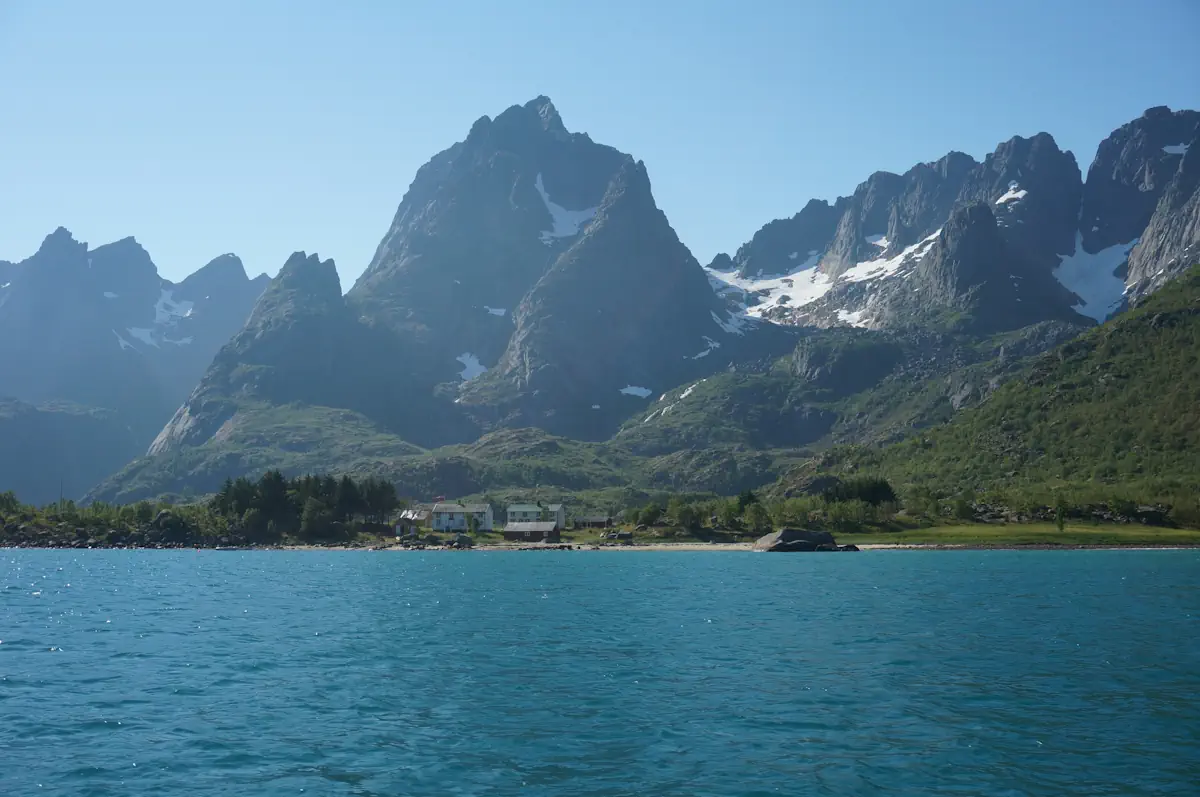
How to choose which region to visit
In practice, to figure out where to go, it’ll come down to a few criteria. The time you have, where you’re coming from, how you’re getting around, what you want to do, whether you want to feel alone in the world… anyway, we’ll go through all that, but these are the questions you should ask yourself before saying “let’s go there!”, so you don’t get any nasty surprises when planning your itinerary.
Based on the time you have
Having one week doesn’t let you do the same as 2 or 3 weeks. Seems obvious, I know. But in Norway some regions and routes really do need quite a lot of time.
If you only have one week (which already offers loads of possibilities!), discovering the fjords means more driving than the Lofoten, for example. You won’t be able to do the whole north coast of the country, so you’ll need to focus on ONE region in particular, in my opinion. In fact, I generally recommend 1 week = 1 region.
That means in one week you can discover the Lofoten / Tromso and Senja (or just one or the other) / the fjords around Bergen, for example.
With 2 weeks you can go from Stavanger to Alesund, see the Lofoten, Senja and Tromso, maybe even push on to the North Cape. These are examples that show that, unless you want to swallow up the kilometres, you need a bit of time because:
- there are things to see everywhere
- you’ll be stopping absolutely all the time
- the speed limit is low
- the distances are big
So I’d advise against doing what I did, namely Alesund to Bergen in 5/6 days, it’s far too fast and there was a lot of frustration at not being able to stop when we wanted and see everything we wanted.
Based on what you want to see and do
Norway is also a country with a huge diversity of activities. Do you want the most beautiful fjords? To see whales, puffins or musk oxen? Do you want the finest hikes? There’s bound to be a spot that’ll appeal to you and match what you’re after. The only criterion that’ll be tricky to choose on is “I want an eyeful of jaw-dropping scenery”. Good luck picking, because that’s the case just about everywhere in Norway!
- You want to see the most beautiful fjords: the fjord region between Bergen and Alesund. Take a look at this 2-week itinerary
- You want the finest hikes: either between Stavanger and Bergen, or in the Lofoten (well, there they’re reeeally everywhere)
- To see whales in summer: it’s possible, and it’s at Andenes, in the Vesteralen or in the Lofoten
- The puffins are on the island of Runde, off Alesund, until early August
- Whereas the musk oxen are in the centre, in Dovrefjell National Park
- The most beautiful fishing villages are in the Lofoten Islands
- The most beautiful mountains are also in the Lofoten Islands
- For glaciers, head towards Jostedalsbreen National Park (and a few over by the Lyngen Alps)
- the best road trips are in the fjords and from the Lofoten towards Tromso or the North Cape
And that’s without even mentioning all the Viking churches scattered across the centre and south of the country!
So you see, pinpoint what you want to see, what interests you, and then the destination will sort of decide itself.
But for a first trip, you usually want to see the most beautiful landscapes, and those are in the Lofoten and the central fjords.


Which month to choose: June, July or August?
After the “where”, the “when”. Good news: there’s no wrong choice, the Norwegian summer is gorgeous from June to August and prices are roughly the same across all three months (accommodation is just a touch cheaper in June). But each month has its own personality, and a few differences can tip the scales depending on what you’re looking for.
One piece of advice valid for all three months: book well in advance. The Oslo-Bergen train, the Naeroyfjord cruise, the Hurtigruten, the car rental and the Lofoten accommodation sell out months before summer. The longer you wait, the pricier it gets (or the more it’s fully booked).
Norway in June: a good idea?
Yes, and it’s even my recommendation if you want to avoid the crowds: June is the quietest of the three months, with the midnight sun at its peak and accommodation a bit cheaper.
It’s also the month of Sankthans (Midsummer, 23 June), with its bonfires all over the country — in Alesund, the Slinningsbålet is a giant pyre of stacked barrels, quite a sight. As for atmosphere, Bergen lives to the beat of Bergenfest in mid-June. And it’s peak puffin season, notably on the island of Runde (they’re mostly visible in the evening, when they come back from fishing).
Two things to watch out for, though:
- In early June, some scenic mountain roads may still be closed (Gamle Strynefjellsvegen sometimes only opens in mid-June). The upside: you’ll drive between walls of snow on the freshly opened passes, like the Sognefjellet. Check my article on closed roads in Norway before mapping out your itinerary.
- High-altitude hikes may still be snowy: Trolltunga is not advised unguided before mid-June (but it depends on the season), Besseggen is best done from July onwards.
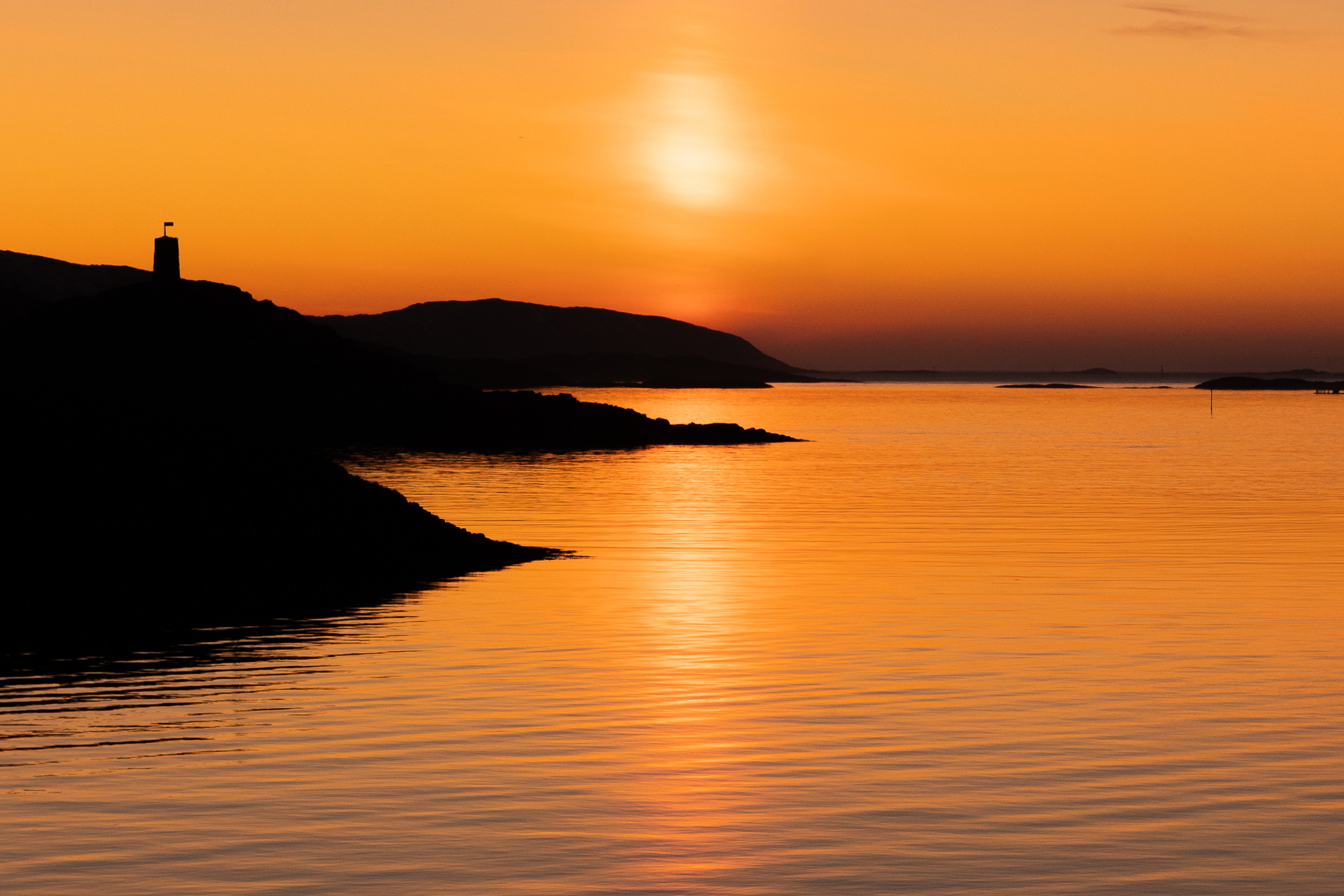
In the photo below, I wanted to capture the midnight sun, at exactly midnight on the dot

Visiting Norway in July: still a good idea?
July is the peak of summer: everything’s open, temperatures are at their highest and the midnight sun lasts until mid or late July depending on latitude. But it’s also the fellesferie, the Norwegians’ common holidays: they’re all out on the roads and in the campsites, on top of the foreign visitors. We’re not talking Italian-style crowds, mind you, but it’s the month where booking in advance is no longer an option: it’s a must.
A small detail from experience: in the north and inland, where there’s humidity and lots of lakes, the mosquitoes can be very present and pesky. Pack the repellent.
It’s also the most festive month: the Midnattsrocken in Lakselv, the northernmost open-air festival in the world where you listen to rock under the midnight sun, the Moldejazz in Molde right in the heart of the fjord region, and the Olavsfest in Trondheim in late July, with its medieval market around Nidaros Cathedral. And the puffins are still around until the end of July.
Norway in August: can you see the northern lights?
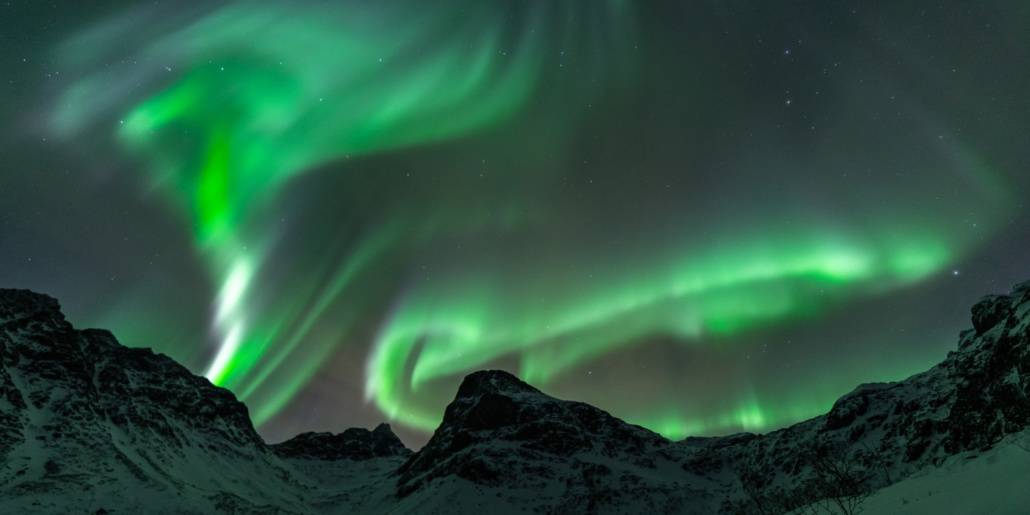
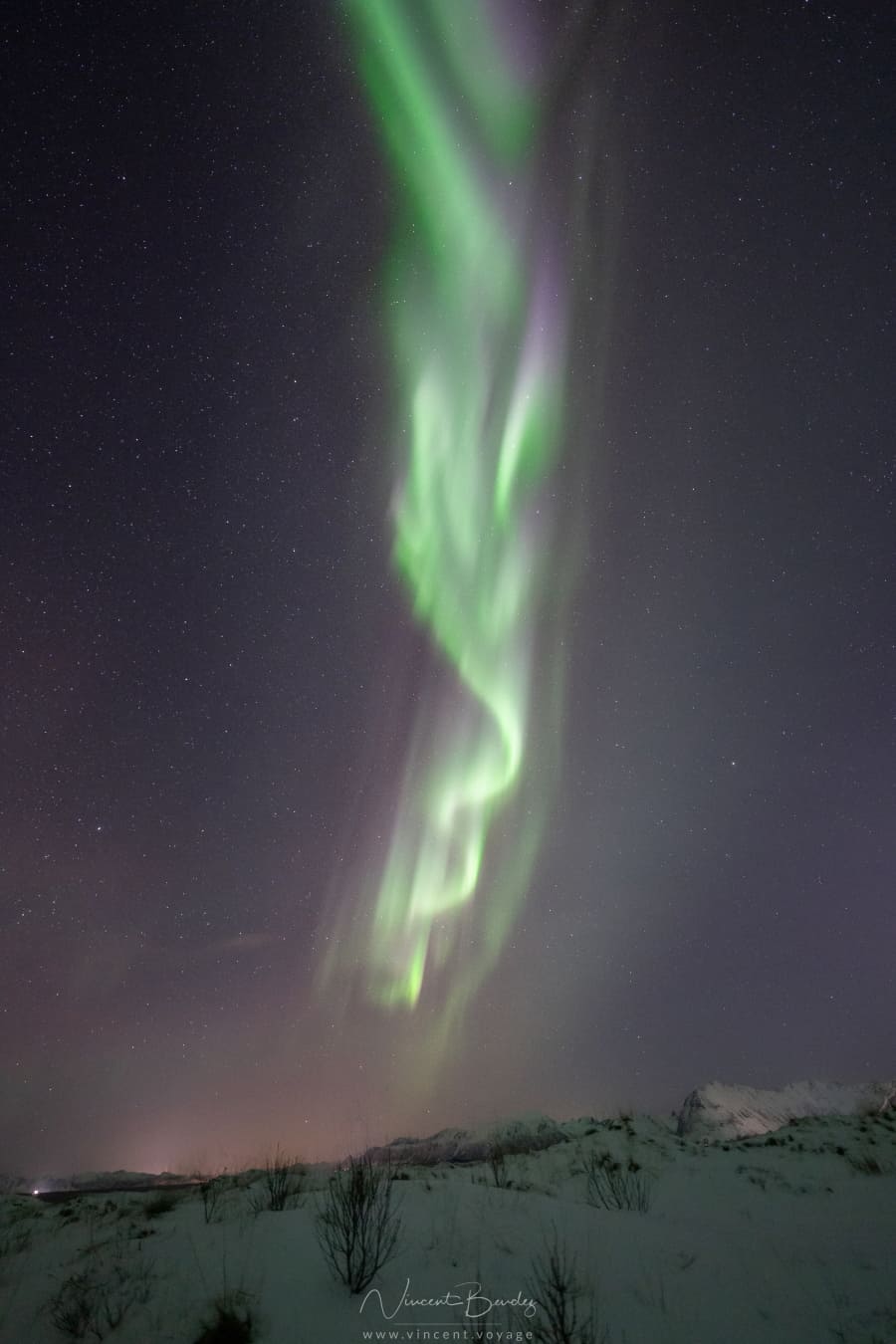
Yes! That’s THE surprise of August: the real nights come back, and with them the first northern lights in the north, from around the fourth week of August. I go into more detail in my article on the northern lights in autumn.
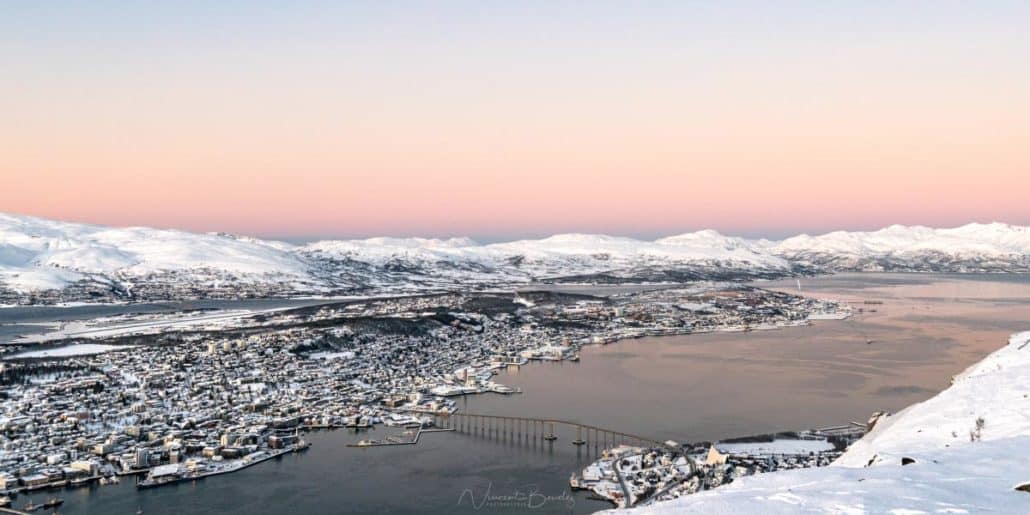
The return of night has another advantage, for photographers this time: you get proper sunsets and the golden hour again, whereas in June-July the light stays flat even at midnight. And from the end of the midnight sun (so as soon as the sun dips below the horizon, even if it doesn’t get dark), the sky turns pink and it’s absolutely gorgeous.
What you should know about August:
- The sea is at its “warmest” (all relative, we agree)
- It’s the season for blueberries and arctic cloudberries: thanks to the Allemannsretten (see below), you can pick them everywhere. Careful though, quantities are limited to… one bucket per person!
- The Norwegian school year starts in mid-August: the end of the month is very quiet, but some campsites and seasonal attractions already start cutting back their opening hours
- The puffins, for their part, left the cliffs in the very first days of August
As for festivals, Alesund has its Jugendfest at the Aksla stadium and Trondheim its Pstereo at the foot of the cathedral, both in late August.
What are the temperatures in Norway in summer?
Here are the typical temperatures in the south and the fjord region (reckon on 3 to 5° less in the north):
| Month | Day | Night |
|---|---|---|
| June | 13 to 18°C | 7 to 11°C |
| July | 16 to 22°C | 10 to 13°C |
| August | 15 to 20°C | 9 to 12°C |
Above all, remember this: even in high summer, nights often drop to between 8 and 12°C. If you’re camping or sleeping in a van, pack a proper sleeping bag and a fleece — and in any case, the rule in Norway is layers, whatever the season. Days at 25°C happen regularly (especially around Oslo), but you can also get all 4 seasons in a single day, consider yourself warned.
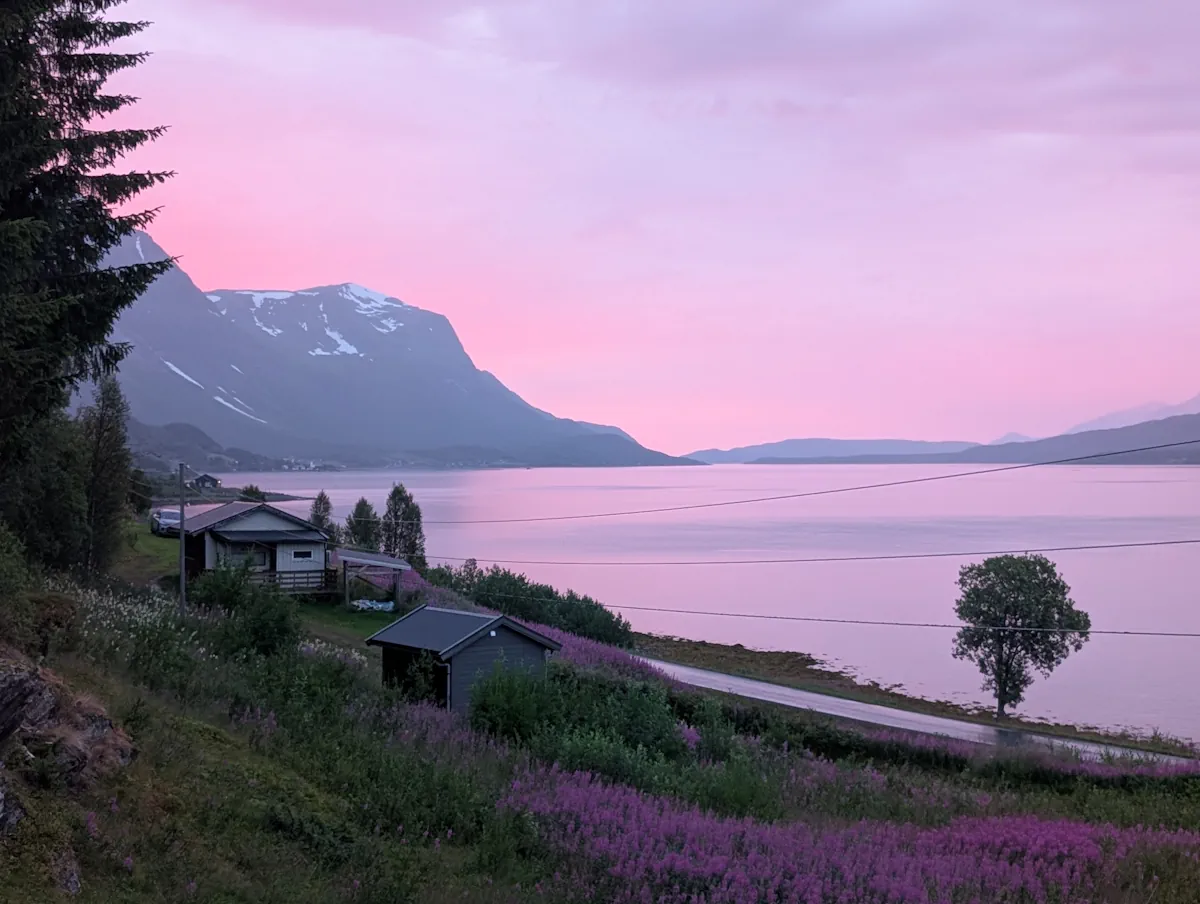
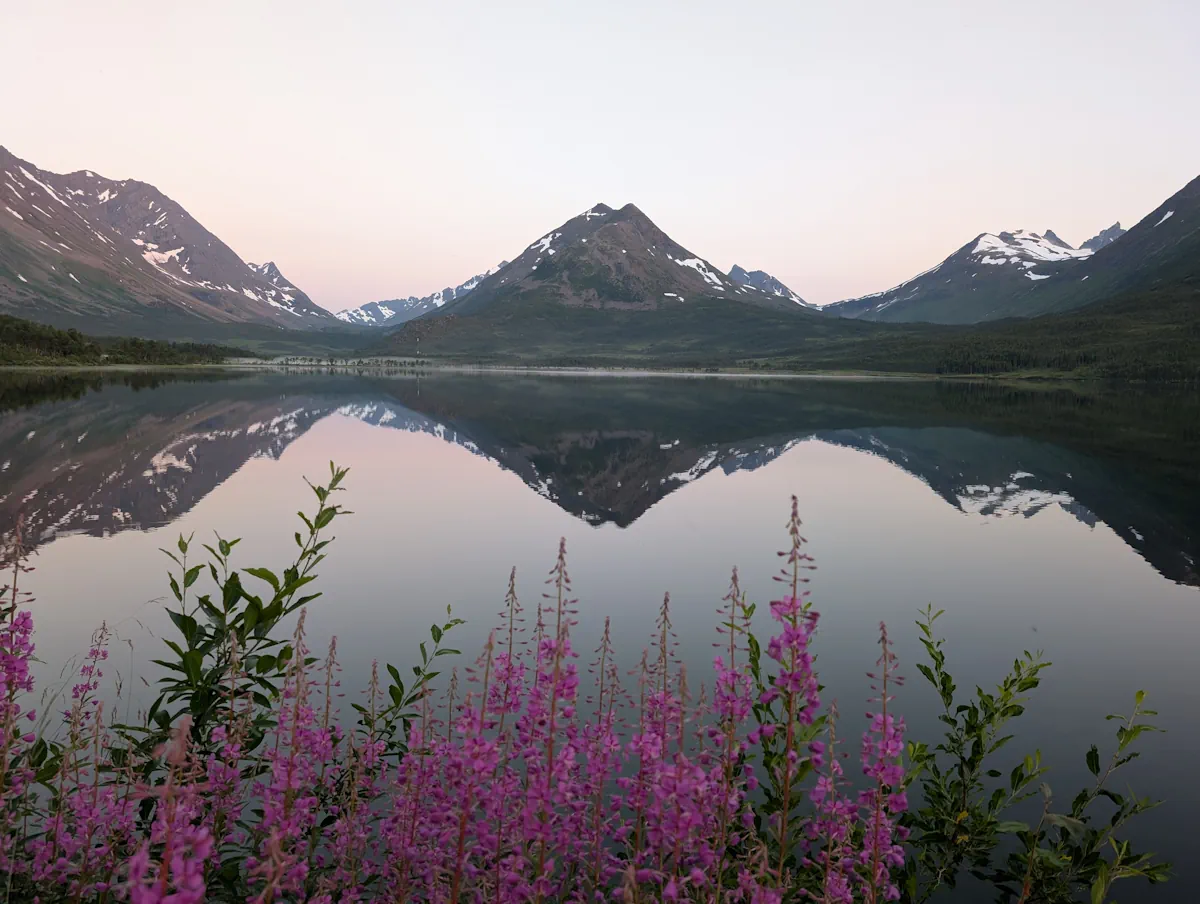
The Lofoten Islands in summer
The Lofoten Islands are the most beautiful landscapes in Norway, unique scenery, pretty incredible mountains with paradise beaches. White-sand beaches, crystal-clear water, temperature of… okay fine, water at 15°. Honestly, it’s beautiful and you never tire of it!
So yes, you can visit the Lofoten Islands all year round (that said, November, December and mid-January are a touch less good because of the very short days, but it stays great). But in summer, the Lofoten have that something extra: an incredible playground to wander through unique landscapes.
You’ll find some of the finest hikes in the country here, because you can reach elevated viewpoints that give crazy views over the archipelago, its turquoise waters, and the mountain ranges.
Advantages of the Lofoten Islands in summer
- exceptional hikes
- you can really see the paradise beaches
- the midnight sun
Drawbacks
- There can be quite a lot of people on the roads
- Wild camping is increasingly controlled following disrespectful behaviour by tourists.
- You need to book early for the nicest accommodation
Practical info
- How much time you need for the Lofoten Islands in summer
- Since the hikes are all accessible, it would be a shame not to make the most of them. So between the classic visits (the fishing villages, the beaches, the viewpoints and the must-do walks), you should count on a good week. Even 2 weeks will be filled very easily.
- If you want to go for 2 weeks and see more, then I recommend the following article, which suggests a 2-week itinerary between the Lofoten, Senja and Tromso. It’s in winter but it adapts (okay fine, without the dog sledding). Otherwise I give other itineraries a bit further down 🙂
- How to get to the Lofoten Islands
- by plane, the simplest is to land at Evenes and take the car, or Bodo and take the ferry to Moskenes. There are flights to Svolvaer and Leknes too, but fewer and a bit pricier.
- by boat with the Hurtigruten (which also takes cars on board), or the ferry from Bodo (which I recommend visiting).
- by road from Tromso, reckon on 7/8h, probably more with a few photo stops, the drive is superb
- by bus: the 300 bus crosses the Lofoten. So you catch it fairly easily with the 100 from Tromso or Narvik

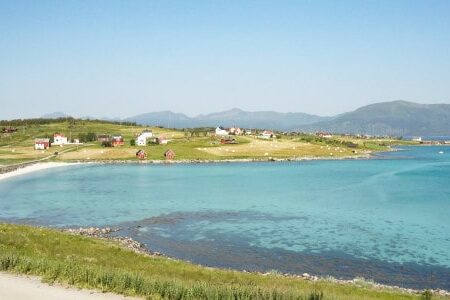

Where to stay in the Lofoten Islands
In the following article I tell you where to stay in the Lofoten Islands. Fishermen’s cabins, hotels or beachfront houses, you really can find what you’re after! Since it’s a huge archipelago, the sea is never far, and you always have a stunning view of the mountains. Not bad, right? In short, here are a few little recommendations:
- In Svolvaer (a super pleasant little town with a kind of micro-climate)
- Fast Hotel (for cheap accommodation)
- Svinoya Rorbuer, lovely rorbuer
- Anker Brygge, a benchmark rorbu in Svolvaer
- In Ballstad (a little haven of peace between the mountains)
- Hemmingodden, a really lovely place that isn’t especially pricey
- Hattvika Lodge, simply magnificent
- In Reine/Hamnoy (the most beautiful landscapes in the Lofoten and probably in Norway)
- Rostad Rorbuer, a crazy view, quite simply
- Reinefjorden Sjohus, the best of Reine
- By the water
- Lofoten Basecamp in Leknes, beside crystal-clear water
- Nusfjord Arctic Resort, a night in a lost paradise, fancy it?

📍 Hamnøy · the cult photo spot
The most famous red rorbuer in the Lofoten. You literally sleep inside the postcard, with the peaks rising right behind the cabins.
- The most photographed rorbu in Norway
- Postcard view over Hamnøy
- On-site restaurant and sauna
From 180€ / night Free cancellation

📍 Svolvaer · on the harbour
Gorgeous red rorbuer right on Svolvaer harbour. The best option to combine authenticity with being close to a proper little town that has everything you need.
- Really beautiful rorbuer facing the harbour
- Modern comfort, fully-equipped kitchens
- 2 minutes from Svolvaer town centre
From 188€ / night Free cancellation

📍 Hamnøy · retro-renovated cabins
The best-rated rorbuer in the southern Lofoten — renovated with a warm retro vibe and impeccable comfort. Not to be missed.
- The best-rated rorbuer in the south (9.4/10)
- Retro spirit and modern comfort
- On Hamnøy harbour
From 173€ / night Free cancellation

📍 Å · at the end of the E10 road
At the very end of the Lofoten, where the road stops. Historic rorbuer on the harbour and the Brygga restaurant on site — the place to feel the authenticity of a village-museum.
- At the end of the road, in the village of Å
- Listed historic rorbuer
- Brygga restaurant on the quay
From 155€ / night Free cancellation
What activities to do in the Lofoten Islands in summer
It’s pretty simple. You’ve got vast nature all to yourself. You’ve got some of the finest hikes in the country and it would be a shame not to make the most of them, you don’t need to be a big athlete.
Among the hikes, you absolutely have the Reinebringen, the most beautiful viewpoint in the archipelago. Kvalvika beach, the hikes that overlook the beautiful beaches like at Offersøykammen, the one that goes from Unstad to Eggum for example.
Another super popular activity is kayaking. The waters are insane, the scenery fantastic, it’s just the perfect place!
You’ve also got one of the best-known cruises in Norway: the Trollfjord. It’s a little fjord next to Svolvaer, all narrow, with a strange end-of-the-world feeling (okay fine, like so often in Norway).
You can go horse riding on the beach, if you’re a fan of the noble steed. It’s not really my thing but it looks rather lovely 🙂
Finally, good news, there’s a boat trip to see orcas and whales! It’s new and it looks great.

📍 Eggum · Northern Explorer (3 hrs)
3-hour kayak trip around the turquoise islets of Eggum with a tea-and-cake break on a small deserted island.
- Double kayaks + all equipment provided
- Small group of 10 max, no experience required
- Rated 5/5 by 92% of reviewers
Free cancellation
From 84 € / person
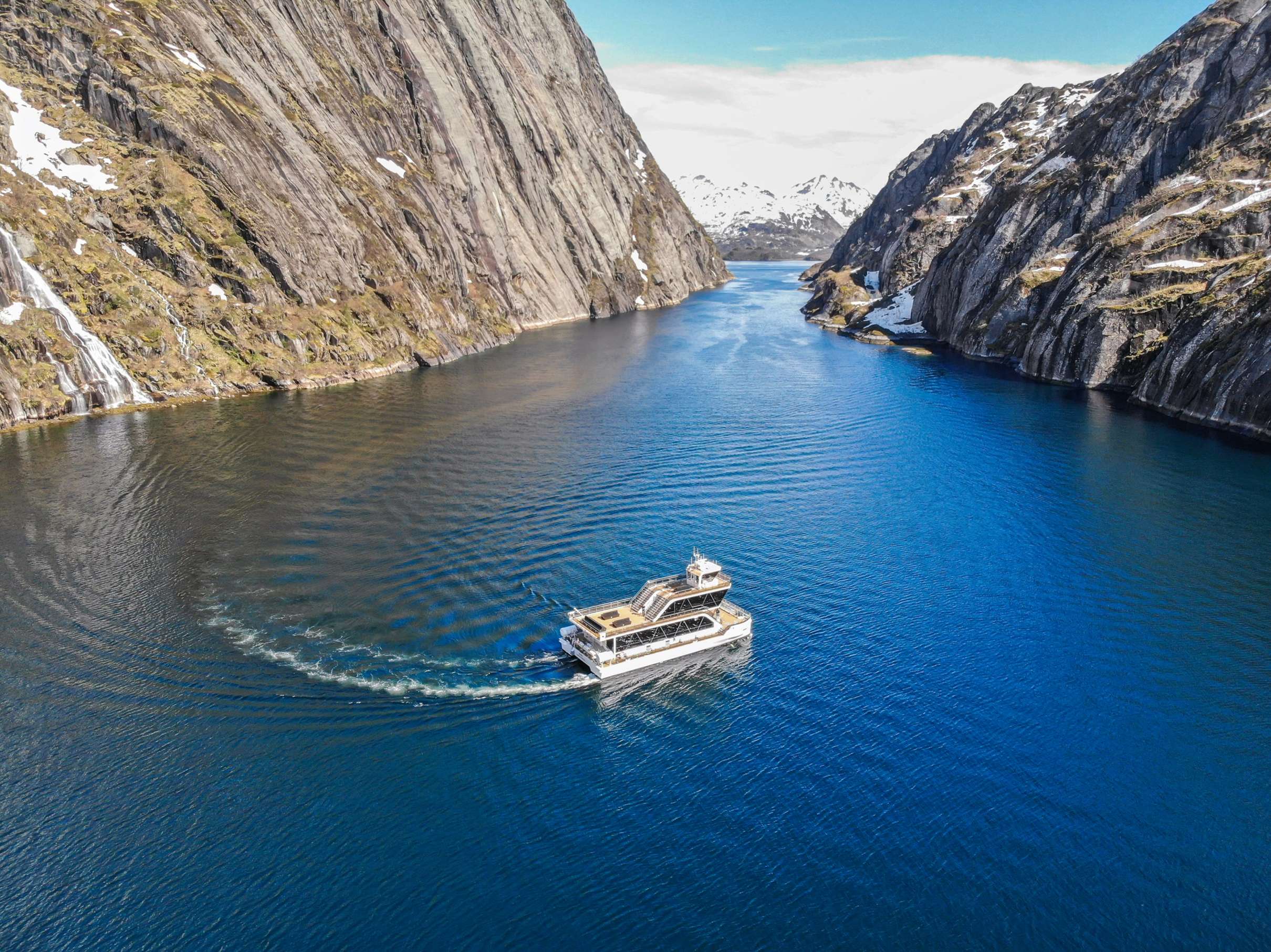
📍 Svolvær · Brim Explorer (3.5 hrs)
3.5-hour silent cruise into the Trollfjord on a hybrid-electric boat with white-tailed eagle watching.
- Ultra-quiet hybrid-electric boat
- White-tailed eagles + chance of orcas
- Underwater drone deployed if conditions allow
Free cancellation
From 132 € / person
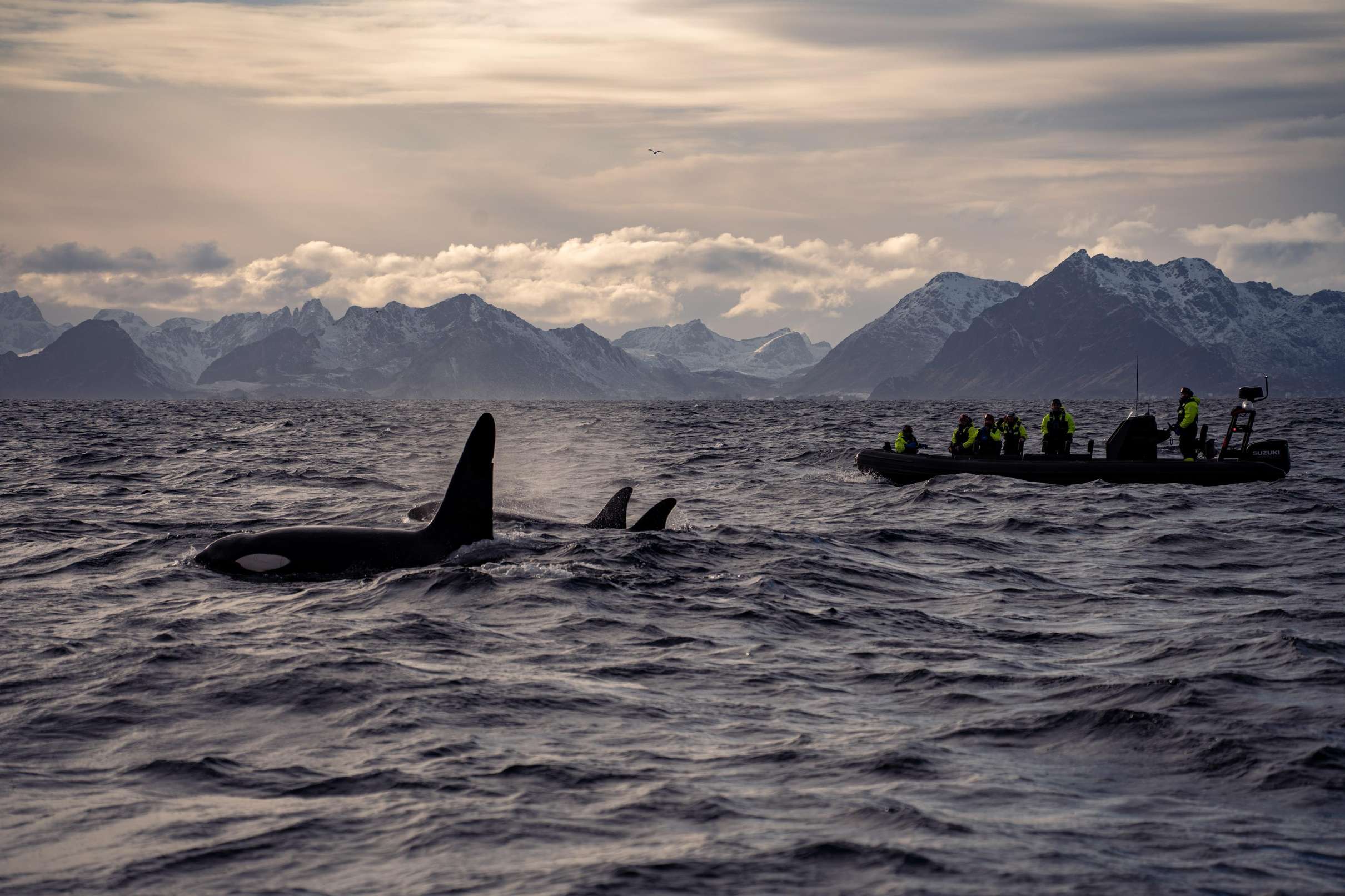
📍 Henningsvær · Arctic Adventure (2.5 hrs)
2.5-hour RIB safari around Henningsvær in search of orcas, white-tailed eagles and seals.
- RIB to get right down at water level
- Orcas, pilot whales, eagles, seals
- Survival suit + life jacket + goggles provided
Free cancellation
From 133 € / person

📍 Gimsøya · Hov Gård (1.5 hrs)
1.5-hour Icelandic horse ride along the Arctic beach of Hov and the Viking remains of Hovsund.
- Icelandic horses suited to beginners
- Arctic beach of Hov + village of Hovsund
- Helmet, gloves and boots provided
Free cancellation
From 135 € / person
The fjord region
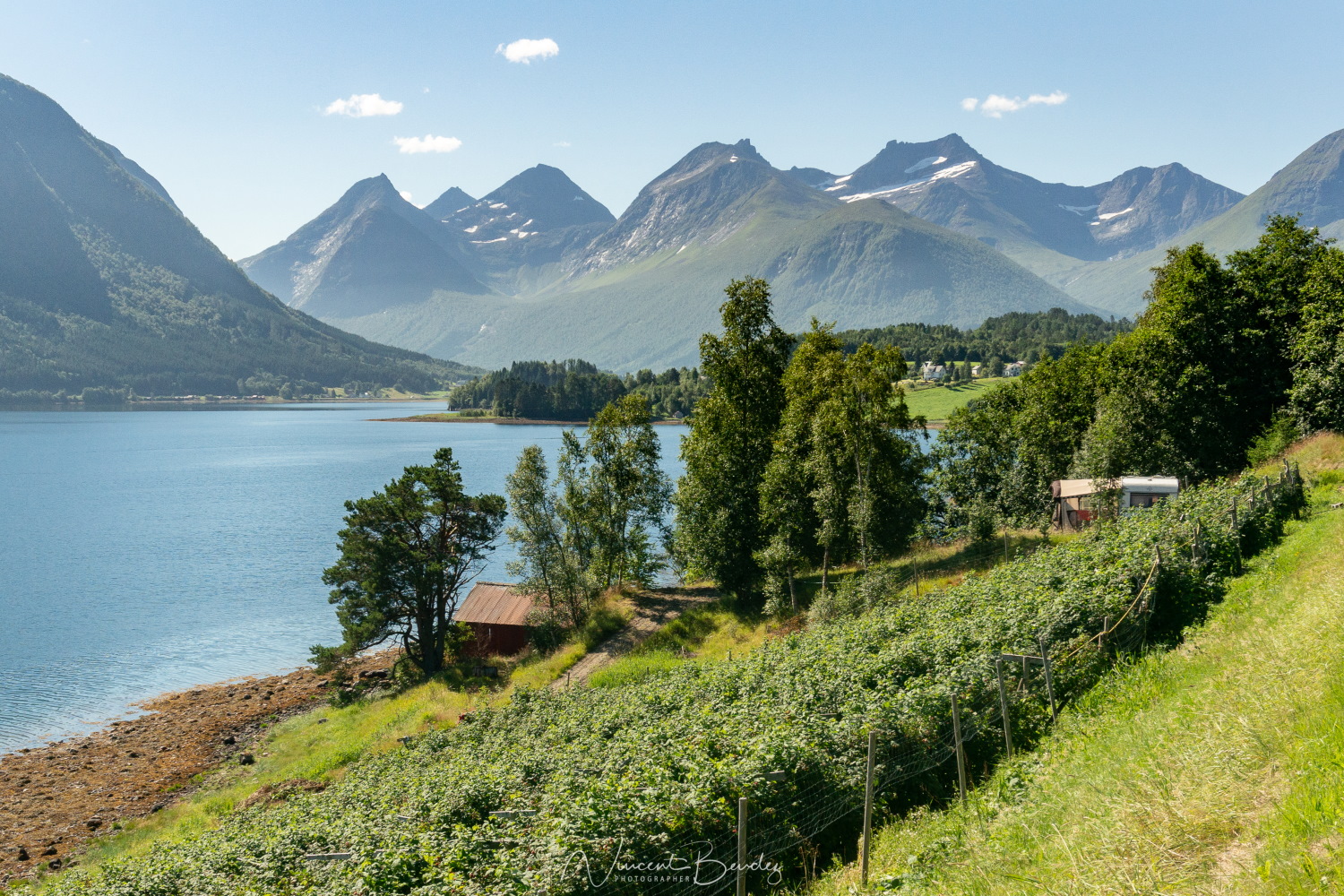
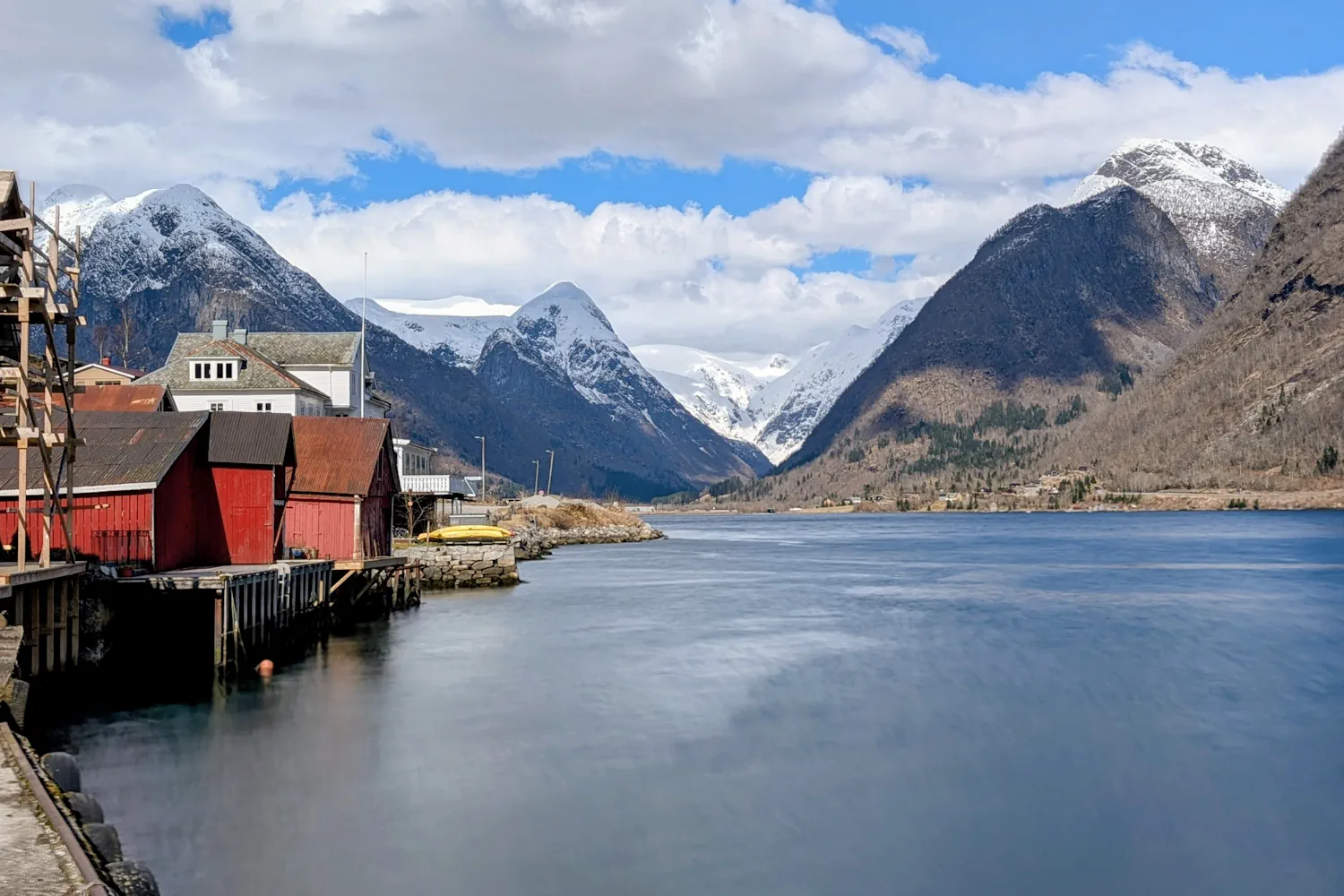
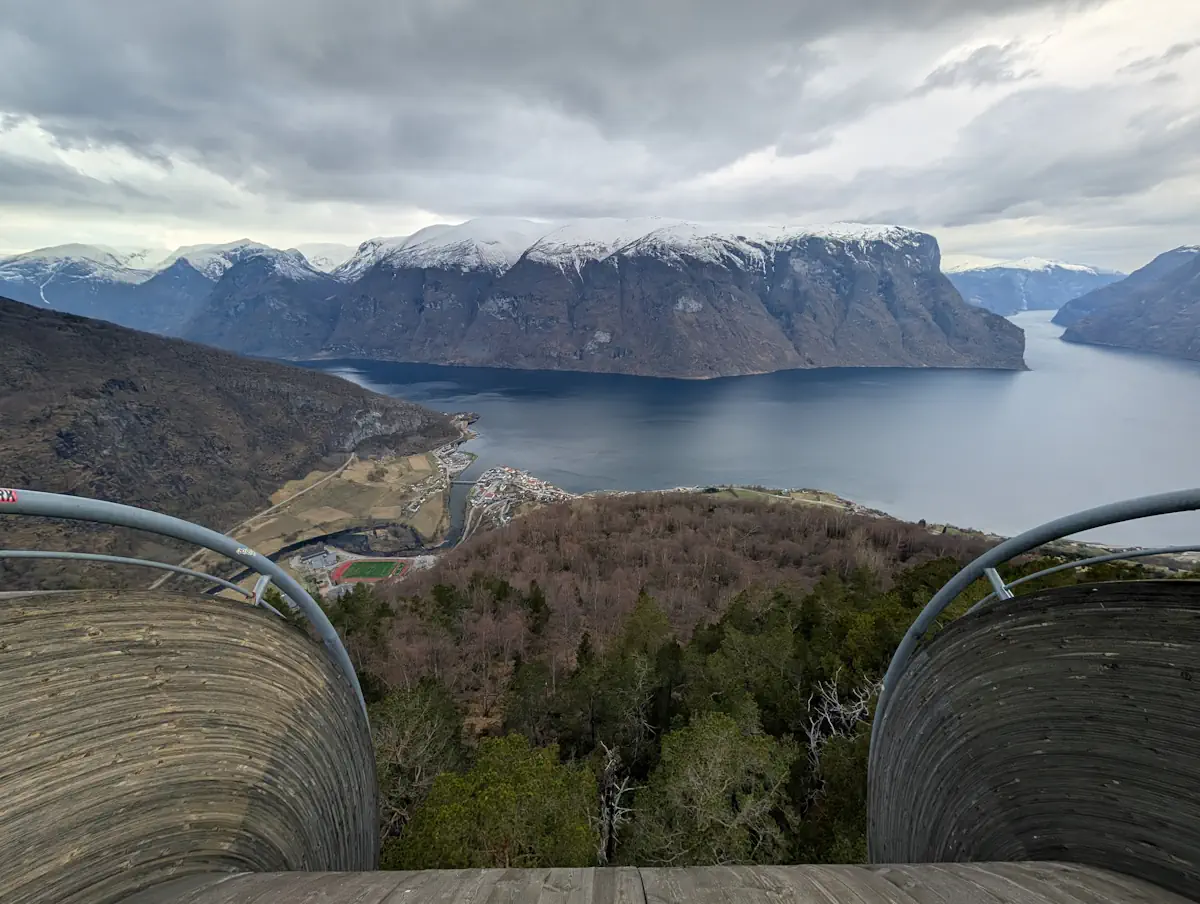
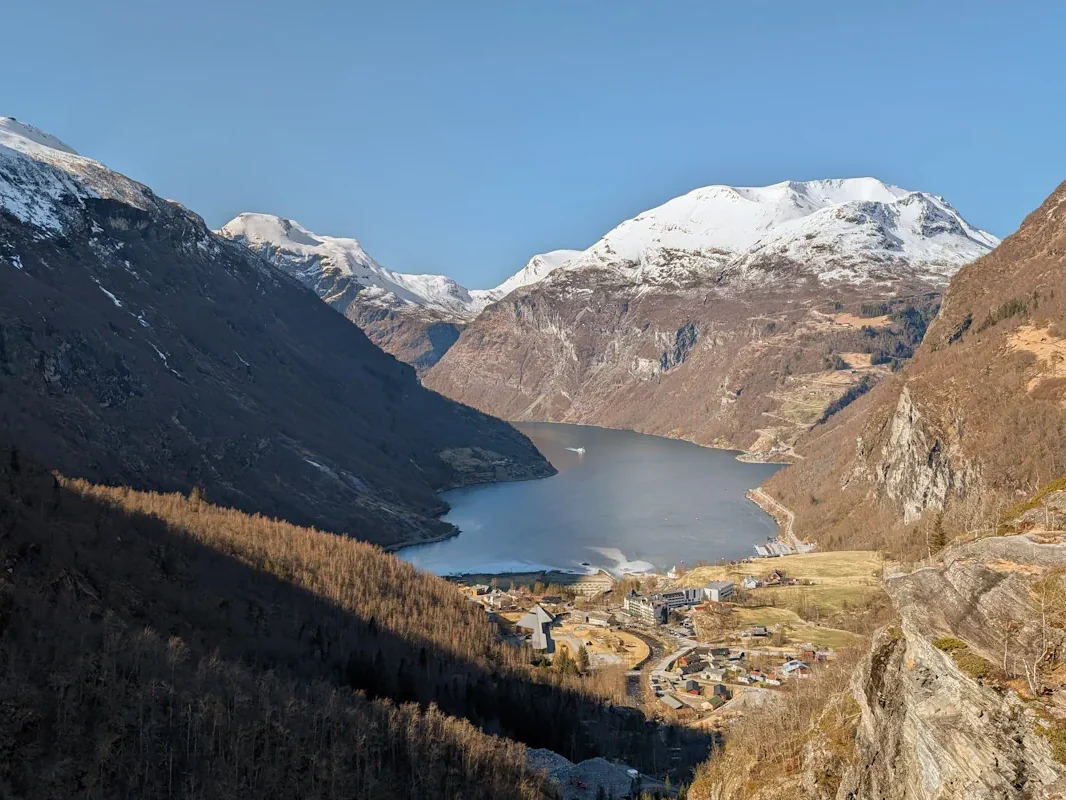
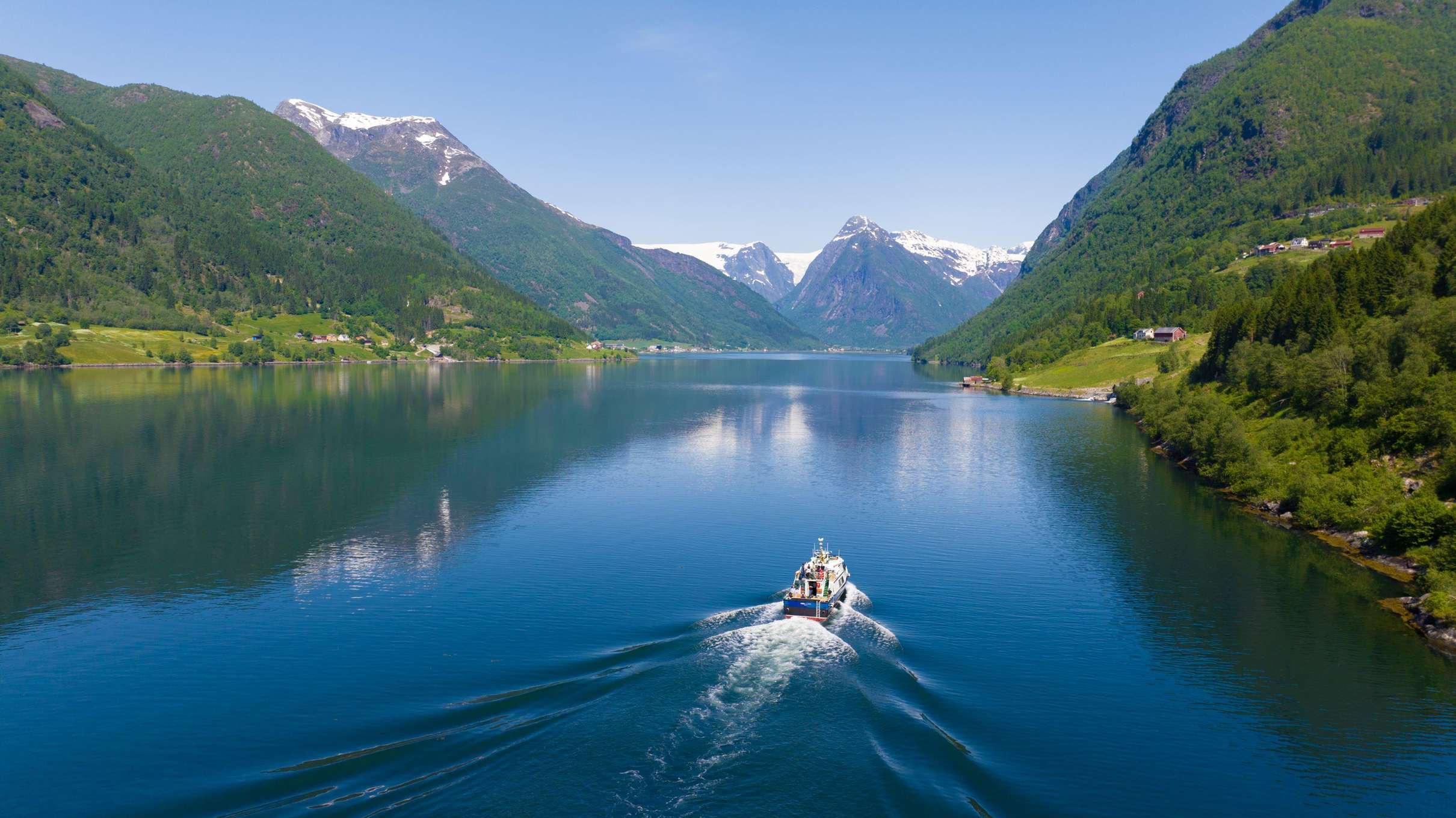
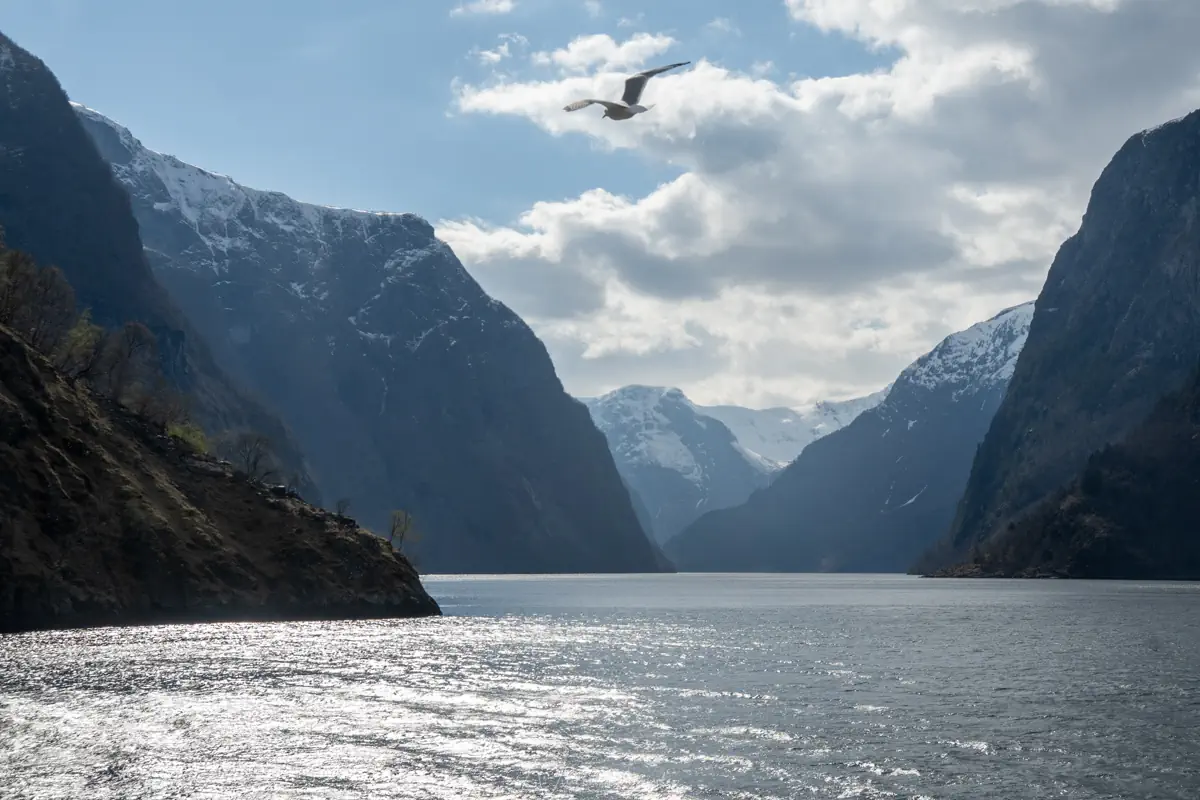
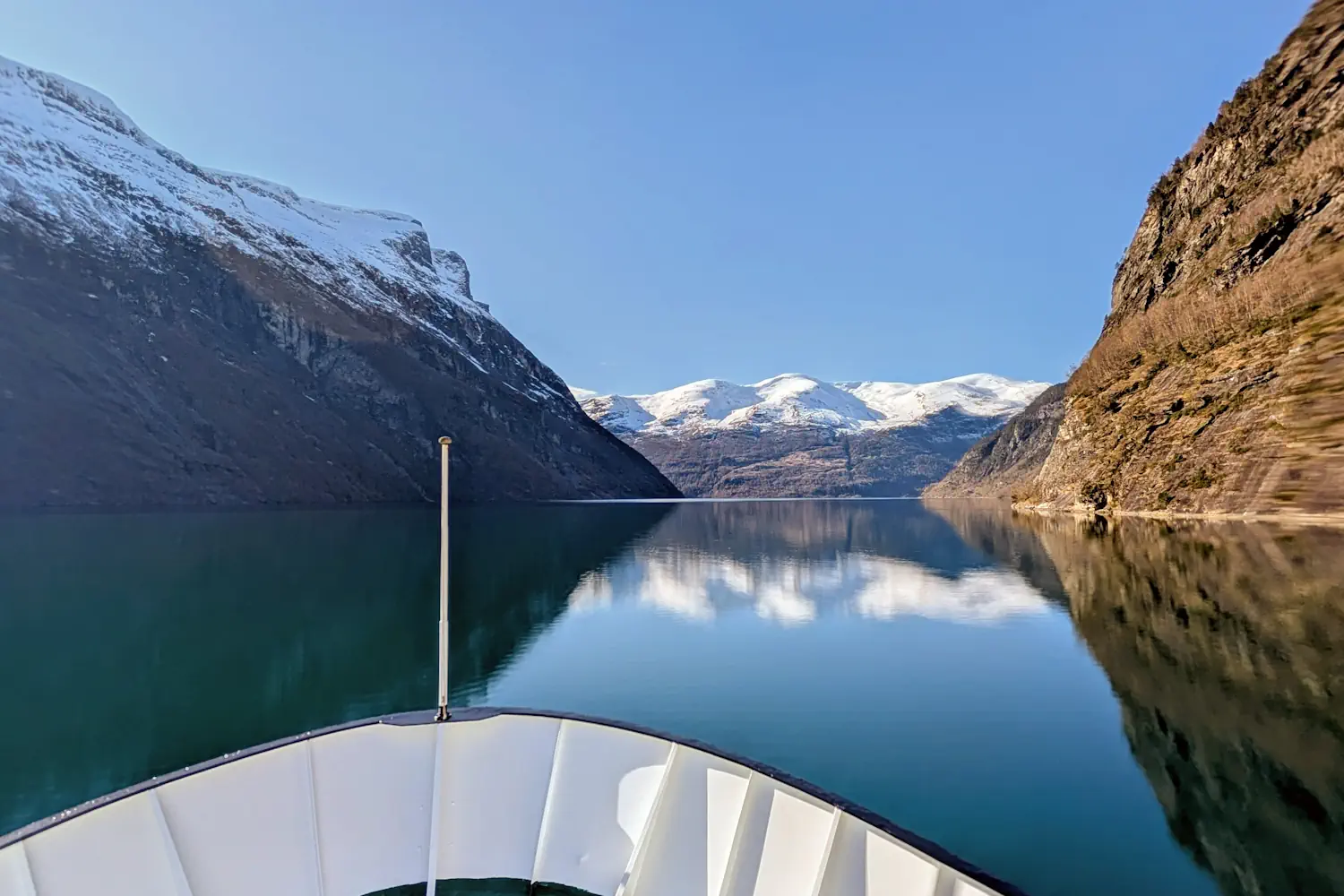
Brace yourself, big slap. The Norwegian fjords are exceptional. You know the Milford Sound fjords in New Zealand? Well this is even better. The fjords run several dozen kilometres deep, their very steep walls can reach 1300m in height (imagine being in the water with a 1300m stone wall facing you). It’s genuinely impressive. And above all, there really are loads of them! The Lysefjord is super beautiful, Odda is a magnificent setting, Fjaerland is ultra cute, Geiranger is the rockstar of the fjords and my favourite is the Naeroyfjord because it’s very long, high and very narrow. Super impressive. And what’s more you can sail on it.
People generally say the fjord region runs from Bergen to Alesund. But south of Bergen there are a few very beautiful ones too that are worth a stop, like the Lysefjord. That said, this region isn’t just about that, you’ve got some of the most beautiful roads in the country like the Trollstigen, the Snoveggen, zigzagging roads all over the place.
History buffs? in the region you’ll find the most beautiful Viking churches in Norway! Like Borgund, Urnes, Lom for example.
Why is summer the best time for the fjords? because 7/8 months a year some of the most beautiful roads in the region are closed. For example the Sognefjell (incredible), where they have to clear several metres of snow (the images are impressive), the Trollstigen or around Stryn for example.
September is also very nice because there are far fewer people and everything’s open. But from October to May, or even later, many roads in Norway are closed. Drawback
- it’s probably the most touristy spot in the country in summer. With very many campervans because the region really lends itself to it. But the upside is that it’s huge so you can easily get away from the crowds
- it’s a big region, don’t try to do too much driving in too little time
How much time to visit the fjord region In 4-5 days you can see Bergen, Flam and its various activities, the Naeroyfjord for example. A week is the minimum to really enjoy the fjords, however it’s well short of enough to discover the whole region.
In my travel guide for discovering Norway, I give you an itinerary to see the main spots. However, if you really want to discover from Bergen to Alesund, then you’ll need a good 10 days. 2 weeks is great and if you have more time then start further down, from Stavanger, to work your way up to Alesund at a relaxed pace and enjoy the region’s many iconic hikes.
Itineraries: Here are two optimised itineraries to discover the fjords in different ways


The must-sees and must-dos in the fjord region
- I’ve obviously listed everything in the following article on the best of the Norwegian fjords, but here’s a little summary to save you time
In the fjord region, you’ve probably got the highest density of places to see. It’s just incredible:
- Viking churches: Lom, Urnes, Hopperstad, Borgund…
- towns and villages: Bergen, Alesund, Fjaerland
- fjords: Naeroyfjord, Geirangerfjord, Aurlandsfjord, Hjorundfjord, Sognefjord…
- scenic roads: Trollstigen, Snovegen, Sognefjell
- must-dos: Geiranger and Flam
And that’s just a summary!
Among the activities, there are obviously the cruises on the most beautiful fjords. That’s what you come for!
There’s a whole heap of them, but I particularly recommend:
- the Geiranger – Hellesylt ferry
- The Flam – Gudvangen cruise on the Naeroyfjord
- The Lysefjord cruise departing from Stavanger
- the trip to Fjaerland from Bergen
- and if you want to spend a whole day on the water, then take the Bergen – Flam – Bergen
And really, don’t miss the famous train ride from Flam to Myrdal!
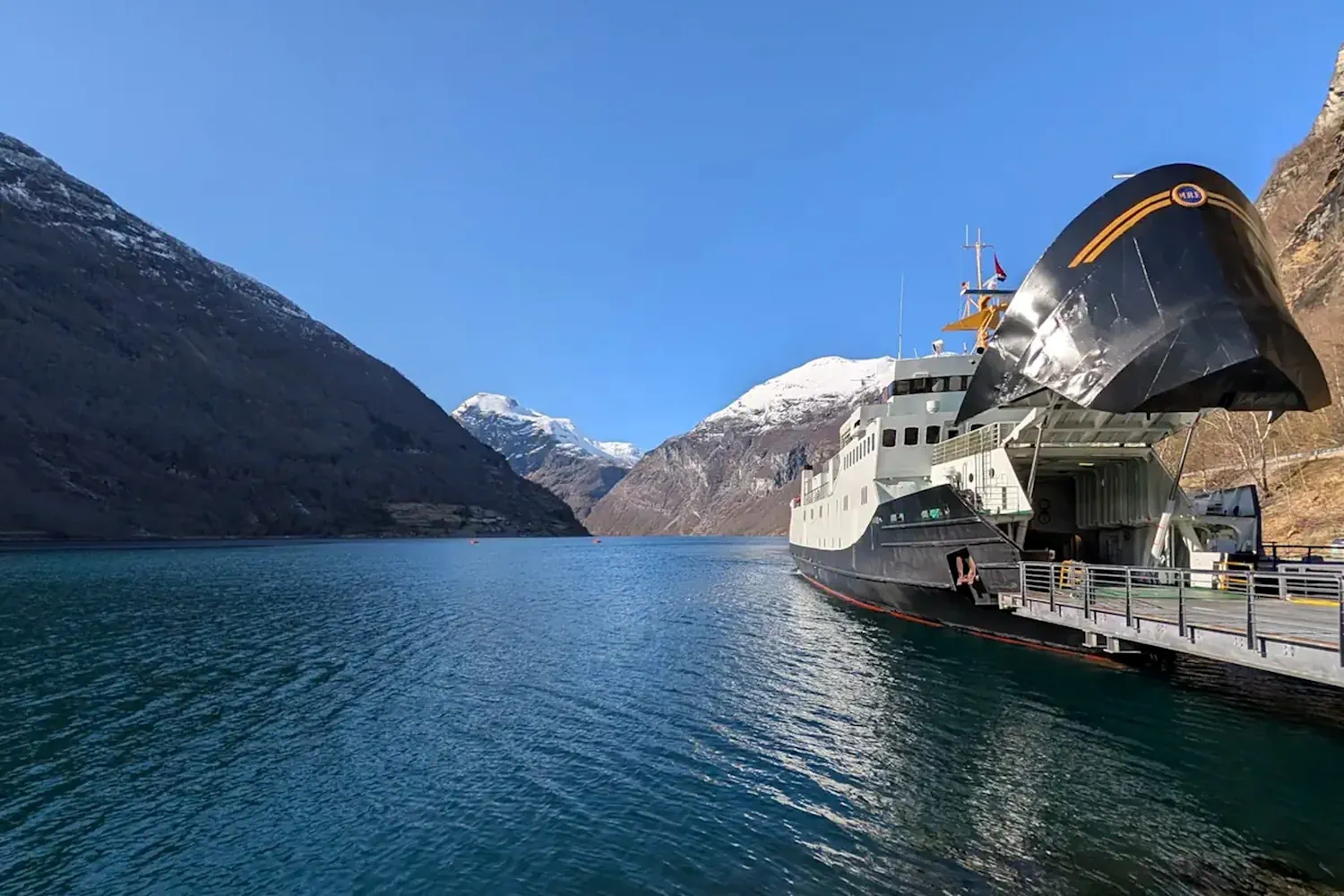

📍 Geiranger · Cruise Service (2.5 hrs)
Round trip Geiranger → Hellesylt with a water tasting at the Friaren waterfall and a 1-hour stop at Hellesylt.
- 2.5-hr round trip on the UNESCO Geirangerfjord
- Seven Sisters + Suitor + Friaren waterfall
- 1-hr stop at Hellesylt (fishing village)
Free cancellation
From 60 € / person

📍 Ålesund · VisitGeiranger (9.5 hrs)
A full-day round trip on a hybrid catamaran from Ålesund to the UNESCO Geirangerfjord, with no bus transfer.
- Hybrid catamaran with no bus transfers
- UNESCO Geirangerfjord + Seven Sisters
- Audio guide + free time in the village
Free cancellation
From 190 € / person
📍 Bergen · Lustrabaatane (13 hrs)
A full-day bus + ferry trip from Bergen to the Bøyabreen glacier via the Sognefjord and the Hopperstad stave church.
- Vikafjellet pass (1,100 m) + Sognefjord
- Bøyabreen glacier + Norwegian Glacier Museum
- Hopperstad stave church + Tvindefossen waterfall
Free cancellation
From 316 € / person

📍 Stavanger · Rødne Fjord Cruise (3.5 hrs)
100% electric catamaran to see the Preikestolen from below (604 m) and the Hengjanefossen waterfall.
- Silent 100% electric catamaran
- Hengjanefossen waterfall + Vagabond's Cave
- Leather seats, free Wi-Fi, waffles on board
Free cancellation
From 63 € / person
Seeing Oslo, Bergen, Flam and the Naeroyfjord
If you want to discover two very pretty towns as well as some nature, over 1 week to 10 days, here’s what I suggest:
- 2/3 days in Oslo, a really pleasant city, loads of super interesting museums (the FRAM, Norwegian folklore, the Kon Tiki…) and when the weather’s nice, it’s a city where being outdoors is super enjoyable
- take the train from Oslo to Bergen, one of the most beautiful lines in the world, quite simply.
- 2 days in Bergen, the most beautiful city in the country with its wooden architecture and the famous Bryggen docks
- set off to discover the fjords in 2 days: the Naeroyfjord, Flam and its train, Aurlandsfjord, the Borgund church notably. You can go via Norway in a Nutshell, make the bookings yourself by bus, train, or best of all do it by car, and then either come back to Bergen where you’ll set off from, or go straight back to Oslo (watch out for the fees on the car if you drop it off somewhere else)
If you don’t have a car and don’t want to bother with the bookings, go through an agency that takes you sightseeing, from Bergen:
-
- the Flam train
- the bus ride
- the cruise on the Naeroyfjord
- the tour of the waterfalls and villages
- More info here
With this trip, if you don’t have too much time, it lets you fill up on culture, see two very beautiful cities, and see exceptional landscapes. So there’s something for everyone! Note: recently there’s been the option to do BERGEN – FLAM by boat!



Tromso, Senja up to the North Cape
So no, the North Cape isn’t super far from Tromso. It’s 500km, so about 8/9h non-stop. That said, it would be a shame not to see more! Especially since in summer this region is exceptional, the nature is magnificent. I’ll admit I haven’t been to the North Cape yet. I stopped not too far away, at Alta, but I’m going to have to fix that anomaly soon 🙂 To discover Senja + Tromso + the North Cape, you’ll need a good ten days I’d say, to be able to make the most of it. Because in summer, in Tromso and Senja, you’ve got incredible hikes to do. In Tromso, in summer you’ve got loads to see:
- the island of Kvaloya
- Sjursnes and Nakkevatnet
- loads of hikes
- the Lyngen Alps but you’ll discover them on the road to Alta
- Signaldalen too
So all that, you can count on at least 3 days on site. Then, head for Senja, taking the ferry from Kvaloya! Since your time is limited, I recommend 2 days:
- a day in the northern fjords, from Husoy to Gryllefjord
- a day heading towards Anderdalen park and Sifjord, then continuing on to Flakstadvag
- then set off again to visit the valley of Signaldalen
- you can sleep at the foot of the Lyngen Alps, for example in one of the North Experience bubbles!
Then, you’ll have a good day to discover the Lyngen Alps, with the road that goes to Koppangen, and then from Lyngseidet up to Russelv right at the top. If you don’t want to go to Signaldalen, then you can go via Breivikeidet and take the ferry to the Lyngen Alps, super nice and quick. To head back towards Alta, take the ferry from Lyngseidet to Olderdalen, you’ll save a monstrous amount of time. A corner I love is just before Alta, towards Jokelfjord and that huge peninsula. Since the roads are long, you’ll need a day to discover all that. You can sleep closer to Alta to save time, but I recommend the Arctic Fjordcamp, a magnificent setting. From there, you can set off for the Nordkapp, you’ve still got 4h of driving without the photo stops (and there will be some!). You can enjoy it under the midnight sun. Finally, you’ll arrive way up at the top. There I couldn’t yet tell you what to see apart from being at the Nordkapp, seeing its monument and seeing the Kirkeporten rock a bit further down. If you only have around ten days, then it’ll be time to head home. Sleep nearby to enjoy it the next morning (well yes, you didn’t come all this way to leave straight away) like at the BaseCamp North Cape. The big advantage of doing this trip in summer is that you don’t have the constraints of the Nordkapp in winter: the weather conditions that can be rotten, the road closed, and being forced to go via a convoy (once a day I think). You’ve also got all the superb hikes of Senja and Kvaloya.


Lofoten Islands, Tromso and Senja in 10 days
A very classic itinerary is to discover the Lofoten Islands, Senja and Tromso in 10 or 14 days. It lets you see the essentials of one of the most beautiful regions in Norway. I suggest starting from Tromso and doing a loop (perfectly possible to do the same thing from Bodo).
- Discovering Tromso
- A day for the Lyngen Alps and Signaldalen.
- If you want recommendations for where to sleep, in the following article I give you a few good places to stay in Tromso
- Island of Kvaloya, take the road to Tromvik, then the road to Sommaroy
- Sleep at the Sommaroy Arctic Hotel to take the ferry to Senja the next morning
- Do the fjord road going via Husoy, Fjordgard, Tungeneset, Bergsbotn
- Sleep in a paradise spot: Hamn i Senja
- Go to Gryllefjord, then Sifjord up to Flakstadvag
- Take the road to Svolvaer (about 6h)
- You can sleep at the Svinoya Rorbuer
- In the upper part of the Lofoten, discover Henningsvaer, Unstad, Stamsund, Ballstad
- Sleep a bit further south to be central, like at the Lofoten Basecamp or at the Eliassen Rorbuer
- In the south, take a good 2/3 days to discover the villages of Reine, Hamnoy, A, Nusfjord, but also the beaches of Uttakleiv, Vik
- Do some beautiful hikes too like Reinebringen or Ryten
- Then, take the ferry from Moskenes to Bodo to head back to the mainland
- Sleep in Bodo, at the Panoramisk leilighet for example
- Then work your way up the superb coast towards Narvik. Stop at Stetind, the “national mountain”.
- In Narvik, you can take the cable car which offers a superb view of the fjord. Then sleep for example at the Scandic which is really rather good.
- Finally, for the last day heading towards Tromso, stop at the Polar Park to discover the region’s animals.



10 suggested itineraries for 1 to 2 weeks in Norway
If you only have a week to 10 days
In a week to 10 days, here are a few suggestions:
- The Lofoten Islands
- the Lofoten Islands and Senja (if 10 days), why not a loop from Bodo, take the ferry, work your way up to Senja, come back down the coast to Bodo
- Oslo + Bergen + Naeroyfjord and Flam
- the Fjords around Bergen (if 1 week)
- from Bergen to Alesund (if 10 days)
- From Tromso to the North Cape
If you have 2 weeks
2 weeks offer even more possibilities (logical, I know):
- Lofoten Islands + Senja + Tromso
- A loop Oslo, Bergen, Geiranger, Lom, Dovrefjell, Oslo
- A loop Oslo, Telemark, Stavanger, Bergen, Naeroyfjord, Flam, Oslo
- from Stavanger to Alesund, going via Bergen, Geiranger, Naeroyfjord… (fast but it works well)
- a full two-week itinerary in the fjords: from Bergen to Alesund but taking your time at Flam, Fjaerland, Stryn, the Sognefjell notably, going to see the glaciers and the Viking churches (Urnes, Borgund)
Norway, hiking paradise
In summer, Norway is exceptional for hiking. Well, the snag is that the most popular ones are maybe a touch overrun. I should point out that I haven’t done the vast majority of these hikes, some are a bit long or tough, I’ll list them for you:
- Preikestolen: the famous cliff that overhangs the Lysefjord by more than 600m, located next to Stavanger
- Kjeragbolten: still over by Stavanger, it’s a not-easy hike that also overhangs the Lysefjord. Its distinctive feature is its boulder wedged in balance between two stone walls
- Trolltunga: another very well-known and iconic one, the famous tongue of stone, east of Bergen
- The Romsdalseggen ridge: a wonderful view of the mountains surrounding Andalsnes, considered one of the most picturesque, but also not easy as some sections are very steep and along a ridge (hence its name, perhaps)
- The Besseggen ridge, in Jotunheimen park, a super popular hike, not difficult, to reach glacial lakes and get magnificent views
- Keipen, for a superb view of the Geirangerfjord
- Skageflå: a magnificent hike on the flank of Geiranger, you face the famous Seven Sisters waterfalls
- Reinebringen: the famous one. An incredible view of the village of Reine, its archipelago, the fabulous mountains of the region, in the Lofoten Islands.
- The Horseid and Bunes beaches: located in a spot that’s not easy to reach from Reine, these are two magnificent, somewhat isolated beaches on the uninhabited side of the Lofoten Islands
- The Kvalvika beach: several routes lead there (I’d say 3) to reach yet anooother isolated beach. Ryten offers the most beautiful view I’d say, but they’re all worth it!
- Segla: the iconic mountain of Senja island, there’s a fairly easy version and a difficult version to get a crazy view. Take a look at Husfjellet too!
Well, that’s really only a tiny sample of the most beautiful hikes in Norway. Generally, it climbs. So warm up your calves, but the views are genuinely exceptional!
There really are hikes everywhere, if only because nature is legally accessible to all. On top of that, with all these mountains, the panoramas are great wherever you are.
That said, the most famous hikes and the most beautiful views (accessible without having to do any climbing) are between Stavanger and Alesund, as well as in the Lofoten Islands. Senja is also a real hiking paradise, especially as there aren’t many people!


Norway by campervan in summer
So first of all I should point out that I’ve never travelled by campervan or camper in Norway. I’ve done it in quite a few other countries, including Iceland or New Zealand, but I cross paths with campervans just about all the time in Norway. I’d even say that a great many Norwegians have a campervan that they take out as soon as the weekend comes. It’s funny because on the roads around Tromso where I am, it’s a proper migration 🙂
And honestly, Norway is the perfect country for this way of getting around and exploring. Indeed, first of all you can stop anywhere!
The concept of nature for all means that, unless otherwise indicated (rare but it happens if there have been abuses), you can park your vehicle wherever you like to sleep. And since it’s something even the locals do, there are many set-up spaces all over the place. Very well-maintained public toilets in lovely spots, super well-located campsites, it’s easy to empty the waste water, buy gas, that kind of thing.
Norwegian driving is also well suited. The speed on the roads is limited and Norwegians really don’t drive like maniacs. It’s relaxed, respectful, no one will put pressure on you, which is very pleasant. So in a campervan, with a slow vehicle, you won’t be bothered. On the other hand, really, if you see there’s a queue behind you, pull over onto the verge for a few seconds to let those going faster pass, it’s greatly appreciated 🙂
You can also take all the ferries with the campervan. From Tromso to Senja, from Bodo to the Lofoten, in the fjords, the ferries and car ferries take trucks and campervans without a hitch. So if you have the time, really do take a few weeks to go off and discover Norway by campervan. In July and until mid-August you’ll be with plenty of fellow travellers, but honestly it’s fine 🙂 The last fortnight of August there are far fewer people!


The activities to do in Norway in summer
Norway is a paradise for doing loads of outdoor activities. Okay fine, a huge number are doable in winter, but in summer there are also plenty of great things to do, especially sporty activities.
I’ve already told you about the magnificent hikes to do all over the country. But there are other great classics:
- kayaking, with all these coastlines, Norway is the perfect country for kayaking in paradise waters, surrounded by mountains. You can do it in the Lofoten Islands, but also in the central fjords. Two absolutely perfect settings!

- going by boat: there are magnificent boat rides to do in this country. Ferry crossings, sightseeing boat trips, along the coast or in the fjords:
- On the Naeroyfjord, perhaps the most beautiful. You can book either via Norway Best to do the ride between Flam and Gudvangen
- or here if you want the cruise with pickup from Bergen!
- New! You can go directly by boat between Bergen and Flam!
- But if you’re driving, take a look at the (magnificent) Kaupanger – Gudvangen route
- In the Lofoten, discovering the Trollfjord by boat is magnificent
- Geiranger of course! There are two ways to discover it.
- The famous Bodo – Moskenes crossing. Ok it’s a ferry, but you’re between two magnificent mountain ranges, so you’re in for an eyeful!
- In the Stavanger region, you can do a little cruise in the Lysefjord, at the foot of the Preikestolen
- Finally, if you want to see fjords by boat from Bergen, it has to be the cruise towards Mostraumen! and in the following article I give you all the info on this lovely cruise on the Osterfjord.
- On the Naeroyfjord, perhaps the most beautiful. You can book either via Norway Best to do the ride between Flam and Gudvangen

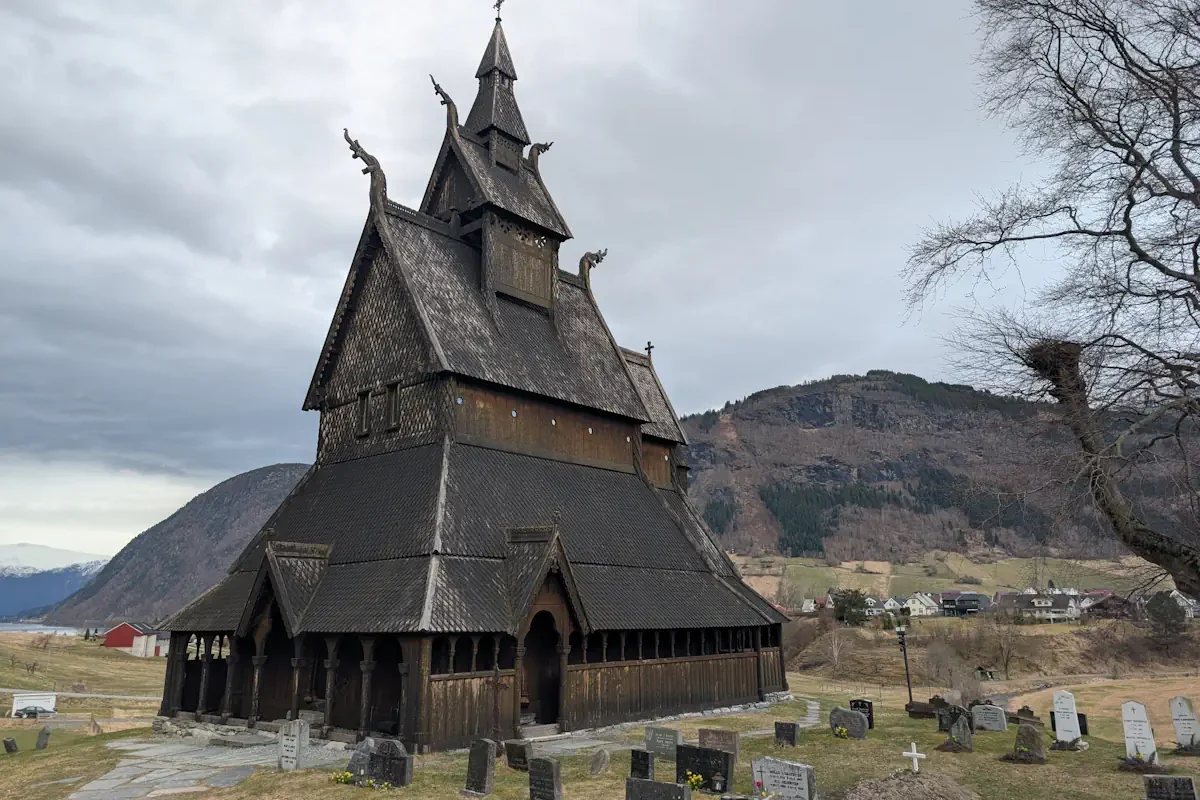
- seeing the stavkirke: these famous Viking churches are mostly in the centre of the country. There used to be hundreds of them everywhere, but a great many burned down. The ones that remain are magnificent, you can find them mainly between Bergen and the fjords. It’s worth going to see Lom, Borgund, Urnes notably. In Bergen there’s a reconstructed one that’s interesting.

- discovering the museums: the most interesting are mostly in Oslo. I lo-ved the FRAM museum on polar expeditions. The Kon Tiki too, as well as the Norwegian Folklore museum. Anyway, in the following article I point you to the best museums in Oslo. In Bergen, to get your dose of culture, it has to be Bryggen, the historic docks district. The Hanseatic museum is interesting for discovering the history of the Hanseatic League and how it made Norway’s fortune.


- seeing the animals:
- in summer, the whales are visible at Andenes, in the Vesteralen. Otherwise in the Lofoten and the north coast, it’s with a bit of luck, there’s no guarantee but it can happen
- the puffins are visible on the island of Runde, off Alesund, from March to early August
- you can discover the typical musk oxen in Dovrefjell park. For that, you have to walk a bit, and if you don’t know where to go, then you can go through a guide who’ll know where they are
- the reindeer, in summer, are out in the wild. So you can see them just about everywhere, because they move around a lot unlike in winter when they stay where they can feed easily
- the moose, you need a bit of luck, but it happens (I saw a lot this winter), they love forests, move around mostly at night and cross the road like Parisians, namely without looking and without stopping.
- the dolphins, there are lots of them and all year round. You cross paths with them fairly easily on the north coast, between the Lofoten and Kirkenes. They move around, you need a sharp eye to spot them along the coast


📍 Hjerkinn · Dovre & Lesja Aktiv (6 hrs)
Guided hike in Dovrefjell National Park to get close (within 200 m) to these shaggy giants that survived the Ice Age.
- 6 to 15 km hike depending on the group
- Spotting scope included to find the herds
- Chance to spot wild reindeer too
Free cancellation
From 60 € / person
📍 Henningsvær · Arctic Adventure Tours (2.5 hrs)
RIB trip between the Lofoten islets in search of orcas, pilot whales and white-tailed eagles along the cliffs.
- Floating survival suit provided
- Orcas, pilot whales, seals, sea eagles
- Photo stops between the islands and skerries
Free cancellation
From 133 € / person

📍 Bodø · Nordland Adventures (5 hrs)
A dusk minibus trip in search of Europe's largest deer, with guaranteed sightings or a full refund.
- Small group (6 people max)
- Guaranteed sighting or you pay nothing
- Stop at the Saltstraumen maelstrom
Free cancellation
From 164 € / person

📍 Bleik, Vesterålen · Green Gold of Norway (3.5 hrs)
RIB trip over the Bleik underwater canyon to encounter sperm whales, orcas, pilot whales and colonies of Atlantic puffins.
- Small group (12 people max) on a RIB
- Warm floating survival suit provided
- Coffee, tea and muffins on the way back
Free cancellation
From 169 € / person
- seeing the glaciers: there are more than 2500 glaciers in Norway, the largest is the Jostedalsbreen, in the centre. Several are fairly easily accessible, and on some you can even walk:
- Nigardsbreen
- Briksdalsbreen
- Bøyabreen
- Okstindbreen
- Svartisen
- Tystigbreen
- Folgefonna (you can look here to walk on it)
- Austfonna is in Svalbard but is the largest
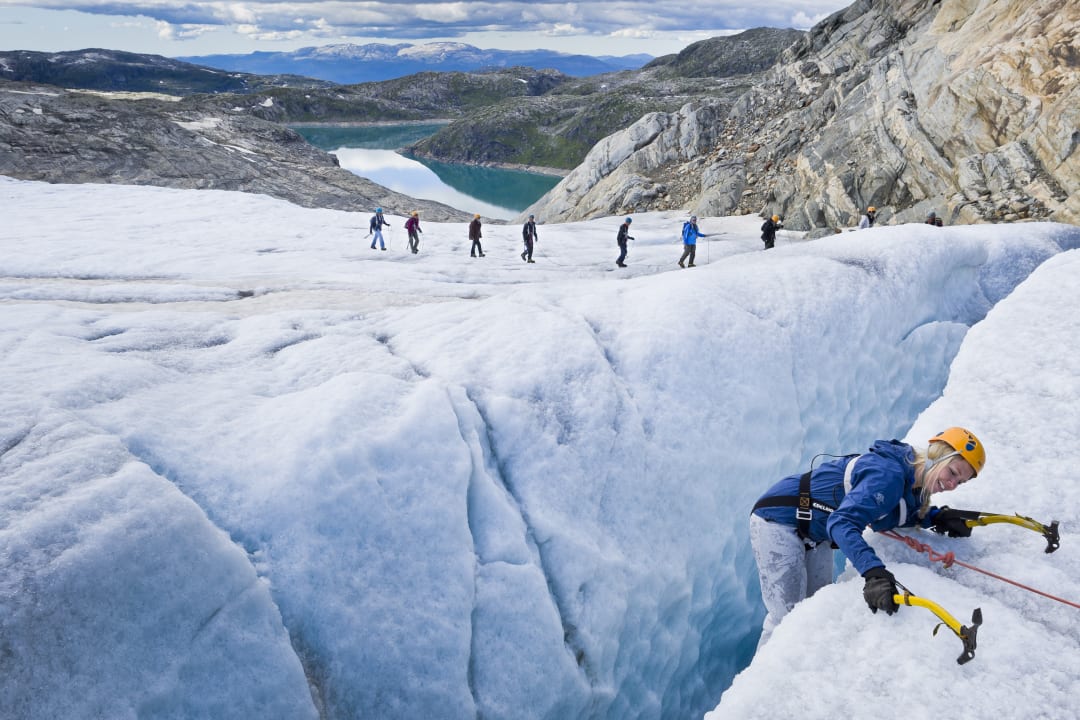
📍 Jondal · 5.5 hrs · Folgefonni Breførarlag · strenuous hike
5.5 hours for a strenuous 5-6 km hike on the Juklavass glacier with full equipment provided. Panoramic views over the North Sea and the Rosendal Alps — from age 10.
- 5-6 km glacier hike (300-400 m elevation gain)
- Equipment provided: crampons, ice axe, harness, helmet
- Departs Fonna Glacier Ski Resort · from age 10
Moderate cancellation
From 111 € / person

📍 Bergen · 10 hrs · Maresia Tours · bus + ferry
A full day from Bergen (10 hrs) to visit Folgefonna National Park: the Steindalsfossen waterfall, a ferry across the Hardangerfjord, and a gentle 45-min walk to the Bondhusvatnet glacier lake — packed lunch included.
- Bus + Hardangerfjord ferry from Bergen
- Steindalsfossen waterfall + Bondhusvatnet lake
- Fresh packed lunch + English-speaking guide
Free cancellation
From 170 € / person
No, there are no (visible) northern lights in Norway in summer
Or virtually none. To get northern lights, above all you need night. Now, there’s no longer any real night from late April to late August, and you have the midnight sun (that is, the sun above the horizon 24/7) from mid-May until late July. More than 2 months with non-stop sun, not bad right? So the northern lights, in the north of Norway (Arctic Circle) won’t be visible from mid-to-late April to late August. Late August for a little bit of night, early September starts to be lovely for the northern lights and then you can really see them well, even if the nights are still fairly short.

Practical information on Norway in summer
How long to stay
For the nature, you need to stay at least a week. You enjoy Oslo or Bergen in 3 days, but if you’re coming for your holidays rather than a weekend, you’ll need at least a week. We saw earlier what you can do in 7/10/14 days, you need roughly a week per region. The country is really big, really stretched out, the connections are long, the speed limited and you stop all the time. It’s a country where you take your time. I’d say that if you have 2 weeks or more, it’s a bit of paradise 🙂
Allemannsretten: the right to access nature
Imagine a huge playground, with almost no limits, where you could settle down wherever you like. It looks like Minecraft but it’s actually Norway! Norway lets you access all its natural spaces with almost no restriction whatsoever. Except in places where it’s specifically indicated, you can go there. Does it belong to someone? No matter! Well, don’t go having your barbecue in front of the door of the house, but you could go into the fields of an estate, into a nature reserve, sleep facing a magnificent lake. All you’re asked to do is be respectful of the place and the people, and not leave a single trace. This relationship with their nature explains why Norwegians are constantly out and about. Is there snow? they’ll go cross-country skiing. Is the weather nice? they’ll go hiking. Is it autumn? they’ll go picking kilos of berries even in the rain. Outdoor recreation is guaranteed by law, no less. So you can go “onto someone’s land” as long as it’s 150m from their home. If you want to stay more than 2 nights in the same spot, you need to ask the owner’s permission. Some natural spots also forbid staying more than 2 nights.

How to get around
I’m going to write you a dedicated article, but here’s the main information
- Planner: your best friend will be the app (or website) entur.no to plan all your journeys (train, bus, ferries), get the timetables and locations
- Train: there’s a small but reliable network that passes through the main cities. Oslo, Stavanger, Bergen, Trondheim, Mo i Rana, up to Bodo. There’s no train in the north. Take a look at vy.no, the Norwegian train company. The Oslo-Bergen line is considered one of the most beautiful in the world.
- Bus: there’s an excellent bus network in Norway. But… the north/south difference is really marked and it’s difficult to get from north to south. In the south and centre, it’s mostly the VYbus network, up to Trondheim. Whereas in the north, all along the coast, it’s more the Arctic Route and you can’t go lower than Narvik.
- Plane: there are loads of small airports in Norway, and the planes are also “stopping services” in the sense that there are several stops and not a classic return trip. It’s super well served, it can be not too pricey if you book early, you should look at the airlines Wideroe, Norwegian and Flysas.
- Boat: travelling by boat is part of Norwegians’ history. The Hurtigruten is more than a cruise ship along the coast, it’s a coastal express, like a bus, but at sea, that serves dozens of ports along the country. And it’s a super handy way to travel!
- Car: the most practical, of course. Rental isn’t expensive, generally, but the price of petrol has soared. Absolutely compare rental prices, for my part I look at Booking.com (which does car rental too, yes) and Discover Cars so as not to get any nasty surprises.
- If you’re coming with your own car, don’t forget to register with Autopass to pay the tolls and ferries
CAR RENTAL IN NORWAY
Explore Norway by renting with Discover Cars

- Rent a car from many airports or in town
- Small model, SUV or electric for adventure
- Car supplied with the Autopass tag
- Prices from 30€
Conclusion
There we go, I think I’ve told you just about everything! Obviously, Norway being such a big country, with so many different regions, it’s hard to list everything there is to do, all the places to see. But I hope this article will help you plan your trip to Norway for this summer, and above all that you’ll find where to go, which is the best spot that suits you best.
Planning your Norway trip well
Here are some other resources to best prepare your stay in Norway
- To organise your trip, find all the information on Norway
- Here’s all the info to pay the tolls and ferries in Norway
- Discover everything you must see in Bergen
- What to do in Oslo over a few days
- By the way, for practical info, discover the hotels at Oslo Gardermoen airport, and especially how to get from the airport to Oslo city centre.
- Everything you need to know for a trip to Tromso
- Discover the most beautiful spots in the Lofoten Islands
- As well as the best interactive map of the Lofoten Islands
- All the information to visit the island of Senja
- Timetables and fares for the ferry between Bodo and the Lofoten Islands
- If you’re there in late August/early September, here are the best spots to see the northern lights in Tromso
- Tromso in summer – hikes and fjords under the midnight sun
- But here are also the best agencies to guide you to the northern lights
- Discover everything you must see in the Norwegian fjords region
- As well as the interactive map of the most beautiful spots in the Norwegian fjords
- You should plan ahead with your bank to have the right bank card to pay in Norway
- The best time to visit Norway – summer, winter or shoulder season: what really changes