Last updated on
The start of a great love story. Discovering Norway through the fjord region is always a good idea, and it’s a sure bet you’ll come back later. Sorry to spoil the surprise, but you never stop at just one trip to Norway 😀 The fjord region is very large and quite hard to define. You could say it stretches from Bergen to Alesund, taking in the main fjords like the Geiranger, the Sognefjord, the Nærøyfjord, on which you can take a fantastic cruise or the Storfjord. But also superb spots like the famous Trollstigen road, the sublime Sognefjell road and plenty of Viking churches. And if you push a little further, you can extend it to Stavanger and the famous Trolltunga and Preikestolen, or even north to Trondheim. In short, in this article I’m going to introduce you to these different places I love, including the fjords of course, the towns, the pretty spots. I’ll try to give you plenty of tips, my favourites, a few accommodation recommendations, practical info like buses, timetables… In short, everything you need to enjoy a great stay with no nasty surprises! Let’s go! Oh, and if you want to move fast and would rather see the itineraries, here’s what I suggest:
The most beautiful fjords to see in Norway’s fjord region
We’ll start with the fjords because that’s what you’re here for 🙂 With more than 1,700 fjords along the coast, some sorting was definitely needed. So here are the 7 fjords that are really worth the detour, with what makes each one unique and, above all, the best way to discover it. The table below gives you the overview, and I’ll go into all the detail just after. But yes, I know, some are missing. I could obviously have included the Storfjord, but it later becomes the Geirangerfjord. I could also have mentioned the Aurlandsfjord, which I love, but you’ll obviously pass through it on your way to Flåm and the Nærøyfjord.
| Fjord | What makes it unique | How to visit it | The cruise to take |
|---|---|---|---|
| GeirangerfjordThe most spectacular | A UNESCO site, steep cliffs and the Seven Sisters waterfalls. The great classic, for good reason. | By ferry from Hellesylt or Valldal (my favourite), then the Dalsnibba and Ørnesvingen viewpoints. Departure: Geiranger or Ålesund. | 👉 Cruise on the Geirangerfjord |
| NærøyfjordMy favourite | The narrowest (250 m wide!), a UNESCO site. Vertiginous cliffs, a unique atmosphere. | By boat between Gudvangen and Flåm, or by Kaupanger–Gudvangen ferry with the car. Departure: Flåm, or Bergen on a day trip. | 👉 Nærøyfjord day + Flåm railway from Bergen |
| SognefjordThe king of fjords | The longest (over 200 km) and deepest in Norway. Superb villages like Balestrand or Fjaerland. | By express cruise from Bergen, or by road along its arms. Departure: Bergen or Flåm. | 👉 Bergen → Flåm cruise on the Sognefjord |
| HardangerfjordThe most blossoming | Orchards in bloom in spring, the Folgefonna glacier and the famous Trolltunga on its heights. | By road from Bergen (about 1 hr 30) or by express cruise. Departure: Bergen. | 👉 Bergen → Rosendal cruise |
| LysefjordThe most vertiginous | Dominated by the Preikestolen and Kjerag cliffs, two of the most legendary hikes in the country. | By cruise from Stavanger, or on foot via the Preikestolen (8 km round trip) and Kjerag hikes. Departure: Stavanger. | 👉 Lysefjord + Preikestolen cruise |
| HjørundfjordThe wildest | At the heart of the Sunnmøre Alps, far from the crowds. One of the most authentic fjords in Norway. | By cruise from Ålesund with a stop at the village of Øye and its historic hotel. Departure: Ålesund. | 👉 Hjørundfjord cruise from Ålesund |
| NordfjordBetween glaciers and lakes | The Briksdal glacier, Lake Lovatnet and the crazy view from the Loen Skylift right next door. | By car from Loen or Olden, with the Skylift to gain some height. Departure: Loen / Olden. | 👉 RIB boat trip on the Nordfjord |
The Geirangerfjord, the most spectacular
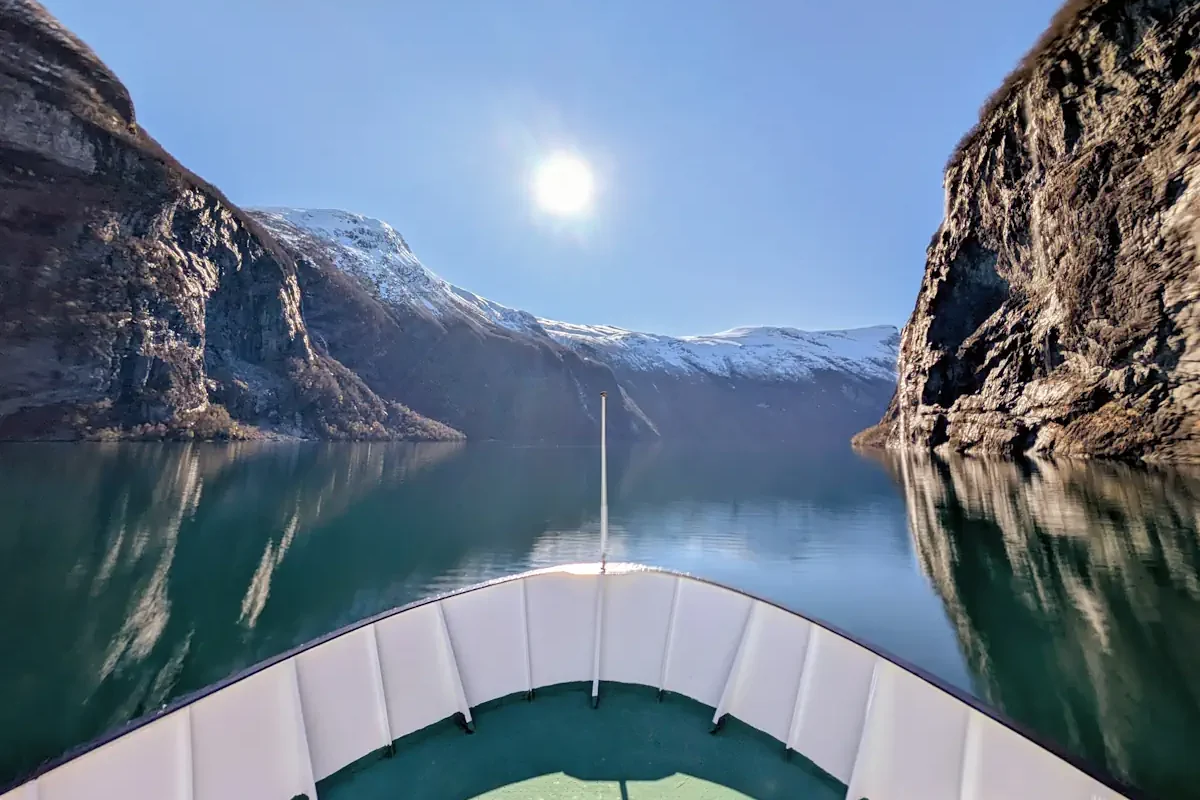
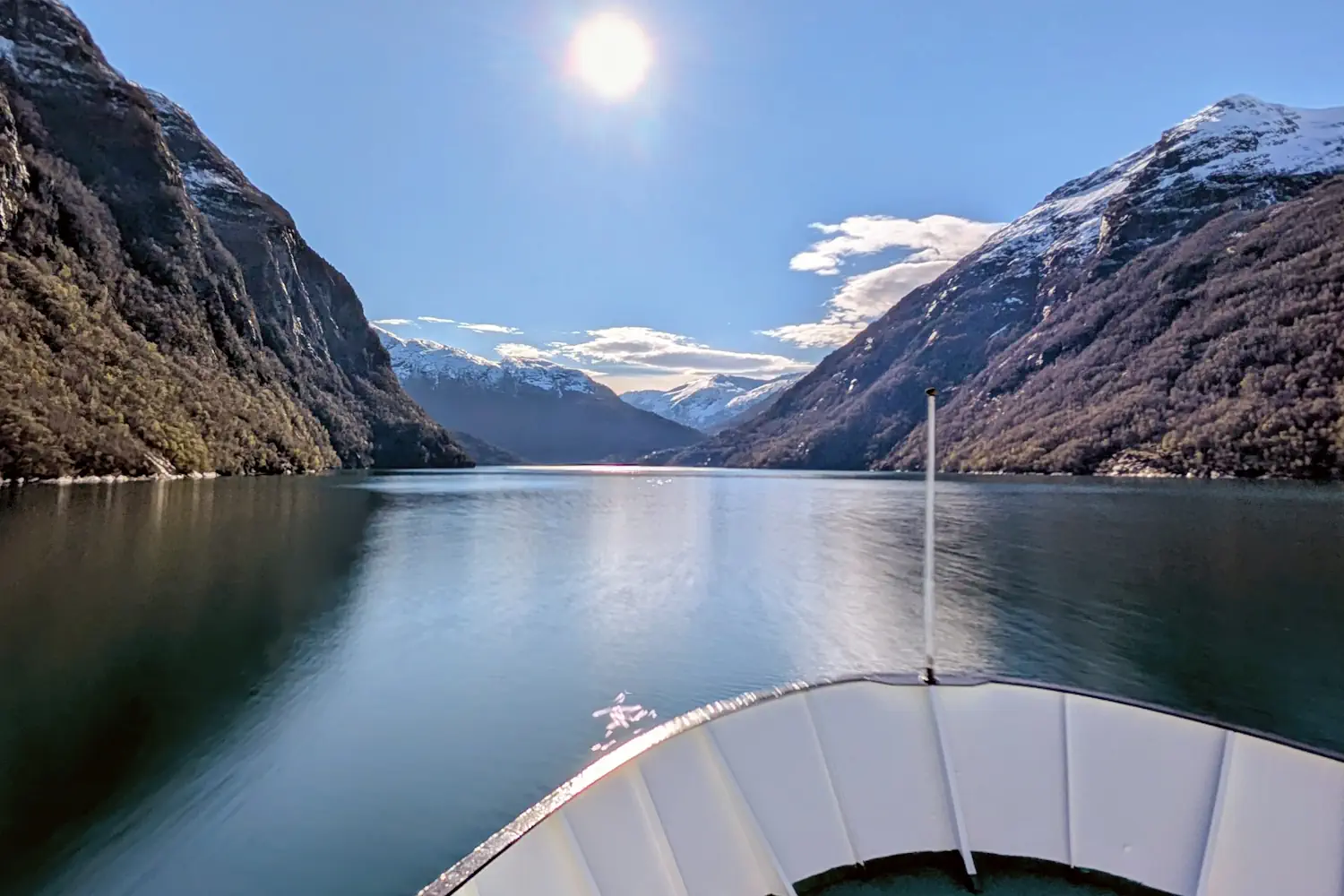
Wow, it’s beautiful! Of course it’s a great classic, much talked about, but for good reason. A UNESCO World Heritage site, the Geiranger is one of the most impressive and majestic fjords in Norway: cliffs rising to 1,700 m and the famous waterfalls that each have their own name and story — the Seven Sisters, the Bridal Veil, the Suitor. For me, it’s discovered first and foremost by boat. There are two ferry crossings: a fast one from Hellesylt (1 hr, and you can take the car on board, which is what we did in April), and a longer one from Valldal that I strongly recommend. Then the viewpoints: Dalsnibba and Ørnesvingen, with crazy views over the fjord.
How to discover it:
- By ferry from Hellesylt or Valldal, or with the classic Geirangerfjord cruise
- The Dalsnibba and Ørnesvingen viewpoints (reachable by car)
- Sleep facing the fjord at the Grande Fjord Hotel
I go into all the detail in my article on what to do in Geiranger and which cruises to take there.

The Nærøyfjord, my favourite
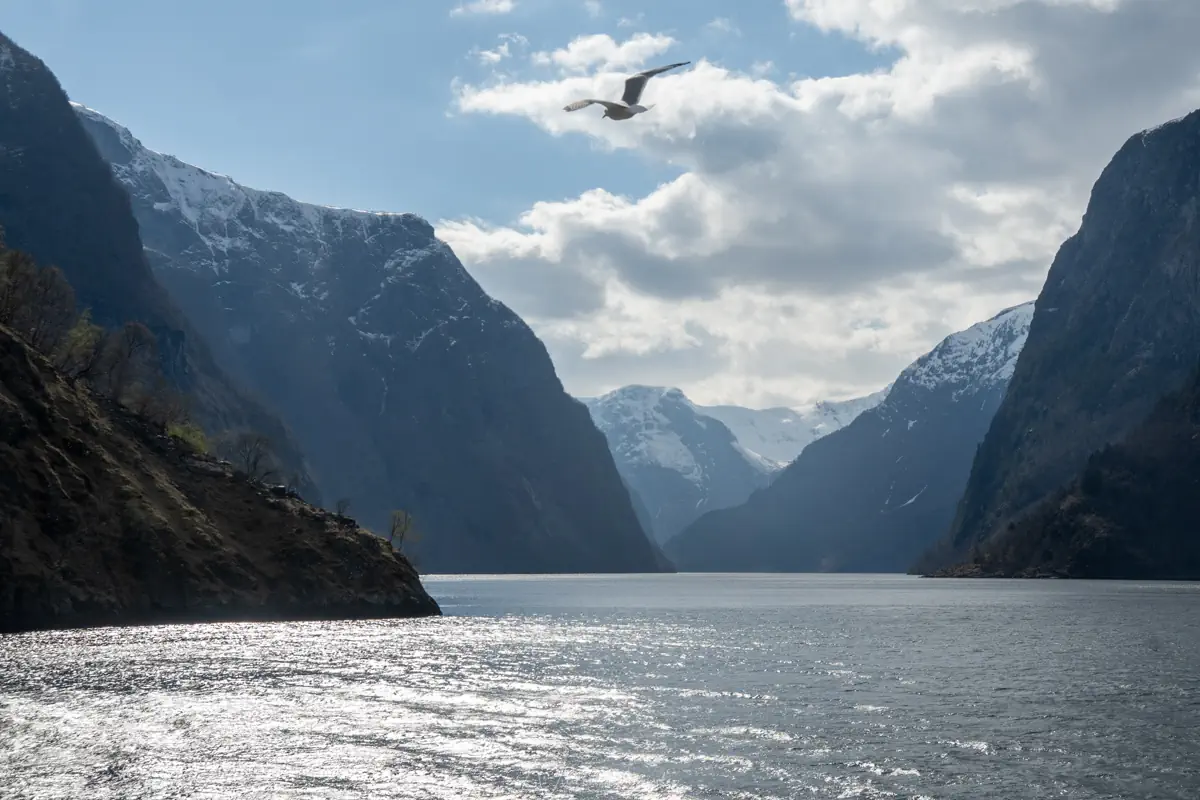
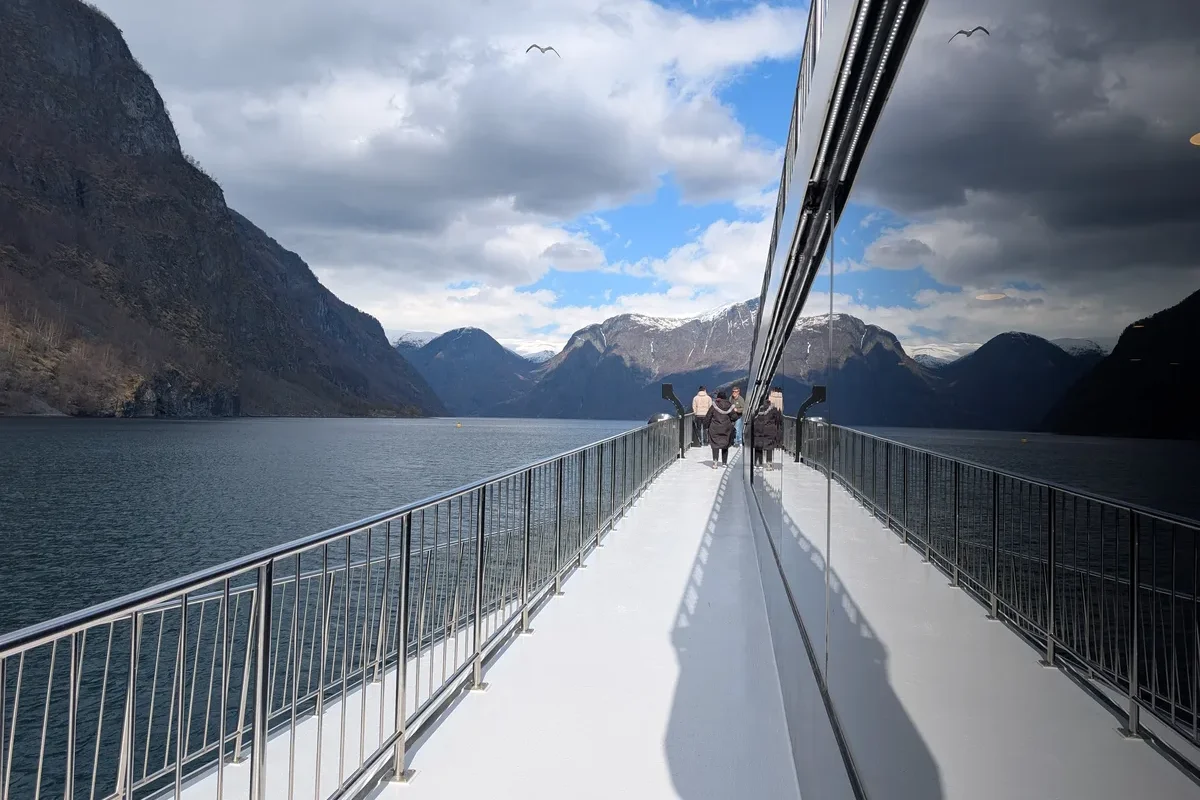
This one is my favourite fjord. Because it’s super narrow (250 m wide for 17 km long), because the cliffs climb to 1,800 m, a slightly oppressive feel but not too much, hugely impressive. A UNESCO site along with the Geiranger, the Vikings considered it the fjord of the sea god. No less. For me it has to be visited by boat: the cruise between Flåm and Gudvangen is, in my opinion, the most beautiful in all of Norway. A 100% electric catamaran, total silence, and a fjord so narrow you feel you could touch the cliffs. The catch? After that, you’ll compare everything to this cruise 😀 And if you’re on a road trip, the Kaupanger-Gudvangen ferry combines transport + cruise, it’s a win all round.
How to discover it:
- The Flåm-Gudvangen cruise, the not-to-be-missed experience in Norway
- Without a car: the full day from Bergen with the Flåm railway
- Sleep right by the water at the Flåm Marina
All the options (classic boat, car ferry, kayak…) are in my article on the Nærøyfjord cruise.

The Sognefjord, the king of fjords
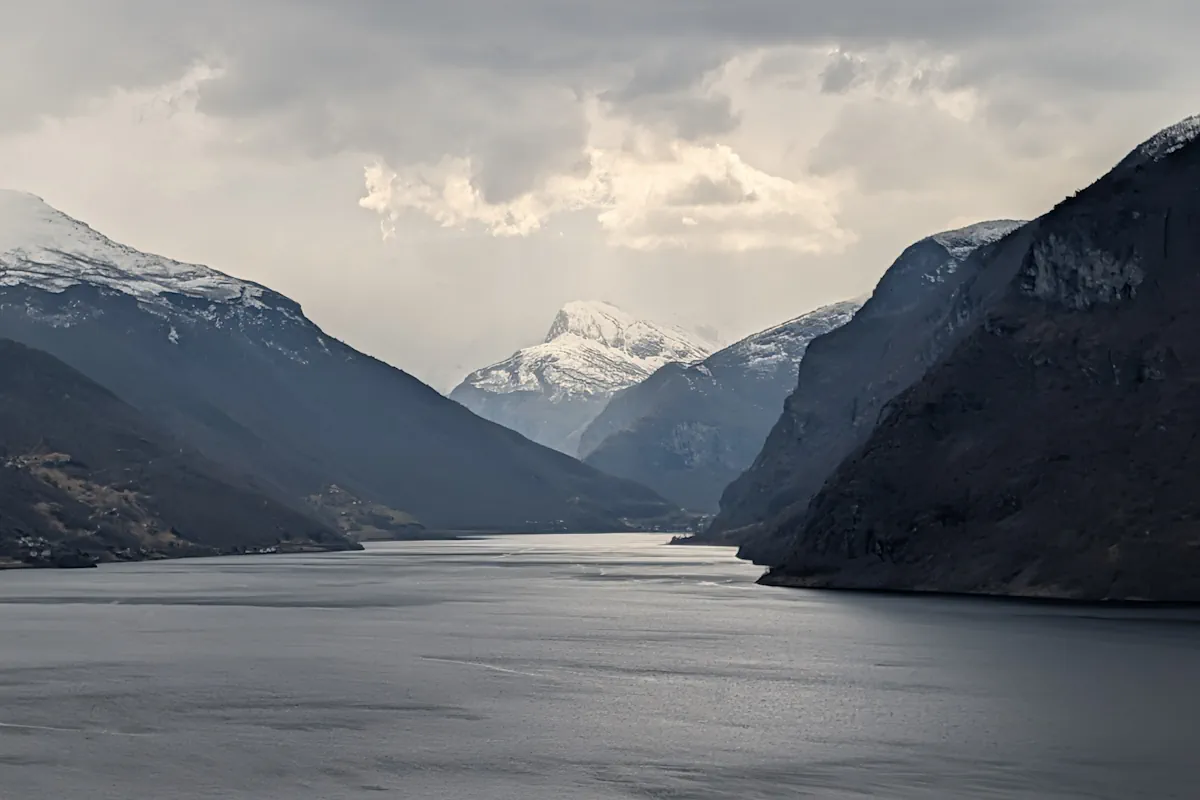
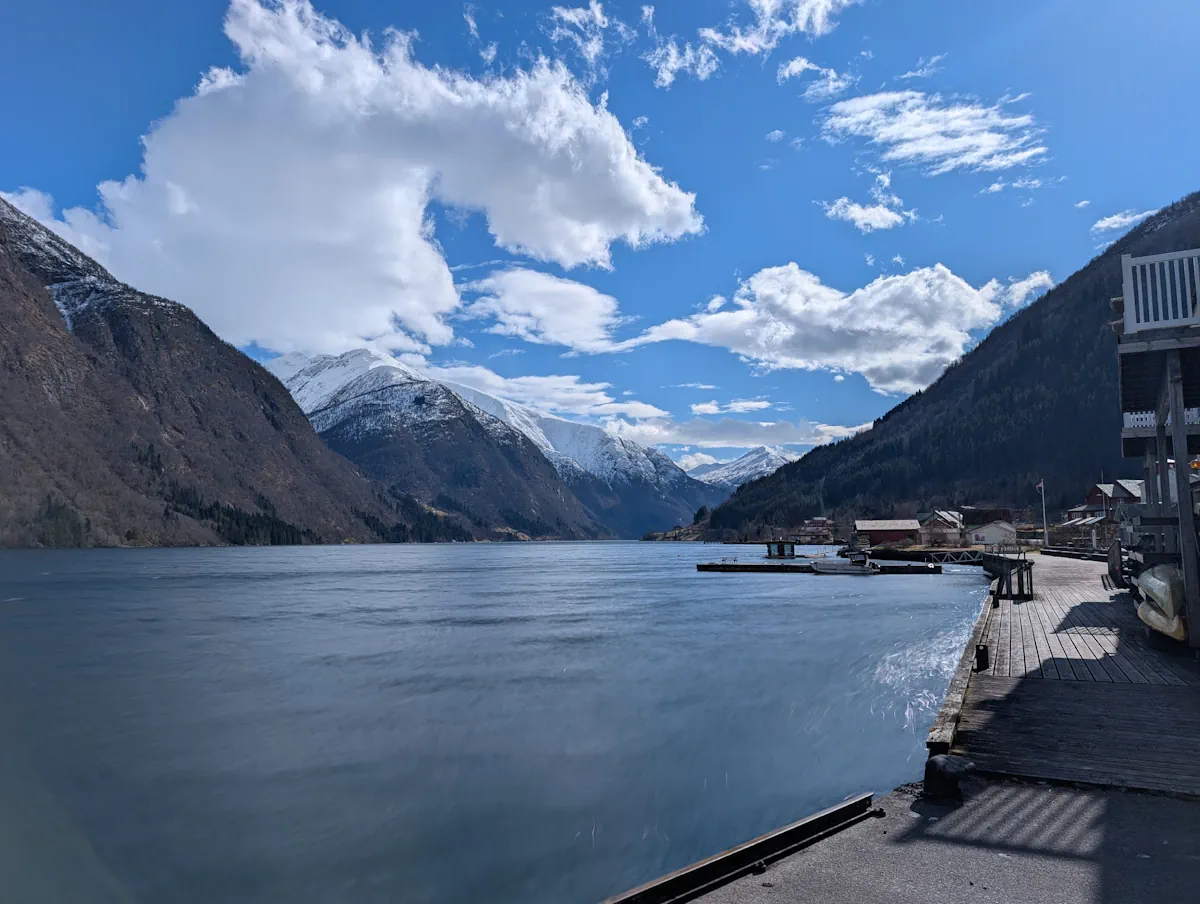
The nickname is well earned: more than 200 km long (the longest in Europe), 1,300 m deep, with arms branching off in every direction — including the Nærøyfjord, the Fjaerlandsfjord, and the Lustrafjord that leads to the UNESCO-listed Urnes church. It’s a fjord you inevitably cross when exploring the region: the Vangsnes-Hella ferry, the road along the Lustrafjord, the village of Fjaerland (an absolute haven of peace, with its glaciers just a few minutes away)… And if you want the full overview without a car, the Bergen-Flåm express boat crosses it from west to east in 5 hr 30. Yes, it sounds long, but it’s 5 hr 30 of spectacular scenery with stops in little villages like Vik or Balestrand, so it goes by quickly (really).
How to discover it:
- The Bergen → Flåm cruise, the longest boat journey in Norway
- By car, following its arms: Fjaerland, Balestrand, the Lustrafjord and Urnes
- Sleep peacefully at the Fjaerland Fjordstove Hotell, right by the water
CAR RENTAL IN NORWAY
Roam around Norway by renting with Discover Cars

- Rent a car from many airports or in town
- Small model, SUV or electric for the adventure
- Car supplied with the Autopass tag
- Prices from €30
The Hardangerfjord, the most blossoming
The Hardangerfjord is the 2nd longest fjord in Norway (and the 4th in the world, no less). Its cliffs are less vertical than those of the Nærøyfjord, but it has another kind of charm: its shores are dotted with farms, little villages and, above all, orchards of apple, cherry and pear trees. In spring (May), everything is in bloom, it’s incredible. In summer, you pick the fruit at the farms. It’s a fjord you live, not just look at. It’s also the fjord of the legendary heights: the famous Trolltunga overlooks it, and the Folgefonna glacier (the 3rd largest in Norway) sits right above. And a notable bonus: it’s only 1 hr 30 by road from Bergen, which makes it the most accessible of the major fjords.
How to discover it:
- The Bergen → Rosendal cruise and its charming village between fjord and mountains
- By road from Bergen, following orchards and villages
- For the active: the Trolltunga hike (20 km, your calves are going to feel it!)

The Hjørundfjord, the wildest
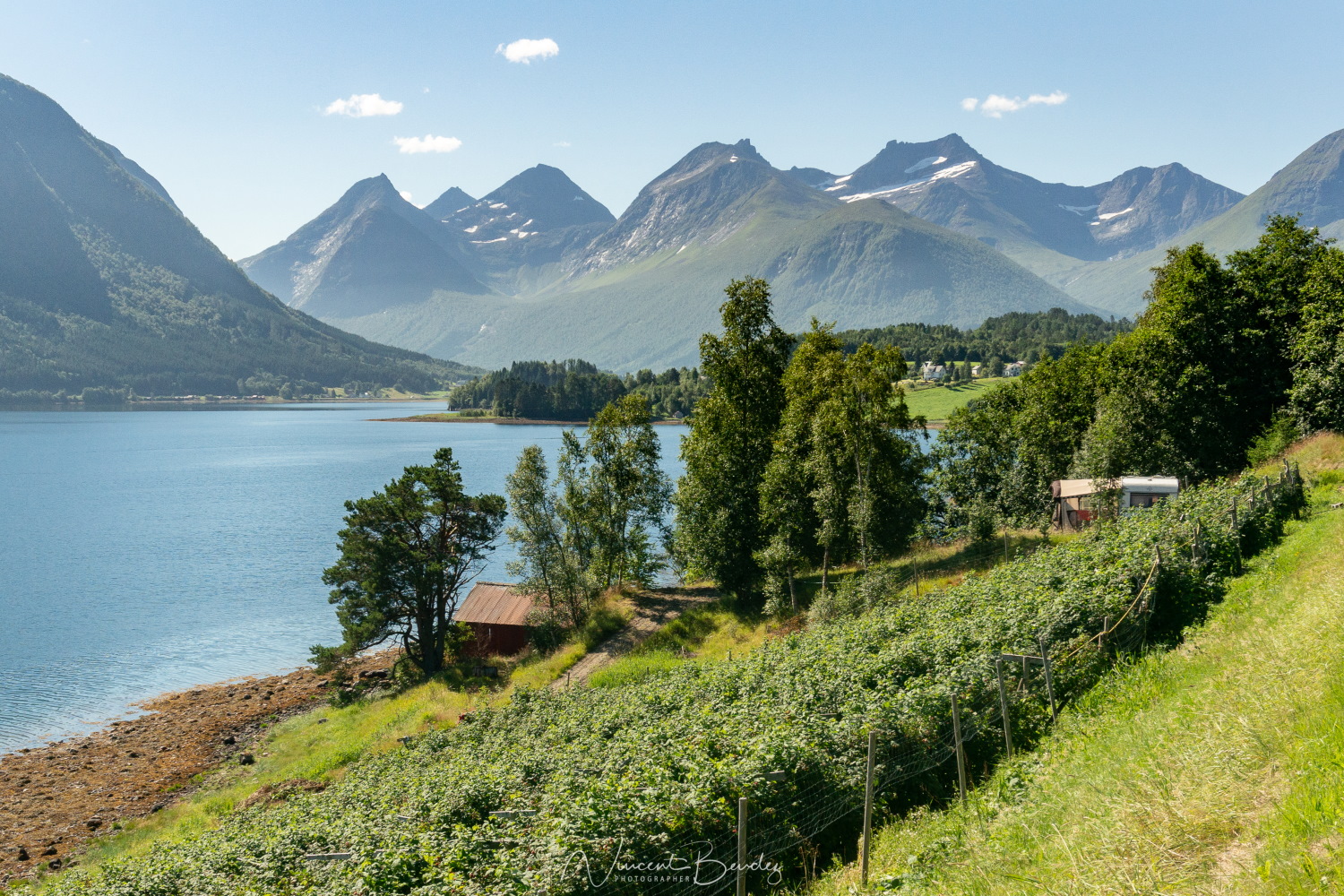
Everyone knows the Geirangerfjord. Almost no one knows the Hjørundfjord. And yet it’s right next door, an hour from Ålesund, and many Norwegians consider it just as beautiful, if not more so, than its big UNESCO brother. Above all, it’s truly quiet. So quiet that both times I went there, I came across it completely by chance, following the beautiful roads! The last time, this spring, after taking the ferry from Geiranger to Hellesylt, we took a little road to the right “oh, that looks nice over there” and bang! A superb steep valley, no signal, a road sometimes closed due to rockfall, until you reach Oye, then Urke. But it really isn’t the easiest fjord to reach! The Hjørundfjord is framed by the Sunnmøre Alps, sharp peaks that rise to 1,700 m and plunge straight into the water. It’s less theatrical than the Geirangerfjord (fewer waterfalls), but it’s purer, rawer, and above all you’ll be (almost) alone. A magnificent cruise from Ålesund makes a stop at the village of Øye and its historic hotel where kings and celebrities have slept. It’s probably the best way to discover this fjord, and what I’ll do on my next visit to Alesund.
How to discover it:
- The round-trip cruise from Ålesund (about 5 hr, stop at Øye)
- By car + ferry via Sæbø, for road trippers who want to get off the beaten track
- Ideal to combine with 2-3 days in Ålesund, my favourite town in Norway

The Nordfjord, between glaciers and lakes
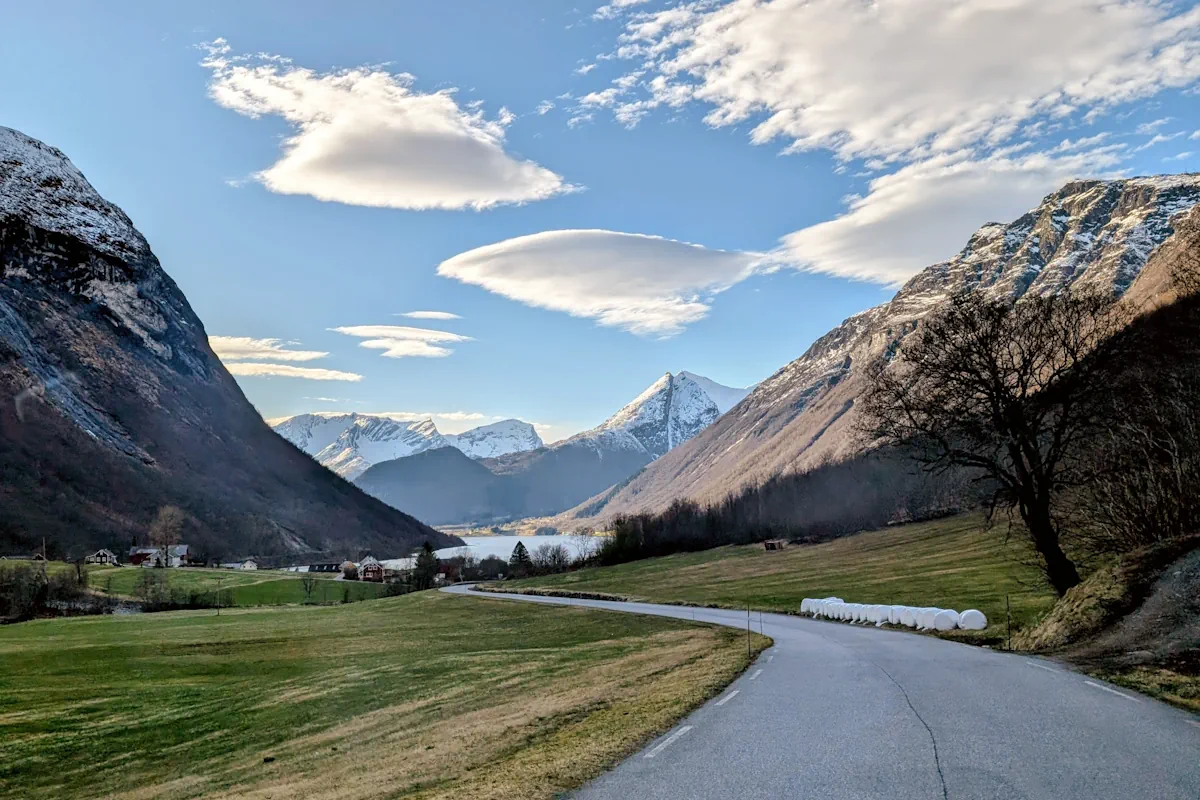
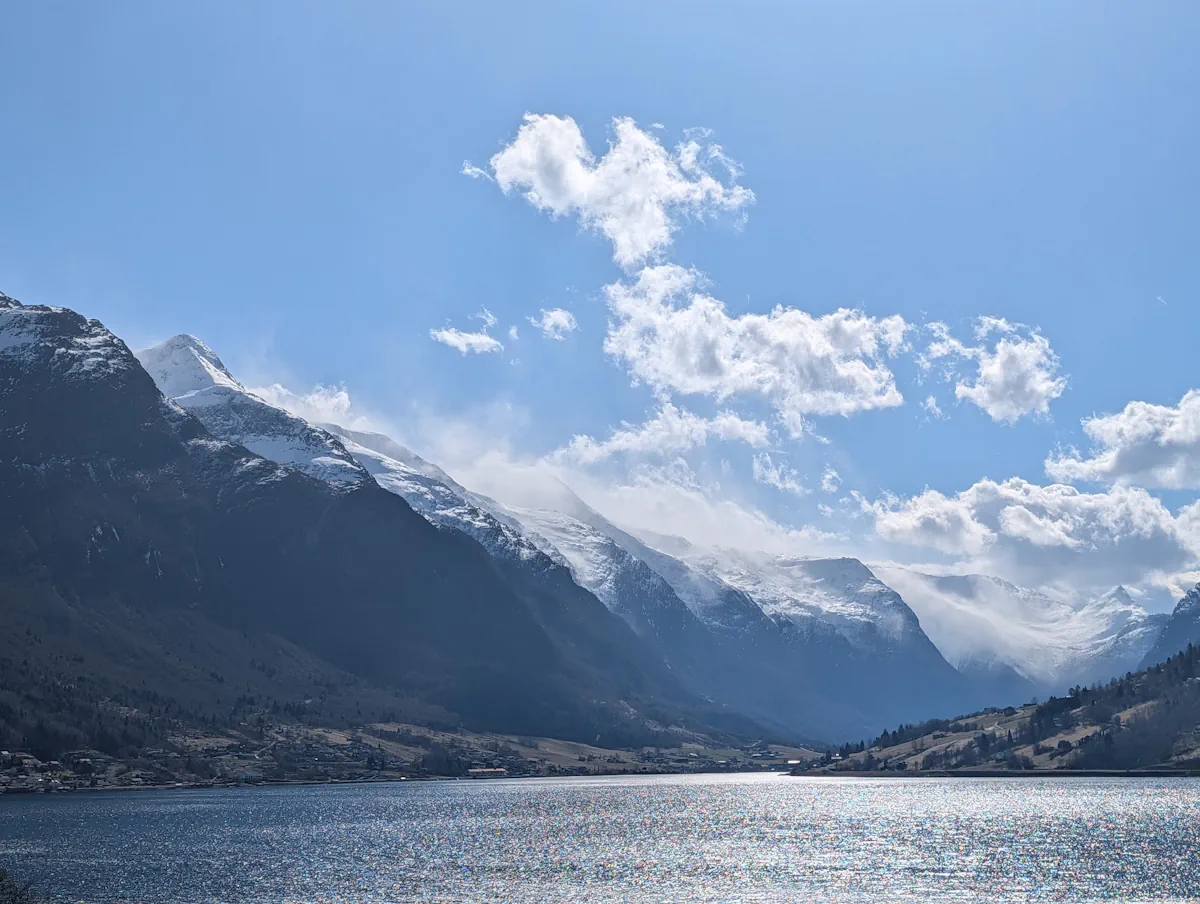
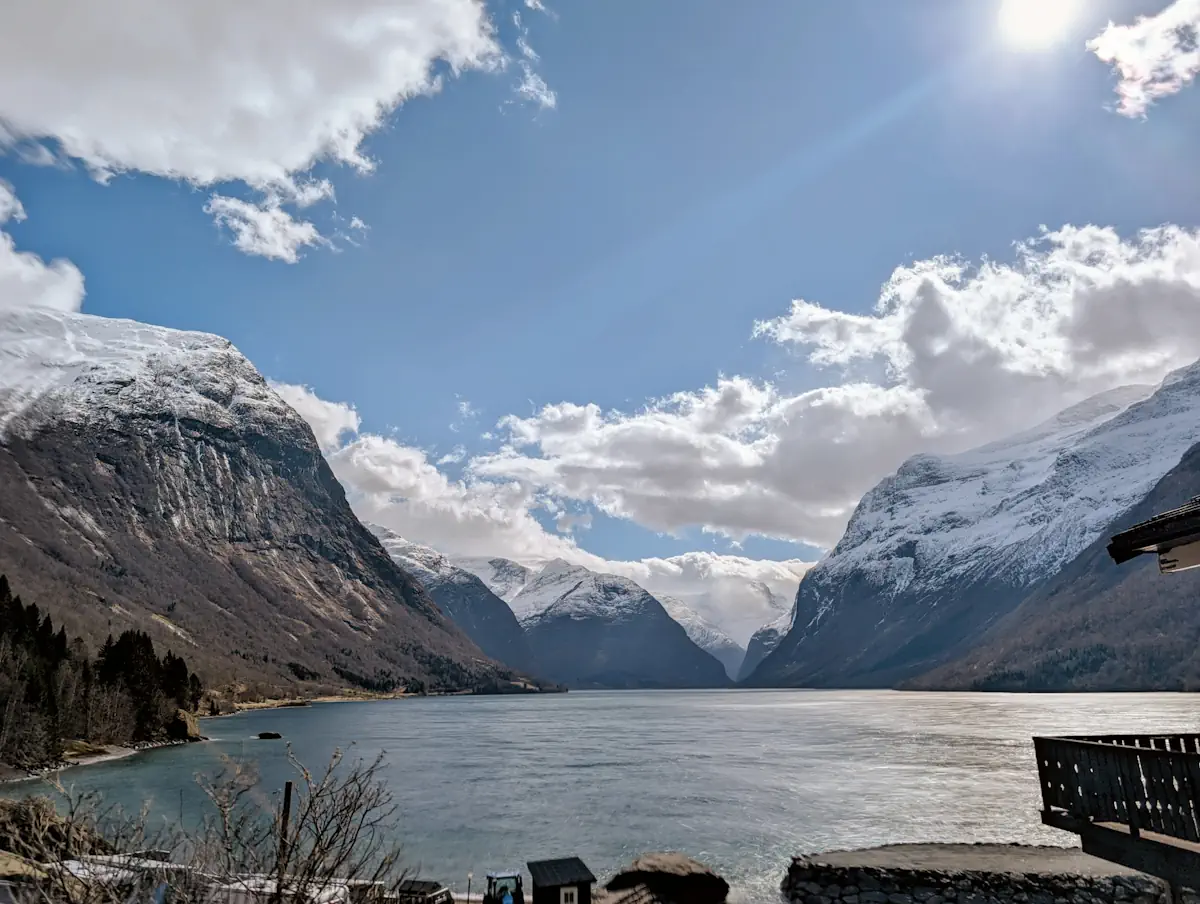
The Nordfjord is the fjord people often cross far too quickly between the Sognefjord and Geiranger (that’s exactly what we started doing). Big mistake! Around Loen and Olden there’s a unique combo: the Briksdal glacier (a branch of the Jostedalsbreen, the largest glacier in continental Europe), the Loen Skylift (the steepest cable car in Northern Europe, with a stunning 360° view from the summit of Hoven) and above all the Lovatnet. The fjord itself is lovely, and when there’s no wind (I hope you’ll be so lucky), the water is genuinely transparent. The Lovatnet is a glacial lake of an impossible turquoise-blue colour, framed by snow-capped peaks over 2,000 m. Do you know the Königssee in the Bavarian Alps? The resemblance is striking — we came across it by chance leaving Stryn and immediately thought we were back there. Except here, there are far fewer people. Stryn, Loen, it’s a little corner with loads of sports activities that comes alive much more in summer than in winter. So you really should stop there and enjoy the superb nature.
How to discover it:
- The RIB boat trip on the Nordfjord from Olden, getting up close to the waterfalls
- The Loen Skylift then the little MS Kjenndal II boat on the Lovatnet (book early, it fills up fast!)
- The Briksdal glacier, reachable via a lovely walk from the car park
The Lysefjord, the most vertiginous
The Lysefjord is 42 km of narrow fjord cutting inland from Stavanger, framed by 1,000 m cliffs. On its walls, two of the most iconic spots in Norway: the Preikestolen (the plateau rock overlooking the fjord at 604 m) and the Kjeragbolten (a boulder wedged in a crevice 1,000 m up). You know, those Instagram photos that make you nervous just looking at them. So I’ll tell you honestly: I haven’t yet visited this region south of Bergen, but it’s planned, and the Lysefjord cruise is obviously on the programme (as you’ve noticed, I love sailing in Norway). Seeing the Preikestolen from the water is complementary to the hike up to the top: you really grasp the scale of the cliff. And the boat often passes seals basking on the rocks.
How to discover it:
- The Lysefjord cruise from Stavanger (about 3 hr)
- The Preikestolen hike: 8 km round trip, 500 m of elevation gain, moderate difficulty
- For seasoned calves: the Kjerag (more than 10 km, it climbs steeply)

The essential towns and villages to see in the fjord region
You could consider (well, I’m taking that liberty!) that the fjord region runs roughly from Bergen to Alesund, with a little dip down to Stavanger that I don’t know yet (so I’ll only mention it very briefly in this article, but apparently it’s lovely!). And in this whole huge area, apart from the fjords we’ve just talked about, there are plenty of nice towns and villages to visit. Either because they’re beautiful, or because they’re the starting point for lots of activities (like Flam or Geiranger). So don’t limit yourself to the fjords and scenic roads (well, not only those!), here are a few little towns to discover without moderation 🙂
Bergen
The most beautiful town in Norway? Probably! The most touristy? Quite likely! Bergen really is a magnificent town, both architecturally and historically. You’ll find the famous Bryggen district of course, the historic docks bearing witness to its Hanseatic past. Several wooden-house neighbourhoods, lovely viewpoints and direct access to nature. Bergen is an excellent starting and/or finishing point for enjoying the fjords. Because you’re only 2 good hours away, and the town lets you settle for a few days as it’s genuinely pleasant.
The most beautiful places to see in Bergen
- the old Bryggen docks
- The Hanseatic Museum
- The wooden-house neighbourhoods (the Nordnes peninsula or Nostet, for example)
- the Fløyen funicular
- The stave church (Stavkirke) of Fantoft)
By the way, in the following article you’ll discover the best itinerary to discover the fjords and Bergen in one week!


Recommended activities in Bergen: There really are a lot of activities possible in Bergen. It’s already the starting point for many cruises in the fjords, as we saw at the beginning. But with its history, I think it would be a shame to miss a guided tour covering the town’s Hanseatic League past or its royal history. Also take the funicular up to Fløyen, or even higher with the cable car that goes up to Ulriken!

📍 Bergen · Fjordcharter Norway (3 hr 30)
Cruise Bergen → Modalen via the Mostraumen waterfalls, home-made waffles on board.
- Passing UNESCO Bryggen
- Narrow Mostraumen current + waterfalls
- Fresh waffles made on board
Free cancellation
From 66 € / person

📍 Bergen · I Love Bergen (2 hr)
2 hr in old Bergen with a local guide, perfect for the first day.
- Bergenhus Fortress + UNESCO Bryggen
- Secret alleys of the residential district
- 94% of French speakers rate it 5/5
Free cancellation
From 31 € / person

📍 Bergen · Maresia Tours (10 hr)
A full day towards Folgefonna National Park with a walk to the glacial lake.
- Steinsdalsfossen waterfall (walk behind it)
- Panoramic ferry on the Hardangerfjord
- Picnic included by Lake Bondhus
Free cancellation
From 189 € / person

📍 Øygarden · Fjord Expedition (4 hr 30)
Beginner-level kayak outing between the archipelago islets, 30 min from Bergen.
- Stable double kayaks, beginners OK
- Drysuit provided
- Traditional lefse + apple juice included
Free cancellation
From 161 € / person


If you don’t have a car but still want to discover the fjords and the main attractions like the Flåm railway, you have the option of going on a day trip to make the most of it.
Resources on Bergen
- What to see in Bergen – discover the best activities and the most beautiful neighbourhoods
- Where to stay in Bergen – with family or as a couple, I suggest the best affordable accommodation
- A one-week itinerary around Bergen – you can go and see the fjords and the most beautiful spots around Bergen!
- Take a cruise on the Osterfjord – the most popular cruise from Bergen
- All the cruises from Bergen – to Flam, Fjaerland, in the Hardangerfjord… discover all the options
- How to get from Bergen to Flam – by car, train or boat, there are quite a few options
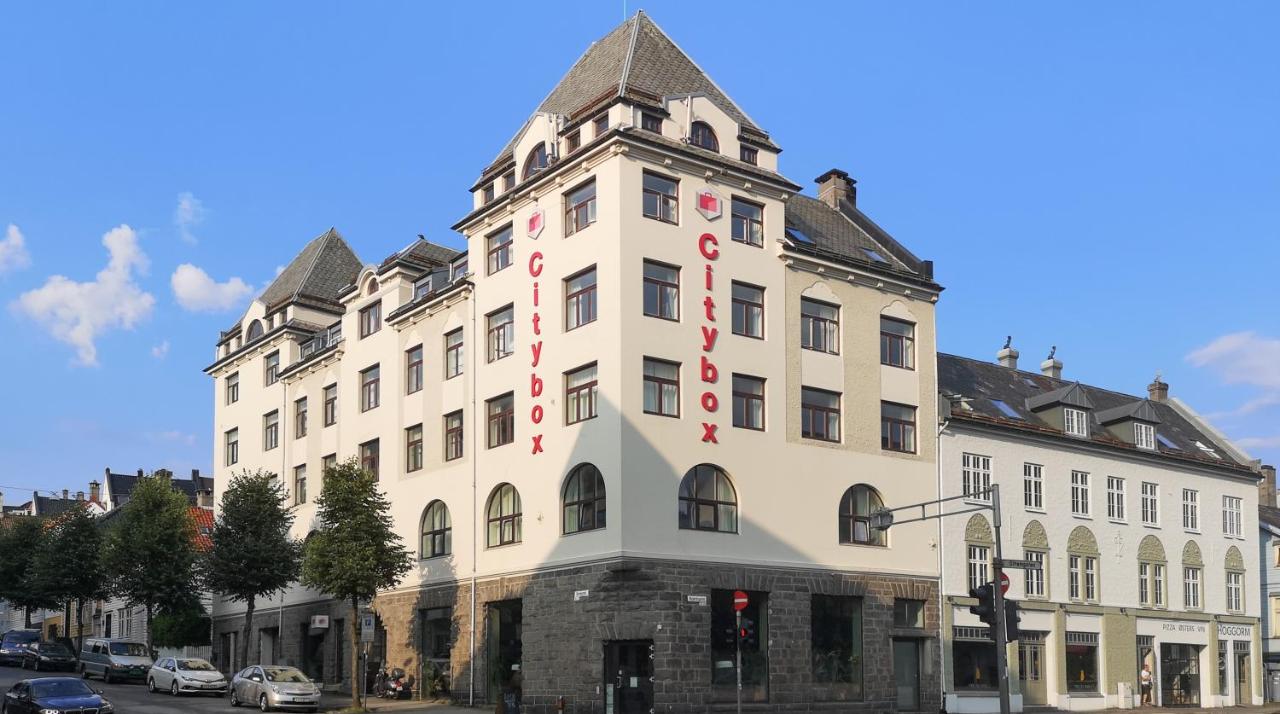
📍 Bergen · right in the centre, 500 m from the station
Scandinavian design hotel at the heart of Bergen, two streets from the centre. "Excellent value for money", self check-in and spotless rooms: the town's best deal.
- Self-service check-in, free Wi-Fi
- Shared kitchen with toaster and microwave
- Location rated 9.1/10 over 7,263 reviews
Free cancellation
From 64 € / night

📍 Bergen · in the Bryggen district (UNESCO)
A charming hotel in a 16th-century house with centuries-old wooden walls, right in Bryggen. "Spacious and magnificent" rooms praised for their character.
- At the heart of the UNESCO district, Fløibanen funicular 2 min away
- Rustic rooms with separate bath and shower
- Hearty breakfast, location rated 9.7/10
Free cancellation
From 127 € / night
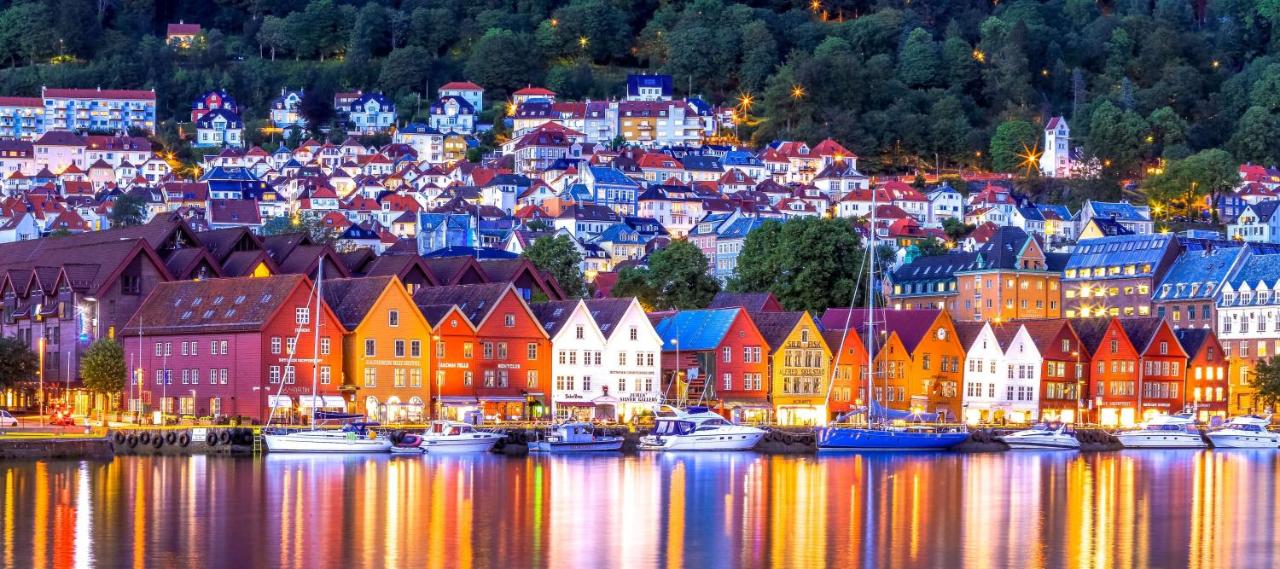
📍 Bergen · on the Bryggen quay, 300 m from the fish market
A large modern hotel ideally set on the historic Bryggen quay. "Impossible to be better located" according to travellers, with a hearty, fish-rich breakfast.
- Air-conditioned rooms, restaurant and airport shuttle
- On-site parking, fitness room, free Wi-Fi
- Location rated 9.6/10 over 9,077 reviews
Free cancellation
From 139 € / night
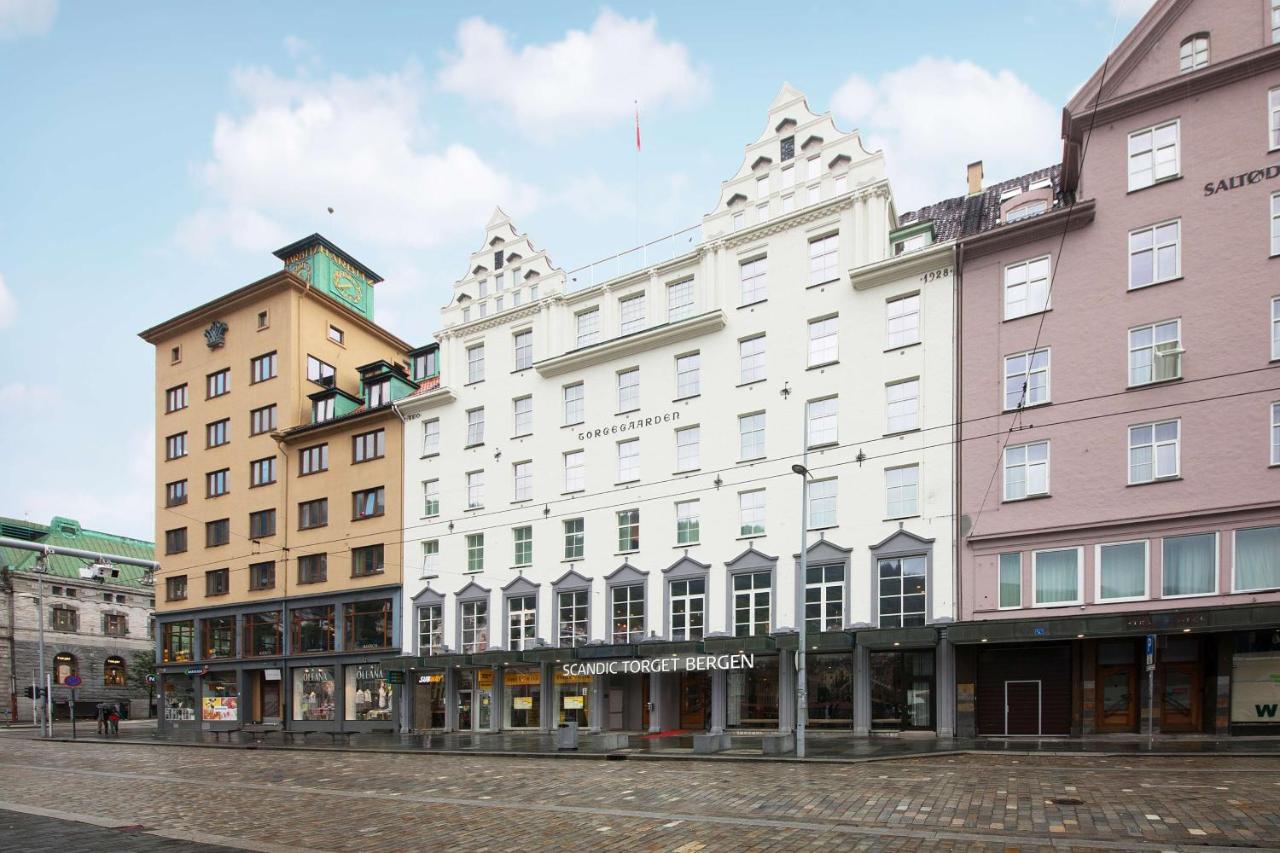
📍 Bergen · right in the centre, overlooking the Vågen fjord
A central hotel with a view of the Vågen fjord and Mount Fløyen, 200 m from Bryggen. "Exceptional location" and "perfect" breakfast widely praised.
- Sea view, balcony, family rooms
- 350 m from the station, close to airport transport
- Buffet breakfast, location rated 9.7/10
Free cancellation
From 112 € / night
Alesund
Alesund, my favourite town in Norway. It’s beautiful, of course, with different architecture. Destroyed by a fire in the early 20th century, it was rebuilt in a uniquely Norwegian Art Nouveau style. And it has tremendous charm! On top of that, it’s made up of several small islands in an archipelago, and there are several viewpoints around it that give a crazy view over the town, especially at sunset. Alesund is a must-pass for the Trollstigen in particular, but also a good place to watch puffins on the island of Runde. You can see the town fairly quickly, but it’s so pleasant and calm that you’ll enjoy settling there a while after driving the fjord route. In the same way, since there are loads of activities, fjord cruises and bus tours, even without a car you can absolutely fan out across the fjord region from Alesund. Because Geiranger isn’t far!
The most beautiful places in Alesund and activities
- The Fjellstua viewpoint up high
- the Art Nouveau architecture district
- the seaside walks in the archipelago
- the aquarium is great fun
- you can go to the island of Runde to see the puffins!
- and why not go kayaking in the bay 🙂
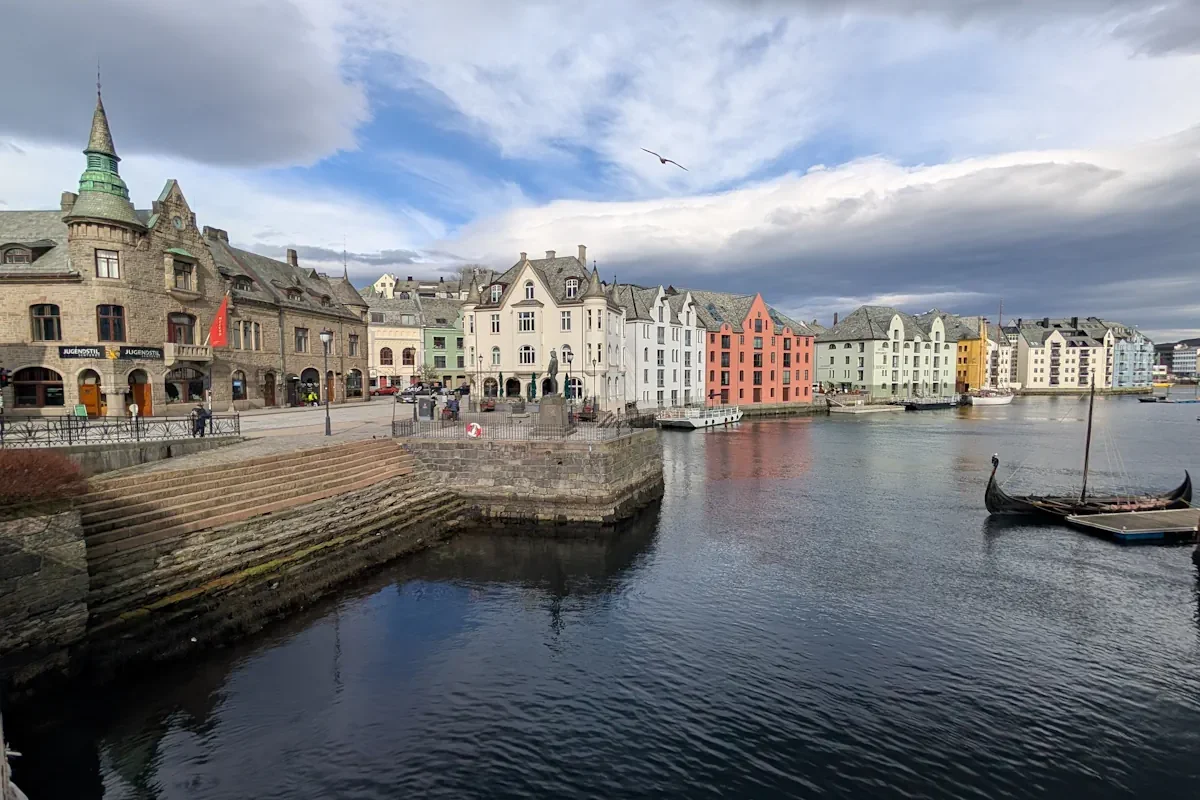


Discovering the fjord region from Alesund: If you don’t have a car and you arrive in Alesund, even though the town is right at the very end of its archipelago you’re not lost at all! There are loads of options to visit the fjords by cruise, by bus, and to go to Geiranger in particular. Below I’m going to show you what you can do to visit the surroundings without having to rack your brains

📍 Ålesund · Excursions.no (6 hr)
The legendary Trollstigen road and its 11 hairpin bends, plus the Trollvegen, the highest vertical rock face in Europe.
- Panoramic road with 11 hairpin bends
- Gudbrandsjuvet gorge + Stigefossen waterfall (240 m)
- Trollvegen + villages of Sjøholt and Valldal
Free cancellation
From 162 € / person

📍 Ålesund · VisitGeiranger (8 hr 30 - 9 hr 30)
A silent cruise on a hybrid electric catamaran to the UNESCO Geirangerfjord and its Seven Sisters waterfalls.
- 100% silent hybrid catamaran
- Seven Sisters waterfalls + free time in Geiranger
- Audio guide included
Free cancellation
From 192 € / person

📍 Ålesund · Fjord Guiding (1 hr 45)
A RIB outing on the wild Hjørundfjord, at the foot of the Sunnmøre Alps, considered the most beautiful fjord in Norway.
- RIB boat to get close to the cliffs
- Warm flotation suits provided
- Short format (1 hr 45) between two visits
Free cancellation
From 134 € / person

📍 Ålesund · West Norway Travel (5 hr)
Bus, ferry and cable car to the Strandafjellet observation platform, with coffee and waffles facing the Sunnmøre Alps.
- Scenic Magerholm ↔ Sykkylven ferry
- Cable car to the observation platform
- Coffee and waffles at the summit included
Free cancellation
From 134 € / person
- Recommended accommodation in Alesund:
- Hotel BROSUNDET, Art Nouveau architecture right by the water!
- HOTEL 1904, and its Art Nouveau architecture
- The quality of service at the SCANDIC PARKEN
- Find all the accommodation in Alesund
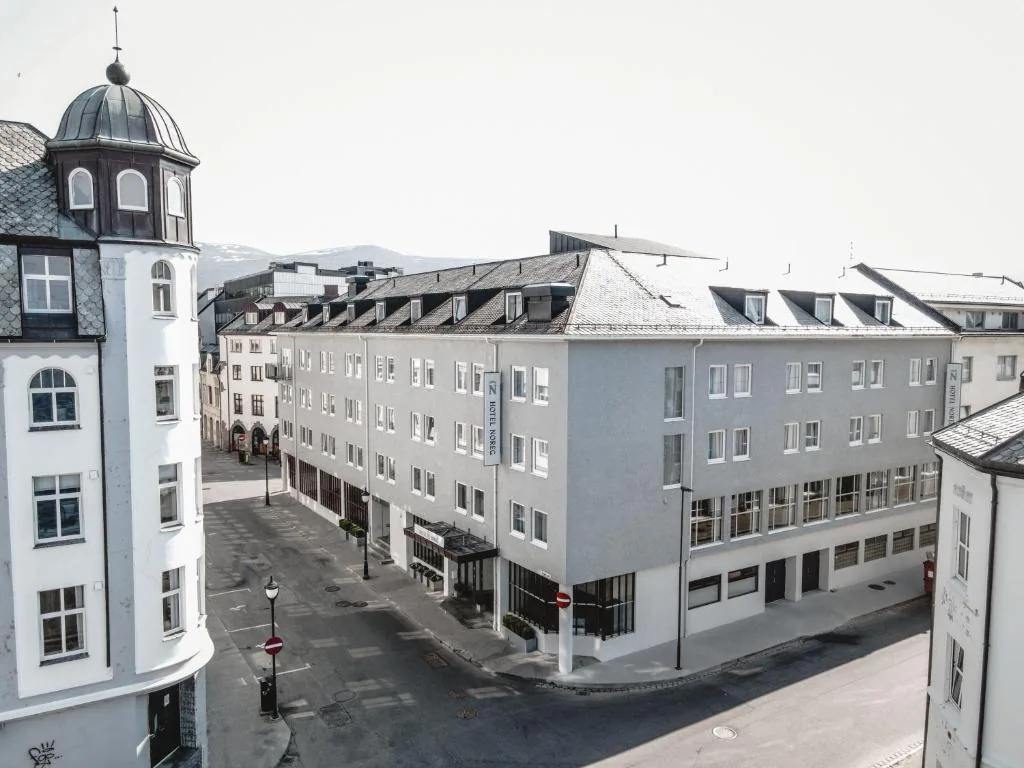
Last time, we stayed at the Hotel Noreg, on a lovely Art Nouveau street. Honestly not bad at all! Good breakfast, very decent room, great bedding and a really friendly team. They have a car park nearby. I really like this town because every time the people are cool. Not stressed in the slightest, it’s a small town with its own atmosphere and you feel it pretty much everywhere.
Geiranger
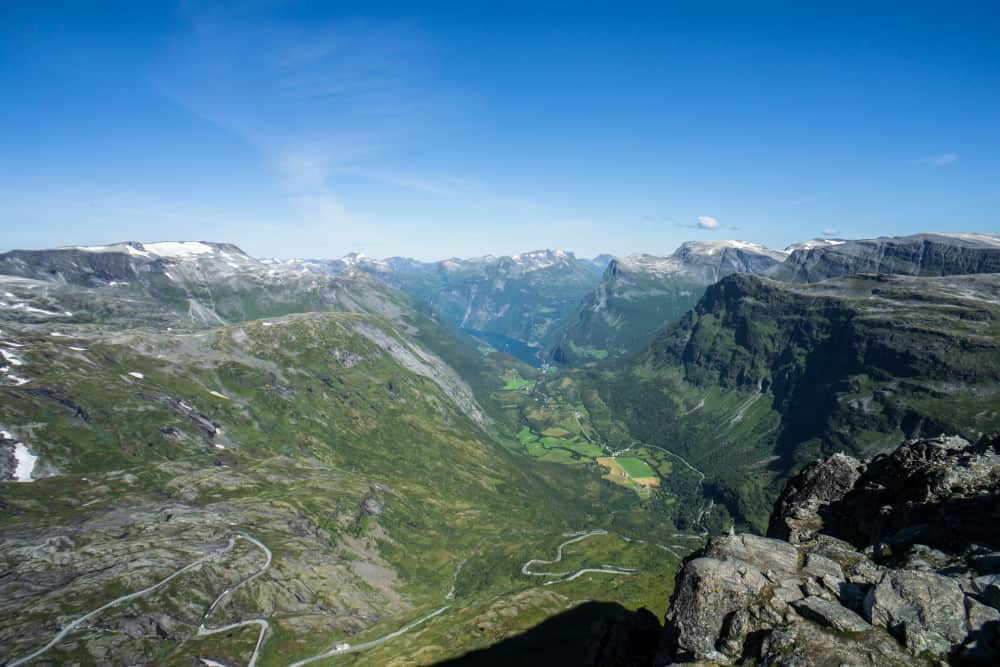
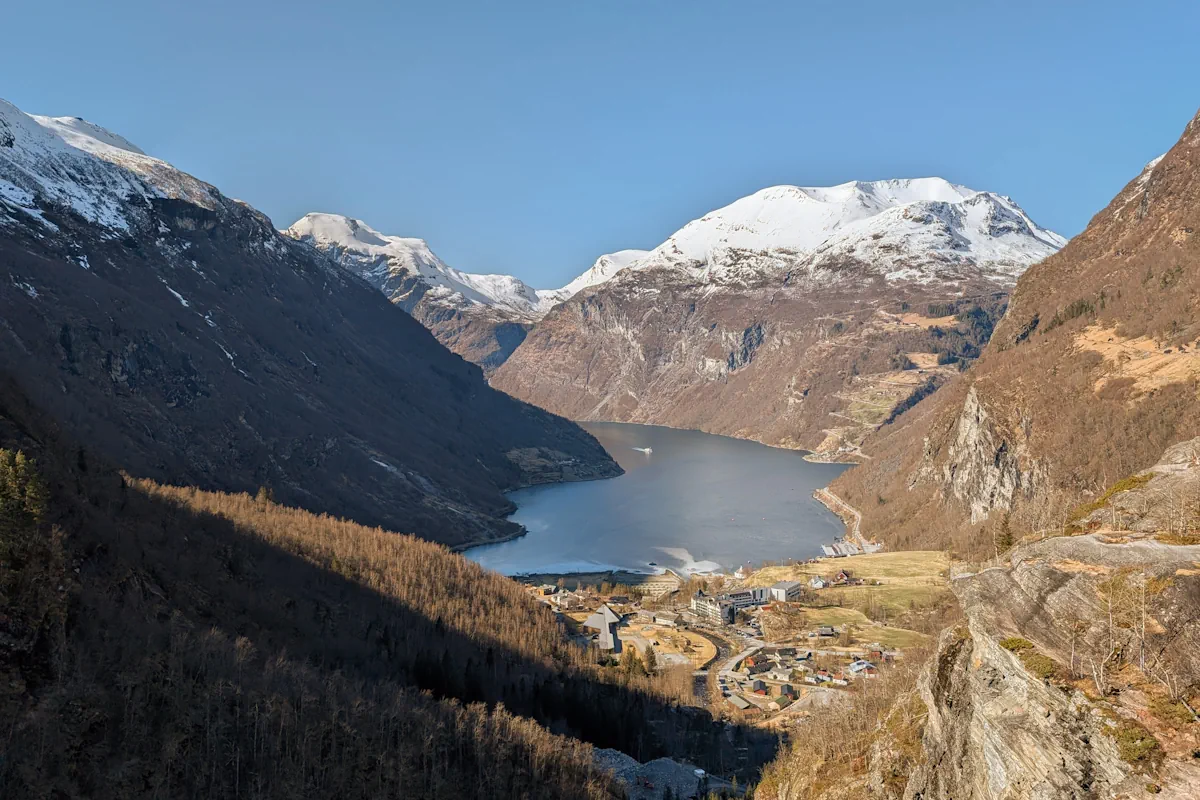
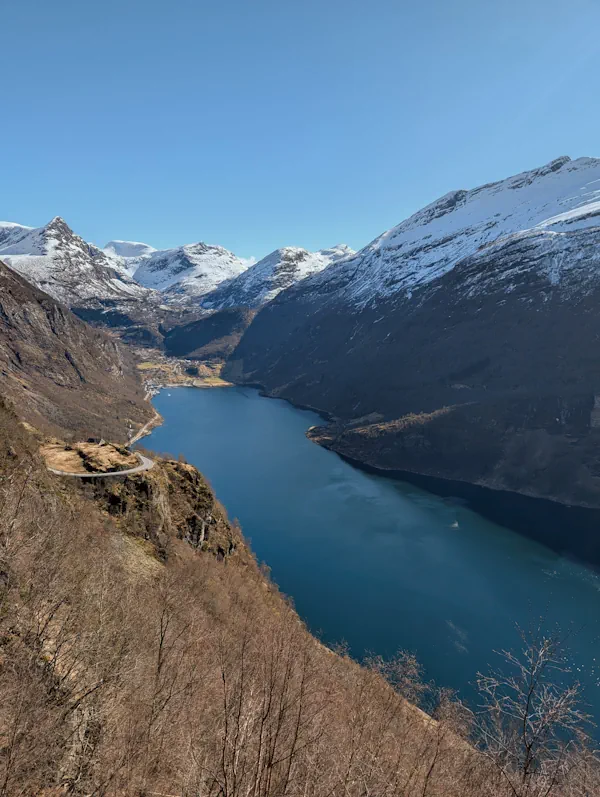
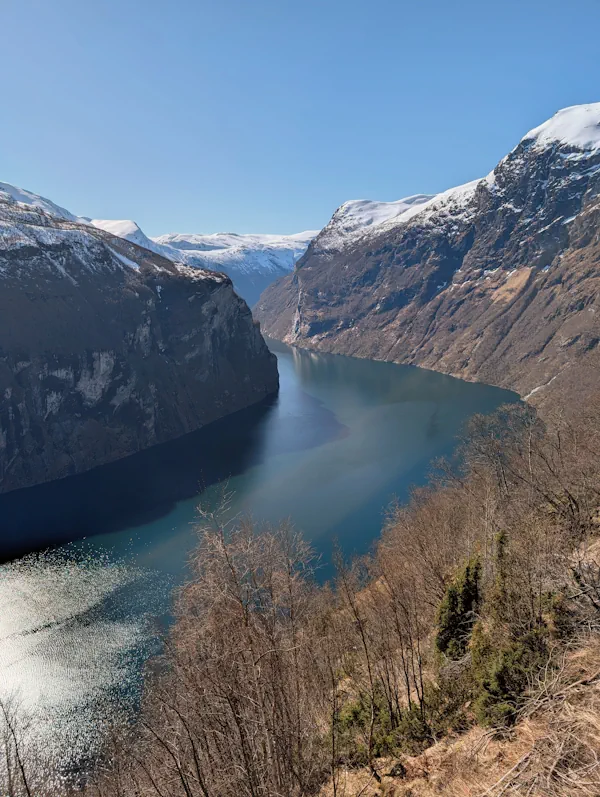
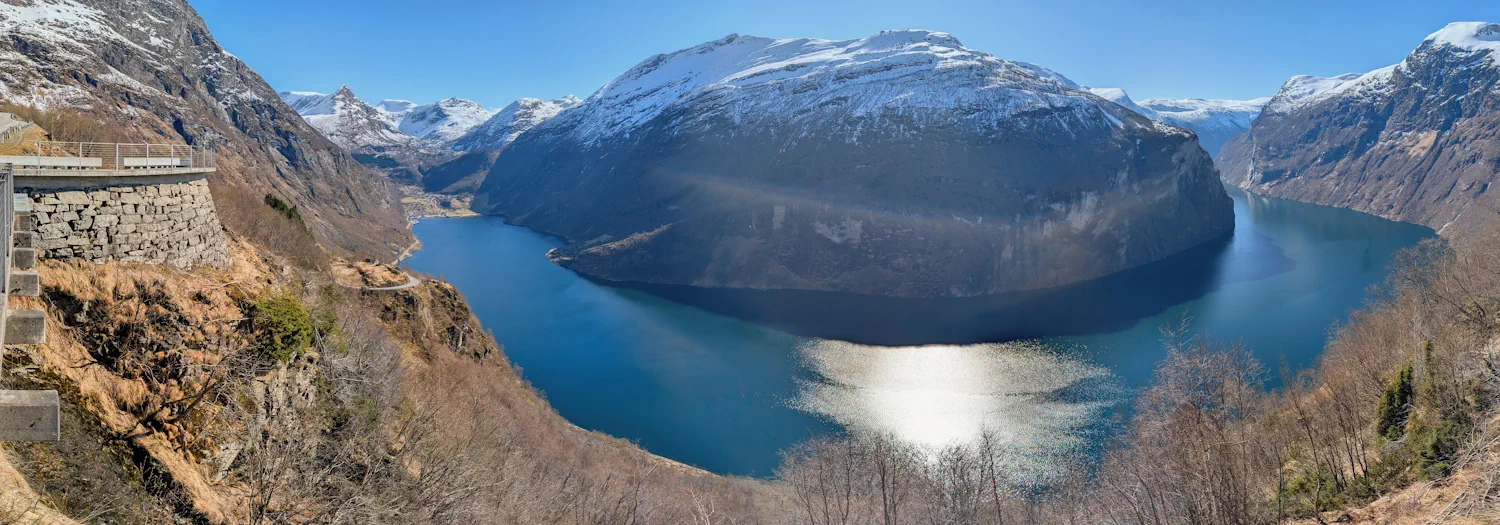
I know, I already told you about the Geirangerfjord and its cruises just before. But here, I want to stress that Geiranger is more than that. So yes, it’s a tourist site with cruise ships coming to drop anchor. But the nature around Geiranger is magnificent! For a start, there are crazy viewpoints absolutely everywhere. Those from the road that zigzags down from Eidsdal (road 63). The best-known and most developed viewpoint is Ørnesvingen. It’s vast, it’s beautiful, it’s majestic. Beyond Geiranger there are others, take the road that goes towards Dalsnibba. Already there are a few super-beautiful viewpoints over the fjord. You also have the option of continuing this road further, at least to Dalsnibba, one of the most famous spots and a super-impressive view. We couldn’t go back in April because the road wasn’t yet open (full of snow). Be warned, entry is paid and not cheap! Honestly, if you can, I recommend you stay a while in Geiranger. Yes it’s touristy, but there are hikes everywhere! Plenty of activities too, on top of the many cruises. And the accommodation is really not bad! You just need to book “a little” in advance, in high season.
The most beautiful places to see around Geiranger
- The Dalsnibba viewpoint
- The Vesterasfjellet viewpoint
- The view from Ornesvingen
- The view of the fjord from the Solhaug campsite
In the following article I invite you to discover the Geirangerfjord
Recommended activities in Geiranger:
- A superb outing on the Geiranger fjord by RIB boat
- Visit the surroundings of Geiranger (fjord, Dalsnibba…) by minibus
- A superb cruise on the Geirangerfjord with audio guide
- The Geirangerfjord cruise from Hellesylt (round trip)
- And why not go kayaking in the Geirangerfjord!
Recommended accommodation in Geiranger:
- GRANDE FJORD HOTEL, a crazy view over the fjord
- Hotel UTSIKTEN also a breathtaking view over the whole fjord
- Hotel Union GEIRANGER superb, luxury, spa, next to a waterfall. Perfect!


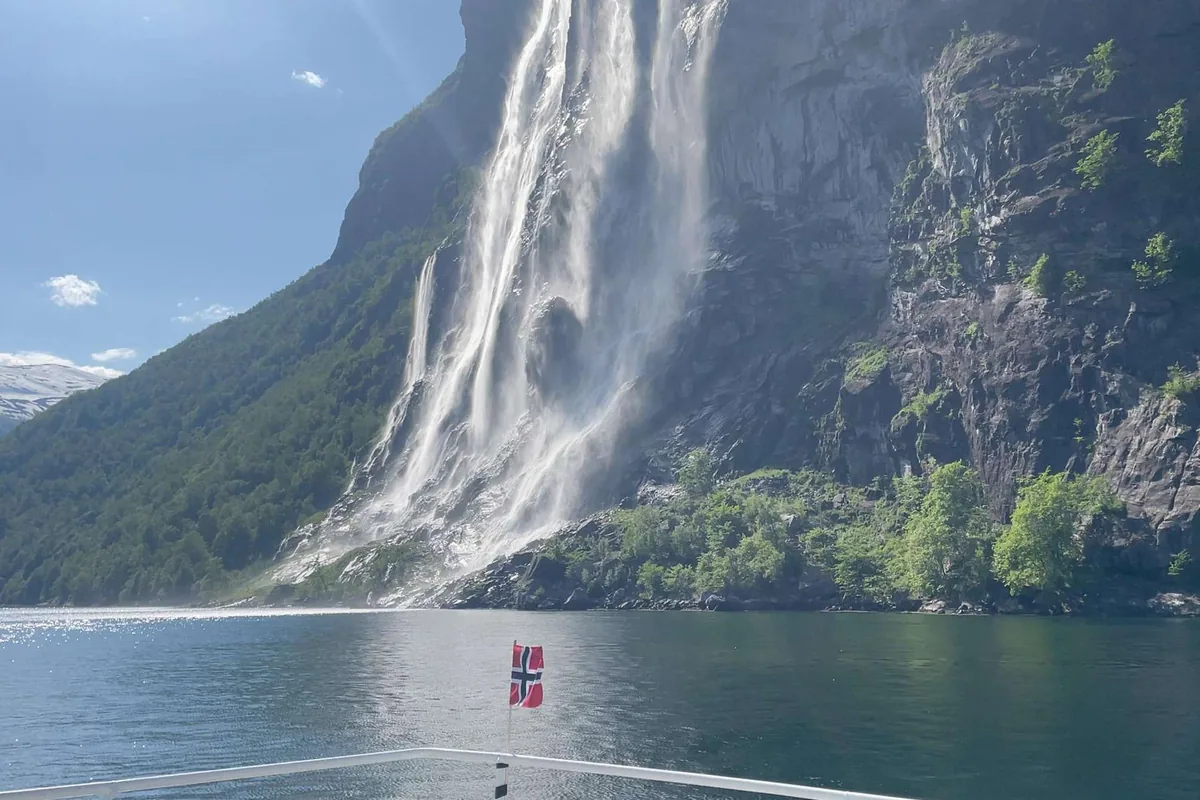
📍 Geiranger · Cruise Service (2 hr 30)
The classic fjord cruise: 2 hr 30 on the Geirangerfjord with a one-hour break at Hellesylt and a taste of waterfall water straight from the source.
- One free hour to explore Hellesylt
- Seven Sisters and Suitor waterfalls
- Wheelchair-accessible catamaran
Free cancellation
From 61 € / person
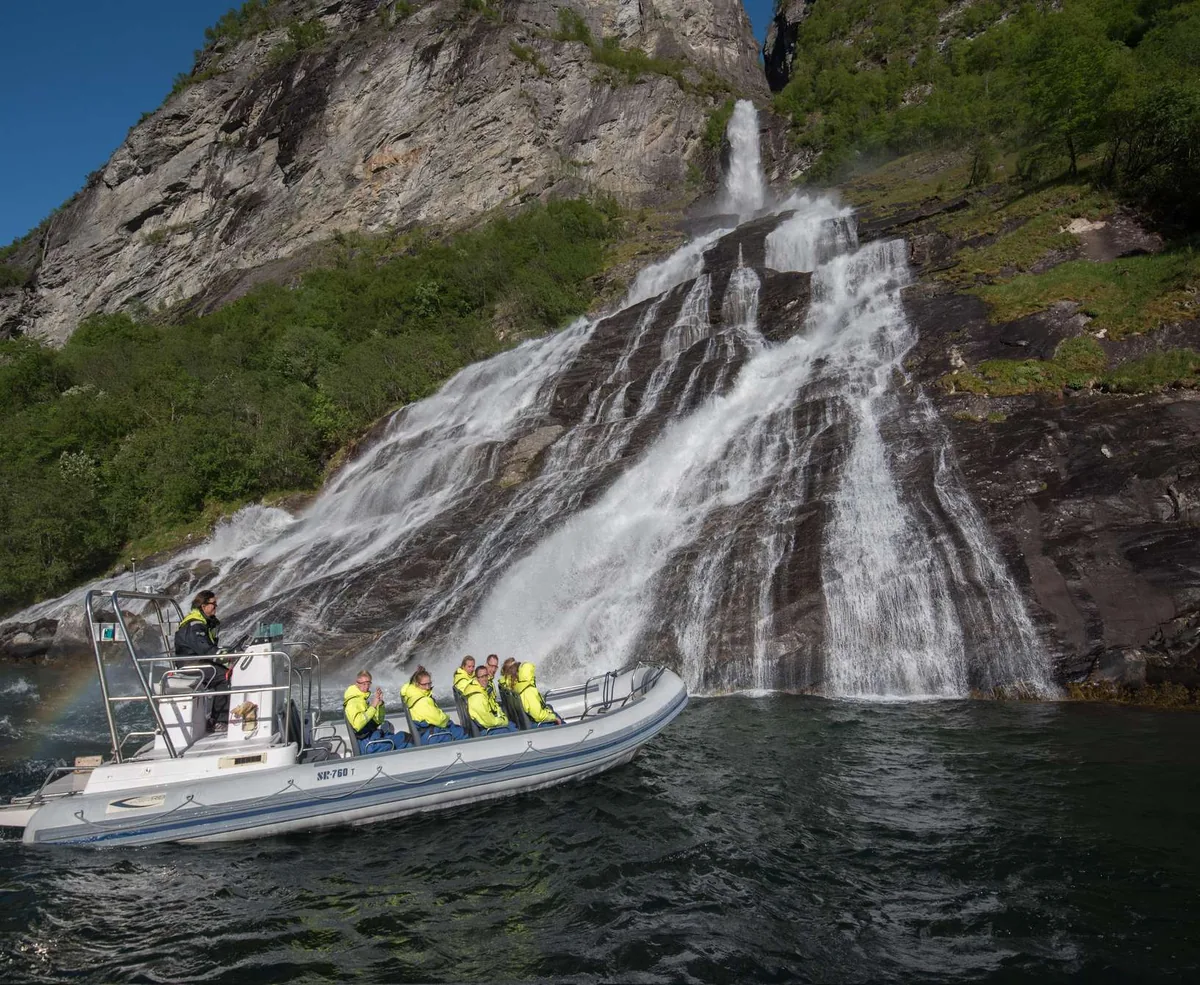
📍 Geiranger · Fjord Guiding (1 hr)
The thrill option: a high-speed rigid inflatable, 12 people max and you head right into the waterfalls. My favourite for feeling the Geirangerfjord.
- 90% of French speakers give top marks on GYG
- Open rigid inflatable, 12 people max per outing
- The isolated Skagefla farm seen from the sea
Free cancellation
From 80 € / person

📍 Geiranger · By the fjord
The address set by the water, 2 km from the village. Panoramic restaurant on the 6th floor and a sweeping view over the fjord from most rooms.
- Free shuttle to the village of Geiranger
- Free parking and renowned Scandinavian restaurant
- 2,860 Booking reviews, a well-run address
Free cancellation
From 160 € / night

📍 Geiranger · Flydalsjuvet heights
Set 100 m from the famous Flydalsjuvet viewpoint, this is the hotel that literally towers over the fjord from the heights. Sublime at sunset.
- 100 m from the Flydalsjuvet Cliff (iconic viewpoint)
- Restaurant with local Norwegian produce
- 2 Kople charging points for electric cars
Free cancellation
From 180 € / night
The village of Fjaerland
A haven of peace, quite simply. Fjaerland is a tiny (Nordic) fairy-tale village. Tucked away in a fjord, with pretty typical houses, hardly anyone around, absolute calm and magnificent light when the weather is fine. And the setting, wow, the setting! But that’s not all! Just to the north you’ll find the glacier museum because… there are several glaciers nearby, reachable by car then on foot. The Flatbreen, Supphellebreen and Bøyabreen are really just a few minutes away. The melting ice has taken its toll here but it’s still very lovely! It’s a really good place to stay at least one night, and thinking back on it, several so you can fan out around it. If you happen to be in Bergen and want to discover this place, then I can only recommend this day trip to come by boat into the fjord and visit the glaciers!
Recommended activities in Fjaerland:
- The glaciers, obviously
- The glacier museum
- I saw a floating sauna there
- the village is famous for its little bookshops. They overdo it a bit but it’s charming!
Recommended accommodation in Fjaerland:
- FJORDSTOVE Hotell a magnificent hotel right by the water

The village of Flam, its railway, its fjords!
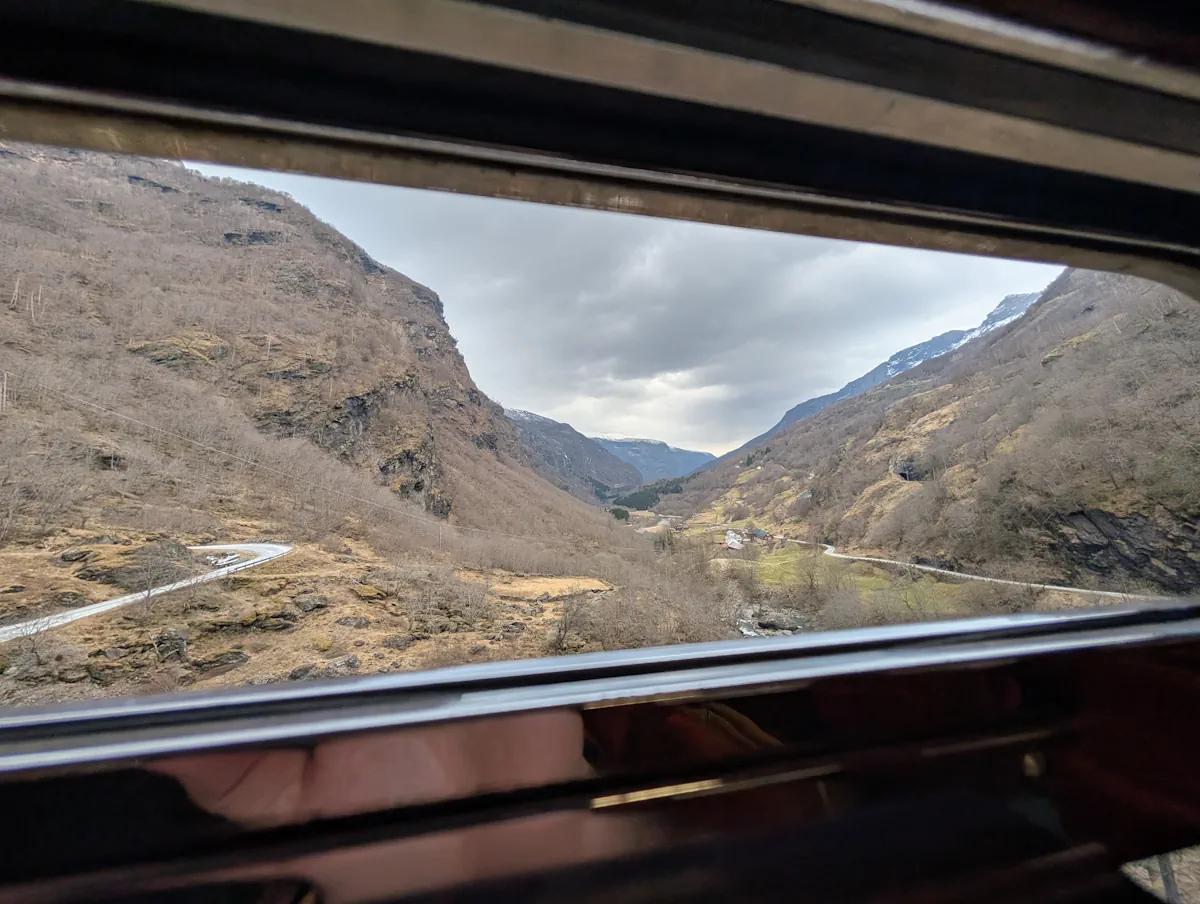
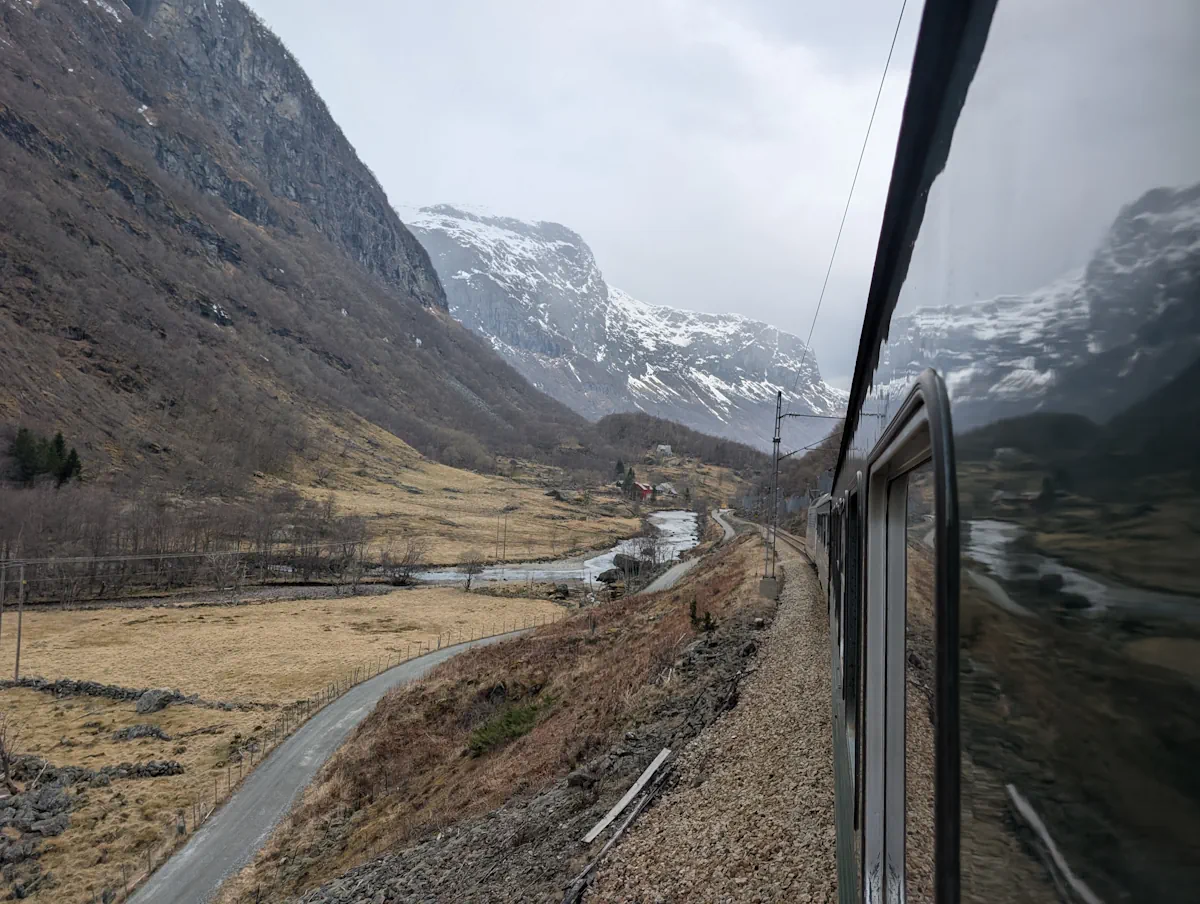
It’s a great classic and above all a must-do. Ok it’s touristy but Flam promises a superb experience. For a start the village is ideally located in an impressive valley. Granted, the cruise ships can spoil the show a bit depending on the season (for my part I’ve been lucky enough never to have seen any there). If so many people pass through Flam, there’s a reason, well several:
- the cruise on the Nærøyfjord, just superb!
- the famous Flam railway, a truly magnificent journey
- the Stegastein viewpoint a little higher up at Aurland
- and loads of nice places to see around, like Borgund, Laerdal…
The train journey is regularly ranked among the most beautiful railway lines in the world. Granted, it’s a bit pricey, around €50. But since you don’t do it every day, it’s worth it. Well, I always tell myself “would I rather lose €50 and have seen it, even if I’m disappointed, or keep my €50 and not know what it’s like”. In the following article, I give you all the information to visit Flam
Sleeping in Flam So first of all, should you sleep in Flam? If you have a car, there’s nice, cheaper accommodation a little further away in Aurland like the Vangsgaarden Gjestgiveri. But staying in Flam is handy for the convenience. And out of season there are far fewer people and it’s much cheaper, so I’d say that’s not bad at all. There’s plenty of choice, but bear in mind that you need to book very early and that it’s quite expensive (even for Norway):
- the Flam Marina
- the Flamsbrygga Hotel
- and above all the Svingen Guesthouse


Visiting Flam from Bergen So if you don’t have a car, if you’re in Bergen but want to discover the Flam railway + the cruise on the Nærøyfjord, the Viking village of Gudvangen or the Stegastein viewpoint, good news because it’s entirely possible! Here are 3 different options that let you come and visit several of these sites in a single day.

📍 Bergen · departure 10:30 am · group of 30 max
A guided minibus day from Bergen to the Nærøyfjord, a 2 hr cruise on an electric boat from Gudvangen to Flåm and a stop at the Stegastein platform, all in French.
- 2 hr electric catamaran on the UNESCO Nærøyfjord
- Stegastein platform perched at 650 m
- Photo stop at the Tvindefossen waterfall, return 6:30 pm
Free cancellation
From 270 € / person

📍 Bergen · departure 10:30 am · return by train
The richest version: immersion in the Njardarheimr Viking village, premium sailing on the Nærøyfjord by electric catamaran, then the descent on the Flåmsbana, one of the steepest railways in the world.
- Njardarheimr Viking village (40 min guided tour)
- Vision / Future of The Fjords cruise Gudvangen → Flåm
- Descent on the Flåmsbana then train to Bergen (~6:15 pm)
Free cancellation
From 347 € / person

📍 Bergen · departure 8:00 am · 13 hr · return by train
The combo that ticks every box: minibus to Gudvangen, a 2 hr crossing of the UNESCO Nærøyfjord by electric boat, a stop at the Stegastein platform, then the Flåmsbana and train to return to Bergen.
- UNESCO Nærøyfjord by electric boat (2 hr)
- Suspended Stegastein platform, 650 m altitude
- Flåmsbana: one of the steepest railways on the planet
Free cancellation
From 389 € / person
The old town of Laerdal
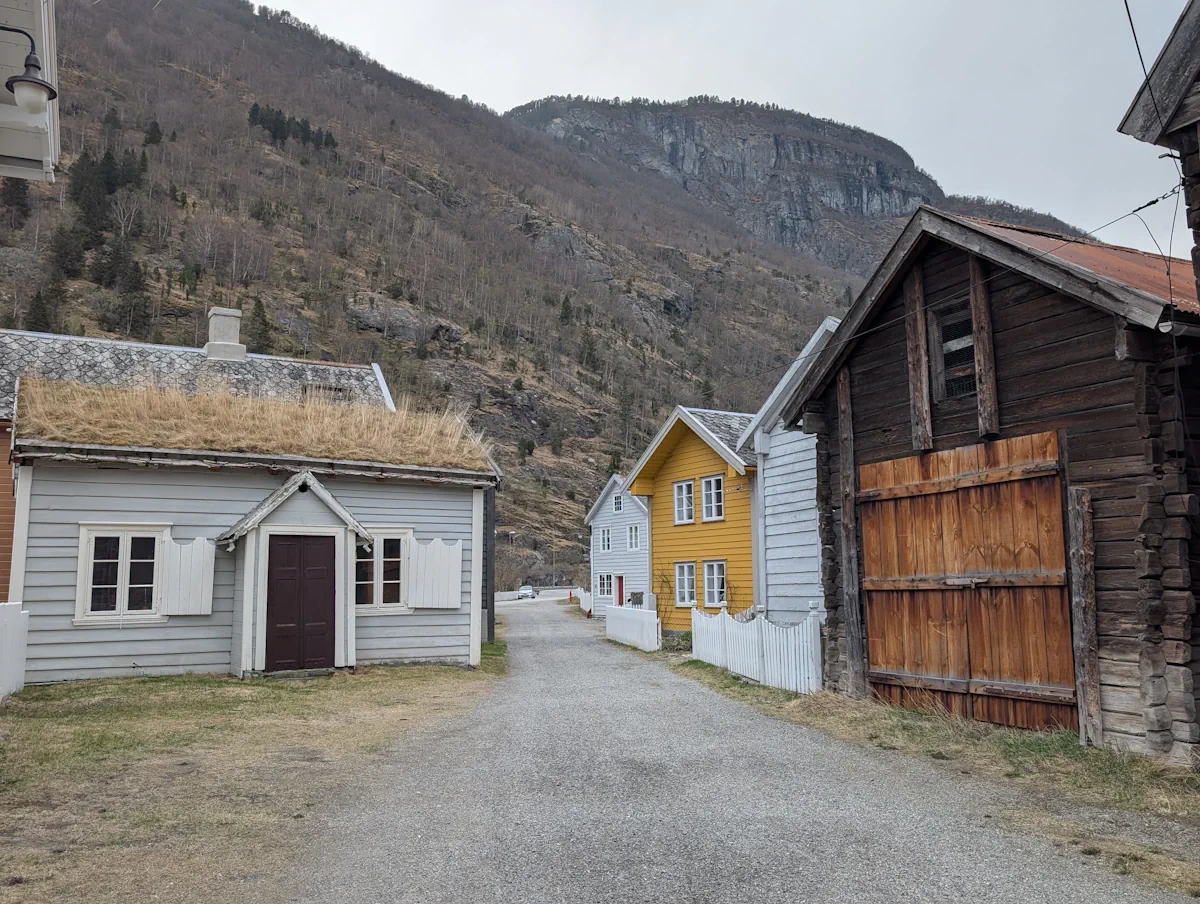
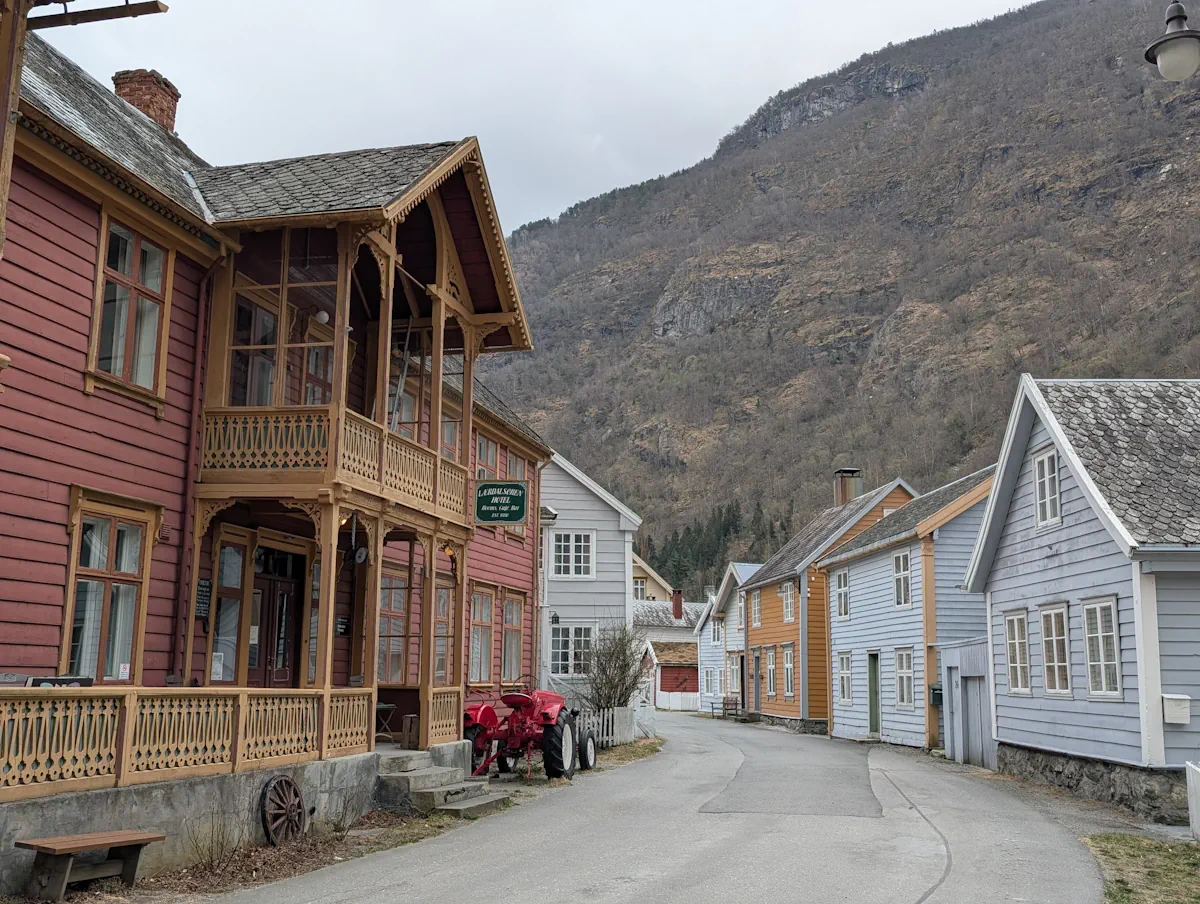
On the shores of the Sognefjord, Lærdalsøyri has one of the most beautiful collections of wooden houses in Norway. Its old quarter, Gamle Lærdalsøyri, lines up around 160 listed buildings from the 18th and 19th centuries along charming little streets. Once the country’s largest marketplace after Bergen thanks to its position between east and west, the village today is home to antique shops, craft workshops and cafés set up in these old houses. The walk through the old quarter is free and open: everything can be visited on foot in one to two hours. The best period runs from May to September, when shops, cafés and guided tours are open. We were there in early April and I can confirm that there was absolutely no one and not a single shop open. But the discovery is still very enjoyable! It’s easily reached by car, a stone’s throw from the Lærdal tunnel (the longest in the world, 24.5 km) and the Borgund stave church: an ideal stop between Oslo and Bergen.
The most beautiful scenic roads in the fjord region
This is the most spectacular area and the roads there are… wow! Mind you, they have to be earned and are only open for a small part of the year, generally from May to early October, because of the snow. They’re called panoramic roads, or scenic roads. Here are the ones I loved seeing (because yes, there are still a few I don’t know! including those closed during my last visit).
- in the following article, check in real time which roads in Norway are closed
The Trollstigen road
The Trollstigen, or the trolls’ road, is probably the most famous road in the country. A magnificent zigzag road between the mountains leading to a crazy viewpoint over that same valley. It’s a must-do, but not in every season. Indeed, it isn’t open all year because of the snow. It’s closed from mid-November to mid-May (on average). A bit like the whole region, in fact. Like any self-respecting tourist spot, in addition to the platform and its view, you’ll find a shop and a restaurant. And it’s also possible to hike/walk from there, there’s the Mannen Hiking Trail nearby. Good news: after several years of closure due to rockfalls, the Trollstigen has fully reopened following major safety works. In 2026, it even opened as early as late April, unheard of! It remains closed in winter (roughly November to late April) and can close occasionally in case of heavy rain.

The Sognefjell road
The Sognefjell is nicknamed the roof of Norway. Indeed, it’s the highest road in the country, but it’s also one of the most impressive. It’s one of the “scenic roads”, that is, the panoramic roads, the most beautiful, in the country. And it’s easy to understand why. Imagine it passing between two of the largest national parks in the country: the Jotunheimen and the Jostedalsbreen. You’ll be surrounded by mountains and glacial lakes. This road really is magnificent. And above all, don’t do it in one go, stop to wander around! That was my biggest regret, doing it in a rush when there’s so much to take in.

The road that arrives at Geiranger
It’s the superb road that comes from Eidsdal and extends the Trollstigen if the latter is open. Road 63 zigzags down towards the Geirangerfjord and will give you crazy views. Especially the Ørnesvingen viewpoint with quite a few facilities and parking spaces available. You’ll have a view of the fjord along its whole length, it’s brilliant.
The Atlantic Road
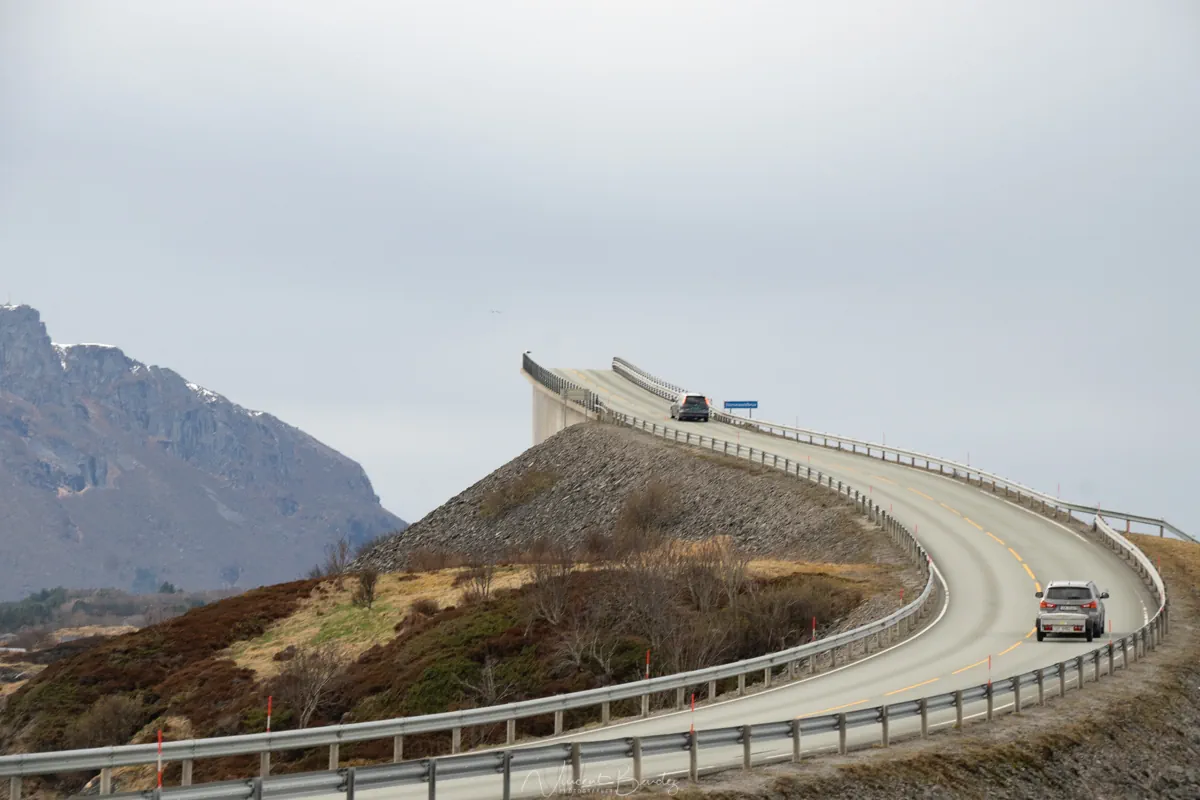
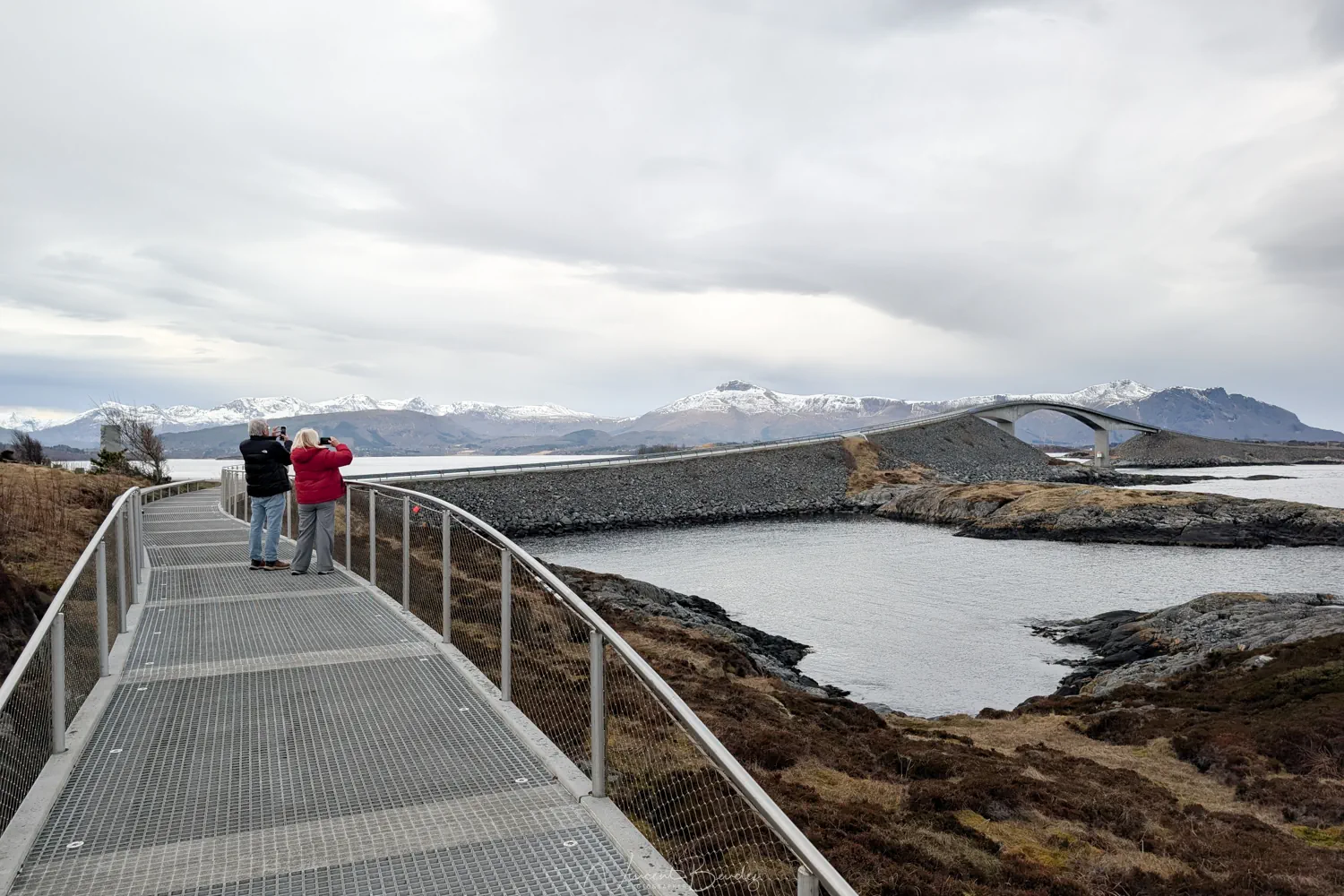
I know, we’re stretching the definition of the fjord region a bit. It’s a little above Alesund, but well, let’s say it counts! The Atlantic Road is one of the best-known scenic roads. Located between Molde and Kristiansund, or more broadly between Alesund and Trondheim. It’s a roughly thirty-kilometre stretch famous for its sequence of photogenic bridges over lots of little islands. Honestly, I’m mentioning it but I have to admit I was a touch disappointed, I expected something more impressive. But I think it’s because of Norway, every road is crazy, so when you come across something nice, it actually becomes ordinary. Still, it remains something unique, so if you’re passing through the area, go for it!
The Aurlandsfjellet or Snovegen
The Snovegen was a very good surprise! A magnificent alternative to the huge (and slightly tedious) Laerdal tunnel. Otherwise known as the Aurlandsfjellet, it’s one of Norway’s scenic roads, that is, one of the 18 panoramic roads (which you can discover here). You’ll cross a magnificent plateau (normally snow-covered), pass sheep, lakes, both at once. Run alongside two fjords and enjoy crazy viewpoints. The memory I have of it is that in places the road isn’t all that wide, so it can get a bit dicey in a motorhome 😀
4 superb places to stay in the Norwegian fjords

📍 Ålesund · right by the water, in the historic heart
A design hotel set in an Art Nouveau warehouse on the edge of the Ålesund strait. Charming decor and a sauna with a plunge into the fjord, "ideally located" according to travellers.
- Sea view, ARKIVET cocktail bar and restaurant
- Sauna with swimming access in the fjord
- Exceptional breakfast, location rated 9.7/10
Free cancellation
From 200 € / night
📍 Geiranger · on the shore of the UNESCO-listed fjord
A hotel magnificently set on the shore of the Geiranger fjord, most rooms with a balcony and a breathtaking view. "Top location" and "delicious" restaurant praised.
- Rooms with private balcony and fjord view
- Panoramic restaurant on the 6th floor, free shuttle
- Staff 9.6/10, location 9.7/10 (2,860 reviews)
Free cancellation
From 140 € / night

📍 Fjærland · on the Sognefjord waterfront
A charming family-run hotel from 1937 on the shore of the Sognefjord, at Fjærland. "Charming house, golden staff" and bistronomy cuisine win unanimous praise.
- Large terrace overlooking the fjord
- Individually decorated rooms, bistronomy restaurant
- Staff 9.5/10, location 9.7/10
Free cancellation
From 240 € / night

📍 Flåm · by the marina, facing the fjord
Modern apartments facing the Flåm marina, with a sweeping view over the fjord. Travellers love the calm and "the magnificent view over the Fjord".
- Fjord view, equipped kitchen in the apartments
- 550 m from Flåm station, sauna nearby
- Location rated 9.6/10 over 1,228 reviews
Free cancellation
From 250 € / night
The other unmissable spots in the fjord region
The Viking churches of the region
So the Viking churches are a real Norwegian speciality, and you’re in luck because there are several in the region. These churches are made of very dark wood, with a truly distinctive smell. Although many have burned down, some original ones still remain, notably the one at Borgund, ultra impressive and photogenic. And handily, it isn’t far from Flam. It’s probably the most iconic church. The one you see everywhere. There’s also the one at Urnes, a UNESCO site, reached via the Sognefjell road and a little boat. But beware, it isn’t open all year! Not far from Bergen, you have the clone of Borgund, which is Hopperstad. Just as well preserved, really pretty, it overlooks the village of Vik. When you’re around Flam, go to Undredal. You’ll find one there but different. And the setting is pretty crazy (the real village at the end of the world). At Gol, you have the replica of the church that was moved over to the Oslo area a very long time ago. While in Bergen, you have the Fantoft stavkirke, which is the reproduction of the one that burned down in the 90s after an arson attack. At Kaupanger, you have the largest stavkirke, plainer on the outside but very well preserved! Finally, at Lom, there’s a very pretty one too. I’ve put the map and all the churches you can visit in THIS ARTICLE. But be very careful with the opening hours because they aren’t open all year, and sometimes have reduced hours.


The Laerdal tunnel
It’s the longest road tunnel in the world, 24.5 km no less, cutting through the mountains. And it’s a tad long. I mention it because it’s something unique but it isn’t a wow experience. The speed is limited to 80 km/h, so it’ll take you 15/20 min in the tunnel, bearing in mind it’s all straight. They’re nice, they’ve added a few big colourful roundabouts to pass the time a little, and luckily there’s internet reception. But I’ll admit I prefer being outside, it’s more varied! If the road is open, go for the Aurlandsfjellet, much nicer even if it’s much longer. That one’s the road you take when you want to go fast.


The Stegastein viewpoint
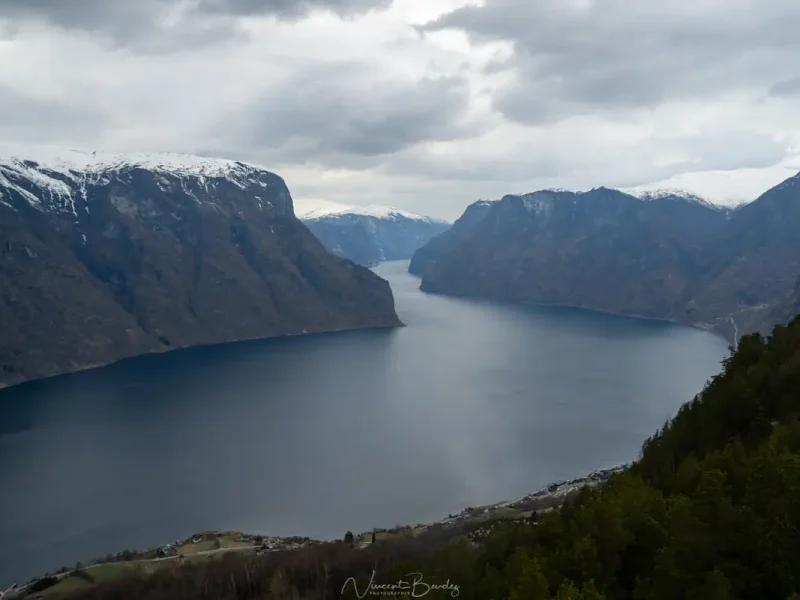
This one is magnificent. I’d missed it on my first visit (because we were late for the ferry), so this time I took my time! And I also took advantage of the other little viewpoints just below (there’s one I prefer, actually, two zigzags down). Stegastein is the crazy view over the Aurlandsfjord along its whole length. To the left, it comes from Flam, to the right it goes all the way to the Sognefjord and you can glimpse Undredal lost in the fjord. It’s free, of course, and it’s being renovated to have more parking because it’s become a very popular spot! The platform juts out over the void and makes for great photos. You can’t miss it because when you come from Flam, it’s just after Aurland, 5 minutes of a zigzag road. This same zigzag road is in fact the Aurlandsfjellet or Snovegen scenic route, one of the most impressive panoramic roads in the country!
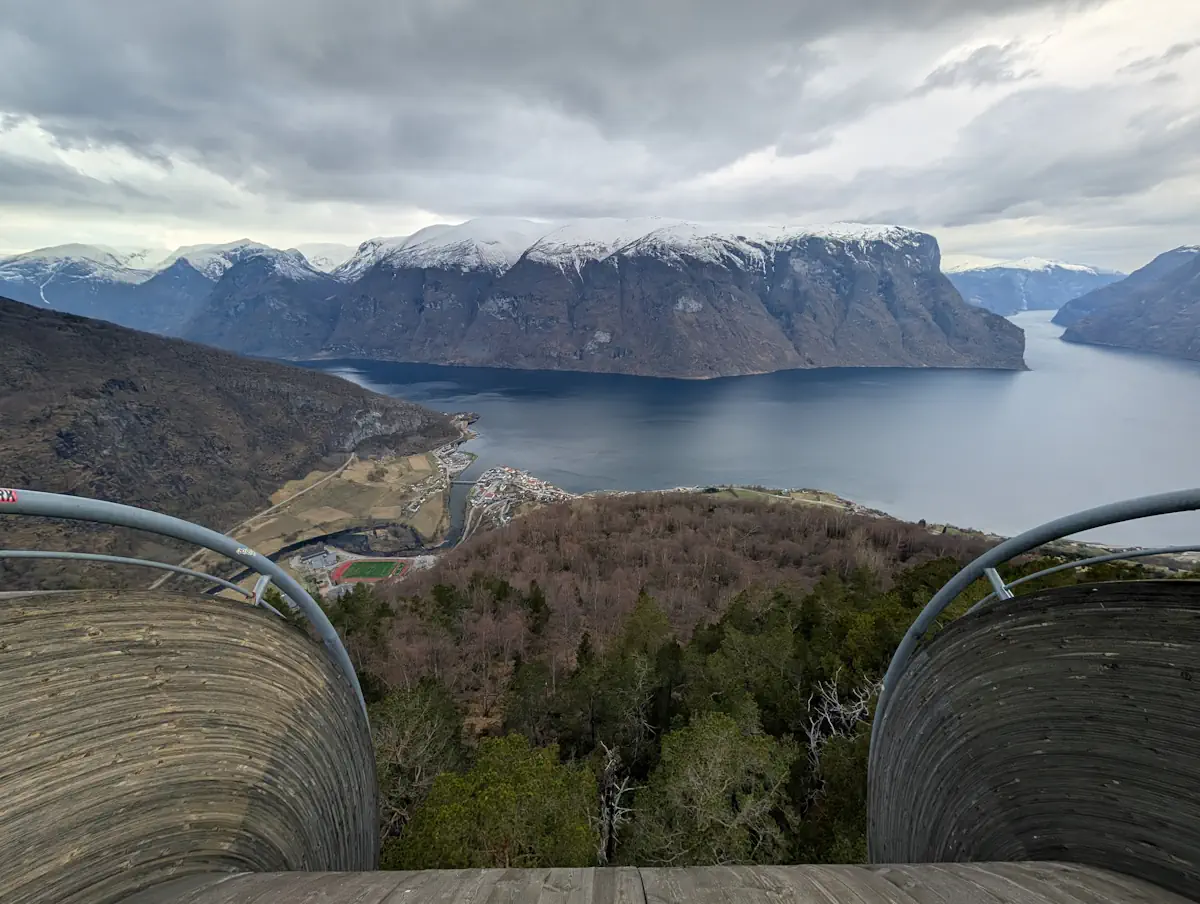
Around Stavanger: Lysefjord, Preikestolen, Trolltunga
Further south, towards Stavanger, you’ll find other iconic spots in Norway. I should point out that I’ve never visited them (for now!), only seen them in photos many times, and I think they deserve to be seen if you’re passing through southern Norway, south of Bergen.
- Preikestolen: a huuuuge cliff overlooking the Lysefjord. You reach it via an 8 km hike (round trip) with 500 m of elevation gain, so not the easiest but moderate difficulty. The view is crazy. I recommend watching this introductory video
- Discover the Preikestolen from below with a superb day cruise on the Lysefjord
- Trolltunga: the troll’s tongue. Rarely has a tourist site lived up to its name so well. A tongue of rock overlooking a fjord, now that’s a real curiosity! Mind you, it has to be earned. A hike of more than 20 km, 1000 m of elevation gain, your calves are going to feel it!
Example itinerary in the fjord region
There’s a countless number of possible itineraries in the fjord region. It depends on how much time you have, where you’re setting off from, how long you take. I’ve already made you at least 2 “ready-made” ones, so to speak:
- a one-week itinerary in Bergen and the fjords
- here you take a little time to visit Bergen, then off you go to see the Nærøyfjord, Flam, Borgund, Stegastein… with the best activities. Without overdoing it.
- a two-week itinerary in the Norwegian fjords
- this one is the classic loop between Bergen and Alesund, which I know quite well for having done it several times. You’ll have many fjords, several cruises, the Flam railway, Viking churches… your eyes are in for a treat!
Below is an example itinerary between Bergen and Alesund. I don’t necessarily include the Stavanger region I’ve just mentioned because it would add 3-4 days to the region (and above all because I don’t know it). But it works well! So here you’ll find all the points of interest mentioned above. You can see that they follow on fairly easily from one another, so doing this itinerary is quite easy. This route is done by car, but you should be able to do some things by bus, we’ll see about that later. The classic itinerary is to do a loop from Bergen to Alesund and back down:
- Bergen: well worth a few days, between Bryggen and the little wooden neighbourhoods
- Flam: its fjord, its spectacular railway (and why not a trip on the Aurlandsfjord)
- The Viking church of Borgund, unmissable
- Come back via the Snovegen (and avoid having to slog through the longest tunnel in the world again)
- Take the Nærøyfjord by ferry and the Hopperstad church on the way if you have time heading to Fjaerland
- Head to Fjaerland, enjoy the calm and discover the nearby glaciers
- See the Viking church of Urnes (beware, reachable by a boat that stops early!)
- See the glaciers of the Jostedalsbreen by taking the Gaupne road
- Take the fantastic Sognefjell road
- See the Viking church of Lom, and a very lively little town
- Head to Geiranger, see the fjord obviously, all the nearby viewpoints like Dalsnibba. Well worth more than just a passing visit!
- Take the ferry from Geiranger to Valldal, majestic
- In the Valldal area, the best strawberries and raspberries you’ll eat in your life. Really.
- Take the Trollstigen to Andalsnes, a quick stop at Trollveggen if you have time
- Head to Alesund, a magnificent little town with atypical architecture. Well worth lingering, and why not go and see the puffins nearby
- To get back, plenty of options! Why not head back down along the coast, or road 39, to the Innvikfjorden, pass north of the Jostedalsbreen, towards Loen to see the glaciers, head to Hyen (or to Skei if you didn’t pass through on the way out), take the road to Dragsvik and catch the ferry to Vangsnes and take road 13. Fewer renowned spots, but it stays superb. Or otherwise really head back down along the coast, I haven’t done it but it promises to be lovely!

Visiting Norway’s fjord region without a car
Visiting the fjords by bus
So it’s not necessarily the easiest, but if you have time, you can take the bus to connect all these places. There’s a great planner for local buses and ferries, called Entur.no. Really efficient. I’ve checked that all the listed places are present and, unless I’m mistaken, that’s the case. But the main issue is that there are very few buses per day, especially for small places like Fjaerland. It’s not easy. Here are a few examples:
- Bergen – Gudvangen: 2 hr 30 by train and/or bus (line 420 or 162)
- Bergen – Stavanger: 4 hr 20 with line 400
- Flam – Ingafossen: 1 hr 30 with line 800
- Ingafossen – Fjaerland: 50 min with line 803
Broadly speaking, the one-week itinerary around Bergen is easily done without a car. Because you can very easily go from Bergen to Flam, to Gudvangen.
Going through an agency to organise your trip
If you don’t want to organise your trip yourself, you can go through an agency that will take care of everything. From planning the itinerary to making the bookings. For that, I recommend Evaneos, which works with reputable local agencies. Several trips are available, but you also have (and above all) the option of doing a tailor-made trip.
Doing day trips
You can also fan out around a town, without having to move every evening. For that, one of the good solutions if you don’t have a car is to take day trips. That is, you can do a round trip from Alesund to Geiranger via the Trollstigen (for example here) or a tour to Flam and the Nærøyfjord from Bergen (discover here). It’s a solution I rather like and use in some countries, to be able to head out one day in two and enjoy the town on the other day. If you want to see the best of the fjord region with agencies, here’s what I’d suggest:
- From Bergen: a day at the Nærøyfjord and Flam and a day cruise to Fjaerland
- From Stavanger: a cruise on the Lysefjord
- From Geiranger: a day by minibus to discover the most beautiful spots
- From Alesund: A day out to the Trollstigen and a round trip by boat to Geiranger

Map of Norway’s fjord region
To make things easier for you and help plan the trip, I’ve created on Google Maps a map of Norway’s fjord region which brings together in particular:
- the most beautiful spots, the viewpoints over the fjords
- the scenic roads
- the hikes with info
- the waterfalls
- the accommodation across the whole region
- and plenty of other things like the activities!
Practical information on the Norwegian fjords
How long do you need to visit the fjord region
Well, I did Bergen-Alesund through the fjords in 5 days. I’ll admit it’s really, really short. You don’t really have time to enjoy it, to do a few walks. So yes you’ll see a lot of things, but at quite a pace, especially if you have to take the ferries. So I recommend a hard minimum of one week, 10 days is really not bad. With 2 weeks you can truly make the most of it, get off the traditional circuit a little, do a few hikes. So yes, I really recommend 2 weeks to visit the best of the fjord region
Visiting the Norwegian fjords by car
It’s probably the most practical way to get around to visit the Norwegian fjords. Quite simply because it’s the one that offers the most flexibility, lets you go where the buses don’t, stop for photos wherever you want. In short, it’s really the best if you can drive. Some roads in this region are only open 4/6 months a year, depending on the snow cover. Like the Snovegen, the Sognefjell, the Trollstigen. You need to take that into account when creating your itinerary. A car rental, generally, doesn’t cost too much in Norway. From €30, generally €40/day, but when you book late, it can climb quickly. Above all, petrol has made quite a jump in recent months, going from €1.7 to €2.3, it’s a factor to take into account in the budget. For car rental, I don’t recommend anyone in particular. Above all I recommend comparing, absolutely. Check with a comparison site, then check with the agency. Pay attention to the conditions like unlimited km or not (the big trend is to cut it to 100 km per day). If you can, I recommend taking a hybrid because it uses quite a lot on these roads! In terms of comparison sites, I use the famous Discover Cars which I really like but also Booking. Yes I know, I’m comparing the comparison sites 😀 but it helps avoid nasty surprises!
Visiting the Norwegian fjords by motorhome
Now this is something great. Norway lets you park your motorhome anywhere as long as the opposite isn’t indicated. It’s the right to roam. And on top of that, there really are looaads of campsites pretty much everywhere in the country. Mind you, in winter the vast majority are closed. Here’s the list of campsites, free or paid, available, with quite a bit of information. After that, there are two options. If you don’t have much time, you can rent a motorhome (or a campervan, it’s a bit smaller and usually without a bathroom). It’s not cheap. A campervan is from €100 per day. A motorhome, you’re more like from €200, but it’s not at all the same comfort. It’s expensive, especially in high season. Be careful if you don’t return it to the same place, that’s where it really costs an arm and a leg. Very honestly, I couldn’t recommend any agency in particular. However, the vehicles I come across up there are mostly Arctic Campers, and having “visited” one, it’s not bad at all, it looks like what I have in Iceland and it suits me! Pay attention to insurance, mileage, heating in winter, that kind of thing.
The other option is to come with your own vehicle, and I see more and more of them. So I’m going to write a dedicated article about it, but you need to have time because coming to the fjords from Paris (for example) is a few days of driving, with a ferry to take in Denmark or the Netherlands. But clearly, it’s worthwhile if you have the time. I see people coming for a month or more. For that, you’ll just need to go through the procedure to get the Autopass, which lets you automatically pay for ferries and tunnels.
Map of closed roads
So one of the funny things in Norway is that roads are liable to be closed pretty much any time. Some roads are closed 6 months a year, unsurprisingly, because of the snow, others will be closed temporarily because of avalanches. Before hitting the road, it’s better to check on this site, which shows the state of the roads in real time. It’s in Norwegian but you can easily see (no-entry/roadworks sign) what’s closed in each region. In the following article, I explain much more precisely how to find out about road closures in Norway. And here are the estimated opening and closing dates of the roads: 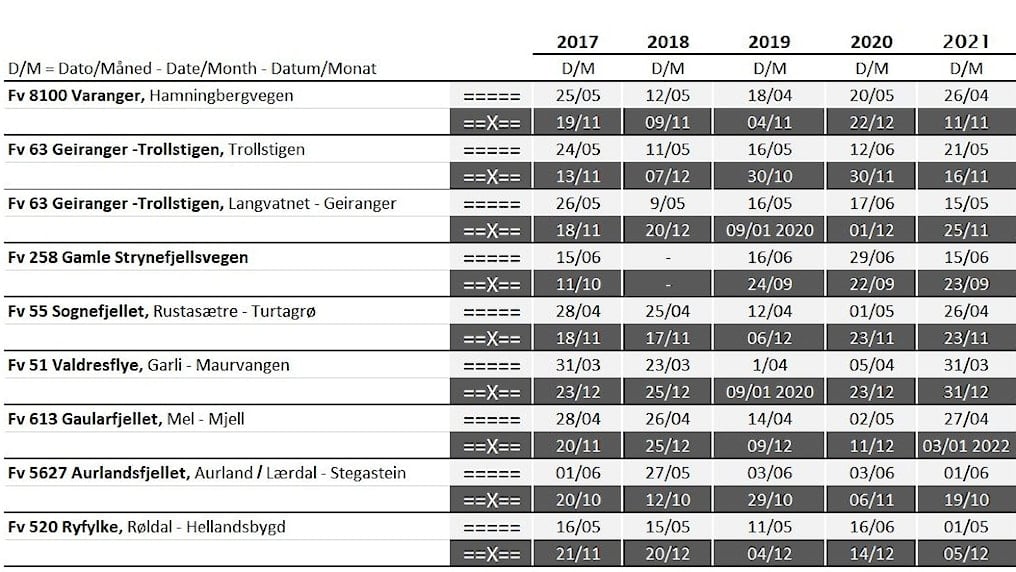
What is the best season
Oh, that’s easy. To really enjoy the region, most of the roads need to be open, that is, from mid-May, until the end of October. But it’ll also depend on the weather, on the snowfall. You can visit the fjords all year round, but… You can go to Bergen, Alesund, Geiranger, Flam all year round. Some routes won’t be possible in low season (Sognefjell, Snovegen, Trollstigen…), but you should also know that the weather can be really rotten in November/December/January around here. And many tourist facilities will be closed outside the big towns (hotels in particular, activities). So, I recommend:
- from mid-April to late May: still some snow, some roads won’t be open because of snow cover, not especially touristy
- that’s exactly what we had in April 2026 while travelling through this region for 10 days. No one, snow on the passes, the scenic roads closed, but all the sites accessible. You just need to find alternatives in case of an unexpected closure.
- early June to late August: the best period, it’s daylight all the time, but it’s touristy especially in July and August
- September to early October: no snow (normally), not touristy, days still long enough to enjoy. The scenic roads are normally open, so although it’s cooler and windier, it’s a lovely period. And why not the northern lights if the activity allows!
Finally, the fjords are one of the best places to visit in Norway during the summer!
What is the weather like and how should you dress?
In the fjord region, going at “the right season”, you’ll need to prepare for:
- wind
- rain
- between 5 and 20°, rarely more, rarely less
That helps a lot, doesn’t it? So you’ll need to prepare your clothes accordingly. And it doesn’t help with packing, I know. But the windbreaker, like a cagoule, will be your best friend 😀 This region really has special weather. You can have snow on the passes even in the middle of summer, that’s normal. Just as I had pretty superb weather in April coming down from Tromso. The scenic roads were closed, I had snow on a few passes, but otherwise few nasty surprises. So assume you’ll have wind, rain and maybe snow. Lots of humidity.
Which airports are accessible
It’s quite easy, the two classic starting points are Bergen and Alesund. These two towns are to the north and south of the main fjords. But arriving in Bergen really is the great classic. Oslo isn’t that far, but you won’t be able to do the fjords in one day from Oslo (well almost, there’s a one-day tour here). So from Oslo you need to take the train to Bergen, or the car, because the first fjords are only a few hours’ drive away. Otherwise you can also set off from Stavanger, further south, but with lovely things like the Lysefjord, the Preikestolen, Trolltunga, or from Trondheim further north and the beautiful road to Alesund. All these towns have airports and are easily reachable from France and the main European cities. Bergen is notably reachable by direct flight with Air France
What budget should you plan to visit the fjords
Very concretely, it’s expensive. It rises in high season, in particular accommodation prices can easily double. More than €100 a night, easily. The ferries aren’t cheap, but after that, if you don’t do too many excursions, nature is free! Supermarkets are more expensive than in Paris but you find relatively reasonable prices. Restaurants are far more expensive though. Wine and beer are likely to scare you. For a car rental, it’s from €40, but petrol is expensive. So basically, for 10 days in a touristy period, 2 people, let’s go with this:
- €250 of flights per person (on average, it can drop to 80 or rise to 350)
- €70/day for the car, it’ll be much less in low season, and more if you book at the last minute
- €30/day of petrol if you drive quite a bit
- €150/day of accommodation, much more if you book at the last minute
I’m not including food and the ferries/tunnels because it really depends on each person. But that gives us a total of €3000 for 10 days. In tourist season.
Where to stay in the fjords
It’s hard to do the fjords from a single place. You can see part of them from Bergen, part from Alesund, another from Stavanger, for example. The ideal is to have several bases and the region is perfect for a road trip. So for my part, I recommend Bergen / Fjaerland / Geiranger / Alesund at the minimum, but there really are loads of options. From the little chalet lost by the lake to the hotel overlooking the fjord. In short, here are a few tips:
- Bergen
- for example Hanseatiske Hotel
- Flam
- for example Flam Marina
- Fjaerland
- for example Fjaerland Fjordstove Hotell
- Geiranger
- What do you think of the Grande Fjord Hotel and its superb view
- Alesund
- The superb Hotel Brosundet
But there are so many options! You can change every evening if you’re on a road trip, or fan out for 3 days around each place. That said, if you want to discover the fjord region properly, I’d advise against having only one or two bases, otherwise you’ll do far too much driving each day and it won’t be pleasant
The mistakes to avoid in the Norwegian fjords
After several stays in the region, here are the traps I fell into (or that I saw other travellers make). Enough to spare you a few disappointments!
1. Wanting to see everything in too little time. I did Bergen-Alesund in 5 days and it was far too short: you rush from one thing to the next without ever enjoying it. The region is huge, better to see less but properly. Reckon on a week minimum, ideally 10 days.
2. Racing through the beautiful roads. My biggest regret: doing the Sognefjell road in a mad rush when there’s so much to take in at every bend. These scenic roads aren’t journeys, they’re destinations. Stop, wander around.
3. Having only one base. Wanting to do everything from Bergen (or a single town) means inflicting hours of driving on yourself every day. Plan several bases — Bergen, Fjaerland, Geiranger, Alesund for example — and change accommodation as the road trip goes on.
4. Forgetting to check for closed roads. Some roads (Sognefjell, Snøvegen, Trollstigen) are only open 4 to 6 months a year, and others close occasionally because of avalanches or rockfalls. Always check before setting off: I explain how to find out about closed roads. So if you set off in October, watch out, things are going to close at some point or another!
5. Underestimating the ferries. The ferries are part of the trip and are magnificent, but in high season the most popular ones (Kaupanger-Gudvangen, Hellesylt-Geiranger) need to be booked in advance. Not anticipating means risking being left on the quay or having your day turned upside down. What’s more, the ferries take time. Google Maps will give you an estimate but it’ll always be far from reality.
6. Dressing badly. In the fjords, plan for wind, rain and between 5 and 20°, rarely more. Even in the middle of summer, it’s freezing on the water. A good windbreaker like a cagoule and warm layers change your whole comfort.
7. Skipping the national parks and glaciers. Many race from one fjord to the next without stopping in the Jotunheimen or the Jostedalsbreen. It’s a mistake I made: you’ll find there some of the most beautiful landscapes and the most beautiful hikes in the country. Take the time to go and see a glacier (Nigardsbreen, Briksdal, Bøyabreen…).
Frequently asked questions about the Norwegian fjords
What is the most beautiful fjord in Norway?
A trick question, because it really depends on taste! But if I had to keep only one, it would be the Nærøyfjord: ultra narrow (250 m wide), cliffs rising to 1,800 m, a UNESCO site. The cruise between Flåm and Gudvangen is, in my opinion, the most beautiful experience in the country. That said, the Geirangerfjord with its waterfalls is just as spectacular, and the Hjørundfjord will offer you absolute calm. In short, you won’t be disappointed by any of them.
How many days do you need to visit the Norwegian fjords?
I did Bergen-Alesund in 5 days and, very honestly, it’s far too short: you see plenty of things but at a frantic pace, without the time to enjoy or wander around. My advice: a hard minimum of one week to visit the surroundings of Bergen, 10 days to go all the way to Alesund is a minimum, and 2 weeks let you get off the classic circuit and do a few hikes. I detail everything in my 2-week itinerary.
What is the best time to visit the fjords?
From mid-May to early October, without hesitation. It’s the period when most of the high-altitude roads are open (Sognefjell, Snøvegen, Trollstigen close in winter because of the snow). The best: from early June to late August, it’s daylight almost all the time. September is superb too, less touristy and without snow. On the other hand, November to April, the weather can be rotten and many tourist facilities are closed outside the big towns. From early October, the roads start to close but you never quite know when.
Can you visit the fjords from Oslo?
Not in one day, no (except a very long and tiring organised tour). The first fjords are several hours’ drive from Oslo. The best from Oslo: take the train to Bergen (one of the most beautiful railway journeys in Europe) or the car, and make Bergen your real starting point for the fjord region.
Can you visit the fjords without a car?
Yes, it’s entirely possible, even if it’s less flexible. Three solutions: the local buses and ferries (with the Entur.no planner, but few rotations per day for the small villages), day trips from Bergen, Alesund or Stavanger, and the cruises. I explain everything in detail in the “visiting the fjords without a car” section higher up in the article, and you can also go through an agency that organises everything.
Geirangerfjord or Nærøyfjord: which to choose?
If you have time, do both, they’re quite different! The Geirangerfjord is the more theatrical: wide, with its famous waterfalls (the Seven Sisters) and its high viewpoints like Dalsnibba. The Nærøyfjord plays on narrowness and intimacy: you feel you could touch the cliffs. If you must do only one by boat, I vote Nærøyfjord. If you’re driving, Geiranger combines with superb viewpoints.
What budget should you plan to visit the fjords?
Let’s be clear: it’s expensive. For 10 days, reckon on about €2000 per person, roughly: ~€200 of flights, €40/day for the car, €20/day of petrol and €150/day of accommodation (prices can double in high season). Good news: nature itself is free! It’s mainly the restaurants, alcohol and ferries that push up the bill. I also give you my tips on how to pay in Norway.
Do you need to book the cruises and ferries in advance?
In high season (July-August), yes, absolutely, especially for the classics like the Nærøyfjord or the most popular ferries (Kaupanger-Gudvangen): they fill up fast, sometimes several weeks in advance. Out of season, it’s much more flexible. I’d advise favouring tickets with free cancellation (Norwegian weather changes fast). Find my ranking in the most beautiful cruises in Norway.
Where to stay to visit the fjords?
Avoid having a single base, otherwise you’ll do far too much driving each day. The ideal for a road trip: several bases. For my part I recommend at least Bergen, Fjaerland, Geiranger and Alesund. From the little chalet by the lake to the hotel overlooking the fjord, there’s everything. I’ve prepared a selection of the best places to stay in Bergen and the recommended hotels for each stage in the article.
Which airport to reach the fjords?
The two classics are Bergen (to the south) and Alesund (to the north), which frame the main fjords. Bergen remains the great starting point, the best served from France. You can also land at Stavanger (for the Lysefjord, the Preikestolen) or at Trondheim further north. All these towns have an airport easily accessible from Europe.
Is the Trollstigen road open?
Yes! After several years of closure due to rockfalls, the Trollstigen has fully reopened following major safety works. In 2026, it even opened as early as late April, unheard of. It remains closed in winter (roughly November to late April) and can close occasionally in case of heavy rain. Before setting off, always check the state of the roads in Norway.
Which fjord to see the Preikestolen or the Trolltunga?
The Preikestolen (the famous flat cliff) overlooks the Lysefjord, near Stavanger: an 8 km round-trip hike, moderate difficulty, with a crazy view. You can also see the rock from below on a cruise on the fjord. The Trolltunga (“the troll’s tongue”) dominates the Hardangerfjord: now this is serious, more than 20 km of walking and 1000 m of elevation gain. It has to be earned, but what a reward!

Conclusion
And there you go, you now know just about everything about the fjord region! Concretely, it’s hard to cover it all because this region is really large. You can “settle” for the Bergen region, go as far as Flam for example, in a few days, or else do a huge tour from Stavanger to Trondheim. But I’d say that the most important part, even if it’s quite reductive, lies between Bergen and Alesund. And we’ve seen that it isn’t only about fjords, but also about Viking churches, architecture, sports activities with dozens of hikes. In short, your eyes are in for a treat and, worse! you’ll come back, I guarantee it.
- Don’t forget to take a look at this optimised itinerary in the fjords!