Last updated on
Itineraries updated in July 2026: new hydrogen ferries on Bodo-Moskenes, booking tips and refreshed prices.
I get asked this all the time (and I ask myself the same thing every time I go): “I’ve got X days to visit the Lofoten Islands, what do I do?”. And it’s a real question, because the islands are big: it takes around 5 hours to drive from one end to the other, and every bend makes you want to stop. So to save you from spending your whole trip on the road, I’ve put together 3 itineraries based on how much time you have: 3 days, 5 days or a week.
These itineraries are deliberately realistic and completely adaptable. I go back regularly, in winter as well as in summer, and if there’s one thing I’ve learned up there, it’s that a good Lofoten itinerary has to leave room for the weather… for photo stops and for the little surprises that make the best memories.
To picture it all, keep my map of the Lofoten Islands handy, with every spot mentioned here.


The itinerary at a glance
- Direction of travel: from south (Reine) to north (Svolvaer) — you start with the most spectacular part, and it’s the natural direction if you arrive by ferry at Moskenes or through Leknes airport.
- In 3 days: Hamnoy, Sakrisoy, Reine and Å → Nusfjord, Ballstad and the beaches → Henningsvaer and Svolvaer. Nights: Reine x2, then departure or a night in Svolvaer.
- In 5 days: the same base, plus Unstad, Eggum and a trip out to sea. Nights: Reine x2-3 then Svolvaer x2.
- In 1 week: add a hike (Reinebringen, Ryten) and a wildcard day. Nights: Reine x3 then Svolvaer x3-4.
- Arrival / departure: Leknes or Bodo + ferry on the way in, Svolvaer or Evenes on the way out (or the other way round).
Before you start: the basics
A few quick reminders to lock in your route:
- The entry points: Leknes and Svolvaer airports (served only by Wideroe), the Bodo-Moskenes ferry (remember to book, only half the spots have been sold online since 2026), or the road from Evenes/Narvik. All the details in how to get to the Lofoten Islands.
- A car is almost essential to follow these itineraries. I explain everything in where to rent a car in the Lofoten Islands. Because there isn’t much public transport and, above all, your time is limited. So compare car rentals!
- From 4-5 days, use two bases: if you want to split your stay into 2 parts, north and south. So one near Svolvaer/Henningsvaer for the north, one near Reine for the south. It’ll save you hours of back-and-forth (Svolvaer-Å is a 3-hour drive!). My recommendations are in where to stay in the Lofoten Islands.
Itinerary 1: the Lofoten in 3 days, the essentials
Three days is short for the Lofoten, I’d rather be honest about it. But it’s enough to get properly blown away, as long as you don’t try to do everything. You focus on the far south, the most spectacular part, and on Henningsvaer. That said, these 3/4 days often fit into a wider Norway trip rather than doing a round trip — that’s pretty common.
The ideal is to arrive at Leknes (by plane or Hurtigruten) or fly into Bodo then take the ferry to Moskenes, and sleep near Reine for the first two nights. Here are the places I’d suggest:
If you want to focus on the south for these 3 days, as suggested here, flying into Evenes isn’t necessarily the best idea, because Evenes to Reine is a good 5/6h drive.
Day 1: the far south, from Hamnoy to Å
The postcard day, and the good news is that everything is close together: from Hamnoy to Å it’s only about twenty minutes of driving. So you won’t feel rushed, and yet you’ll see so many wonders.
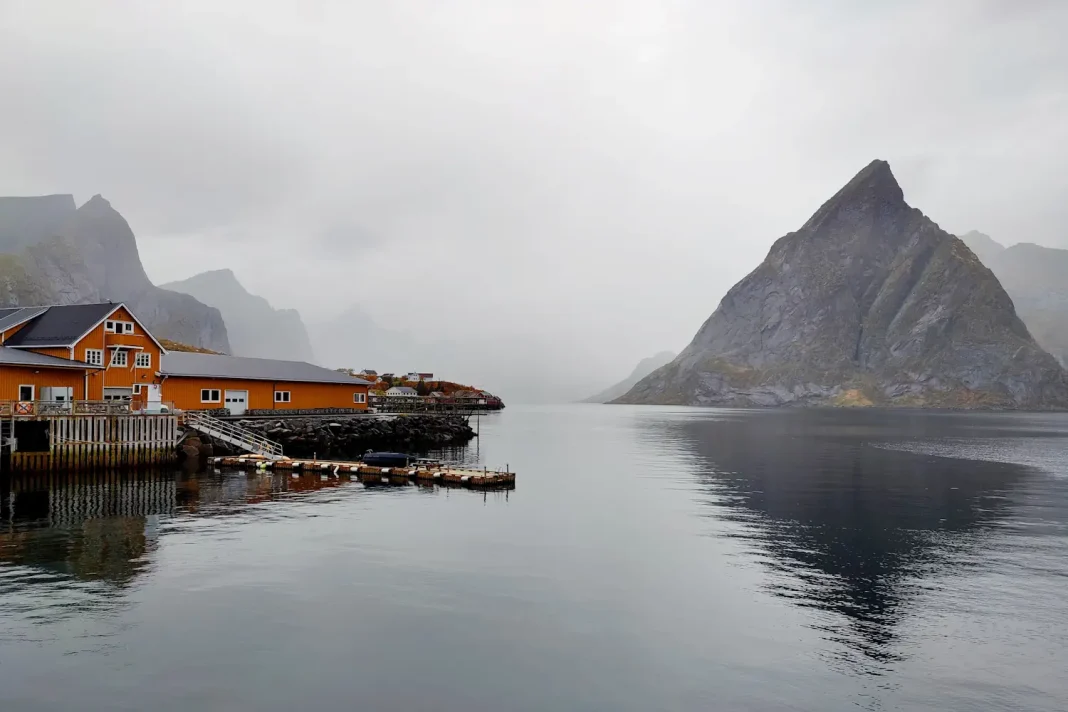
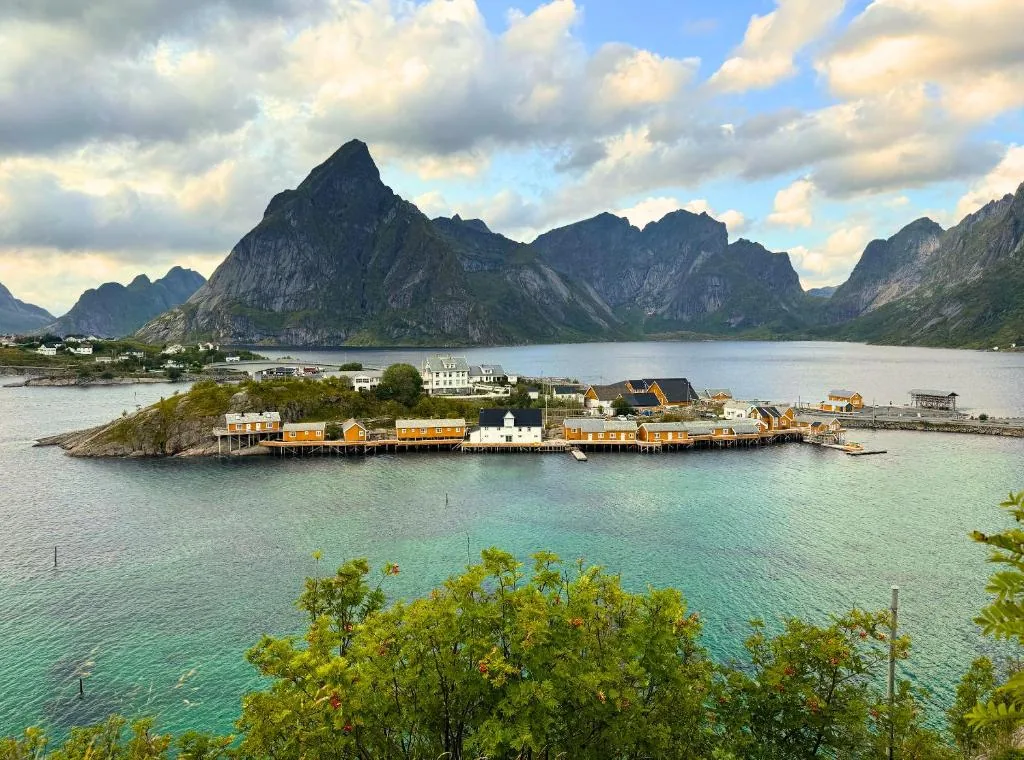
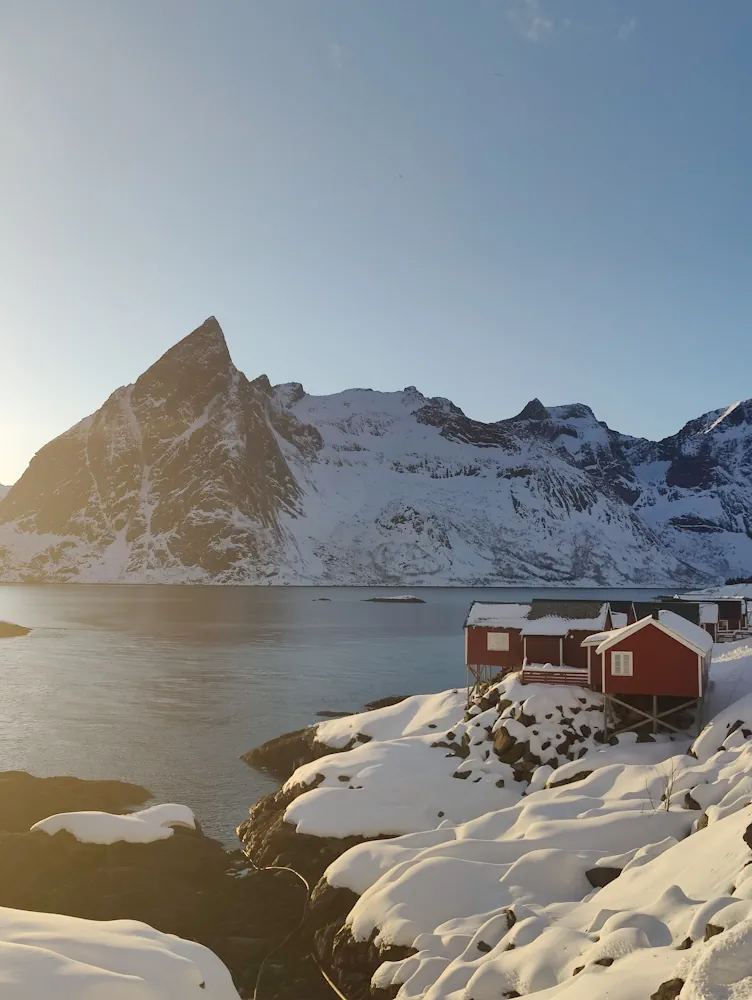
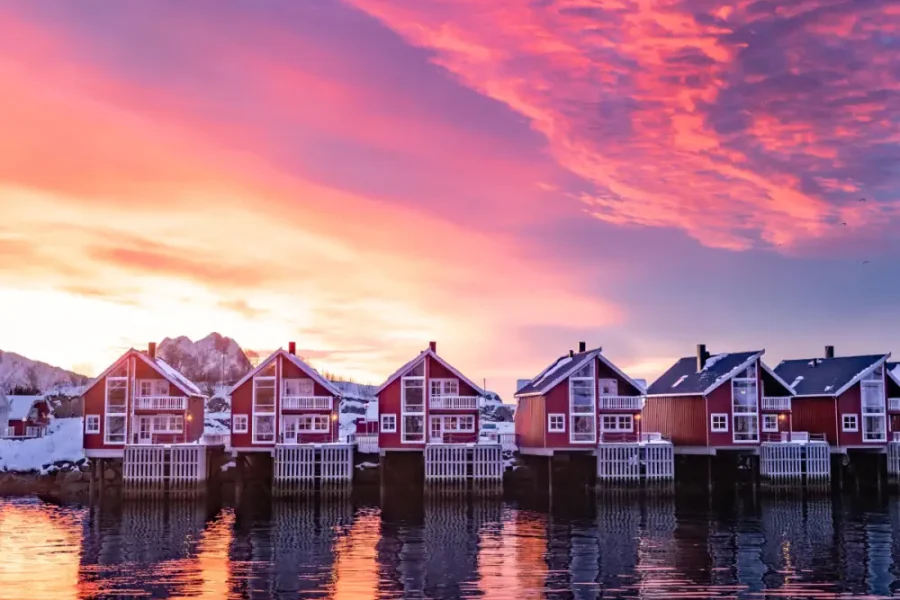
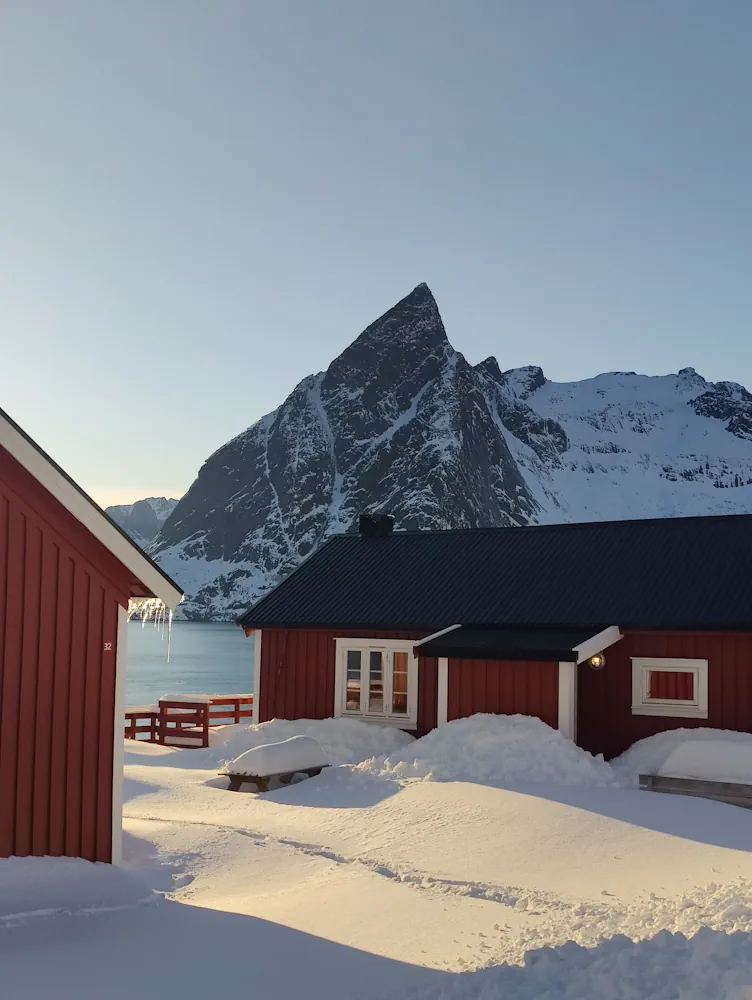
Start with Hamnoy and its famous bridge: it’s THE iconic Lofoten viewpoint, the one you’ve already seen a thousand times in photos, with the red rorbu at the foot of the mountain. It might even be your accommodation, Eliassen Rorbuer. And in high season you can’t miss that bridge, because there’ll be a crowd on it! But you can head a little below it for some peace. Just be careful, it’s slippery, so ideally avoid falling into the water. Oh, and also go to the little harbour just before it — it’s quick but lovely.
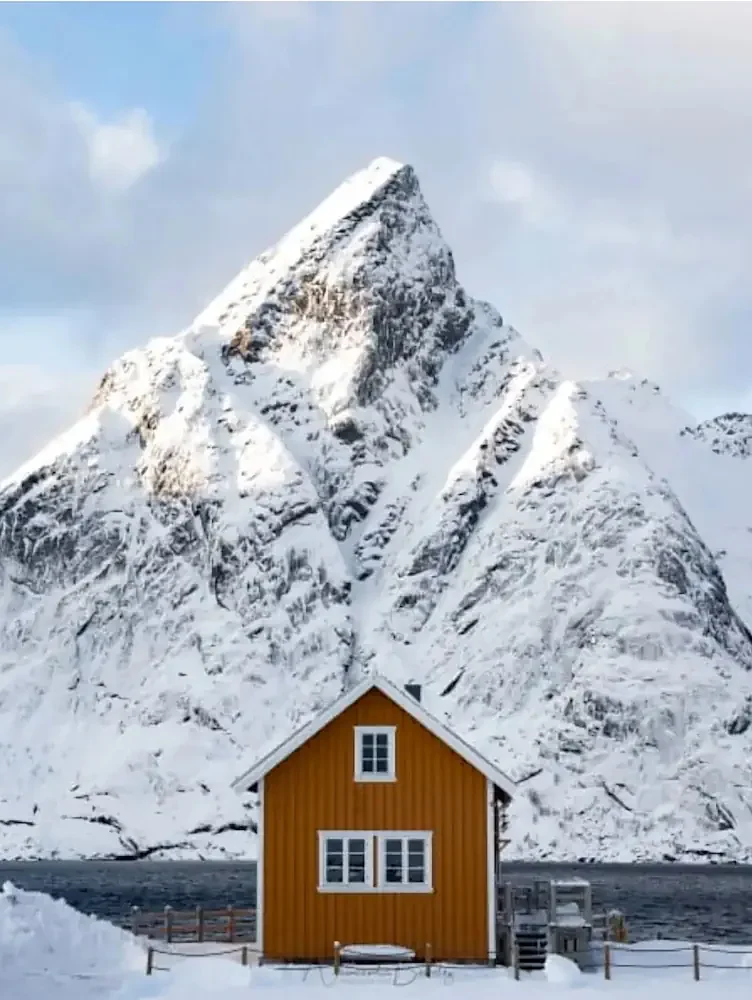
Right next door, tiny Sakrisoy stands out with its orange houses set on their little island. You’ve got the most photographed house in Norway: the famous lone orange house in front of the leaning mountain.
Then comes Reine, surrounded by steep mountains plunging into the sea — take the time to walk around it, the views change at every angle and the village easily deserves an hour or two. First, leave the car at the entrance to the bridge; there are some cracking viewpoints over the village and the mountains here. Wander down to the harbour, take your time, I really mean it 🙂
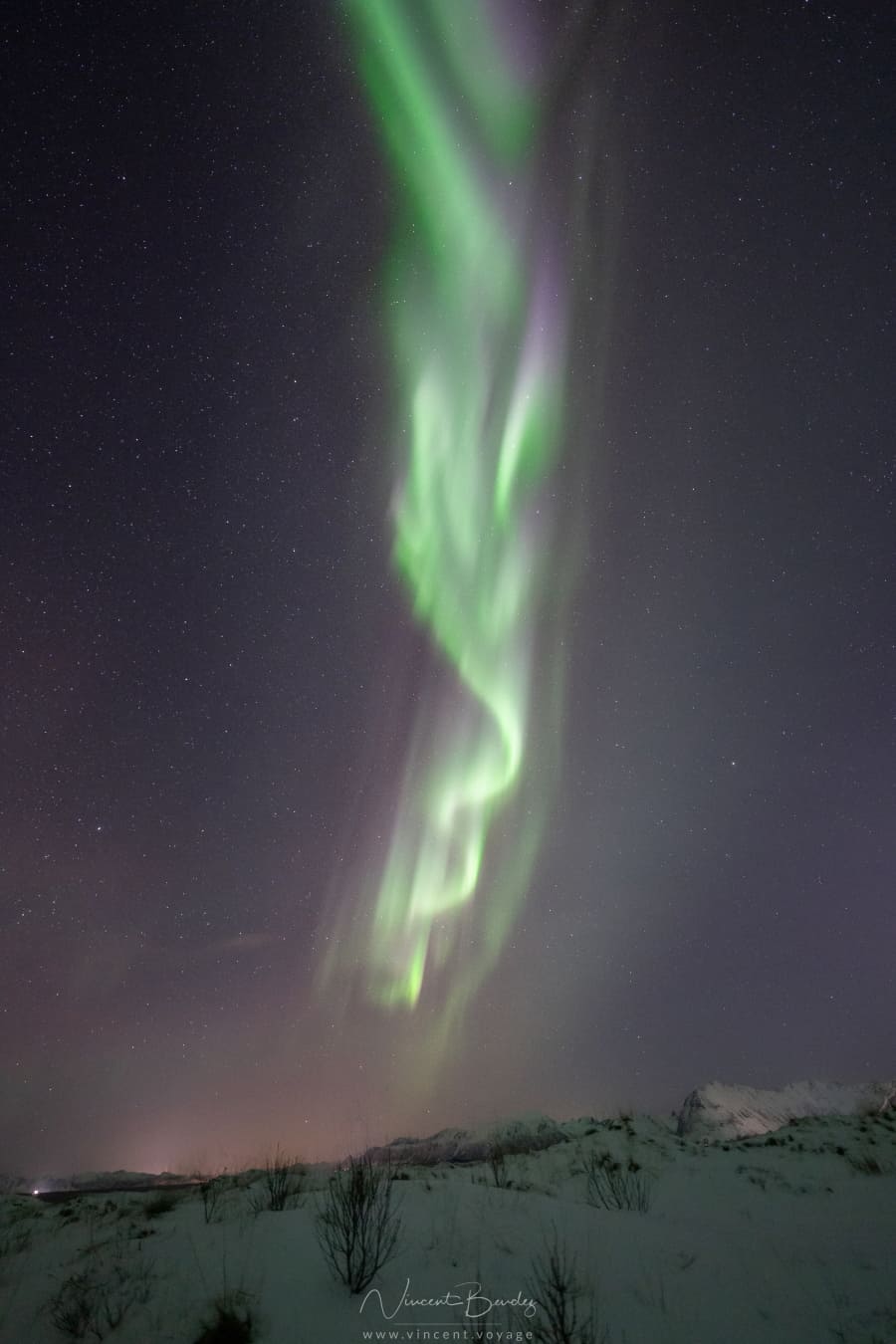
In the afternoon, carry on to Å i Lofoten, literally the very end of the road. The fishing village is superb, especially under snow, and the late-day atmosphere there is very special: you really feel like you’re at the end of the world. In summer, enjoy the bakery. In winter, keep an eye on the sky on your way back — Hamnoy and Sakrisoy are very photogenic aurora spots.
To go deeper, here are the most beautiful villages in the Lofoten Islands.
Driving for the day: about 30 minutes in total (Hamnoy → Å: 20 min), the rest is pure contemplation. Night: near Reine.



Day 2: Nusfjord, Ballstad and the beaches
You head slowly back north, with two very different moods in the same day: villages in the morning, beaches in the afternoon.
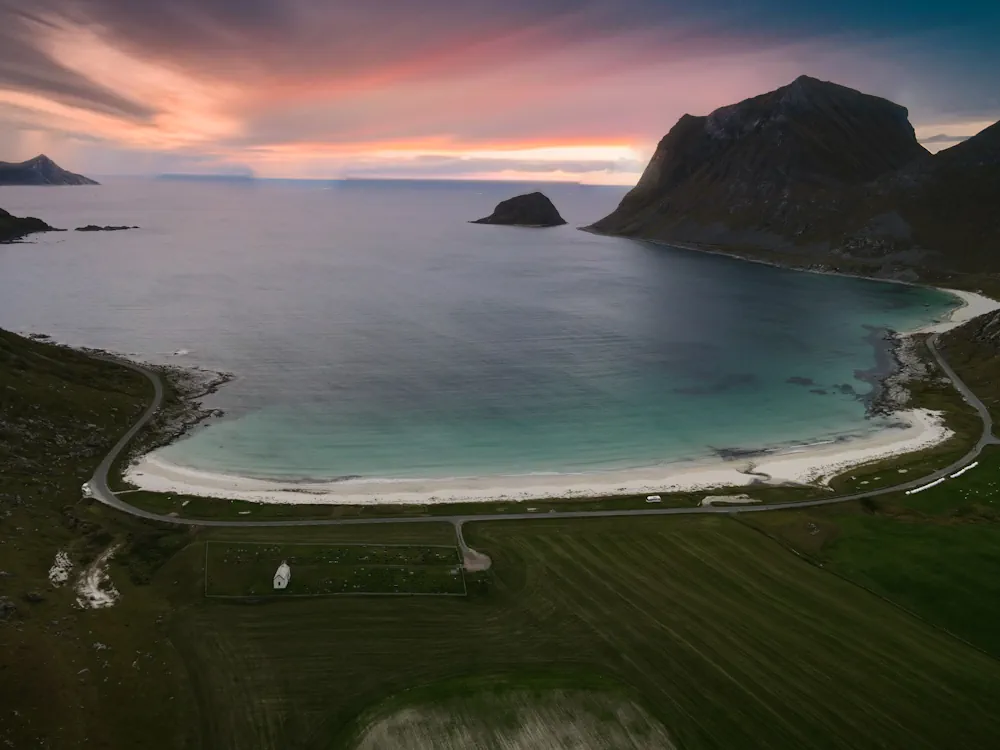
First stop along the way: the gorgeous beach of Ramberg. Turquoise water, white-sand beach, mountain ranges in the background. Paradise. But chilly.
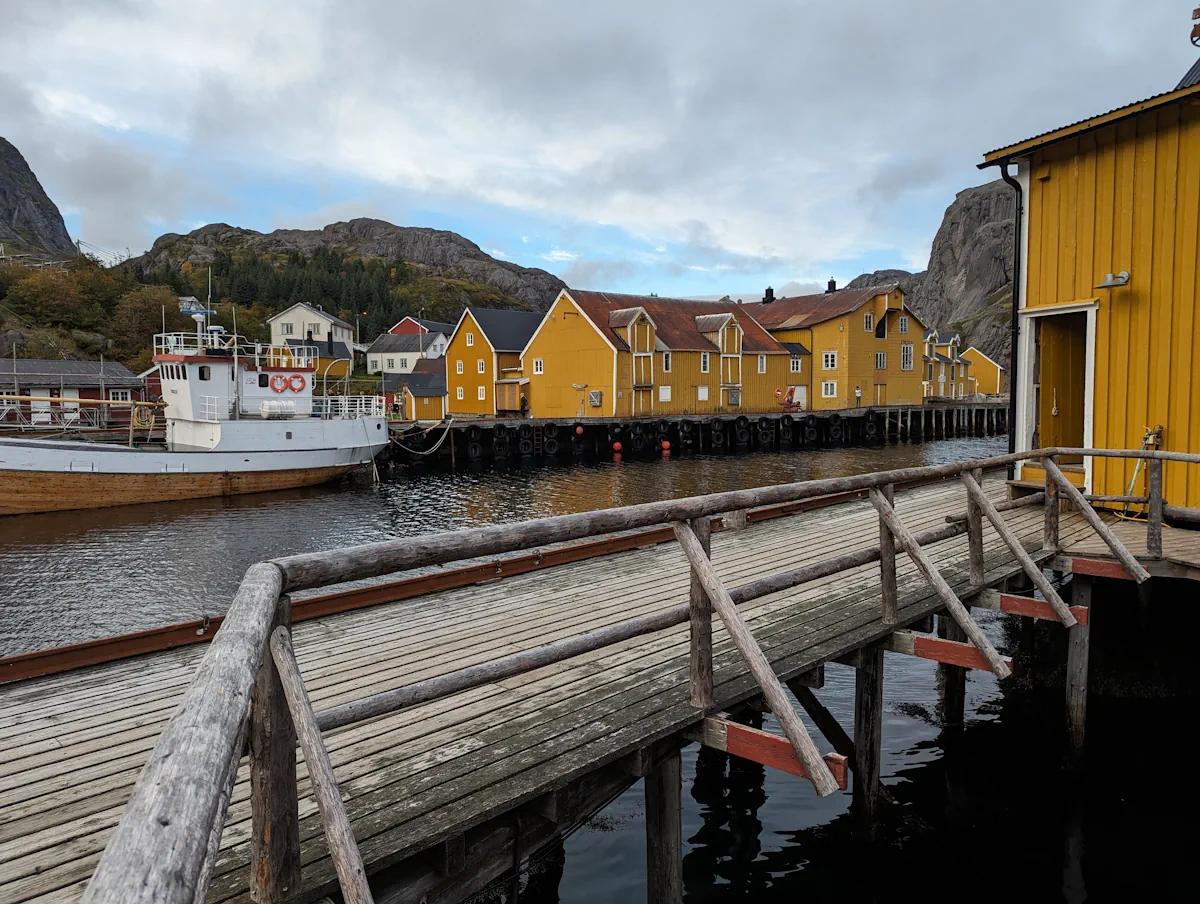
Next, a stop in Nusfjord, a really pretty village completely tucked away at the head of its fjord — the detour off the main road is well worth it. You’ll also pass Batman mountain along the way (you’ll see straight away why).
Then, on to Ballstad, an active fishing village with great views between fjords and mountains, perfect for a lunch break.
In the afternoon, it’s beach time: Haukland, Vik and Uttakleiv, just a few minutes apart by road. Clear water, pale sand, mountains all around: you’d think you were in the tropics, minus the water temperature. Uttakleiv is the best known (and busiest), Haukland my favourite for the end of the day: stay there for sunset, it’s a classic that never disappoints.
In winter, these beaches are also very good aurora spots — but be warned, you won’t be alone at Uttakleiv; Vik beach right next door is often quieter. And at Uttakleiv, people always stay in the same spot. At low tide among the rocks you can look for something called the “dragon’s eye”, a small, rather photogenic formation. It’s usually marked on Google Maps and there’ll be a few people around. So yes, at Uttakleiv, get away from the crowd! Especially if you plan to stay for the aurora, because it’s a little nightmare with all the light pollution and cars. If you head to the north end of the beach, it’s better.
Driving for the day: about 1h30-2h in total (Reine → Ramberg → Nusfjord → Ballstad → Haukland). Night: near Reine.



Day 3: Henningsvaer and Svolvaer
Head north on the Kong Olav veg, the main road that crosses the Lofoten. It’s one of Norway’s official scenic routes and you quickly understand why: allow plenty of time, you’ll be stopping every ten kilometres to take photos.
Henningsvaer is the must-see of the day: a still very active fishing village, spread across several islets linked by bridges, with an iconic harbour and lots of little galleries and cafés. The road leading there is a spectacle in itself — and in winter it’s beautifully open to the west, which makes it a good spot for the aurora.
Swing quickly by the historic centre of Kabelvag, the oldest town in the Lofoten, with all its wooden houses. I discovered it not long ago, and it’s lovely!
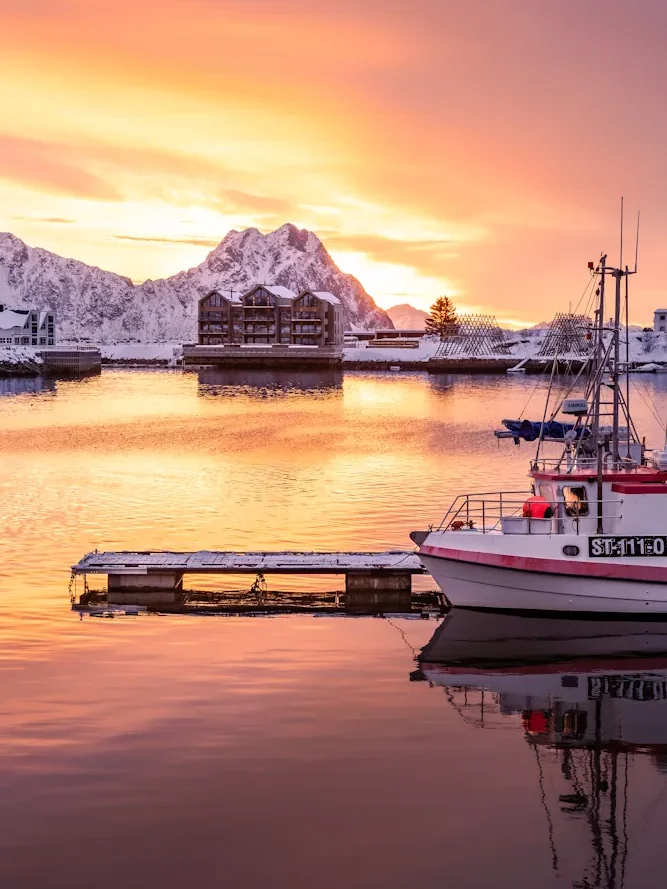
Finish in Svolvaer, the “capital” of the islands. The town itself is charming without being exceptional, but its setting is superb: waterfront, little islands, mountains all around, and wild colours at sunrise and sunset alike. It’s also the best place to stock up on essentials before you leave. And to have dinner on the harbour!
Oh, and on the road, if you want to go a little further, there are the views by the campsite that you can’t miss, but a bit further on, at the Austnesfjord Rasteplass stop, it’s really lovely!
Driving for the day: about 2h30 from Reine (of which 1h45 to Henningsvaer, then 25 min to Svolvaer). Night: in Svolvaer.


Itinerary 2: the Lofoten in 5 days, the sweet spot
Five days is, for me, the comfortable minimum. You take the first 3 days above, but with more time at each stop — trust me, you won’t get bored — and you add two days that are really worth it. It’s also from this length onwards that the two bases (Reine in the south, Svolvaer in the north) really make sense.
- Change for day 1 (in summer): do the Reinebringen hike for the most beautiful view of the island
- For day 2: when passing Ramberg, also go to Fredvang via the pretty bridges. If you have time, keep following the single road, you’ll be all alone in the world. Take your time in Flakstad too.
- For day 3: drop Svolvaer and move its visit to the Trollfjord day (day 5), so you can spend more time in the southern islands and do what you haven’t managed yet. So day 3 is dedicated to Ramberg, Fredvang and Henningsvaer.
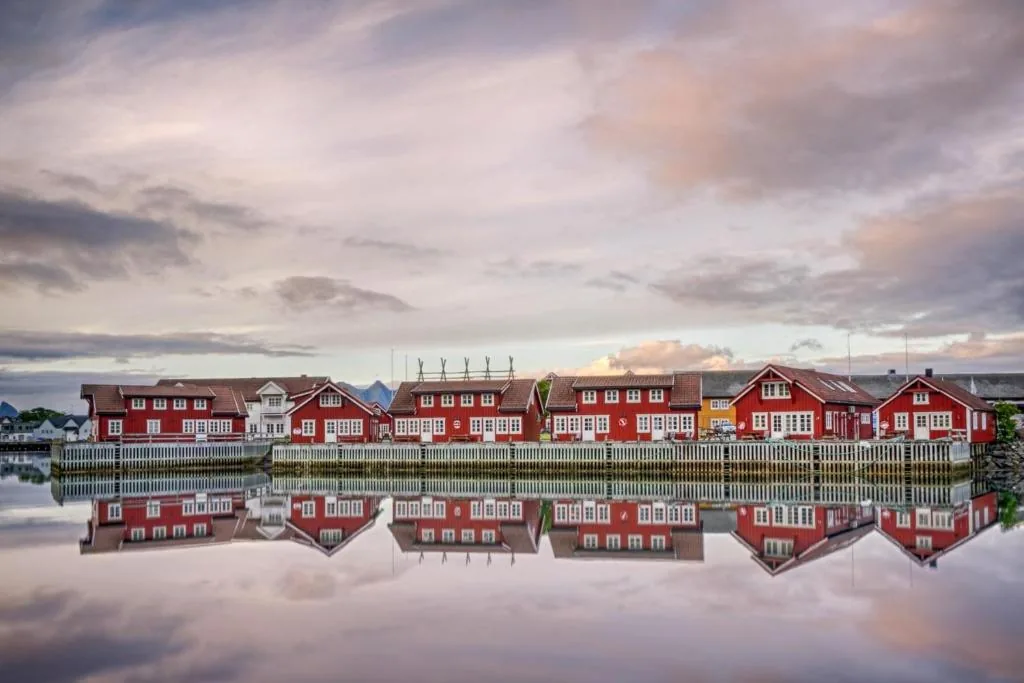
And if you don’t fancy too much driving, go and sleep the last two nights near Svolvaer. I loved the Anker Brygge, but otherwise Henningsvaer is lovely too, like the Guesthouse, really nice.
Day 4: Unstad, Eggum and the north coast
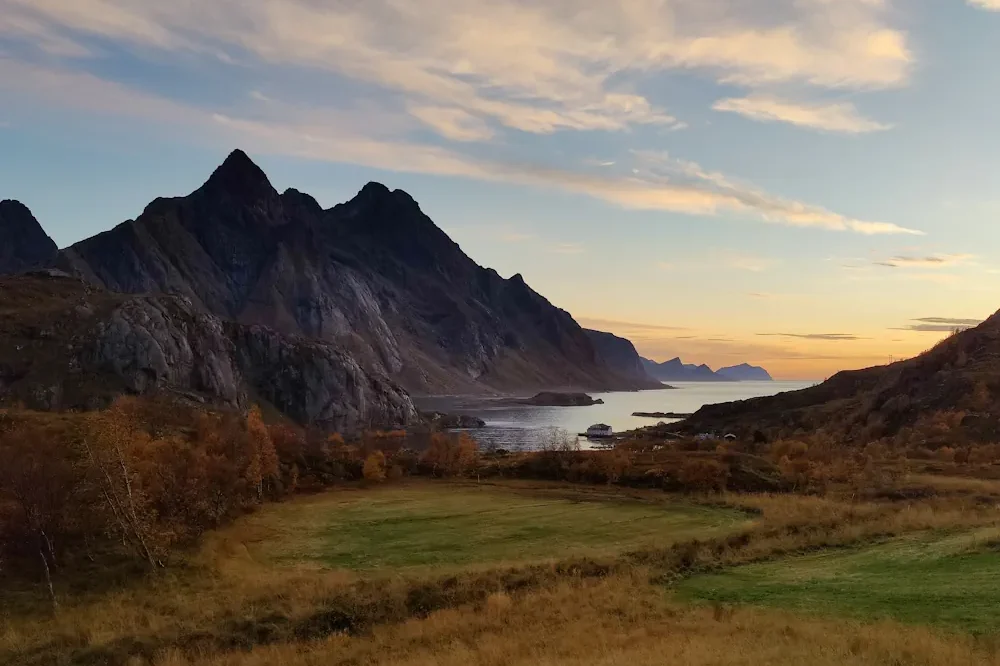
This day is my favourite of the trip, because you step off the big classics for a wilder north coast.
The valley that leads to Unstad is magnificent — remember to look to your left on the way down, the view is stunning. And before taking the road to Unstad, turn left for Tangstad, it’s also very pretty and won’t take you any time.
Unstad beach is THE surf spot of the Lofoten: yes, people surf above the Arctic Circle, and even in winter, thick wetsuit required. Even if you don’t surf, the sight of the surfers in the Arctic waves is worth the detour. And above all, don’t leave without stopping at the Unstad Arctic Surf café: they make the best kanelboller I’ve ever eaten, quite simply (my eyes still light up thinking about it).
Then, on to Eggum beach: less photogenic than its neighbours, but wild, deserted, with a very open view over the sea — which actually makes it an excellent aurora spot, without the Uttakleiv crowd.
In summer, a lovely easy, family-friendly hike links Unstad to Eggum along the seafront: allow half a day with the contemplation breaks. I twisted my ankle on it, but even the kids managed it without trouble, so I must be the problem.
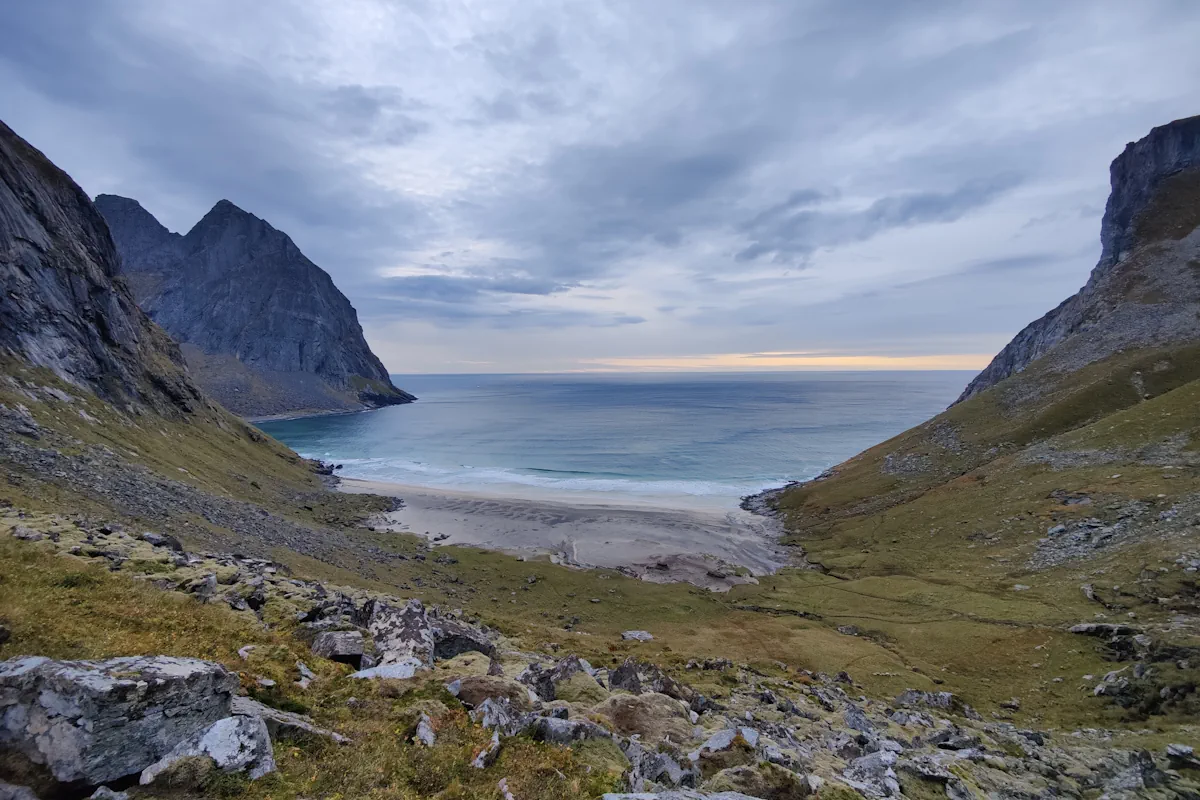
An alternative I really love (and where I lost nothing), the beach of Kvalvika. Two or three hikes get you there, all of them worth it. Really great!
Driving for the day: about 2h30-3h as a loop from Svolvaer. Night: in Svolvaer.
Day 5: a trip out to sea
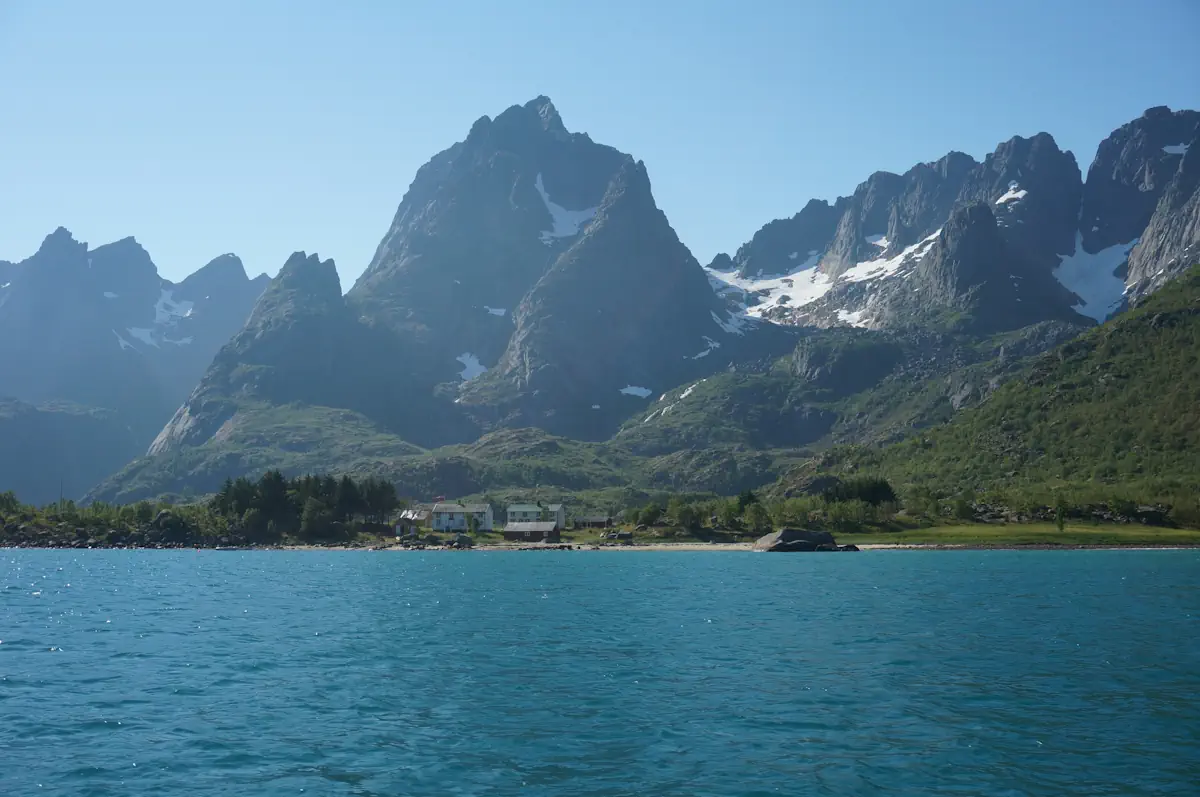
The Lofoten are also meant to be experienced from the water, and it’s a perspective that changes everything: the mountains seen from the sea are even more impressive.
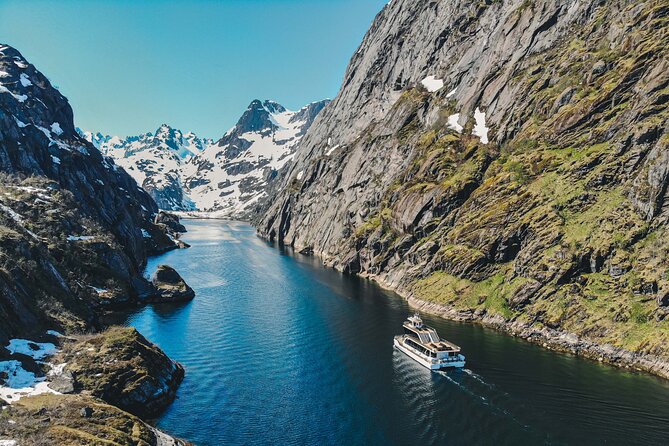
The most spectacular option is the cruise into the Trollfjord from Svolvaer: a narrow fjord with vertiginous cliffs, and good chances of spotting white-tailed sea eagles, those enormous sea eagles. There are now silent electric boats, and the silence in the fjord really is part of the experience.
In summer, you can swap it (or add to it) with some kayaking between the islets — the setting is perfect, and with a bit of luck you’ll come across orcas or whales. Another option I’d loved with friends: a day on a fishing boat to learn how to fish (logically enough), with a tasting at the end. Careful if you get seasick — one of us had a rough time (and yet the weather was perfect), so take some seasickness pills or something, seriously 😀
All the options, prices and tips are in the best activities in the Lofoten Islands. And in winter, we obviously keep the evenings free for the northern lights: near Svolvaer, the area around Gimsoya (towards the golf course) and the Laukvika road are very good spots, nice and open with no light pollution.
Driving for the day: almost none, everything leaves from Svolvaer harbour. Night: in Svolvaer.

📍 Svolvær (Lofoten) · 4h · Go2Lofoten · family-run boat
4 hours of fishing in the fish-rich waters of the Lofoten with a small family-run outfit. Gear provided, an enthusiastic skipper full of stories — and you take your catch home after it's filleted.
- Catch cod, saithe, haddock · gear provided
- Take your catch home (help with filleting)
- Family-run outfit · 91% of guests give it a top rating
Free cancellation
From €97 / person
📍 Svolvær (Lofoten) · 3h · Brim Explorer · hybrid catamaran
3 hours aboard a near-silent hybrid-electric catamaran to explore the Trollfjord from Svolvær. Watch white-tailed sea eagles, soak up the stillness of the fjords — and sometimes spot orcas or dolphins.
- Trollfjord + white-tailed eagle watching
- Silent hybrid-electric boat · English-speaking guide
- Heated lounges, cafeteria & wheelchair-accessible
Free cancellation
From €137 / person
Itinerary 3: a week in the Lofoten, real immersion
A week is the length I recommend to everyone. You take the 5-day base, spread out more calmly — and that alone changes the trip, because you stop rushing. Then you add the two ingredients that take the stay to another level: a proper hike, and some breathing room.
Day 6: a hike (or the small roads in winter)
In summer, the Lofoten are a hiking paradise: almost every mountain has its trail. The most famous is the Reinebringen: around 2000 stone steps laid by Nepalese sherpas, steep but reassuring, for THE plunging view over Reine, its islets and the fjord. It’s probably the finest panorama in the islands. Be careful, though: the trail is closed roughly from November to April, and can close occasionally after rockfalls — check its condition before setting off. Or Kvalvika beach via the Ryten hike. I already told you about all this in the previous itinerary, but maybe you didn’t have time to do it.
So that’s why a day entirely dedicated to hiking is better, rather than having to rush because the schedule is packed. Especially since the scenery is insane, so it’s better to take your time with a dedicated day.
If you’ve already done them, or if you come in winter, when the trails are under snow, swap the hike for what I call the “small roads” day: leave the main road and follow the side roads branching off left and right. The 815 road towards Malnes then Pettvika is truly magnificent, with wild colours at sunset. The Laukvika road is lovely too. These small roads lead into mini-fjords and superb corners where there’s nobody around — because all the tourists always go to the same places.
You also have the little Stamsund peninsula, pleasant, with pretty views and a real sense of being far from everything.

Day 7: the wildcard day
My secret weapon, and I’m very serious writing this. Up there, the weather does whatever it likes: you can have brilliant sunshine in the morning, a snowstorm at midday and a perfect sky in the evening. A whole day with no plan lets you go back to the places the clouds stole from you, redo the sunset you missed at Haukland, retry the aurora if the previous night was cloudy, or simply hang around a village or a beach with a kanelbolle.
It’s also the ideal day to switch bases without stress, driving the road back the other way — and you’ll find that the same landscapes, in the other direction and under a different light, look completely new. The best moments of my Lofoten trips have often come out of days like these.
But otherwise, watch out! OK, you’re not in the south so it’s not super convenient, but you can go to the isolated beach of Bunes, though you have to go by boat in the morning from Reine. Well, that said, you can absolutely tweak the plan to slot this Bunes beach stop somewhere in the middle, while you’re near Reine.
Also, if you have kids — or even just for yourself — you can visit the Lofotr Viking museum, it’s interesting!

Summer or winter: adapt your itinerary
These itineraries work all year round, but not at the same pace:
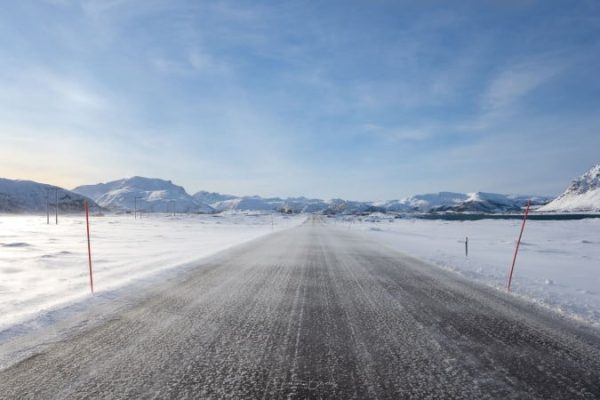
- In winter (January to March, my favourite season): the days are short, count on one big activity per day, not two. The evenings are for the aurora. And the snow can slow your driving down a lot more than expected — on a typical day, allow 30% more driving time.
- In summer: the day never ends, you can string together a lot more, hike late and enjoy the midnight sun. On the other hand, it’s high season: book accommodation and ferry in advance.
And if you have two weeks, combine the Lofoten with Senja and Tromso: I’ve put together a complete 2-week itinerary in northern Norway.

In short
Three days for the essential south, five days to add the northern beaches and a trip out to sea, a week for the hikes and the freedom. In every case: a car, two bases as soon as possible, and some room for the weather.
To plan the rest of the trip, everything is in my complete guide to the Lofoten Islands.
FAQ and practical info
How many days do you need to visit the Lofoten Islands?
For me, 5 days is the comfortable minimum and a week the ideal length. In 3 days it’s doable but you have to focus on the south (Reine, Å, the beaches) as in the first itinerary in this article. Below that, you’ll spend more time on the road than actually enjoying it.
What is the best time to do this itinerary?
The two big seasons are winter from January to March (my favourite: snow, northern lights and more and more daylight) and summer from June to August (hikes, midnight sun, but high season). I’d avoid November-December, the rain-and-darkness combo isn’t ideal. The itinerary stays the same, only the pace changes: one big activity a day in winter, far more in summer. But honestly, there’s no bad time; each period has its charm, and September is also great with the aurora and the hikes. Still, yes, November and December are a touch gloomy.
Is a car essential for this itinerary?
To follow these itineraries as they are, yes, clearly. The Lofotekspressen bus connects the main towns well, but all the gems in this article (the small roads, Unstad, Eggum, the viewpoints) are unreachable without a car, and your time is limited. I explain everything in where to rent a car in the Lofoten Islands.
That said, you can visit the Lofoten Islands without a car. You can come by bus (the 300 crosses the archipelago, and several lines cover the main routes around the islands, but it’s slow, so you need to have the time). Otherwise you can base yourself in Svolvaer and go through an agency to visit the surroundings.
Where to rent the car, and at what price?
The simplest is to pick up the car right at your arrival airport: Leknes, Svolvaer, Bodo or Evenes. Count on €45-60 a day in winter and more like €80-100 in summer — and in every case, book early, prices climb fast. To compare, I go through Discover Cars.
CAR RENTAL IN NORWAY
Roam around Norway by renting with Discover Cars

- Rent a car from many airports or in town
- Small model, SUV or electric for the adventure
- Car supplied with the Autopass tag
- Prices from €30
Where to stay along this itinerary?
The ideal formula from 4-5 days: two bases, one near Reine for the south (like Eliassen Rorbuer), one near Svolvaer for the north (I loved the Anker Brygge). If you only want a single base camp, Leknes is central and practical (but charmless), Ballstad prettier. All my addresses are in where to stay in the Lofoten Islands.

📍 Hamnøy · the cult photo spot
The most famous red rorbuer in the Lofoten. You literally sleep inside the postcard, with the peaks rising right behind the cabins.
- The most photographed rorbu in Norway
- Postcard view over Hamnøy
- Restaurant and sauna on site
From €180 / night Free cancellation

📍 Svolvaer · on the harbour
Gorgeous red rorbuer right in Svolvaer harbour. The best option to combine authenticity with being close to a proper little town that has everything you need.
- Beautiful rorbuer facing the harbour
- Modern comfort, equipped kitchens
- 2 minutes from the centre of Svolvaer
From €188 / night Free cancellation

📍 Hamnøy · retro-renovated cabins
The best-rated rorbuer in the southern Lofoten — renovated with a warm retro spirit and impeccable comfort. Not to be missed.
- The best-rated rorbuer in the south (9.4/10)
- Retro spirit and modern comfort
- On Hamnøy harbour
From €173 / night Free cancellation

📍 Å · at the end of the E10 road
At the very end of the Lofoten, where the road stops. Historic rorbuer on the harbour and the Brygga restaurant on site — the place to feel the authenticity of a living-museum village.
- At the end of the road, in the village of Å
- Listed historic rorbuer
- Brygga restaurant on the quay
From €155 / night Free cancellation
Do you need to book the Bodo-Moskenes ferry?
Yes, as soon as your dates are set. Since 2026 and the new hydrogen ferries, only half the spots are sold online, the rest go to a queue at the port — and in high season, the bookable spots go fast. Small bonus: pedestrians travel for free. All the details in my article on the Bodo-Lofoten ferry.
Can you see the northern lights with this itinerary?
Yes, from September to early April, without changing a thing in the plan: you just keep the evenings free. The best spots on the itinerary are the beaches of Vik and Eggum, the area around Gimsoya and the Laukvika road — avoid Uttakleiv in the evening, too many people and car headlights. I give you all my corners in where to see the northern lights in the Lofoten Islands.
Is this itinerary doable with children?
Absolutely. The village and beach visits require very little walking, the Unstad-Eggum hike is family-friendly, and each day can be adjusted. Only the Reinebringen should be saved for children who are already good walkers — 2000 steps, you have to earn it! And go to the Viking museum, they’ll love it 🙂