Last updated on
Norway and I, well, it’s a love story that began over 10 years ago now with discovering the Lofoten Islands and the midnight sun. There are worse ways to start. After that, I went back every year, mainly in winter, to watch the northern lights. And it all ended with buying a house (careful, it could happen to you too!).
So in this super complete guide, I share my experiences and recommendations in northern Norway: the Lofoten Islands, the Tromso region, the gorgeous island of Senja, or Alta, which are all amazing playgrounds for chasing the northern lights in a pretty incredible setting (or just for soaking up the scenery), between mountains and fjords. But that’s not all, with the fjord region that I’m also starting to know very well.
So watch out, because a first trip to Norway will inevitably call for more! You’ve been warned! The centre of the country is genuinely impressive too.
There are a great many fjords between Alesund and Stavanger, including the Geiranger, the Naeroyfjord, and exceptional scenic roads like the Sognefjell. And the superb city of Bergen. In short, the whole of Norway is blessed with exceptional nature, a setting unlike anywhere else in the world, all with a genuinely reassuring sense of safety.
You’ll find tons of information here about this country, from someone who lives in Norway and has been criss-crossing it for over 10 years: how to plan your trip, the climate, when to go, the budget, the itineraries. Every question you should be asking yourself, I try to give an ideally relevant answer to 😀
Trust me, every question you’re asking yourself, I’ve asked myself too! At the bottom of the page, you’ll find a list of articles written on the blog about the various regions of Norway.
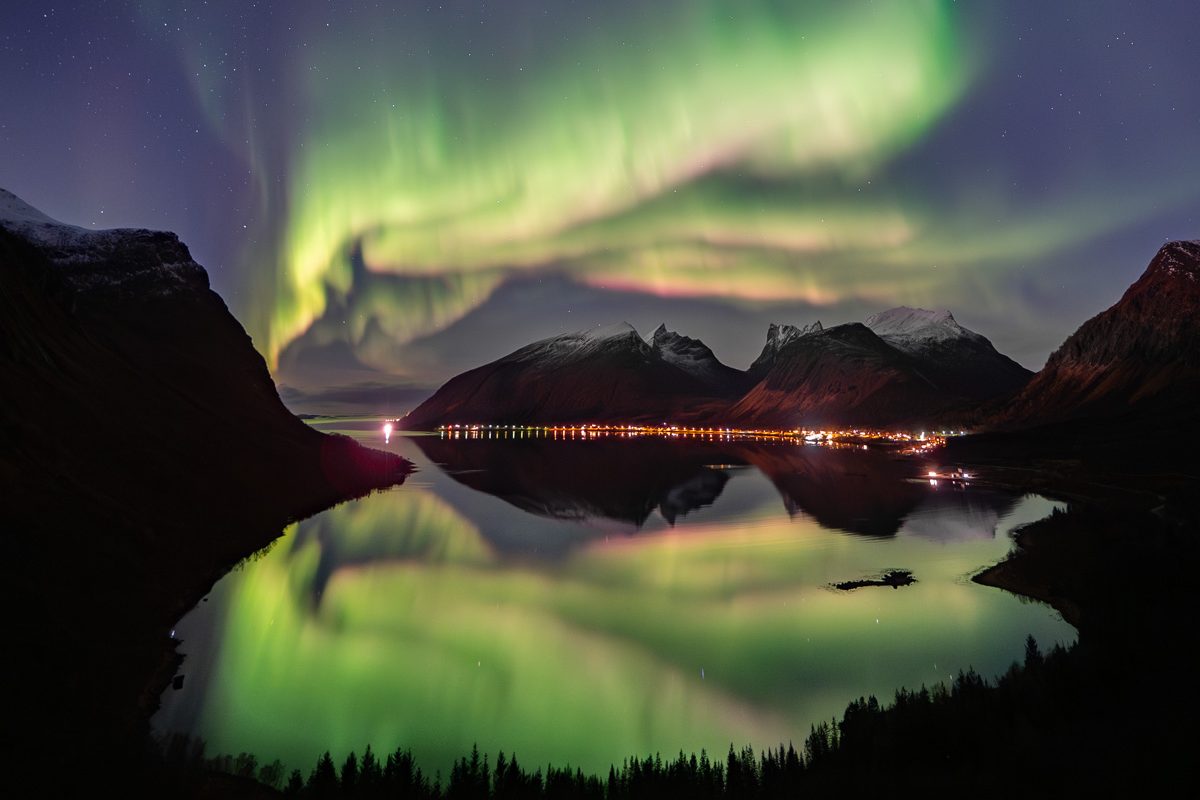

5 reasons (and so many more!) to take a trip to Norway
I could come up with plenty more, but these 5 should be enough to convince you:
- Exceptional landscapes, between fjords, glaciers and mountains
- The northern lights, obviously
- Pure, respected nature that belongs to everyone
- Magnificent scenic roads, it’s a pleasure to drive
- You just feel good there, safe, at peace, plain and simple
- Oh, and you’ll be back. And not just once!
The must-see regions of Norway
Even though I’ve been going for over 10 years, I’m very far from having seen everything. But I very, very strongly recommend the places below. And I can’t advise against anything, it’s all truly magnificent.
That said, what you need to know is that the distances are HUGE, the speed limits low and the road conditions can be tough. So you won’t be able to do it all. I really recommend focusing on one region, not trying to do too much, otherwise you’ll spend all your time on the road.
Pick one region for your trip to Norway (you’ll come back anyway :p ), depending on the season and the time you have on site. Don’t count on going from south to north in a week, or visiting Bergen and Tromso in a hurry, for example :p
- Tromso and its surroundings
- the island of Senja
- The Lofoten Islands
- The Vesteralen Islands
- The fjord region, between Bergen and Alesund
- the wild west coast, from Bodo to Trondheim
- Bergen and its surroundings
- Stavanger and the Lysefjord
- Oslo is also worth a detour, of course
To help you make your choice, in this article, I’ve listed some of the most beautiful spots in the country with quite a few photos. But I’ll give you plenty of details just below
Tromso and its region
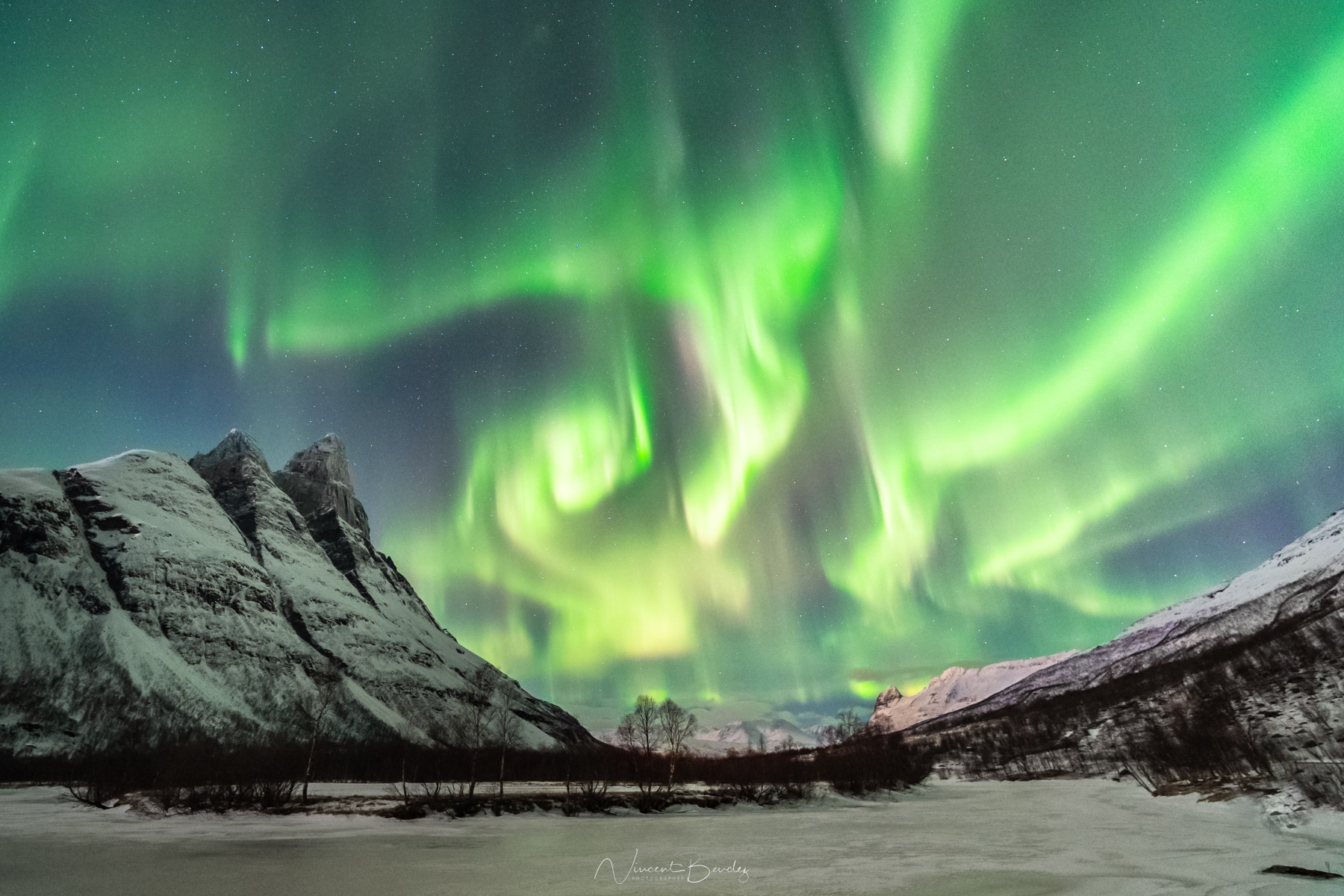
Tromso is a huge playground, in every season. People mostly come to Tromso in winter for its activities, because it’s one of the best places to see the northern lights, because you can go dog sledding or watch whales and orcas.
But Tromso is more than that, it’s about magnificent landscapes. And these landscapes are a paradise for hiking, there are hundreds of trails, each one more beautiful than the last.
You can explore the region with or without a car, immerse yourself in fantastic scenery, visit the island of Kvaloya, Signaldalen mountain, and the Lyngen Alps in particular. In short, it takes more than one trip to really get to know it!
Blog articles and resources:
- Plan your stay in Tromso : I give you all the info to plan your trip to Tromso, the activities, the places to see, how to organise yourself
- ALL the activities to do in Tromso : I point out all the things to do, the tours, the agencies, in short, the essentials and much more
- Where to stay in Tromso : I present the accommodation options in Tromso, the good, the cheap, the unusual
- What are the best activities to do in Tromso : I tell you everything you can do in Tromso so you make the most of your stay
- The best guides for seeing the northern lights in Tromso : find the best agencies and guides, plus tips for choosing well
- The 10 best spots to see the northern lights around Tromso : because you need to see the northern lights in the right conditions, here’s a list of great spots to admire them
- Renting your (not too) pricey car in Tromso : find your car using the comparison sites



📍 Tromso region, Norway
Enjoy a magical experience driving your own husky team across the snowy landscapes of northern Norway. An unforgettable adventure in a spectacular Arctic setting.
From 150€
📍 Tromso region, Norway
Set off chasing the northern lights with an expert guide who will take you to the best spots to watch this fascinating natural phenomenon. Souvenir photos guaranteed!
From 120€
📍 Tromso region, Norway
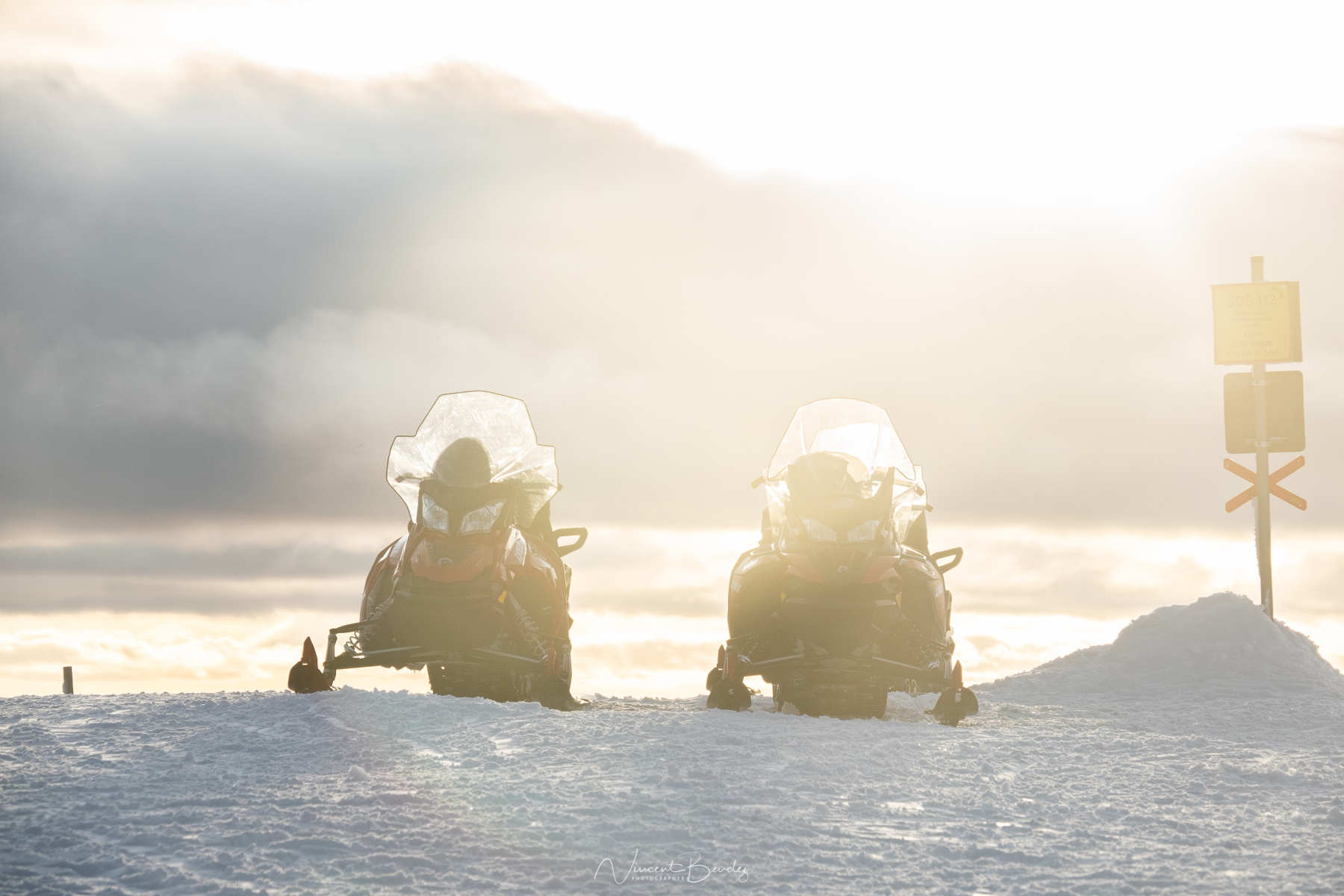
Thrills guaranteed on a snowmobile safari across the white Arctic expanses. Explore wild, inaccessible territories and enjoy a unique adrenaline rush.
From 180€
📍 From Tromso to Skjervoy
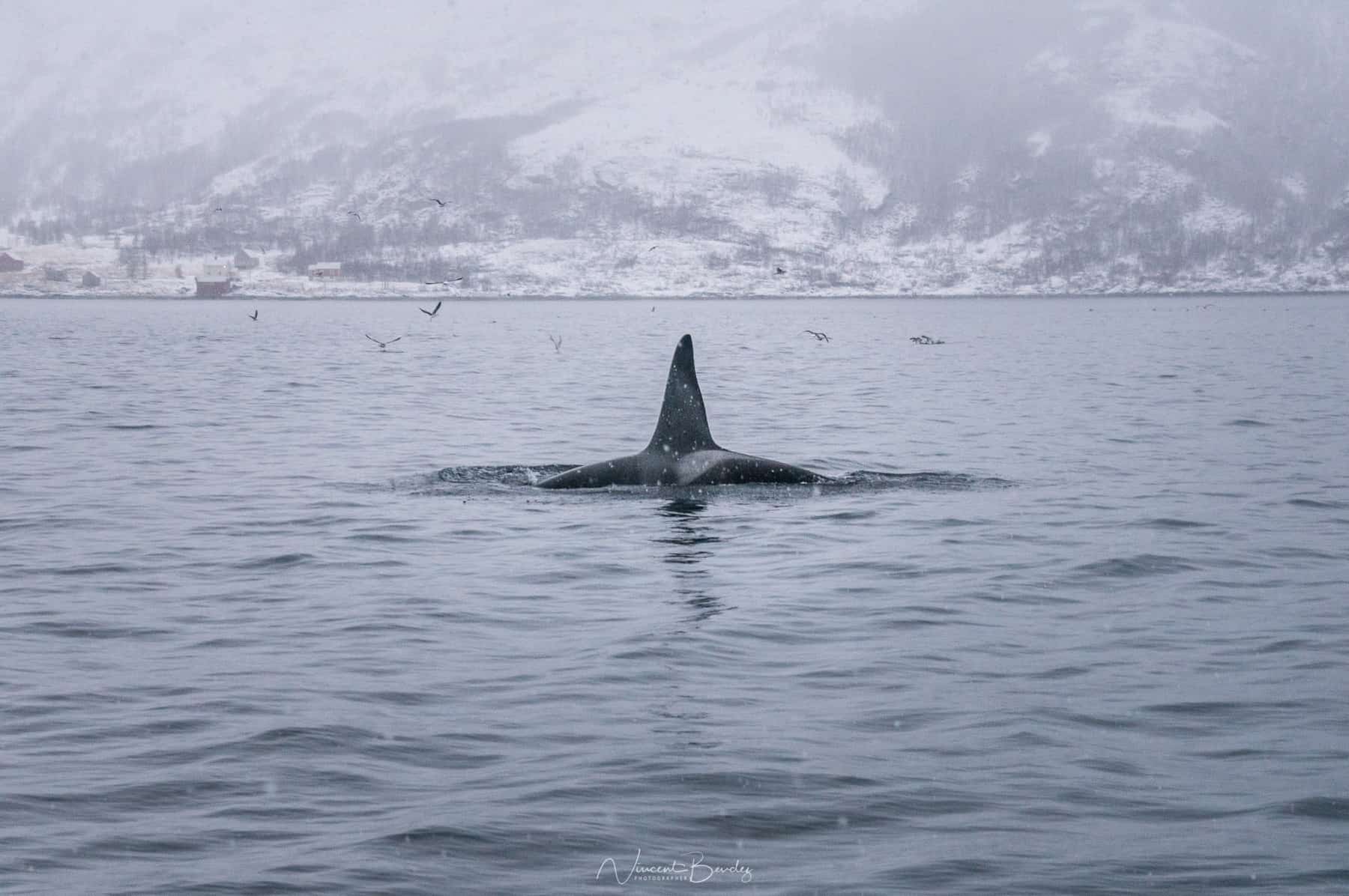
Hop aboard an exceptional cruise to meet humpback whales and orcas in the Norwegian fjords. A moving experience up close with these giants of the sea.
From 140€
The island of Senja
Right next to Tromso, well, 3 hours by road or 1 hour by ferry from Sommaroy, lies the fabulous island of Senja. A real concentrate of Norway, with fjords, mountains, fjords, mountains and… absolutely no one, or almost no one.
Senja is paradise, and you have to enjoy it before more and more people discover it (ok fine, since I talk about it so much, I’m not exactly helping it stay under the radar!).
You have to visit all the fjords in the north and west, go to Sifjord to be blown away, wander through Anderdalen park and of course see the northern lights because yes, Senja is an excellent place to see the northern lights!
Senja is usually visited as part of an itinerary between Tromso and the Lofoten Islands. An absolute must!
Blog articles and resources:
- What to do in Senja : discover the most beautiful spots and the activities to do in Senja
- The best map for visiting Senja : a map with all the info and the spots so you know what to see
- How to get to Senja : find out how to come by car, ferry or plane
- The best accommodation in Senja : here’s the list of interesting places to stay in Senja
- A 2-week itinerary between Tromso, Senja and the Lofoten Islands : I suggest a great itinerary for discovering the most beautiful spots in the north
- The best spots to see the northern lights in Senja : also a list of nice spots to see the northern lights in Senja
- The village of Gryllefjord : Gryllefjord is one of the most beautiful spots in Senja, go discover it


📍 Vangsvik · By the fjord, at the gateway to Ånderdalen (888 reviews)
Aurora cabins and a lighthouse set by the fjord, each with its own hot tub, at the gateway to Ånderdalen National Park.
- Private hot tub and sauna facing the water
- Fjord views from the bed through floor-to-ceiling windows
- Ånderdalen National Park trails start at the cabins
From €79 / night Free cancellation

📍 Gibostad · Self-contained cabin on the sea (171 reviews)
The highest rating on Senja: a self-contained 51 m² cabin on the sea, with private kota grill hut and sauna.
- Private kota grill hut and sauna by the water
- Host's welcome mentioned in nearly every review
- Comfort and cleanliness rated 9.8/10, very quiet village
From €120 / night Free cancellation

📍 Hamnveien 1145 · End of the road, south-west coast (1,670 reviews)
A hotel village at the end of the road on the south-west coast, facing the fjord, in a quiet nearly every review points out.
- Fjord-facing location mentioned in nine reviews out of ten
- Generous, very fresh breakfast with plenty of choice
- Spacious apartments, some with two bathrooms
From €124 / night Free cancellation

📍 Senjahopen · Fishing village of Mefjordvær (1,315 reviews)
A former fishing village turned hotel right on the water, an ideal base for tackling Senja's peaks.
- Rooms directly on the water, bedding often praised
- Starting point for Segla and the island's hikes
- On-site restaurant, breakfast praised in most reviews
From €130 / night Free cancellation
The Lofoten Islands
We’re talking about the most beautiful landscapes in Norway, no less. Pretty incredible mountains, made of striking black stone. And all that, over several hundred kilometres.
And on top of all that, in the Lofoten Islands you’ll find magnificent fishing villages like Nusfjord, Henningsvaer, Reine and quite a few others.
In the Lofoten Islands, you mostly go in summer because you have some of the most beautiful beaches in the world. Fine sand, crystal-clear water, all surrounded by mountains. Heavenly! Well, give or take a few degrees.
The weather there is pretty funny, very cloudy, sometimes magnificent, often rainy. These are the Lofoten Islands, which really can be visited in any weather!
Blog articles and resources:
- What to see in the Lofoten Islands : discover all the places to see and the activities of the superb Lofoten Islands
- The best map for visiting the Lofoten Islands : and all of this is gathered into a single map
- The best hotels in the Lofoten Islands : here’s a super useful list of accommodation, houses and hotels, to stay in the Lofoten
- A 2-week itinerary between Tromso, Senja and the Lofoten Islands : here’s how to discover the most beautiful spots in northern Norway
- What to do in the Lofoten Islands, discover all the must-do activities
- How to get to the Lofoten Islands : bus, plane, car, ferry, discover all the ways to come
- Renting your car to explore the Lofoten Islands : here’s a good comparison site for renting the right car in Norway



📍 Olenilsøy · Next to Reine (1,142 reviews)
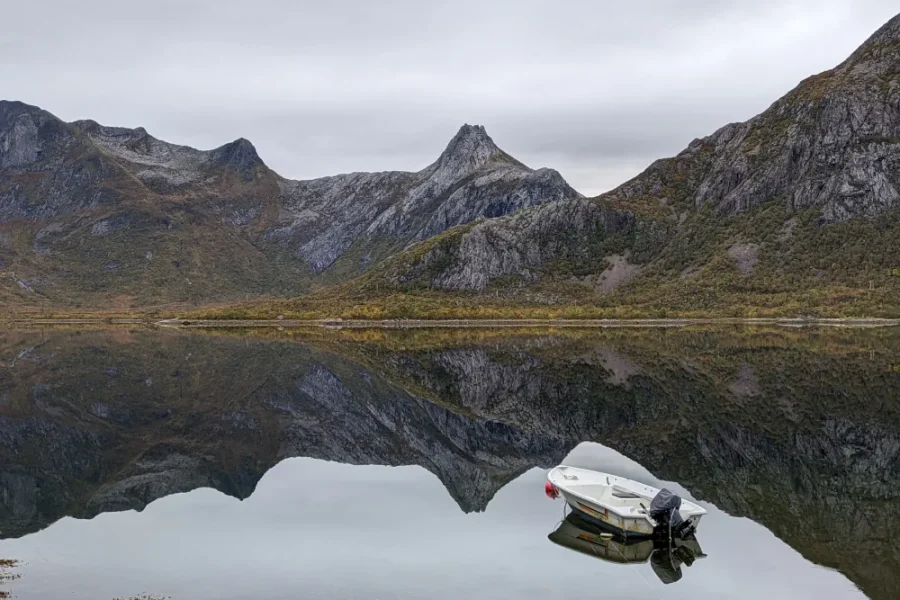
Rorbuer renovated in a retro spirit facing the Reine mountains, each with a fully equipped kitchen.
- Direct views over the mountains and the sea
- Warm retro interiors, carefully finished
- Full kitchen to cook your own meals
From €137 / night Free cancellation

📍 Lamholmen · Peninsula on Svolvær harbour (1,625 reviews)
Red rorbuer on a peninsula in the harbour, a few steps from Svolvær's main square and restaurants.
- Sea and quay views from the rooms
- Varied breakfast with local specialities
- Staff who handle bookings and activities
From €137 / night Free cancellation
📍 Banhammeren 53 · At the end of Henningsvær village (1,360 reviews)
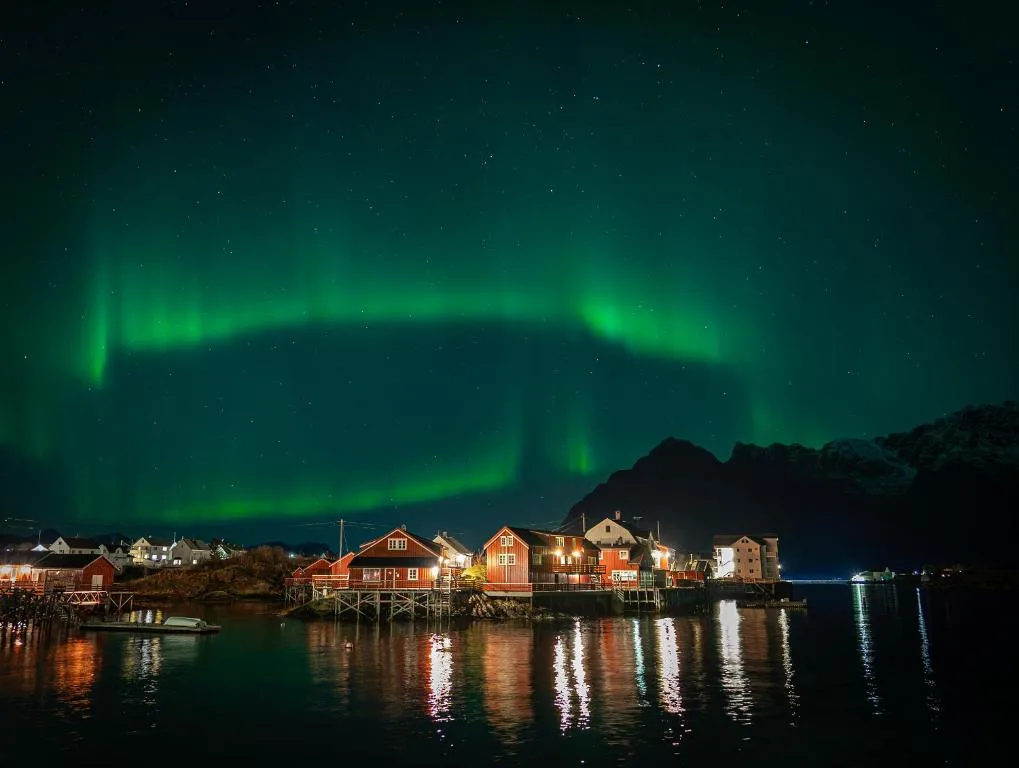
Fishermen's cabins at the end of the most photogenic village in Lofoten, facing the sea and the islets.
- Sea and islet views, aurora visible from the terrace
- Cosy, well-equipped interiors, sauna available
- Village centre 15 min on foot — ask for a fjord-side rorbu
From €165 / night Free cancellation
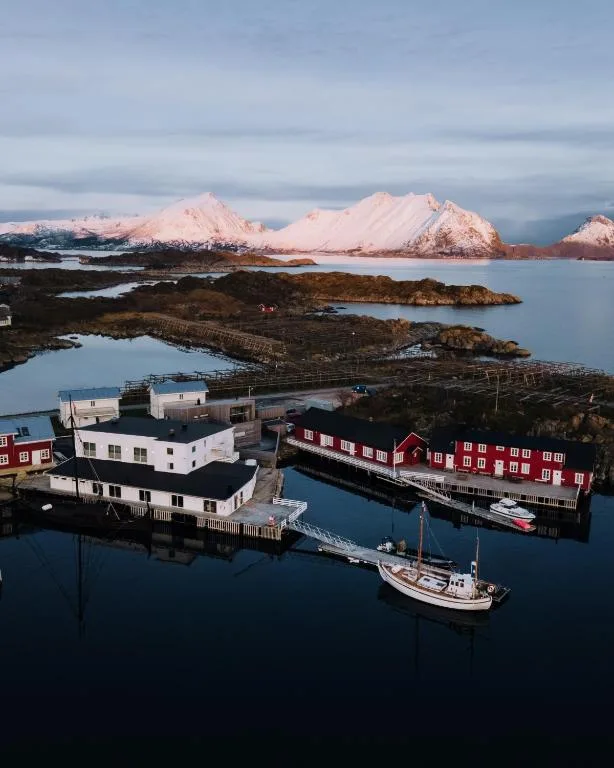
📍 Moloveien 41 · On Ballstad harbour (1,095 reviews)
Rorbuer on Ballstad harbour, with a seafood restaurant that nearly every review recommends.
- Water and mountain views from the rorbuer
- Restaurant known for its seafood
- Sauna, hot tub and excursion desk on site
From €208 / night Free cancellation
Bergen and its surroundings
Bergen is probably the most beautiful city in Norway (it’s a close call with Alesund). Wild architecture, with its various districts of wooden houses, its historical past embodied in particular by its UNESCO-listed Bryggen docks but also its royal buildings. Bergen has everything going for it (except its weather, let’s not kid ourselves).
Especially since there’s more to Bergen than just that, it’s a city where you feel really good, you love strolling through the alleyways, around the peninsula, along the quays. You’ll love getting some height with the funicular. But above all Bergen is a great starting point for exploring the surroundings, and the fjords in particular.
Meaning you can very easily go to Flam by boat or by train, head off to discover the Naeroyfjord and the fjords around Bergen. Or simply head into the fjord region further north for a great road trip!
Blog articles and resources:
- What to do in Bergen : the historical districts, the wooden houses, the cruises, I tell you everything for a great stay in Bergen
- The best accommodation in Bergen with Booking : use Booking to find the right place to stay in Bergen
- The fjord cruises around Bergen : here are all the cruises for discovering the fjords around Bergen
- How to get from Bergen to Flam : Flam is a must in the region, here are all the ways to get there
- Renting a cheap car to explore the fjords with Discover Cars : here’s a trustworthy comparison site for finding your car


- The best value for money
- Automated 24/7 check-in
- Sleek, modern design

- A 16th-century house!
- Unique historic heritage
- Right in the heart of Bryggen

- You couldn't be better located
- Views over the historic harbour
- Superior 4-star comfort

- Overlooks the fjord
- Hearty Scandinavian breakfast
- Spacious, modern rooms
The fjord region
They say Norway’s fjord region stretches from Stavanger (with the Lysefjord) all the way to Alesund. It’s huge! And on top of that, there’s a ton of things to do, places to see, roads to drive, Viking churches to discover.
Incredible fjords like the Geiranger, the Naeroyfjord or the Sognefjord, churches like Borgund or Urnes, drive the most beautiful road in the country, the Sognefjell, and unwind around Fjaerland, which is a true paradise.
But you also have legendary spots like the Trollstigen road (careful, many roads in Norway are closed part of the year), the village of Geiranger and its Dalsnibba viewpoint. Flam and its famous train… Well, I could list them all for you, but that’s not the point.
The fjords are one of the prime places to visit in Norway in summer, but not only then. In winter it’ll be much harder because of the weather and the closed roads. But either way, you’re in for a real feast for the eyes!
By the way, to make things easier for you, I’ve put together a 2-week itinerary through the Norwegian fjords with the most beautiful places to see. And you absolutely have to include Flam and its best activities!
Blog articles and resources:

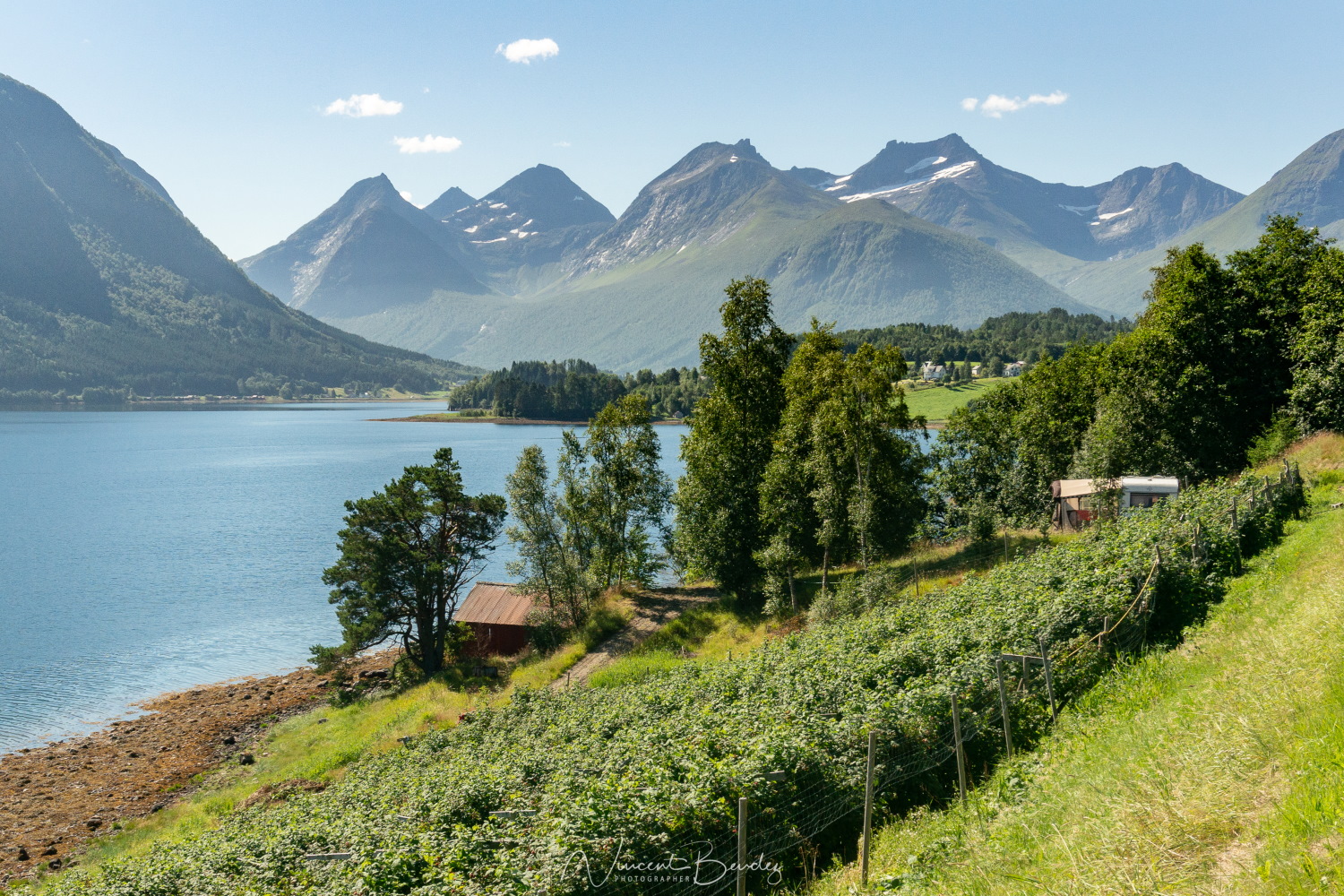
4 recommended places to stay in the Norwegian fjords

- Set in a renovated former warehouse
- Stunning views over the harbour
- Refined Scandinavian design

- Magical views over the Geirangerfjord
- Prime location right in the village
- Panoramic restaurant

- Welcome to paradise!
- Close to the Jostedalsbreen glaciers
- Exceptional natural setting

- Modern waterfront apartments
- Perfect starting point for Norway in a Nutshell
- Spectacular views over the fjord
The capital, Oslo
So no, the Norwegian capital isn’t a city that gives you the wow effect of Europe’s imperial cities. But it’s a city worth spending some time in, because it’s really pleasant.
In Oslo you’ll find some really interesting museums like the FRAM about polar expeditions, others on Norwegian folklore, the country’s history, the Nobel Peace Prize…
But it’s a city that’s very pleasant to wander around, because the architecture is nice, the sidewalks are wide, it’s an airy city with quite a few parks like Vigeland. Or you can also enjoy the new waterfront, which is genuinely lovely.
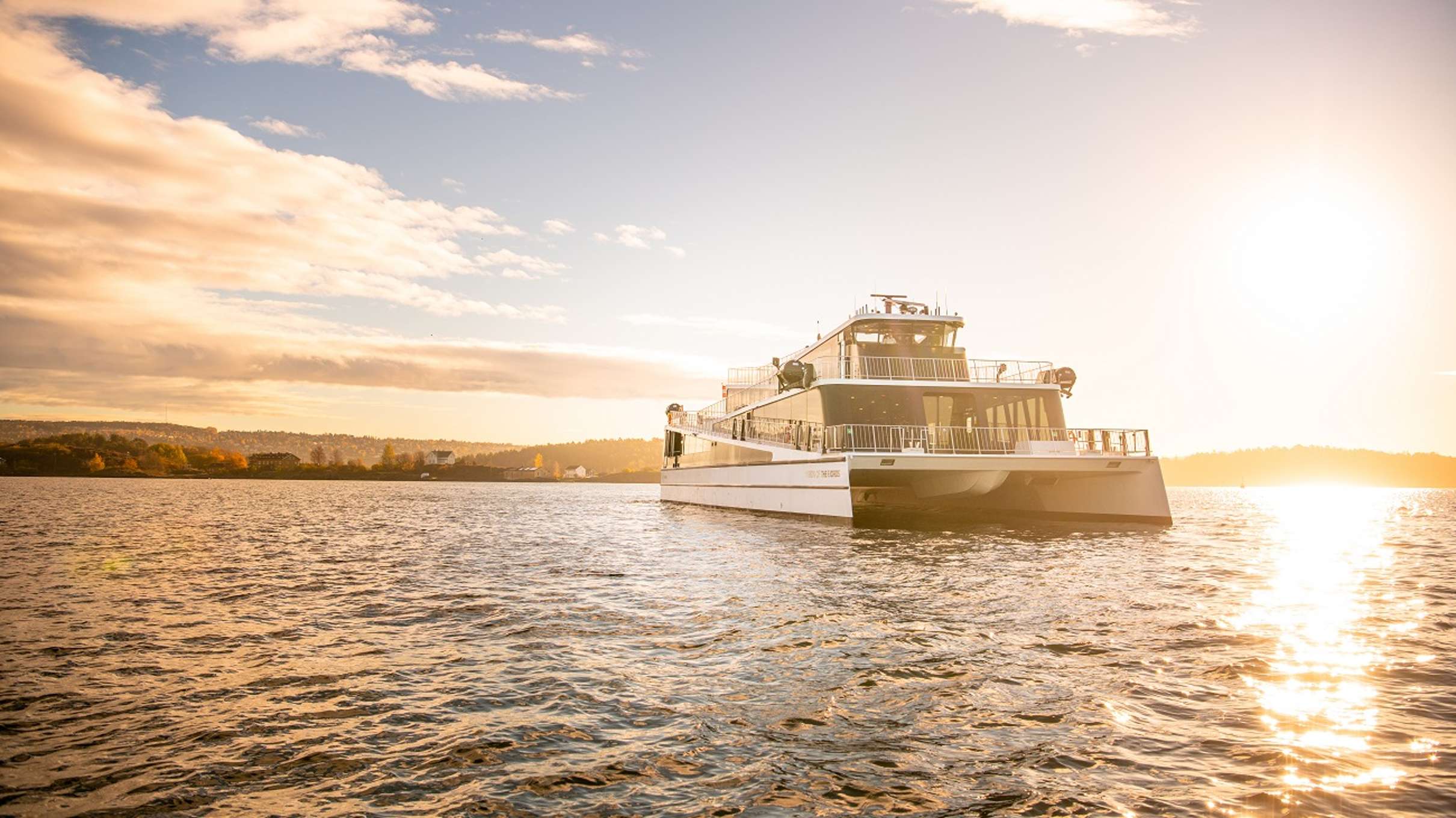
A great way to discover Oslo and its surroundings is to take a little cruise through the archipelago. Okay, it can get a touch chilly and damp, but it’s really nice! So it can make a good stop for a long weekend or to kick off your stay in Norway—you’re never disappointed by Oslo 🙂
Blog articles and resources:


The northern lights in Norway
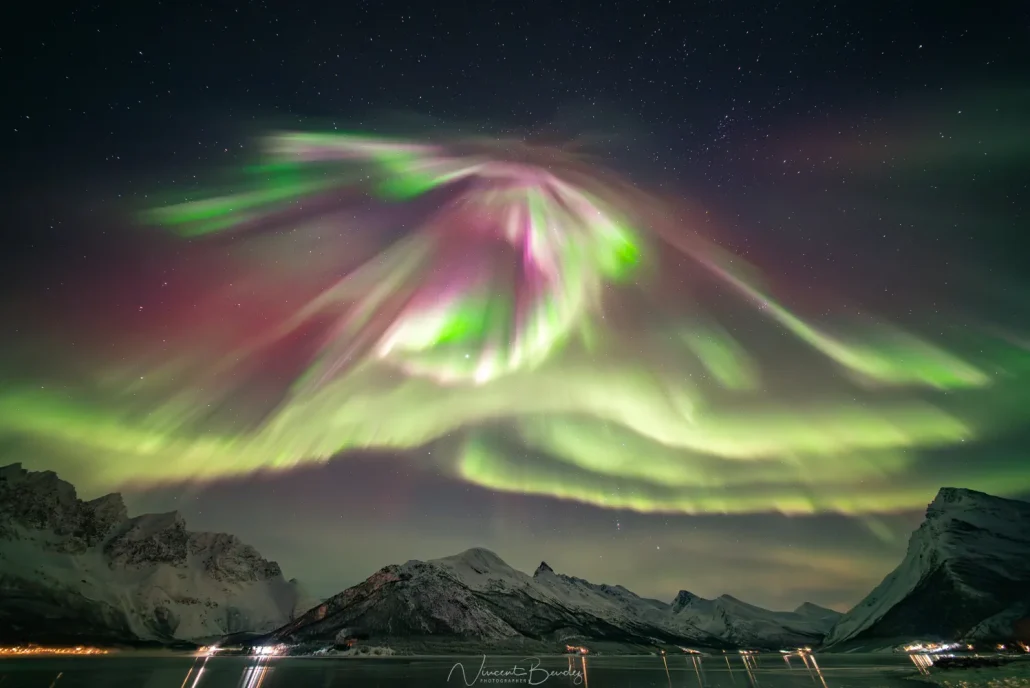
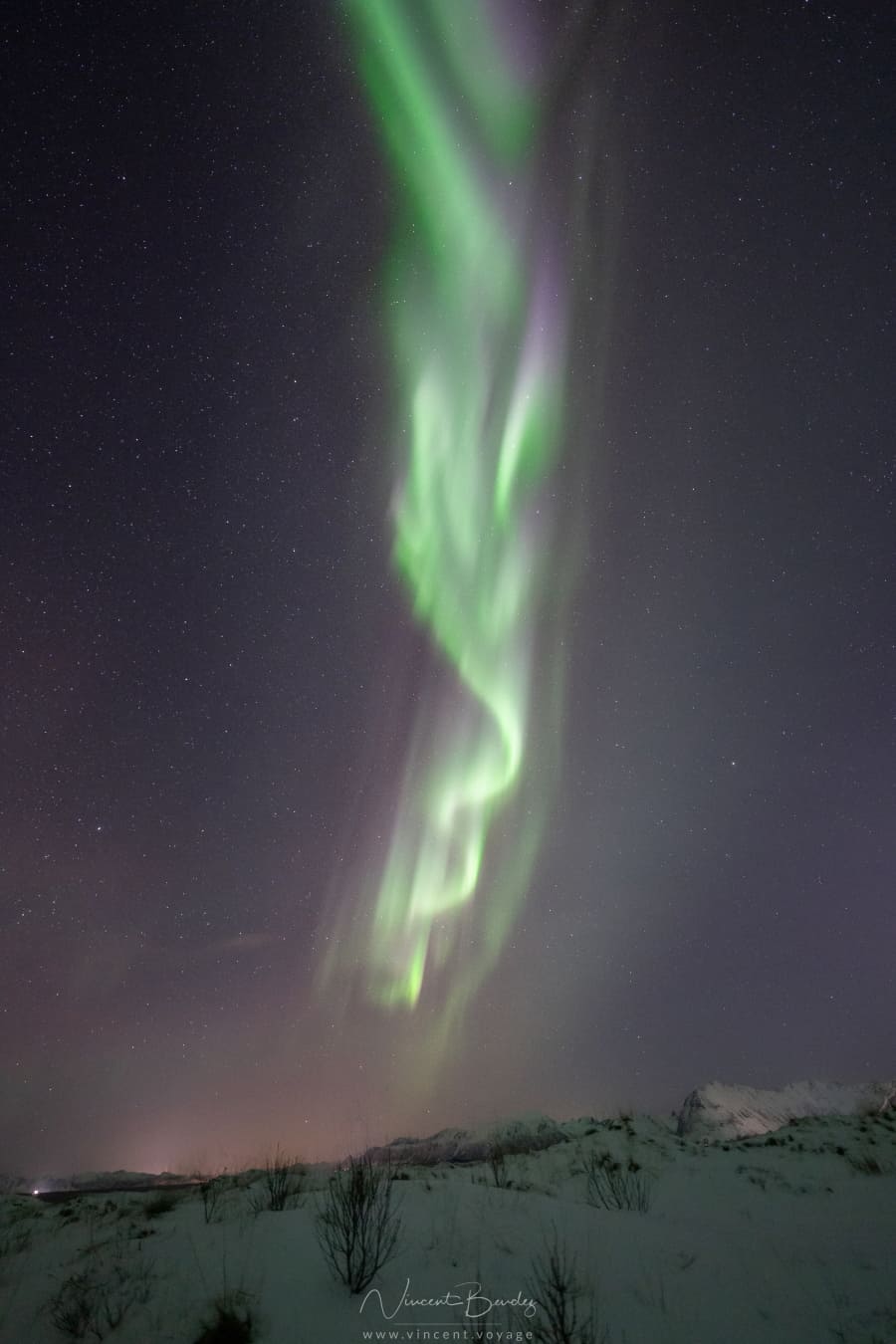
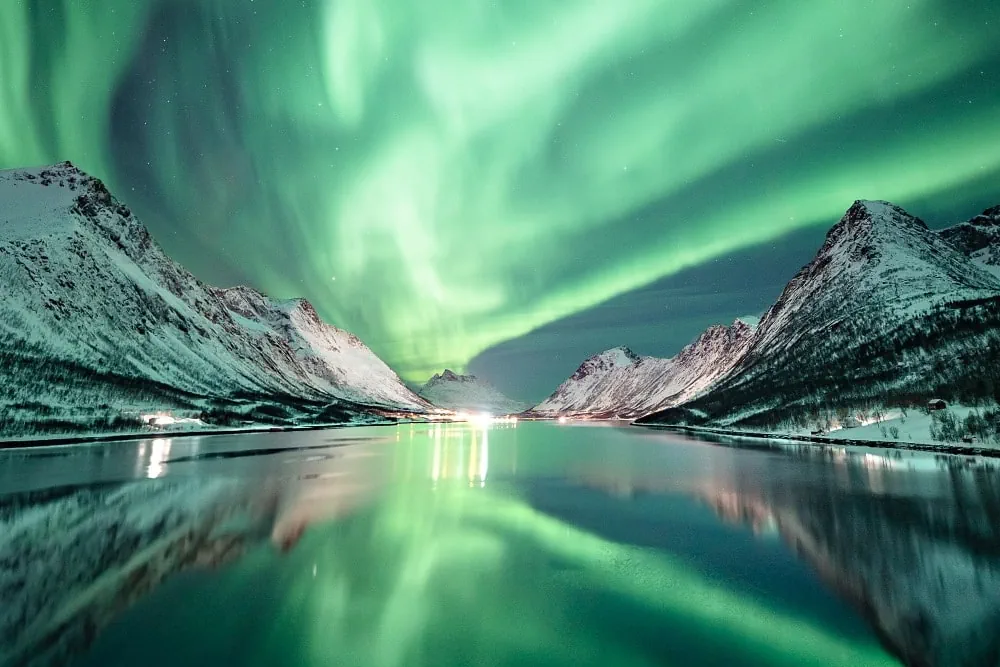
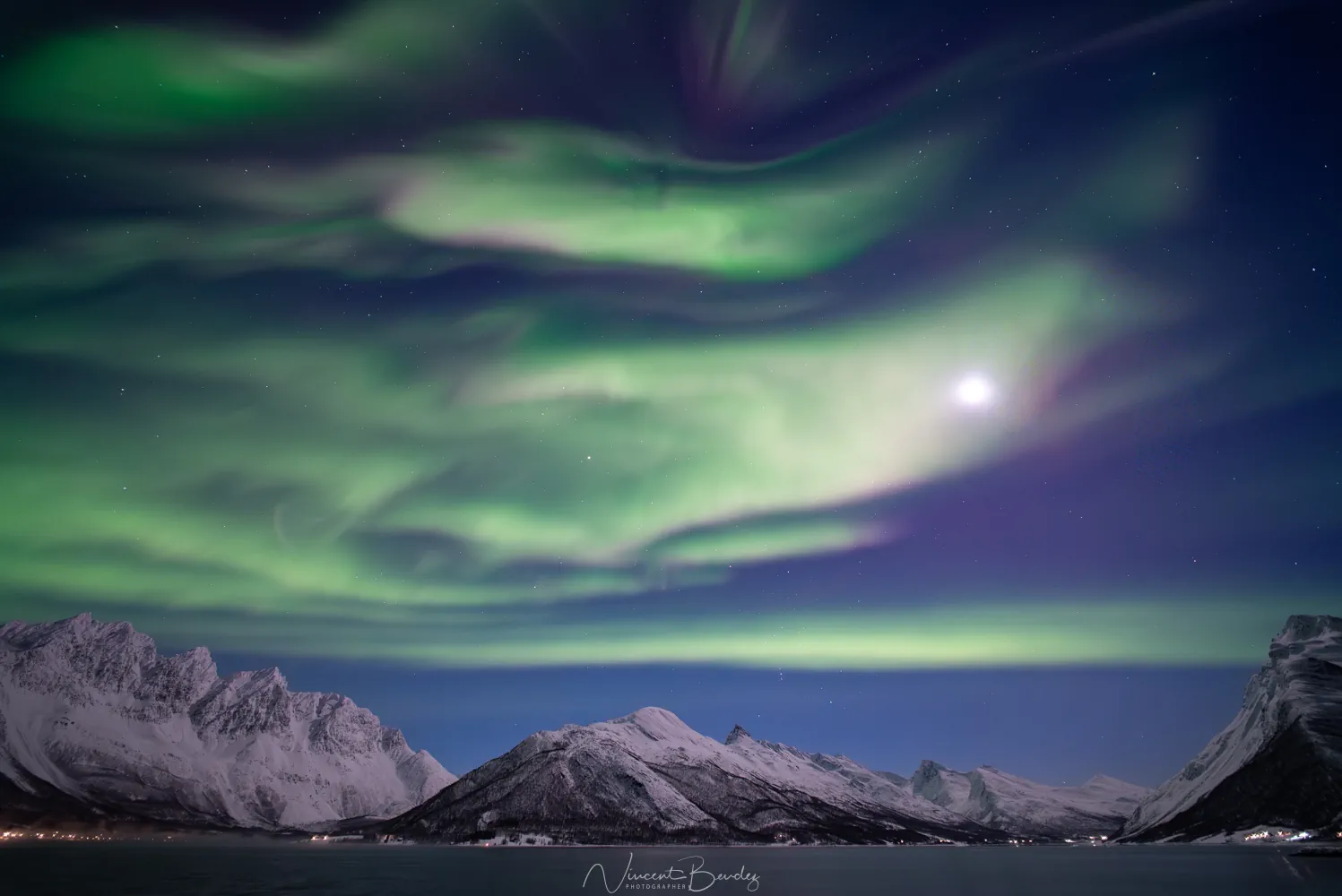
In my opinion, Norway is the best place to see the northern lights, and especially the far north around Tromso. Why? Because the far north of Norway sits on the “aurora oval,” meaning the latitude where the northern lights pass by default.
And then the weather plays a huge role between Tromso, the Lofoten, the Nordkapp where it’s never sunny, Alta where it’s always sunny…
In northern Norway, you can see them from late August to early April. Outside this period, there’s no more night, so you can no longer see them. Yet they’re still there 🙂 To help you pick the spot in Norway that suits you best for seeing the northern lights, feel free to check out this article or simply the next section.
I’ve written quite a hefty article on the northern lights, in a Q&A format, based on my several years of experience traveling in Norway. I’ve also put together articles listing the best places to see the northern lights in Tromso or in Senja (one on the Lofoten Islands is coming).


The best places to see the northern lights in Norway
In the infographic below, I’ve tried to give you a clear visualization of the northern lights in the different parts of Norway, depending on the seasons.
You can pretty easily see the best spots (Tromso, Senja, the Finnmark in particular), which lie above the Arctic Circle, and it’s going to depend a lot on the weather.
But basically, here’s what I can tell you:
- Tromso is the capital of the northern lights in Norway, everything revolves around it, there are plenty of agencies that won’t hesitate to rack up the miles. And above all there are magnificent landscapes. So yes it’s touristy and people come for it, but you can easily find yourself all alone under a gorgeous sky
- Senja, 3 hours from Tromso, ideal for those who want nature, crazy landscapes and nobody around, so no transport and no tours 😀 A car and a sense of calm are essential, as there’s little infrastructure!
- Alta, it’s probably the best weather in Norway, a bit like the north of Finnish Lapland. Less touristy than Tromso, with pretty but less impressive landscapes, it’s an excellent option, but harder to reach and with fewer activities nearby
- the Lofoten Islands, the most beautiful landscapes in Norway but… let’s say the weather is a bit cheeky, even downright rotten. Going to the Lofoten Islands with the sole aim of catching the lights is a gamble, I’d say it’ll be a bonus, but the setting is exceptional
Beyond that there are other good destinations to see the lights such as Abisko or Kiruna in Sweden, or Finnish Lapland (especially around Inari).
By the way, if you’re torn, in the following article I compare Tromso to Rovaniemi.


When to see the northern lights in Norway
Okay, let’s really go back to the absolute basics. To see the northern lights, you need night. Plain and simple. Because there are auroras all year round! It’s just that without night, well, you can’t see them. Makes sense, thanks Vincent.
In northern Norway, above the Arctic Circle, let’s say there’s night from late August (just a little) until mid-April.
Here’s a little summary, knowing you can learn more in my article on the best times to see the northern lights
- September / October: I love it, the weather’s mild, loads of hikes and spots to see the lights, normally decent weather (it rains instead of snowing), plenty of lovely auroras
- November: the days get very short, the polar night arrives, it’s pretty good for the lights, the snow shows up
- December: now it’s the real polar night! the weather can be hit or miss, but it stays very decent for the lights, maybe a bit more driving in case of bad weather
- January: I love January more and more because, although the days are short, it’s the coldest month. And when it’s cold, the sky is great for the lights!
- February: the most touristy month (along with the week between Christmas and New Year’s), loads of snow, auroras
- March: normally the month with the most snow, and superb auroras, the days get nice and long and the colors are beautiful

A few precautions for seeing the northern lights
The northern lights have to be earned! It’s not enough to go to Tromso, wait, and bam. Well, that’s when you’re really lucky. Otherwise, in the good aurora hunter’s guide, you’ll find:
- you need to be mobile! Because it’s generally going to be cloudy, so you’ll have to move around. Either by renting a car, or by going through an agency that knows how to take you to the right spot.
- you need to anticipate the weather. Check the cloud cover to know where the clouds are and how they’re going to evolve. Use Ventusky or Windy, they’re handy! Then you’ll know where to go.
- Find a spot with no light, no light pollution. Facing north (east or west is also good), try not to stand right by the side of the road
- And be patient! You never really know when it’s going to start. But it’s generally between 7pm and midnight. Super precise, isn’t it?
- Bring something to warm up with in winter, something to drink, something to recharge the batteries and your phone.
Here are a few resources that might come in handy

When to go to Norway, climate and seasons
Honestly, it depends on what you’re after. Activities to do, whether you want snow, whether you want to see the lights, head into the fjords, enjoy the Lofoten Islands…
Basically, some seasons are more favorable than others for certain regions, but there’s always something to see in Norway, all year round! There is NO bad season.
- summer, a fantastic time with the midnight sun. Top for hiking, it can be mild or even hot. The whole country is great but the fjords and the Lofoten are the prime spots (and the most touristy). In the following article I explain where to go in Norway in summer. Careful, because both foreigners and locals travel a lot by camper van!
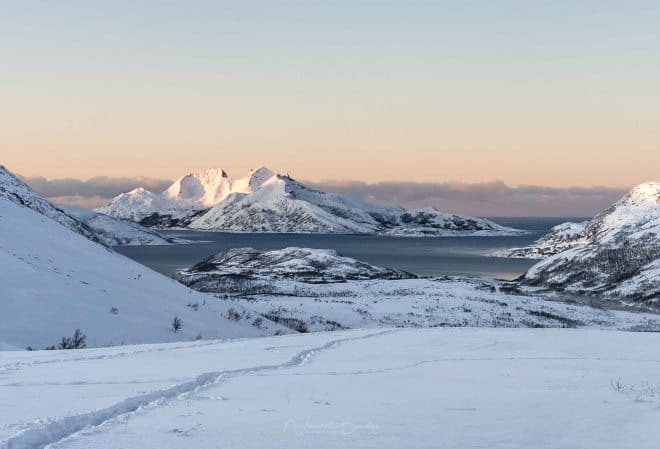
- autumn: the northern lights start showing up in early September, beyond the Arctic Circle. Rain, but still plenty of hikes while waiting for the snow at the end of October. September and October are two fantastic months!
Until early October you have the whole country to yourself, with few tourists. All the scenic routes are still open. So it can be a chance to discover the fjords differently, but also the Lofoten Islands, empty but with the lights. Senja and Tromso are top for the lights. - November, December: the weather turns, the days are very short, but there are the lights. There’s snow and it’s starting to get cold. The fjords are hard to explore because of the closed roads and snowfall, but you can absolutely base yourself around Geiranger from Alesund or, better, in the fjords around Bergen.
That said, it’s also a lovely time to focus on the cities, notably Bergen or Oslo.
But don’t try to do too much of a road trip in the center, it’s complicated. It’s a lot easier in the north, however the Lofoten Islands at this time are a touch gloomy (rain, no daylight, clouds). - winter: the days get longer, there’s loads of snow, it’s cold, and it’s great! There are all the activities of winter magic 🙂
But here the standout winter destinations really are the Lofoten, Tromso, Senja. Without a doubt. - spring: there’s no more night, the temperatures soften but it’ll keep snowing until around mid-May. Beautiful colors!
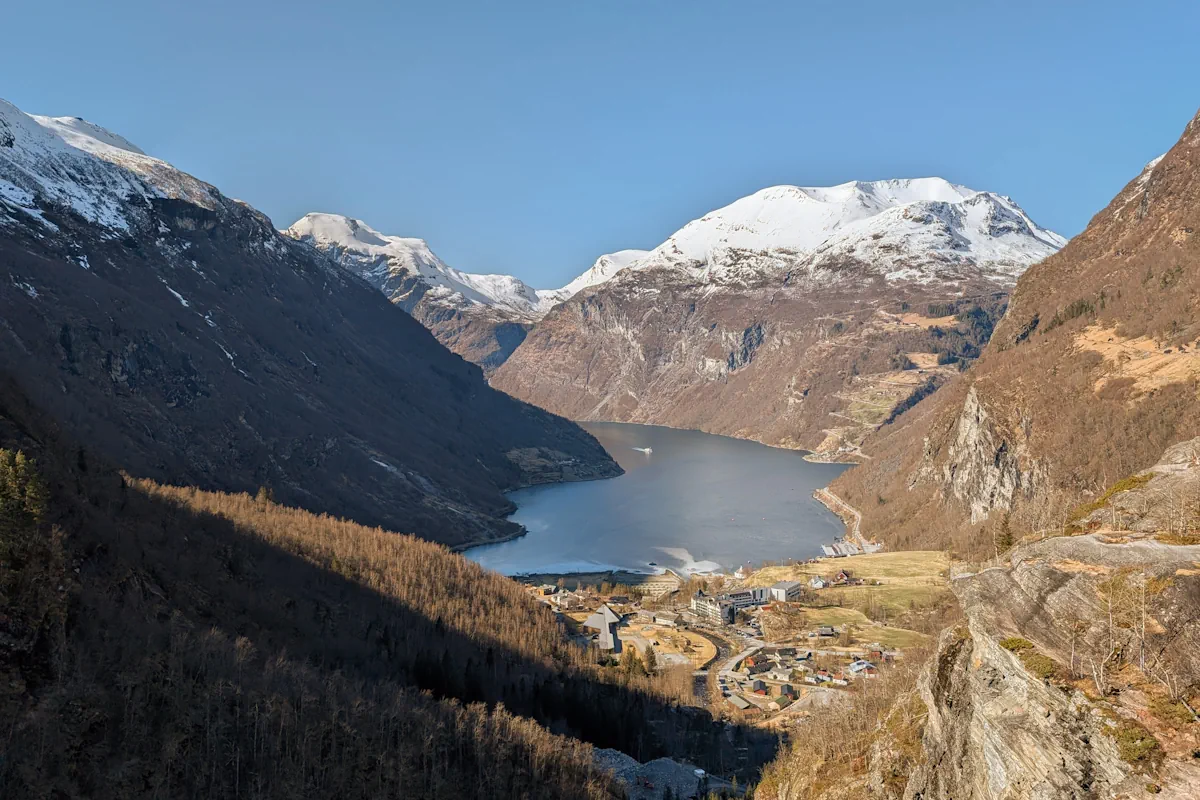
I really enjoyed rediscovering the fjord region in April, because there was absolutely nobody, and the weather was nice. On the other hand, the roads were still closed, and we had quite a few detours because of snowstorms. It’s funky, funny, but we got to see everything we wanted!
Climate and temperatures: the weather in Norway
In winter, it’s freezing! But it’s a dry freeze (except in Bergen, of course). Meaning that, unlike a good heavy damp cold that gets into your bones, here the cold is dry and far easier to handle.
There are two different climates, I find. By the water, it’ll never really get very cold. Between -5 and -10, rarely less. But possibly with a lot of wind. It’s relatively bearable. On the other hand, as soon as you move away from the sea, you get into temperatures worthy of Lapland. Very quickly you’ll lose a good ten degrees and even more.
In Senja for example it’s not unusual to have -5/10 in the fjords but -35 at the entrance to Anderdalen park. A real deep cold that freezes your nose hairs.
In Tromso it’s a bit the same. In town or on Kvaloya, it’ll never get super super cold, but if you go into the Breivikeidet valley or toward the Signaldalen, there you can easily lose a good twenty degrees.
In spring and autumn, you should rather expect 0-10° and summer varies enormously between 5 and 30 (but more reasonably 10 and 20). So it’s totally unpredictable, it’s one of the country’s surprises!!
The best app and site for the weather in general is Yr.no. But for cloud cover, the best app (and website) is Ventusky
Midnight sun and polar night: two great reasons to take a trip to Norway!
It’s the quirk of countries way up north (and way down south too): there are two periods that I find really lovely.
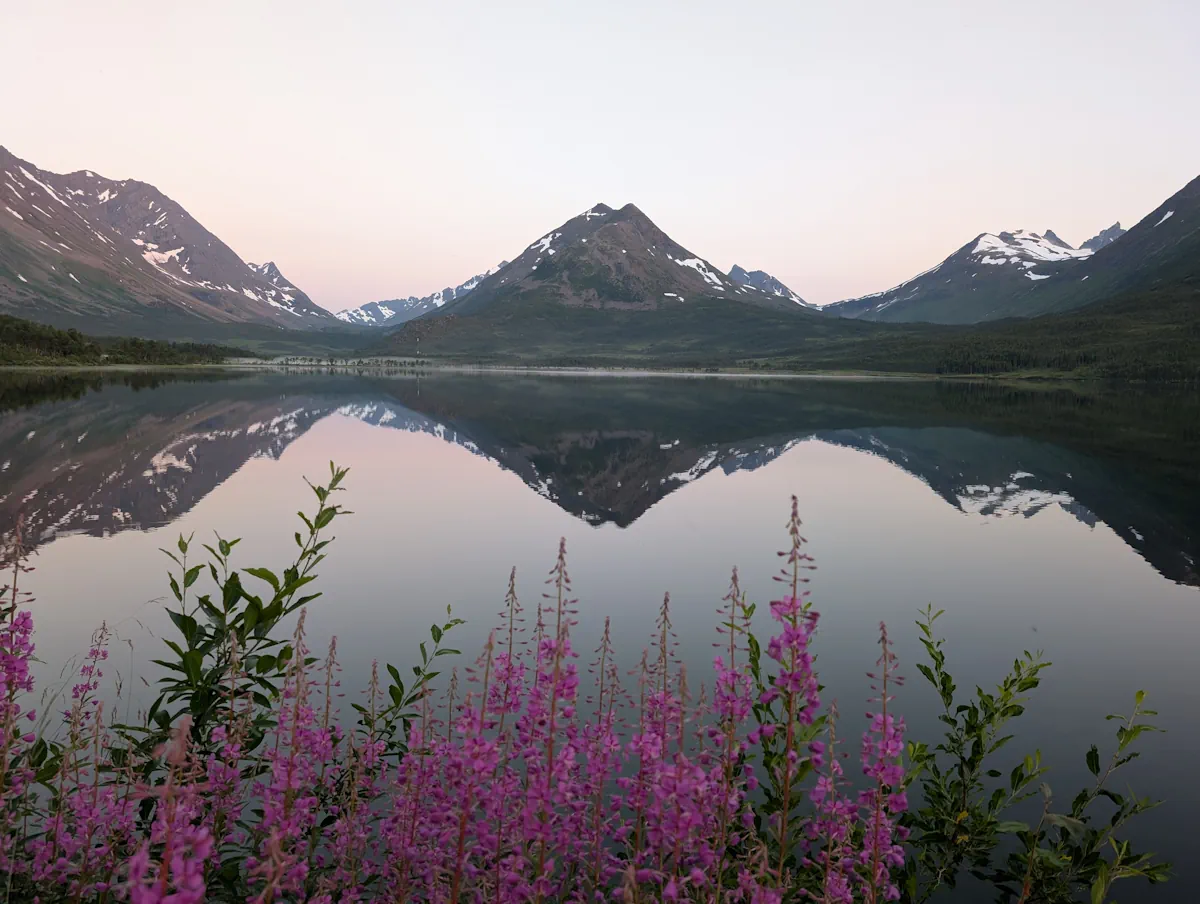
The midnight sun is the sun that never sets. It’s not just having light during the night, it’s really the sun at 2-3am. And it’s funny because it gives you a crazy energy boost. You can have drinks until midnight, wake up in full sunshine at 4am and your body goes “woohoo! it’s late!”. It’s a funny sensation. You can wear a sleep mask, it can come in handy because they don’t know what shutters are (even though they need them way more than in Paris!)
The polar night is… well, the opposite. The sun no longer rises, no longer climbs above the horizon. You get a bit of light for a few hours. On December 21st, the longest night, it’s really dark all the time. It might sound depressing, but it’s fun to see too.
On the flip side, your body is completely sluggish. As soon as it gets really dark, poof, you want to sleep, it’s crazy how much the body depends on light. You get used to it over time. But the upside is that you can have drinks at 2pm! The downside is that you can’t really enjoy the landscapes.
You might think the midnight sun is preferable to the polar night. And yet, when I ask the locals which they prefer, they can’t choose. Neither can I, actually. That’s also why they stay put, especially way up north.
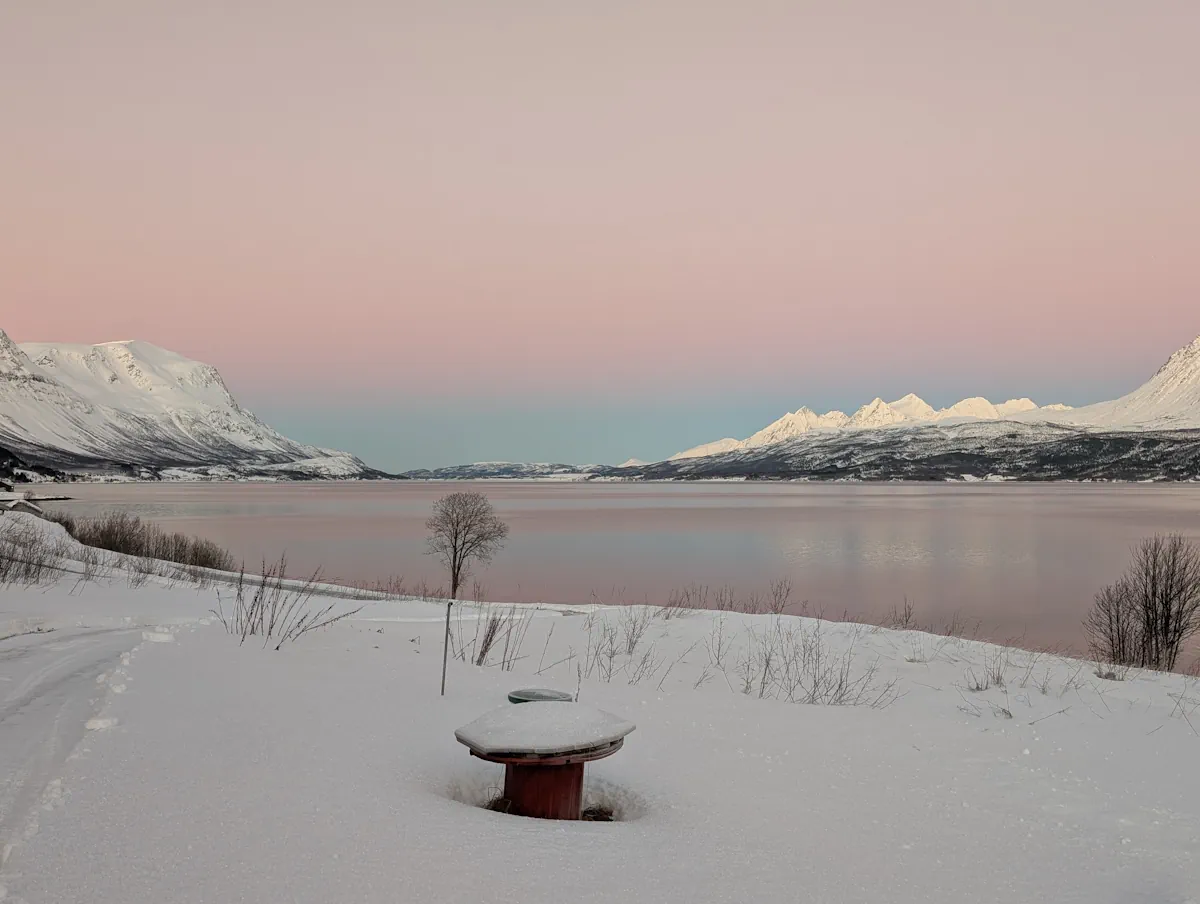
And what I love about the polar night is coming out of it. Because in January, it’s roughly 5 hours of non-stop sunrise/sunset, it’s pink all the time. And it’s magnificent.
Absence of light or twilight is something that hugely affects the trip and the body. So it’s something to take into account when planning your trip to Norway. And of course, midnight sun means no northern lights (I’m not at aaaaall trying to influence you!)
Below, you have a photo taken at 2am in July, and the other one around 1pm in mid-January.
The must-do activities in Norway
There are tons of activities you can do in Norway: snow activities, hikes, boat trips, whale watching… Here’s a little overview below
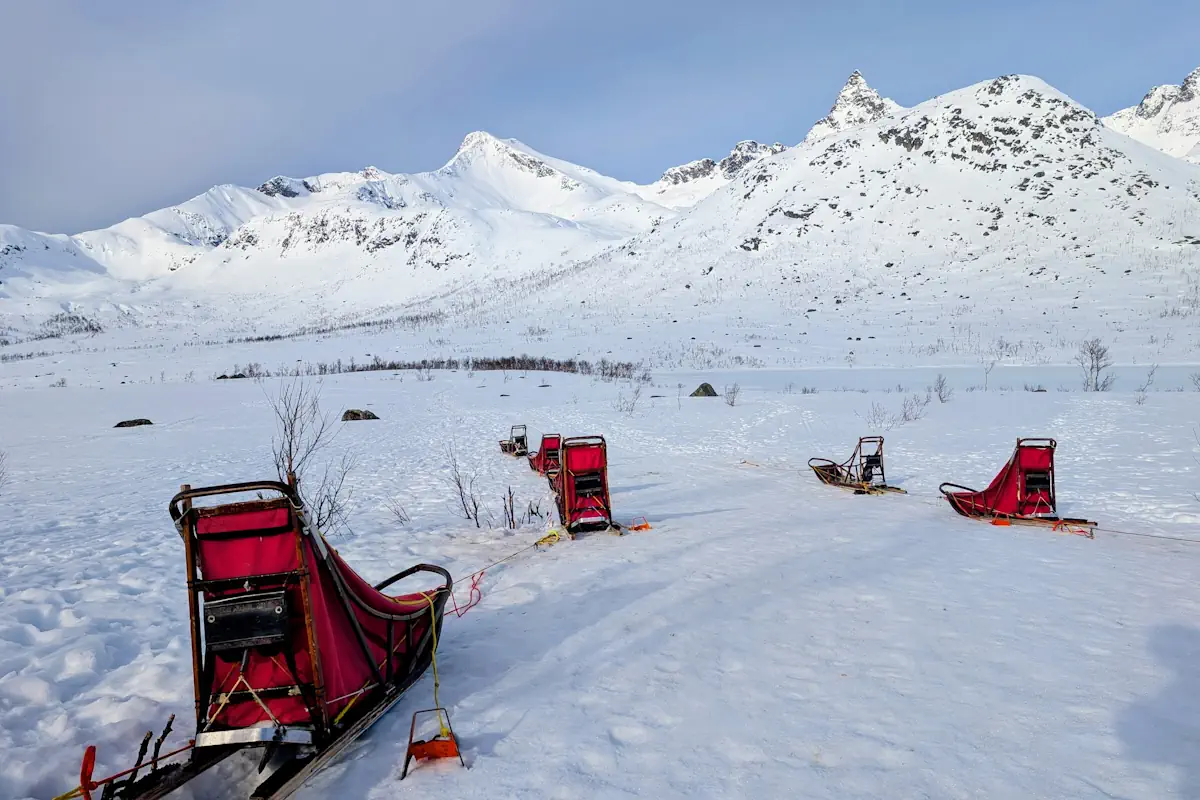
Dog sledding
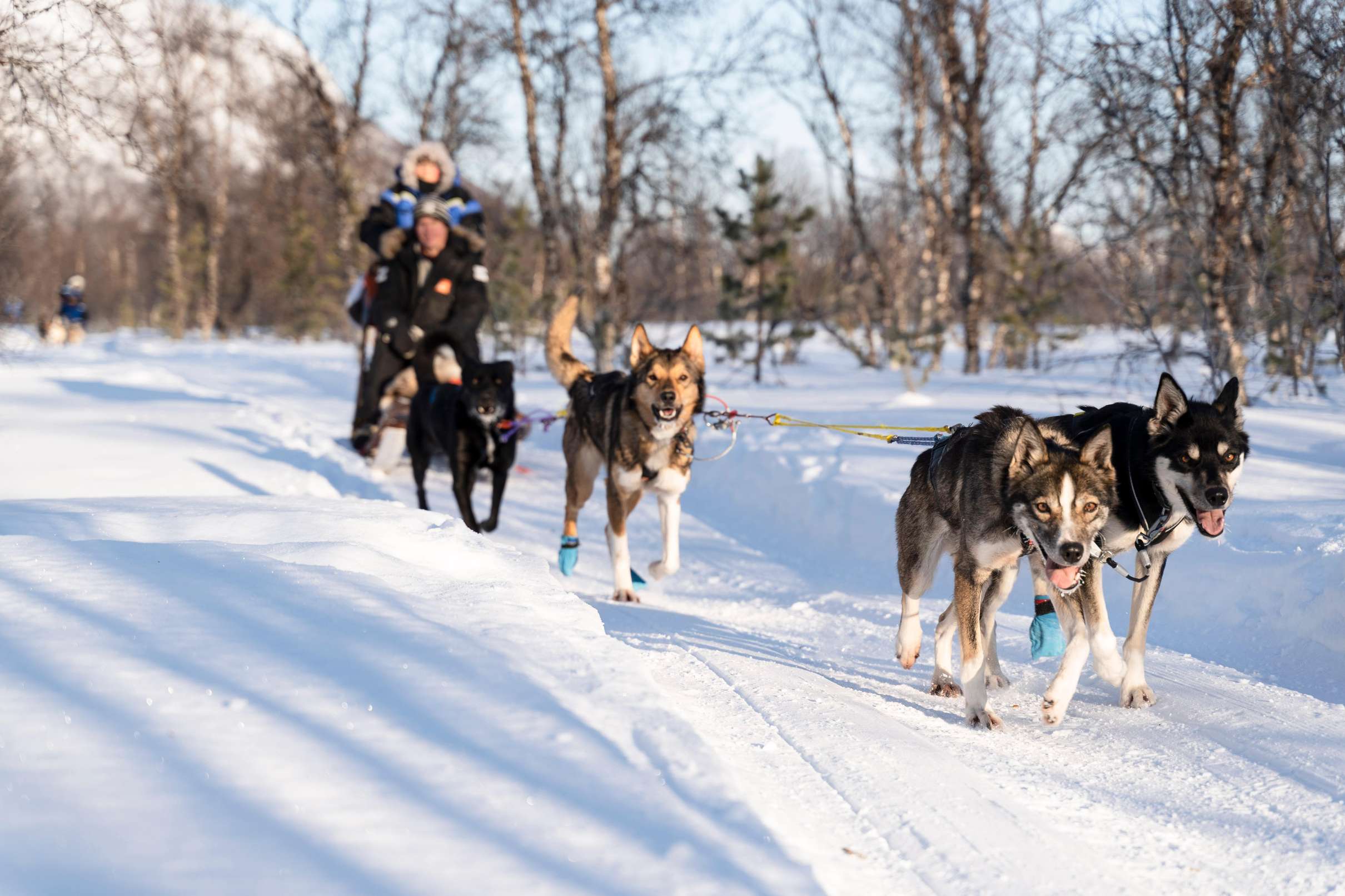
With so much snow, there’s the chance to go dog sledding across a large part of the country. OK, mostly in the north around Tromso, in Finnmark, and in the centre. It’s a really fun activity, active, with lots of contact with the doggos, who are adorable.
Personally I love it both for the sledding part and for hanging out with the huskies, who are real athletes! And what’s more, they love it. Honestly, when you see them go wild knowing they get to run, it’s such a joy.
Basically you can do it from November to April, well, it mostly depends on the snow, which seems pretty logical 😀

📍 Breivikeidet · Arctic Resorts (4 h 30)
Breivikeidet camp facing the Lyngen Alps, drive in pairs and swap musher halfway through.
- Bus transfer from the centre of Tromsø
- Thermal suit + boots + hat + mittens provided
- Hot drink + cake in a Sami lavvu
Free cancellation
From 255 € / person

📍 Gargia · Æventyr (4 h)
Drive your own team for 50 min through the pine forest, then coffee and tea at the mountain lodge.
- Gargia valley, 30 min by minibus from Alta
- Small group of 8 max + full training
- Thermal suit + boots + gloves provided
Free cancellation
From 287 € / person

📍 Jondal · Folgefonna Husky Camp (4 h)
Half a day on Norway's 3rd largest glacier with a husky team and traditional Norwegian snacks.
- Sledding on the Folgefonna glacier (UNESCO)
- 30 min walk to the camp from the station
- Norwegian snacks + hot drinks included
Free cancellation
From 345 € / person
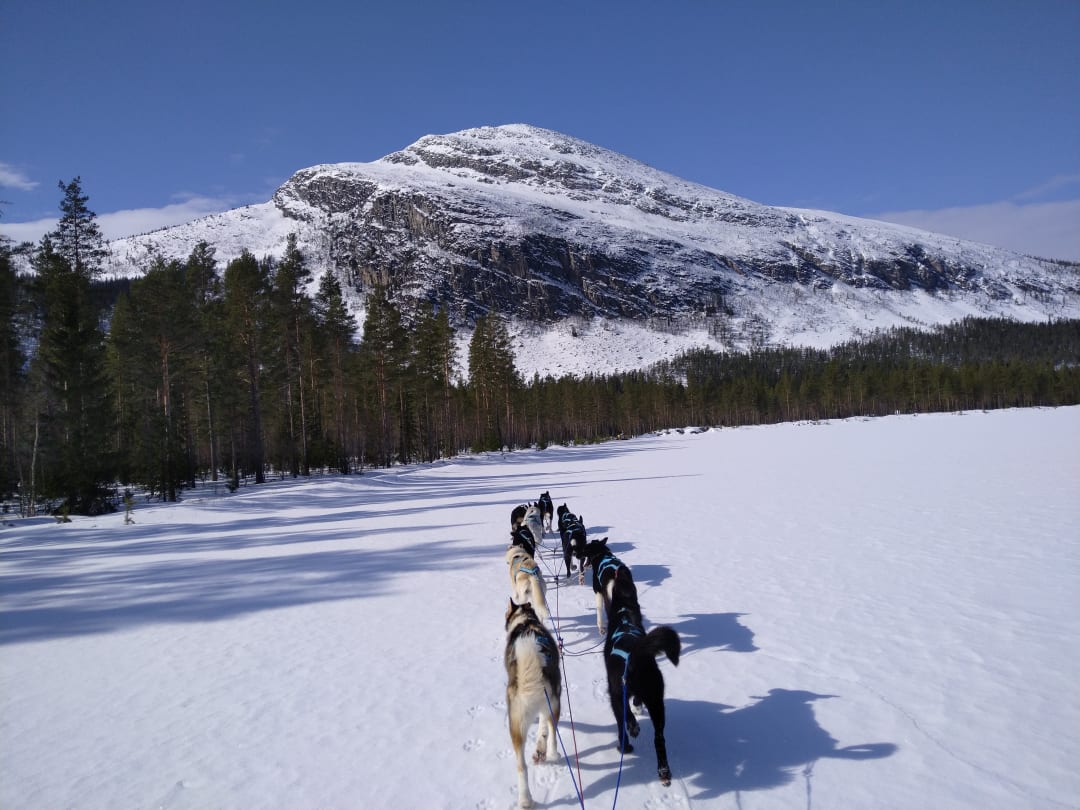
📍 Tylldalen · Eywas Trails (1 h 30 - 6 h)
Pick 1 h 30, a half day or a full day in Tylldalen, driving your own team with a safety briefing.
- Valley far from the tourist circuits of Tromsø
- English-speaking guides, suitable from age 4
- 3 formats to choose from: 1 h 30, half day or full day
Free cancellation
From 106 € / person
Seeing whales and orcas
It’s one of the country’s flagship activities. Whales and orcas travel along the coasts of Norway for a good part of the year and are fairly easy to spot.
In Tromso, they’re visible from early November to late January. Sometimes a bit earlier, sometimes a bit later, it can vary by a week or two. You head out to see them by boat from Skjervoy, 3 hours’ drive from Tromso. There are several companies offering this service, I cover everything in the following article:
In Andenes, at the very north of the Vesteralen islands, you can see them all year round. Well, the only catch is the weather. It can blow really hard and trips do get cancelled fairly often.
In the Lofoten, you can see them. Last year they spotted lots of them, mainly orcas having a blast along the coast. It’s very hit-or-miss but a tour has launched running from March to September!
In Alta and along the coast, it’s a cetacean paradise. You sometimes see them from the shore (mostly dolphins), but you can take a boat trip out into the fjord to see them up much closer.


📍 Bleik · Arctic Adventure Tours (3 hrs)
A 3-hour RIB safari over the Bleik canyon, followed by a puffin safari along the coast.
- Fast RIB out to the Bleik canyon
- Survival suit + goggles + life jacket provided
- Small group of 12 max, ages 14 and up
Free cancellation
From 131 € / person

📍 Tromsø · Brim Explorer (7-9 hrs)
A silent hybrid-electric catamaran to watch orcas and humpback whales without disturbing the wildlife.
- 3 panoramic decks + heated lounges
- Over 95% sighting rate in season
- Wi-Fi + lunch + tap water included
Free cancellation
From 176 € / person

📍 Alta · Icecube of Aurora (4 hrs)
A small-group trip into the Altafjord to spot sperm whales, orcas, porpoises and hourglass dolphins.
- Small group of 8 max + local skipper
- Warm suit + tea + biscuits provided
- Hotel transfer available as an option
Free cancellation
From 243 € / person
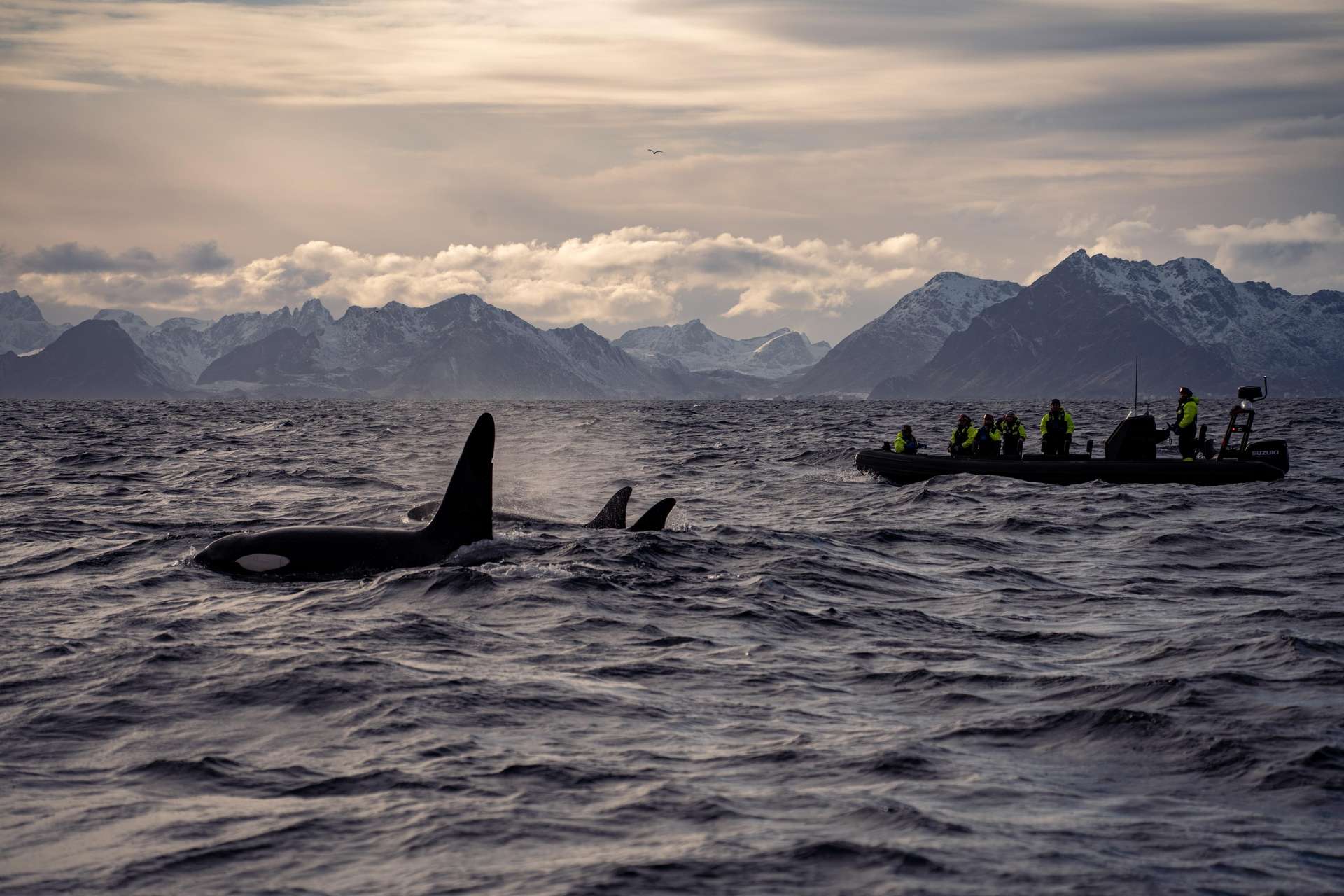
📍 Henningsvær · Arctic Adventure (2 hrs 30)
A 2.5-hour RIB safari around Henningsvær in search of orcas, sea eagles and seals.
- RIB safari around the islands + skerries
- Orcas, pilot whales, sea eagles, seals
- Survival suit + life jacket + goggles provided
Free cancellation
From 132 € / person
Discovering the fjords by boat
Along with the northern lights, this is for me THE best activity in Norway, no less!
With so many fjords and these thousands of kilometres of coastline, it would be a shame not to make the most of it. And in Norway, there really are some pretty insane fjords.
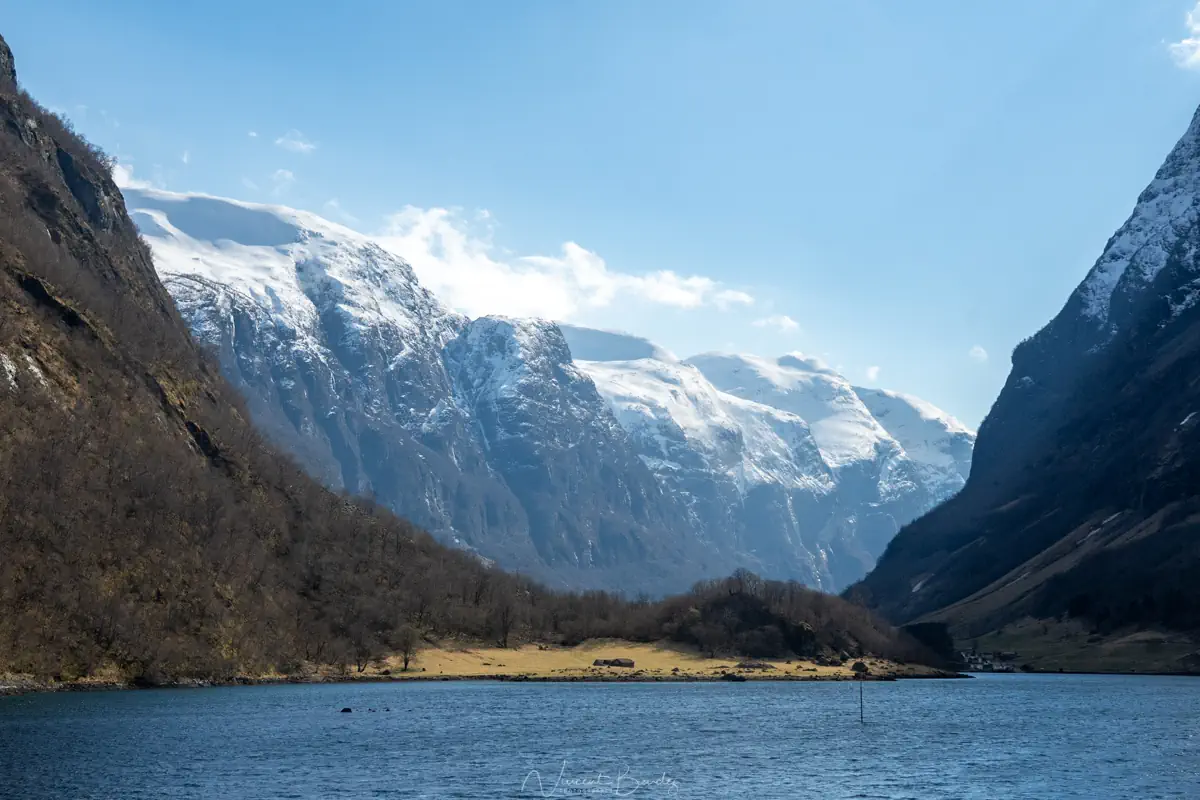
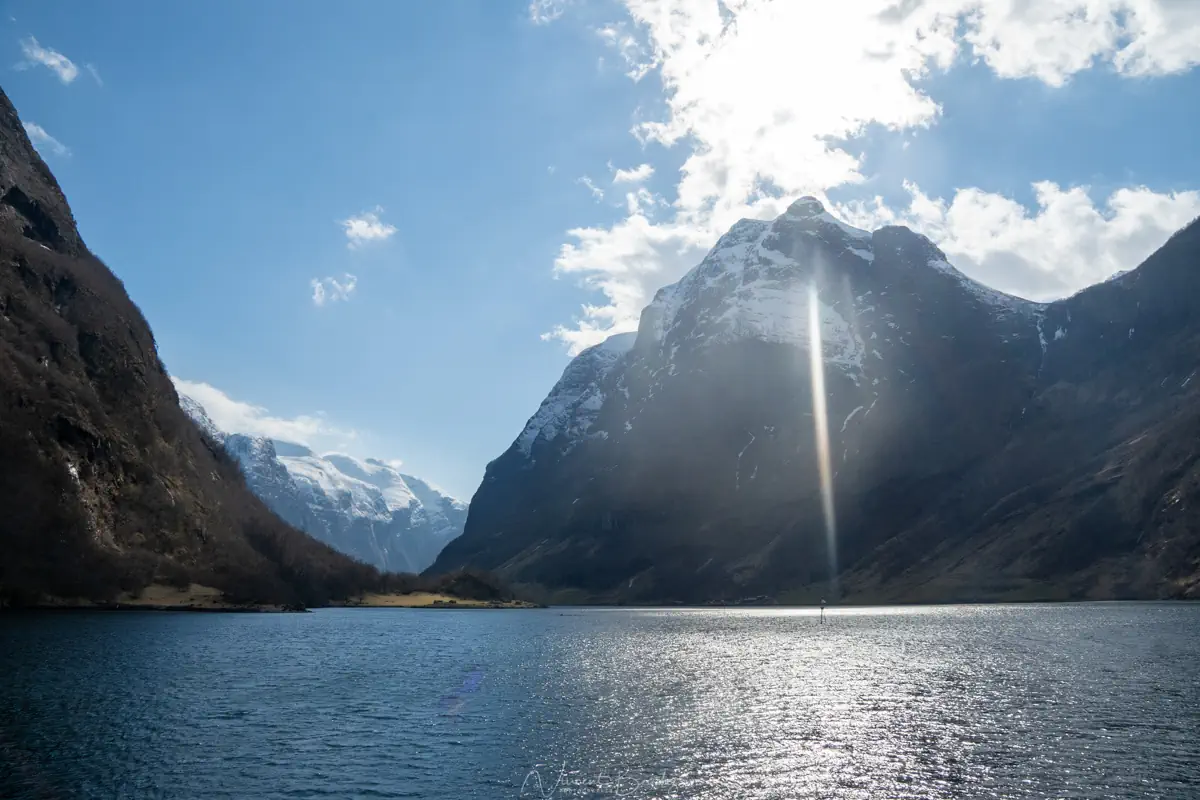
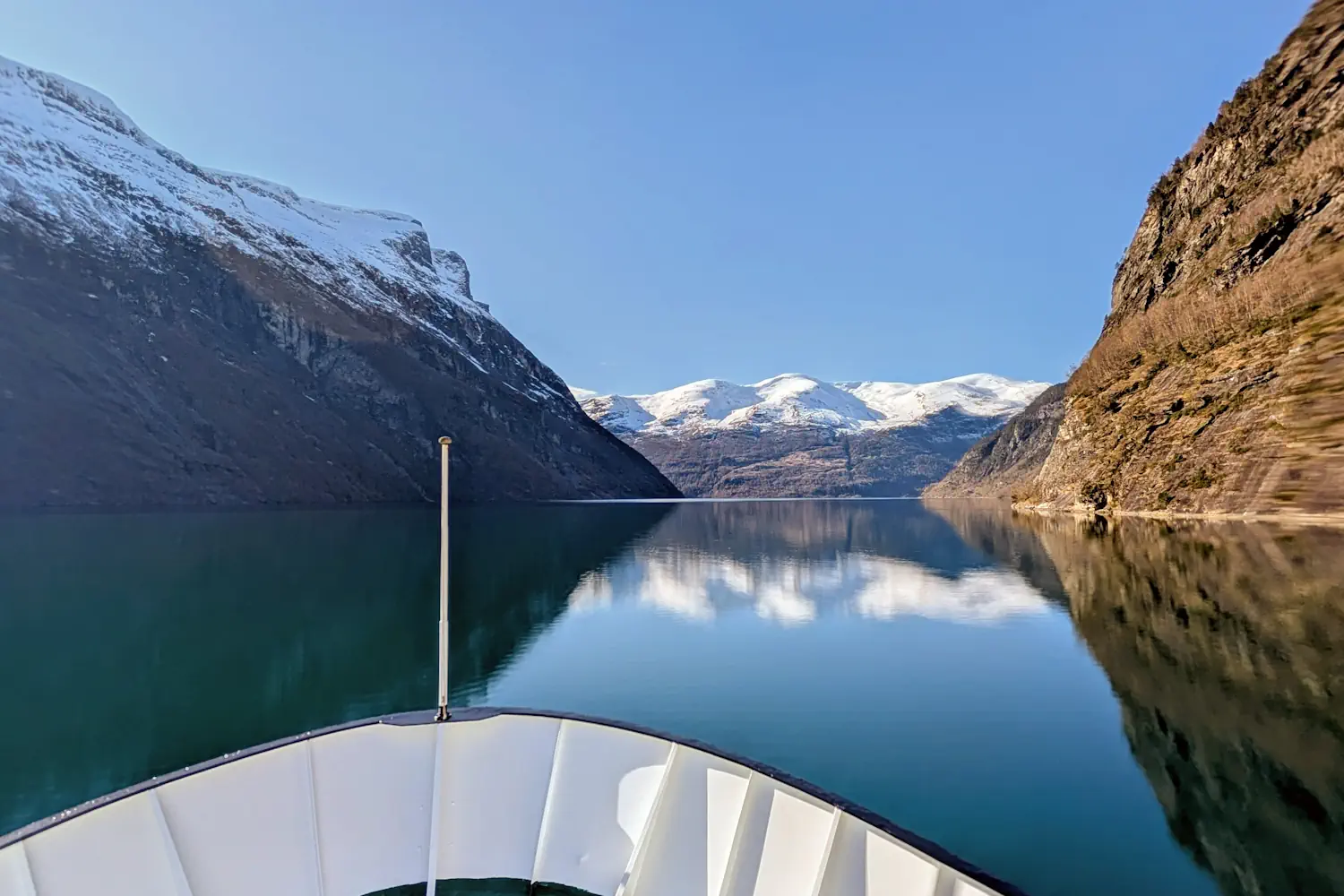
And of course, you absolutely must do at least one cruise on them. There are quite a few cruises of this kind in Norway, in the following article I list the 13 most beautiful day cruises, ranging from the best known like on the Geirangerfjord, the one that goes from Flam to the Naeroyfjord, to lesser-known ones like from Alesund to Geiranger.
You also have several cruises around Bergen if you’re staying there, and honestly it’s pretty great!
I list the main ones below, but afterwards I’ll show you the photos of the cruise on the Geirangerfjord and the one on the Naeroyfjord that we did last April (along with 2 or 3 others, we did loads of them!). It was insane, and on top of that the weather was magnificent!
- Bergen
- Stavanger
- Naeroyfjord
- Geiranger
- Oslo
- Lofoten Islands
- Tromso
- Alta
- Alesund


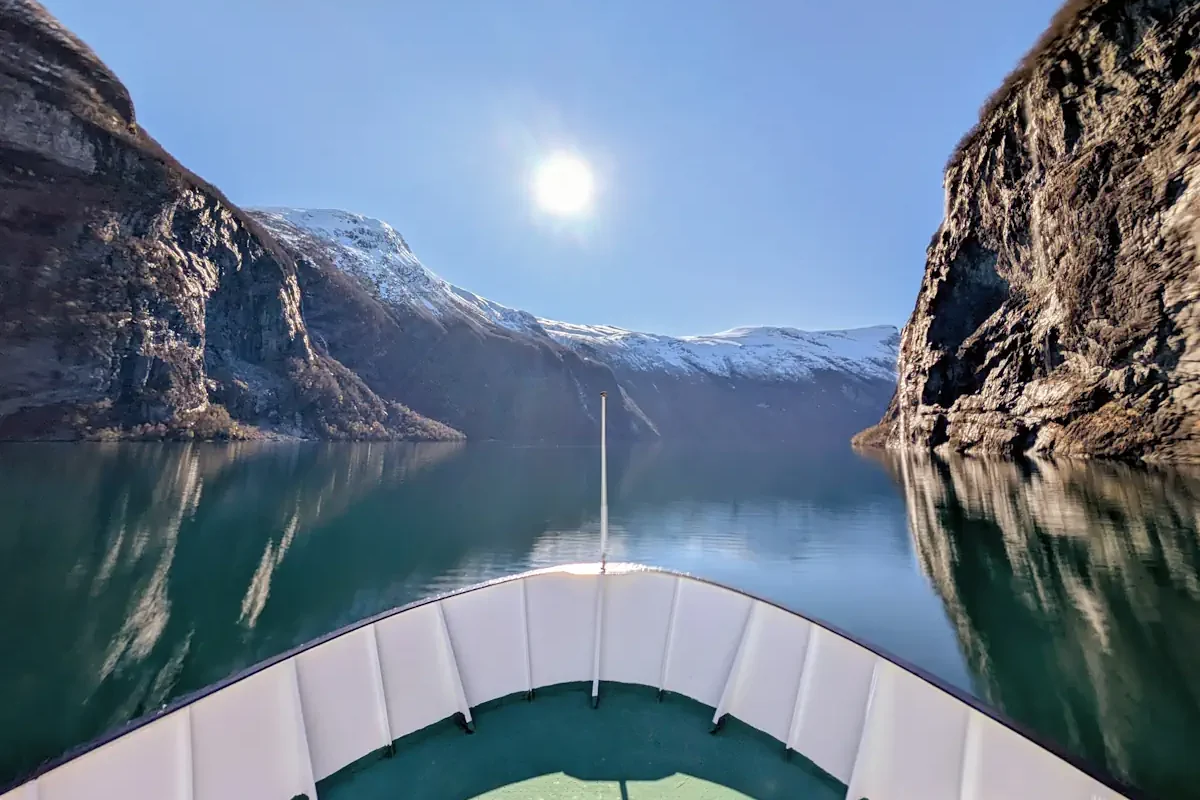

📍 Stavanger · Rødne Fjord Cruise (3.5 h)
100% electric catamaran to see Preikestolen from below (604 m) and the Hengjanefossen waterfall.
- 100% electric silent catamaran
- Hengjanefossen waterfall + Vagabond's cave
- Leather seats, free Wi-Fi, waffles on board
Free cancellation
From €63 / person
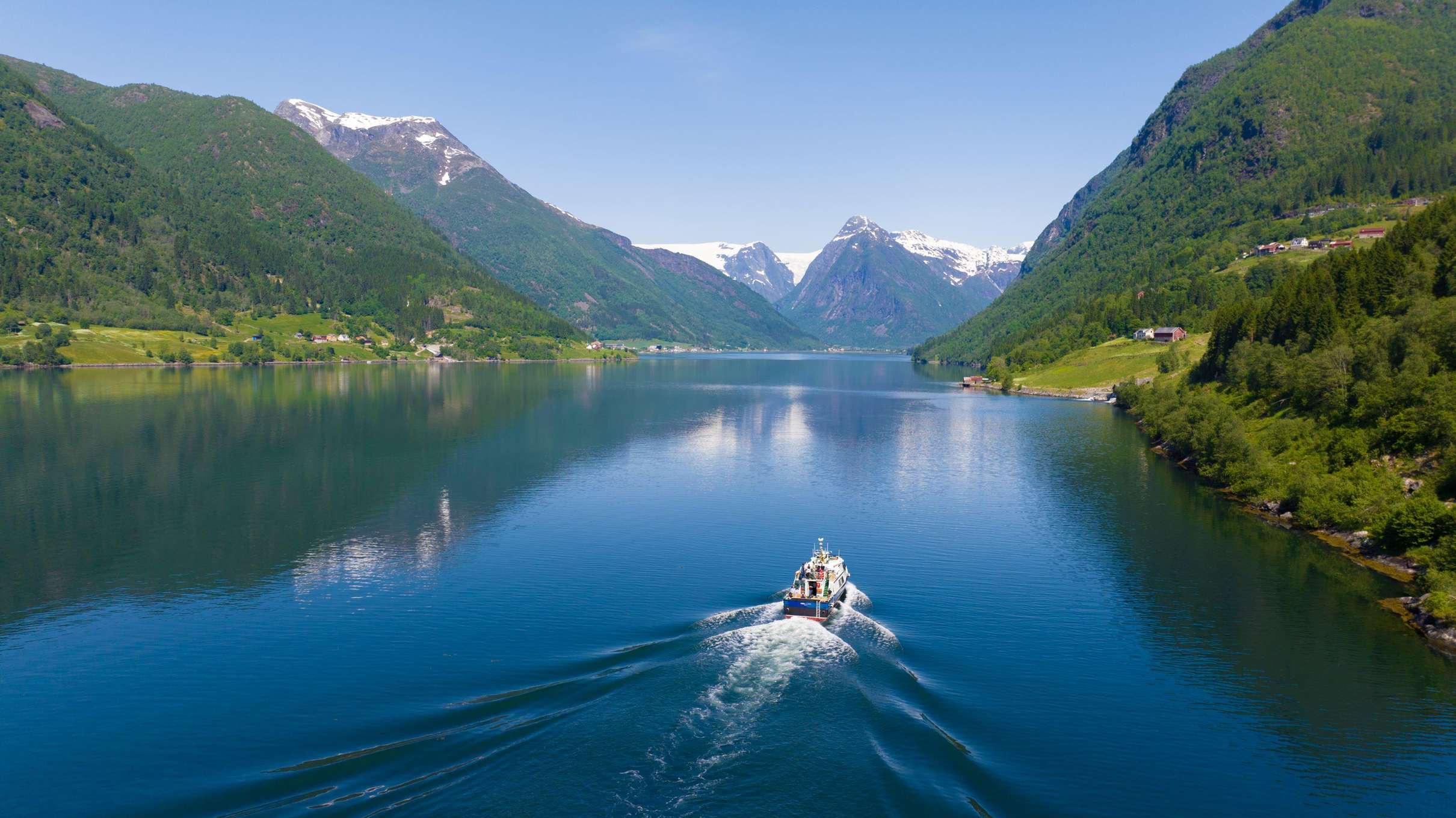
📍 Bergen · Lustrabaatane (13 h)
Day-long bus and ferry trip from Bergen to the Bøyabreen glacier via the Sognefjord and the Hopperstad stave church.
- Vikafjellet pass (1,100 m) + Sognefjord
- Bøyabreen glacier + Norwegian Glacier Museum
- Hopperstad stave church + Tvindefossen waterfall
Free cancellation
From €315 / person

📍 Geiranger · VisitGeiranger (75 min - 2 h)
Classic 75-minute cruise or silent 2-hour electric cruise facing the Seven Sisters and Bridal Veil waterfalls.
- Choose: 75 min classic or 2 h silent electric
- Seven Sisters + Bridal Veil + Suitor
- GuideToGo audio guide in 12 languages
Free cancellation
From €54 / person
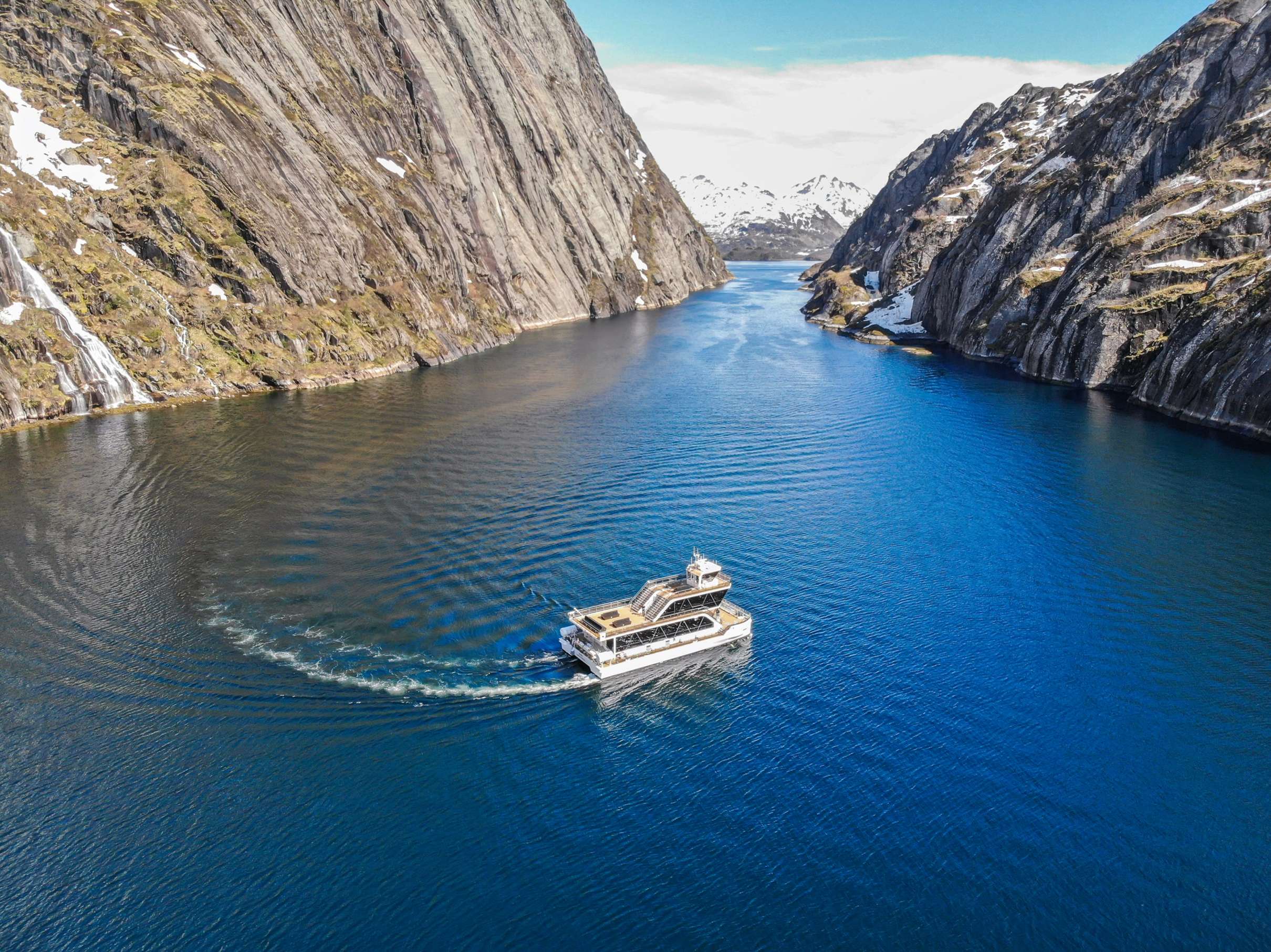
📍 Svolvær · Brim Explorer (3.5 h)
Hybrid-electric vessel to the Trollfjord with white-tailed eagle watching and underwater drone.
- Ultra-silent hybrid-electric vessel
- White-tailed eagles + chance to spot orcas
- Underwater drone deployed if weather allows
Free cancellation
From €132 / person
Seeing the glaciers and walking on them
And saying goodbye to them, at the rate they’re disappearing.
There are still quite a few glaciers in Norway, especially in the centre, in the big massifs like the Jostedalsbreen. Fewer in the north because the mountains are lower (you can see some in the Lyngen Alps). But basically, here are the glaciers you can visit. What’s sad is that you can watch them retreat year after year. Passing through Olden, Fjaerland, you already see a lot of them among the very accessible ones, so if you love glaciers, definitely go that way, especially since in Fjaerland there’s the dedicated museum!
- Nigardsbreen, accessible from route 55, in the Jostedalsbreen. You can walk on it with guides (see here)
- Briksdalsbreen, on the other side of Jostedalsbreen, accessible via a short walk
- Bøyabreen, from Fjaerland, a few minutes’ walk from the car park
- Folgefonna, near Odda, a magnificent setting and you can even do a hike on it (see here)
- Okstindbreen, further north in Helgeland, you can also do a hike on it with a guide (see here)
- Svartissen, also in Helgeland, is the 2nd largest glacier in Norway. It’s located in a superb national park. A lovely hike to reach it, between lakes and mountains
- Steindalsbreen, a glacier in the magnificent setting of the Lyngen Alps, not far from Tromso

A few itinerary suggestions
With such a big country, the possibilities are almost infinite! But I’ll try to give you a little summary of the main itineraries. I’ve already written several articles on itineraries in Norway, here’s what I can offer you as complete itineraries:
- One week in Tromso in winter
- Two weeks between Tromso, Senja and the Lofoten Islands
- One week in the fjords around Bergen
- A 2-week itinerary to visit the fjords of Norway
Here are a few other itinerary suggestions for different durations and different seasons:
- Norway in winter
- 1 week in Tromso, landscapes, snow activities and northern lights
- discover my suggested itinerary in Tromso
- 1 week in the Lofoten Islands, between beaches, mountains and little villages
- 1 week in Tromso, landscapes, snow activities and northern lights
- All year round
- 1 week / 10 days between Oslo and Bergen, train connection and a stop at Flam and Naeroyfjord
- 10 days between Tromso, the Lofoten Islands, Senja
- discover this itinerary in northern Norway
- Norway in summer
- 1 week around Bergen and the fjords above it (Sognefjord, Naeroyfjord, Flam, Borgund…)
- 1 week in the Lofoten
- 2 weeks in the fjords between Bergen and Alesund, add a bit more time to head off to the fjords around Stavanger
- City weekend for 3/4 days:
- WARNING:
- Norway can be visited ALL year round, there’s always something to see, a favourable spot (whales, northern lights, hikes, cities…) depending on what you’re after


How to get to Norway
Visa for a trip to Norway
Easy, even though Norway isn’t part of the European Union, it does belong to the Schengen Area. Which means you don’t need a visa to enter, just an ID card if you’re coming from the EU or Canada (for example). The full list of visa-exempt countries here.
Getting to Norway by plane
It’s the simplest and fastest way. From France, with AIR FRANCE, there are direct flights to Tromso, Oslo, Bergen and Stavanger. Here are the airlines flying direct France – Norway:
- Air France
- Transavia
- Norwegian
- Easyjet
- Scandinavian Airlines
- Volotea
The domestic flight network is excellent with Norwegian and Wideroe, an airline that serves the small local airports in a hop-on-hop-off, stop-everywhere style. It’s super handy. Norwegian’s prices aren’t crazy, but Wideroe can climb fast.
The airlines I take are always among: Air France, Scandinavian Airlines, Norwegian, Finnair (a new Helsinki-Tromso route). There’s also Easyjet and Transavia in winter to Tromso.
The price for Oslo is regularly under €150 round trip, and for Tromso it’s fairly easy to find flights under €300 round trip. That said, they usually have a field day with the baggage, which gently bumps up the bill by 100€.
I can only advise you to be flexible with your dates. It varies enormously from one day to the next. That’s how I went from €400 to €160, just by shifting my flight by 2 days, because on the way out there was no flight operated by SAS.
In any case, you need to compare prices beforehand. The dates, the airlines. I use at least two comparison sites (given the price of a trip to Norway, if I can save a few dozen euros here and there, I’m not going to pass it up!). So I mainly use Booking Flights. Have a look directly with the airlines too, just to check.
Getting to Norway by car or camper van
People often ask me whether you can get to Norway, and mainly Tromso, by car or camper van. It depends on two things. First, the season.
In winter (i.e. from October through May), I strongly advise against doing it because of the climate, if you’re not used to driving on snow/ice. The locals have snow tires that are ultra effective, and for good reason. When it snows, it doesn’t mess around. Example: this winter, in the middle of a storm, I covered 60km in 2h30. But honestly, the snow isn’t the biggest issue. The snow packs down on the road over time, forming a kind of ice layer several cm thick (well over ten cm), like permafrost, which takes a long time to melt.
The ice is the hardest part. And there you need studded tires.
Otherwise, if it’s in summer, given the price of renting a van in Norway (which is to say very, very expensive), I think it’s a good idea. But the road is long (4 days of non-stop driving to reach Tromso), so it’s worth it if you have 3 weeks, I’d say.
The simplest option is to take the ferry from the north of Denmark (Hirtshals), which brings you to Kristiansand in the south of Norway, and then head up either along the coast (Stavanger, Bergen, the fjords, Alesund, Trondheim, Bodo…) or via the central route, the E6.
Renting a car in Norway isn’t expensive. If you book a bit in advance, you’ll pay between 30 and 40€ per day. A far cry from Iceland’s prices, for example. If you book at the last minute in high season, then it’ll easily be more than 100€.
Gas, it depends on the day. It varies enormously, and it changes twice a day. It can jump 1.5NOK in one go (imagine gas going up 15 cents overnight). Right now it’s around 18NOK a liter, but it varies a lot depending on the situation in Iran, in Russia, whether or not the Norwegian state is providing subsidies… Reckon it can range from 17 to 25 NOK a liter. I don’t think I’ve ever paid more than 26NOK, but I’ve seen it!
Taking the ferry from Germany, the Netherlands or Denmark to Norway
Rather than having to go all the way around through Denmark and then Sweden (which I’ve already done twice), you have the option of arriving directly in Norway thanks to the various ferries. These are high-capacity ferries on which you generally spend a night (since the crossing isn’t all that short).
It can be relatively expensive, but it saves time. A huge amount. Or rather, above all, it adds comfort instead of driving on roads with quite a lot of traffic and that are a touch monotonous! So it’s ultra practical.
Here are the different routes; I’ll give you the duration, the price for a standard vehicle, and the link with the sailings and extra info:
Germany
- Kiel – Oslo : avoids having to slog all the way up Denmark. It’s an overnight ferry, so a relaxed day rather than a fair bit of driving (you save 7h of driving compared to Hirtshals-Larvik). Duration: 20h. With Color Line. More info on this crossing
Denmark
Everything leaves from Hirtshals at the very north of the country (except one from Copenhagen). You save a monstrous amount of time for visiting the south of Norway.
- Copenhagen – Oslo : same idea as Kiel, an overnight cruise that drops you right in the heart of Oslo. Perfect if you’re setting off from eastern Denmark or southern Sweden, or if you want to link up two capitals. You board in the evening, you sleep, you arrive in the morning fresh and ready. Duration: ~17-18h. With DFDS.
- Hirtshals – Kristiansand : the shortest and fastest crossing to Norway. Very popular, you need to book early! The smart choice if you’re aiming for the south of the country, or just as an express gateway. Fast catamaran in 2h25 (March-October) or classic ferry in ~3h55, with several departures a day. With Color Line or Fjord Line. More info on this crossing
- Hirtshals – Larvik : the most popular line. Among the lines from Hirtshals, it’s the one that gets you closest to Oslo (~1h45 of driving afterwards). A good compromise if you want the southeast while avoiding the overnight cruise. Duration: ~4h, 2 departures a day. With Color Line. Info and booking
- Hirtshals – Langesund : you arrive between Kristiansand and Oslo, very handy for the southeast and for heading off to Telemark. Duration: ~4h30. With Fjord Line. More information
- Hirtshals – Stavanger : you land directly on the west coast, right in fjord country (Lysefjord, Preikestolen), without having to cross the whole of southern Norway by road. Often overnight. Duration: ~11h15. With Fjord Line. Info and booking
- Hirtshals – Bergen : the direct gateway to the west and the great fjords (Hardanger, Sognefjord). You land right in the fjord capital without swallowing hundreds of km of road. Overnight. Duration: ~17h15. With Fjord Line. More info on this crossing
Renting accommodation in Norway
Norway has a reputation for very expensive holiday accommodation. And well… it’s true. In touristy spots (Tromso, Bergen, Geiranger, the Lofoten), you’ll find hotels that easily top €200 a room. On the other hand, if you book early there are always a few cheaper little hotels, but they get snapped up fast.
That said, if you get away from the city centers, you’ll find quite a few pleasant surprises, cheaper, and outside the tourist areas, there it’s not (too) expensive.
Then, no surprise, coming in the off-season means paying 2 to 3 times less for accommodation, that’s not bad at all!
What I love in Norway, with this nature it’s relatively easy to find typical lodgings with insane views. The little red fisherman’s cabin at the edge of its fjord, the family house by the sea… and in summer you have the hytte, which have no electricity (or solar) and no running water, but are set in an incredible spot. Lots of Norwegians have one, they love them!
More and more private owners are putting their holiday homes up for rent and it’s a really good alternative to a hotel if there are several of you or you want a bit more space. It’s still fairly pricey in Norway, but you often find good deals.
In town, it’s rare to come across bad hotels. Generally, it’s always at the very least comfortable and practical. The rooms are never huge, though. And the good hotels are super comfortable and have the killer feature: breakfast. Oh boy. A bit of sweet stuff, plenty of savory, vegetables, prepared dishes, cheeses, salmon, fermented herring (ugh). It means you can skip lunch and save yourself a meal.
The classic chains Thon, Radisson, Scandic or Clarion are really not bad. Expensive in high season, much less so in low season, they let you treat yourself a little.
I’ll give you 4 examples of lovely places you can find in Norway. Just be careful not to give in.

📍 Reine / Hamnøy · Rorbuer facing the fjord
Red rorbuer floating on the Reinefjord at Hamnøy, one of the prettiest villages in Lofoten. Sauna and hot tub thrown in as a bonus.
- Traditional rorbuer with a terrace over the water
- Sauna and hot tub at reception
- Sweeping views over the Reinefjord and the peaks
Free cancellation
From 175 € / night
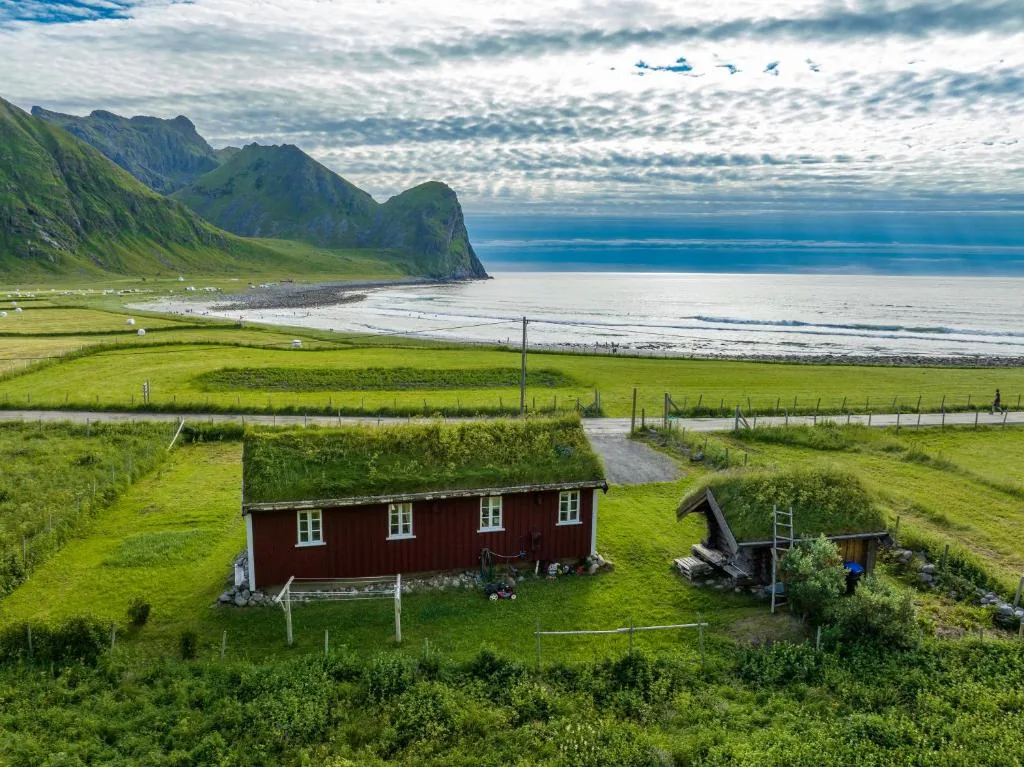
📍 Unstad · Lofoten's surf beach
Red cabin with a grass roof looking straight onto Unstad beach. Wood-fired sauna and the total silence of Lofoten.
- Private cabin for 2-3 people with a fully equipped kitchen
- Traditional wood-fired sauna
- Hosts Line & Kristian's surf school just 100 m away
Free cancellation
From 250 € / night
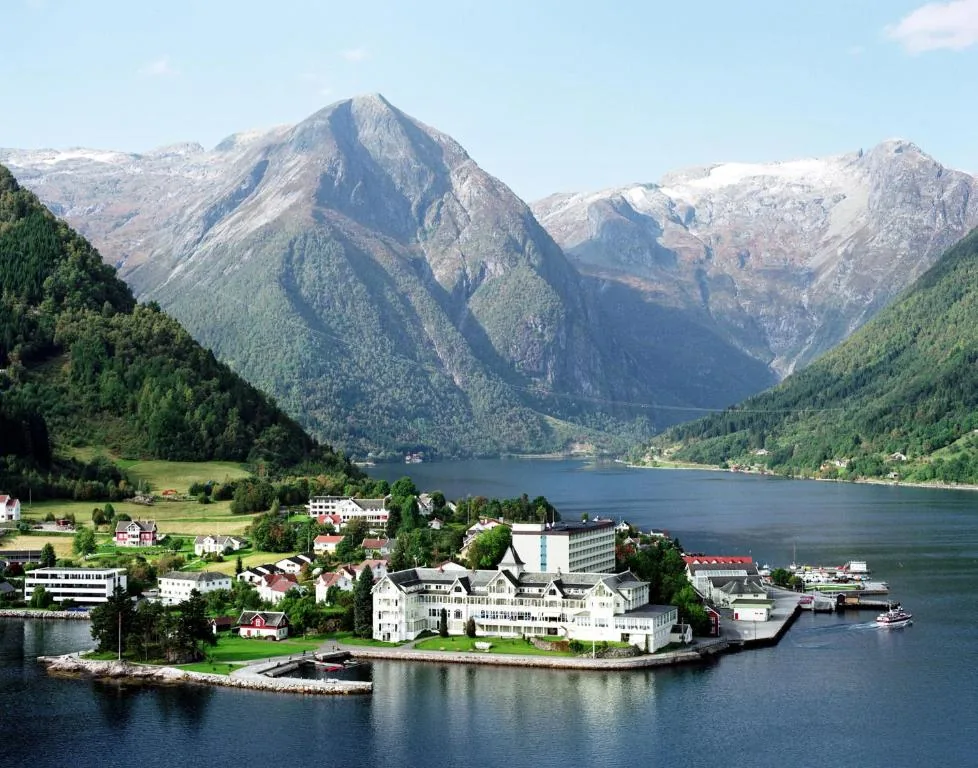
📍 Balestrand · Sognefjord (1877 manor)
A historic building facing the Sognefjord. Period lounges where Edvard Grieg and Kaiser Wilhelm II once stayed.
- Historic 1877 wing plus a more contemporary modern wing
- Private beach and waterfront on the Sognefjord
- Excursions to the Urnes stave church (UNESCO)
Free cancellation
From 290 € / night
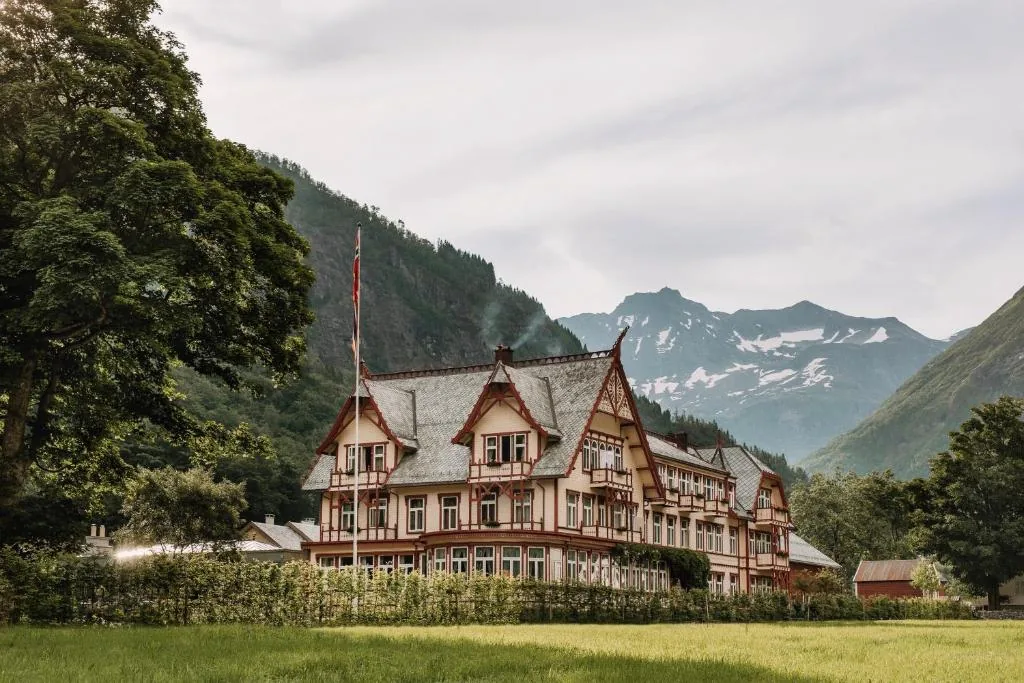
📍 Øye · Norangsfjord, Sunnmøre Alps
A historic 1891 manor at the foot of the Sunnmøre Alps. Karen Blixen, Edvard Grieg and Conan Doyle all slept here.
- Relais & Châteaux member, with historic rooms
- Library, English garden and 2 restaurants
- 70 km from Trollstigen and the Geirangerfjord
Free cancellation
From 320 € / night
Getting around Norway
I’ve already mentioned it a bit above. The train has a relatively well-developed network when you look at Norway’s topography. The main cities are connected (Oslo, Bergen, Trondheim…), all the way up to Narvik and Bodo. But Narvik is linked to the Swedish network, while Bodo is linked to the Norwegian one. Otherwise it’d be too easy.
Further north, then, there’s nothing. See the map of the Norwegian rail network.
And it has two of the most beautiful lines in the world! Notably the Flam – Myrdal train and Bergen-Oslo.
By plane, it’s very simple but not cheap. The local airlines Norwegian and Wideroe are present everywhere across the country. If you book well in advance, the prices are very good for domestic flights. At the last minute, it stings a bit!
There’s a very well-developed express bus network, but not everywhere. And inevitably, it takes time given the distances. I’d say there’s a network in the south and center, up to Trondheim. From there, however, it seems impossible to reach the north by bus.
But between the Lofoten, Tromso, Alta, Kirkenes, these towns are very well connected to one another.
There’s an excellent journey planner for Norway, with all the bus routes, absolutely every stop. It’s Entur, I highly recommend it.
Car rental in Norway
Renting a car in Norway is the best option for enjoying the nature. If you book early enough, it’ll cost 30€ a day, and you’ll get something really good.
There’s no need to get a big car because, first, the speed limit is between 60 and 90km, second, small cars are very well equipped, and finally the roads are in very good condition. So a Polo or equivalent is more than enough, even in winter. It’ll mostly depend on the size of your luggage and your family.
And in winter, the snow tires are excellent, there’ll be no risk on that front. I’ve actually written you an article with tips on winter car rental.
What will cost a lot, on the other hand, is picking up a car at point A and dropping it off at point B. There, it’ll cost you several hundred euros extra.
That said, compare. Absolutely. It varies enormously from one day to the next and the earlier you book, the cheaper it is. You need to watch out for unlimited mileage in particular. For my part I use DISCOVER CARS, I like it, it’s reliable and no surprises.
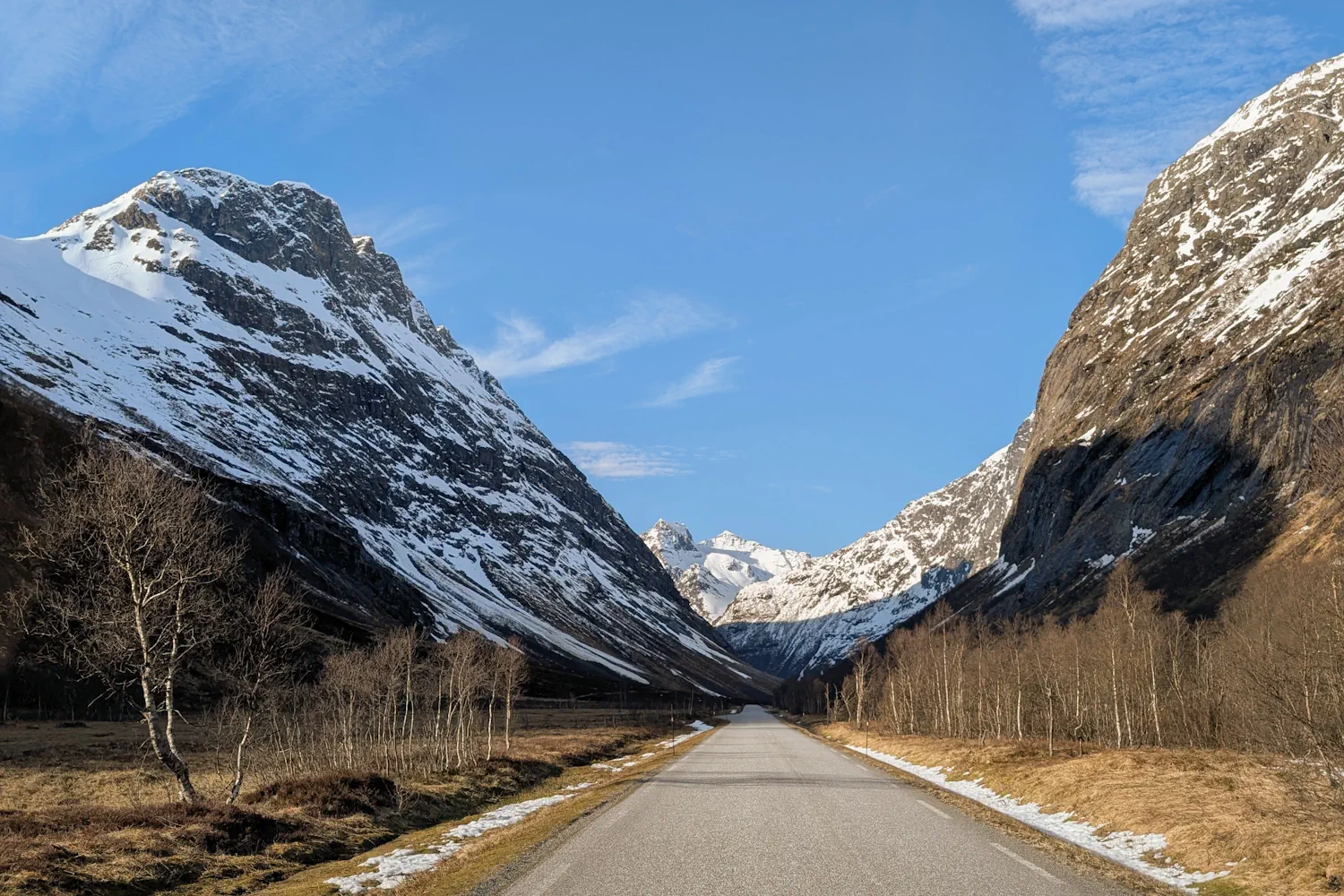

CAR RENTAL IN NORWAY
Roam around Norway by renting with Discover Cars

- Rent a car from many airports or in town
- Small model, SUV or electric for the adventure
- Car supplied with the Autopass tag
- Prices from 30€
How to pay tolls and ferries in Norway
Tolls in Norway sound super complicated, but actually it’s super simple. In the following article I explain where to register to pay tolls on Norwegian roads. But to keep it simple:
- You need to register on EPASS24 to record your number plate, without getting any discount
- to pay automatically for ferries (without a discount), you need to register on FERRYPAY
- Otherwise you can order a toll tag and get discounts at the tolls (with operators like Skyttelpass or Flyt)
- then you can register on Autopass Ferje to get big discounts on the ferries
This lets you pay automatically since your plate is registered. So every passage is logged. Either you pay each time, or get one bill per month.
If you don’t have this, then you have to pay the ferries directly to the operator. But you absolutely have to have one when travelling in Norway. I think it’s mandatory.
If you rent a car in Norway, then you have the tag.
International driving permit
No need for an international permit or an official translation. Your national (or European) licence is enough to rent and get through checks for a tourist stay.
Driving in Norway
Honestly, it’s pure bliss. Except during snowstorms. People are very respectful, both in their behaviour, on speeds, on safe following distances, on right of way. On top of that, the scenery is always exceptional. So since speeds are limited, it lets you enjoy it 😀
Driving on snow isn’t especially difficult because the cars are equipped for it. The tyres are perfect, sometimes studded, it drives just fine on snow and ice. There’s no need to be scared, you just have to avoid sudden movements, not turn too fast, not brake too sharply and always leave a good safe distance because it takes longer to brake on snow and ice (obviously). But really, read this guide on winter driving, it’s super important so you know what’s in store for you.
To find out the state of the roads in Norway, it’s on the Vegvesen website. I explain all of that in the article on road closures in Norway, because you’re likely to run into it! so it’s better to know what’s closed or open before hitting the road. And to avoid either waiting for the convoy, or making a 400-km detour because there are only 2 roads in the whole region.
Ride-hailing and taxis
There’s Uber for ride-hailing, and it’s expensive, like the taxis. The advantage is that you know the price of the ride in advance. But it’s not really any better value than the taxis.
The taxis all have a meter. And it’s not up for negotiation. Prices go up at night-time rates, that is from 5pm I think.

The right to roam in nature
Something exceptional in Norway is this famous right to roam in nature. It’s written into law that everyone can enjoy nature, the open spaces, even on private land. The only condition is to respect the environment. And for camping, it’s roughly the same.
You can access private land (unfenced, that’s important), you have to stay more than 150m from dwellings and respect any sign saying you can’t pass through/park/camp.
You’ll find more info on the right to roam in nature here. Be careful, if someone has put up “privat / no camping”, it means you can’t.
And really, please, whether you’re in a tent or a campervan, pick up your rubbish. We’re seeing more and more of it.
Practical info on Norway
What languages are spoken in Norway
Naturally they speak Norwegian (derived from Old Norse, the language of the Vikings), which shares the same roots as German. If you speak German, you’ll easily be able to read and understand Norwegian. But, even simpler, everyone speaks English. And when I say everyone, I really mean everyone.
Safety when travelling in Norway
What’s wonderful about the Nordic countries, and Norway in particular, is that ever-present feeling of safety and goodwill. There’s no aggression, no theft, people are honest. It’s happened to me quite a few times to leave my card in the ATM (because the cash comes out before the card here, the opposite of back home) and either someone hands it back to me, or I find it still in the machine.
People will leave their bag, their wallet, their phone on the table to go to the toilet or step out for a smoke. You can leave the car unlocked without a worry. In short, you really, really feel good there. There’s no sense of distrust towards foreigners or tourists.
Norway is a country that opened up and grew wealthy fairly late, but, although they’re not very talkative, they’re really friendly and won’t hesitate to stop and help if there’s a problem.
In some pretty remote corners, they’ll also be quite surprised to see tourists and will come over for a chat.
Women too are perfectly safe in Norway.
Cost of living in Norway
It’s very expensive. At the supermarket, it’s a bit pricier than back home, as if we were always doing our shopping at the corner shop at 3am, so a good 20% more.
Drinks are far more expensive, whether at the supermarket or the restaurant. Restaurants were originally very expensive, but with immigration (Italians, Asians…) opening new restaurants of rather good quality, prices are dropping a little.
Before, in Tromso, it was hard to find a dish for under 30€. So with a drink and dessert that came to 50€ per person for something ordinary. Now you can find dishes for 20/25€ (though it’s still super expensive for what it is). But the really good restaurants remain very expensive, over 50€ per head, some at 80€.
The main activities, for example here in Tromso, aren’t cheap and cost more than 100€. On the other hand, nature is free. And it’s the best activity of all 🙂 That said, for those who know, the pleasant surprise is that it’s cheaper than in Iceland, for example.
Phone and Internet
If you’re on a European (EEA) plan, Norway is included for internet, texts and calls. From the UK or outside Europe, double-check your roaming rates first. And the cherry on top, the reception is extremely good almost everywhere in the country.
Currency and payments in Norway
The Norwegian krone is the local currency and the only one used. Neither the euro nor the dollar is accepted. Its rate was long around 1€ to 9NOK. It’s currently low at 1€=11NOK, so about 20% gained, which isn’t negligible on the country’s prices.
In Norway, you can pay for absolutely everything everywhere by bank card. It’s the default payment method. And if you pay in cash, you’ll see a flicker of surprise in the eyes of whoever’s serving you.
In the following article, I tell you which bank cards and payment methods to use in Norway
Drinking water
This one’s an easy question too. The water is of course drinkable everywhere in Norway. And even better, it’s seriously good, especially in the north. Cherry on top, tap water is served in restaurants, unlike in some other countries.
Electrical sockets
Differences in electrical sockets are often something you forget about before leaving. But for a trip to Norway, you can relax! They have the same sockets as in continental Europe (except the UK), namely type C/E and 230v. There’s no need for an adapter if you come from continental Europe — but travellers from the UK, the US and elsewhere will need one.
Other resources on Norway
I must have written a hundred articles on Norway, if not more. So I can’t list them all for you. We’d all get lost 😀 Here are the different sections depending on where you want to go, plus a few standout activities:
BERGEN
- What to do in Bergen
- A one-week itinerary around Bergen
- The best places to stay in Bergen
- The most beautiful cruises around Bergen
- When to go to Norway – month by month, the best period for what you want to see
FJORD REGION
- The most beautiful places to see in the fjords of Norway
- A 2-week itinerary in the fjords
- The interactive map for visiting the Norwegian fjords
OSLO
TROMSO
- Visiting Tromso, the complete guide
- The best activities to do in Tromso
- Where to stay in Tromso
- Renting a car in Tromso
SENJA
LOFOTEN ISLANDS