Last updated on
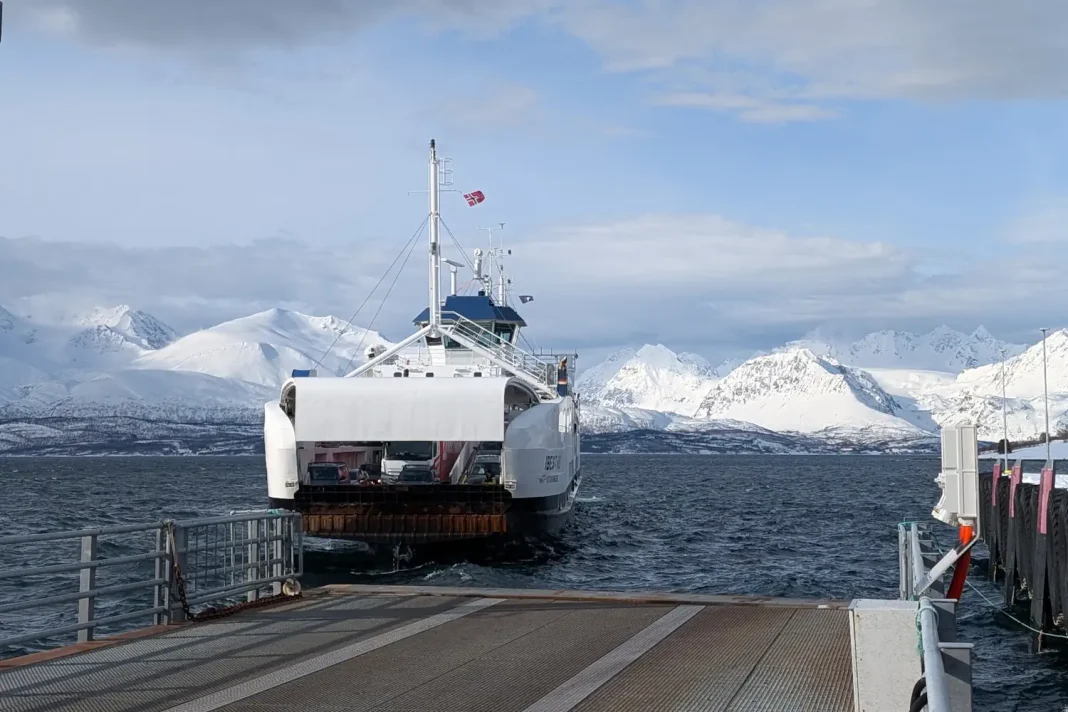
If you’re planning a road trip in Norway, you’ll inevitably take the ferry. In the land of the fjords, the ferry isn’t an attraction: it’s a stretch of road, it simply replaces the bridges. The highway ends at the water’s edge, you join the queue, you wait, you drive on, a boat carries you across, and the road picks up again on the other side. I’ve taken quite a few on my trips, from short fjord crossings to the longer links up north.
A ferry can last 10 minutes or 1 hour, depending on the fjord to cross. Because you’ve seen the coast, fjords absolutely everywhere, in every direction, and usually at the foot of mountains. So rather than making detours of tens of km (I once did one of 300km) or building bridges everywhere that would be really ugly, there are dozens of ferry lines. And it’s super handy.
Except that every time, before taking a new ferry, it’s the same questions: how do I pay for this one? Do I need to book? Are there ferries at night? How much does it cost? Am I going to get stranded if the boat is full? Because the rules are of course different depending on the region, the ferry, the operators. Otherwise it wouldn’t be any fun.
Good news: the Norwegian system is super simple… once you’ve understood it and set everything up. Because yes, the first time, paying nothing as you board and never running into anyone asking for a ticket is disconcerting. I’ll explain everything in this article. But just think of it as exactly like the electronic tolls back home.
Below, you’ll find a ferry search engine! Meaning: you want any ferry line and all its information, its schedules, the price, AutoPASS or not.. you enter the departure or the arrival and there you go! You get all the info you need! It’s over to you!

How do ferries work in Norway?
In Norway, road ferries are part of the public road network. When your GPS gives you a route, it includes the ferry crossings without even flagging them as anything special. On the major routes like the E39 between Bergen and Stavanger, or on the fjord roads, there’s no escaping them: the detour by road would take hours.
In practice, here’s how it goes in 95% of cases:
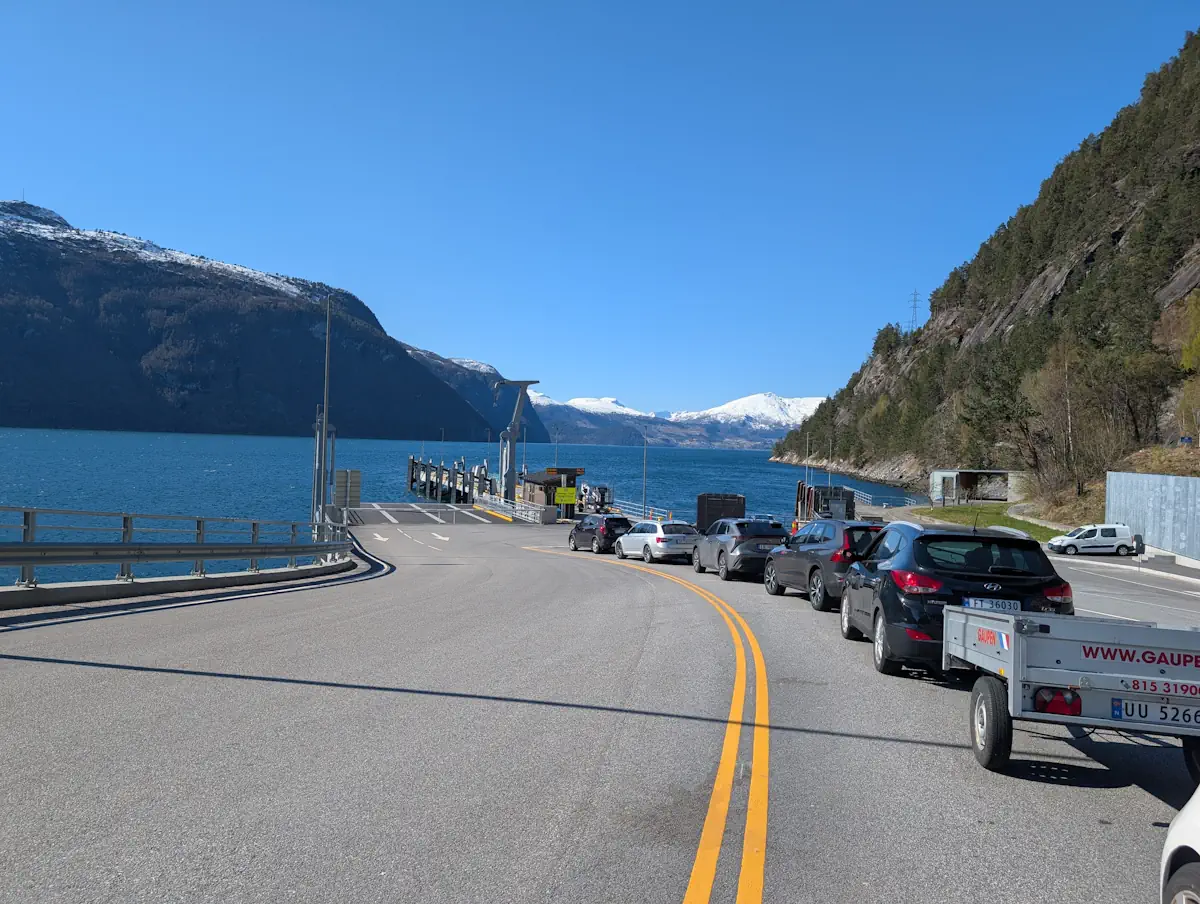
- You arrive at the ferry dock (ferjekai) and you join the queue, in the lane marked for your destination if there are several.
- You turn off the engine and you wait. No ticket booth, no barrier, no ticket to buy.
- The ferry docks, vehicles disembark, then a crew member waves you forward.
- At the ferry entrance, a camera (or an employee, depending on the region and the operator) reads your licence plate (or your AutoPASS tag). That’s your “ticket”.
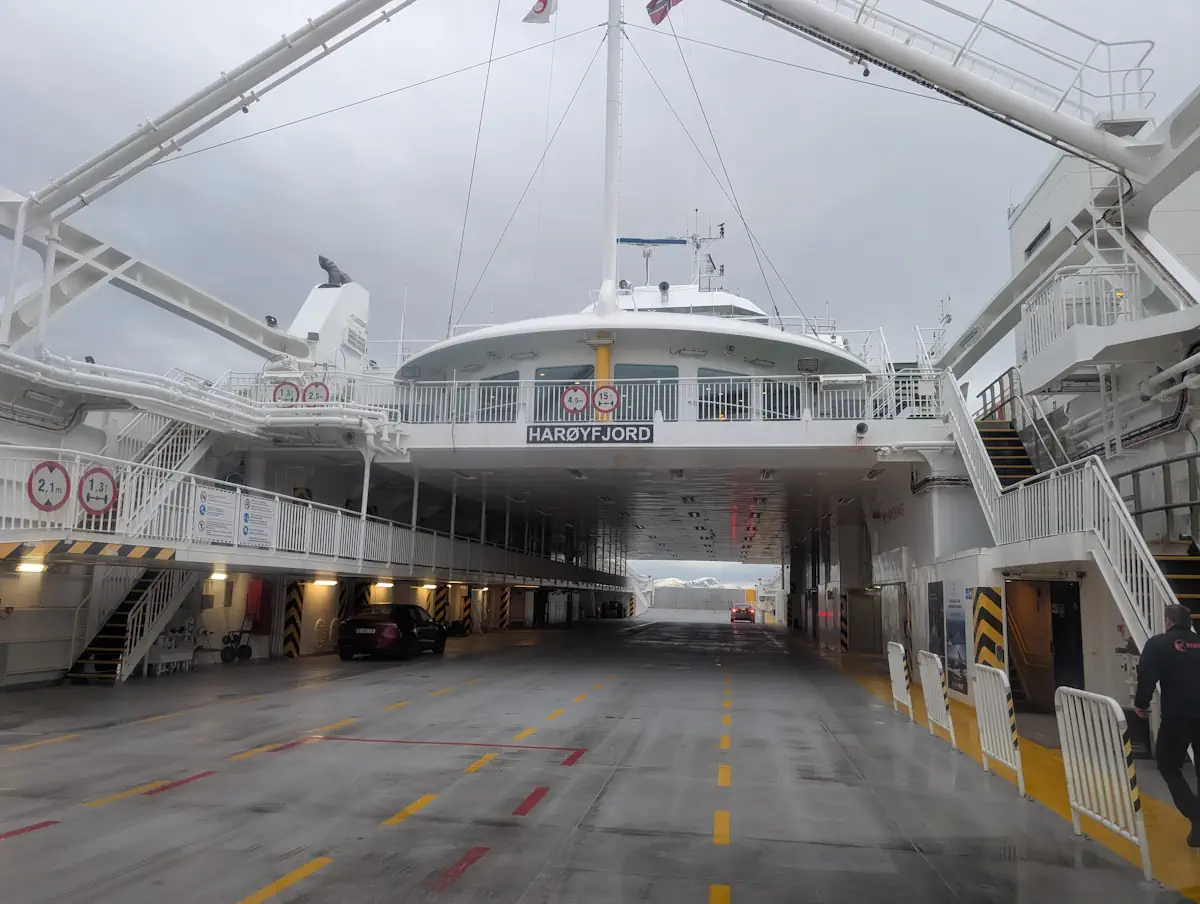
- During the crossing, you can stay in the car or go up to the lounge. Handbrake on, engine off. But do step out, because the views are always gorgeous!
- On arrival, you start up and get back on the road. Nobody asked you for anything.
The whole payment system is automated: it’s the same principle as the Norwegian tolls, which I explain in detail in this article: how to pay tolls and ferries in Norway with AutoPASS.
CAR RENTAL IN NORWAY
Roam around Norway by renting with Discover Cars

- Rent a car from many airports or in town
- Small model, SUV or electric for the adventure
- Car supplied with the AutoPASS tag
- Prices from €30
How do you pay for the ferry in Norway?
It’s THE big question, and the answer is simple: by default, you have nothing to do on board. The plate is read automatically as you board, and nobody will come and ask you for a ticket. The real question is what you do BEFORE (or after), and there are 4 possible scenarios. (And for those who prefer to pay on the spot, I’ll talk about it right after: it’s still possible on some lines, but not everywhere.)
Here are the different cases:
- some ferries require you to pay on the spot or in advance (Geiranger – Hellesylt for example)
- the vast majority of ferries are paid by bank card via plate reading (tag or not)
- you can pay for the Tromsø ferries by card as you board the boat
- if you don’t have a tag and pay nothing on boarding, you’ll receive the bill at home
Case 1: you’ve prepared absolutely nothing
In most cases, the camera reads your plate, and the vehicle owner receives a full-fare bill by post, with an extra 35 NOK invoicing fee. For foreign vehicles, it’s EPASS24 that handles the invoicing. It works, but it’s the least favourable case: full fare + fee + a bill that turns up weeks later at your home. And no, they don’t forget you, I’ve already received bills.
And this is the case for ferries as well as for tolls. Plate reading, tracking down the recipient, sending it out a few weeks later.
EXCEPT FOR:
- the ferry lines of the Svipper network in Tromsø: if you don’t have a registration or a tag, then you’re asked to pay (by card only) as you board the ferry
- some private lines, where paying on boarding (or even in advance) is mandatory
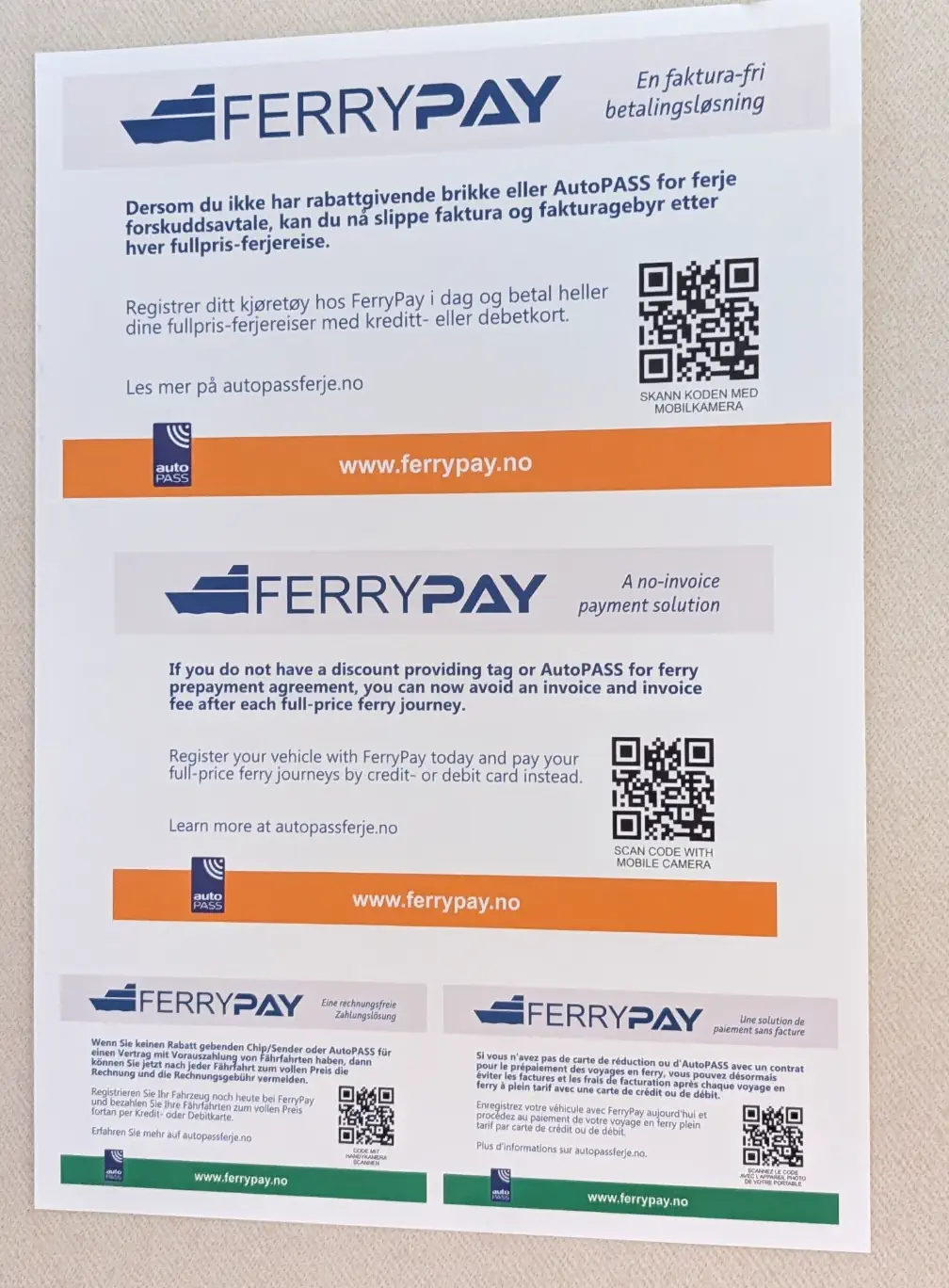
Case 2: you register your plate on FerryPay
FerryPay is the minimal solution I recommend if you only take a few ferries and don’t want any hassle: you register your plate (which is read at each crossing) and your bank card, and each crossing is debited automatically, with the receipt by email. No discount, but no invoicing fee either, and zero paperwork. Signing up takes 5 minutes.
FerryPay is one of the two plate-reading systems for the ferries. Except for a few private ferries, you won’t be asked to pay on the spot.
Case 3: you have an AutoPASS tag (without a ferry account)
If you’ve ordered an AutoPASS toll tag (Skyttelpass, Flyt, Brobizz…), you automatically get 10% off on the ferries of the AutoPASS network, charged to your tag contract. Nothing more to do.
Signing up with a tag provider is really useful if you roam around Norway quite a bit. Because it’s not only Norway, depending on the provider, and it also means monthly bills rather than paying each time.
Having one of these partner tags will also let you join AutopassFerje, if you want to benefit from the discounts. Of course, you can also join FerryPay, but there’s no discount there.

Case 4: You did everything right: tag + the AutoPASS ferje account, up to -50% off
This is the formula for heavy users, and it’s the ONLY one that gives real discounts. Watch out for the point that trips everyone up: the AutoPASS ferje account doesn’t work on its own. You absolutely must have an AutoPASS toll tag first. In order:
- Step 1: order a toll tag from an AutoPASS issuer (Skyttelpass, Flyt, Brobizz, ØresundPAY…). Allow 2 to 4 weeks for delivery, so plan well ahead of departure.
- Step 2: create a prepaid account on AutoPASS ferje and register your tag number there (the brikkenummer).
- Good to know: no need to wait to receive the physical tag! The number is usable 1 to 2 business days after ordering. I did it: signed up on AutoPASS ferje with the number received when ordering Skyttelpass, tag not yet delivered, and the discounts already applied. You can drive without the tag, everything applies.
- Step 3: pay the prepayment of 2,200 NOK (about €190) for a vehicle under 8 metres.
You then get 50% off on all your crossings (40% for business accounts): each ferry is deducted from the balance with the discount, and the remaining balance is refunded to you when the account is closed. Without the tag, no ferry account, and therefore no -50%: FerryPay on its own gives NO discount.
From about ten crossings or a long stay, the maths adds up fast. If you travel electric, the electric discount stacks on top. The whole tag-ordering procedure is in my article on AutoPASS.


And with a rental car?
Rental cars are already registered: the rental company receives the bill and charges you back for the crossings (full fare, without the discounts). So you have nothing to do. If you’re planning lots of ferries, note that you can register a rental car on AutoPASS ferje in your name for the duration of the rental, and get the discounts back.
Don’t forget to cancel the contract once you return the car, otherwise you’ll also be paying for the next customers!
Can you still pay on board?
It depends on the company, and it’s on the way out.
Cash has disappeared just about everywhere, but paying by card on board still exists, with rules that vary by company:
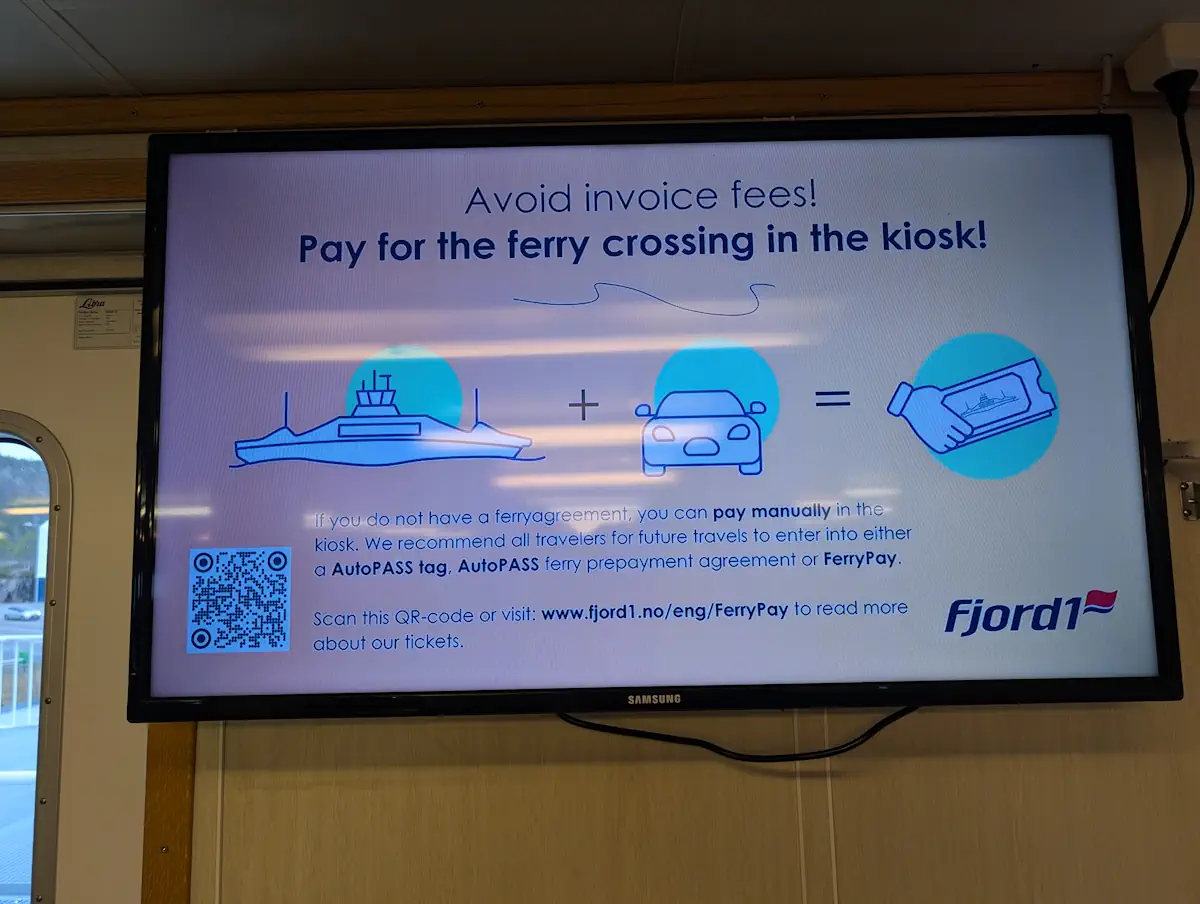
- On the Fjord1 lines (the fjord region in particular), you can pay by card at the kiosk or with the crew: it’s even displayed on board as a way to avoid the invoicing fees. For example Geiranger – Hellesylt, Kaupanger – Gudvangen, you pay on the quay (or on the website) by card.
- In Troms county (Svipper ferries), paying by card is possible only contactless. Careful: you pay the full fare (the electric-vehicle discount doesn’t apply), and it can delay boarding. Without a contactless card and without FerryPay… you don’t travel, that’s the official rule. Only if you haven’t registered your plate.
- if you have the tag or AutoPASS, then you pay via that, your car is recognised
In every case, no discount when paying on board, and you sometimes have to chase down a busy crew member. My recommendation stays the same: register your plate before departure (FerryPay at the very least), and you’ll be sorted on every line, whatever the company.
The lines OUTSIDE AutoPASS: where you need a real ticket
A few crossings escape the plate-reading system entirely. There, no camera and no bill: you need a ticket, bought online or on board.
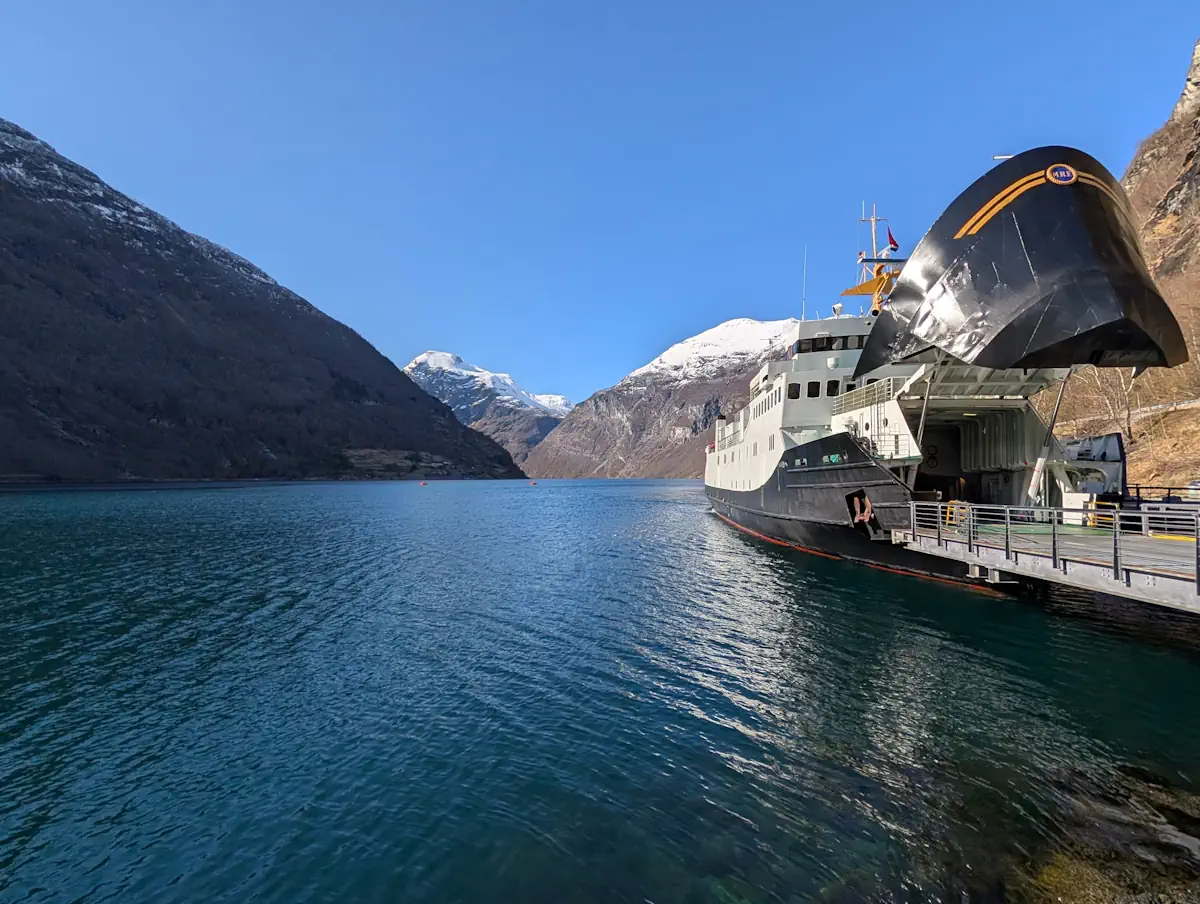
- Geiranger – Hellesylt: the tourist ferry of the Geirangerfjord. Ticket online, or directly from the crew member who walks between the vehicles on board. All the details here.
- Kaupanger – Gudvangen: the crossing of the Nærøyfjord with a vehicle, same principle, tickets online (booking advised in summer). You buy it here.
- The Lysefjord ferry (Lauvvik – Forsand – Lysebotn, seasonal): its own ticketing via Kolumbus, booking almost essential given the small capacity. More info here.
- Tourist cruises like Nærøyfjord or the fjord outings from Bergen: standard passenger tickets.
- Hurtigruten and Havila (the coastal express Bergen – Kirkenes): you can bring your car on certain routes, but only by reservation, through their own ticketing.
Two special cases, finally. Moss – Horten, the busiest ferry in the country, is run by a private operator (Bastø Fosen): plate reading and AutoPASS work there, but the prepaid-account discount is lower than the usual -50%.
And Bodø – Moskenes is a hybrid: in the standard queue, your plate is read and AutoPASS applies normally; but if you book your spot with Torghatten, you pay for the crossing online at the time of booking, like a classic ticket. Which I strongly recommend given how busy it gets in summer.
And passengers? And pedestrians?
Here’s the nice surprise: on road ferries, passengers pay nothing. The fare covers the vehicle and all its occupants. Pedestrians and cyclists travel free on most crossings. You only pay for the vehicle. Except on the Gryllefjord – Andenes line where pedestrians and passengers pay 100 NOK.
How much does a ferry cost in Norway?
The price depends on three things: the length of your vehicle, its engine and the length of the crossing. A few concrete benchmarks for 2026:
- Short fjord crossing (15-25 minutes, like Lavik-Oppedal on the E39): about 81 NOK (€7) for a car under 6 metres, passengers included. About 57 NOK electric, 33 NOK by motorbike.
- Medium crossing (30-45 minutes): reckon 100 to 250 NOK depending on the line.
- Long crossing like Bodø-Moskenes to the Lofoten (3h15-3h30): 605 NOK (about €52) for a car under 6 metres, 424 NOK electric.
A few rules to know:
- Motorhome: the fare climbs fast with length. Between 6 and 8 metres, reckon about double a car; over 8 metres, another step up.
- Trailer or caravan: the price is calculated on the total length. Car + trailer up to 10 metres = car fare x2; over 10 metres = x3.
- Electric vehicles: automatic discount on the AutoPASS-network ferries, stackable with the prepaid-account discount.
- Tourist ferries: careful, the “cruise” links like Geiranger-Hellesylt are not part of the AutoPASS system. Tickets to buy online or on the spot, and the prices are much higher (it’s the price of the view over the Geirangerfjord).
To estimate the exact price of your crossing, the official calculator is on autopassferje.no.
Do free ferries still exist in 2026?
Yes, but with a big 2026 change that directly concerns travellers. Let’s take it from the top.
Since July 2022, the Norwegian State has funded full free travel (vehicle included) on around sixty small lines: those with fewer than 100,000 passengers a year and the island services with no road link. Most are local services, but some are of interest to travellers:
- Svolvær – Skrova – Skutvik, the pretty summer shortcut between the Lofoten and the E6
- Festvåg – Misten, on the road to Kjerringøy north of Bodø
- Jektvik – Kilboghamn and Forøy – Ågskardet, on the magnificent coastal road Fv17 (Kystriksveien)
- Kinsarvik – Utne, in the Hardangerfjord
- Bodø – Værøy – Røst – Moskenes… EXCEPT the direct Bodø – Moskenes route, which stays paid (yes, it’s subtle: it’s the detours via the small islands of Værøy and Røst that are free)
The 2026 change: the “summer fare”. The scheme worked so well that it created queues and abuse, and the State even considered scrapping it entirely in the 2026 budget. The result: free travel survives, but three counties (Nordland, Møre og Romsdal, Trøndelag) have brought in a summer fare from May/June to the end of August. During that period, the “free” lines become paid again, and free travel only kicks in from the 5th to the 7th trip on the same line with the same vehicle. It’s designed for locals who commute: as a tourist taking the line just once or twice, you’ll pay for your crossing in summer.
The concrete case: the Svolvær – Skutvik ferry only runs from June to the end of August… right in the summer-fare window. Free on paper, but in practice, in 2026, expect to pay. Same logic on the Fv17 in summer.
Good news on the other hand over in Tromsø: Troms county has NOT introduced a summer fare. So its small free lines stay free all year, even in July-August — notably Hansnes – Karlsøy – Vannøy and Belvik – Vengsøy around Kvaløya, or Rotsund – Havnnes – Uløybukt towards the Lyngen Alps.
Worth knowing too: this summer fare pushes up the prices of some normally-paid lines (Eidsdal – Linge on the road to Geiranger, Flakk – Rørvik, Hareid – Sulesund…), and the list of free lines shifts every year, some having gone back to paid for good.
Outside the summer season, however, the lines on the list stay completely free. Before counting on free travel, a glance at the official list on autopassferje.no is a must. And in every case, remember: pedestrians and passengers never pay anything on road ferries.
Or else, simpler, you do like me. You take the ferry and you see on the bill whether it’s paid and how much it costs. Since it was too complicated, I just decided to stop paying attention 😀

Can you book a ferry in Norway?
In the vast majority of cases: no, and you don’t need to. Road ferries run without booking: first come, first aboard. If the ferry is full, you wait for the next one, which usually arrives 20 to 40 minutes later on the major routes.
It’s an issue for these two ferries:
- a little for the Tromsø – Senja ferry, in high season
- a lot for the Gryllefjord – Vesterålen ferry, because there aren’t many and it’s very popular. You have to arrive very early or the day before.
There are still a few exceptions to know about:
- Bodø-Moskenes (Lofoten): this is THE line where booking matters. Only part of the capacity is sold by reservation (the rest goes to the queue), via the Torghatten Nord website, with a supplement of 130 NOK per vehicle for the guaranteed spot. In summer, I strongly advise booking several days ahead. All the details in my dedicated article on the Bodø-Lofoten ferry.
- Tourist ferries like Geiranger-Hellesylt or the ferries on the Nærøyfjord (like Kaupanger – Gudvangen): standard online booking, highly recommended in high season.
My tip for summer on the busy lines: arrive 20 to 30 minutes before departure. On small off-season lines, arriving 10 minutes before is plenty. The Tromsø – Lyngen Alps ferry, from Friday afternoon onwards, arrive an hour early because it’s moving day for the locals.

What are the ferry schedules? Are there any at night?
No need to learn the schedules by heart: on the major routes, the ferries shuttle back and forth continuously, with 2 to 3 departures an hour during the day. On the secondary lines, reckon a departure every 30 minutes to 1 hour. In practice, during the day, you arrive at the dock and you take the next boat.
The things to watch:
- At night: most lines stop between 11pm and midnight and resume around 4:30-6am. Some major routes keep a few very spread-out night departures, but don’t count on them without checking. If you’re driving late, look at the last departure BEFORE planning your evening stop. On the night runs, what I got was boats that were fairly frequent until midnight and very spread out after that. But yes, all night or nearly.
- Sundays and public holidays: the ferries run every day of the year, but with reduced frequency on Sunday, early in the morning and late in the evening.
- Seasonal lines: some tourist or secondary links, like the ferry between Senja and Vesterålen, or the Kaupanger – Gudvangen, only run in summer. Check the opening dates if you travel off-season.
To check the schedules, one reflex: Entur (website entur.no and mobile app), the Norwegian national planner that brings together all the country’s public transport, ferries included, in real time. You enter your car journey, and the crossings appear with the next departures. The operators’ sites (Fjord1, Norled, Torghatten) also publish the schedule PDFs line by line.
Or else, you saw at the top you have a little widget that will give you all the information on every ferry route. Just select a route and there you go!
The main ferry lines for a road trip in Norway
Here are the lines you’re most likely to come across on a road trip, with the indicative daytime duration and frequency (high season). For today’s real-time schedules, always check on Entur.
| Line | Region / route | Duration | Frequency (daytime) | Good to know |
|---|---|---|---|---|
| Moss – Horten | Oslo Fjord (E18/E6) | 30 min | Every 30 min approx. | The busiest ferry in the country |
| Halhjem – Sandvikvåg | E39 Bergen – Stavanger | 45 min | 2-3 per hour | Major route, continuous shuttle |
| Mortavika – Arsvågen | E39 towards Stavanger | 25 min | 2-3 per hour | Major route, continuous shuttle |
| Lavik – Oppedal | E39, Sognefjord | 20 min | 2 per hour approx. | Typical Sognefjord crossing |
| Fodnes – Mannheller | Sognefjord (Lærdal) | 15 min | 2-3 per hour | On the road to Flåm and Sogndal |
| Hella – Vangsnes / Dragsvik | Sognefjord (Balestrand) | 15-30 min | 1-2 per hour | Triangular line with 3 docks |
| Eidsdal – Linge | Geiranger / Trollstigen road | 10 min | 2-3 per hour | A must on the way to Geiranger |
| Molde – Vestnes | E39, Romsdal | 35 min | 2 per hour approx. | On the Atlantic Road route |
| Flakk – Rørvik | Fosen peninsula (Trondheim) | 25 min | 1-2 per hour | Specific trailer pricing |
| Bognes – Skarberget | E6, Nordland | 25 min | 1 per hour approx. | My detailed article here |
| Bodø – Moskenes | Towards the Lofoten | 3h15-3h30 | 2 to 5 per day by season | Booking advised in summer, details here |
| Brensholmen – Botnhamn | Tromsø – Senja | 45 min | Seasonal (summer) | My detailed article here |
| Breivikeidet – Svensby | Tromsø – Lyngen Alps | 20 min | 1-2 per hour | My detailed article here |
| Geiranger – Hellesylt | Geirangerfjord | 1h-1h30 | Seasonal, 4-8 per day | Tourist ferry outside AutoPASS, details here |
The durations and frequencies are indicative: they vary by season and day of the week.
Who are the ferry operators in Norway?
The main operators are Fjord1, Norled, Torghatten, Boreal and Bastø Fosen (on Moss-Horten). Each line is awarded to an operator through a public tender.
But here’s the real thing to remember: as a traveller, the operator changes nothing for you. Payment goes through the same AutoPASS ferje system everywhere (except, once again, the tourist lines), the rules are the same, and the schedules of all the companies are gathered on Entur.
The only case where the operator matters: booking on the long crossings (like Torghatten Nord for Bodø-Moskenes) and the tourist ferries, which are booked on the company’s website.
Don’t confuse ferry and express boat (hurtigbåt)
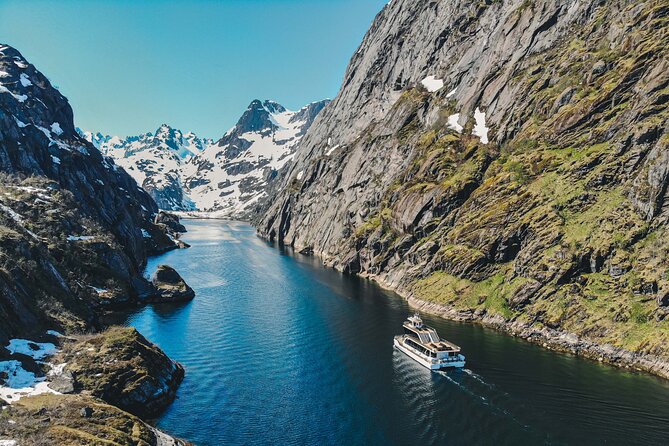
On Entur and on the maps, you’ll also come across “express boats” (hurtigbåt in Norwegian): fast boats that link the coastal towns, like Bodø – Svolvær, Tromsø – Finnsnes – Harstad, or Bergen – Flåm via the Sognefjord. Careful, it’s the opposite of road ferries:
- No vehicles: passengers (and bikes) only.
- Passengers pay, unlike the ferries where they travel free. And it’s not cheap on the long links.
- Standard tickets: no AutoPASS here, you buy your ticket via the county app (Reis Nordland, Svipper, Skyss, Kolumbus…), online or on board.
Very handy for getting around without a car, but don’t count on bringing your vehicle on them: for that, you need the ferries in this article.
My practical tips for taking the ferry in Norway
After quite a few crossings, here’s what I can advise you:
- Factor the ferries into your travel time. A 20-minute crossing is actually 40 to 50 minutes with the wait and the boarding. On an itinerary like my 2 weeks in the fjords, that adds up.
- Register your plate before you leave (FerryPay at the very least), you’ll avoid the invoicing fees and the nasty surprises months later.
- Go up on deck. Some crossings are free mini-cruises in the middle of the fjords: don’t stay in the car, especially in the Sognefjord.
- The cafeteria on board: on many lines, you’ll find coffee and a bite to eat. The svele break (thick Norwegian pancake) on a ferry is a local institution.
- Check the last evening departure if you’re sleeping on the other side of a fjord, and the roads closed in winter that can change your itinerary.
- Filling up with fuel: the isolated docks don’t always have a station nearby, plan ahead on the long legs.
The ferries to GET to Norway
So far we’ve talked about the ferries that are part of the Norwegian roads. But the ferry is also an excellent way to arrive in Norway with your own car: you load up the vehicle however you like, you avoid the long drive up through Sweden, and you arrive rested after a night in a cabin — a mini-cruise to open the road trip.
Here are the international links available:
- Kiel – Oslo (Color Line): from Germany, ~20h overnight — and you skip the whole drive up through Denmark. Info and booking
- Copenhagen – Oslo (Go Nordic Cruiseline, the former DFDS line): an overnight cruise of ~17-18h that drops you in the heart of Oslo. Info and booking
- Hirtshals – Kristiansand (Color Line or Fjord Line): the fastest, 2h25 by catamaran (March-October) or ~4h by classic ferry. Info and booking
- Hirtshals – Larvik (Color Line): ~4h, the line that gets you closest to Oslo. Info and booking
- Hirtshals – Langesund (Fjord Line): ~4h30, handy for the south-east and Telemark. Info and booking
- Hirtshals – Stavanger – Bergen (Fjord Line): the overnight crossing (~11h for Stavanger, ~17h for Bergen), ideal for starting straight with the western fjords. Info and booking
Unlike the domestic ferries, here you absolutely have to book ahead: cabins and car spots go fast in summer, and prices climb as the date approaches. You can compare schedules and book on Direct Ferries.
These crossings deserve a guide of their own — which line to choose depending on your starting point, cabin or seat, with a motorhome… A full article dedicated to the ferries to get to Norway is coming soon on the blog!

FAQ: your questions about ferries in Norway
Can you pay in cash or by card on board?
Cash is over just about everywhere. Paying by card on board is still possible with Fjord1 (kiosk or crew) and contactless only on the Troms ferries — but always at full fare, with no discount whatsoever. There’s no ticket booth on shore: don’t count on paying on board and register your plate instead. On the tourist ferries, on the other hand, it’s the opposite: either you buy your ticket online, or a crew member walks between the vehicles and you buy the ticket directly from them — that’s how it works on Geiranger – Hellesylt.
Do you have to stay in your car during the crossing?
You can stay in your vehicle on most short crossings, or go up to the lounge and onto the deck. Engine off and handbrake on in every case. But there’s always a cafeteria and the scenery is stunning, so I find it nicer to wait outside.
What happens if the ferry is full?
You stay in the queue and you board the next one. On the major routes, the extra wait is 20 to 40 minutes. It’s mainly on the long, infrequent links (the Lofoten first and foremost) that it can cost you half a day, which is why booking is worth it when it’s available.
Do the ferries run in winter?
Yes, the road ferries run all year, even in the north: they’re public roads. Only the tourist lines and a few secondary links are seasonal. In bad weather, occasional cancellations remain possible on the exposed crossings.
And with a motorhome or a motorbike?
The motorhome pays according to its total length (watch the bike rack, which can push you into a higher fare band). The motorbike pays a reduced fare, much cheaper than a car, and can be registered on AutoPASS ferje by plate photo, without a tag.
Are animals allowed?
Yes, your dog travels free. It can stay in the car or come with you in the outdoor areas depending on the rules displayed on board.

Conclusion
You’ll have gathered it: taking the ferry in Norway is astonishingly simple. You arrive, you board, the camera does the rest. The only real things to do: register your plate (FerryPay at the very least, AutoPASS ferje account if you’re racking up crossings), check the schedules on Entur for your evening stops, and book only on the long links like Bodø-Moskenes in summer.
The rest is pure pleasure: Norwegian ferries are often the finest breaks of the road trip. If you still have a question, ask me in the comments, I’ll be glad to answer!

More resources for your trip to Norway
PLANNING THE ROUTE
- Everything you need to know for your trip to Norway
- Paying tolls and tunnels in Norway with AutoPASS
- Speed limits and fines in Norway
- Roads closed in winter in Norway
- My 2-week itinerary in the fjords
- My 2-week itinerary in the north of Norway
THE FERRIES IN DETAIL
- The Bodø – Moskenes ferry (Lofoten)
- The ferry between Tromsø and Senja
- The ferry between Tromsø and the Lyngen Alps
- The Bognes – Skarberget ferry on the E6
- The Geiranger – Hellesylt ferry
THE FJORDS