Last updated on
So there you have it, you’re off to Tromsø in winter and you’d like to hire a car. Before you dive in, I’d like you to read these recommendations, because driving on snow and ice, driving in the sometimes extreme winter conditions, can be tricky. It can even turn into hell (a slightly chillier one, mind) especially if you’re not prepared for what might happen.
So heads up, I’m not being a doom-monger, in the vast majority of cases it goes really well. That said, you really do need to watch out for certain situations, especially if you have no experience of winter driving. I’ll explain all of it below, to prepare you mentally 😀 But above all so that your stay in Tromsø goes wonderfully!
Do you really need to drive to make the most of Tromsø?
Well, honestly it depends (otherwise it’d be too easy). Without a car you can perfectly well enjoy Tromsø, the activities, discover a few spots outside the city, take boat trips in the surrounding fjords. It’s absolutely not a problem.
That said, without a car you don’t really have any flexibility, and it’s mainly for exploring the surroundings that it becomes an issue, because there are very few buses that head out of the city (apart from those going to the towns opposite, like Tromsdalen or Kvaloysletta). Which means that by bus you can’t go and visit Grotfjord or spend a day at Sommarøy and come back. Apart from Ersfjordbotn, your only option for visiting the surroundings is to go through an agency.
If you’re coming here to do hikes, snowshoeing, quite a few self-guided outdoor activities, then you absolutely need a car. If you want to explore on your own, same thing. If you’ve got activities booked almost every day, then no, it’s not worth it 🙂 Unleeeess you want to go hunting the northern lights on your own every evening! So yes, hiring a car is useful in Tromsø, but not essential

The risk of an accident is far from zero, sorry.
I wanted to start like this because over the years, seeing more and more tourists arriving, many of them with no experience of driving in difficult conditions, there’s a growing number of accidents. Here’s what can happen:
-
- the silly accident: you don’t follow the red poles along the road. You think you’re pulling over onto the verge, except you sink into the snow. A real classic! Usually not dangerous at all.
- the very silly and dangerous accident: you don’t clear the snow off your car. It’s true that when there’s a lot of it, you can do funny things with it (a ridge, that kind of stuff). Except it’s ultra dangerous because it’s going to fall onto your windscreen, you’ll lose all visibility and since it comes in big blocks of ice, the wipers won’t do the job.
- the loss of control on ice: normal, it happens to everyone, especially with a lapse in attention and inexperience. That’s why you must always keep an eye on the road, because these zones can be anticipated. No sudden movements when crossing a slippery patch, no hard braking, no jerking the wheel to one side. Anticipate: when you see it, drive more slowly
- the lack of visibility because of the storm: here I’d say it’s your fault. Because if conditions are really bad, you shouldn’t be out. It’s genuinely dangerous. I’ve seen guides’ minibuses overturned, lorries and even a military vehicle. If you can’t see anything, if the snowfall is too heavy, don’t go out. I know it’s tempting to go and see the lights in Finland, but with no experience, don’t do it.
- the lapse in attention because of the scenery and the lights: it can happen even to the best of us! Looking off to the side (because it really is stunning), the car drifts and it can send you off the road. I’ve seen tourists in this situation.
- you’re parked like a slob: here I’m going to tell you off in advance. NEVER park on the road thinking “oh it’s fine, they can overtake while I take a photo”. More and more people do it, it’s ultra dangerous. There are little parking spots everywhere, use them. Even if you have to walk a bit, it’s better than stopping on the road. These past two years, it’s crazy how much more regularly this happens. And it’s genuinely dangerous.
Right, that doesn’t mean that if you hire a car you’re bound to crash, eh. The vast majority of the time, it goes really well, even for the uninitiated. This is really to prepare you for what might happen to you, and how to avoid it.

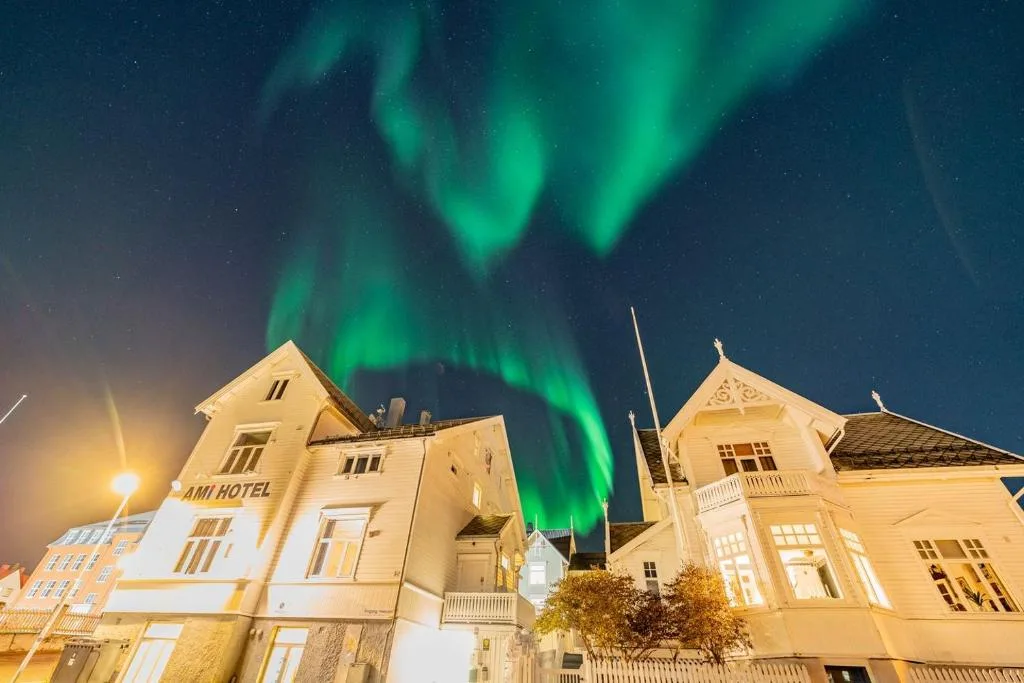
📍 Skolegata · Charming spot in the city centre (9.2/10)
A cosy, human-scale spot loved by backpackers, with rooms full of character, a shared kitchenette and unlimited hot drinks.
- Private or shared bathroom options (–35%)
- Self-service kitchen, tea and hot chocolate around the clock
- 15% discount on northern lights chasing tours
Free cancellation
From €70 per night

📍 Storgata · On the main pedestrian street (location 9.6/10)
Opened in early 2023 right in the pedestrian centre, this new aparthotel offers design apartments, a private gym and a bathroom with underfloor heating.
- From a 24 m² studio to a 50 m² two-bedroom with kitchen
- Free gym, laundry, lift and 24-hour security
- Right on Storgata, with a grocery shop next door
Free cancellation
From €100 per night
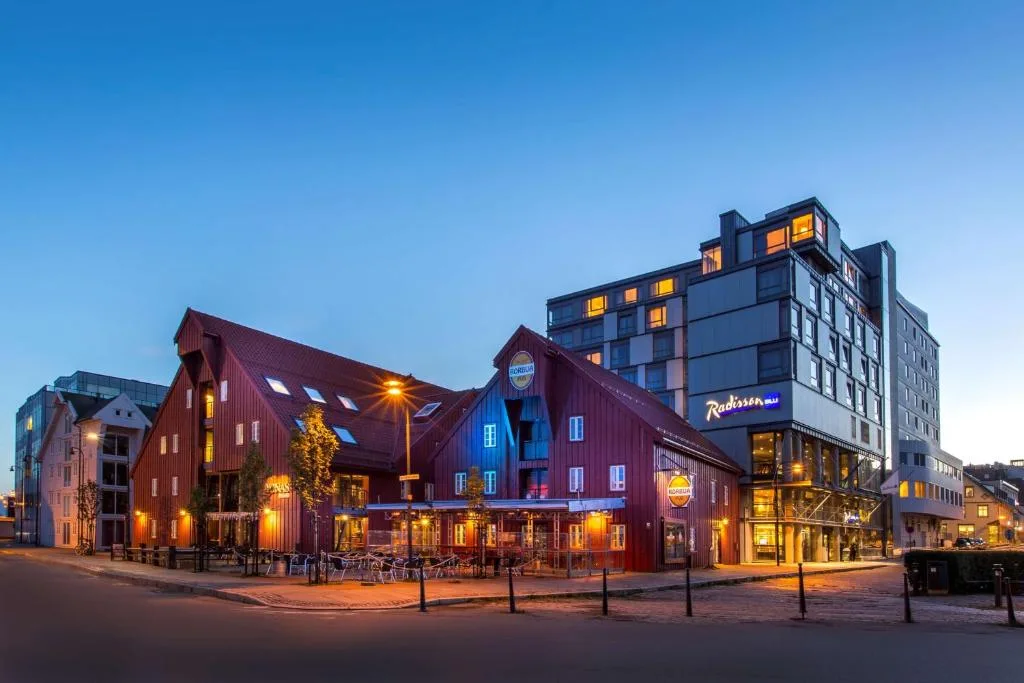
📍 Sjøgata · Waterfront (location 9.5/10)
The waterfront classic, with its gym and panoramic sauna on the 10th floor, plus the Rorbua pub buzzing with live music every night.
- Windows over the fjord or the Arctic Cathedral
- Free panoramic sauna right at the top (10th floor)
- Buffet breakfast rated 9/10 by travellers
Free cancellation
From €110 per night

📍 Skansegata · New waterfront district (9.5/10)
The new favourite, opened in 2024 in a brand-new waterfront district: stylish decor, a panoramic rooftop and a high-end wellness area.
- Clean-lined Scandinavian feel, rooms from 16 to 51 m²
- Rooftop Upper Dock Brasserie & Bar at the top
- Fitness and wellness area (surcharge) within the hotel
Free cancellation
From €130 per night
What weather should you expect in winter?
For starters, in Tromsø winter can begin as early as October. Meaning that the rather grim conditions of snow and ice can turn up early in the season. Often, early in the season, it snows without being too cold, so you mostly end up with a layer of snow. Little ice, which tends to arrive more in November.
But in winter, when it’s properly cold and well and truly settled in, here’s what awaits you (we’ll go into the resulting dangers just after):
- snow on the smaller roads
- the major roads too, but they’re cleared continuously
- under the snow there’s a thick layer of ice, the snow built up over weeks/months
- the wind that blows snow onto the road
- thaws (going from -10 to 6° all at once, with rain, and sudden melts)
- poor visibility at night
- big snowstorms that mean you sometimes can’t see anything at all
And this until April, sometimes early May. I’ve already had a lovely snowstorm on the national holiday 😀

What are the dangers waiting for you on Tromsø’s roads?
So just above I listed what’s going to be waiting for you in winter. And each case is a source of danger. Let’s look at it all in detail.
The amount of snow on the road
Well yes, winter in the far north means loads of snow. And let’s be honest, if you’re here in winter, it’s because you want that snow, just like me! The real magic of winter happens with heaps of snow 😀
Having loads of snow isn’t a danger in itself. Especially since the snowploughs come through often. If there’s a lot of fresh snow, then drive slowly. The climbs in Tromsø will be harder because you’ll spin your wheels. But a good amount of snow doesn’t stop you driving. You just risk sliding on the bends, not completely losing control. Hence the importance of driving slowly. But if you don’t feel comfortable, pull into a quiet spot, wait for the snowplough and go right after it!
That said, be careful not to deliberately drive into an area with a lot of snow, because your car will get stuck! And good luck getting out of there 😀 (that’s experience talking)

Fresh snow blown in by the wind
This one’s annoying and a touch dangerous. The snowploughs push the snow to the side of the road. And so on the side you get the snow that’s already fallen plus the snow from the road, which makes a good little pile, sometimes you get walls 2m high!
Anyway, this snow piled up on the sides is a nuisance because when it’s windy, it gets blown back onto the road. And worse, it’s dumped on the edge of the road, right where your right-hand wheels run. This snow isn’t spread out evenly and it’ll destabilise the car. When you see you’re about to drive through it, you can avoid it if it’s big, otherwise go through it but without accelerating or braking, nothing sudden, otherwise it’ll really destabilise the car.
But just watch out for this, it’s easily managed if you don’t do anything sudden. Just don’t go charging into it at full pelt!

Thaws and sudden temperature changes
Normally, in winter it’s cold and there’s loads of snow. Yes, but. For a few years now we’ve been seeing thaws crop up, that is, sudden rises in temperature. So in a single day you can go from -10 to 6/7° and it’s very problematic because:
- the snow melts very quickly with the rain, because yes, heavy rain comes with it
- and so very quickly all that’s left is the layer of ice that’s been there for months
- this layer of ice is very dangerous because there’s no longer the snow that kept you stable and stopped you sliding
- add all the meltwater on top of that ice and you’ve got a really dangerous cocktail
Generally this thaw lasts 36/48h. Then… it gets cold again.
Except the thaw has melted an enormous amount of snow and all that water freezes again very quickly! So it creates a fresh layer of ice.
In cases like these, honestly, don’t go out. Because this is what I consider the most dangerous. It’s a genuine ice rink, the buses stop running, studded tyres aren’t enough.
- Lastly, a thaw will also increase the risk of avalanches. So as soon as a thaw arrives or the temperatures suddenly go above zero (and worse, with rain), don’t go hiking in high-risk areas like the Lyngen Alps.
Snowstorms and poor visibility
Well yes, surely you didn’t think you’d come here without dealing with a snowstorm? And generally, it doesn’t mess about. A lot of snow falling in a short time, you’ll tell me that’s normal in Norway. You mustn’t take it lightly and I’d advise you not to go out to try and see the northern lights if that’s the case.
During these storms, visibility is more than reduced, it’s almost nil. You can barely see anything ahead, you can hardly make out the first red pole at the side.
These storms cause more and more accidents among tourists, particularly those wanting to see the lights at Kilpisjärvi (where the weather is generally better) and end up battling the grim weather to get there (or back). And quite honestly, if you have no experience of driving in these conditions, don’t go. Really.
Animals crossing the road without looking
Have you ever driven in Paris, with the e-scooters darting out from everywhere and crossing without looking? Well, this is a bit the same. Except you have to swap the Parisians for reindeer, elk, rabbits or foxes. And even stoats.
Some pose a risk, like the reindeer and the elk. Bear in mind that the reindeer is timid, so it’ll be on the road but will quickly move to the side. The trouble is driving fast and hitting them, because there are a lot of them and they wander around in groups.
With the elk, it’s mainly your car that’s at risk. The elk couldn’t care less. It’s on the road, it’s home, it’s not the least bit afraid so it won’t budge. And it’s a great big ball of muscle! They tend to be in small families, so if you see one, it’s not unusual to have 2/3 others nearby.
Rabbits aren’t very bright. They’re drawn to the headlights (clever things) and worse, they’ll stay on the road “ahhh where do I go? left? right?” so they run in front of you zigzagging. I’d say it’s the animal that poses the most risk. But for itself, because your car shouldn’t really feel it.
Where there are rabbits, there are foxes. And foxes have this knack of dashing across at the very last moment. It often works out, but sometimes not, unfortunately for these thrill-seekers.
The very good news is that you can come across these animals at the side of the road, all relaxed, and far enough away to be safe and within reach of your camera. Because they’re super cute.
But watch out for all these little creatures, work on the basis that, except on the biggest roads (and even then), a few animals might cross at any moment. And the worst is at night because you have less visibility.


What precautions absolutely must you take when driving around Tromsø?
ABSOLUTELY FOLLOW THE RED THINGAMAJIGS ALONG THE ROAD!
Yes I’m putting it in big letters because it’s ultra important. When you drive in Norway in winter, you have red poles along the road. These have two functions:
- marking out the road and the spaces where you can park when there’s too much snow
- letting you see where the road is in a snowstorm
When the snow melts or when it rains, all that water has to drain away, and that happens on the sides of the road. So on the sides there’s no ground, just all the accumulated snow. You can’t tell what’s underneath. The red poles therefore serve to mark out the road but also the parking spaces. It’s super important so you don’t park in a pile of snow you won’t be able to get out of. The “safe” pull-ins are clearly marked either by a snowplough pass or by the red poles.
In a snowstorm when visibility is really reduced, these red poles will save you. Thanks to them you know where the edge of the road is, and seeing the first pole is important and enough. Sometimes you can’t see 2 metres ahead, so you have to make do with that 😀 If that happens to you, then carefully follow the poles you can see on the right.

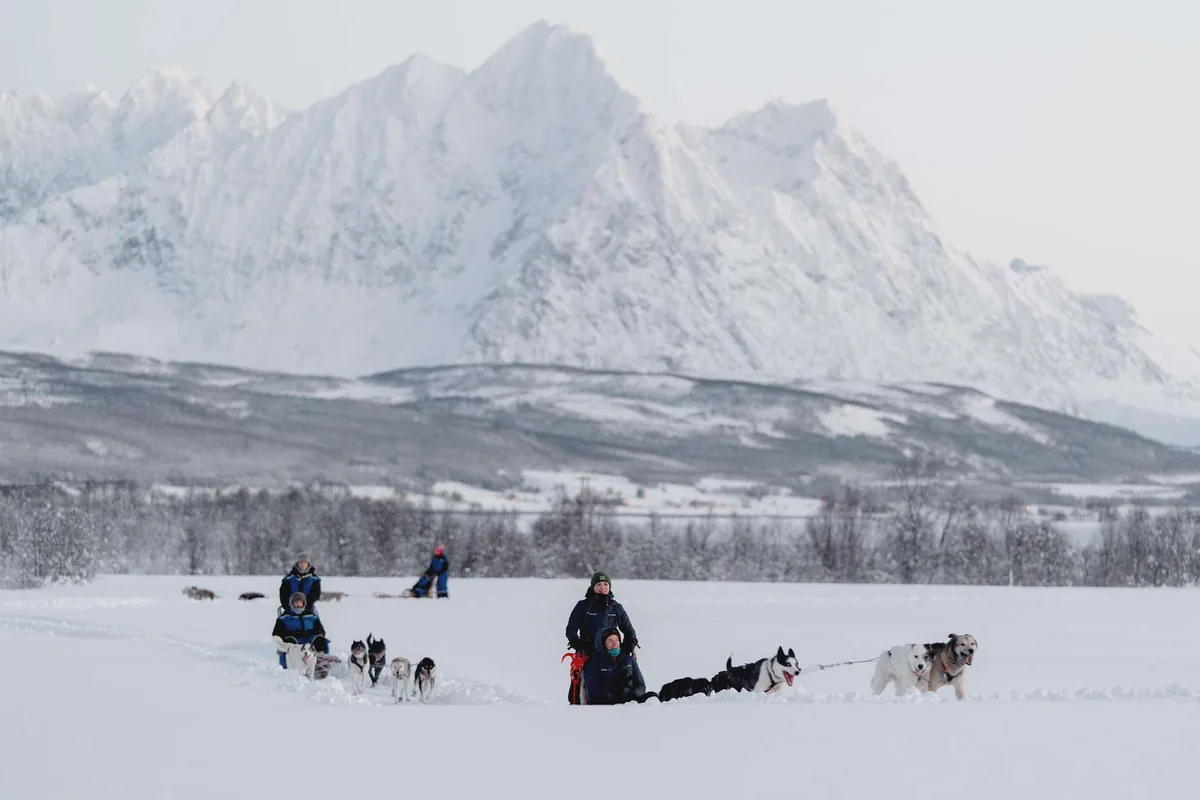
📍 Tromsø · Arctic Resorts (4 h 30)
Polar adventure driving your own dog sled through the Lyngen Alps, with breathtaking views over the Arctic wilderness.
- Self-drive sledding + swap halfway through
- Thermal suit + hot drinks and cake in the lavvu
- 50-min bus transfer Tromsø ↔ Breivikeidet camp
Free cancellation
From €266 per person
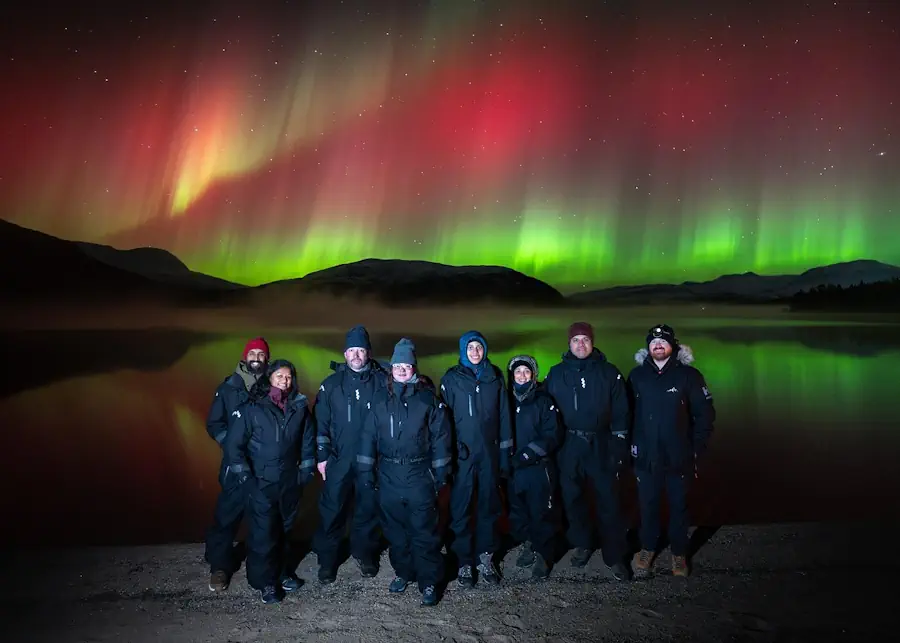
📍 Tromsø · Northbound Viator (6-10 h)
Aurora chase in a Mercedes 4x4 with a campfire, grilled hot dogs and a portrait under the northern lights taken by the photographer guides.
- Small group of max 8 pax in a heated Mercedes Vito 4x4
- Campfire + hot dogs + hot drinks included
- Portrait photo under the aurora + timelapse included
Free cancellation
From €245 per person

📍 Tromsø · Camp Troll (8 h 30)
Snowmobile safari at the foot of the Lyngen Alps over 2 h 30 of driving, with a safety briefing, legendary landscapes and a hot meal at the camp.
- 2 h 30 of snowmobiling in pairs (swap halfway through)
- Suit + helmet + bowl of local soup included
- Bus + ferry included from Prostneset Tromsø
Free cancellation
From €276 per person
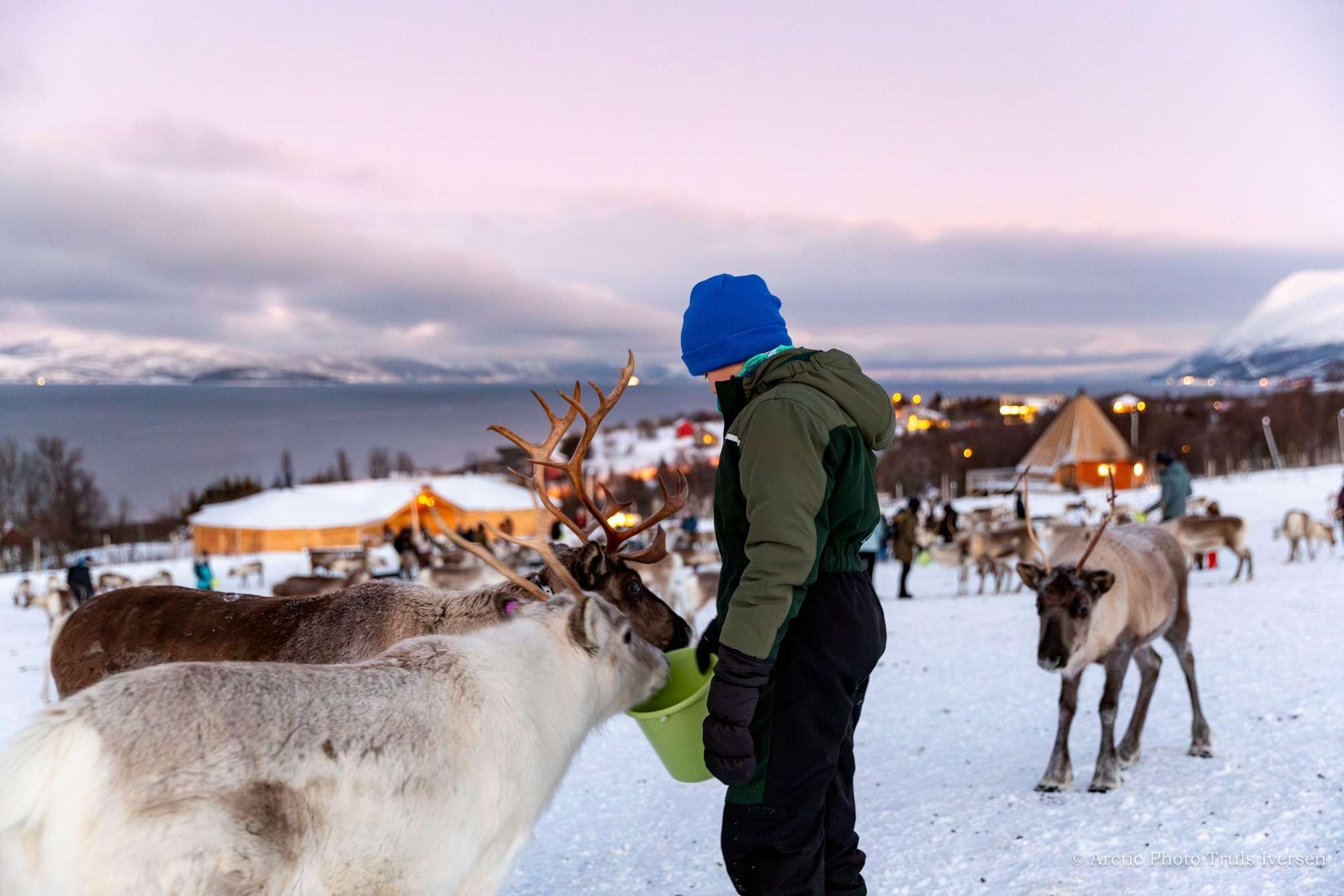
📍 Tromsø · Arctic Reindeer (4 h)
Meet a herd of 300 reindeer belonging to the Sami people, hand-feeding, a meal cooked over the fire and age-old stories.
- Hand-feed the 300 reindeer of the Sami ranch
- Sami lunch cooked over the fire + coffee / hot chocolate
- Tales + joik (Sami chant) around the campfire
Free cancellation
From €156 per person
When it comes to driving, here are the basic rules you need to follow so you don’t get the nasty surprise of losing control of the vehicle:
- keep bigger safety gaps: because on snow and ice, braking takes waaaay longer. So if you have to brake quickly (which happens a lot given the conditions and whatever crosses the road)
- no sudden moves, no abrupt braking, no big Fast and Furious-style turns, because you’ll be sure to lose control
- so you have to anticipate. Anticipate braking thanks to those big safety gaps, anticipate bends by not being distracted and always keeping an eye on the road.
- you have to respect the speed limits, even if they change all the time. First because they’re generally suited to the road and to driving on snow, but also because there are speed cameras that cost you an arm and a leg (experience talking here)
- if you ever find yourself driving slowly, the Norwegians won’t put any pressure on you. They’ll overtake when they get the chance, they won’t honk at you or flash their headlights. They’re cool about it. That said, what you can do if you see you’re holding someone up is pull over to the side and let the cars behind you pass, it’s always much appreciated. And for you, it takes away the pressure of “oh, I need to drive faster so I don’t hold them up”
- finally, if there’s a storm, don’t go out.

In Tromsø itself: the sloping streets and the crampons
Right, we’ve talked about the roads around Tromsø, but it’s in the town itself that it catches you out the most.
Tromsø is built on an island that climbs. You’ve got the centre by the water, and just behind it, residential streets that shoot straight up. When it’s frozen over, these little streets turn into slides. They are cleared, yes, but they get done after the main roads, and a nice steep hill with a sheet of ice underneath is unforgiving. Even with studded tyres and four-wheel drive.
So when it’s icy, don’t cut through the little streets. Stick to the main roads, even if it means a five-minute detour. And if you park on a slope, turn your wheels towards the kerb.
And then there’s walking. Because let’s be clear: in Tromsø in winter, everything is a death trap. Not just the streets that climb. The pavement in front of the hotel, the supermarket car park, the three metres between your car and the front door. Everything.
Buy some crampons. Seriously. You can find them everywhere in Tromsø, in sports shops as well as supermarkets, they don’t cost much, and they change absolutely everything. You’ll see, the locals wear them.
One detail so you’re not caught out, though: you take them off when going into shops, cafés and museums. First because on a smooth floor, crampons are a proper ice rink, you’ll slip far more than with normal soles. Then because they damage the flooring, and some businesses put up a notice about it at the entrance. Lots of places have a tray just inside the door to put them in.
Does it matter if you’ve already driven on snow?
Having driven on snow and ice, yes, it definitely helps. Is it essential? Not necessarily. I always say it’s just a matter of common sense and confidence.
No sudden moves, safety gaps, that sort of thing we saw earlier, it’s common sense, even if you don’t have any experience.
That said, yes, the first time you might be a bit apprehensive, and that’s normal. But there I’d advise you to take to the road on the main roads to practise a little and build your confidence. Like the big road heading south. It’s good for getting the hang of it.
If you don’t feel up to it, don’t force yourself, but give it a gentle go, nobody’s going to put any pressure on you.

Are the roads around Tromsø well maintained?
Yes! And it’s really great. Is it snowing? The snowploughs come out. Is there wind blowing snow onto the sides? Same thing. Are they forecasting a drop in temperatures? Then they’ll salt the main roads.
The few very big roads are resurfaced every few years to avoid potholes. They treat the road before the snowfall and cold so that it doesn’t stick. And when it snows, there are lots of snowploughs, all night long.
The smaller roads get salt and regular passes from the snowploughs.
Then again, they can’t work miracles. It’s much better than in Finnish Lapland, for example, but if it snows non-stop there will always be a good amount of snow on the road. It’s already happened to me to drive past a few minutes after the snowplough and have 10cm of snow, because of the wind pushing it onto the road.
So the state of the roads and their upkeep when it snows shouldn’t be what bothers you the most.


Can roads be closed because of the weather?
Yes, it happens. It’s not frequent, but it happens. Generally it’s because the avalanche risk is high (and I know a thing or two about that, I was stuck in my village for 4 days because of an avalanche on the only road 😀 ).
The roads that are often closed are the ones in the Lyngen Alps, the one that goes to Sommarøy, the one that goes to Rekvik.
To find out about the closed roads of Tromsø, use the Vegvesen website and the interactive map that shows closures, ongoing operations and reopening dates.
Right, while we’re at it, here are the four tools to add to your favourites before you even arrive:
- the Vegvesen trafikk app (iOS and Android), the mobile version of the map above: closures, roadworks and guided convoys in real time
- yr.no for the weather, the Norwegian national service. Far more reliable here than the usual weather apps. At 24h it’s solid, at 3 days in the mountains it’s fiction
- varsom.no for the avalanche risk, sector by sector, reassessed every day. Something to check systematically before going off to wander around the Lyngen Alps
- 175, the national traffic information number, if you’d rather have someone on the line
And one thing you don’t think about from France: to reach the Lyngen Alps, the road goes via the Breivikeidet – Svensby ferry. It runs all year round, allow 40 minutes’ drive from Tromsø to reach the pier and 104 NOK (around €9) for a car. The catch is that in bad weather some crossings get cancelled, and there’s no plan B: check before you set off, otherwise you’ll do 40 minutes of driving for nothing.


Driving at night in Tromsø: take double the care
If you’re driving at night in Tromsø, it’s either because you’re there during the polar night (and it’s dark at 2pm), or because you’ve set off to see the northern lights.
At night, you have to be even more careful than during the day because:
- animals come out more, since there are fewer cars they reclaim their territory a bit, particularly the moose
- the lack of visibility, which is even more pronounced at night (logically) when it’s snowing
- tiredness. The lack of light is exhausting here, especially during the day when it gets dark early and you feel like a nap. But the days are long because during the day you’re off exploring and at night you go to see the lights. So that’s a lot of activity, and at night you get all the more tired! Take some coffee, tea, that sort of thing for the journey back
Do you have to pay a toll to drive in Tromsø?
Yes. And you won’t even notice it.
Since January 2023, Tromsø has had its urban toll: 15 points spread across the island and its access routes, notably on the airport road and at the entrance to the tunnels. No barrier, no booth, nothing to do. A camera reads your number plate, that’s it.
The 2026 rates for a car under 3.5 tonnes:
- 14 NOK per pass (around €1.20), or 11.20 NOK if the vehicle has an AutoPASS contract
- 42 NOK at peak times (around €3.60), i.e. triple, Monday to Friday from 6.30am to 9am and from 3pm to 5pm
- 7.84 NOK for an electric vehicle off-peak
- no surcharge at weekends or on public holidays
Two rules that save the day: you only pay one pass per hour, even if you go through three points in a row, and it’s capped at 80 passes per month. So no, you’re not going to break the bank. Over a week of leaving the town during the day and chasing the lights in the evening, it stays at a few dozen kroner a day. It’s painless.
The real trap is elsewhere. Your rental car is registered in Norway: so it’s the rental company that receives the bill, and re-charges it to you after your return, usually with handling fees. You see the payment land on your card two to six weeks later. Nothing unusual, but it’s worth knowing before you cry scam.
And if you drive down to Norway with your own car, that’s another story: I explain the whole system in my article on tolls and the AutoPASS tag in Norway.

What type of car should you rent in Tromsø?
You should know that in winter ALL cars are properly equipped for winter, meaning they have studded tyres and most are AWD, so with four-wheel drive or a built-in snow mode.
But the choice of car will depend on how you use it. If you’re driving on the main roads, the roads of Kvaløya, the road south, going to Signaldalen, that sort of thing, you don’t need a big SUV, unless you need the room. But the engine of a standard car does the job perfectly. OK, maybe not a Volkswagen Up, but a Polo, a Golf for example. A Corolla is great because there’s lots of space.
Should you rent a hybrid? The plug-in ones are efficient but a hassle, because for it to be worthwhile you always have to recharge (and in winter, they discharge faster). But there’s a good chance you’ll get a Toyota (they really have a lot of them in the rental agencies) and honestly the hybrids are great, they use very little fuel.
So hybrids, yeah they’re useful because filling up is expensive.
Otherwise I had a lovely surprise with a diesel Skoda estate, it uses absolutely nothing!
Finally, for electric cars, it’s a real comfort because charging is cheap and there’s plenty of it. Except if you go to the really remote areas, that is. Watch out for the range in winter, you have to halve it. A Tesla will struggle to reach 300km.
Yes, here they have a lot of electric cars, but only for home-to-work trips. For long journeys, for chasing the lights, it’s hard to manage with this type of car because you have to recharge all the time.
- In the following article I tell you who to rent a car from in Tromsø and which type of vehicle in detail


CAR RENTAL IN NORWAY
Roam around Norway by renting with Discover Cars

- Rent a car from Bodø, Moskenes, Tromsø or Svolvær
- Small model, SUV or 4×4 for adventure
- Prices from €35
- Supplied with the Autopass pass
In the end, what are the pros and cons of driving in Tromsø?
As I was telling you in the introduction, you can absolutely visit Tromsø and its region without a car, that’s not a drawback. However, you won’t be able to go everywhere, you’ll have a lack of flexibility and it’s quite expensive to go through agencies.
Pros and cons of NOT having a car in Tromsø in winter
- + you take no risk on the road
- + and no stress if you’ve never driven
- + basically if you’ve got activities every day, it’s not necessarily useful unless you want to go chasing the lights on your own
- – you’re dependent on the agencies
- – there are very few buses to leave the town and reach the tourist spots
- – the agencies can cost a lot over time
- – you have little flexibility for your schedule, you follow the agencies (well, in itself that’s not bad because it’s really well organised)
Pros and cons of HAVING a car in Tromsø
- + you go where you want, when you want, that’s the huge advantage, the flexibility to visit the Tromsø region
- + it doesn’t stop you booking agencies for particular outings
- – you always have to be vigilant on the road
- – car rental prices can shoot up in the very high season
- – there’s the urban toll, painless per day but which will be re-charged to you by the rental company afterwards

Other resources and articles about Tromsø
To help you organise your stay in Tromsø well, I’ve written a lot about this destination. Here are the main articles that should interest you:
- How to organise your stay in Tromsø: in this article I tell you absolutely everything you need to know about Tromsø
- Where to stay in Tromsø: here’s a list of the best hotels, but also the budget options, good apartments and nice places to stay outside the town
- A one-week itinerary in Tromsø: discover the best of Tromsø in winter, between the places to see and the must-do activities
- All the activities to do in Tromsø: in summer as in winter, there are incredible activities to do, discover them and all the providers!
- What to do in Tromsø in winter: discover the nicest activities to do in the snow!
- Seeing the northern lights with a guide in Tromsø: here are the best agencies to see the northern lights in the Troms region
- The 10 best places to see the northern lights in Tromsø: a list of easy-to-reach places to see the lights
- Why rent a car in Tromsø: is it really useful, who to rent from
- Driving around Tromsø in summer – the open roads and green landscapes of the warm season