Last updated on
Driving to Norway in your own car is the dream of many road-trippers: loading the boot to the brim (camping gear, bikes, drone and puffer jackets) and waking up in the land of the fjords. And for that, there’s one solution I love to recommend: the ferry.
Seven international lines serve Norway from Germany, Denmark and Sweden. Some are proper overnight mini-cruises with a cabin, others quick 2-to-4-hour shuttles. And the line you pick matters a lot for your road trip: arriving in Oslo, in Kristiansand or straight into Bergen — these are not at all the same trip.
In this article, I’ll explain which line to choose depending on your starting point and your itinerary, how much it costs, how to book and how far ahead — in both directions, because the ferry is also the smart way to head home. It’s the perfect companion to my guide to Norway’s domestic ferries, worth a read for the rest of the road trip.
Which ferry line should you choose for Norway?
Here’s the overview of the 7 international lines in 2026. Simple rule: the further west you want to arrive (the fjords), the more the Fjord Line service to Stavanger/Bergen makes sense; the more you’re aiming for Oslo and the east, the more Kiel, Copenhagen or Larvik fit the bill.
| Line | Company | Duration | Type | Ideal for |
|---|---|---|---|---|
| Kiel – Oslo | Color Line | ~20h | Overnight, cabin required | Skipping the whole Scandinavian drive |
| Copenhagen – Oslo | Go Nordic Cruiseline | ~17h | Overnight, cabin | Doing two capitals back to back |
| Hirtshals – Kristiansand | Color Line / Fjord Line | 2h25 à 4h | Daytime, fast | The express gateway to the south |
| Hirtshals – Larvik | Color Line | ~4h | Daytime, fast | Getting close to Oslo without a night on board |
| Hirtshals – Langesund | Fjord Line | ~4h30 | Daytime | The south-east and Telemark |
| Hirtshals – Stavanger – Bergen | Fjord Line | ~11h / ~17h | Overnight, cabin | Starting straight with the fjords |
| Strömstad – Sandefjord | Color Line | 2h30 | Daytime, budget | Those coming up through Sweden |
In the little search box below, you can look up all the ferries to get to Norway — dates, times, prices — to save time and get the info you need.
Why come to Norway by ferry?
Because it’s often THE smartest option when you’re bringing a vehicle. Concretely:
- You save hundreds of kilometres of driving. By road from France, Belgium or Switzerland, reaching Oslo means crossing Germany, Denmark AND then driving up through Sweden: reckon on 1,700 to 1,900 km from Paris. By boarding at Kiel or in Denmark, you cut out the whole Scandinavian stretch. Case in point: when we came back from Norway last April, taking Larvik – Hirtshals saved us a huge amount of driving compared with going from Oslo all the way to Malmö to cross the Øresund Bridge. But… I hadn’t thought of it. Which is pretty daft.
- You save on the Scandinavian bridges. The route through Sweden goes over the Storebælt bridge and then the Øresund: nearly €100 in tolls all in for a car, each way. The ferry avoids them completely.
- The night on board replaces a hotel night. On the overnight lines (Kiel, Copenhagen, Bergen), you board in the evening, have dinner, sleep in a cabin and step off fresh in the morning. A hotel stop plus a day of driving saved in one go.
- Your car goes loaded exactly how YOU want it. No baggage limit — the camera gear, the tent, the bikes, the cool box: it all comes along. That’s the huge advantage over flying + hiring, especially given the car-hire prices in Norway.
- It’s the start of the holiday. Norwegian buffet, open deck, arriving through the Oslo fjord at sunrise… honestly, it has a bit more class than a Danish motorway services.
- And because boats are just great!

From Germany: Kiel – Oslo, the mini-cruise
It’s the legendary line, run every day by the enormous Color Fantasy and Color Magic (departure 2pm, arrival the next day around 10am). The advantage is obvious: you board in Germany, 900 km from Paris or 600 km from Brussels, and you spare yourself the WHOLE drive up through Denmark and Sweden — roughly 7 hours of driving saved compared with going via Hirtshals-Larvik, and the bridge tolls gone too.
On board, it’s a genuine cruise ship: restaurants, spa, pool, kids’ area, and the arrival through the Oslo fjord is stunning. The cabin is compulsory (they’re all above the car deck), which explains the higher price than the other lines — but you save a hotel night and a full day of driving.
Duration: ~20h, daily in both directions. Indicative budget: reckon on €350 to €700 one way for a car + 2 people in an inside cabin, depending on the season.
- Ships: Color Fantasy and Color Magic (Color Line) — among the largest cruise ferries in the world: restaurants, spa, pool, kids’ area, duty free.
- Departures: every day at 2.00pm, from Kiel and from Oslo. Arrival the next day around 10am.
- Duration: about 20h, cabin compulsory (they’re all above the car deck).
- Indicative prices: €350 to €700 one way for a car + 2 people in an inside cabin depending on the season; foot passenger + cabin from ~€130.
- My tip: get an outside cabin on the starboard side on the way over — the early-morning entry into the Oslo fjord is worth the early wake-up.

From Denmark: the main gateway
It’s the hub for ferries to Norway: five lines, four of them leaving from Hirtshals, right at the top of Jutland (easy to reach on a nice motorway). The general idea: you drive up to Denmark, and the ferry spares you the big detour through Sweden.
Hirtshals – Kristiansand: the fastest
The shortest crossing to Norway, and the busiest: by fast catamaran (2h25, from March to October) or classic ferry (~4h), with several departures a day between Color Line and Fjord Line. It’s the ideal way in to explore the south (Kristiansand, the Sørlandet coast) or head to Stavanger and the Lysefjord along the coastal road. Very popular in summer: book early.
- Ships: SuperSpeed 1 (Color Line, fast ferry all year round) and the FSTR catamaran (Fjord Line, from March to October).
- Frequency: 2 to 3 departures a day each way with Color Line, plus the catamaran rotations in season — the best-served line to Norway.
- Duration: 3h15 on SuperSpeed, 2h15-2h25 by catamaran.
- Indicative prices: car + 2 people from ~€80 off season, €150 to €250 at the height of summer; foot passenger from ~€20.
- My tip: no cabins here, but comfortable lounges; turn up 1h before departure, boarding is an absolute anthill in July.
Hirtshals – Larvik: the closest to Oslo
About 4h crossing, 2 departures a day, and you step off just 1h45 from Oslo by road. It’s the best compromise if you’re aiming for the capital and the east of the country without wanting a night on board: leaving early in the morning, you can be sleeping in Norway that same evening.
- Ship: SuperSpeed 2 (Color Line), twin of the Kristiansand one.
- Departures: 2 a day each way, all year round — typically one in the morning and one late in the day.
- Duration: 3h45, then 1h45 by road to Oslo on arrival.
- Indicative prices: same ballpark as Kristiansand: from ~€80 for a car + 2 off season, €150-250 in summer.
- My tip: with the morning departure from Hirtshals, you set off the day before, sleep in Denmark, and have dinner in Norway the following evening.
Hirtshals – Langesund: the quiet alternative
~4h30 with Fjord Line, and an arrival between Kristiansand and Oslo, perfect for the south-east and for heading to Telemark, one of the most underrated regions in the country.
- Ship: MS Oslofjord (Fjord Line).
- Departures: 1 to 2 a day each way, all year round.
- Duration: about 4h30, arriving between Kristiansand and Oslo (2h by road from the capital).
- Indicative prices: often a notch below the Color Line services on comparable dates — the quiet bargain.
- My tip: the ideal arrival for heading straight to Telemark and its underrated landscapes, without going through Oslo.

Hirtshals – Stavanger – Bergen: straight to the fjords
MY favourite on paper for a fjords road trip: an overnight crossing that drops you in Stavanger at dawn (~11h at sea) or in Bergen in the early afternoon (~17h). You start your fjords itinerary right there on the spot, without swallowing the 450 km of road (and the many domestic ferries) between Oslo and Bergen.
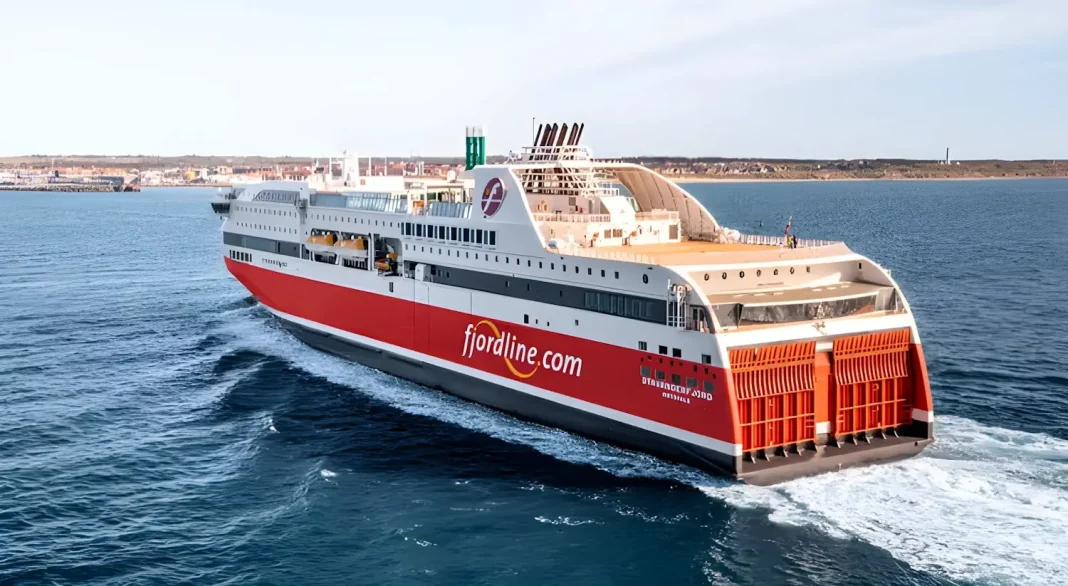
- Ships: MS Stavangerfjord and MS Bergensfjord (Fjord Line), which run on liquefied natural gas.
- Departures: one overnight departure daily — Hirtshals around 7.15pm, arriving Stavanger around 7.00am, Bergen around 1.00pm; on the way back, departure from Bergen in the early afternoon via Stavanger in the evening.
- Duration: ~11h to Stavanger, ~17h to Bergen. A cabin is strongly recommended.
- Indicative prices: €250 to €500 one way for a car + 2 people with a cabin, depending on the season.
- My tip: stepping off in Stavanger at daybreak and starting with the Lysefjord and Preikestolen is the best possible way to kick off a fjords road trip.

Copenhagen – Oslo: two capitals, one cruise
The former DFDS line, taken over in late 2024 under the name Go Nordic Cruiseline, still runs every day: board in the evening in Copenhagen, ~17h at sea, arrive in the heart of Oslo the next day. Perfect for combining a city break in Copenhagen with Norway, or if you’re arriving via the east of Denmark. The car goes on board without any trouble.
- Ships: Pearl Seaways and Crown Seaways (Go Nordic Cruiseline, which took over the historic DFDS line in late 2024).
- Departures: every day at 4.30pm, from Copenhagen and from Oslo. Arrival the next day around 10am.
- Duration: about 17h of overnight cruising, cabin included in the fare.
- Indicative prices: €250 to €450 one way for a car + 2 people in a cabin; keep an eye on their offers, deals are frequent outside summer.
- My tip: the perfect formula for doing two capitals back to back — a day in Copenhagen, boarding at 4.30pm, waking up in the Oslo fjord.
From Sweden: Strömstad – Sandefjord, the clever line
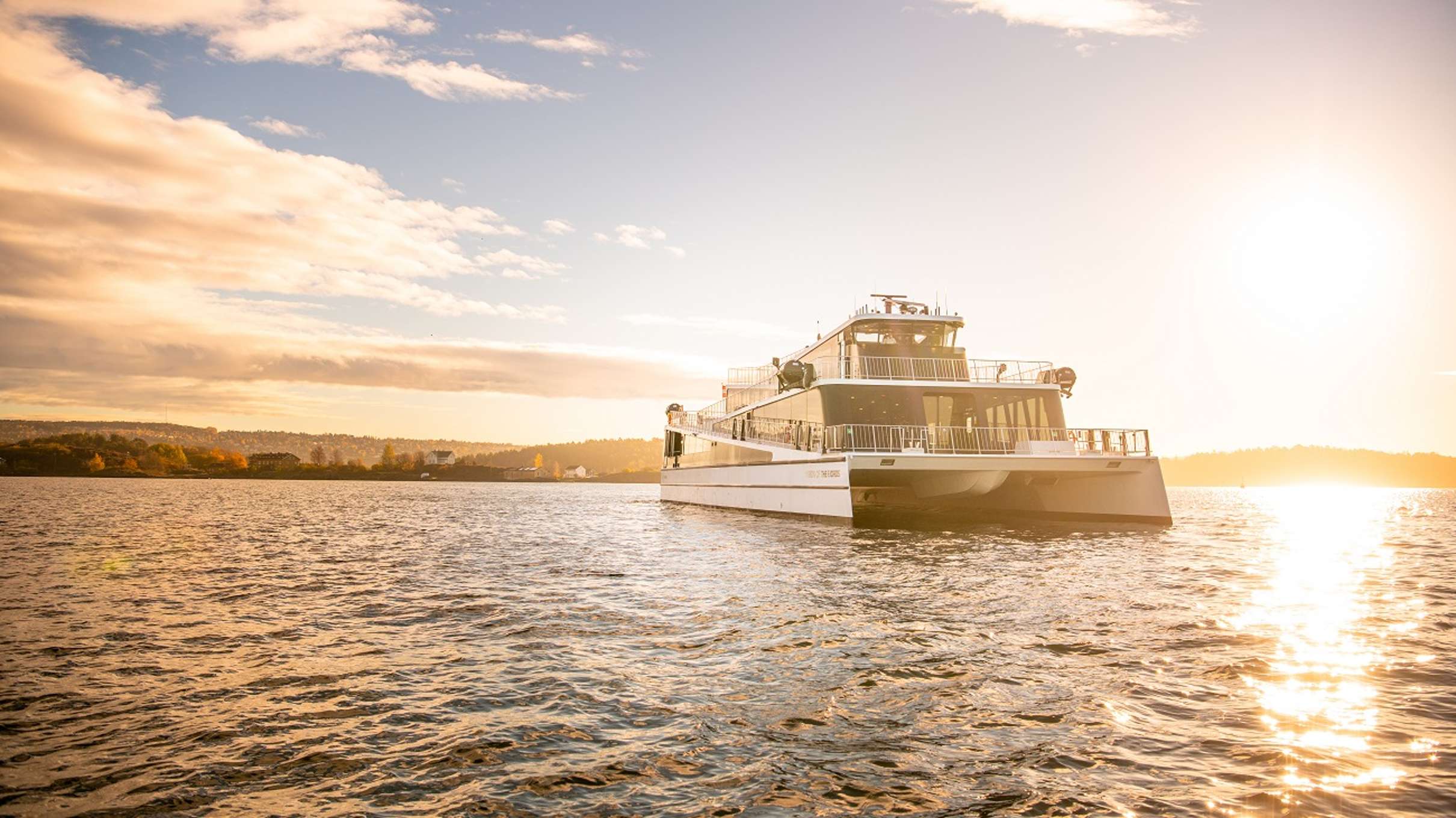
Less well known to international travellers, this Color Line service (2h30, 2 departures a day) links the west coast of Sweden to the Oslo fjord. It’s worth it in one specific case: if you’re heading up through Sweden anyway (via Gothenburg), it takes you across to Sandefjord for cheap — it’s the cheapest line to Norway — and saves you the detour via Oslo to come back down towards Larvik and the south coast. Norwegians use it in droves to do their shopping in Sweden, local vibe guaranteed.
- Ship: Color Hybrid (Color Line) — the world’s largest plug-in hybrid ferry when it entered service.
- Departures: 2 a day each way all year round (from Sandefjord around 10am and 5pm, returns from Strömstad in the morning and late afternoon).
- Duration: 2h30 of quiet crossing among the islands.
- Indicative prices: the cheapest line to Norway — car + 2 people often under €100, foot passenger for a few euros in a deal.
- My tip: you’ll mostly rub shoulders with Norwegians off to do their shopping in Sweden — local vibe guaranteed, and the duty free stormed on the way back.
How much does the ferry to Norway cost?
Prices are dynamic, like flights: the same crossing can vary threefold depending on the season, how full the sailing is and how far ahead you book. A few benchmarks for a car with 2 people, one way:
- Strömstad – Sandefjord: the cheapest, often under €100
- Hirtshals – Kristiansand / Larvik / Langesund: €100 to €250 depending on season and time
- Hirtshals – Stavanger – Bergen: €250 to €500 with a cabin
- Copenhagen – Oslo: €250 to €450 with a cabin
- Kiel – Oslo: €350 to €700 with a cabin (the priciest, but you’re paying for the cruise and the night)
What makes the bill move:
- The season: July-August is the absolute peak; June and September are noticeably gentler.
- The length of the vehicle: beyond 6 metres (motorhomes, trailers), the fare climbs sharply — exactly like on the Norwegian domestic ferries.
- The cabin: compulsory on Kiel-Oslo, strongly recommended on the other overnight lines. Outside cabins cost more than inside ones.
- The round trip: booking the outbound and return together often gets you around 10% off the return.
- How far ahead you book: the earlier you book, the cheaper it is, plain and simple.
How to book, and how far in advance?
Unlike the Norwegian domestic ferries where you board without a ticket, here booking is essential: car spaces and cabins go fast, and prices rise as the date gets closer.
My practical tips:
- For a July-August departure: book 2 to 3 months ahead, especially for the overnight lines with a cabin (Kiel – Oslo and Hirtshals – Bergen are the most in demand) and if you’re travelling in a motorhome.
- For the short crossings from Hirtshals: around 6 weeks ahead generally gets the best prices.
- Off season: you can book at the last minute without worry, the ships are far from full.
- Compare before you book: the timetables and prices of the different companies are easy to compare on Direct Ferries, which brings together all the lines to Norway.
When booking, have ready: your vehicle’s dimensions (length AND height, be honest, it’s checked at the gantry), the number of passengers, and your cabin preferences. Boarding usually closes 30 to 60 minutes before departure: turn up 1h to 1h30 early in summer.

And getting back from Norway? The loop trick
All these lines obviously run in both directions, and that’s where there’s a real play to make: nothing forces you to go home the way you came.
The trick I recommend for a road trip in southern Norway: draw a loop with two different lines. For example:
- Arrive in Kristiansand → work up the west coast (Stavanger, Preikestolen, the fjords) → return from Bergen: you never drive the same road twice, and you spare yourself the Bergen-Kristiansand return (450 km of fjord roads, gorgeous but slow).
- Arrive in Oslo via Kiel → grand tour of the fjords → return Bergen – Hirtshals: ideal from Germany or eastern France.
- The other way round, start with the fjords (arriving in Bergen) and finish gently in Oslo before a return via Kiel or Larvik.
The companies sell these combinations without any trouble (they’re just two one-way tickets), and Direct Ferries lets you mix companies. The only thing to watch: one-way tickets are a little pricier per kilometre than round trips on the same line — but the kilometres and time saved, plus the scenery, more than make up for it.

FAQ: your questions about the ferry to Norway
Is there a direct ferry from France, Belgium or the Netherlands?
No, there’s no direct line. The simplest option from France or the Benelux: drive up to Kiel (Germany) or Hirtshals (Denmark), then hop on board. Hirtshals is about 1,300 km from Paris by motorway, Kiel 900 km.
And from England?
The legendary Newcastle – Bergen line hasn’t existed since 2008. From the UK, you have to cross over to the Netherlands (Newcastle – Amsterdam, for example) and then drive up to Denmark.
Are motorhomes and trailers allowed?
Yes, on every line. The price depends on the length (and sometimes the height) of the vehicle: declare the exact dimensions when you book. In summer, the large-vehicle slots go first, so book even earlier.
What about electric cars?
Normally accepted on all these international lines (unlike the Havila coastal express, which turns them down). There’s no charging on board, so plan to arrive at the port with enough battery to drive off again.
Can you travel with your dog?
Yes, the companies offer pet cabins or kennels on board (book ahead, spots are limited). Also check the entry requirements for animals in Norway, in particular the mandatory anti-parasite treatment before arrival.
Can you board on foot or by bike?
Yes, all these lines take foot passengers and bikes, at very reasonable rates (from around twenty euros on the short crossings). Handy for combining with the Norwegian train afterwards.
Does my AutoPASS or FerryPay tag work on these lines?
No. The international lines use standard ticketing, outside the AutoPASS system of the Norwegian domestic ferries. That said, as soon as you’re driving in Norway, registering your number plate becomes the thing to sort out again: it’s all explained in my article on AutoPASS.
Do the ferries run all year round?
Yes, all these lines run year-round (only the fast Kristiansand catamaran is seasonal, from March to October). The North Sea can get rough in winter: if you’re prone to seasickness, go for a cabin in the middle of the ship and keep an eye on the forecast.
Conclusion
The ferry to Norway is far more than a means of transport: it’s a day of driving cut out, a hotel night saved, a car loaded however you like and an arrival that puts you straight in the mood. Remember the logic: Kiel or Copenhagen for Oslo and the east, Hirtshals for the south and the fjords, Strömstad if you’re coming through Sweden — and think about the loop with two different lines so you never drive the same road twice.
Book early (2-3 months before for summer), compare the lines on Direct Ferries, and once you’re there, my guide to the domestic ferries takes over for navigating between the fjords. Safe travels, and keep an eye on the deck as you arrive: the entry into the Oslo fjord or into Bergen harbour is postcard stuff already!
More resources for your trip to Norway
PLANNING THE ROAD TRIP
- Taking ferries WITHIN Norway: payment, timetables, booking
- Paying tolls and ferries in Norway with AutoPASS
- Speed limits and fines in Norway
- Roads closed in winter
- My 2-week itinerary in the fjords
THE ARRIVAL STOPS