Last updated on
Cusco, my big crush during my first trip to Peru. Before coming, I figured I was going to love it. I have to say, all my criteria were met: a city that breathes History, an omnipresent Inca culture (and not just for tourists), in the mountains, dozens of activities to do around it and gorgeous landscapes. Hard to do better.
And I wasn’t disappointed. About ten days between Cusco and Machu Picchu, and I still feel like I didn’t see it all, leaving me wanting more. In fact I went back for a short week 2 years later and it was the same pleasure all over again, with still more things to discover!
Beyond the city of Cusco itself, super pleasant to live in, very very beautiful with its colonial architecture, its hills, surrounded by temples, with crazy charm, you’ll find around the city a huuuuge number of activities. Trips into the colorful mountains, perched temples, fortresses, mountain lakes, the Sacred Valley of the Incas… And I’m not even talking about an exceptional visit to Machu Picchu. Honestly, you could spend several weeks here without fully seeing it all. But since you have to make choices, here’s a little overview of what you can see around Cusco.
Don’t forget that we’re at 3200m and we’re not all equal when it comes to altitude. A period of acclimatization before you go scampering higher up may be necessary.
First I’m going to tell you about Cusco, everything there is to do in town. Then I’ll tell you about the different spots in the region. Heads up, there’s really a ton of things to do!
- and don’t forget that if you want a hand with the planning, I offer you a one-week itinerary between Cusco, Machu Picchu and the Sacred Valley!
What to do in Cusco in a week? The must-dos:
- Stroll around the Plaza de Armas and explore the historic district of San Blas.
- Visit the Temple of the Sun (Qorikancha) and the fortress of Sacsayhuamán.
- Soak up local life at the Central Market of San Pedro.
- Set off on an excursion in the Sacred Valley of the Incas (Maras, Moray, Pisac, Ollantaytambo).
- Climb the colorful mountain of Palcoyo or Vinicunca.
- Hike to the turquoise waters of Laguna Humantay.
- Take a historic punch to the gut during the visit of Machu Picchu.

Cusco isn’t just a beautiful mountain city. It’s the former capital of the Inca Empire, the most extensive empire in pre-Columbian America with its 15 million inhabitants at its peak and its roads that stretched from Ecuador all the way to Patagonia. “Navel of the world” in Quechua, it was the political, religious and cultural center of an entire civilization. Until the Spanish conquistadors took it in 1533, plundered its riches and built their baroque churches on top of the Inca temples, which by the way gives Cusco that absolutely unique architectural blend we’re going to see throughout this article.
5 reasons to go to the Cusco region
- Machu Picchu, definitely
- The Sacred Valley
- An omnipresent Inca culture
- Cusco, a magnificent city
- The super pleasant climate
Visiting Cusco and the most beautiful spots in the city
I’m not going to beat around the bush, Cusco is undeniably one of the most beautiful cities in the world. With its setting, in an exceptional valley, its colonial architecture, its architectural and religious buildings, surrounded by Inca cities and fortresses, Cusco has crazy charm and it’s an immense pleasure to wander through its cobbled streets. You’d almost tend to forget the lack of oxygen and the many stairs.
The churches, the market, the San Blas district, the various viewpoints, you can spend days and days discovering new things in this city.
Linger on the Plaza de Armas, feast your eyes on the exceptional colonial monuments. Go see the chocolate museum (plus it’s really good!), get lost in the alleys, go have lunch in the old covered market.
There are cities we find beautiful. And there are others that on top of that breathe History, that made History. That’s the case with Cusco, a city that will give you a historic and cultural punch.

The Plaza de Armas of Cusco
It’s the heart of the city, like almost everywhere in Peru, everything revolves around the Plaza de Armas. But beyond having a bustling activity, being the tourist center, it’s also one of the most beautiful spots in the city because you’ll find there in particular two of the most beautiful monuments: the famous Cathedral and the Church of the Society of Jesus. Both taking up a good part of the square.
But this square is also cool for lazing around a bit, in particular, I find, from the Capuccino Cusco Café, which has adorable little balconies overlooking the square. Good cafés for sunset (better to book) it’s really the best.
Finally, on this square you’ll find pop-up markets of local art, activity sellers, touristy restaurants.
All of this means you’ll have to keep an eye on your belongings. You’re not at much risk, there’s always police prowling around, but there are thieves lurking. So watch your bags! Even if it’s not Lima so it’s fine.

The Cathedral of Cusco
Otherwise known as the Cathedral of Our Lady of the Assumption (a slightly long pedigree), it sits majestically facing the square. You can’t miss it, it’s all you can see! It’s massive, ochre-colored, and flaming red at sunset. It’s worth visiting, ideally with a guide because here the guide is super interesting I find (you have the official guides after the entrance, I don’t remember the prices though, maybe 20 soles per head). The inside of the cathedral is very rich (in every sense of the word) with many paintings but above all the famous Inca gold that was used to decorate it. Only problem, you’re not allowed to take photos.
The Cathedral can be visited between 10h and 18h, you should also be able to attend mass between 6h and 10h.
The entrance price is 40 soles. This isn’t part of the Boleto Turistico. However, there is a “Boleto Turistico Religioso” that costs 30 soles and includes the Cathedral, the church of San Blas, the church of San Cristobal and the Arzobispal museum. This combined ticket is bought at these 4 places.
You can also buy the ticket for the cathedral online, like at Tiqets, but it’s quite a bit more expensive than directly at the ticket office (9€ versus 6€).

The Church of the Society of Jesus
Very lovely, smaller than the cathedral, it’s in the combined ticket of the 3 churches of the ruta del barroco andino. It’s also on the main square, hard to miss. Very ornate on the outside, the inside is really not bad either. Well it’s hard to take photos because it’s not allowed (you have to be discreet), but the visit is pleasant. I’d say you don’t necessarily need a guide (who waits for you inside, watch out for the trap) because it’s much less interesting than the cathedral. On the other hand, the view from the top is superb! So don’t forget to climb up the bell tower. Like the other religious buildings, the church is built on an old Inca temple. Apparently there’s an access to go down to it, but when I went, that part was closed.
The church is open from 10h to 13h and 14h to 17h.
The price is 10 soles . Some info says it’s included in the boleto turistico religioso but that’s not certain.


The San Blas district
San Blas is the historic and typical district of Cusco. It’s really super lovely and especially at night. You’ll find tiny little streets there, everything is cobbled, super photogenic stone staircases and lots of little gems. Apart from the Templo (the church), there are no specific things to see. It’s a whole, a very lovely atmosphere. Prepare your lungs because wandering around there involves climbing lots of stairs and we’re at altitude!
Free guided tour of Cusco
A nice thing I didn’t know about back then, there are free guided tours organized several days a week to discover the city with a local. These tours still last 3h30 and you can check them out by clicking here. The reviews are excellent, which is why I’m telling you about it here.
There are also longer guided tours and in particular this night tour. I truly loved Cusco at night. Dim lighting on the cobbled streets, the white houses, honestly it’s pure bliss.

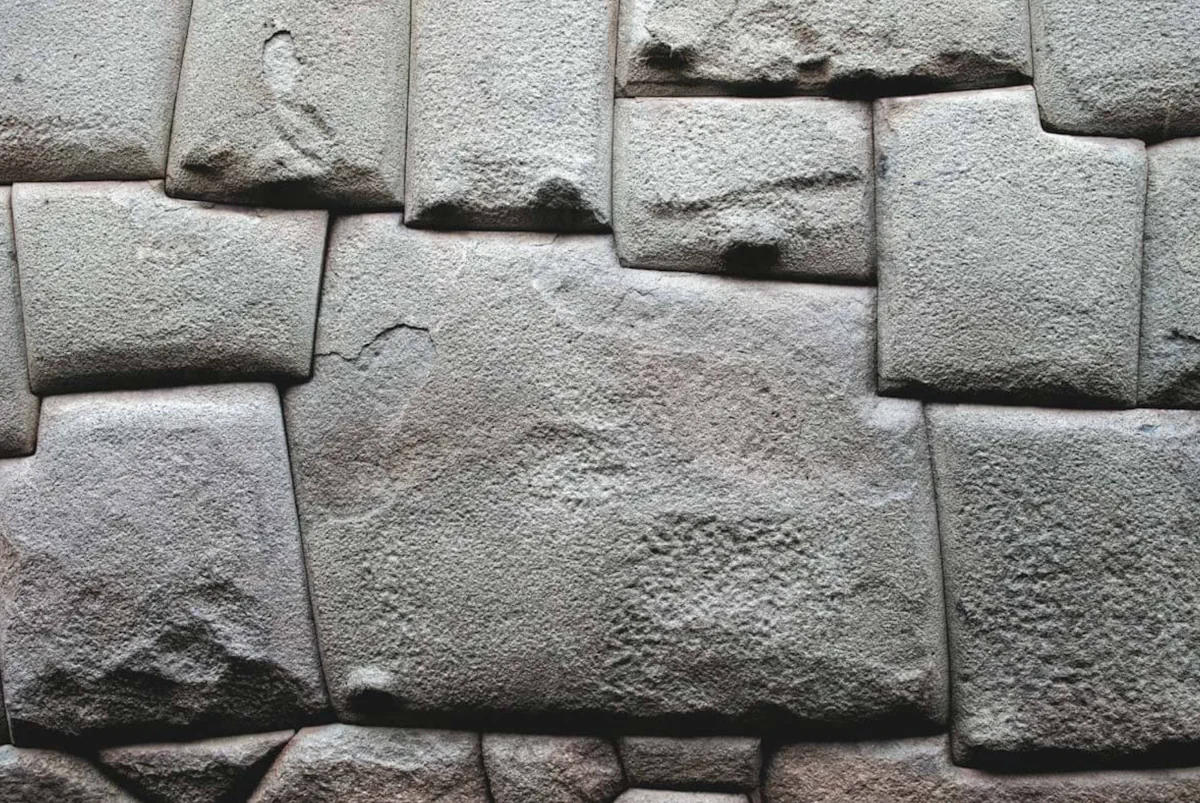
The piedra de 12 angulos
You’re going to say “yeah whatever, it’s a carved stone.” Well, no. You’ll see when you go to Sacsayhuaman, their way of carving stones was absolutely unique and still remains a mystery. All these angles, made by hand to withstand earthquakes, it’s art. And here, in this tiny little street, you’ll find a stone with 12 angles, no less.
You’ll have a hard time missing the stone because there’s always a bit of a crowd in front of it. You don’t find it super impressive? It’s only the beginning of what awaits you at Sacsayhuaman, where they did this on the scale of a fortress.
The museums of Cusco
The pre-Columbian art museum
A super interesting museum! Because it’s not all about the Incas in the view of Peru. So this museum talks about the many pre-Columbian civilizations but also (and especially) the pre-Inca ones. That is, the civilizations that were in Peru before the Incas, and which were generally absorbed afterwards by the latter.
But in this museum you’ll mainly find ceramics, tons of art from these civilizations like the Mochica (they made crazy stuff), the Nasca, the Paracas… And also woodwork and many Chimu sculptures.


The Chocomuseo chocolate museum
Peru is a tremendous cocoa producer. Many plantations are located around Cusco, in particular towards Santa Teresa and going up towards the Manu.
In Cusco, we have a “pleasure” museum, namely a museum dedicated to cocoa and chocolate making. And when I say making, you really go through the production line.
This museum naturally has its shop, a real trap I’d better warn you, with loads of chocolates and cocoa-based products.
But this museum also offers chocolate-making workshops. They let you create your own chocolate bars and beans, your hot chocolate, to really get hands-on. I haven’t done this workshop yet, but it’s on the program for the next visit!
The Inka museum
A reference museum in Cusco. Which I couldn’t do and not for lack of trying because it has stupid opening hours, that change all the time 😀 It’s a museum in a superb colonial building right in the center, a stone’s throw from the plaza de armas.
The Inca museum is, obviously, about the Inca civilization but not only! You’ll actually also find the pre-Inca civilizations up to the colonization. So it covers a wide period with many remains.
I’ll manage to visit it one day 😀
The Temple of the Sun Qorikancha
Qorikancha (or Coricancha) is an interesting site. Located right in the city center, it is, well it was, the most important spot in all the Inca empire, the most sacred place. In fact Qorikancha means “golden enclosure” in Quechua. So suffice to say that when the Spanish conquistadors arrived here, they literally plundered and destroyed this temple. As much to take all the riches as to humiliate the Inca people. They also built on top of it the Santo Domingo convent and its very pretty cloister.
It’s an interesting visit although it lacks information particularly about what this temple of the sun was, what it was made up of.


The San Pedro market of Cusco
It’s THE central market of Cusco. And not a souvenir market, a real covered market that is really nice. A lovely mess. By the way, the oldest part of the market was built by Gustave Eiffel, who had been called upon by the mayor.
In this market, you’ll have all the cusquena life, the sellers of fruits and vegetables, of all sorts of things, super colorful stalls or ones that smell amazing.
And also, if you want to eat really local, this is where you have to come. Because there are quite a few little restaurants that really don’t cost much. It’s anything but touristy and honestly it does you good (I’ll spare you the photo of my wife’s sheep’s head, but it’s really local).
As we’re going to see further down, you eat VERY well in Cusco (it’s terrible). So why not take advantage of it to take a Peruvian cooking class combined with the visit of the San Pedro market?

The historic sites of Cusco
Sacsayhuamán
Sacsayhuamán is first of all a pre-Inca fortress, of the Killke civilization. The Incas then rebuilt another fortress there to be able to resist the Spanish after the capture of Cusco. What strikes you in this fortress is its construction, of thousands of blocks perfectly fitted into one another, between which it’s impossible to slide the slightest sheet of paper. Which provides increased resistance.
And if you like riddles, these stones, this way of carving and assembling them, are totally specific to the Incas. And yet, one was found in the base of a Moai, on Easter Island. Enough to get your imagination working 🙂

The fortress of Sacsayhuaman

Stones that fit together perfectly
Puca Pucara
Means the red fortress in Quechua, for the tint the stones take on at sunset. It’s a small, well-preserved archaeological center, a former garrison whose main asset is its superb view over the valley. Small problem, it closes before sunset so unfortunately you can’t see it from here. Shame!

Q’enco
Q’enqo is a slightly different site. It’s not a temple, a fortress like the others, but a site that was dedicated to rituals and in particular to sacrifices. It lacks a bit of information and when I passed by the main part was closed for sanitary reasons.
Inside the site, there are lots of corridors, which explains why the Spanish colonists named it this way because Q’inqu means labyrinth in Quechua, and in these corridors they “stored” the mummies and treasures.
Tambomachay
Tambomachay is yet another different site. Not big, but very well preserved. It’s a typical site that is said to be dedicated to water. You can also see there a canalization system (they were really good at that, we’ll see it at Tipon) and two fountains that still work.
The site is also said to have served as a home for the Inca Yupanqui and for sacrifices.

A guided tour for the Inca ruins and Coricancha!
If you’d like to discover the Inca ruins above (Sacsayhuaman, Q’enqo, Tambomachay, Puca Pucara) as well as the Coricancha museum, you can do a one-day guided tour.
For me the real plus is the guide because, as happens a bit too often in Peru, the sites are very stingy with explanations. So having a guide really isn’t a luxury. I only took one at Sacsayhuaman and I really saw the difference.
And when I say it’s not a luxury, it’s not just a figure of speech, because it only costs around 15€ per person (sometimes less). On top of that, you’ll need the tourist ticket that gives access to these sites (see a bit further down for the details).

The Sacred Valley of the Incas
The Sacred Valley is considered the cradle of Inca civilization. In this magnificent valley you’ll find many cities, fortresses and agricultural areas. Drawn by the climate and the fertility of the soil, the Incas quickly settled this region along the Urumamba river. You’ll mainly find the sites below.

View over the Sacred Valley
The salt pans of Maras
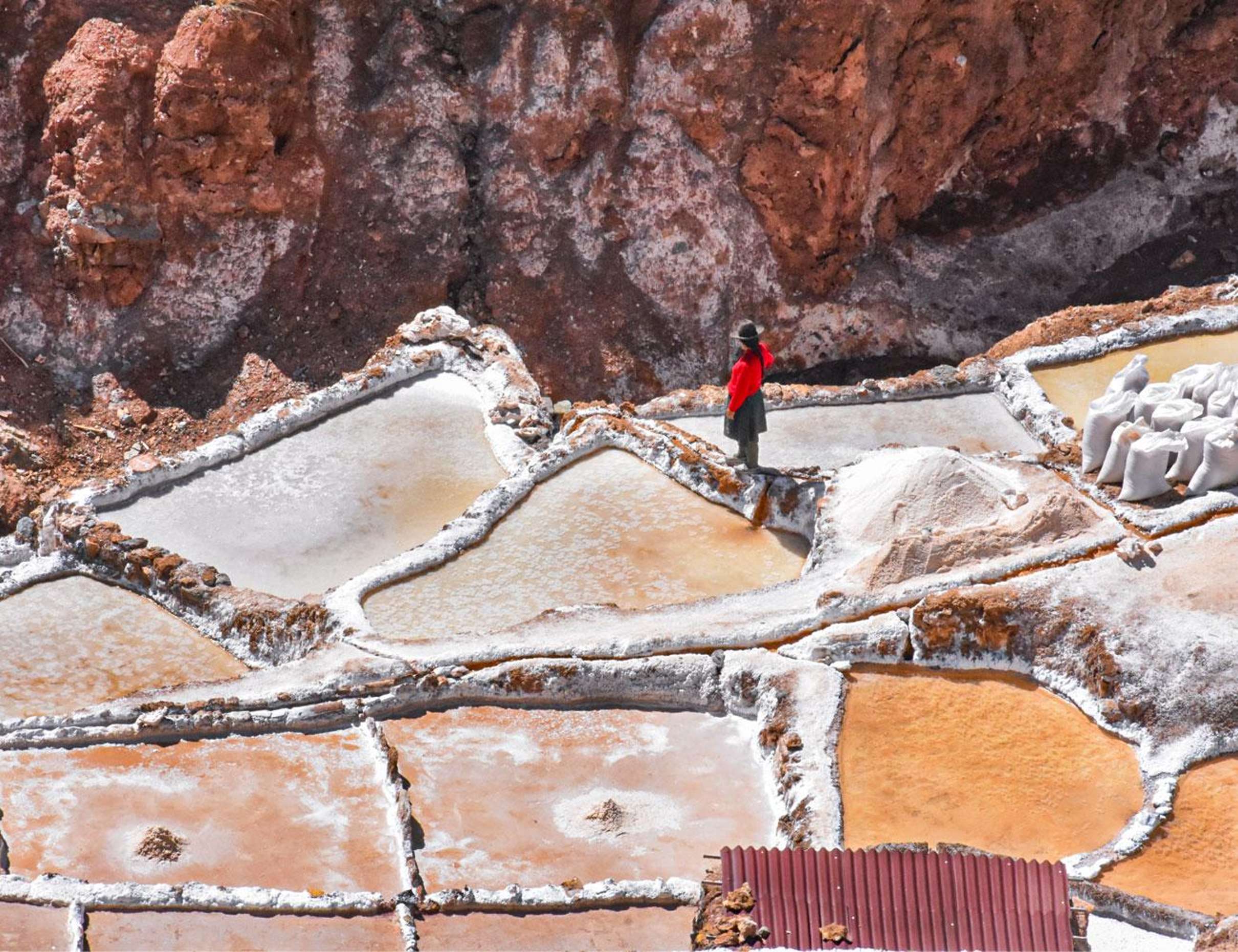
Perched at 3300m of altitude, the salt pans of Maras are a wonder of nature that’s been exploited for a few thousand years, well before the Incas. It’s a magnificent set of 3600 basins from which salt is extracted. The level of salinity gives several colors and makes the whole thing magnificent. It’s run by a cooperative of families, for generations, who share the income equally so as never to make anyone jealous. Part of the income comes from visits, the site becoming less and less of a hidden gem.
The entrance fee is 10 soles. It’s not included in the tourist ticket so you’ll have to pay extra.
Unless you have a car, there’s no bus to come here, so you’ll need to go through an agency. The tours generally do Maras + Moray + Chinchero for the half day. For the full day it includes Ollantaytambo, we’ll see that a bit further down.

The workers in the salt pans

Overall view of the thousands of basins of the Salinas
The terraces of Moray
Now this is super interesting. Okay fine, seen like that it’s very X-Files. But Moray is like our agricultural research institute. It’s a place where the Incas did agricultural research and simulated microclimates to test different crops, to see what was most effective, what wouldn’t grow.
It’s about ten circular terraces, one above the other, each terrace having a different microclimate from the others. That way they could easily know what grew, at what temperature, in what conditions. They assessed agricultural yields, and could thus predict harvests across the whole empire. Impressive.
The site of Moray is included in the boleto turistico and, if you don’t have it, you can’t pay an entrance just for this site, you’ll have to take at least the day boleto turistico, so 70 soles (versus 130 for the full one).
And just like Maras, you visit it either with your own car, your taxi or with an agency and a guide. So it’s a visit that generally includes Maras, Moray and Chinchero.

The terraces of Moray

One level per microclimate
📍 Cusco · 6h30 · Apu Ausangate · pickup included
The compact option: 6.5 hours for the 3 must-sees of the Sacred Valley near Cusco. The circular terraces of Moray (3,450 m), the 3,000 white pools of the Maras salt pans and a Quechua weaving workshop in Chinchero — hotel pickup and bilingual guide included.
- Moray (Inca terraces) + Maras (3,000 salt pools)
- Quechua weaving workshop in Chinchero (3,762 m)
- Hotel pickup · bilingual guide EN/ES
Free cancellation
From €13 / person

📍 Cusco · 12h · Inka Altitude · buffet lunch included
The full-day option: 12 hours to explore the entire Sacred Valley of the Incas. Chinchero, Moray, Maras, Urubamba, the Ollantaytambo fortress and Pisac — with a buffet lunch included and vegetarian options.
- 6 major sites: Chinchero, Moray, Maras, Urubamba, Ollantaytambo, Pisac
- Buffet lunch included (vegetarian options)
- Bilingual guide EN/ES · bus transport all day
Free cancellation
From €23 / person
The fortress of Ollantaytambo
Beyond being placed in an exceptional spot (no doubt about it, the Incas were the kings of real estate), at the crossroads of two valleys and at the entrance to the canyon leading to Machu Picchu, the fortress of Ollantaytambo is a major site of the war between the Incas and the Spanish, once Cusco was conquered.
Built “Inca-style,” meaning in steps and on a very steep mountainside, it was a real pain to attack. But with the help of Amerindians (and the family feuds among the Incas, things didn’t look all that easy between them), the Spanish managed to take it.
Finally, it’s the starting point of the Inca Trail, the fantastic multi-day hike that leads to Machu Picchu.
Ollantaytambo is included in the boleto turistico.
That said, it’s pretty far from Cusco, which is why there are two different circuits to get there:
- Pisac, Chinchero and Ollantaytambo, the classic circuit, for 32€. Check it out here.
- Ollantaytambo, Pisac, to which Maras and Moray are added, for 88€. It’s a much longer day, Maras and Moray aren’t really on the way, that explains why it’s more expensive. But it’s a feast for the eyes! Check it out here.

The Sacred Valley seen from Ollantaytambo

The fortress of Ollantaytambo
The village of Chinchero
Chinchero is a small Andean village just outside Cusco, perched at 4000m. But it’s also an archaeological center and the site of a beautiful fortress like the one at Ollantaytambo, except with absolutely nobody around. You’ll also find several makers of super high-quality alpaca clothing. And since it’s straight from the source, it’s really not expensive. I did my shopping there to brave the cold during my long winter evenings spent outdoors in Norway.

The fortress of Chinchero

The alpaca clothing workshop
The city of Pisac
They say it’s a mini Machu Picchu. Close to Cusco, you can very easily reach this ancient city, also perched on its mountain (the Inca specialty, it’s starting to become noticeable), very well preserved and very complete. You’ll obviously find the agricultural terraces, a maze of staircases to go from building to building, and a stunning view over the valley.
The ruins of Pisac are included in the boleto turistico.
The market is really nice too. Touristy, famous, but nice!
You can get to Pisac by collectivo from Cusco. It leaves from Calle Puputi and it costs 10 soles for 45min.
By taxi it should cost around 50 soles, but ask beforehand to be sure and not get ripped off.
Otherwise it’s with the agency that does the full day between Pisac, Ollantaytambo and Chinchero, for 32€.

The perched city of Pisac in the Sacred Valley

The terraces of Pisac

The archaeological site of Tipon
The archaeological site of Tipon is also something different. This set of terraces would actually be an agricultural complex, somewhat along the same lines as Moray. Since each terrace is at a different altitude (okay fine, it comes down to 30cm), they all have microclimates and that lets you grow different things. So it would be an agricultural research center.
And all these terraces are fed by an ingenious irrigation system.
You’ll also find a few ruins at Tipon, the whole thing is really interesting and not very touristy.
Tipon is included in the boleto turistico.
To get to Tipon, it’s either by taxi or by agency, for a long half day during which you’ll also visit the fabulous Andahuaylillas chapel and the surprising site of Pikillacta. For 16€, meal included, it’s hard to pass up!


The must-see sites around Cusco
The colored mountain of Palcoyo
Heads up, total favorite. Normally, when you think “colored mountain in Peru” you think of the most famous one, Vinicunca. But there’s another one, totally unknown and where the tourists don’t go, and that’s Palcoyo. The journey is worth it too, between green and red mountains, crossing paths with hundreds of alpacas, to arrive in a breathtaking spot, all to yourself.
- In the following article, find more info to visit Palcoyo
Getting to Palcoyo is just as long and will cost as much as Vinicunca (around 30€ for a reliable agency). The main appeal is the absence of tourism. Which also explains why there are only a few agencies that make the trip.

The colored mountain of Palcoyo

A massif of red mountains

The Andean village of Checacupe
Checacupe is the typical Andean village. Little streets, the church square, adobe houses, super cute. It’s not at all well-known, except for its 3 bridges (Inca, colonial, metal) and it only serves as a pee break on the way to Palcoyo. But honestly, it deserves a good stop and a walk around, because it might just be the most typical village in the area. Its church isn’t open very often, only for services, but the inside is great, with loads of gold of course.

The village of Checacupe, at the foot of the valley leading to Palcoyo

The famous bridges of Checacupe
Travel along the sublime Andean Baroque Route
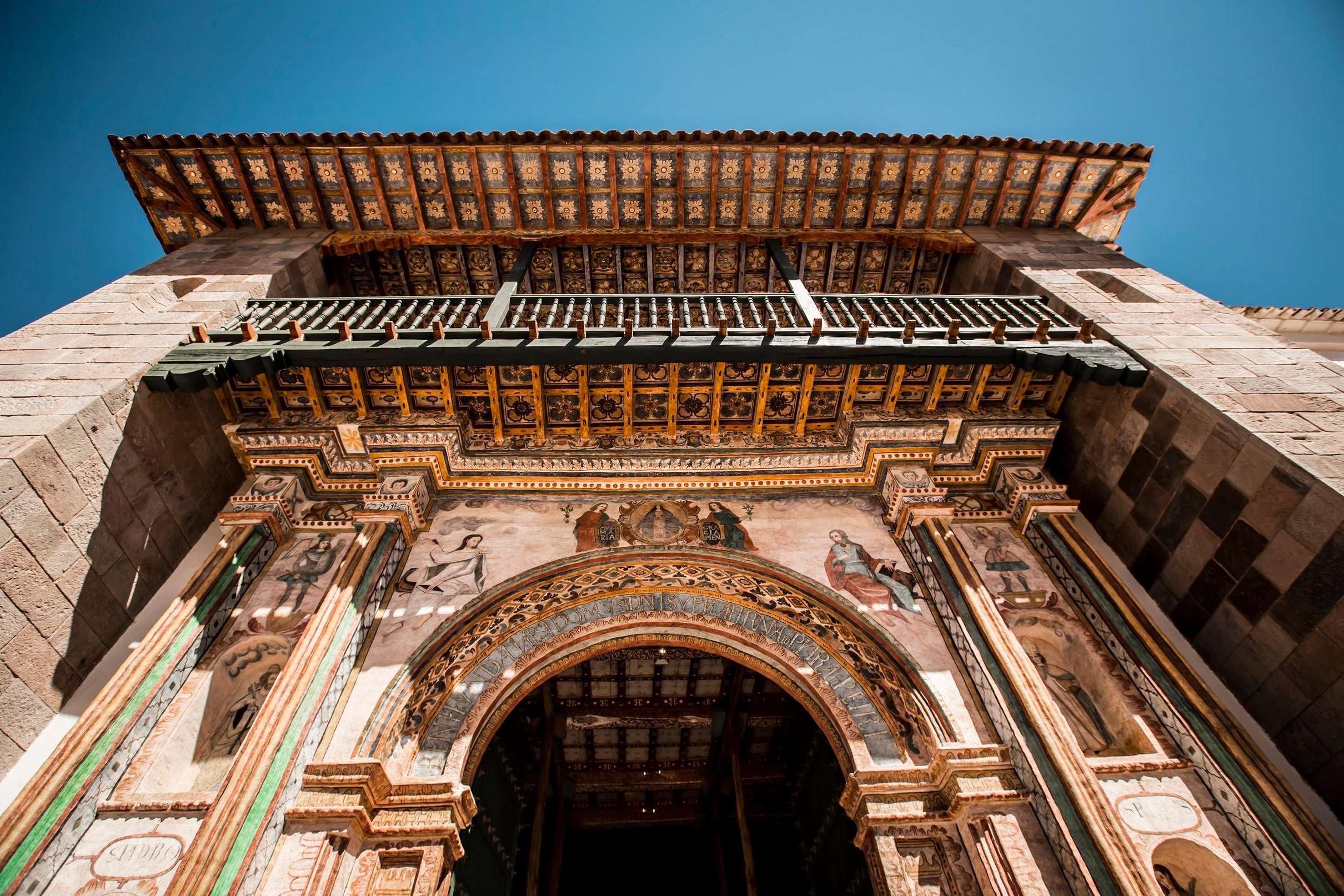
Something absolutely not well-known in the Cusco region and yet so essential. The Andean Baroque Route consists of 4 churches. One in Cusco but mainly 3 outside, 3 superb ones, small, old and covered with paintings. In fact the church of Andahuaylillas is considered the Sistine Chapel of South America, and rightly so. But the others are also seriously interesting!
So we’re going to have:
- the church of Andahuaylillas that I just told you about, truly magnificent
- the Canincunca Chapel of Urcos, pretty from the outside, incredible inside. Very old, with a superb altarpiece and beautiful paintings
- the church of San Juan Bautista of Huaro and its very surprising apocalyptic paintings!
- finally the Compañía de Jesús in Cusco, on the central square that you’ll definitely get a chance to visit and which is also worth it
Honestly, I loved this day because I only expected to discover the superb Andahuaylillas. But our guide took us to see the other two and wow, what a knockout! Especially since there’ll be absolutely nobody.


Discovering Machu Picchu
From seeing it so much in photos, watching countless documentaries, telling yourself it’s ruined by tourism, you’re afraid of being disappointed by Machu Picchu. And yet… What a knockout! Right at the top of its mountain, this city is truly something unique. You touch the clouds, you take a trip back in time. Really, it’s something exceptional. So okay it’s expensive, okay you need the shuttle (or great calves) to get up there, okay there are crowds (and even then, only at peak hour), but you have to go, make the most of the nearby hikes to get even more of an eyeful. The setting, between clouds and mountains, is exceptional. An article will follow, but wow wow wow, what a knockout, really.
And if you want to know how to visit Machu Picchu in one day from Cusco, it’s in this article!

The famous Machu Picchu
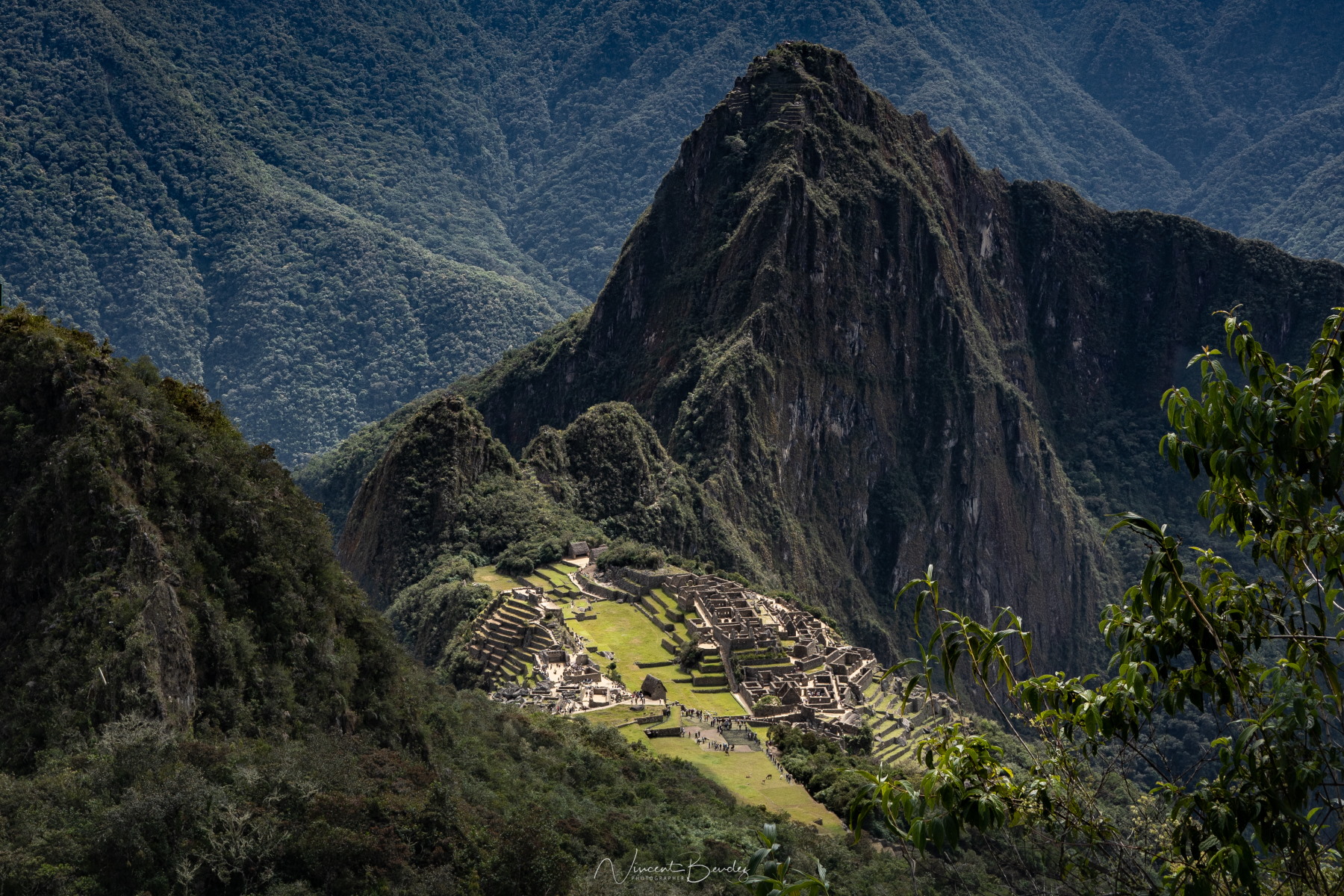
Machu Picchu, seen from the Montana Machu Picchu hike
The Vinicunca rainbow mountain
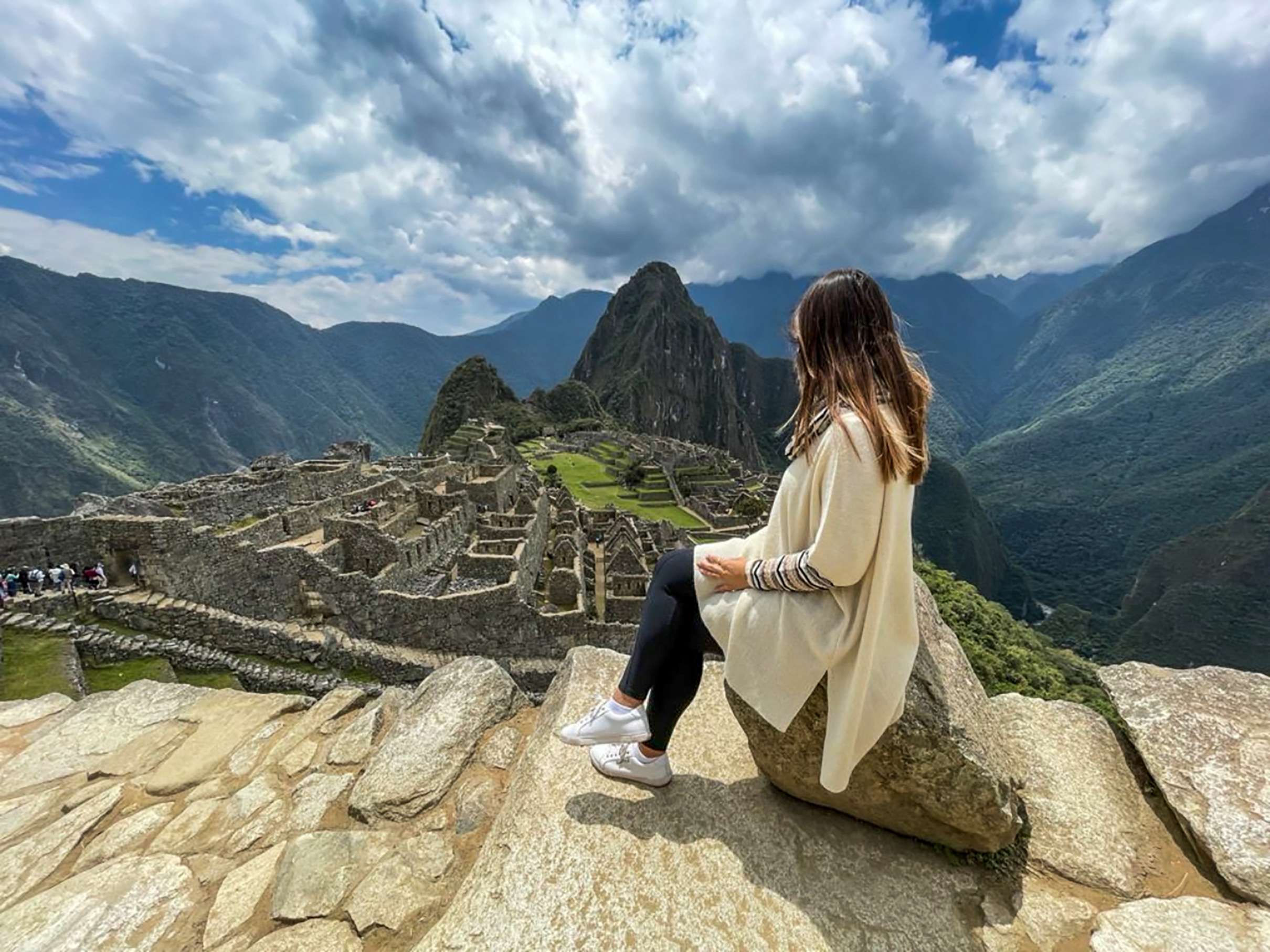
THE rainbow mountain of Peru. Very famous, very Instagrammed, and very touristy, and not without reason. It really is gorgeous. It used to be complicated to get there, with a long drive and then several hours of walking. With the altitude, it was rough. But about 2 years ago they opened a new, much more accessible road with “just” an hour’s walk that goes pretty easily, only the last kilometer is tough (it climbs like crazy).
We’re at 5000m altitude, but honestly the effort is really worth it, especially since it’s not an expensive excursion.
With a good agency, you’re looking at around 30€ for the day per person. But it’s an activity that’ll take up your whole day given the distance.
- In the following article, I explain everything about the rainbow mountain of Cusco

The Humantay lagoon
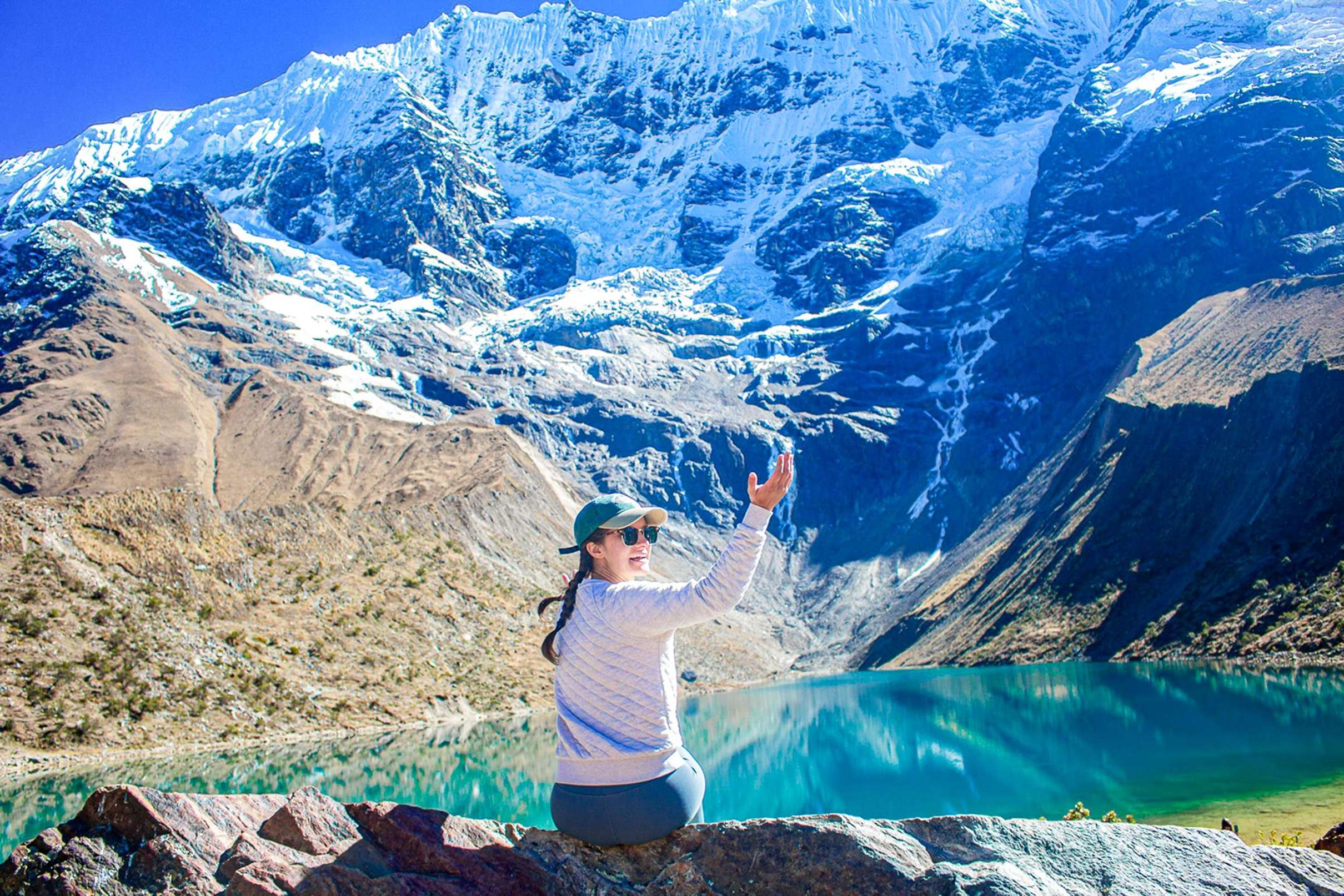
A very beautiful mountain lake in the Salcantay massif, at over 4000m altitude. I couldn’t do it because I’d planned it for the day after the Montana Machu Picchu, smart move on my part. And it was a bit too much for the knee.
It’s a short, fairly demanding hike at altitude, so you need to be in decent shape, but apparently it’s really worth it. And you have to arrive early because it’s become very popular.
With an agency, it costs about thirty euros for a 14-hour day, in a small group.
Attending the Inti Raymi festival
The Inti Raymi is the festival of the sun for the Incas. It’s become a huge festival with parades and music over several days, and the highlight on June 24th every year with the celebration of the sun by the Inca, between the city’s central square and especially at Sacsayhuamán, the ancient citadel. It’s a very popular festival among the Incas, people come from all over the country to attend and every village in the region parades. It’s crowded, but the atmosphere is great, it’s super colorful, festive and above all local 🙂 And that’s when you realize how important Inca culture still is in this country. So if you have to pass through Cusco, you might as well do it during this period 🙂 And the great advantage… since Peruvians aren’t very tall, it’s really easy to get a good view of the parades, the opposite of concerts back home actually 😀

The Inti Raymi festival and the parades

The ceremony at Sacsayhuaman
Where and what to eat in Cusco: the guide to Peruvian cuisine
Cusco is a refined city. Architecturally, the people, the region. And you feel it in the food. Obviously you’ll find tourist restaurants, plenty of them, but more and more good restaurants are opening up and offering quality. The local specialties are ceviche (mainly trout), alpaca, and cuy, which we know as guinea pig. It can be a bit heartbreaking, but it’s a typically Inca dish.
And of course, you can’t leave here without trying the Pisco Sour, the national drink!
Trout Ceviche (Ceviche de Trucha)
While traditional Peruvian ceviche is made with rock fish marinated on the coast, in Cusco (sitting at 3400m altitude), the undisputed star is the pink trout from the rivers and mountain lakes of the Sacred Valley. It’s fresh, tangy, melt-in-your-mouth, pure bliss after a day of hiking.
The best restaurant: Morena Peruvian Kitchen (Calle Plateros). Their trout ceviche is a visual and culinary work of art, served in a modern, colorful setting right next to the Plaza de Armas. Remember to book!
Alpaca meat
No, the alpaca isn’t just good for making excellent sweaters for winter! Its meat is extremely tender, very low in fat (less than beef) and has a subtle taste, close to duck or veal. It’s often enjoyed as carpaccio, grilled steak or stew (alpaca Lomo Saltado).
The best restaurant: Uchu Peruvian Steakhouse (Calle Palacio). It’s the ultimate spot for meat lovers. They serve the alpaca on a scorching volcanic stone: the meat cooks in front of you, it’s incredibly tender.
Cuy (Grilled Guinea Pig)
This is the heritage dish inherited directly from the Incas. The Cuy chactado (fried or roasted) can surprise you or be a bit heartbreaking if you think of it as a pet, but it’s a cultural institution here. The taste is close to rabbit or pork, with very crispy skin.
The best restaurant: Kuskay Peruvian Craft Food or the traditional Cuyería Sol de Mayo. If you want a more accessible version for a first time, the chic restaurant Chicha by Gastón Acurio (the Peruvian Alain Ducasse) offers absolutely divine and visually less “raw” variations of Cuy.
Eating local at the San Pedro Market: the authentic experience
If you want to escape the hushed atmosphere of restaurants and experience the real Cusco, head to the San Pedro Central Market. At the back of the market, go past the multicolored fruit stalls to reach the comedores section (the local food stalls).
It’s a charming organized chaos where you eat on wooden benches, elbow to elbow with the Cusqueños. For less than 10 to 15 soles (barely 3 or 4€), you’ll get a full menu (soup + main course). It’s the ideal place to try the classic Lomo Saltado or the Caldo de Gallina (an ultra-comforting chicken soup to fight the altitude cold). The bravest will push it as far as trying the carefully selected local specialties, like the Caldo de Cabeza (the famous sheep’s head soup).
The must-have Pisco Sour for the aperitif
You can’t leave Peru without trying the national drink: the Pisco Sour (a cocktail made with Pisco, lime juice, sugar syrup, ice and egg white that gives it that silky foam). It’s sneaky, it’s super good, and with the altitude, it goes to your head twice as fast!
The best spot: The Museo del Pisco (Santa Catalina Ancha) for the huge selection and the atmosphere, or the little balconies of the Cappuccino Cusco Café right on the Plaza de Armas to sip your glass facing the sunset over the Cathedral.


The tourist ticket to access all the sites!
So there are so many sites around Cusco that they created a tourist ticket for… 16 sites and museums. No less. This ticket is valid for 10 days and costs 130 soles, that’s about 35€. Okay, it’s not nothing, but you get the main sites like Saqsayhuaman, Q’Enqo, Pisaq, Ollantaytambo, Moray, Chinchero… and a few museums, but not the chocolate one, sorry!
If you don’t want to get this all-in super complete deal, there are tickets for a few sites over one or two days. It’s a bit more expensive per unit, so it’ll depend on how much time you have.
If you want to book your ticket in advance, it’s right here, you can choose which type of ticket you want (but it’s a bit more expensive, delivered to your hotel)
You should know that the vast majority of sites are only accessible with the tourist ticket, whether for 1, 2 or 10 days. You can’t buy individually for Moray for example.
At the main sites you can actually buy the boleto turistico, but not everywhere. So you need to plan a bit in advance.

Finding accommodation in Cusco
- if you want a lot more info, then check out my guide to finding the best accommodation, where to sleep in Cusco
Cusco’s hotel offering is very wide and there really is something for every taste. Either private apartments, classic hotels or hotels in colonial palaces. And it’s crazy, really.
The huge advantage is also that the prices are very reasonable, you can find good things for under 50€ right in the center while at 100€ you’ll have something magnificent. I’d recommend staying either in the historic center, or just above it in San Blas. Around San Martin, it’s very authentic, very lovely, and at night it’s fine. Anyway, let me show you all this!
In the historic center and San Blas
Let’s start with excellent value for money. The Quechua Hotel Recoleta, located a few minutes from the plaza de Armas and a few dozen meters from San Blas offers rooms for under 30€ with very good amenities. But honestly, there’s quite a bunch of accommodations under 40€ like this 45m² apartment right in the heaaart of the city center!
A bit more upscale, you should especially note the very beautiful Mistico San Blas, located in… San Blas (yes, I know) for under 100€ and the magnificent Casa Cristobal, white and blue with its superb patio for 70€.
Finally, for an even higher range, we reach some superb places. First of all the Palacio Manco Capac, a hotel located in a colonial palace, just magnificent. And for 110€. Just be careful, you have to take a big staircase to get there and with the altitude, it can be rough sometimes (but the pisco sour helps!) .
Finally, the top of the top, where we stayed for our honeymoon, is the Palacio del Inka. Located in a museum, a historic and listed building. Everything there is truly perfect and very well located.
Anyway, as you’ve seen, there are tons of very good quality accommodations, in the city center, for cheap. And luxury isn’t especially expensive here so you can treat yourself if you want 🙂

📍 Cusco · San Blas district
My first hotel in Cusco, and I loved it! A typical colonial house in San Blas, attentive service and a truly warm atmosphere.
- Typical colonial house in San Blas
- Personalized service and a family atmosphere
- Terrace with a view over the city of Cusco
Free cancellation
From 65 € / night
📍 Cusco · Historic center
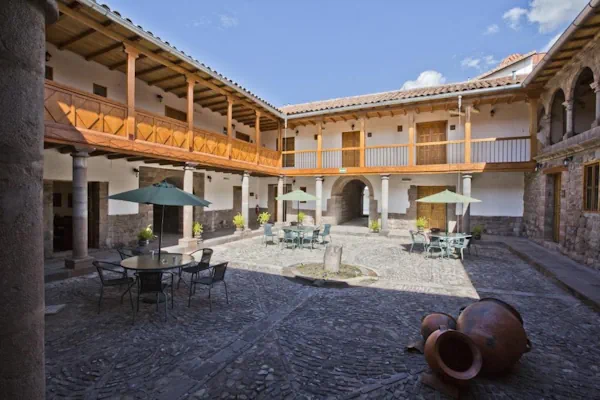
A great surprise: a lovely colonial patio, comfortable rooms and top-notch service for the price. One of the best options in the 70 € range in Cusco.
- Very pretty flowered colonial patio
- Cool rooms and comfortable bedding
- A 10-minute walk from the Plaza de Armas
Free cancellation
From 70 € / night
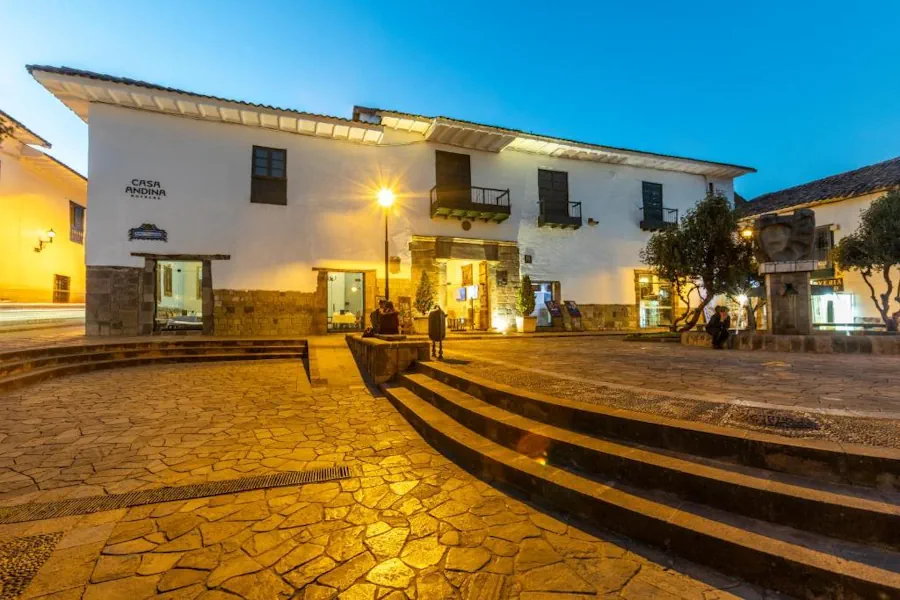
📍 Cusco · Historic center
The premium version of the Peruvian Casa Andina chain, set in a colonial convent. Excellent level of comfort, and on top of being perfect, there's a spa!
- Spa with jacuzzi, sauna and steam room
- Listed colonial convent with an inner patio
- Andean buffet breakfast included
Free cancellation
From 100 € / night
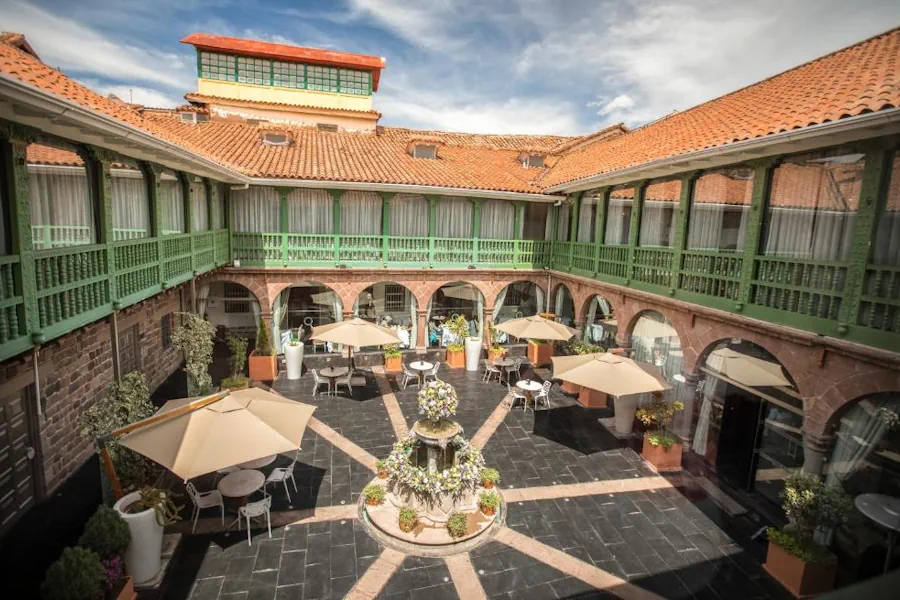
📍 Cusco · Historic center
A renovated 16th-century colonial manor in the heart of the historic district. Spacious rooms decorated with Peruvian works of art and impeccable service.
- Listed 16th-century colonial manor
- Decor featuring authentic Peruvian artworks
- On-site restaurant and Andean cocktail bar
Free cancellation
From 190 € / night
Practical information
How long to stay in Cusco
Soooooooo here! I’m not going to be objective. But Cusco is my favorite place in Peru, the city is fantastic and the surroundings exceptional (I did say I wasn’t objective). The city itself easily deserves two days. For acclimatizing to the altitude but not only that, because there really are tons of things to see, neighborhoods, churches, museums… then a day for the Sacred Valley, then 2 for Machu Picchu, then Palcoyo, then Vinicunca, then the Barroco Andino… 😀
Some people will only spend 2 days in Cusco, and that’s a shame because there really is so much to see, you don’t even get a glimpse in 2 days. A week, in my opinion, starts to be pretty good, especially with the round trip to Machu Picchu. Because you get exhausted fast at this altitude! I stayed there about 10 days the first time, 5 days the second time and I still want to go back.
If you don’t have much time, then one option would be 3 days not counting Machu Picchu would be the minimum in my opinion:
- A day in the city
- A day in the sacred valley
- One at Palcoyo or Vinicunca.
In the following article, check out the optimized one-week itinerary around Cusco!
Getting around between the different sites
You’ll find quite a few ways to visit these different sites. I’d say the most practical is a taxi for the day. It costs about 100 soles, or 25€. You can do the sacred valley (Chinchero, Moray, Maras, Ollantaytambo) in particular.
Ollantaytambo is easily accessible by bus, the ticket costs about 4$. Chinchero is also easily accessible by bus, Pisaq too.
The other possibility is to go through agencies. In Peru, it’s not expensive at all and there are quite a few options. All the tourist spots are accessible, the Sacred Valley (Pisac, Chinchero…), Ollantaytambo, Maras y Moray, Palcoyo, Vinicunca, Humantay… you’re less in control of your time, but it has the advantage of being all-inclusive and generally well organized.
Compare, pay special attention to ratings and reviews and there shouldn’t be any bad surprises. The ones I’ve linked for you have excellent feedback.

📍 Cusco · Tour Valle Sagrado Vip (12 h)
The great one-day classic from Cusco: Chinchero and its weavers, the circular terraces of Moray, the Maras salt pans, a buffet lunch in Urubamba, then the fortress of Ollantaytambo and the Pisac market.
- 5 Inca sites: Chinchero, Moray, Maras, Ollantaytambo, Pisac
- Hotel pickup + buffet lunch included
- Option to finish in Ollantaytambo to head straight to Machu Picchu
Free cancellation
From 23 € / person

📍 Cusco · Day Trips Peru (12 h)
The 3 a.m. start pays off big time: you arrive among the first at the top of Vinicunca, before the crowds and the wind. Red Valley option for 30 soles right next door — mind-blowing green and red mountains, according to the reviews.
- Early access, without the tourist crowds
- Breakfast + buffet lunch included
- Small group of 15 max, oxygen mask on board
Free cancellation
From 17 € / person

📍 Cusco · Inka Altitude (1 day)
The alternative to Vinicunca for hikers: a 13 km trek at over 4,600 m facing the Ausangate glacier (6,384 m), among turquoise lakes and colorful peaks. End the day in the Pacchanta hot springs.
- 15 km · highest point 4,620 m
- Pacchanta hot springs at the end of the trek
- Breakfast + lunch + pickup included
Free cancellation
From 26 € / person

📍 Taray · Wildlife Experiences (2 h 30)
An ethical center 30 min from Cusco that takes in Peruvian wildlife rescued from illegal trafficking: pumas, condors, Andean bears, parrots, llamas, alpacas. 100% of English-speaking travelers rate it 5/5 — the highest rating on the blog for Cusco.
- Pumas, Andean bears, condors, alpacas, parrots
- Rehabilitation and release center
- Round-trip hotel transfer in Cusco included
Free cancellation
From 30 € / person
How to get to Cusco
The simplest way is obviously the plane. It’s 1h15 from Lima, there are tons of flights per day, prices start around 30$ (but can blow up if you mess up badly). It’s really the most practical. From abroad or from other Peruvian cities, there’s generally no direct flight, Lima really is the hub.
You have several airlines that do the trip: Latam (the most reliable, reputable but more expensive airline), Jetsmart, Sky… the entry prices are generally very good but it’s the extras that’ll cost you.
That said, a round trip for 110€ really isn’t something rare.

You can also come by bus. But it’s a haul. If you decide to come from Lima, it’s about 24h. On Peruvian roads. With Peruvian drivers. Tempting, isn’t it? It’s not super expensive though, between 30 and 60€, but… let’s say unless you have a deep fear of flying, don’t take the bus (because you’ll have a deep fear of the bus afterwards). It’s long, dangerous driving (ideally take Cruz del Sur).
Buses do very long trips in Peru, but I find bus travel is better suited when you’re doing lots of short hops. Trips of a few hours, you stay a bit, you set off again… that’s really not bad. But for such a long trip, it’s not worth it.
The bus can be interesting from Puno (8h, nice trip across the Altiplano) or possibly from Arequipa, but it takes 11h.
If you come from Puno or Lake Titicaca, you have an additional option: the Andean Explorer train by PeruRail, a luxury panoramic train that does the trip in about 10h. It’s much more expensive but it’s a real experience, with a dining car and spectacular views over the altiplano. I’d wanted to take it, my bank account was less convinced.
Watch out for altitude sickness when arriving in Cusco!
When you arrive from Lima, watch out for altitude sickness. I never got it luckily, but in 1h you go from an altitude of 0 to 3200m, no less. So there’s a lot less oxygen and it can hurt. Personally I rather feel drunk at first, but it passes quickly (better than a hangover).
There are people waiting for you at the airport with oxygen tanks. If you ever feel a bit off, really don’t hesitate to ask them for a bit of air.
At 3200m, your body isn’t used to it at all, and the problem is that Cusco is a sloped city. Lots of stairs, of alleys that climb. It’s cute as anything but it goes uphill. So after 3 steps you feel like you’ve emptied your lungs. Something forgotten in the room on the 2nd floor? Too bad!
One thing the locals consume is coca. They chew coca leaves, make them as an infusion (well they also make a powder out of it that they export to Colombia, but that’s another debate). So if someone offers you some, it’s not illegal at all, it’s not the drug version, it’s the natural version so it’s fine 🙂 On the other hand, someone I know had their leaves confiscated at the airport in France.
It’s important to acclimatize well in Cusco before heading higher. Vinicunca or Palcoyo are at 5000m, and you feel the difference (especially on the final climb of Vinicunca, I felt like I was climbing the Alpe D’Huez in the Tour de France. It burns!
If you head up there too soon, then you’ll get a headache. The coca will work, but it would be a shame to spoil the fun a bit. So take the first days to visit Cusco.
When to go to Cusco
It’s a simple question. But not that simple. There are two seasons in Cusco:
- The dry season (May to September): It’s the best period. The days are magnificent and sunny, even if the nights are cool. June is particularly busy because of the Inti Raymi festival.
- The rainy season (November to March): The landscapes are greener, but the hikes are more complicated (the Inca Trail is even closed in February). And… well it rains quite a bit. In the heights like Vinicunca, it can snow!
Why do I say it’s not that simple, it’s because in Cusco the seasons are reversed compared to the coast. In Lima, summer is between December and March. Winter in July for example.
Is Cusco a safe city
Much more than Lima, that’s for sure. Cusco is generally a safe city “but”. You won’t have a major assault, you’ll have thefts. A wallet that disappears, a phone you can’t find anymore, a bag that was sitting there and poof, gone. It’s in the center. I advise against venturing outside the center.
You’ll also have some nice scams with tours and tourist guides. It’s classic. It’s either more expensive, or things disappear, or it’s not at all what was planned. That’s why it’s better to book your excursion/visit in advance.
At night, stay where there are people (in the very touristy areas). Don’t go to the slightly darker spots.
But by respecting all that, without being paranoid, just a tiny bit careful, I never had the slightest problem in Cusco!
Frequently Asked Questions (FAQ): Planning your trip to Cusco
How long to stay in Cusco?
Count on a week minimum, including the round trip to Machu Picchu. 2-3 days is too short to see it all. → See the “How long to stay” section for the details.
How to get to Cusco from Lima?
The simplest and by far the most common is the plane from Lima — about a 1h15 flight, around ten flights a day with LATAM, Sky or Avianca, from 50€ if you book in advance. If you’re coming from Puno or Lake Titicaca, the bus (6-7h) or PeruRail’s panoramic Andean Explorer train are very good options. → See the “How to get to Cusco” section for all the details.
What’s the best time (weather) to visit Cusco?
The best period runs from May to September, during the dry season. The days are beautifully sunny (a delight for photography!) and the climate is very pleasant, even if the nights at altitude become freezing. The month of June is exceptional thanks to the Inti Raymi celebrations, but it’s also the busiest. The rainy season (from November to March) makes hikes more complex, and the famous Inca Trail is even completely closed in February for maintenance.
Is Cusco a safe city for tourists?
Yes, Cusco is generally a safe city, much more reassuring than Lima or other major South American capitals. The tourist police are everywhere, especially around the Plaza de Armas. However, as in any very touristy area, pickpockets are on the lookout. Watch your bag in the crush of the San Pedro market or during big gatherings like the Inti Raymi festival. Just avoid walking alone at night in the unlit alleys of the outlying hills.
How to avoid and treat altitude sickness (Soroche) in Cusco?
Cusco sits at 3,400 meters altitude, and the body feels it as soon as you step off the plane. To avoid soroche, the golden rule is to avoid physical exertion on the first day: walk slowly and avoid alcohol. Drink lots of water and try the traditional local remedy: mate de coca (a coca leaf infusion) that most hotels offer as soon as you arrive. If the headaches persist, local pharmacies sell very effective “Sorojchi Pills”.
Can you visit Machu Picchu in one day from Cusco?
Yes, it’s entirely possible — and it’s actually what a lot of travelers do. You have two options. Either you go through an agency that handles everything (train, bus, entry tickets, visit), or you do it yourself. The train trip from Cusco to Aguas Calientes takes about 3h30, plus the shuttle to the site. A long day, but doable. Find all the details for organizing your day at Machu Picchu from Cusco in this dedicated article.
Can you drink the tap water in Cusco?
No, you should never drink the tap water in Cusco, on pain of ruining your stay. Use exclusively capped bottled water (including for brushing your teeth) or bring a filter bottle. In restaurants, make sure the ice cubes are made from purified water.
Where to buy real, good-quality, cheap alpaca clothing?
If you’re looking for quality without paying the high price of the luxury boutiques downtown, I recommend going to the little Andean village of Chinchero. Located on the outskirts of Cusco, you’ll find local alpaca clothing makers selling directly at the source. That’s where I bought my own sweaters and accessories to withstand the polar temperatures, and the value for money is unbeatable. Otherwise, boutiques like Sol Alpaca are excellent, there are often discounts but it’s expensive. Go for baby alpaca. You also have the grandma vendors near the station and the market in the evening. You have to manage to sort the real from the fake, but there are real llama and alpaca productions (vicuña is way too expensive)
What culinary specialties are absolute must-tries in Cusco?
Peruvian cuisine is one of the best in the world, and Cusco has excellent spots. Don’t leave without having tasted the trout ceviche (caught in the region’s rivers), the alpaca meat (very tender and low in fat) and the traditional Pisco Sour, the national drink. For the more adventurous who want to eat 100% local, the San Pedro market offers typical dishes like the sheep’s head soup. And of course, you can’t miss the guinea pig (cuy), a typical dish.
In conclusion
Unquestionably, you could stay for weeks discovering the city and the region, of unparalleled cultural richness. The info presented above is only a part of what you can do, the best-known parts. You’ll still find plenty of other cities nearby, other treks to do, or even just stroll around town. Because with the altitude, taking your time isn’t a luxury but almost a necessity. And in a place like this, it would be a shame to deprive yourself of it 🙂

Planning your trip to Peru well
Here are other resources to help you best prepare your stay in Peru
- The complete guide to visiting Machu Picchu
- A one-week itinerary to visit Cusco, the Sacred Valley and Machu Picchu: essential!
- Where to sleep in Cusco and the Sacred Valley? what are the best accommodations?
- How to set the budget for a trip to Peru
- What to see in the Sacred Valley of the Incas with sites like Moray, Maras and quite a few others
- For unique landscapes, go see the rainbow mountain of Vinicunca
- Another rainbow mountain at Palcoyo
- What to do in Arequipa and its region, a magical place
- How to see the flight of the condors at the Colca Canyon
- During your stay, also go discover Lake Titicaca and especially the Uros Islands.
- Everything you must do in Lima, with the Museo Larco and the historic center for example.
- South of Lima, you must discover the Paracas reserve and the Ballestas Islands
- In the Ica region, go see the Huacachina Oasis
- Finally, in this article I offer you all the information for your stay in Peru.
- And here, find the most beautiful places to see in Peru!
- Did you know that in northern Peru there’s a citadel with a faint resemblance to Machu Picchu? It’s Kuelap, built by the Chachapoyas!