Last Updated on by vincent
You’re dreaming of an epic Norway road trip but don’t know where to start or how to plan your stops? Then the Norwegian fjords are made for you! Here I’m sharing a 14-day loop itinerary starting from Bergen, taking you all the way to Ålesund before returning via the high plateaus and the country’s most iconic stavkirker (stave churches). This is an itinerary I built to balance driving days and sightseeing days, avoiding repetition while integrating Norway’s national scenic routes. You’ll find the four major stavkirker (Hopperstad, Lom, Urnes, Borgund), the UNESCO-listed fjords (Geirangerfjord, Nærøyfjord), the Jostedalsbreen glaciers, and the legendary roads of Trollstigen, Sognefjellet and Snøvegen. It can feel a little intense at times. But I figured it’s better to have too much (and cut things) than not enough. This is a real road trip with very frequent hotel changes — a genuine loop through the most beautiful places in the region.
Overview of the Route
The itinerary forms a clockwise loop departing from Bergen, with Ålesund as the northernmost point. The outbound leg follows the west coast and glacier hinterland, while the return leg crosses the Jotunheimen highlands before coming back down via the Sognefjord.
A few numbers:
- ~1,450 km of driving in total
- 5 ferry crossings
- 1 train ride (Flåmsbana)
- 1 cruise on the Nærøyfjord
- 4 stavkirker visited
- 5 national scenic routes taken
Best time to go: mid-June to early September. This is the only window when all the mountain roads are open (Sognefjellet, Strynefjellsvegen, Snøvegen, Trollstigen close from October to May/June depending on snow). That said, the vast majority of the route is perfectly doable for a good part of the year. If the scenic roads are closed, there are alternative routes — mainly by ferry — which is actually a bit what I did in April, without the scenic roads.
Driving: this Norway route is done by car — either a rental or your own vehicle from France or Belgium, for example (don’t forget the mandatory toll pass in Norway). Doing this by public transport is nearly impossible. You can visit most of the country without a car, but not a loop like this one.
- If you want to rent a car, I strongly recommend booking early and comparing prices thoroughly.

Here’s a summary of the route:
- Visit Bergen and Ålesund
- Viking stave churches: Hopperstad, Lom, Borgund, Urnes
- Cruises on the Nærøyfjord, Lovatnet and Geirangerfjord
- Villages of Fjærland and Gamle Lærdal
- Several glaciers
- Cable cars at Loen, Stranda, and the Bergen funicular
- Scenic routes: Sognefjell, Strynefjellsvegen, Snøvegen, Trollstigen, among others
- The Flåm Railway
Day 1: Arrival in Bergen
Airport → city centre | ~15 km | 30 min by shuttle You arrive at Bergen-Flesland airport, located 15 km south of the city centre. Two options to get into town: the Flybussen (direct shuttle to the centre, about 30 minutes) or the Bybanen (tram line 1 from the airport, about 45 minutes but cheaper).
- the following article gives more details about transport options between Bergen airport and the city centre
Programme depending on your arrival time: If you arrive in the afternoon, I’d recommend heading straight to Bryggen, the UNESCO-listed Hanseatic quarter, for your first encounter with the colourful wooden facades. The late afternoon light there is golden and gorgeous. If you arrive earlier, also wander behind the harbour, towards Vagsbunnen and all the way to the opera house. And stop in for a hot chocolate at Fjåk chocolate. Absolutely unmissable. For dinner, the Fish Market (Torget) has stalls where you can try salmon, king crab or whale. For something more traditional, Bryggeloftet & Stuene serves authentic Norwegian cuisine in a historic setting.
Where to stay:
- for the budget-friendly option, check out City Box — excellent value for money
- for comfort and a great location, the Radisson Blu right on Bryggen
- to really treat yourself, the famous Bergen Børs Hotel


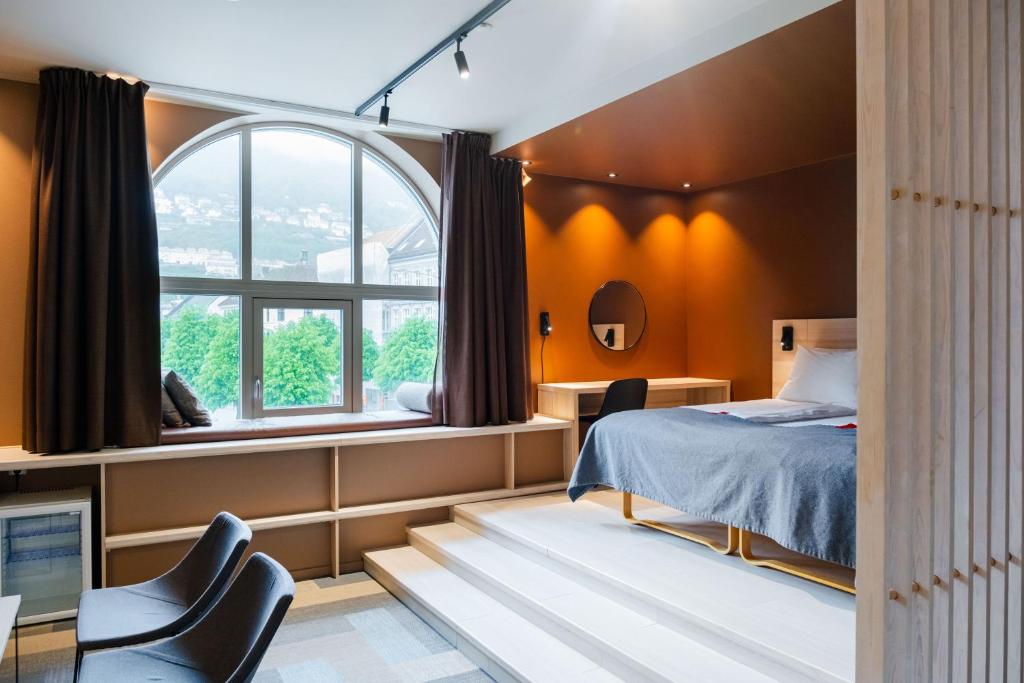
📍 Bergenhus, Bergen · city centre
Affordable design hotel right in the centre, with self-service check-in and Scandinavian-inspired rooms. Perfect for exploring Bergen without breaking the bank.
- 3-min walk to Bergen Art Museum
- Free Wi-Fi & shared kitchen available
- Festplassen square 500 m away
Free cancellation
From €88 / night

📍 Bergenhus · right next to Bryggen Wharf (UNESCO)
Renovated hotel right next to the historic Bryggen wharf, 300 m from the fish market. Air-conditioned rooms, Norwegian surf & turf restaurant, and gym with sauna.
- Right next to UNESCO Bryggen Wharf
- Gym, sauna and steam room
- Airport shuttle stop right across the street
Free cancellation
From €120 / night
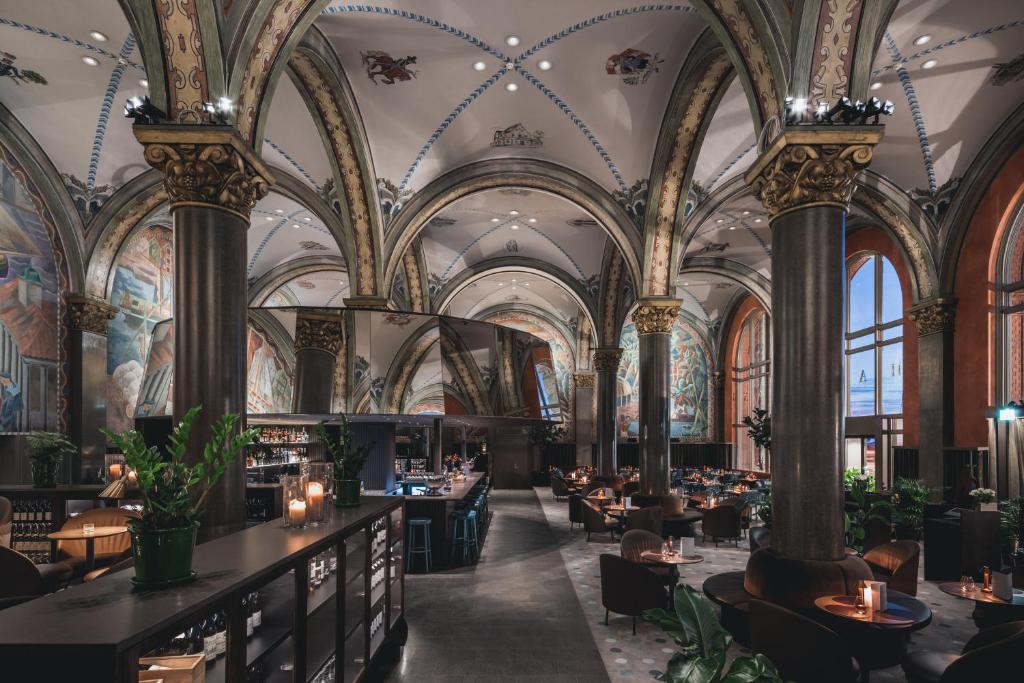
📍 Bergenhus · former 1862 stock exchange, centre
Character hotel in the former 1862 stock exchange building, 140 m from the fish market. Three locally-focused restaurants, beer bar and rooms with underfloor heating.
- Historic building in the heart of Bergen
- 3 restaurants & local beer bar on-site
- Bathroom with underfloor heating
Free cancellation
From €185 / night
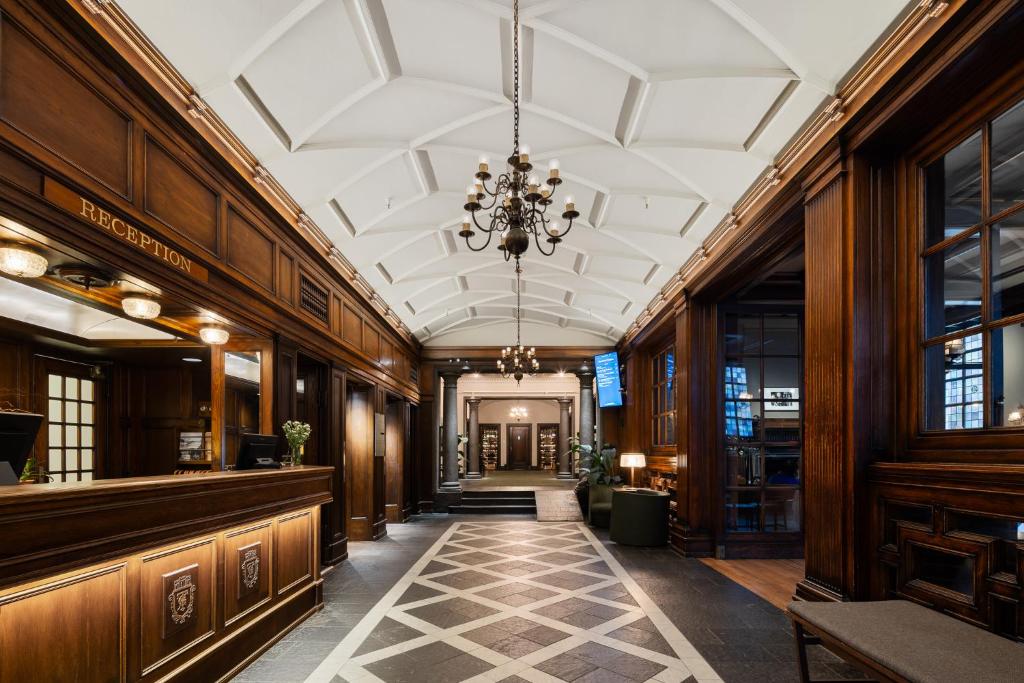
📍 Bergenhus · 10-min walk from Torgalmenningen
Classic hotel steps from the train station, with a superb whisky bar, garden terrace and wellness centre. Buffet breakfast and easy access to the Fløibanen funicular.
- 10-min walk to UNESCO Bryggen Wharf
- Renowned whisky bar & garden terrace
- Fløibanen funicular 850 m away
Free cancellation
From €130 / night
Day 2: Bergen in depth
On-site | walking only A full day in Bergen is the minimum to truly soak up the city’s atmosphere. Here’s how I’d structure your day to avoid the crowds.
Morning: Nordnes away from the cruise buses Rather than heading straight to Bryggen (often packed, except early in the morning or at the start of the evening), start with the Nordnes neighbourhood, a peninsula west of the centre. Its wooden lanes (Knøsesmauet, Klosteret, Skottegaten) offer the same colourful houses as Bryggen, without the crowds. You can also walk to the Bergen Aquarium at the tip of the peninsula if you’re travelling with family. And don’t miss Nostet! It’s right next to Nordnes and there are lots of lovely little streets sloping down — super photogenic.
Midday: fish market Back to Torget (the fish market) for lunch. Fresh fish stalls, but watch the tourist prices — decent fish & chips but pricey. There are usually cheaper lunch menus available compared to evenings.
Afternoon: Bryggen and culture Now it’s time to explore Bryggen in depth. The Hanseatic Museum may be under renovation depending on the time of year (check ahead); otherwise Schøtstuene offers an immersion into Hanseatic life. For art lovers, the KODE Museums house a remarkable collection, including works by Munch. I’m not really including the famous Mostraumen cruise here since you’ll have two incredible cruises (plus several ferry crossings) during your stay. But in the following article I give much more detail about this lovely cruise from Bergen. On the other hand, I think a guided city tour would be really worthwhile — especially since you’d learn a lot more to enrich the rest of your trip.
Late afternoon: Fløibanen The Fløibanen funicular takes you to the top of Fløyen (320m) in just 6 minutes. Perfect at sunset for photographing the city and harbour. Hiking trails at the top for those who want to linger.
- Don’t hesitate to book your tickets in advance to skip the queue, especially in high season!
Where to stay: Bergen (same place as Day 1).

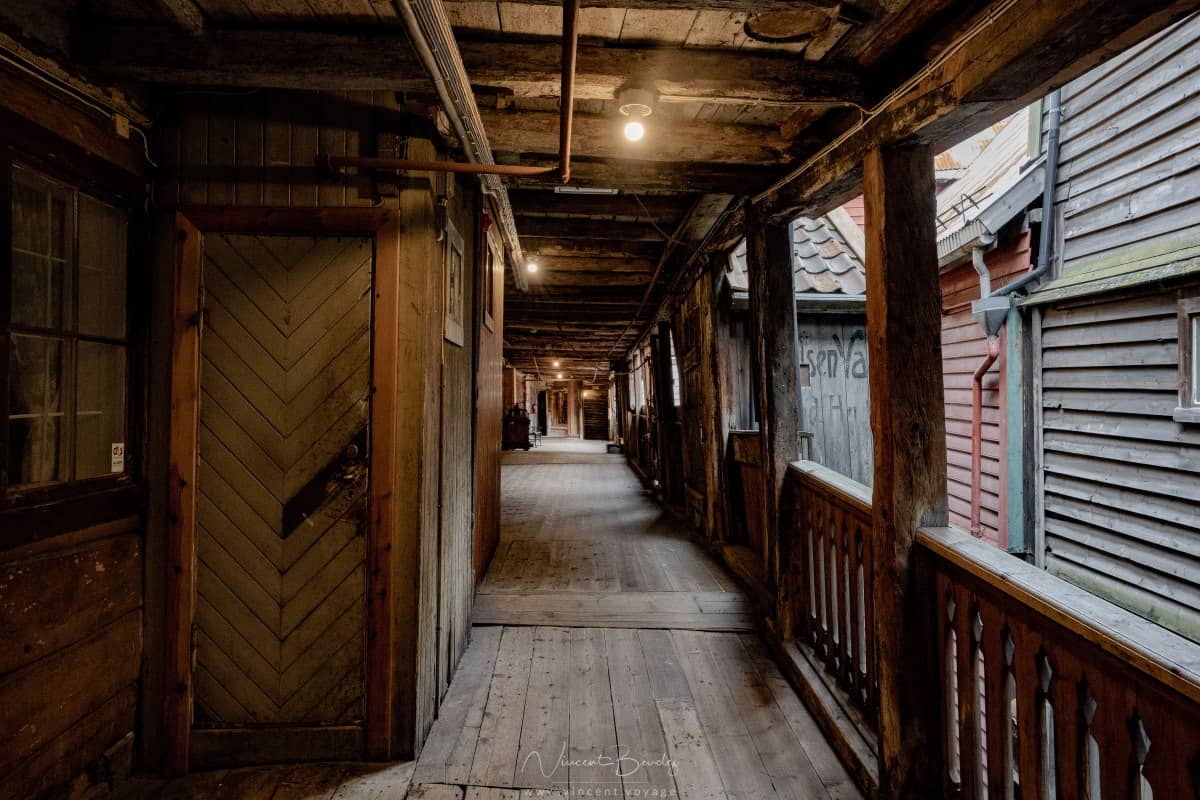


📍 Bergen · 2h · I Love Bergen
The local immersion, budget-friendly option: 2 hours on foot with a certified guide who lives in Bergen. Bergenhus Fortress, UNESCO-listed Bryggen, hidden alleyways and everyday stories — the perfect introduction to the city.
- Bergenhus Fortress & historic Bryggen district
- Hidden alleyways only locals know about
- History of the Hanseatic League & life today
Free cancellation
From €23 / person

📍 Bergen · 3h30 · Rødne Fjord Cruise
The signature fjord experience: 3h30 return trip to Mostraumen on a modern, comfortable boat. Waterfalls, majestic cliffs and a narrow strait — the original Rødne cruise, praised by over 8,870 travellers.
- Spectacular Osterfjord scenery & UNESCO Bryggen
- Get up close to a refreshing waterfall
- Narrow Mostraumen strait & eagle watching
Free cancellation
From €82 / person
Day 3: Bergen → Fjærland via Hopperstad Stave Church
Bergen → Voss → Tvindefossen → Vik → ferry Vangsnes-Hella → Fjærland | ~225 km | ~5h driving + ferry A first big driving day, but punctuated with some beautiful stops. Depart early (8–8:30am) to have time to enjoy the stops along the way.
First stop: Voss and Tvindefossen From Bergen, take the E16 east. You pass through Voss (~1h30 drive), a small town known for its lake and outdoor sports. Continue on the E16 a few kilometres past Voss and stop at Tvindefossen (Tvinnefossen on some maps). This 110-metre waterfall fans out in spectacular sheets of water against the cliff. Roadside parking, free access — allow 15–20 minutes.
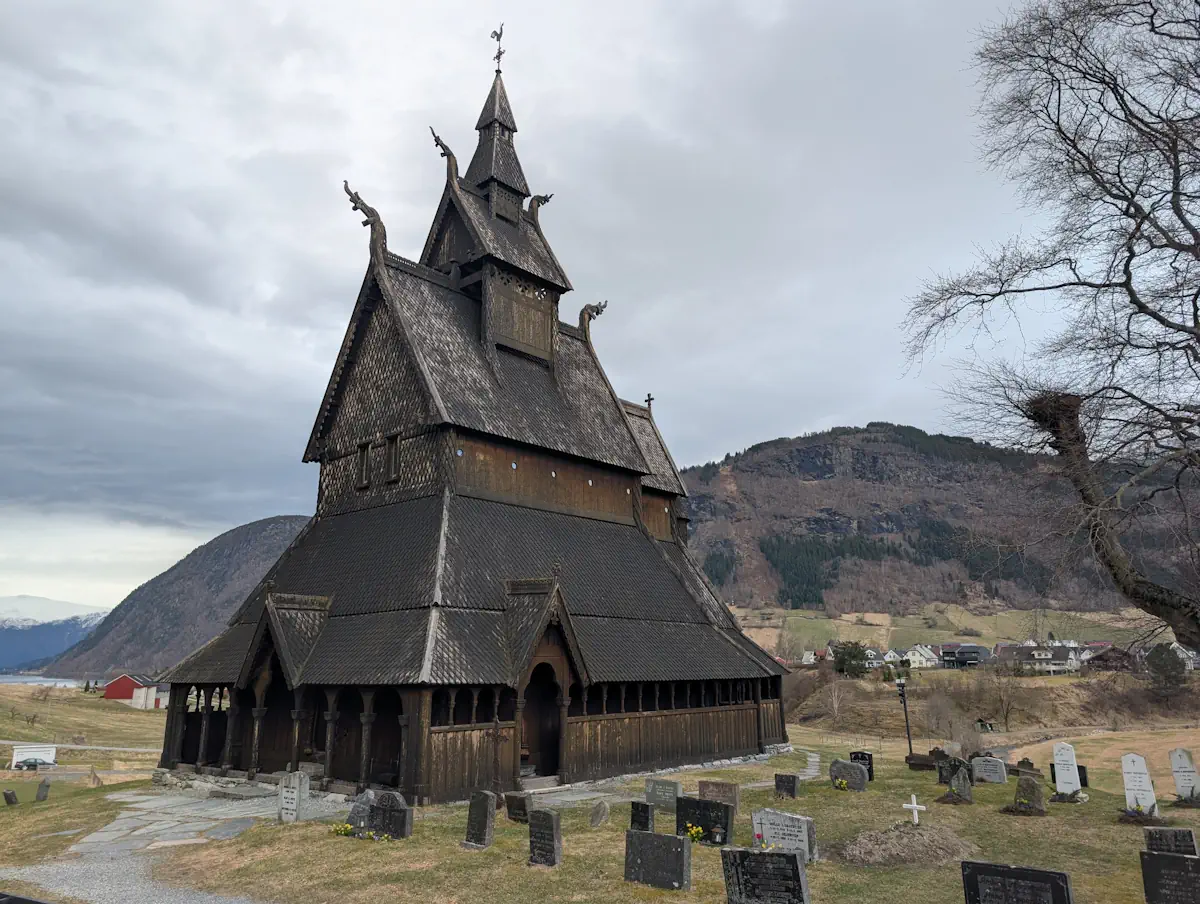
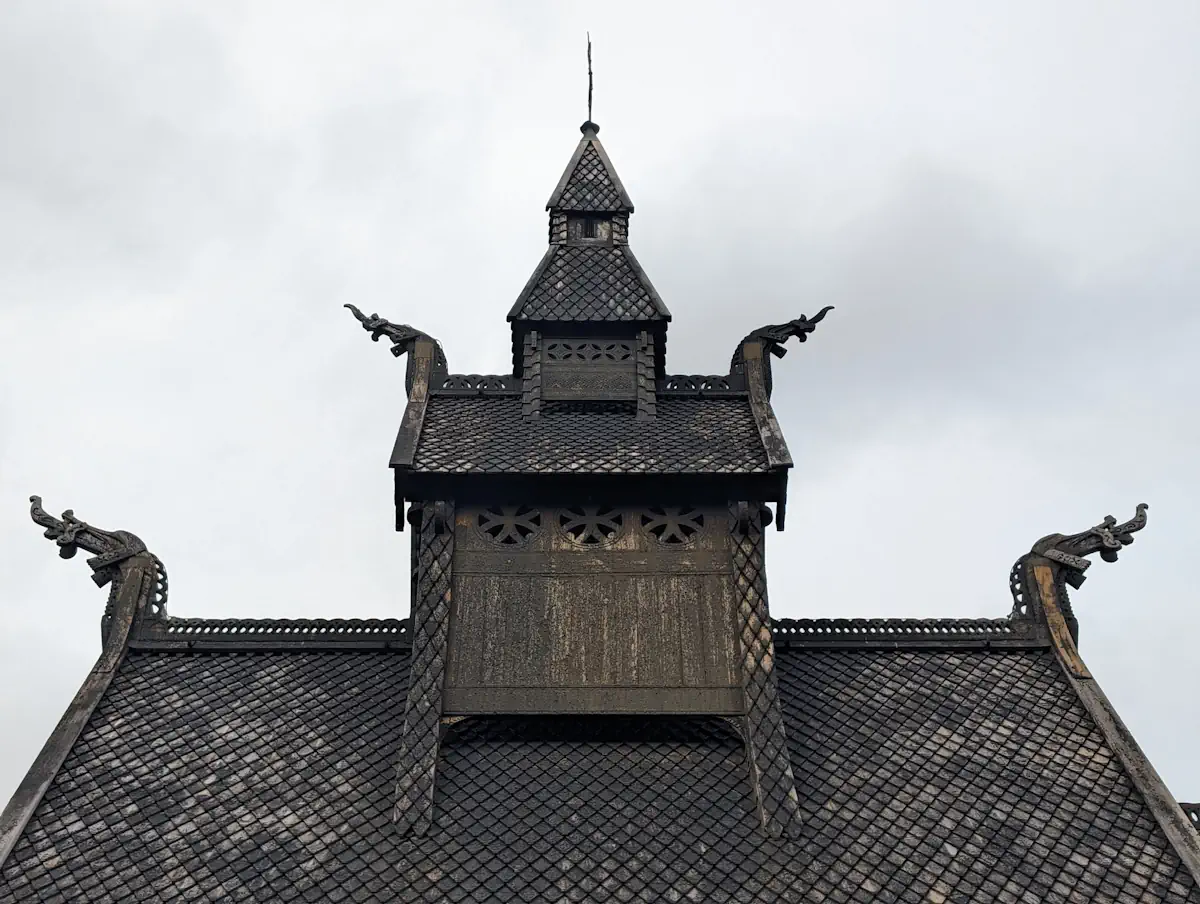
Second stop: Vikafjellet and Hopperstad After Tvindefossen, continue to Vinje, then turn onto the Rv13 heading north. You climb onto the Vikafjellet plateau (~1,000m altitude) — stark and stunning landscapes — before winding back down to the Sognefjord with dramatic views. At Vik, don’t miss the Hopperstad Stavkirke, one of Norway’s oldest stave churches (around 1130). Its painted interior and Gothic baldachin are remarkable. Allow 1 hour including the guided tour. Lunch at Vik before or after.
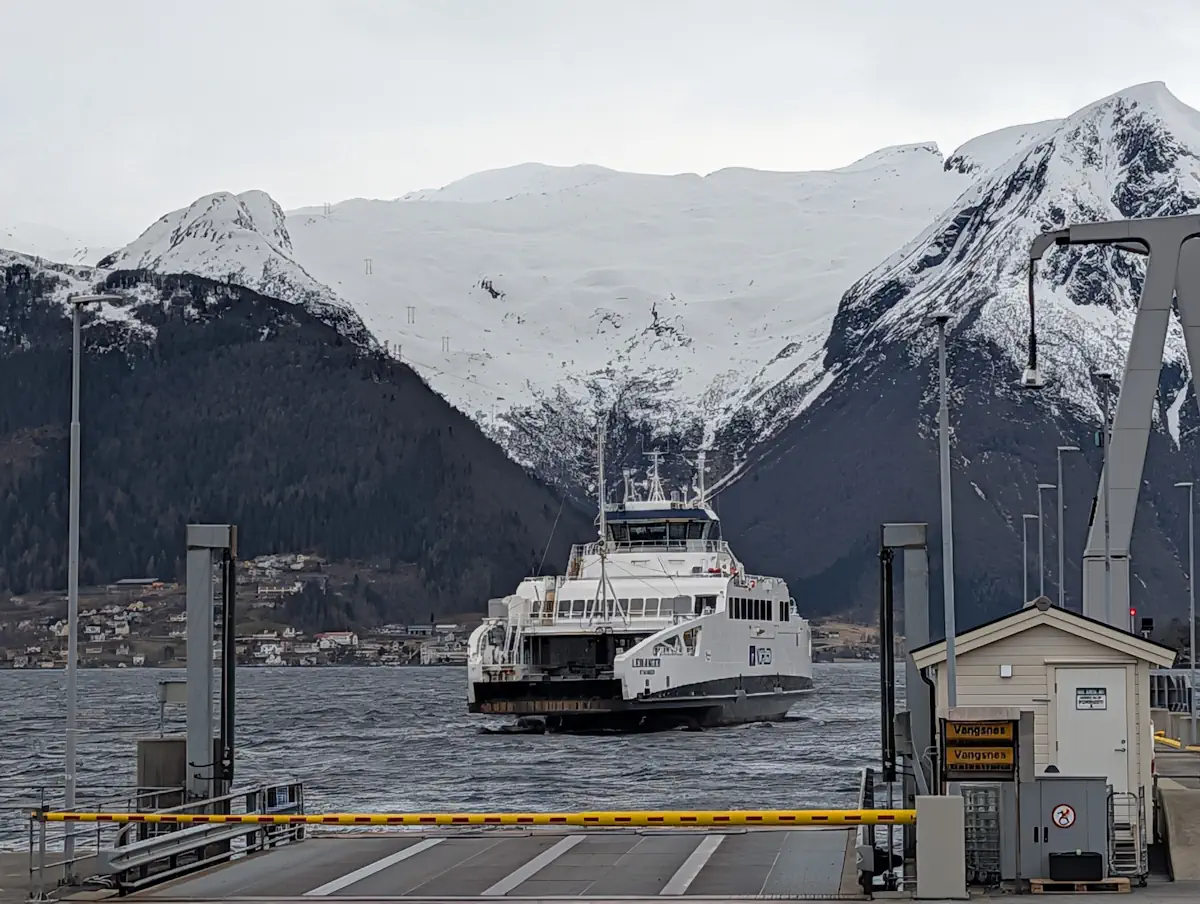
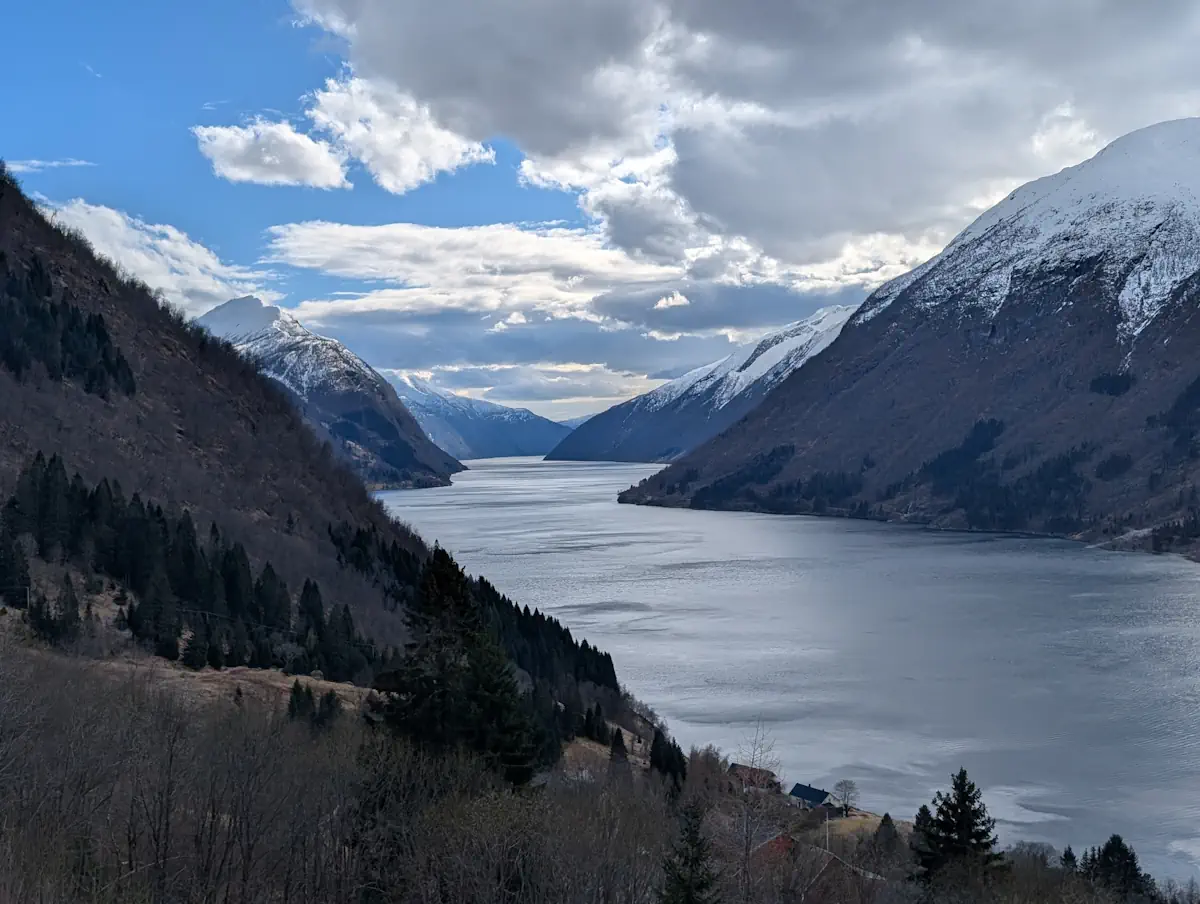
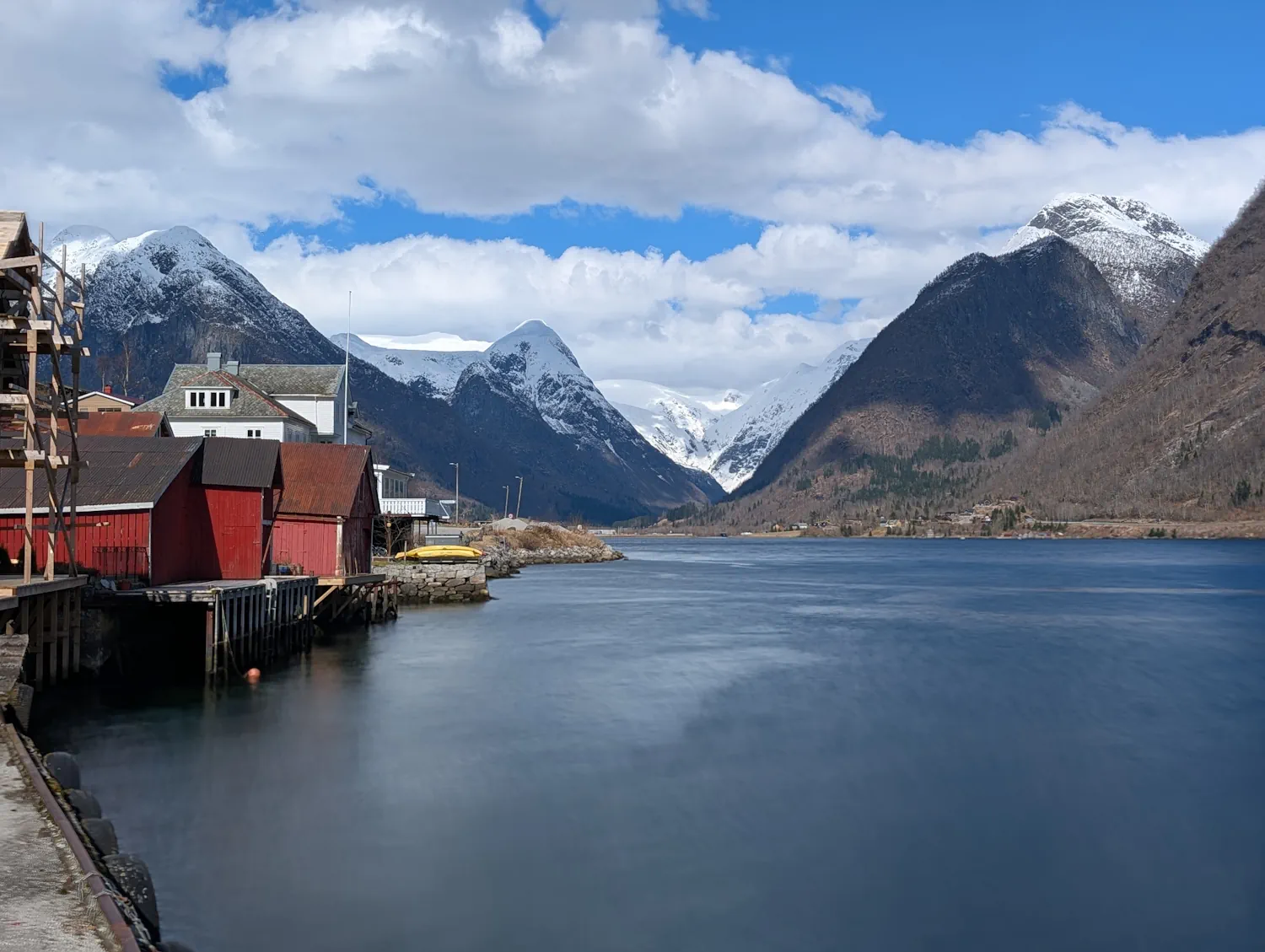
Third stop: ferry and Fjærland Drive to Vangsnes (10 min), then board the Vangsnes-Hella ferry (15-minute crossing, departures every 30–40 minutes in high season). The crossing of the Sognefjord — Norway’s longest fjord — offers splendid views. From Hella, follow the Rv55 then Rv5 to Fjærland. Arrive late afternoon in this book village nestled at the end of the Fjærlandsfjord, well away from mass tourism. One of my personal favourites — it’s absolutely charming.
Where to stay : there aren’t many options, but thankfully there’s the lovely Fjærland Fjordstove, ideally located.
Day 4: Fjærland and its glaciers
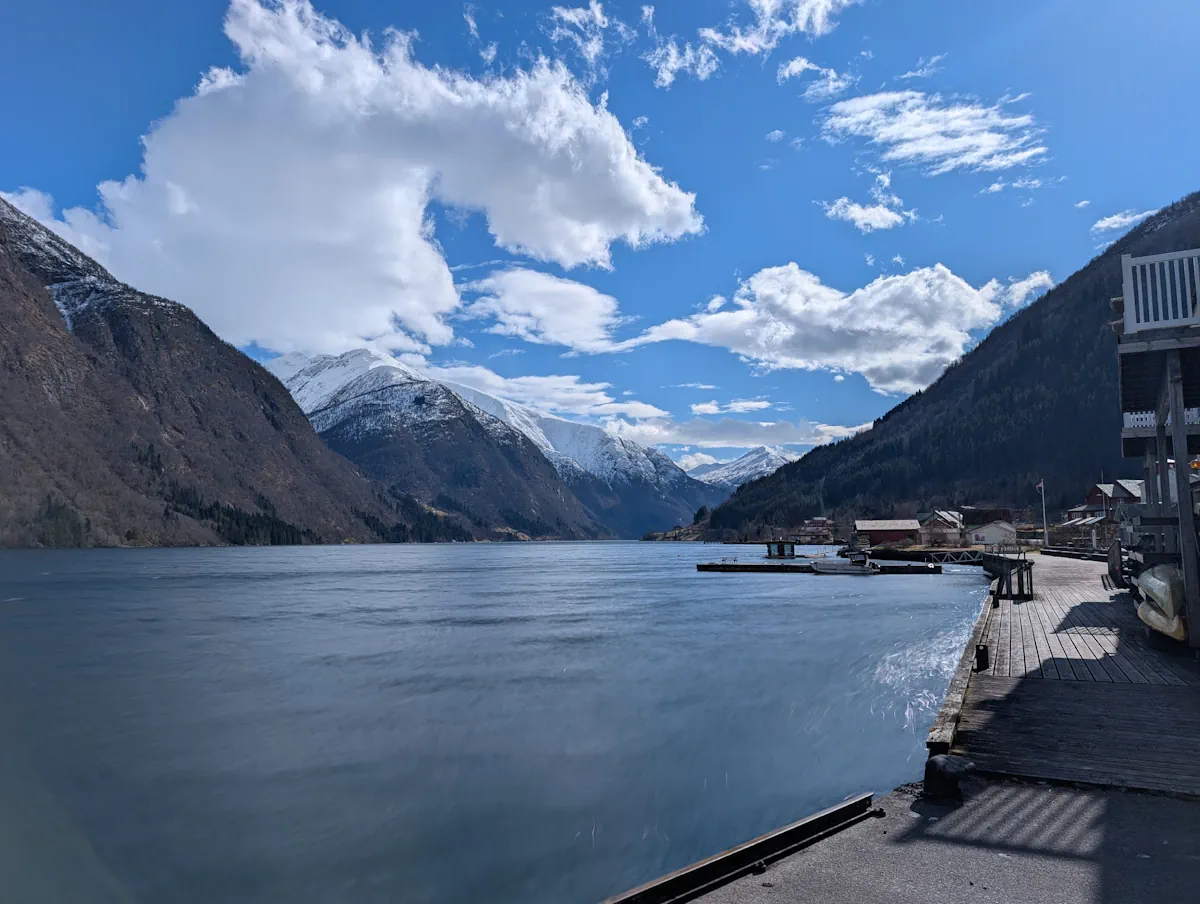
On-site | ~30 km of short drives A gentler day after yesterday’s drive, dedicated to the Jostedalsbreen glaciers and the unique atmosphere of Fjærland.
Morning: glacier museum and Bøyabreen Start with the Norsk Bremuseum (glacier museum), a building designed by architect Sverre Fehn (Pritzker Prize 1997). Excellent and well done — interactive exhibitions on glacier formation, climate and geological history. Allow 1h30. 10 minutes by car, Bøyabreen is a spectacular glacial tongue descending from the Jostedalsbreen. Free parking by the road, 10-minute walk to the glacial lake at the foot of the glacier. Highly recommended — the colours are unreal. 5 minutes from Bøyabreen, Supphellebreen is even more accessible: it descends almost to the road. You can get very close to the ice (with care).
Afternoon: according to your energy For hikers, the Flatbrehytta hike (5 hours round trip, 800m elevation, demanding) offers a bird’s-eye view down to Supphellebreen from a perched refuge. I also recommend a walk along the southern shore of Lake Jølstravatnet a little further north near Skei. For everyone else, enjoy Fjærland: stroll through Den Norske Bokbyen (the book village — bookshops set up in old buildings), rent a kayak on the fjord, or simply have a coffee by the water. There’s also a floating sauna.
Where to stay: Fjærland (same place as Day 3).

Day 5: Fjærland → Stryn via Briksdalsbreen
Fjærland → Skei → Olden → Briksdalsbreen → Loen → Stryn | ~110 km + detour | ~3h30 driving The ultimate glacier day, with the legendary Briksdalsbreen hike.
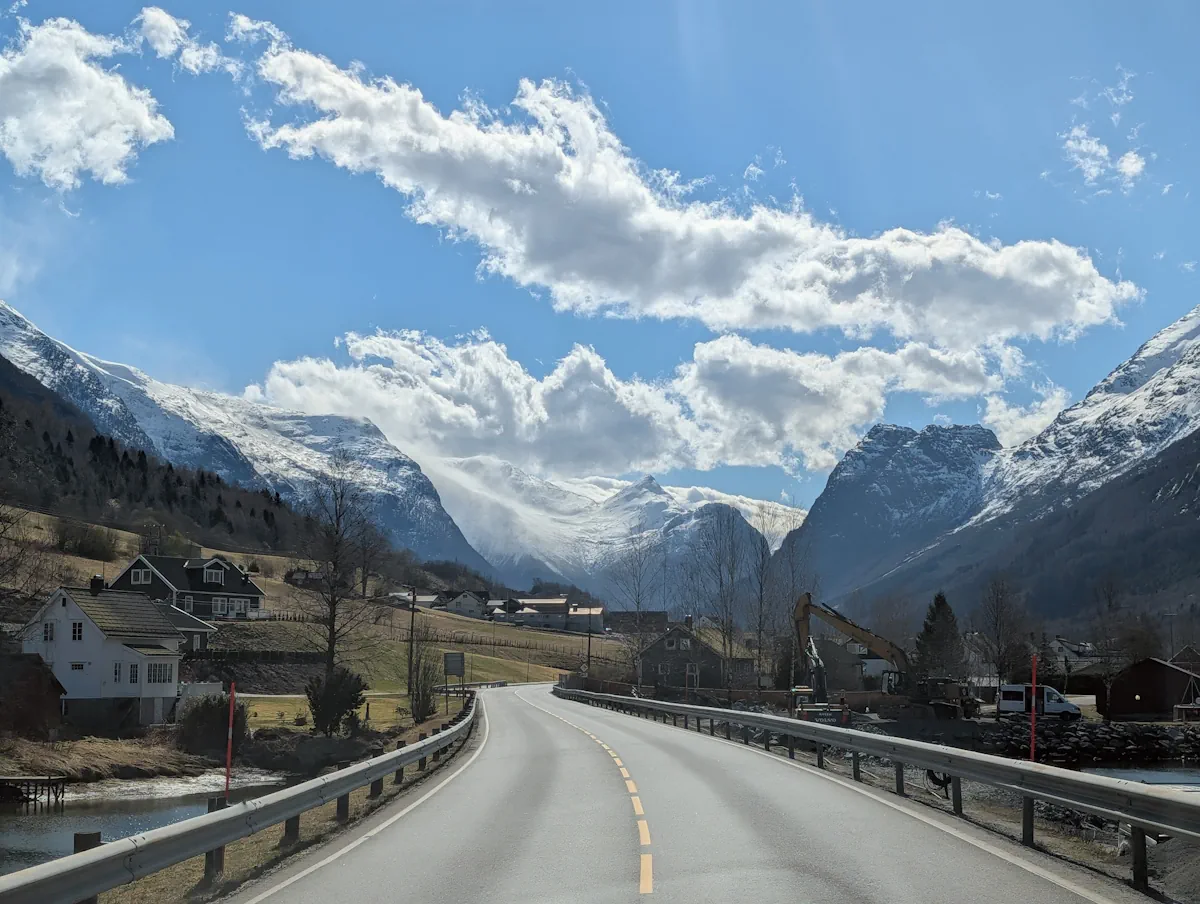
Morning: road to Nordfjord Leave Fjærland on the Rv5, which goes through the Fjærland tunnel (6.4 km under the Jostedalsbreen, free), then Skei. At Byrkjelo, take the Rv60 towards Olden and the Nordfjord. On the way, it’s worth making a detour through Fonn in a beautiful valley. At Olden, turn south to reach the Briksdalsbreen car park (45-minute detour round trip, a beautiful road following the river through the valley).
Midday: Briksdalsbreen hike One of Norway’s most accessible glacier hikes. 3 km round trip, 1h30–2h walk, wide well-marked trail to the glacial lake at the foot of the glacier. Several waterfalls along the way (bring a rain jacket — you’ll get splashed). If you’d rather not walk, troll cars (electric buggies) run between the car park and the glacier. The glacier has retreated significantly over recent decades, but the spectacle remains impressive. Lunch on-site at Briksdal Adventure Café or back in Olden.
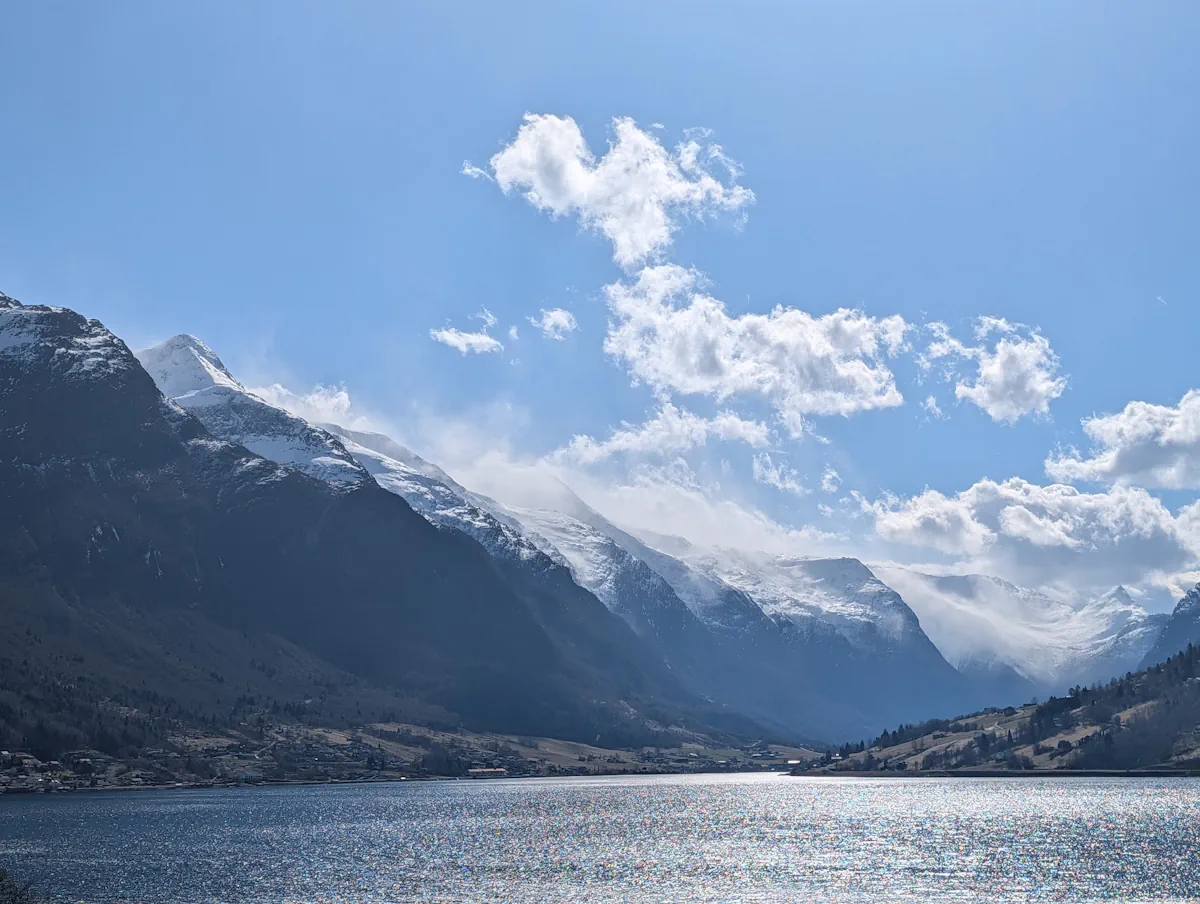
Late afternoon: drive to Stryn/Loen Take the Rv60 north, follow the Nordfjord to Loen or Stryn depending on your hotel. Arrive late afternoon, check in. Quiet evening by the Nordfjord, dinner at the hotel.
Where to stay : Hotel Alexandra in Loen (a Norwegian institution with a spa and pool, fjord views) — arrive early to enjoy the spa after these first active days.

Day 6: Loen, Lovatnet and the Nordfjord
On-site | ~50 km of short drives An active rest day in the Nordfjord, with two main highlights.
Morning: Loen Skylift The Loen Skylift is the steepest cable car in Northern Europe. It takes you in 5 minutes from sea level to the summit of Hoven (1,011m). The 360° view over the Nordfjord, the Jostedalsbreen glaciers and the surrounding peaks is breathtaking. At the top, several options:
- Hoven Restaurant (excellent cinnamon buns and hot chocolate)
- Marked hiking trails (to Mount Skåla for the most experienced)
- Loen via ferrata (book in advance)
I’d allow 3 hours including lunch at the top.
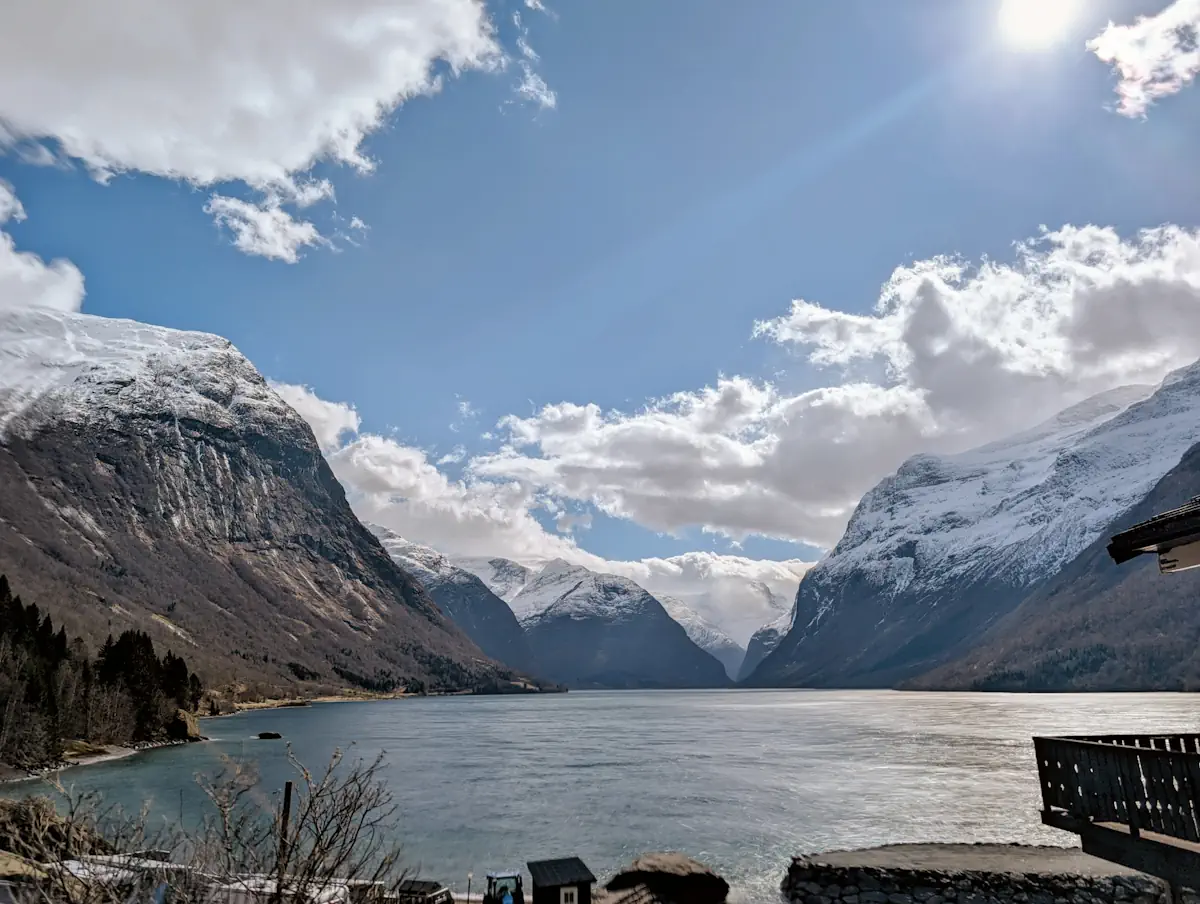
Afternoon: Lovatnet (especially) and Kjenndalsbreen Lovatnet, the turquoise lake at the foot of Hoven, is one of the most beautiful in Norway. You know the Königssee in the Bavarian Alps? The resemblance is striking! Take the scenic road along the lake shore to the far end, where you’ll find Kjenndalsbreen, another accessible glacial tongue — car park + 30-minute walk. But since you’ve already seen quite a few glaciers, I’d recommend enjoying the lake or fjord instead. There are several options:
- the lovely little boat MS Kjenndal II on the Lovatnet
- go kayaking on the Nordfjord
- or take a RIB boat on the Nordfjord for a bit more of a thrill!
The road along the lake, especially at the far end, is less busy than the Briksdalsbreen one — you’ll probably have it mostly to yourselves. One tip: the road is narrow (single lane for both directions), so drive carefully. Lovatnet has a dramatic history: two glacial tsunamis (1905 and 1936) destroyed the hamlets of Bødal and Nesdal, claiming dozens of lives. Several signs along the road recount these events.
Where to stay: Loen (same place as Day 5).

📍 Olden · 2 hrs on the water · Olden Active
The calm immersion option: paddle through the emerald green and turquoise meltwater of the Nordfjord in a stable two-person kayak. Certified local guides, safety boat, dry suit provided — ideal for beginners and cruise passengers.
- Turquoise waters & spectacular mountain views
- Stable two-person kayaks — ideal for beginners
- Dry suit & safety boat provided
Free cancellation
From €92 / per person

📍 Olden · 1 hr · Olden Active
The thrills & wide views option: 1 hour aboard a panoramic rigid inflatable boat on the Nordfjord. The skipper gets up close to the waterfalls and cliffs, with a chance of spotting sea eagles and seals along the shores.
- Up-close approach to waterfalls plunging into the fjord
- Possible sightings of sea eagles & seals
- Buoyancy suit, life jacket & goggles provided
Free cancellation
From €106 / per person
Day 7: Stryn → Geiranger
Stryn → Hellesylt → ferry → Geiranger | ~75 km + ferry | ~2h30 + 1h15 ferry A short driving day but packed with emotion — with the Geirangerfjord cruise right in the middle.
Morning: drive to Hellesylt Leave Stryn on the Rv60 heading north. You’ll follow the shore of Hornindalsvatnet, the deepest lake in Europe (514m). A few photo stops are possible along the bank. Arrive in Hellesylt around 10:30–11am. The village is dominated by a waterfall that plunges straight into the fjord, right in the centre. Coffee at the harbour while you wait to board. If you have time in Hellesylt before the ferry, check out the Ljøen viewpoint.
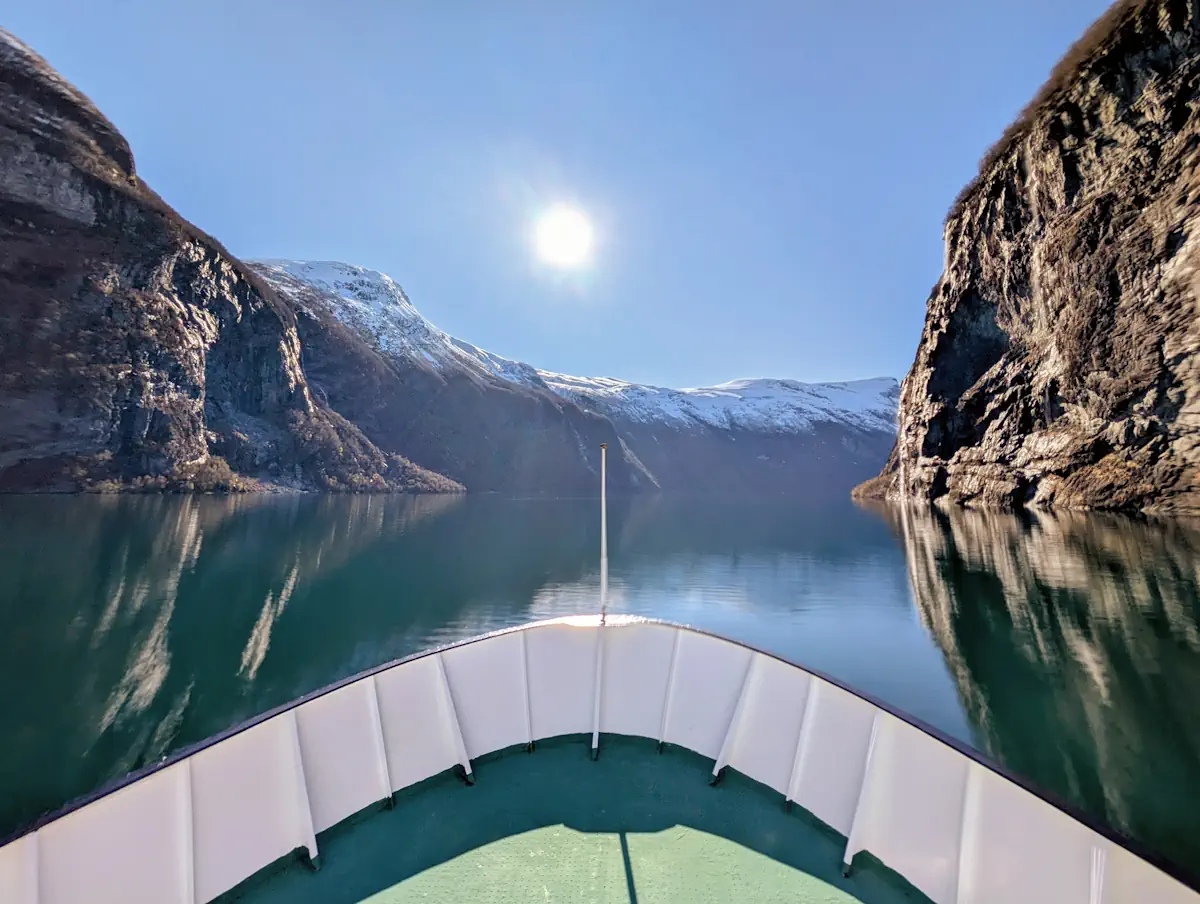
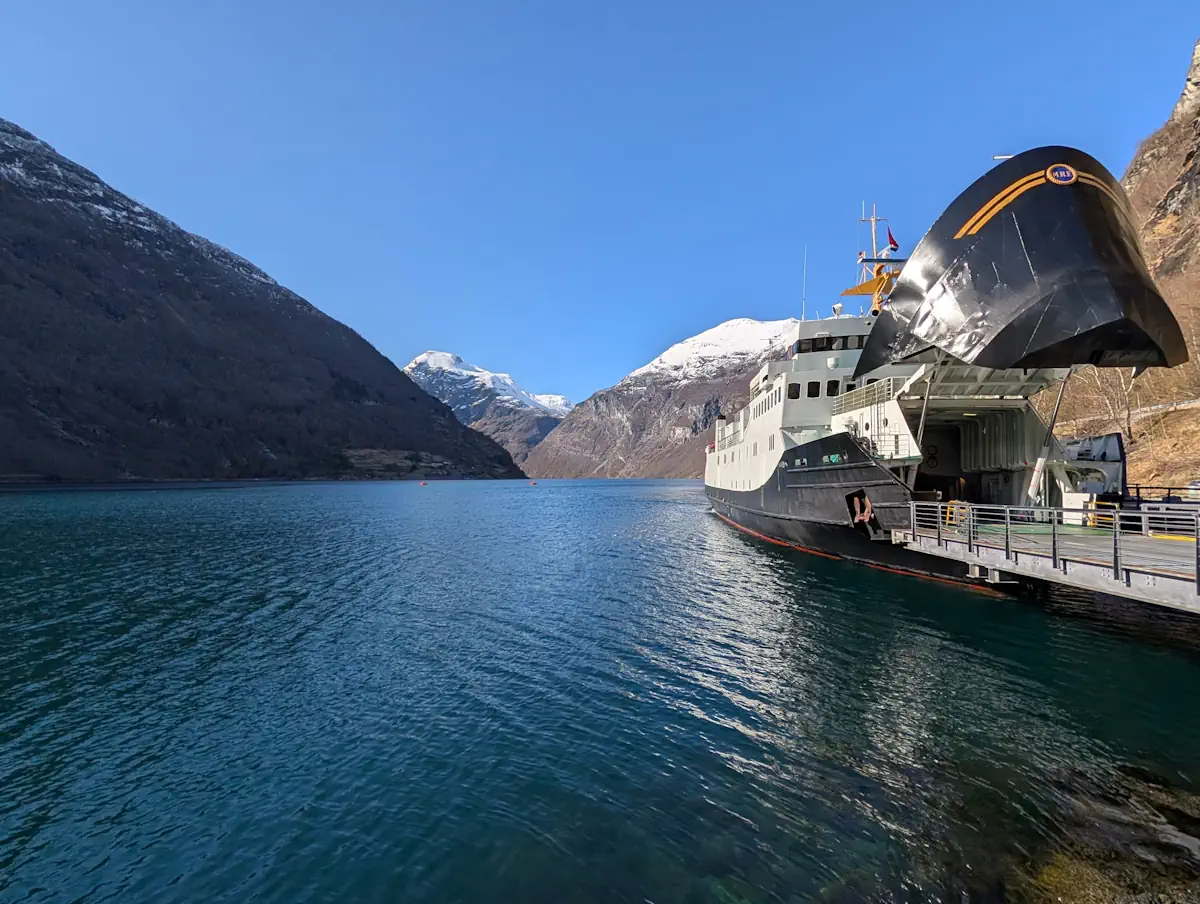
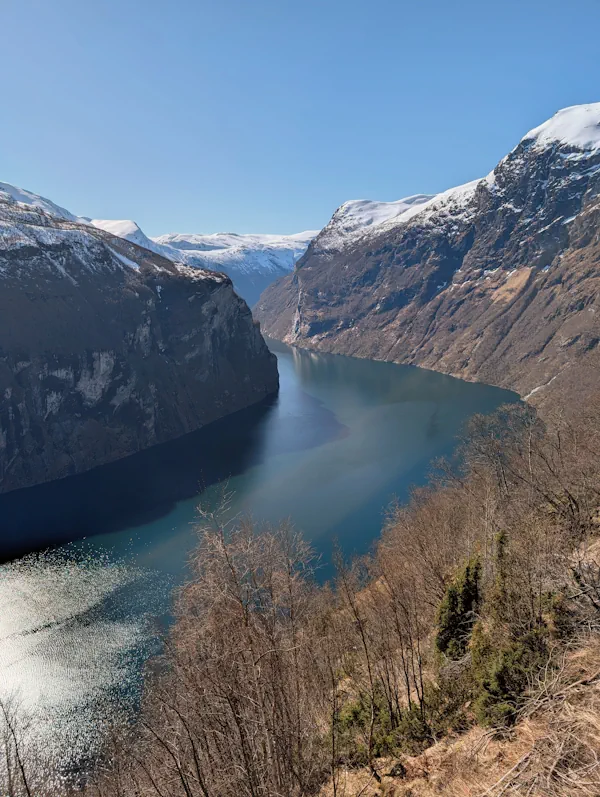
Midday: ferry Hellesylt → Geiranger (1h15) This is THE Geirangerfjord cruise — no need to take another one once you’re there. The ferry passes right by the iconic waterfalls: the Seven Sisters (Knivsflåfossen), the Suitor (Friaren), the Bridal Veil (Brudesløret). The abandoned farms perched on the fjord walls (Knivsflå, Skageflå) are visible from the deck.
- You absolutely have to book your ferry ticket. In the following article I give full details about the Hellesylt–Geiranger ferry. And yes, you board with your vehicle!
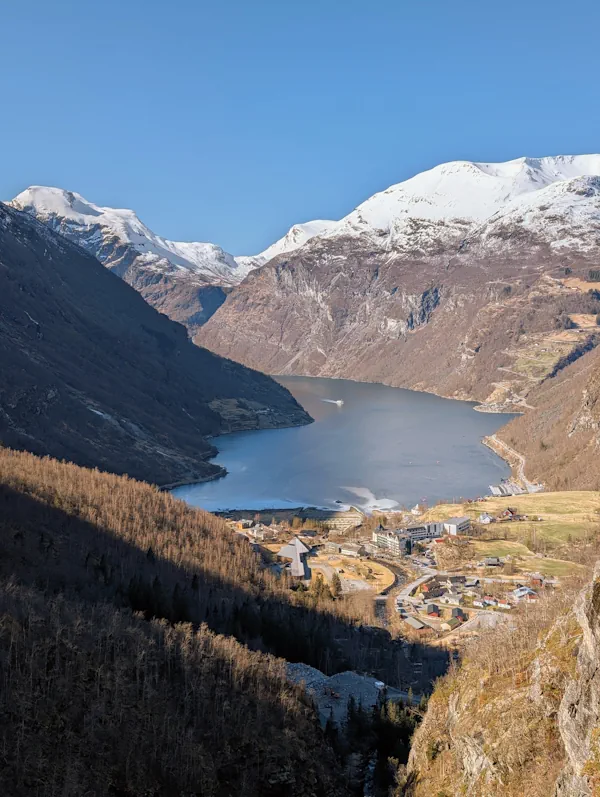
Afternoon: viewpoints over Geiranger Arrive in Geiranger around 1–2pm, late lunch. In the afternoon, I recommend doing the two viewpoints accessible by car:
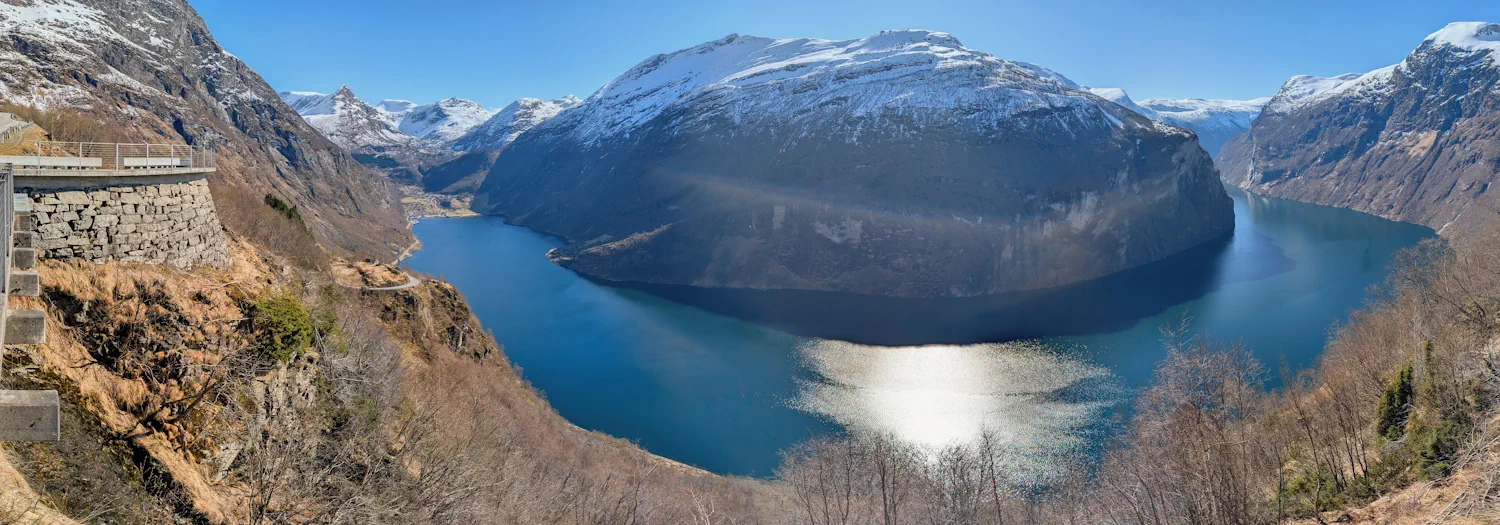
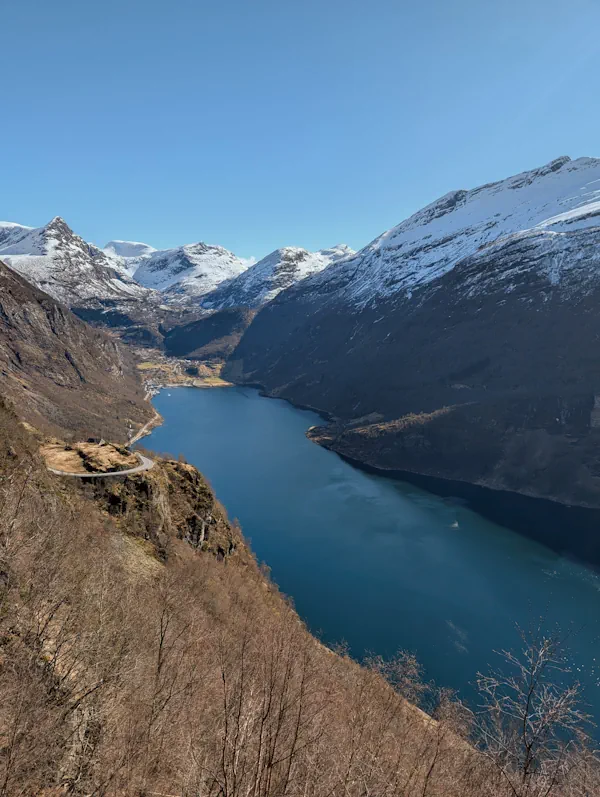
- Ørnesvingen / Eagle Road (Rv63 north, 7 minutes from the village): famous hairpin bend, developed platform, plunging view over the fjord.
- Flydalsjuvet (Rv63 south, 5 minutes from the village): the postcard viewpoint, with an overhanging rock (secured) that makes for an iconic photo.
Where to stay : Hotel Union (institution with a spa, incredible fjord views — the classic Geiranger choice) or Grande Fjord Hotel (right on the fjord).
Day 8: Geiranger — a full day on-site
On-site | ~50 km round trip to Dalsnibb A second day in Geiranger, dedicated to high-altitude viewpoints and hiking
Early morning: Dalsnibba Skywal Dalsnibba is the ultimate viewpoint over the Geirangerfjord, at 1,500m altitude. The toll road Nibbevegen (around €30/car — yes, they’re not shy about it) takes you up in 20 minutes from Geiranger My advice: go EARLY for two reasons. First, to beat the cruise ship buses that come up mid-morning. Second, check the webcams before you leave — the summit is often shrouded in mist, and it would be a shame to pay the toll for a white-out
Rest of the morning: return and lunch Back in Geiranger by noon, lunch on-site.
Afternoon: hike or cruise — your choice Several options depending on your level:
- Storseterfossen (1h30 round trip, moderate): the waterfall you walk behind. Starting point at Westerås car park. Perfect for families or if you don’t want a long walk.
- Skageflå (4h round trip, challenging): the abandoned farm perched 250m above the fjord. This is the iconic postcard view. Steep trail but well marked.
- Norsk Fjordsenter: if you prefer culture, this museum does an excellent job explaining the history of the fjords and their UNESCO status.
You can also go kayaking to explore the fjord from the water, or take a RIB boat to get up close to the waterfalls!
Where to stay : Geiranger (same place as Day 7).


📍 Geiranger · 2 hrs · Excursions.no · max 10 people
Join an instructor for a kayaking adventure in the Geiranger fjord. Glide through crystal-clear blue waters and admire the breathtaking scenery of this UNESCO World Heritage site.
- Unique views of Gjaerdefossen waterfall & Eagle Bend
- The Geirangerfjord from the water, up close
- Small group (max 10), quality equipment provided
Free cancellation
From €111 / per person

📍 Geiranger · 1 hr · Fjord Guiding
Discover the Geirangerfjord at high speed aboard an open rigid inflatable boat. Get up close to the Seven Sisters, Friaren and other famous attractions, with photo stops and fresh air included.
- Ultra-close approach to the Seven Sisters & Friaren waterfalls
- Skagefla mountain farm seen from sea level
- Guaranteed thrills aboard an open rigid inflatable
Free cancellation
From €83 / per person
Day 9: Geiranger → Ålesund via Trollstigen
Geiranger → ferry Eidsdal-Linge → Valldal → Trollstigen → Åndalsnes → Ålesund | ~120 km + ferry | ~4h driving with stops One of the most beautiful driving days of the entire trip, stringing together several national scenic routes.
Morning: ferry and Valldal Leave Geiranger on the Rv63 north, passing again through Ørnesvingen. Descend to Eidsdal, a short 10-minute ferry to Linge, then drive up through the Tafjord valley via Valldal. The Valldal valley is famous for its strawberries (in season, mid-June to August, you’ll find roadside stalls). I’ve never eaten strawberries and raspberries as good as here — really do stop and buy some (back in the day you had to pay in cash, that’s probably changed by now).
First major stop: Gudbrandsjuvet At Valldal, don’t miss Gudbrandsjuvet, a spectacular gorge carved by the Valldøla river. Steel Corten walkways designed by architect Reiulf Ramstad let you look down over the turquoise rapids. Café and toilets on-site. Allow 30–45 minutes.
Second major stop: Trollstigen This is THE legendary road of Norway. Trollstigen (“the Troll Ladder”) is a national scenic route that climbs along the mountainside in 11 hairpin bends, with an observation platform at the top (remarkable architecture, again by Reiulf Ramstad). Since you’re coming from the south, you’ll actually be descending the bends rather than climbing them. The advantage: you see the switchbacks as you go down and you’ll normally encounter fewer people.
Essential stops:
- Summit platform (free parking, developed paths to several viewpoints)
- Views of Stigfossen waterfall during the descent
Allow 1–1h30 on the Trollstigen section.
Third stop: TrollveggenOn the way down to Åndalsnes, stop at the Trollveggen Visitor Center. The “Troll Wall” is a vertical rock face 1,100 metres high — the tallest in Europe. A legendary challenge for mountaineers, a breathtaking sight for visitors.
End of day: drive to Ålesund From Åndalsnes, allow about 2 hours on the E136 to Ålesund. Arrive in the evening. If you still have energy, the sunset from Mount Aksla is superb.
Where to stay : Hotel Brosundet (a converted warehouse on the quayside, a gorgeous Art Nouveau address — perfect but not cheap) or the Scandic Parken which is great value for money.

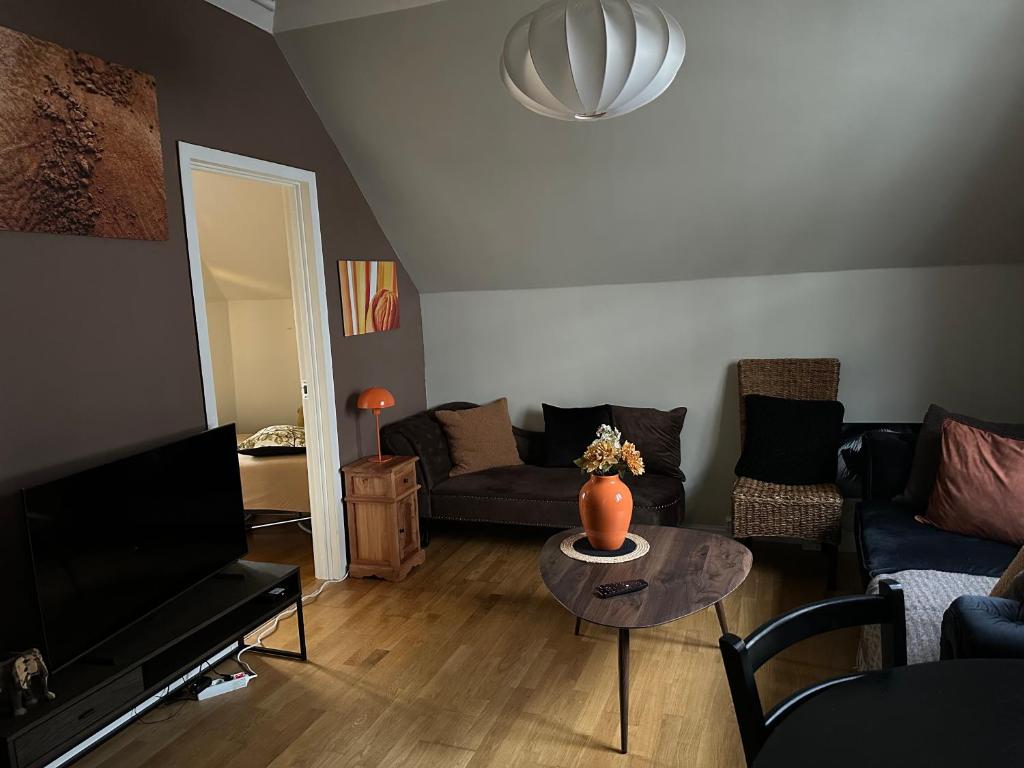
📍 Aksla district · 10 min walk from the centre
45 m² apartment with private entrance in a historic wooden house, at the foot of the trail to the Aksla viewpoint. Fully equipped kitchen, views over the fjords and mountains — the independent, affordable choice for Ålesund.
- Private entrance & full kitchen
- Views over the fjords and mountains
- At the foot of the Aksla trail, pets welcome
Free cancellation
From €100 / night
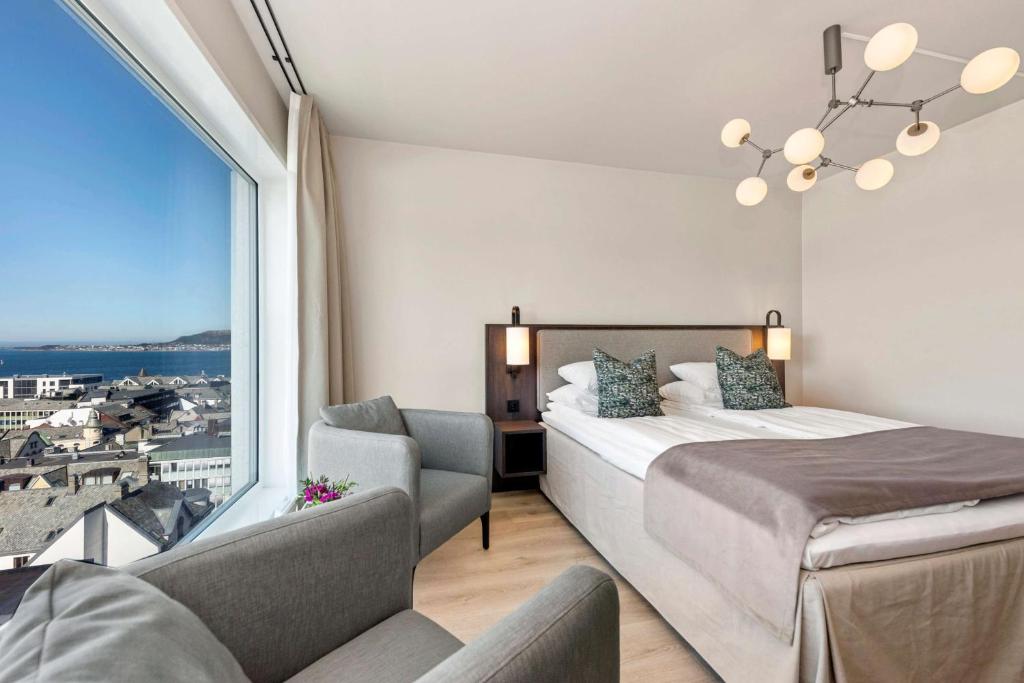
📍 Central Ålesund · 50 m from Byparken
Modern hotel in the heart of Ålesund, steps from the city park and the Mount Aksla trail. Rooms with sea or mountain views, sauna and fitness room on site, plus a buffet breakfast unanimously praised.
- Sauna and fitness centre
- Buffet breakfast rated fabulous
- Restaurant, bar and on-site parking
Free cancellation
From €135 / night

📍 On the Brosundet canal · Ålesund harbour
Boutique hotel set in a renovated Art Nouveau warehouse on the canal. Sea-inspired contemporary rooms, the acclaimed Apotekergata No. 5 restaurant and a sauna with direct fjord access — location rated 9.7/10.
- Views over the harbour and the boats
- Apotekergata No. 5 gastronomic restaurant
- Sauna with fjord plunge option
Free cancellation
From €180 / night
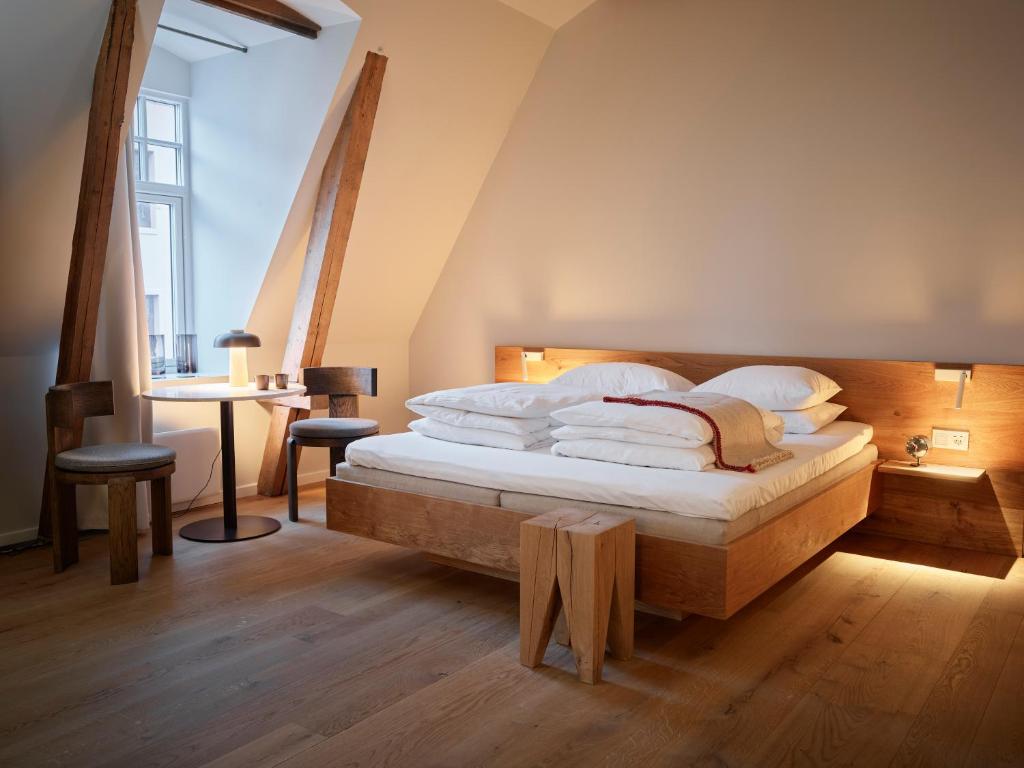
📍 Central Ålesund · Løvenvoldgata
Ålesund's oldest hotel, opened in 1904 and tucked inside an iconic Art Nouveau building. Hushed boutique hotel with espresso bar, Green Garden lounge and an architecture studio on site — to experience Ålesund's Jugendstil from within.
- Iconic Art Nouveau building (Jugendstil)
- Exceptional breakfast, 9.6/10 location
- Espresso bar and Green Garden lounge
Free cancellation
From €168 / night
Day 10: Ålesund Art Nouveau
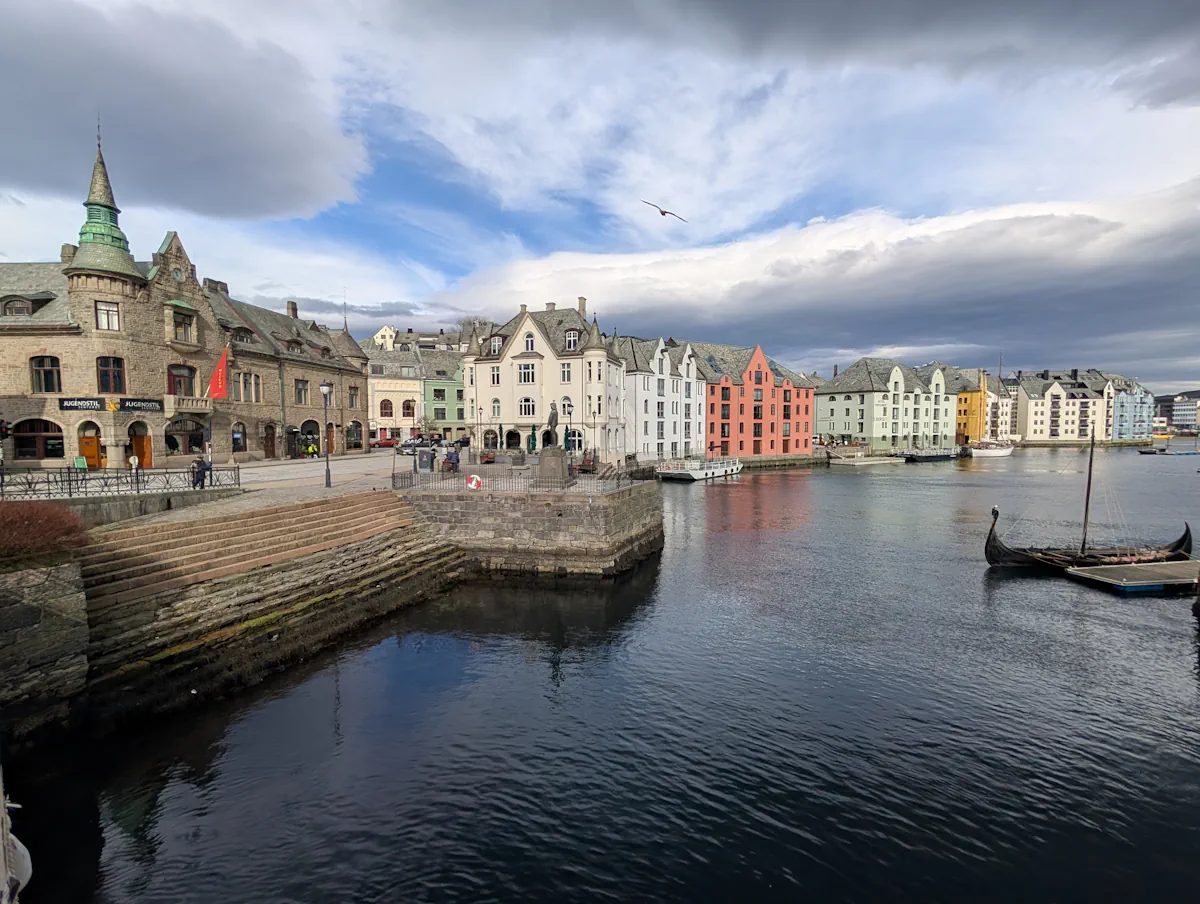
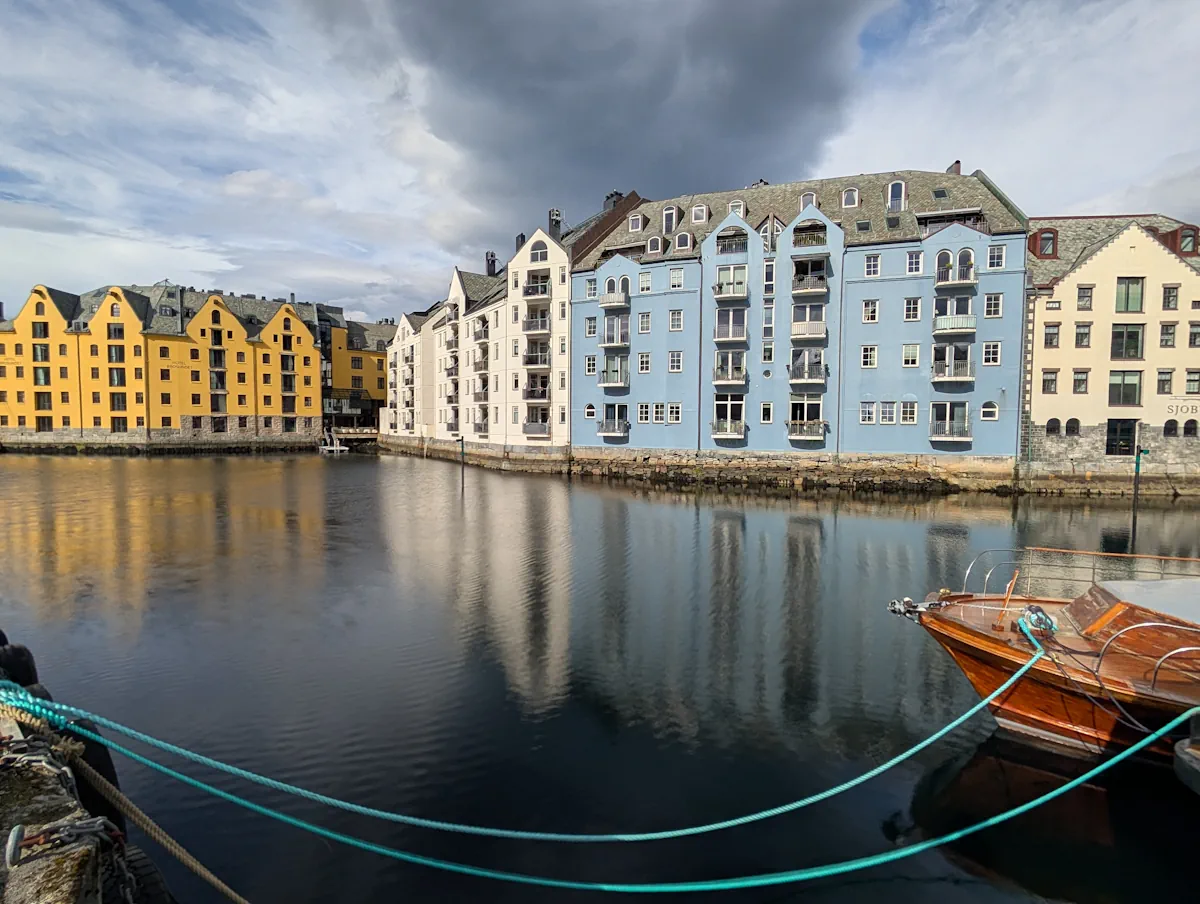
On-site | ~30 to 80 km depending on excursion After the wild roads of the day before, a relaxed day to discover one of Norway’s most beautiful cities, entirely rebuilt in Jugendstil (Art Nouveau) style after the 1904 fire.
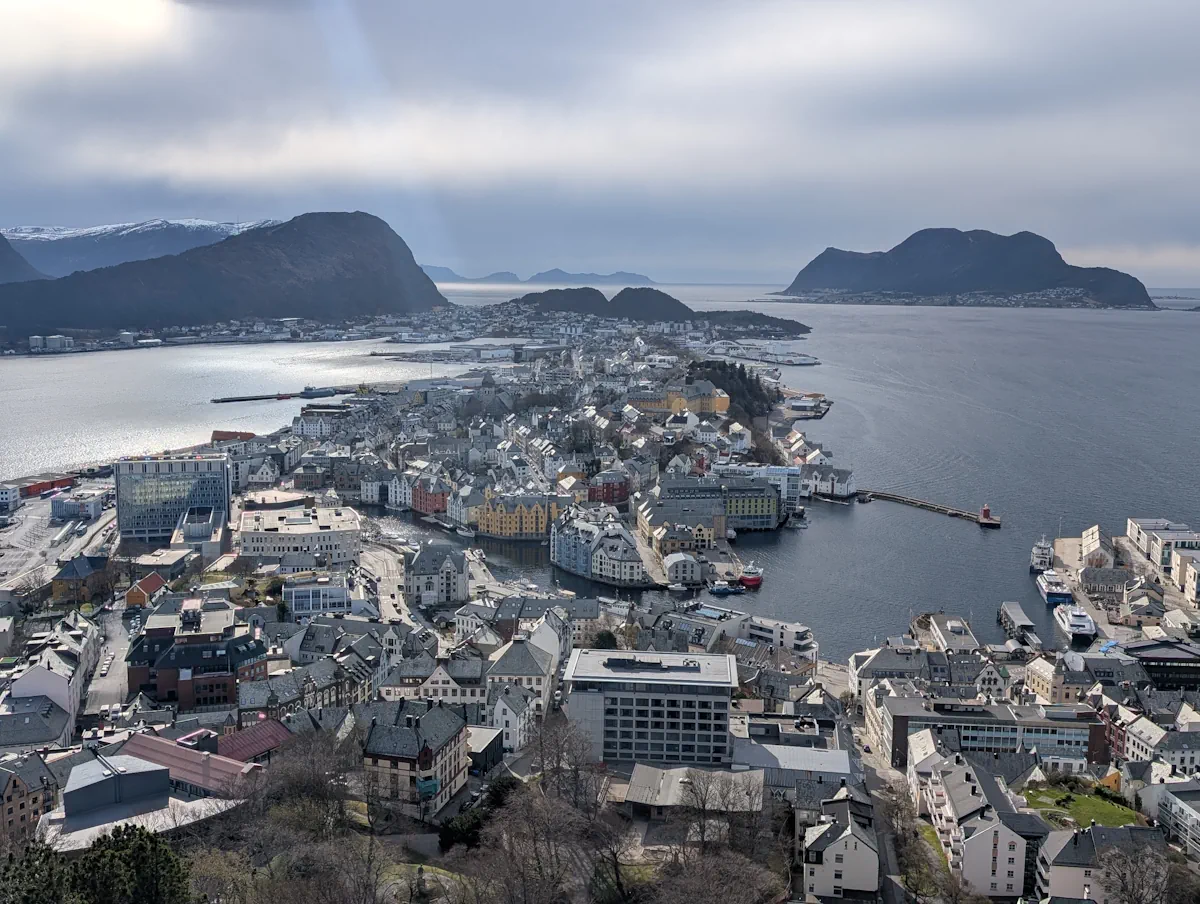
Morning: Mount Aksla and the Art Nouveau centre Start with Mount Aksla (418 steps from the park in town, or by car/small tourist train). The panoramic view over the Art Nouveau city, the archipelago and the distant mountains is one of the finest in Norway. This is the postcard view you’ll recognise from pictures of Ålesund. Then come back down to stroll through the Art Nouveau centre. The entire city was rebuilt in just 3 years after the fire, in a coherent Jugendstil style. The streets of Kongens Gate, Apotekergata and Kirkegata are full of remarkable facades. The centre is tiny, which makes it very pleasant to explore.
Midday: lunch on Brosundet, the central canal lined with restaurants.
Afternoon: excursion of your choice Three options depending on your interests:
- Alnes on Godøy island (25 min drive via undersea tunnel): iconic lighthouse, sandy beach, well-regarded café. The easiest one to organise.
- Runde, the bird island (1h30 drive + short hike): puffins, gannets, guillemots. Season May–August. Best for birdwatching enthusiasts.
- Atlanterhavsparken (aquarium): excellent for discovering Norway’s marine wildlife. Really enjoyable — we loved watching the seal feeding, especially with kids.
- There’s a wildlife sea safari, especially for puffins if it’s the season. It goes by RIB boat from the harbour. Really interesting!
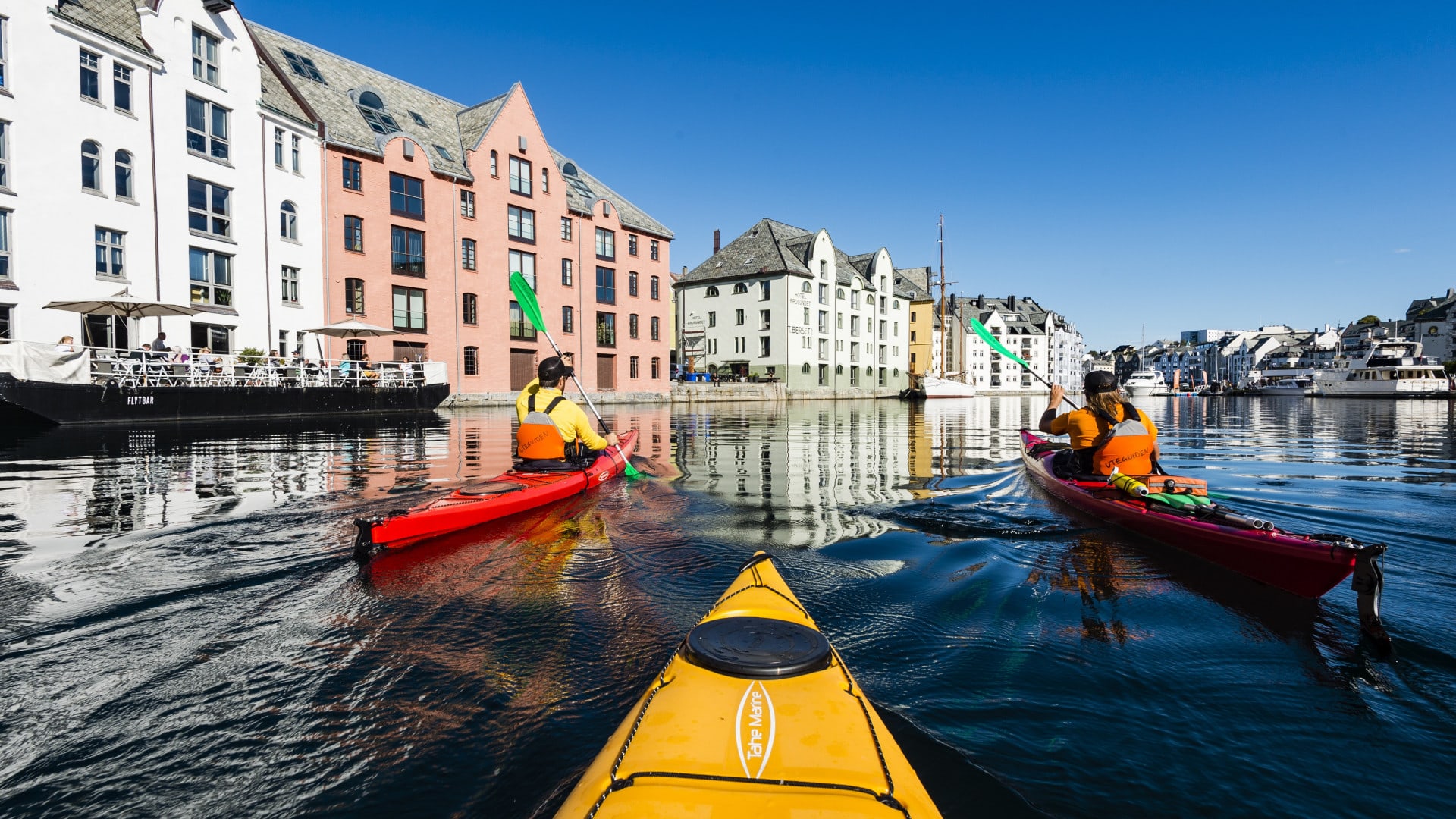
- And another wet but great option: you can go kayaking around Ålesund.
Evening: dinner at Apotekergata No.5 or XL Diner (fresh fish).
Where to stay : Ålesund (same place as Day 9).
📍 Ålesund · 2.5 hrs · max 16 people · from age 5
The nature immersion option: paddle on the calm waters around Ålesund with a certified instructor. 7 km guided outing with photo stops, full equipment provided — accessible to beginners and families alike.
- 2.5-hour guided tour covering ~7 km through the fjords
- Wetsuit, life jacket, paddle & dry bag provided
- Safety briefing & paddle technique introduction
Free cancellation
From €83 / per person

📍 Ålesund · 2 hrs · Lukas Klein Media
The culture & budget option: 2 hours of relaxed strolling with Lukas, a passionate local guide. Art Nouveau architecture, fishing port history, klippfisk and everyday anecdotes — a personal insight into the Norwegian coast.
- Ålesund's Art Nouveau architecture in context
- Small group & passionate local guide (EN/FR/DE)
- Digital brochure included to extend the visit
Free cancellation
From €54 / per person
Day 11: Ålesund → Lom via Stranda and the Strynefjellsvegen
Ålesund → ferry Magerholm-Sykkylven → Stranda → Hellesylt → Stryn → Gamle Strynefjellsvegen → Grotli → Lom | ~255 km + ferry | ~6h driving The longest driving day of the trip, but also one of the most varied: the Storfjord coast, a historic glacier plateau, then descending into Jotunheimen. I made this route longer (we’ll look at the shorter alternative below) because I wanted to include the famous Strynefjellsvegen scenic route.
Morning: ferry and Stranda Early departure from Ålesund (around 8am). Head to Magerholm for the ferry to Sykkylven (25-minute crossing, very frequent departures). From Sykkylven, follow the Rv60 south along the Storfjorden. This section is less well known than the UNESCO fjords but offers superb landscapes that very few tourists ever see. Possible stop at Stranda (Strandafjellet cable car in summer).
Midday: Hellesylt and Stryn You pass back through Hellesylt (already visited on Day 7) then Stryn (Days 5–6). This is the only repeated stretch of the trip, but the Rv60 between Hellesylt and Stryn (Hornindalsvatnet) is beautiful in both directions. Lunch in Stryn or a little further along at Videsæter.
Afternoon: Gamle Strynefjellsvegen This is the highlight of the day. The Gamle Strynefjellsvegen (FV258) is one of Norway’s most singular national scenic routes. Built in 1894, it crosses a glacier plateau at 1,000m altitude, dotted with milky-white lakes. You leave the Rv15 at Videsæter (just after Stryn) and follow it all the way to Grotli. Allow 2–2h30 with photo stops. Uneven cobblestone sections, almost lunar landscapes, feeling of being at the end of the world. I drove it more than 10 years ago — it’s one of the strongest memories I have from that first Norway trip, which is why I absolutely wanted you to experience it.
End of day: descent to Lom At Grotli, rejoin the Rv15, descend towards Bøverdalen and Lom. The landscapes open up as you enter the Jotunheimen massif, with the first great summits appearing. Arrive in Lom late afternoon, visit the exterior of Lom Stavkyrkje (the interior is for the next morning).
Where to stay: Fossheim Turisthotell (a classic Norwegian hotel in Lom) or Røisheim (a historic chalet hotel on the Sognefjellet road — stunning).
📍 Lom · 100 m from the Stave Church
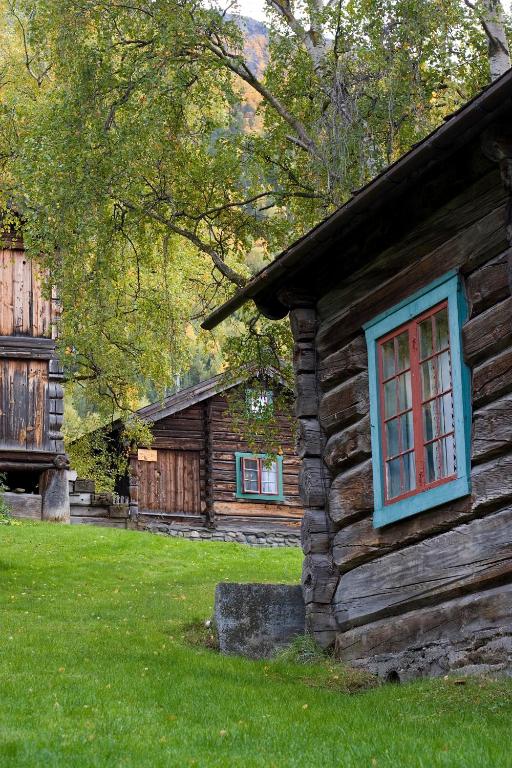
Historic timber hotel from 1897 in the heart of Lom village, just steps from the famous stave church. Gastronomic restaurant with local Norwegian produce, polished Scandinavian decor and rooms with old-world charm — the perfect stop on the Sognefjellet road.
- Historic 1897 timber building
- Gastronomic restaurant with local produce
- 100 m from the Lom Stave Church
Free cancellation
From €140 / night
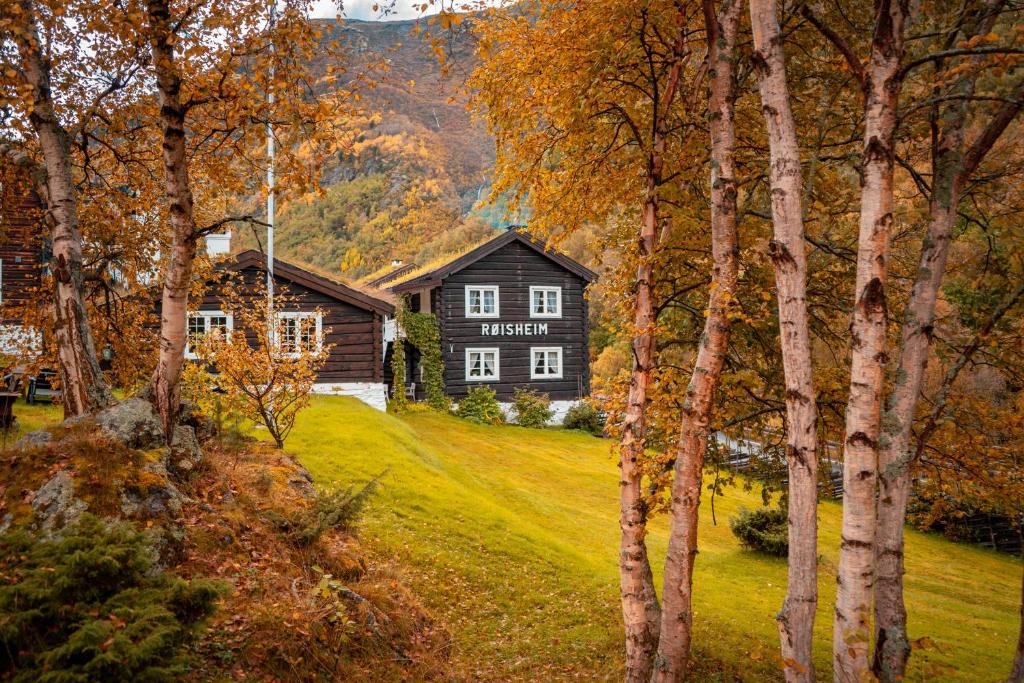
📍 Lom · former coaching inn, at the gates of Jotunheimen
18th-century coaching farm tucked among the peaks of Jotunheimen, with log cabins, four-poster beds and a 4-course menu paired with wine. A timeless escape unanimously praised — staff rated 9.7/10.
- Period log buildings from the 1700s
- 4-course menu and views of Galdhøpiggen
- Staff rated 9.7/10 and cleanliness 9.2/10
Free cancellation
From €275 / night
Day 11: Alternative via Dombas and Rondane
Ålesund → Åndalsnes → Dombas → Dovrefjell → Otta → Lom | ~255 km + ferry | ~4h30 driving + musk ox visit This is a slightly different programme — more driving overall, but on faster roads through beautiful wide valleys, passing through Dovrefjell and Rondane national parks. The idea is more road, less stress. And when you’re talking Dovrefjell, you’re talking musk oxen! You can stop just north of Dombas to try to spot them. There are guided excursions to see the musk oxen, but they start around 9:30–10am, which makes it tricky to be there in time coming from Ålesund. If you’re staying in the area, it’s something I’d really encourage you to do! Otherwise, try it yourself — sometimes they’re not far away and there are marked trails. Just don’t get too close. Then drive towards Lom in late afternoon, with an exterior visit to Lom Stavkyrkje (the inside is for the next morning).
Where to stay : Fossheim Turisthotell (a classic Norwegian hotel in Lom) or Røisheim (a historic chalet hotel on the Sognefjellet road — stunning).

Day 12: Lom → Solvorn via Sognefjellet and Urnes
Lom → Sognefjellet (Rv55) → Skjolden → Lustrafjord → Solvorn → ferry Urnes | ~165 km + ferry | ~4h driving with stops A legendary day: Norway’s highest road in the morning (and one of the most beautiful), followed by the oldest stave church in the afternoon.
Morning: Lom Stavkyrkje interior Start with the interior visit of Lom Stavkyrkje (from 9am in season). One of Norway’s largest stave churches, still in active use for religious services. The interior is awe-inspiring: sculptures, paintings, a sacred atmosphere. Allow 1 hour.
The day: Sognefjellsvegen Head to Sognefjellsvegen (Rv55), Norway’s highest mountain pass road (1,434m). The road is open from late May/early June to October depending on snowfall — check the status before your trip. Essential stops:
- Mefjellet viewpoint: panoramic rest area, high-altitude landscapes
- Fantesteinen: the highest point, photos with the Hurrungane summits as backdrop
- Sognefjellshytta: a typical mountain hut at the summit, coffee or lunch stop (simple but authentic cuisine)
The descent towards Skjolden is vertiginous — tight bends, plunging views over the Lustrafjord. The Fortun Utsiktspunkt viewpoint… wow!
Afternoon: Lustrafjord and Solvorn Drive along the Lustrafjord, an inner arm of the Sognefjord. Traditional hamlets, wooden farms, timeless atmosphere. Take the east shore of the fjord to avoid the ferry and arrive directly at Urnes (about 35–40 min).
Visit: Urnes Stave Church Urnes Stavkyrkje (1130) is Norway’s oldest preserved stave church and a UNESCO World Heritage Site. Its sculptures from the “Urnes style” period are masterpieces of Viking-Christian art: animal interlace, battle motifs, a fusion of Nordic tradition and Christianity. Guided tour required — allow 1 hour. Return ferry to Solvorn from Urnes (check the timetables when you arrive — as the church closes at 5:45pm, the last ferry should be at 6pm), then dinner.
Where to stay : head a little further down to Sogndal — there are more options than in Solvorn. Including the Mlodge with its stunning valley views, or the classic Best Western for comfort and a good breakfast.


Day 13: Sogndal → Flåm via Borgund and Stegastein
Solvorn → ferry Mannheller-Fodnes → Borgund → Lærdal → Snøvegen → Stegastein → Flåm | ~150 km + ferry | ~3h30 driving + stops A final day rich in heritage and panoramas, featuring Norway’s most iconic stave church and its most photographed viewpoint.
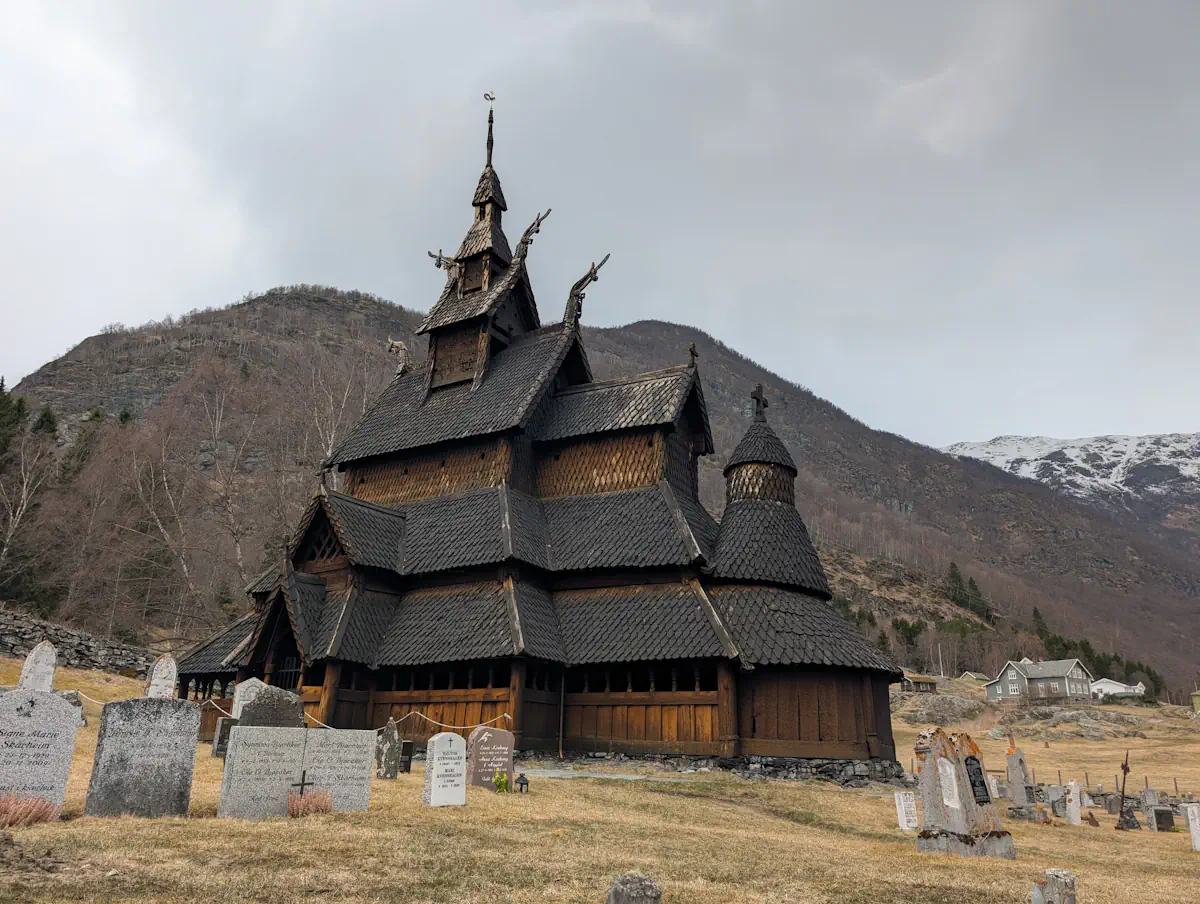
Morning: ferry and Borgund Leave Sogndal on the E5, take the Mannheller-Fodnes ferry (15 minutes) then the E16 east to Borgund. Before Borgund, after the ferry, stop at the old town of Lærdal — Gamle Lærdal — tiny but very pretty and colourful. It shouldn’t take you too long. Borgund Stave Church (around 1180) is Norway’s most complete and most photographed stave church. Tiered rooftops, dragon heads on the gables, carved runes — this is the quintessential image of Viking-Christian architecture. The adjacent visitor centre is very well done, with an exhibition on stave church construction. Allow 1–1h30 including the interior visit.
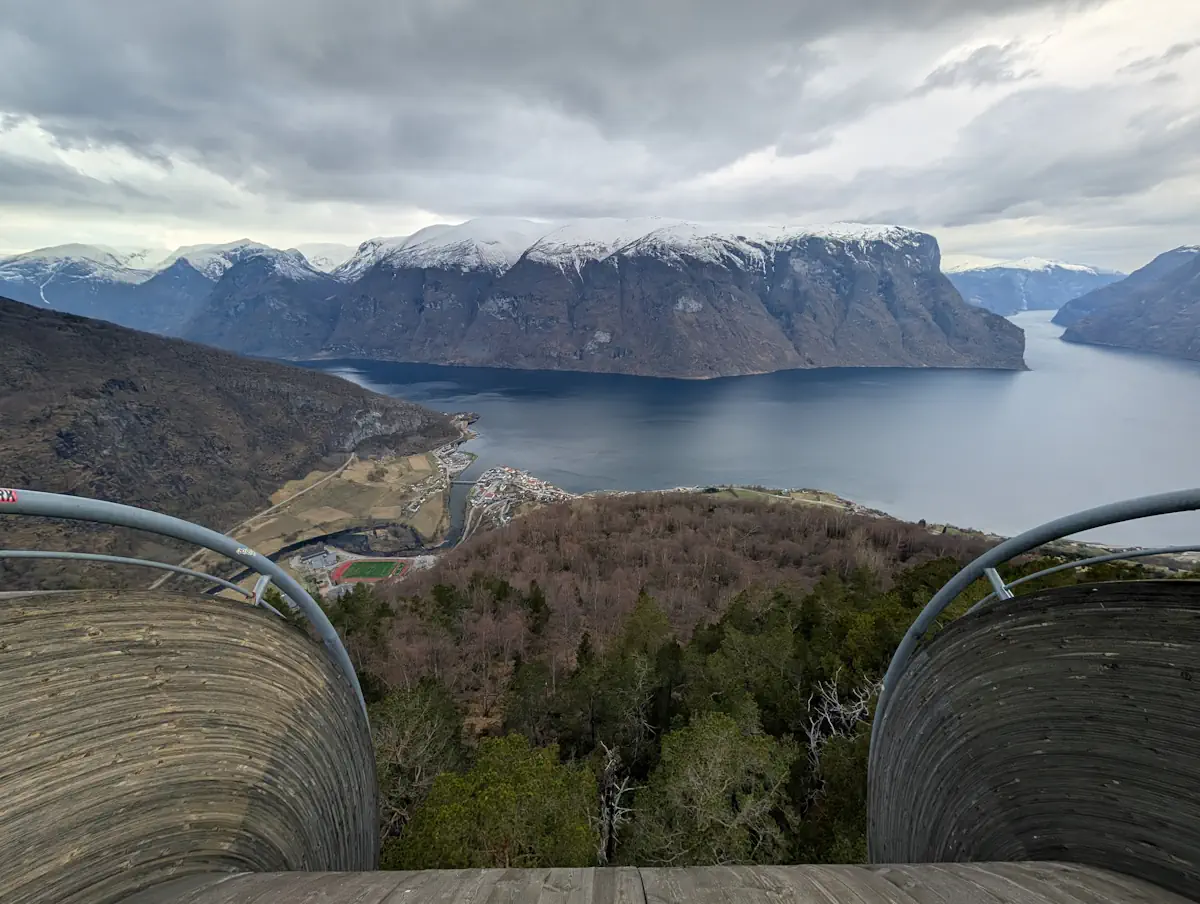
Afternoon: Snøvegen and Stegastein Rather than taking the Lærdal Tunnel (24.5 km, the world’s longest road tunnel — surprising but honestly, avoid it here because there’s something much better), turn off onto the Snøvegen (Rv243, “the Snow Road”). This is a national scenic route that climbs onto the Aurlandsfjellet plateau at 1,300m altitude. Alpine and almost lunar landscapes, residual snow even in summer. Allow 1h30–2h with photo stops. Open June to October depending on snowfall (otherwise take the tunnel). I have fantastic memories of this road. On the way down, don’t miss Stegastein, an architect-designed viewpoint (Todd Saunders, 2006) at 650m altitude. A wooden and steel platform jutting out over the void, with a plunging view over the Aurlandsfjord. One of Norway’s most iconic viewpoints. Allow 30–45 minutes. But I actually prefer the viewpoint 2–3 hairpins further along — wider view and far fewer people. Also, a little tip: when you reach Aurland, quickly take the road heading north of the fjord — it’s really beautiful and there’s absolutely no one there. Another stunning viewpoint!
End of day: arrival in Flåm Return to Aurland, follow the fjord road (10 minutes) to Flåm. Well, depending on where you’re sleeping. Evening: dinner at Ægir brewery, local craft beers served in a stave church-inspired building. Fun and very photogenic.
Where to stay : the famous Flåm Marina — rooms go very fast though. Or the superb Svingen Guesthouse with its fjord view. I’d also suggest looking in Aurland, especially at Vangsgaarden Gjestgiveri — very good and right on the waterfront.
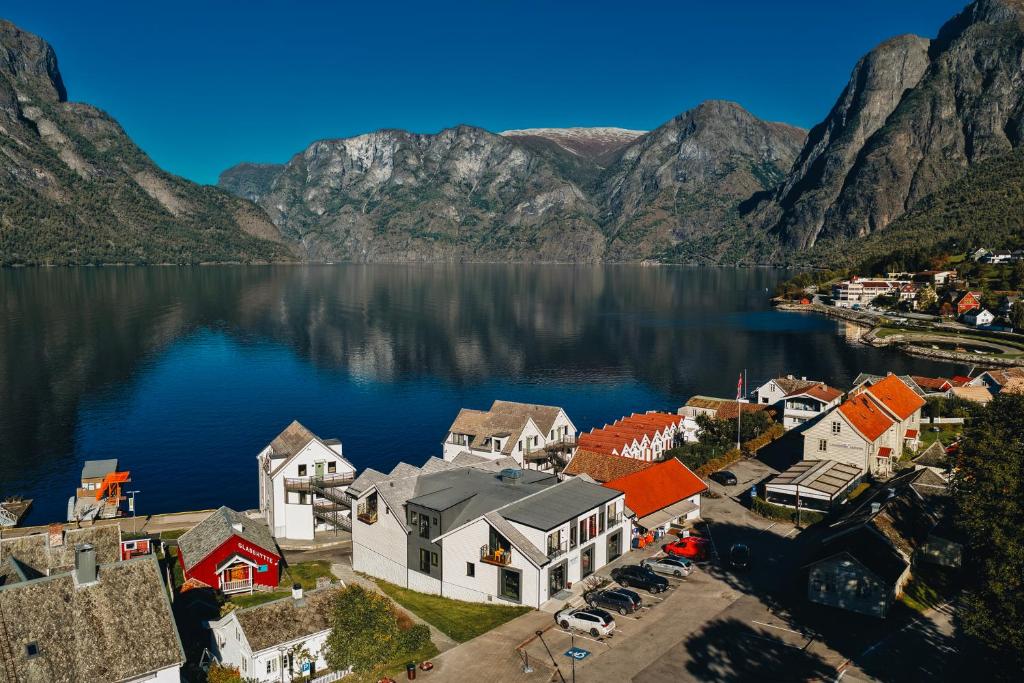
📍 Aurland · on the shores of Sognefjord
Modern apartments 4 m from the water, designed to make the most of the view: floor-to-ceiling bay windows and private balcony. Floating sauna at the foot of the building.
- Stunning views of Sognefjord from every apartment
- Floating sauna & supermarket 50 m away
- Aurland town centre within walking distance
Free cancellation
From €155 / night

📍 Flåm · 550 m from the station, marina
Right on the Sognefjord shore, steps from the station and cruise dock. Apartments with kitchenette, waterfront restaurant and spectacular views every morning.
- Ideally located between the station and cruise dock
- On-site restaurant with fjord views
- Apartments with kitchen, free parking and Wi-Fi
Free cancellation
From €210 / night
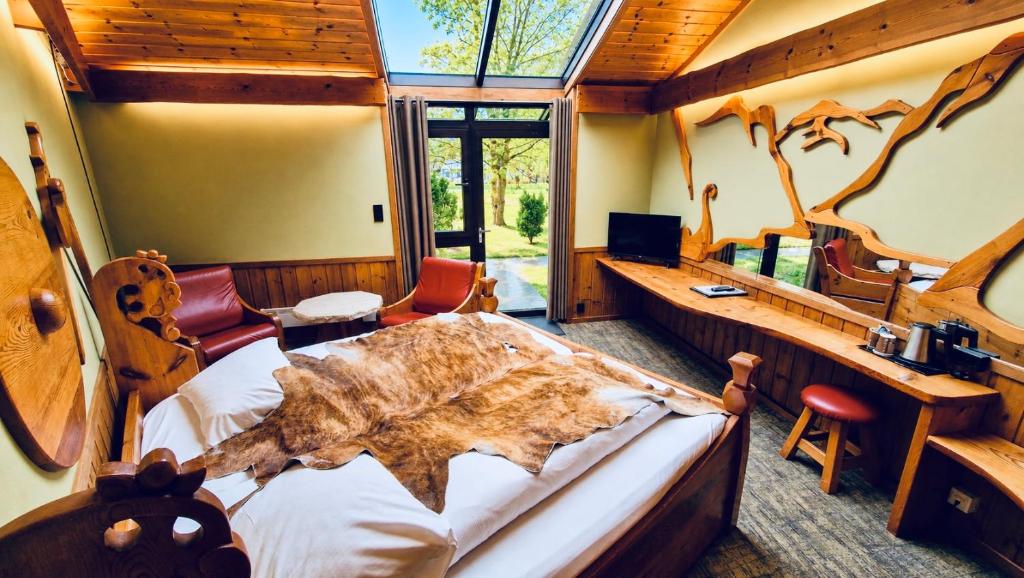
📍 Gudvangen · at the mouth of the Naeroyfjord
White timber hamlet on the Naeroyfjord shore, steps from the cruise dock and the Viking village of Njardarheimr. Original Viking rooms and 5 restaurants on site.
- At the foot of the cruise dock and the Viking village
- Original Viking rooms, fjord views
- 5 restaurants on site & free parking
Free cancellation
From €180 / night
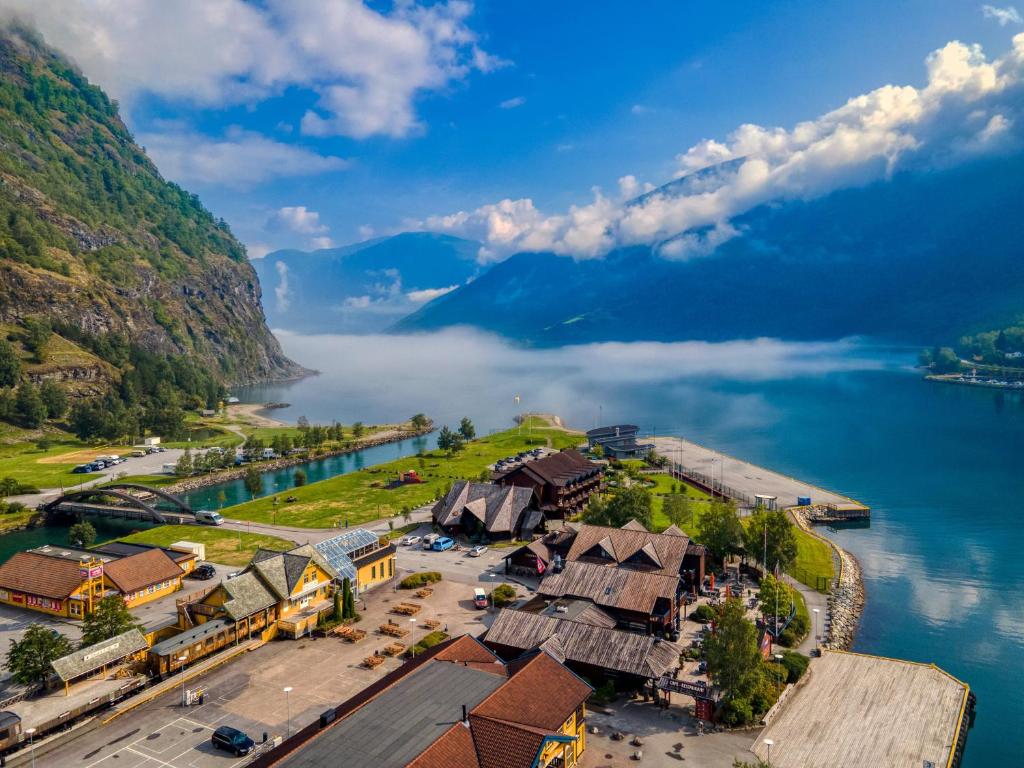
📍 Flåm · 50 m from the cruise dock
Modern hotel with rooms panelled in Norwegian pine, balcony and views over the Aurlandsfjord. The Ægir BrewPub restaurant brews its own beer on site.
- 50 m from the Naeroyfjord cruise departure
- Norwegian pine rooms with fjord-view balcony
- Ægir BrewPub: craft beer brewed on site
Free cancellation
From €190 / night
Day 14: Flåm → Bergen (train, cruise, return)
Flåmsbana return + Nærøyfjord cruise + Flåm → Voss → Bergen | ~165 km driving | ~3h driving + morning activities The last great day of the trip, combining the two flagship activities of Flåm before heading back to Bergen.
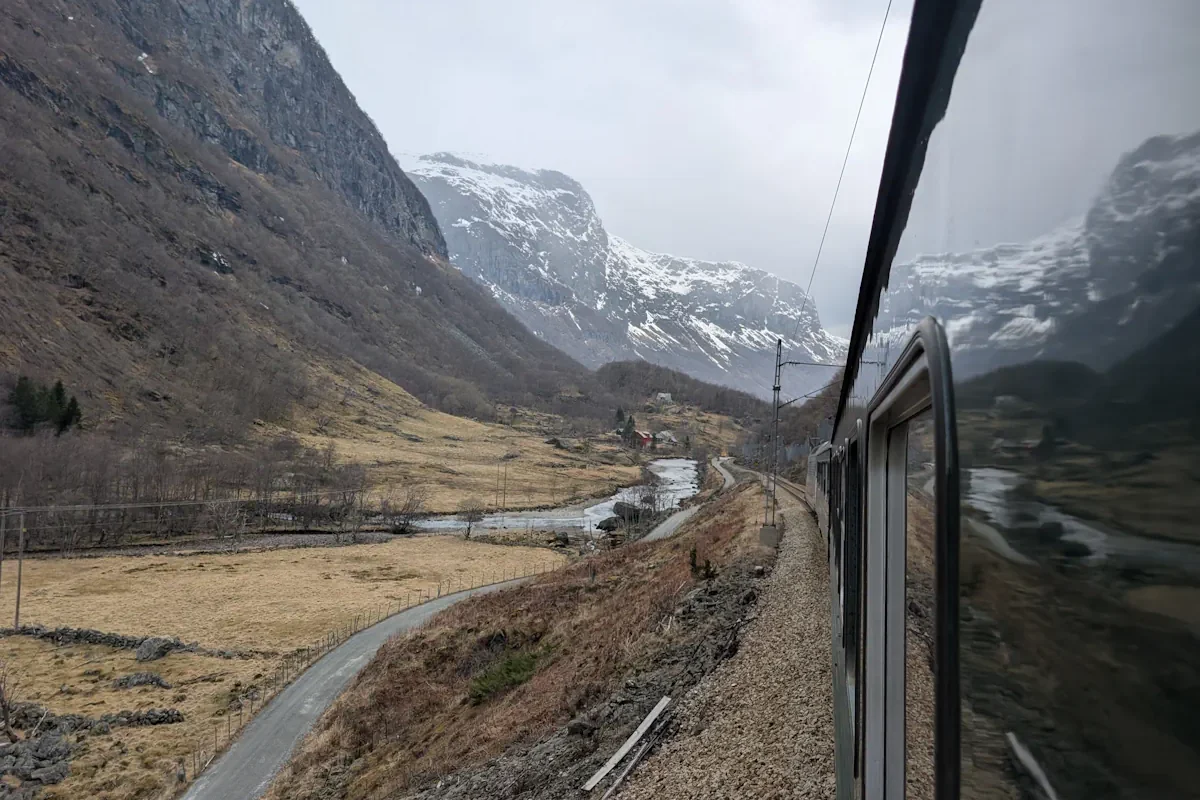
Early morning: Flåmsbana The Flåm Railway (Flåmsbana) is one of the world’s most scenic train journeys. It climbs from Flåm (sea level) to Myrdal (866m) in 1 hour over 20 km, with an average gradient of 5.5%. Stop at Kjosfossen waterfall, where a theatrical performance features a dancer embodying the Huldra (a Norwegian folkloric creature) accompanying the spectacle of the falls. First departure around 8am, back in Flåm by 10–10:15am. Booking essential in high season. Book with Norway’s Best or VY.no for official tickets at official prices.
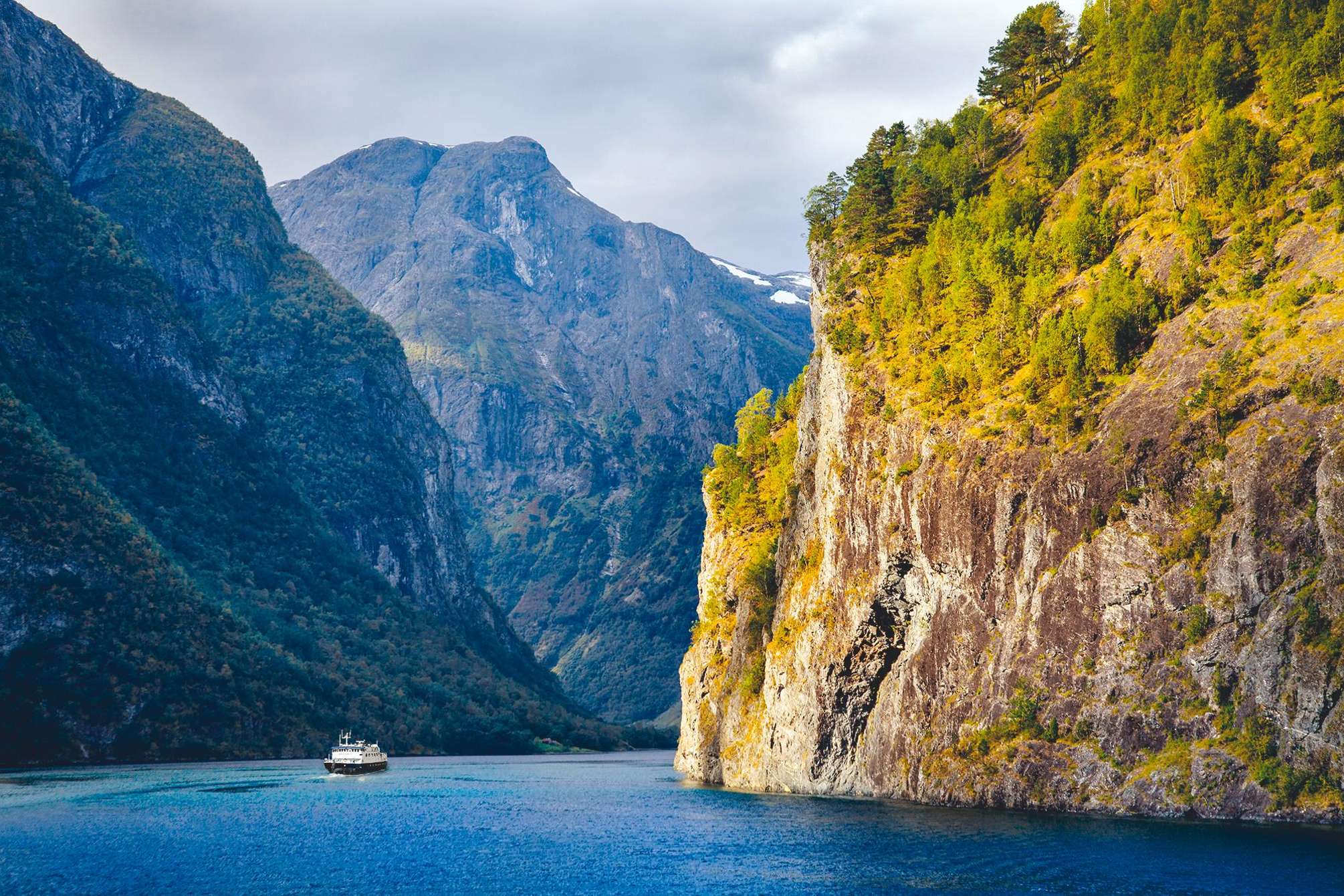
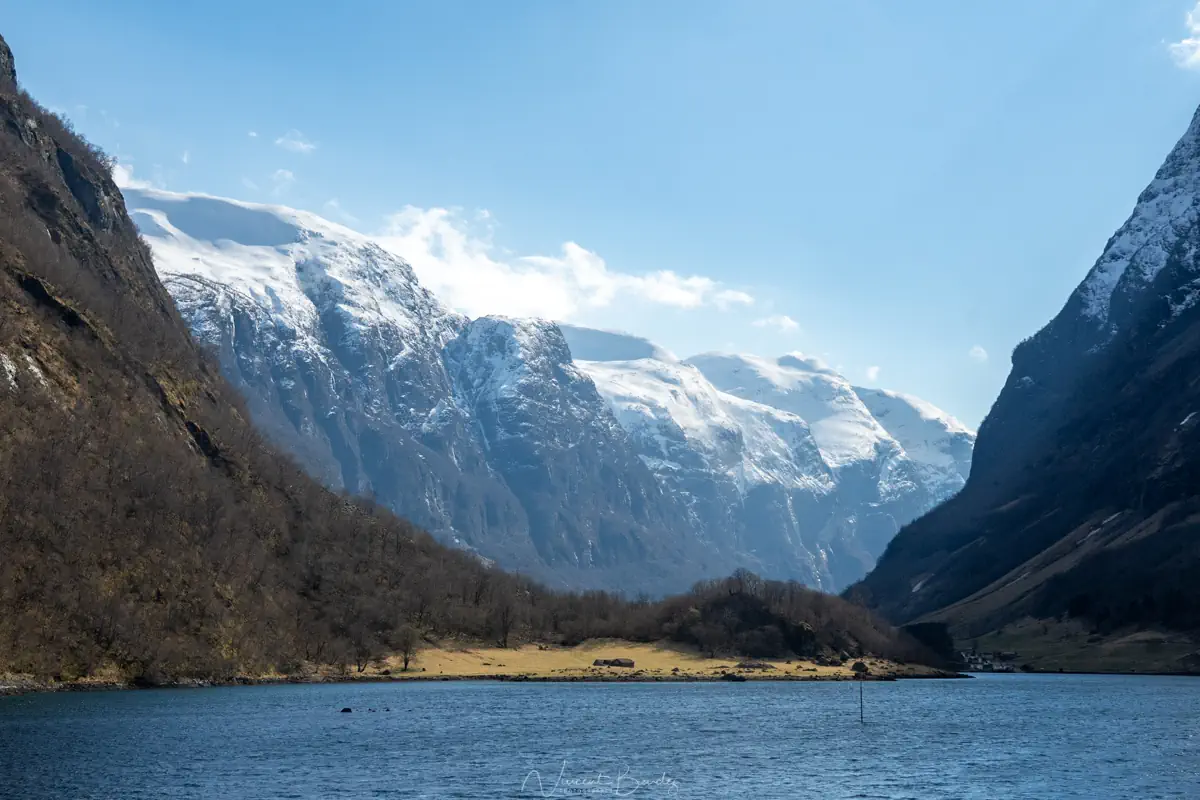
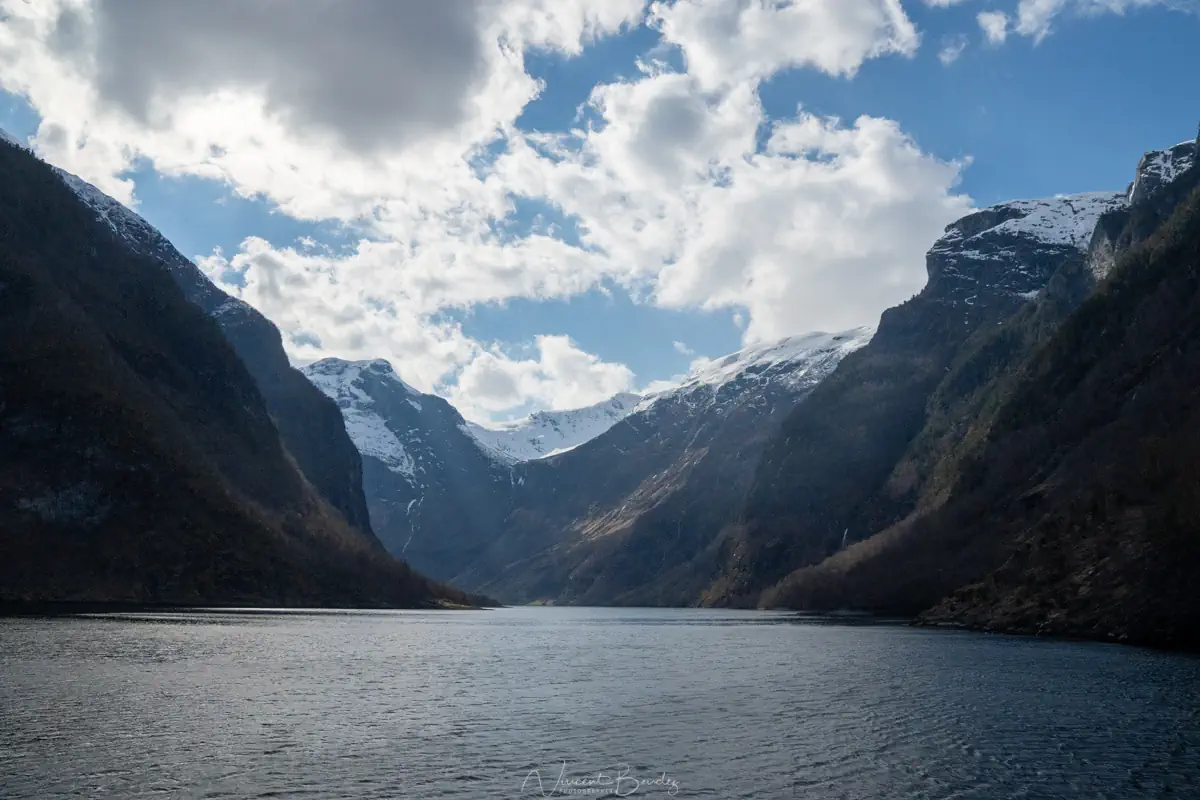
Mid-morning: Nærøyfjord cruise At 10:30am, board the Nærøyfjord cruise Flåm → Gudvangen. 2-hour crossing on electric boats (FjordCruise) — completely silent, ideal for wildlife. The Nærøyfjord is UNESCO-listed, one of the narrowest and most spectacular fjord arms in Norway (250m wide at some points, with 1,700m-high walls). When you book your cruise ticket with Norway’s Best (again), absolutely take the bus ticket that goes with it — otherwise you’ll lose a huge amount of time or end up stranded in Gudvangen. Arrive in Gudvangen around 12:30pm — unfortunately no time to linger, you need to get on the buses back to Flåm. Once there you can have lunch and pick up your car.
Afternoon: drive back to Bergen Depart Flåm in early afternoon on the E16 towards Voss then Bergen. Allow about 3 hours. Possible stops:
- Tvindefossen (you saw it on Day 3, but if you want to photograph it in different light)
- Stalheim (historic viewpoint over the Nærøydalen valley — a short detour but exceptional panorama)
Arrive at Bergen-Flesland airport late afternoon for the return flight. Return the rental car, last duty-free shopping. If your flight is late, you can plan a last dinner in Bergen city centre. If your flight is very early on Day 15, plan a final night in Bergen instead.

The Norway Fjords Map
I’ve created a Norwegian fjords map to help you visualise everything — the highlights, the routes. You can click on points of interest for more information and navigate around the map.
Logistics Summary
Total distances and times:
- ~1,450 km driven over 14 days
- Average 110 km/day, but with 4 on-site days with no real driving (Days 2, 4, 6, 8, 10)
- Longest day: Day 11 (~255 km, 6h driving)
- Easiest day: Day 6 (on-site, short drives)
Ferries taken:
- Vangsnes-Hella (Day 3, 15 min)
- Hellesylt-Geiranger (Day 7, 1h15 — doubles as a cruise)
- Eidsdal-Linge (Day 9, 10 min)
- Magerholm-Sykkylven (Day 11, 25 min)
- Mannheller-Fodnes (Day 13, 15 min)
- Solvorn-Urnes (Day 12, 20 min, return)
National scenic routes covered (5/18):
- Trollstigen + Geiranger (Day 9)
- Gamle Strynefjellsvegen (Day 11)
- Sognefjellet (Day 12)
- Aurlandsfjellet/Snøvegen (Day 13)
Stave churches visited (4):
- Hopperstad (Day 3)
- Lom (Days 11–12)
- Urnes UNESCO (Day 12)
- Borgund (Day 13)
Seasonal conditions to check:
- Sognefjellet: open May/June to October depending on snowfall
- Gamle Strynefjellsvegen: open June to October
- Snøvegen Aurland: open June to October
- Trollstigen: generally mid-May to mid-October
The best time for this circuit is mid-June to early September. This is the only window when all the mountain roads are open.
Reservations to make
CAR RENTAL
- Rent your car at Bergen airport or in the city centre — book well in advance to avoid summer price spikes. Compare rental prices!
ACCOMMODATION
- In high season, book popular places several weeks or months ahead (Bergen, Geiranger, Flåm, Fjærland…). Off-season is much more relaxed. Browse accommodation on Booking.
FERRIES AND BOATS
- Book your Hellesylt – Geiranger ferry with Fjord1 or Fjordtours depending on the date — in summer, book well in advance
- Same for the Nærøyfjord cruise with Norway’s Best. And don’t forget the return bus ticket — essential
- Also the Lovatnet boat — very popular, book in advance
- If you want to do a Bergen cruise, book the Mostraumen cruise
TRAIN
- In high season, absolutely book your Flåm Railway ticket in advance. Take one of the first trains — it matters for your schedule
ACTIVITIES
- Kayaking in the Nordfjord near Stryn and Loen, or taking a RIB boat
- To discover Bergen, you can join a guided city tour
- To skip the queue, buy your Fløibanen funicular ticket in advance
- In Geiranger, alongside the cruise, you can go kayaking or take a RIB boat to get close to the waterfalls
- In Ålesund, you can go on a wildlife sea safari
- If you want to see the musk oxen at Dombas, check the start time carefully — advance booking required
In conclusion
There you go! With this itinerary you should see the very best of the fjord region. I’ve tried to alternate busy days with quieter ones — there are days with plenty of sightseeing time or activities built in. As you can see, there are lots of ways to adapt it. Steps can be removed if you move faster — for example I love Fjærland, but you could skip the on-site day and head straight to Stryn. You can also do it in the other direction — most people do, but going clockwise means you’ll normally encounter fewer crowds. And I’m sure you’ll find your own hidden gems along the way. So don’t hesitate to adapt. Yes, this is a “ready-made” itinerary, but it’s super easy to tweak 🙂 Especially if you like to take things slowly! If you have any questions, feel free to ask 🙂
- For a broader overview, have a look at my Norway trip planning article
Other resources on Norway and the fjord region
Since you’re interested in this itinerary, these articles and tips should also help you plan your trip:
- Everything you need for your trip to Norway — this article covers all the essential info and links you to even more specific details
- The best day cruises to do in Norway — north, south, fjords: the most incredible cruises for seeing Norway’s most beautiful spots
- What to see in the fjord region — a very comprehensive overview of this fantastic region, from fjords to Viking churches, pretty villages and stunning landscapes
- What to do in Bergen — Norway’s most beautiful city is waiting for you! Yes, wooden houses everywhere, but so much more
- Staying in a great Bergen hotel — this guide tells you where to sleep and how to avoid the pitfalls
- The best cruises from Bergen — it’s the gateway to the fjord region, so why not explore them by boat from Bergen!
- Discovering the stunning Geiranger region — a fjord, incredible viewpoints, and so much to do!
- Which cruise to take on the Geirangerfjord — the best options for exploring this fjord to the fullest
- Taking a cruise on the Nærøyfjord — Norway’s most beautiful fjord awaits you from the inside
- Getting from Bergen to Flåm — how to get there, what transport to use — everything you need to know!
- When to go, month by month – to match your itinerary to the right season
- What to do in Flam – cruises, train, kayak, enjoy one of the most beautiful places of Norway
And if you want, check out all the Norway articles (there are quite a few by now)