Last updated on
I love the north coast of Brittany. I spend more and more time there and every time I discover new things, new places, new gems.
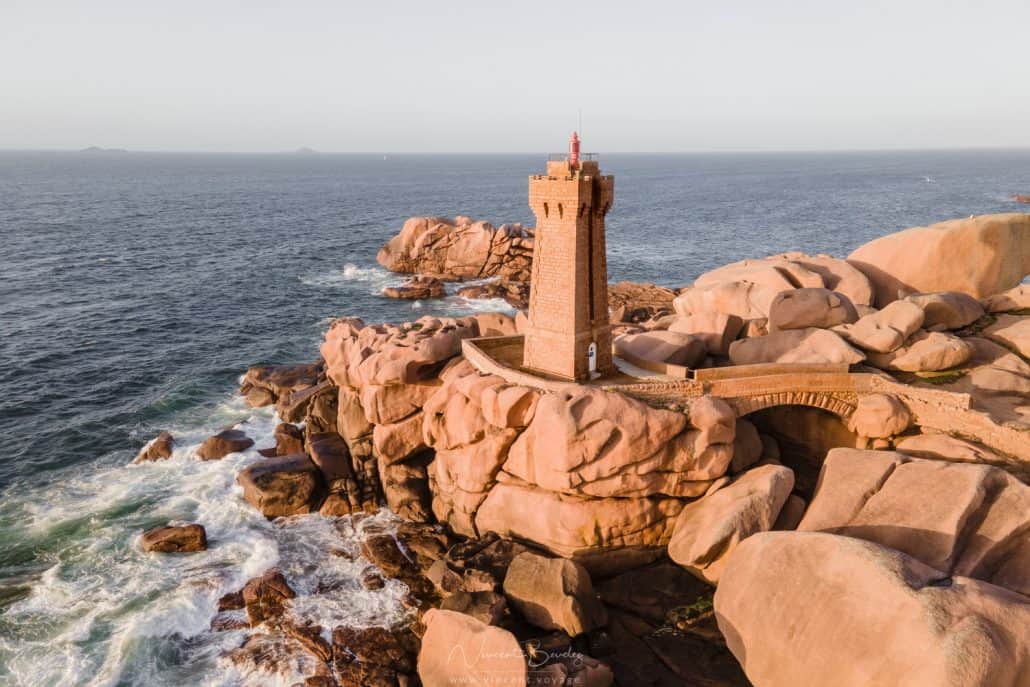
This time, I wanted to focus on a spot I’d only skimmed over and wanted to explore more deeply: the Emerald Coast. Above all, I really wanted to know whether the name was deserved! because we hand out plenty of superlatives to the French coasts (especially in Brittany with the Emerald Coast, the Pink Granite Coast (and in particular where to stay on the Pink Granite Coast), the Coast of Legends…). And so, it was time to find out: is the water really emerald? And I’d take the chance to solve one of the greatest Breton mysteries (at least!): does it really only rain on the Parisians?
First I’ll show you the most beautiful spots in the region, then we’ll talk about the practical, must-know info to plan your stay. When to come, how long, where to stay, that kind of thing.
Right, off we go — let’s discover what makes this place so unique!


Where is the Emerald Coast
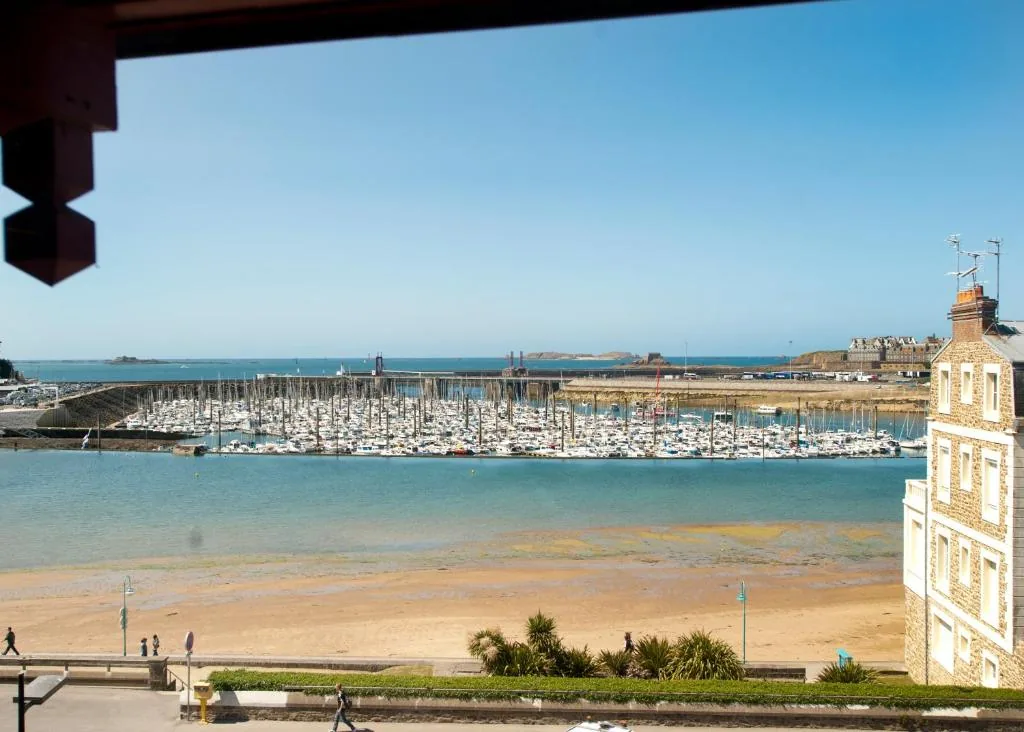
The Emerald Coast is a magnificent region on the north coast of Brittany, in France. It stretches about 60 kilometres, between Cap Fréhel to the east and the Bay of Mont-Saint-Michel to the west. Its name comes from the emerald colour of the sea that borders its fine sandy beaches. Pretty clever.
Straddling the départements of Ille-et-Vilaine and the magnificent Côtes-d’Armor, the Emerald Coast owes its name to a historian from Saint-Malo, Eugène Herpin, in reference to the colour the water takes on at certain moments: « The hue of the sea, the greenery of the trees reflected in it, this whole strange symphony of different greens, made me call our coast the Emerald Coast.»
In practice it doesn’t take long to go from one end of this area to the other, but there’s so much to see — a very jagged coastline, plenty of villages — that you’ll spend far more time than planned!
Let’s take a look at it all

Hiking the Customs Officers’ Path GR34 along the Emerald Coast
I’ll write you a dedicated article, but strolling along the customs officers’ path (the famous GR34) is one of the best ways to discover the Emerald Coast. Of course, I’m not going to tell you to walk every section end to end, but just like between Fort la Latte and Cap Fréhel, there are some really great little hikes to do, not too long:
- the loop around the Saint-Jacut-de-la-Mer peninsula (with all its beaaaaches!)
- between Cap Fréhel and Fort la Latte, then
- the Clair de Lune promenade, following the fortifications at Dinard, pushing on to Saint-Lunaire (3h round trip)
- the Pointe du Grouin at Cancale


The pretty little town of Dinard
Dinard is known for being a slightly posh seaside resort. That’s not wrong, but it’s not the whole story. In Dinard you’ll find these magnificent Belle Époque houses, huge English-inspired mansions that you see all along the coast. And above all along the Promenade du Clair de Lune, a magnificent walk that hugs the Dinard coastline, from Prieuré beach to Saint-Énogat beach. It’s sumptuous — you walk right past the town’s fortifications. And this whole coast is an ideal spot for the sunset!
What’s more, Dinard faces Saint-Malo, which you can admire from the shore. I take advantage of that — it’s great for the 14 July fireworks!
But Dinard is on the Emerald Coast and that’s no accident. There are some lovely beaches and gorgeous water. My favourite is Fourberie beach, and not just for its name (it means “trickery”)!
- Must-do activity: the Clair de Lune promenade, between the view of Saint-Malo, the town ramparts and the various beaches
- Recommended stay: Royal Emeraude, one street from the main beach, a high-quality hotel around €150


Saint-Lunaire, Dinard’s twin sister
I didn’t linger there too long, but the little seaside resort of St-Lunaire is really nice too. I preferred its old town, with a very pretty stone church in particular, but the seafront is also lined with lovely houses, a bit like in Dinard.
I recommend the walk out to the Pointe du Décolle, very nice and offering pretty views of the coast


The corsair city of Saint-Malo
Do we still need to introduce Saint-Malo? It’s the corsair city, the town of Surcouf, a magnificent fortified and impregnable town that did everything it could to torment the English for hundreds of years. Its history is fascinating and its heritage very well preserved.
Saint-Malo is a highlight of Breton tourism. For its architecture of course, its ramparts on which you can walk all around the town, for its huge beaches and also as a spa resort (tried and approved!).
On top of that you’ll find a few little fortresses to visit, like Fort National and the Grand Bé — really interesting 🙂
Finally, I can only recommend the many biscuit shops. Your scales won’t thank me, but your palate will. Like Maison Guella or (of course) Brieuc or Larnicol
- Must-do activity: walk the ramparts, visit Fort National
- Recommended stay: Hôtel la Porte Saint Pierre Logis, a really nice hotel inside the walls and just metres from the beach! Ideally located for under €100


Cancale and the Pointe du Grouin
Cancale is famous for its oysters. And it’s true that the oyster beds are right at the foot of the port! So you can — well, for those who like them — taste oysters fresh out of the sea.
But Cancale is also a pretty little town, a very pleasant little seaside resort, with several seafront restaurants and bars. You eat pretty well there, and in a lovely setting!
That said, Cancale is also the Pointe du Grouin! It’s said to be one of the most beautiful and vast views in Ille-et-Vilaine. This little rocky peninsula is the setting for a magnificent walk, truly. You’re on the edge of the Bay of Mont-Saint-Michel, which you can see on one side, while in good weather you can spot the Cap Fréhel lighthouse on the other. A complete view over the Emerald Coast, quite simply! Among the rocks, out in nature. What more could you ask for?
- Must-do activity: the Pointe du Grouin of course, and eating oysters right on the port for those who love them
- Recommended stay: Kêr L hotel, with a magnificent sea view


The beaches of Saint-Jacut-de-la-Mer
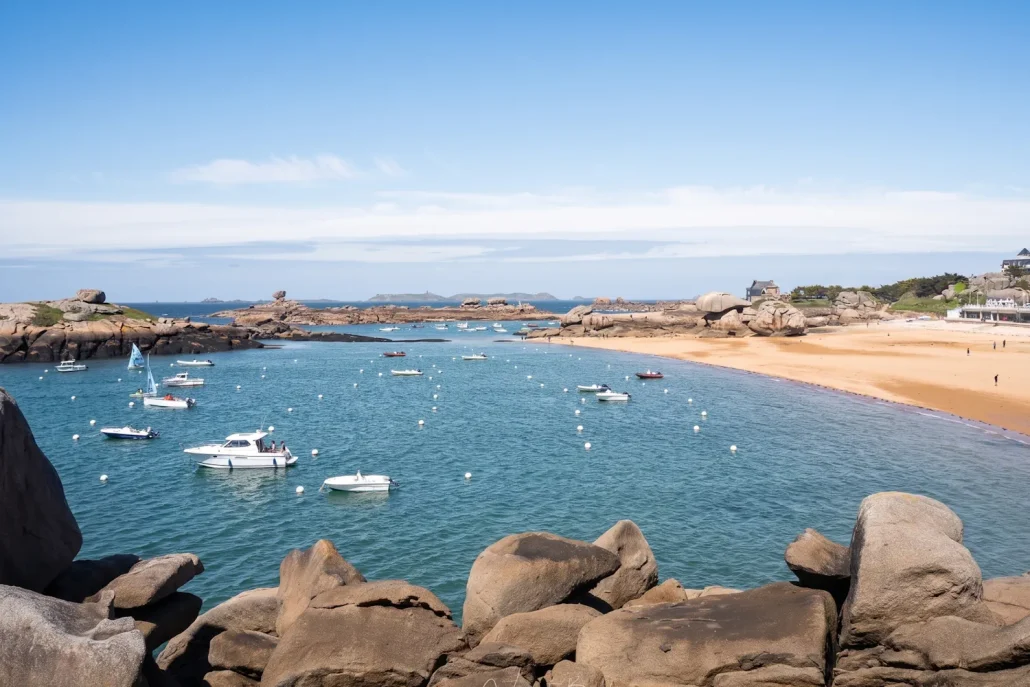
Right, I won’t beat around the bush: the most beautiful beaches, the most beautiful water, are at Saint-Jacut-de-la-Mer. It’s a small peninsula, long and narrow, with 11 beaches (10 depend entirely on the tides), while the last one, right at the tip, is exceptional. On top of that, at low tide you can walk across the Ébihens archipelago. The water is beautiful, wow. And surprisingly, there aren’t many people — it really surprised me (and yet I’m heading back there for the 14 July weekend).
The town itself is nothing special, but the beaches are clearly the peninsula’s real asset.


The big beach of Saint-Cast-le-Guildo
Right next door, you’ll find the big sister, Saint-Cast-le-Guildo. The town has some beautiful houses typical of the coast, but above all a hugggge beach of turquoise water. The view from the Pointe de la Garde is magnificent.
North of the town you’ll find beautiful cliffs and also a really nice walk along the coast to the next beaches. Honestly, it’s lovely!
And south of the town, there’s the castle, which you can visit for free.


Fort la Latte
Fort la Latte, otherwise known as the Château de la Roche Goyon, is the most visited castle in Brittany. It’s a very beautiful fortress, perched on the very tip of the rocks, built to be impregnable — and of course it was, with a few English ships having tried to seize it only to impale themselves splendidly on the surrounding rocks. Its fortifications were designed by a colleague of Vauban, which explains the very similar style.
The castle also has the peculiarity of a cannonball furnace. The idea was to heat the cannonballs just before firing them, to set the ships alight. Hence the French expression “tirer à boulets rouges” (to fire red-hot cannonballs — i.e. to lay into someone).
A visit to the fort is almost essential, I’d say, because it’s interesting for the region’s history but also for the views it offers. Around the castle there are pretty coves, magnificent vegetation, and the GR34 that runs right at its foot!


Cap Fréhel
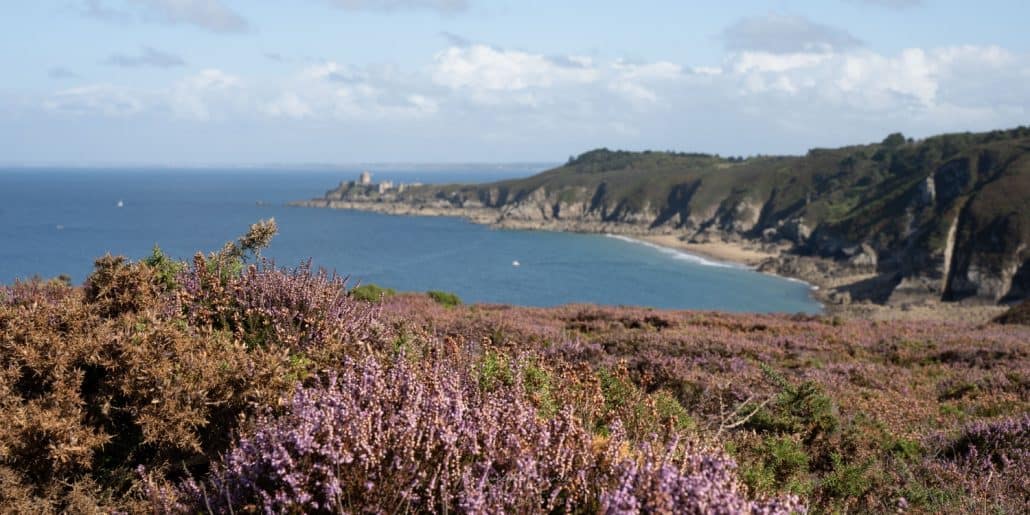
Another of the most beautiful spots in Brittany! But here, it’s all about nature. Sumptuous, multicoloured heather that dazzles the eye. It surrounds the famous lighthouse in particular, one of the 5 most powerful in France.
But Cap Fréhel also means magnificent cliffs from which, from mid-February to mid-July, you can watch a great many birds. The area is classified as a nature reserve to protect the nesting of several species such as razorbills, guillemots (which look an awful lot like them) and cormorants in particular. I’ll admit I’ve never been there in the right season (this time it came down to a few days, darn it). But it’s still very spectacular!
Obviously, walk around the cliffs, head to Fort la Latte via the GR34!


4 recommended places to stay in the region

📍 Saint-Suliac · Most Beautiful Village, by the Rance (location 9.2/10)
A 400-year-old guest house in the heart of Saint-Suliac, one of France's Most Beautiful Villages: a warm welcome from Peter and a “fabulous” breakfast.
- Renovated village house, garden, terrace, barbecue
- Heart of the village, by the Rance with the feel of a Breton fjord
- A “fabulous” continental breakfast, family room available
Free cancellation
From 100 € / night

📍 Plouër-sur-Rance · Rance estuary (location 9.4/10)
A charming manor overlooking the Rance estuary: century-old beams, a stone fireplace and an “exceptional” breakfast between Dinard and Dinan.
- Rooms with Rance views, century-old beams, stone fireplace
- French restaurant on site (on reservation), bar, garden
- Free parking + Wi-Fi, bike rental, secure bike storage
Free cancellation
From 140 € / night
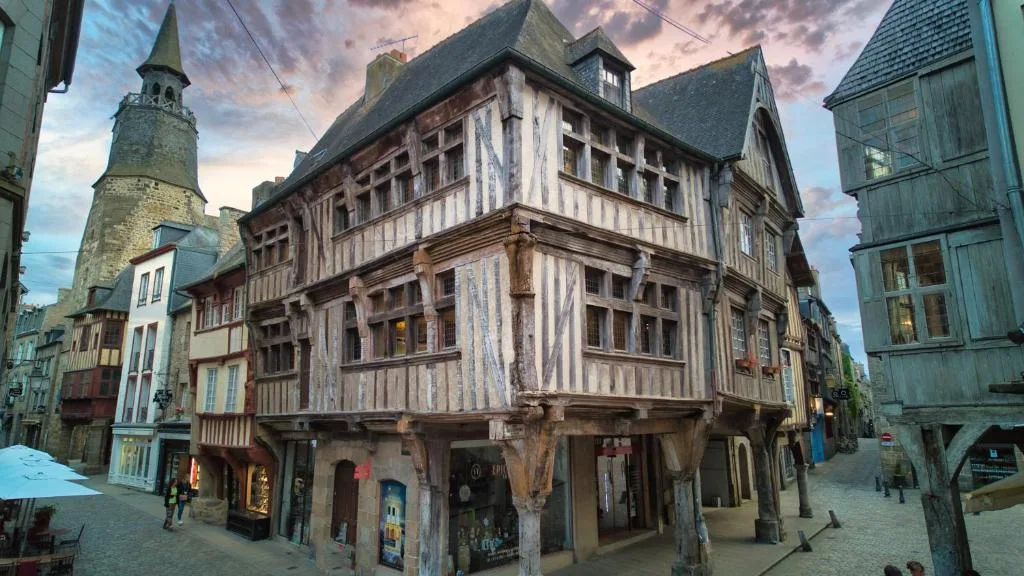
📍 Dinan · Historic centre, 450 m from the Castle (location 9.9/10)
A 15th-century half-timbered house listed as a historic monument right in the heart of Dinan: refined décor and an “exceptional” breakfast served in your room.
- Rooms 19-25 m² in a listed half-timbered house
- An “exceptional” breakfast served in your room, coffee machine
- 450 m to Dinan Castle, Saint-Yves gourmet shop on site
Free cancellation
From 120 € / night
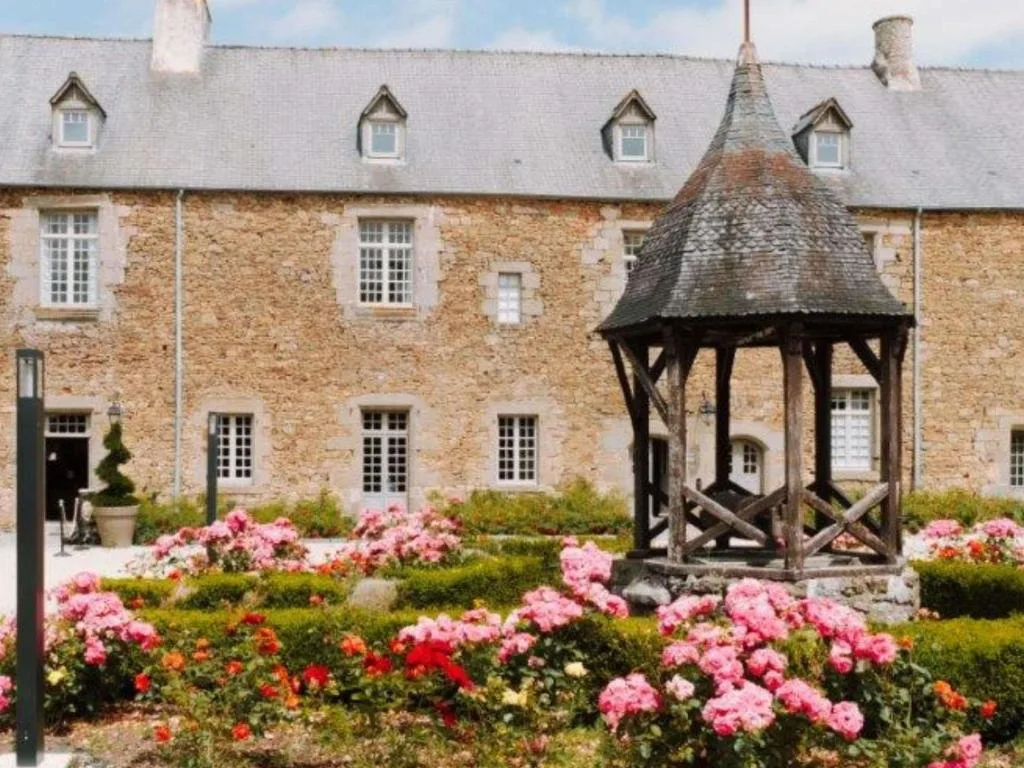
📍 Le Tronchet · Former abbey, 4★ (staff 9.2/10)
The 4-star Handwritten Collection hotel set in a former abbey: an outdoor pool, spa, well-kept gardens and the quiet Jardin de l'Abbaye restaurant.
- Renovated former abbey with gardens and a sunny terrace
- Outdoor pool + spa + gym + tennis
- Jardin de l'Abbaye restaurant, a “superb” breakfast, bar
Free cancellation
From 105 € / night
Saint-Suliac, the real little Breton village
Okay, I’m cheating a little because Saint-Suliac isn’t strictly speaking on the Emerald Coast, since it’s not by the sea (like Dinan, by the way) — this superb Breton village sits along the Rance. But the water is just as beautiful! And there’s as much wind as on the coast, so you could believe you’re there 😀
Saint-Suliac (I was there yesterday as I’m writing this, so it’s fresh in my mind!) is one of the most beautiful Breton villages, without question the prettiest around here, and also voted one of the Most Beautiful Villages of France. No less than that.
Stone houses, alleys with tremendous charm, and above all real authenticity. You won’t find countless shops on every street trying to sell you Breton bowls with your name on them. Quite the opposite! And that’s what makes the visit even better.
Really, come and wander through this magnificent little surprise for half a day, you can’t regret it 🙂
- Recommended accommodation: the pretty stone house of la Goëlette


Dinan, the super sexy medieval touch
Dinan is one of the best-known small towns in Brittany, and rightly so. First of all, you arrive in town by following the Rance and reach the ultra-cute little port.
From there, you climb up into the medieval town, following in particular the rue du Jerzual, an iconic cobbled street with plenty of little shops, artists and more. Really, this street and the neighbouring ones have tremendous charm! The medieval town is no slouch either, with its very old houses, some of them half-timbered.
But above all, Dinan is surrounded by ramparts that you can walk along, as well as its famous medieval castle.
Really, Dinan is a must!
- Must-do activity: visit the medieval quarter with its timber houses
- Recommended stay: Eglantine the historic house, in the heart of old Dinan


Why visit the Emerald Coast
It’s simple — quite simply because you’ll find everything for a great holiday! Namely:
- magnificent historic towns like Saint-Malo or Dinan
- beaches with crystal-clear water and white sand (a few degrees warmer and you’d be in the Caribbean)
- villages as pretty as can be, like Saint-Suliac
- nature! Along the coast, nature serves up wonders. I particularly loved the colourful heather of Cap Fréhel
- a rocky coastline that gives magnificent landscapes
- you’re close to other great spots like Mont-Saint-Michel and its Abbey, you can discover Perros-Guirec and the Pink Granite Coast, quite simply the things to see in the Côtes-d’Armor.
- Finally, between the cider houses and the local beers, you drink pretty well! And of course, you eat wonderfully. I won’t lie to you — between the crêpes, the Kouign-Amann and the galette-saucisse, it’s all very, very light


Where to stay on the Emerald Coast
I’ve already given you a few nice accommodation suggestions above, but to visit the Emerald Coast it can be good to be somewhere fairly central.
Saint-Malo works well for this because you’re close to everything! The only slightly far-off spots are Fort la Latte and Cap Fréhel, but those are 40 min by car and you can visit them in a single day.
- Discover Hôtel de la Porte Saint Pierre
- On a budget, this very good apartment right in the historic centre, a stone’s throw from the beach
- For a spa break, the Grand Hôtel des Thermes, a must
- Discover all the accommodation in Saint-Malo!
Dinard is also a very good option (I was there a few days ago) but the hotel offering is a little smaller. But the setting is really pretty! The advantage of staying in Dinard is being able to enjoy the sunset on the Promenade and being in a nice setting without it being too touristy
- The Royal Emeraude is one of the best options, ideally located
- On a budget, you’ll find the good option of the Hôtel Saint Michel
- Discover all the accommodation in Dinard
But for something different, there are these lovely options:
- Le Logis de la Rance
- The very beautiful Manoir de la Rigourdaine
A day-by-day itinerary suggestion for visiting the Emerald Coast in 5 days
As you’ve just seen, I recommend allowing 4-5 days to make the most of the Emerald Coast. So concretely, here’s how I’d go about it, day by day. We go from east to west, from Saint-Malo to Cap Fréhel, with only two base camps so you don’t have to unpack every evening. And don’t worry: if you only have a weekend, I’ll give you the short version further down too!
The car tip: honestly, the Emerald Coast is best experienced by car. The BreizhGo buses exist, but between the villages they quickly get limited. If you arrive by train in Saint-Malo or by plane at Rennes/Dinard, plan on a rental — you’ll be far more free!
Day 1 — Saint-Malo, the corsair city
We start with the beating heart of the coast: Saint-Malo intra-muros. In the morning, walk the full loop of the ramparts (allow 1h for the walk, it’s free and it’s THE thing not to miss), then let yourself get lost in the alleys of the old town. At low tide, push on to Fort National and the islet of the Grand Bé where Chateaubriand rests — but watch the tide times, otherwise you’ll get stuck (it happens, I promise you!). In the afternoon, head to the seafront beaches to catch your breath, and in the evening, a sunset from the ramparts: magical. A whole day for it — it richly deserves it.
For all the detail, I’ve written an article all about it: what to do in Saint-Malo.
- Where to stay: Saint-Malo (3 nights, it’s the ideal base for the east of the coast).
Day 2 — Cancale in the morning, Saint-Suliac in the afternoon
Head east towards Cancale (20 min), the oyster capital. Go take a look at the oyster market on the port and taste a dozen facing the Bay of Mont-Saint-Michel — the ritual, of course! Follow it up with the Pointe du Grouin, my favourite hike in the area: the customs officers’ path, panorama over the Île des Landes… leave plenty of time, you quickly want to linger for photos.
In the afternoon, a change of scene: we head up the Rance to Saint-Suliac, one of the Most Beautiful Villages of France, and without question the prettiest around here (I go back every time!). Flower-filled alleys, fishermen’s houses, everything is authentic. A perfect half-day for a leisurely wander.
Day 3 — Dinan, the super sexy medieval touch
Today, we treat ourselves to a whole day in Dinan (30 min from Saint-Malo), and believe me, it’s not too much. It’s one of the most beautiful medieval towns in Brittany: ramparts, half-timbered houses tumbling down the street that runs towards the port, the castle… You take your time to wander, sit on a café terrace, and head back down to the port over the old bridge. A gem I never tire of revisiting.
Day 4 — Dinard, Saint-Lunaire and onwards west
We switch to the west! Morning in Dinard, the Breton Belle Époque. People call it a bit “posh”, which isn’t wrong, but what houses! Stroll along the Promenade du Clair de Lune and past the villas, then push on to Saint-Lunaire and its Pointe du Décolle.
In the afternoon, continue west to Saint-Jacut-de-la-Mer and its 11 beaches: the quietest peninsula on the coast, perfect for a peaceful swim and an end to the day far from the crowds.
- Where to stay: tonight, we move the base camp over to Saint-Cast-le-Guildo / Cap Fréhel for the final day.
Day 5 — The grand finale: Fort la Latte and Cap Fréhel
The best for last! Start with the big beach of Saint-Cast-le-Guildo, then make your way to Fort la Latte, that medieval fortress planted on its rock (allow 1h for the visit, it’s really worth it). Then, on to the highlight of the day: the GR34 hike between Fort la Latte and Cap Fréhel (~1h30), one of the most spectacular in all of Brittany.
Save Cap Fréhel for the end of the day: the pink sandstone cliffs, the heather moor, the lighthouse… and one of the most beautiful sunsets I know. The whole day easily goes by there, and all the better.
The detail of this legendary section of the GR34 is in this article.
Only have a weekend? Here’s what I’d keep
No panic, you can do the essentials in 2-3 days:
- Day 1: Saint-Malo (ramparts, intra-muros, beaches)
- Day 2: Cancale + Pointe du Grouin in the morning, Dinard in the afternoon
- Day 3 (if you can): Cap Fréhel + Fort la Latte
And you save Dinan, the Rance and Saint-Jacut for next time — because there will be a next time, believe me!
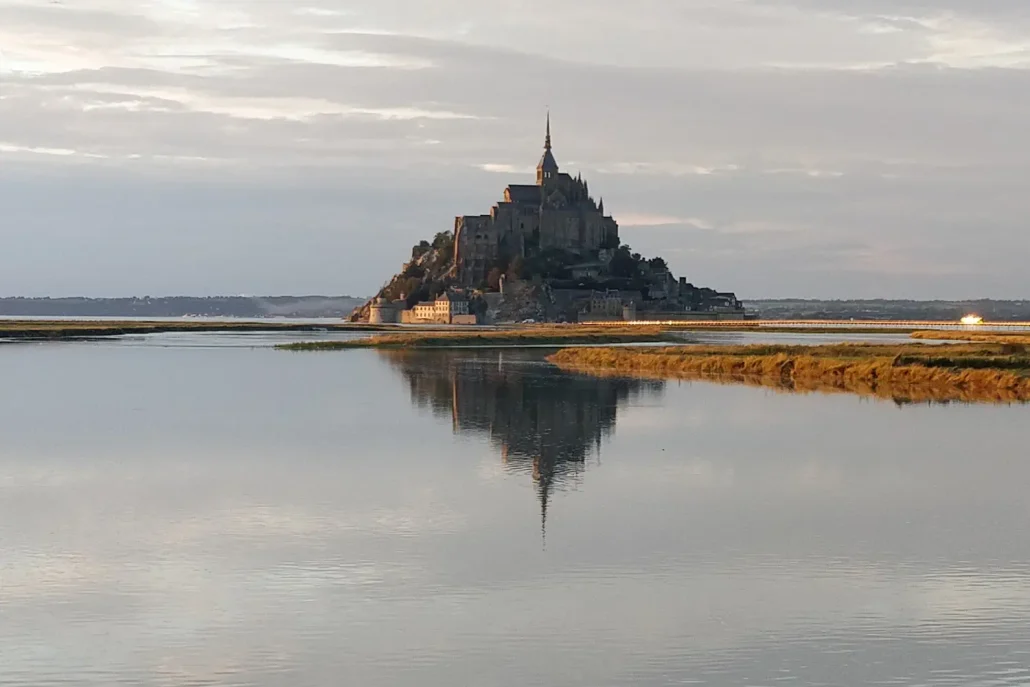
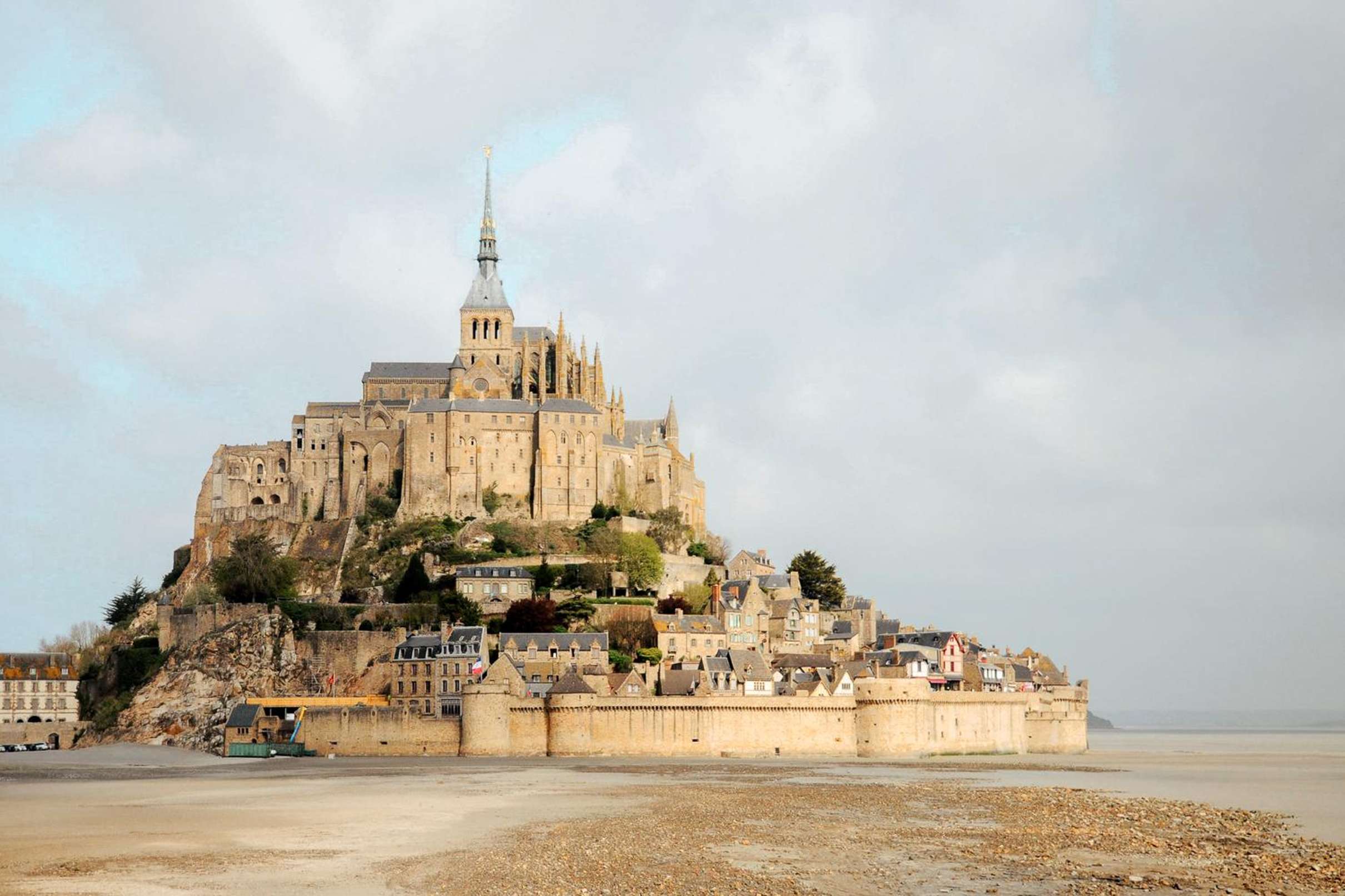
One more day? Mont-Saint-Michel is only 45 min from Saint-Malo, and it deserves a whole day to itself. I explain how to get there by train or bus and where to stay right next to it.
One last thing: the Breton climate is playful, so always bring something to cover up, even in summer, and keep one “flexible” day to adapt (here the showers pass quickly — as they say, it’s beautiful several times a day!).
Practical info for visiting the Emerald Coast
How long to visit the Emerald Coast
It stretches over about sixty kilometres as the crow flies, but in fact it’s much more than that. If you want to fully enjoy it — enjoy the towns and villages, enjoy nature and a few walks, go to the beach — I’d say you really need 4-5 days:
- 1 day for Saint-Malo
- 1 day for Dinan
- 1 day for Fort la Latte, Cap Fréhel and the walk between the two
- half a day for Dinard
- half a day for Saint-Suliac
- half a day for Saint-Jacut-de-la-Mer and its beautiful beaches
- half a day for Cancale and the Pointe du Grouin
And even then, that’s the minimum I’d say, so you could easily stay a week without any problem!

What’s the best time to go
Each season has its pros and cons (logically!), you’ll have to juggle between the weather and
- Spring (March to June): the weather starts to warm up, nature comes back to life and the landscape turns green. It’s an ideal time for walking and cycling. What’s more, spring is a less busy time of year for tourists, which lets you enjoy the peace and quiet of the place.
- Summer (July to mid-September): really the most popular time to visit the Emerald Coast. The weather is generally warm and sunny, perfect for enjoying the beaches, boating, sailing or diving. But on the other hand, as it’s high season, it can get very busy and accommodation prices may go up.
- September, early October: it’s a lovely time, not to say almost perfect, to visit the Emerald Coast. The summer tourist crowds have thinned out, temperatures are milder and the landscape is spectacular with leaves changing colour. It’s one of my favourite destinations for the autumn holidays! But the only downside is that it won’t be warm enough to enjoy the beaches.
- Winter: In winter, the climate is cooler and there are fewer tourists. It’s a good time for those who love peace and quiet and want to discover the region’s more authentic side. There’s likely to be quite a bit of rain and a lot of wind, though. It’s Brittany, so there’ll be more than usual 😀

How to get to the Emerald Coast
The simplest is of course the car. But it’s not necessarily close by — it all depends on where you’re coming from. From Paris, it’s about 4h15, while it’s 2h15 from Nantes.
Otherwise by train, there’s Paris–Saint-Malo direct in 2h40. Then another station in Dinan and… that’s it! So it’s not necessarily the easiest.
But there’s a good bus network, BreizhGo, which lets you reach all these sites (except Saint-Suliac) fairly easily. Dinard, Saint-Lunaire or Saint-Briac, Dinan are all very easily accessible, Cancale too. For Cap Fréhel, you have to go to Plévenon, but unfortunately I couldn’t find a bus to Fort la Latte (if you’re at Cap Fréhel you can walk there)
- You can absolutely rent a car on the spot! I recommend comparing at Discover Cars, the prices and info are clear

Why is it called the Emerald Coast?
Quite simply because of the colour of the sea! In certain light, the water here takes on superb emerald-green reflections. The name was coined in 1894 by a lawyer and historian from Saint-Malo, Eugène Herpin, who wanted to give his region a nice touristy label — a bit like the Côte d’Azur in the south. And you have to admit it’s rather a success!
What to do on the Emerald Coast when it rains?
So yes, we’re in Brittany, it can rain (it’s beautiful several times a day, as they say!). But no panic, there’s plenty to do in the dry. Head to Dinan to stroll under the half-timbering and through the covered alleys, lose yourself in the ramparts and shops of Saint-Malo intra-muros, treat yourself to an oyster tasting in Cancale, or spend some time at the Grand Aquarium in Saint-Malo (the kids love it). And honestly, a walk on the ramparts in the drizzle, well wrapped up, has its charm too.
How to get around the Emerald Coast without a car?
It’s possible, but you have to plan a bit. The BreizhGo bus network links the main towns, the train serves Saint-Malo and Dinan, and there’s even a lovely option: the sea bus that crosses the Rance between Saint-Malo and Dinard (far nicer than a regular bus!). On the other hand, for the wilder spots like Fort la Latte or Cap Fréhel, it quickly gets complicated without a car. My tip: base yourself in Saint-Malo and radiate out, even renting a car just for one day to the west.
What’s the difference between the Emerald Coast and the Pink Granite Coast?
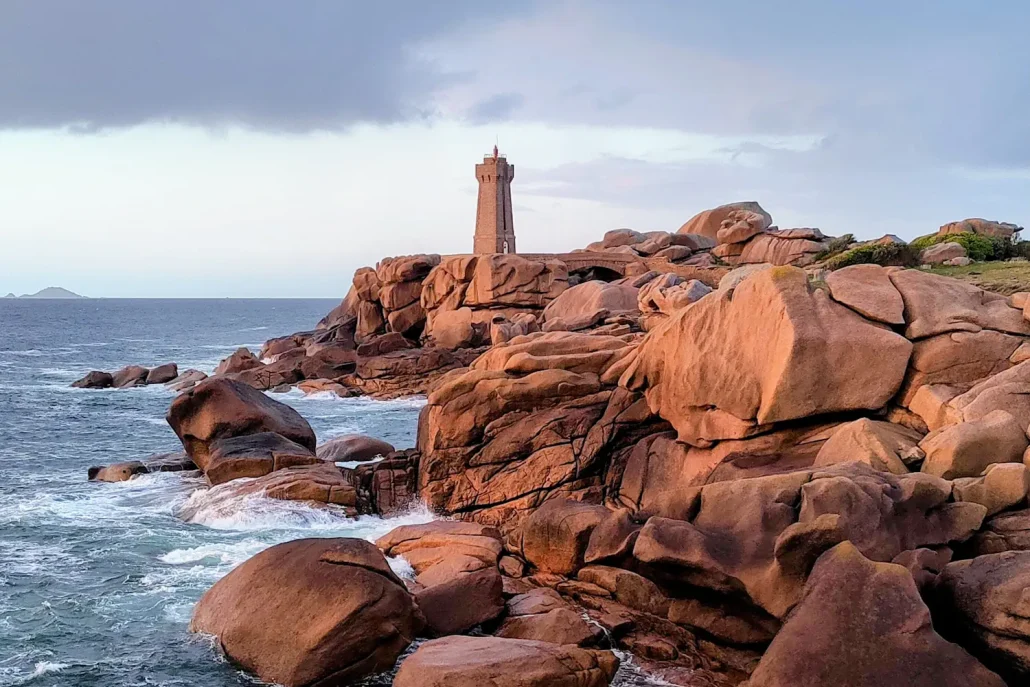
I get asked this often, because the two are easily confused (it’s what I did at first, in fact)! The Emerald Coast is here, around Saint-Malo, Dinard and Cancale: emerald-green water, corsair cities and beaches. The Pink Granite Coast is further west, around Perros-Guirec and Ploumanac’h, and its thing is those incredible granite rocks… pink ones! Allow about 2h of driving between the two. Two very different moods, and if you have the time, I strongly recommend going to see the second: I’ll take you there, in my article on the Pink Granite Coast.
The Emerald Coast with family: what to do with children?
It’s an ideal destination for families! The calm beaches of Saint-Jacut-de-la-Mer and Dinard are perfect for the little ones, Fort la Latte will delight budding knights, and Cap Fréhel turns into a life-size playground for a walk. Add to that the Grand Aquarium in Saint-Malo, a sea-bus crossing and a crêpe tasting… and you’ve got enough to fill the week without anyone getting bored.
What’s the most beautiful beach on the Emerald Coast?
Hard to choose, but if I had to keep just one, I vote for Saint-Jacut-de-la-Mer: the peninsula has 11 beaches, often quiet, with water in places a turquoise that has nothing to envy of the south! As for the resorts, the beaches of Dinard also have that irresistible Belle Époque charm. It’s up to you whether you prefer wild calm or a chic atmosphere.
Where to stay: Saint-Malo or Dinard?
The two face each other, but the atmosphere isn’t the same. Saint-Malo is livelier, more central and practical for radiating out along the whole coast — it’s my favourite base. Dinard is more chic, calmer, very Belle Époque, ideal if you’re after relaxation and beautiful beaches close by. My tip: Saint-Malo if you want to be on the move and see everything, Dinard if you prefer lazing about.
In conclusion
There you go, now you know everything (at least I hope so!) about the Emerald Coast. It really is one of the most beautiful spots in Brittany, a place where you can enjoy so much — the beaches and their magnificent waters, very pretty villages, historic towns. In short, you can’t get bored there, especially since, if you want to extend the pleasure, you can head off to discover Perros-Guirec and the Pink Granite Coast a little further on.
So don’t hesitate! Because on top of that you eat and drink wonderfully well there, it’s impossible to be disappointed — especially as the weather forecasts are often more pessimistic than reality. The famous Breton conspiracy: making people believe it rains often to stop tourists from coming :D*
To find out more about Brittany, you can also check out the following articles, which should appeal to you too. As I spend more and more time in the region, I regularly add new articles, like recently on Carnac and its menhirs:
- What to do in the Côtes-d’Armor
- Discover Perros-Guirec and its surroundings
- A walk on the Customs Officers’ Path between Fort la Latte and Cap Fréhel
- What to do in Saint-Malo, the corsair city
- 10 places to see in Carnac and its region
- How to get to Mont-Saint-Michel by train
- And find here all the articles on Brittany!