Last updated on
Itineraries and information updated for 2026!
The Loire Valley castles are a huge part of the history of France. Hundreds of castles, kings, murders, intrigues. Beyond the different styles of architecture, it’s the stories and anecdotes that will guide your visits.
With so many options, it isn’t easy to find your way around and pick just a few days on site.
So I’m going to suggest an itinerary to discover a selection of castles without too much driving, so you can really make the most of your visit. You’ll find, day by day, which beautiful castles to see, and above all why those ones, because the goal is to optimise your trip without too much driving and without seeing too much. In short, to enjoy it to the max!
I then offer you the ultra-complete map of the castles with ALL the visitable castles, as well as all the activities and plenty of quality places to stay (these itineraries included), depending on what you fancy!
Right, let’s go!

5 reasons to go and see the castles
- Magnificent castles
- A lovely region with a pleasant climate
- The food and wine are superb
- One foot in the history of France
- A varied range of activities
The best 3- and 5-day itineraries for the Loire Valley castles
With so many Loire Valley castles, sites and historic towns spread across two large regions (Centre-Val de Loire and Pays de la Loire), it’s very hard to plan a coherent visit. So for that, I based myself on a simple principle: each day, places close to one another to minimise driving time.
This itinerary is aimed more at first-time visitors than at experts on the region, because I’m going to suggest well-known, crowd-pleasing spots.
Breakdown of a day:
- morning: a big iconic castle (to avoid the afternoon crowds)
- afternoon: a different castle with a story or an anecdote, which will take less time than a major castle
- evening: dinner/drinks in a nice town
It’s very (too) classic, but my 3 favourite castles are Chenonceau, Chambord and Azay-le-Rideau. Because of their importance and popularity, it’s better to visit them in the morning to avoid the crowds, and so see one per day.
I optimised this itinerary to do it by car, but it’s also perfectly possible to do it by public transport. And just in case, further down I detail an itinerary through the most beautiful Loire Valley castles without a car!
Suggested 3-day itinerary for the Loire Valley castles
- Day 1 morning: Chenonceau
- Day 1 afternoon: Clos-Lucé and Amboise
- Day 1 evening: Amboise
- Day 2 morning: Chaumont
- Day 2 afternoon: Azay-le-Rideau (or Ussé, Villandry, Langeais)
- Day 2 evening: Tours
- Day 3 morning: Chambord
- Day 3 afternoon: Cheverny
- Day 3 evening: Blois
And if you only have two days, a weekend, then do days 1 and 3, replacing Clos Lucé with the Château d’Amboise
A 5-day itinerary through the most beautiful Loire Valley castles
You can very easily stretch it to 5 days to visit the castles. You can keep exactly the same first 3 days, or change the order a little as below to go from east to west. But days 4 and 5 will be dedicated to the western part and I suggest, as we’ll see in detail afterwards, moving to Tours for the second part.
- Day 1 morning: Chambord
- Day 1 afternoon: Cheverny
- Day 1 evening: Château de Blois after dark (overnight in Amboise or Blois to avoid too much driving)
- Day 2 morning: Chenonceau
- Day 2 afternoon: Clos-Lucé
- Day 2 evening: Amboise (overnight there)
- Day 3 morning: Château d’Amboise
- Day 3 afternoon: Chaumont (or Ussé, Langeais)
- Day 3 evening: your choice — head back to enjoy Amboise, or dash to Tours and change accommodation that evening
- Day 4 morning: Château de Villandry and its gardens
- Day 4 afternoon: the royal fortress of Chinon and the nearby wine cellars
- Day 4 evening: dinner in the old town of Chinon or in Tours
- Day 5 morning: Royal Abbey of Fontevraud
- Day 5 afternoon: the Saumur-Champigny cellars or a visit to the Château de Saumur
- Day 5 evening: dinner in the old town of Saumur
Loire Valley castles day 1: Chenonceau / Clos-Lucé / Amboise
On this first day, I suggest staying around the town of Amboise. Why? Because it’s one of the most castle-rich areas.
Morning at Chenonceau
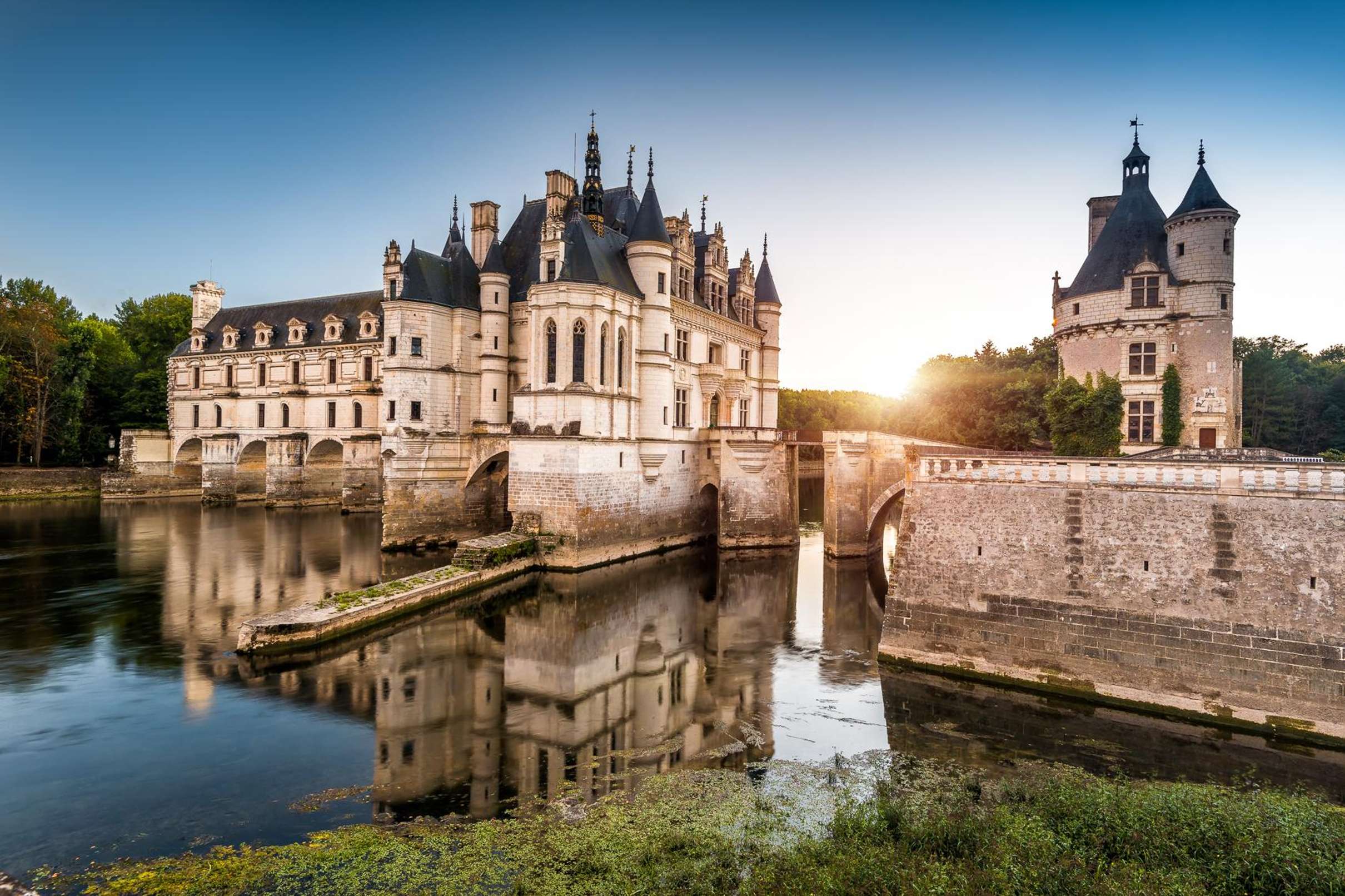
The Château de Chenonceau (located in the town of… Chenonceaux, with an x, go figure) is one of the best known in the region, especially for its very iconic shape: it spans the River Cher, closely resembling the Ponte Vecchio in Florence. And that’s no coincidence — Catherine de’ Medici, who carried out the works, had spent part of her childhood there.
The story of this castle, nicknamed the Ladies’ Castle, lies mainly in the mutual hatred between Diane de Poitiers and Catherine de’ Medici, and it’s rather funny. Diane received the castle as a gift from King Henry II. On his death, Catherine took her revenge and forced her to swap it for Chaumont (fair enough, there are worse deals).
You should make the most of the castle surroundings, on both sides, to get a lovely view and, if possible, the reflection of the castle in the Cher. And in summer, the boat trip on the Cher is included in the ticket — not to be missed.
Come early or book! Because it’s a must-see and you’ll either queue or find it sold out.
- in my article, you can learn more about visiting the Château de Chenonceau
Chenonceau: practical info
Price: €19 (free for under-7s)
Booking: tickets and skip-the-line available here
Opening hours: the castle is open all year, between 9am and 7pm with variations depending on the month (more info here)
Parking: there is a free car park at the entrance.
Heads up: in high season, you absolutely must book your ticket in advance! Tripods are allowed (which is rare)

Early afternoon at Clos-Lucé
So the point of going early to Chenonceau is to leave relatively early and be able to follow up with Clos Lucé in the very early afternoon.
Beyond the estate itself, this castle has a genuinely beautiful history. A royal residence, Francis I spent his childhood here. But above all it hosted a prestigious guest: Leonardo da Vinci, who spent the last 3 years of his life here, at the invitation of Francis I, from 1516 to 1519.
Now a museum, his final home is entirely dedicated to the genius and his work, with models and full-scale reproductions of his inventions, built from the original plans.
Even if you’re not a museum fan, like me, Da Vinci’s world and creations are wonderfully rendered and it’s genuinely interesting. Especially seeing all the inventions, everything he dreamed up, and just how far ahead of the engineering of his time he was.
Clos Lucé: practical info
Price: €20 (free for under-7s)
Booking: tickets and skip-the-line available here
Opening hours: the castle is open all year, from 10am-6pm to 9am-8pm depending on the season
Parking: there’s a free car park just before it, plus spaces in the street

Afternoon at the Royal Château of Amboise
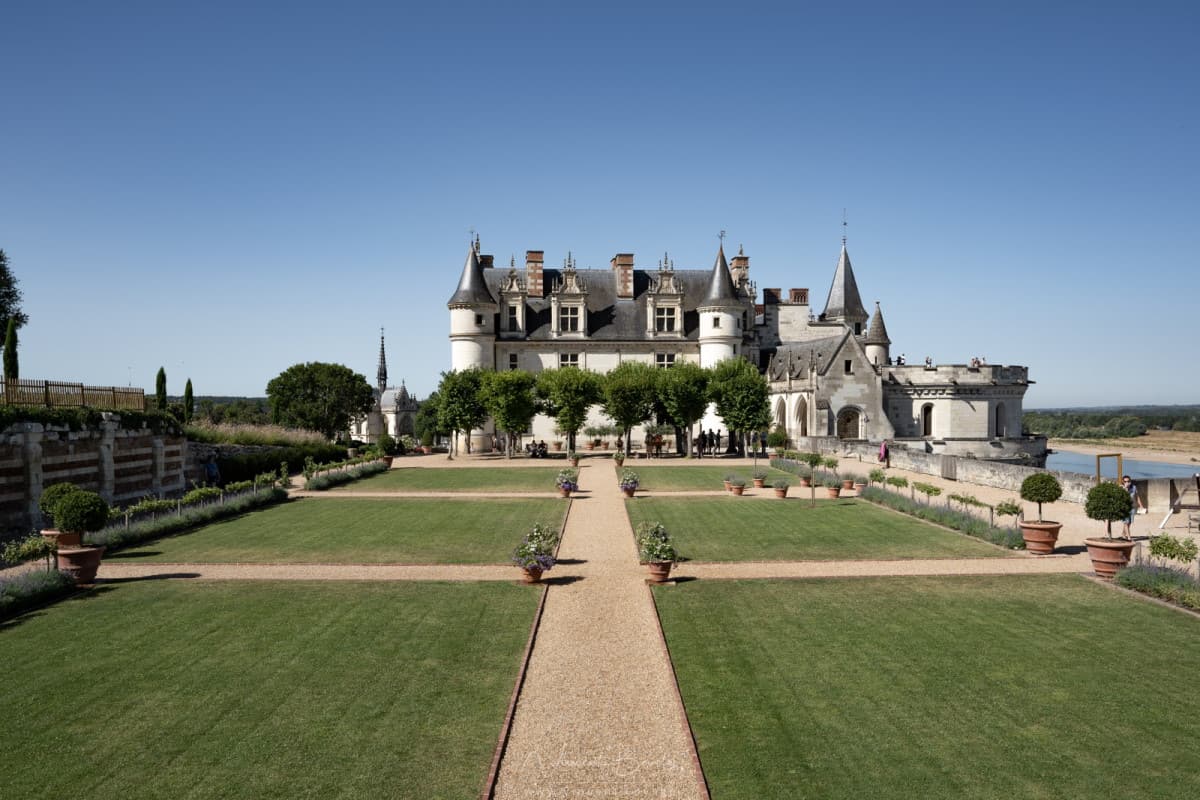
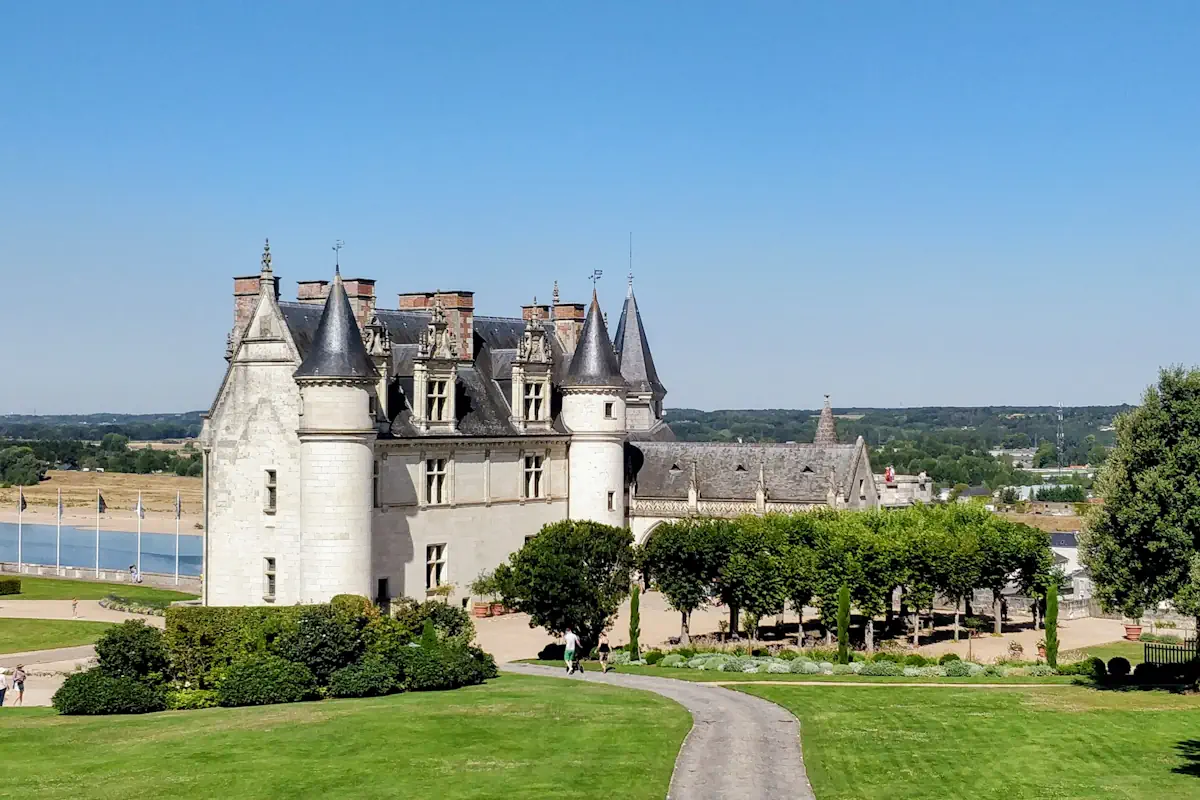
A 500-metre walk from Clos Lucé, the royal Château d’Amboise is ideally visited in the late afternoon when the light is beautiful over the Loire. This is where Francis I grew up, where Charles VIII died after hitting his head on a door lintel (yes, really), and where Leonardo da Vinci is buried in the Saint-Hubert Chapel — freshly restored after two and a half years of work, it’s more beautiful than ever.
The real late-afternoon bonus: the panoramic terraces over the Loire at sunset. One of the finest views in the entire Loire Valley — and a lovely way to end the day before heading down to dine in town.
- In the following article I give you a tour of the lovely town of Amboise
Château d’Amboise: practical info
Price: €17.30 (free for under-7s)
Booking: tickets and skip-the-line available here
Opening hours: the castle is open all year, from 9am to 7pm depending on the season
Parking: no really close car park since the castle is in the town centre, but it’s very easy along the quays
Evening in Amboise
Right, you’ve just had a big day and you finish with the Château d’Amboise — the perfect chance to spend the evening there (and handily, that’s where you’re sleeping).
Amboise is a really lovely little historic town, with a cobbled, mostly pedestrian centre. Its royal castle, in the Gothic style, is famous notably for having hosted Francis I.
Amboise used to be really dead — an inactive town centre, not much life in the evening. In 7 years, since my last visit, that has really changed and quite a few restaurants have popped up. At Le Bistrot l’Atelier, they have good wine and superb boards of local produce. Honestly, every time I go there are new quality places!
Don’t forget to cross the Loire to see the castle head-on at night. If there’s no wind, you can catch a lovely reflection.

A few alternatives for this first day
If you’d rather stay around Amboise, you can spend the morning at the Château d’Amboise instead of going to Chenonceau and take more time for Clos Lucé. You also have Château Gaillard and the Pagoda of Chanteloup (I wasn’t a huge fan, but people like it)
Otherwise, right next door you have the suuuperb Château de Chaumont. I preferred its visit to the Château d’Amboise. It’s less than 10 km along the Loire, so super easy to reach. But it’s normally scheduled for the next day 🙂
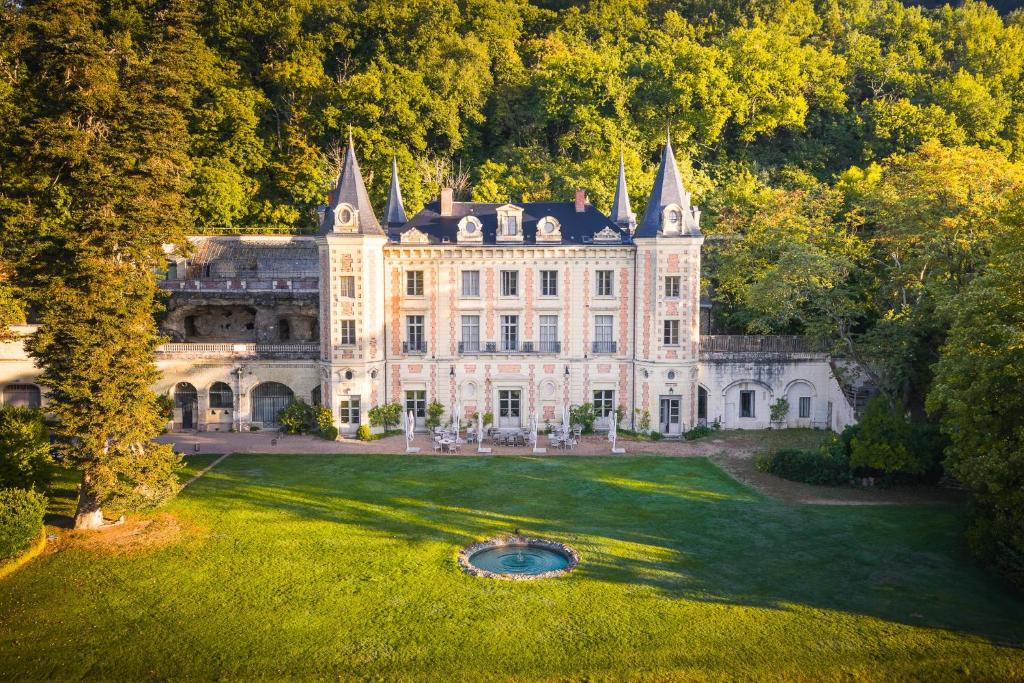
Nazelles-Négron — 4 km from Amboise
- 1701 château, 5-hectare park, river with canoes
- Heated outdoor pool, hammocks, sun loungers
- Homemade breakfast with honey from local hives
From 150€/night
📅 Check availability
Amboise — 10 min from the centre
- 30-hectare park, absolute peace guaranteed
- Large, sumptuous outdoor pool
- Near the Chanteloup Pagoda and Chenonceau
From 190€/night
📅 Check availability
Amboise — Loire Valley
- Rooms with four-poster beds, period décor
- Gourmet restaurant open Wed-Sun, local produce
- Outdoor pool, garden, free parking
From 180€/night
📅 Check availability
Amboise centre — 5 min from the castle
- Manor in the heart of Amboise, a 5-min walk from Clos Lucé
- Large outdoor pool, air-conditioned suites with bathrobes
- Staff rated 9.6, breakfast served on silverware
From 120€/night
📅 Check availabilityLoire Valley castles day 2: Chaumont / Azay-le-Rideau / Tours
Morning at Chaumont-sur-Loire
Chaumont is the castle I preferred to the one in Amboise; and yet it’s less well known. Perched on a cliff towering 40 metres above the Loire, it offers an exceptional panoramic view.
Architecturally, it’s also one of the most interesting in the region, one of my favourites, and the least famous precisely for that. It was rebuilt in two distinct phases, and it shows: on one side the big, massive medieval round towers, with their machicolations and wall-walks, a reminder that fortresses were still being built. On the other, the details of the second building campaign — arabesques, carved shells, Italian influences imported directly — heralding the Renaissance. It’s literally the transition between the Middle Ages and the Renaissance carved in stone, on the same building. Fascinating to observe once you know what you’re looking at.
What makes it truly unique today: the International Garden Festival (May to November), where every year artists from all over the world create extraordinary ephemeral gardens in the park. Even without the festival, the contemporary art exhibitions in the outbuildings make it a castle that surprises on every visit.
A little history: remember Diane de Poitiers and Catherine de’ Medici from yesterday? This is where it ends. After Henry II’s death, Catherine forced Diane to give her back Chenonceau in exchange for Chaumont. A queen’s revenge — worse housed, but served cold.
Alternatives nearby: Ussé and Sleeping Beauty, of course. Villandry and its superb gardens, medieval Langeais.

Afternoon at Azay-le-Rideau
Although it really is magnificent, Azay-le-Rideau is not a royal castle. For me, it’s easily one of the most beautiful, very emblematic of the French Renaissance. Not as original as Chenonceau, not as extravagant as Chambord, it has huge charm, on its little island in the middle of the Indre. Which also makes for lovely photos with the castle’s reflection in the water.
The interior is a little kitsch with wax statues, but the visit is interesting. Fewer intrigues than at Chenonceau, though.
Azay-le-Rideau: practical info
Price: €13/16 depending on low or high season
Booking: for tickets and skip-the-line, it’s this way
Opening hours: the castle is open all year, between 9:30am and 7pm with variations depending on the month (more info here)
Parking: there’s a car park nearby, small free car parks a touch further away, and free spaces 5 minutes’ walk away.
Heads up: tripods are not allowed inside the estate, as they’re considered professional equipment.

Evening in Tours
I was surprised by Tours. The city is a former royal seat and has a castle, a beautiful basilica, some towers (of course, in Tours… 😀 ), a cathedral, and the remains of other religious buildings. Old Tours is medieval and really pleasant. The classic thing is of course to pass through Place Plumereau, but the whole surrounding area is lovely.
I recommend spending the evening there because the old town and the historic buildings are superbly lit.
If you finish Azay fairly early, you can take the opportunity to do a few wine cellars before heading into the city!

A few alternatives
Here too you’ll have plenty of choice! Right next to Azay-le-Rideau is its little brother, the very pretty Château de l’Islette. And that’s not all! Around Azay you’ll find 3 well-known, beautiful castles. The Château de Villandry is famous above all for its gardens and is less than 10 km away. The Château de Langeais is a fine, massive castle halfway between medieval and Renaissance. Finally, a little further, there’s the beautiful royal fortress of Chinon.

Loire ValleyBestseller
Château de Chambord
Entrance ticket for the largest castle in the Loire Valley, a masterpiece of the French Renaissance.

Loire Valley
Château de Chenonceau
Entrance ticket for the Ladies' Castle, majestically spanning the River Cher.

Amboise
Château d'Amboise
Royal residence overlooking the Loire, where Leonardo da Vinci rests in the Saint-Hubert chapel.

Loire Valley
Loire Valley Castles Pass
- Château de Chambord
- Château de Chenonceau
- Royal Château of Blois
Loire Valley castles day 3: Chambord / Cheverny / Blois
Finally, for this last day, let’s head further east, into the Blois region and the first castles.
Morning at Chambord
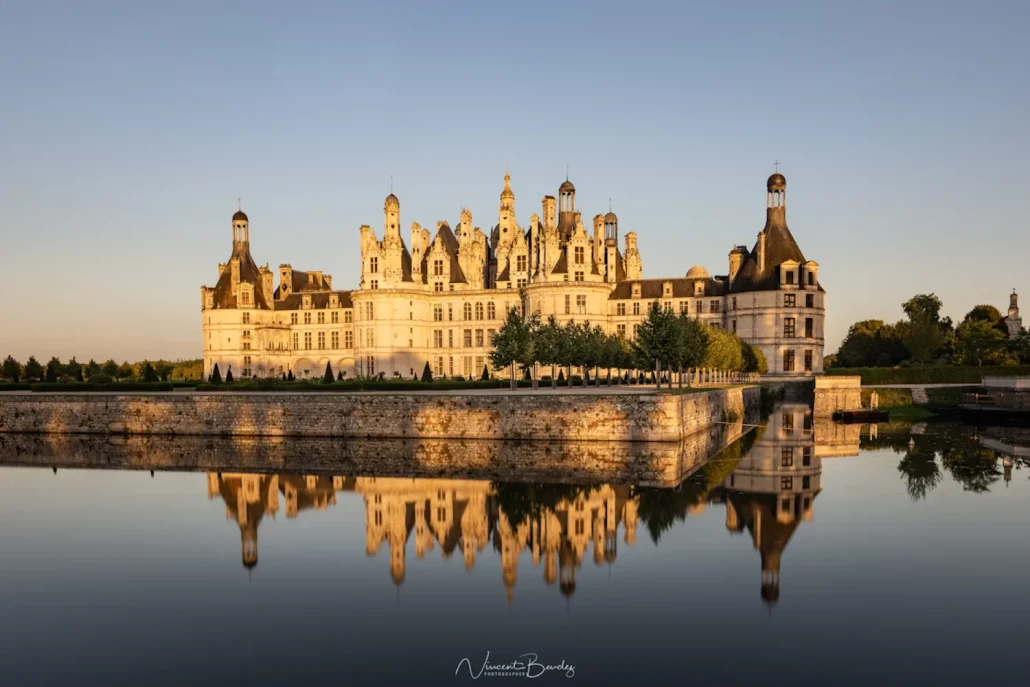
Along with Versailles, perhaps the most famous castle in the world. It has to be said it’s seriously beautiful, imposing, highly detailed. In short, the photogenic castle par excellence 🙂
Legend has it that Leonardo da Vinci was its architect following his final years in the area, but there’s no document to prove it, so it remains a hypothesis.
Chambord is THE monument. The one that dazzles you before you even step inside. Built by Francis I to impress, and it still works 500 years on. 440 rooms, 365 fireplaces, and that double-helix staircase at the heart of the castle, which is the most astonishing work of Leonardo da Vinci here.
The two spirals wind around each other without ever meeting — people going up never see those coming down. The king could come and go without crossing anyone. And I’m sure you’ll do the same!
You absolutely must climb up to the terraces for the view over the moats and the forest. And if you have time, the estate offers bike rides in the park, with 30 km of cycle paths in a 5,000-hectare forest. There’s also a little maze, and the deer rut in autumn.
- Discover in the following article visiting the Château de Chambord
Chambord: practical info
Price: €21 (EEA residents) / €31 (outside the EEA)
Booking: book your skip-the-line ticket by following this link
- You need to book in advance because it’s a very popular castle! And also arrive as early as possible
Opening hours: the castle is open all year, from 9am to 6pm (5pm in low season). The park appears to be open at all times.
Parking: paid — the 3 car parks for cars are €8 for the day
Heads up: tripods are not allowed inside the castle, as they’re considered professional equipment. However, in the free area, the gardens, no problem at all.


Afternoon at Cheverny
Comic-book fans will inevitably do a double take on seeing Cheverny. This castle was the inspiration for Marlinspike Hall, home of Captain Haddock, and the setting for several albums such as The Secret of the Unicorn and Red Rackham’s Treasure.
But Cheverny is a castle that surprises in the Loire Valley. Plenty of charm, of course, but a completely different architecture. Much more classical, far from the Italian Renaissance style you can see in several places.
A hunting estate, it also has a large pack of hounds and you can watch their feeding.
Price: €15.50, free for under-7s. More info on their website. Free parking.
Heads up: the opening hours are not the same between winter and summer seasons!
A lovely alternative would be the superb Château de Chaumont or the one in Blois.

Evening in Blois
Very close to the castles of Chambord and Cheverny, Blois is notably famous for its lovely castle (and its famous staircase). But it’s also a pleasant little town for spending the evening, thanks in particular to the banks of the Loire (and the pretty view from across the river). It’s not the equivalent of Tours, Orléans or Amboise, but it’s still a nice spot without too much driving.
If you’re up for it, the Château de Blois puts on a sound and light show that is, so I’m told, really lovely!


A few alternatives
I’m maybe a little less inspired in this corner, but within striking distance of Blois/Chambord you’ll easily find the Château de Chinon. But also the Château de Blois! Which is quite handy if you then want to visit the town. A little further out you’ll have the Château de Meung-sur-Loire (apparently the little town is also worth the detour) and the Château de Beaugency. They’re more under-the-radar but have their own little reputation!

5-day itinerary through the Loire Valley castles
I’m not going to fully repeat what to do for the first 3 days (not that I’m being rude, but it would be pointless waffle), so here’s the summary 😀 Either you do exactly the same, or you can do this:
- Day 1 morning: Chambord
- Day 1 afternoon: Cheverny
- Day 1 evening: Château de Blois after dark (overnight in Amboise or Blois to avoid too much driving)
- Day 2 morning: Chenonceau
- Day 2 afternoon: Clos-Lucé
- Day 2 evening: Amboise (overnight there)
- Day 3 morning: Château d’Amboise
- Day 3 afternoon: Chaumont (or Ussé, Langeais)
- Day 3 evening: your choice — head back to enjoy Amboise, or dash to Tours and change accommodation that evening
- Day 4 morning: Château de Villandry and its gardens
- Day 4 afternoon: the royal fortress of Chinon and the nearby wine cellars
- Day 4 evening: dinner in the old town of Chinon or in Tours
- Day 5 morning: Royal Abbey of Fontevraud
- Day 5 afternoon: the Saumur-Champigny cellars or a visit to the Château de Saumur
- Day 5 evening: dinner in the old town of Saumur
So here you have two different areas:
- A first part east of Amboise — I recommend sleeping there for the first two or three nights (for example at the Château des Arpentis to treat yourself a little)
- Then you need to sleep further west, either near Tours (at the Château Belmont, which offers excellent value for money) or a bit further out since the other castles are over there. You notably have the option of sleeping at the Château du Rivau, no less!
Day 4 – Villandry / Chinon / troglodyte cellars
- Morning: Château and gardens of Villandry
The most spectacular French formal gardens in the region. Three tiered terraces: kitchen garden, ornamental garden, water garden. If you’re not into gardens, it can feel repetitive, but the whole thing really is on another scale.
- Afternoon: Royal fortress of Chinon
A complete change of register. Chinon is a massive medieval fortress on a rocky spur overlooking the Vienne. This is where Joan of Arc recognised Charles VII among the court in 1429 to announce her mission to him. The story is wild and the view over the valley is superb.
And just below in the town, the troglodyte cellars — Chinon winegrowers offering tastings in cellars carved into the tuffeau stone. The fortress + cellars combination is perfect.
- Evening in Chinon or Tours
The old town of Chinon with its medieval houses is charming for dinner. Or head back to Tours if you slept there the night before.


📍 Villandry (Indre-et-Loire) · skip-the-line ticket · Remarkable Garden
The most beautiful gardens in the Loire Valley — three tiered terraces with a kitchen garden, ornamental garden and water garden, impeccably maintained since the 16th century.
- Access to the castle + French formal gardens
- Kitchen, ornamental and water gardens
- Remarkable Garden label · 16th-century terraces
Mobile ticket · instant access
From 8,50 € / person

📍 Chinon (Indre-et-Loire) · skip-the-line ticket · medieval fortress
Medieval fortress perched on a rocky spur with a breathtaking view over the Vienne — this is where Joan of Arc recognised Charles VII in 1429 to announce her mission.
- Immersive visit with the Histopad in 7 languages
- Access to the towers + park along the Vienne
- Site of the Joan of Arc / Charles VII meeting
Mobile ticket · instant access
From 12,50 € / person
Day 5 – Royal Abbey of Fontevraud / Saumur
- Morning: Royal Abbey of Fontevraud
The largest abbey in France, founded in 1101, and necropolis of the Plantagenets. This is where Henry II of England, Eleanor of Aquitaine and Richard the Lionheart are buried. An out-of-the-ordinary visit, far from the usual Renaissance castles, and frankly one of the most impressive of the whole itinerary.
- Afternoon: Saumur
Two options. The Château de Saumur dominates the town and the Loire. Beautiful, but visits are sometimes limited depending on ongoing renovations, so check beforehand.
Otherwise, the Château de Brézé, 12 km to the south, is a little-known gem: a castle with dry moats and a gigantic network of troglodyte cellars dug beneath it — really impressive and far less crowded.
Also, and I rather like this, you can visit all the Saumur-Champigny cellars around it! It makes for a gentle, unhurried end to the trip, which is rather nice too.
- Evening in the old town of Saumur
A lovely way to end the trip, with the Saumur-Champigny wines, the white tuffeau houses and the banks of the Loire.
- Alternative: Angers
If you’d rather keep visiting, spend the afternoon in Angers to see the castle and the incredible Apocalypse Tapestry.
Where to stay for this Loire Valley castles itinerary?
- if you want many more options and information, I offer you my article on accommodation in the Loire Valley
For the first 3-day itinerary, I wanted a single, central place to stay. That is, little travelling each day, not far from each castle. I targeted somewhere between Tours and Amboise, favouring a bit of the “castle life”. If you’re going to be in the Loire Valley castles, you may as well sleep in a castle!
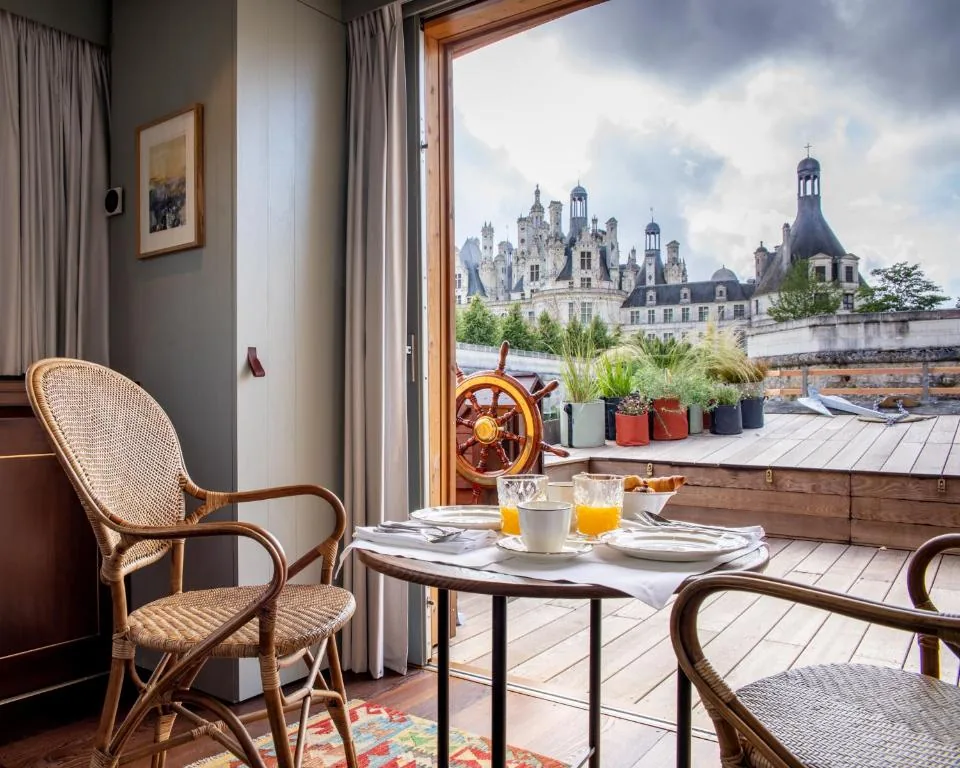
So I found the Château de la Bourdaisière, a sublime little Renaissance castle in the small town of Montlouis-sur-Loire. On top of that, the welcome is wonderful.
Next time, I’ll try the Relais de Chambord to wake up facing the castle!

Hotels and castles
There are other castles too, like the superb Château des Arpentis, the Manoir Saint Thomas in Amboise or the magnificent Prieuré d’Orchaise.
Among the more classic (and also cheaper) hotels and bed & breakfasts, you’ll find the Castel Fleuri or the Best Western in Tours, the Sans Souci Bed & Breakfast in Luzillé, for example.
The offer in the region really is vast and high-quality. I recommend looking here for a list of what you can find in the Loire Valley.
Apartments, castles and unusual stays
First of all, I recommend the following article if you’d like a selection of the best places to stay in the Loire Valley castles, unusual stays and even budget options
The advantage of touristy areas is that you’ll find a serious amount of non-hotel accommodation. There’s a good, very varied offer, and not especially pricey. On top of that, you’ll find quite unusual and central places to stay. Here are a few examples: a lovely troglodyte house near Vouvray, the famous Château de la Bourdaisière, or the superb Château de Verrière in Saumur.
Find homestays, exceptional stays,. and budget options here.
Below, you’ll find the map of the Loire Valley castles with a selection of more than 50 quality places to stay throughout the Loire Valley.
Or browse the virtual map just below and select the accommodation layer and the one for the most beautiful castles to see the best places to stay!
A Loire Valley castles itinerary without a car
On this itinerary, everything is doable without a car, using the bus or train network. Well, almost everything, because apart from the Château d’Ussé, which is only accessible by bike.
You can find in the following article all the ways to visit the Loire Valley castles without a car, by bus or by train. Handy!
Basically, here’s the optimised itinerary I suggest for discovering the Loire Valley castles without a car:
- To start, for these 3 days, I recommend staying in Amboise, central and ideal for this itinerary. As small recommendations, I suggest:
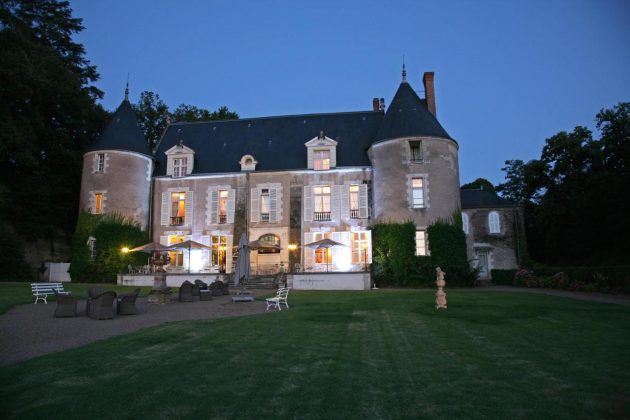
- The Château de Perreux to treat yourself by sleeping in a castle
- or the magnificent Manoir Saint Thomas with excellent facilities (and not especially pricey in low season!)
- Day 1: you’ll visit Chambord in the morning, Cheverny in the afternoon and Blois with its sound and light show in the evening
- Day 2: you’ll get Chaumont and its plant festival, then the royal Château d’Amboise
- Day 3: the wonder that is Chenonceau in the morning and Leonardo da Vinci’s inventions at Clos Lucé
The map of the Loire Valley castles
Below you’ll find the map of the Loire Valley castles: the most beautiful castles, the royal castles, the absolute must-sees.
And these itineraries are included in the map too! You’ll see a layer with the details of each stage.
There’s no official count, but at a rough guess there are close to 3,000 castles in the region. Fine, the goal isn’t to visit them all of course, but you can already categorise them and single out the 11 royal castles and the 21 most important ones.
The map of the Loire Valley castles is made on Google Maps, so you can easily keep it on your phone to reuse when you’re on site.
They’re placed here on the map and it’s easy to understand why it’s called “Loire Valley castles” 🙂
It’s a map made with Google Maps, whose workings I explain and about which I give plenty of details, with several layers depending on the types of visits and activities, different places to stay, more than 50 castles. Discover the explanatory article on the map of the Loire Valley castles

The Loire Valley castles for children
So this is a question I get asked more and more often. Will the Loire Valley castles appeal to children, which ones to prioritise and why, plus a few small tips.
I’m going to write a much more complete article about this, but here’s already what I can tell you. I think you know better than I do — children get bored quickly, so you need a little wow factor. But first, don’t try to do too much; honestly I think sticking to two castles a day is a maximum. Here are the ones that I think could really interest them:
- Clos Lucé, because it’s Leonardo da Vinci’s workshop and they’ve put out plans of his works, miniature reproductions and above all some at full scale, notably in the large garden. So you can see his inventions and it’s really interesting
- Chenonceau, of course, for its impressive arches spanning the Cher. There are 2/3 little walks to do along the riverbanks and the gardens are nice
- Villandry for its gardens — I went back last year, they’re as magnificent as ever!
- Ussé is a pretty castle and there’s a whole staging around the Sleeping Beauty tale, as it’s said to have inspired Perrault.
- Azay-le-Rideau is lovely — a very pretty, classy architecture to begin with, water all around and automatons re-enacting scenes from the period, notably meals.
- Chambord to a degree, and above all for its staircase, which will really interest children! And in the right season you can follow up with the deer rut
- Cheverny if your children are Tintin fans, because it’s the castle that served as the model for Marlinspike Hall. There’s also a fine permanent exhibition. And there’s a huge kennel with more than a hundred pedigree dogs you can see during the visit
- Chaumont can be nice for two reasons. First, its massive side with big towers that is totally different from what you usually find. Second, for its garden festival and its tropical greenhouse. It’s surprising!


Practical information
What is the best season to visit the Loire Valley castles
Easy! Every season is good. I really love spring and it’s also a great autumn destination, because these are blooming seasons that aren’t too (too) touristy. Some castles have superb gardens, like Villandry or even Chenonceau, so if that’s something important to you, winter may not be recommended.
But the big advantage of winter, from November to March, excluding school holidays, is that there aren’t many people. So it’s great for visiting the Loire Valley castles nice and quietly.
June, July and August are obviously the most touristy months, up to the first week of September. But it’s a fantastic time to see them. For the gardens, the nature, the blue sky. But it can get very crowded.
- In the following article I give you much more information to visit the castles month by month
What is the best time of day to visit the castles
For the big castles, I recommend arriving at opening time. You’ll arrive before the bulk of the tourists and the tour buses. So really, come early.
Late afternoon is also good, as is lunchtime.
But from 10:30am to 12:30pm, and 2pm to 4pm, it will be very crowded.
Can you visit the Loire Valley castles with a dog
Yes, it’s possible to visit most of the grounds and several castle interiors with your pooch! Well, especially if it’s small and fits in a bag.
In the following article I invite you to see which Loire Valley castles accept dogs!
What are the nearest train stations
It’s easy — almost ALL the castles have a train station nearby.
First, you need to reach Orléans, Tours or Angers. From there, you’re on a train line that connects lots of castles:
- Blois / Chambord (same station)
- Cheverny
- Chaumont
- Amboise / Clos Lucé
- Chenonceau
- Saumur
- Chinon
- and many more!
Ussé is the only one for which I couldn’t find a solution other than car or bike.
I recommend checking this article to see the train lines and timetables.
What is the budget for discovering the castles
A castle entrance costs on average €17 (from €13 for Azay-le-Rideau off-season to €21 for Chambord).
A hotel night costs on average €100 (well, it ranges from 50 to €400, but at €100 you can treat yourself a little)
For transport, count on either €40 by train from Paris (for example) for the round trip, or €70 by car (tolls + petrol) from Paris, also round trip.
A nice restaurant without going overboard will cost €35 a head, with a glass of wine (it’s cheap and good around here!). A midday snack, not much. Let’s count €10 a head.
So that can give, for 2 people and 1 day:
- 2 castles (4 tickets) = €52
- the round trip (car or train, for 2) = €80
- 2 snacks = €20
- Which comes to around €150 / 2 people / 1 day. You can see that transport is expensive.
For 2 people, 2 days so one night, it would come to approximately:
- 2 castles per day per person (4 castles so 8 tickets) = 104
- 1 night = €100
- 1 nice dinner for 2 in the evening = €70
- 2 midday snacks = €40
- Transport = €100 (to the base transport I add travel between the castles on the 2nd day)
- We’re at 415€ for 2 days / 2 people, treating yourself when it comes to the visits, the restaurant and the accommodation
Over 2 days, the two big variables to adjust are accommodation and food. For accommodation, you can get a budget option around €50 (examples here) or treat yourself, for example with the superb Château des Arpentis.
And I’ll reiterate that the transport is for coming from Paris; if you don’t have to take the motorway, it will cost you far less. Watch out for tolls and petrol — estimates can be found on Mappy.
For tickets, there are discounts with passes for certain Loire Valley castles
Can you visit the Loire Valley castles in a day from Paris?
It’s absolutely possible! I’ve dedicated a full article to this topic with all the options: by car, by train or on an organised tour.
Let’s say that in one day you’ll need to leave early and return late, but you can discover 2 castles. I recommend castles close to one another. For example:
- Amboise and Clos Lucé (+ a tour of the lovely town)
- Chambord and Blois
- Chenonceau and Amboise or Chaumont
- Azay-le-Rideau and Chinon
- Angers and its old town
And that’s only the best-known ones!
If you don’t drive and don’t want the hassle, there are organised tours that do the visit from Paris, by coach.
For example, with this organised tour, you can discover 3 castles from Paris for €120 with a guide:
- Chenonceau
- Blois
- Chambord
- And a wine tasting

Do you need to book the Loire Valley castles in advance?
Yes, strongly recommended from May to September and during school holidays. Chambord and Chenonceau are often sold out in high season — the queue can cost you 30 to 45 minutes. Skip-the-line online tickets are valid until the end of the year.
- Chambord and Chenonceau: pretty much essential in July-August
- Azay-le-Rideau, Amboise, Clos Lucé: recommended but less critical
How many castles can you visit per day?
2 castles a day is the right pace. A large castle in the morning (Chambord, Chenonceau, Azay-le-Rideau), a more intimate one in the afternoon (Cheverny, Clos Lucé, Chaumont). Beyond two, you start to confuse them — especially with children.
Which Loire Valley castle should you visit first?
If you only do one: Chambord for its architecture and unique estate, or Chenonceau for its history and its silhouette spanning the Cher. For something more intimate and less crowded, Azay-le-Rideau is a much-loved favourite.
In conclusion
- You can discover in the following article the list of the most beautiful Loire Valley castles!
I insist: in the Loire Valley castles, the goal is not to see as many as possible in a short time, otherwise you don’t enjoy it and quickly overdose. Here, the idea is to spread out the “big” castles well, pairing each with a different castle nearby. All without too much driving.
But the Loire Valley castles can’t be limited to just these few. There are so many, each with its own history, its own features. Medieval, Renaissance, dramas, royal residences. There’s really enough to enjoy plenty of good times and the desire to come back regularly 🙂
Other resources about the Loire Valley castles
Here are a few articles that, I hope, can help you plan your visit:
- first of all, discover the most beautiful places to stay in the Loire Valley castles
- you have all the information for a trip to the Loire Valley
- I tell you which are the most beautiful Loire Valley castles
- new! download my free ebook on the Loire Valley castles
- to find your way around, the Google Maps map of all the Loire Valley castles
- to save some money, you can look at the ticket passes for the Loire Valley castles
- If you’d like to treat yourself to a lovely place to stay, I point you to the Amboise castles where you can sleep!
- Everything you need to see at the Château de Chambord
- The ways to get to Chambord (bus, train, car)
- The Château de Chenonceau and its surprising history
- Discover Leonardo da Vinci at Clos Lucé
- Here are the Loire Valley castles you can visit with a dog!
- In the following article, I tell you why Amboise should be on your list
- Indre-et-Loire is a really interesting department, discover it all!
- You can visit the Loire Valley castles by train!
- Why Azay-le-Rideau is a must-visit castle