Last updated on
I’ll admit that this trip between the Bavarian Alps and the Austrian Tyrol wasn’t necessarily planned long in advance. Having got some last-minute time off for the week of 15 August, I needed somewhere that felt like a change of scene, close to nature, not too touristy, and where it wouldn’t be too hot. And mountains, ideally. Booking at the last minute, I spotted some lovely deals here and honestly, I don’t regret it one bit!
Fairy-tale castles, stunning mountains, nature, little Alpine towns with pretty traditional chalets, and lovely cities between Munich and Innsbruck.
So of course, we got a real eyeful for a whole week. Yes, it was a bit of a drive to get there, but honestly, we don’t regret it!
In this article I’m going to show you the wonders you can find in this region. And honestly, it’s only a small glimpse, because with every new road you’ll discover more gems.
And if you’re in the middle of planning your trip, you’ll find a one-week itinerary at the end of the article: the one we’d have loved to have before setting off, with the distances and the breakdown that saves you from spending your holiday in the car.
Let’s go!

5 reasons to visit the Bavarian Alps and northern Tyrol
- it just feels so good there!
- it’s not a very touristy region, even in high season
- the Bavarian castles are wonderful
- the food is great and the beers are seriously good
- the setting, the mountains — you’re in magnificent, soothing nature
King Ludwig II’s castles, now UNESCO World Heritage Sites
This is THE reason most travellers come to Bavaria. And since 2025, they have one more good excuse: UNESCO has added King Ludwig II’s castles to the World Heritage List.
Note that the listing covers four specific sites: Neuschwanstein, Linderhof, Herrenchiemsee and the Königshaus am Schachen. Hohenschwangau isn’t among them, for a good reason we’ll see below.
A quick word about the man, because without him none of this would exist. Ludwig II of Bavaria was passionate about Wagner, fascinated by Louis XIV, and let’s be honest, a little in his own world. He built and dreamed up castles all his life, digging a considerable hole in the state’s coffers. A Byzantine palace was even on the cards! He died in 1886 aged 40, in circumstances that have never been explained, and his building sites came to an abrupt halt.
Anyway. These castles are unmissable, and I’m presenting them here to whet your appetite. For all the practical side — prices, queues, what order to do them in and how many days to allow — I have a dedicated article: visiting the castles of King Ludwig II of Bavaria.
Neuschwanstein Castle
The real fairy-tale castle! Neuschwanstein Castle will genuinely take your breath away with its setting, its architecture, and the various viewpoints laid out all around it. Really, even though I’d seen it hundreds of times in photos, standing in front of it a few days ago was truly something unique. It’s a bit like coming face to face with Chambord for the first time — it really is striking!
The “little” snag with this castle is that you have to book your tickets well in advance. In August, there was a three-week wait. So I had to make do with the exterior, which is already magnificent, mind you. What I didn’t know is that there’s another ticket office here.
The tour itself is supposedly very good “but”. But it’s very quick, 20/30 minutes at a brisk pace, no photos. It’s fairly industrial, and you can’t go in without a guided tour. Still, the interior does look superb, straight out of Ludwig II of Bavaria’s imagination. So it’s worth doing and I know I’ll go, after two failed attempts 😀
Above all, do all the viewpoints around the castle, the one at the Marienbrücke and five minutes further on. It’s magical! And the exterior is free.
On the way back down, head for a dip or just some fresh air at Lake Alpsee, really lovely!
In the following article I give you all the information on visiting Neuschwanstein Castle


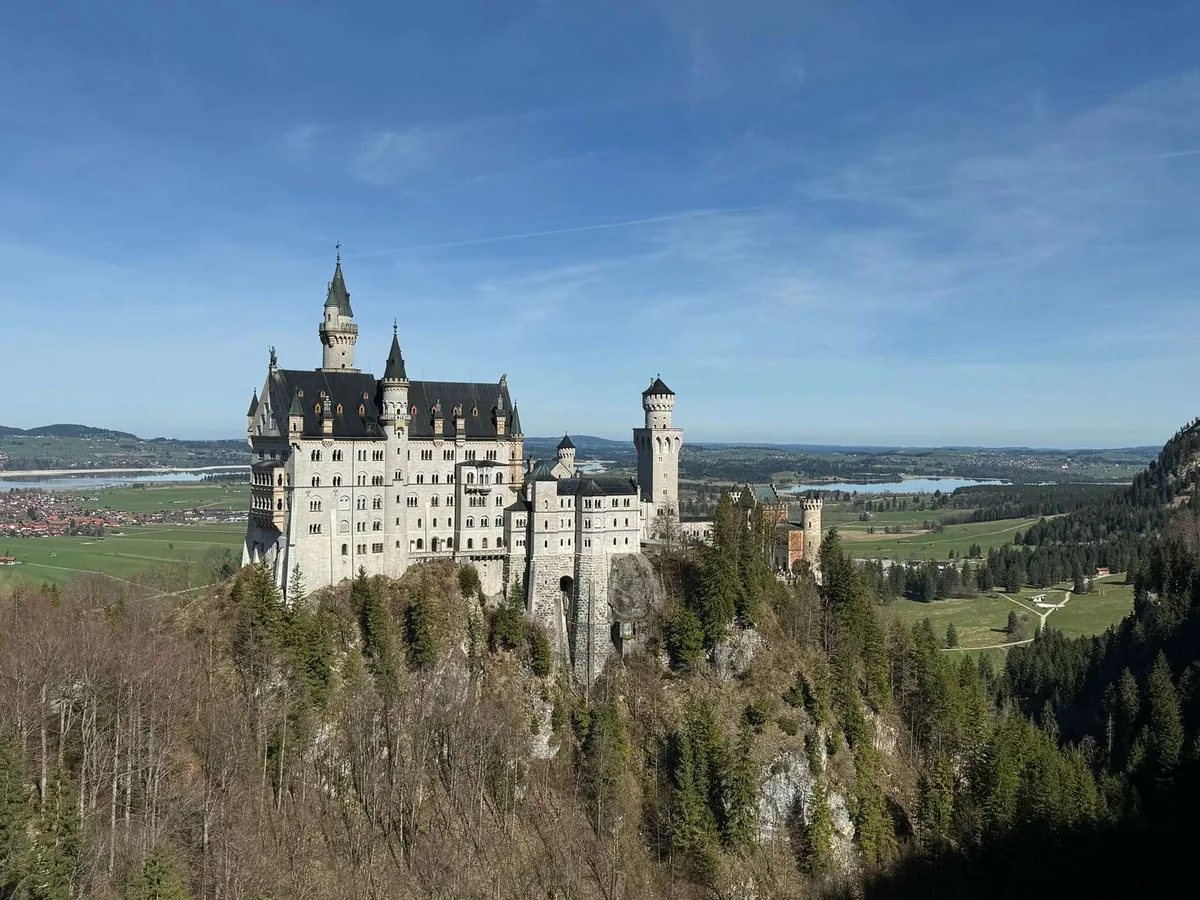
📍 Füssen · International Ticket & Travel Center (1 hr)
A skip-the-line ticket to visit Ludwig II's fairy-tale castle with an English audio guide, exploring at your own pace from Füssen.
- English audio guide inside the castle
- Ticket collection at Füssen station (ITTC office)
- Access to the historic kitchen + panoramic balcony
Free cancellation
From €45 /person
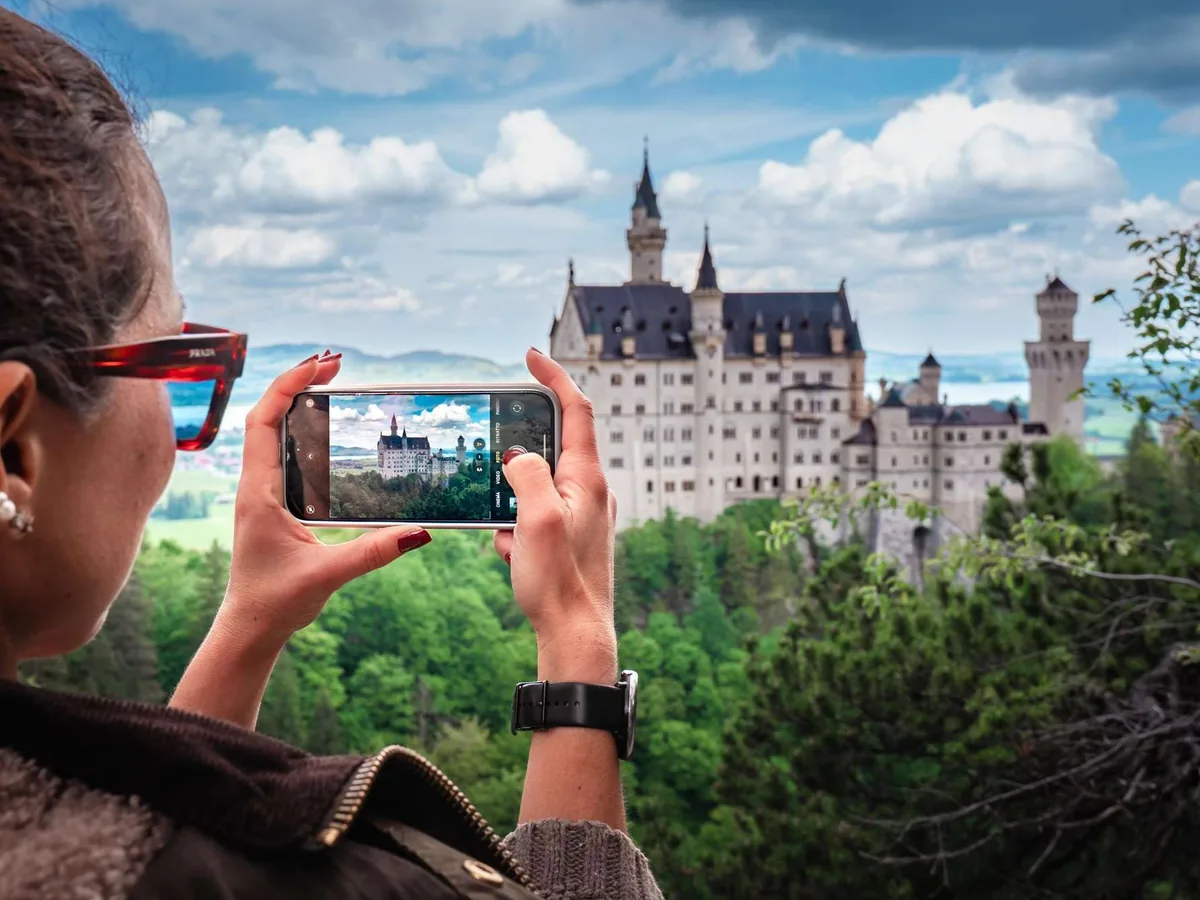
📍 Munich · Radius Tours (10 hrs)
A full-day trip from Munich to Ludwig II's fairy-tale castle, by train or panoramic coach, with an English-speaking guide on board.
- Return transfer from Munich by train or panoramic coach
- English-speaking guide on board + skip-the-line at the castle
- Marienbrücke + Hohenschwangau village + Lake Alpsee
Free cancellation
€79From €71 /person
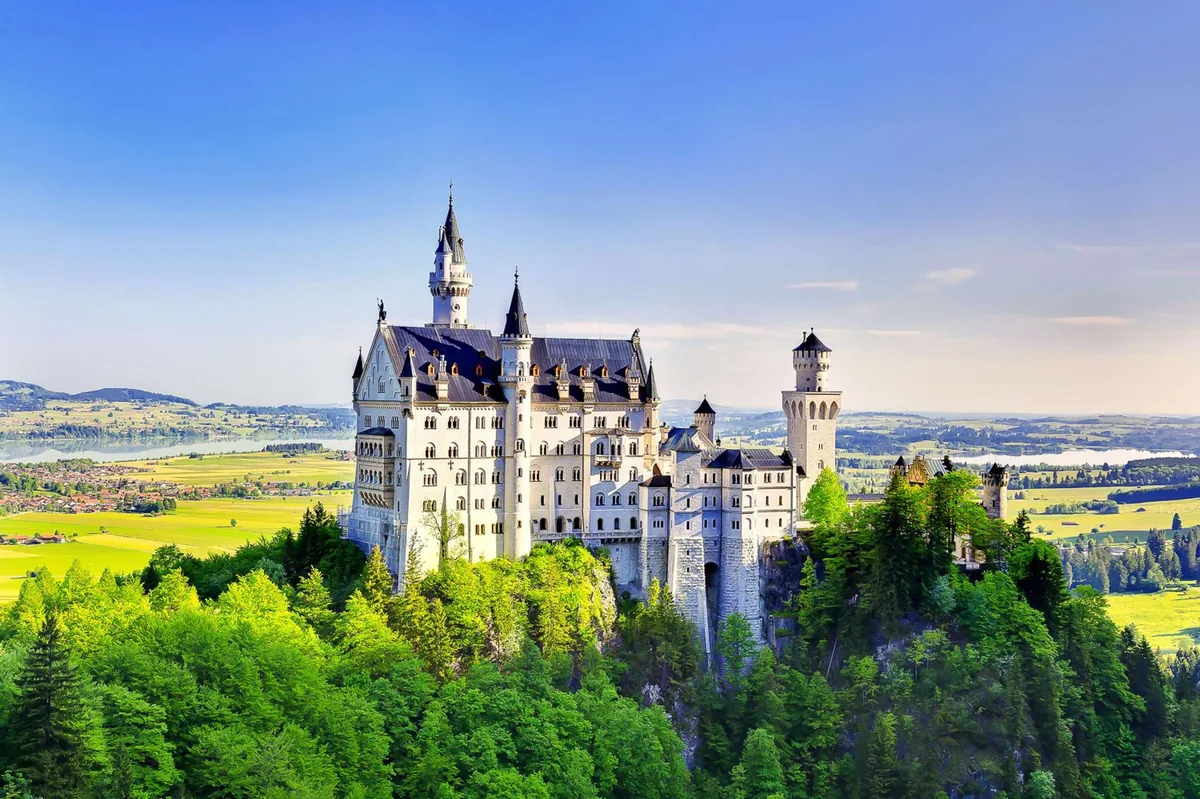
📍 Munich · Gray Line Munich (10-10.5 hrs)
A full day from Munich to visit King Ludwig II's two most beautiful castles: Neuschwanstein and Linderhof.
- 2 Ludwig II castles in a single day
- Audio guide available in English, German, Italian, Japanese…
- Passing through Oberammergau and the Bavarian Alps
Free cancellation
From €76 /person
Hohenschwangau Castle
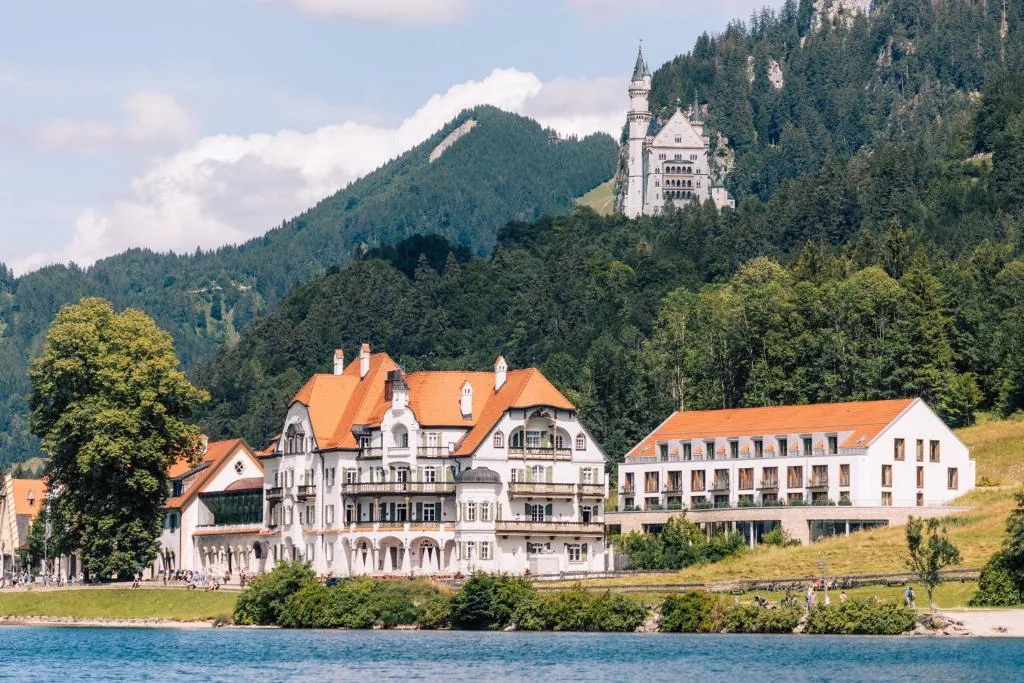
Right opposite Neuschwanstein (I don’t think I’ll ever manage to spell it right first time) stands Hohenschwangau Castle (also super easy to spell). A little clarification that explains its absence from the UNESCO listing: it isn’t one of Ludwig II’s castles. It was his father, Maximilian II, who had this medieval ruin rebuilt between 1832 and 1836. Ludwig II grew up here — and it was while looking at the mountains from here that he dreamed up Neuschwanstein, just opposite. That alone makes it worth the detour.
Completely different from its neighbour, in a style all of its own. Entirely ochre-coloured, it’s quite surprising!
Fewer people visit it than Neuschwanstein, so tickets are easier to come by. Now, in all honesty, the interior isn’t amazing compared with its neighbour or Linderhof, but it’s interesting.
And it’s right next to Lake Alpsee.


Linderhof Castle
I’m not grouping it with Neuschwanstein and Hohenschwangau because the superb Linderhof Castle is in a different spot, tucked away in its own little corner, and above all because it’s different.
Ludwig II of Bavaria was a huge fan of Louis XIV, and it shows. Here I really recommend touring the interior of the (small) Linderhof Castle, for two good reasons. First, it’s really not expensive. Second, the interiors are superb, as bling as it gets, with sparkle and gold everywhere just as we love in royal castles 😀
But you also really must take the time to explore the grounds! The gardens are magnificent, you look down on the castle from both sides, two superb views. You’re in nature, there aren’t too many people, in fact hardly anyone compared with Schwangau.
For the tour, it’s best to book a few days ahead in the peak tourist season (that is, August). And if you don’t fancy touring the interior, then the grounds are free — it’ll only cost you the price of parking.


Herrenchiemsee Castle
We did this one on our second trip, and it’s a lovely surprise.
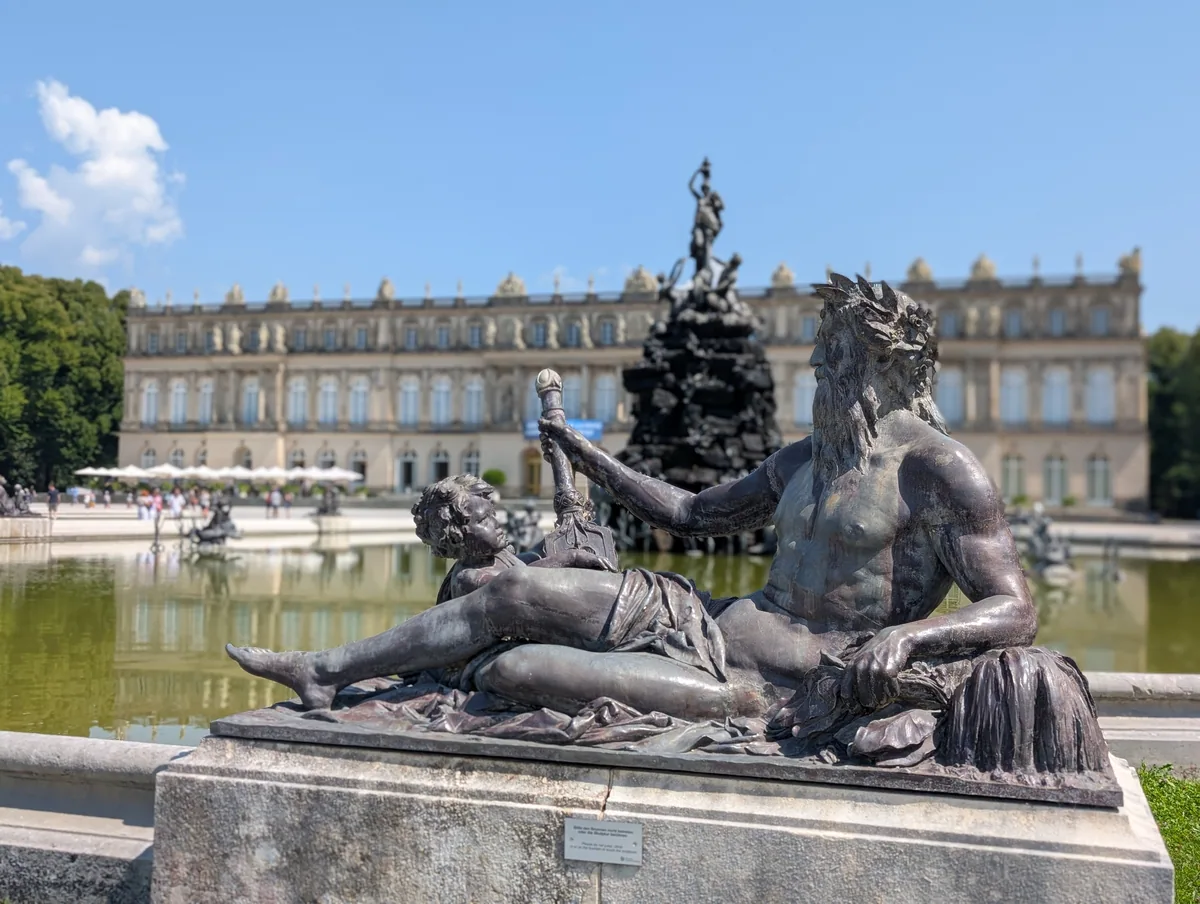
Herrenchiemsee sits on an island, in the middle of the Chiemsee — the largest lake in Bavaria. The approach alone is a pleasure: you board at Prien-Stock, twenty minutes by boat, and the island slowly reveals itself. A very pleasant little outing 🙂
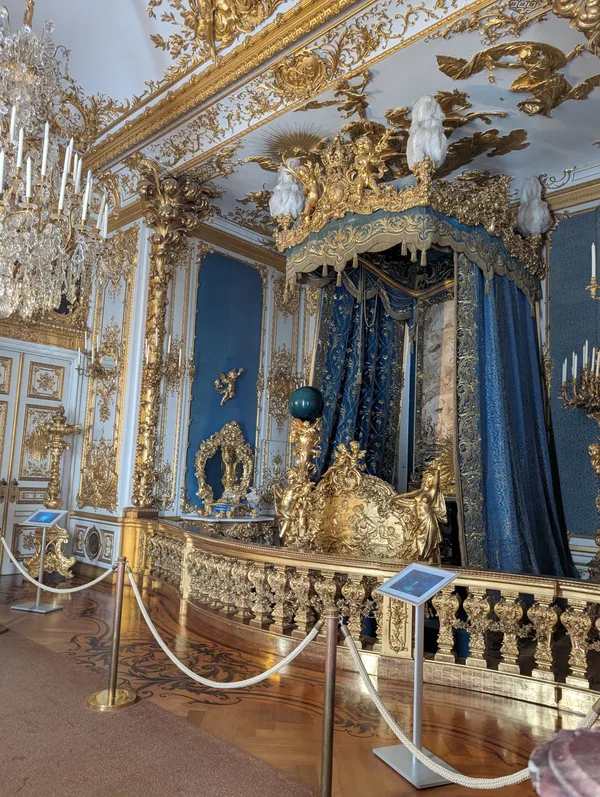
Once there, the scale changes. Ludwig II wanted his Versailles here. Well, almost: the castle’s managers stress that he wasn’t after a faithful copy, but a “temple of glory” dedicated to Louis XIV, whom he revered. And he thought big. Very big.
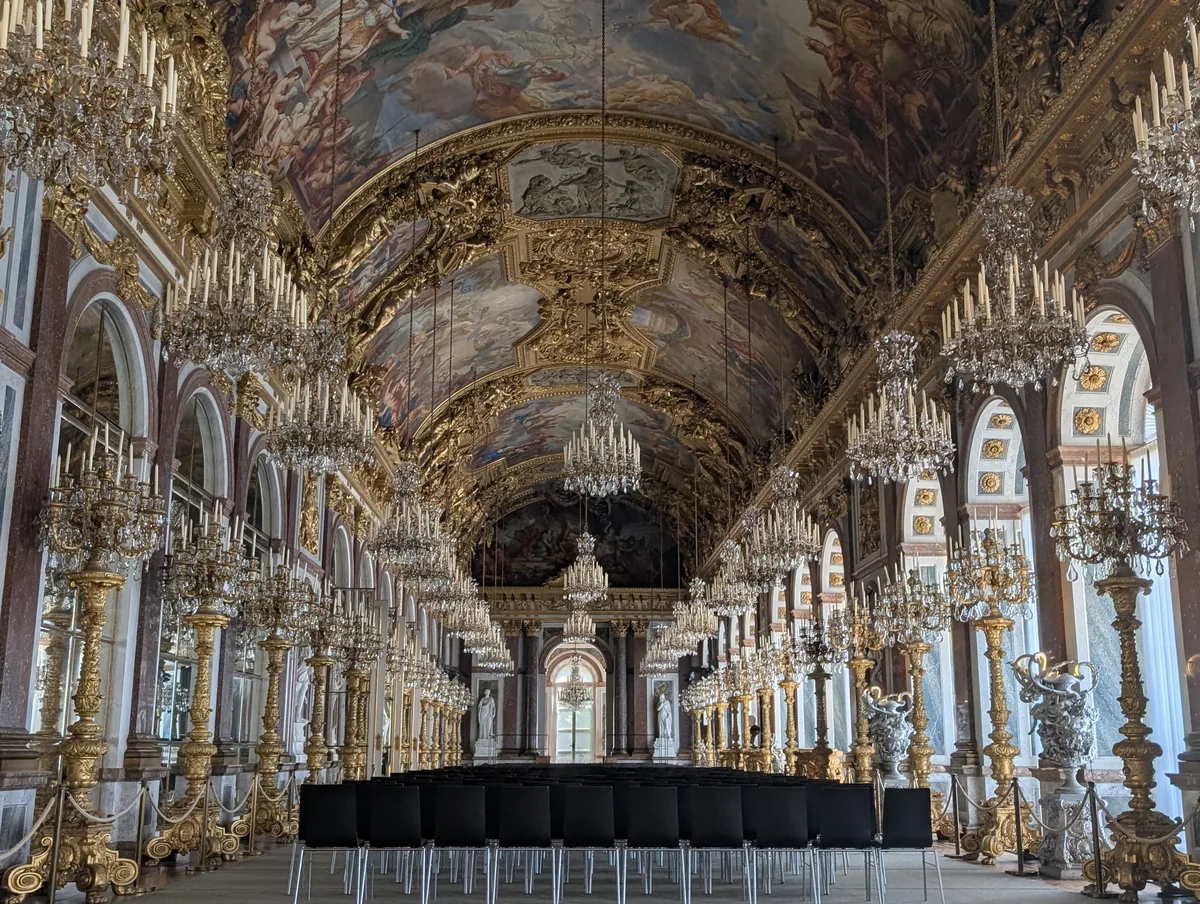
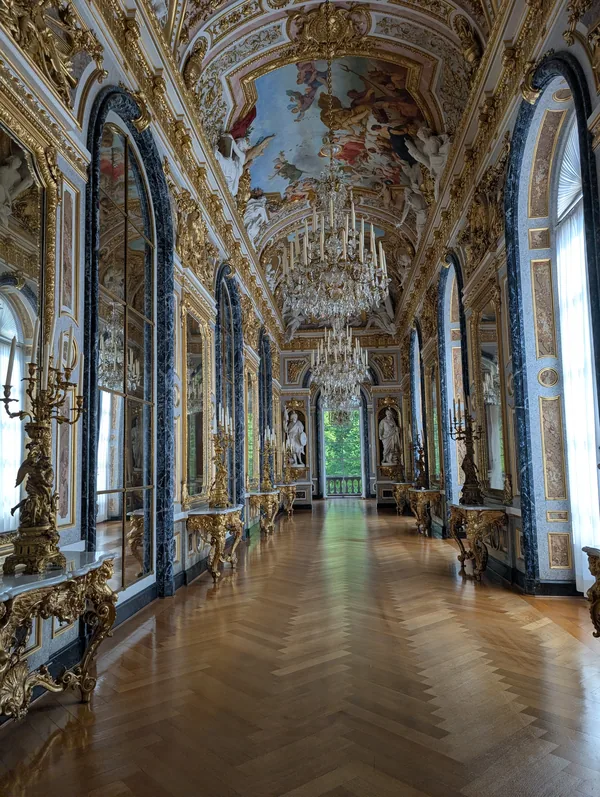
The result is pretty mad. The Hall of Mirrors at Herrenchiemsee is longer than the one at Versailles — about 75 metres against 73, and 98 metres if you count the War and Peace salons. With 33 glass chandeliers that Versailles doesn’t have. The Ambassadors’ Staircase reproduces a Versailles staircase demolished in 1752, reconstructed from engravings.
The maddest part of the story? He sank 16.6 million marks into it, more than Neuschwanstein and Linderhof combined. The building work stopped dead at his death in 1886, and the north wing was even demolished in 1907. And he only stayed there once, for about ten days in the autumn of 1885.
An unexpected historical bonus: it was here, in August 1948, that around thirty experts drafted the German Basic Law. It was at Herrenchiemsee that the primacy of the article on human dignity was decided. There’s a museum on the island that tells all of this, included in the ticket.
Good to know before you set off:
- Allow 45 minutes’ walk between the landing stage and the castle. That’s the official figure and it surprises everyone! A horse-drawn carriage does the trip in season
- Allow at least 4½ hours on the island if you want to see everything without rushing
- The apartments can only be seen on a guided tour, 30 to 40 minutes. In German continuously, in English twice an hour in summer. No tour in French, no audioguide — that’s the weak point
- The boat can’t be booked online, and on board it’s cash only
- The garden fountains only run from early May to 3 October

And the fourth, the Königshaus am Schachen?
The fourth site in the UNESCO listing is the least known. And with good reason!
The Königshaus am Schachen stands at 1,866 metres in the Wetterstein massif, above Garmisch. A plain wooden chalet on the outside, with an utterly extravagant Turkish hall upstairs, where Ludwig II came to celebrate his birthday.
The catch: it’s accessible on foot only. No road, no lift. Allow 6 to 7 hours’ walk there and back. I haven’t done it, so I’m not going to talk nonsense about it.
If you’re a walker, note that it’s open from 29 May to 27 September, with tours every hour from 9am to 5pm, limited to 30 people. Entry costs €6, free for under-18s, and tickets are sold only at the desk on site — no booking, no card.
Six euros and nobody, against the crowds at Neuschwanstein. The contrast is rather delicious 🙂
The Wies Church
A lovely surprise! In this part of Europe, between southern Germany and Austria, I love their utterly rococo churches. And the Wies Church is one of the finest examples in the world. No less.
Founded in 1749, lost in the countryside, it’s an ode to colour and light. It’s quite incredible. Trompe-l’œil galore, marble columns, wild ceilings (with the rainbow, all it’s missing is the Care Bears!). It contrasts completely with the other side of the church, the organ side, just as magnificent.
And the best part is that there’s hardly anyone there. The church is generally open until 8pm, is free, so really, you must go.


Ettal Abbey
Another great surprise! We were making our way calmly back from the Wies Church to go and eat in Garmisch when bam! we drove past a beautiful, enormous abbey at Ettal. It’s a Benedictine abbey you absolutely must visit, because the interior is once again superb.
An immense, fully decorated dome, a fantastic ceiling — enough to give you a stiff neck! And on top of that, the visit is free too.
Funny thing, this is where Benediktiner beer was created, by the abbey’s Benedictine monks. And honestly, it’s really good (the weissbier, a treat). You can’t buy it on site, but you can in the nearby supermarkets.


The summit of the Zugspitze
This is quite simply the highest mountain in Germany. And at its summit, very easily reached, there’s a huge platform offering an exceptional view over the Austrian Alps and over Bavaria, with the superb Lake Eibsee thrown in.
It’s not cheap, €66 return, but it’s really worth it for the panoramic view.
There are several options. I went up via the Ehrwald cable car, super quick and handy. There’s also the cable car from Eibsee, quick too. Otherwise the train from Garmisch-Partenkirchen up to the glacier and then the little glacier cable car to the summit. It’s longer but it looks pretty good!
Just plan carefully around the weather so you don’t end up in the clouds, that would be a shame!
You can find all the info on the Zugspitze website
The summit is shared between two countries, Austria and Germany. And you really feel the difference once you’re up there. On the Austrian side, it’s plain, a so-so restaurant in a works-canteen style. On the German side, a huge beer garden 😀


Lake Eibsee
One of the most beautiful lakes in Germany. Right next to Garmisch-Partenkirchen, it’s a real little haven of peace. And yet plenty of people pass through!
You come to swim, to relax, to walk around the lake, which is large but magnificent. Because facing you are mountains and a forest — it’s also the perfect spot for sunset.
There’s no beach as such; it’s the trees that line the lake, so you find little cove-like spots to settle into, honestly it’s lovely! Entry is free, parking is paid.


Bavaria’s pretty villages
So the most beautiful cities in Bavaria are in the north of the region (so a long way off), the most beautiful Alpine villages are more in Switzerland, but in southern Bavaria we still have some very lovely villages and little towns with dark wooden houses, decked in flowers, with very pretty ornaments and paintings… in short, the images you might have of Bavarian villages. That said, I’d better warn you, they’re a bit touristy.
Of course, Garmisch-Partenkirchen comes to mind. THE Bavarian resort town, hugely famous for its winter sports, but not only. The town itself is very pretty, with traditional chalets and houses with lovely façades. Really central, you’re close to everything, with easy access to the mountains and hikes, and honestly it stays calm.
A little further north, there’s another very pretty village: Oberammergau. Typical, again with superb chalets and houses covered in trompe-l’œil — they’re specialists in woodwork. So you’ll find lots of wood-carving shops. I passed through at the end of the day for dinner, so less time to explore since it wasn’t quite planned, but honestly, go!
Oh and while I’m at it, it was at the Ammergauer Maxbräu restaurant that I had the best beer. The local weissbier there is quite simply exceptional, and the alcohol-free version too. Really!
Right next to Garmisch-Partenkirchen is Grainau, at the foot of the Zugspitze mountain. Another pretty village that’s the starting point for a great many hikes and has the huge added advantage of being home to Lake Eibsee, which we also talk about in this article. It’s a super pleasant village, quieter, but a really lovely setting.
I didn’t have time to stop by, but for tiny villages, drop into Krün and Wallgau, super cute!
Finally, it’s not a village, but we loved the architecture of the little town of Füssen, right next to the castles. Very pretty houses, a castle, it’s typically German and honestly really lovely!


Getting lost on the little roads winding along the mountains
It’s easy for me to tell you “go here, go there, do this and that”, but the real, real pleasure over there is soaking up the scenery and driving a bit with no particular goal. That’s how we discovered gems like Lake Blindsee, which I tell you about in this article. Both on the Bavarian side and the Tyrolean side, the roads are spellbinding.
Off the top of my head I’d say the roads around Garmisch, Ehrwald, Schwangau, the road from Ammerwald to Ettal in the middle of the mountains.
And you either come across mountains, or flower-filled villages, or hills with a typical church as a backdrop. It’s a hard life.


The city of Munich
I’d been wanting to discover Munich for a long time. But without really knowing what to expect. So from Ehrwald, we took advantage of a day of rotten weather to head to the Bavarian capital. In the end, superb weather, and we spent more time enjoying the outdoors (and beers on the terrace) than the museums, especially as they closed early.
But Munich is above all Marienplatz, with the quite incredible Rathaus. A magnificent Gothic style, just as I like it, with gargoyles, a dragon, and staircases straight out of a fantasy film. In short, a real delight.
There are also lovely churches like Asamkirche, but I really recommend going up the towers of St Peter’s Church. “Alter Peter” will give you a pretty mad view over the city and in particular the Rathaus, but without the tide of people in front. That said, you have to earn it. It doesn’t look it, but it’s high! 14 storeys 😀 After that you deserve another beer (and by the way they have great alcohol-free beers in the region, really).
We also wanted to enjoy some interiors; we’d earmarked the Residenz, the former royal palace of Bavaria, which looks sumptuous, as well as Nymphenburg Palace. Except we always struggle a bit with German opening hours and we didn’t manage it. So that’ll be for next time!
Because even though the city was very largely destroyed during the war and the reconstruction is in a much more recent style, it’s a pleasant, pretty city. It’s a pleasure to wander around and stop at one of the many terraces. And you can very easily branch out around it to discover Bavaria.


- What to see in Munich
- Marienplatz
- the Asamkirche church
- the Residenz palace
- Nymphenburg Palace
- Tour from Munich: Linderhof and Neuschwanstein
- Recommended accommodation in Munich
- Hotel MIO by AMANOU, excellent value for money a stone’s throw from the centre
- Where to eat
- the famous sausages at the Nuernberger Bratwurst Gloeckl am Dom
- the institution that is the Hofbräuhaus
- Augustiner Klosterwirt for beers and traditional dishes

4 recommended places to stay in the region

📍 Grainau · Zugspitze cable car 2.5 km · location 9.2/10
Traditional Bavarian apartments at the foot of the Zugspitze, with a fully equipped kitchen and a large balcony to admire the summit, a 10-minute walk from the village restaurants.
- Double rooms or apartments with kitchen
- Zugspitze cable car 2.5 km away, ski slopes + hiking on the doorstep
- Free parking + pets welcome + garden
Free cancellation
From €109 /night

📍 Oberammergau · station 550 m · location 9.7/10
A charming, tastefully decorated Bavarian house next to the Passion Play theatre, run by a lovely French-speaking owner — staff rated 9.7/10.
- Quiet, traffic-free street, centre of Oberammergau 5 min away
- Exceptional breakfast + cappuccino + reserved parking
- Barrel sauna in the garden (on request) + ski storage
Free cancellation
From €110 /night
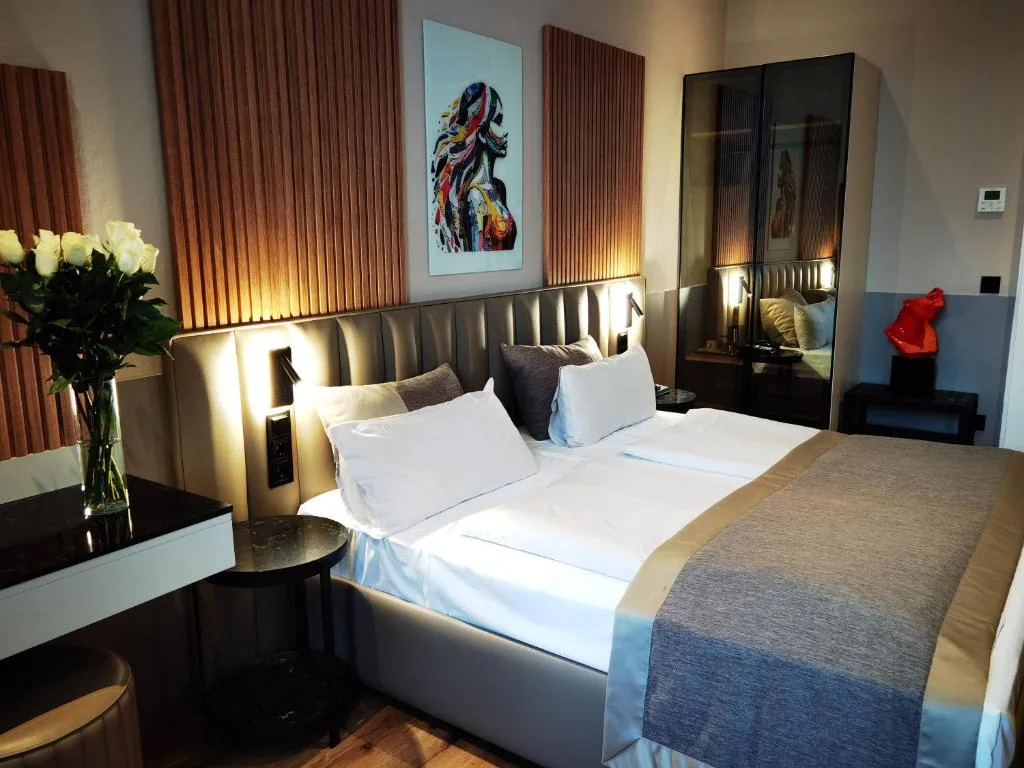
📍 Ludwigsvorstadt · central station 600 m · location 8.8/10
The urban base with pop art décor a 5-minute walk from the central station and the Oktoberfest grounds, with soundproofed rooms and a hearty buffet breakfast.
- Central station 600 m + direct S-Bahn to Munich Airport
- Oktoberfest grounds a 5-minute walk away (Theresienwiese)
- Soundproofed rooms + air con in summer + 24-hour reception
Free cancellation
From €110 /night

📍 Leutasch (Tyrol) · Kreith lifts 450 m · location 9.3/10
Recently renovated deluxe wood-and-stone apartments with panoramic views over the Alps, a huge balcony for the sunsets and a sauna at your disposal.
- Kreith lifts 450 m away + hiking/cycling on the doorstep
- Apartments + 3-bedroom chalet, kitchen, private terrace
- Free parking + pets welcome + paid airport shuttle
Free cancellation
From €160 /night
The Austrian Tyrol, just across the border
Right, we need to talk about Austria.
Because from the Bavarian Alps, the border is within easy reach. From Garmisch, Innsbruck is 55 minutes away. The Fernpass lakes are half an hour away. And it would be a shame to stop at a line on a map!
So here’s a quick tour of what we loved on the Tyrolean side. Each of these places would deserve far more than a few lines, and I’ll devote a whole article to it — think of this section as a taster to help you decide whether to push on that far.
Innsbruck, the capital of Tyrol
Because we did quite a few visits on the Tyrol side too, and it’s really worth it! Innsbruck is an incredibly pleasant city. Very posh, as the Austrians know how to be, but you sense that this superb city has a little rebellious side that could lean towards Budapest.
The architecture is magnificent, the setting is top-notch because you’re among mountains. The real postcard city! And above all, its old town centre. It’s not very big but so pretty, with its little streets and its crooked, superbly ornamented houses.
Of course, Maria-Theresien Strasse comes to mind, with its baroque façades and its column. You’ll go and see the “Golden Roof” and the Hofkirche church. But in Innsbruck, the main thing is to stroll around at your leisure to enjoy it. Because really, it just feels great there!
To get some height, you can take the Nordkette cable car, which will give a superb view over the mountains and the city. Unfortunately I couldn’t do it because of the wind, but it looked very tempting!


- What to see in town
- Marie-Theresien Strasse
- Altstadt, the old town
- the Hofburg palace
- the Hofkirche church
- the Innsbruck cable car
- Swarovski Kristallwelten a little outside town
- take the time to get lost in the city
- The Innsbruck Card
- includes transport, cable cars, museums and attractions
- Info and booking
- A Tyrolean folk show
- my wife thought it was a shame we couldn’t see one, because it’s true I hadn’t looked at all. So here’s one, it might be interesting!
- Info and booking
- Recommended accommodation in Innsbruck
- The really lovely and not too expensive Best Western Plus Goldener Adler, right in the town centre
- Where to eat
- the quality of the produce at the Goldener Adler
- the great goulash at the Altstadt-Schmankerl
- the local produce platters at the Speckeria
- Augustiner Klosterwirt for beers and traditional dishes


Alpbach, the most beautiful village in Austria
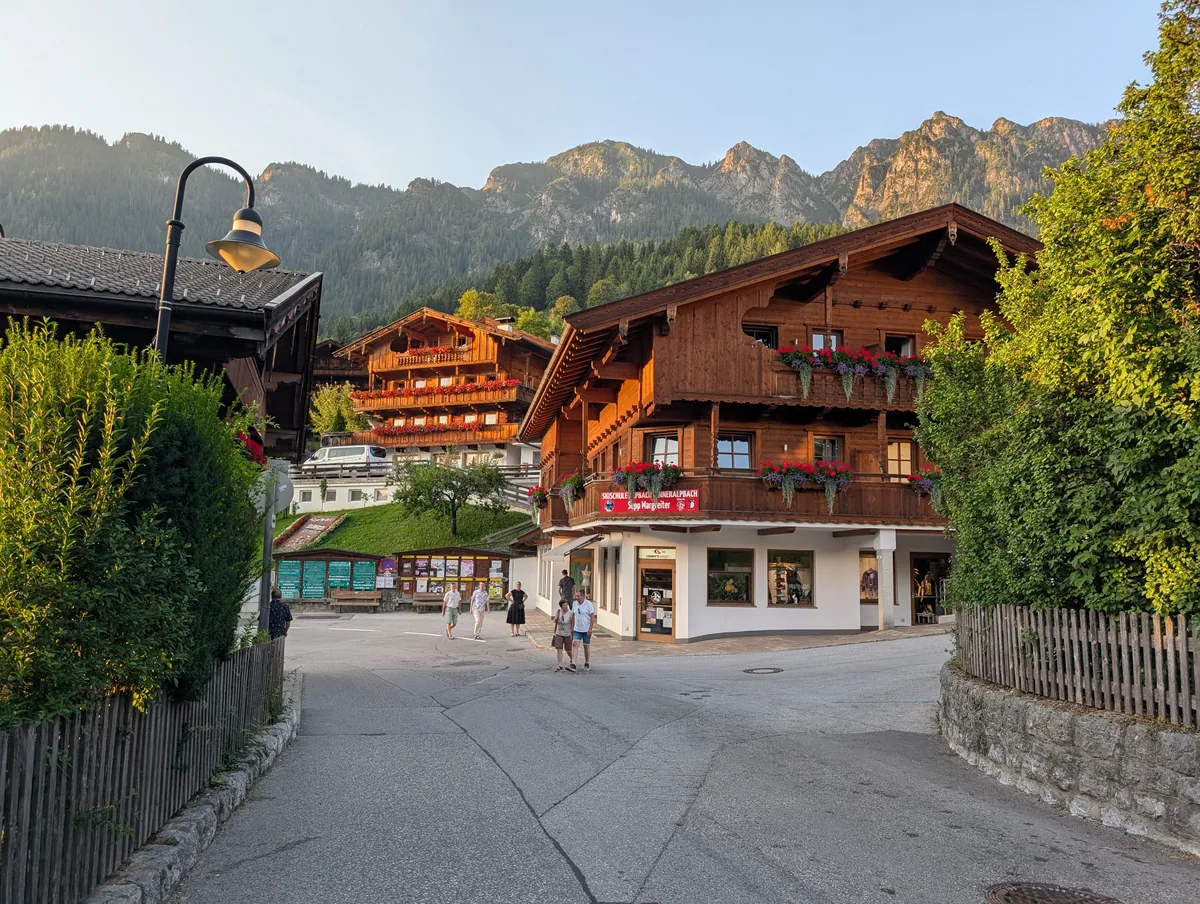
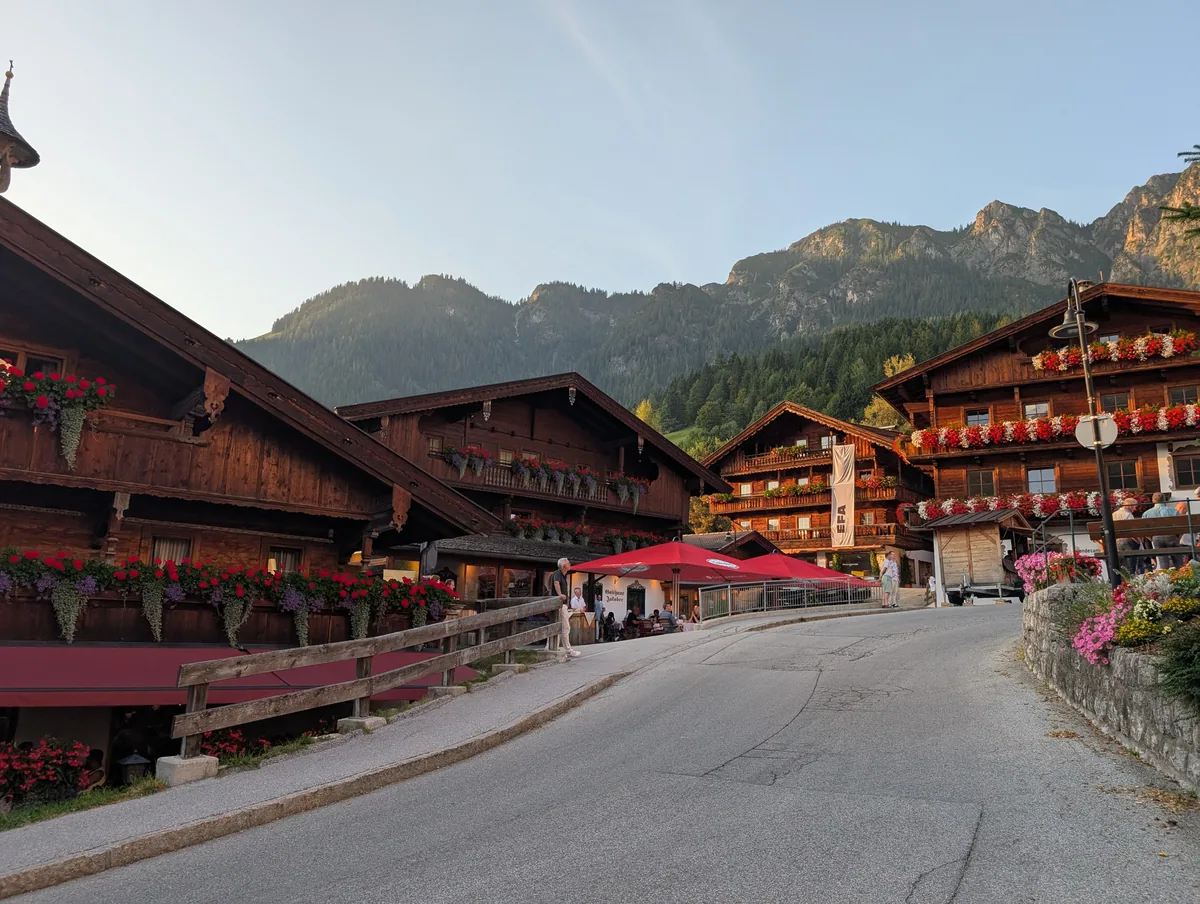
Just under an hour from Innsbruck, Alpbach is a village entirely in brown wood, with balconies overflowing with red geraniums and the mountains closing off the scene. It looks like a film set.
And it’s no accident: since 1953, the municipal regulations have required every new building to respect the village’s traditional style. Seventy years of consistency, and this is the result. We spent an end of the day there and the evening light on the wood, honestly, is superb!
It was voted “most beautiful village in Austria” in 1983 — by a viewers’ vote, admittedly — then “most beautiful flower-filled village in Europe” in 1993, that one awarded by a jury.
Allow around 55 minutes from Innsbruck. The tourist signs say 30 minutes, don’t believe them 🙂
Plansee for water activities
Plansee, we also came across by chance. It’s a large lake with translucent waters, at the foot of the mountains, a magnificent setting. There’s also a lovely river running alongside the road. And all that, with the absence of any current, makes the perfect setting for stand-up paddleboarding, canoeing or just having a dip and relaxing. Unlike the other lakes, there’s a whole developed area where you can hire gear, with a beach, a restaurant, somewhere to grab a drink. So yes, this area is more developed, but you can easily get away to be alone in the world again in an incredible setting.

Lake Blindsee
The great surprise! We came across it by chance even though it’s quite simply one of the most beautiful lakes in Austria. Blindsee is a small lake surrounded by mountains, very easy to reach.
First you get a great viewpoint up high to appreciate the colours of the lake’s water. Then, to get closer to it (which you must do!), you have two options:
- go down from the viewpoint to the level of the lake, there’s a lovely little beach. 15 minutes’ walk and there you are
- go to the other side by car, there’s a small area where access is paid, plenty of space, little beaches, really lovely
And once right at the bottom, you can walk around the lake, it’s super nice! and there are spots to swim more or less everywhere.


Café 3440, if the Zugspitze put you off
Remember the Zugspitze price a bit further up? €66 per adult, with crowds on top.
So here’s the alternative — but it involves some driving.
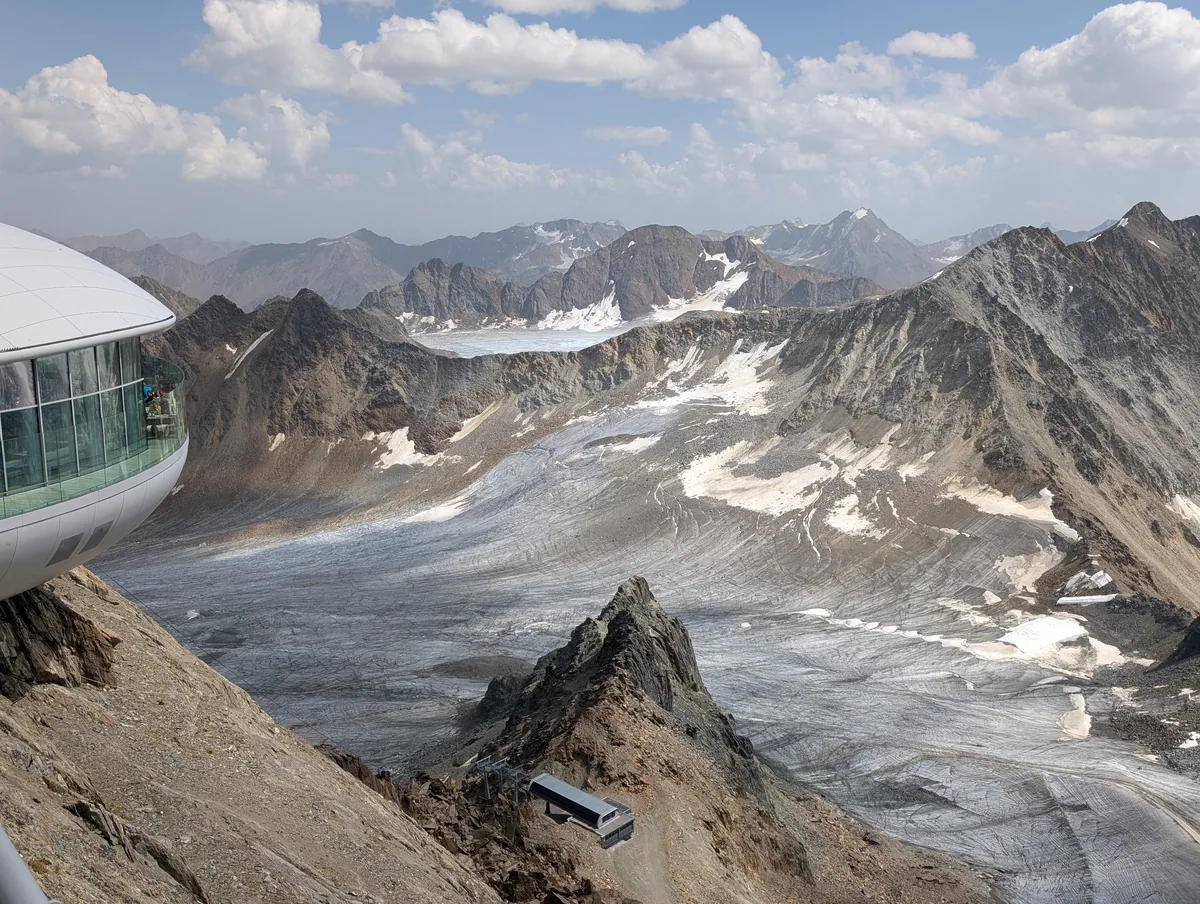
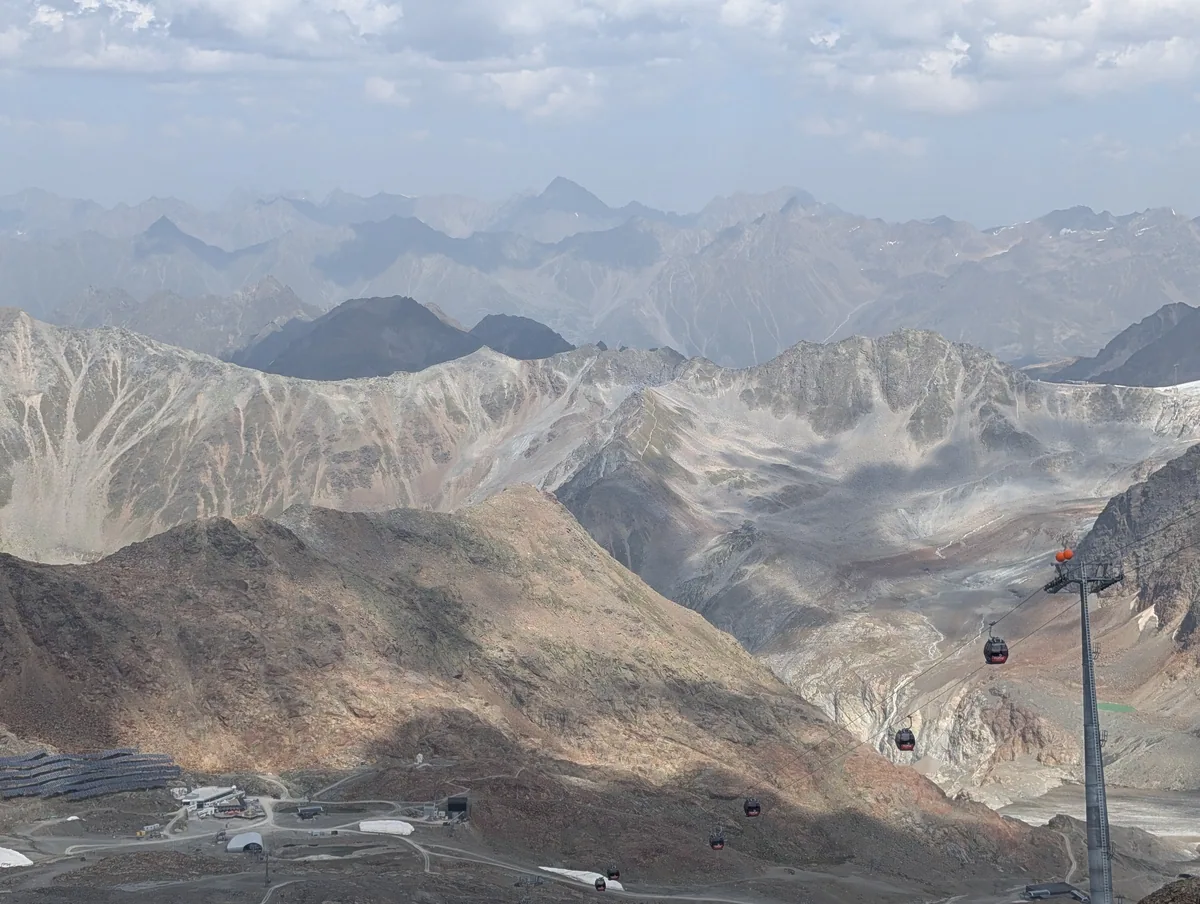
At the far end of the Pitztal, Café 3440 is the highest café in Austria. It’s aptly named: 3,440 metres, at the top of the Hinterer Brunnenkogel. Two lifts from Mittelberg, about twenty minutes, and you’re having a coffee 478 metres higher than the Zugspitze… for €60 instead of €66.
But be aware of what it involves. The Pitztal is two hours’ drive from Garmisch (an hour ten from Innsbruck): it’s not a replacement on the spot, it’s a half-day detour into another valley. And at the Zugspitze, you’re also buying Germany’s highest point, the border, the Eibsee below — things that make a story. Here, you’re buying a glacier and a view over the Ötztal.
The worst case isn’t the same either: if the clouds come down at the Zugspitze, you’re still left with “I did Germany’s highest point”. At Café 3440, you’re left with a coffee in the fog for €60.
The café is open from 9.30am to 3.30pm, the summer season starts in early July. Allow €36 for a child.
The Königssee, the most beautiful lake in Bavaria
Right, if you were to keep only one place from this whole list, it would be this one.
We’re changing area completely, in fact. We’re here at Berchtesgaden, in the far east of Bavaria, on a tongue of German territory that pushes into Austria. Salzburg is half an hour away, Munich two hours, and Garmisch two and a half. And no, you can’t do it on the same day as Neuschwanstein! You need a base on site, allow two days minimum.
And it’s really worth the detour.
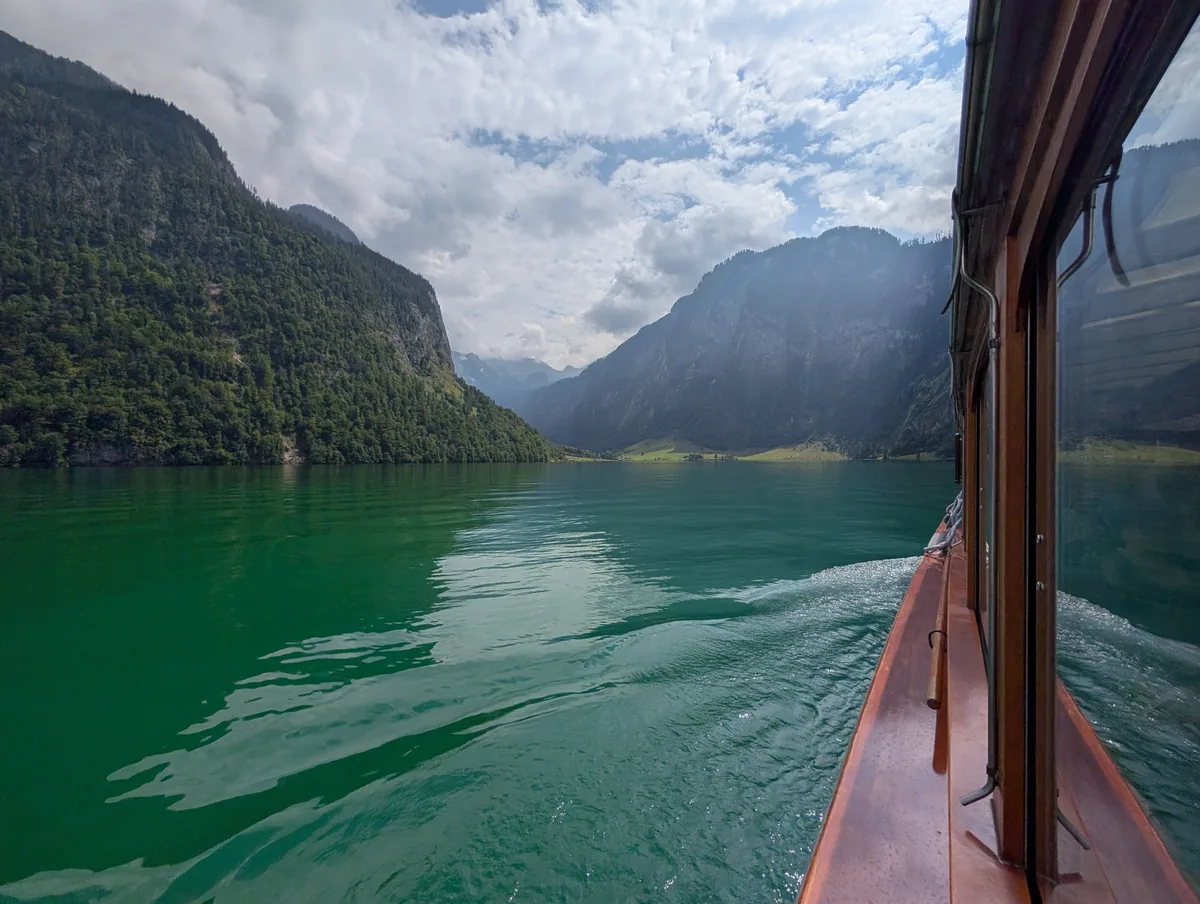
The Königssee is a fjord set in the middle of the Alps. Seven kilometres long, with walls dropping sheer into emerald-green water, and not a single road around it. The only way to move is by boat.
We went last summer and honestly, it swept us off our feet.
A small but important detail: the lake is in Berchtesgaden National Park, Germany’s only Alpine national park, created in 1978. Hence the absence of roads. Hence, too, the silence.
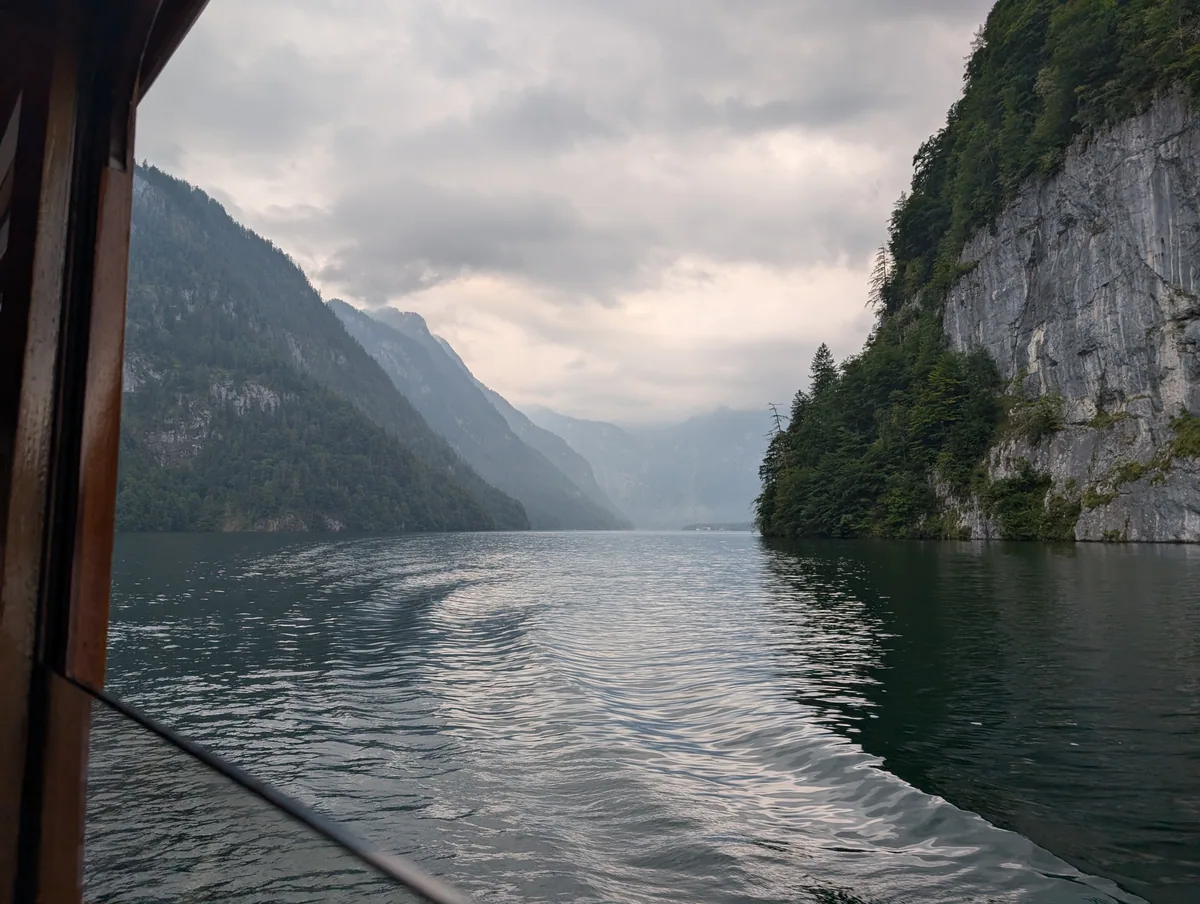
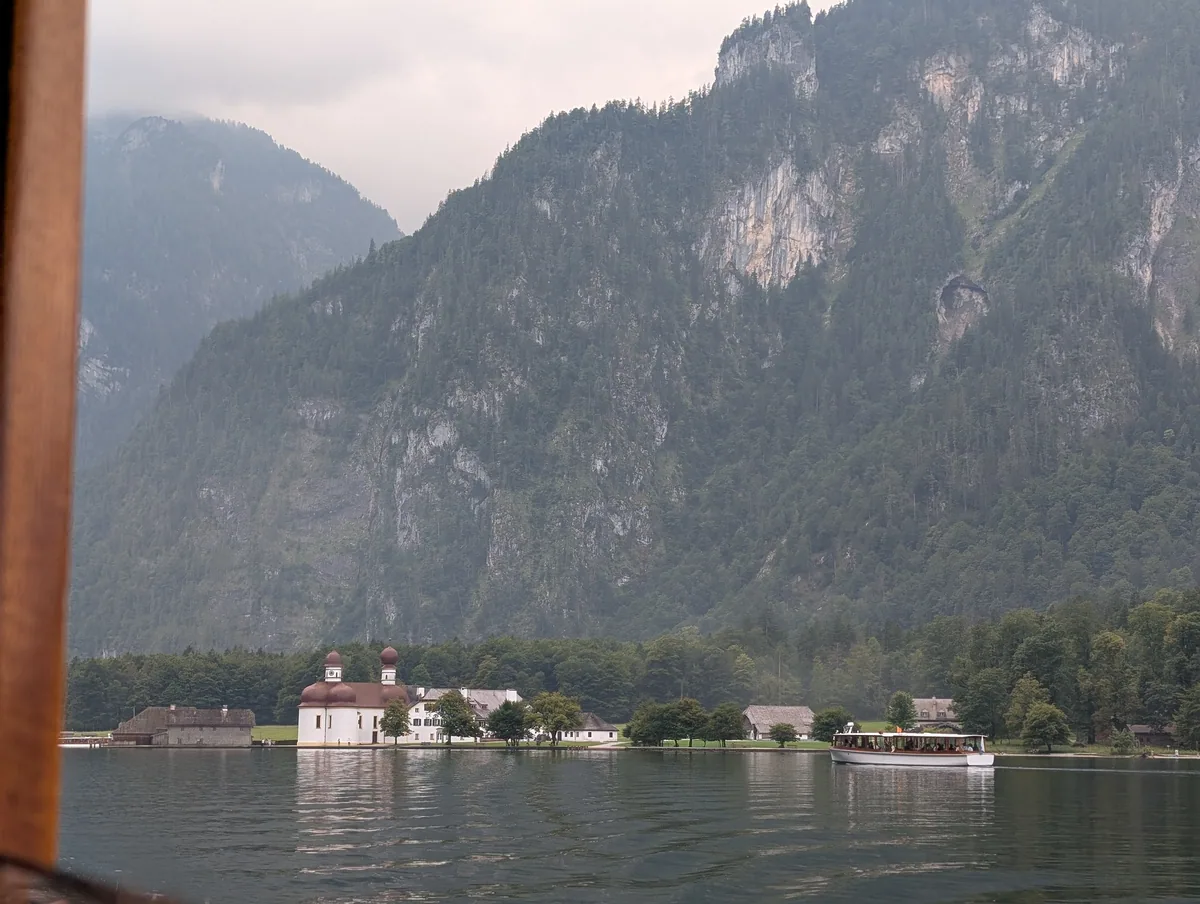
The boat crossing to St. Bartholomä
The boats have been electric since 1909. Yes, 1909! It was already a question of preserving the lake back then.
The result: you glide over the water without a sound. You hear the birds, the echo off the walls, and that’s all. Quite the atmosphere.
Halfway across, the boat stops. A crew member takes out a trumpet and plays a few notes towards the Echowand cliff. The echo comes back three or four seconds later, crisp, as if someone were answering from the other side. It’s the kind of moment that sounds a bit kitsch on paper and is genuinely beautiful in real life 🙂
Then you reach St. Bartholomä (the Church of St Bartholomew, if you prefer), the little church with red onion domes, planted on a peninsula with the Watzmann behind. You’ve definitely seen it in photos already. In real life it’s even better, because there’s the scale: the mountain is 2,713 metres high right behind it.
The church is free. Allow 35 minutes for the crossing from the landing stage.
Good to know before you set off:
- Return to St. Bartholomä: €23.40 adult, half price for 6-17s, free below that
- To Salet (the last stop): €29.80
- Tickets in advance on the official online shop (departures from the Seelände), or at the ticket office on the day
- In high season, a departure roughly every 10 minutes, first boat at 8am
- My tip: plan to head back before 2.30pm. It’s the company itself that says so; after that the queues get seriously long
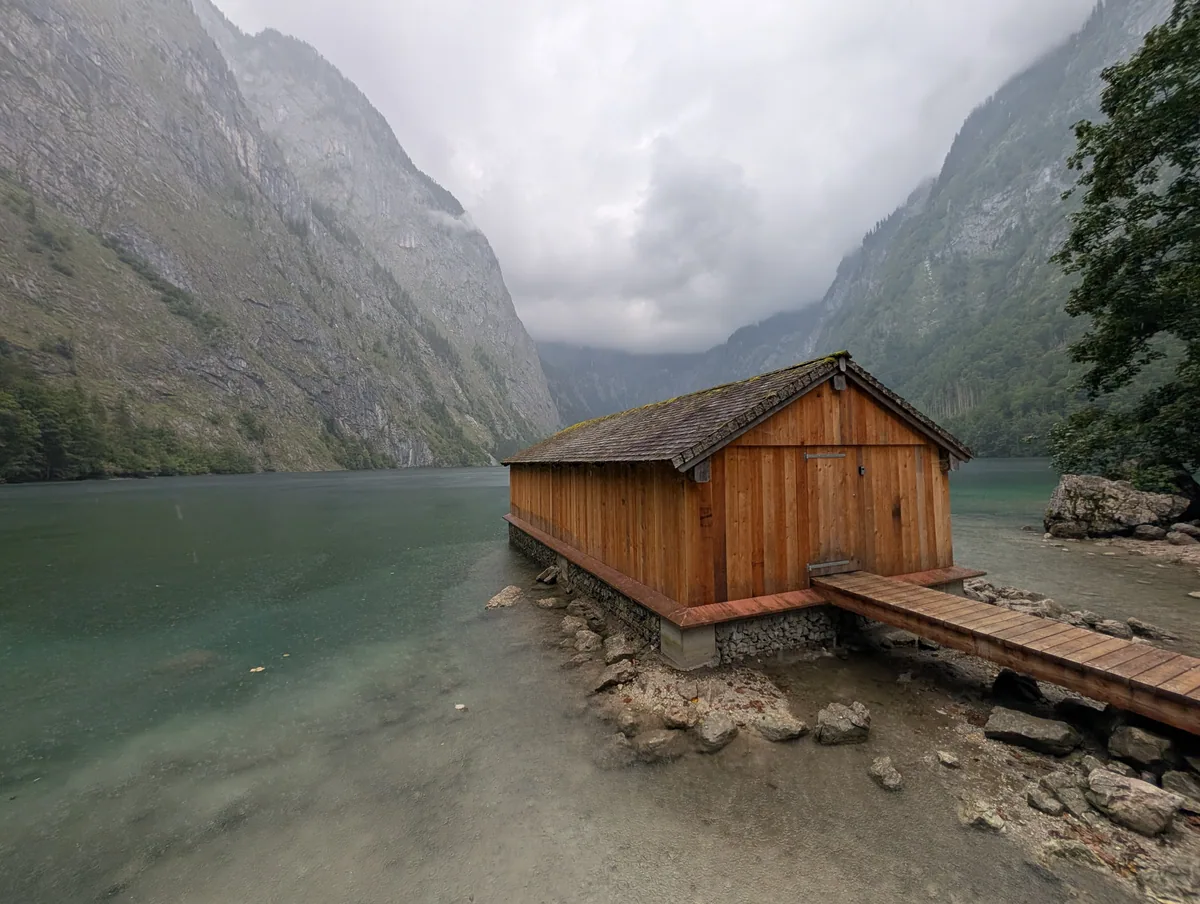
The walk to the Obersee
Now here, don’t make the mistake of stopping at St. Bartholomä.
Push on to Salet, the last stop. From there, a quarter of an hour’s easy walk and you come out onto the Obersee — a second lake, smaller, wilder, and in my opinion even more beautiful than the first.
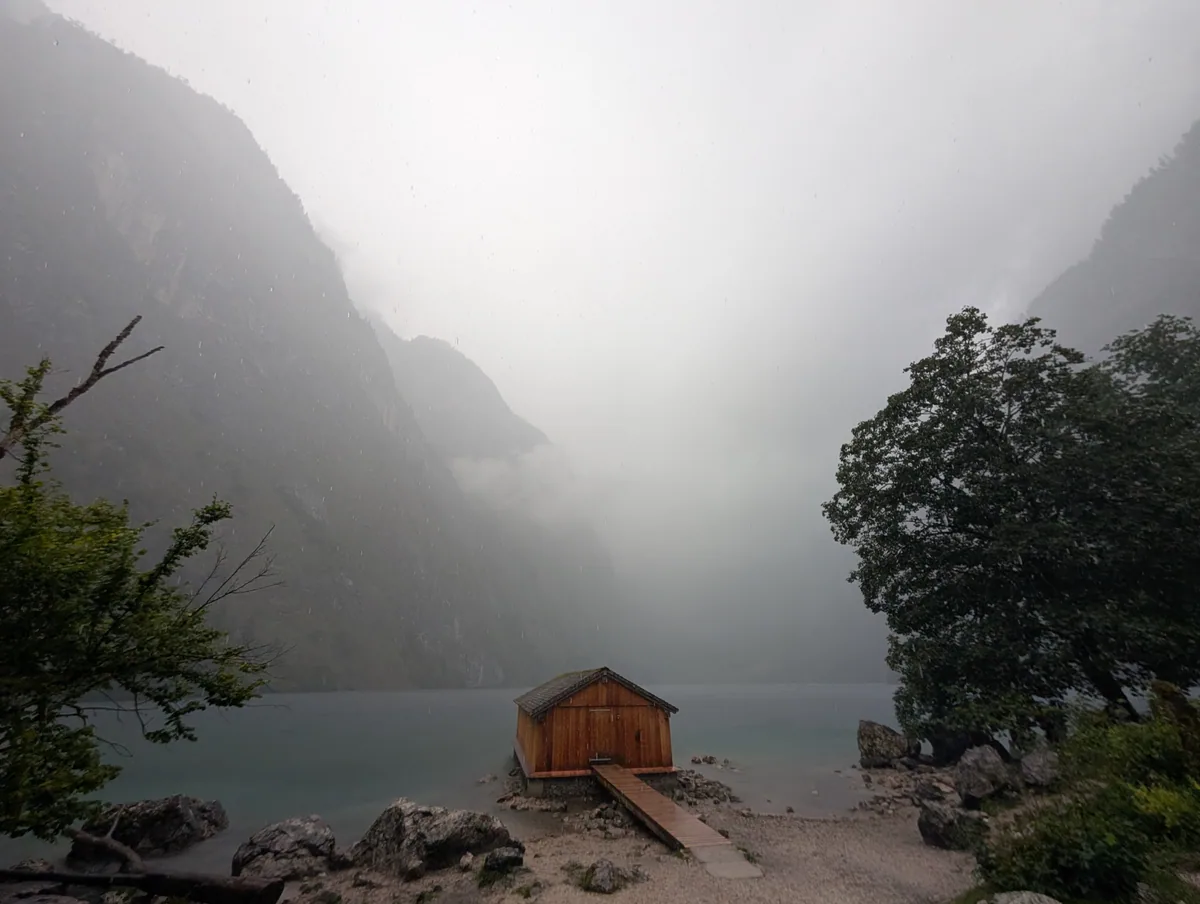
This is where the famous wooden hut on stilts is, the one that’s all over every desktop wallpaper. It really is there. It really is just like that.
We had time to do the walk before the rain joined in. And honestly, the low sky and the clouds clinging to the walls gave it something quite magical. Don’t give up just because it’s grey!
If you have time, carry on to the Fischunkelalm, the mountain pasture at the far end of the lake: 5.5 km round trip from Salet, allow 1 hour 45. The trail is rated easy but be careful all the same, it runs along the rock, stays damp even in fine weather and there are cables in places. No pushchairs in there.
And 30 minutes more takes you to the foot of the Röthbachfall, the highest waterfall in Germany. 470 metres.
Note: the boat only serves Salet from 25 April to 11 October. Outside that window, the Obersee is simply inaccessible. There’s no plan B.
Going up the Jenner by cable car
After the lake seen from below, the lake seen from above!
The Jennerbahn departs from Schönau am Königssee, right next to the landing stage. Little 10-seat pods, two sections with a change halfway, and there you are at 1,800 metres in about twenty minutes.
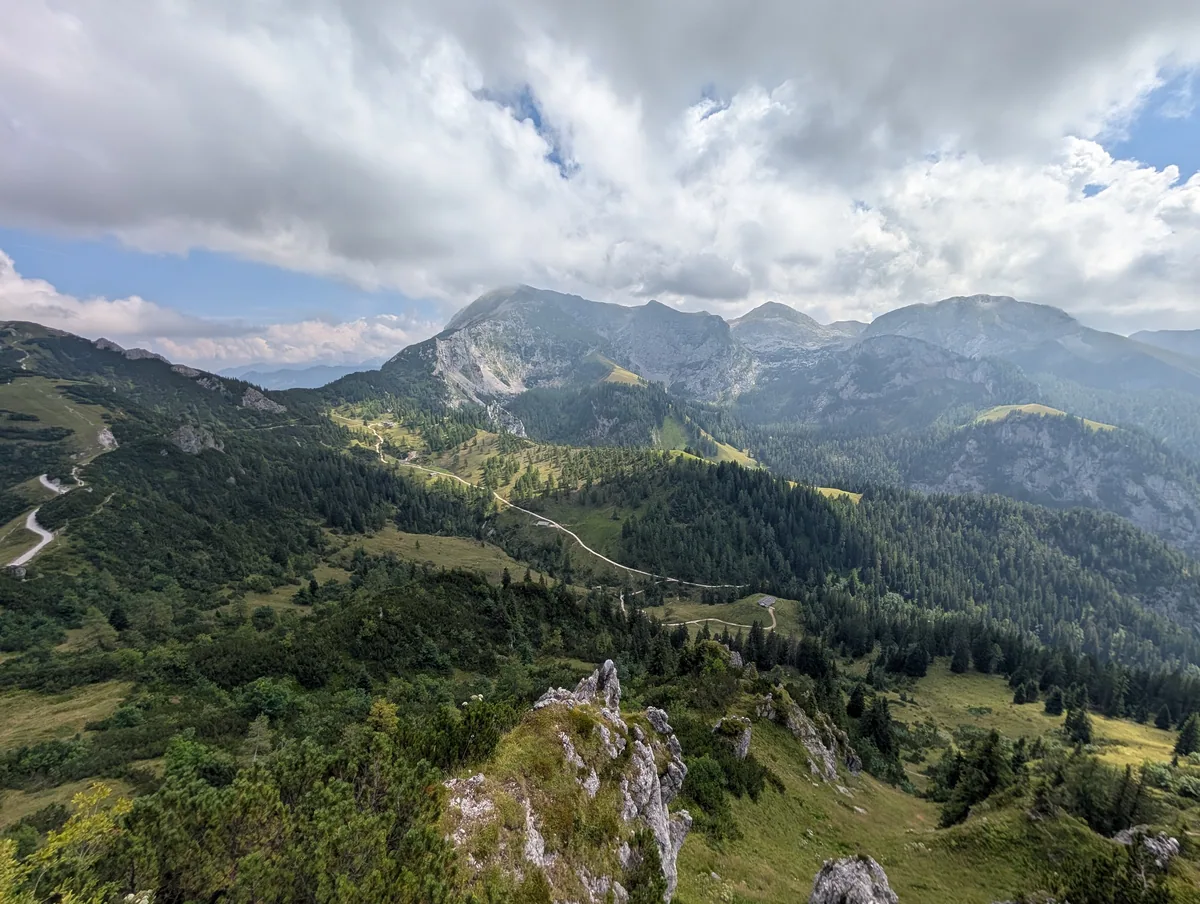
The view is mad. You have the entire Königssee 1,200 metres below, stretched out lengthways, with the boats drawing white lines on the green. Opposite, the Watzmann. Behind, the Steinernes Meer and the Hagengebirge. You can even see St. Bartholomä, tiny on its peninsula.
From the top station, two options. The 360° panoramic trail is 400 metres, fifteen minutes, very easy and plenty enough. Or you climb to the real summit of the Jenner, at 1,874 metres: twenty minutes’ walk, but the trail is narrow and steep, so bring proper shoes.
There’s a restaurant up there, the Jenneralm, and a national park exhibition space with free access. Everything is accessible to people with reduced mobility, which is rare enough to be worth pointing out.
Return: €47 adult, €28 for 6-17s. Running from 9am to 5pm, last ascent at 4.40pm.
A trap to be aware of: there’s a combined boat + Jennerbahn ticket at €56, the “See-Gipfel-Ticket”. Except it’s not sold in high summer — only from January to the end of June, then from 15 September. If you’re travelling in August, there’s no point looking for it.
The Hintersee and its enchanted forest
Twenty minutes’ drive from the Königssee, over towards Ramsau bei Berchtesgaden, a completely different kind.
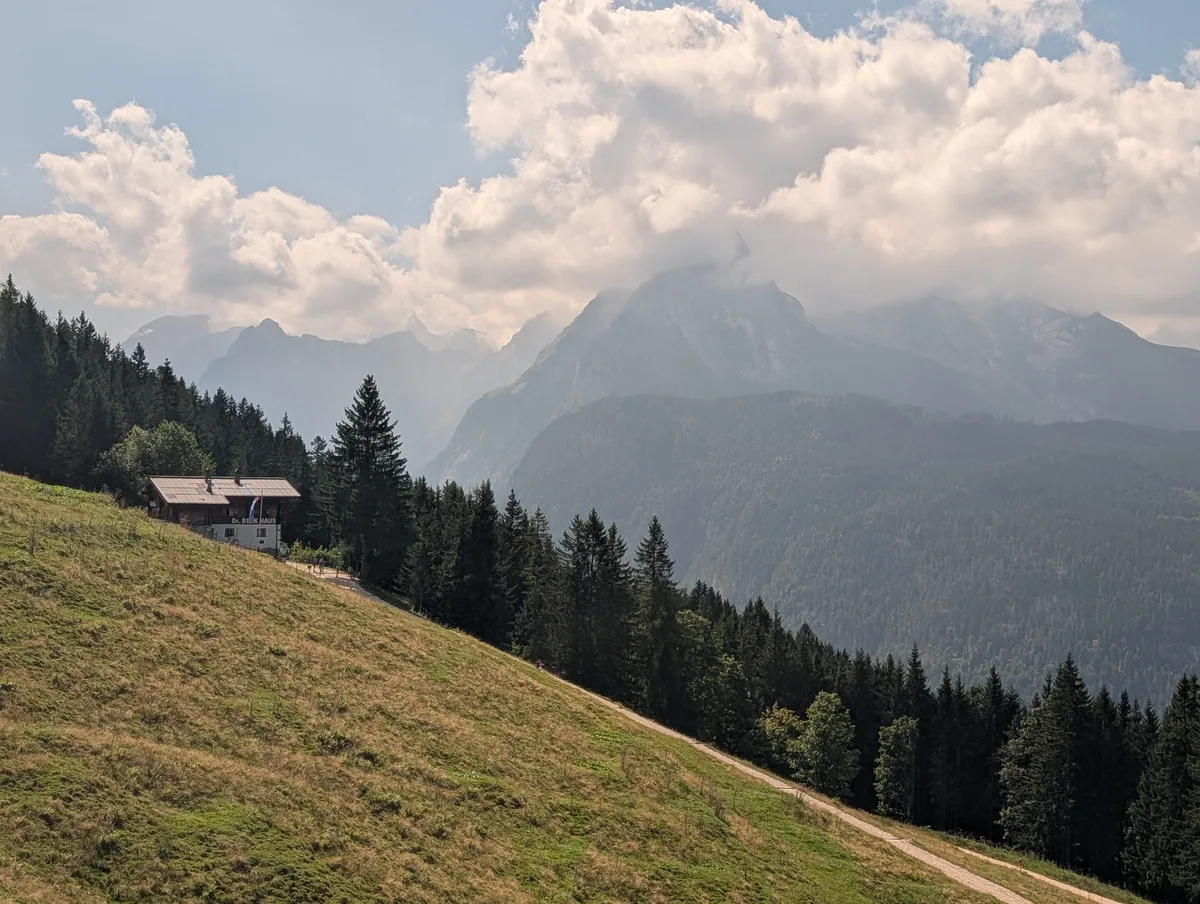
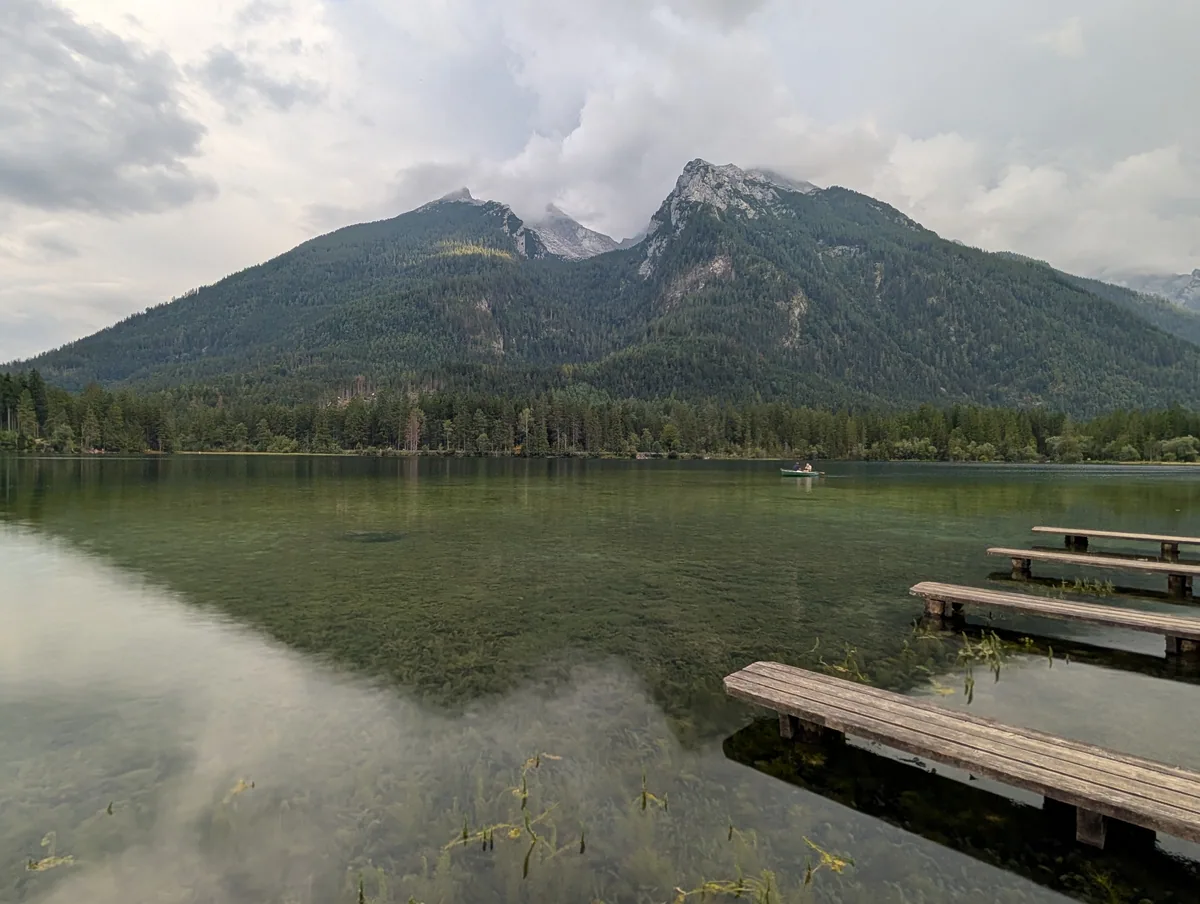
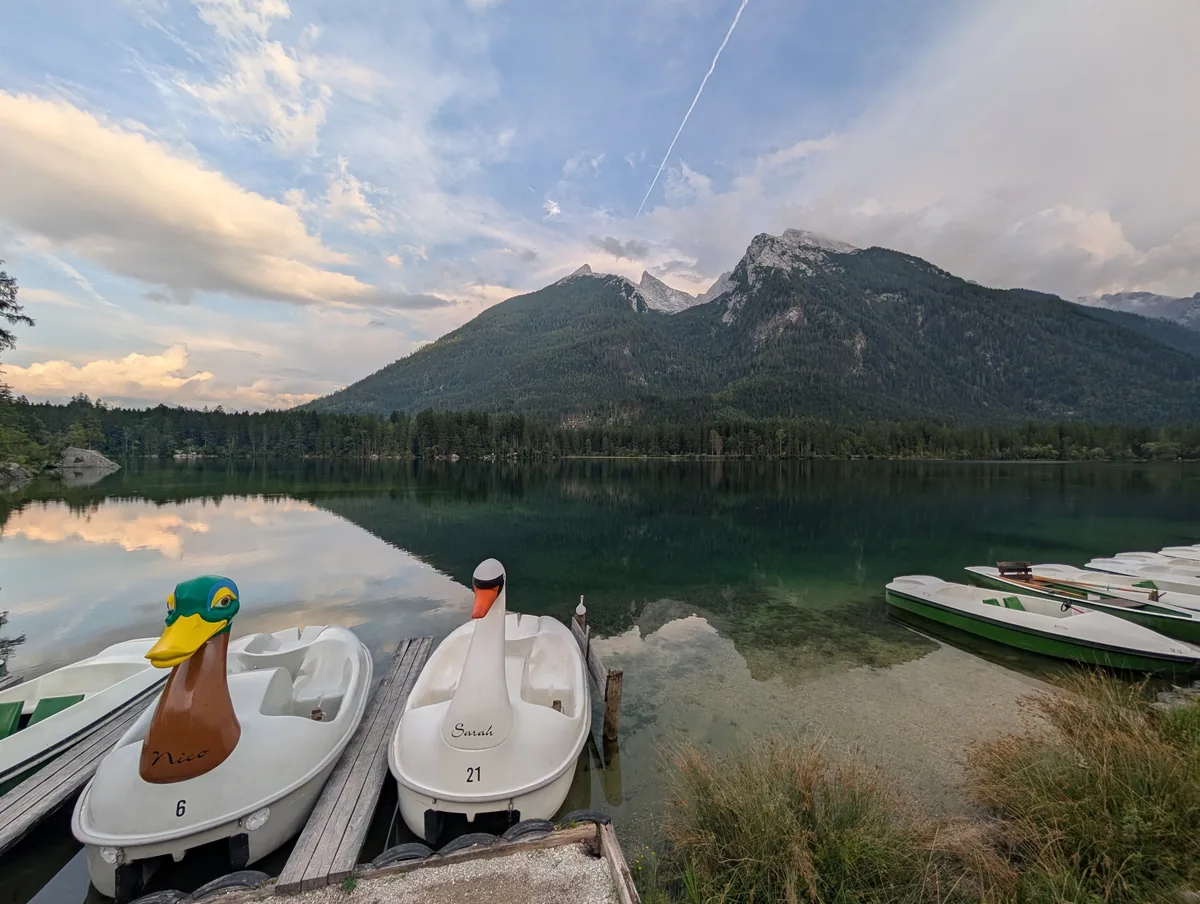
The Hintersee is small, calm, with swan- and duck-shaped pedalos lined up on a wooden jetty. Behind, the Hochkalter massif, 2,607 metres. And if you look carefully: the Blaueis, the northernmost glacier in all the Alps. It’s now down to just 7 hectares against 25 in 1820. Best to see it while it’s still there.
To reach it, you cross the Zauberwald — “the enchanted forest”. The name raises a smile, and then you step inside: boulders the size of houses, covered in moss, with the mountain stream running between them. It was a rockfall 3,500 years ago that dumped it all there from the Hochkalter, blocking the valley to create the lake.
Allow 2 km and an hour for the forest loop. The walk around the lake is 2.7 km, flat and gravelled: that one is doable with a pushchair and even a wheelchair. Not the forest, though.
A detail I rather like: painters have been setting up their easels here since the 1830s. There’s a dedicated path, the Ramsauer Malerweg, with easels installed at the exact spot where the paintings were made, so you can compare. Simple, clever.
You can hire a rowing boat or a pedalo, allow around ten euros an hour — to confirm on site, prices change. Parking €6 for up to 4 hours.
There you go. Between the Königssee, the Obersee, the Jenner and the Hintersee, you have enough to fill two good days without ever getting bored 🙂
The Eagle’s Nest, Germany’s most unsettling viewpoint
Still at Berchtesgaden, but changing register completely.
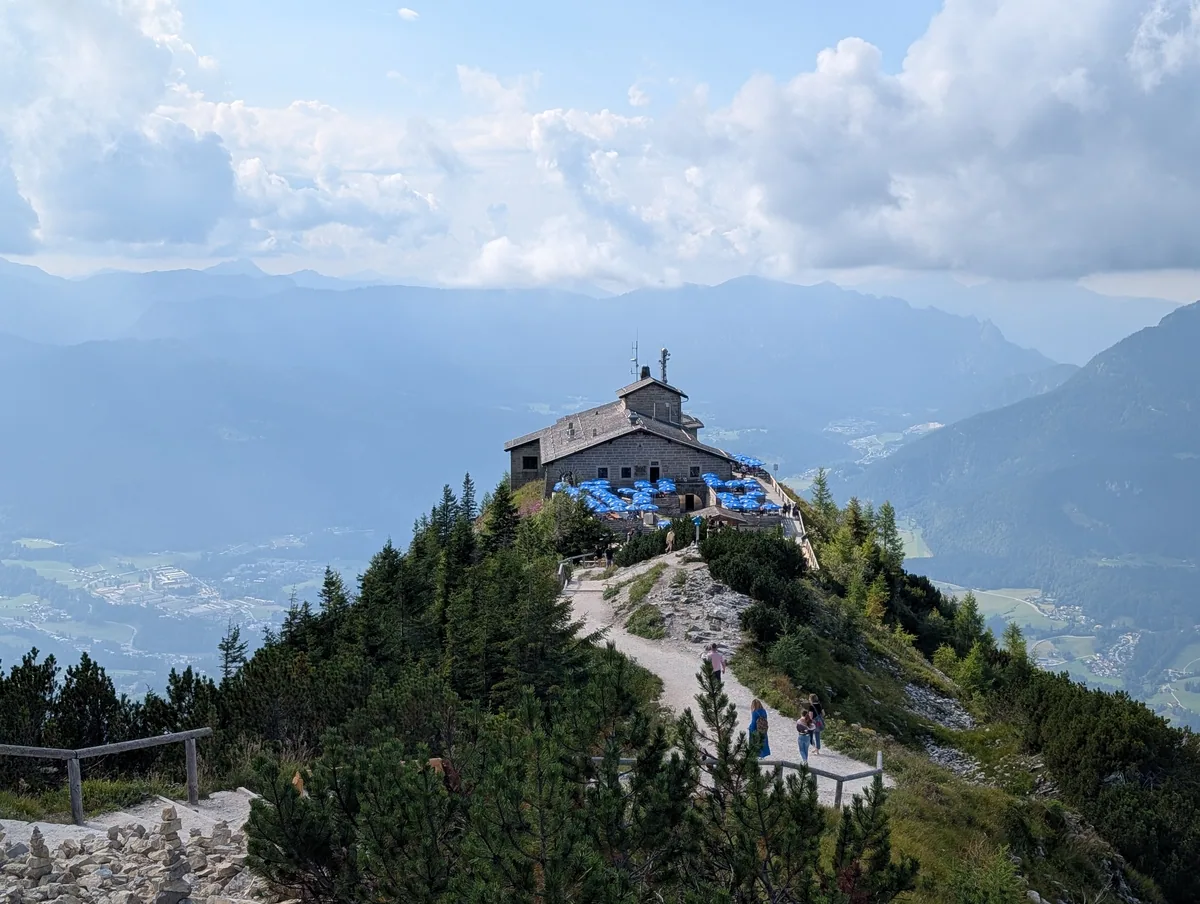
The Kehlsteinhaus — the Eagle’s Nest — is perched at 1,834 metres above Obersalzberg. It’s a Nazi building, constructed in 1937-1938 on the orders of Martin Bormann, and it’s now one of the most visited sites in the region. Be warned: it’s a visit with a double bottom.
The ascent, first of all, is a feat of daring.
You can’t go up by car. The road has been closed to private vehicles since 1952, and to bikes and pedestrians too. The only way is the official bus: 6.5 kilometres, 700 metres of ascent, five tunnels and a single hairpin. Twenty minutes. The drivers are impressive and the view out of the window even more so!
Once at the top, you enter a 124-metre tunnel cut into the rock, then take a lift with brass walls — largely original — that climbs 124 metres in 41 seconds. Honestly, that passage is striking.
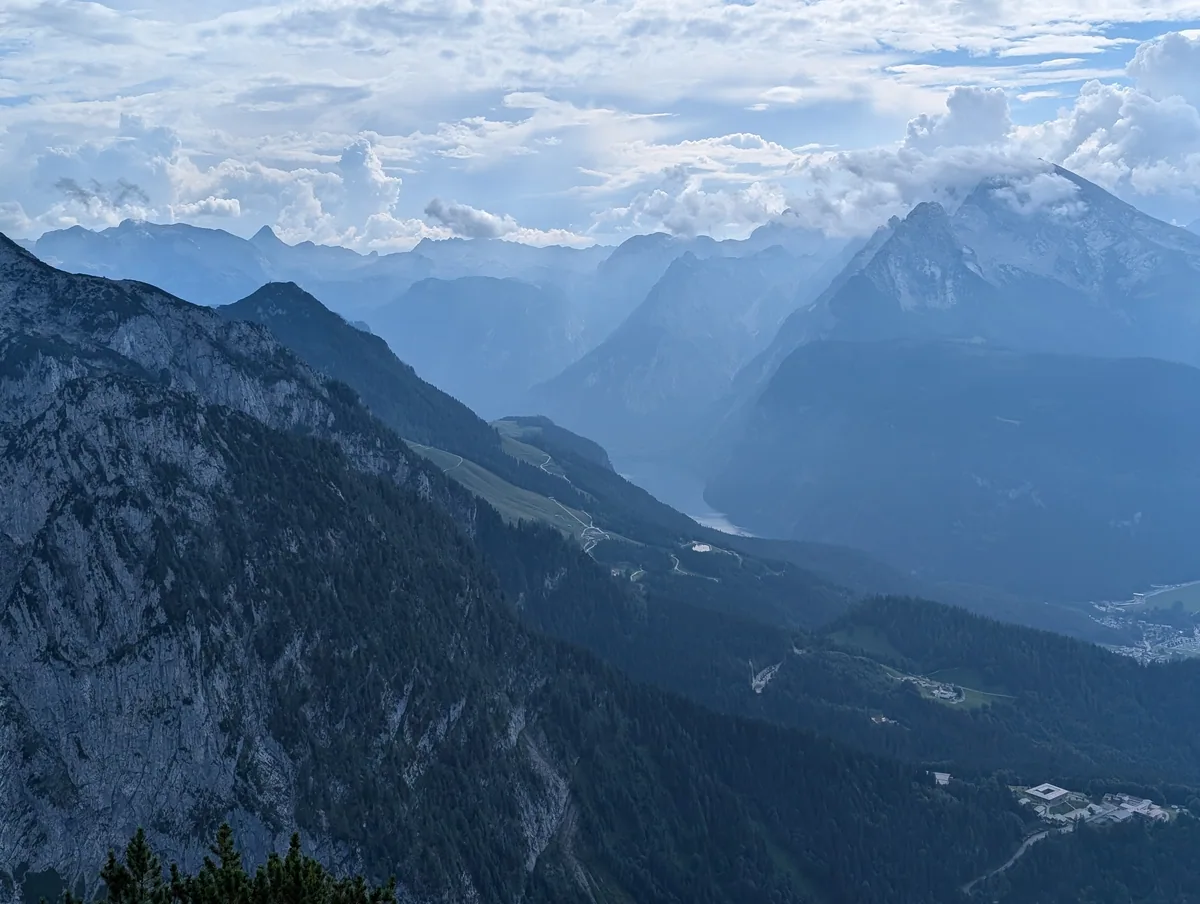
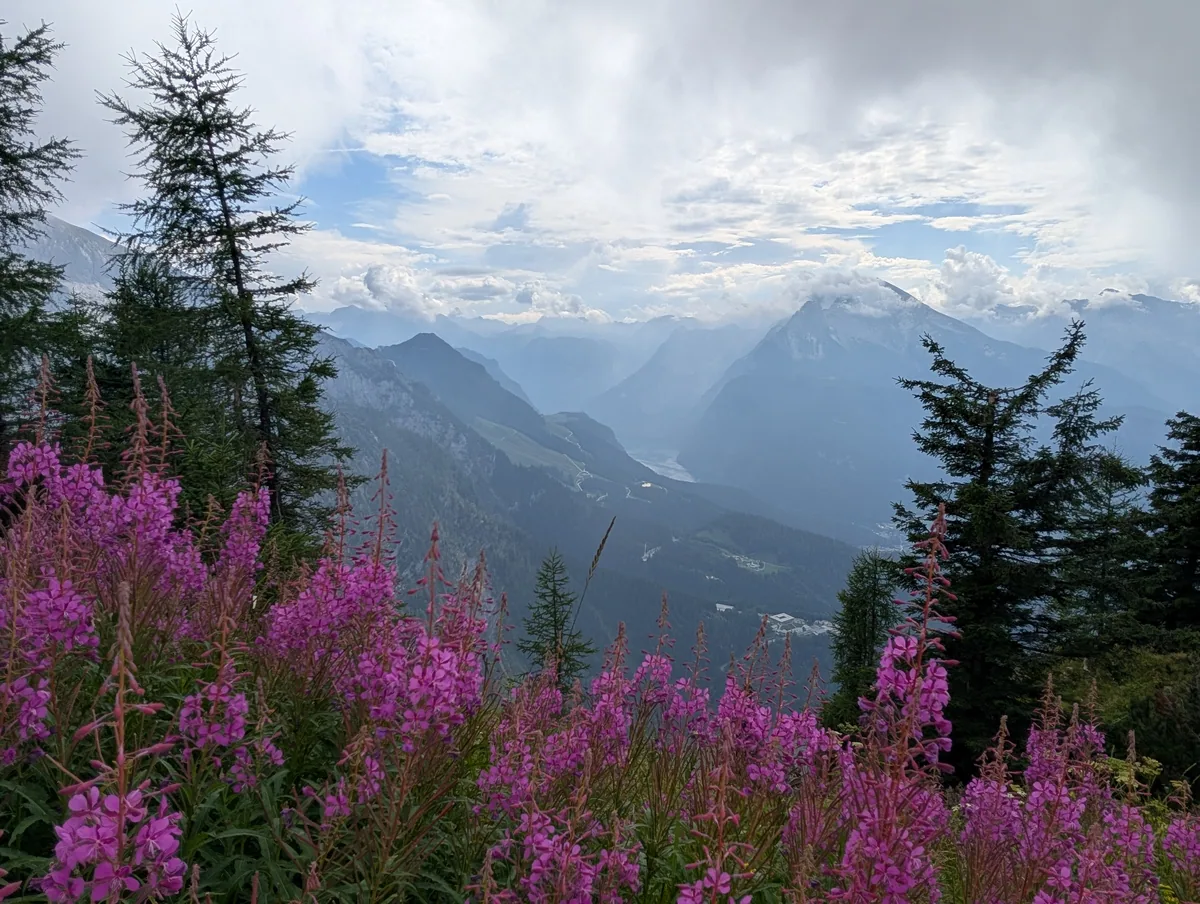
And up there, the view is enormous. The Hoher Göll right next door, the Jenner, the Watzmann, the Hochkalter, the Königssee below, the Untersberg, and Salzburg in the distance. In clear weather they claim 200 kilometres of visibility.
Then comes the disappointment.
Because inside… there’s nothing. A restaurant. That’s all. No museum, no room, no route, nothing to read. You climb to a place of crushing historical weight and you find yourself ordering a beer with a view.
At the time, it annoyed me. With a subject like that, there was material for something fascinating.
There is a small exhibition — fourteen panels, outside, on the terrace, installed since 2017. But it’s short, it’s outdoors, and you can easily walk right past it without seeing it. That’s not where you’ll understand the place.
So no, it’s not an oversight by the managers: the deliberate choice is to send visitors to the real museum, further down, rather than set up a museum of Nazism at the top of a mountain with a panoramic terrace. That’s understandable.
The problem is that they tell you this nowhere.
Incidentally, two legends to throw out: the Eagle’s Nest was not given to Hitler for his 50th birthday, that’s a myth debunked by the site’s historians. And there’s no documented decision ever taken there — only fourteen stays. The real seat of power was the Berghof, further down, destroyed since.
The advice I’d have liked to read before going:
Your bus ticket for the Kehlstein includes free entry to the Dokumentation Obersalzberg the same day. It’s the museum that tells everything the Eagle’s Nest doesn’t. It’s in the same car park as the bus departure.
Except nothing points it out, either at the ticket office or up top. And above all: the Dokumentation closes at 5pm. We found out on the way down, and it was too late. There you go, it’s silly, and it spoils the day.
So start with the museum in the morning, then go up to the Kehlstein afterwards. Allow 1½ to 2 hours for the Dokumentation: it reopened in 2023 after works, the bunkers can be visited — it’s the largest part of the exhibition — and the media guide is available in French. It has just received an award at the European Museum of the Year Awards 2026.
And if you really only go up the Kehlstein for the view, that’s fine! But know it beforehand, and you won’t be disappointed when you arrive at the top.
Good to know before you set off:
- Return bus: €34.70 adult, €17.20 for 6-14s, lift included, no extra entry fee
- Departures every 25 minutes, electric buses since 2023
- No need to book if you’re travelling independently. Your return is pre-booked at +2h, changeable at a terminal
- Open from 7 May to 31 October only. Closed all winter
- The Dokumentation Obersalzberg is €4.50 if you go on your own, free for under-18s, open every day from 9am to 5pm — and it really does close at 5pm, don’t save it for the end of the day
- The museum and the bus departure are in the same car park, at Obersalzberg
A word on the organised excursions from Salzburg: they exist, they cost €100 to €120 per person for a half-day, and the complaint that comes up all the time is that you spend very little time at the top. On top of that, the museum usually isn’t included — whereas on your own, it’s free with your ticket. Up to you, but by car it’s clearly much better value!
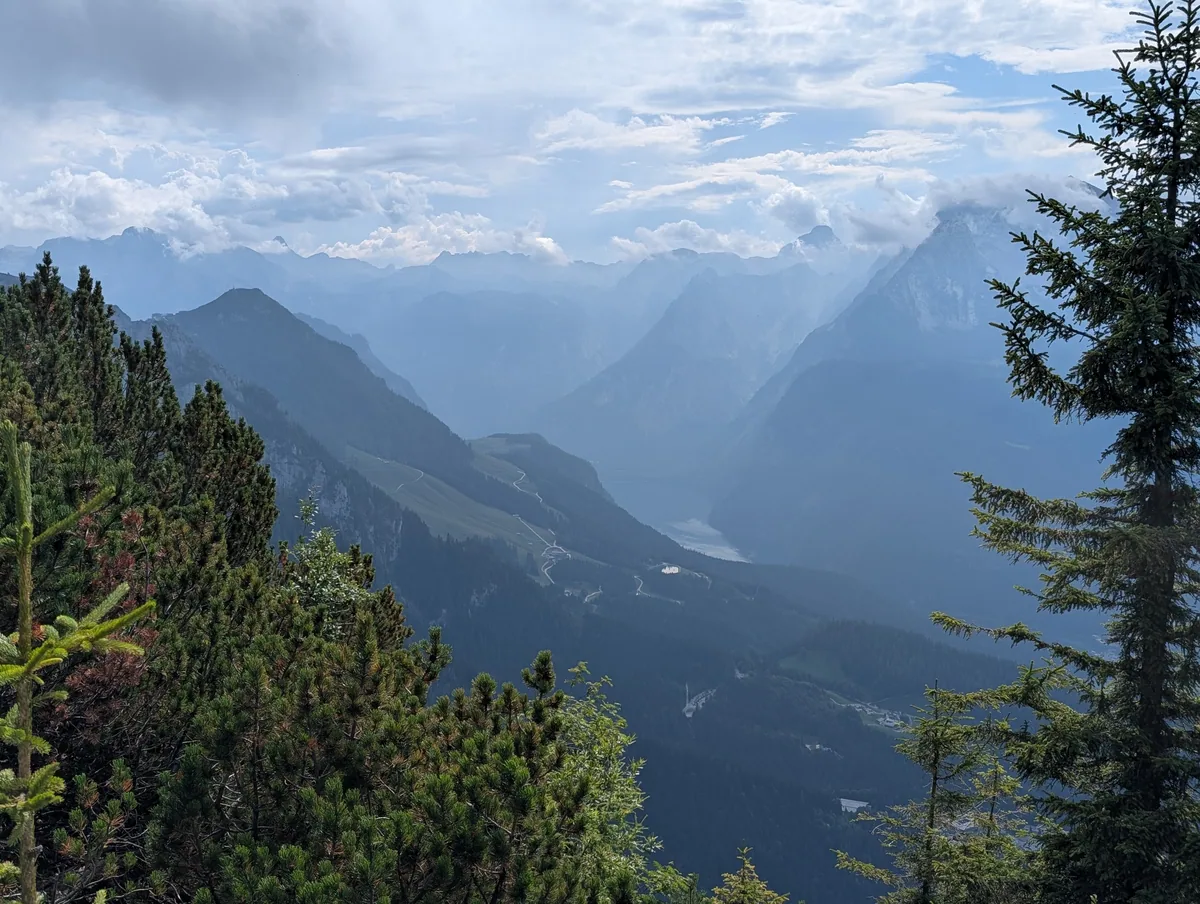

A week in the Bavarian Alps: the itinerary I’d have liked to have
A quick note: this isn’t the itinerary we followed.
We’ve come to the region several times, and on each trip we discovered things on the spot — a lake no one had told us about, a village found by chance one evening, a ticket we should have booked three weeks earlier. So here’s the itinerary we’d have built if we’d had all this info from day one. The one I’d do again.
And the first thing to understand is the geography. Because the big mistake when planning this trip is to look at a map of Bavaria and think everything is nearby.
It really isn’t!
The Bavarian Alps stretch for nearly 250 kilometres from west to east. Neuschwanstein and the Königssee, the region’s two stars, are 3 hours’ drive apart. If you set off from a single base, you’ll spend your trip in the car.
Hence the split: three days in the west, four days in the east, and a single real day of driving between the two. Two hotels, no more.
Let’s take a look.
The first 3 days: the west, the castles and the Zugspitze
Base: Füssen or Schwangau for the first two nights, Oberammergau for the third.
For Schwangau, nothing is handier than the AMERON Neuschwanstein Alpsee Resort, literally at the foot of the castles and on the shore of Lake Alpsee. In Oberammergau, the Gästehaus am Passionstheater does the job very nicely. And if you’d rather stay at the foot of the Zugspitze for the third night, there’s the Chalet St Anton in Grainau, next to the Eibsee.
This is picture-postcard Bavaria. The castles, the mountains, the villages with flower-filled balconies.
Day 1 — Neuschwanstein and Hohenschwangau. The two castles are done in the same day, they’re right opposite each other. Book your tickets well in advance, it’s essential in summer — that’s exactly the kind of thing we’d have liked to know beforehand. And keep the late afternoon for Lake Alpsee, just below: a swim or a simple walk around, it’s the best moment of the day.
Day 2 — The Wies Church, Linderhof and Ettal. A quieter day, on little roads. The Wies Church in the morning, Linderhof and its gardens in the afternoon — and do the Venus Grotto, it reopened in 2025 after ten years of works. Ettal Abbey at the end. Sleep in Oberammergau: the village with trompe-l’œil painted façades, specialists in woodwork. We had dinner there one evening without planning it, and the Ammergauer Maxbräu’s weissbier remains the best beer of the trip!
Day 3 — The Zugspitze, the Eibsee and the villages. Go up early, the light is better and the crowds arrive around 11am. On the way down, the Eibsee is five minutes away and easily worth another couple of hours: the walk around the lake is superb.
And you’re already there, so make the most of it: the lake is at Grainau, a very pleasant village at the foot of the Zugspitze, noticeably calmer than its neighbour. Spend the end of the day on the little villages nearby — Krün and Wallgau, tiny and adorable — before finishing in Garmisch-Partenkirchen, with its traditional chalets and painted façades. It’s the kind of afternoon we hadn’t planned the first time, and regretted not having slotted in.
Got a spare day? Pop over to Innsbruck, 55 minutes from Garmisch, or go for a swim at the Plansee on the Austrian side.
The next 4 days: the east, Berchtesgaden and the lakes
Base: Berchtesgaden or Schönau am Königssee, four nights.
We stayed at the Ferienwohnungen Almblick in Oberschönau, a few minutes from the Königssee — handy when you want to catch the first boat at 8am!
A complete change of scene. Here the mountains are higher, steeper, and the tourism is different.
Day 4 — The drive, with Herrenchiemsee in the middle. This is the transition day, and it’s far from wasted: the Chiemsee is right on the route. You board at Prien-Stock, spend most of the day on the island, and set off again for Berchtesgaden in the late afternoon.
Be careful all the same, it’s a big day: between the drive and the minimum 4½ hours on the island, it fills up nicely. If your return flight leaves at the end of the day, it’s better to keep Herrenchiemsee for the drive back to Munich — it’ll be much more relaxed.
Day 5 — The Königssee and the Obersee. Set aside the whole day, and take the first boat at 8am. Push on to Salet, walk to the Obersee, and if the weather allows carry on to the Fischunkelalm. Head back before 2.30pm to avoid the queues.
Day 6 — The Dokumentation Obersalzberg then the Eagle’s Nest. In that order, and not the other way round: the museum closes at 5pm, and it’s included in your bus ticket. We learned that on the way down, too late — don’t make the same mistake. The museum in the morning, the climb to the Kehlstein in the afternoon. And finish the day at the Hintersee, twenty minutes away: the evening light on the lake is really something.
Day 7 — The Jenner. The Königssee seen from above, to round things off. Half a day is enough, which leaves you time to hit the road again or wander around Berchtesgaden.
If you have more or less time
Four days? Do the west only. Munich, the castles, the Zugspitze. Forget Berchtesgaden, you’d lose two days on the road for nothing.
Five days? Pick a side. Either the west at a leisurely pace with a foray into Innsbruck, or you head straight to Berchtesgaden on arrival and stay there. Doing both in this format means rushing.
Ten days? Now you can breathe. Add a night in Berchtesgaden, treat yourself to a full Tyrolean leg — Innsbruck, Alpbach, and why not Café 3440 in the Pitztal — and take the time to get lost on the little roads. It’s often the best memory you bring back.
And Munich? Count it as extra. A day on arrival or departure, depending on your flights. That’s where you’ll pick up the car anyway.
The distances to know before booking
A few markers that’ll save you some nasty surprises when choosing your accommodation.
- Munich → Füssen — 120 km, 1h30
- Füssen → Garmisch-Partenkirchen — 60 km, 1h
- Garmisch → Innsbruck — 56 km, 55 min
- Garmisch → Berchtesgaden — 207 km, 2h35
- Füssen → Berchtesgaden — 265 km, 3h
- Berchtesgaden → Prien (Herrenchiemsee) — 71 km, 1h
- Berchtesgaden → Salzburg — 28 km, 33 min
- Berchtesgaden → Munich — 160 km, 1h50
- Munich → Prien (Herrenchiemsee) — 85 km, 1h
Watch out for a detail that costs dearly: several of the fastest routes go through Austria, notably to reach Berchtesgaden from Salzburg. You then need an Austrian vignette — €12.80 for ten days, against a €200 fine if you get caught. Get it online before you leave, it’s sorted in two minutes.
One last piece of advice, and it’s the most important: don’t book your accommodation before you’ve decided on your zones. It’s the classic mistake — you lock in a “central” hotel that isn’t, and you spend the week driving back and forth. Better two well-placed hotels than a single badly located one!
FAQ and practical info on the Bavarian Alps
What’s the best season to visit the Bavarian Alps?
Summer (from June to September) is ideal for hiking, enjoying nature, having superb colours, and getting weather that isn’t awful.
In winter, the region is a paradise for skiing and snowshoeing, with resorts and ski slopes absolutely everywhere! You find button lifts in every village and you have the biggest areas like Garmisch-Partenkirchen.
The in-between seasons are rainy but not touristy at all, so that works too. I came in January for the first time, and it’s true there weren’t many people. But it was fairly damp, I have to admit 😀
So, it depends what you want. Hiking or skiing? If you come in summer, be aware that you need to book the castle tours a bit in advance so you don’t end up empty-handed like us.

Where to stay to visit the Bavarian Alps?
The area is really very big. So depending on what you want to see, you can have one or 2-3 places to stay across the whole of southern Bavaria, notably to get closer to the Königssee.
We spent a whole week in Ehrwald, on the Austrian side. A pretty little village, pleasant. From there it was super easy to reach everything (Munich, Innsbruck, the castles…).
We stayed at Apartments S, brand-new and super functional apartments facing the mountains. Otherwise, for a really nice chalet in Ehrwald, there’s the Zugspitz Lodge.
Ehrwald is right next to another even more pleasant village: Lermoos. More pretty chalets, but more touristy. Both are equally good and really lovely 🙂 In Lermoos, I’d recommend Apart Haus Alpenhof, a magnificent setting!
But there are plenty of really interesting options on the German side. For example in Grainau, at the Boutique Hotel Längenfelder Hof , which is top-notch and magnificent.
In Garmisch-Partenkirchen, you also have some really pretty chalets. For example the Bavaria Biohotel, the Rheinischer Hof, and the magnificent Hotel Aschenbrenner.
If you go further east, then I suggest the Relais & Châteaux Gut Steinbach, superb in the heart of the mountains.
How many days to allow in the Bavarian Alps?
A week is the right format: allow three days in the west for the castles and the Zugspitze, then four days in the east for Berchtesgaden. In four or five days, you have to choose a single side — the region’s two stars are 3 hours’ drive apart! With ten days you can breathe, and you can push on to Tyrol and Salzburg.
The day-by-day detail is in the itinerary, a little further up.

How to get to the Bavarian Alps?
We set off from Paris by car, all the way to Ehrwald. It takes 9 hours without stopping, so 11 hours with quite a few breaks. Not necessarily ideal, but it’s quicker if you fly to Munich, or Innsbruck. Possibly Salzburg if you’re coming from the east.
Except that, unlike the other two, the flight to Munich is direct with Air France in particular.
That said, I STRONGLY recommend comparing flights and airlines. For that I use the Kayak comparison tool, and it works very well.
Once there, to get around it’s almost essential to use a car. Quite a few of the main sites are accessible by bus and train, but if you have the option, I recommend hiring a car for the sake of flexibility (plus petrol is much cheaper than back home!).
For my part, I compare at Discover Cars, reliable and trustworthy, with reviews by agency.
You also have the option of hiring a car from a private individual with Getaround. I use it now and then abroad and I’ve never had any trouble. It starts at around €25, you just need to watch the mileage (about 200 per day on average).

Can you visit Neuschwanstein and the Königssee in the same day?
No, and it’s the most common mistake! There’s about 2½ hours’ drive between the two, each at opposite ends of Alpine Bavaria. Neuschwanstein is in the west, near Füssen. The Königssee is in the far east, at Berchtesgaden, almost in Austria. Plan for two different bases, or at the very least two quite separate days.
Can you visit the Bavarian Alps without a car?
It’s possible but honestly limiting. Munich, Innsbruck, Garmisch, Füssen and Berchtesgaden are well connected by train, and buses serve the Königssee, the Hintersee and the Kehlstein from Berchtesgaden. However, all the charm of the region is in the little roads and the hidden lakes, and without a car you miss out on that. Hire one for at least a few days.
Do you need a vignette to go through Austria?
Yes, as soon as you use an Austrian motorway or expressway. Allow €12.80 for ten days in 2026, or €9.60 for a single day — go straight for the ten-day one! Watch out, it quickly becomes necessary: the fastest routes between Salzburg and Berchtesgaden go through Austria. The fine has risen to €200 since January.
How far in advance do you need to book Neuschwanstein?
As early as possible, really. In the middle of August, I found a three-week wait — so I had to make do with the exterior. If your trip falls in high season, book as soon as your dates are set. For Linderhof, a few days’ notice is usually enough, and Herrenchiemsee or Hohenschwangau are much more accessible.
Do you need to plan for cash?
Yes, more than you’d think! Several sites only accept cash: the Herrenchiemsee boat, the Plansee boats, and the ticket office of the Königshaus am Schachen, which takes neither booking nor card. The parking meters in Ramsau don’t give change. Always keep thirty euros or so in small notes in the car.
Can you swim in the region’s lakes?
It depends a lot on the lake! On the Tyrolean side, the Plansee and the Blindsee are made for it: swimming allowed, between 17 and 24°C in summer depending on the lake and the time. On the German side, Lake Alpsee at the foot of Neuschwanstein is very pleasant. On the other hand, the Königssee and the Obersee are in the heart of the national park, with much stricter rules.
Is it easy to visit with children or a pushchair?
For a good part, yes. The walk around the Hintersee is flat, gravelled, accessible with a pushchair and even a wheelchair. The Jennerbahn is fully accessible, restaurants included. On the other hand, forget the pushchair in the Zauberwald and on the Obersee trail: the latter runs along the rock, stays damp and has sections with cables.
Is the Eagle’s Nest a visit for everyone?
It’s a fair question. The place is a Nazi relic, and it’s now occupied by a restaurant, with nothing to help you understand what you’re visiting. If the subject really interests you, the place to see is the Dokumentation Obersalzberg, further down, which is a real museum and is included in your bus ticket. Do it first, it closes at 5pm.
In conclusion
There you go, I think I’ve told you everything!
Actually the difficulty is making choices, striking the right balance between the activities to do like the castle tours, the nature activities like the lakes and the hikes (I don’t cover them here for lack of knowledge), and the city visits.
You also need to be careful how far you want to go, because you can quickly end up a long way off — the Königssee being more than 2 hours from Innsbruck, for example.
But if anything, I’d tell you to improvise a bit like we did. Note down your must-sees (Neuschwanstein is one!) and then set off exploring at your leisure. I’d say it’s the best way to discover the region, even though I generally like having a well-defined itinerary. Here, honestly, it works fine without one, because there are things to see everywhere and you’ll lose a lot of time making little discovery stops here and there.
Well, in any case, you’re really going to enjoy it, that’s for sure!
⭐️Discover the Castles of Neuschwanstein, Hohenschwangau and Linderhof!