Last updated on
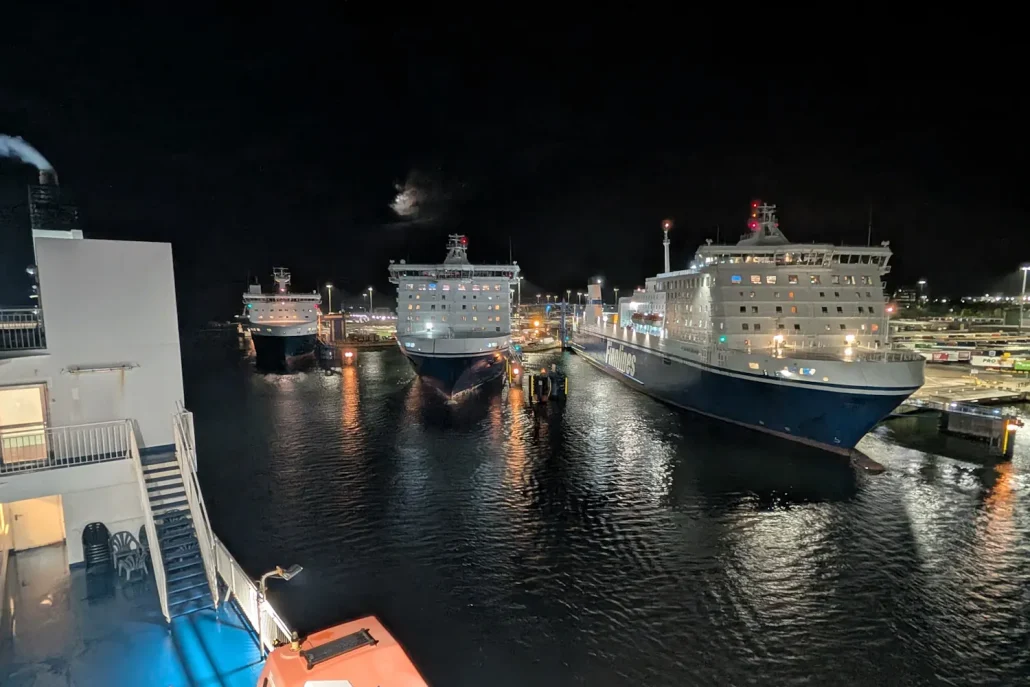
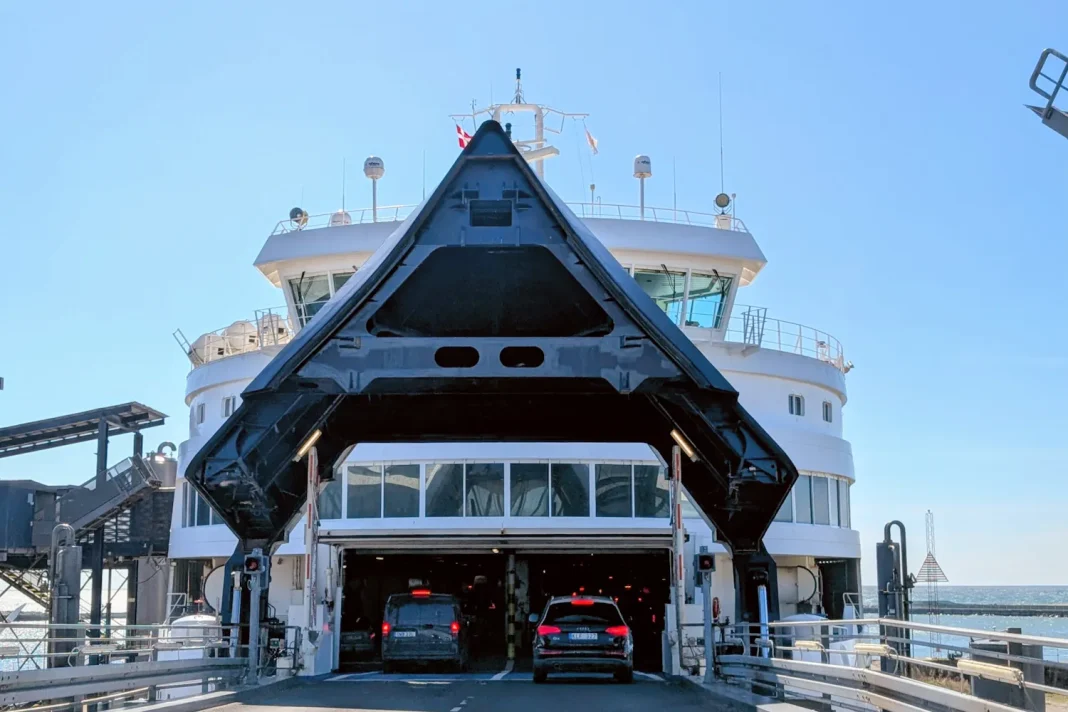
The ferry between Rødby (Denmark) and Puttgarden (Germany) is one of the most convenient crossings in Europe for connecting Scandinavia to the continent. We took it in April, on our way back from Copenhagen to Paris. On the outward journey, I had preferred to drive because I thought I would lose a lot of time. And honestly, after taking both routes, I understand why people prefer this ferry! Fast, comfortable, super convenient (a little pricey).
Anyway, here’s everything you need to know before boarding the boat.
Next Puttgarden–Rødby ferry departures
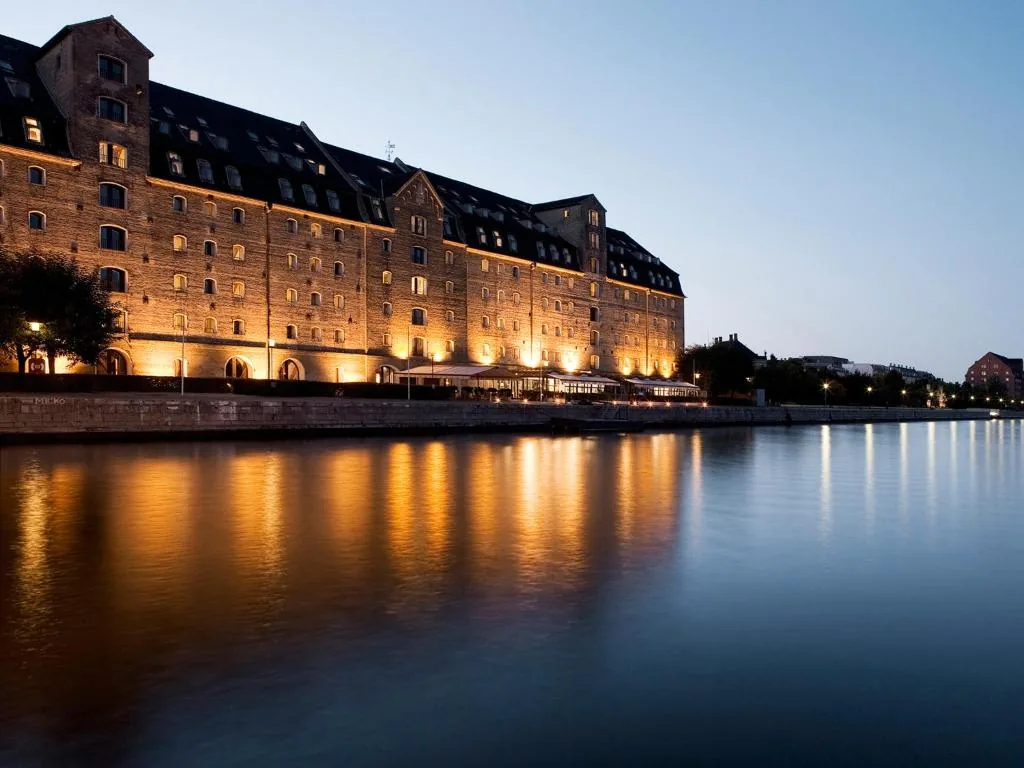
Key figures at a glance
| — Crossing time | 45 minutes |
| — Frequency | Every 30 min during the day, up to 45 departures a day |
| — Schedule | 24/7, 365 days a year |
| — Operator | Scandlines (sole operator on this route) |
| — Booking | Recommended (+€15 at the port) |
What is this ferry between Rødby and Puttgarden for?
The Rødby–Puttgarden route is one of the busiest maritime crossings in the world between Germany and Denmark. It crosses the Fehmarn Belt (a strait in the Baltic Sea) in just 45 minutes. It is part of the famous Vogelfluglinie — the “bird flight line” — the historic axis linking Hamburg to Copenhagen since the 1960s.
Basically, when you’re coming from Sweden or Copenhagen and want to head directly to Germany, it lets you avoid driving all the way across Denmark. Very handy.
And going the other way, to cross into Sweden, you can choose between the Øresund Bridge and the Helsingør–Helsingborg ferry. And if you’re heading all the way to Norway, there are also direct ferries from Denmark or Germany.
The exclusive operator is Scandlines, the only company on this route, with a fleet of modern hybrid ferries capable of carrying up to 1,200 passengers per crossing.
Ferry or road via Flensburg: which should you choose?
That’s the real question for anyone driving between Paris and Copenhagen.
On a Paris–Copenhagen trip (~1,500 km), the ferry easily saves 1h30 to 2 hours of travel time: less driving, no crossing of Jutland, and the Great Belt Bridge toll (€34) included in the deal. For a late return or a long day on the road, the argument is hard to beat.
OK, that’s the theory. What’s certain is that going by road means 140 km extra. So yes, about 1h30. But by ferry, you still have to stop at the port, wait for the boat, and make the 45-minute crossing.
Fortunately, since there are 2–3 ferries per hour, you don’t have to wait long.
So I’d say this ferry is not worth taking for the time savings — you ultimately gain maybe 30 minutes at most — but rather for the comfort. And because I love ferries! It saves you driving 140 km extra, and in exchange you spend 45 minutes on the deck. Not a bad deal!
In terms of budget, we’ll compare, but for a standard car the ferry comes to around a hundred euros, which is slightly more expensive than petrol and the toll via the road.
Also, a major advantage: no road border checks. Going by road, there’s a customs stop at the Germany–Denmark border, and it was a bit slow. By ferry, we weren’t checked at all.
| 🚢 Rødby – Puttgarden (ferry) | 🚗 Road via Flensburg | |
|---|---|---|
| Journey time | ✅ Short | ❌ Long |
| Km saved | ~140 km less | +140 km |
| Border crossing | Automatic ferry | Flensburg border |
| Great Belt Bridge | Not needed | +34 € (payant) |
| Verdict | ✅ Recommended | ❌ Longer & more expensive |
How much does the Puttgarden–Rødby ferry cost?
The fare covers the vehicle + all passengers (up to 9 people in the car). Passengers do not pay separately. Since 2024, buying your ticket directly at the port costs €15 more than booking online.
Scandlines offers three fare levels:
- Low Price (~€48–92) — online only, non-refundable, valid for the chosen departure only. This is the base price but heavily depends on the season and time of day.
- Standard / Early Booker (from €60 to €115) — valid for all departures on the booked day, refundable with option. Best flexibility-to-price ratio.
- Flex — highest fare, free cancellation and changes, ideal if your departure time is uncertain.
In practice: in April (outside school holidays), the Early Booker fare runs around €65 for a car + 2 people. Impossible to beat by road once you factor in the extra 150 km and the Great Belt Bridge toll (€34).
Tip: book online at Direct Ferries, at least 3 days in advance, preferably on a weekday. That’s where you’ll find the best prices.
Do you need to book in advance?
Booking is not mandatory — you can turn up at the port and buy a ticket on the spot. But it’s consistently €15 more expensive since 2024. You’re better off booking online.
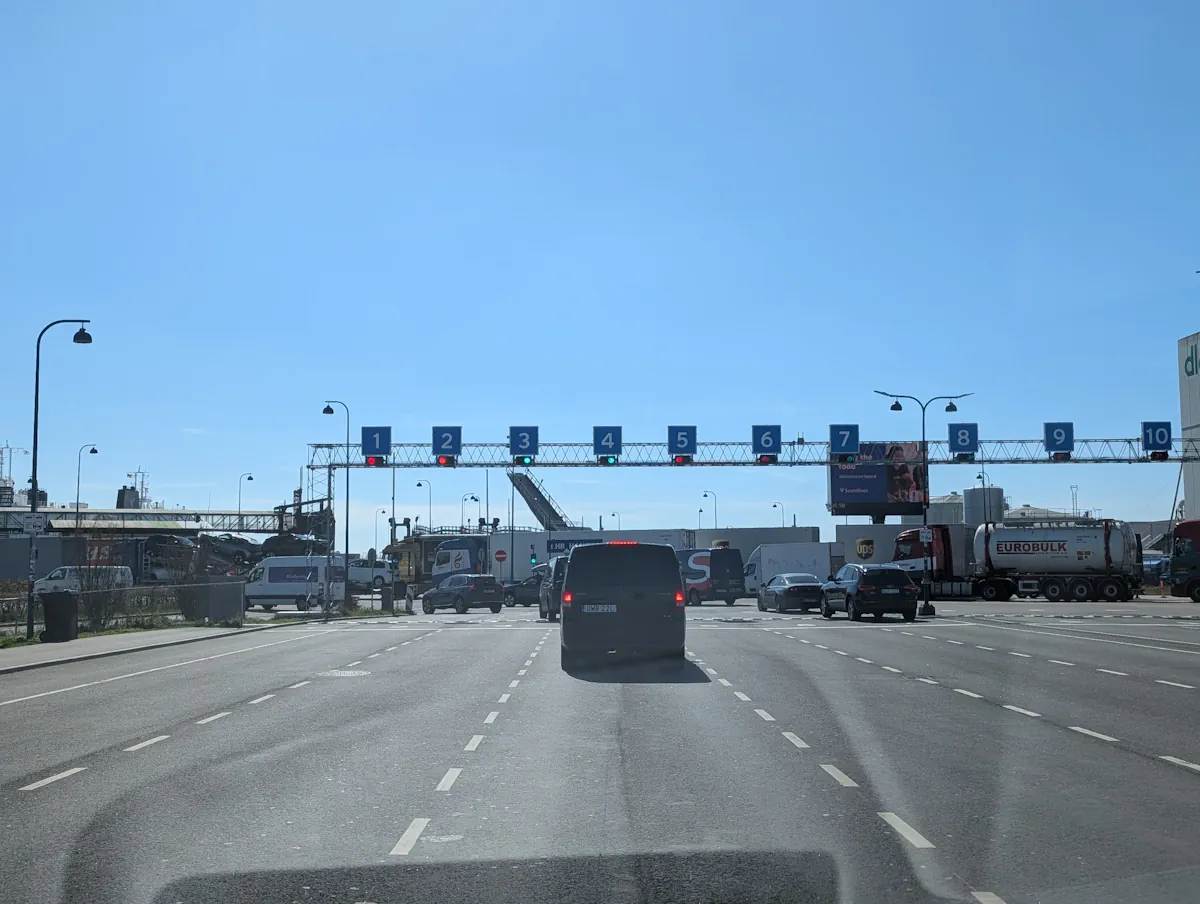
Another advantage: if you arrive outside your time slot, you can board the first available departure of the same day with a Standard ticket. Waiting is virtually unheard of off-season. In July–August or during major holiday weekends, it’s better to pick a specific slot and arrive 30 minutes before.
In April, we arrived without checking anything — there weren’t many people, so we paid full price, but we didn’t wait at all.
On board: what you’ll find
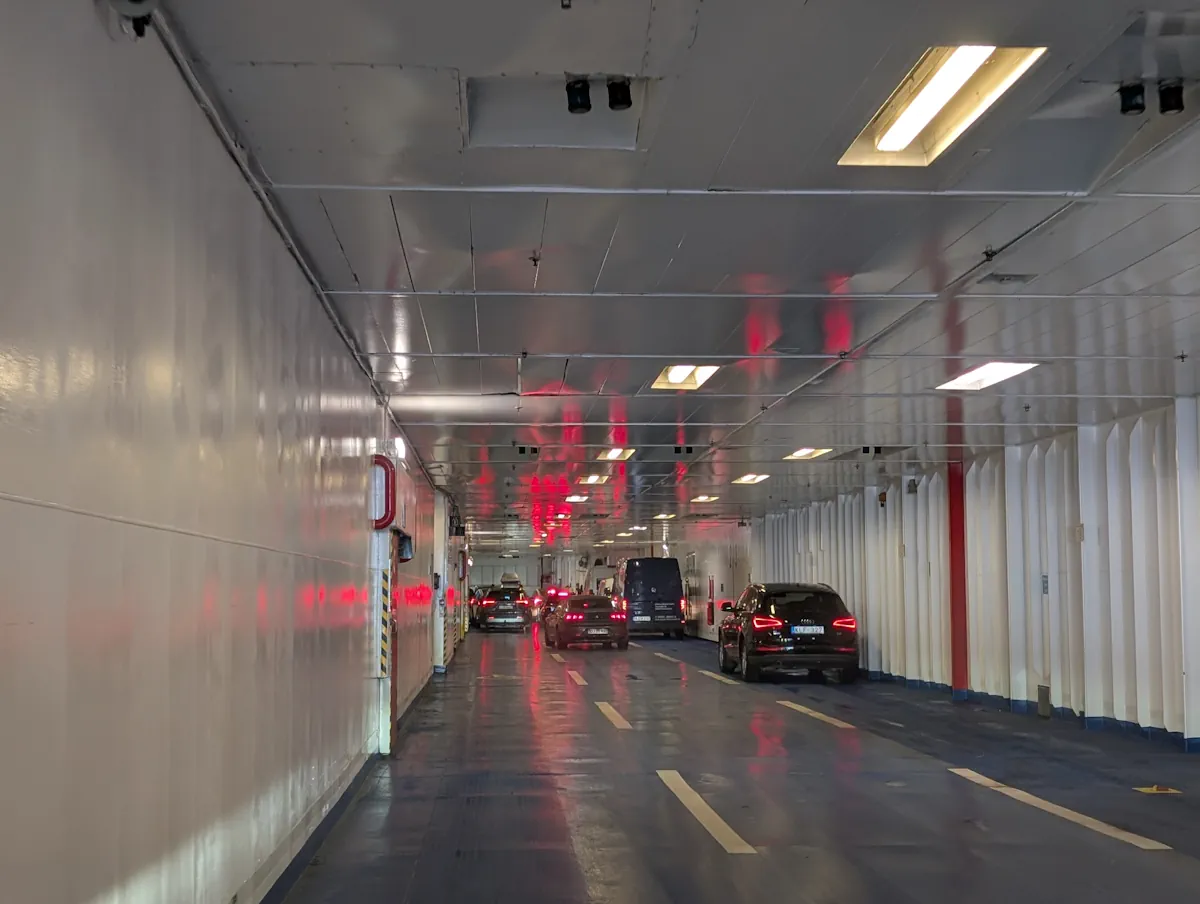
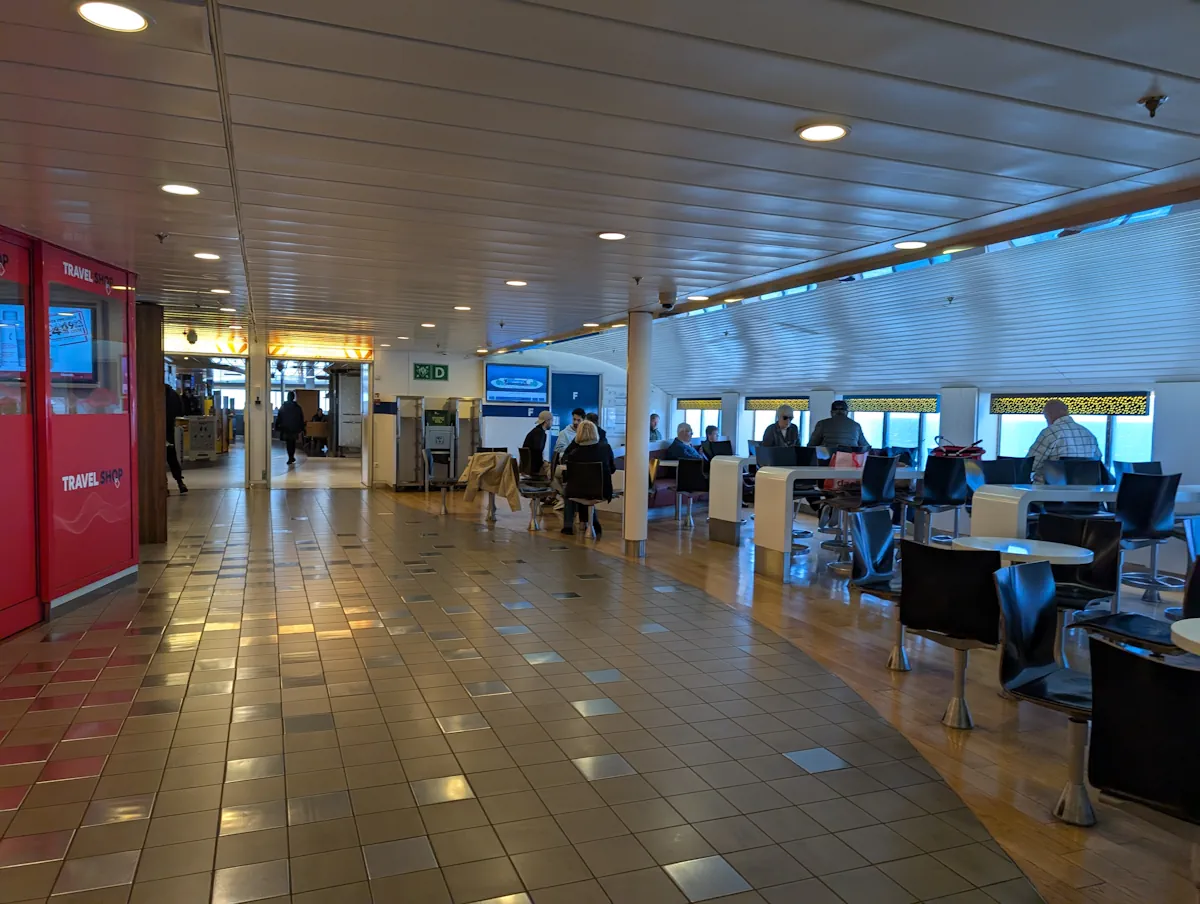
The crossing takes 45 minutes — just enough to catch your breath between two long stretches on the motorway. On board Scandlines ferries:
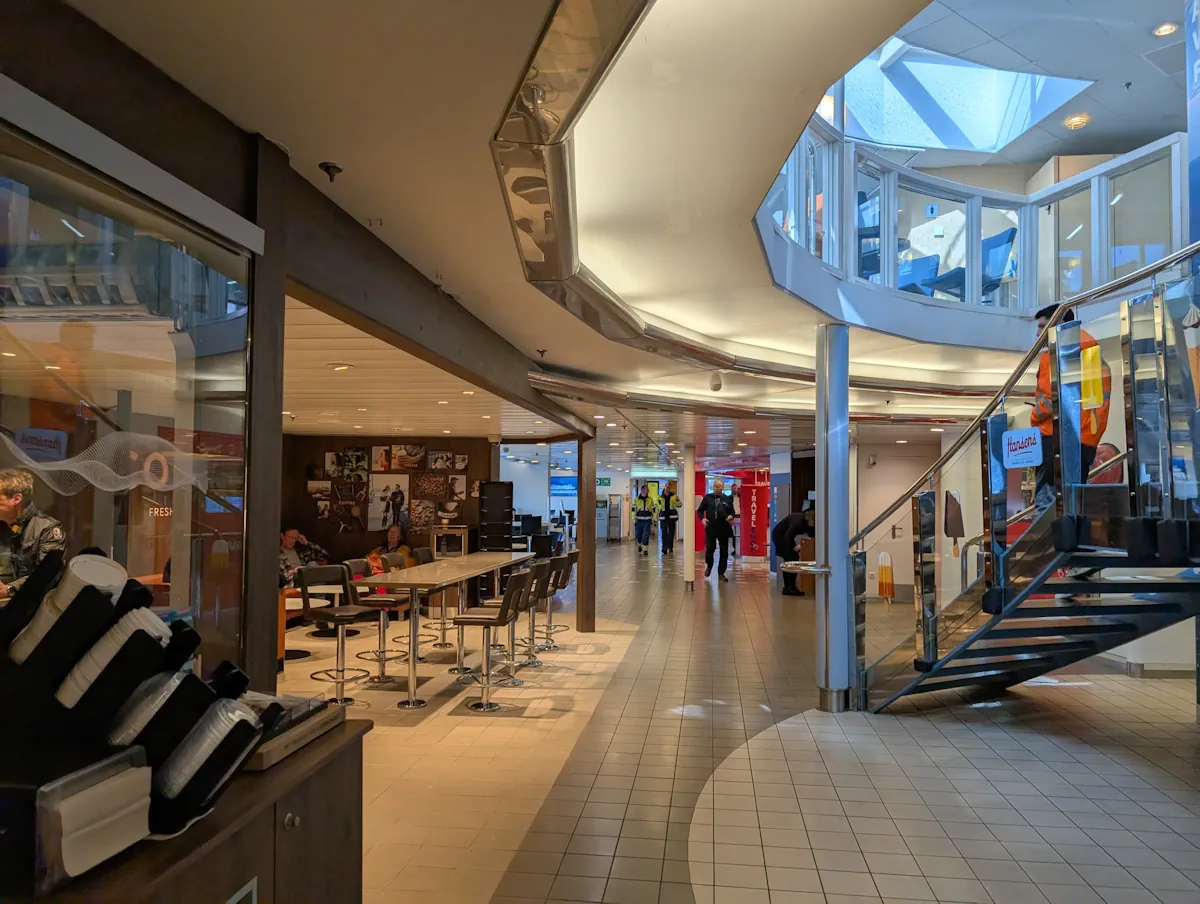
- Restaurant with Scandinavian cuisine, snacks and coffee
- Well-stocked duty-free: alcohol, Danish chocolate (Marabou is a must), cosmetics — at competitive prices
- Free WiFi during the crossing
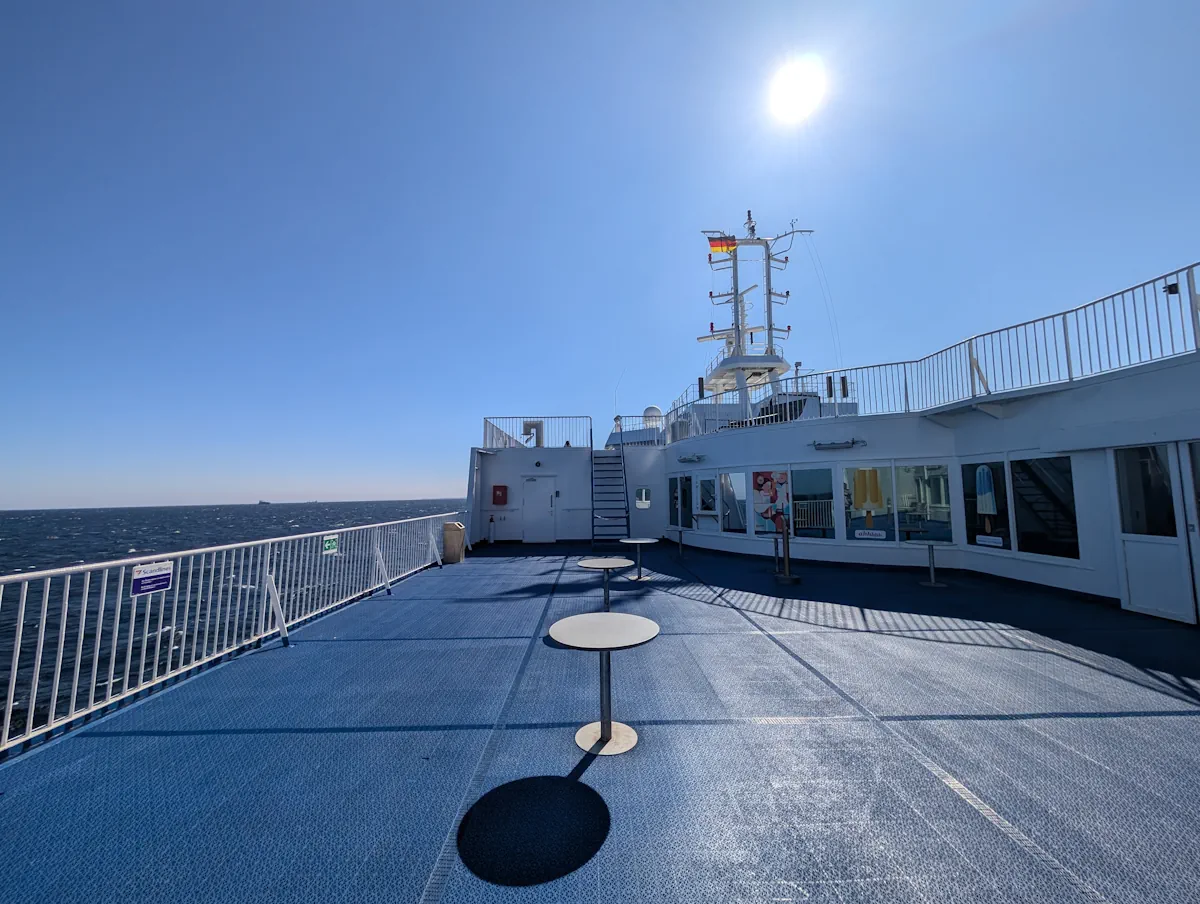
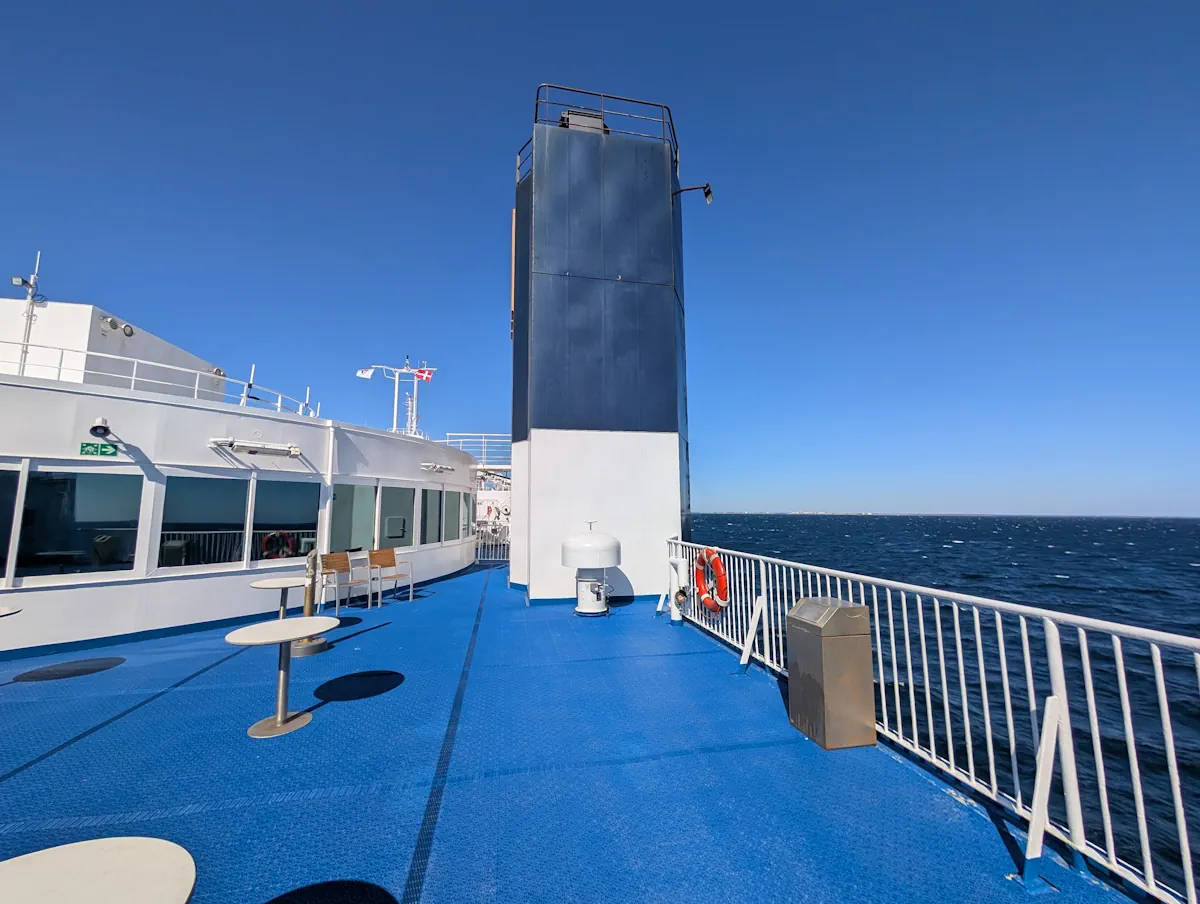
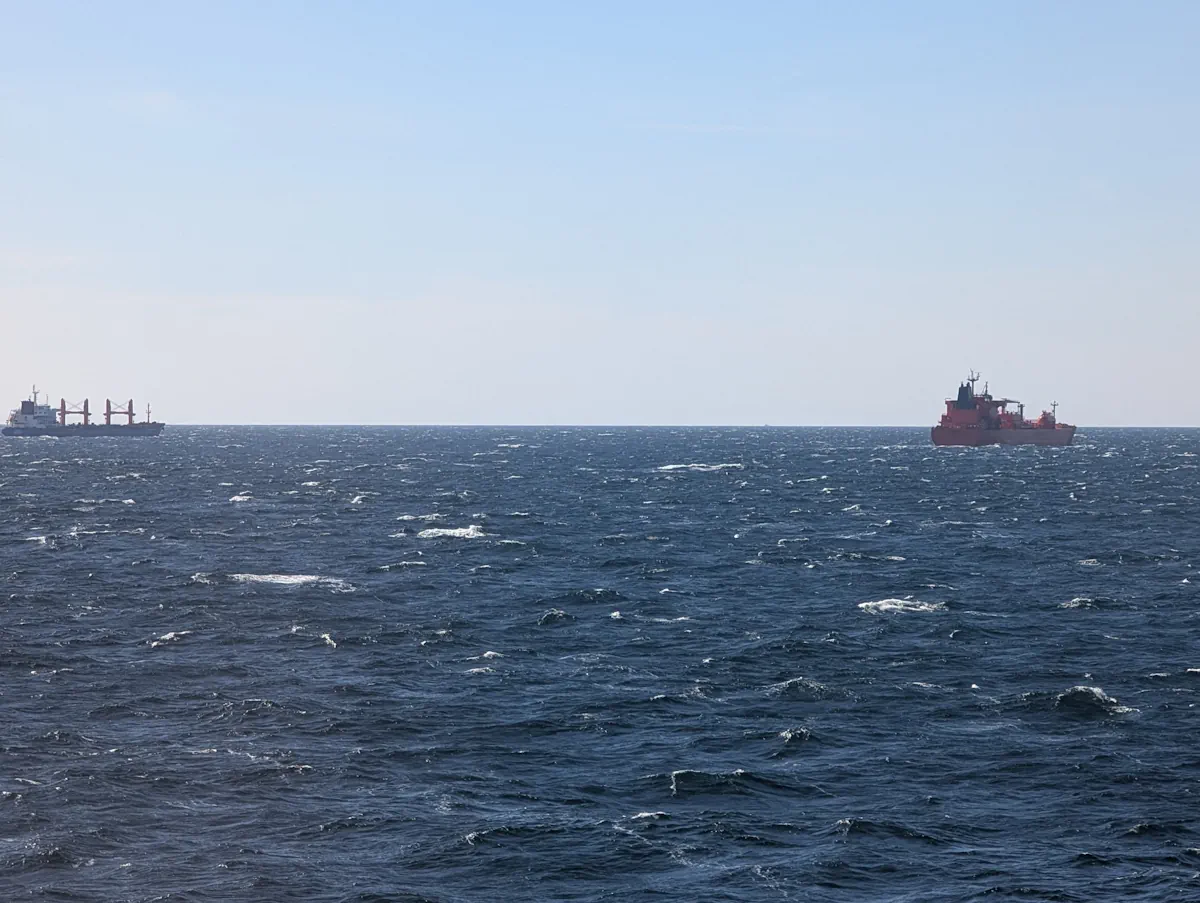
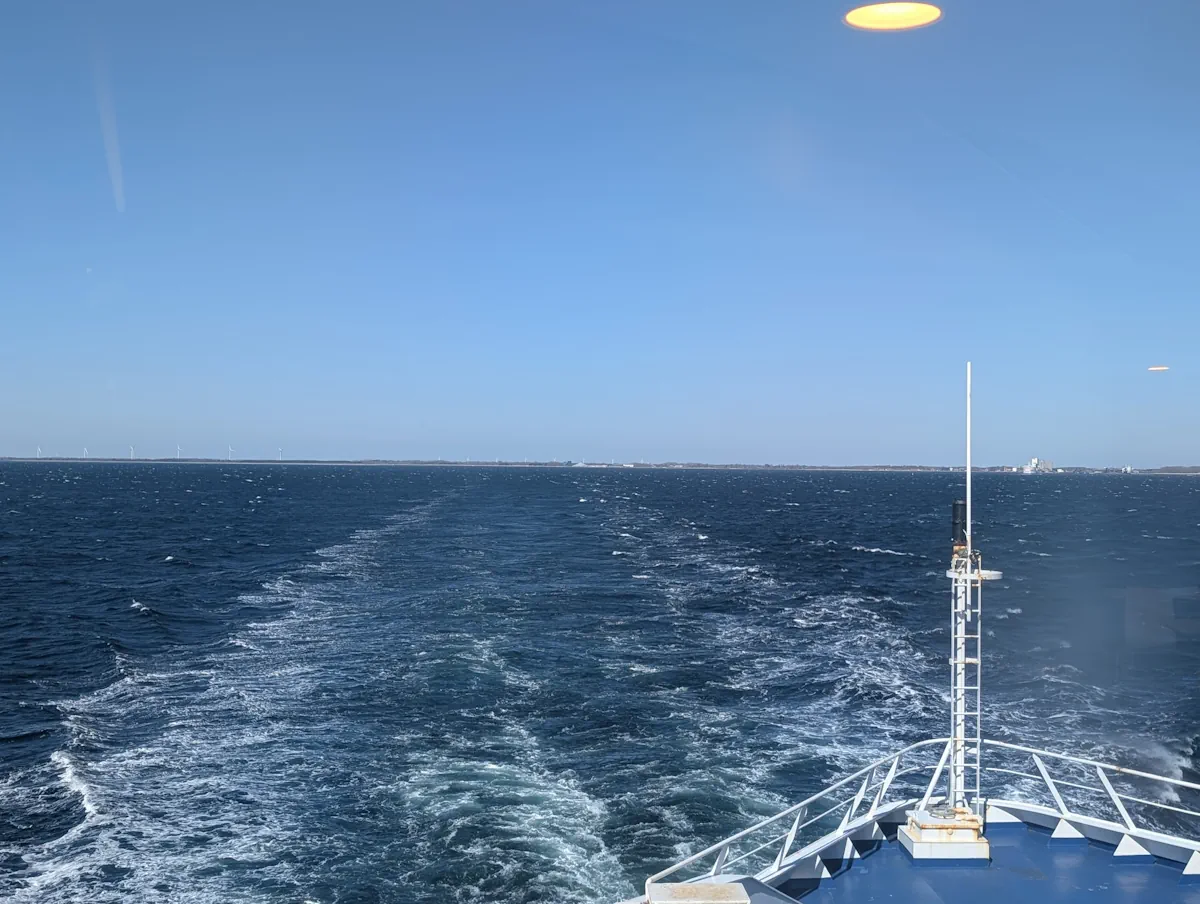
- Outdoor decks to enjoy the view over the Baltic. Windy but really pleasant. These are also the smoking areas.
- Card payment (Visa, Mastercard) and cash in euros accepted everywhere on board
Travelling with your pet
The Rødby–Puttgarden ferry is very well set up for pet owners. You can keep your dog or cat in your vehicle throughout the crossing, or take them with you on the outdoor decks on a short lead. Indoor areas (restaurant, shops) are off-limits to them.
I can confirm we were able to walk around with the monsters (I’m talking about dogs, not children) without any issue — though indeed, not in the dining areas.
Essential document: the European pet passport with a valid rabies vaccination. This is an international crossing — checks are rare, but the document is required.
Required documents
For EU/EEA nationals: a valid national ID card or passport. For driving: driving licence, vehicle registration document and insurance certificate. This is indeed an international crossing (Germany ↔ Denmark), even if checks are generally quick.
Denmark is in the Schengen Area but outside the eurozone — the Danish krone (DKK) is the official currency. On the ferry and in the port terminals, euros are accepted without any issue.

What about later? The Fehmarnbelt Tunnel
An 18-km immersed tunnel is currently under construction beneath the Fehmarn Belt. Once completed, the crossing will take just 10 minutes by car and 7 minutes by train. The opening was originally planned for 2029, but a delay of around two years is now anticipated — 2031 is the more likely date. Until then, the ferry remains the only option.
Scandlines has stated it intends to keep operating even after the tunnel opens, betting on the crossing experience. But the ferry as we know it today is clearly living on borrowed time.
⏳ Note: if you want to experience this crossing, make the most of it before 2031. Once the tunnel opens, the duty-free atmosphere and views over the Baltic will be nothing but a memory.
Practical info at a glance
- Book: Direct Ferries — Early Booker recommended. You can absolutely turn up without booking — you’ll pay more on the spot and may wait (no wait at all in low season)
- ⏱️ Check-in: possible up to 2h before, arrive at least 15 min before departure
- Payment on board: Visa, Mastercard, cash in euros
- ️ Motorcycles: accepted, specific fare
- Campervans: accepted, surcharge +€30 per 2m above 6m
- Foot passengers: possible, purchase at terminal only (not online)
- Pets: accepted with European pet passport + valid rabies vaccination
📔 My personal experience
On a Paris–Copenhagen run, this ferry is non-negotiable. It shortens the journey, eliminates the Great Belt Bridge toll and above all gives you a genuine 45-minute break in the middle of a long day on the road. Not having taken it on the way out, I could see the difference — and I'd genuinely recommend it over driving the whole way. Especially off-season, when there's barely anyone around and everything moves fast. Plus, you pass right by Lübeck, which absolutely deserves a visit!