Last updated on
It’s been a while since I’ve been back to Vienna. More than 10 years, so the city has changed a bit, especially since I didn’t stay very long on my first and last visit. Now that I’m traveling more leisurely (age perhaps), we decided to take our time and discover this city once again.
4 days in Vienna, coupled with a nice visit to Budapest (another exceptional city, really), left us plenty of time to enjoy it without rushing, to take the time to stroll around the city, to get lost a bit. Quite simply, to discover the city in peace!
Yes, there are some must-sees in Vienna, some incredible palaces (hey, it’s an imperial city just like London, Paris, Budapest and St Petersburg!), but Vienna is best discovered by getting lost, wandering around, taking in the little streets. So yes, go and see the churches and palaces, but take the time to walk. I think that’s how you get the most out of the city.
Anyway, here we go!

See Vienna’s Baroque churches
On my first visit to Vienna many, many years ago, I didn’t realize just how many sumptuous churches can be found here. In a unique Baroque style, they are also magnificently decorated. I took great pleasure in discovering them one by one, whereas I thought I’d “settle” for the best-known, such as the Karlskirche, or the cathedral, the Domkirche, in a surprisingly Gothic style. But above all, you’ll come across a whole host of magnificent little churches, like my favorite Sainte Anne.
These visits aren’t about faith, but about art, because they’re all totally different, with impressive frescoes and (very!) richly decorated ceilings.
For more information, in the following article I’ll point out Vienna’s most beautiful churches, to help you on your tour of the city. But right now, I’d say that the must-sees are..:
- Sainte Anne, super cute
- Karlskirche, magnificent inside and out
- St. Peter’s, hidden away in the city center
- St. Stephen’s Cathedral in Gothic style
- The Capuchin crypt for imperial history


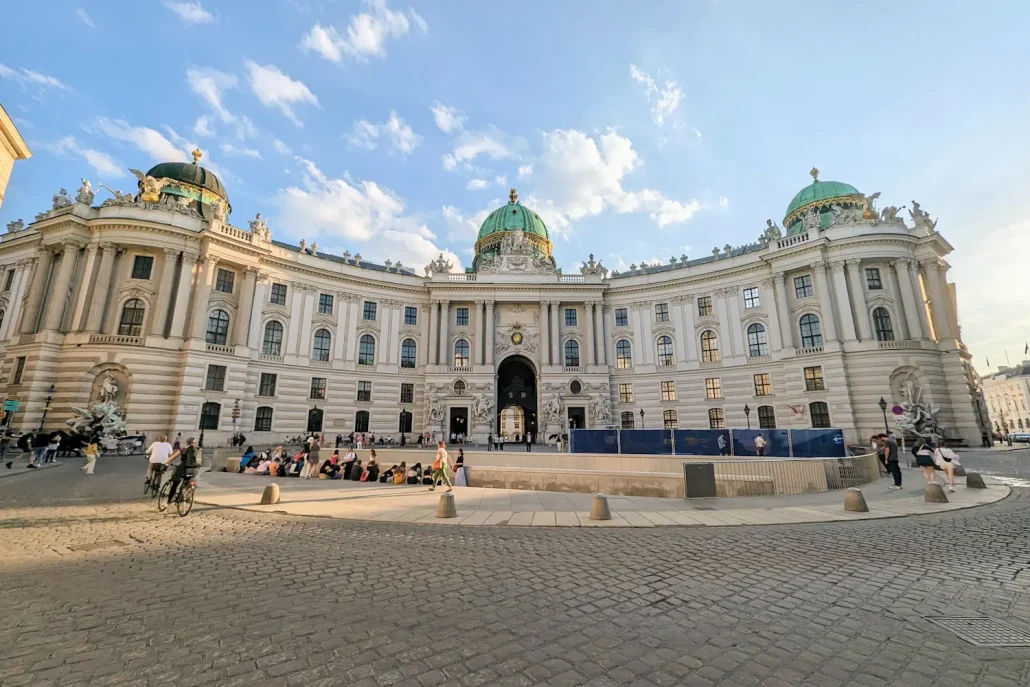
Visit the Hofburg Palace and its museums
Hofburg was THE palace of the Empire. While Schönbrunn was the summer palace, Hofburg was the imperial residence, the home of over 600 years of empire, from the Habsburgs to the emperors of Austria-Hungary. Today, it is also the residence of Austria’s Federal President.
The Hofburg is also the second largest palace in the world (behind the Louvre), no less. For me, it’s the city’s most beautiful building, with its sumptuous Baroque architecture, which I much prefer to Schönbrunn. It has seen a great deal of Austrian history unfold here, and that’s why it’s a must-see. It has now been “divided” into several museums, which can be visited individually (see below). Of course, you can still enter the courtyard and visit the exteriors completely freely. It’s already very beautiful! But in the Hofburg Palace you’ll find :
- the Emperor’s and Sissi’s apartments, and the Sissi Museum
- Spanish riding school, one of the most renowned in the world
- the Imperial Treasury, with all the riches and jewels of the imperial family
- the fabulous Austrian National Library
- the Globes Museum, with over 250 globes (and more!) throughout history


Vienna
Sisi Museum & Hofburg skip-the-line
Guided tour of the Habsburg palace, Sisi Museum and Imperial Apartments.

Vienna
Imperial Treasury
Habsburg crowns, jewels and relics — one of the world's most significant treasuries.

Vienna
Spanish Riding School tour
Behind-the-scenes look at the centuries-old riding school and its stunning architecture.

Vienna
St. Stephen's Cathedral & Dom Museum
The majestic cathedral, its catacombs and Dom Museum Wien — all in one ticket.
Behind the Hofburg Palace, you arrive in Vienna’s superb museum district. Other magnificent palaces (the Museum of Natural History opposite the Museum of the History of Art), the statue of Empress Maria Theresa, and finally a very nice district, the museum district (rather modern museums) which is very pleasant, a beautiful esplanade where you can drink and eat. A bit bobo as we say in French, but very nice.
- How about discovering the Hofburg district with a guide? Discover Vienna’s various guided tours!


See Schonbrunn Palace, of course
Schönbrunn Palace is to Austria what Versailles is to France, or Peterhof to Russia. The most impressive castle in the Empire, where part of European history was played out.
With over 1,400 rooms and a richly decorated rococo interior, Schönbrunn was the summer palace of Maria Theresa of Austria, Empress Sissi, Franz Joseph… and even Napoleon!
A visit to the interior of Schönbrunn is a must, because it’s simply magnificent. I find that there’s a lack of information, a lack of history in the explanations given in the various rooms. But you’ll see incredible ceilings, superb party rooms, light everywhere, sumptuousness.
The interior tour itself is relatively quick (even with a guide, who provides more information than the general info), I’d say a good hour.
But a large part of the visit will also be devoted to the superb gardens and the little Gloriette building, which is superbly cool and from which you have a magnificent view of the estate. On the other hand, the Orangerie gardens are a bit of a rip-off, so don’t pay for them.
You absolutely must book your tickets in advance to visit the château, as it’s very touristy. If you’re not planning a guided tour, you can book directly on the official website.


Discover the amazing Hundertwasserhaus
That’s thanks to my wife. I had no idea this neighbourhood existed, so when my wife suggested we go there, I had no idea what to expect, and honestly, it was a wonderful surprise! It’s one of Vienna’s top tourist attractions, but honestly, it’s not crowded (although in peak season, it must be a different story).
The Hundertwasserhaus is a totally surprising house (and even a mini neighbourhood) that is completely different from the rest of Vienna. Imagine a Gaudi who is even more eccentric, with lots of colours, shapes that aren’t shapes, no symmetry, and no classical architectural rules followed. And all in a beautifully wooded area. We owe it to the creativity of Friedensreich Hundertwasser, a Viennese artist who worked all over Europe.
Inside, it’s also very surprising, a kind of shopping centre in the sense that there are many souvenir shops but also artists’ shops and craft shops. It’s nice! Right next door is the museum. And in the centre, you can go to the café, which shows a documentary about Hundertwasser presenting his work.
You can get there on foot (about 30 minutes from the centre, I’d say) or by underground, getting off at Landstrasse station. But the walk is really pleasant.


See the Belvedere Museum and Gustav Klimt
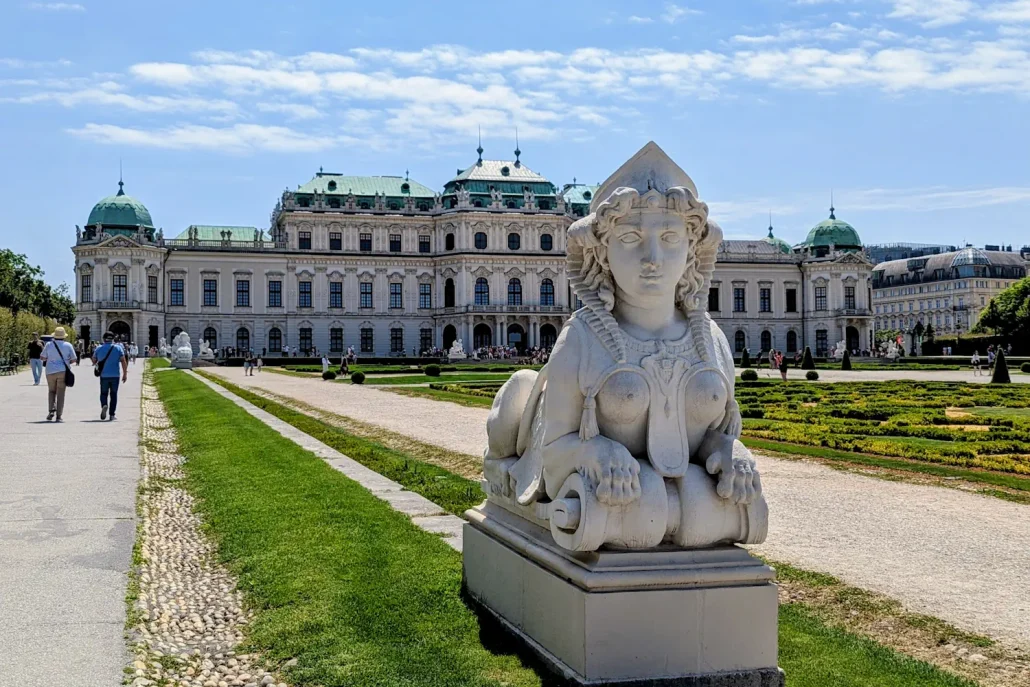
I’m not much of a painter, but you have to visit the Belvedere Palace. This superb building (well, actually, there are two of them) dates back to the 18th century, and was the superb residence of Prince Eugene of Savoy.
Now, it’s two separate museums, each with its own particular attractions. Quite frankly, I almost preferred to visit the Belvedere at Schönbrunn, as there are some pretty incredible frescoes in the building. It has to be said that the upper part of the building was used for receptions and parties, so it had to be a real eye-catcher. And it is!
This upper palace was then transformed into a museum by Maria Theresa of Austria (who is to the Empire what Queen Victoria is to England). And it’s here, above all, that Gustav Klimt’s works can be seen, including The Kiss and Judith.
The lower palace is more heterogeneous, with works from all periods, including the Middle Ages. We didn’t have time to visit it, so we just had a look around and saw some superb, older frescoes. You should also spend some time in the gardens, which are superbly pleasant.
The two museums require different tickets:
- Upper Belvedere (the most famous, with Klimt): from €16.70
- Lower Belvedere: from €14.60


📍 Vienna · 4,674 reviews
The must-see baroque palace to admire Klimt's The Kiss and Judith, along with the lavish frescoes of the staterooms. Vienna's most sought-after entry for art lovers.
Free cancellation up to 24 h before
From €23 / person

📍 Vienna · 325 reviews
The other Belvedere palace, more intimate, with its lavishly decorated baroque apartments and rotating temporary exhibitions. Perfect to extend your visit after the Upper Belvedere.
Free cancellation up to 24 h before
From €20 / person
Getting lost in and around the city center
Well, you know me a bit by now, so you know that my favorite thing to do in a city is to get lost, to walk around for a while with no specific goal in mind, just taking in the pretty streets one after the other. I usually do that on the first day, and then target the specific places I want to visit.
And that’s just as well, because Vienna is the perfect city to get lost in. Magnificent architecture, not just in the city center, beautiful churches everywhere, beautiful buildings on every corner, and you’re bound to come across a whole host of nuggets. Old Vienna, in particular, towards the Greek Quarter, with its tiny alleyways. The Spittelberg jewel around the museums, the passages not far from the Gutenberg statue, for example. Even around the cathedral, which is very touristy, just 2/3 streets away, you’ll be all alone in some superb spots, as people really do concentrate on the main thoroughfares. That’s how I came across the church of Sainte Anne.
Anyway, all this to say that you should take at least half a day to walk around without really knowing where to go, just for fun, without concentrating on the main monuments.


Wiener schnitzel at the Naschmarkt
Why go to the market when you visit Vienna? Because it’s still, for the moment, a pretty picturesque place. Sure, it’s a market, with fruit, vegetables and local produce, but it’s not all! First of all, the little stores are very nice. Secondly, it’s a place where you can eat cheaply, as there are plenty of restaurants, of all nationalities, and of course local specialities such as the famous wiener schnitzel (and that’s not a schnitzel, it’s two huge ones, good luck finishing them), and sausages too, of course.
There are also several places to have a drink, but why have a drink here? Because the setting is really pretty. We’re on the main roads, but there’s not much traffic, and the architecture is superb. We’re just 2 steps from Karlskirche, so you can combine a visit to the local points of interest with a walk back to the center (it’s really not far).
Be careful on Saturdays, though, as it’s really quite crowded.


Walking along the Ring
Well, I don’t usually recommend walking along the ring road of a big city. But this is Vienna. The Ring is the road that runs around the city center, where you’ll come across the city’s main buildings:
- the magnificent Opera House
- the Albertina
- the museum district and Hofburg
- the Parliament
- City Hall
- Burgtheater
These buildings are superb, and in fact all the architecture along the ring road is well worth a visit. There are also many pleasant parks, with commemorative statues (Mozart, Strauss…). Austrians say it’s the most beautiful boulevard in the world. Frankly, that’s not necessarily untrue!
The Ring is about 5km long, so you can take half a day to discover it. There’s no heavy traffic, and it’s not as noisy as the Grands Boulevards in Paris, for example. There’s a streetcar that goes around it too, if you like 🙂
- Discover the ring with a bike tour!


📍 Wieden · steps from Naschmarkt
Vienna's modern, stylish hostel, perfectly located next to the famous Naschmarkt. Dorms and private rooms in a young, friendly atmosphere.
- Dorms and private rooms available
- 2 min walk to Naschmarkt and Karlskirche
- Lively lounge bar on site
Free cancellation
From €65 / night

📍 Josefstadt · behind the Parliament
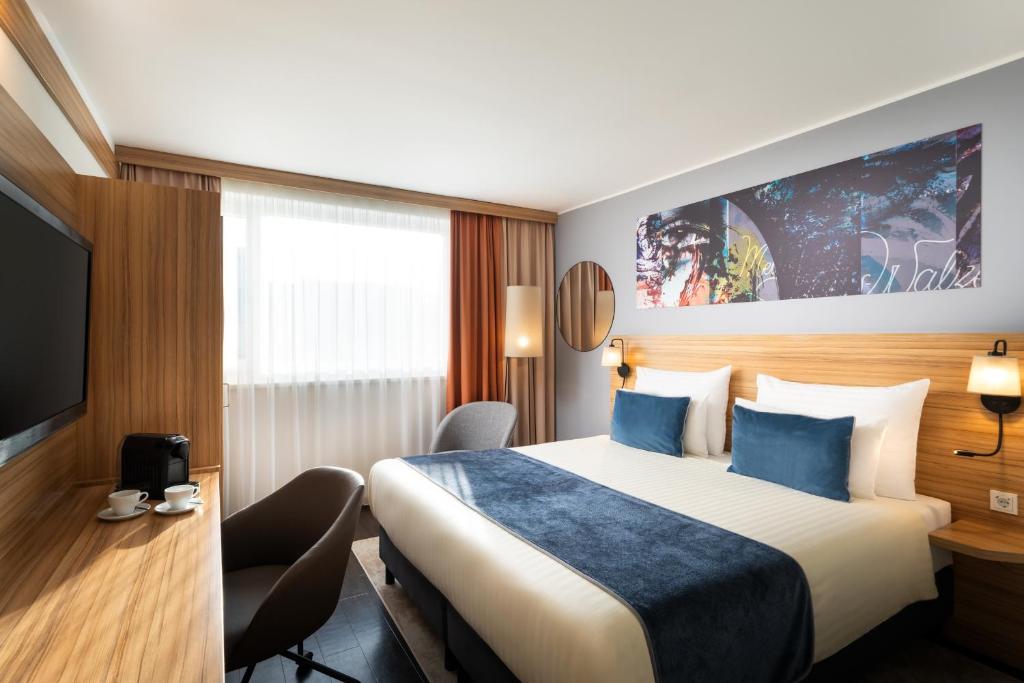
Design 4★ hotel ideally located just behind the Parliament, a few minutes from the Ring and the museum quarter. The perfect balance between modern comfort and central location.
- Modern, light-filled 4★ design hotel
- 5 min walk to the Ring and Hofburg
- Perfect base to explore Vienna on foot
Free cancellation
From €130 / night

📍 Mariahilf · imperial style
A historic hotel with a fully embraced imperial style, in the lively Mariahilf district. Refined decor, "old Vienna" atmosphere and excellent service — a unique setting to soak up the soul of the city.
- Distinctive, polished imperial decor
- Mariahilf district, lively and authentic
- Excellent location (9.6/10 on Booking)
Free cancellation
From €195 / night

📍 Innere Stadt · historic heart
Refined 5-star in the very heart of the city, just steps from St. Stephen's Cathedral. Elegant rooms, flawless service and a 9.9/10 location — to sleep like at the Habsburg court.
- Luxurious 5★ 2 min from the cathedral
- Outstanding location (9.9/10)
- High-end service and refined atmosphere
Free cancellation
From €350 / night
Attend a classical music concert in a church
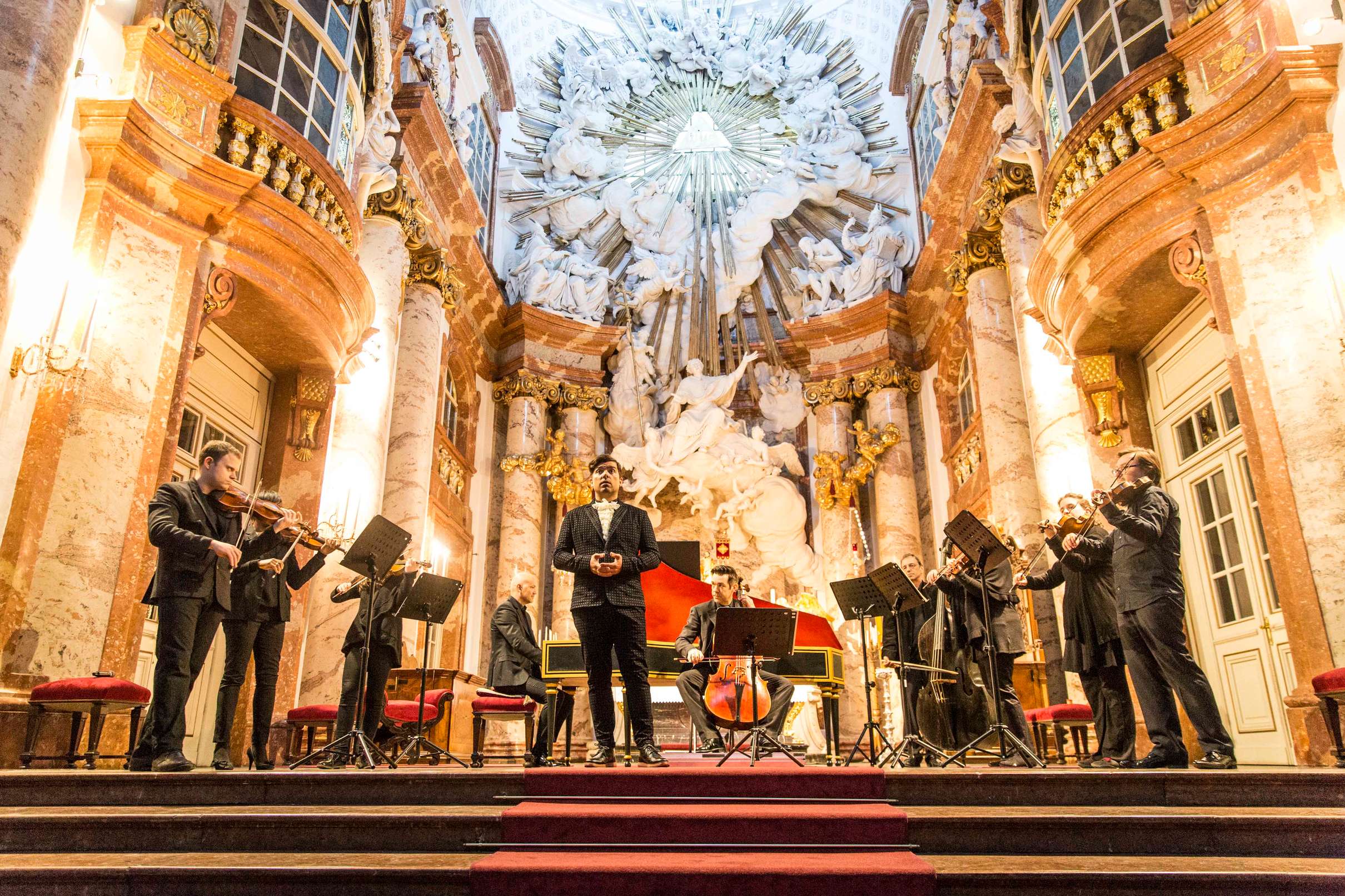
At the very beginning of this article, I told you about Vienna’s various churches, which are simply marvelous. As Vienna is the capital of classical music, you can add another dimension to these churches by going to a classical music concert. Even if you’re not a classical music fan (like my wife), the setting is so beautiful that you’ll enjoy it. They do the most accessible pieces, so everyone can go 🙂
In the following article I’ll explain all the possibilities for seeing a classical music concert in Vienna, but the good thing is that all the most beautiful churches offer concerts, like the Karlskirche, Peterskirche, and my favorite St. Anne’s!


📍 Musikverein, Vienna
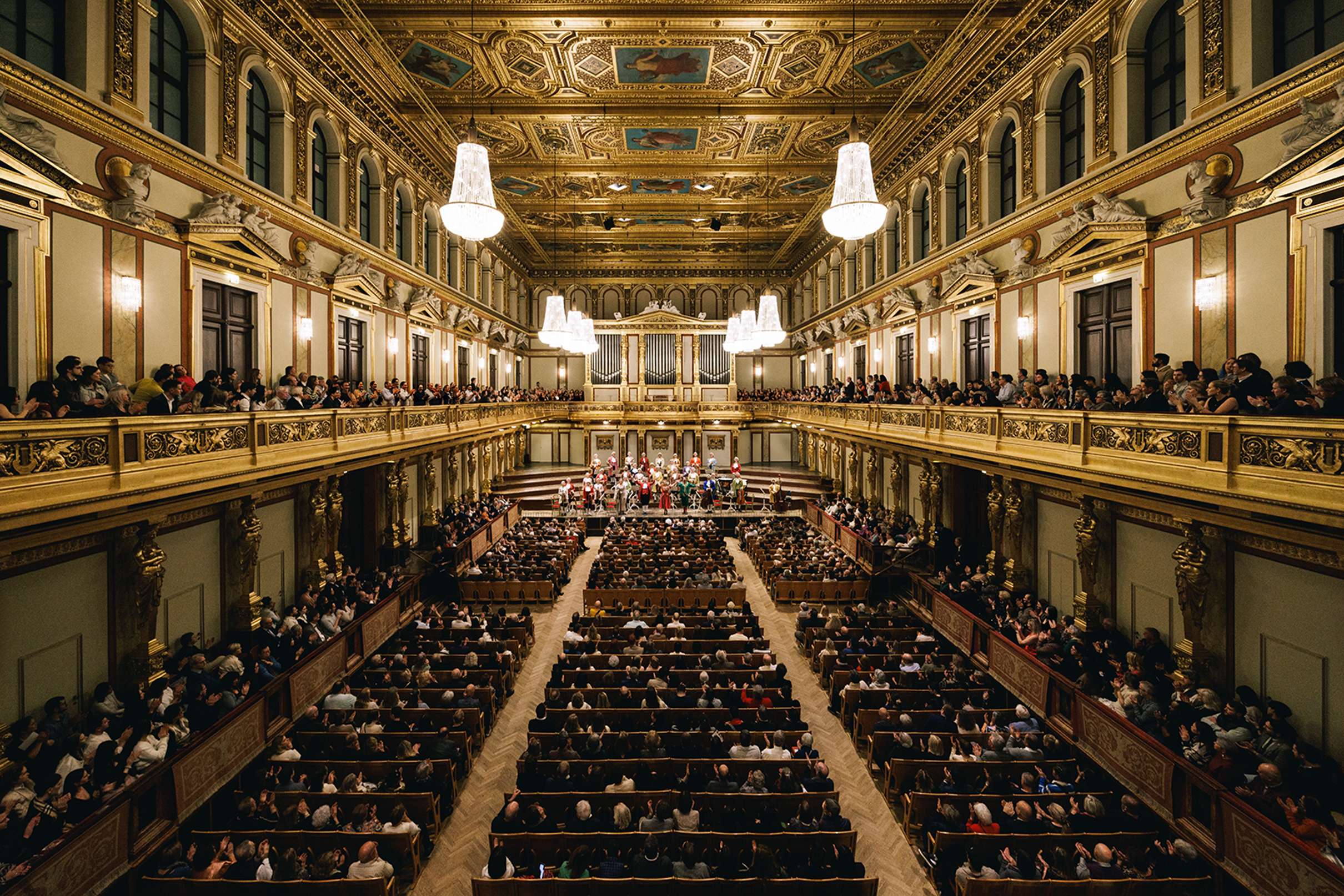
Attend a classical Mozart concert in the prestigious Golden Hall of the Musikverein, one of the most famous concert halls in the world.
From €69
📍 Annakirche, Vienna
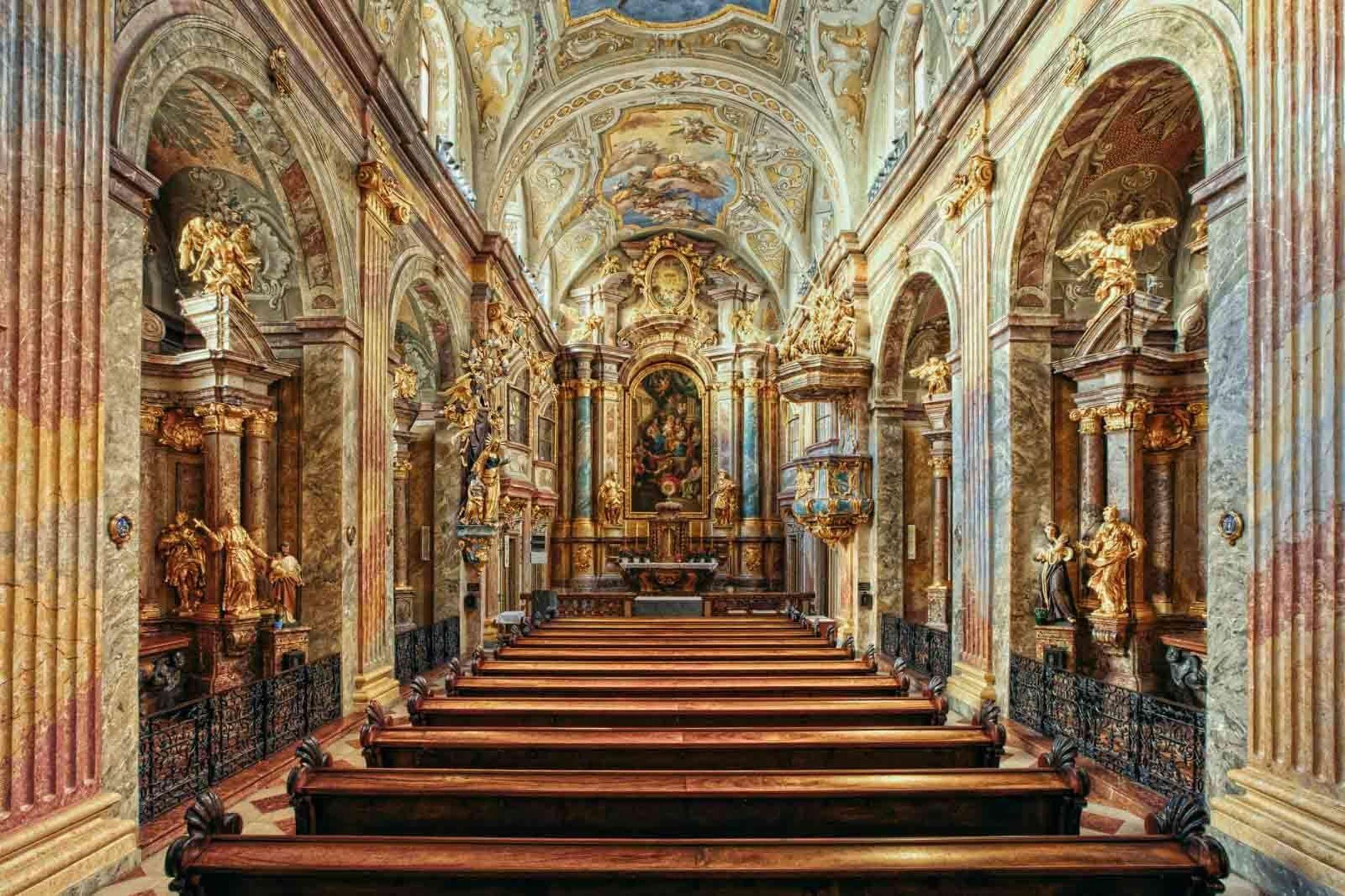
Enjoy a classical music concert in the intimate and stunning setting of St. Anne's Church, a baroque gem in the heart of Vienna.
From €33
📍 Karlskirche, Vienna
Experience an unforgettable musical evening in the stunning Karlskirche, one of Vienna's most beautiful baroque churches, with exceptional acoustics.
From €33
📍 Peterskirche, Vienna
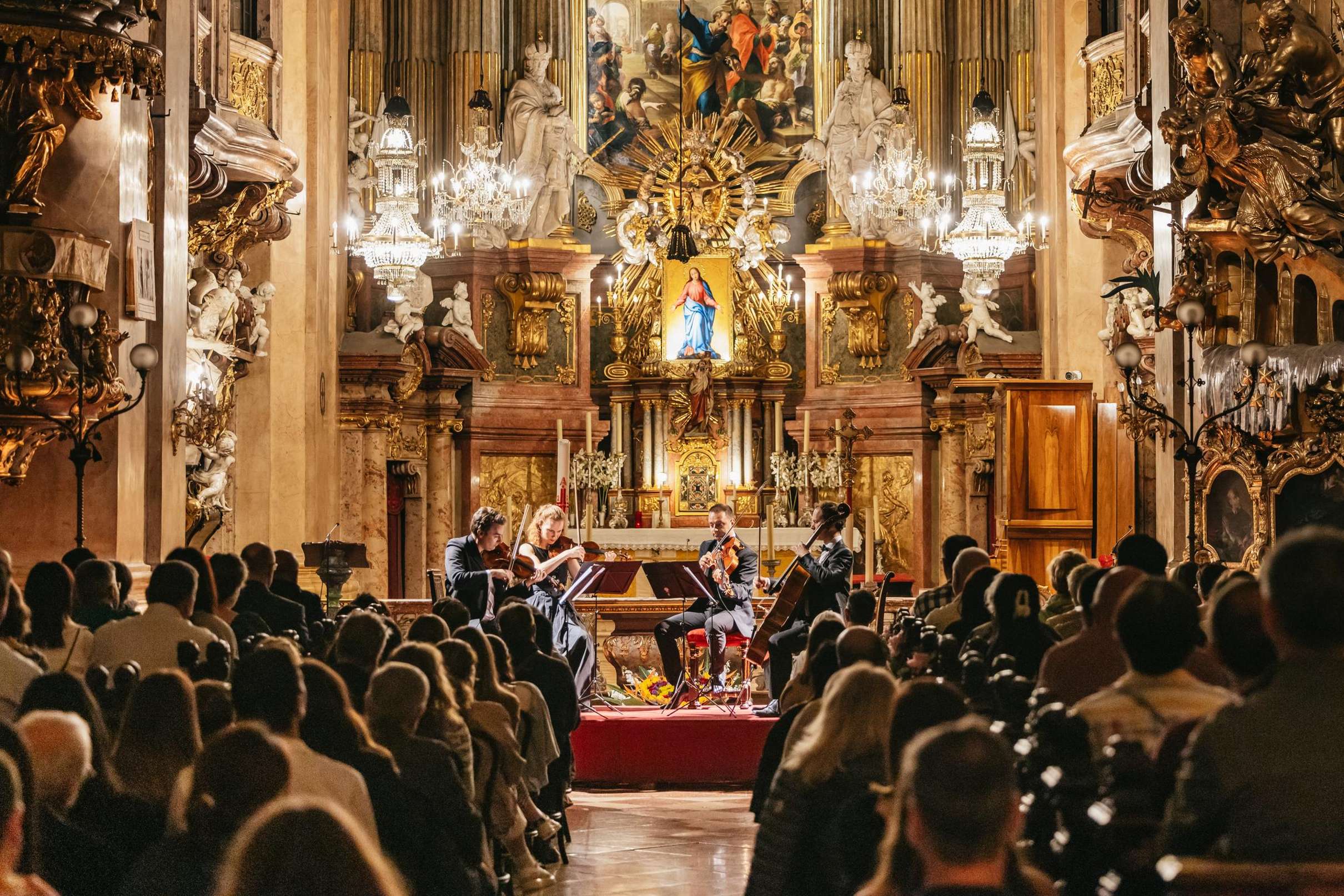
Discover the Classic Ensemble Vienna in the breathtaking setting of St. Peter's Church, a masterpiece of Viennese baroque architecture in the city centre.
From €39
Visit the Capuchin crypt to learn about the history of the Habsburgs
I mentioned it at the very beginning in the churches, but the Crypte des Capucins is best visited to discover the history of the Empire and the Habsburg family. It’s a bit like the Basilique Saint Denis with its royal tombs. Here we have all the tombs of the imperial family. And some of them are really impressive! Obviously that of Maria Theresa of Austria, but that’s not all.
Fortunately, we’re not here just to see the tombs; what’s interesting is to discover who they were, and what each one did. Unfortunately, I find it lacking in information on this subject. But it’s still a very important visit if you want to immerse yourself in the history of the country and the region. 150 vaults created by some of the greatest artists of the time.
There’s a guided tour in English on Mondays, Wednesdays and Saturdays at 3pm, which may prove interesting.


Stephansdom Cathedral
Okay, I told you about the churches at the very beginning of this article. But baroque churches. Vienna Cathedral is totally gothic, and I think it deserves to be treated separately, it’s so beautiful.
The exterior is beautiful, yes, thanks in particular to the colorful tiles typical of Central Europe (there are also several in Budapest, for example), but it’s the interior that will blow your mind. The interior is extremely elaborate, with sculptures everywhere and a magnificent pulpit. You can spend a lot of time admiring the details, the works of art.
You can also climb the two towers (for a fee, of course), to get a nice view of the city center, but also to be close to the tiles. I went to the north tower, and I don’t regret it 🙂
Inside, however, only a small part of the building can be visited free of charge. The center of the cathedral has to be paid for, or is visible through a gate. Except that going there means you don’t have to worry, as not many people pay. So it’s worth paying 6€.


Visit the Swarovski Museum
Well, I’ll admit it wasn’t really for me, but as a little surprise for my wife (subtle bribery, you might say), who’s a Swarovski fan.
So it’s not really a museum as such, but THE boutique on 3 levels (watch your wallet) with lots of pretty jewels for sale, but above all lots of original creations on display and not for sale. I think that’s what they call the museum. But it’s quite nice, the lady comes out happy and I can then negotiate other things 😀
It’s in the hyper center of Vienna, so it’s very easy to get to (too easy, the banker would say).


5 extra things to do in Vienna
Because it’s not just about the sights, there are also some great things to do in Vienna:
- See a Mozart concert in the Golden Hall
- Eat a sachertorte at Café Central
- Discover Vienna by bike
- Escape to the village of Hallstatt
- See Vienna from above with the Giant Ferris Wheel
6 Viennese museums to visit
- Mozart‘s house
- Albertina Museum
- Kunsthistorisches Museum, featuring Bruegel’s Tower of Babel
- the Belvedere, not just for Klimt
- the Imperial Treasury to discover the riches of the Empire
- the Wien Museum, retracing the history of Austria

Vienna
Mozarthaus Vienna
Step into the only preserved home of Mozart in Vienna, right in the historic centre.

Vienna
Albertina Museum
Masterpieces by Monet, Klimt and Picasso in one of Vienna's leading art museums.

Vienna
Kunsthistorisches Museum
Skip-the-line ticket for the prestigious Habsburg art collection.

Vienna
Upper Belvedere — Klimt
See Klimt's The Kiss and the permanent collection in Vienna's most iconic baroque palace.
We could also mention…
These are some of the places I don’t know yet but have excellent reputations:
- Schonbrunn Zoo, the oldest zoo in the world
- Lainzer Tiergarten park, 6 times the size of Central Park, on the edge of the city
- the National Library, one of the most beautiful in the world

Where to stay in Vienna
Beware, sleeping in Vienna is expensive. Especially in the city center! Prices can also double depending on the season. I’ll do a separate article on accommodation in Vienna, but often moving a few hundred meters away from the center can save you a lot of money. For example, in Leopoldstadt, Landstrasse, Josefstadt.
If you want a much more information and options, i would advice you my article about where to stay in Vienna.
- Youth hostels:
- CH Hostel, right in the center, from €30 in a dormitory
- Freinest Hostel, on the banks of the Danube, from €25 in a dormitory
- Wombat’s Naschmarkt, the best hostel, from €50 in a dormitory
- Vienna Hostel Ruthensteiner, excellent hostel between the center and Schonbrunn, from €35
- Apartment :
- HeyMi Apartment, from 120€, 60m² in the center
- Mauthaus Schönbrunn, 2km from the center, excellent 45m² from 115€.
- City Stay, apartments in the heart of the city from 120€.
- Budget hotels:
- Wombat’s Naschmark, from €79 for a double room, very well located
- Go West Guest Rooms, from €50, located a little outside the hotel
- Space Home Apartment, from €50, to sleep in a capsule!
- Chic Central City Rooms, from €60, next to the Belvedere
- Ibis Styles, next to the Danube, from €80, a sure bet!
- Hotel between 120 and 200€:
- The Levante Parliament, just behind the Parliament, a nice 4* starting at 120€.
- Hotel Graf Stadion, behind the town hall, from 140€.
- Hotel Josefine, magnificent and atypical! Imperial style, from 140€.
- Jaz in the City, modern and comfortable, from €120
- Hotel for indulgence:
- Leo Grand, hard to beat! 5* in the heart of the city from €230
- Hotel Sacher, quite simply THE best hotel in town. Sumptuous setting, from… 600€ all the same.
- Hotel Sans Souci, also a reference in a magnificent establishment, from 330€.

Practical information about Vienna
When to come to Vienna
Vienna has a continental climate, so it’s hot in summer, cold and rainy in winter, and two great mid-seasons. But in practical terms, Vienna can be visited absolutely all year round.
In winter, there are far fewer people, it’s wetter, but that’s not too much of a problem, as there’s plenty of sightseeing to be done indoors. And there are plenty of cafés to sit in if it rains.
I love spring and autumn. Apart from bank holiday weekends, it’s not necessarily too crowded, prices are lower, it’s not too hot, it’s super pleasant. I was there last time for the May bank holidays, and to be honest, it was a bit crowded in the hypercentre, but that’s okay!
In summer, it’s quite busy, prices are higher, but it’s vacation time and it’s still very pleasant 🙂
How long to stay
I stayed 3/4 days, and I would have stayed 2 days longer. It’s a city where you feel great. There’s lots to see, and you can take your time. It would be a pity to do everything in a hurry, because there are so many details, so many places to discover as you lose yourself in the streets of the city.
You can do the essentials in 2 days, but it’s a bit of a shame
- I can’t advise you enough to take a guided tour of the city. There are lots of options, but you can find all the best guided tours here.
Getting around Vienna
Getting around Vienna is super simple, really. Here are the main options, you’ll see, everything will be clearer.
- The metro: works great, clean, efficient, all the main sights are well served.
- ticket price: €2.4 or €5.80 for the day
- tickets can be bought from the kiosks in the stations
- On foot: this is my favorite way to enjoy the city’s architecture. Because it’s not very big. The furthest away is Schönbrunn, a 1-hour walk from the city center.
- The tourist bus: you can hop on and off whenever you like, for a day or more, and it takes you to the most popular tourist spots. Even if the bus is ugly (let’s be honest), it’s practical! From €24

How to get here from European capitals
It’s super simple. Or almost.
You can come by train from Budapest, Bratislava, Praha. Fast, not expensive.
By bus, it’s also possible, there are so many possibilities I can’t tell you examples but I would advise you to check Omio for all the possibilities!
By plane it’s much faster, and sometimes cheaper. Trips start at €100 return from European capitals, with many airlines serving (Air France, Transavia, Austrian, Ryanair, Lufthansa…).
Prices are quite affordable, starting at €100 (less with Ryanair), and vary quite a bit from day to day, so you really need to compare. I use Booking as a flight comparator, I find efficient and easy to use
How to get from Vienna airport to the city center
Quite honestly, it’s really not that complicated. In the following article I’ll give you all the solutions for getting from Vienna airport to the city center, but to make it quick, you’ve got :
- The CAT express train, in 15 minutes
- S7 city train
- cabs, but be careful, they’re crooks
- VTC (Uber, Bolt)
- private transfers (expensive but fast and efficient)

Vienna in brief
- Recommended accommodation: I stayed in the HeyMi Apartment, a 60m² apartment from 120€ in the city center, very nice!
- The most beautiful place to see: the exceptional architecture of the city center, around the cathedral, with Peterskirche right next door. and Karlskirche too, indispensable. And Hofburg. In short, there’s too much!
- The best activity: a classical music concert, after a Viennese coffee and a wiener schnitzel!
- A free guided tour of the city: find out more here
- The best season: April/May and September/October, to avoid the heat and the influx of tourists.
- How long to stay: 3/4 days is not bad at all.
- Getting here by plane: from €60 with a low-cost airline to €100 with Air France, compare flights on Booking Flights.
- From the airport to the city center : the CAT, the fast and cheap train (15€ and 15min)
- Tourist guide: Discover Vienna in a few days by Lonely Planet

All articles about Vienna
Here is the list of articles written about Vienne. I will add to it regularly as there is so much to say about this city! 🙂