Last Updated on by vincent
Palermo is a joyful mess. It’s not your typical Italian tourist city with all its historic districts, monuments and towers that everyone ticks off. It’s a different kind of city. A city you visit differently and, above all, one you live.
It’s a city that jostles you, that smells of bitter orange and frying, of spritz and octopus, where a gleaming Byzantine chapel hides behind a crumbling façade, and where an Arab market unfolds a stone’s throw from a Norman cathedral.
My wife wanted to go to Sicily. I wanted to discover a new Italian city, one with character. So with five days in Palermo and two days in Cefalù, we found this week to be the ideal format: long enough to scratch beneath the surface of the Sicilian capital, and enough to end gently with our feet in the water. Well, we could have done more, because someone forgot their passport on the day of departure, so we had to leave a day later. I won’t name and shame that person.
Here I’m offering you an itinerary for visiting Palermo and Cefalù. But be warned, I’m not going to give you the itinerary we actually did. Rather how we should have done it, better thought out and prepared.
So the ideal itinerary to see the best of Palermo.
Because we weren’t very well organised, I’ll admit it, we missed things, we took longer for others, we were a bit like the city itself, meaning we let ourselves drift but still managed to do the majority of the spots I’d listed.
Keep this in mind before you go: in Palermo, the real challenge isn’t distance, it’s juggling opening hours. Many churches and oratories close during services, at midday, or only open in the morning. Check the hours the evening before and build your days around the sites with the most restrictive schedules. That’s the secret to not missing anything. So you don’t end up like us (we missed all the oratories, for example), returning X times to the same place to see if it’s finally open, getting a different answer each time we asked. A joyful mess, like I said!
Day 1 — The historic heart of Palermo
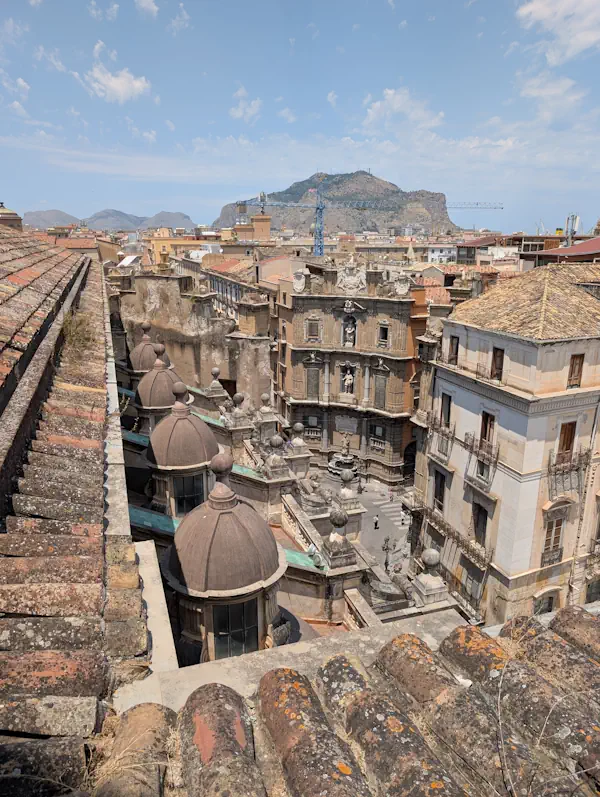
For a first day, we deliberately took it easy and wandered the centre on foot, noses in the air. Everything starts from the Quattro Canti, that Baroque crossroads where the city’s two great arteries meet, the Cassaro (Via Vittorio Emanuele) and Via Maqueda. Four curved façades, four seasons, four saints: it’s Palermo’s drawing room.
Quattro Canti is a truly stunning crossroads (cars can of course drive through, it’s not pedestrianised), but above all it’s the very essence of Palermo: glorious chaos. Picture street artists during the day, singers (including an opera singer), dancers, fruit-juice sellers. And as soon as night falls, the fruit-juice sellers bring out the sound system, the juice turns into a cocktail and the square becomes a giant nightclub.
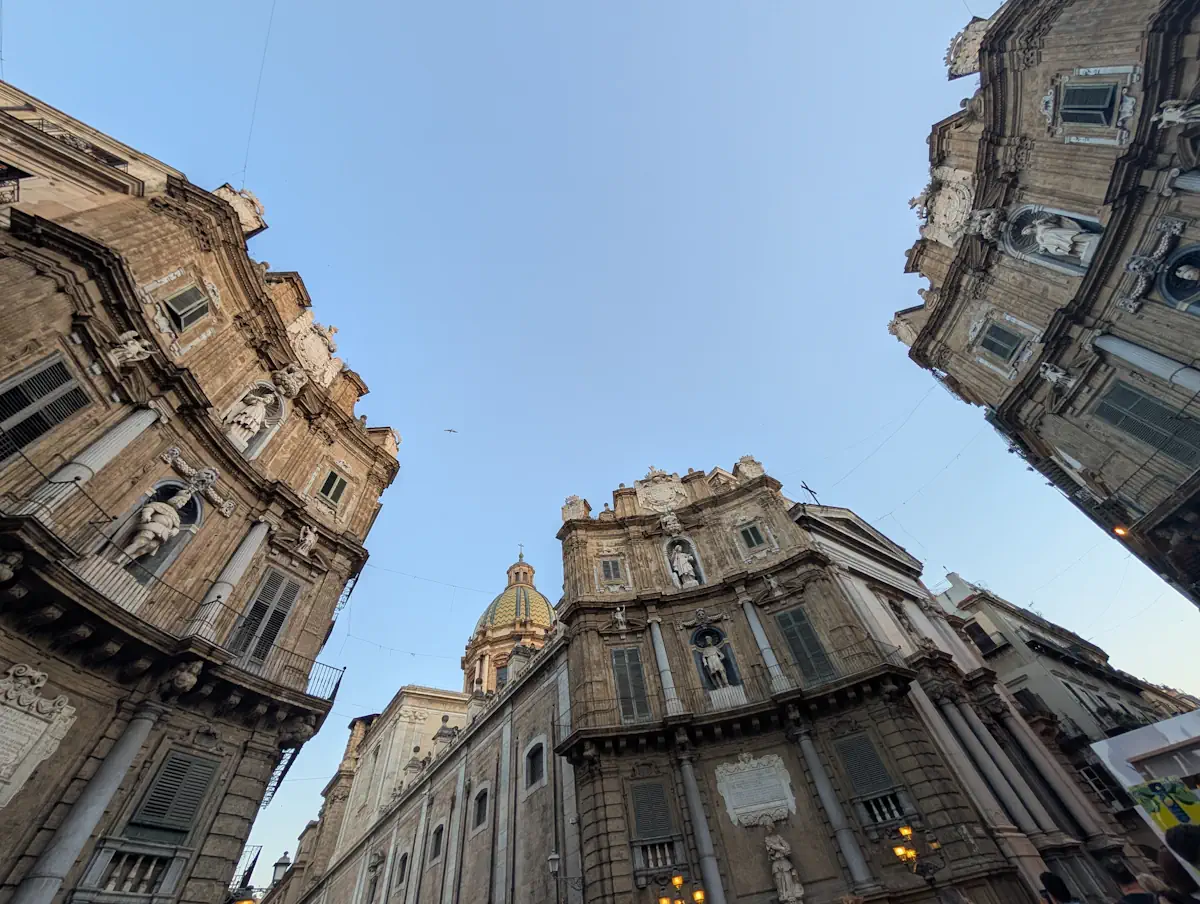
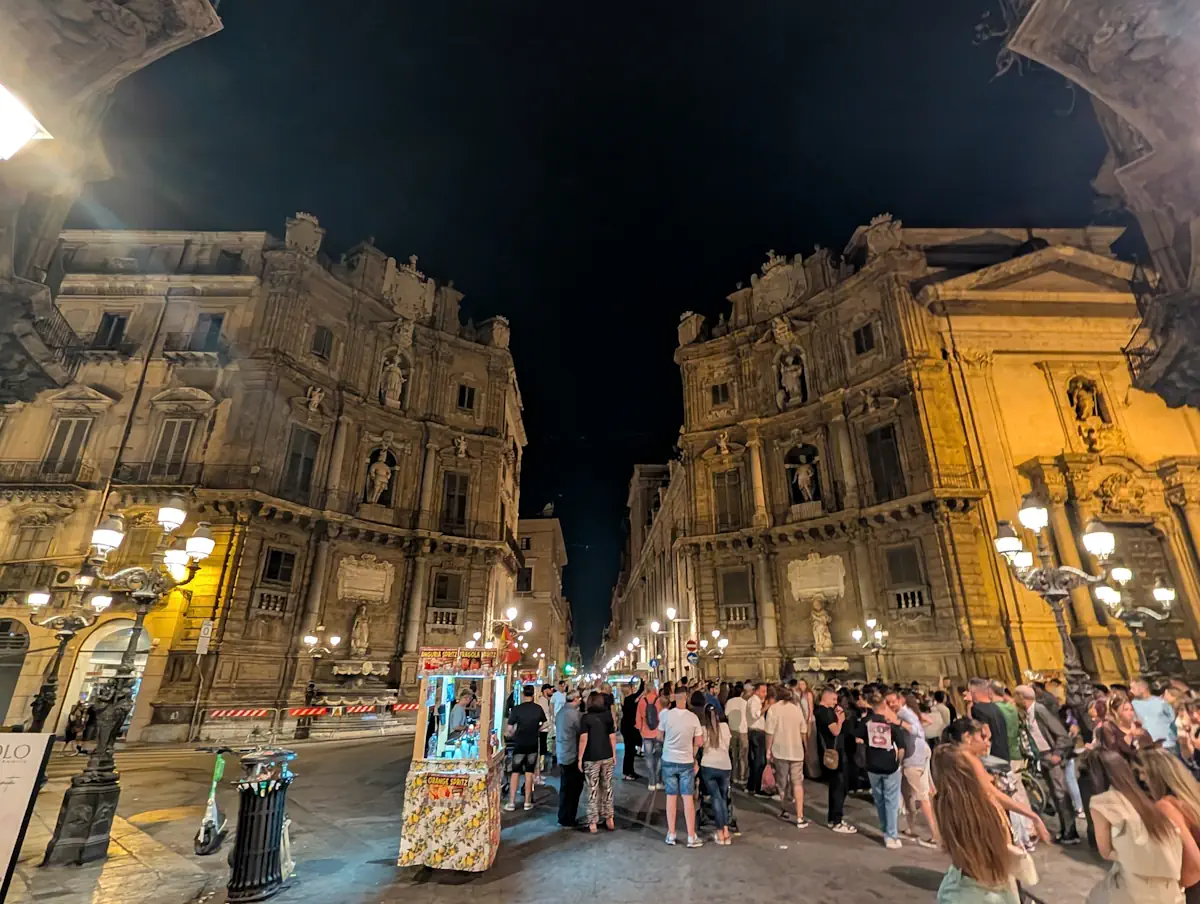
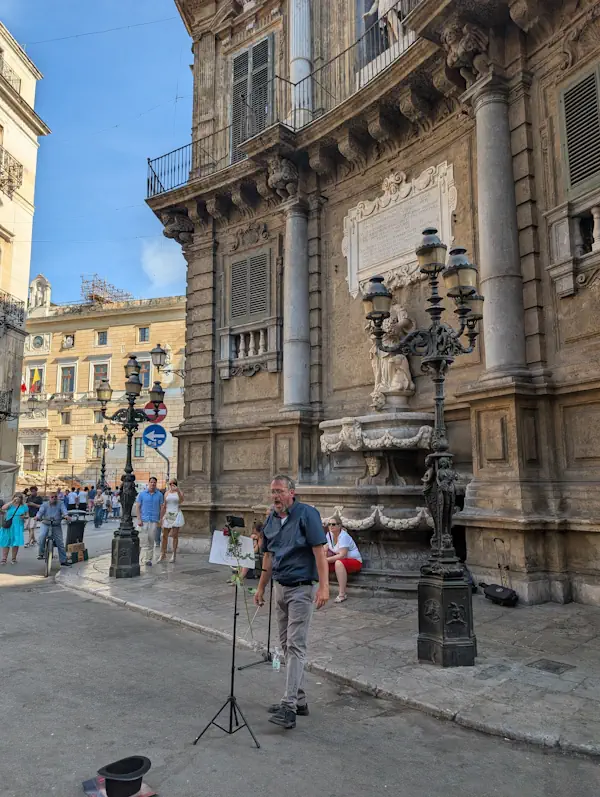
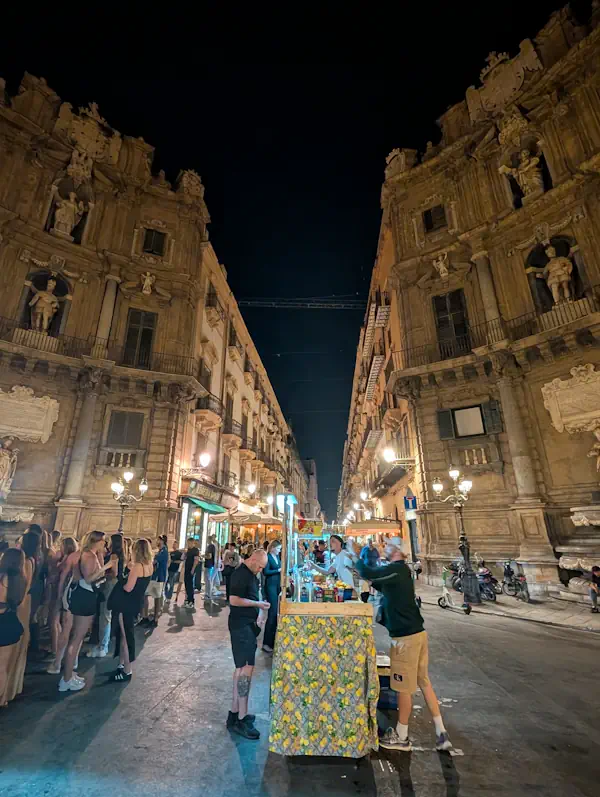
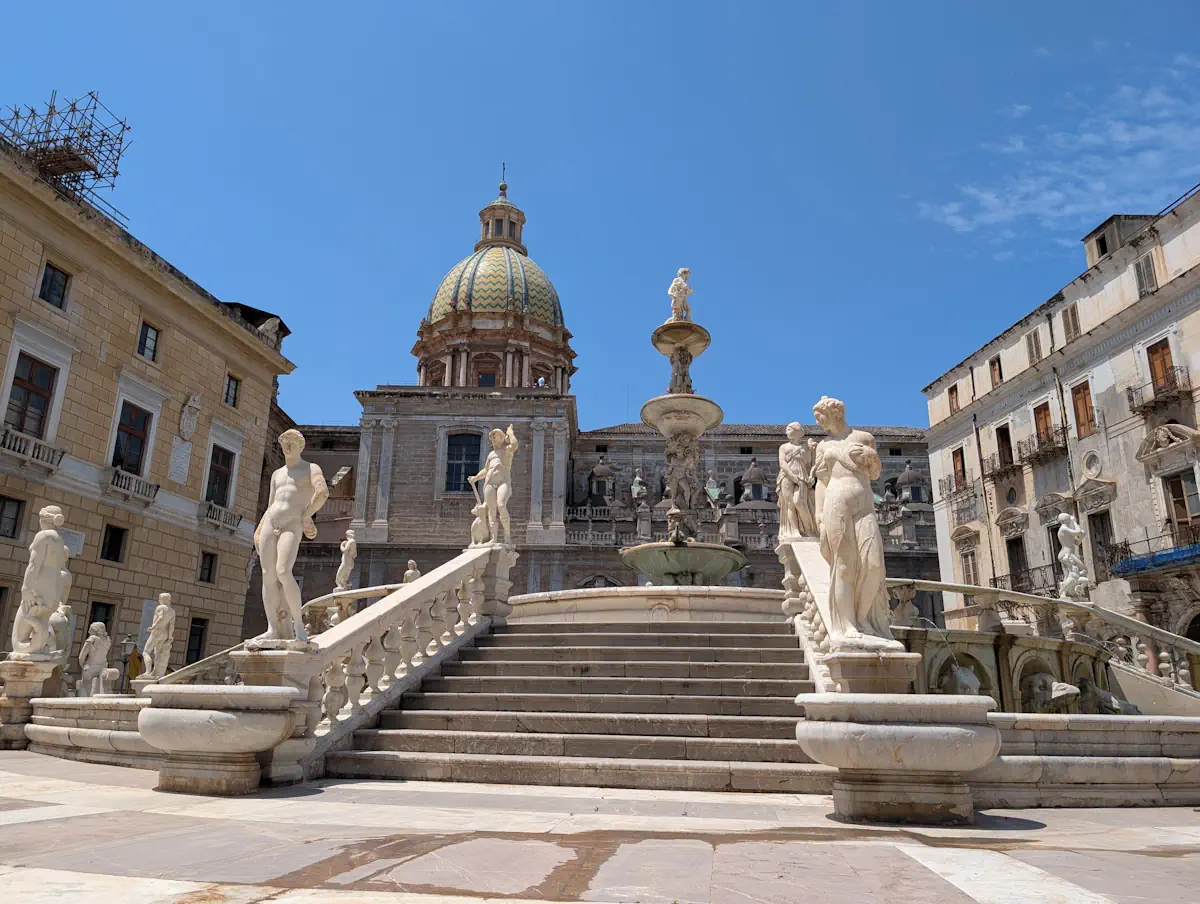
A few metres away, the Fontana Pretoria and its dozens of nude marble statues earned it the nickname “fountain of shame”. Under renovation for a while and for a good while longer (I reckon roadworks in Palermo must be a concept all of their own). We circled it for a good while before heading to Piazza Bellini, probably our favourite spot in the centre. There, two marvels side by side:
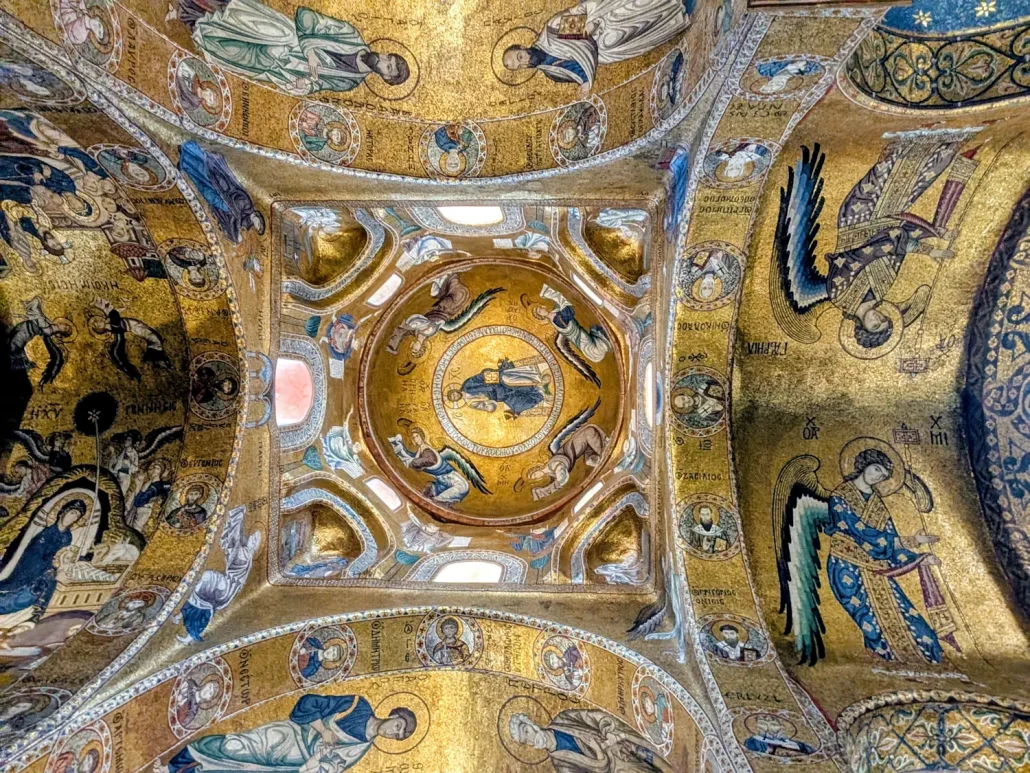
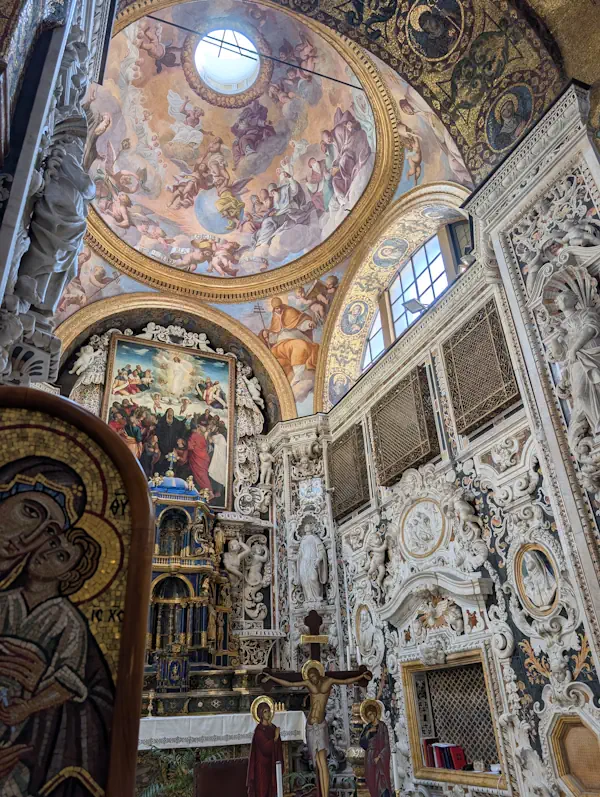
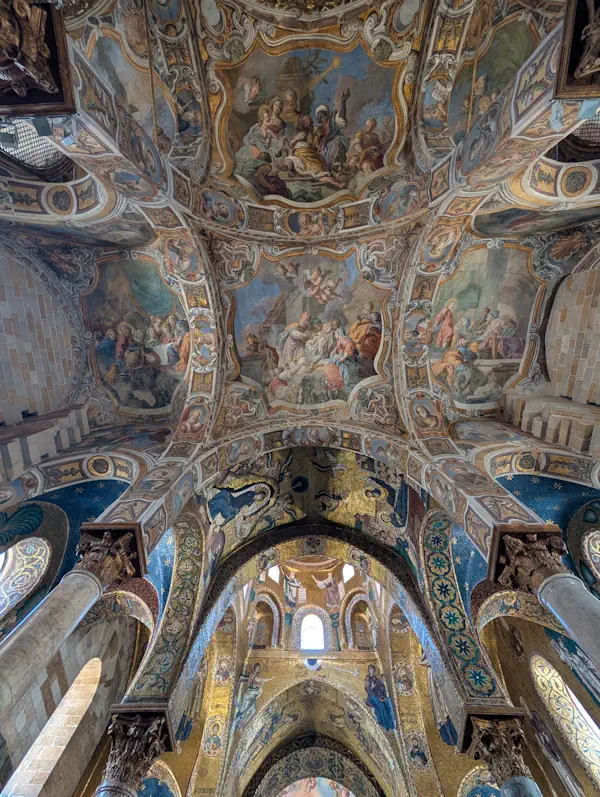
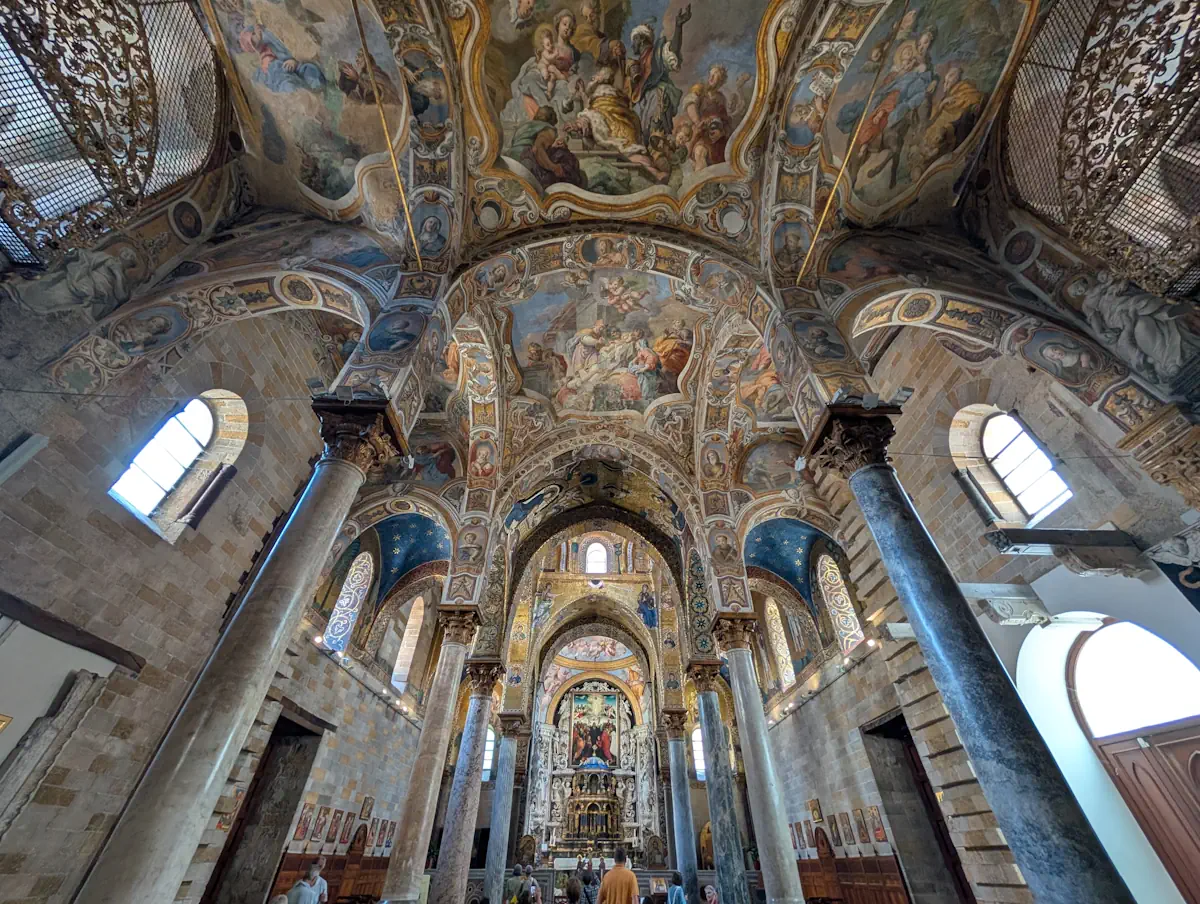
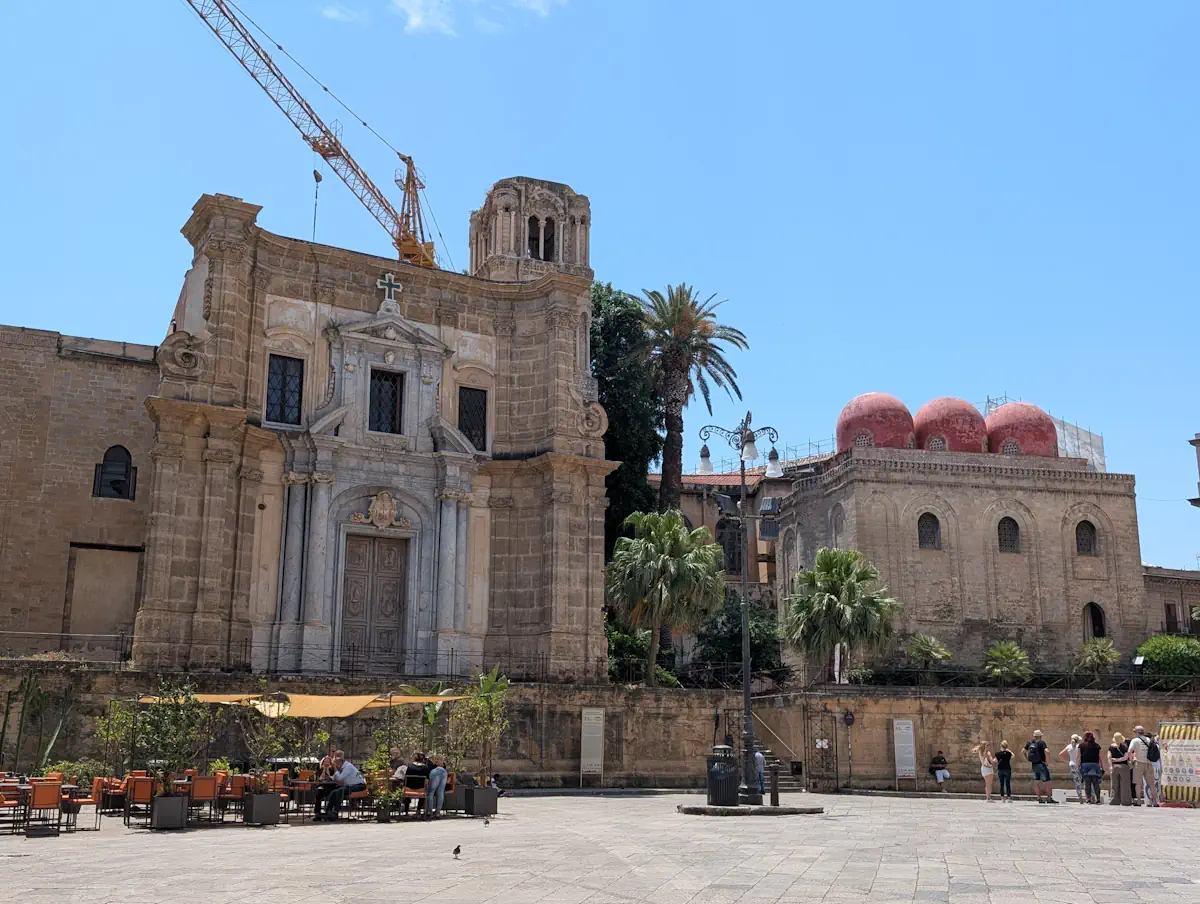
- The Martorana church (Santa Maria dell’Ammiraglio), with its absolutely dazzling gold-ground Byzantine mosaics. A shock. It’s a must-see. Watch out for its opening hours, it may only be until 1pm.
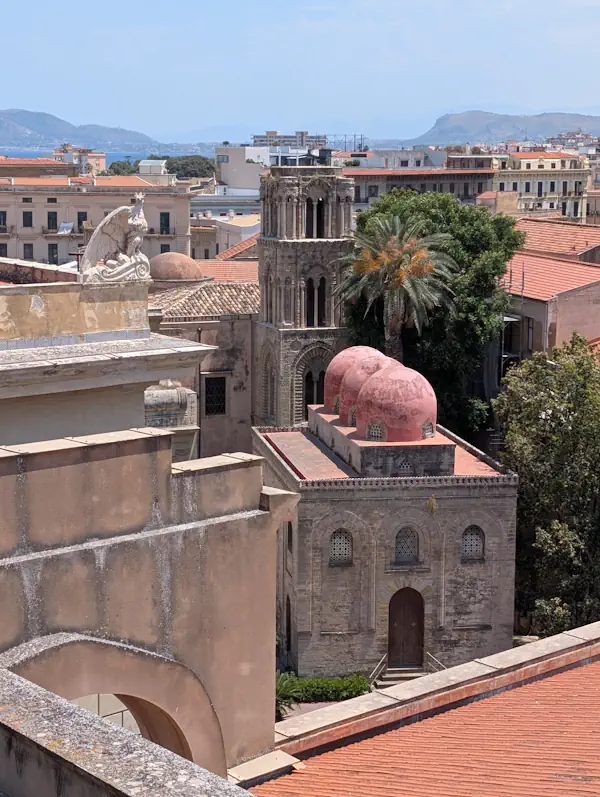
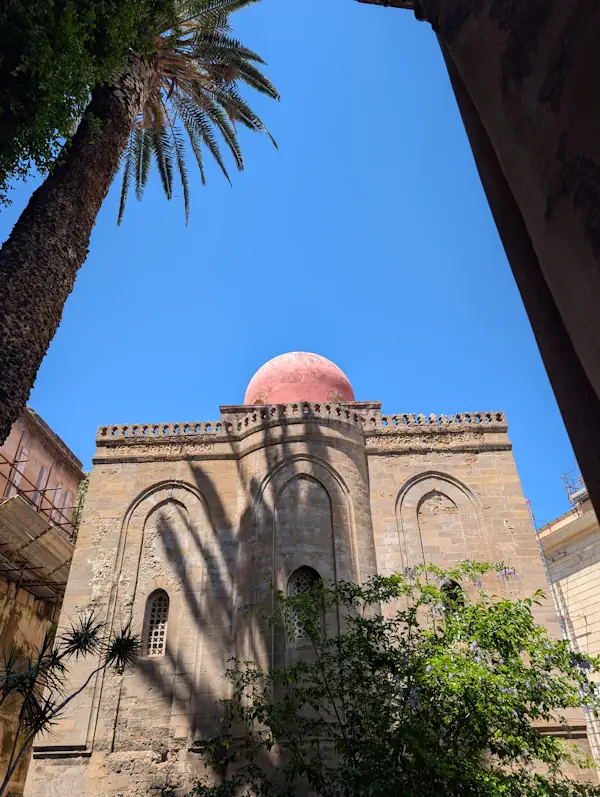
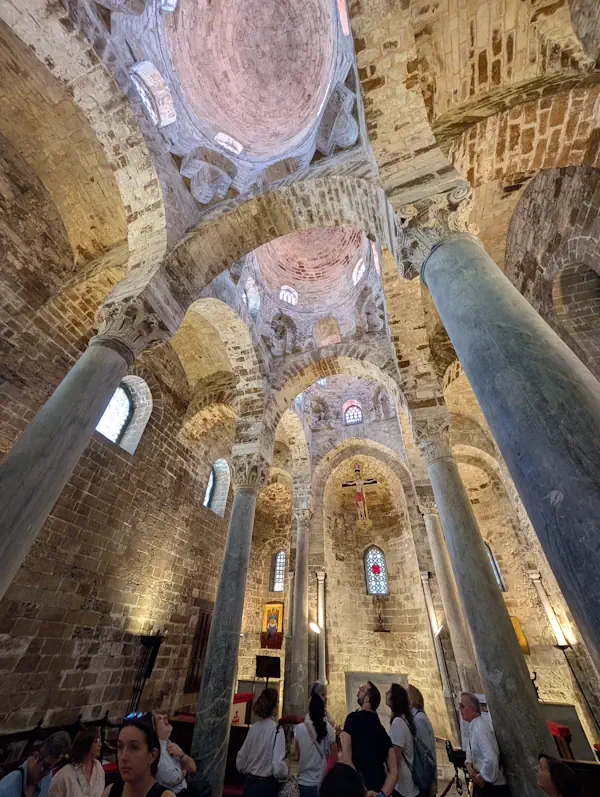
- The San Cataldo church and its three little red Arab-Norman domes, plainer inside but so photogenic outside.
We finished with Santa Caterina d’Alessandria, dizzyingly Baroque, whose cloister and terrace we love (and the convent’s little pastry shop: impossible to resist a cannolo or a “minne di vergine”).
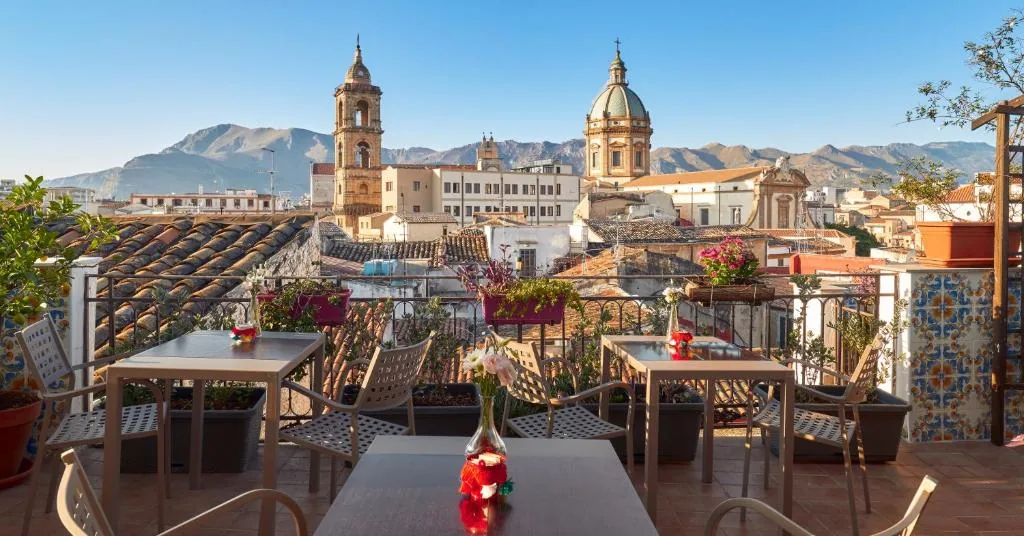
Great tip for the first evening: get lost on the Cassaro at nightfall, when the Palermitans come out and the terraces fill up.

Day 2 — Arab-Norman Palermo (Cathedral & Norman Palace)
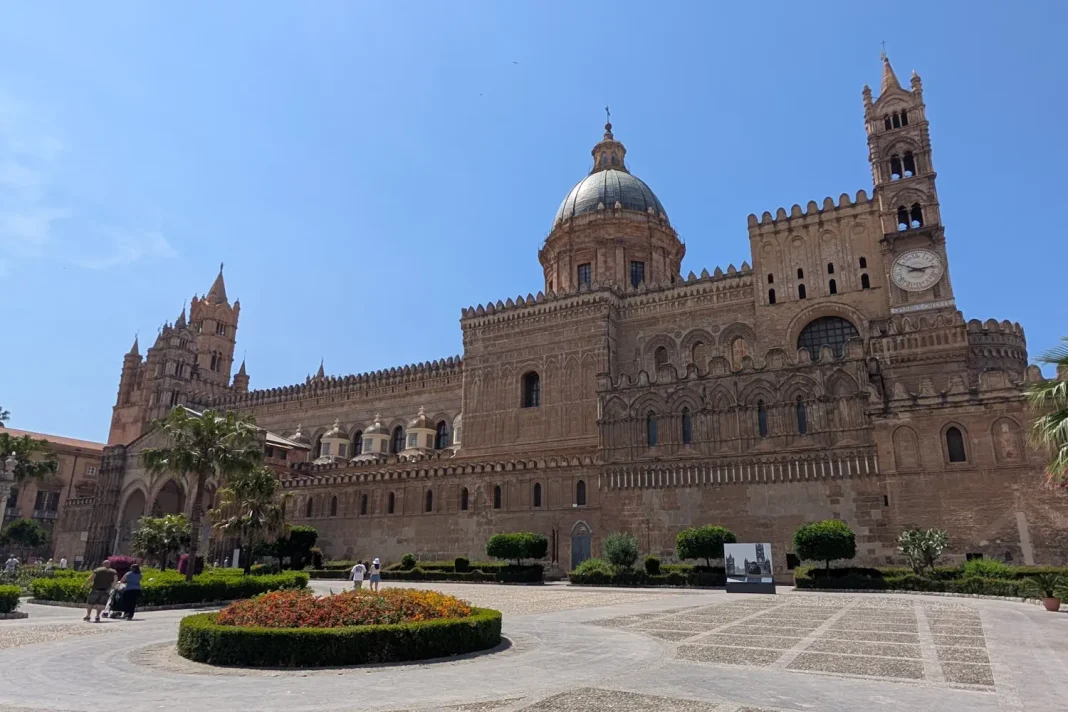
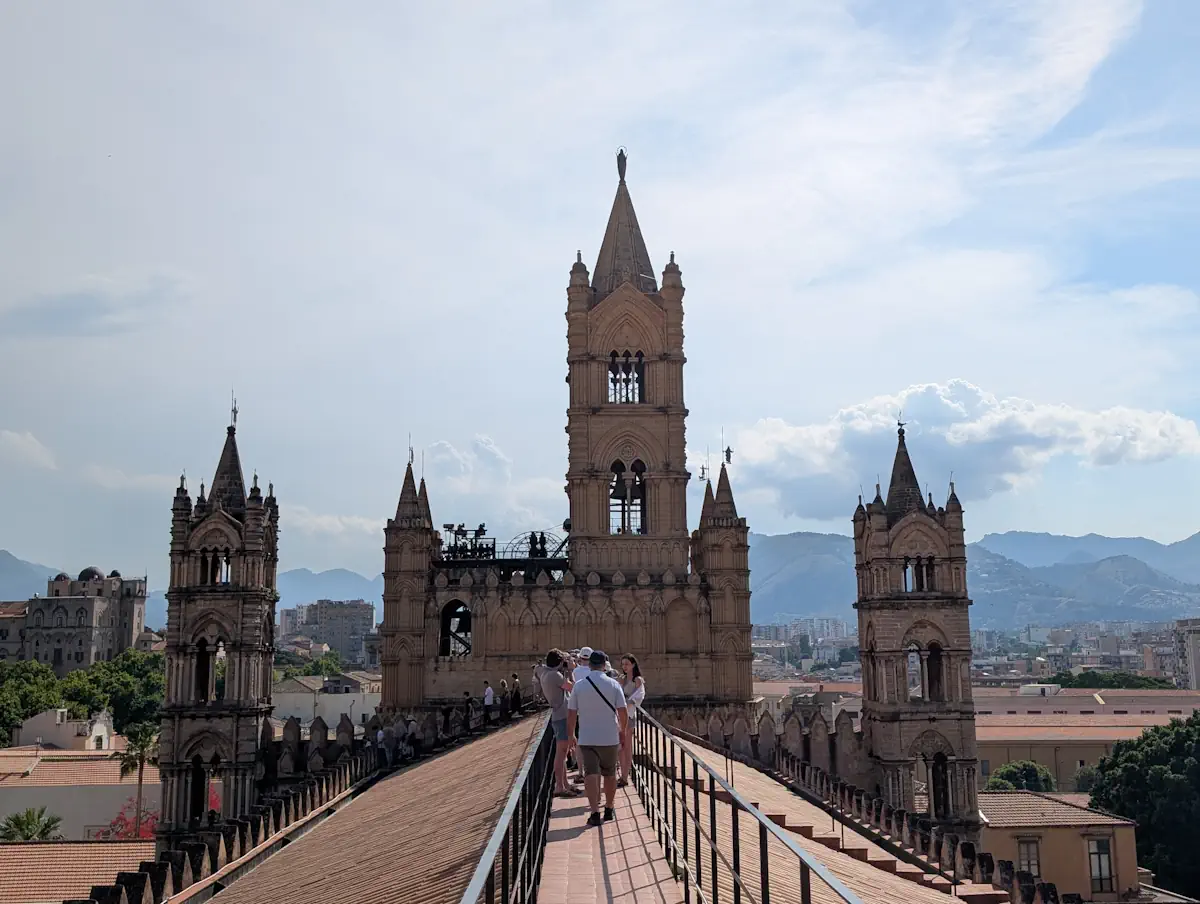
This is THE heritage day, the one that justifies the trip all on its own. In the morning, head for Palermo Cathedral, that wild architectural patchwork where the Norman era overlaps with Gothic and Catalan additions and an 18th-century dome. We paid the extra to climb up to the rooftops: the view over the city and the mountains is well worth the few steps. As for the other extras, we’ll talk about them later, but they may not be essential.
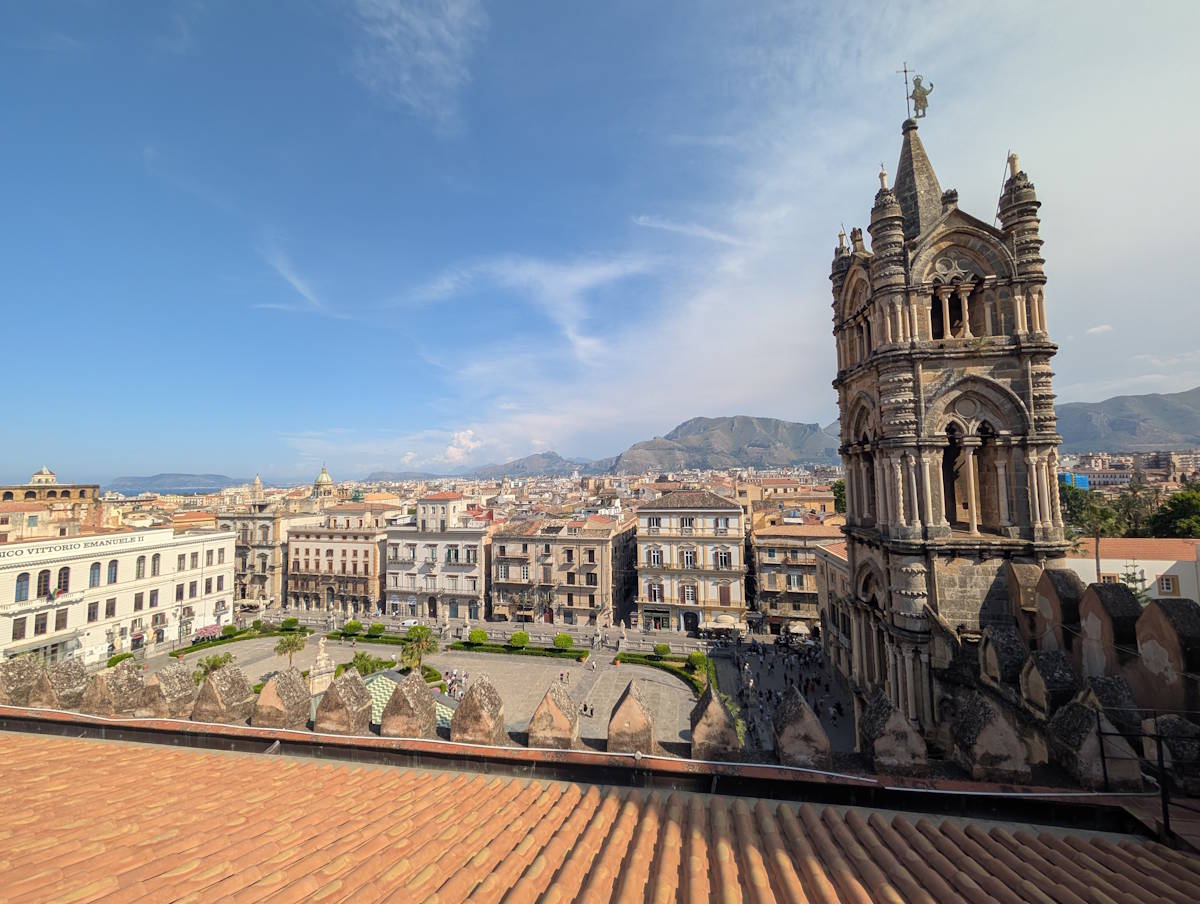
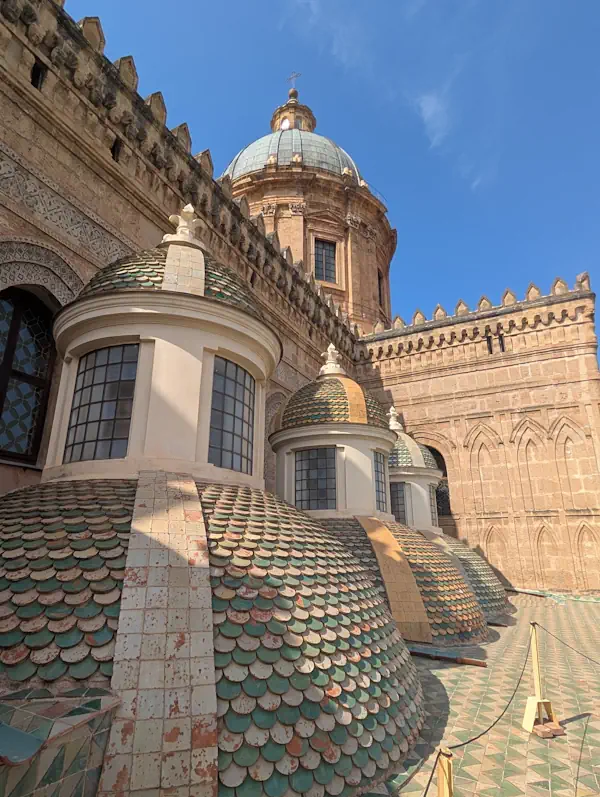
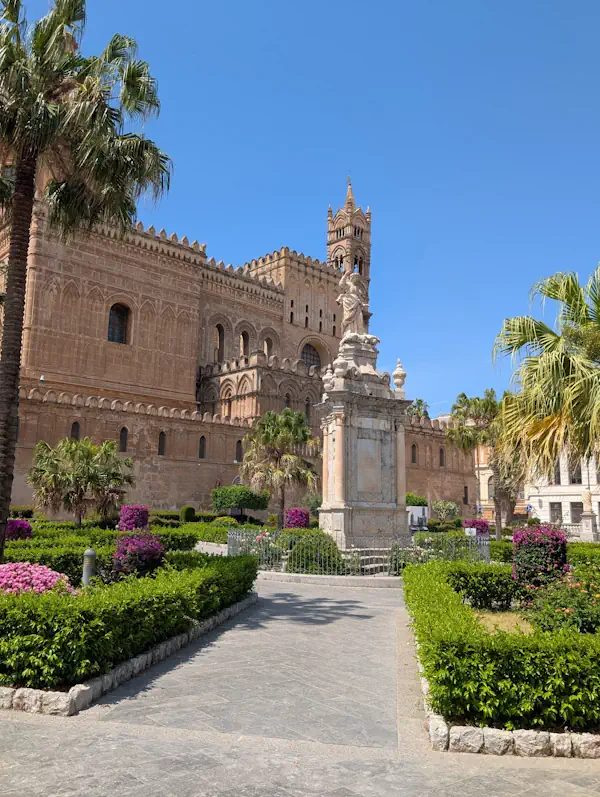
Normally this should be in the afternoon, but the opening hours are so odd that I’d advise you to see the churches between the cathedral and the Norman Palace. So at midday, follow up with this trio of churches near the centre, each in a different style:
- San Giuseppe dei Teatini, exuberant Baroque on the Cassaro.
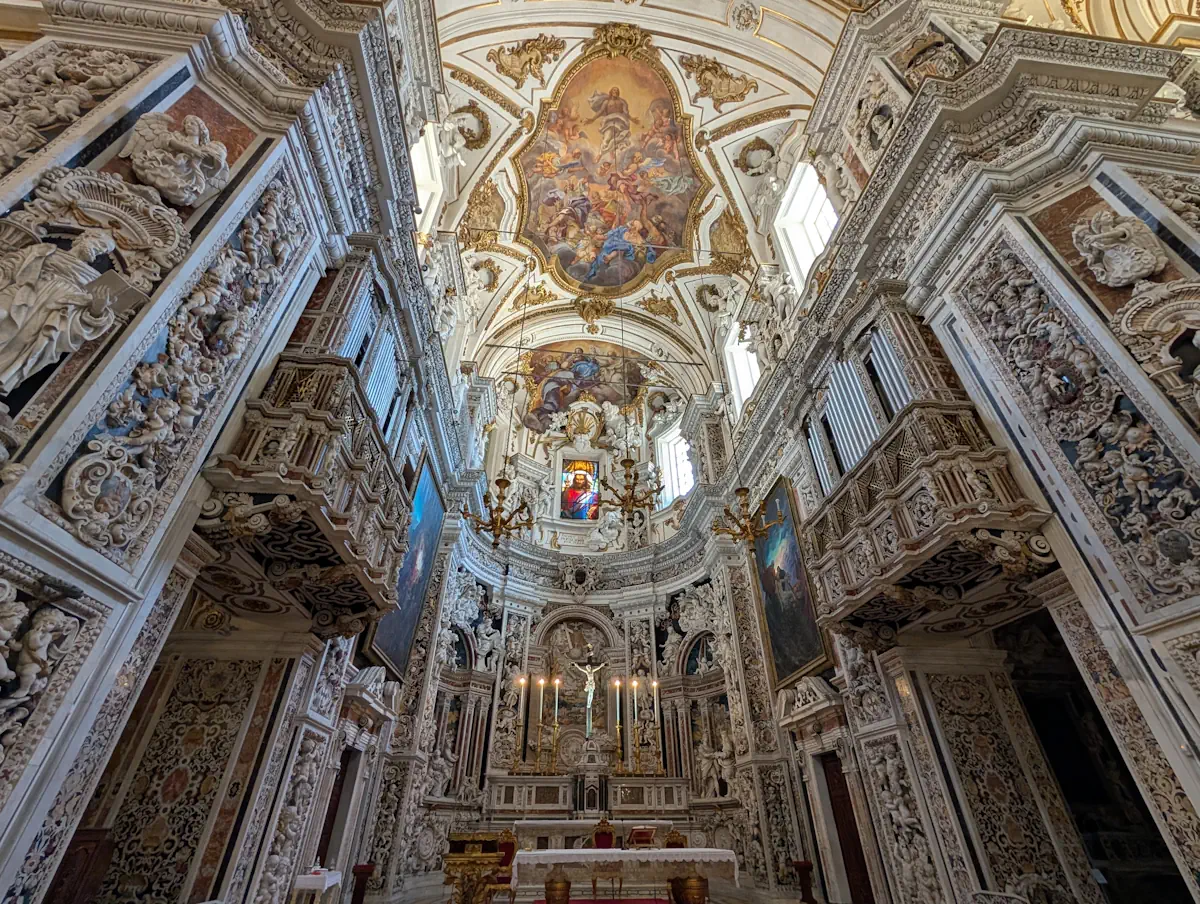
- The Church of the Gesù (Casa Professa), staggering with its polychrome marbles, whose adjoining museum we visited.
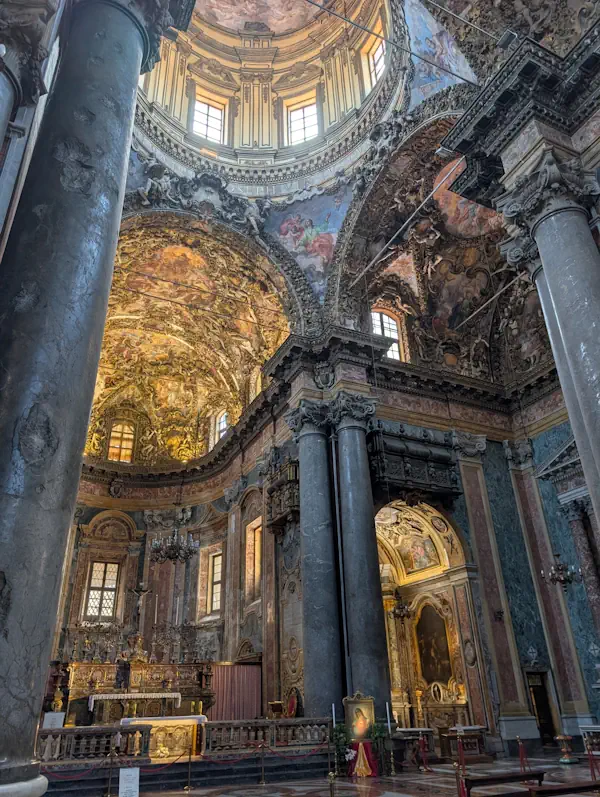
- The Church of the Holy Saviour (Chiesa del Santissimo Salvatore), with its spectacular oval nave, which also sometimes serves as a concert hall.
It’s very Baroque, but a completely local and unique Baroque. It’s not just paintings and frescoes, it’s above all reliefs and sculptures mixed in. The idea is to bring the walls and ceilings to life. And it works!
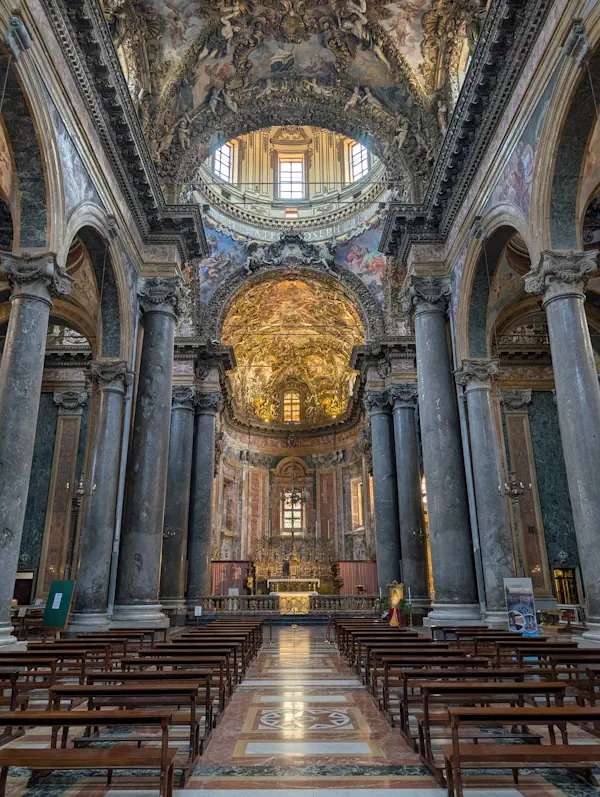
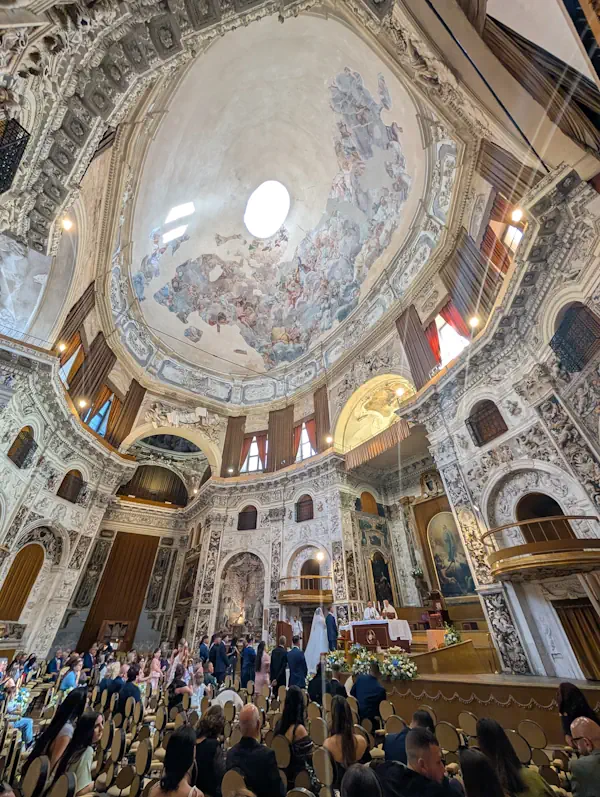
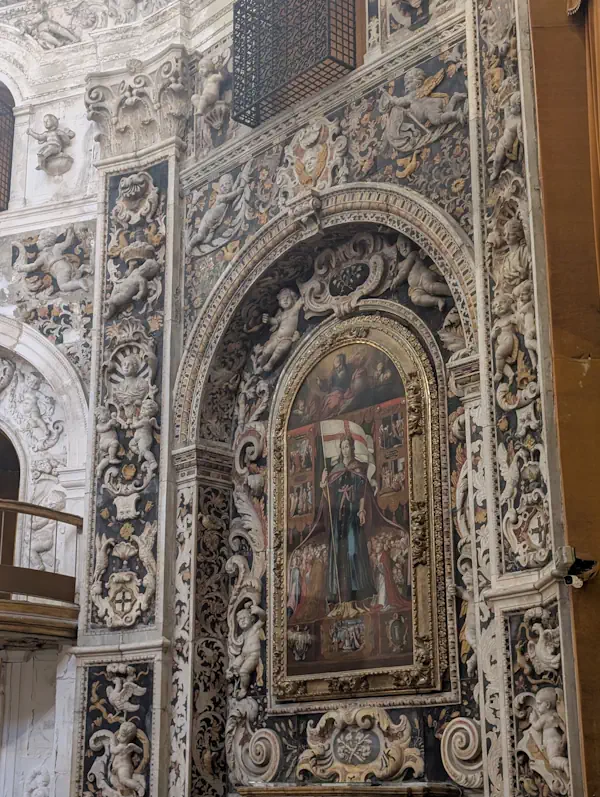
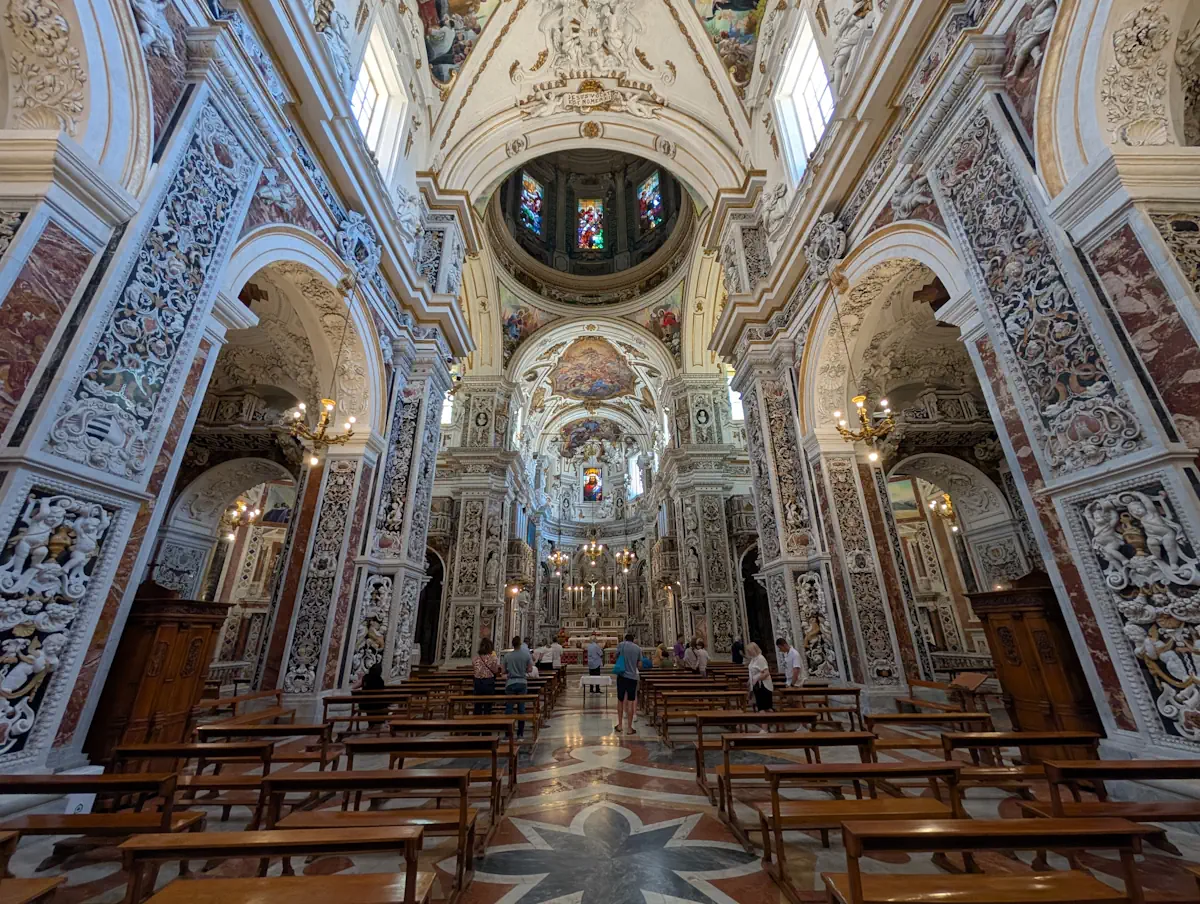
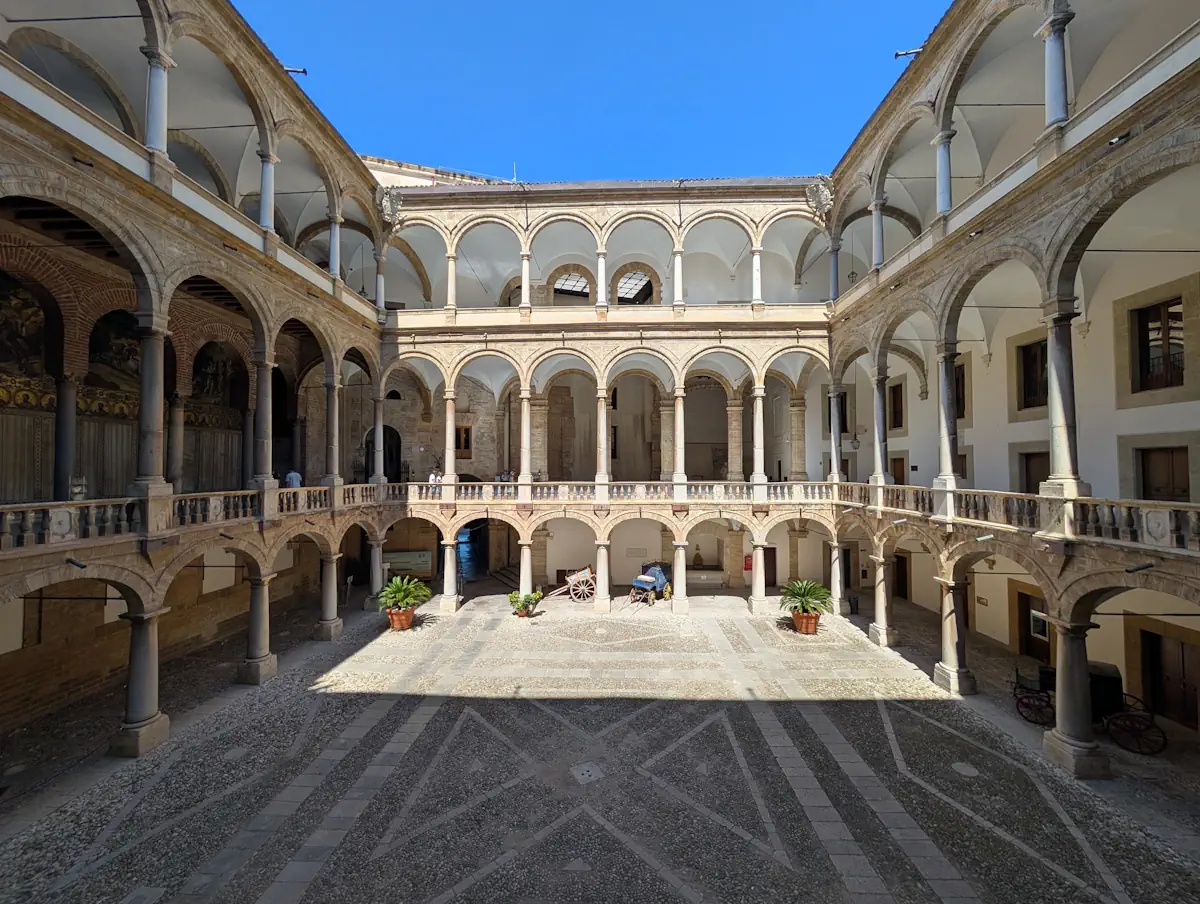
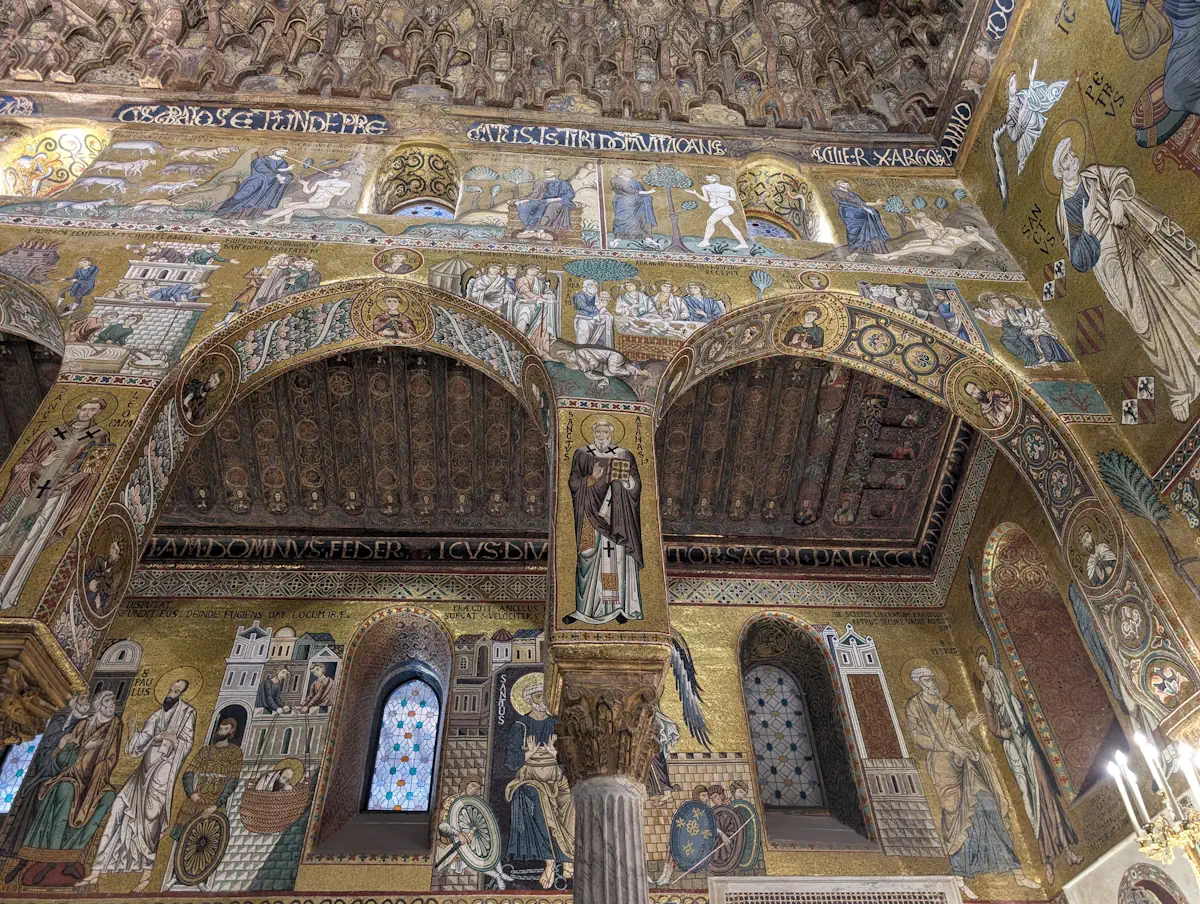
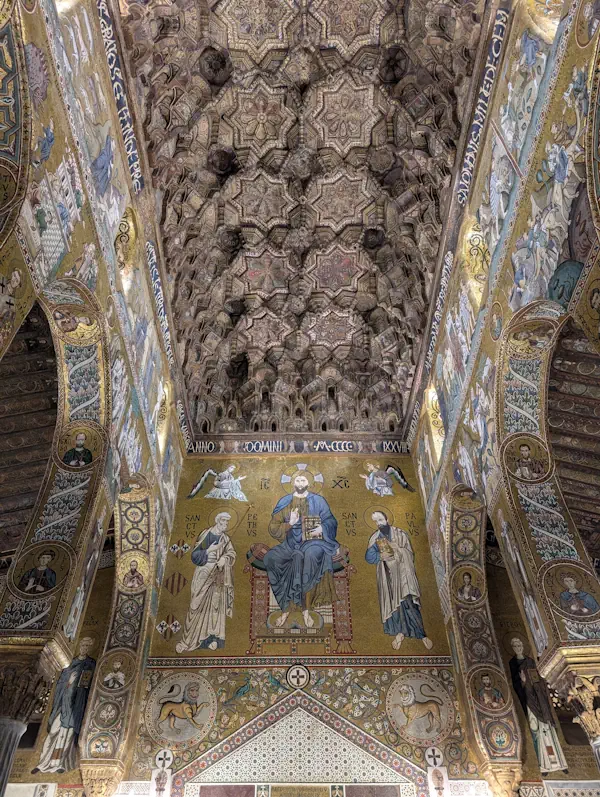
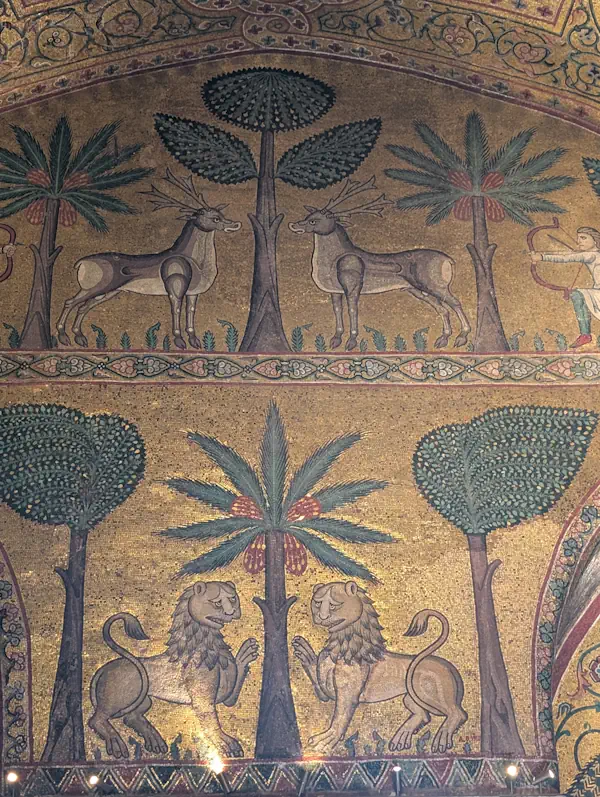
Then head for the Norman Palace (Palazzo dei Normanni) and its jewel, the Palatine Chapel. There, we were left speechless: a carved wooden ceiling of Fatimid inspiration, walls entirely covered in gold mosaics, a perfect synthesis of Norman, Byzantine and Arab cultures. For us, it’s the most beautiful place in all of Sicily. But it’s currently undergoing emergency restoration, so you can only see half of it. Even so, it’s already seriously beautiful! Can’t wait for it to be all restored and fully open again!
There’s usually an exhibition too. We got the Impressionists in Normandy, interesting! And not just Monet, so it lets you see something different.
We didn’t do it, but it fits perfectly here: right next to the Norman Palace is San Giovanni degli Eremiti and its famous red domes, UNESCO-listed along with the rest of the Arab-Norman circuit. We gave it a miss because we’d heard the interior was less spectacular than the façade and cloister — but for a few euros and if you have the time, the garden is worth the detour and it’s 200 metres away.
Day 3 — Day trip to Agrigento and the Valley of the Temples
Because we didn’t want to just do Palermo when there are super important remains not far away, we did several organised excursions.
We set the alarm early: off to Agrigento and its Valley of the Temples, about a 2-hour drive south. It’s farther than the other excursions, but it’s very doable as a day trip and it is, in our eyes, unmissable.
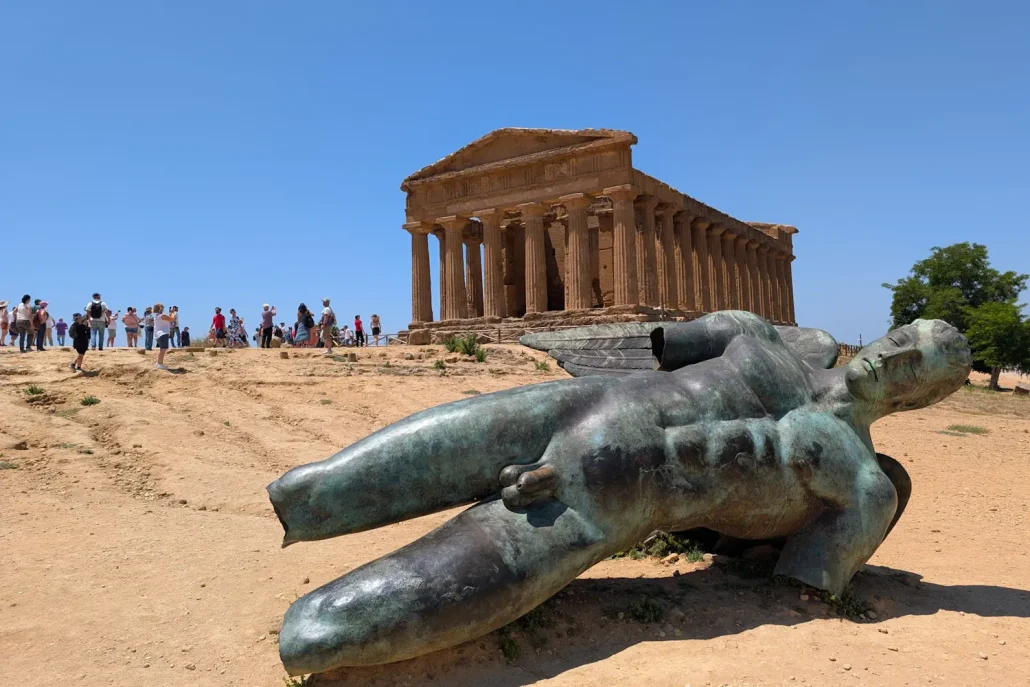
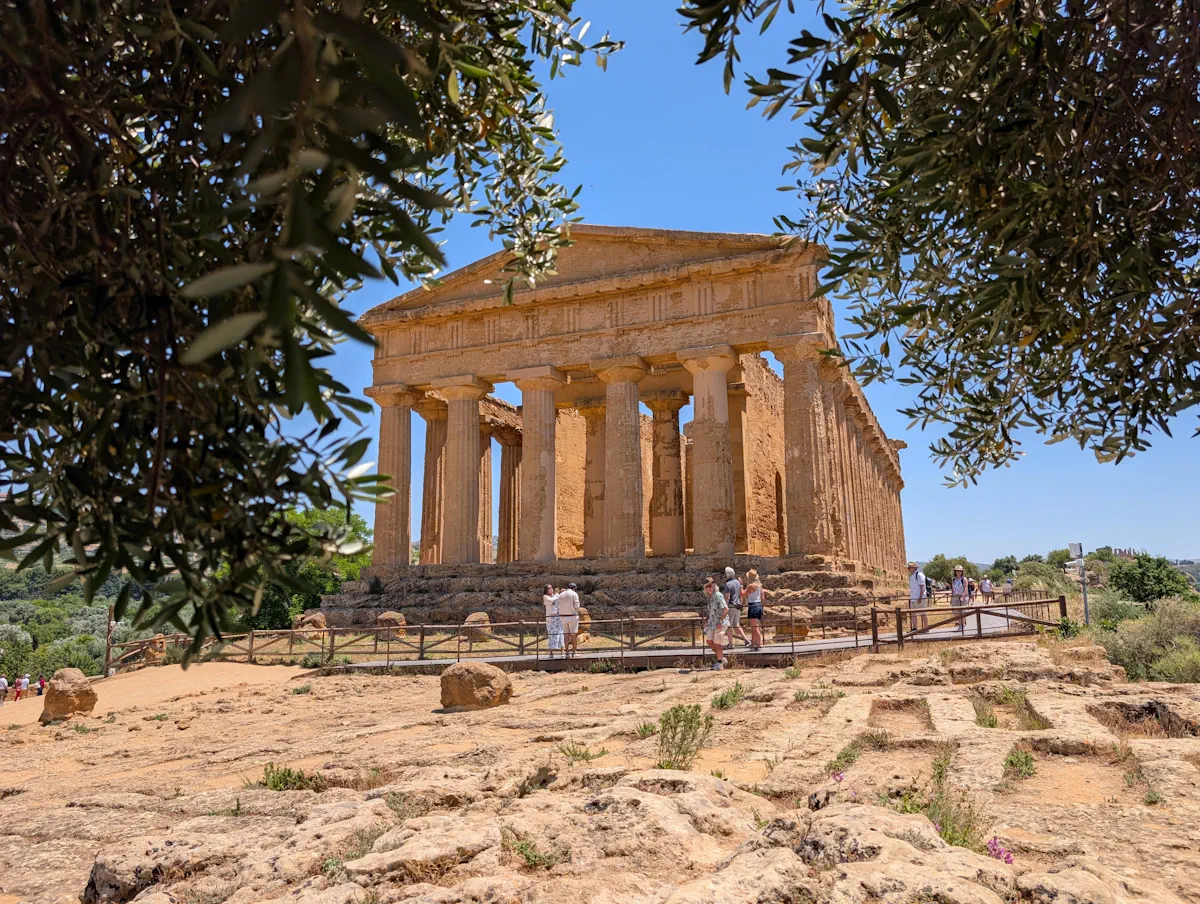
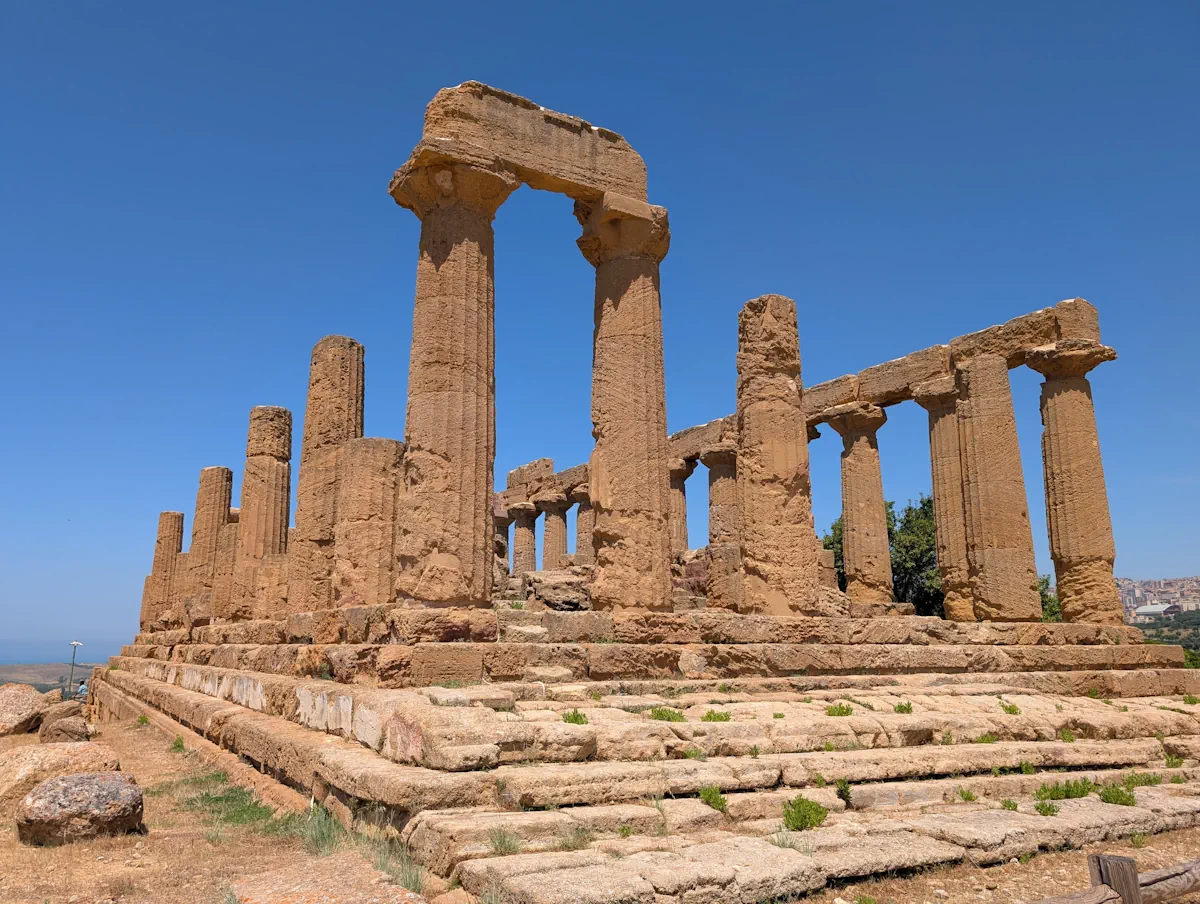
The site is huge and lines up some of the best-preserved Doric temples in the Greek world, starting with the sublime Temple of Concordia. And the famous statue of Icarus, far more recent, who burned his wings and now ends up here, it looks pretty good! We walked along the ancient “via Sacra”, between olive and almond trees, with the sea as a backdrop.
The tip: watch out for the heat (no shade on the site), bring a hat and water. If you come independently, you can shift your timing a bit to arrive when it’s less scorching.
️ Alternative: if Agrigento seems too far, know that Palermo offers other lovely day trips — Segesta and its solitary temple, Erice the perched medieval village and Trapani, or the Baroque villas of Bagheria. We chose Agrigento and Monreale for their symbolic power, but there’s plenty to fill a second week.
We went through this agency which mainly handles the transport. Given that I understand nothing about Sicilian transport and its prices (feeling like I had “sucker” written on my forehead), I preferred to take something I was sure of, even if generally I’d rather organise things myself.
Honestly it was well organised. A guide was waiting for us on site (for an extra fee of course), but it was fine, it was interesting, well done. So I recommend it.
But if you ever go on your own, then I urge you to book your tickets in advance, especially in high season because the queue can be reeeeally long!
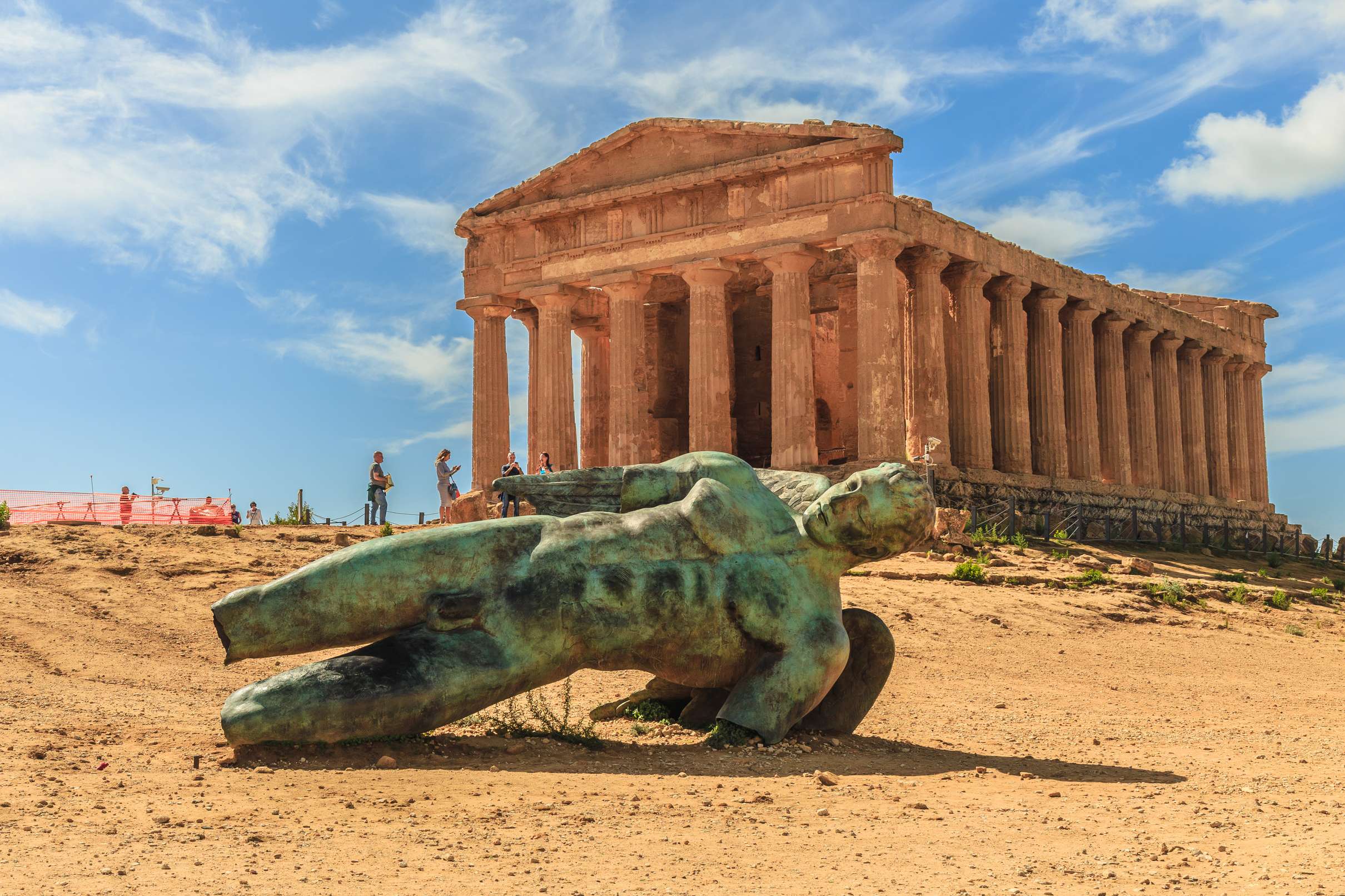
📍 Agrigento · GYG Tours & Tickets (1 day)
Official skip-the-line ticket with an audio guide app to visit the Valley of the Temples at your own pace.
- Skip-the-line at the entrance of the Temple of Juno
- Digital audio guide app included
- Valid 1 day, free visit at your own pace
Free cancellation
From €22 / person
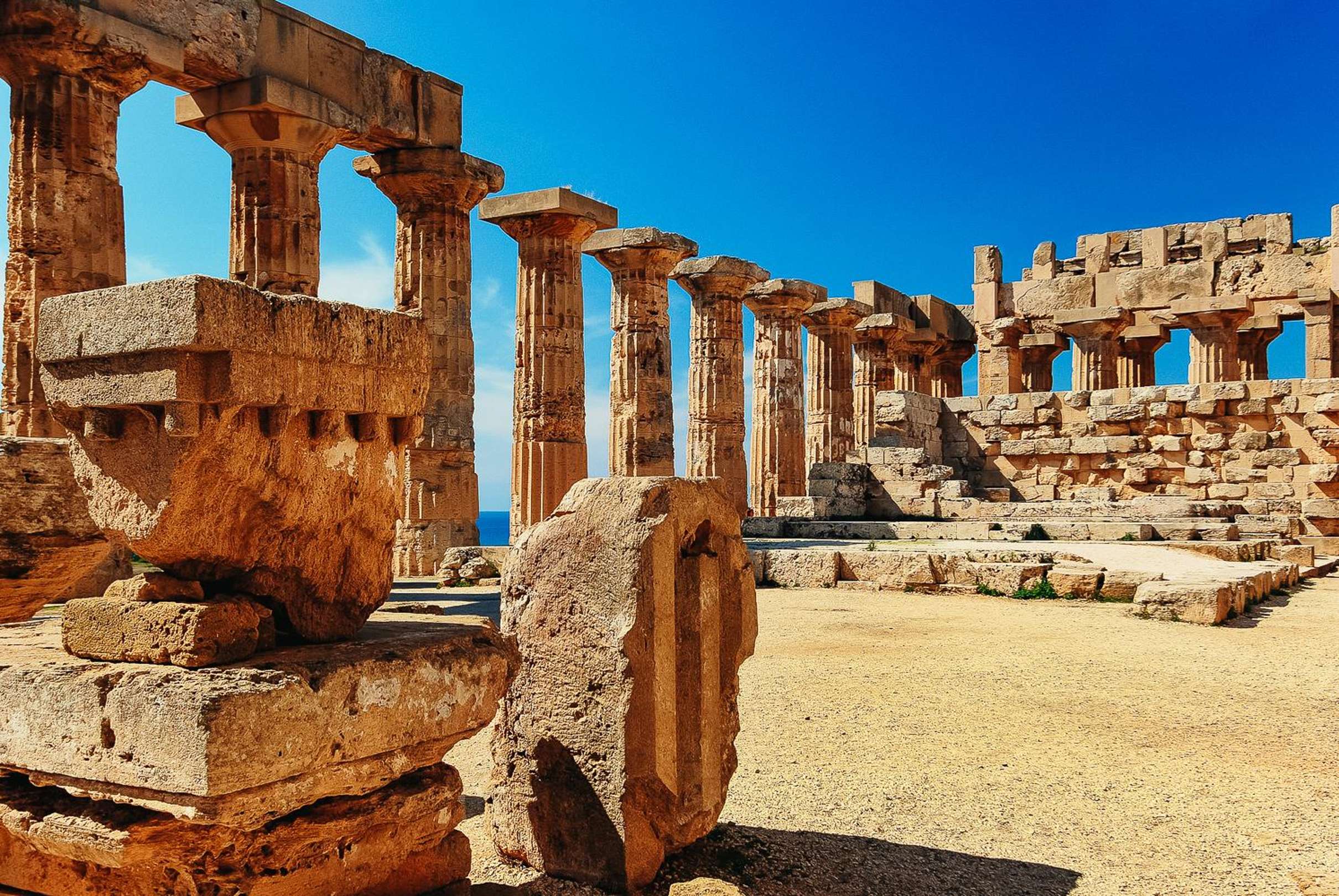
📍 Palermo · Tour Transfer Sicily (8 h)
Full day from Palermo with transport, the Valley of the Temples and a stop at the Scala dei Turchi.
- Return transport in an air-conditioned minivan
- 2 h in the Valley of the Temples
- Stop at the Scala dei Turchi (white beach)
Free cancellation
From €63 / person

📍 Agrigento · Empeeria (2 h)
2-hour guided tour at sunset with a passionate local guide, skip-the-line included.
- Skip-the-line included at the Temple of Juno
- 2 h at golden hour + illuminated temples
- Temples of Concordia, Heracles and Zeus
Free cancellation
From €30 / person
Day 4 — Markets, street food and the Teatro Massimo
Time for Palermo’s working-class soul: its markets, direct heirs of the Arab souks. We did the two big ones:
- Il Capo: our favourite, more authentic, less touristy, where you weave between fish stalls, cheeses and fruit under the colourful tarpaulins.
- Ballarò: the biggest and liveliest, ideal for street food. I liked the fact that when I order octopus, they bring me “the” whole octopus, for really not much (like 8-10 euros). But there’s absolutely everything, including, for the braver among you, the pani ca’ meusa (spleen sandwich).
We also took a look at the Vucciria, the third market. Honestly, by day it has lost its lustre and doesn’t have much left to offer: it’s mainly in the evening that it comes back to life, transformed into an open-air bar where Palermo’s youth have a drink in the street. Once again, the fruit-juice sellers turn into barmen and bring out the sound systems until the end of the night. It’s a funny atmosphere!
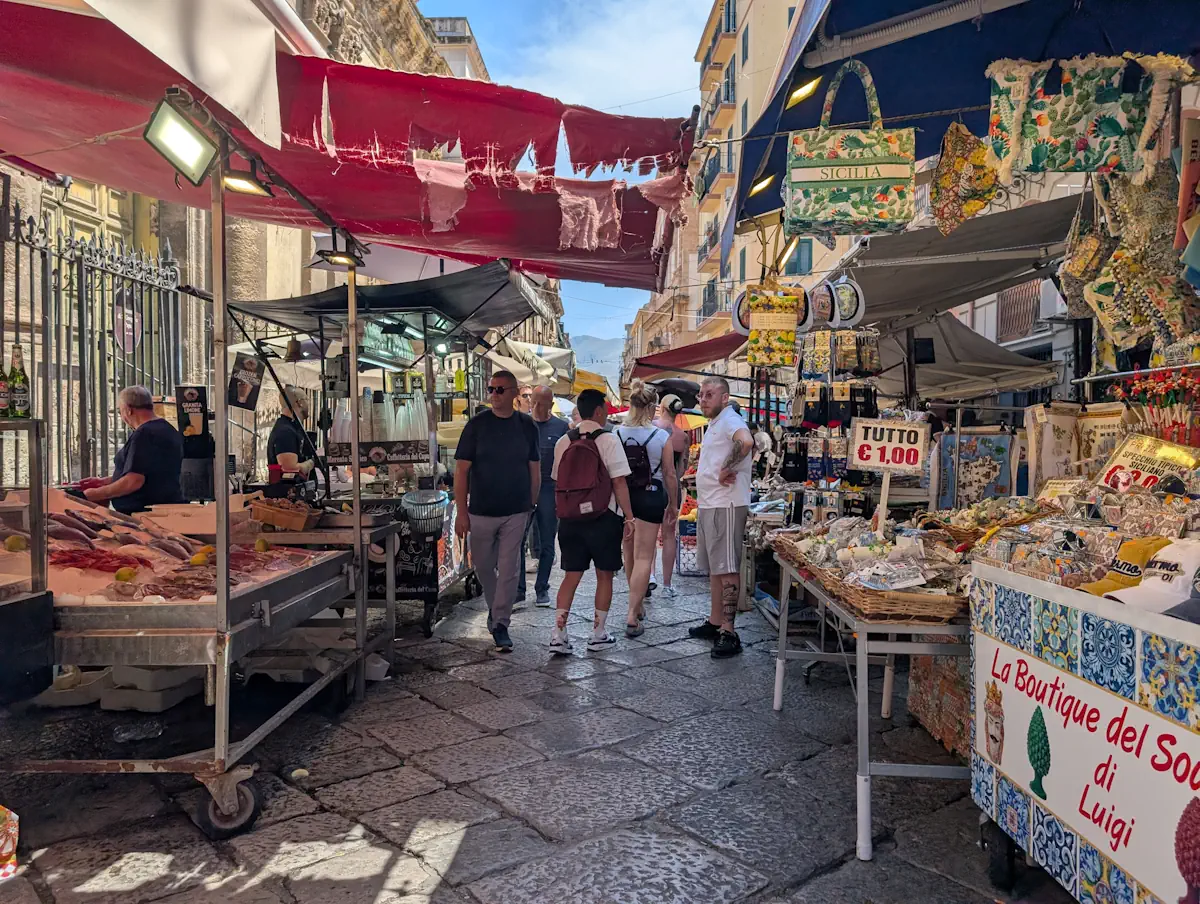
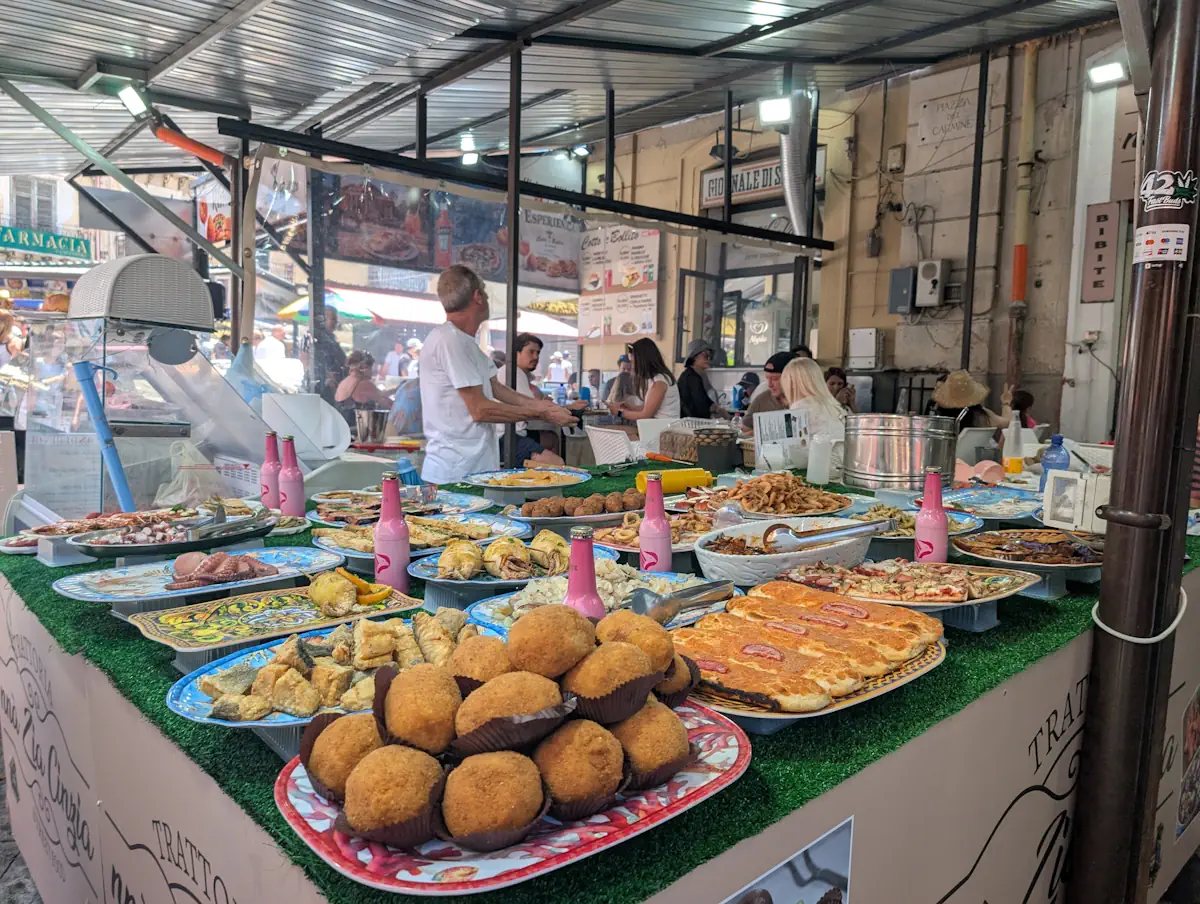
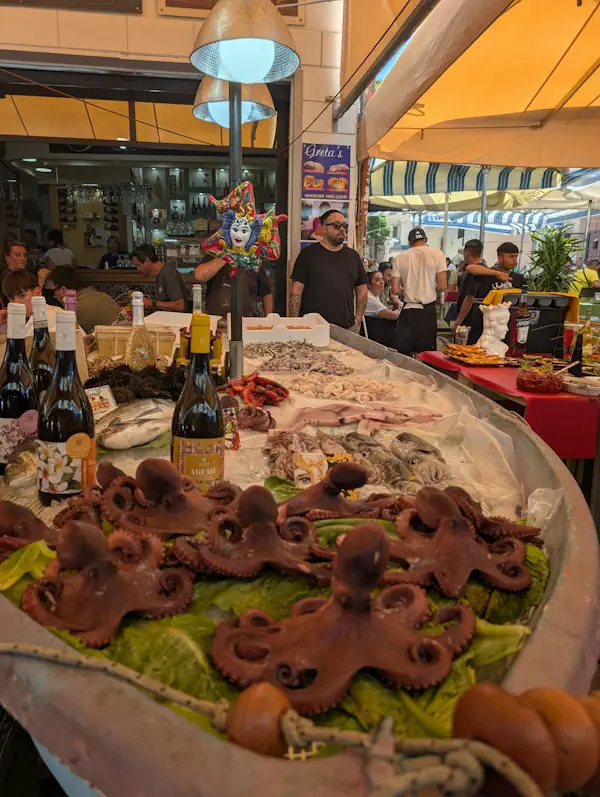
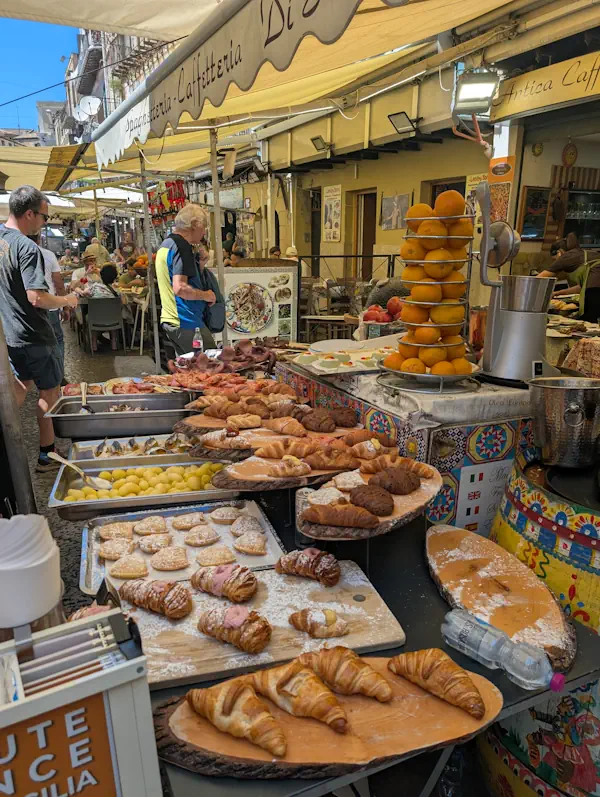
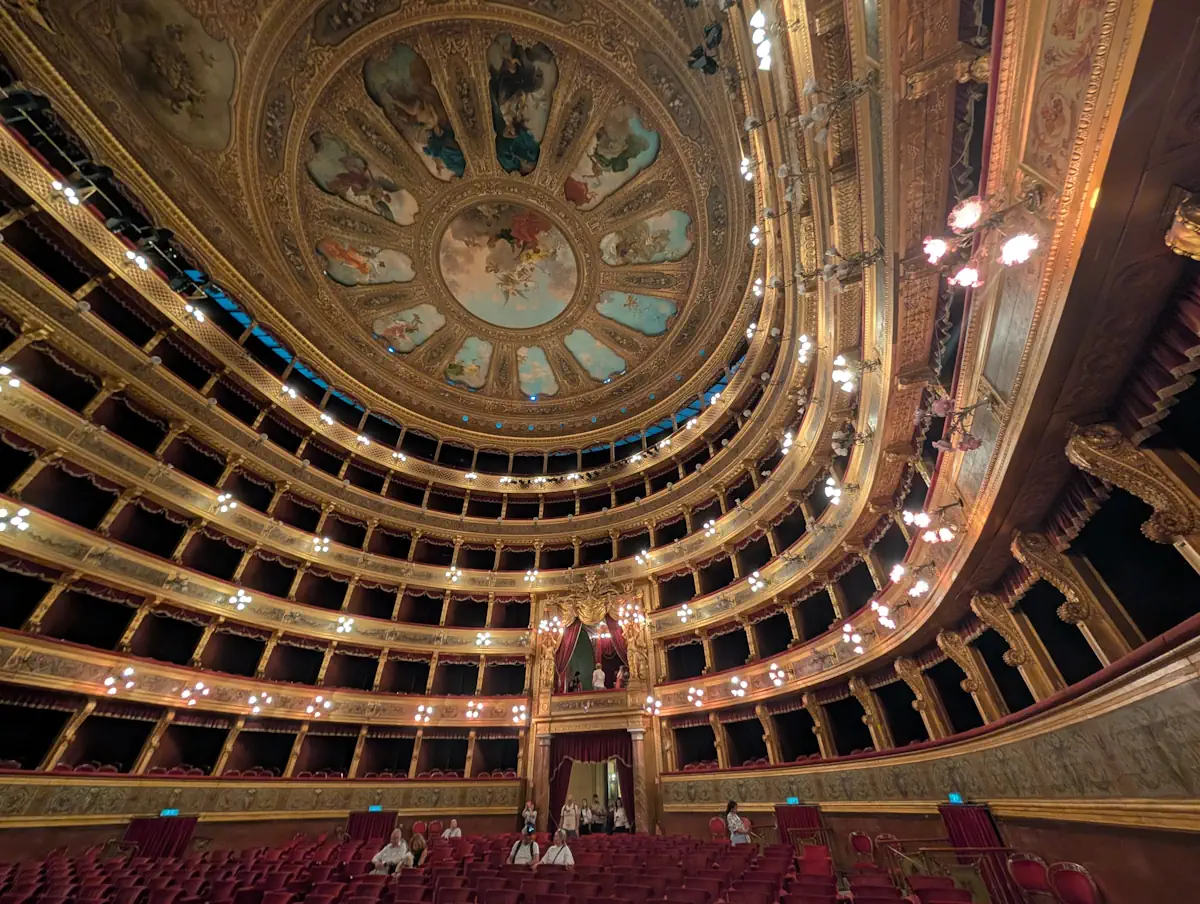
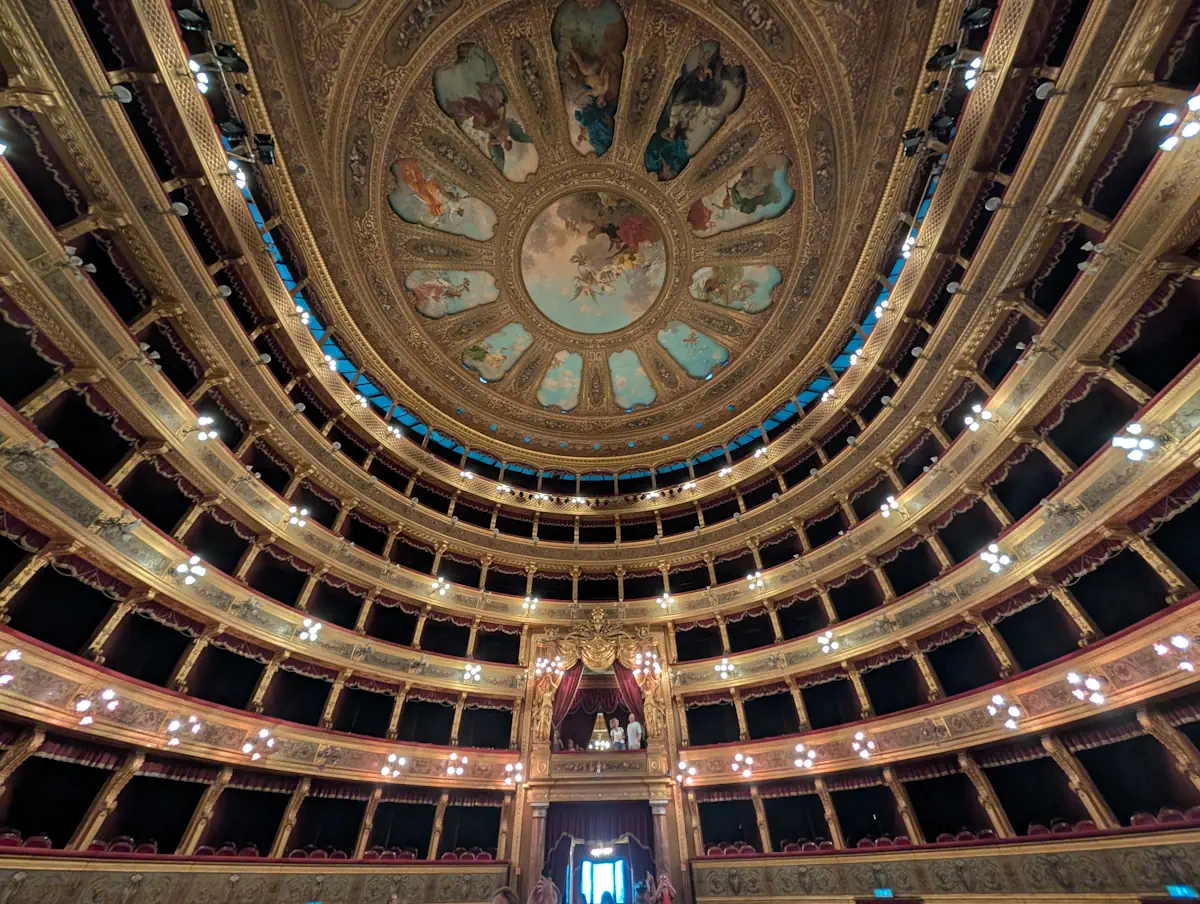
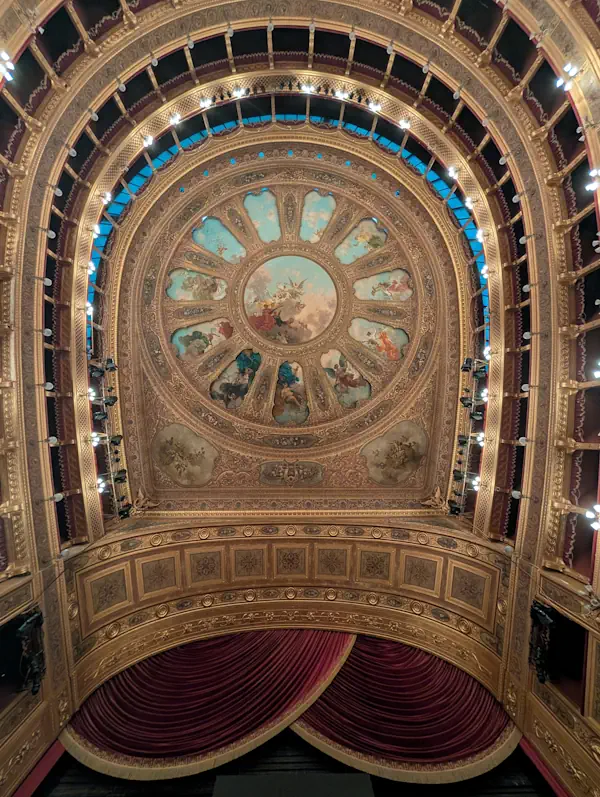
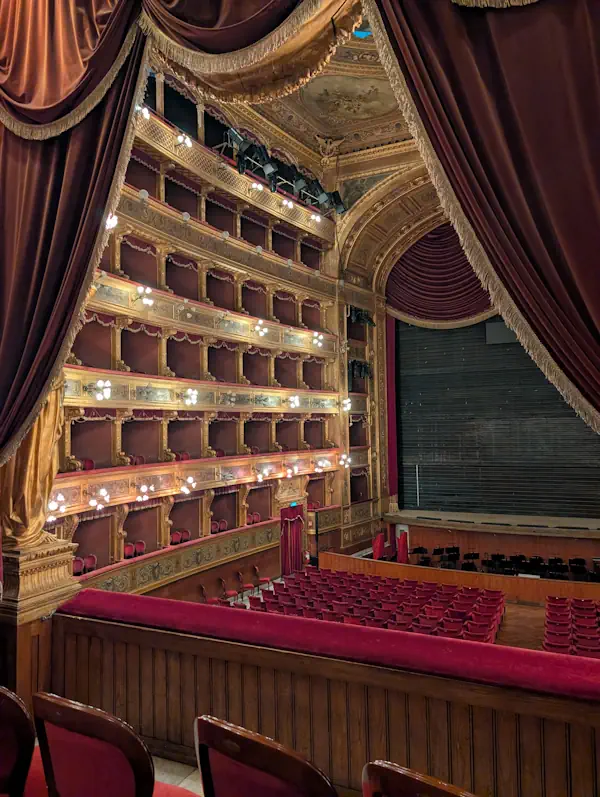
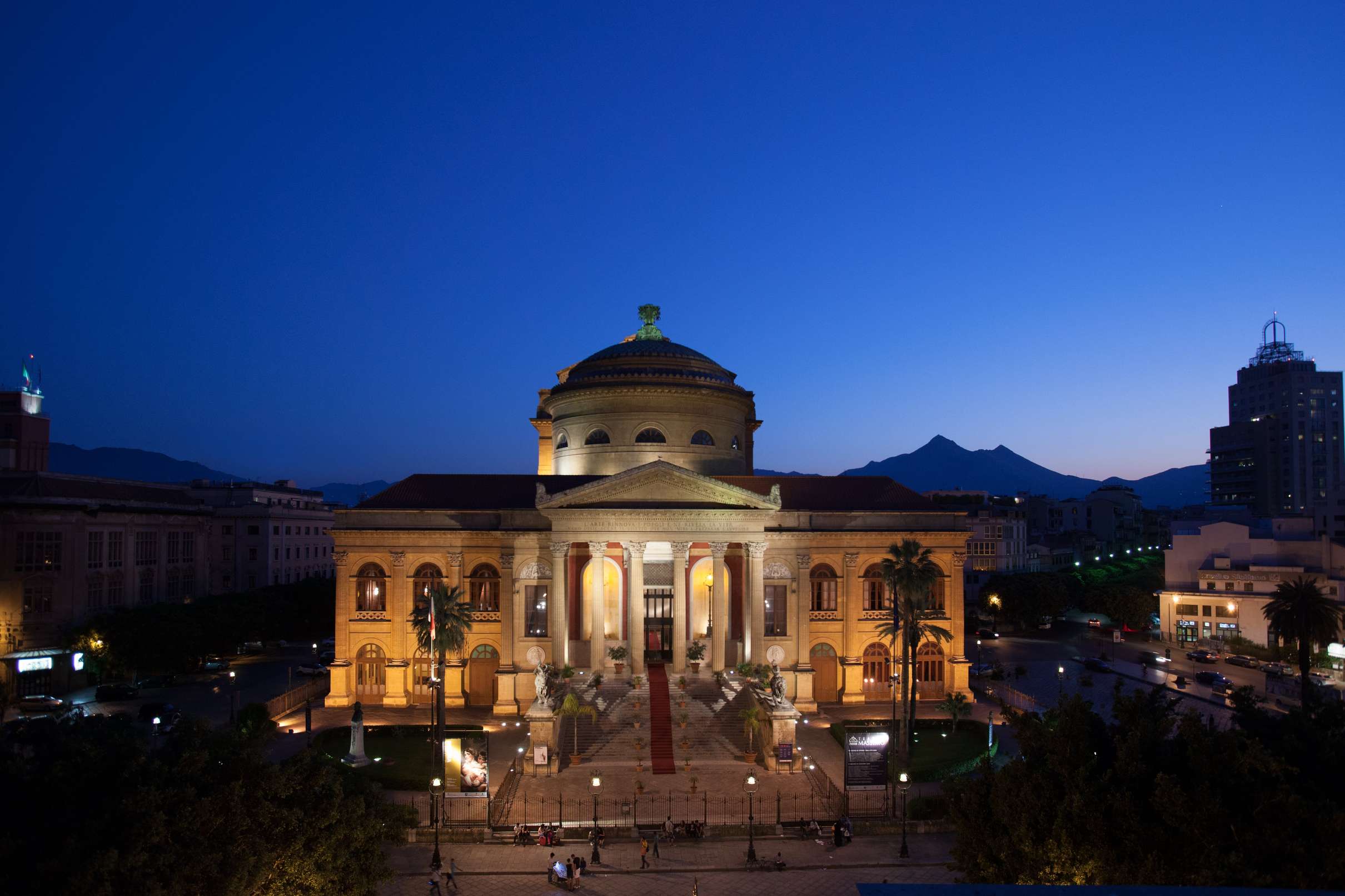
In the afternoon, we visited the Teatro Massimo, the largest opera house in Italy (yes, ahead of La Scala in Milan). The guided tour of about forty minutes is worth it — the acoustics of the hall and the hall of mirrors are superb, and this is where the final scene of The Godfather III was filmed. It’s not essential, but it’s lovely!
Especially as it’s not particularly expensive, and there are guided tours in English. In fact, I warmly recommend booking your ticket in advance.
We tried, but without success — the Serpotta oratories: a stone’s throw from the Vucciria hide the oratories adorned with stuccoes by Giacomo Serpotta (Santa Cita, Rosary of San Domenico, San Lorenzo), considered absolute masterpieces of Sicilian Baroque. We ran into their truly capricious opening hours and couldn’t fit them in. If you want to see them, plan your day around them first thing in the morning — it’s exactly the kind of site worth sorting out in advance.
In the same area, the San Domenico church (the “Pantheon of illustrious Sicilians”) had its façade under renovation when we passed by, and the interior struck us as less dazzling than the others — we preferred to save our energy for the Martorana and the Palatine Chapel.
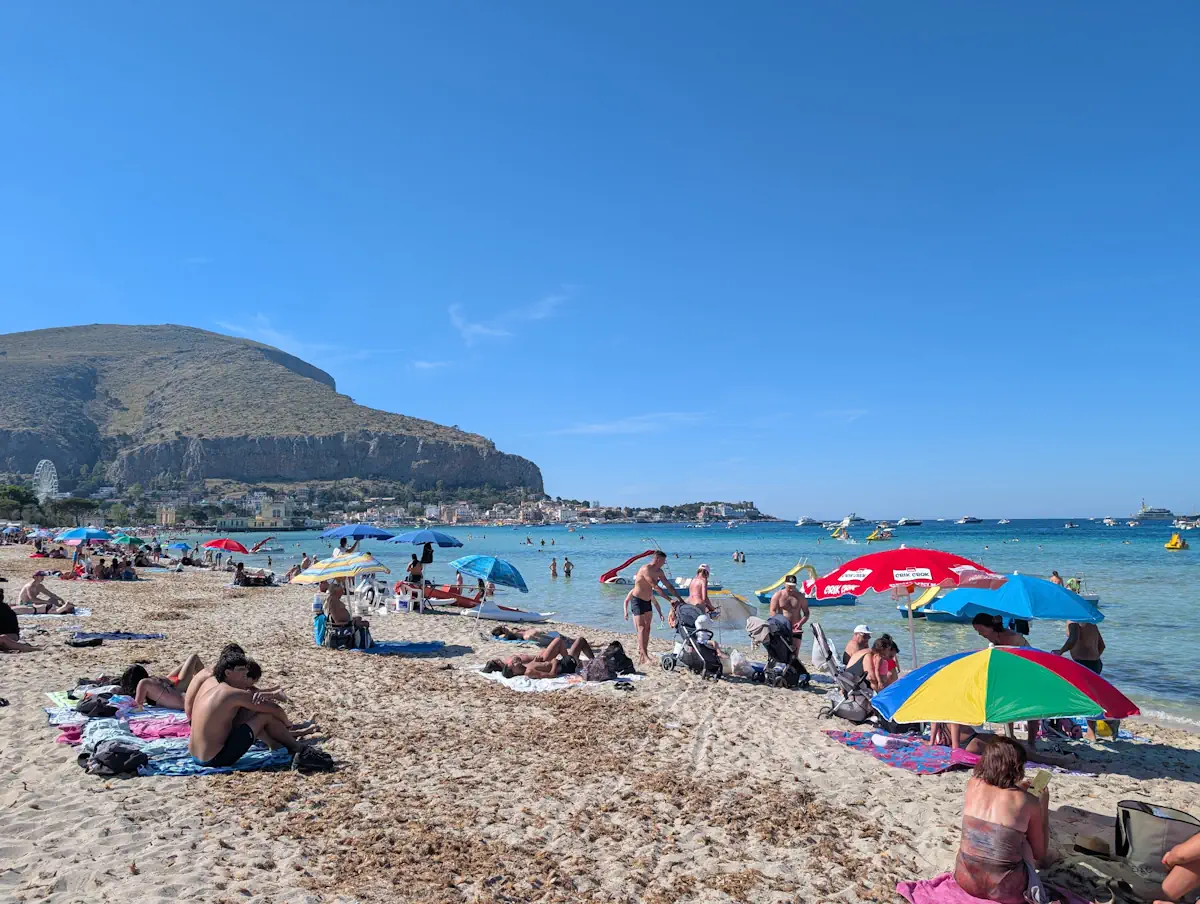
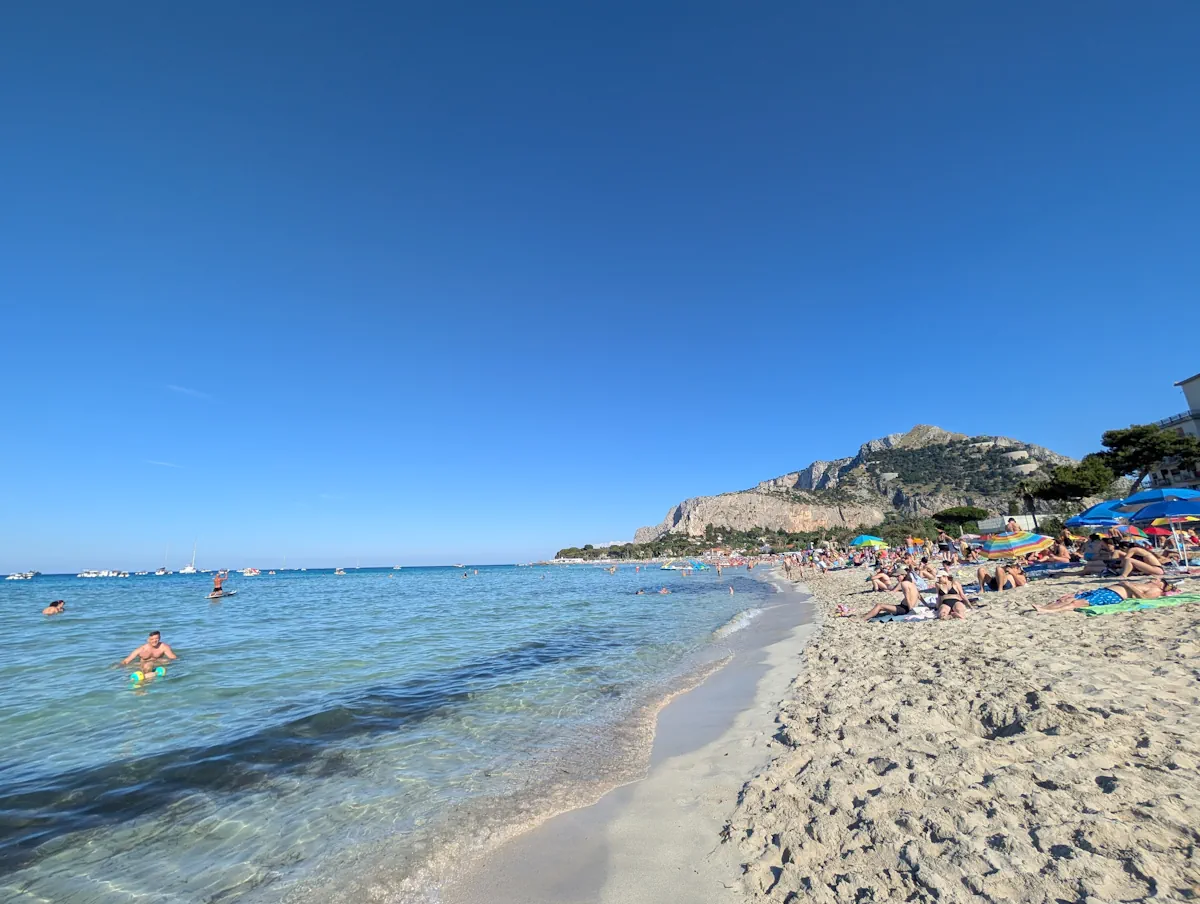
Then, in the afternoon, a complete change of atmosphere since we couldn’t manage to see the Oratories: we headed off to Mondello, the Palermitans’ beach, about twenty minutes from the centre. White sand, turquoise water, Liberty villas and its emblematic bathing establishment on stilts. We laid down the towel, took a dip and finished with a granita facing the sea — the perfect salty-air interlude after the buzz of the markets.
You can get there and back by bus. We chose the “easy” way. Getting there by taxi, for 20 euros (ok fair enough, that’s acceptable), but on the way back, impossible to find anyone on site, not a taxi, not an Uber (except the outrageously priced black ones), barely any bus since it was Sunday. Our only solution, a taxi at 40 euros. Yes yes. And that’s after negotiating. Which tells you just how bad we are at haggling.

Day 5 — Monreale, then off to Cefalù
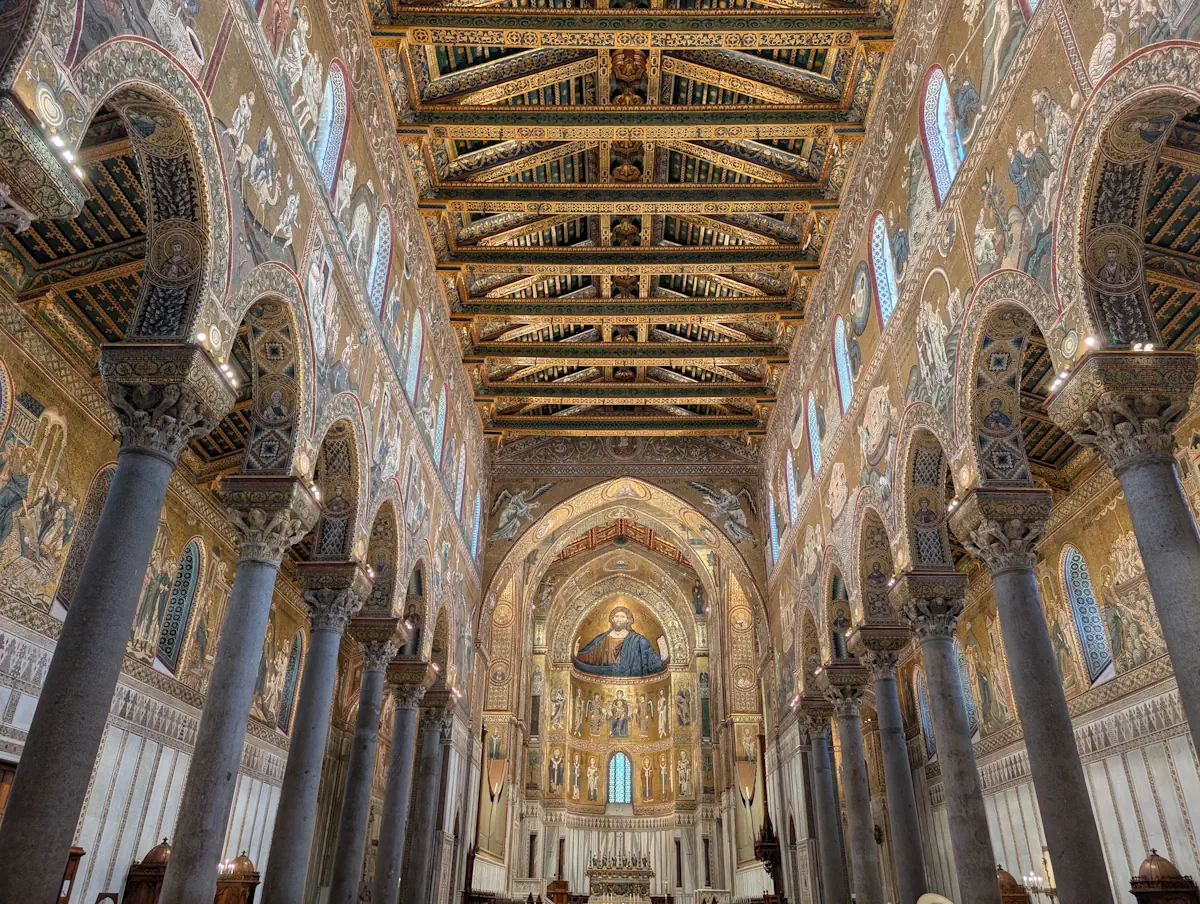
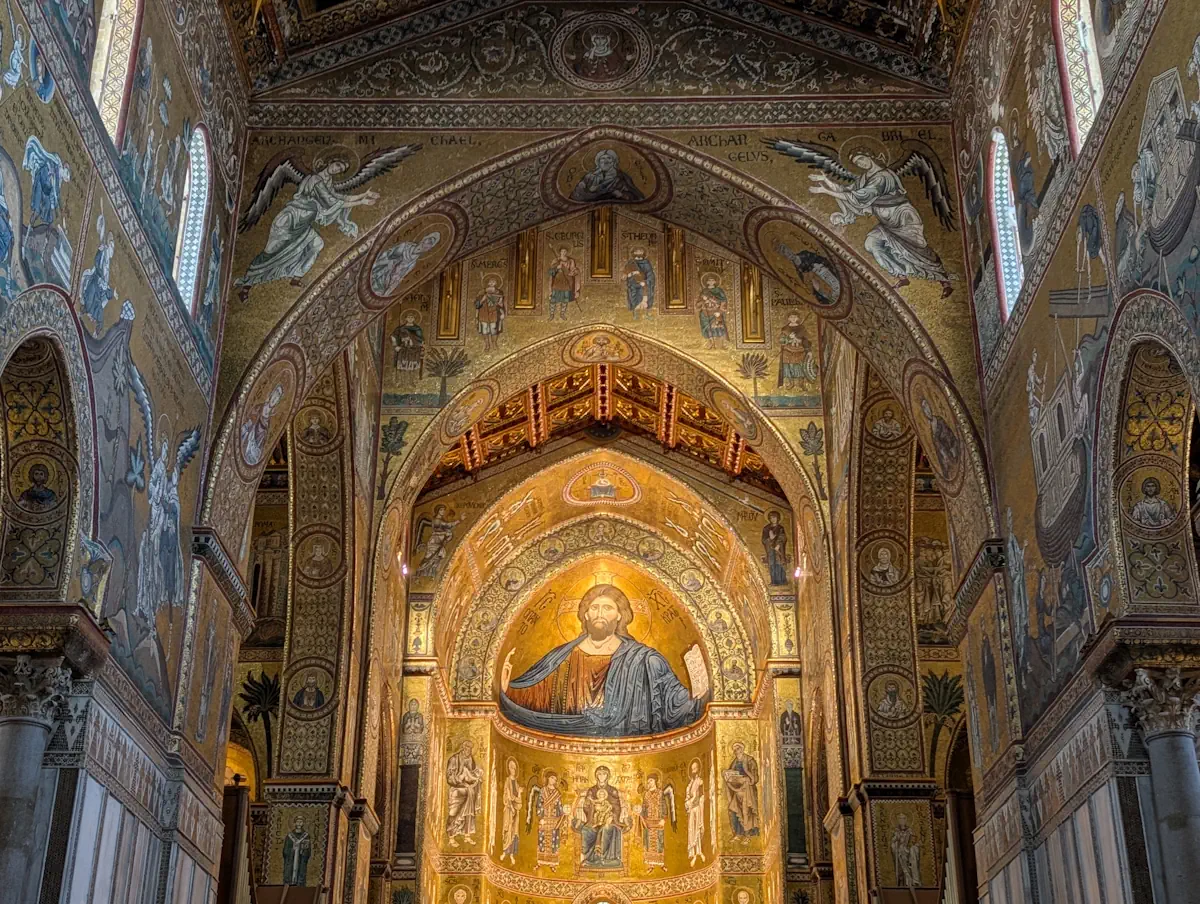
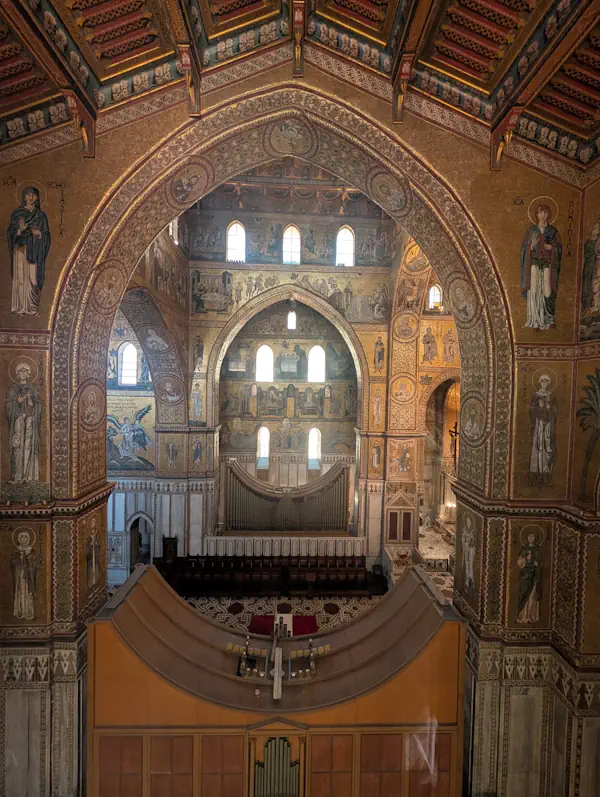
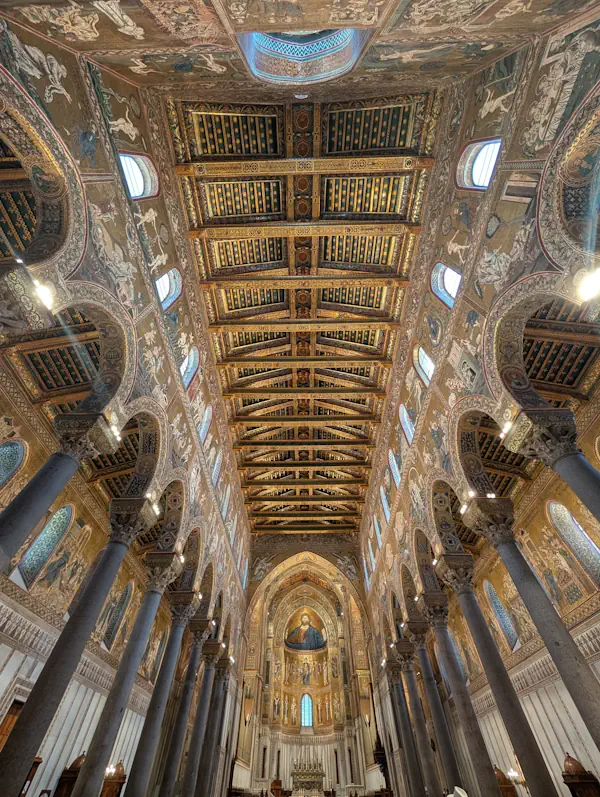
For our last Palermitan morning, a little excursion (you don’t want to know the price of the taxi) to Monreale and its extraordinary cathedral.
If the Palatine Chapel moved you, brace yourself: here, it’s more than 6,000 m² of gold mosaics that line the nave, dominated by a gigantic Christ Pantocrator.
We also climbed onto the rooftops and strolled through the Benedictine cloister, one of the most beautiful in Italy with its 228 columns, all different. Easily count on 2 hours for the cathedral, but I’d also advise visiting the cloister right next door, which is obviously not included in the price (8 euros I think).
⛪ On the road to Monreale (not done, but ideal to combine): the Capuchin Catacombs (Catacombe dei Cappuccini) are west of the city, in the same direction as Monreale. It’s probably our biggest regret of the trip: this extraordinary place holds thousands of mummified bodies, dressed and lined up along the galleries, including the unsettling little Rosalia Lombardo. Chilling, fascinating, unique. If you’re more of a morning person than us, slot in the catacombs early and Monreale afterwards — it’s entirely doable. Still in this western area, the Arab-Norman palace of La Zisa rounds off the walk nicely.
In the middle of the afternoon, back to Palermo, picked up the luggage and headed for Palermo Centrale station: a roughly one-hour train dropped us at Cefalù (in the next article I explain how to get from Palermo to Cefalù). We chose to leave at the end of Day 5 rather than spend one more night in Palermo — it saved us time and gave us two full days on site. We arrived in the late afternoon, just in time for our first Cefalù sunset, spritz in hand.
And honestly, even though it’s relatively touristy, the calm of Cefalù compared to the hustle and bustle of Palermo, it does you good! 😀
- in Cefalù, to be right in the old town, I’d advise you to stay at the Taliammari, you’ll be in a cocoon!
- but if you want more choice, if you want something family-friendly, then in the next article I offer you a wide choice of quality accommodation in Cefalù
Day 6 — Cefalù: old town, cathedral and La Rocca
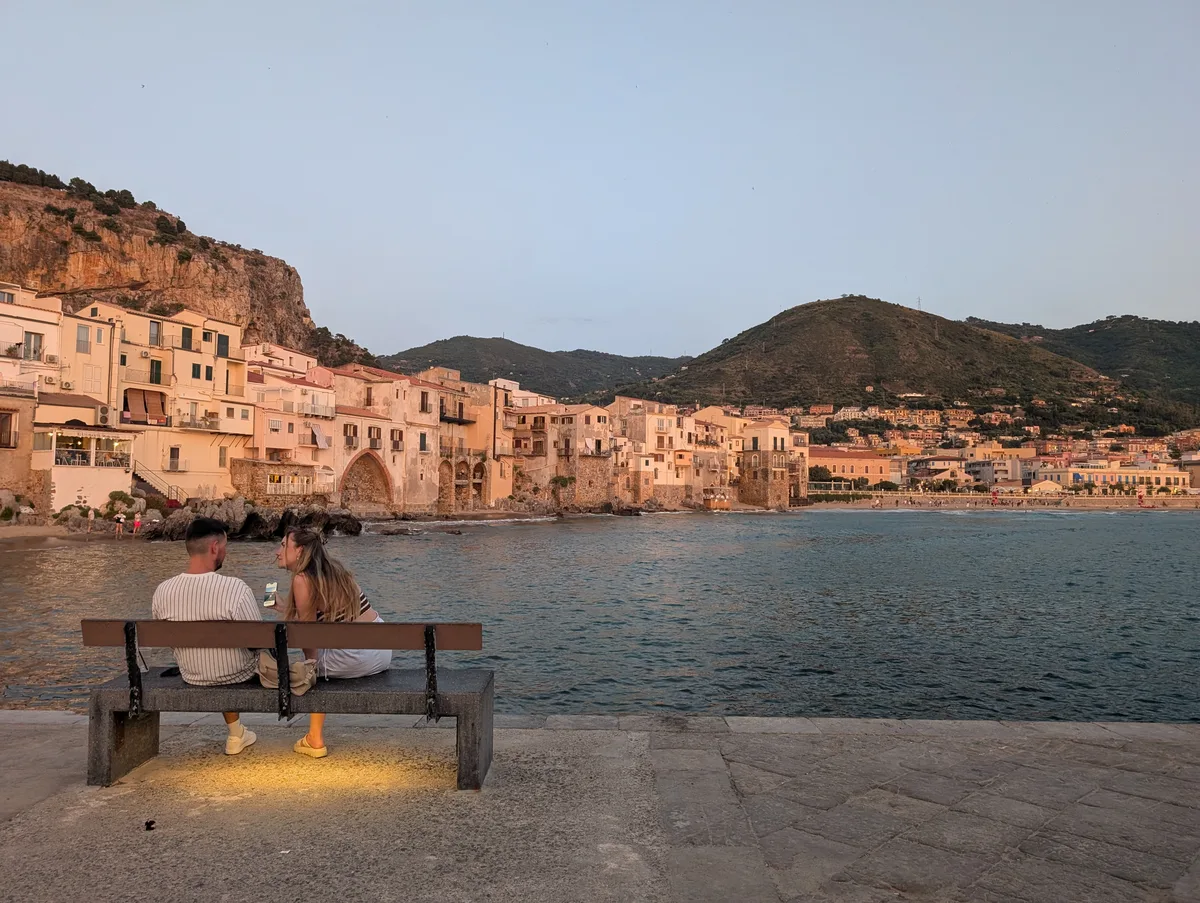
Waking up in Cefalù, and what a setting: a medieval town nestled between a turquoise sea and a huge rock, La Rocca, towering over it. Two full days awaited us to enjoy it without rushing.
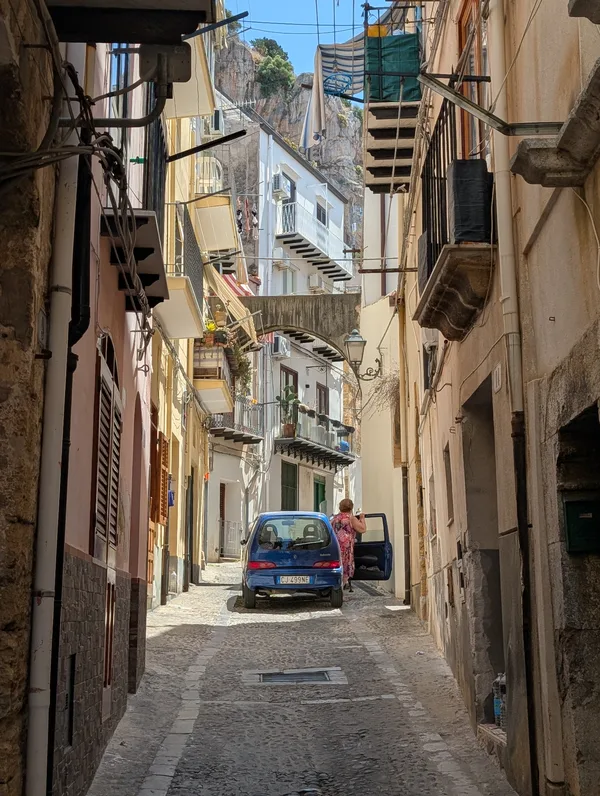
We first wandered aimlessly (well, not quite, in search of breakfast and above all a coffee!) through the alleys of the old town, a maze of stairways, artisan shops and little squares. Inevitably, we brought back a few souvenirs (ceramics, Moor’s heads, products made with Bronte pistachio…).
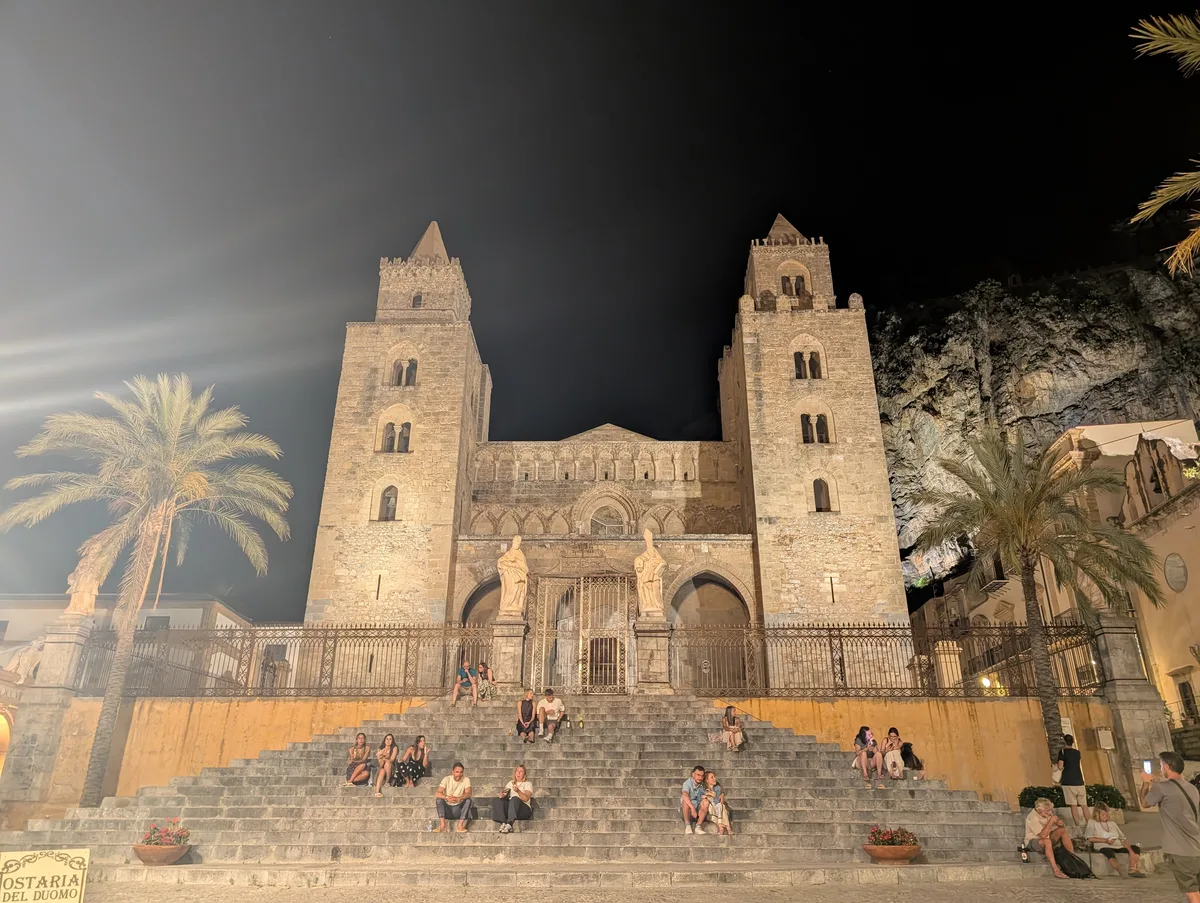
The highlight of the visit is the Cefalù Cathedral, another UNESCO-listed Arab-Norman jewel. Its façade flanked by two massive towers dominates the square, and inside stands a mosaic Christ Pantocrator considered one of the finest in all of Sicily — older than those of Monreale and, for many, the most expressive. As I explain in the article dedicated to Cefalù, don’t take the full cathedral tour, but only the rooftops and the mosaics. And otherwise, just the free entrance is also very good.
Not to be missed (and easy to fit in): the Lavatoio Medievale, a former medieval wash house where spring water tumbles down steps of black stone to the sea. It’s free, a stone’s throw from the main street, and full of charm. Watch out, there are opening hours.
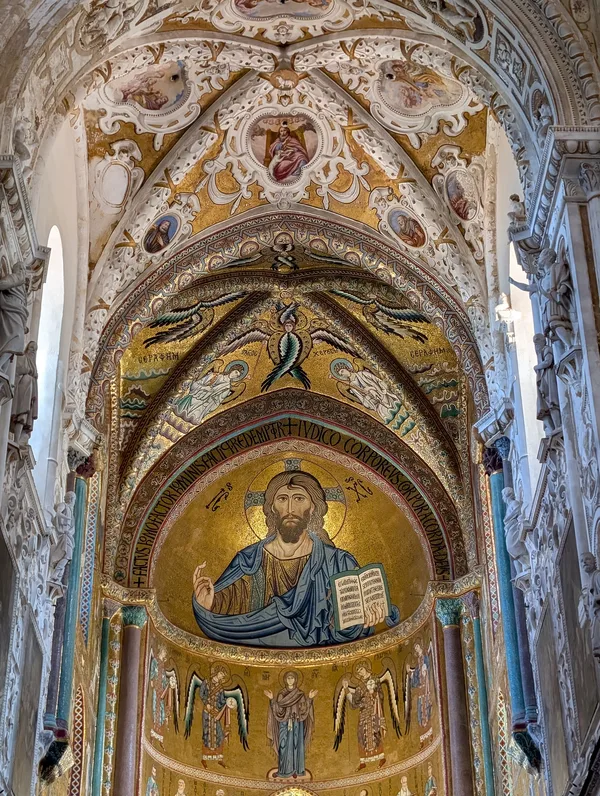
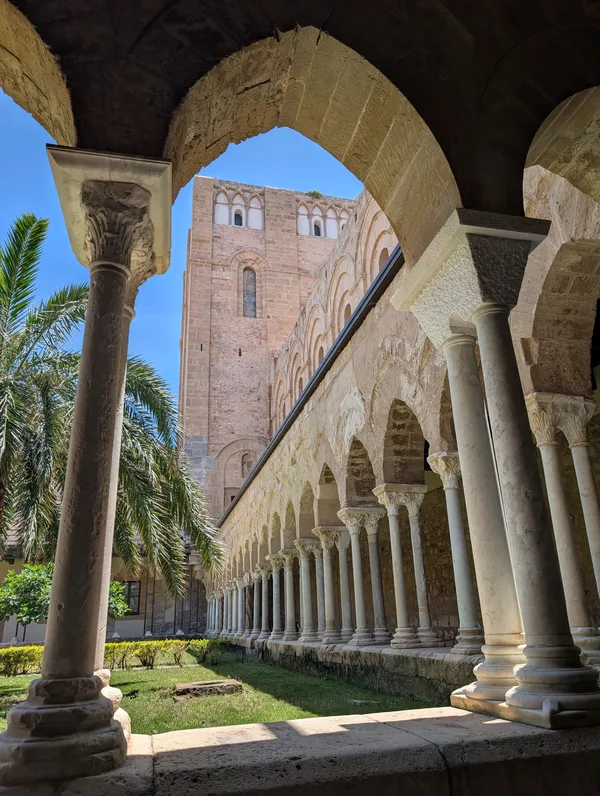
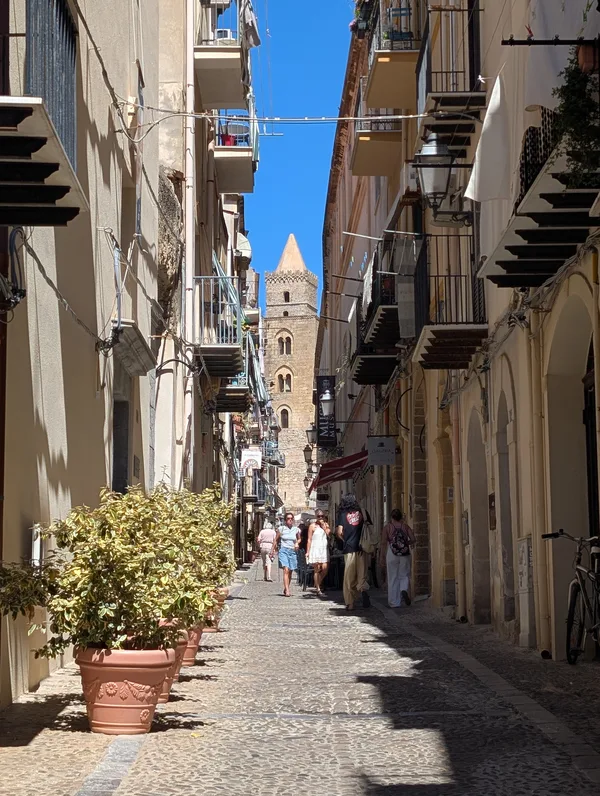
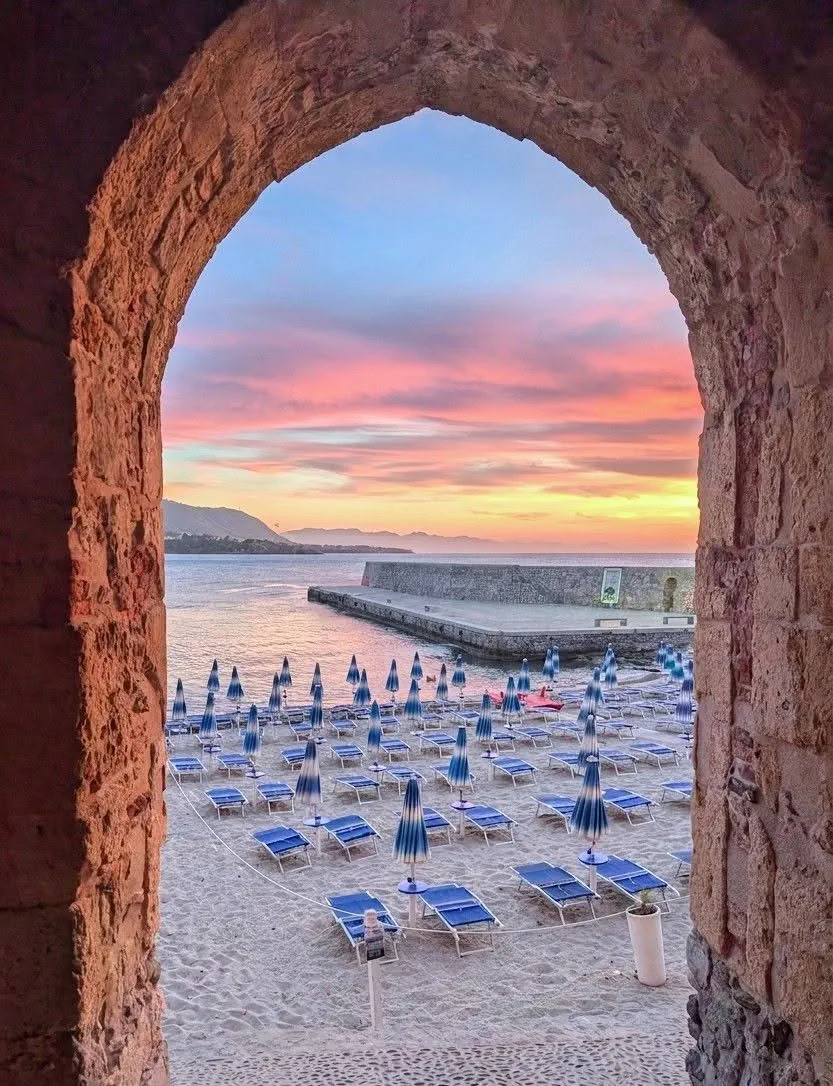
And if you have any energy left, it’s the moment to climb La Rocca, the imposing rock that towers over the town. Reckon on a good hour of climbing up a steep path to the remains of the Tempio di Diana and then, right at the top, to the ruins of the castle: the sweeping view over the rooftops of Cefalù and the sea is probably the finest of the whole stay. Bring water and good shoes, and avoid the hottest hours — the climb is short but demanding.
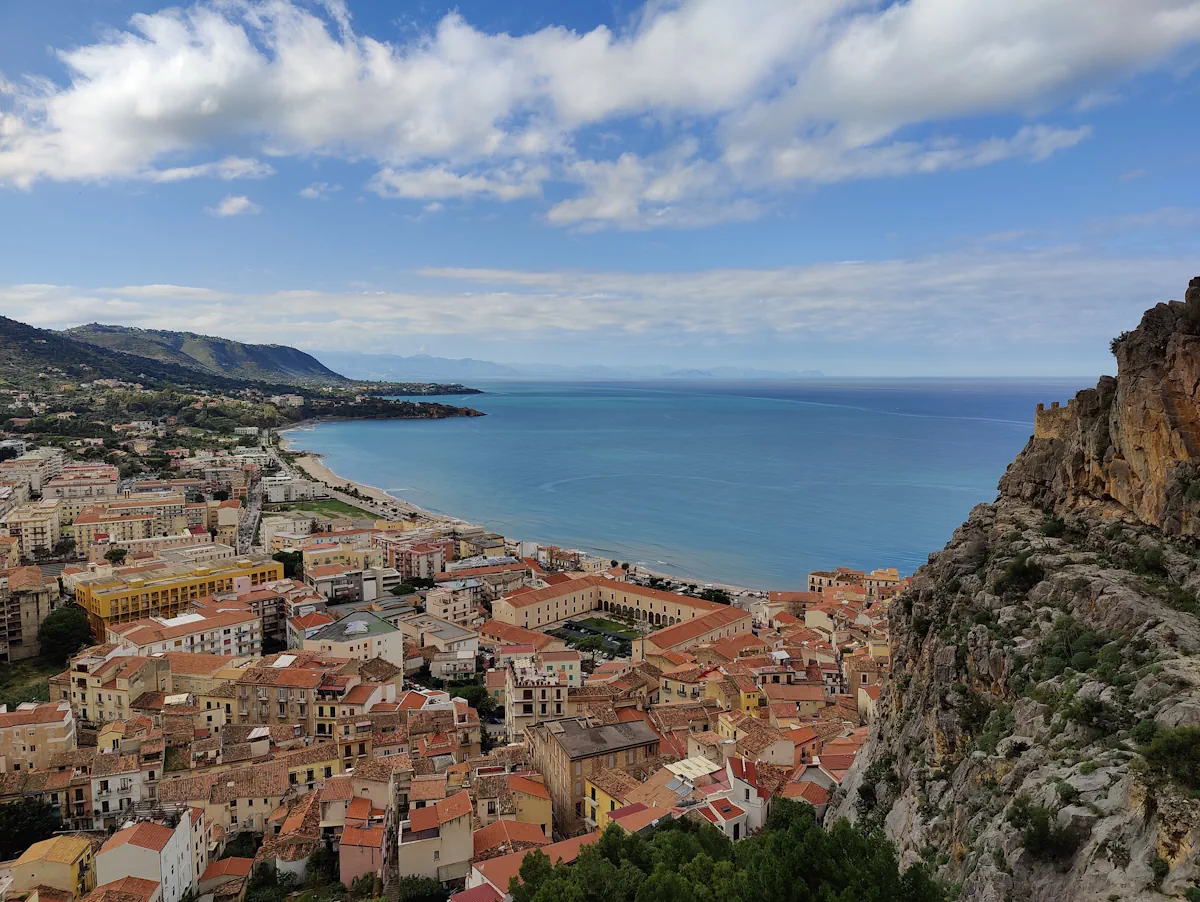
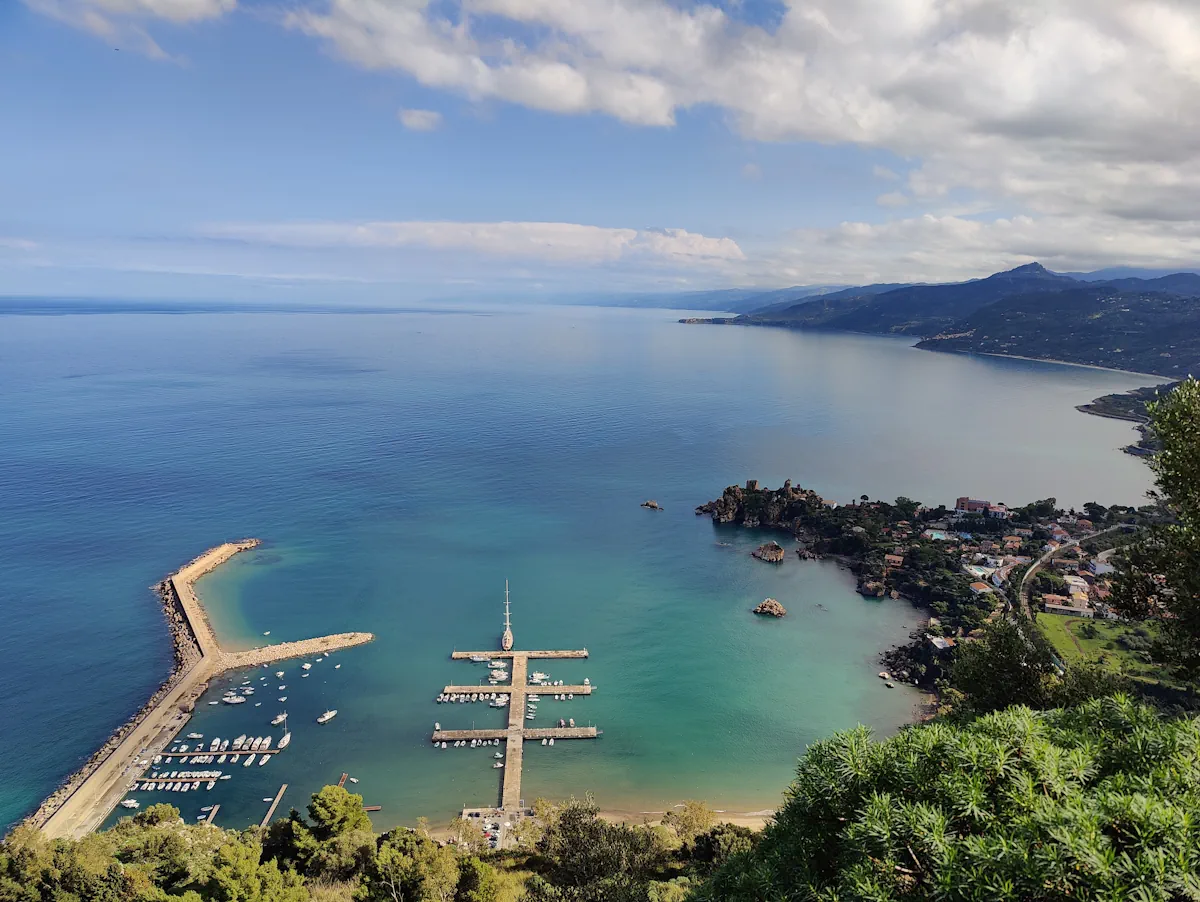
Otherwise, the alternative if you don’t have the calves or the motivation is the beach, of course!
We ended the day as we got into the habit of doing in Cefalù: a spritz and a sunset. Our favourite spot for the sunset is the little harbour with the wall you can climb up onto.
Day 7 — Beach, boat trip and doing nothing
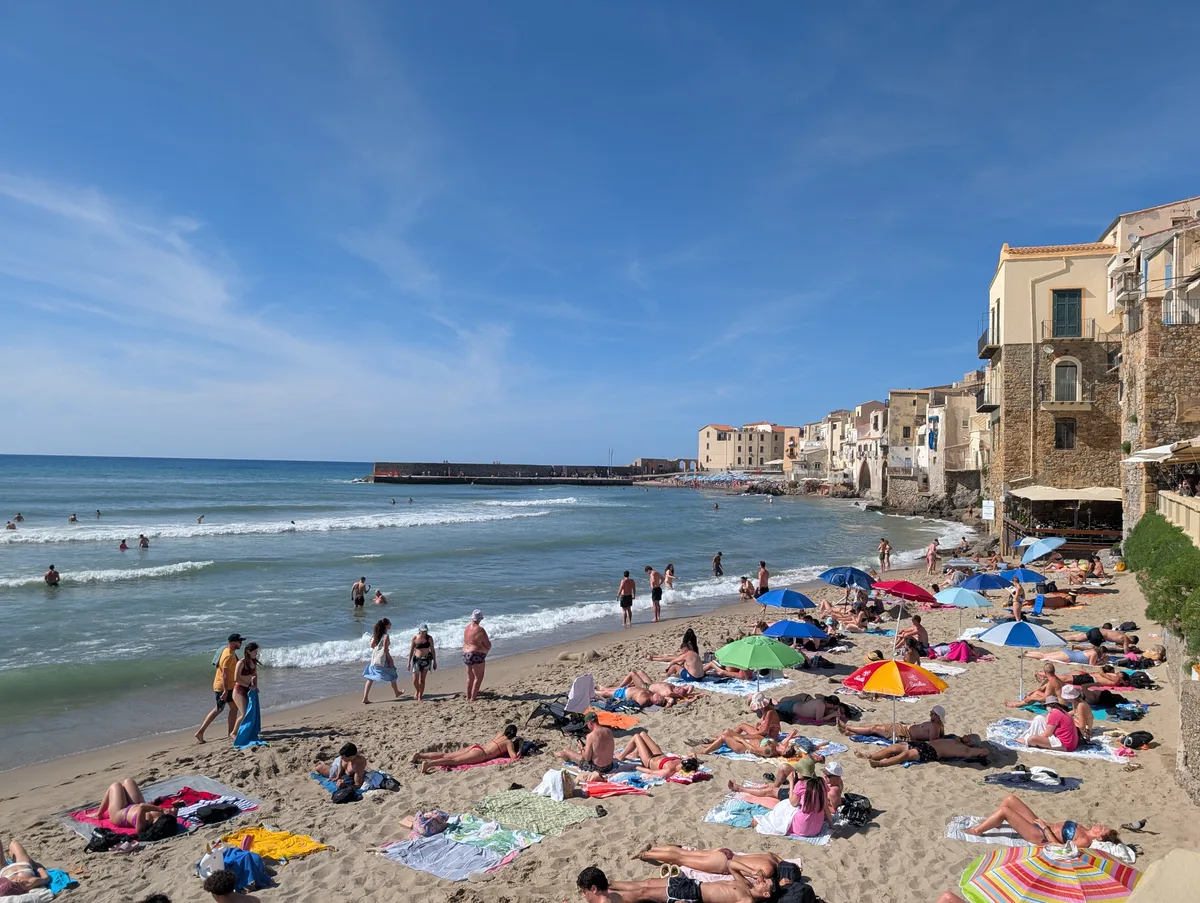
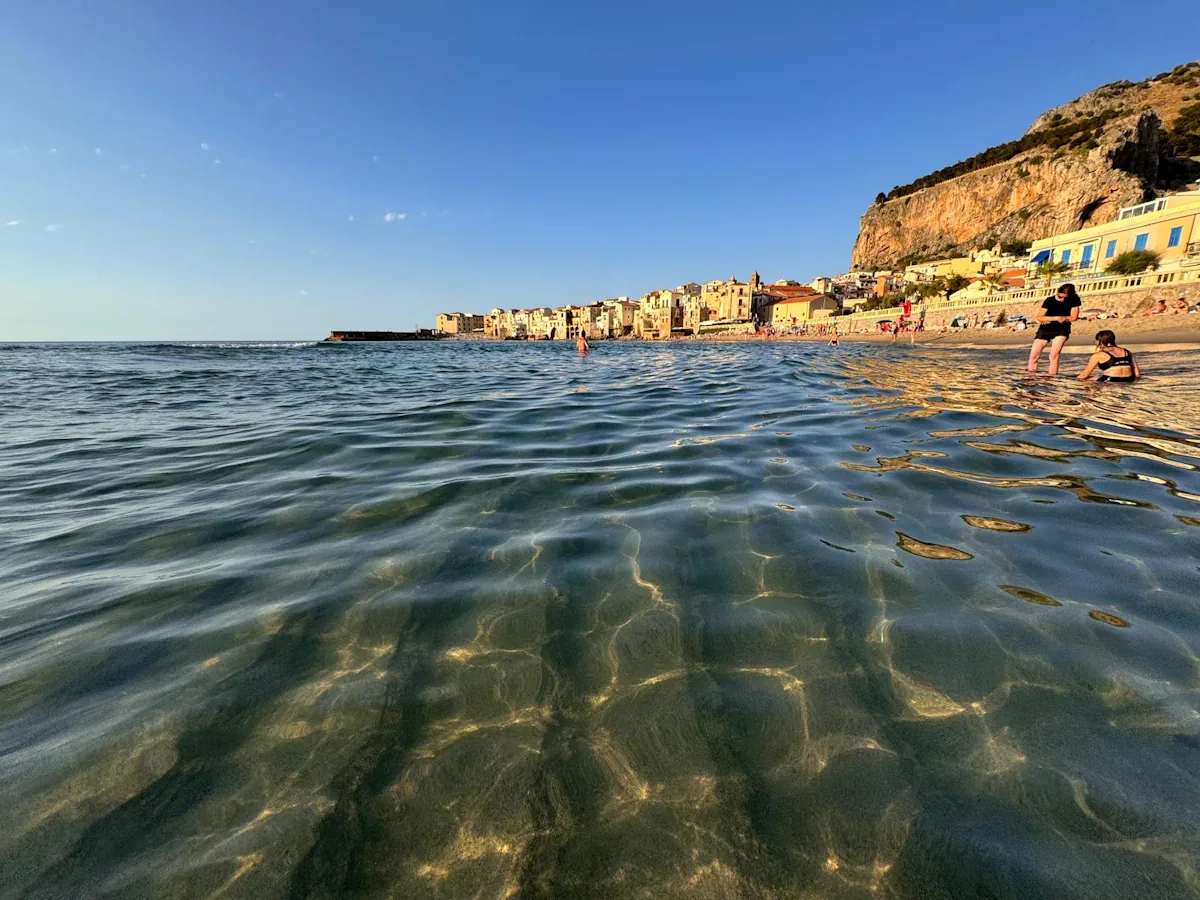
A final day under the sign of total relaxation. The morning began with Cefalù beach, that long strip of sand at the foot of the old town with its postcard of houses right at the water’s edge. Swimming, reading, granita: the ideal programme.
In the afternoon, we set off on a boat trip along the coast. Seeing Cefalù and La Rocca from the sea, swimming in coves accessible only by water, spritz in hand: one of our best moments of the trip. Several options exist, from the short one-hour trip to the half-day with an aperitif on board.
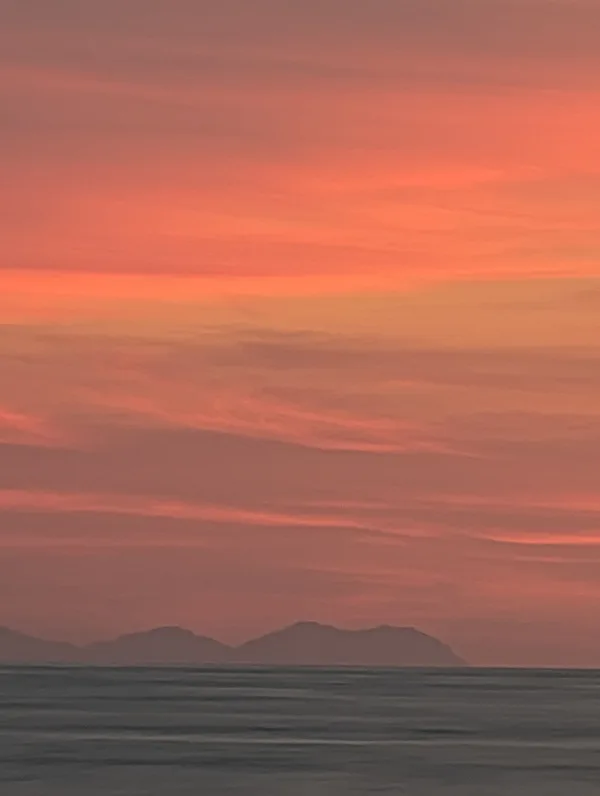
And then, faithful to our ritual, we savoured a final sunset over the Tyrrhenian Sea before packing our bags. Cefalù, after the buzz of Palermo, is exactly the breath of fresh air we needed.

Day 8 — Return: Cefalù → Palermo airport by train
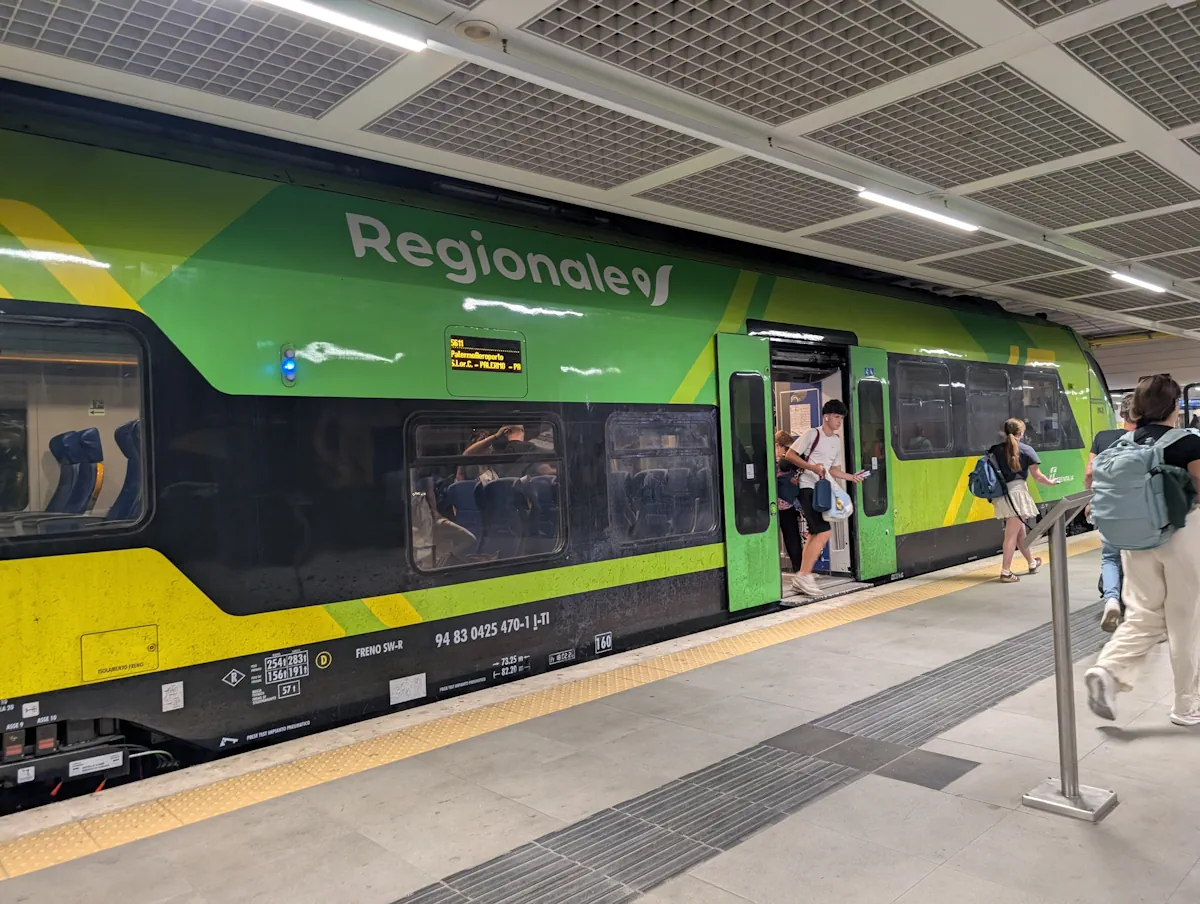
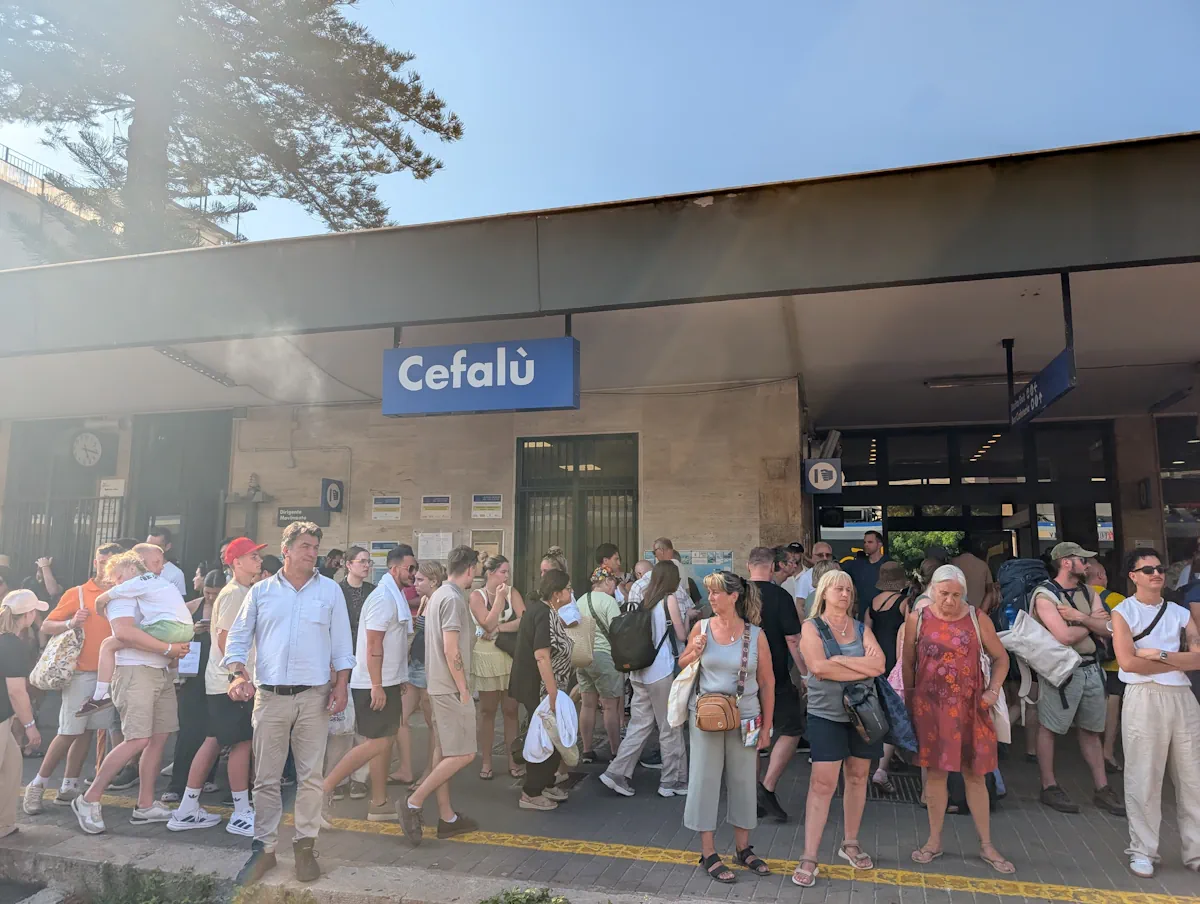
Good news to finish: no need to go back and sleep in Palermo the night before the flight. From Cefalù, the train reaches Palermo airport (Punta Raisi), which has its own station on the line. Since the airport is west of Palermo and Cefalù is to the east, generally count on a change at Palermo Centrale (sometimes direct depending on the schedule). We took a morning train, luggage in hand, enjoying the coastline rolling past the window one last time.
It’s practical, cheap and stress-free: no rental car to return, no airport car park to deal with. Two tips all the same: check the timetables the day before (regional trains are scarcer early in the morning) and keep a comfortable margin before check-in, the total travel time being around 2 hours depending on connections.
- have a look at the next article for the journeys between Palermo and the airport
Is a week between Palermo and Cefalù worth it?
For us, yes, without hesitation. Five days in Palermo may seem a lot on paper, but the city is so dense — between heritage, markets, street food and excursions (two days for us) — that we never felt like we were going round in circles. And finishing with two days in Cefalù is the perfect counterpoint: you close the Sicilian parenthesis gently, salt on your skin and a spritz in hand.
What we didn’t have time to do (and which we recommend slipping into your programme): the Capuchin Catacombs, the Serpotta oratories, San Giovanni degli Eremiti, the Palazzo Abatellis (for its striking Triumph of Death) and the palace of La Zisa. That alone gives you enough to flesh out an already busy week.
One last piece of advice, the most important: in Palermo, plan ahead for the opening hours of the churches and oratories. It’s the only real headache of this destination, but with a bit of organisation the day before, you’ll turn this apparent chaos into one of the finest weeks of travel there is.
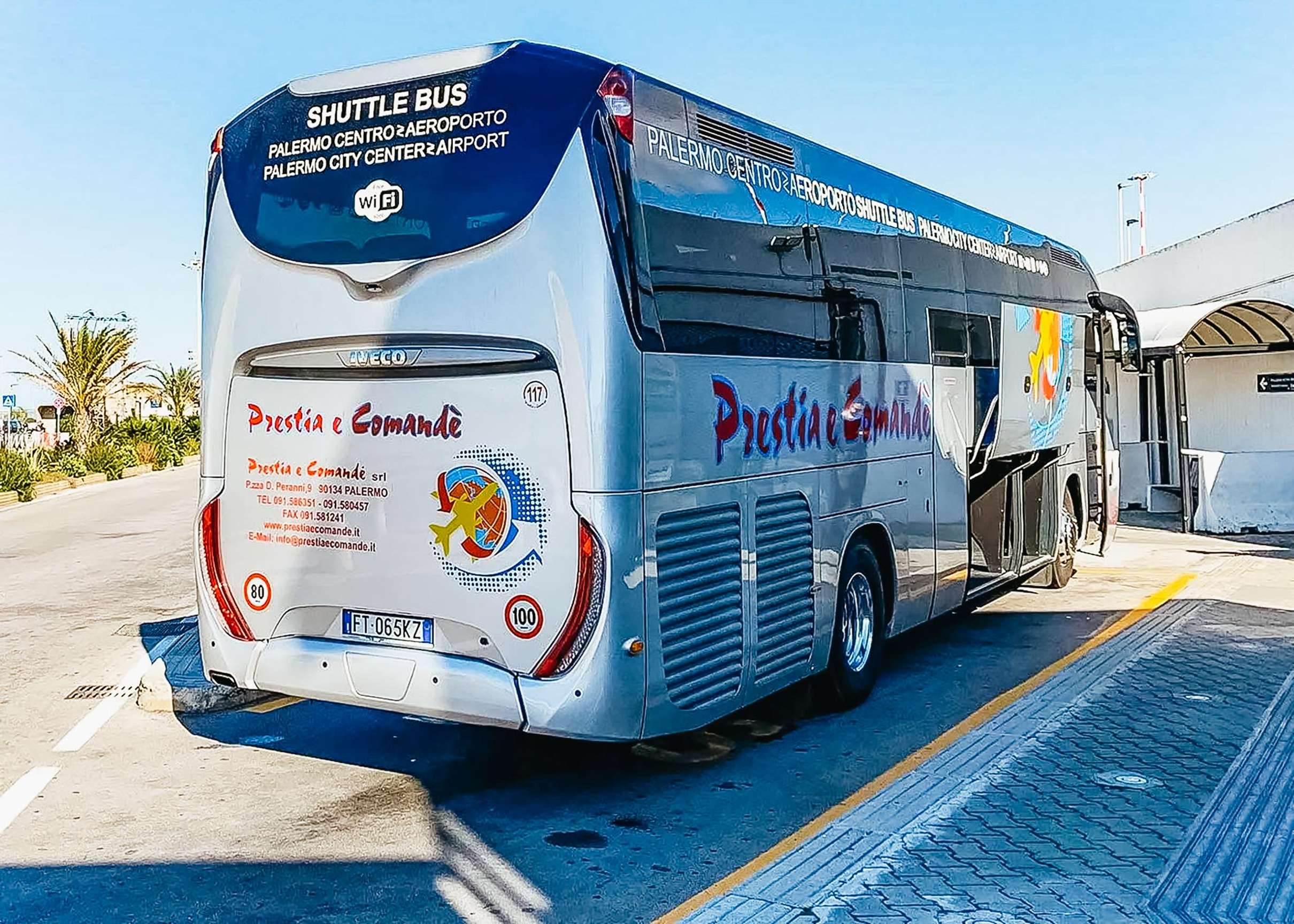
FAQ – Practical info for this itinerary
Where to stay in Palermo
I’ve dedicated a whole article to accommodation in Palermo, but since we knew we were going to walk a lot, we wanted a quiet hotel, so not on the main arteries, but close to the centre so we wouldn’t have to take transport. In the end we took a large room at the Quattro Stagioni, great team, great breakfast, very quiet and a top restaurant right downstairs. And a 10-minute walk from the centre.
What are the alternative activities
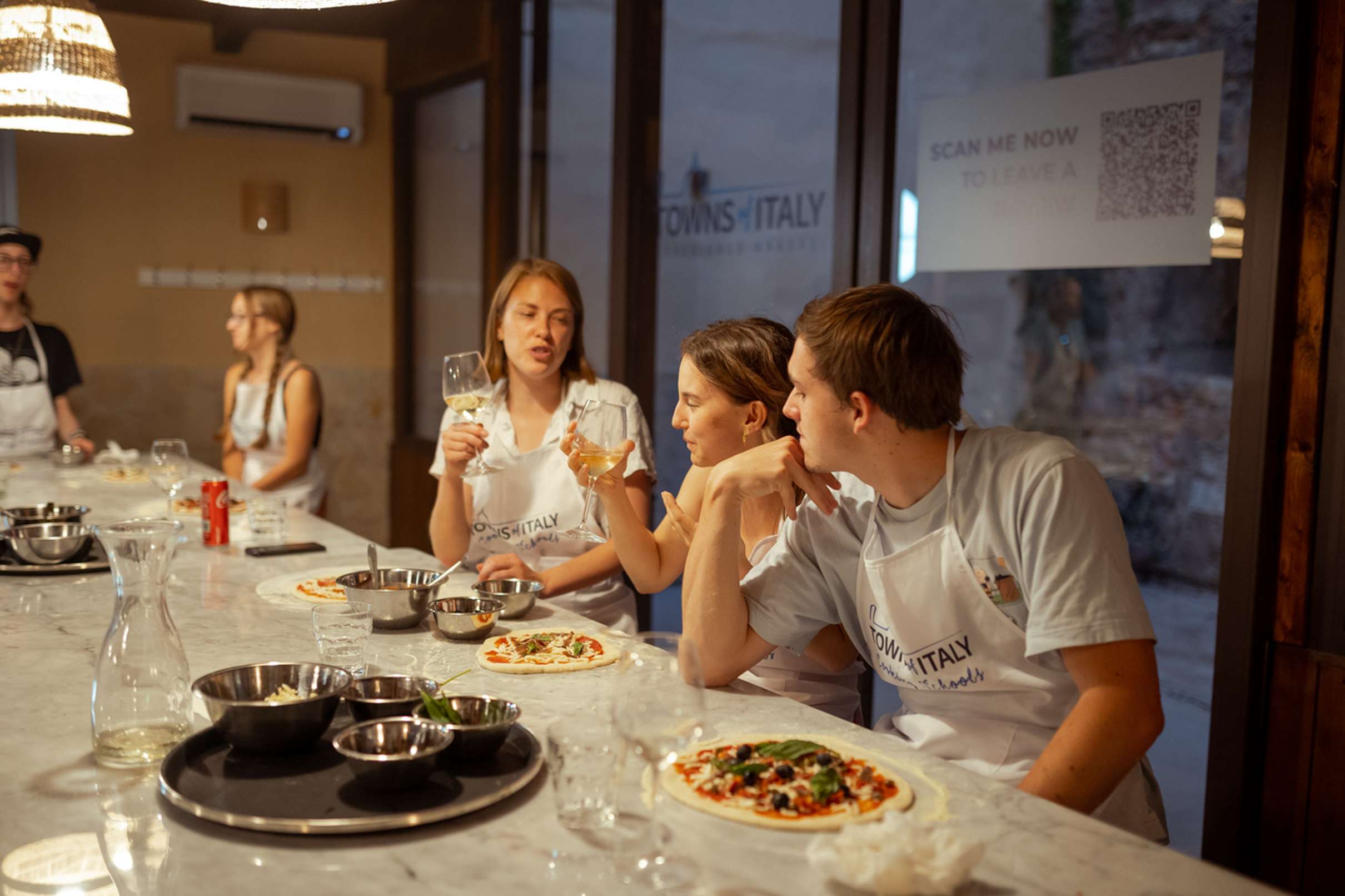
We chose to take excursions to Monreale and Agrigento, but there are other great options from Palermo. You can go off to climb Mount Etna, see the pretty village of Taormina, take a boat trip in the Aeolian Islands… or even do a guided tour of Palermo on the theme of the mafia or take a cooking class!
What’s the best season to come?
I’ve visited Sicily in November and in May/June. There’s no bad season in Sicily, at worst it’s mild and it might rain a little. But it’s always nice, always pleasant, though in summer it’s scorching, the temperatures are very high (and it’s super touristy). So I think that if you have the chance, come off-season, April/May, October, then you have great temperatures, warm water, and absolutely no one. But just don’t overthink it, come whenever 🙂
How many days do you need to visit Palermo and Cefalù?
Reckon on a week: 5 days in Palermo and 2 days in Cefalù. Five days let you combine the historic centre, the markets, the Arab-Norman churches and two excursions (Monreale and Agrigento) without rushing. Cefalù is then savoured over 2 days, time enough for the beach, the cathedral and La Rocca. My wife would have preferred a bit more beach, so you can take an extra day in Cefalù and drop Agrigento, which you’ll do on your next Sicily road trip.
How to get from Palermo to Cefalù?
The simplest is the Trenitalia regional train: about 45 minutes from Palermo Centrale station, for around 7 euros (fixed fare, the same on the day or in advance). There are around thirty trains a day, of which about half are direct. No need to book: you buy your ticket at the counter or online. I go into all the detail in my article on the journey between Palermo and Cefalù.
Do you need to rent a car for this itinerary?
No, it’s not necessary. Palermo can be visited entirely on foot, and the train easily connects Cefalù. The excursions to Monreale (bus), Agrigento and Mondello are accessible by public transport or organised tour. A car is even a hindrance in Palermo (dense traffic, complicated parking). Save it for a wider road trip around Sicily. And if you do want to rent, definitely compare prices!
How to reach Palermo airport (Punta Raisi) from Cefalù?
By train, counting on around 2 hours with usually a change at Palermo Centrale (the airport has its own station on the line, to the west of the city). Allow a good margin on the morning of departure: regional trains are less frequent early on and the total journey can reach 2 to 2.5 hours depending on the connection. All the details in my article on the journeys between Palermo and the airport.
Can you visit Agrigento from Palermo in a day?
Yes, absolutely. The Valley of the Temples is about a 2-hour drive south of Palermo and is easily visited in a day, by bus, by train or on an organised excursion. Set off early in the morning to avoid the heat (the site has no shade) and bring a hat, water and comfortable shoes.
What budget should you plan for a week between Palermo and Cefalù?
Excluding flights, reckon on as a rough guide 70 to 110 euros per day per person for a comfortable but reasonable trip: mid-range accommodation, meals (Palermo street food is delicious and cheap), monument entrances and train/bus transport. Sicily remains one of the most affordable destinations in Italy. Just watch out for the scams. Sicily has a reputation, and it doesn’t come from nowhere.
Conclusion and other resources on Palermo and Sicily
I think you know pretty much everything. To help you make your choice, I’m going to get started on a big article presenting the most beautiful places in Palermo, with practical info, opening hours, prices… and activities.
In the meantime, I’d advise you to read the following articles, hoping already that it makes you want to come, but also that it helps you a little 🙂
- Where to stay in Palermo – a selection of hotels and apartments to avoid the traps and the bad neighbourhoods
- How to get from Palermo airport to the city centre – between train, bus and shuttle, I tell you everything
- What to do in Cefalù – the pearl of Sicily will enchant you!
- How to get from Palermo to Cefalù – it’s not difficult, it’s just a matter of a train!
- Good tips for staying in Cefalù – by the beach or in the old town, I explain it all
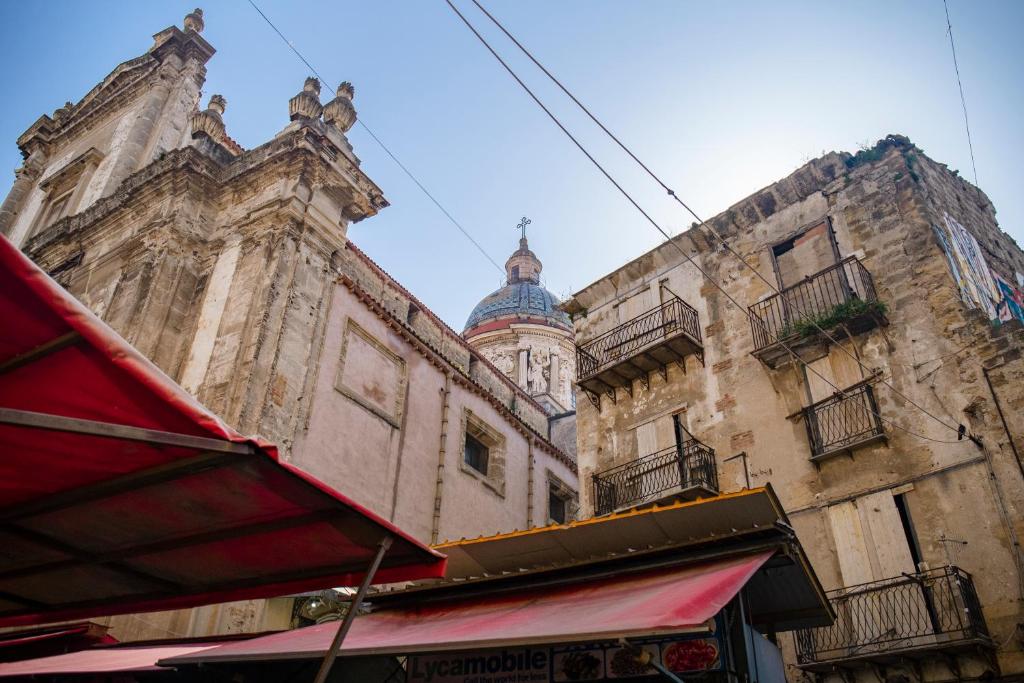
📍 Via Maqueda · Quattro Canti
📍 Via Maqueda · Quattro Canti
📍 Via Maqueda · Quattro Canti
Boutique hôtel de charme dans un palazzo du XVIIIe siècle, à deux pas des Quattro Canti. Décor soigné mêlant antiquités siciliennes et design contemporain — une adresse d’exception.
Charming boutique hotel in an 18th-century palazzo, steps from the Quattro Canti. Tasteful décor blending Sicilian antiques with contemporary design.
Hotel boutique de encanto en un palazzo del siglo XVIII, a pocos pasos de los Quattro Canti. Decoración que mezcla antigüedades sicilianas con diseño contemporáneo.
- Palazzo historique du XVIIIe siècle
- Terrasse avec vue sur les toits de Palerme
- Petit-déjeuner sicilien inclus
- Historic 18th-century palazzo
- Rooftop terrace with Palermo views
- Sicilian breakfast included
- Palazzo histórico del siglo XVIII
- Terraza con vistas a los tejados de Palermo
- Desayuno siciliano incluido
Annulation gratuiteFree cancellationCancelación gratuita
À partir de 170 € / nuitFrom €170 / nightDesde 170 € / noche
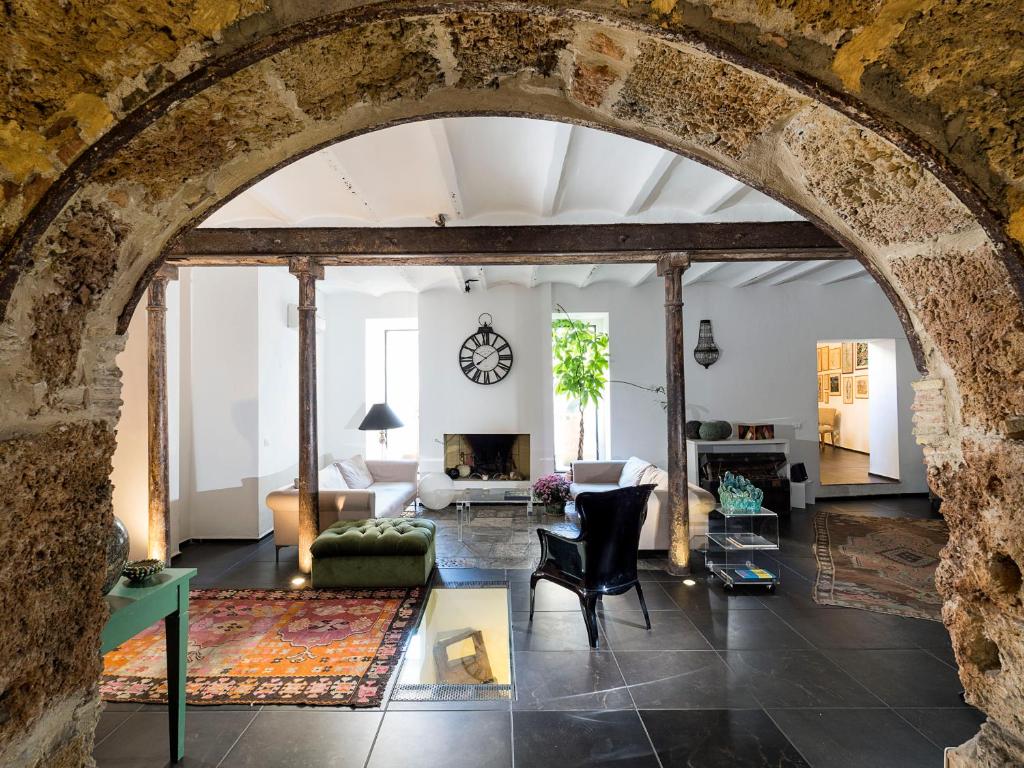
📍 Ballarò · Albergheria
📍 Ballarò · Albergheria
📍 Ballarò · Albergheria
B&B boutique à deux pas du marché de Ballarò, dans une maison palermitaine rénovée avec cour intérieure et jardin. L’adresse idéale pour s’immerger dans la vie du quartier tout en bénéficiant d’un confort soigné.
Boutique B&B steps from the Ballarò market, in a renovated Palermitan house with courtyard and garden. The ideal address to immerse yourself in neighbourhood life with refined comfort.
B&B boutique a pocos pasos del mercado de Ballarò, en una casa palermitana renovada con patio interior y jardín. La dirección ideal para sumergirse en la vida del barrio con comodidad.
- À 2 pas du marché de Ballarò
- Cour intérieure et jardin privé
- Ambiance authentique et accueil chaleureux
- Steps from Ballarò market
- Private courtyard and garden
- Authentic atmosphere and warm welcome
- A pocos pasos del mercado de Ballarò
- Patio interior y jardín privado
- Ambiente auténtico y acogida cálida
Annulation gratuiteFree cancellationCancelación gratuita
À partir de 90 € / nuitFrom €90 / nightDesde 90 € / noche
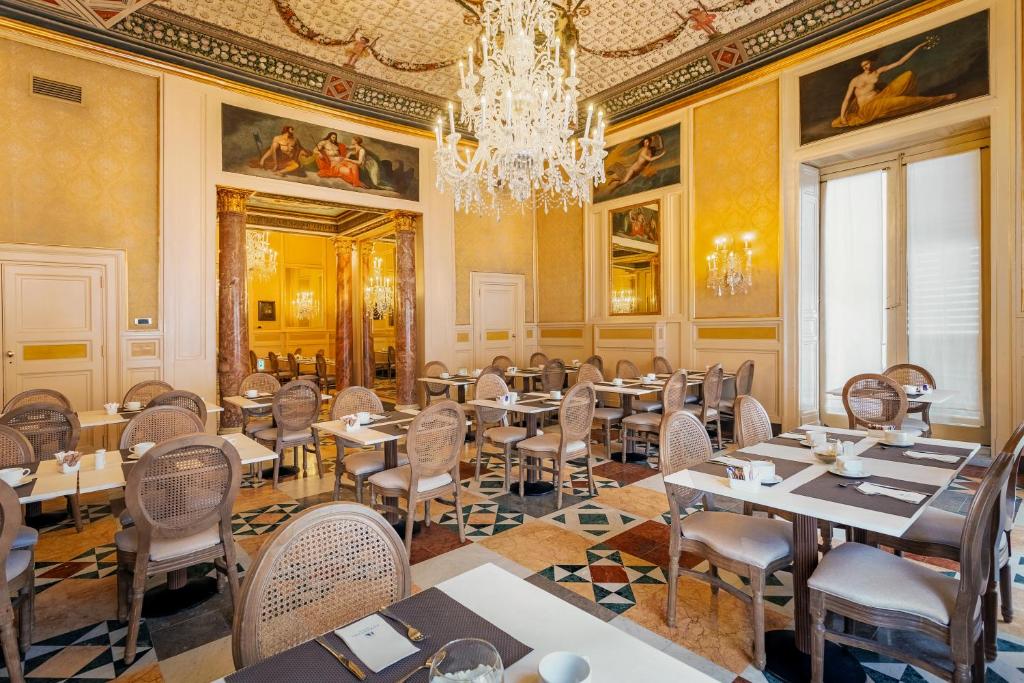
📍 Cathédrale · Corso Vittorio Emanuele
📍 Cathedral · Corso Vittorio Emanuele
📍 Catedral · Corso Vittorio Emanuele
Hôtel 4★ installé dans un beau palazzo sur le Corso Vittorio Emanuele historique, à mi-chemin entre les Quattro Canti et la Cathédrale. Service professionnel, cadre soigné et emplacement exceptionnel.
Elegant 4★ hotel in a beautiful palazzo on the historic Corso Vittorio Emanuele, halfway between Quattro Canti and the Cathedral. Professional service, refined setting and exceptional location.
Hotel 4★ elegante en un bello palazzo en el Corso Vittorio Emanuele histórico, a medio camino entre los Quattro Canti y la Catedral. Servicio profesional y ubicación excepcional.
- Sur le Corso Vittorio Emanuele historique
- Entre Quattro Canti et la Cathédrale (350 m)
- Note emplacement 9,7/10
- On the historic Corso Vittorio Emanuele
- Between Quattro Canti and the Cathedral (350m)
- Location score 9.7/10
- En el Corso Vittorio Emanuele histórico
- Entre Quattro Canti y la Catedral (350 m)
- Nota de ubicación 9,7/10
Annulation gratuiteFree cancellationCancelación gratuita
À partir de 130 € / nuitFrom €130 / nightDesde 130 € / noche
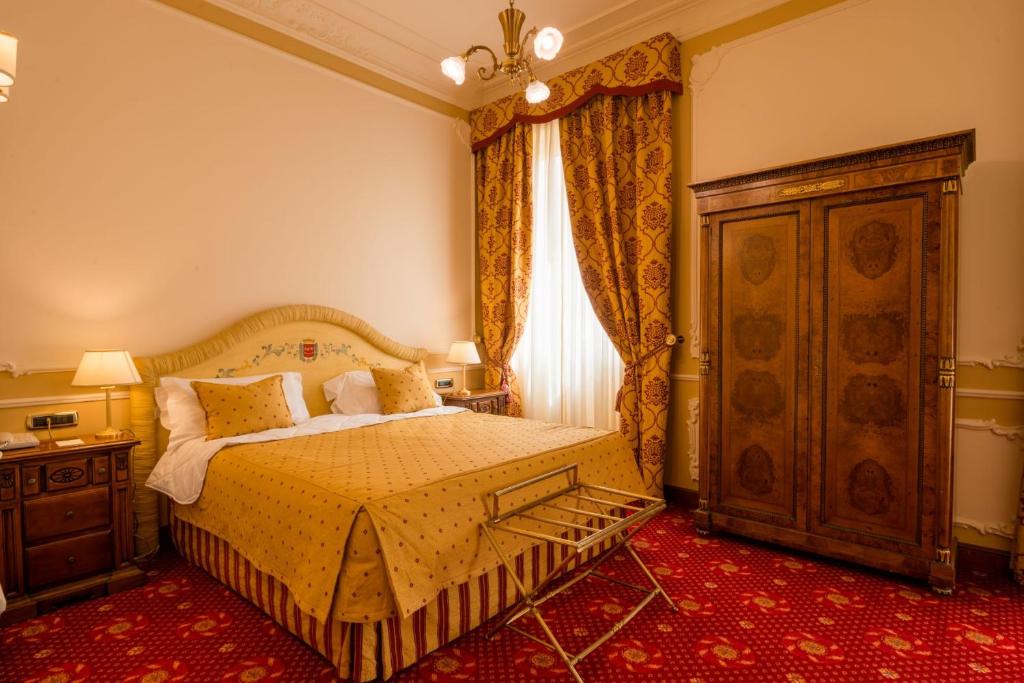
📍 Politeama · Teatro Politeama
📍 Politeama · Teatro Politeama
📍 Politeama · Teatro Politeama
Hôtel Belle Époque de 1910, à deux pas du Teatro Politeama. Hauts plafonds ornés, fresques et mobilier Art Nouveau en font l’un des plus beaux hôtels de Palerme.
Belle Époque hotel from 1910, steps from the Teatro Politeama. Ornate high ceilings, frescoes and Art Nouveau furnishings make this one of Palermo's most beautiful hotels.
Hotel Belle Époque de 1910, a pocos pasos del Teatro Politeama. Techos altos ornamentados, frescos y mobiliario Art Nouveau hacen de este uno de los hoteles más hermosos de Palermo.
- Architecture Art Nouveau de 1910
- Face au Teatro Politeama
- Chambres avec hauts plafonds ornés
- Art Nouveau architecture from 1910
- Opposite the Teatro Politeama
- Rooms with ornate high ceilings
- Arquitectura Art Nouveau de 1910
- Frente al Teatro Politeama
- Habitaciones con techos altos ornamentados
Annulation gratuiteFree cancellationCancelación gratuita
À partir de 130 € / nuitFrom €130 / nightDesde 130 € / noche