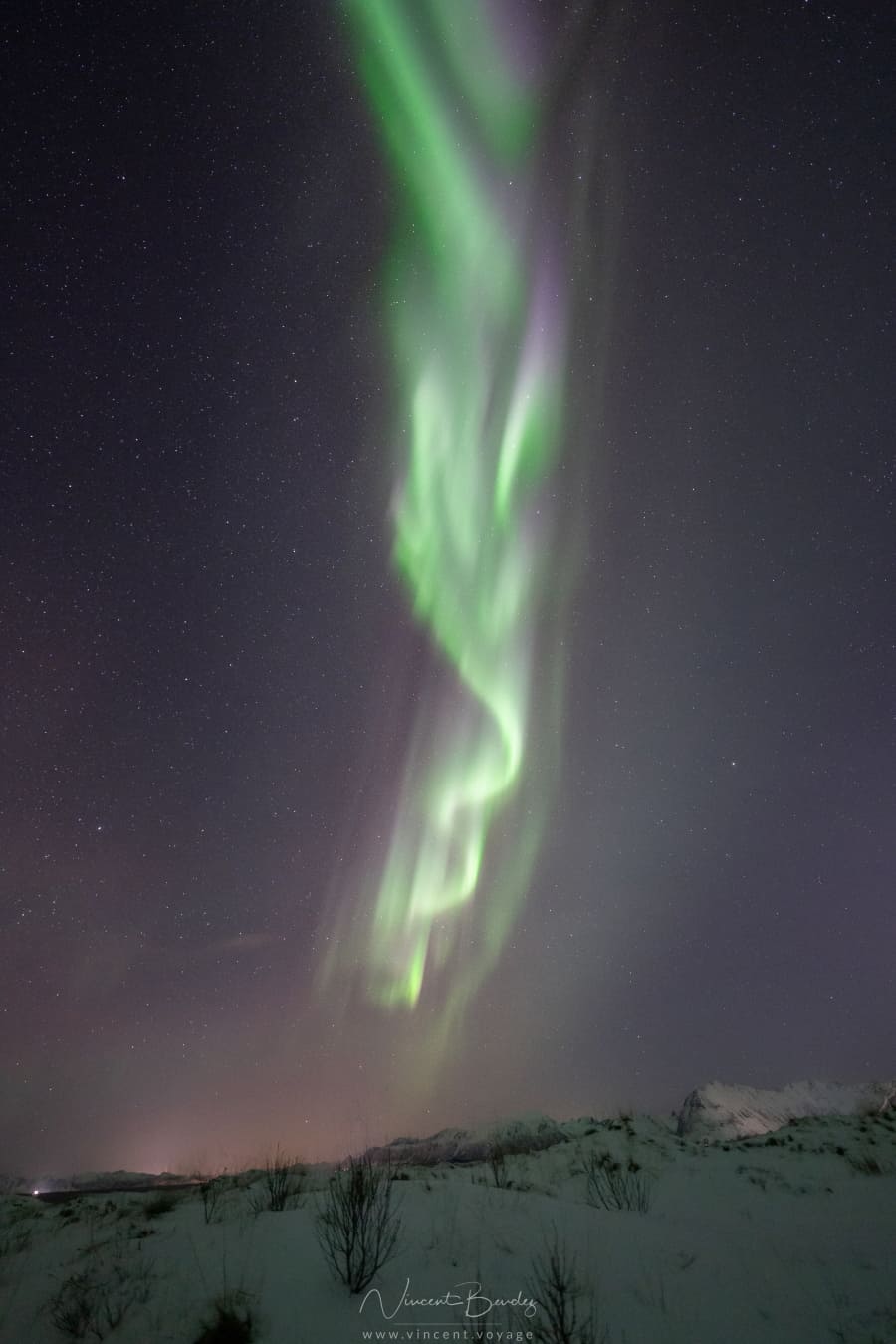
Last updated on
I wanted to write this article because, it’s the season for it, I get loads of messages from people who want to see the northern lights but don’t know how to go about it, and above all where to start. The season, the places, how to get there… yeah, it really is a whole lot of questions when you don’t know much about it. And that’s normal!
I’ve asked myself all these questions, and I still do. So it’s time I put it all in writing so I can point you in the right direction, shed some light on things, make your life easier!
And you’ll see, seeing the northern lights is simple. You just have to take it step by step. And if, after all these answers, you still have doubts, you can get in touch with me.
So the different steps are:
- when to go: which period best suits what you expect from your holiday, snow or no snow in particular
- where to go: whether you want lots of activities, to focus everything on the auroras, mountains…
- what extra activities you’d like to do: whale watching, hiking, dog sledding
- how long to go for
- whether you should rent a car
- how to prepare properly
This will really help you pin down where and when to go.

1. What is the best season to see the northern lights
This is THE most important question. OK fine, the 2nd most important after “how do you see the northern lights?”. But I have good news, because it’s probably the easiest one, because…
Is there a better time of year for the northern lights? NO!
It depends on solar activity, and on that alone. And the sun can decide to be more playful in September and lazier in December, or the other way round. In the following article I explain why there’s no best time to see the northern lights
That said, people notice, without any real proof, more interesting activity around the equinoxes. And honestly, it’s not wrong! Around 15-20 September and 15-20 March, it’s always a nice period.
So what should guide your choice of period is:
- whether you want snow or to go hiking, autumn or winter
- and therefore what kind of activities you want to do
- whether you want more or less challenging weather (people rarely answer rotten weather to this one)
- whether you have to travel during the school holidays
Anyway, we’ll go into all that below.
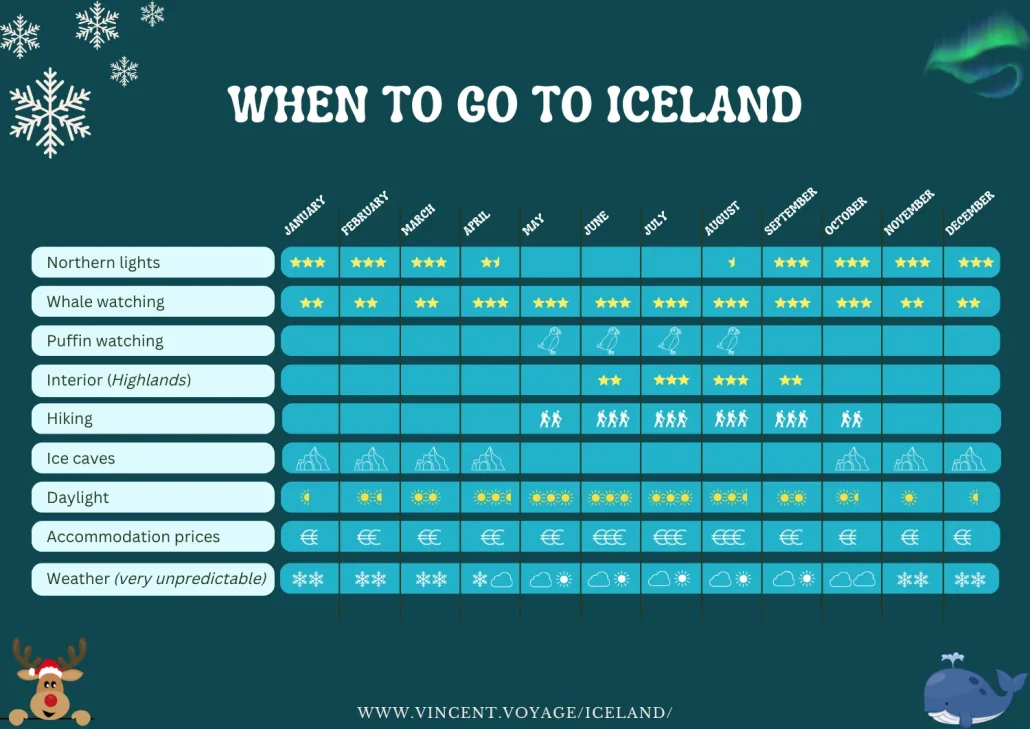
But for example, in the table that follows, I’ve put together a quick recap of the activities and the weather, month by month, to help you know when to go to Tromsø. It’s roughly the same for the other destinations, but above all it’ll give you a clearer idea of what awaits you up there.

The northern lights are visible from late August to mid-April
Actually, there are northern lights all year round! It’s just that, well, you need darkness. In places with the midnight sun, like the Nordic countries, that means there’s a period when it’s light all the time. Light means no night. No night, no aurora. No auroras… no auroras.
So in these Nordic countries (Norway, Sweden, Finland, Iceland), the rule of thumb is that
The northern lights are visible from EARLY SEPTEMBER to MID-APRIL!
I’m putting it big and in bold, because I know you skim-read. “But Vincent, you wrote late August in the title”, true, and no, I’m not going senile, it’s to see who’s paying attention. And indeed, as soon as it gets dark, it’s possible. Up north, we’ll say late August, but the nights are so short and not completely dark that you shouldn’t go just for that. It’s a bonus.
So that leaves some leeway. Then it will vary a little, by one to two weeks, depending on whether you’re right up north or more in the middle of the country, in the east or the west of the time zone (for example Finland is one hour ahead of Norway, so the auroras arrive an hour later, even though it’s at the same time. Lost you? Normal).
So if you want to come and see the auroras, it’s within this period.
Then in Canada, it’s possible all year round by being a touch further south. But it’s further away, more expensive.
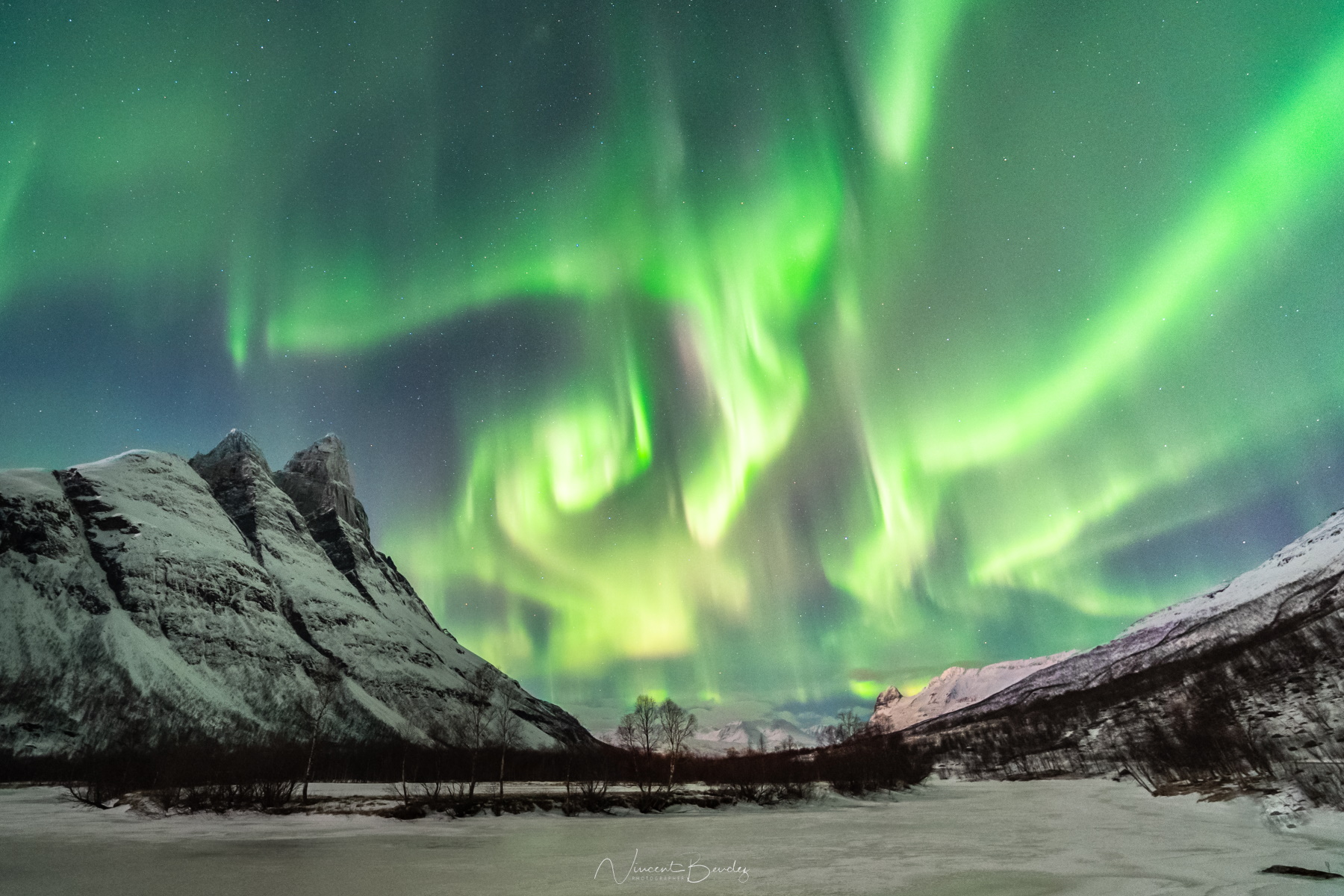
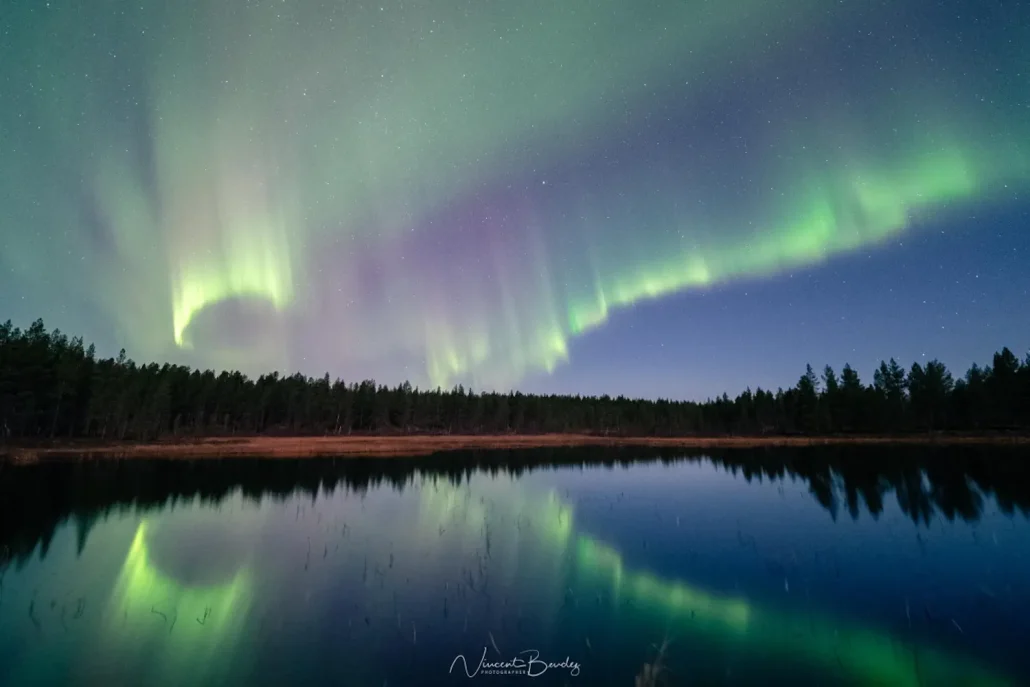
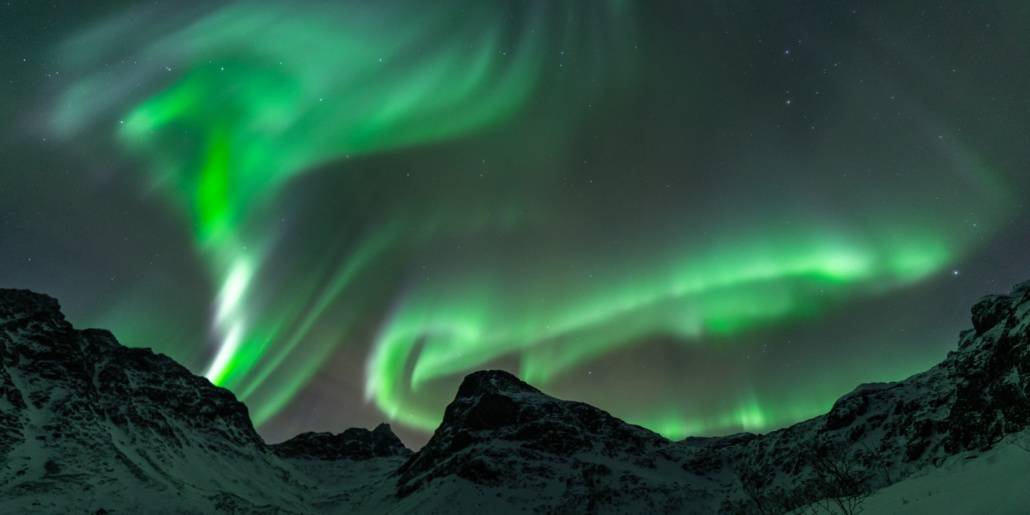
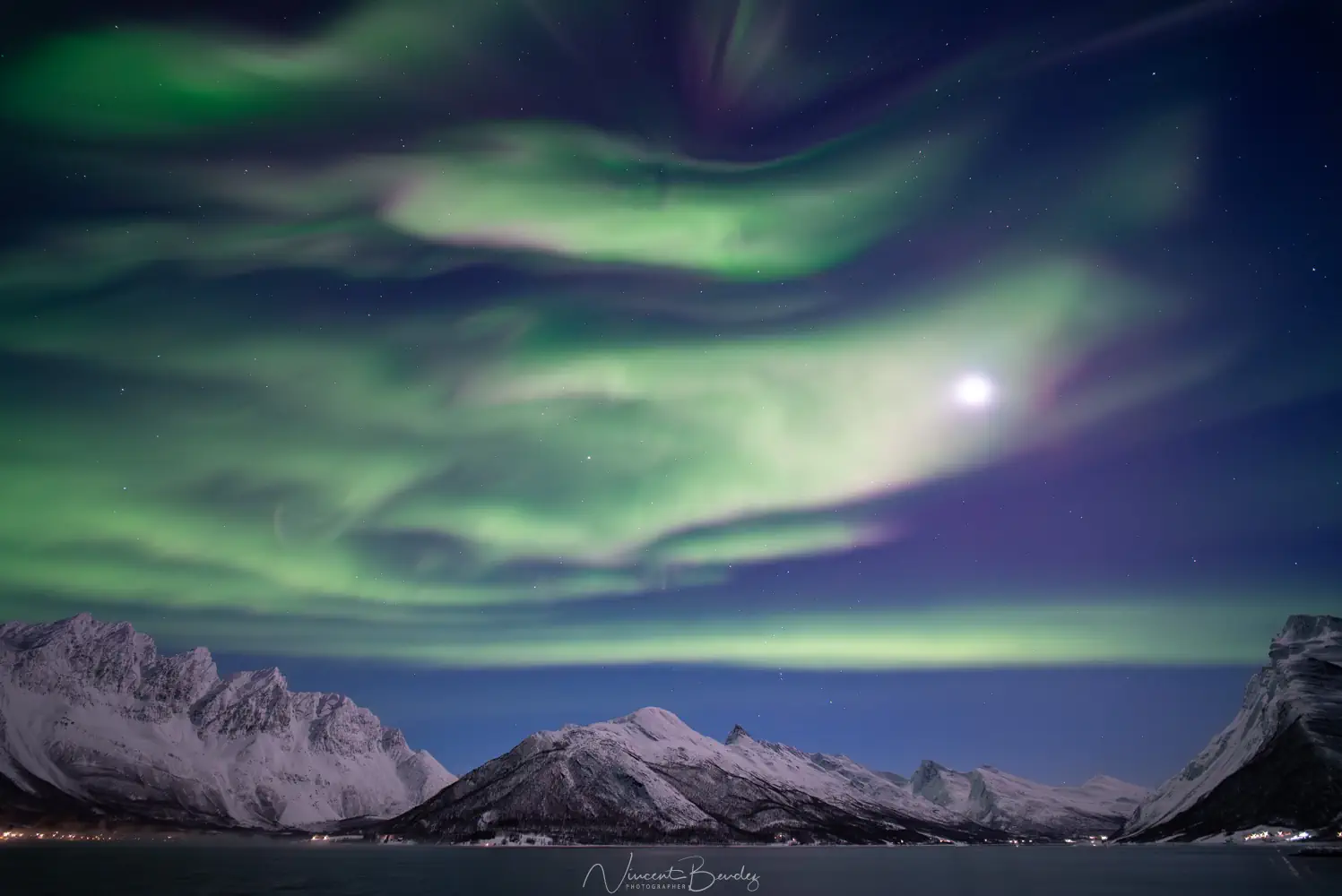
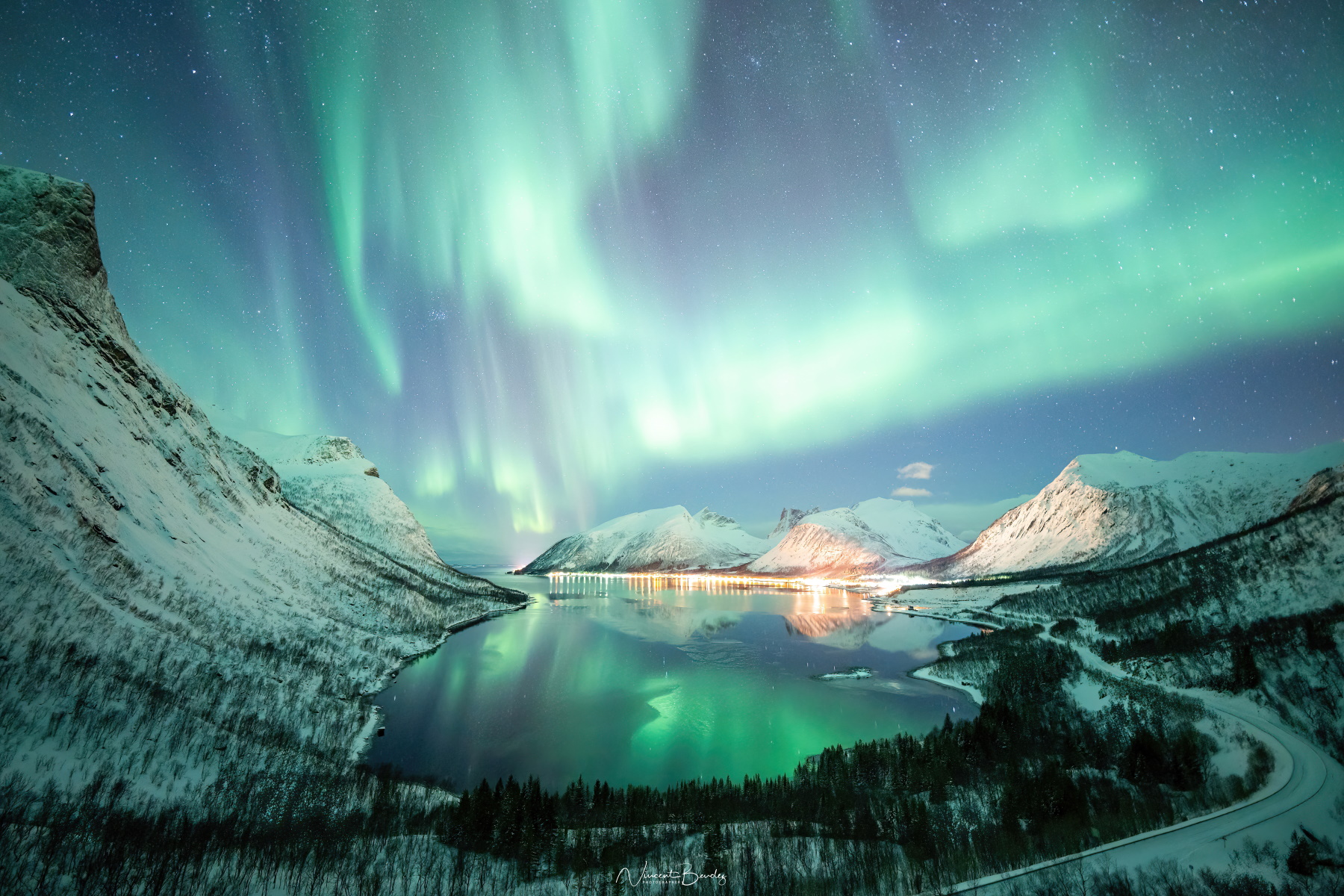
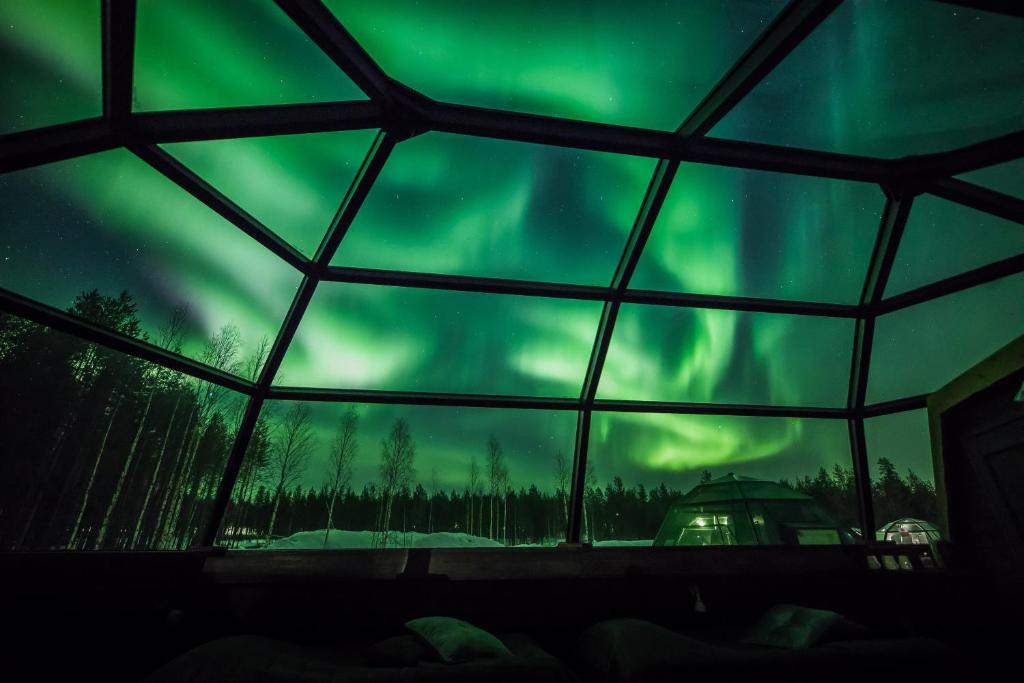
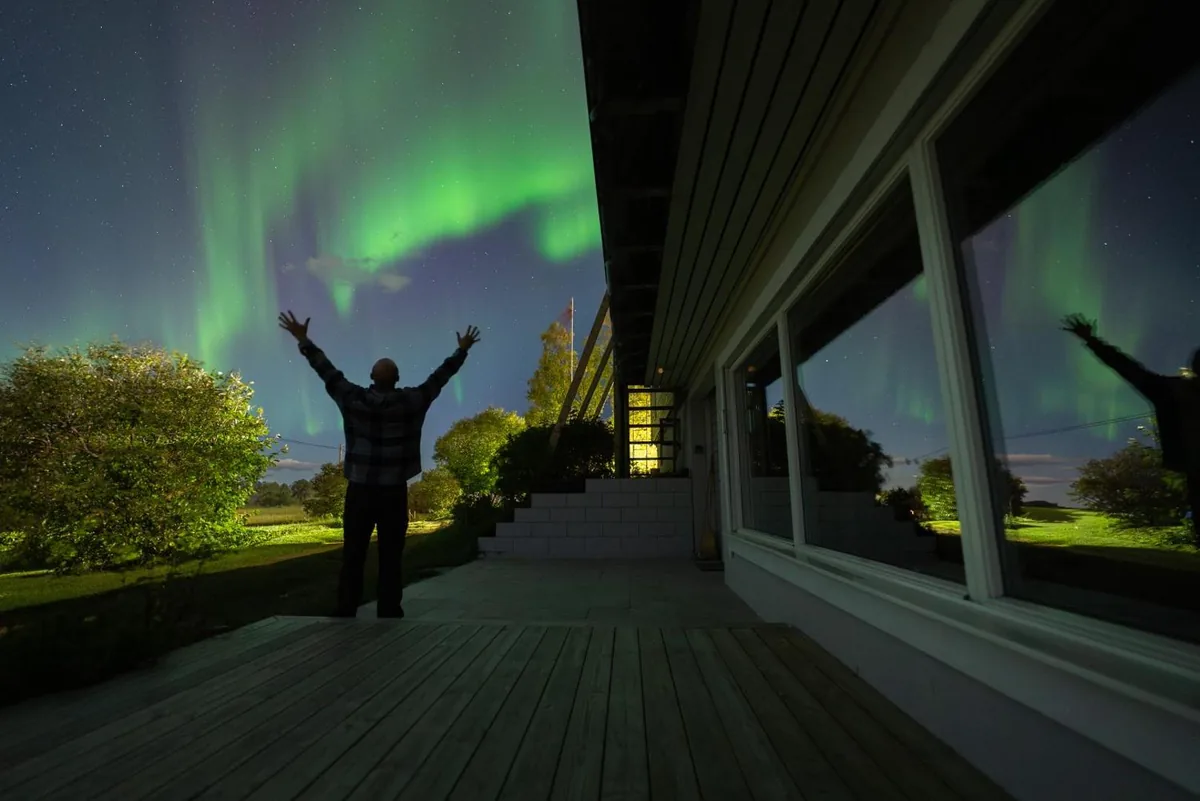
Below I’ve put two photos so you can compare. First, auroras in Norway in the middle of winter (snow and mountains), then in Finnish Lapland in autumn (lake and fairly flat)


Do you want snow or to be able to go hiking
To work out the right time for you to see the northern lights, my first question is whether you want to come during a period of snow and bitter cold, in short, the famous postcard that’ll freeze your little toes, or whether you’d rather have autumn, with its bearable temperatures, its rain, its longer days and above all the chance to go hiking.
Since winter way up there isn’t for everyone, meaning temperatures flirting with -20/-25 (even an easy -30 if you’re far from the sea, like in Sweden or Finland), sometimes your survival instinct may push you to go for autumn. And that’s not a bad thing in itself, because I looooove seeing the northern lights in autumn!
In autumn and winter, the temperatures differ, but so do the activities, so, as we’ll see a bit further down, the two seasons really bring different pleasures. Let’s say autumn is wetter, winter is pricier and chillier 😀

📍 Tromsø · Arctic Resorts (4 hrs 30)
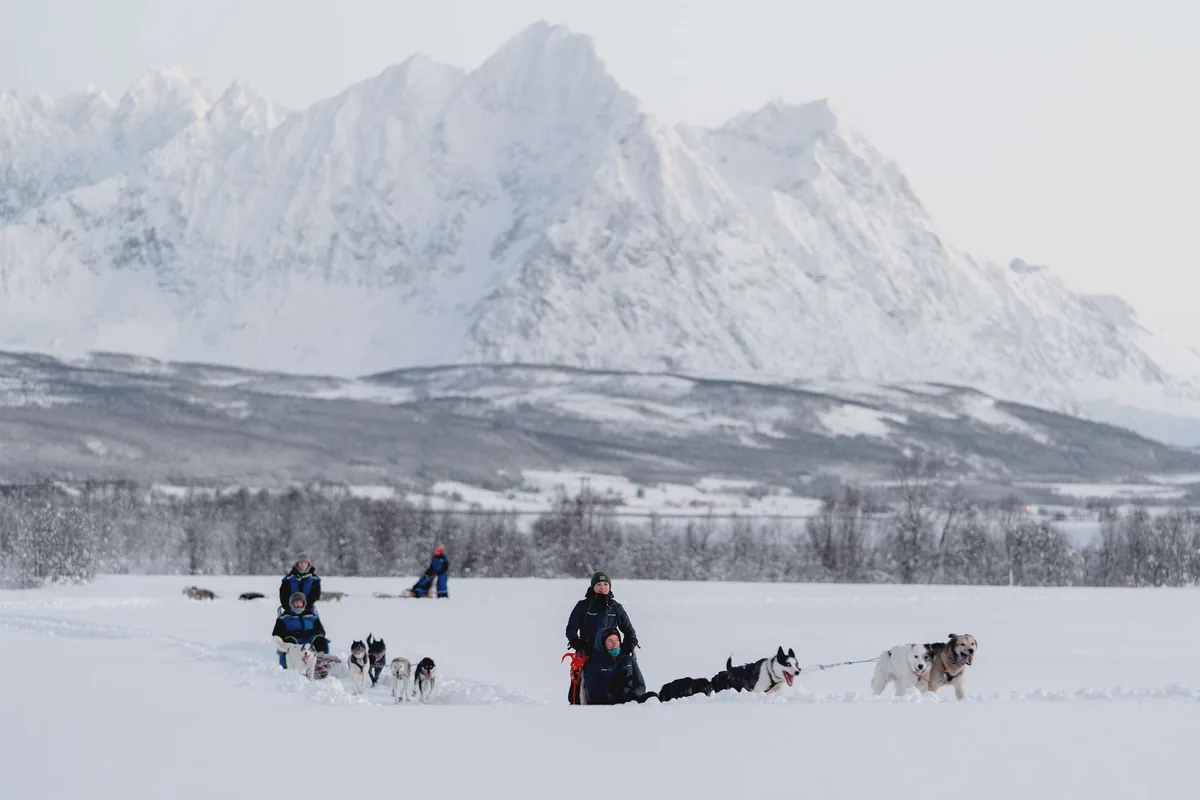
A polar adventure driving your own dog sled in the Lyngen Alps, with breathtaking views over the Arctic wilderness.
- Drive the sled yourself + swap halfway
- Thermal suit + hot drinks and cake in the lavvu
- 50 min bus transfer Tromsø ↔ Breivikeidet camp
Free cancellation
From 266 € per person
📍 Tromsø · Northbound Viator (6-10 hrs)
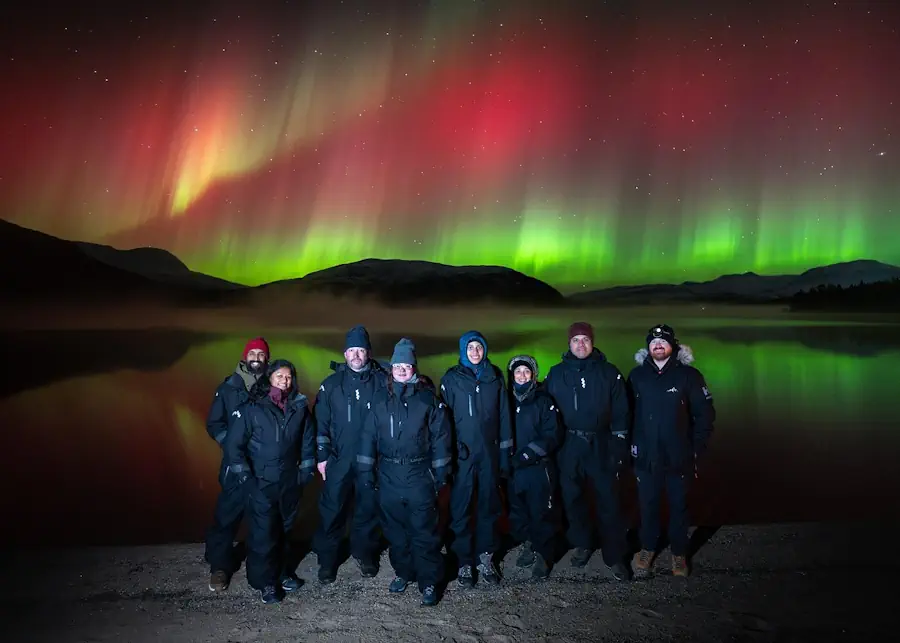
Northern lights chase in a Mercedes 4x4 with a campfire, grilled hot dogs and a portrait under the aurora taken by the photographer guides.
- Small group, 8 people max, in a heated Mercedes Vito 4x4
- Campfire + hot dogs + hot drinks included
- Portrait photo under the aurora + timelapse included
Free cancellation
From 245 € per person

📍 Tromsø · Camp Troll (8 hrs 30)
Snowmobile safari at the foot of the Lyngen Alps with 2 hrs 30 of riding, a safety briefing, legendary landscapes and a hot meal at the camp.
- 2 hrs 30 riding a snowmobile two-up (swap halfway)
- Suit + helmet + a bowl of local soup included
- Bus + ferry included from Prostneset Tromsø
Free cancellation
From 276 € per person

📍 Tromsø · Brim Explorer (7-9 hrs)
Heading for the Skjervøy fjords aboard a hybrid-electric catamaran that cuts its engines near the orcas, fin whales and sperm whales.
- Silent hybrid catamaran + 95%+ success rate
- Heated lounges + 3 outdoor decks + wheelchair accessible
- Naturalist guide + lunch + wifi included on board
Free cancellation
From 178 € per person
There’s no bad season, just bad weather
Since there are northern lights all year round, you need two conditions to see them:
- darkness, well, we’ve covered that, it’s from early September to mid-April, roughly
- and weather that isn’t too rotten
It’s this last point that’s also super important. Some periods are trickier than others weather-wise, even if it’s not an exact science.
In the table below, I show you the good and not-so-good periods. If there are fewer stars, it’s ONLY because of the weather. November and December are generally much more difficult.
In some places the weather is even worse than in others (like Iceland), but we’ll talk about that further down.
So, to sum up:
- from early September to early April
- November and December are the months with the most difficult weather
- September-October and February-March are my two favourite periods
But above all, and this is where it’s ultra important, the weather is VERY LOCAL. It can be completely different 50km away because the clouds get blocked by the mountains, for example. It’s not unusual to have cloudy weather in Tromsø and a clear sky 20km south in Breivikeidet.
So you need to use weather apps, cloud cover tracking apps, to know where to go and what the weather is doing.
But be aware that in the Nordic countries, the weather is a real tease, you can’t know a few days in advance what’s going to happen, where to go. It’ll change X times on the day itself.
There are trends: November in Tromsø is generally tricky, December in Finnish Lapland is difficult. March is a great month in my opinion, but all this is just gut feeling, not an exact science.
So, as we’ll see in the preparation section, you’ll have to maximise your chances by staying mobile to escape the clouds.

2. Where to go, how to choose the right destination
I’ve written a whole article on the best destinations to see the northern lights, but in Europe here’s what I recommend, with the pros and cons.
I’ve also done a comparison between the two self-proclaimed aurora capitals: Tromsø and Rovaniemi if you’re torn between the two!
TROMSØ:
- Pros :
- really beautiful scenery
- decent weather
- you can escape the clouds by driving
- Cons :
- sometimes the weather can be really cloudy across the whole region
- it’s getting quite touristy and you need to book ahead
I love Tromsø because it combines all the essential ingredients for the northern lights and then some. The region is beautiful, with mountains, fjords, forests.
You can drive, get away from the clouds, sometimes go as far as Finland, so I find it pretty practical.
Plus, if you want to enjoy more than just the northern lights, Tromsø is an excellent place because every activity is on offer! Dog sledding, whales, snowshoe hikes…
The downside is that it’s getting really touristy. So the flip side is that you need to book your activities ahead.
Links to discover Tromsø:
- Everything you need to know about the city of Tromsø, the seasons, the places to see, the practical info…
- The best activities to do in Tromsø in winter, dog sledding, whale watching, snowmobiling, I explain everything
- The best places to stay in Tromsø without breaking the bank, between cheap hotels, good deals and really nice places to stay, there’s plenty of choice, but you need to be quick!
- Itinerary for a week in Tromsø, to make the most of your time and not miss a thing
- The best northern lights guides in Tromsø, because there’s good and not-so-good, I point out the traps, the agencies I recommend, and lots of tips
- The most beautiful places to see the northern lights in Tromsø, with or without a car, a few really interesting spots and tips for finding others
- Absolutely all the things to do in Tromsø – there are great activities to do all year round!


4 recommended activities in Tromsø
📍 Tromsø · Arctic Resorts (4 hrs 30)
A polar adventure driving your own dog sled in the Lyngen Alps, with breathtaking views over the Arctic wilderness.
- Drive the sled yourself + swap halfway
- Thermal suit + hot drinks and cake in the lavvu
- 50 min bus transfer Tromsø ↔ Breivikeidet camp
Free cancellation
From 266 € per person
📍 Tromsø · Northbound Viator (6-10 hrs)
Northern lights chase in a Mercedes 4x4 with a campfire, grilled hot dogs and a portrait under the aurora taken by the photographer guides.
- Small group, 8 people max, in a heated Mercedes Vito 4x4
- Campfire + hot dogs + hot drinks included
- Portrait photo under the aurora + timelapse included
Free cancellation
From 245 € per person
📍 Tromsø · Camp Troll (8 hrs 30)
Snowmobile safari at the foot of the Lyngen Alps with 2 hrs 30 of riding, a safety briefing, legendary landscapes and a hot meal at the camp.
- 2 hrs 30 riding a snowmobile two-up (swap halfway)
- Suit + helmet + a bowl of local soup included
- Bus + ferry included from Prostneset Tromsø
Free cancellation
From 276 € per person
📍 Tromsø · Brim Explorer (7-9 hrs)
Heading for the Skjervøy fjords aboard a hybrid-electric catamaran that cuts its engines near the orcas, fin whales and sperm whales.
- Silent hybrid catamaran + 95%+ success rate
- Heated lounges + 3 outdoor decks + wheelchair accessible
- Naturalist guide + lunch + wifi included on board
Free cancellation
From 178 € per person
SENJA :
- Pros :
- fantastic scenery
- few people
- little infrastructure
- Cons:
- you definitely need a car
- decent/average weather, but you can escape it
- really very little infrastructure
As I said just above, I love Tromsø. But my favourite place is Senja. Incredible scenery, nobody or almost nobody, a great playground all to yourself! Plus, in bad weather, the weather can differ between the fjords and the centre, or you can easily escape, why not towards Narvik, which isn’t very far and gets the Swedish Lapland weather.
Upside and downside: there’s very little infrastructure. No guides, no agencies, you go there to fend for yourself! And buses are more than limited, so if you don’t have a car, hunting for the northern lights can be a tad tricky, as can getting around the island.
Links to discover Senja:
- Everything you need to know about Senja, when and how to get there, the most beautiful places, the best activities
- The map of the most beautiful places in Senja, on an interactive map, find all the essential information
- Where to stay in Senja, the most interesting hotels, but also the cheapest and the best located (super important). And a summary table to help you choose
- How to get to Senja, by ferry, bus or car, here’s all the info to reach this superb island

4 recommended places to stay in Senja

📍 Vangsvik · On the fjord shore, entrance to Ånderdalen National Park (888 reviews)
Aurora cabins and a lighthouse set on the fjord shore, each with its own private hot tub, at the entrance to Ånderdalen National Park.
- Private hot tub and sauna facing the water
- Fjord view from the bed through big picture windows
- Ånderdalen National Park trails right below the cabins
From 79€ / night Free cancellation

📍 Gibostad · Detached cabin by the sea (171 reviews)
The highest rating on Senja: a 51 m² detached cabin by the sea, with a private barbecue kota and sauna.
- Private barbecue kota and sauna by the water
- Host's welcome mentioned in almost every review
- Comfort and cleanliness rated 9.8/10, very quiet village
From 120€ / night Free cancellation

📍 Hamnveien 1145 · At the end of the road, south-west coast (1 670 reviews)
A hotel village at the end of the road on the south-west coast, facing the fjord, with a peace and quiet that almost every review highlights.
- Fjord-facing location mentioned in nine reviews out of ten
- Generous, very fresh breakfast with lots of choice
- Spacious apartments, some with two bathrooms
From 124€ / night Free cancellation

📍 Senjahopen · Mefjordvær fishing village (1 315 reviews)
A former fishing village turned waterfront hotel, the ideal base for tackling Senja's peaks.
- Rooms right on the water's edge, beds often praised
- Starting point for Segla and the island's hikes
- Restaurant on site, breakfast praised in most reviews
From 130€ / night Free cancellation
LOFOTEN ISLANDS
- Pros :
- the most beautiful scenery in the country
- not too many people in autumn and winter
- Cons :
- the weather is difficult
- a lot of light pollution
I’m not lying when I tell you the Lofoten Islands have the most beautiful scenery in Norway. Unique mountains rising out of the water, crazy viewpoints, paradise beaches (give or take a few degrees), you can’t skip it.
Yet, because of its weather, it’s not the place I recommend most for the auroras. The weather is difficult and above all, since the archipelago is large, it’s very hard to get out and escape the clouds. You’re a bit stuck. So it’s not ideal, I’d say.
But if the sky is clear (don’t panic, it happens, I’ve seen it!), then it can be really great. However, unlike the other places mentioned here, there are fewer options, because light pollution is very much there and only part of the archipelago is built up (and properly so), so finding places with nobody around and no lights isn’t exactly easy. But it can be done!
Links to discover the Lofoten Islands:
- Everything you need to know about the Lofoten Islands, when and how to get there, the most beautiful places, the best activities, in short, the essential info!
- The map of the most beautiful places in the Lofoten Islands, on an interactive map, find all the essential information, with the places to see the auroras, the beaches, the hikes…
- Where to stay in the Lofoten Islands, the fishermen’s cabins, but not only, discover the nice hotels, how to sleep by the sea, the more luxurious places and the good deals!
- The best activities in the Lofoten Islands, a boat trip into a fjord, going fishing, hiking or eating the best kanelbolle of your life, you won’t get bored in Lofoten


NORTHERN FINNISH / SWEDISH LAPLAND / ALTA & FINNMARK
- Pros :
- the best weather for the northern lights
- fewer people
- Cons :
- the landscapes are flatter. Lakes, forests
- it’s flipping cold
I’ve grouped these different places together (Abisko or Kiruna in Sweden, Alta in Norway, Saariselkä, Ivalo, Ylläsjärvi or Levi in Finland, for example) because they all share the same features, the same pros and cons.
Worth knowing: they’re smaller places than the aurora capitals, Tromsø and Rovaniemi, and they get the best weather there is. It’s very cold, very dry, there’s far less cloud than on the coast.
And unlike Rovaniemi, it’s much further north, so you more easily get the northern lights right overhead, which is why I wanted to make a clear distinction.


📍 East bank of the Ounasjoki · 15 km north of Rovaniemi
An adults-only village of glass cabins on the east bank of the Ounasjoki. Calm atmosphere, sauna and garden facing the water: the most affordable place to sleep under the northern lights.
- Cleanliness and comfort of the cabins praised in almost every review
- Varied breakfast and a much-loved sauna to unwind after the cold
- Not much to do on site: tours are booked in Rovaniemi
From 180 € / night
📍 Lehtojärvi · 20 km west of Rovaniemi
The Rovaniemi institution: glass igloos on one side, a snow hotel rebuilt every winter on the other, with its ice chapel, sauna and outdoor hot tub.
- The double experience of glass igloo + snow hotel, unique in the region
- Sauna and outdoor hot tub hugely popular after an evening outside
- Pricey food with mixed reviews: value for money at 7.9
From 249 € / night

📍 Deep in the Lapland forest · 30 km west of Rovaniemi
A 5-star resort set deep in the forest, away from everything. Spa, indoor and outdoor heated pools, free airport shuttle: top-end comfort without giving up the Lapland silence.
- Spa and outdoor heated pools, the highlight of almost every stay
- Attentive staff and a totally peaceful forest setting
- Food considered pricey: value for money at 8.0, its lowest score
From 258 € / night

📍 Lakeside · 15 km east of Rovaniemi
A waterside resort, the highest rated of the four, with glass-roofed cabins and a programme of winter activities on site, from nature outings to snow sports.
- Spacious glass-roofed cabins, designed for watching the aurora from your bed
- Wide choice of activities organised on site, no need to go anywhere
- Few options for dinner in the evening and no proper bar, a recurring complaint
From 390 € / night
ROVANIEMI
- Pros
- Excellent weather
- very good infrastructure
- the equivalent of Tromsø, but 800km further south
- Cons :
- precisely, it’s 800km further south, so you get the auroras overhead less often
And there you go, as I was explaining just above, Rovaniemi, in the heart of Finnish Lapland, is indeed the second capital of the northern lights alongside Tromsø, but further south. So when we (in Tromsø) have the auroras overhead, over there they have them on the horizon.
Mind you, I’m not saying that to go “mwahaha, we’re better than them”, because in Rovaniemi the weather is generally very good, better than in Tromsø (except December, which is traditionally a tricky month). And everything revolves around the auroras, and Santa Claus.
There are loads of activities in Rovaniemi, just like Tromsø the city is growing as a tourist destination, so there’s something for everyone, and everything is easy. But it’s bigger than the small towns further north. Less peace and quiet, unless you stay outside the city.
- in the following article I list the best northern lights agencies in Rovaniemi


📍 Rovaniemi · Lapland Explorers Oy (6-8 hrs)
The most proven of the four, with local guides who cross into Sweden if the sky over Rovaniemi stays clouded over.
- Full refund if the guide can't photograph any northern lights
- Professional photos provided and hot drinks during the outing
- ⚠️ No group size stated · guided in English, Finnish, Slovak, Spanish and Italian
Free cancellation
From 119 € 77 € / person

📍 Rovaniemi · Lapin Taivas Arctic Expeditions (8 hrs)
Eight hours in a heated minivan with eight people max, the most comfortable option of the four for a night of waiting.
- Small group of eight participants max, pickup included
- Guaranteed departure, crossing into Sweden if conditions demand it
- ⚠️ Guided in English, Turkish and Persian · currently on offer, the full price is 179 €
Free cancellation
From 179 € 125 € / person

📍 Rovaniemi · Into North (8 hrs)
The best rating of the four, on a search lasting five to eight hours depending on conditions, in a group of eight max.
- Full refund if no northern lights are visible on camera
- Winter clothing and boots lent on request, pickup included
- ⚠️ Guided in English only · very variable duration, from five to eight hours
Free cancellation
From 129 € / person

📍 Rovaniemi · Lucy in Lapland Oy (6 hrs)
The smallest group of the four, seven people, with coffee served under the sky and the science behind the phenomenon explained.
- Seven participants max and professional photos delivered within twenty-four hours
- The guide explains the science behind the northern lights during the outing
- ⚠️ Very few published reviews · guided in English, Portuguese, Spanish and French
Free cancellation
From 149 € / person
ICELAND
- Pros :
- unique landscapes
- very little light pollution
- Cons :
- the most rotten weather of the lot, you can get clear skies but it’s very difficult, and hard to escape the clouds
Iceland is beautiful. Really. More beautiful than all the other places mentioned here. So you’d think it could be a great idea for the auroras! Except.
The weather is complicated. Worse than in Lofoten. You have to count on luck to get clear skies. It happens, I’ve already had a few cloudless evenings, but far fewer than in the other places. But it happens.
Iceland’s big, big advantage is its lack of light pollution. Almost everyone lives in Reykjavik, so outside it, you’re alone in the middle of nowhere, nobody, not a single light, and it’s bliss!
Links to discover Iceland:
- Everything you need to know about a holiday in Iceland, when and how to get there, the most beautiful places, the best activities, in short, the essential info!
- The map of the most beautiful places in Iceland, on an interactive map, find all the essential information with the places to see the auroras, the beaches, the hikes… more than 200 places to see!
- The most beautiful places to see in Iceland, there really are a lot of them in Iceland, but these ones need to be on your itinerary
- The best activities in Iceland, visiting the penis museum, going whale watching, hiking in Landmannalaugar… here are the ones not to miss!
- What to do in Reykjavik, a lovely little city that deserves a day or two of your time
- Finding your northern lights guide in Reykjavik – I give you all the information to find the right guide, plus my recommendations


📍 Reykjavík · ICELANDIA (9 hrs)
Geysir, Gullfoss and Þingvellir National Park during the day, then the northern lights chase as night falls.
- The three Golden Circle sites and the northern lights in a single outing
- The cheapest combo in the widget, for the most packed day
- ⚠️ Nine hours on the road · guided in English only
Free cancellation
From 140 € / person

📍 Reykjavík · EastWest (4 hrs)
The most proven straight-up chase of the bunch, by minibus, with Icelandic wool blankets to see you through the wait.
- Northern lights photos taken free of charge during the outing
- Hot chocolate and Icelandic doughnuts while you wait
- ⚠️ Only four hours, no daytime sightseeing · guided in English only
Free cancellation
From 144 € / person
📍 Reykjavík · Aurora Viking (4 hrs)
The best rating of the four, in a small group, with professional photos and portraits in Viking outfits from the museum.
- Professional northern lights photos and costumed portraits provided
- Replica Viking weapons and outfits, local pastries and hot chocolate
- ⚠️ Only four hours, no daytime sightseeing · guided in English only
Free cancellation
From 148 € / person
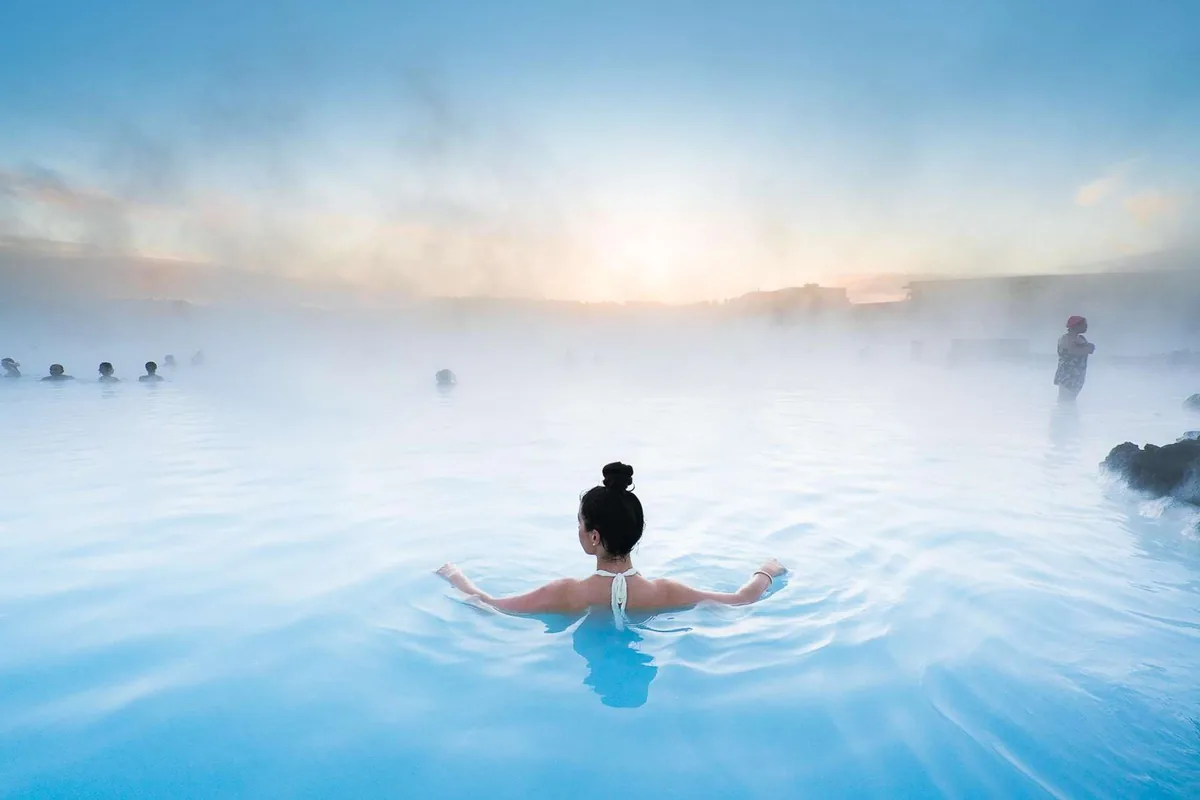
📍 Reykjavík and Reykjanes · ICELANDIA (8 hrs)
An afternoon in the milky waters of the Blue Lagoon, then the northern lights chase in the evening, without changing transport.
- Comfort entry to the Blue Lagoon included: silica mask, towel and a drink
- Return transfers from Reykjavík included
- ⚠️ More than double the price of the other three cards, for the lowest rating and the fewest reviews
Free cancellation
From 317 € / person
But there are obviously other factors that come into play, not just the weather or the scenery.
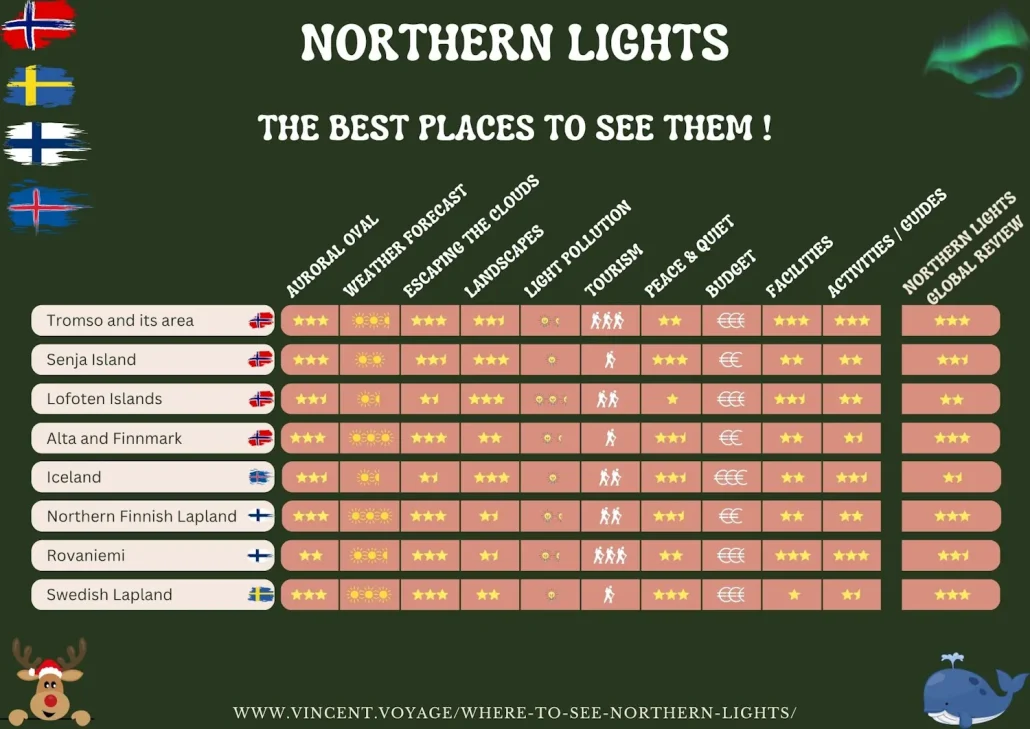
In the following table, I’ve summed everything up, so you can see destination by destination what awaits you (prices, activities, location relative to the auroras…)
This table should REALLY help you make your choice
But roughly:
- If your goal is the auroras :
- northern Finnish or Swedish Lapland, or Finnmark, except they’re not the most beautiful places
- There are also all the winter activities you could want
- If you want a mix of scenery and auroras:
- then Tromsø and Senja, because even if the weather’s bad you can drive to escape the clouds, and the scenery is really beautiful
- there are also loads of activities in Tromsø
- If you mainly want to enjoy the scenery, with the auroras as a bonus
- Then you need to go to the Lofoten Islands
- Or to Iceland
- If you want the places where everything is easier, with the most activities and amenities
- Tromsø in Norway
- Rovaniemi in Finland
3. What extra activities to do
Here we are! Because seeing the northern lights is great, but you might as well make the most of the daytime too. And that works out nicely, because in all the places we’ve talked about, there’s a whole bunch of really fun activities!
- whale watching
- all year round in Iceland
- from October to January in Tromsø
- dog sledding and snowmobiling
- anywhere there’s snow and flat ground
But these areas are also the playground of animals like reindeer and elk, which you can see in the wild or with the Sami, for example.
If you go to coastal regions like Norway or Iceland, I really recommend taking the opportunity to explore the surroundings by boat. That way you can see the scenery, which is stunning!
So basically, a lot of waffle to tell you that I recommend these activities:
Tromsø :
- Dog sledding
- Snowmobiling
- whale and orca watching
- enjoying the scenery
Swedish and Finnish Lapland :
- cross-country skiing or snowshoeing
- going out with a dog sled
- thrills galore on a snowmobile
Iceland :
- seeing the south coast, which is fantastic
- going to the Blue Lagoon (or another one like the Sky Lagoon, if the Blue Lagoon is closed because of the volcano)
- whale watching
- seeing an ice cave
As these destinations are getting more and more touristy, I reeeeally recommend booking ahead.
Don’t leave it until you’re there! Because there’ll be nothing left.
For example, in Tromsø you need to book dog sledding trips several months in advance. Same for snowmobiling
Around Rovaniemi, things also fill up fairly quickly, whereas in Levi there’s still room a few weeks ahead.
But really, to avoid nasty surprises and ending up with nothing when you were planning to treat yourself, book ahead, not once you’re there. So yes, it’s not ideal, there’s not much room for spontaneity, but it’s better than ending up with nothing.
Roughly, here’s how you could sum it up:
- all the winter activities (dog sledding, snowmobiling…):
- Tromsø
- All of Finnish Lapland
- for sightseeing, hiking and admiring the scenery
- Lofoten
- Iceland
- Tromsø
- for whale watching:
- Tromsø and Alta from November to January
- Iceland all year round
In the table below, I’ve put the key points for each place, to make things clearer (well, I hope!)


4. How long should you go for
Seeing the northern lights doesn’t happen at the snap of your fingers. It takes preparation, planning ahead, but also something you have no control over: the weather. You need a little dose of luck not to land on a spell of widespread bad weather.
When the weather is bad, you generally have to drive to get away from the cloud cover. It’s not unusual to drive 4/5h in the night. However, sometimes the clouds are so thick that there’s no chance at all that evening. And it can happen several evenings in a row. Take last October in Tromsø, for example, which was particularly foul.
If you’re in that situation, several evenings in a row with no chance of auroras isn’t impossible.
That’s why I don’t recommend coming for fewer than 4 nights.
First of all for the reason I just mentioned, to be sure of getting at least one aurora evening.
But above all, between you and me, you haven’t come all this way to see the auroras just once, have you? So staying longer lets you see the show several times and find out for yourself that every aurora is different and a unique experience.
Plus, as we’ve seen, there’s a whole bunch of activities to do, so the longer you stay, the more you get out of it!
That’s why the ideal length is ONE WEEK, which lets you do quite a few activities, go out several evenings, and explore the surroundings.


5. Should you rent a car
Honestly, it depends on you (look at me, the bold guy who loves taking risks)
With a car:
- you’re free to do what you like
- you don’t necessarily need an agency to go and see the northern lights
- but it means driving on snow/ice. It’s not especially difficult, you just need to be confident
Without a car:
- you depend on the agencies and the activities
- so if you have activities every day, not sure it’s worth it
- and in that case, a car would only be useful for heading out every evening to chase the auroras
So if you have nothing or almost nothing planned, definitely rent a car
If you want to go aurora hunting regularly: rent a car
If you have something on every day and you’re not going to chase the auroras on your own: no need to rent a car
If you’re scared of driving on snow and ice: don’t hold back, it’s not difficult
But my final advice on this would be that it’s better to have one than not, if you have the choice. Worst case, you lose a bit of money by not using it enough. Otherwise you’ll be stuck without one.
For the car rental, you don’t need some huge thing. The roads are cleared (even in Iceland), so a good small car or a small SUV will do just fine. You don’t need a 4×4 unless you want to drive the F-roads in Iceland.
Above all, you need to compare. Prices vary enormously from one day to the next, from one agency to the next and… from one comparison site to the next. So personally I use at least two, including the reliable Discover Cars that I really like. There are variations, which is why you shouldn’t rely on just one.
- then, if you want even more information, in the following article I tell you whether a car is essential to see the northern lights
6. Where to stay, how to choose the right accommodation
Right, now for the question that also comes up all the time. Should you sleep in town or outside?
The big advantage of the Nordic countries is that the quality of accommodation is there. You’ll find a bit of everything, but plenty of places typical of the region.
Whether you want to sleep in a fisherman’s cabin in the Lofoten Islands, in a Norwegian house on the edge of a fjord, in a wooden chalet lost in the wilds of Finnish Lapland, or in a cabin by a lake in Sweden, there’s something for absolutely every taste!
And also, and this is what’s great, Nordic hotels are good quality. They provide good beds, comfortable, well-insulated rooms (it has to be said, it’s freezing), and above aaaall breakfast! That’s the really big advantage of hotels.
There are also more and more families renting out (on Booking or Airbnb) their family holiday homes, the ones passed down from generation to generation. It’s traditional, it’s nice and it’s usually really well located!
So first, you need to know whether you’ll have a car or not.
Without a car, it’ll be very hard to stay outside the city centre, because public transport is usually pretty complicated. So you should focus on accommodation in the centre.
- as a family, it’s usually much cheaper to find an apartment rather than two hotel rooms. It’s also easier for managing the kids. Now I’m not saying your kids are a pain, I wouldn’t dare, but in a hotel things can get a bit cramped. Otherwise there’s the aparthotel option: the advantages of a hotel (breakfast, cleaning) without the drawbacks, plus a kitchen and space. It’s a good compromise!
- as a couple, the hotel has the really big advantage of breakfast, which saves you 2 meals (because given the buffets, you won’t be hungry until the evening), and for two it’s not necessarily much worse value than an apartment. But the apartment has the advantage of giving you space in bad weather. Then again, you always get fewer nasty surprises with a hotel than with an apartment, but nasty surprises are rare up there anyway
If you have a car, think about the cost of parking in the city centre. It can quickly push up the bill. In Tromsø it can cost 30€ a day, so if you book a hotel, check that parking is included (it isn’t in Tromsø, but it is in other towns). Same if you’ve rented an apartment, check whether it comes with a parking space.
But with a car you can head out of town to the more traditional places to stay. However (yes, another warning!), if you have activities leaving from town (snowmobiling, dog sledding, boat trips…), don’t go too far or you’ll spend too much time going back and forth.
On the other hand, if you don’t have many activities, there’s no need to go into the centre every day, and that’s a good reason to find a place out in the wild.
Anyway, all that to say, here are a few examples of places to stay, in town or outside, that are worth a look. Here’s what you can get that you couldn’t get on a “classic” holiday, if I may say so.
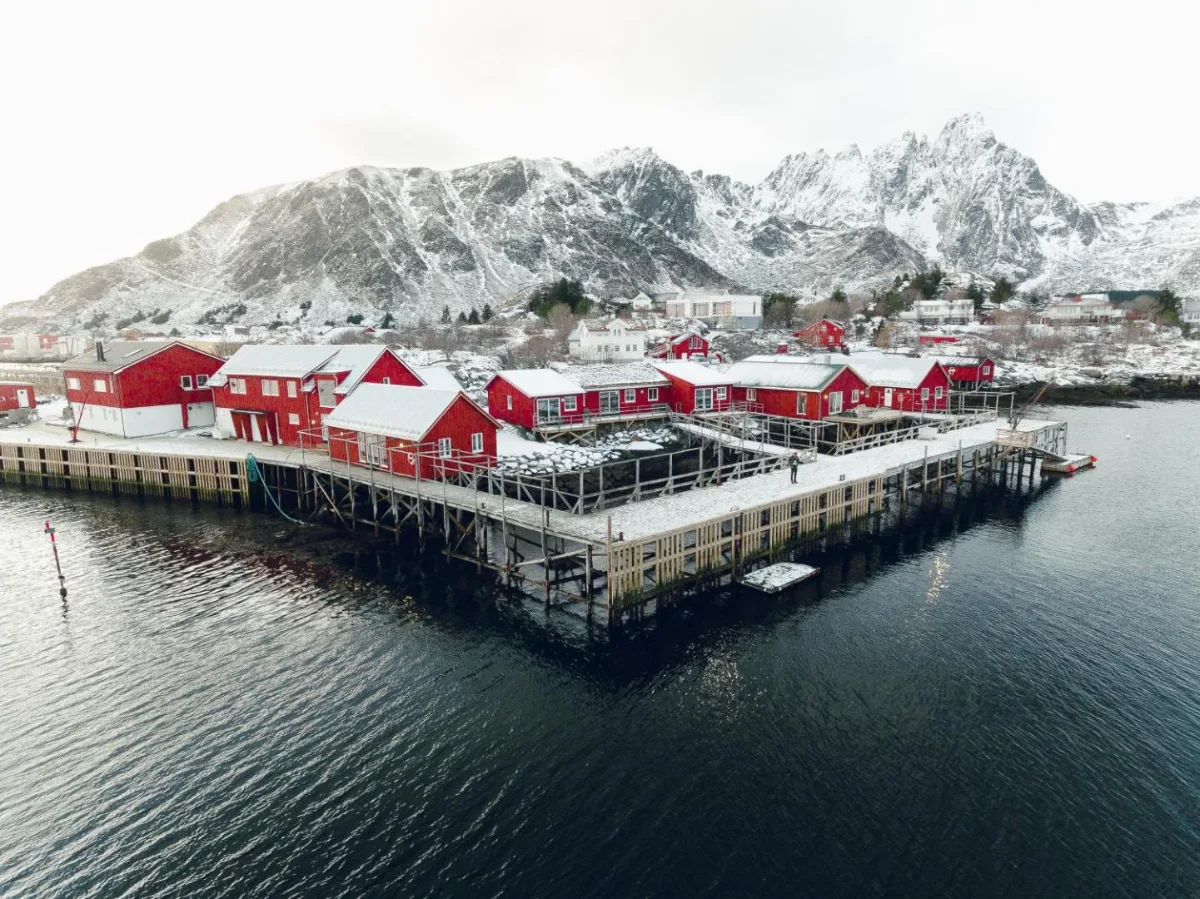
- LOFOTEN ISLANDS
- ICELAND
- Golden Circle Domes, in a bubble by a lake, in the heart of the Golden Circle
- Kirkjufell Guesthouse, for a view of the famous mountain on Snaefellsnes
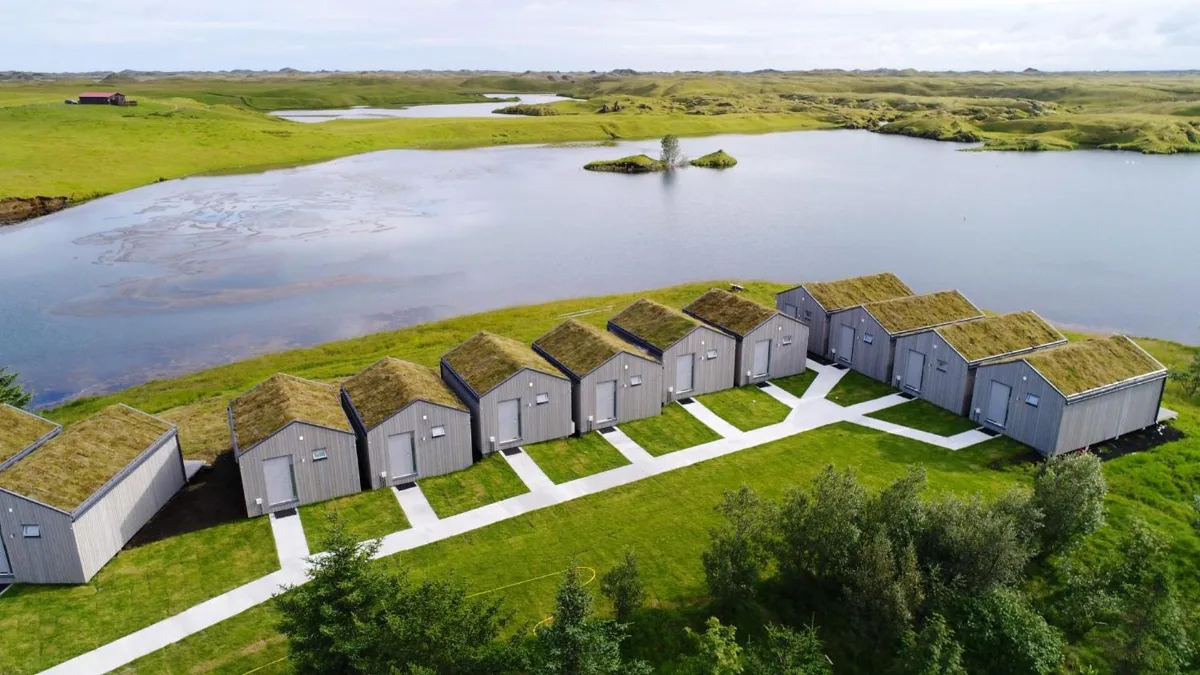
- Magma Hotel, with its “hairy” houses by a lake
7. Getting properly prepared to go aurora hunting
Right, that’s it, you’re ready to go. Now, I’d say the hard part begins. A “hard part” that can actually be super simple. It’s just a matter of preparation:
- how to know where to go
- what rules to follow
- how to dress and prepare
But the most important thing, because I get this question several times a day: how to know where to go. Right, I’ll explain all that below!
- Oh, and you can find all of this in my really comprehensive article on learning to hunt the northern lights like a pro!

How to find places to see the northern lights
I’ve already talked about it a lot earlier, it’s all about the weather.
To keep it simple: if you have a clear sky, you’ll get auroras.
Assume there are northern lights EVERY evening. Weak or strong, as long as you’re around the Arctic Circle, in one of the regions covered in this article, you’ll get them 90% of the time. Evenings with no activity at all are rare. They exist, but they’re rare. Which is why if you get a chance, go out.
To find a place to go:
- find a cloud-free spot – use weather apps, Ventusky or Windy, look at the cloud cover hour by hour. You’ll know where the clouds are, where the sky is clear, how the weather is changing. And so, you’ll know where to go. Sounds simple? Honestly, it is. Much more than it seems.
- get away from the city lights – in town it’ll be tricky. You’ll be able to see them when they’re strong, but it’s not pleasant. Get away from the city, the street lamps, the road lights, no town on the horizon. In short, into the dark! And watch out for cars on the road, their headlights are perfect for ruining the experience
- a clear view – the first idea is to actually see the auroras. So a clear view to the north, west (and/or east). But nothing blocking the view, not at the foot of a mountain, no house in front, and watch out for power lines! They’ll ruin your photos. Beaches are a good example of a nice place to see the auroras.
- to find these places, either you have ready-made lists, but since it depends on the weather, the main thing is to look on Google Maps for slightly remote spots, follow the roads, switch to Street View to see whether there are lights and whether the view is clear. Otherwise, personally, I wander around during the day and note down every spot that looks good, to test, with its pros and cons. But the places you find yourself are always the best

Should you go with an agency
I’m not going to push you to go with an agency. If I’m giving you all this information, it’s because you can do it yourself. That said, I know the first time isn’t super simple. That’s why on my first two trips here, I went with a guide on my first night.
Why? To get all the information, see how they work, what to look for, where to go, how to read the clouds. In short, gathering information! It’s essential, because you can’t go aurora hunting without knowing where you’re going, and why.
So if you’re going to use a guide, ideally do it at the start of your trip. To get the information, but also in case something goes wrong and there are no auroras that night, you’ll be able to bounce back, you’ll have other chances. Don’t put all your eggs in one evening, especially at the end of your trip 🙂
Plus, guides know their stuff. It sounds silly, but it’s still real expertise. So yes, if the weather is great, it’ll be easy to see them. But if it clouds over, then you need to know where to go, in what conditions, when… in short, it’s a profession.
And going with “those who know” is also a good way to maximise your chances of seeing them. Apart from a few charlatans cashing in on the popularity of the northern lights, you’ll come across good guides, and some are excellent.
Also, if you don’t drive, I’d say going with a guide is essential, because if you’re staying in town, your chances of seeing them are reduced by light pollution and the weather.
Anyway, all that to say it’s expensive, yes, but it’s pretty good! If you don’t want the hassle, go with a guide.
Here you’ll find the recommended agencies for Tromsø

4 recommended places to stay in Lofoten

📍 Olenilsøy · Next to Reine (1 142 reviews)
Rorbuer renovated in a retro style facing the mountains of Reine, with a full kitchen in every cabin.
- Direct view of the mountains and the sea
- Warm, very well-kept retro interiors
- Fully equipped kitchen for cooking on site
From 137€ / night Free cancellation

📍 Lamholmen · Peninsula in Svolvær harbour (1 625 reviews)
Red rorbuer on a peninsula in the harbour, a few steps from Svolvær's main square and restaurants.
- Sea and quayside views from the rooms
- Varied breakfast with local specialities
- A team that takes care of bookings and activities
From 137€ / night Free cancellation
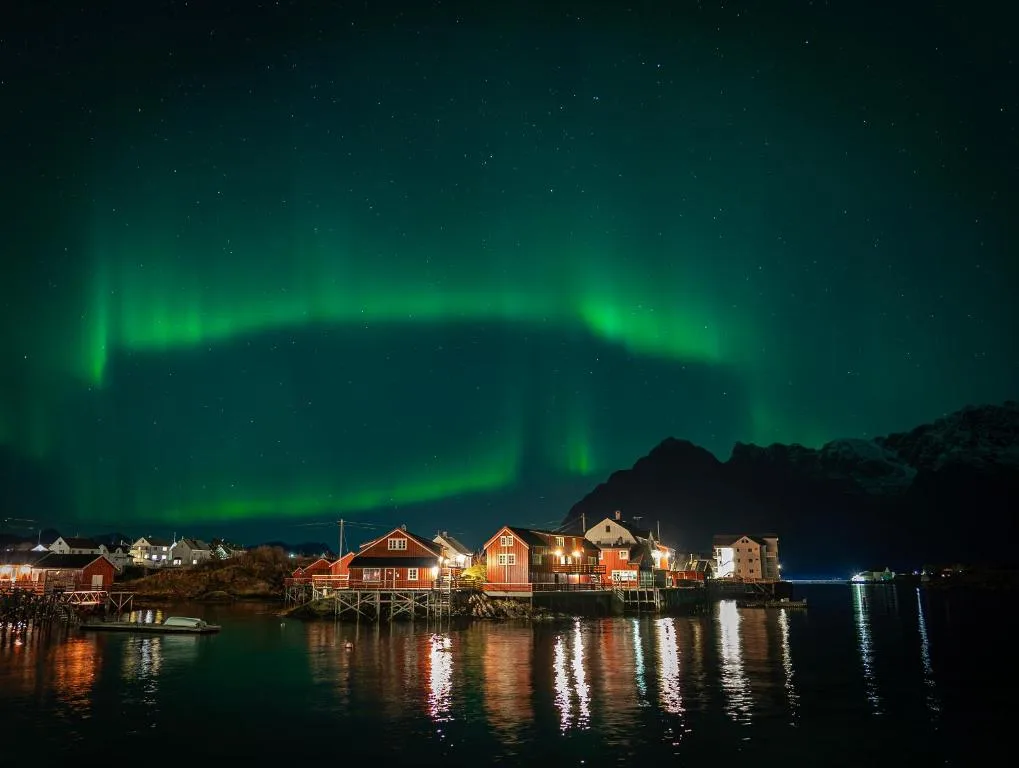
📍 Banhammeren 53 · At the far end of Henningsvær village (1 360 reviews)
Fishermen's cabins at the far end of the most photogenic village in the Lofoten, facing the sea and the islets.
- Views of the sea and the islets, northern lights visible from the terrace
- Cosy, well-equipped interiors, sauna available
- Village centre a 15 min walk away — ask for a fjord-side rorbu
From 165€ / night Free cancellation
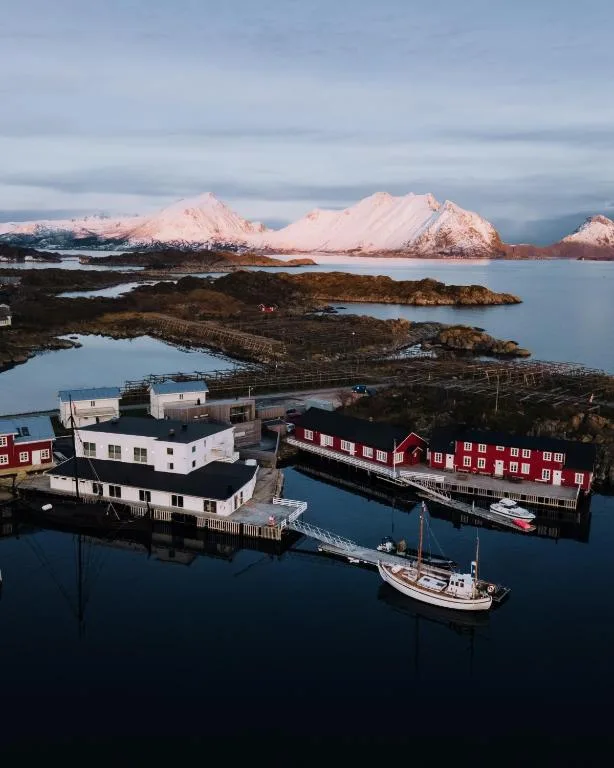
📍 Moloveien 41 · On Ballstad harbour (1 095 reviews)
Rorbuer on Ballstad harbour, with a seafood restaurant that almost every review recommends.
- Water and mountain views from the rorbuer
- Restaurant renowned for its seafood
- Sauna, hot tub and excursion desk on site
From 208€ / night Free cancellation
Should you go out every night to see the northern lights
What’s certain is that the more you go out, the more you multiply your chances of seeing them.
That said, you also need to be able to pick your nights. If the weather’s good, yes, go out. Because you’ll see some. If you need to drive to get a clear sky, go out too.
Don’t forget that at high latitudes, you have a chance of seeing them almost every evening. So as soon as the forecast tells you there’s a chance of clear skies, and your goal really is to see the auroras, go for it.
Every night is different. The auroras are different, the weather is different. So you’ll get a different experience each time. That’s also the magic of the auroras, and it’s partly why I still go out a lot to see them.
However, earlier I told you to choose your nights. Meaning that if the forecast says it’ll be rotten that evening, with a storm, and solar activity is low, then it’s not necessarily worth it.
If it says overcast everywhere, with decent solar activity, then it depends. Because the sky sometimes clears anyway and you get a nice surprise. So it depends on how motivated you are.
But if the sky is clear, go. You won’t necessarily need to go very far.

How to dress and gear up for a night under the northern lights
It won’t come as news to you that it’s going to be cold under the northern lights. Especially if you come in winter.
But the most important thing: the big problem is staying still while you wait for the northern lights.
First, let’s start with autumn. Because yes, autumn is a great time to see the northern lights. In autumn, you’ll mostly get wind and rain. Damp. It won’t really be cold. From early October, temperatures will drop below zero at night, so you’ll need to wrap up well. Maybe with a bit of snow, but it won’t last.
You’ll need waterproof layers, hiking boots, good socks, and to protect your extremities. Thin gloves, a hat that covers your ears.
In winter, temperatures will easily reach -30 (-35 if you go to Finnish or Swedish Lapland), but there’s little wind. If you go to the coast, you’ll get more like -10/-15 with a chance of wind.
Hence how important it is to dress in layers, like an onion, and it’s better to have too much than not enough.
You’ll have two enemies:
- the wind, icy, it can be tough. There’s not much you can do apart from covering up completely, even with a neck gaiter over your face
- feet standing still in the snow. It’s the worst and the hardest to manage, in my opinion. The cold comes from your feet, the rest is easy to manage, I’d say.
In winter you need to pay a lot of attention to your feet. Thin socks + wool socks (the most important thing is not to sweat, because if you sweat, you get condensation and poof, it freezes).
As for boots, there are quite a few good ones (the Sorel Caribou for example), but you really need to go a bit bigger so your feet can breathe. If they’re too small, then condensation and bam! Frozen feet.


No paywall, no flashing ads: the articles, PDF guides and maps are free and always will be. The blog survives thanks to you, and there are two ways to help, one of which costs nothing.
Thanks, it really means a lot 🙂 Vincent, from Tromsø
In conclusion
Right, there you go, I think I’ve told you the essentials.
The most important thing is to know what you want out of your northern lights: in what conditions you want to see them, and what other activities you want to do alongside. Answering these questions one by one will quickly let you filter things down and work out when and where to go.
To sum up, here are my favourite periods:
- from mid-September to mid-October, because it’s mild, there’s no snow yet (barring a fluke), the weather hasn’t turned rotten yet, and you get the autumn colours
- from mid-February to mid-March: the days are getting longer, very beautiful colours, snow, cold but less so
And a few criteria to work out where to go:
- for the choice of activities and simplicity: Tromsø and Rovaniemi
- to focus everything on the northern lights and peace and quiet: northern Finnish or Swedish Lapland (Abisko, Ivalo, Ylläsjärvi, Kittilä…)
- for the landscapes first and foremost: Iceland and the Lofoten Islands
- for a good mix of landscapes and northern lights: Tromsø and Senja
There you go, I hope I’ve made your life simpler and not given you a headache 😀 but if you have any questions to help you choose, don’t hesitate to get in touch!