Last updated on
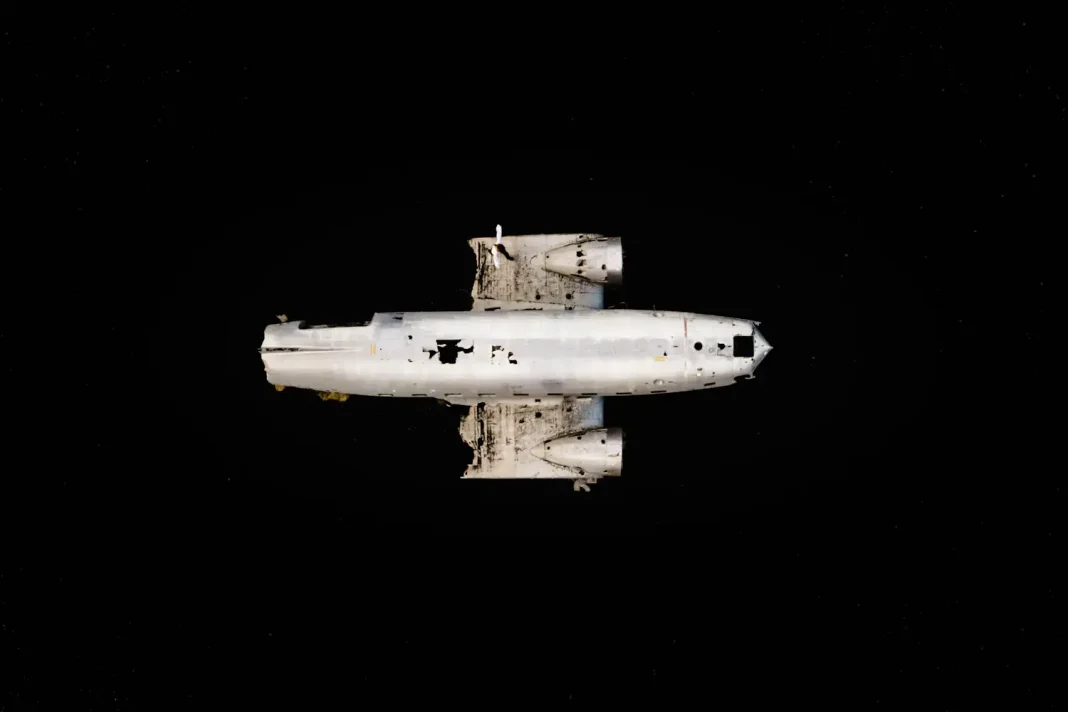
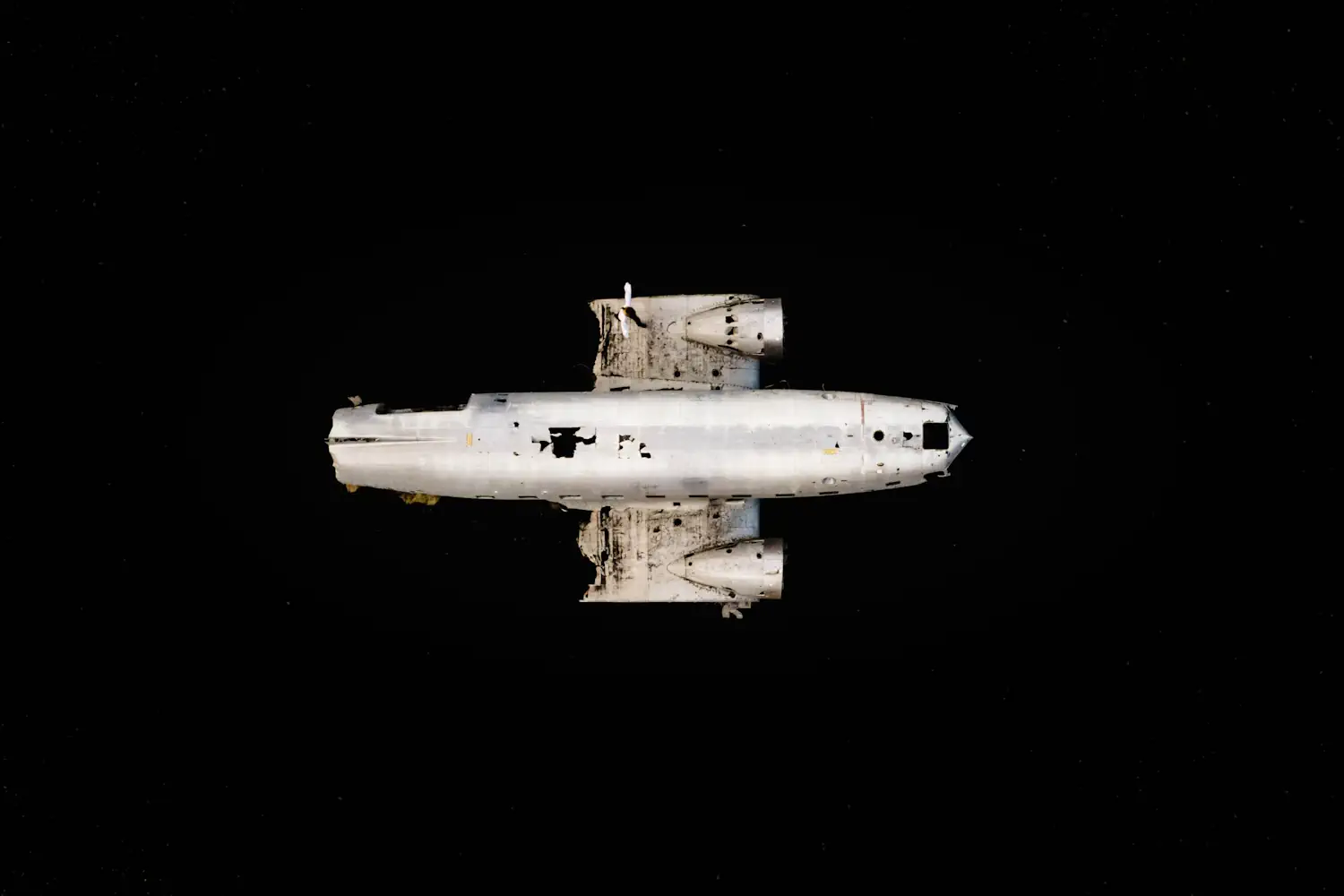
It’s probably the Iceland photo you’ve seen more often than any other: a silvery aircraft carcass sitting in the middle of a huge plain of black sand, with absolutely nothing around it. And every time, the same question comes up: how do you get there, and above all, is it really worth the 2 hours it’s going to take me?
Right, let’s be clear straight away: yes it’s lovely, and yes it’s worth doing. But it’s a visit that costs you time, and time is exactly what’s in short supply when you’re doing the south coast of Iceland. So you may as well know what you’re letting yourself in for before you park up!
Because it’s changed a lot. On my first trips to Iceland, you parked at the side of the road and there was nothing at all. Today there’s a car park (paid), a shuttle, and even a second plane since 2025. Yes, two planes (plus the ones a bit further along!).
Let’s look at it all in detail, and I’ll also give you the country’s other wrecks, including one that’s far easier to reach, right next to Seljalandsfoss. Right, off we go!
The essentials in 30 seconds
Before we get into the detail, here's a summary of what you need to know before you park up. (Indicative 2026 prices, to be confirmed on site.)
| Topic | What to remember |
|---|---|
| Where | Route 1, south coast, between Skógafoss and Vík |
| Car park GPS | 63.4912, -19.3633 |
| Wreck GPS | 63.4591, -19.3648 |
| Site access | Free, open 24/7, all year round |
| Car park | Paid: 750 ISK (≈€5) for a car, 1,000 ISK (≈€7) for a van |
| On foot | 3.5 to 3.7 km each way, i.e. 7 to 8 km return — allow 2 to 2.5 hours with the stop on site |
| By shuttle | ≈3,200 to 3,500 ISK (€22-25) return per adult — allow 1 hour in total |
| On site | No toilets, no shelter, no water. Nothing at all. |
| Driving to the wreck | Banned since 2016 |

Is the DC-3 wreck really worth the trip?
It mostly depends on one thing: how many days you have.
To be blunt, it’s not something hugely spectacular, it’s not a grand landscape. It’s something that divides people. Half say “it’s a must-see”, the other half say don’t waste your time.
We’re talking about one carcass (now two) of a plane lost on a huge beach of black sand, in the middle of nowhere. So I understand it doesn’t appeal to everyone.
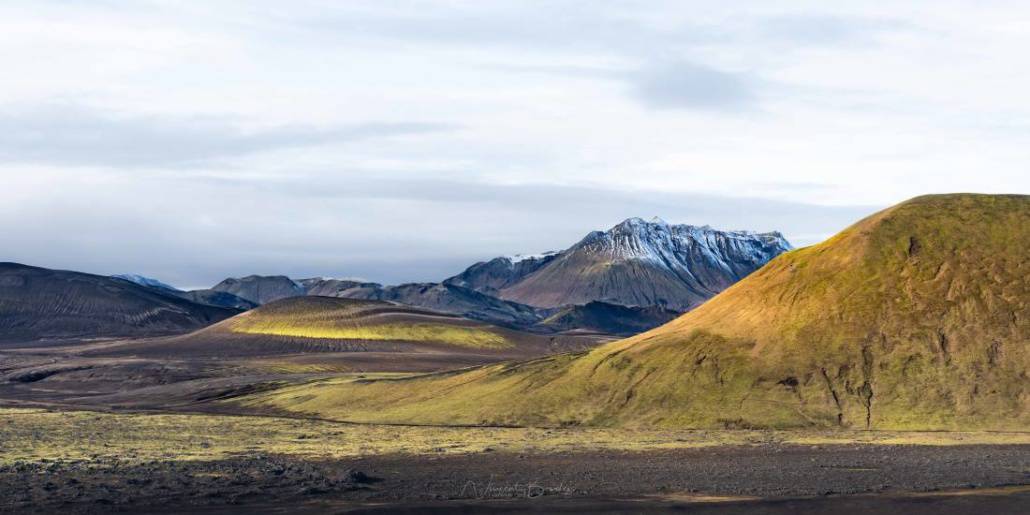
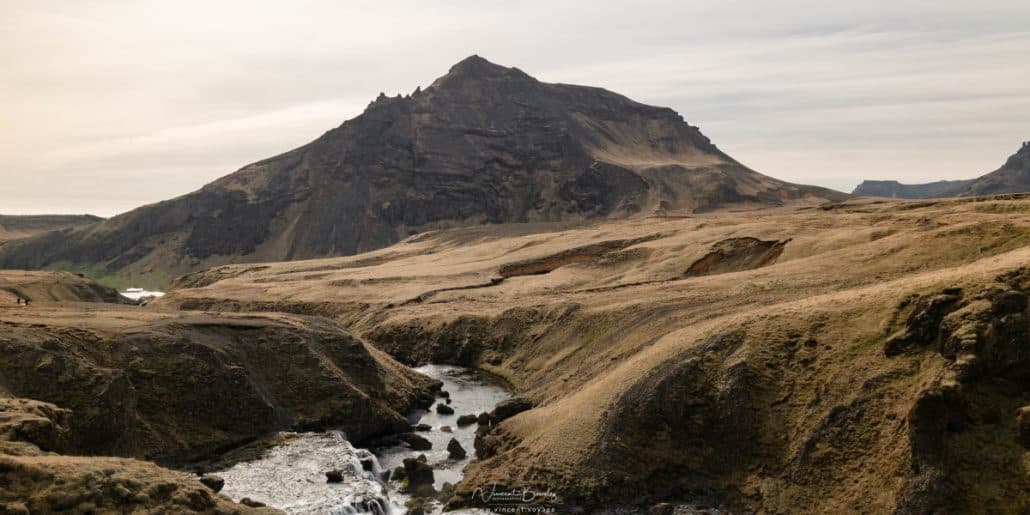
If you’re doing the south coast in 3 days or more, go, honestly. The place really is something else. It’s not beautiful in the classic sense of the word, it’s actually downright desolate: black sand to the horizon, the sea on one side, the mountains on the other, and this carcass planted in the middle of the great nowhere. You really don’t expect to see something like this, and that’s exactly what makes it! In fact, it features prominently in my selection of the most beautiful places in Iceland.
That said. If you’re doing Reykjavik-Jökulsárlón in a single day, forget it. You’ll burn 2.5 hours of your day for a site that, once you’re there, takes 20 minutes to look round. In the same slot you could do Dyrhólaey and Reynisfjara and Sólheimajökull, or any of the other must-do activities in the country.
The time/enjoyment ratio really isn’t in the plane’s favour, especially if you’re stringing together the ring road with a tight schedule.
And we need to be honest on one point: the walk is boring. It’s not a hike, it’s a flat straight line of 3.5 km on compacted gravel, no view, nothing, with the wind in your face. The people who come back disappointed are almost always the ones who were expecting a pretty trail :p On the other hand, if you have a drone, it’s an interesting spot seen from above.
At least now you can do the trip with a shuttle from the car park, so it saves a huge amount of time (€24 return, mind you).
So the real trade-off is here:
- Got time and enjoy walking? On foot, early in the morning. It’s the best choice, by far.
- Short on time, with family, or with young children? The shuttle, without a second’s hesitation.
- Really very short on time? Go and see the other DC-3 near Seljalandsfoss instead (I talk about it below), it’s a 200 m walk!

Where the wreck is and how not to miss the car park
The wreck is on the Sólheimasandur sandur, a huge glacial outwash plain south of Route 1, between Skógafoss waterfall and the small town of Vík i Mýrdal.
The landmark you can’t miss
The car park is on the south side of Route 1 (on your right coming from Reykjavik), on a large, nice and flat gravel area, about 2 km after the Sólheimajökull sign and just before the bridge over the Jökulsá á Sólheimasandi river.
Careful, it’s poorly signposted and comes up fast! Put the GPS coordinates into your phone before setting off, because the signal is frankly hit-and-miss around there.
- Car park: 63.4912, -19.3633 (i.e. 63°29’28.4″N, 19°21’48.2″W)
- Wreck: 63.4591, -19.3648 (i.e. 63°27’32.7″N, 19°21’53.3″W)
A small word of warning while we’re at it: several French-language sites publish wrong coordinates for this site (some downright impossible, with seconds at 86…). Use these, they’ve been cross-checked.
Driving times
- Reykjavik → car park: about 160 km, allow 2h15 to 2h30
- Skógafoss → car park: 6 to 10 km depending on where you start, around ten minutes
- Vík → car park: 27 km, 15 to 20 minutes
- Seljalandsfoss → car park: about 40 km
If you’re looking for somewhere to drop your bags in the area, I’ve got a dedicated article on the hotels, guesthouses and campsites of the south coast.
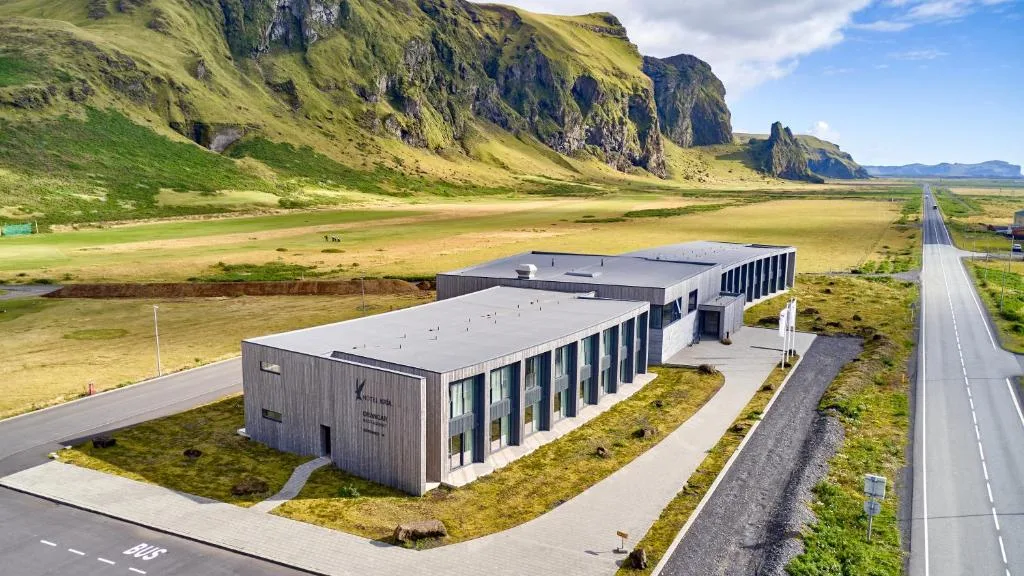
The car park is paid, and there’s a catch
Yep, the car park is paid now, and it still catches quite a few people out. It’s run by Parka on behalf of the landowners’ association. It’s exactly the same system as for the Landmannalaugar car park, so if you’ve already dealt with Parka elsewhere in Iceland, you’ll be on familiar ground.
The prices
- Private car: 750 ISK (≈€5)
- Car or van with more seats: 1,000 ISK (≈€7)
- Motorbike: 300 ISK (≈€2)
- Coaches: from 1,800 to 6,400 ISK
The category depends on the number of seats listed on the vehicle registration document. That’s why some blogs quote 750 and others 1,000: both are true, it just depends on the vehicle! A standard 5-seat hire car is 750 ISK. A 9-seat van tips over into 1,000. By the way, if you’re still unsure about your vehicle, here’s my article on what type of car to hire in Iceland.
Good news all the same: the fee covers 24 hours, not one hour.
The catch: there’s no pay-and-display machine
And this is where people get caught out. No machine, no card terminal, no ticket. Nothing. Cameras read your number plate on the way in, and it’s up to you to go and pay online at parka.is (or via the Parka app) by entering your registration.
Two very concrete consequences:
- You have up to 24 hours after you leave to pay. So if you’ve got no signal at the car park (it happens!), don’t panic, you pay in the evening back at the hotel, nice and relaxed.
- If you don’t pay, it’s a 1,960 ISK penalty (≈€14) on top of the fee, recovered from the vehicle’s owner. So from your hire company, who’ll pass it back to you with their own admin charges on top. It can add up fast for a €5 car park!
Worth knowing before you set off:
- There are no toilets at the car park or along the 3.5 km. The nearest are at Skógafoss or the Vík petrol station.
- No water, no food, no shelter, no bins. Really nothing.
- Sleeping or camping at the car park is forbidden.
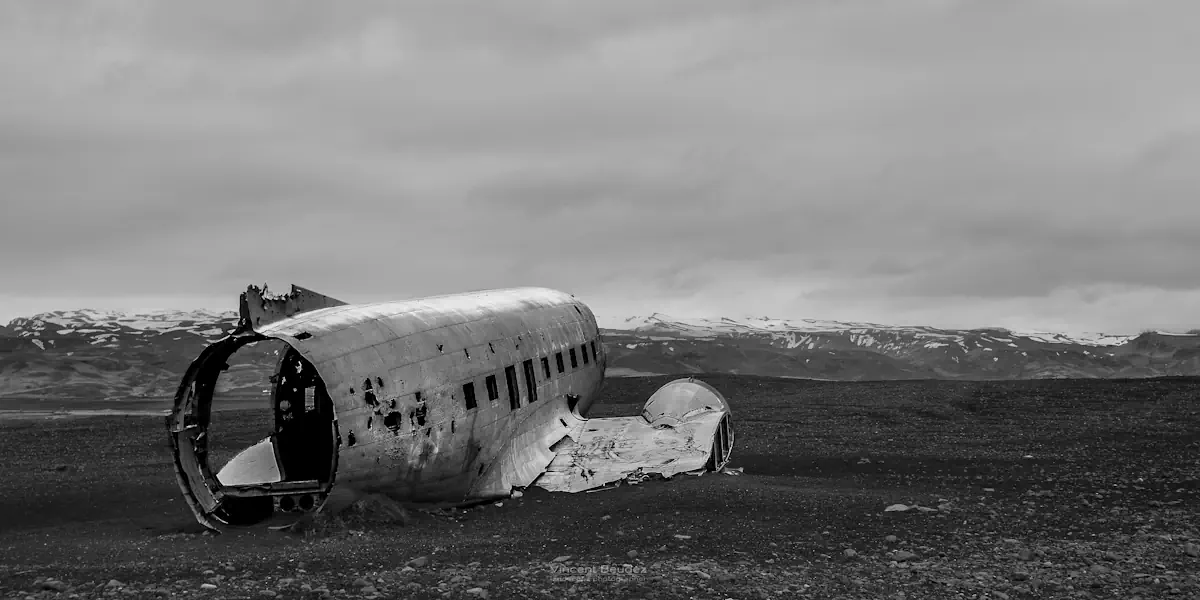
The 3 ways to reach the wreck
On foot: 3.5 km in one go
This is the free option and the most common one. The path is wide, nice and flat, marked with reflective posts the whole way. There’s only 30 m of elevation gain over the whole thing, so no technical difficulty, it really is within everyone’s reach.
Allow 45 min to 1 hour each way, and 2 to 2.5 hours in total with the 20-30 minutes spent on site. The way back always feels longer: you’ve got the wind in your face, and you’ve already seen it all.
A tip from my own experience: stick to the marked path. I once strayed off it thinking I’d cleverly cut the corner; all it does is add distance for nothing (and going off-trail is very frowned upon on this kind of terrain).
By shuttle: the comfortable option
An official shuttle links the car park to the wreck, operated by Icelandic Mountain Guides / Icelandia.
- Price: about 3,200 to 3,500 ISK (€22-25) return per adult
- Children 6-15: about 2,380 ISK (≈€17) — to be confirmed when you book, this price isn’t displayed everywhere
- Free for under-6s
- Departures roughly every 30 minutes, from 10am to 5pm, 7 days a week, all year round
- 10 to 15 min journey each way
- No need to book! You can buy your ticket right on the bus. In summer and at weekends, booking is still more relaxing though.
- You come back on whichever run you like
A point to watch in winter: the operator does state 10am-5pm all year, but the last departure depends on daylight. In December-January, when night falls around 4pm, it obviously stops earlier. Check on the day.

By electric bike
2 much lesser-known options:
- you can hire electric bikes right at the car park! No booking, first come first served. Handy if you want to avoid the walk without paying the shuttle for the whole family, but the offer is limited and absolutely not guaranteed. It’s Icelandia who run this, though even on their site there’s no way to know the hire price in advance.
- you can also go by e-bike but with a guide! There, obviously, the hire is guaranteed and all you have to do is pedal and follow “the one who knows”.
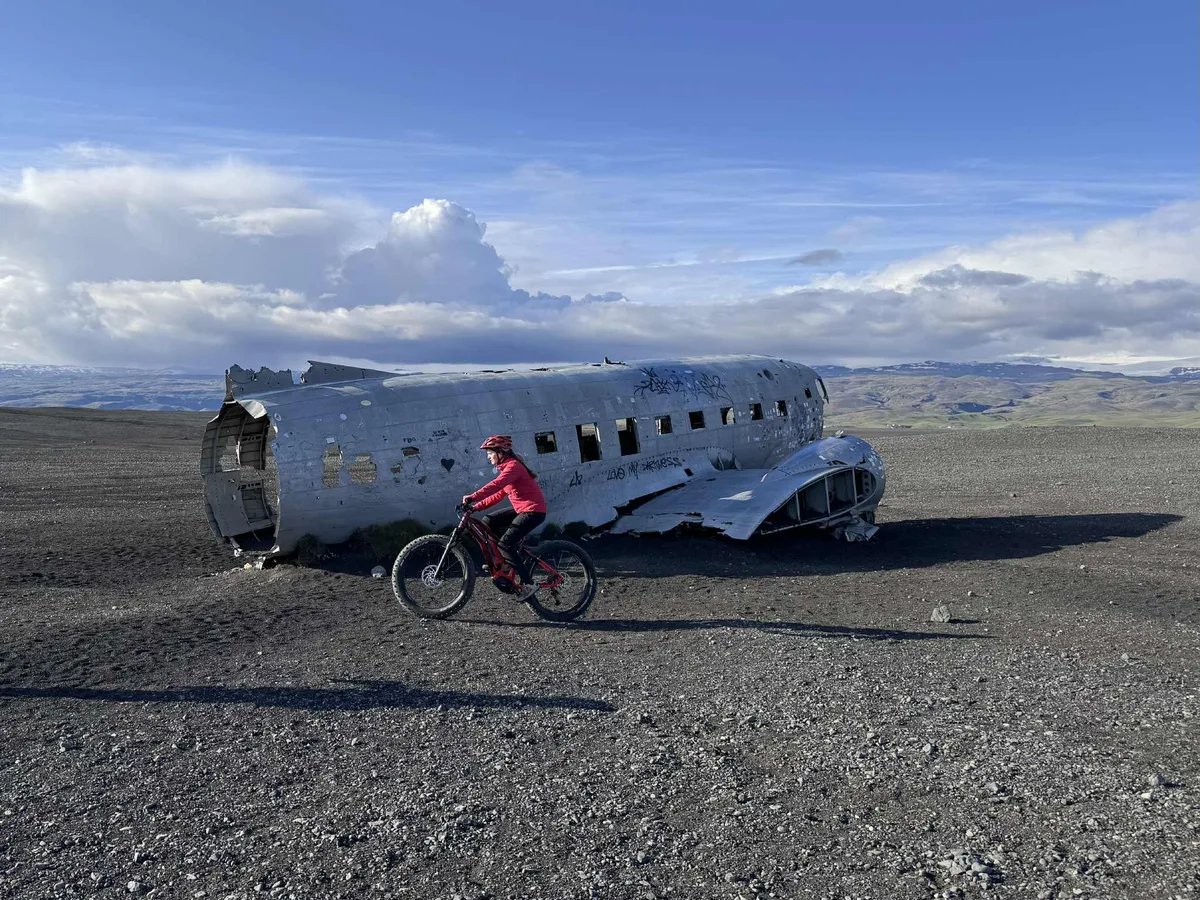
And by car?
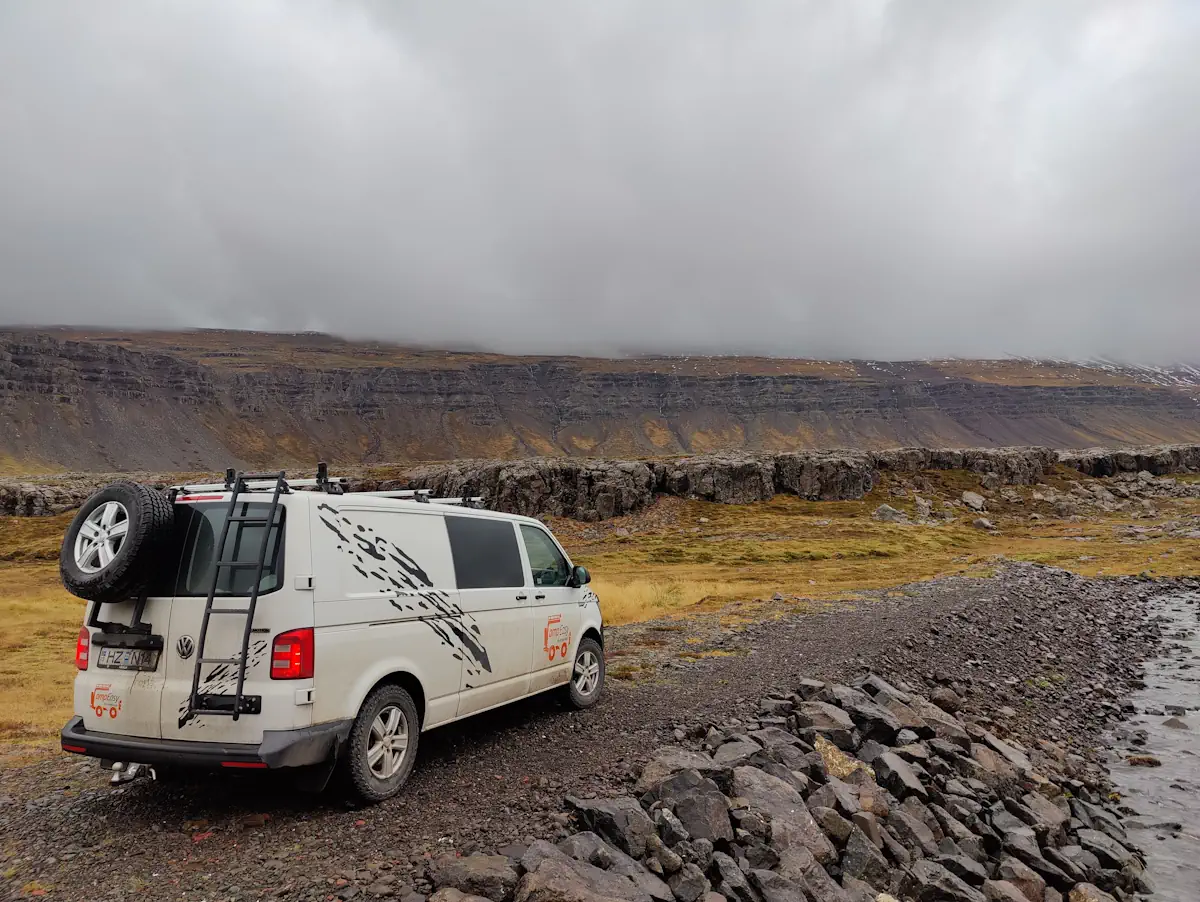
Well, no. It’s been banned since spring 2016. The landowners closed the track because reckless off-roading was wrecking the sandur, and it’s hard to blame them. Off-roading (utanvegaakstur) is in fact an environmental offence in Iceland, and the landowners have brought in a penalty of 100,000 ISK (≈€700) for any vehicle that ventures onto the sand. Only the shuttle is allowed through.
So, walk or take the shuttle?
| On foot | Shuttle | |
|---|---|---|
| Cost | Free | ≈€24 / adult |
| Total time | 2 to 2.5 hours | ≈1 hour |
| In bad weather | Not advised | Manageable |
| With children | Tricky | Ideal |
| Pushchair / reduced mobility | No | Only option |
| Opening hours | 24/7 | 10am - 5pm |
The maths is fairly simple: walking means trading 1.5 hours of your day for €24 per person. On your own, it’s easily justified. For four people, the shuttle costs nearly €100 and there, frankly, the trade-off is up for debate.
And there’s a rather clever side effect: since the shuttle only runs between 10am and 5pm, if you walk early in the morning or at the end of the day, you’ll have the site almost to yourself!

Weather and safety: can you visit the wreck in any conditions
This is the part the guidebooks leave out, and yet it’s by far the most important.
Over these 3.5 km, there’s strictly no shelter. Not a rock, not a building, not a tree, nothing. You’re on a fully exposed plain of black sand, where the wind picks up very fast and where sandstorms genuinely happen. If things turn nasty halfway, you’re 1 hour from your car, in either direction.
And this isn’t theoretical: in January 2020, two tourists died of hypothermia on this trail during a storm. The path is marked, yes, but in a blizzard or at night, on a plain without a single landmark, that isn’t enough.
I remember the first time I did it, in 2016: no facilities or signage, weather not great, and when it took a turn for the worse you could completely lose all sense of place, because you could no longer see the landscape to get your bearings; you were just on a huge beach of black sand with… nothing all around and a wind that could curl a sheep’s fleece.
My rules, dead simple:
- Check vedur.is (weather) and safetravel.is before setting off. Always, even in July.
- Wind forecast above 15 m/s, or a yellow alert: give it a miss, or take the shuttle.
- In winter, set off at least 3 hours before sunset.
- A waterproof windproof jacket is a must. The wind alone is enough to chill you, even in fine weather.
- Download the offline map and the 112 Iceland app. The signal is poor on the sandur.
- Take water! There’s none anywhere.
None of this is dramatic in good weather, mind: it’s a flat, easy stroll. But Iceland changes its mind in 20 minutes, and there’s nowhere to take refuge out there.


When to go to the DC-3 to be (almost) alone
The site is open 24/7 all year round, and that’s a real advantage.
Before 10am and after 5pm, that is, outside shuttle hours, the crowds collapse. It’s as simple as this: the vast majority of visitors arrive by shuttle or on an organised tour, and both those flows stop at 5pm. Do the maths 🙂
By season:
- Summer: packed from 10am to 5pm. But with the midnight sun, a visit at 10pm or 6am works perfectly, and there it’s really nice. The big problem when it’s busy is seeing all those disrespectful people wrecking the wreck, tagging it, pulling out the wires…
- Shoulder season (May, September): the best compromise in my view. Days still long and far fewer people.
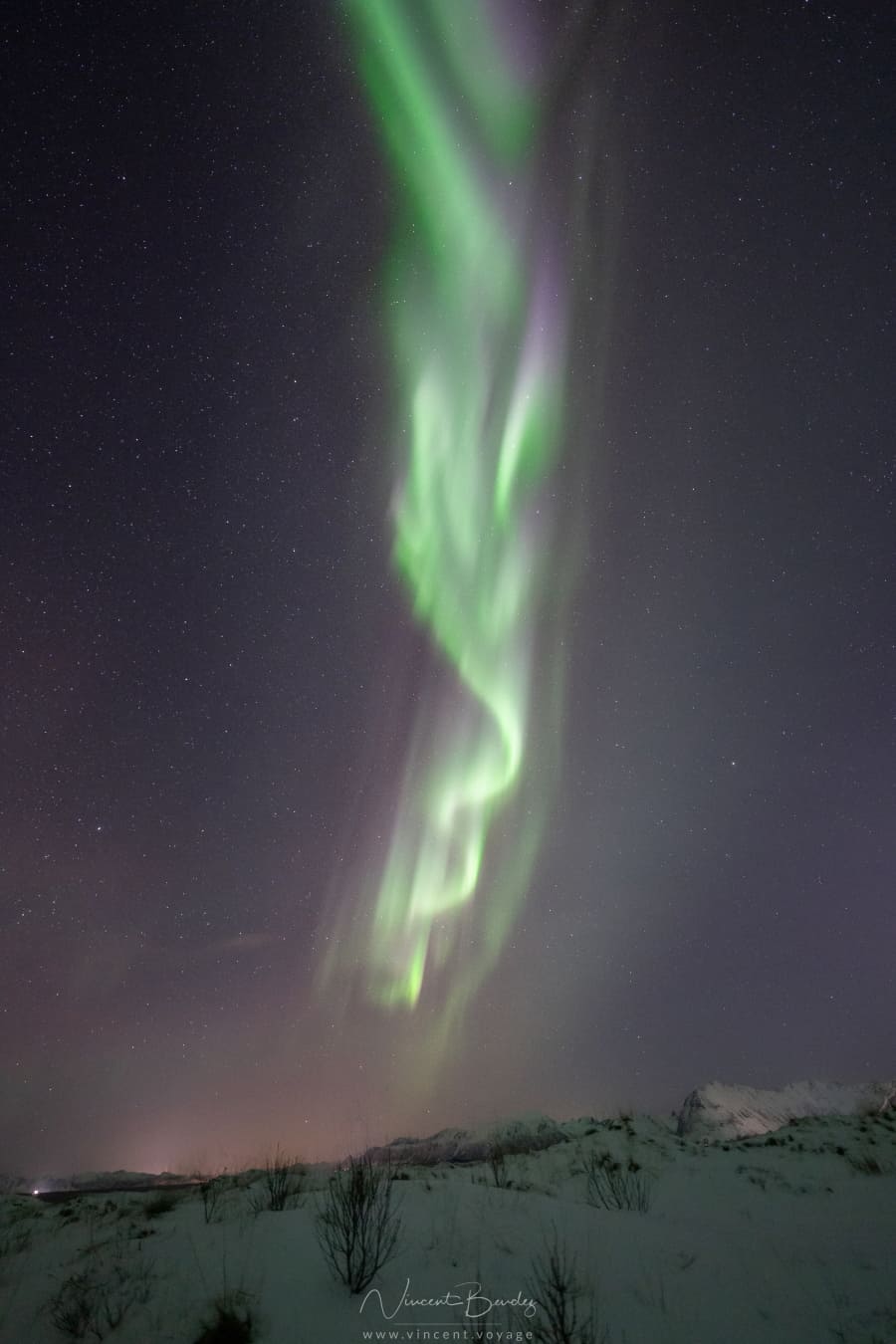
- Winter: very few people, superb light, and the chance to see the northern lights above the wreck. But the window is tiny: night at 4pm, a shuttle that stops earlier, and a risky walk. Reserve it for people who are well-equipped and careful.
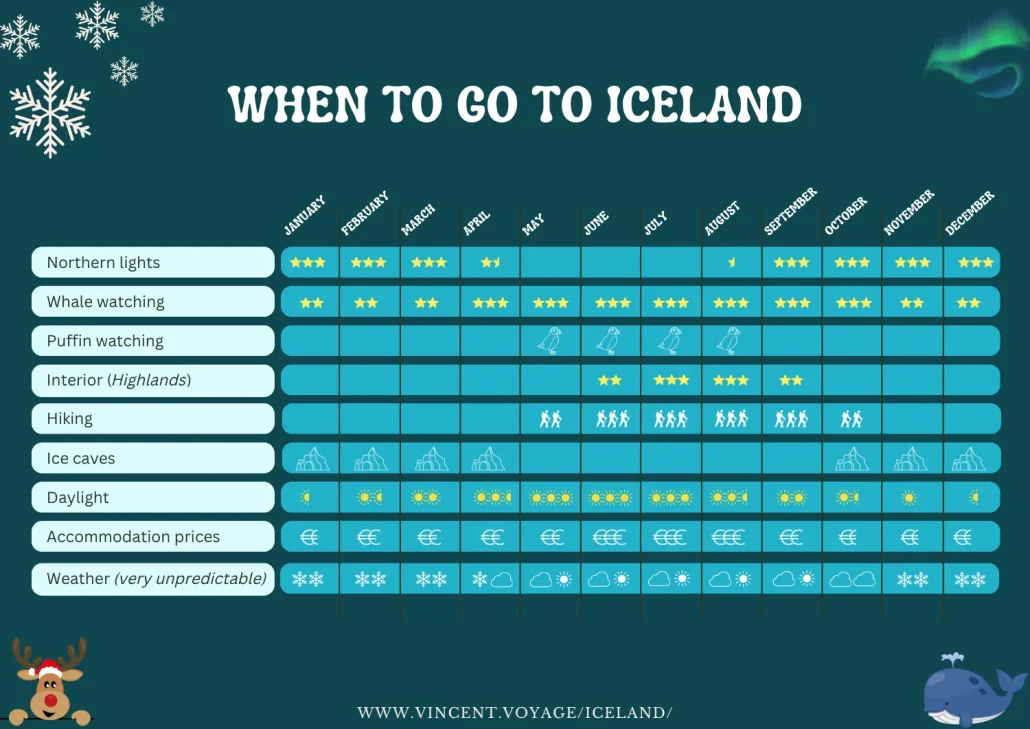
If you’re still unsure about when to travel, it’s all detailed in my article on when to go to Iceland.
And what about the drone? Sólheimasandur isn’t on the list of areas where recreational flying is banned (unlike Skógafoss and Dyrhólaey, right next door, which have been strictly off-limits since May 2026). But it’s private property, and in Iceland taking off from private land requires the owner’s consent.
Add the compulsory registration on flydrone.is (≈5,900 ISK for 5 years, European registration is recognised) and the 120 m ceiling. And above all: in practice, it will all depend on the wind. On a sandur, between the gusts and the abrasive sand, your drone won’t like it. But it’s perfectly doable!
Since summer 2025, there are two planes on Solheimasandur
The original wreck deteriorates year after year (well, no, the wreck is degraded by the tourists year after year).
In March 2025, the landowners therefore bought another Douglas DC-3, the “Gunnfaxi” (registered TF-ISB), a former Icelandic airliner that hadn’t flown since 1976. It was moved from Keflavik by night with a police escort in June 2025, parked for a few weeks in a field while it was done up, then installed on the sand next to the 1973 wreck during summer 2025.
In practice, when you reach the end of the 3.5 km, you now find two DC-3s on the sand, a few hundred metres apart. Not right up against each other, but well within the same field of view: on a plain this bare, you can see the second one from a long way off.
And the contrast between the two is striking. The Gunnfaxi is a complete aircraft: wings, engines, tail fin, cream-white fuselage with its dark stripe and its old Icelandic airline livery. It’s even set on slabs slid under the wheels so it doesn’t sink into the sand. So it’s not a “crashed” plane, it’s a parked plane, and you can tell straight away. The 1973 wreck, for its part, is now just a bare shell: no wings, no engines, no tail, corroded metal and graffiti.
In other words: one looks like a plane, the other looks like a wreck. It’s the second one you came to see, and it’s the only one you can go inside.
If you were after the classic photo of the carcass all alone in the middle of the void, be aware before you set off: depending on the angle, you’ll have the other aircraft in shot.
There’s been quite a local scrap around this addition. The Skógar transport museum wanted to take the Gunnfaxi to preserve it. The landowners — the Loðmundur land association — did agree to hand it over, but on one condition: that they be provided with another DC-3 to put on the sand in its place! A deadlock, in other words. A group, the “Friends of Gunnfaxi”, then launched a national fundraiser in autumn 2025 to get the aircraft out of the sand. It didn’t work, and the group threw in the towel in March 2026, refunding its donors before disbanding. The director of Loðmundur came out with this line, reported by Morgunblaðið: “I’d rather the plane destroyed itself on the sand than have it go to you, at the museum.” Charming.
The landowners’ plan now is to show it off on site, on a plinth — the slabs under the wheels and the bodywork visible in the 2026 photos show it’s already well under way. Some Icelanders openly talk of the “Disneyfication” of the site: an authentic wreck, quietly fading away, being replaced by a plane deliberately placed there. The debate isn’t settled, and the look of the site will probably keep changing over the coming years.
The other plane wrecks in Iceland
There are several, but only one is really a tourist alternative.
The Eyvindarholt DC-3, next to Seljalandsfoss
This is the one many people have in mind without knowing what to call it: a DC-3 with a red nose, sitting in a field a few minutes from Seljalandsfoss and Gljúfrabúi.
- GPS: 63.6484, -19.9398
- 200 m walk from the car park. Normal car, no dodgy track.
- Paid car park: 1,000 ISK (≈€7) for a car, 1,300 ISK for a van — same Parka system
- There are toilets! And even an electric charging point
- Open 24/7 all year round, official site: planewreck.is
One little point of honesty all the same: this isn’t a wreck in situ. It’s a C-47 from 1944, crashed in 1969 at Sauðanes in the north-east, whose fuselage was transported to Eyvindarholt in 2023 and installed there deliberately for tourism. So you don’t get the same emotion at all as at Sólheimasandur: no infinite plain, no solitude, no “wow”. But the aircraft is in much better condition, there are far fewer people, and above all it’s 5 minutes instead of 2.5 hours.
If you’re really short on time, with young children, or if the weather’s rotten the day you pass through: go there. You tick the “plane wreck” box without losing half a day 🙂
The Second World War wrecks, on Reykjanes
The Reykjanes peninsula, around Fagradalsfjall, is dotted with Second World War crash sites: a B-24 Liberator, a Sunderland, several Hudsons, a Canso… The best known is that of the B-24 “Hot Stuff”, which crashed on 3 May 1943, killing 14 people including General Frank M. Andrews. A monument was unveiled there in 2018.
But let’s be clear: these are not planes, they’re scattered debris fields, often moss-covered, to be found off-trail with GPS in hand, in lava fields. They’re also war graves: you look, you touch nothing. And part of the area has been affected by the eruptions since 2021, so check safetravel.is. In short, it’s a subject for history buffs, not an itinerary stop.
The Héðinsfjörður wreck, in the north
On the flank of Hestfjall, between Siglufjörður and Ólafsfjörður, lies the site of the deadliest crash in Icelandic history: a DC-3 of Flugfélag Íslands, on 29 May 1947, 25 dead, no survivors. Here again, the aircraft burned and disintegrated: all that remains is debris and a Celtic cross erected in 1997. Access is by mountain hike, with no facilities. It’s a place of remembrance, not an attraction.
What you’re sometimes told that doesn’t exist
A little heads-up, because some wrecks do the rounds on forums without existing:
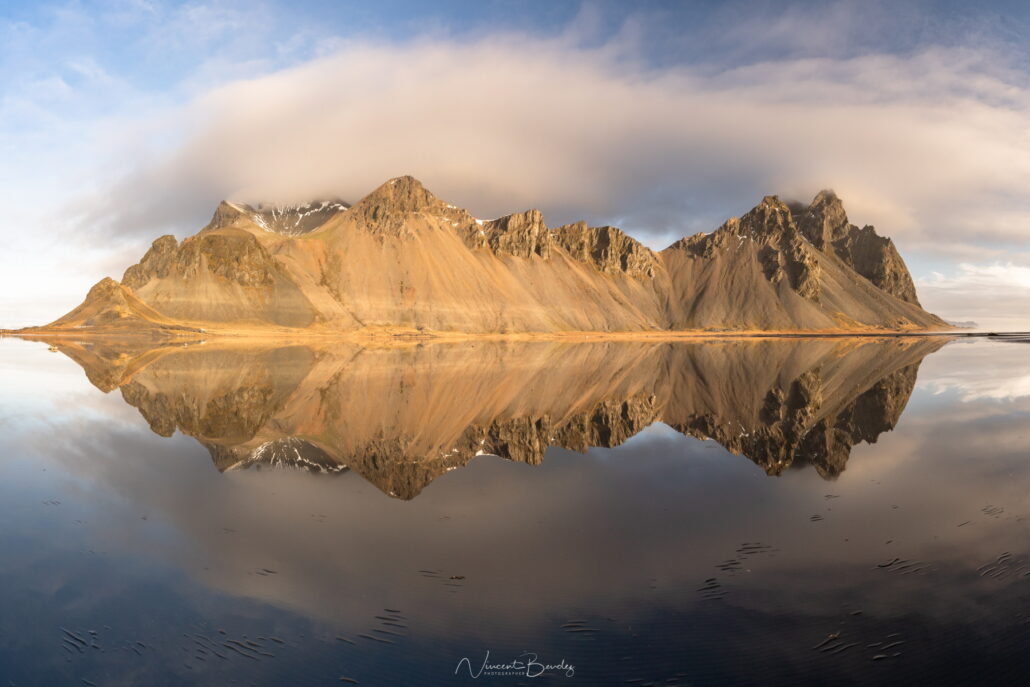
- Stokksnes / Hvalnes: no plane wreck. The site is paid (1,000 ISK per person), but for Vestrahorn, the black beach and the film-set Viking village.
- Skálavík, in the Westfjords: nothing documented, in English or Icelandic.
- Núpsstaðarskógar: nothing either. The confusion probably comes from the DC-4 “Geysir”, which crashed on Vatnajökull in 1950 — whose wreck is buried under the ice and completely inaccessible.

Getting there without a car: the tour, or nothing
Here it’s clear-cut: no public bus serves the wreck car park.
The Strætó 52 line (Reykjavik-Höfn) physically passes right by, but doesn’t stop there — and it only runs 4 times a week (Tuesday, Thursday, Friday, Sunday) since the intercity network reform of January 2026. The nearest stop is Skógar (about 7,200 ISK one way from Reykjavik), and from there you’d have to slog 6 to 10 km along Route 1 with no pavement. So, no. In Iceland, the only really practical bus links remain those between Keflavik airport and central Reykjavik. I’ve detailed all the rest in my article on how to visit Iceland without a car.
The only realistic option is an organised tour from Reykjavik. Several operators offer a south coast day including the DC-3, with the ground shuttle included in the price — so zero walking.
In practice, on these days:
- Duration: about 12 hours, pickup in Reykjavik
- Price: around €150 to €180 per person
- Typical content: Seljalandsfoss, Skógafoss, the DC-3 wreck (shuttle included), Sólheimajökull, Dyrhólaey (where you can see puffins in summer), Reynisfjara
- English-speaking guide most of the time, minimum age often 8
It’s expensive for a single day, yes, but that’s the price of the south coast without a car. And honestly, in this format the plane is a very good addition: you only lose an hour on it instead of half a day. Just remember to choose your accommodation in Reykjavik carefully, because pickup is very early in the morning.
And if you have a spare day in the capital before or after, I’ve listed everything worth seeing in Reykjavik.
The other solution if you want to stay independent: stay in Skógar or around Vík, and hire a car locally or take a taxi for the leg.

The story of the DC-3 in two minutes
On 21 November 1973, a US Navy Douglas Super DC-3 (an R4D-8 / C-117D, registered 17171) was forced into an emergency landing on the Sólheimasandur sandur. Depending on the version: engine icing, or a fuel tank selection error.
The important point, and one that’s often forgotten: the whole crew survived. It’s useful to know when you visit, because a lot of people approach the site as a place of tragedy, which it absolutely isn’t.
The US military recovered what it wanted and then left the fuselage where it was. It stayed there for over fifty years, stripped of its wings, its engine and everything that could be carried off, slowly sinking into the black sand.
Two little rules all the same: you can go inside the fuselage, but you’re asked not to climb on the fuselage or the wings. It’s fragile, it warps, and it always ends up as the one photo too many. And camping on the site is strictly forbidden.
FAQ: the DC-3 plane wreck in Iceland
How much time should I allow in total?
On foot, allow 2 to 2.5 hours from your car: about 45 min to 1 hour on the way there, 20 to 30 min on site, the same on the way back. The return is always a bit longer, with the wind in your face. By shuttle, the whole thing fits into about 1 hour, journeys and photos included. Add the driving time from Reykjavik, i.e. 2h15 to 2h30 each way.
Is the car park really paid?
Yes. 750 ISK for a standard car, 1,000 ISK for a van, valid for 24 hours. There’s no pay-and-display machine on site: payment is made online at parka.is via number-plate reading, up to 24 hours after you leave. If you forget, a 1,960 ISK penalty is added and will be passed on by your hire company.
Can you drive up to the plane?
No, it’s been banned since spring 2016. The landowners closed the track because reckless off-roading was damaging the sandur. Only the official shuttle is allowed to run. Venturing onto the sand exposes you to a 100,000 ISK penalty (about €700) from the landowners, on top of the Icelandic legal sanctions for off-roading, which are heavy.
Can you go in winter?
Yes, and it’s actually the finest time for the light and the peace and quiet. But it’s also the riskiest: two people died of hypothermia on this trail in January 2020. Check vedur.is, set off 3 hours before sunset, and in bad weather take the shuttle or give up.
Are there toilets on site?
No, there’s nothing: no toilets, no water, no food, no shelter, neither at the car park nor along the 3.5 km. The nearest toilets are at Skógafoss or Vík. Note that the other wreck, the Eyvindarholt one, does have them.
Can you go inside the plane?
Yes, you can go inside the fuselage of the 1973 wreck, which is open and empty. However you’re asked not to climb on the fuselage or the wings: the structure is fragile and warps under the weight. A lot of people do it anyway, which speeds up the aircraft’s deterioration.
Were there any deaths in the crash?
No, the whole crew survived the emergency landing of 21 November 1973, with no serious injuries. So it’s not a place of tragedy, contrary to what many imagine. The only deaths linked to the site are those of two tourists who died of hypothermia on the access path in January 2020.
Is it true there are two planes on the site?
Yes, since summer 2025. The landowners installed a second DC-3 on the sand, the “Gunnfaxi”, a former Icelandic airliner much more complete than the original wreck. The two aircraft are a few hundred metres apart. The 1973 wreck remains the only one you can go inside.
Is it worth it if I’ve only got one day on the south coast?
No, I wouldn’t recommend it. On a single day, 2.5 hours for a site that takes 20 min to look round is too high a price. Take the shuttle instead, or go and see the Eyvindarholt wreck near Seljalandsfoss, which only requires a 200 m walk.
What condition is the plane in
It’s really sad because tourists are wrecking the wreck. Pulling out the cables, jumping on the wreck, tagging it, bits falling off (the nose has gone). So no, it’s not in good condition, actually worse condition than before, but that’s because nobody’s there to point out what you should and shouldn’t do. So there’ll always be a few brainless idiots going off to damage the aircraft.
In conclusion
- You can find in the following article the essential info for your trip to Iceland !
There we go, now you know it all!
The DC-3 wreck is a really unusual place, and I completely understand why it’s become one of the most photographed spots in Iceland. But it’s a visit you have to earn: 7 to 8 km of walking on a plain of no interest whatsoever, a paid car park, no facilities, and weather that can catch you out in ten minutes.
My recommendation in one sentence: if you have the time, go on foot very early in the morning or at the end of the day (in high season), you’ll be alone and it changes absolutely everything. If you’re short on time or with family, take the shuttle without feeling guilty for a second. And if time is really tight, the Eyvindarholt DC-3 next to Seljalandsfoss will give you your plane photo for 5 minutes of effort.
But is it essential? No. Especially now, with the aircraft’s deterioration.
Either way: check the weather before setting off, take a windproof jacket, and pay for your car park that same evening! And if you’re still planning your itinerary, remember to grab my free PDF guide to Iceland, it’s all in there. You won’t regret it 🙂
To make life and trip-planning easier, I’ve created an interactive map of Iceland. It includes:
- the must-see places
- the waterfalls, hikes, thermal baths…
- the activities
- the accommodation
- in short, everything you need!
Other resources about Iceland
I’ve written quite a lot about Iceland. The following articles should interest you, at least I hope so!
General information about Iceland
- Planning your trip to Iceland – here’s all the essential info for your future stay in this superb country
- When to go to Iceland – discover month by month what you can do in the country
- What type of car to hire in Iceland – which type of car, do you need insurance, how to drive on the F roads, I tell you everything!
- Visiting Iceland without a car – what’s genuinely doable by bus, and what really isn’t
- The 35 most beautiful places in Iceland – I show you what you mustn’t miss in the country!
- What to do in Iceland – ice cave, snowmobiling, northern lights… I give you all the must-do activities!
- The best map of Iceland – an interactive map with the most beautiful places, the walks, the waterfalls, the accommodation…
- A free travel guide to Iceland – with all the essential information for a great holiday!
The south coast and itineraries
- The most beautiful places on Iceland’s south coast – because it takes several days to discover this region, and the plane is only one stop
- Discovering Vik i Myrdal – the small town 27 km from the wreck, ideal for staying nearby
- Hotels on Iceland’s south coast – to advise you on the good places to stay and avoid the traps
- Discovering Iceland via the ring road – what the main places to see are on this itinerary
- What to see in the Golden Circle – the 5 incredible places to see in this iconic region
To go further
- Where, when and how to see the northern lights – because in winter, the sandur is a superb observation spot
- Where and when to see puffins in Iceland – the best places to come across these funny birds
- What transport options between Reykjavik and the airport – buses, shuttles, taxis… here are all the possibilities