Last updated on
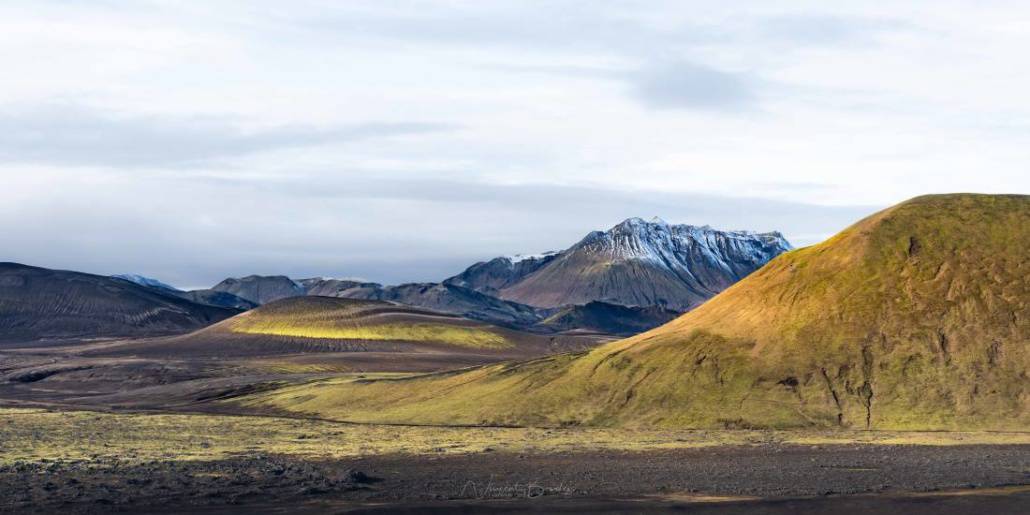
Visiting the south coast of Iceland is probably the easiest thing to do when you first arrive in this country. And that works out nicely, because it’s also home to some of the country’s most beautiful landscapes! Gorgeous waterfalls, black sand beaches, volcanoes, canyons, majestic glaciers. It’s also the playground for plenty of fantastic hikes, to reach Landmannalaugar for example.
You have several options for exploring this region. First, with a car and booking hotels. As we’ll see, that’s not necessarily the simplest, because of the limited hotel supply available. By campervan (ideally a 4×4) for far more freedom and to wake up in fantastic spots. Or by using the local buses and booking activities.
By now, you know me, I can only advise you to take your time. First of all, the distances are big. You’ll make loads of photo stops, driving takes time here. The various sights can be seen in 10 minutes, yes, but you appreciate them even more by taking your time, by wandering around them. The waterfalls allow for a few walks, you can walk alongside glaciers.
So some would say you can do the south in 3 days; I’d recommend up to a week to really take the full measure of what this region has to offer and get an eyeful! Because, as everywhere along Iceland’s Route 1, there’ll be things to see absolutely everywhere.

The map of Iceland’s south coast
Here’s a map of the main points of interest in Iceland, and particularly in the south. The waterfalls, the beaches and mountains, and also the locations of the main hotels, which can be quite handy for knowing where to stay not too far from the parks and glaciers.
You can click on the map to go directly to the Google Maps map.
The most beautiful places on Iceland’s south coast
The south coast is travelled from west to east, along Route 1. Here are the finest stops in the order you’ll come across them driving from Reykjavik, then two detours that leave the main road: the Westman Islands (reachable by ferry) and the Þórsmörk valley (in the highlands, by 4×4 in summer).
The Seljalandsfoss and Gljúfrabúi waterfalls
Iceland really is the land of waterfalls. There are some everywhere: famous ones, hidden ones, huge ones, small ones. Truly everywhere. On the south coast, you’ll find Seljalandsfoss, really lovely, very pretty. Less powerful than Skógafoss, but full of charm, notably because you can walk behind it. It’s a bit precarious, slightly damp, but it’s worth it!
A little further on, you’ll find its little sister, Gljúfrabúi, hidden in the rock. It has a bit of an Indiana Jones feel to it, it’s really pretty.


Skógafoss waterfall
One of the first big spots on Iceland’s south coast. Skógafoss waterfall is one of the most famous in the country, notably because it’s very easily accessible, right by Route 1. It makes an almighty racket, its flow is huge and drops sheer from its 60 metres. That’s what makes it so impressive. It’s tall, it’s very powerful, and it’s also (during the right season) a lovely setting for the northern lights.
It’s also the starting point of a beautiful hike that leads to Þórsmörk and Landmannalaugar. For that, it’s very simple: take the staircase just to the right of the waterfall. And even without doing the hike, wandering up there really is something to do, the view and the scenery are top-notch! For example, the cover photo is taken at the top of the waterfall, as you set off on the hiking trail.
A 15-minute walk from Skógafoss, a little-known but really lovely waterfall: Kvernufoss, a sort of mini Seljalandsfoss because you can go inside it. I can’t tell you much about it, as I didn’t know it at all on my last trips. But you should go, especially as there’s nobody there!


CAR HIRE IN ICELAND
Roam around Iceland by renting from Discover Cars

- Hire a car from Keflavik airport or in town
- Small model, SUV or 4×4 for adventure
- With free cancellation
- And insurance for every situation (gravel, storms…)
- Prices from €25 (by booking very early, of course)
The DC-3, the abandoned plane
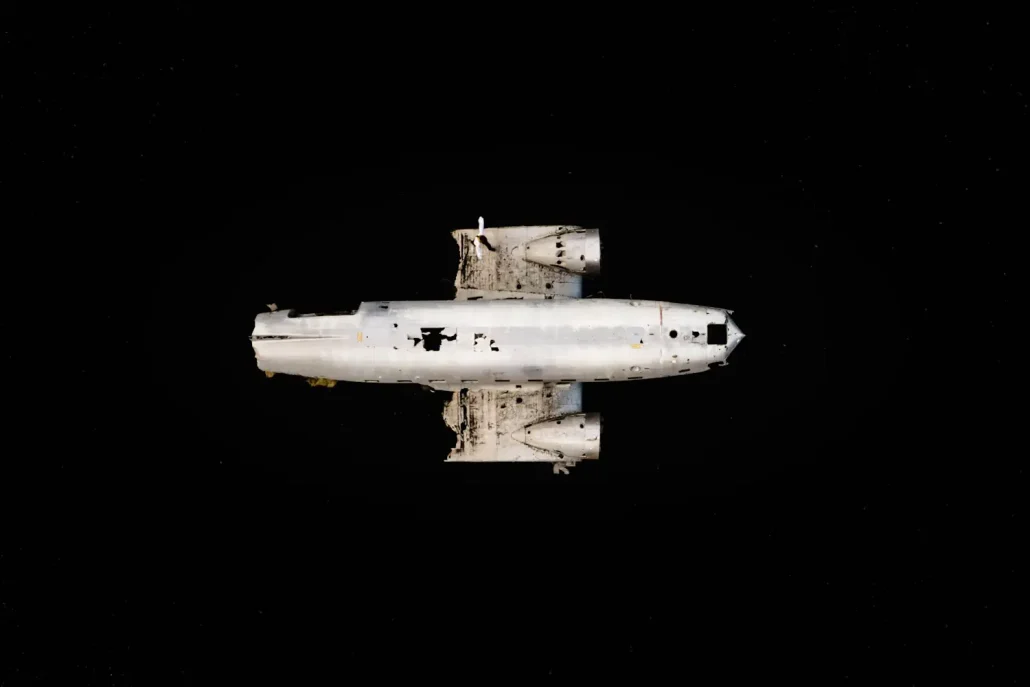
Another thing to see on the south coast is the famous wreck of the American plane, the DC-3 that had to make an emergency landing on the beach, coming from Höfn, in November 1973.
From a small car park on Route 1 (now paid), it’s a good hour’s walk to reach the plane, which is one of the most photographed places in Iceland. It’s a fair trek in the middle of nowhere, but it’s worth it because you don’t expect to see this carcass here. Be sure to follow the path and don’t do what I did and stray from it, it adds distance for nothing. Well, even if it’s not signposted, the chance of getting lost is virtually nil.
Otherwise, you have the option of taking the shuttle to save time. I’m not saying the walk is naff, but let’s say you get an end-of-the-world feeling. An endless black sand beach, especially in bad weather. I quite like it, it’s fun, but a touch long!
And also, recently there’s another wreck nearby, put there by the landowner because the current DC-3 is deteriorating (thanks to disrespectful tourists) very quickly.
Otherwise, over by Seljalandsfoss, there’s another one too.
If you’d like to visit from Reykjavik, it’s entirely possible!


The Dyrhólaey cliffs
Dyrhólaey — these are lovely cliffs 120 m high to the west of Vík. From there you have a superb view over the black sand beach, over the glaciers in the distance, and there’s an impressive arch in the rock. In fact, Dyrhólaey means “the high island with the door hole”.
It’s above all a paradise for puffins in Iceland; it’s actually here that I saw them for the first time, after my failures on the Westman Islands. You have to be careful: in May and June it’s closed, precisely to protect the birds’ nesting.


Vík and the black sand beaches of Reynisfjara
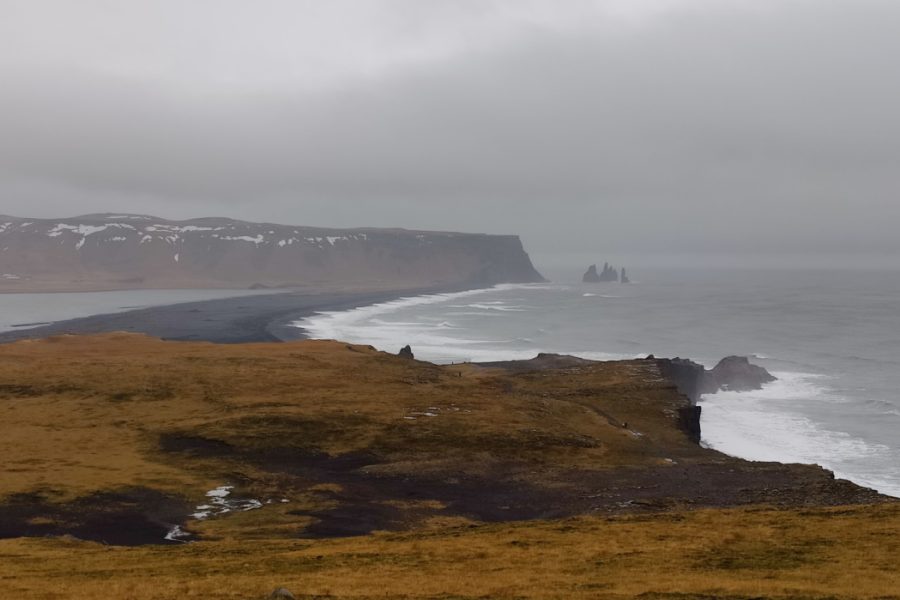
Near the village of Vík lies the superb black sand beach of Reynisfjara.
This beach, ranked among the 10 most beautiful beaches in the world, has nothing to do with the usual idyllic beaches. No palm trees, no turquoise water, but you don’t come to Iceland for that, so that works out well. It’s of volcanic origin, meaning that following an eruption of the Katla volcano, the lava that flowed down to the sea gradually fragmented into little bits, until it formed sand.
You will, on the other hand, find some rather exceptional features. Basalt columns, the Reynisdrangar — strange rock formations in the sea which, according to legend, are trolls.
Quick 2026 update: Reynisfjara took a battering this winter. In February, the beach experienced a real fit of nature’s fury. Part of the cliff collapsed on one side, and on the other, easterly winds even stronger than usual literally swept part of the black sand westwards. Unheard of — even the local farmers couldn’t believe it.
The result: the strip of flat sand that let you step back when a wave came in has disappeared, the basalt columns find themselves almost with their feet in the water at high tide, and the famous cave (Hálsanefshellir) has become inaccessible, cut off by the sea.
Good news all the same: the Reynisdrangar sea stacks haven’t budged, and some of the sand came back in spring. So the beach remains splendid, but it has changed, and access is now managed by a traffic-light system (green / yellow / red). In short: follow it to the letter.
A deadly spot: it’s already the place in Iceland where “sneaker waves” carry people off almost every year. Yes, there are accidents every year because the waves are really strong and pull back very far. And now there’s almost no room left to step back, so really, don’t go messing about at the water’s edge.
On Google Maps I spotted a valley that seems a bit out of the way and yet has a campsite. The views look insane; it’s Þakgil. I’ll tell you more next time because it looks lovely!
A little after Vík, a place I’ve only seen in photos and never in real life, because I was unable to find its location! It’s the Yoda cave, located at Hjörleifshöfði. You go into the cliff and hop! You really do see Yoda 😀 (I promise, no need to drink any spirits).


The abandoned village of Núpsstaður
Located near Route 1, between Kirkjubæjarklaustur (long live copy-paste) and Hof, Núpsstaður is a very pretty, typically Icelandic village from the 17th–19th centuries. In a large meadow and at the foot of mountains, you’ll find some twenty little houses with grass on the roof and a chapel. You find this kind of insulation all over Scandinavia; it’s super useful for protecting against the winter cold.
This village is a lovely testament to past life in Iceland, where things were still a bit less easy than nowadays.
Update: the site is now off-limits. It’s on private land, there’s a big no-entry sign. You can see it but not wander among the houses.


The Fjaðrárgljúfur canyon
Watch out — a marvel. Off Route 1 after 8 km on a slightly bumpy road, you arrive at the foot of a magnificent little canyon. A few kilometres long and around a hundred metres high, a taster of what you can find further on along the F road that leads to Laki.
The Fjaðrárgljúfur canyon isn’t very touristy, though. Which is a shame because it really is a must. You can either be at the bottom, or walk for two kilometres and get a little viewpoint overlooking it.


Skaftafell park
Skaftafell park, at the heart of the gigantic Vatnajökull national park, is a real must on the south coast. It’s a green oasis, almost incongruous, wedged between the glacier tongues, the forest and the mountains: when all around is nothing but ice and black sand, you suddenly find yourself among birch trees. It’s also the best base camp in the region for hiking.
The glaciers. From the visitor centre, an easy and almost flat walk (about 1 hour there and back) leads to the front of the Skaftafellsjökull and its little lagoon dotted with blocks of ice: one of the most accessible glaciers in the country, perfect if you want to get close to the ice effortlessly. And if you fancy climbing onto the glacier, this is where most of the guided glacier-hiking and ice-climbing outings set off from — never without a guide, the ice moves and cracks constantly.
Svartifoss, the black waterfall. The park’s star. A waterfall framed by black basalt columns shaped like church organ pipes, so graphic that they inspired the architecture of Hallgrímskirkja, Reykjavik’s great church. Reckon on about 1h30 there and back from the visitor centre; it climbs a bit but it’s accessible to everyone.
The hikes. Skaftafell is THE hiking spot on the south coast, for all levels. Easy: the Svartifoss loop and the Skaftafellsjökull trail. Intermediate: the Sjónarnípa viewpoint (2 to 3 hours), which overlooks the glacier from above, a breathtaking view. Tough: the Kristínartindar peaks, a big half-day reserved for seasoned walkers. You’ll find all the up-to-date routes on the national park’s website.
Right next door: the Svínafellsjökull. Just 3–4 km to the east, a little gravel turn-off leads to another glacier, the Svínafellsjökull — you’ve surely already seen it on screen, it served as a backdrop for Interstellar, Batman Begins and Game of Thrones. The viewpoint is superb and access very easy. One important caveat, however: the slope overlooking the glacier is unstable and monitored for rockfall risk, and walking on the ice without a guide is strongly advised against. We admire, but we stay cautious.


Cape Ingólfshöfði
A great place, and for several reasons. First of all, it’s one of the best places in Iceland to see puffins and lots of other birds. This is where I saw them most clearly and fairly close up. Next, this cape is a great spot. A big peninsula surrounded by black sand beaches, which gives the impression of being on another planet. And if the weather’s rotten, then it’s even better! Finally, the journey there is very surprising. Indeed, you reach it by… tractor. Tourists sit in a trailer towed across the 6 km of beach. It’s a lovely experience!
Cape Ingólfshöfði is named this way because it’s said to be the landing point of Iceland’s first “permanent” settler: Ingólfr Arnarson


The Fjallsárlón glacier
A very pretty glacier a little before the famous Jökulsárlón. Fjallsárlón is far less touristy than its big brother, but is well worth a look. That reminds me that 3 km before, there’s another one with absolutely nobody, whose name I’ve completely forgotten, and it’s very pleasant!


The hidden canyon of Múlagljúfur
Here’s THE gem that almost nobody knew about a few years ago, and which stays much quieter than Fjaðrárgljúfur: Múlagljúfur. A spectacular canyon carpeted with green moss, with waterfalls plunging into the void — including Hangandifoss, a “hanging” waterfall over 100 m — and, at the far end, the view opens onto the glacier and the coastal plain. It’s grandiose, and you’re often almost alone.
The small price to pay: you have to earn the view. The car park is a discreet gravel track along Route 1, about a dozen kilometres west of Jökulsárlón (easy to miss, spot it on your GPS before setting off). From there, reckon on a hike of about 2.5 km round trip, 1h to 1h30, with 300 m of ascent: it climbs, and it quickly gets muddy and slippery after rain. Good shoes essential.
An important point: it’s a summer-to-autumn walk (roughly June to late September). Out of season, with snow and mud, it’s no longer really a stroll. But if you have the time and the calves for it, it’s exactly the kind of detour that turns a simple road trip into a real adventure.

The Jökulsárlón glacier
The famous Jökulsárlón lagoon, at the foot of Vatnajökull, is probably the highlight of the entire south coast. In the purest Nordic pragmatism, “Jökulsárlón” simply means “the glacier lagoon”: they have as much imagination as I do. It’s the largest and deepest of Iceland’s glacial lagoons — nearly 250 m deep, which actually makes it the deepest lake in the country — born of the slow retreat of the Breiðamerkurjökull glacier.
The spectacle is unique: enormous blocks of ice break off the glacier, drift calmly across the water, sometimes an electric blue, before heading out to sea, passing under the Route 1 bridge. You often come across seals lounging between the icebergs. It’s also, along with Gullfoss, the most touristy place in the country — and for once, it’s completely deserved. No wonder it served as a backdrop for James Bond, Batman Begins or Tomb Raider.
As for activities, there’s plenty to do: an amphibious boat tour to get close to the glacier and the icebergs (more on that below), and it’s also a very good spot for the northern lights in the evening. And above all, right opposite, on the other side of the road, don’t miss Diamond Beach.


Diamond Beach
Right opposite the lagoon, on the other side of Route 1, don’t miss Diamond Beach. It’s that black sand beach where the blocks of ice broken off the glacier wash up: they come out of the lagoon, race to the sea through the little channel, and the tide throws them back onto the sand, where they shine like diamonds in the sun — hence the name. It’s one of the most photographed places in Iceland.
A little tip from experience, though: the amount of ice on the beach is totally unpredictable, it depends on the glacier’s calving and the tides. Personally, every time I’ve been past — and it was always in October — there was hardly any ice on the sand, so no personal photo to show you here. And to be perfectly honest, the first time, easily ten years ago, I was in such a rush that I didn’t even know the place existed… In short, if you come across a beach nicely stocked with giant ice cubes, savour it: you’re lucky.
Vestrahorn
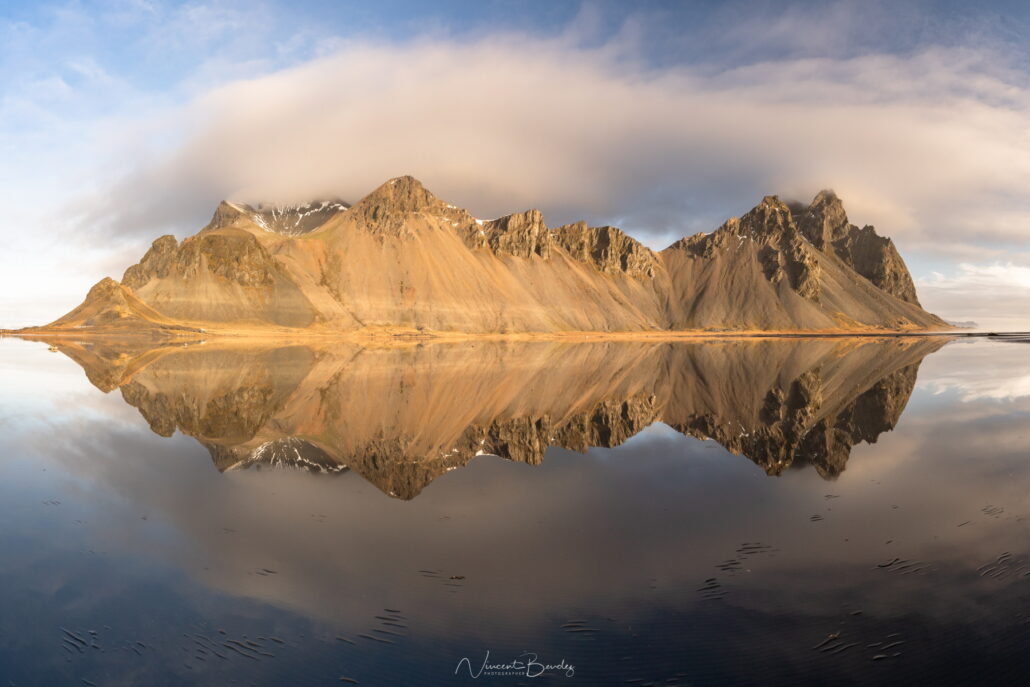
Vestrahorn is an iconic Icelandic mountain, just like Kirkjufell on the Snæfellsnes peninsula. Located near Höfn, before heading up into the eastern fjords, it’s a beautiful mountain that stands out somewhat compared to what we’re used to seeing. To see it at its best, you take the track through the black sand to Stokksnes and you get a magical view, notably for the northern lights.
However, this track is paid if you want to go by car. A barrier blocks the entrance. You either take a ticket at the barrier, or go to the café next door. There, if you say you’re coming for several evenings, you can get more tickets. It sometimes works. But sometimes not (you know who I’m looking at).


The Westman Islands
Spending a day on the Westman Islands is a really lovely idea. Located near the Icelandic south coast, you can reach the island of Heimaey by boat. As well as having several active volcanoes (including Eldfell, which ravaged part of the island in 1973), it’s home to the world’s largest colony of puffins, those oh-so-cute birds. Of course, the day I was there, they’d all gone off to sea and came back after I’d left by boat. So it can be worth spending a night there (and here I absolutely recommend the Camping & Glamping, lovely little cabins)
You can easily spend a day there, because there are lots of things to see and do. Climb the still-smoking volcano, take a boat trip, wander along the island’s few beaches. There are few tourists, it’s a very pleasant place!


Hiking in Þórsmörk
One of the most beautiful hikes in the world, taking you through landscapes from another planet. Canyons, mountains, glaciers, active volcanoes. Þórsmörk is quite exceptional, but not easy to see. First of all, it’s only accessible about 3 months a year because of the weather conditions. Then, you have to cross fords and rivers, which is far from straightforward!
If, like me, you don’t feel you have the soul of a Mike Horn, it’s entirely possible to take the 4×4 buses to reach it. I did that for Landmannalaugar in spring, a great jeep and hop!

The best possible activities along the south coast
From Reykjavik, Vík or Höfn, you’ll find quite a few really lovely excursions and activities, especially if you don’t have a vehicle. Walking on a glacier, doing a hike, seeing the puffins, taking a boat trip… you can’t get bored, let’s have a look at it all!
Walk on a glacier!
Now this is really lovely. You know me, over time, as soon as there’s a glacier, poof I go on it. But, as with the Perito Moreno, you absolutely must go with a guide and the necessary equipment. Generally crampons and an ice axe are enough for the first stages, because the aim is to discover the glaciers and not to hike very far, which is too dangerous, notably because of the crevasses.
Here, it’s a walk on the glacier lasting several hours, a very lovely introduction. And phew, how impressive it is! You can already get a preview in my photos below.
You have several options, depending on where you’re coming from. If you’re over by Vík, then it’ll be the Sólheimajökull glacier. If you’re a bit further on, you have the various glaciers of Skaftafell.


Boating on Jökulsárlón
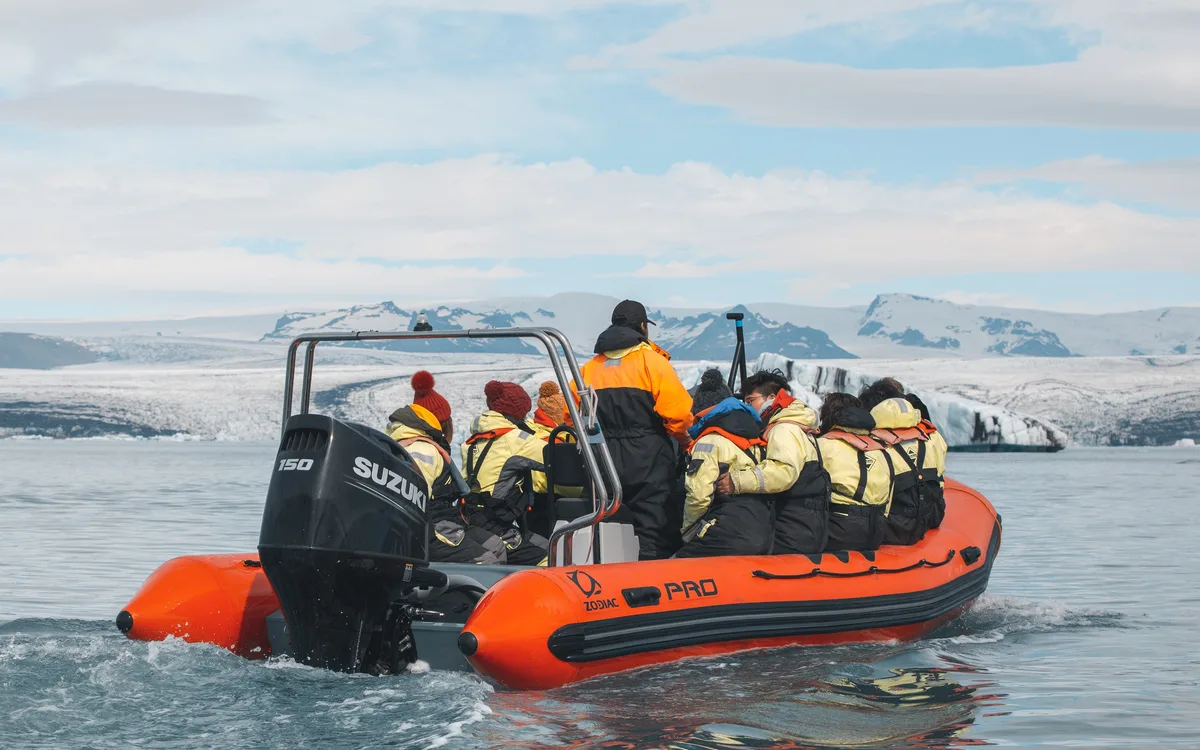
This is also something nice. The Jökulsárlón lagoon is huge. Taking a boat trip lets you, naturally, get close to the glacier, but also to the animals without bothering them, and see the icebergs up closer.
There are several types of boats, but I admit I have a slight preference for the flexibility of the inflatable boat. Mind you, it’s not done in every season!
See an ice cave
One of the south coast’s great specialities is ice caves. Some are only accessible in winter (logically), they’re natural and have to reform after melting in summer, and others are accessible all year round.
From Vík, one of the local curiosities is the blue cave, the famous ice cave of the Katla volcano, inside a glacier, which you can enter and walk in for a while. With a guide only, because it’s still a bit dangerous! Discover it here
The most famous cave is next to Jökulsárlón, the Crystal Cave. Discover it here!

See the puffins
So I obviously tell you more in the article dedicated to puffins in Iceland, but this country is THE puffin paradise! There are the biggest colonies in the world and, as luck would have it, there are several on the south coast:
- the Westman Islands of course, the best place in the world
- the Dyrhólaey cliffs, there are quite a few there too
- Cape Ingólfshöfði, super wild, you’ll see them by tractor, fun!
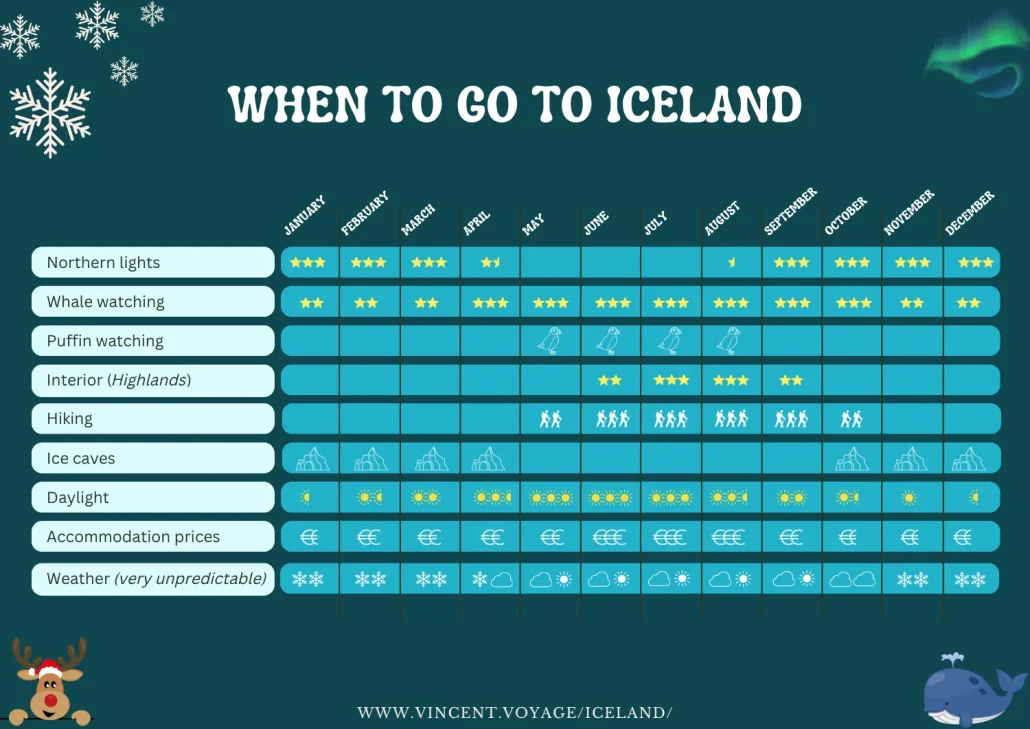
You can see them from early/mid May until roughly mid August. It’s really a great spectacle, so cute (and a bit clumsy too).
For my part, I managed not to see them on the Westman Islands, in the best season, because they’d gone off to sea. But I saw a few at Dyrhólaey and lots at Cape Ingólfshöfði, a great experience! (and at the Sept-Îles in Brittany, but that’s another story).


Horse riding on a black sand beach
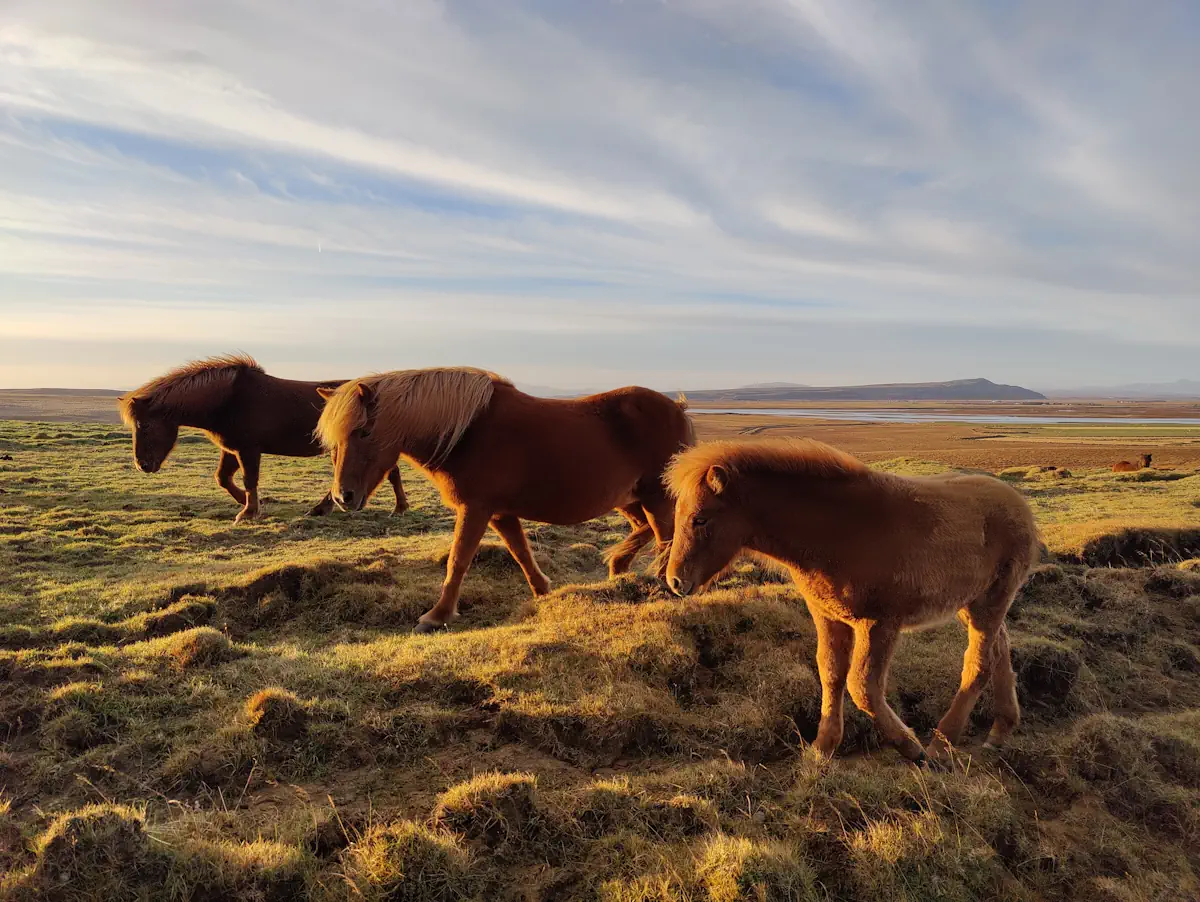
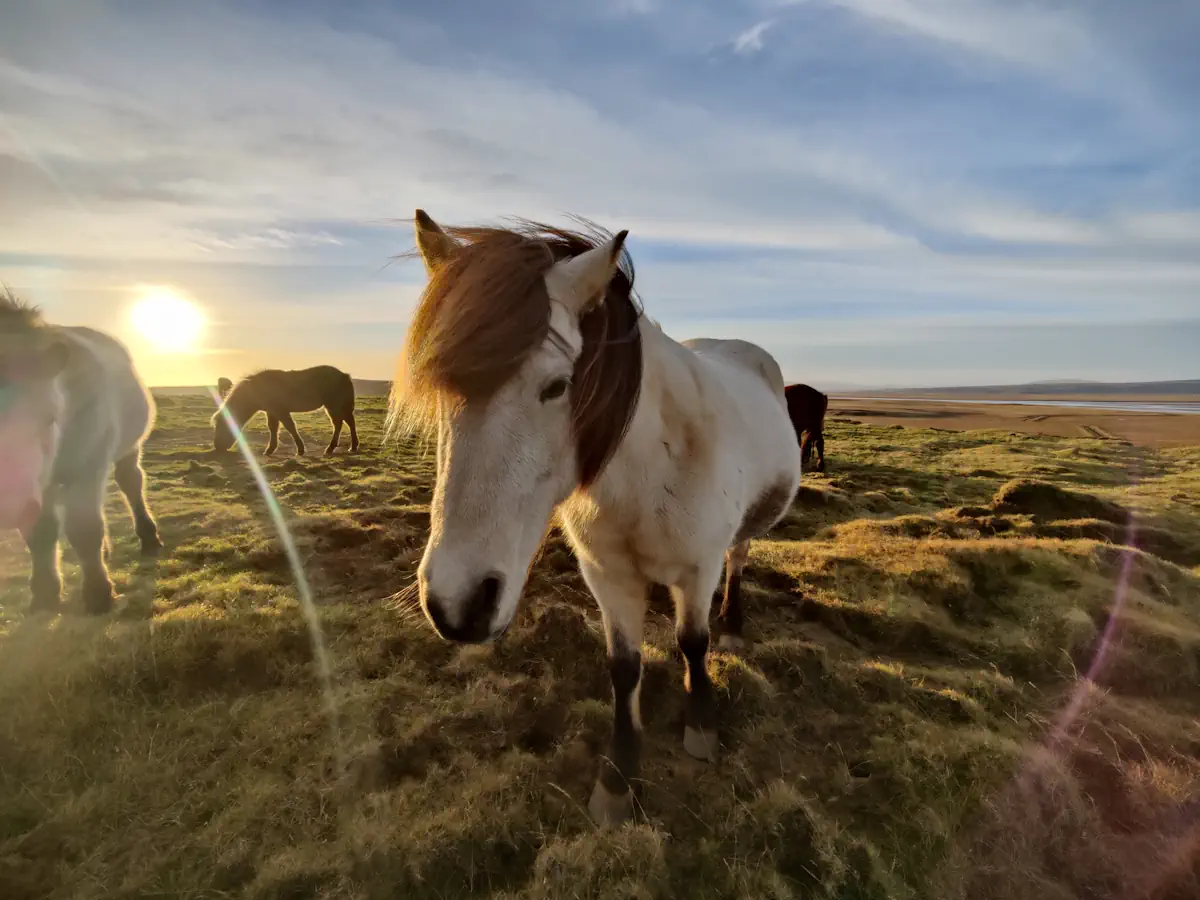
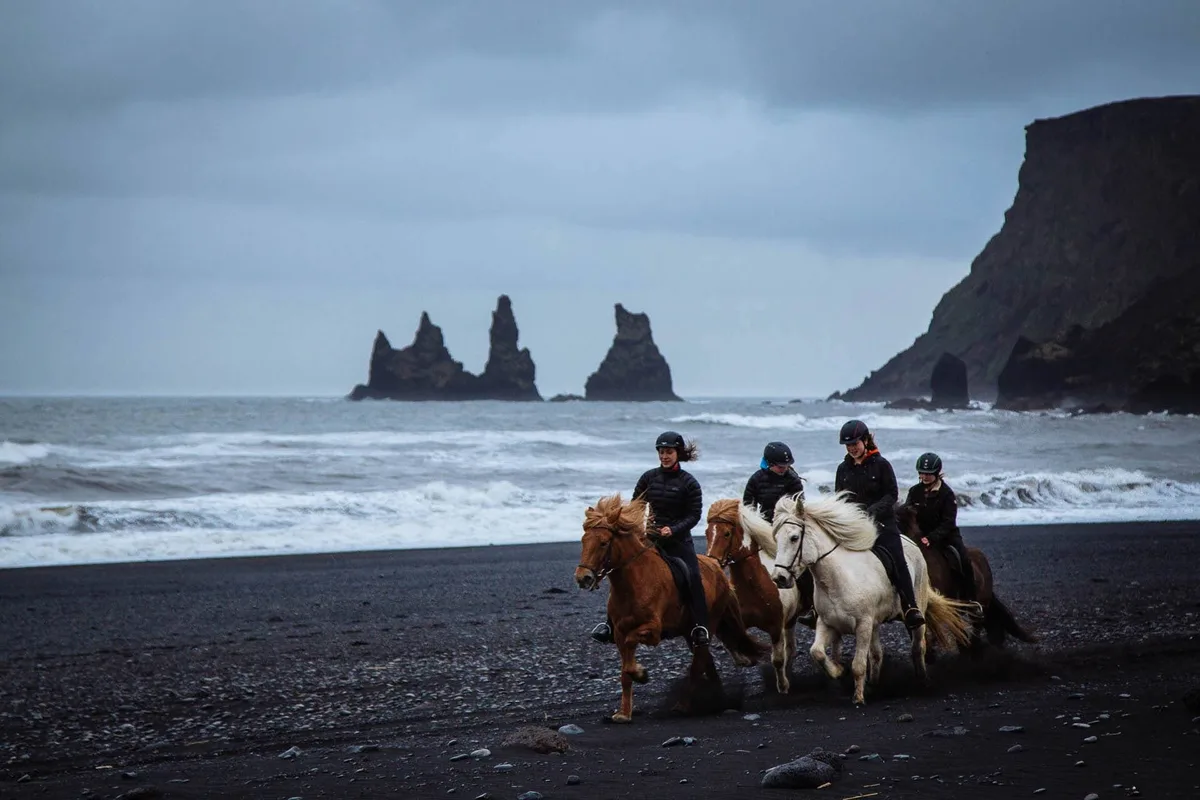
The Icelandic horse — you’ll come across it everywhere, in the fields along the road. So you might as well get on one for once — and while you’re at it, on a black sand beach, where the setting is hard to beat.
It’s a breed apart, kept pure for over a thousand years: the law forbids importing horses, and a horse that leaves the island can never return. Small, sturdy and rather docile, it above all has a gait all of its own, the “tölt”: a very smooth stride, without the jolts of the trot, which makes the ride comfortable even if you’ve never ridden a horse. That’s what makes it a good activity: accessible to beginners and families, fairly short (often 1 to 2 hours), and a simple way to break up two waterfalls. Unpretentious, but typically Icelandic. And in an insane setting.
What itinerary for visiting Iceland’s south coast?
The good news with the south coast is that it’s covered in one go: everything follows on along Route 1 (the famous Ring Road), from west to east, without ever having to turn back. You set off from Reykjavik and the further east you drive, the more the scenery ramps up, until the grand finale: the Jökulsárlón glacial lagoon.
The only real question is: how much time to devote to it? You can get a small taste in a day, but so as not to spend your life at the wheel and to really make the most of it, I recommend 2 days minimum, and 3 days to do it at a relaxed pace with an activity or two (glacier hike, ice cave). Bearing in mind there are loads of hikes and activities, so you’ve plenty of scope to stay even longer.
Here are the three formats, with the distances to help you get your bearings.
| Route | Distance | Driving time (without stops) |
|---|---|---|
| Reykjavik → Seljalandsfoss | ~120 km | 1h45 |
| Reykjavik → Vík | ~187 km | 2h30 |
| Vík → Jökulsárlón | ~190 km | 2h15 |
| Reykjavik → Jökulsárlón | ~375 km | ~5h |
These times are without stops. With photo stops (and there are lots), easily reckon on double over a day.
The south coast in 1 day, departing from Reykjavik
In one day, you can see the best of the western part: the Seljalandsfoss and Skógafoss waterfalls, the black sand beach of Reynisfjara and the village of Vík. That’s already huge, and it’s doable both independently and as an organised excursion from Reykjavik.
The trap to avoid: wanting to push on to Jökulsárlón in the same day. It’s possible (the tours do it in 12 to 14 hours), but you then spend around ten hours in a vehicle for 3–4 hours actually on site. If the glacial lagoon makes you dream — and it deserves to — sleep at least one night further east.
The south coast in 2 days, the good compromise
This is the itinerary I recommend if you’re short on time but want to go as far as the lagoon.
Day 1: the western waterfalls (Seljalandsfoss and its hidden neighbour Gljúfrabúi, then Skógafoss — and right next door, the hidden waterfall of Kvernufoss, a 15-min walk away, where you pass behind the falls almost alone), the wreck of the DC-3 plane on Sólheimasandur beach, Cape Dyrhólaey, Reynisfjara beach and its basalt columns, then a night in Vík.
Day 2: the Fjaðrárgljúfur canyon, Skaftafell park (a little hike to the Svartifoss waterfall), and the highlight of the show: the Jökulsárlón lagoon with, right opposite, Diamond Beach and its blocks of ice stranded on the black sand. You then head back to Reykjavik, or you break up the drive by sleeping at Kirkjubæjarklaustur.
Where to sleep: Vík is the ideal base for the night, right in the middle of the route (see my hotel selection further down).
The south coast in 3 days or more, the truly good pace
With 3 days, you stop rushing. You keep the breakdown above, but you add a real activity: a hike on the Sólheimajökull glacier, an amphibious boat trip on the Jökulsárlón lagoon, or, in winter, a visit to an ice cave.
It’s also the time to get off the beaten track, and the good thing is that the hidden gems are spread all along the road. As early as day 1, next to Skógafoss, there’s already Kvernufoss. Near Vík, if you have half a day, push on to Þakgil: a secret canyon tucked away in the heights, at the end of a gravel road of about 14 km (passable in summer by driving slowly), a troll-like setting where only those in the know come to camp. And on the morning of day 3, treat yourself to the little hike of the hidden canyon of Múlagljúfur (the car park is a discreet gravel track along Route 1, about a dozen kilometres before Jökulsárlón): about 1 hour of climbing for a canyon carpeted with green moss, a hanging waterfall over 100 m, and very often, nobody. It’s exactly these gems that justify slowing down and keeping an extra night in the east rather than doing everything at a rushed pace.
You can also push on to Vestrahorn and the Stokksnes peninsula, near Höfn: one of the most photogenic mountains in Iceland, often skipped for lack of time. To spread out the drive without overdoing it, the ideal is a night around Hvolsvöllur or Hella (west, at the foot of the waterfalls), one in Vík, then one at Kirkjubæjarklaustur or Höfn (east).
And if you have an adventurer’s soul, a 4×4 and you’re travelling in summer, the Þórsmörk valley as an inland detour is really worth the trip — but be warned: it’s a world apart, with river fords to cross.

How long to visit Iceland’s south coast
That’s a very good question, and it will mostly depend on your way of travelling. It’s possible to only make quick stops, just go to the Skógafoss and Seljalandsfoss waterfalls, skip the DC-3, a quick photo hop at Dyrhólaey, then Vík beach and so on. If that’s the case, then you could do the south in 1 day, 2 as far as Vestrahorn. But will you really have made the most of it?
That’s why 3/4 days, I find worthwhile, because obviously you can visit all the well-known sites, but also venture a little further, like the canyons, walk on the beach, do the Dyrhólaey walk, enjoy the puffins if they’re there, hike on a glacier, go and see the very pretty Svartifoss…
One more day and you have the Westman Islands to visit, for example. One more and it’s Skaftafell park that will hold no more secrets for you.
In short, if I keep going I end up spending a week here!
You also have to bear in mind that the distances are big. From Reykjavik to Höfn, it’s 450 km, and a road with speed limits, plenty of places to stop for photos. It’ll take a monstrous amount of time, and even more if the weather’s rotten (we’re in Iceland, the odds are high!).


Visiting the south coast without a car
Visiting the south coast in a day from Reykjavik
Perhaps the most popular activity in Iceland. In a big day (a good ten hours or so), come and discover from Reykjavik:
- Skógafoss
- Seljalandsfoss
- Vík beach
- the Sólheimajökull glacier.
And not too expensive on top of that, around €100 for the day, that’s fine!
This activity doesn’t go as far as Jökulsárlón (that’ll be in the next one)

See Jökulsárlón and the waterfalls in a day from Reykjavik
Another great classic from Reykjavik. A big day awaits you, a day where you’ll get an eyeful. A 14-hour outing for a magnificent programme:
- the Skógafoss and Seljalandsfoss waterfalls
- Vík and the black sand beaches
- Kirkjubæjarklaustur and its canyon
- and above all the Jökulsárlón glacier and Diamond Beach!


Practical information on Iceland’s south coast
Finding a hotel in the south of Iceland
Feeling lucky? Perfect! Finding accommodation in Iceland is a bit like playing musical chairs. There are more people than availability and it goes very quickly. Especially in the south, which is the most touristy region and where you really won’t find much between Vík and Höfn.
The icing on the cake: as well as not having much choice, it’s expensive. There are a few rare youth hostels, at at least €50 a bed, hostels around €100, and lovely hotels between €100 and €200. Under €100 for a double room is rare, but it exists.
Another funny thing: many hotels are closed outside high season.
I’m going to give you 3 accommodation lists for Iceland’s south coast. Around Vík, Höfn and in between. You can find all these hotels on the map higher up in this article, which lets you know where they are in relation to the places to see.
- If you want a more complete list, here’s a list of good places to stay on Iceland’s south coast
Finding a hotel near Vík
In Vík, to visit the various waterfalls, the black sand beach, the cliffs, we fortunately have a decent range of accommodation. However, it’s not cheap.
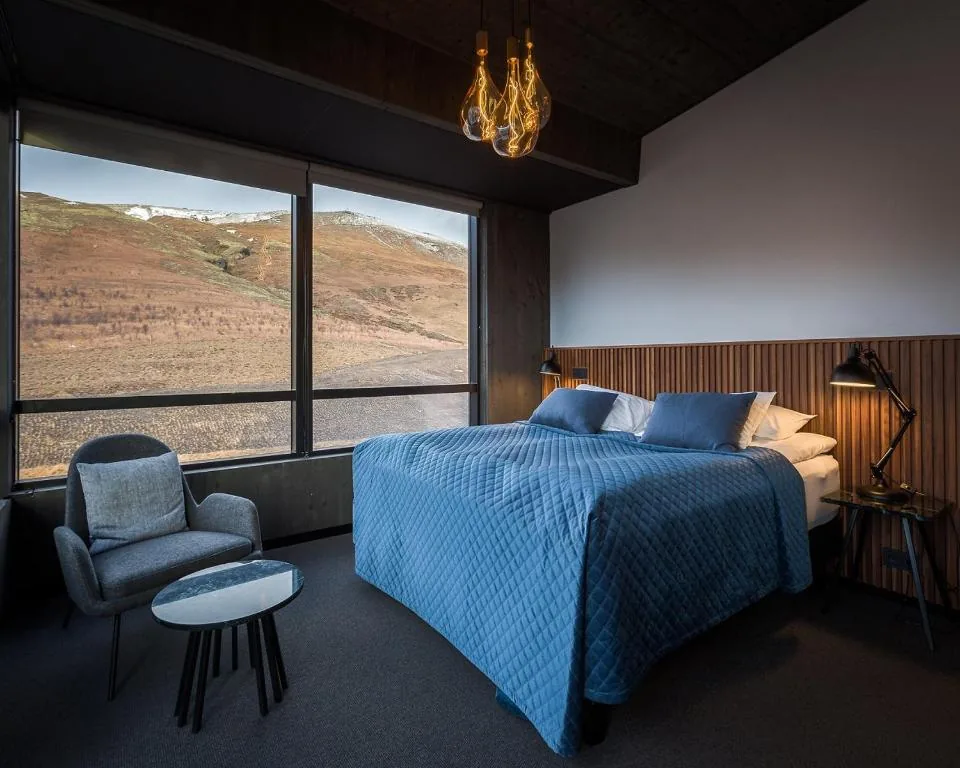
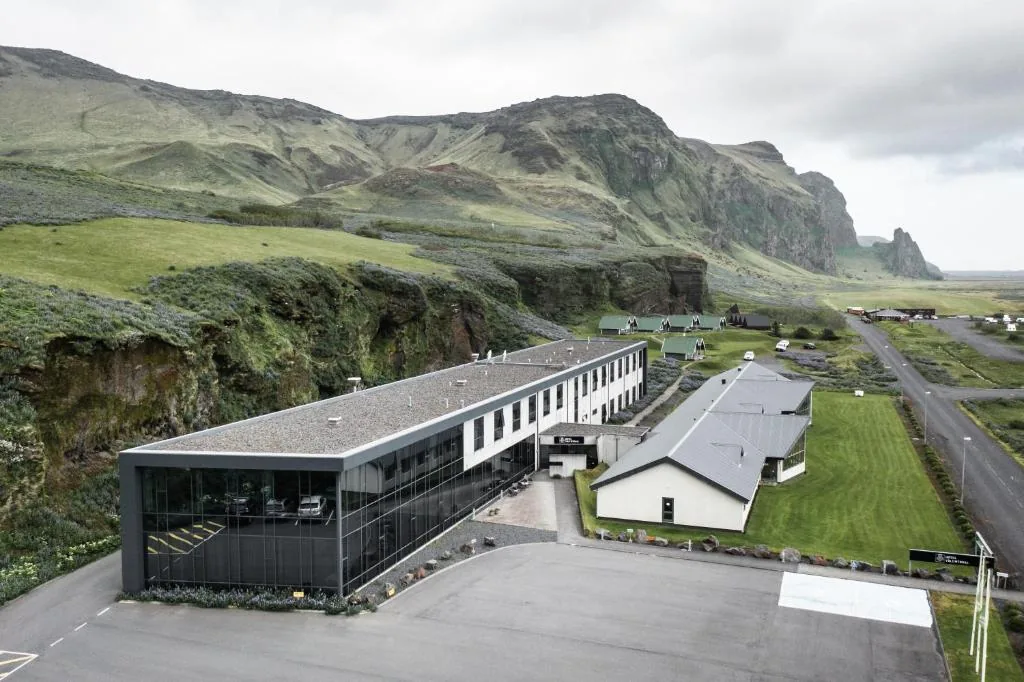
- the Volcano hotel, a very nice hotel outside the village for €180
- the Barns, a youth hostel at €50 a bed in a dorm
- the Katla Hofdabrekka hotel, a nice 3* hotel where I stayed, from €160
- the very lovely Carina guesthouse at €77
- the Vik Hotel at €102
Finding a hotel between Vík and Höfn
Between Vík and Höfn, this is where it gets more complicated. The distance is big between these two towns and you won’t find much. So you need to book fairly early if you don’t want to do too much driving.
- the nice 3* Klaustur hotel, at €135
- the Hvoll guesthouse from €77
- the 3* Skaftafell hotel, one of the most stylish on the island, at €205
- the Fosshotel Glacier Lagoon, the only 4* in the area, from €109
Finding a hotel in Höfn
Over by Höfn, it’s much easier and, oh joy, cheaper. Well, it’s still expensive mind you, but less so.
- east of Höfn, the magnificent Hrafnavellir guesthouse at €134
- on the peninsula, the Edda hotel at €104
- right in the centre, the great Dyngja guesthouse at €54
- a little outside, the Seljavellir Guesthouse at €90


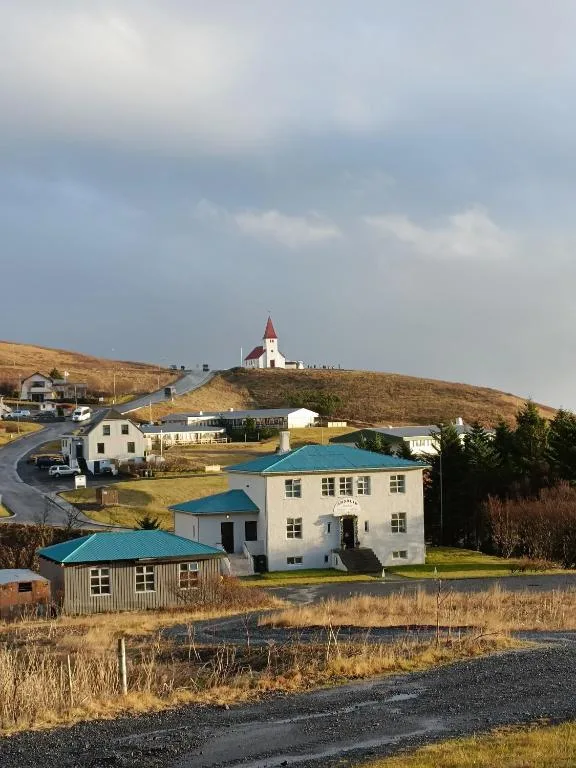
📍 Austurvegur, central Vík · location 9.2/10
Unbeatable value at the entrance to Vík: spacious rooms, a shared kitchen for cooking your own meals and a highly rated breakfast, a 7-minute walk from the black beach.
- Entrance to Vík, black-sand beach a 7-minute walk away
- Shared kitchen (microwave, fridge, kettle)
- Free parking + 297 Mb/s Wi-Fi + laundry
Free cancellation
From €125 / night
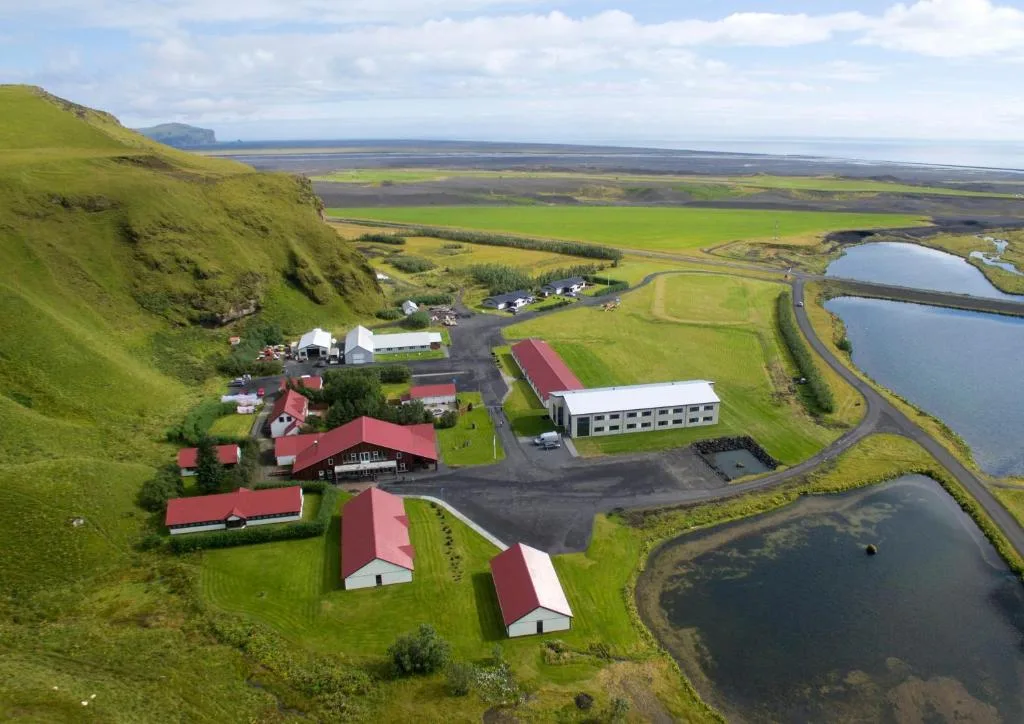
📍 Höfðabrekka, 5 km east of Vík · location 9.0/10
The comfort of a larger hotel with a nice hot outdoor tub after a day of touring, a sauna, a gym and a widely praised buffet restaurant.
- Outdoor hot tub + sauna + gym (free)
- Restaurant + exceptional breakfast buffet
- Spacious family rooms, free parking
Free cancellation
From €185 / night
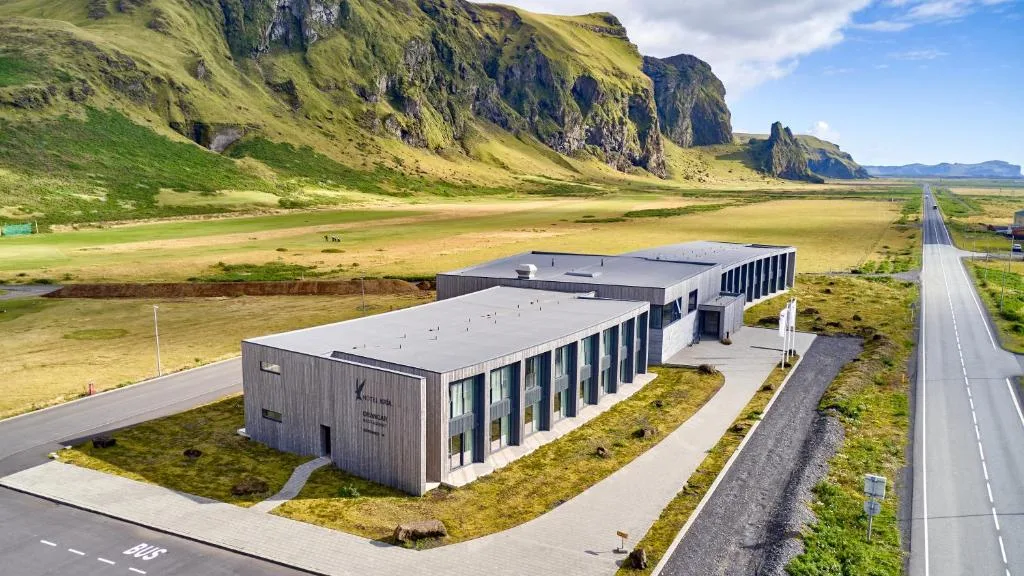
📍 Sléttuvegur, Vík · location 9.3/10
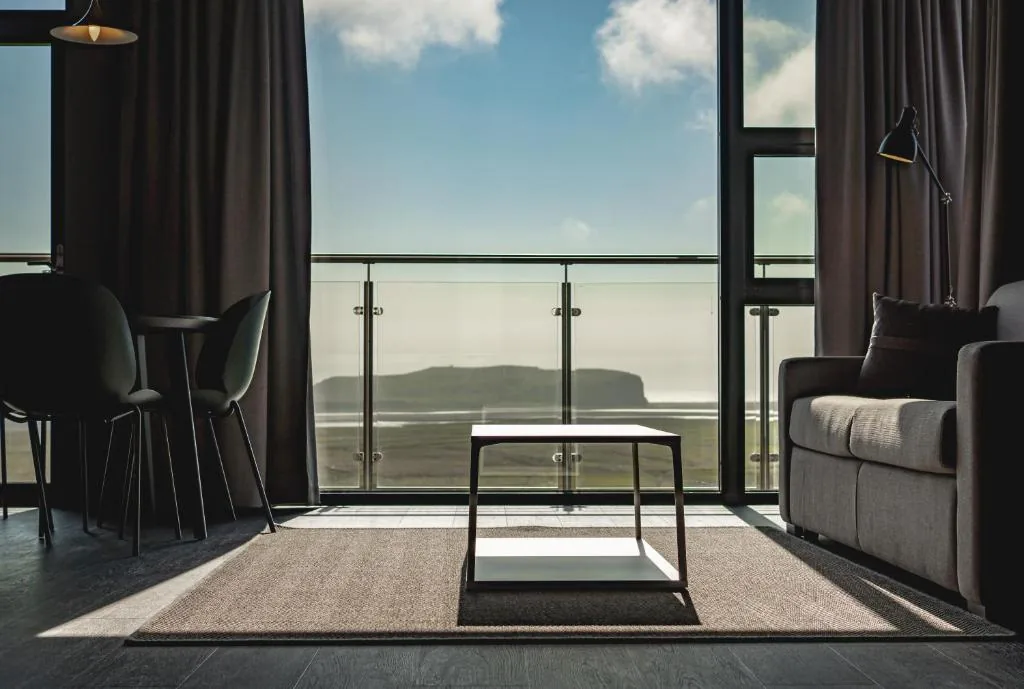
The design hotel opened in 2018 facing the mountain: modern soundproofed rooms, the acclaimed Drangar restaurant, a cocktail bar and a well-regarded breakfast buffet.
- Black-sand beach 350 m away + Reynisfjara 5 km away
- Drangar restaurant (Icelandic cuisine) + cocktail bar
- Mountain-view rooms, lift, free parking on site
Free cancellation
From €220 / night
Visiting Iceland’s south coast by campervan
I talk about it quite a bit in this article: a road trip by campervan is cool. And when it’s in Iceland, then it’s just the very best. Indeed, this country, its vastness, its landscapes and the absence of civilisation lend themselves perfectly to this kind of transport. Out of season, you can drive for hours without meeting anyone, as for example in the Westfjords.
The south coast is a good place, safe and not challenging for travelling by campervan. Indeed, in some parts of the country you can have difficulty finding campsites, a shower. Here, it’s touristy, it’s open all year round, there are always a very small number of people and you avoid accommodation problems.
Wild camping and parking your van just anywhere are forbidden in Iceland, although sometimes tolerated (as in the Westfjords). It has to be said that out of season, you can end up with nothing open for 100 km. In that case, you have to be discreet, don’t park on the roadside or in touristy spots. I quite like parking in closed campsites. The ground is available (not the facilities) and you don’t bother anyone.
On the south coast, it’s strictly forbidden and to be avoided. There have been (and still are) many abuses, so now the fines rain down; you have to park in the authorised campsites, really.
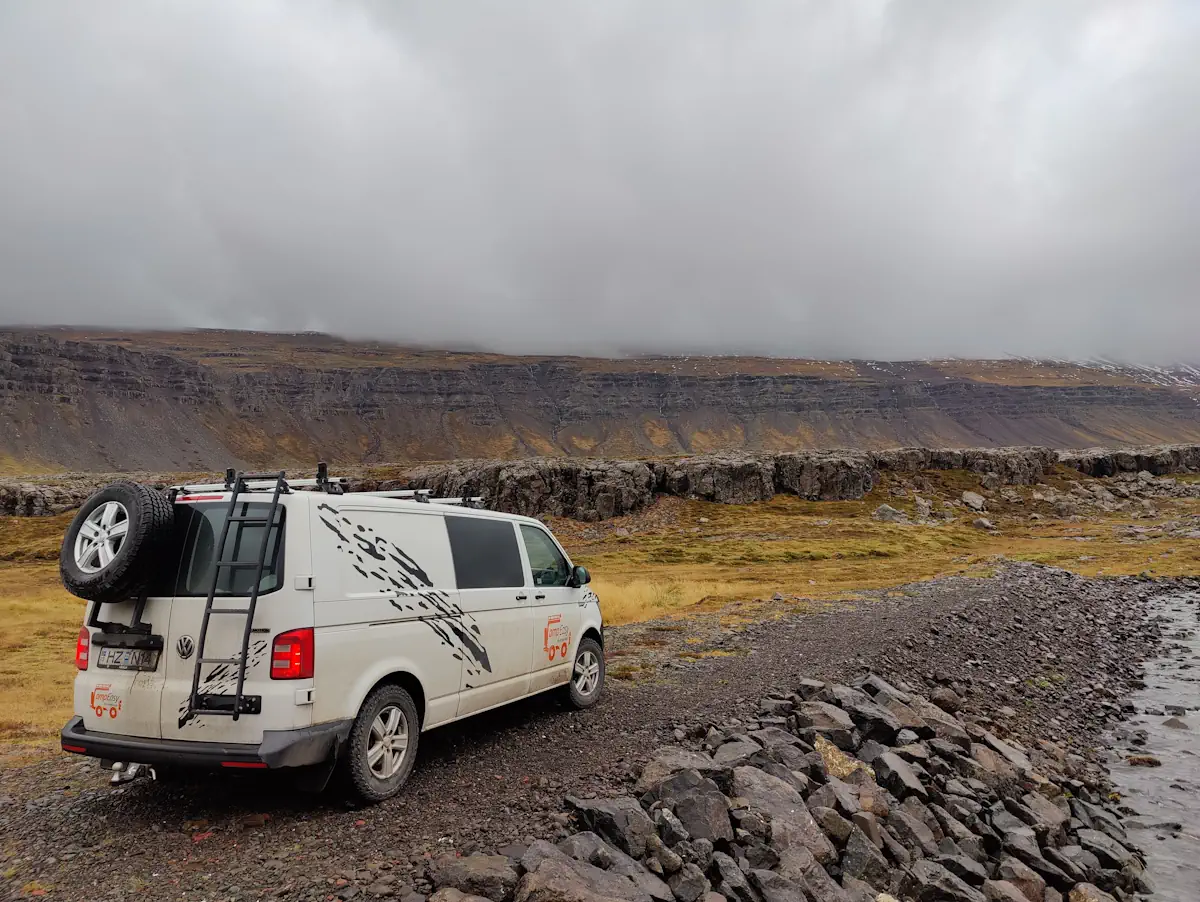
On my last van trip in Iceland, I went with CampEasy. And it was great. A good fleet, they’re very well fitted out, in very good condition, honestly I was very pleasantly surprised.
Driving in Iceland
I also talk about it in this article on Iceland, but driving in Iceland can be funky. Especially depending on the weather. You should first know that roads split into two categories in Iceland (the ones with a loaded gun… no, nothing): roads accessible to everyone and F roads. These famous F roads are tracks that are more or less easy, but above all only permitted for 4x4s. And for good reason: there are holes, they’re often damaged by bad weather, and you have to cross rivers. These F roads are also regularly closed, especially in the centre where they’re only open 3/4 months a year.
So your best friend will be the Umferdin.is website, which instantly gives you the state of the roads, which ones are open and closed. It changes all the time, so if you’re planning to take a slightly dodgy route, check before setting off.



The weather on Iceland’s south coast
Honestly, the weather in Iceland is a bit of Russian roulette. And it’s part of the country’s charm. In virtually any season, at any moment, you can cop a storm and snow. It’ll never really get very cold on the south coast, we won’t get -20 like in the heart of Norway. On the other hand, the wind, phew…! Now that’s going to be fun. I’ve seen vans flipped over because of the wind.
Expect it to change in a few minutes, one way or the other. They say that if you don’t like the weather, you just have to wait 10 minutes for it to change.
FAQ: your questions about Iceland’s south coast
Here are the questions I’m asked most often (and the ones you’re probably wondering about) before setting off on the south coast.
How many days do you need to visit Iceland’s south coast?
Reckon on 2 days minimum if you want to go as far as the Jökulsárlón lagoon without spending your life at the wheel, and more like 3 to 4 days to really take your time, add a hike or an activity and get off the beaten track. In a single day, you’ll only see the western part.
Can you visit the south coast in a day from Reykjavik?
Yes, but only the western part: the Seljalandsfoss and Skógafoss waterfalls, Reynisfjara beach and the village of Vík. To push on to Jökulsárlón in the day, you need a 12- to 14-hour outing, very long. If the lagoon appeals to you, better to spend a night on site.
Do you need a 4×4 for the south coast?
No, not for the main road: Route 1 is tarmacked and a small car is more than enough in summer. A 4×4 becomes useful in winter (snow, black ice) and it’s compulsory for the F roads that climb inland (Þórsmörk, highlands), with river fords into the bargain.
What’s the best time to visit the south coast?
It depends what you’re after. Summer (June–August) offers everything open, the long days, the hikes and the puffins. Winter (November–March) gives access to the northern lights and natural ice caves. Spring and autumn are a good compromise, with fewer people.
Is Reynisfjara beach dangerous?
Yes, you have to be careful. It’s the place in Iceland where “sneaker waves”, brutal and unpredictable, carry off visitors almost every year. Never turn your back on the ocean and stay well away from the water line. Since the erosion of winter 2026, the safety margin is even smaller and access is managed by a traffic-light system (green / yellow / red) to be followed to the letter.
Can you visit the south coast without a car?
Yes, it’s possible by going through organised excursions from Reykjavik or via the local buses, but you lose out on freedom and flexibility. I go into all that in my article on how to visit Iceland without a car.
Where to sleep on Iceland’s south coast?
The three good bases are Vík (central, ideal for a first night), the Kirkjubæjarklaustur region (halfway to the lagoon) and Höfn (in the east). Supply is limited and expensive, especially between Vík and Höfn: book as early as possible. See my hotel selection above.
Can you see the northern lights on the south coast?
Yes, from roughly early September to late March, as soon as the sky is clear and solar activity obliges. The Jökulsárlón lagoon and Vestrahorn are two of the finest spots in the country for it.
Can you see puffins on the south coast?
Yes, from roughly early May to mid August. The best places are the Dyrhólaey cliffs and above all Cape Ingólfshöfði, wilder, reached by tractor.
Is parking paid on the south coast?
Increasingly, yes. Several sites now charge for parking (Seljalandsfoss, Skógafoss, Fjaðrárgljúfur…), around 700 to 1000 ISK, often via the Parka app. So plan for a bit of parking budget on top.
How far does Iceland’s south coast extend?
Broadly, it runs from the Selfoss and Hveragerði region, just after Reykjavik, to Höfn, before tackling the eastern fjords. That’s about 450 km of road from Reykjavik, along Route 1.
Conclusion
As we’ve seen, on Iceland’s south coast there really is a lot to see, and above all wonders of nature. Beautiful waterfalls, huge hiking possibilities like towards Landmannalaugar and Þórsmörk, canyons, lots of puffins… in short, you can spend 4 days there as easily as 2 weeks without any problem, without being bored for a minute. It’s an excellent way to discover Iceland without venturing into places that are too isolated, and to see some very beautiful things.
The snag is, I’d say, the sparse bus network, which means that yes, you can visit the south of Iceland without a car, but you’ll have to go through the agencies.
Oh, and the south coast can be visited in any season!
Other resources on Iceland
I’ve written quite a lot about Iceland. The following articles should interest you, at least I hope so!
General info on Iceland
- Going to Iceland: everything you need to know to make a success of your trip to this magnificent country.
- Car hire in Iceland – my tips for avoiding the pitfalls and choosing the right vehicle
- Road trip in Iceland on the Ring Road – all the places not to miss
- The most spectacular sites in Iceland – my selection of over 30 places to visit
- All the experiences to have in Iceland – my recommendations for a one-of-a-kind holiday
- Interactive map of Iceland – visualise waterfalls, hikes, accommodation and must-see places
- Keflavik-Reykjavik bus transfer – how to reach the city centre at the best price
- Download my PDF guide for free – to prepare your trip to Iceland
- Going to Iceland at the right time – discover the advantages of each period
Articles on Reykjavik
- Explore Reykjavik – discover all the must-do activities
- Choosing your northern lights agency in Reykjavik – how to select the right agency
- Accommodation in Reykjavik – hotel, apartment or hostel, how to choose well?
Other regions of Iceland
- What to see around Vík í Mýrdal – discover the superb surroundings of this little town
- The best places to sleep on Iceland’s south coast – hotels, hostels and campsites
- What to do in Mývatn – the essential places to see in one of Iceland’s most beautiful regions
- Which places to see in the Golden Circle – here are the 5 incredible places to see in this region
- The best time to see Iceland’s puffins – I tell you everything to see the puffins
- How to get to Landmannalaugar by bus – find out how to get to this superb region