Last updated on
Who has never dreamt of visiting Iceland?… No one? Exactly! Iceland is probably THE country that draws people in, that fires up the imagination, that intrigues the most. And that’s only natural, because there isn’t another like it anywhere in the world. Because we’ve all seen a few photos of lunar landscapes (or Martian, or… well, Icelandic really), those very distinctive mountains, the fjords, the hundreds of volcanoes that are always active, the lava fields stretching as far as the eye can see. The brutality of the Earth, the end of the world. In fact, Jules Verne placed the entrance to the centre of the Earth on the Snaefellsnes peninsula.
Iceland is fascinating because it’s a giant pressure cooker and you can’t quite work out how people, back in the day, ever had the idea of settling there. And worse, of staying. Because, then as now, the Icelandic climate loves to tease. The island and its weather are so harsh that there’s no endemic land wildlife at all. The birds have the good sense to head off on migration the moment things start to turn nasty.
Today Iceland is a very fashionable destination, reaping the rewards of the unfailing preservation of its hostile environment. Which is rather paradoxical, because if you come to visit Iceland, it isn’t for easy conditions, but to get close to a nature that’s still unspoilt, tough and raw. And planning a trip to Iceland is both extremely simple and complicated. Simple because there are only a handful of roads, which are either closed or open, you can travel by campervan and nature is free. Complicated because there are very few hotels, the weather can really play tricks on you, and the distances are very, very long. So I’m going to try to answer the main questions people ask themselves, because I asked them too before going and it isn’t always easy to find a proper answer.
5 reasons to take a trip to Iceland
I could find you plenty more, but these 5 should be enough to convince you:
- Exceptional, rugged nature — you won’t see this anywhere else
- The northern lights!
- Landscapes of glaciers, volcanoes, mountains and fjords
- As soon as you step outside the 3 tourist months, there’s no one left
- There are the puffins, the cutest birds of all!
- It’s the perfect country for travelling by van
The must-see regions of Iceland
It will depend quite a bit on the season, but you’ll find superb things to see all season long, everywhere on the island. Any road, any bend can bring its share of surprises, and that’s what means you can never truly say you’ve seen it all. You won’t be able to settle for a single trip to Iceland. Consider yourself warned!
There are some regions I cover less (like the centre and the east) because the weather was somewhat capricious when I passed through. But the eastern fjords are apparently lovely.
- In the following article you can discover in more detail 30 exceptional places in Iceland!
The Westfjords, the wildest part of Iceland
Right, let’s start with the most complicated, while we’re at it.
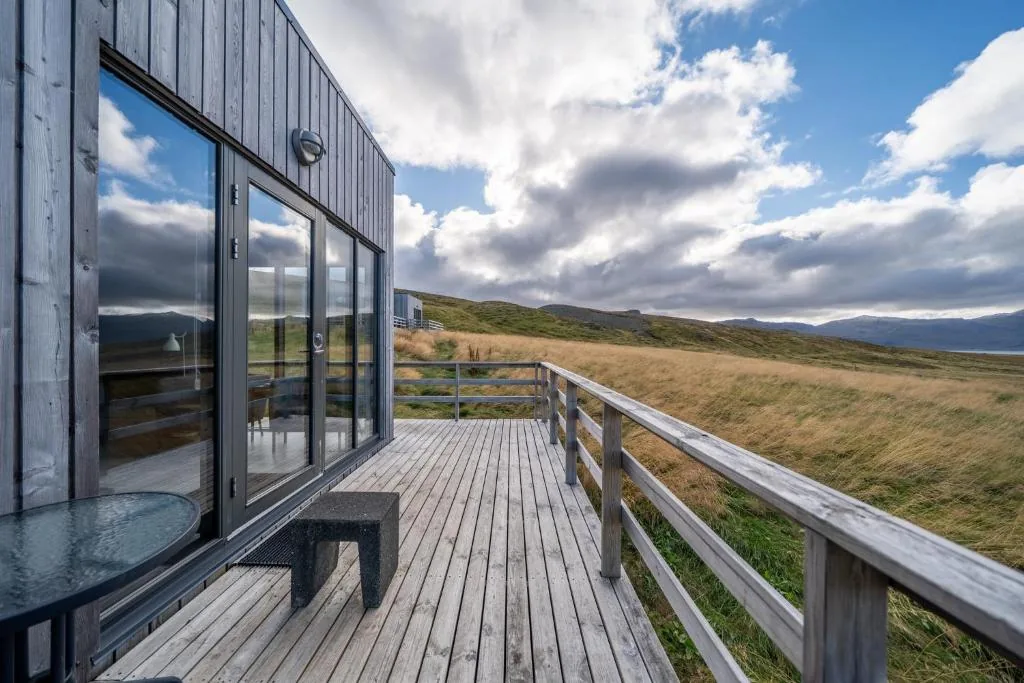
Iceland feels wonderfully foreign and seriously remote. But imagine you could feel even more foreign within the country itself, and even more isolated! It’s possible with the Westfjords, a truly exceptional region of Iceland. Immense fjords, very long roads, fantastic panoramic views and… no one. Sheep. It’s old-school Iceland: harsh, windy, hostile. And magical. Generally impossible to reach in winter, as the few roads are closed because of the weather.
It’s already not easy to visit the Westfjords by car, so I can confirm that getting there and exploring them without a car is virtually impossible — unless you do a lot of walking, take a lot of time (there are a few buses, but not often) and only go in summer. In short, a real, real hassle. And no organised activities on site.


The Snaefellsnes peninsula, Iceland in miniature
Careful, hidden gem. The Snaefellsnes peninsula really is something remarkable. It’s everything you can find in Iceland, but in mini form. Naturally people come for Mount Kirkjufell, to take that famous shot with the waterfall. Usually people just pop in here and leave straight away. What a mistake!
There are lava fields, loads of really lovely craters, black sand beaches, pretty lakes with beautiful reflections and a huge volcano, Snæfellsjökull which, according to Jules Verne, is the entrance to the centre of the Earth. It easily deserves 2 or 3 days, especially as there are lovely hikes to do and it isn’t far from Reykjavik.


The Golden Circle, classic but essential
On a first visit to Iceland (and the following ones too, in fact), you’ll inevitably do the Golden Circle. And for good reason: it’s a very classic route taking in 3 major Icelandic sites. Gullfoss, one of the country’s biggest and most iconic waterfalls. Geysir, the famous… geysers! And Thingvellir, a site that, as well as being gorgeous, is also historically interesting as it’s the birthplace of Icelandic democracy.
On top of that, you can add a pretty volcano, Kerid, and another waterfall, magnificent, which requires a little walking: Brúarfoss.
It can easily be done in a day from Reykjavik, but don’t hesitate to do a few of the hikes!


The superb south coast of Iceland
The south coast of Iceland is perhaps where you’ll find the most to do, among the country’s most beautiful and most impressive tourist sites.
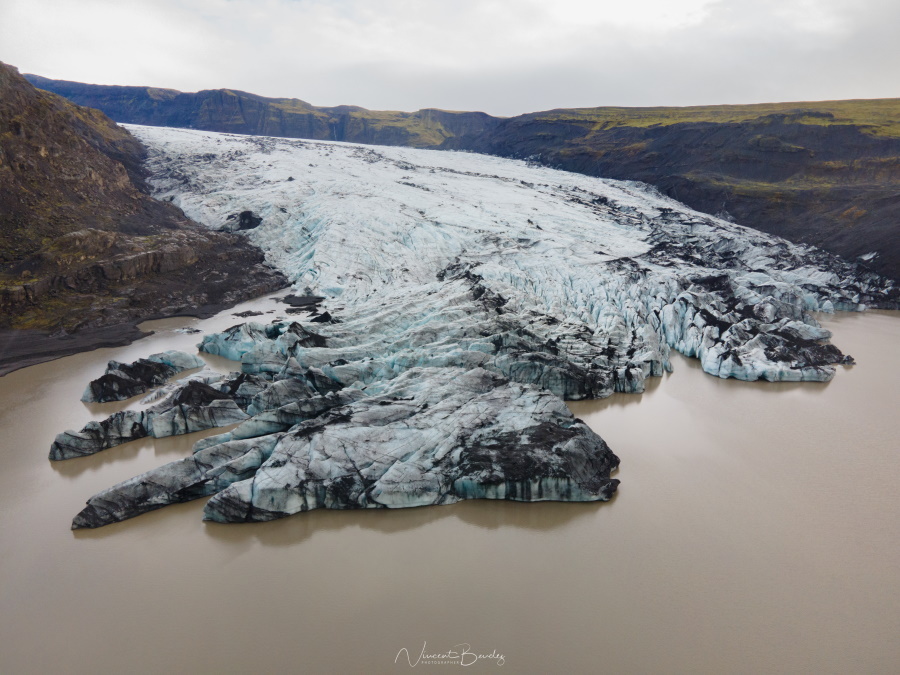
Naturally the glaciers like Jokulsarlon and Fjallsarlon, superb waterfalls like Skogafoss or Seljalandfoss, the black sand beaches of Vik, the cliffs and puffins at Dyrholaey, a canyon, hikes…
Seriously, you can spend a huge amount of time here, there’s so much to do. Some people spend two days — what a shame to rush through so fast! If you can afford it, 4 days is a good amount to push on as far as Vestrahorn.
- In the following article, you can find out more about the south coast of Iceland
- And here you can discover the beaches of Vik i Myrdal


The hostile Reykjanes peninsula
The most accessible spot, yet the most overlooked! The Reykjanes peninsula lies west of Reykjavik and is a huge tongue of lava. Even more so now with the eruptions you’ve surely heard about. It’s a tough place with a huge amount of wind, no vegetation, a superb rugged coastline, craters by the hundred and even geysers!
An utterly characteristic slice of Iceland: harsh conditions, active volcanoes, unique rock formations and few people!


Vatnajökull and Skaftafell
Vatnajokull is a huge Icelandic national park. But above all it’s the largest ice cap in Europe! That is, a dome of ice visible from tens of kilometres away, and the view is seriously impressive. You’ll also find Skaftafell Park here, a great spot for hiking and in particular for seeing the famous Svartifoss waterfall with its basalt columns.
There are several glaciers around here, they’re super easy to reach on foot, so I really recommend going.


Puffins on the Westman Islands
The Westman Islands are a (very!) volcanic archipelago just south of Iceland and easily reached by boat. Imagine that one island was created just a few decades ago, that another had an eruption which destroyed half of it (and, incidentally, made it bigger) and that all of this is still smoking.
At the top of the volcano the ground is still warm. Very impressive landscapes, but that’s not all! The Westman Islands are also home to the largest puffin colony in the world, those adorable, slightly clumsy birds. They’re here in spring and summer, easy to watch, one more reason to go and see this superb archipelago 🙂
But the Westman Islands are far more than that. Honestly, it’s beautiful! It’s worth spending a night there to take your time 🙂
- Do read the following article to find out where to see puffins in Iceland


The Myvatn region
A surprising region, and I ab-so-lutely loved it!
Located at the other end of the country, the Myvatn region really does offer some lovely and very varied things. First the lake, of course, surrounded by wonderfully photogenic craters, but also Hverir, an active geothermal area, and many waterfalls like Godafoss or Dettifoss.
And not far away you have canyons, but also Husavik, the best place to go whale watching!
If you like metal from beyond the grave (the kind that goes gruuuuu with long hair thrashing in every direction), then you’ll see where the band Dimmu Borgir got its name.
You’ll also find lava caves here, or the pleasure of hot baths that are less touristy than the Blue Lagoon.
- In short, in the following article I invite you to discover Myvatn!


From Landmannalaugar to Þórsmörk
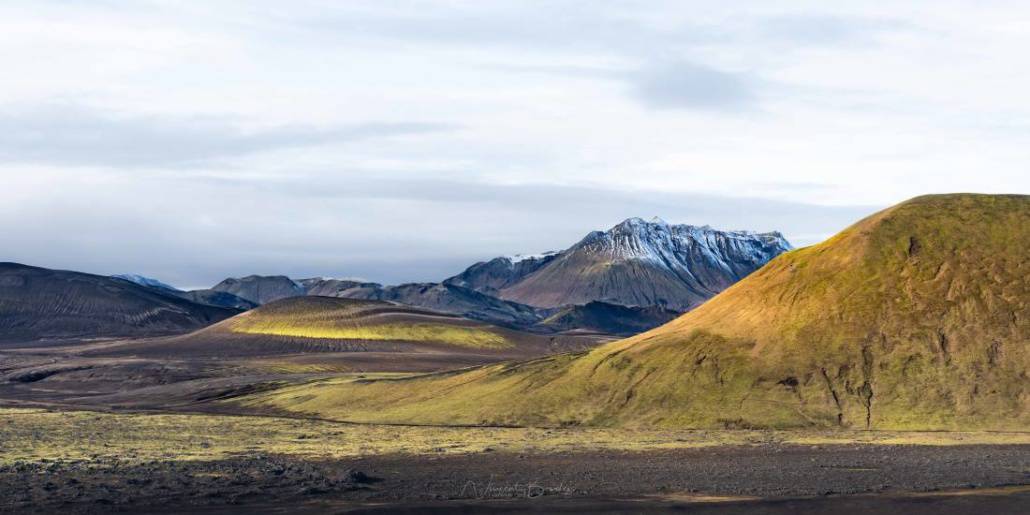
Behind these slightly barbaric-sounding names lie what are probably the country’s most beautiful landscapes. The Icelandic highlands are only accessible 2 to 3 months a year. And for good reason — the climate up there is harsh!
Landmannalaugar, Þórsmörk and Laki in particular offer exceptional hikes among the volcanoes, colourful mountains still capped with snow, and smoking earth.
As an aside, the 1783 eruption of Laki — 130 craters appearing along 25 km, killing 20% of Icelanders — is said to have caused the French Revolution by completely disrupting the climate and therefore agriculture for many years.
- In the following article I tell you how to get to Landmannalaugar without a car


Visiting surprising Reykjavik
Reykjavik is Iceland’s pretty capital. But a surprising city. Very colourful, small yet busy and lively — in fact it’s the kind of city you could call kind-hearted.
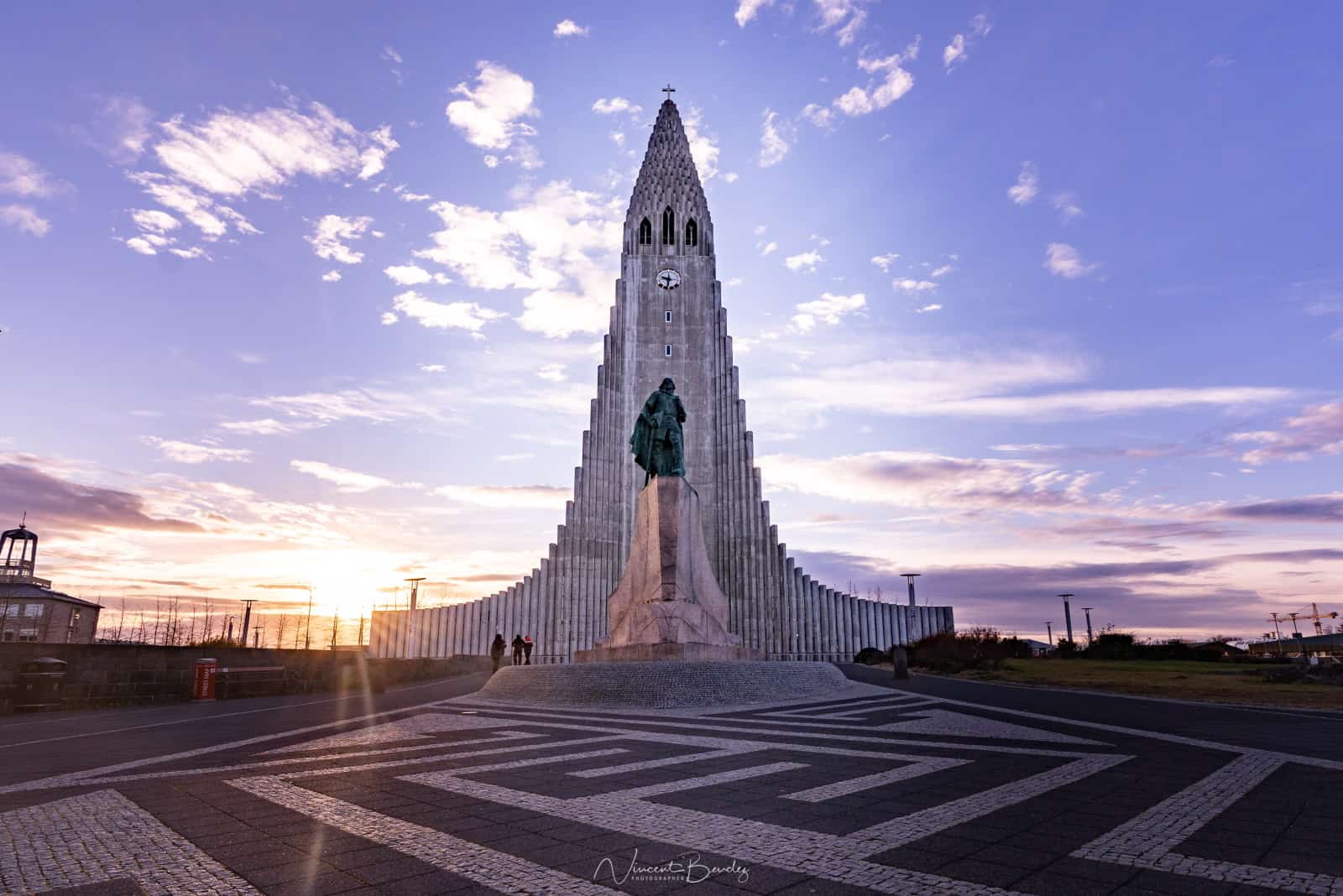
Naturally you’ll see the famous church, Hallgrímskirkja, but you’ll take huge pleasure in wandering past the little houses with their corrugated-iron roofs, the lively street art, the small restaurants (which cost an arm and a leg, I’d better warn you), and a really pleasant seafront.
There are also loads of activities that set off from Reykjavik, so if you don’t plan to hire a car, you can absolutely use it as a base for several days. And a little further down in the itineraries section I’ll tell you all about it!
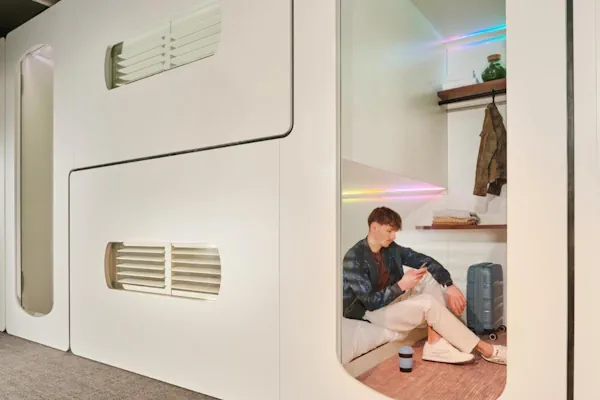
📍 Reykjavik · Hverfisgata city centre
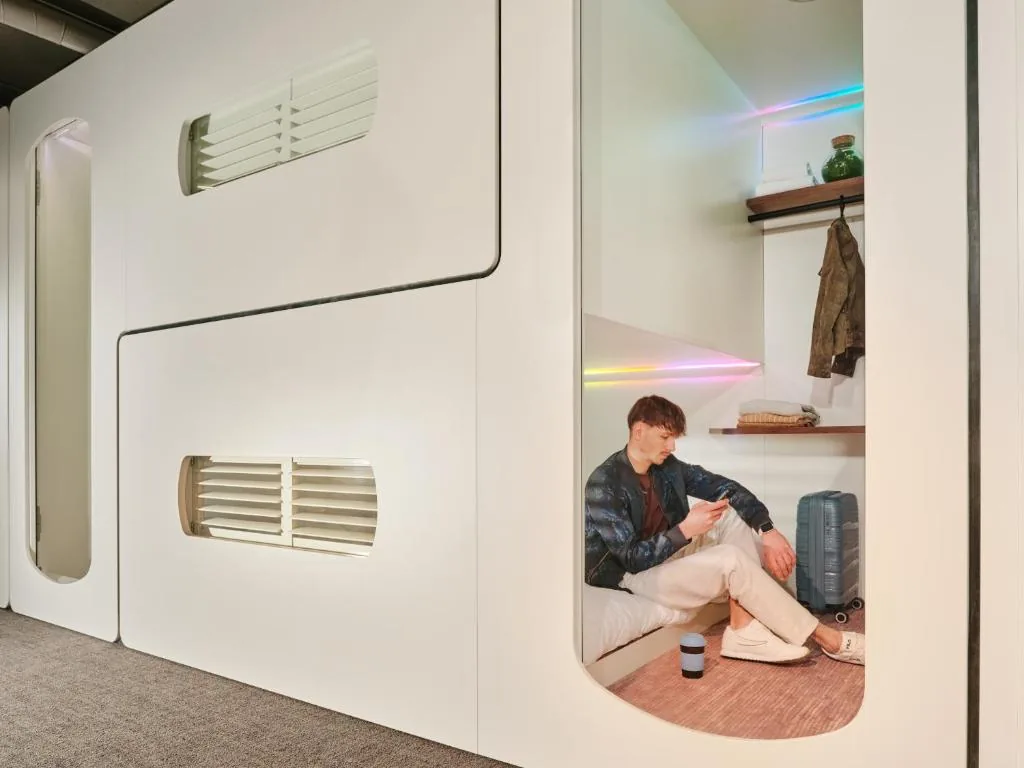
A design hub concept: cosy pods, rooftop jacuzzi and self check-in. The smart choice without sacrificing style.
- Compact rooms with a sound-insulating door
- Outdoor rooftop jacuzzi
- 600 m from Hallgrímskirkja church
Free cancellation
From €100 /night
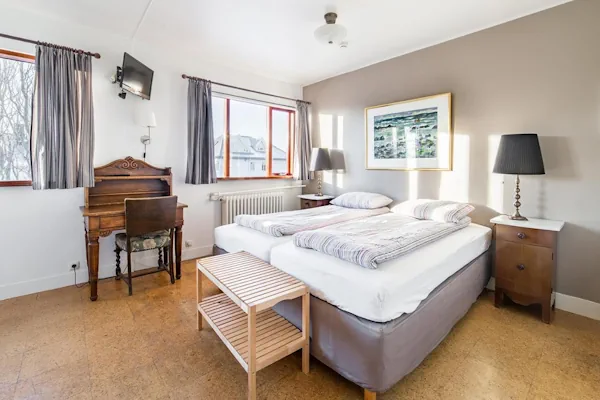
📍 Reykjavik · 60 m from Hallgrímskirkja
A warm family-run house 60 m from the cathedral. Oscar and his team make you feel right at home.
- Free on-street parking (rare in Reykjavik)
- Equipped kitchen and large communal lounge
- Pets welcome at no extra charge
Free cancellation
From €170 /night
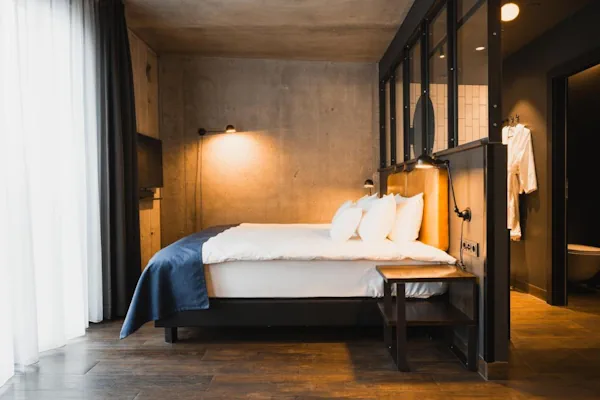
📍 Reykjavik · Old harbour, Tryggvagata
A design boutique right on the old harbour, with the Deig bakery and Le Kock restaurant right in the lobby.
- Facing the old harbour, 500 m from Harpa
- Sauna and fitness room
- Nespresso coffee machine in every room
Free cancellation
From €200 /night

📍 Reykjavik · Vesturbær (4★ + spa)
The 4-star hotel with a full spa to recover after the northern lights. Green Key certified.
- Spa & wellness with jacuzzi and fitness room
- On-site Grandi restaurant and cocktail bar
- Green Key sustainability certificate
Free cancellation
From €200 /night
The most complete map of Iceland
In the following article, I’ve created for you the most complete map of Iceland, bringing together more than 150 points of interest across the country. The most beautiful spots, the canyons, the places to see puffins or whales, more than 40 waterfalls and plenty more!
It’s a map you can use on Google Maps, which you can get directly here. You just need to play with the different layers to show/hide whatever you like.
The best activities to do in Iceland
Below I’ve listed the main activities, but there really are loads of others! If you’d like to know more, I’ve written a whole article on activities in Iceland!
Walking on the glaciers
This is something I’m mad about. Walking on the glaciers really is a must, a wonderful experience. With the number of glaciers in Iceland, especially on the south coast, it’s an easy activity to do.
The glaciers are free to access buuuuut unless you have your own gear and are experienced, you MUST NOT go without a guide, it’s seriously dangerous. There are crevasses, it’s unstable.
You have several options. Either do the tour from Reykjavik: they pick you up at your hotel, take you to the glacier and bring you back. Really handy, it takes a good day. Or go straight to the glacier, usually in Skaftafell Park, where you’ll meet your group. Prices are generally around a hundred euros, depending on the length. Here are a few examples:
- 5-hour glacier hike in Skaftafell Park, €140, meet on site
- From Reykjavik: south coast tour and glacier hike, €170


📍 Skaftafell (south coast) · 3 hrs · Troll .is · max 14 people
A 3-hour guided hike on the Falljökull, a tongue of Vatnajökull, the largest glacier in Europe. 1.5 hours on the ice with crampons, helmet and ice axe provided — English-speaking guides.
- Falljökull · tongue of Vatnajökull (UNESCO)
- Small group of max 14 · all equipment provided
- Coffee + chocolates after the tour · from age 8
Free cancellation
From €92 /person

📍 Reykjavik · 12 hrs · Troll .is · pickup included
A full day by minibus from Reykjavik: the Seljalandsfoss and Skógafoss waterfalls, the black sand beach of Reynisfjara, then a 3-hour guided hike on the Sólheimajökull with equipment provided.
- Seljalandsfoss + Skógafoss (2 major waterfalls)
- 3-hour glacier hike on the Sólheimajökull
- Reynisfjara beach · Reykjavik pickup
Free cancellation
From €170 /person
Seeing the puffins
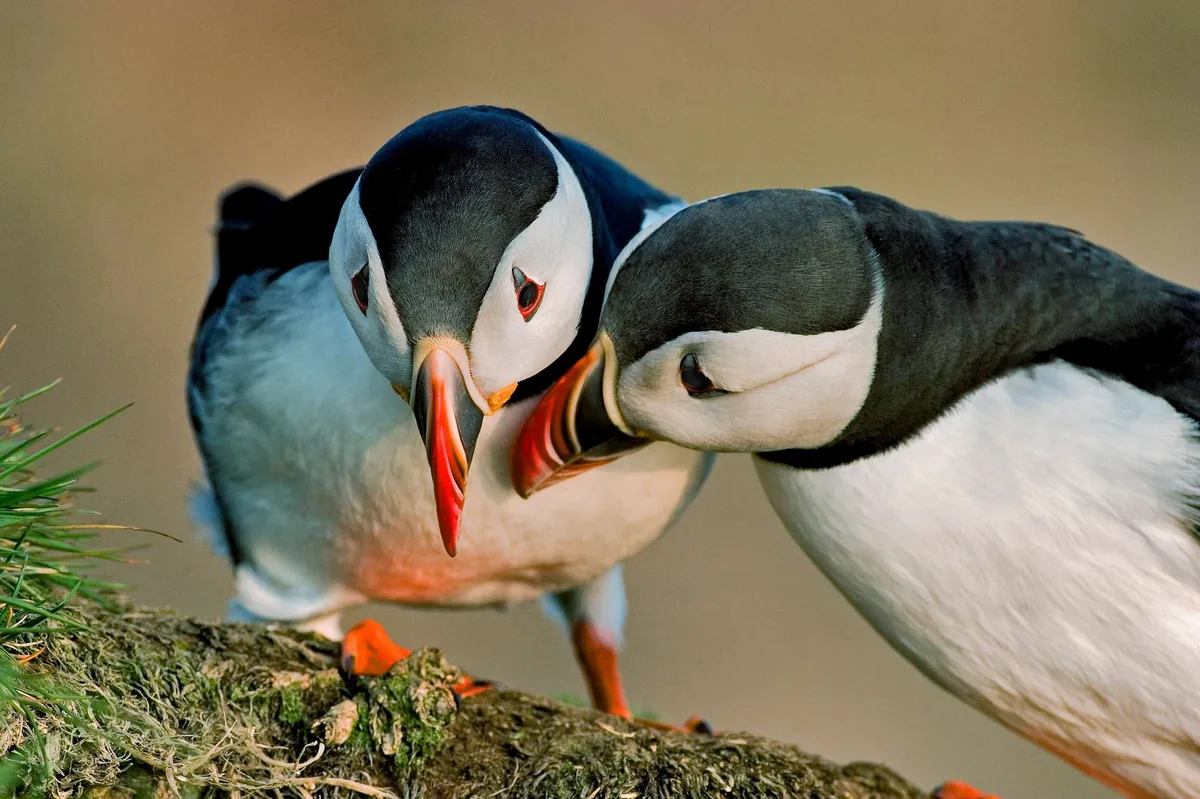
Puffins are probably the most adorable birds going. Big eyes that would melt Puss in Boots (yes, the one in Shrek), a multicoloured beak, plump little bodies, an awkward look and not at all shy. And as luck would have it, Iceland is probably the best place to see them.
From May to late August, the world’s largest colonies come to Iceland, at several spots all around the island. The best-known examples are the Westman Islands and Látrabjarg cliff, two enormous colonies. But you’ll be able to find them in plenty of other, more accessible places:
- South coast:
- the Ingólfshöfði cape (where I found them the most easily)
- Dyrhólaey (I managed to see a few there too)
- and of course the Westman Islands, reachable by boat.
- Reykjavik:
- you can see them on the island of Akurey, but only via boat tours, you can’t go there on your own. The upside is that it’s cheap (€55). Find out more here.
- Westfjords:
- you need to go to Látrabjarg, at the western tip.
- Eastern fjords:
- the island of Papey, accessible only through an agency from Djupivogur, is a tiny uninhabited island where you get really close to the puffins
- Borgarfjörður Eystri, in the north of the eastern fjords, is considered an excellent spot to find them
- Snaefellsnes:
- Breiðafjörður is a large fjord dotted with lots of little islands taken over by birds, including puffins. You’ll need to take one of the tours that leave from Stykkishólmur
- North of Iceland:
- You’ll also find quite a few scattered across the north, particularly north of Husavik, on the Tjornes peninsula
In the following article, I run through all the options for seeing Iceland’s puffins!

Seeing whales and orcas
Iceland is a great country for whale watching. The big advantage is that, unlike Norway for example, there are whales all year round and you can see them from quite a few places, especially Reykjavik, Akureyri and Husavik. But it’s also possible in Snaefellsnes and the eastern fjords. The good thing is that you really do come across all sorts of creatures, and not just whales. Lots of dolphins, porpoises, orcas (especially in Snaefellsnes) — there’s something for everyone 🙂
It’s never an exact science, though. I went one afternoon last October, we saw a few whales in the distance that preferred to be left in peace, whereas that very morning they’d seen lots of dolphins and no whales. It’ll be a surprise every time.
The outings last about 3 hours; in my case they pushed it to 4 to see one last whale. And it costs between €70 and €130, depending on the boat, the length, and some combine a whale and puffin outing. Anyway, here are a few recommendations:
- Reykjavik: whale watching, 3h, €99, Seatrips Reykjavik
- Husavik: whale watching aboard a traditional wooden boat, April to November, 3h, €85
- Akureyri: whale watching, outings all year round, 3h, €90


Seeing Iceland by plane or helicopter
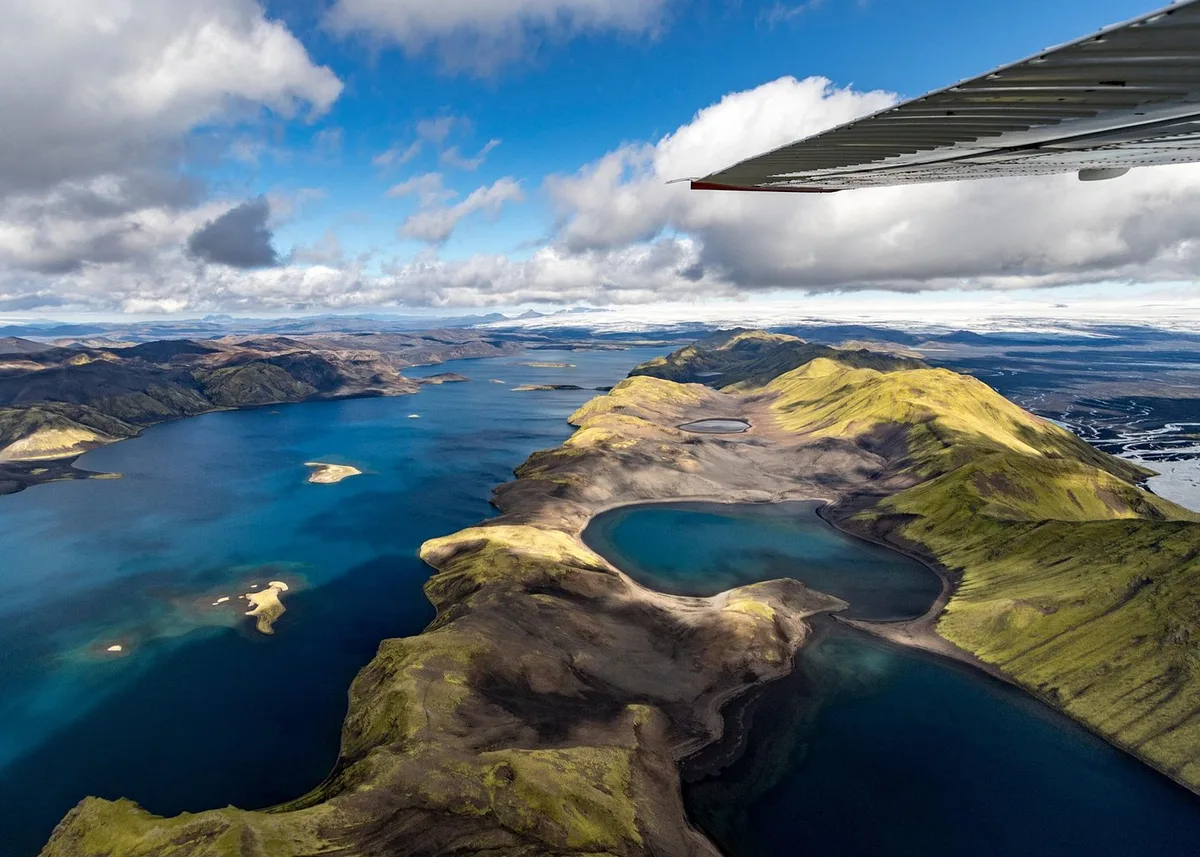
There are certain things in Iceland that can only be seen from above and are only reachable by air when the roads are closed, like Landmannalaugar, Laki, the glacial rivers… Iceland seen from above is exceptional, truly.
I’ll write you a fuller article about it with lots of photos, but I took a flight precisely to discover these volcanic areas and glaciers, all while flying over the vast Vatnajokull ice cap. Utterly impressive. It comes at a price, I won’t hide it, between 300 and 450 for up to 1h30 of flight, but in my view it’s something to do once… at least! As I was there in late October, the Highlands were partly snow-covered and it’s all the more beautiful for it.
There are several flights departing from Skaftafell airfield, with some interesting options:
- the glaciers, black sand beaches and glacial river beds, which form unimaginable shapes, discover it here
- Vatnajokull, the region’s highest peaks, the glaciers and in particular Jokulsarlon, discover it here
- the ultimate flight with Vatnajokull, Landmannalaugar, Laki, discover it here


Seeing the surprising ice caves
Another Icelandic “speciality” is the ice caves. You’ll find them mostly around the glaciers (logical, yes) and especially around Skaftafell. Some are accessible all year round, others only in winter. I haven’t managed to do it yet because I forget every time, but it’s on the agenda for the next trip!
In winter, the caves are available from November to March, giving them time to reform and reappear. They melt in summer and come back to roughly the same spot once winter arrives. But they shift, so every day is a new experience!
There’s the Crystal Cave, located right next to Jokulsarlon. The biggest and easiest to reach. Discover it here.
In summer, there’s just one cave, a black ice cave located beneath Katla, near Vik. You can find out more here.
From Reykjavik, you can reach an artificial cave carved into Langjokull. Less impressive than a natural cave, but easier from Reykjavik. Discover it here.
Finally, if you’re short on time, then the Glaciers and Ice Caves exhibition at the Perlan museum is made for you! Discover it here.

Relaxing in one of the country’s hot springs like the Blue Lagoon or Sky Lagoon
The relaxation break. Because after all these Nordic thrills you’ll have thoroughly earned a good soak in warm waters surrounded by volcanoes.
So yes, everyone will mostly tell you about the Blue Lagoon (and having done it twice, I really do love it), but there are some all over the country. In particular:
- Sky Lagoon near Reykjavik, the other big name
- Vök, over near Egilsstadir, so right in the east
- Myvatn Nature Baths, on the north coast in a magical setting
- Forest Lagoon, up north in Akureyri
- Krauma, truly lost in the wild near Borgarnes
Some are touristy, others less so. What all these baths have in common is a magnificent setting to unwind in peace. Imagine water at 39° all year round even under the snow, where you can sip a little cocktail and why not under the northern lights!


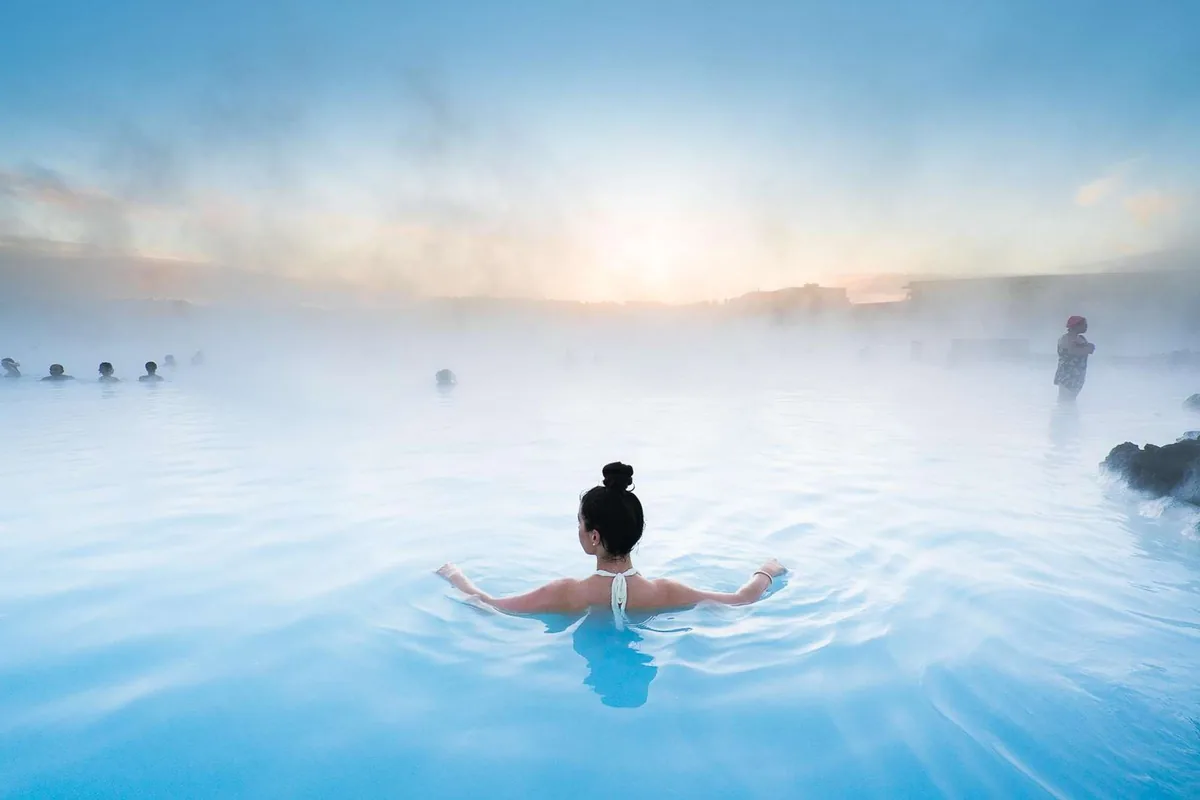
📍 Grindavík (Reykjanes) · Blue Lagoon Iceland (1 day)
A soak in the milky-blue waters of Iceland's most iconic geothermal lagoon, with a silica mask, towel and drink included.
- Entry + towel + drink + silica mask included
- Unlimited access to sauna, steam room, cold lagoon and quiet area
- Wheelchair accessible
Free cancellation
From €126 /person
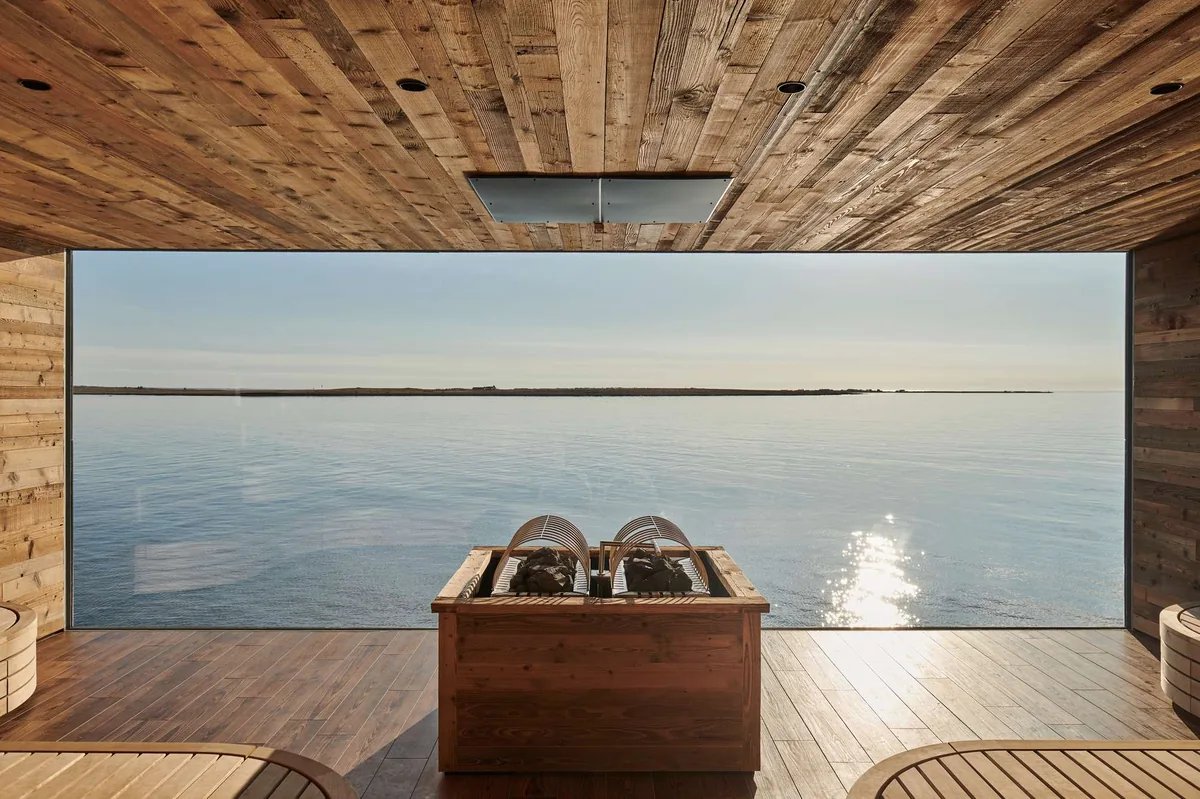
📍 Reykjavik · Sky Lagoon (1 day)
A geothermal lagoon facing the North Atlantic with a 7-step spa ritual: sauna, cold plunge, steam room, body scrub and a final drink.
- 7-step ritual: lagoon → plunge → sauna → scrub → steam room
- Infinity pool facing the North Atlantic
- Private (Sér) or shared (Saman) changing rooms, your choice
Free cancellation
From €101 /person
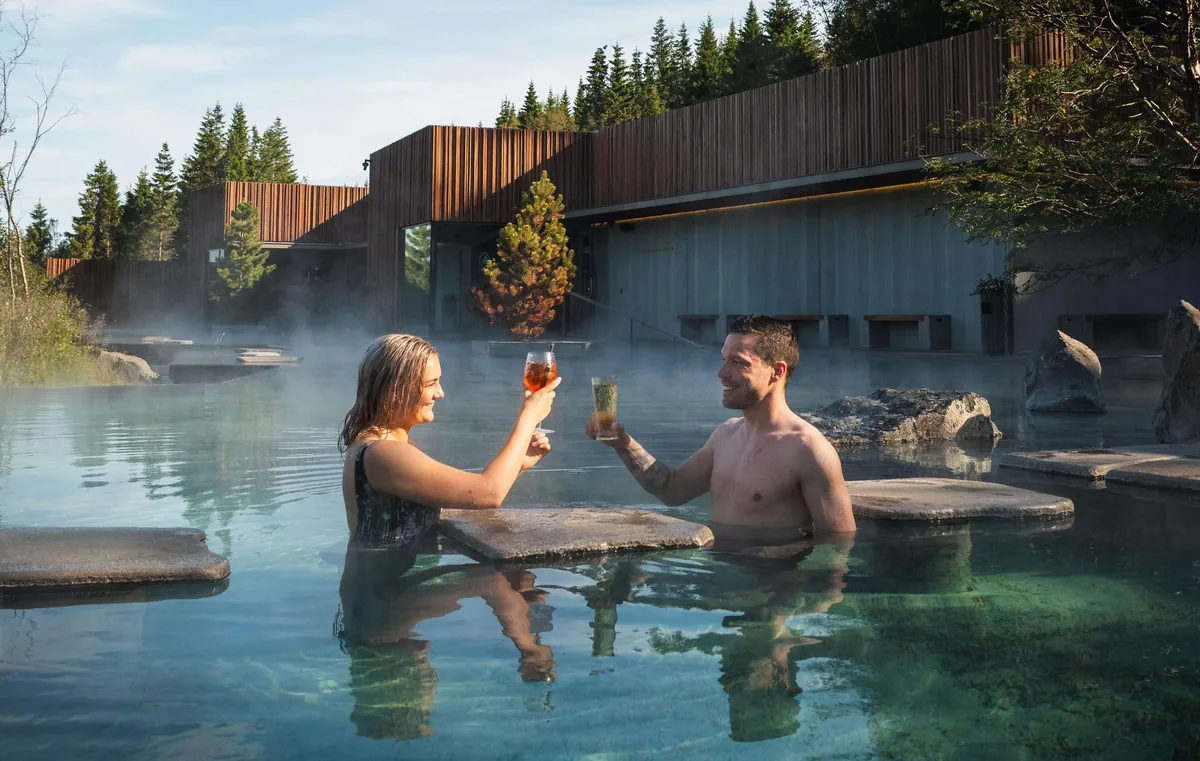
📍 Akureyri · Forest Lagoon (1 day)
A lagoon nestled in the birch forest facing the Eyjafjörður fjord, with 2 hot pools, a Finnish sauna and a cold plunge.
- 2 pools at 37 °C + Finnish sauna at 80 °C + 11 °C plunge
- Towel + 1 drink + bathrobe + swimsuit included
- Forest Bistro on site, indoor fireplace and fjord views
Free cancellation
From €70 /person
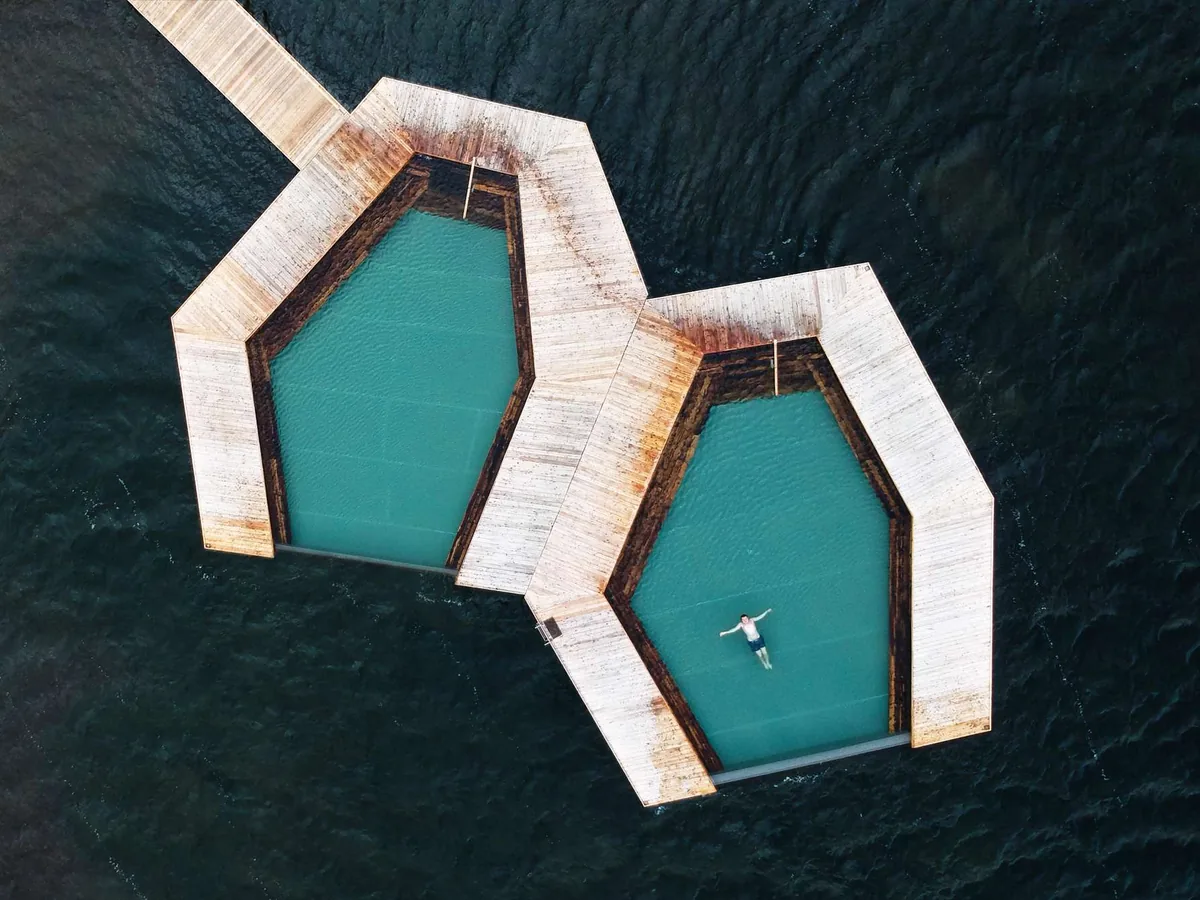
📍 Egilsstaðir (East Iceland) · Vök Baths (1 hr 30)
Iceland's only floating geothermal pools, on Lake Urriðavatn in the east, with water so pure it is certified drinkable.
- 3 floating geothermal pools on Lake Urriðavatn
- Sauna + cold shower + plunge straight into the lake
- In-water bar + bistro facing the lake
Free cancellation
From €53 /person
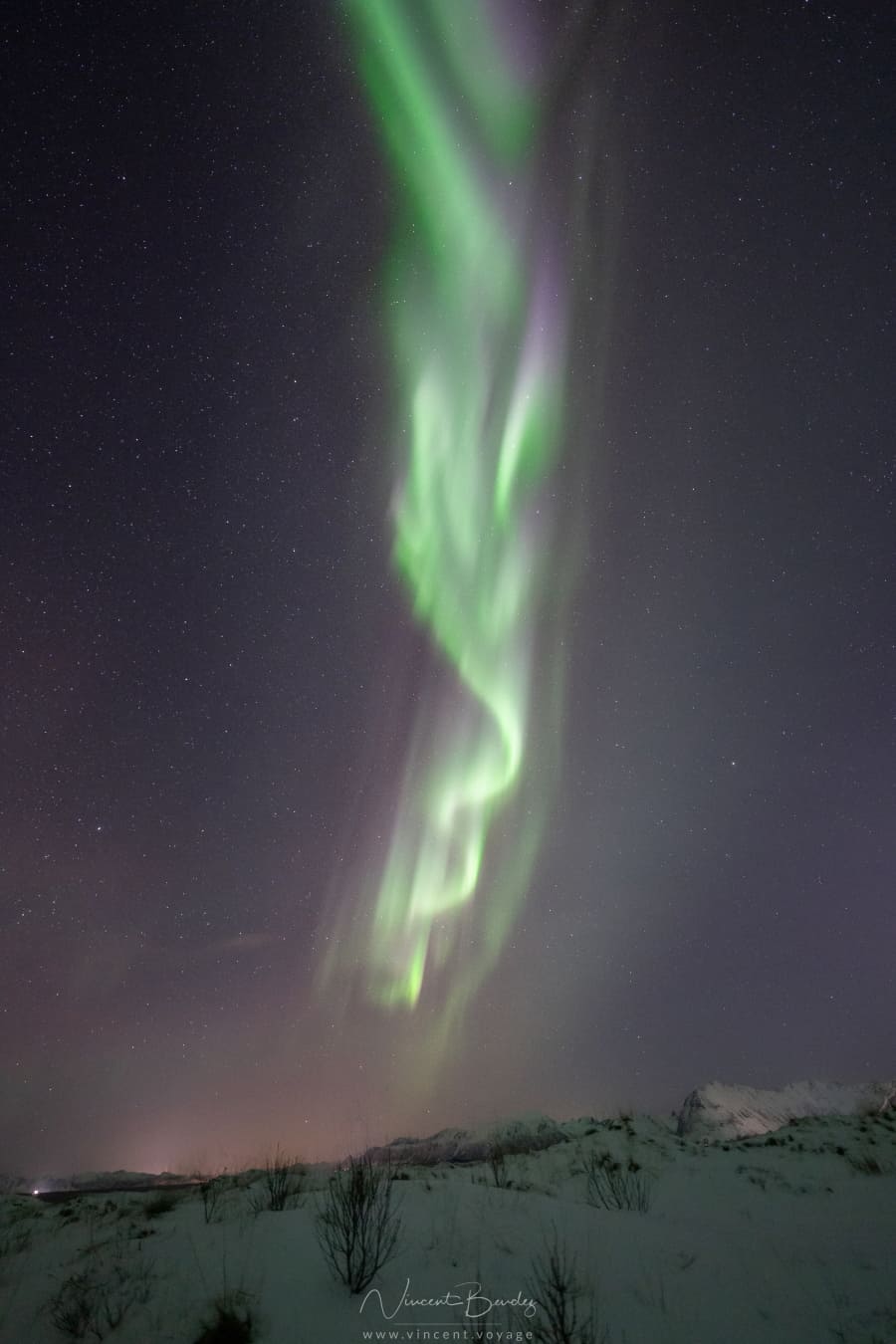
Seeing the northern lights in Iceland
Along with Norway, it’s one of the best countries for seeing the northern lights. It’s a little further south than Tromso, but it still sits roughly along the auroral oval, so the country’s location is good.
But Iceland’s huge advantage is that there’s no one about! You can have clear, open spaces for tens of kilometres, so you can get a stunning, far-reaching view to watch the lights. There’s no light pollution in the country (it has to be said there really aren’t many people about) and between the volcanoes, waterfalls and mountains, you can create some superb compositions.
On the other hand, you need a bit of luck with the weather. It’s Iceland, it’s not a given! 😀
In the article below, you’ll find plenty of tips for chasing the northern lights in Iceland.
If you’re not driving, if you don’t want to bother reading the weather and driving in sometimes comical conditions, then there’s an option with the agencies. Because if you stay in Reykjavik, with all the light pollution, it’s a touch complicated.
So as I was saying, it’s possible to go through an agency to see the northern lights. You can see them on your own, but there are two very good reasons to use an agency: you don’t drive. And seeing them in town really isn’t great with all the lights. Plus you don’t quite know how to go about it, where to go, when. Or, finally, for logistical reasons. Others do it very well, so you might as well go through them.
Before setting off on my own (in case you didn’t know, I love chasing the northern lights). I did it twice in Norway before going it alone, and it works just as well in Iceland. In the link below I point you to a good agency for seeing the lights from Reykjavik.
But be careful, you need to go at the right time of year to see the northern lights.
And you must choose carefully between a small agency (pricier) and a tour bus (cheaper).
- in the following article, discover the best northern lights agencies in Reykjavik!


Using an agency to discover Iceland
Day activities
We’ll talk about it in more detail in the Iceland without a car section, but you can absolutely use guides to discover Iceland. It’s really simple (and cheaper than in Norway, for once).
So it all depends on how long you want to travel in Iceland, and whether you want a car or not. If you’re only there for 3-4 days to do the essentials, then taking an agency to do the Golden Circle (the country’s most popular activity!) for example can be a good idea. I did one to go to Landmannalaugar under the snow, it was lovely (but not cheap!). The agency network is very well organised in Iceland. Some activities absolutely have to go through an agency, such as walking on a glacier (lovely), some lava caves or ice caves. You can also go to see the northern lights with an agency depending on the season.
So it’s really varied and the departure points are mainly Reykjavik, Akureyri and Jokulsarlon, while Husavik is more dedicated to marine wildlife (whales, puffins).
You can take the opportunity to do a guided tour of Reykjavik, a very pleasant city!
The great thing is that anyone can take a trip to Iceland, whether you drive or not.

Which itinerary to do in Iceland
Now, this is complicated. Or very simple (you can tell this is the guy who doesn’t want to take any risks, eh).
It’ll depend enormously on how much time you have. And on the season. And on whether you have a car. Because you really wouldn’t think it, but the distances are big in Iceland. And you don’t drive fast. Oh, and if you want to visit Iceland without a car, an itinerary awaits you just below.
The Ring Road
The great classic is to drive around the island via the Ring Road (Route 1). Very easy, you just go straight ahead (the whole concept of a ring road, really). You’ll find loads to do:
- the waterfalls like Seljalandsfoss (don’t forget its little sister Gljúfrabúi), Skogafoss, Godafoss and many others
- the superb Jokulsarlon glacier and others nearby in Skaftafell Park
- Vik, its rocks and its black sand beaches on the south coast
- Vestrahorn
- The eastern fjords
- Myvatn
- The Hvitserkur rocks
It’s recommended to do the Ring Road in about ten days minimum. You can do less, but that’s a lot of driving and, above all, you don’t really have time to stop and go for a few walks.
In the following article, I present the Icelandic Ring Road in detail
Beyond the Ring Road, there are a few essentials to do along your route:
- the Golden Circle (1 day)
- the Snaefellsnes peninsula (2 days min)
- the Westfjords (3 days) if the weather allows
- the Westman Islands (1 day) by ferry, lovely
- a jaunt into Landmannalaugar if you have a 4×4 and if it’s open
- The Reykjanes peninsula (1 day or less)


A week or less
So if you’re staying less than a week in Iceland, then I’d advise concentrating on a single region, not too, too far from Reykjavik. It could look like:
- the south coast as far as Hof (3 days)
- the Golden Circle (1 day)
- the Snaefellsnes peninsula (2 days)
For a weekend, I’ve written a whole article here.
12-day van itinerary
Last October, I travelled part of Iceland in a 4×4 van, focusing entirely on the west of the island. The full details of the itinerary here. As the weather hadn’t yet turned, the centre of the island was partly accessible. I managed to get to Landmannalaugar (a big day-trip there and back), do the Golden Circle, the Snaefellsnes and then, above all, head off into the Westfjords. The big advantage of the van is that you choose according to the weather, a bit day by day, even if you have an idea of what you want to do.

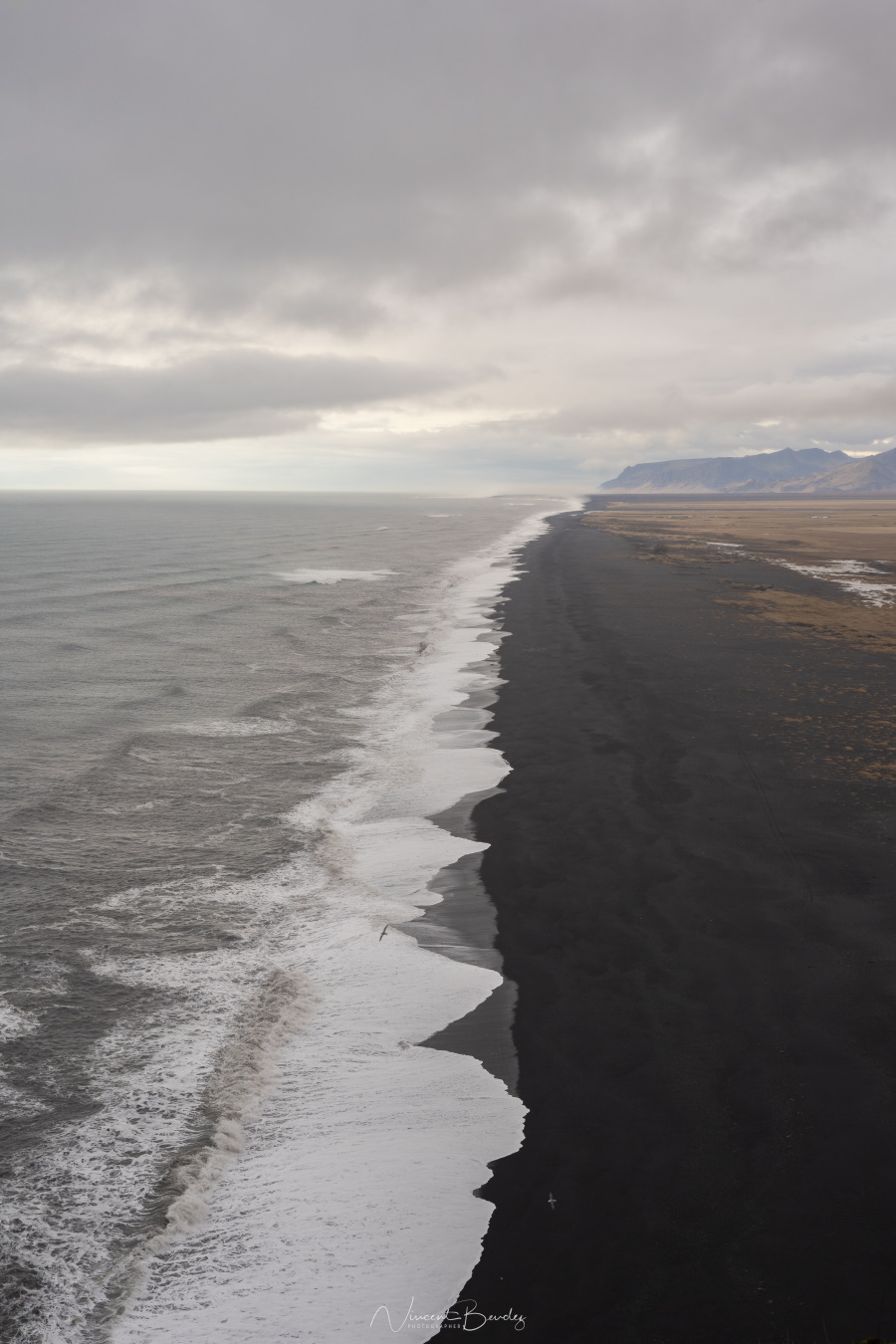
Visiting Iceland in a week without a car
There are quite a few options thanks to the agencies, but if you don’t drive, then use Reykjavik as your base. Here’s what I suggest:
- Day 1 – Explore Reykjavik; you can also do a food tour, they’re really well regarded
- Day 2 – go and visit Iceland’s south coast to see the waterfalls, Vik and Jokulsarlon. Packed but fantastic!
- Day 3 – it’s one of the best places in the world to see them! So take a trip to go whale watching! And for the rest of the day, enjoy the city and Perlan
- Day 4 – as the previous day was fairly quiet, head off to discover the Snaefellsnes peninsula. It’s the country’s most beautiful spot!
- Day 5 – fancy a bit of relaxation after all that? Perfect! It’s time to go to the
- Blue Lagoon or Sky Lagoon
- Day 6 – One last big activity that’ll leave you wide-eyed: going for a walk on a glacier!
- Day 7 – It’s the last day! Either it’s departure time, or I’d suggest something a bit different, the Lava Show


What budget for a trip to Iceland?
Let’s say it straight away: Iceland is the most expensive country I’ve visited, and by a long way. But the good news is that you can make the bill vary threefold depending on how you travel. Here, in full transparency and with 2026 prices, is what you really need to budget for a tour of the island.
The 3 typical budgets (per person and per day, excluding flights)
- Tight / backpacker — €110 to €150/day: a van in low season or a shared van between several people, or hostels + a small car, home cooking 100% of the time, a Camping Card, and skipping the paid excursions. This is the real floor, but it demands compromises.
- The most common case — €160 to €210/day: a 2-berth van in summer, or the car + guesthouse formula with a few restaurants and 2-3 activities. This is the budget of the vast majority of travellers.
- Comfort — €250 to €400/day: 3-4 star hotels, an SUV or 4×4, regular restaurants and guided excursions.
For a couple over 10 days, flights included, reckon on roughly €3,500 to €4,000 in the budget version, €4,500 to €6,000 for a mid-range trip (the most common), and €7,000 and up in comfort.
The breakdown item by item (2026 prices)
- London-Reykjavik flight: €100 to €250 in low season, €200 to €350 in mid-season, €350 to €550 in high summer.
- Car hire: from ~€40/day (small car, low season) to €90-100/day in summer. Reckon on €60 to €160/day for an SUV, €80 to €220 for a 4×4, and €150 to €350 for a campervan. Add €15 to €25/day for insurance. I always go through a hire comparison tool.
- Petrol: around €1.90 to €2 a litre. Budget €150 to €250 for a full tour of the island.
- Accommodation (per night): campsite €13-18/person, guesthouse €90-150, 3-star hotel €120-200, 4-5 star €250-500 and up.
- Meals: a restaurant main course €25-40, a full meal €45-70, a petrol-station set menu €12-18.
- Activities: glacier hike ~€90-130, whale watching ~€80-100, ice cave ~€150-190, snowmobiling ~€150, entry to the Blue Lagoon from ~€65. Nature itself remains free (sometimes a small car park at ~1,000 ISK).
Budget by season (mind the gaps!)
This is THE variable that changes everything. Some items can almost triple between winter and high summer, while others don’t budge a cent.
| Season | Budget / day / person (mid-range) | What changes |
|---|---|---|
| Low season (Nov to March) | ~€130-170 | Hotels at their lowest, but a 4×4 is advised and activities are mostly guided excursions (aurora, ice caves). |
| Mid-season (May, Sept-Oct) | ~€150-190 | The best value for money: gentle prices, superb nature, far fewer people. |
| High season (June to August) | ~€200-260 | Everything is at its highest: hotels and rentals can double or triple, you need to book early. |
In short, it’s accommodation (which can triple), car hire and flights (which can double) that push up the bill. Petrol, food and site entry fees, on the other hand, stay the same all year round.
The myth of the “cheap” van
You read everywhere that the campervan is THE budget solution. It’s true… in part. Yes, a van generally works out a little cheaper than the car + hotel formula (by 5 to 40% depending on the comparisons), because it merges transport and accommodation. But be careful: it’s not a backpacker budget for all that. Hiring a van in summer (€150 to €250/day), the campsites — compulsory, since wild camping has been banned since 2015 — at ~€15/person, and the extra fuel consumption quickly push the bill up to €150-190/person/day for two. The saving becomes really worthwhile with 3 or 4 people sharing the van, and it flips completely if you take a 4×4 van.
Out of season, on the other hand, yes, the van is a great deal. Actually, the whole of Iceland becomes a great deal. The van can cost less than €100, accommodation prices are halved, and so are classic car hire prices (at the very least).
How much does food cost in Iceland
I’ve visited a few countries, including some pricey ones like Norway. And what if I told you that Iceland is the most expensive country there is? Doing your food shopping there makes Switzerland look like a suburban Lidl. Everything is very expensive, whether it’s food, a beer, accommodation or petrol. You can limit the damage by eating at petrol stations, which all offer food.
For supermarket shopping, easily reckon on 30% more than at a Paris corner shop. For certain products like cheese, meat/ham and vegetables, it’s at least 50% more.
Tinned goods, on the other hand, are “roughly OK”. A good tip, found at the end of my trip of course: they have quality ready meals that aren’t expensive. No rubbish in them, not calorific, filling and around €5.
Alcohol is seriously expensive and regulated — it was a measure to curb the country’s drinking problems back in the 1980s.
After that, some people wonder whether it’s better to bring your own food in your luggage. I’d say OK, it’s 30/50% more here, but in the end, unless you have a salmon feast, you don’t spend that much. Rice and pasta stay affordable, so I’d rather keep my extra kilos (of luggage, that is) for gifts and souvenirs.

A few tips to lighten the bill
- Do your shopping at Bónus (the shop with the pink pig), by far the cheapest supermarket, and cook as much as you can.
- Eat cheaply at the petrol stations. Admittedly they’re the only places to eat for miles around.
- If you camp several nights, the Camping Card (Útilegukortið, €179 in 2026) covers up to 28 nights for a family: it quickly pays for itself.
- The van replaces the car AND the hotel: the saving is real but mainly out of season
- Travel in mid-season (May or September): prices sometimes halved for nature that’s just as beautiful.
- Fill up a water bottle everywhere: the tap water is excellent and free.

How to get to Iceland and get around
Reaching Iceland from the UK
By plane
It’s an island cut off from everything. Naturally, the plane is the simplest and quickest option. Straddling Europe and North America (both literally and figuratively, since it sits on the rift that separates these two continents), Iceland is still within easy reach: 3h from London to change worlds, that’s fine.
You’ll find more and more airlines, including low-cost ones like easyJet. Which means it’s never really very expensive to get to Iceland, except in high season (June to August). But flexibility (as usual!) and booking early will help bring the cost down. For example in October, booking a week ahead, I got my return flight for €200 including luggage with Icelandair, which isn’t even a low-cost carrier.
A nice thing is that if you want to go to or come back from North America, Icelandair offers a stopover in Iceland. Which means that, for the same price, you can stay 48h in Reykjavik, do the Blue Lagoon or the Golden Circle for example. It’s handy and partly explains the big American turnout.
In any case, you need to compare prices beforehand. The dates, the airlines. I use at least two comparison sites (given the price of a trip to Iceland, if I can save a few tens of euros here and there, I won’t deny myself!).
And I mainly use Booking Flights thanks to its price-prediction tool.
Transfers between the airports and the city centre
The international airport isn’t in Reykjavik. That would be too easy. It’s located in Keflavik, at the very tip of the Reykjanes peninsula, about 50 km from the city (easily 45 min).
So if you don’t want to hire a car, there are still easy ways to get into the city, even though the airport is quite far. In the following article, I explain how to get from the airport to Reykjavik city centre (shuttles, public or private buses, taxi).
By boat
If you’d like to come with your own vehicle or simply have a different experience, you can come by boat. For that, you need to get to Denmark and then it’s 2.5 to 3 days at sea with a stop in the Faroe Islands if you like. It’s operated by Smyrilline. You can have a cabin to yourself, stay in a dormitory, book a whole package or just the crossing. Honestly, the offering is pretty comprehensive, you just need to have the time!

Getting around in Iceland
Do you like driving? Just as well!
Iceland has no railway network and hardly any airports outside Keflavik. Well… there are some tiny ones, but given the wind and the state of the airfields, I wouldn’t recommend them 😀
There’s a bus network that goes around the island and also runs along the two central roads. You can see the details and timetables on this site. The snag is that there’s only one bus a day. So travelling around Iceland by bus is really complicated.
Hitchhiking could work quite well. But standing out in this changeable weather with so few cars is a challenge! It’s worth a try, but outside the capital, traffic can be really limited.
So that leaves the car, which we’ll talk about below.
Can you visit Iceland without a car
So, as I was saying, travelling without a car in Iceland is complicated because there’s only one bus a day. And there aren’t necessarily any stops at the tourist spots, or hotels to wait for the next bus. Handy.
That said, what you can perfectly well do is visit a good part of Iceland from Reykjavik, using it as a base:
- Reykjavik activities like whale watching, or ones outside like walking on a glacier or visiting an ice cave
- one or two days to visit the south coast, where you’ll get the most beautiful sites like the waterfalls, the beaches of Vik, and lagoons like Jokulsarlon
- a day in Snaefellsnes; there are tours that show you the most beautiful spots. A packed day but very doable.
- A day in Reykjanes, a place where you wonder how life can exist (spoiler: there’s hardly any!)
- And a day at the Blue Lagoon or Sky Lagoon, just to treat yourself
- Plus a leisurely visit of Reykjavik, a really pleasant city
That makes a good week discovering the south and west of Iceland. Honestly, it’s very doable.

Hiring a car in Iceland
It’s the simplest way to get around Iceland, but it’s expensive. In high season, for a small city car, reckon on about €100 a day. Less in low season, where prices can be halved or even cut by three. Prices are almost doubled for a 4×4. Insurance is often included, as with BlueCar, the go-to hire company in Iceland. In the following article, I give you more info on how to hire a car in Iceland. The type of car, the insurance.
To hire a van, it’s pricier, depending on the type of van, 4×4 wheels or not, the space, the age… You’ll easily be at €200 a day in high season.
Careful, only 4×4 cars/vans are allowed on the F-roads in Iceland. These are somewhat bumpy roads, sometimes difficult, often with fords. They aren’t open all year round, and it’s forbidden to go on them with a standard car. Often it’s a track with big potholes.
A few options I’d advise taking for car/van hire: automatic gearbox, unlimited mileage (you can cover quite a lot of ground even when using a base), watch out for the boot size if you have a fair bit of gear, air conditioning. A gadget that’s a real treat in winter is heated seats.
It’s more practical and generally cheaper to pick up the car at Keflavik airport, for one reason in particular: transport into the city is expensive. Run some simulations, it’s best to book ahead, and above all compare. To compare I use a great classic: Discover Cars. Because I like the clarity of the information, the reviews and the options.
There are probably others that are just as reliable, but since I always find what I’m looking for there, I stay loyal to it. But above all, compare!
Driving in Iceland
Right, there are roads and there are roads in Iceland. The Ring Road is easygoing, tarmacked, in good condition, fine. Like the one that does the Golden Circle, the one around Snaefellsnes, or a couple of others, it’s all very doable. As soon as you leave the few main roads, they’re more often tracks, even when they’re not marked as F. There you need to pay a bit of attention to where you drive, especially not to get a puncture. Because you’re in for not seeing a soul for quite a while on this island!
The danger, especially on the Ring Road, comes from the weather. The wind, very, very strong, but also the snow or sand storms that can be fearsome. If you feel things are turning bad, get to shelter as quickly as possible rather than risking an accident or rolling the car (yes, really! you’ll be able to see some on the side of the road).
Always check the weather and, above all, always check the state of the roads before starting your day. You can check it on the Umferdin.is site. Your new bible.
Below, you can see what an F-road looks like. The term “bone-shaker” was invented for Icelandic roads.
And sometimes there’s a river to cross. There they’re kind, they’ve put up flags to show where to go across. That must be the only time 😀

International driving permit
No need for an international driving permit or an official translation to drive in Iceland. Your national driving licence is enough to hire a car and to get through checks. Well, getting through checks — first there’d have to be some! The country is so safe that, as long as you drive normally, there shouldn’t be any need.
Visiting Iceland by campervan
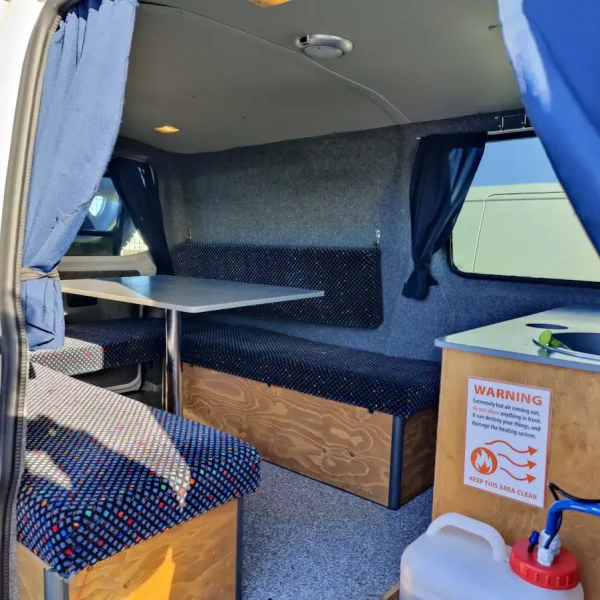
Iceland by campervan is perhaps the best way to discover the country. Fewer constraints, you can sleep in incredible places, like here for example, you can get away from the crowds very easily and, if it’s a 4×4, be all alone in the world. You’ll only have two challenges. First, finding a campsite for the night (we’ll see that later) and finding toilets, unless you’re a keen reader of this book.
It doesn’t necessarily cost much less to travel by campervan, especially on your own, but you can cook your own meals, have a lie-in, be sheltered when the weather’s rotten, take your time, quite simply.
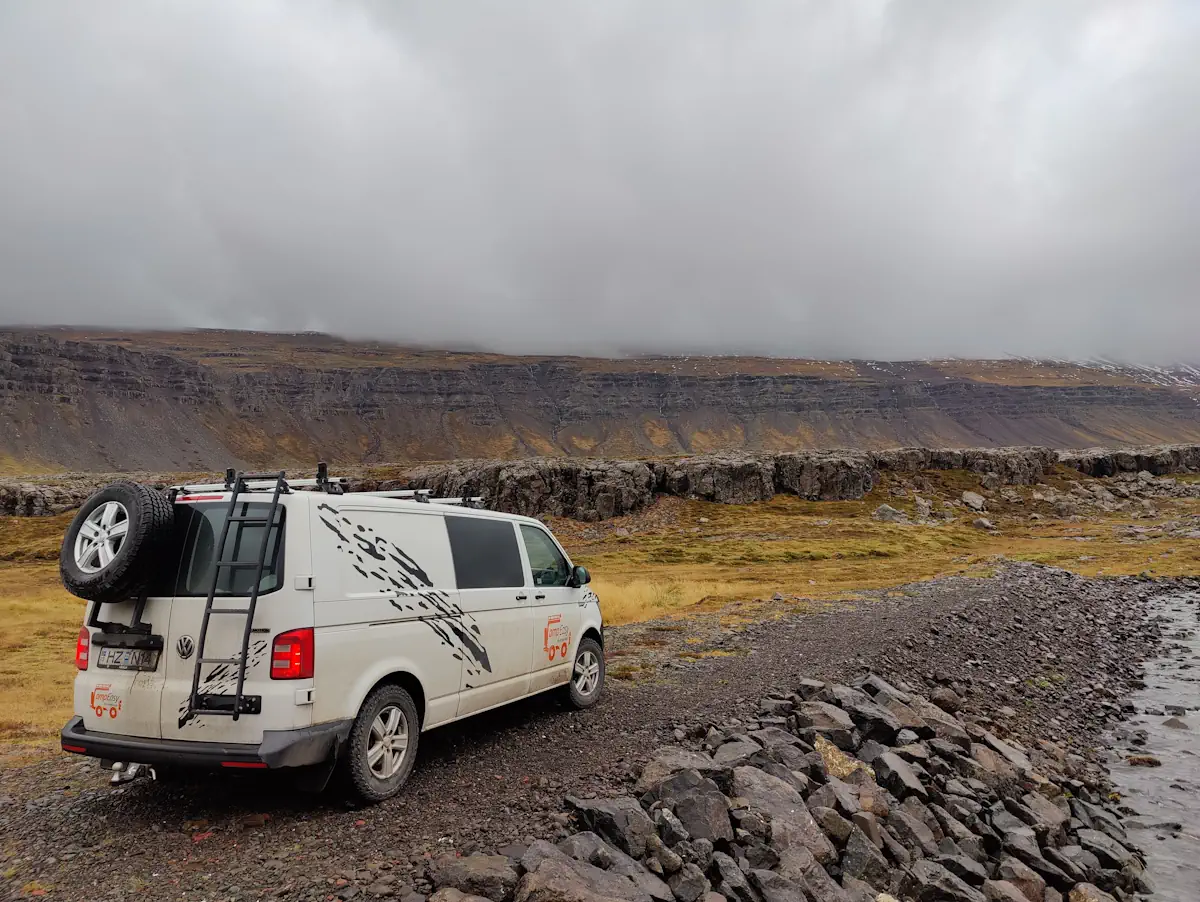
I went through CampEasy, who have an impressive fleet, they’re very well fitted out and also have 4×4 vans, the full works! Mind you, when you’re used to driving a little runabout like me, the first few manoeuvres are tricky.
For something smaller, like converted Kangoo vans, there are the Kukucampers, who have a very good reputation and very recognisable vehicles 😀
Sleeping at a campsite during your trip to Iceland
Right, first of all, as a campervan or motorhome, you’re required to sleep at a camping ground/campsite. It’s not like Norway where you can pitch up anywhere as long as it’s not stated otherwise. Here, you can only stop in authorised places. Luckily, there are lots of them… during high season 😀 The vast majority close in early September, so from September to May it can quickly become quite funny.
But thankfully, rather than having to drive 100 km to find an open campsite (true story), you’re tolerated to sleep in discreet spots. You must of course keep all your rubbish. But if you find an isolated place, with no passing traffic and away from dwellings (which honestly isn’t hard in this country), then you can settle in there.
On the south coast, on the other hand, it’s not tolerated at all, at all. You absolutely must stay at a campsite because the locals will, at best, report you. At worst, they might slash your tyres. It’s the most touristy region, so it’s true that if everyone did that, it would quickly become anarchy. But luckily, in this region there are quite a few campsites open all year round.
The other option, if you don’t have an open campsite, is to go to closed campsites. Generally the ground is always available but the facilities (showers, kitchen) aren’t open. It lets you keep a clear conscience.
For my part, I’ll admit that for the sake of a shower, I tried to have a proper campsite every other day. And the pile of wet wipes 😀

Ride-hailing and taxis
There’s no Uber or equivalent in Iceland, there are taxis which are very expensive. If you’re looking for info on transport between the airport and Reykjavik, it’s over here. Well, actually, there is one app that does a bit of ride-hailing, it’s Hopp, but originally it was for scooters.
When to go on a trip to Iceland
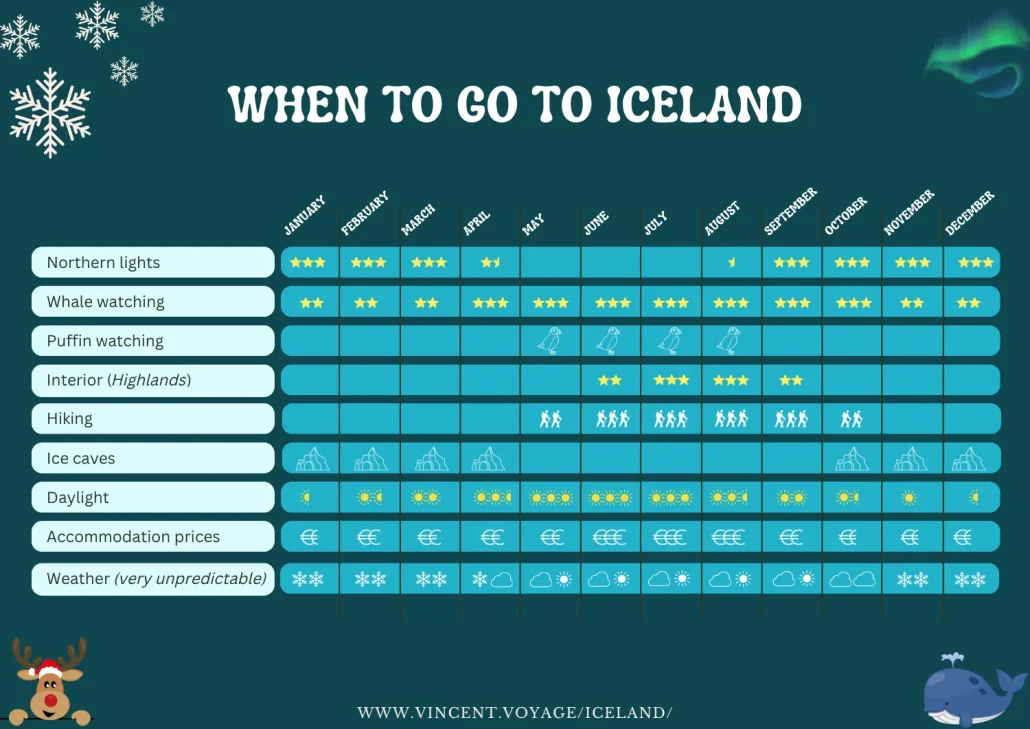
You can visit Iceland all year round: there’s no truly bad season, only very different moods. It all depends on what you absolutely want to see — aurora, puffins, Highlands, whales — and on your budget. The table below sums it all up month by month, and I detail each season just underneath.

Summer (mid-June to mid-September), the high season
This is THE prime period, and by far the busiest. Its big advantage: it’s the only time the centre of the country is accessible (only about 3 months a year), with access to Landmannalaugar, Laki, Þórsmörk and the wild Westfjords. Add the midnight sun, the puffins (from May to August), the whales at their best and all the hiking trails open. The flip side: prices soar, campervans are snapped up, and you have to book hotels and van very early. No aurora, though — the nights are too bright.
Autumn (September-October), my favourite
From early September, the F-roads and the centre start to close, but you’ve still got plenty to do: the Ring Road, Snaefellsnes, the south coast… And above all, it’s the return of the northern lights! Nature dresses itself in superb colours, there are far fewer people, and you’re back to mid-season prices. For me, it’s the best compromise between still-decent weather, budget and magic. A lovely idea for the autumn half-term holidays.
Winter (November to March), aurora and ice caves
The Icelandic winter is harsh but magical. It’s the peak season for the northern lights and ice caves (accessible from November to March). Watch out for the light: around 21 December, the shortest day, it’s barely light, which limits exploring the landscapes; from January-February-March you gain back some daylight and the weather calms down a bit. Plan for a 4×4, and be aware that many experiences (aurora, caves) are only done as a guided excursion. On the price front, it’s the low point of the year: hotels are at their cheapest.
Spring (April-May), quiet and low-cost
Spring is the most neglected season, and that’s a real shame. There are few people, gentle prices, very beautiful colours, and the puffins come back from May. The aurora bow out (still just about possible in very early April), and you have to contend with a few late snowfalls. A quiet, economical season, perfect if you’re fleeing the crowds.
So, when to go depending on your priorities?
In the end, it all depends on what you absolutely want to experience. Here’s the summary, to cross-reference with the table above:
- Northern lights: from early September to late March.
- Highlands and the centre of the country (Landmannalaugar, Þórsmörk…): from mid-June to mid-September, depending on the weather and road openings.
- Puffins: from May to late August.
- Whales: all year round, with a peak from April to October.
- Ice caves: in winter (November to March); one cave beneath Katla remains accessible in summer.
- Hiking: from June to September.
- Low budget: in mid-season (May, September-October), when prices drop.
But above all, remember this: Iceland can be visited in any season. You’ll get wind (lots of it!), snow, rotten weather and sometimes glorious sunshine — but it will always be an unforgettable experience in an exceptional setting. That’s what matters most.
And to go further, I explain in detail which are the best seasons to visit Iceland.
The weather in Iceland
You should know that the weather in Iceland is very playful, as I explained a little earlier about choosing when to come. THE tricky thing in Iceland is the wind. It’s really, really strong and campervans sometimes get blown over (which is why you should always position your campervan carefully relative to the wind direction when you’re parked up somewhere). On the high plateaus, it blows like nothing else. Inland too. By the water too. In short, everywhere, all the time, wind that could straighten a sheep’s curls (you’ll see their coats stand up straight rather than curly from taking so much wind).
On the temperature front, naturally it’s cooler in the centre. On the coast, it’s never extremely cold in winter (so 8 months of the year), between -10 and 5, extremely changeable weather all year round. They say that if you’re not happy with the weather, just wait 10 minutes and it’ll change. It’ll never get truly hot, so you always need to be wrapped up, especially a well-waterproofed windbreaker. Inland, on the other hand, being far from the sea (logical), temperatures are much colder. On top of the wind, otherwise it wouldn’t be fun. And in summer, it won’t get much warmer.
They say you get all 4 seasons in a single day in Iceland. Well, it’s true. I’ve already had snow-sun-rain-storm sequences in May.


FAQ and practical info about Iceland
Is Iceland worth it?
Yes, a thousand times yes. It’s the most wonderfully disorienting country I’ve visited: active volcanoes, glaciers, giant waterfalls, northern lights, puffins… you feel like you’re changing planets every 50 km. Yes, it’s expensive and the weather is harsh, but no other destination gives that feeling of raw nature and the end of the world. If you’re hesitating, go for it.
How many days do you need to visit Iceland?
Reckon on at least 7 days for a good overview, but 10 days is the ideal format to drive around the island via the Ring Road without rushing, and 2 weeks to really take your time (detours, treks, Westfjords). Under 5 days, it’s better to focus on the south coast and the Golden Circle rather than skim over everything.
But very honestly, my last few trips have been 2-week stays, and I find that’s perfect.

Is Iceland expensive?
Yes, it’s even the most expensive country I know: reckon on 30 to 50% more than in Paris on food, and hotels that can double or triple in summer. You limit the damage by travelling by van, doing your shopping at Bónus and going in mid-season. The full breakdown, by profile and by season, is in my budget section higher up in the article.
Do you need a 4×4 to visit Iceland?
No: if you stick to the Ring Road (Route 1), a standard vehicle is more than enough in summer. The 4×4 becomes compulsory for taking the F-tracks towards the Highlands, and is strongly advised in winter because of the snow. I detail all this in my guide on car hire in Iceland.
Do you need a visa to visit Iceland?
Even though Iceland isn’t part of the European Union, it belongs to the Schengen Area. In practical terms, if you hold a British passport, you don’t need a visa for a short stay: a valid passport is enough for a stay of up to 90 days (within any 180-day period). Beyond that, you’d need a residence permit. Travellers from the EU, EEA or Switzerland can even travel on a national ID card alone.
Two new things are arriving in 2026 and, since Brexit, they do concern British travellers: the EES system (biometric border control, in service since April 2026) and above all ETIAS, an electronic travel authorisation costing about €20, to be applied for online before departure, expected by the end of 2026. Well worth knowing before you set off, especially if you’re travelling with family or friends of another nationality.
Where to stay in Iceland?
Careful, this one stings. Iceland is one of the countries where tourist accommodation is the most expensive. Booking a hotel is quite an experience. Because first, you have to find one. Supply is very limited, there’s little tourist infrastructure in Iceland, so everyone fights over the rooms, especially in peak tourist season. Leaving it to the last minute is pure masochism. Then, once you’ve found something available, you have to pay up, and it’s painful. Getting a double room for under €100 is one of the twelve labours of Asterix, especially on the very touristy south coast. Reckon more like €150. Outside the tourist season, prices drop by about 30%. It’s expensive, but less so. When planning a trip to Iceland, the accommodation part is generally the hardest.
The most expensive places are by far Reykjavik and the south coast between Vik and Jokulsarlon. Hofn is a little cheaper, while Akureyri is almost OK. The east being less touristy, it’s fine too. Myvatn, now that’s expensive because it’s very popular.
Clearly, you need to book early.
Generally speaking, once you leave Reykjavik (which concentrates 2/3 of the country’s population), you’ll find very little accommodation on offer, due to the low population density and the restrictions linked to nature.
What currency and how to pay in Iceland?
In Iceland, it’s the Icelandic króna. The conversion rate isn’t super obvious because €1 = 145 ISK (it varies a lot)
In Iceland, you can pay for absolutely everything, everywhere by card, even in the remotest corners. It’s normal, it’s the standard means of payment.
Do people speak English in Iceland?
The national language is of course Icelandic, which, like many Northern European languages, has its origins in Old Norse, a derivative of the Germanic languages. Except that, unlike other countries, the language has barely evolved since medieval times. This is due to the island’s extreme isolation over the centuries. And it’s rather funny because it gives you a language that resembles nothing else. With some notions of German or a Nordic language, you can guess at resemblances, sometimes common roots, but otherwise you’re completely lost. And a lovely thing is that the language doesn’t borrow (or at least as little as possible) neologisms from abroad. Each new term is “invented”, defined in Icelandic. A computer is therefore translated as “digital prophetess”. A satellite as “artificial moon”, or the weather as “knowledge of time”. So they use the existing “catalogue” to bring it up to date.
But otherwise, rather than having to learn all that, you can speak English. Everyone speaks it very well and it’s really handy.
Is Iceland a safe country?
Let’s just say we’re doing pretty well up there. There’s no insecurity at all, it’s Nordic, it’s honest, it’s wholesome (that sounds very much like an Ikea slogan). And there’s no nasty, dangerous, aggressive creature. Well OK, there’s no creature at all. So you feel very good there, totally safe.
Which electrical adapter for Iceland?
Iceland uses the same sockets as France and continental Europe (not the UK), that is, type C/E and 230V. Coming from the UK, you’ll need a European travel adapter (the very same one you’d use in France, Spain and so on). If you’re travelling from elsewhere in Europe, you won’t need anything.
Will I have signal and internet in Iceland?
Iceland is part of the EEA, but since Brexit not all UK networks include it in their roaming allowances — so check with your provider before you go, as some have brought back roaming charges. The good news: the icing on the cake, reception is extremely good almost everywhere in the country.

Can you drink the tap water in Iceland?
The water is of course drinkable everywhere in Iceland. It can smell of rotten eggs because of the geothermal activity, but it’s very good. Tap water is served in restaurants, unlike in some other countries. For river water, it’s best to use a filter bottle (I personally use the Lifestraw 2go, see here). But obviously, not the water from the hot springs.

Conclusion and further resources
There we are, I hope I’ve shed some light on this fabulous country and been able to give you as much info as possible in this first article on Iceland. It’s a country that needs a bit of preparation, especially when it comes to accommodation/campsites relative to the places to visit, and knowing which season to come.
But what’s certain is that every trip to Iceland is different. Different weather, different light, new things to see, new activities, the urge to go further or deeper into the country.
Oh, and you won’t take just one trip to Iceland. You’ll see, this country can quickly become an addiction!
I’ve written quite a lot, so here are a few blog resources that might come in handy for planning your stay:
- What to do in Vik i Myrdal – this village on the Icelandic south coast is a must-stop!
- Visiting Reykjavik in a few days – discover everything you should do in Reykjavik
- Where to sleep in Reykjavik – which neighbourhoods and hotels you should go for and the pitfalls to avoid
- the best map of Iceland – the most beautiful places, the activities, the accommodation… it’s all on this essential map
- Hire your car in Iceland – what to watch out for, the essentials to make sure everything goes smoothly
- What to see in Myvatn – in the north of Iceland, there’s so much to do!
- How to visit Iceland without a car (by bus?) – if you don’t drive, there are solutions, I tell you everything
- Where to see puffins in Iceland – here are the main spots across the country and the practical info
- Seeing Iceland via the Ring Road – an itinerary to discover the most beautiful places along the ring road
- The most beautiful places in Iceland – a fairly complete selection of the spots not to miss! But you’ll need several trips :p
- What to see in the Golden Circle – here are the essential sites in this little circuit that’s itself essential