Last updated on
The Golden Circle is very often the first taste you get of Iceland’s wonders. Close to Reykjavik, 3 sites (at least!) near one another and hugely impressive, this outing plunges you into what makes Iceland Iceland: stunning landscapes, thundering waterfalls, volcanoes and nature as far as the eye can see.
3 main sites make up the Golden Circle: Thingvellir National Park, the famous geysers of… Geysir, and the impressive Gullfoss waterfall.
To these 3 sites you can add other smaller but really lovely stops depending on how much time you have, notably the Kerid volcano and the Bruarfoss waterfall.
The big advantage of the Golden Circle is that it fits really well into a stay of a few days, a road trip in western Iceland or a road trip along the south coast.
- And as we’ll see, to visit the Golden Circle it’s either by car or with a tour operator. Unfortunately, by public transport it’ll be complicated.
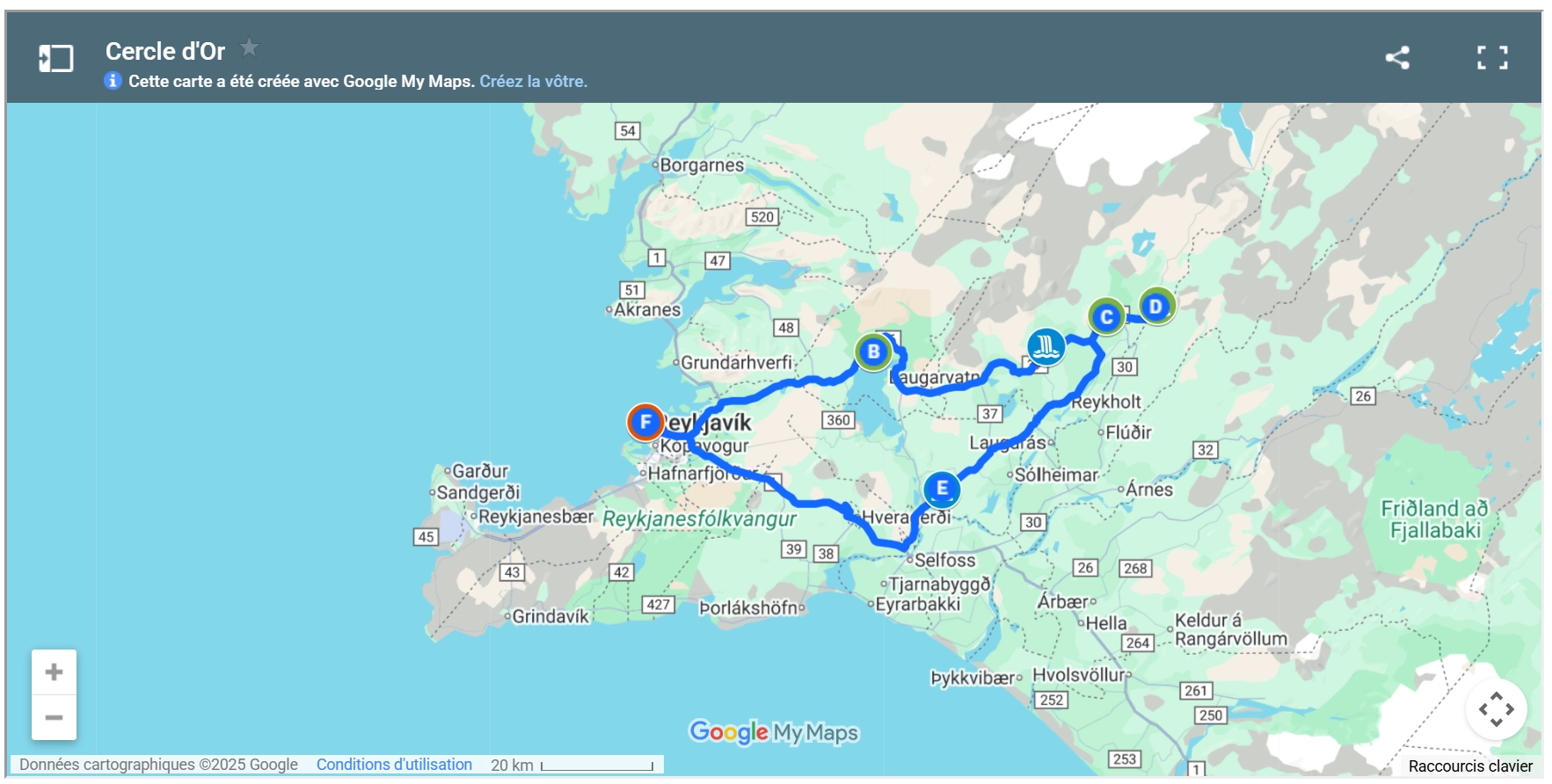
The Golden Circle map in Iceland
As you can see, all the sites making up the Golden Circle are close to one another and can be done in a day. From Reykjavik to the first site, Thingvellir, it’s about fifty km, so less than an hour. Between Thingvellir and Geysir it’s a short hour’s drive, while Gullfoss is really just next door.

The historic site of Thingvellir
Thingvellir National Park is usually the first stop on the Golden Circle as it’s the closest to Reykjavik, a 45-minute drive away. It may not be the most impressive, but it’s far from the least interesting — which is why Thingvellir was the first Icelandic site added to the UNESCO list and, surprisingly, there haven’t been many others since.
Iceland straddles the Eurasian and North American tectonic plates, and this is especially visible at Thingvellir, where it has formed a pretty little canyon. These two plates are still drifting apart by 2.5 cm a year, which explains Iceland’s ever-intense volcanic activity.
But Thingvellir is also a magnificent place, a beautiful plain with the country’s largest lake, Thingvallavatn, and a gorgeous view of the highlands in the distance. It’s a very green, very natural, peaceful spot, but also a diving hotspot. The park is largely made up of lava fields, and the water is filtered through these lava rocks to emerge crystal clear. So you can dive between the tectonic plates in water with perfect visibility. The most famous spot is Silfra.
Thingvellir has a superb waterfall, Oxararfoss


The foundations of Icelandic democracy
This is where it gets even more interesting. Thingvellir is also known as the site of the first Icelandic parliament. In 930, that is about fifty years after the arrival of the first settlers, the Icelanders formed an assembly made up of the local chieftains, the Althing. They drew heavily on the Norwegian “Things”, those local assemblies that governed the life of a region back in Viking times. What’s funny is that they chose this place partly out of convenience, because the farmer who owned these lands had been convicted of murder and had to give them up. Might as well take advantage of it to settle here — the setting is still super pleasant and the weather roughly decent (for Iceland, I should specify).
The Althing was held every year for 2 weeks. The assembly of about 150 people made the big decisions concerning the island, and a often-cited example is the Christianisation that was approved in 1000 (and not forced), or the allegiance to Norway. But it was also a chance to throw a good big party with several hundred inhabitants. This assembly lasted until the 18th century, but had already lost much of its influence after its annexation by the Kalmar Union (a kind of Scandinavian confederation).
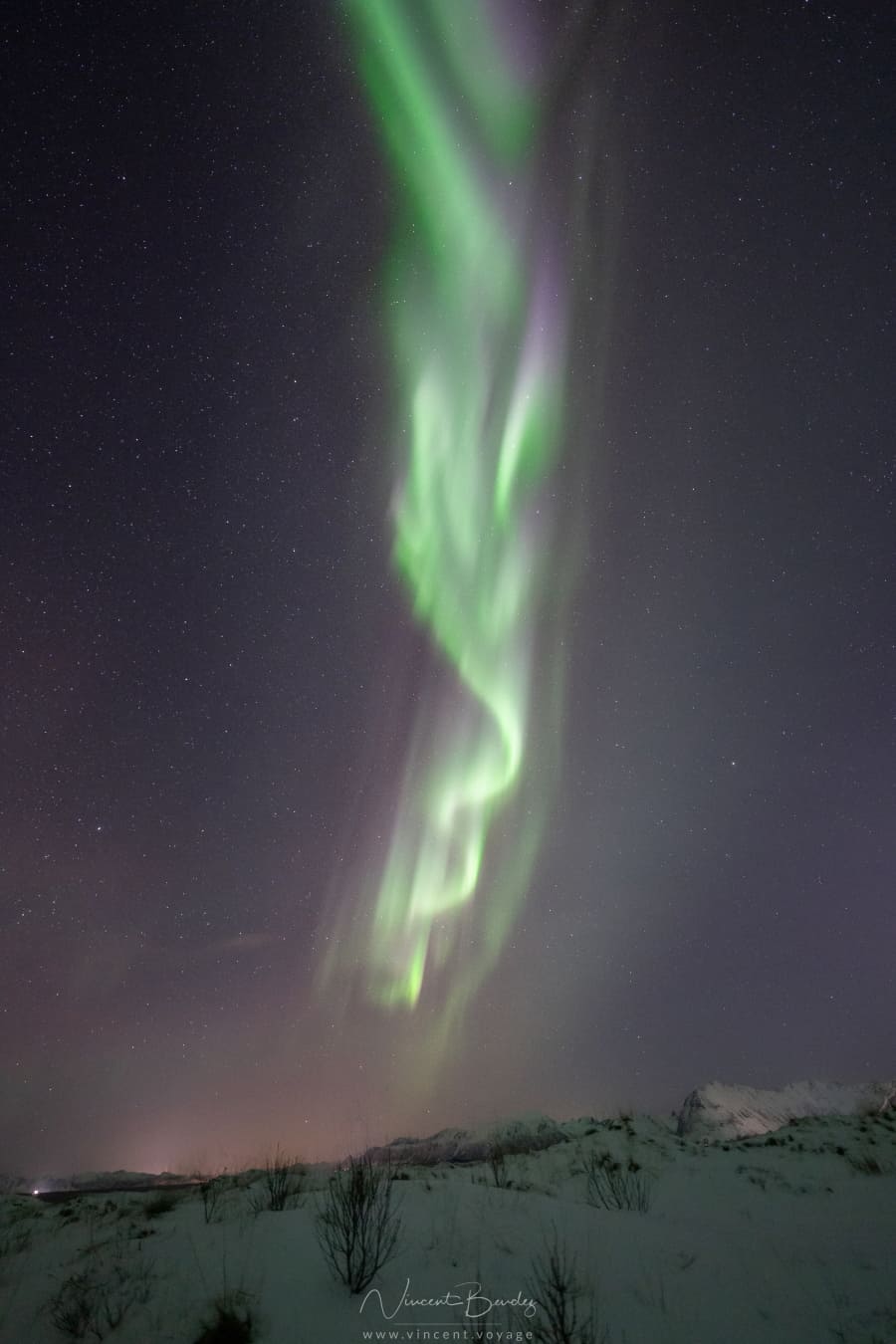
The park is free and open 24/7, and it’s a good place to come and photograph the northern lights. Only the parking is now paid (about 1,000 ISK, payable on site or via checkit.is).
Free guided tours are run by the rangers every day in summer. Find more info here.


The Silfra fissure
If you’re looking for a truly unique experience at Thingvellir, this is it: Silfra is a water-filled fissure that opened up between the North American and Eurasian plates, and you can literally swim there between two continents. What makes the place magical is its water: meltwater from the Langjokull glacier, filtered for decades through the volcanic rock. The result is incredible purity and visibility that often exceeds 100 metres: you feel like you’re floating in a void.
The water is freezing (2 to 4°C year-round), but no worries: you go in wearing a drysuit that keeps you nice and warm. Snorkelling is accessible to everyone, no particular level required, whereas scuba diving requires a drysuit certification. In both cases, Silfra can only be visited with a licensed operator (you can’t go on your own), and it’s best to book ahead, especially in summer. It’s clearly one of the most memorable activities you can do in Iceland.

The Gullfoss waterfall
Fed by the very impressive Langjokull ice cap, which you can admire by continuing along road F35 about an hour past Gullfoss, Gullfoss is one of Iceland’s best-known waterfalls, one of the most iconic, and it has to be said it’s a stunner. Standing 32 metres high, split into two tiers, and with quite a flow, Gullfoss means “the Golden Falls” (which fits rather well with the Golden Circle, to which it gave its name) thanks to the famous rainbow formed by all that water.
But Gullfoss also comes with a fine story. In the early 20th century, some developers wanted to take advantage of the river’s flow to build a hydroelectric dam and destroy Gullfoss. Except that. Sigríður Tómasdóttir, the daughter of the landowner, wouldn’t hear of it and, between threats to throw herself into the waterfall and rallying the population, managed to get the project cancelled. Gullfoss was later designated a nature reserve.
Gullfoss is worth lingering over. On site you’ll find plenty of viewpoints. First an overall view right at the far end at the entrance to the gorges formed over the years, then you can get right up close to the falls. And there, you’d better have something to protect you from the water because it gets seriously wet. But you can also walk along the Hvita river — there are far fewer people and it’s very pleasant.
On the practical side, Gullfoss is accessible 24/7 and is free. There’s a very large car park, but overnight stays in a campervan aren’t allowed there. You’ll also find an information centre, a small restaurant and a café.


The Geysir geothermal area
Did you know? The word geyser comes from the Geysir geothermal area in Iceland, geysir meaning “to gush”. And Icelandic geysers are among the most active in the world, above all thanks to one in particular: Strokkur, which is THE still-active geyser of the area, erupting every 5-10 minutes with a jet several dozen metres high, generally between 20 and 40 m. But there are other springs in this same area that are no longer really active, apart from a bit of bubbling. The main geyser was originally the “Great Geysir”, which was even more powerful than Strokkur, but it gradually went dormant during the 20th century (the 2000 earthquake even briefly woke it up before it went back to sleep).
You come to Geysir for the water jets, but you shouldn’t stop at that. Indeed, the walk between the springs is super pleasant and, above all, you can get some height a little further on for an overall view of the site.
The geysers are far more active early in the morning, so that’s the best time to come. And on top of that there are fewer people, because it’s generally not the first stop on the Golden Circle but the second. Note: the Geysir car park has also become paid (about 1,000 ISK, via the Parka app).


The Bruarfoss waterfall
Bruarfoss is a very pretty, all-blue waterfall a few kilometres from Geysir. To get there you have to stop at the dedicated car park next to the river, which is past the village (paid parking, about 750 ISK). The village is easier but is now off-limits to tourists, notably with barriers because it was being overrun. So now you have to walk about half an hour from the car park to reach the waterfall.
And honestly, this walk is worth it. For one, it’s pleasant, but above all the water there is magnificent, perhaps the most turquoise, the most beautiful water you’ll see in Iceland.
Along the way you pass several very pretty intermediate little waterfalls, but arriving in front of Bruarfoss, that’s really top-notch. The waterfall isn’t huge, not as tall as Skogafoss or Dynjandi, but it has a really distinctive shape and, above all, magnificent colours.
The path is easy; in winter it must be a touch slippery, but very honestly it’s quite doable.


The Kerid volcano
Kerid is probably the prettiest crater that’s easiest to reach from Reykjavik. Very pretty because it’s all about colour, with its ochre earth, its vegetation and, above all, its little lake at the bottom. You can walk around the volcano along the crater rim or by the lake — both mini walks are pleasant.
Kerid is very easy to reach, on road 35 that runs from Geysir to Selfoss; the car park is right by the road and the volcano is a 2-minute walk away. Entry is paid: about 700 ISK (≈ €5) per person. There’s no difficulty at all, it makes a nice stop for the end of the day after the other Golden Circle sites.

CAR RENTAL IN ICELAND
Roam around Iceland by renting with Discover Cars

- Rent a car from Keflavik airport or in town
- Small model, SUV or 4×4 for the F roads
- Prices from €40
- With free cancellation!
Visiting the Golden Circle from Reykjavik
The Golden Circle by car
Doing the Golden Circle by car is the simplest thing there is. 45 minutes to get from Reykjavik to Thingvellir, then another 45 minutes to reach Geysir, which is right next to Gullfoss. Finally, the Kerid volcano is on the way to Selfoss, half an hour away. The whole thing is done very easily in a day. It’s a fair bit of driving, so you need to set off early to avoid the first tourist buses at Thingvellir and Geysir.
Note that the Golden Circle isn’t close to the Icelandic ring road, you’ll have to head further inland.
Very important: car rental prices vary enormously. Pay close attention to the insurance, terms, unlimited km or not, that kind of little trickery. I compare with Discover Cars in particular, ideally always at least two to be sure of your choice (so I round it out with the Booking car comparison).
The Golden Circle with a tour operator
If you don’t have a vehicle, you don’t want to bother with the organising, or you simply prefer to go with professionals, good news!
Many companies offer to spend a day on the Golden Circle by bus or minibus. It’s an extremely simple and inexpensive way to have a good day, usually 8h with Gullfoss, Geysir, Thingvellir and the Kerid volcano, from around €65, like the link below.
It’s the most popular and best-rated tour, so no surprises!
Then, if you prefer a tour in a smaller group, it’s over here.
Others will include options such as the northern lights, the Blue Lagoon or other little treats. We’ll look at that right after.

So, as I was saying, another nice option is to combine the Golden Circle route with a few hours in a geothermal bath. It’s more expensive, of course, but it makes for a great day if you don’t have a huge amount of time on site.
The Blue Lagoon, on the Reykjanes peninsula, is THE benchmark, but it comes at a certain cost — and remember to check that it’s actually open before booking, as it sometimes closes depending on the volcanic activity in the Grindavik area.
Closer to Reykjavik, the Sky Lagoon (opened in 2021) has become a really beautiful alternative, with its ocean view. And for something simpler and more affordable, the Secret Lagoon in Fludir — right next to the Golden Circle — is a historic geothermal pool, more rustic but with an excellent reputation.
Prices vary quite a bit depending on the package. A combined Golden Circle + Blue Lagoon or Sky Lagoon generally comes to around €210/220. It’s expensive, but it’s an amazing day!
Here are the various offers below!


📍 Reykjavik · 11h · Nicetravel
11h by minibus combining the full Golden Circle, the Kerid crater and the legendary Blue Lagoon — 90% of travellers gave it top marks.
- Thingvellir + Geysir + Gullfoss + Kerid
- Iconic Blue Lagoon (2h)
- Towel & silica mud mask included
Free cancellation
From €224 per person

📍 Reykjavik · 10h30 · BusTravel Iceland
10h30 in a small group for the Golden Circle, the geothermal Fridheimar farm (lunch + horse show) and the 7-step ritual at Sky Lagoon.
- Golden Circle + Kerid in a small group
- Fridheimar farm: tomatoes + horses + lunch
- Sky Lagoon 7-step ritual (2h)
Free cancellation
From €213 per person

📍 Reykjavik · 9h+ · ICELANDIA
Golden Circle by day (Geysir, Gullfoss, Thingvellir) + a nighttime northern lights excursion — 2nd outing free if the lights don't appear.
- Thingvellir + Geysir + Gullfoss by day
- Evening northern lights excursion
- 2nd outing free if no lights
Free cancellation
From €140 per person
The Golden Circle by bus
So, bad news: there’s no longer any public transport serving Gullfoss — and the other Golden Circle sites were already neglected. So unfortunately visiting this part of Iceland by bus is impossible. You’ll absolutely need a guide or a car.
More info on public transport in Iceland on this site.
How long to do the Golden Circle
As we’ve seen, all the sites are close to one another and not far from Reykjavik or Selfoss. On top of that, they have the huge advantage of being accessible 24/7. So in case of the midnight sun, you can go at odd hours. And should you feel like it, all three make lovely settings for the northern lights.
So all this to say that you can spend a minimum of a full day there, but it’s worth lingering longer — there’s plenty to wander around.
Pushing it a bit, especially if your accommodation is nearby, you can do it all in one day (Thingvellir, Geysir, Gullfoss, Kerid and even Bruarfoss). Although Bruarfoss in winter is much longer, and it also gets dark earlier, hence the second day.
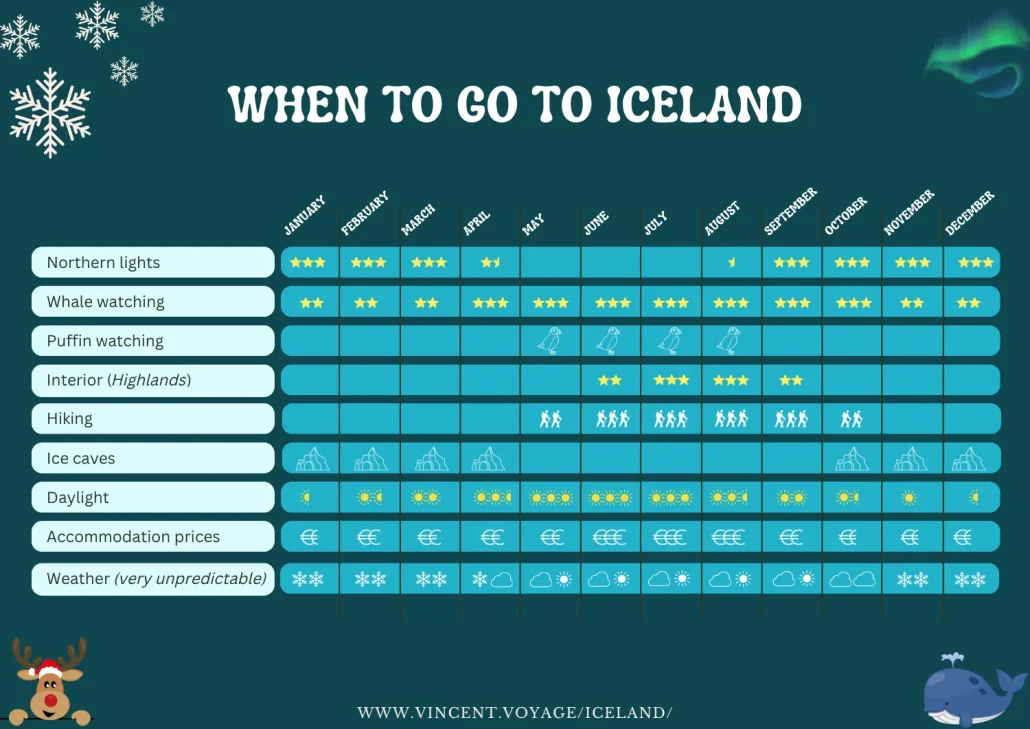
Oh and the Golden Circle, like all of Iceland, can be visited in any season!

Where to stay for the Golden Circle
Staying in Reykjavik
Right next to the Golden Circle, my preference for sleeping goes to Hotel Gullfoss, expensive but the little pleasure of being superbly located (and well accommodated too).
Otherwise, staying in Reykjavik is quite complicated and pricey. The prices below are indicative and climb sharply in high season (June to August): remember to check the rate for your dates. But you can find all kinds of accommodation, even cheap ones. For example the Pavi Hotel, from around €90 but nothing fancy. At the same price but better, the Hallgrim Guesthouse. Barely more expensive but very good, the GuestHouse Eric the Red or the Central Guesthouse around €110 in the city centre.
For something a little more upmarket, the very fine 4* Midgardur or the Spa & Wellness aren’t especially expensive. For a lovely hotel to treat yourself, there’s the superb Icelandair on the marina and the Borg hotel right in the centre, around €250.
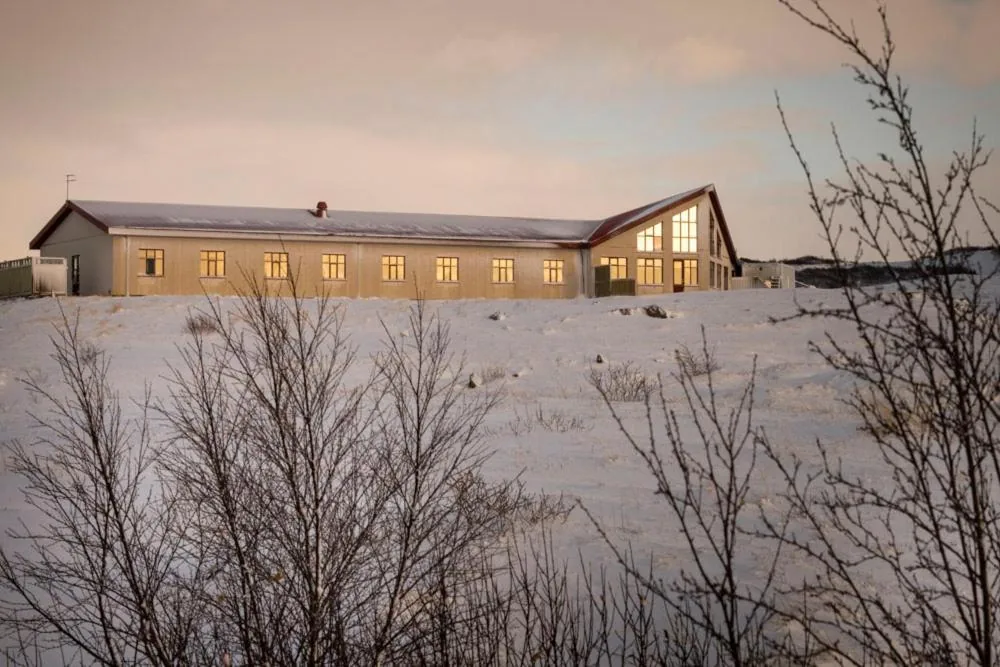
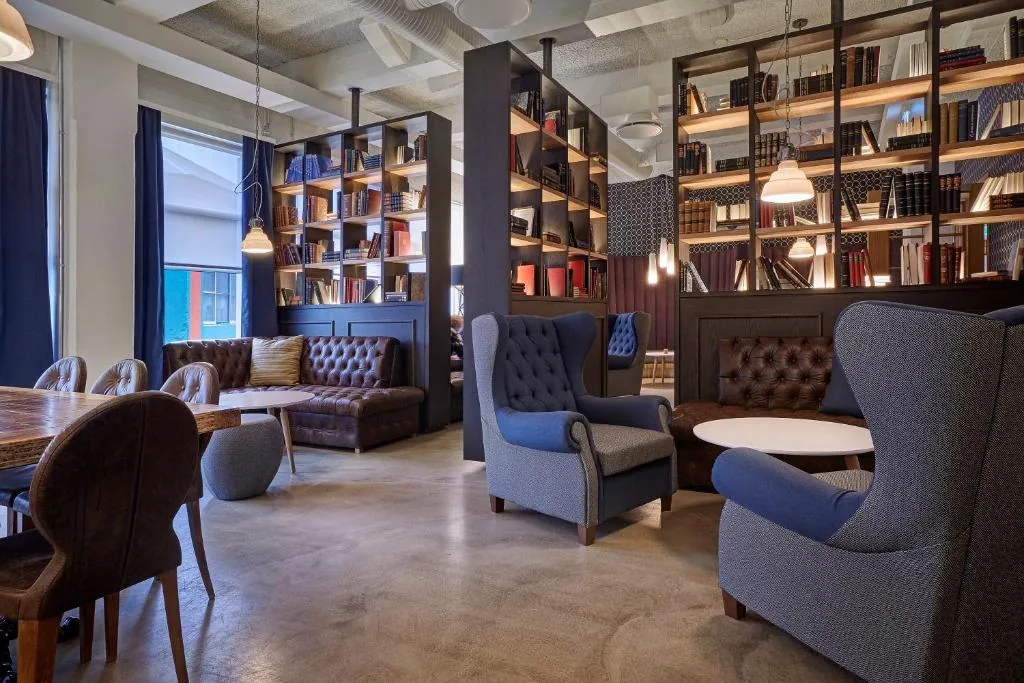
📍 Háteigsvegur · 10-min walk from the centre · location 9.1/10
The self-service design apart-hotel with private kitchenette and free parking, a 10-minute walk from the centre and the Laugavegur shopping street.
- FREE private parking (rare in Reykjavik)
- 16-20 m² studios with fitted kitchenette + Nespresso
- Self check-in by code, designer bathroom
Free cancellation
From €145 / night
📍 Vesturbær · 101 harbour district · location 9.2/10
The family boutique hotel by the harbour with sea-view rooms, Slipp Cinema, free parking and whale-watching tours departing right next door.
- FREE private parking + rooms with harbour-view balcony
- Slipp Cinema (Icelandic films) & kids' cinema room
- Whale-watching tours nearby + airport taxi available
Free cancellation
From €150 / night
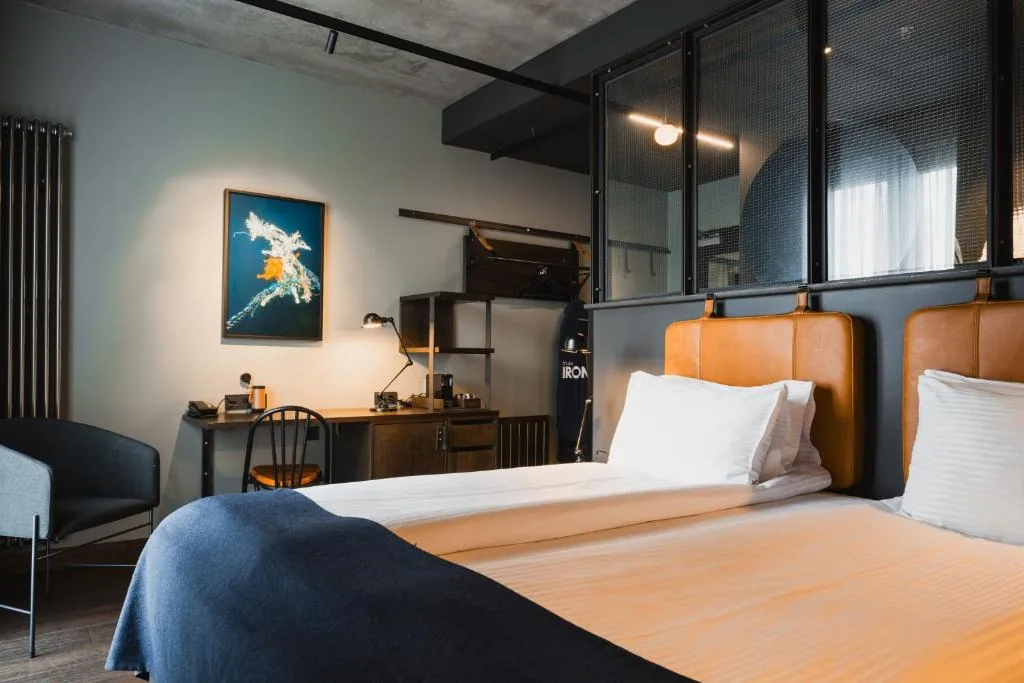
📍 Tryggvagata · facing the old harbour · location 9.6/10
Industrial design right opposite the old harbour, with a sauna open until 11 pm, the Le Kock restaurant and Deig bakery (bagels and coffee) right in the lobby.
- Facing the old harbour, Harpa 500 m away, historic centre 2 min
- Sauna + steam bath + gym (until 11 pm)
- Deig bakery & Le Kock restaurant in the hotel
Free cancellation
From €160 / night
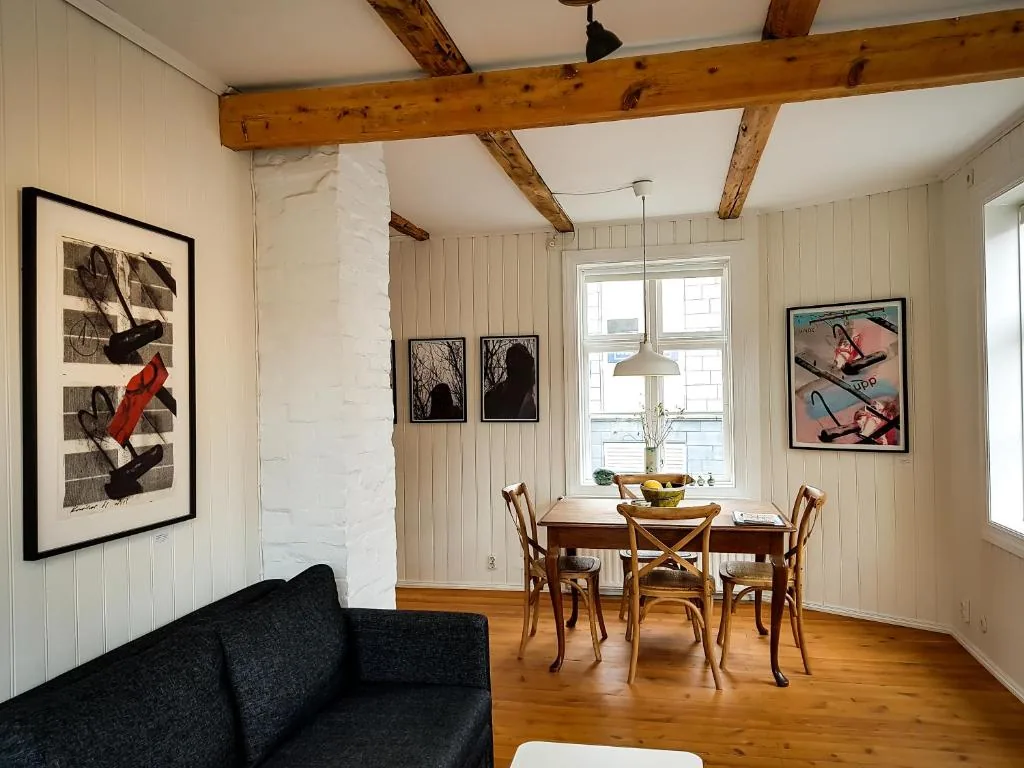
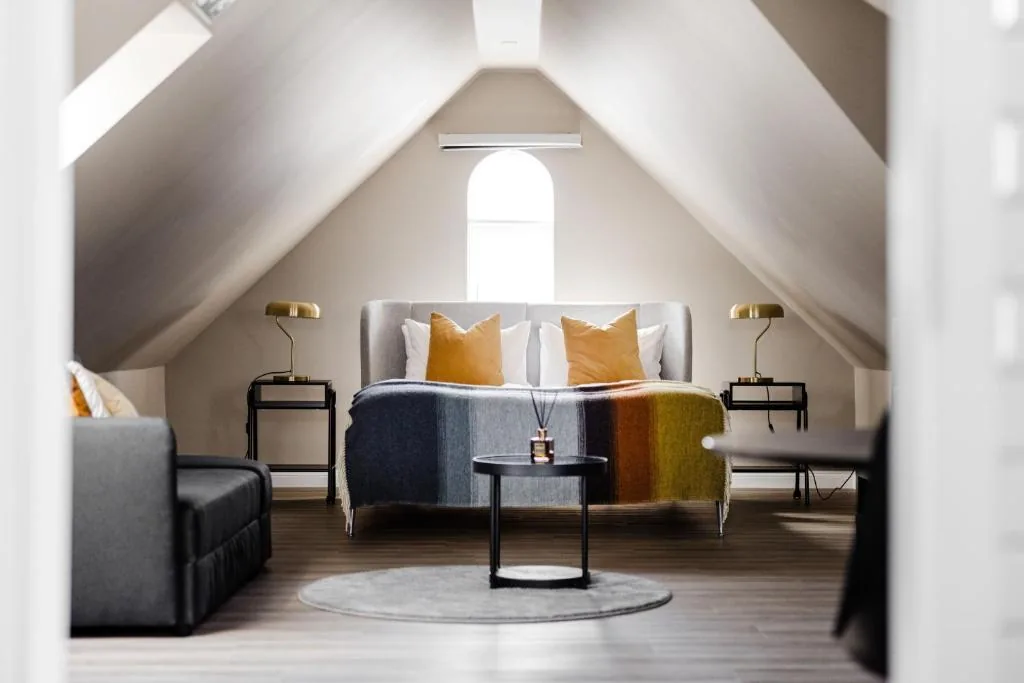
📍 City centre · old wooden house · location 10/10
The 9.7/10 gem right in the centre: two carefully decorated apartments in a beautiful old wooden house, with private parking and attentive host Elsa.
- Location 10/10 (perfect) · cruise terminal a 10-min walk away
- 4-person apartments with fitted kitchen & private parking
- Luggage storage right across the street (handy after a road trip)
Free cancellation
From €240 / night
Staying near the Golden Circle
Of course you’ll have a bit less choice than in the city, but there are still some lovely options. The 3* Gullfoss hotel around €170, the very pretty Litli Geysir around €130, while a little further on you’ll find the Fludir around €90 and the excellent value for money of the Efra Sel around €80
The campsites near the Golden Circle
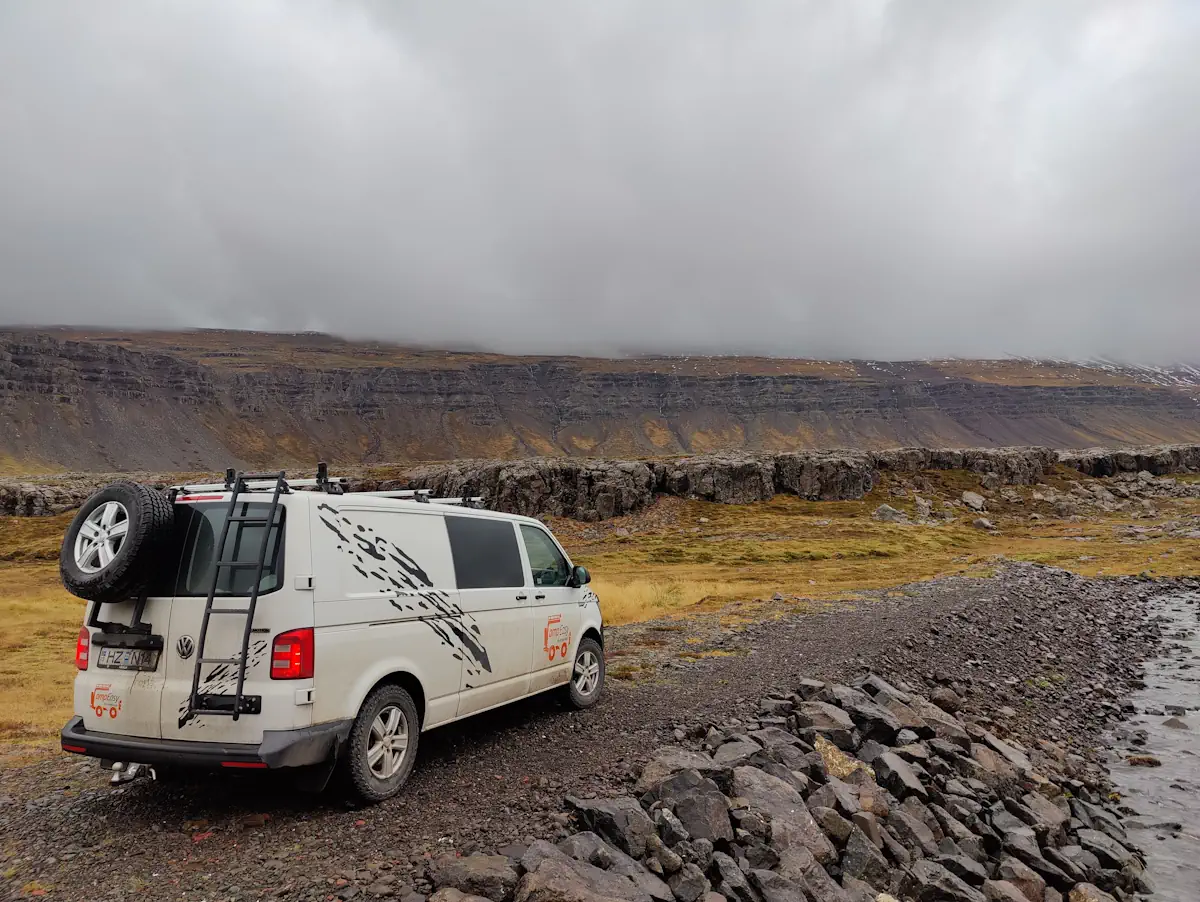
As this region is very touristy, you’ll find quite a few campsites to pitch your tent or park your campervan (since wild camping is forbidden in Iceland). Quite a few of them are only open in the high season, but you’ll find a few open all year round, notably one right next to Geysir. You can find the full map below, which comes from CampEasy, where I’d rented my van last time.
FAQ: your frequently asked questions about the Golden Circle
How long do you need to visit the Golden Circle?
Half a day (not counting the drive) is enough to see the essentials (Thingvellir, Geysir and Gullfoss), but that’s super rushed; I’d rather recommend devoting a full day to it to enjoy the sites at a relaxed pace and add stops like the Kerid crater or the Bruarfoss waterfall. From Reykjavik, allow about 40 minutes’ drive to the first site.
Can you do the Golden Circle in a day from Reykjavik?
Yes, it’s even Iceland’s most classic day trip. The full loop is about 230 to 250 km and is easily completed within the day from Reykjavik, whether in a rental car or on an organised tour.
Is it better to visit the Golden Circle by car or on an organised tour?
By car, you stay free with your timing and can avoid the crowds by arriving early in the morning or late in the day: it’s my preferred option. The organised tour remains ideal if you don’t want to drive, especially in winter, with a guide, a heated bus and zero logistics to manage.
Do you need a 4×4 to do the Golden Circle?
No. All the Golden Circle roads are paved and accessible to a regular car, in summer as in winter. A 4×4 only becomes useful if you extend your route onto the F tracks of the highlands, which isn’t necessary for the Golden Circle loop.
Does the Golden Circle cost money?
The sites themselves are free, but several car parks and entrances have become paid. In 2026, count on about 1,000 ISK for parking at Thingvellir, 1,000 ISK at Geysir, 750 ISK at Bruarfoss and 700 ISK per person to enter the Kerid crater. The Gullfoss car park, however, remains free.
What’s the best order to visit the Golden Circle sites?
From Reykjavik, the most logical order is Thingvellir, then Geysir, then Gullfoss, and finally the Kerid crater on the way back. To avoid the tourist buses, the best thing is to start very early in the morning or to do the loop in reverse at the end of the day.
Can you visit the Golden Circle in winter?
Yes, and it’s magnificent under the snow, with the added bonus of being able to watch the northern lights. The roads are cleared but can be icy: drive carefully, check road conditions on road.is and conditions on safetravel.is. If you’re not comfortable driving on snow, the guided tour is a safe bet.
What else is there to see around the Golden Circle?
Several stops nicely extend the loop: the Silfra fissure to snorkel between two tectonic plates at Thingvellir, the geothermal Fridheimar farm to have lunch amid the tomato greenhouses, the Secret Lagoon in Fludir to bathe in naturally warm water, and the superb blue Bruarfoss waterfall.
Conclusion
The Golden Circle is a must in Iceland, especially if it’s your first visit. Clearly, it’s one of the must-see places in Iceland. Indeed, for one thing these are genuinely beautiful and impressive sites, but on top of that it gives a very good taster of what Iceland is, its nature and all its natural phenomena. What’s more, it doesn’t take much time, barely a day to enjoy it at little cost.