Last Updated on by vincent
And here you are, up north, in a Nordic country to see the northern lights, and now you want to give yourself the best possible chance of catching them.
Because yes, as I like to say, seeing the northern lights has to be earned! It’s not enough to come up here for a few days and wait patiently for someone to switch the lights on (I’m not joking, people have actually asked for that).
Because in the vast majority of cases, you’ll be in a town. Tromso, Rovaniemi, or in a village. In short, a place with light, with light pollution that’ll stop you from enjoying the lights.
But also, there’s a good chance you’ll be under the clouds. And that’s your main enemy. No clear sky, no lights. Unless you move.
So I’m going to guide you so you know how to find the spots, know when to head out, which tools to use, and how to find the good places.
Wondering what the difference is between a good aurora hunter and a bad one? Here’s the explanation!
Here are also a few resources for you:
- What are the 9 best places to see the northern lights in Europe: because every destination has its pros and cons (weather, scenery, cold…), I explain it all
- How to properly prepare your trip to see the northern lights: I explain how to choose your destination and what steps to follow

Rent a car and stay mobile!
Because a good aurora hunter can move around easily.
The biggest mistake is thinking you’ll see the northern lights right where you are, wherever you’re spending your holiday, all comfy and relaxed. Well, sorry, but in the vast majority of cases that’s just not true.
Unless you’ve rented a cabin far from all civilization in a place where there’s never a cloud, you’ll need to move around.
We’ll go into detail further down on how to handle the weather and light pollution, but those are the two main reasons that force you to be mobile.
Take Tromso, Reykjavik or Rovaniemi: those are 3 towns with very changeable weather. So what do you do if it’s cloudy here but not an hour away, and you don’t have a car? And since they’re big towns, how do you escape the light pollution?
As a good aurora hunter, YOU are going to find them. The northern lights aren’t going to come to you. That’d be too easy :p
So to give yourself the best chance, you need to be mobile and independent. You need to be able to position yourself easily.
And now you’re telling me “thanks Vincent, but driving on snow and ice, no thanks”. Think again! It’s simple. A bit of common sense, a bit of anticipation, and there you go. Plus the cars are really well equipped. And heated. Perfect for waiting in the cold.
So really, my first piece of advice is to be mobile by renting a car.
- in the following article I tell you whether you absolutely need a car to see the northern lights

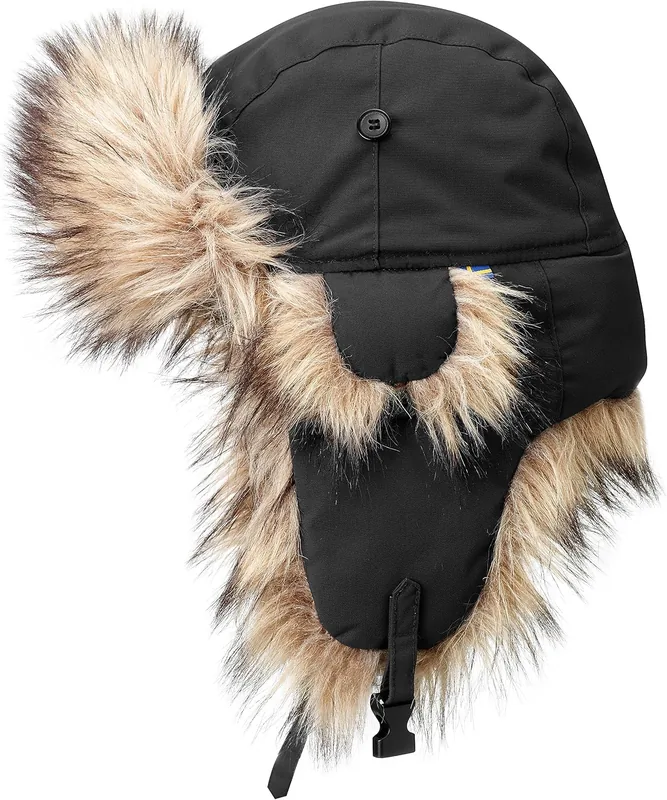
The flaps tie under your chin, and that's exactly what makes all the difference when the wind picks up over a frozen lake.
- Water-repellent polyester, no fluorocarbon treatment
- Leather reinforcements on the visor and flaps
- Warm, but not the most elegant of trapper hats
From 72.60 € depending on size
Price checked on 02/09/2026
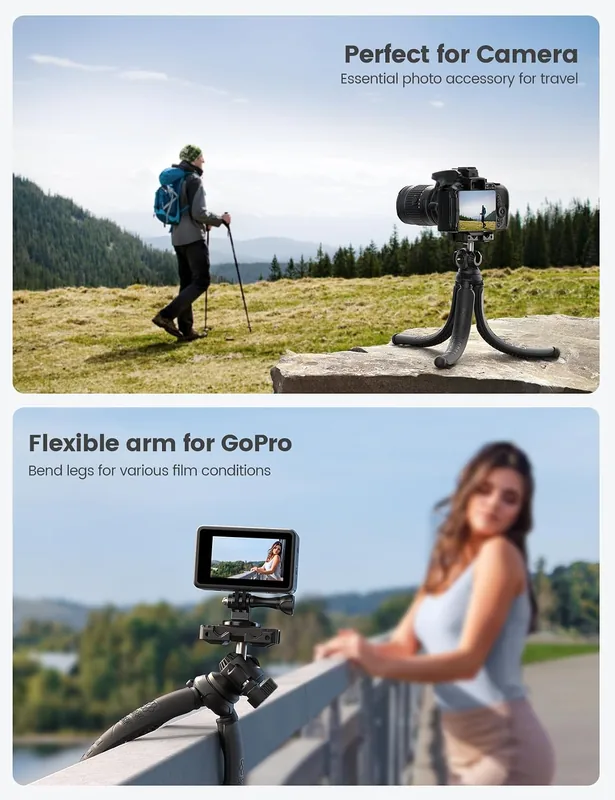
Without a tripod, no long exposure, so no aurora on your phone: this one wraps around a signpost or a branch.
- Wireless remote up to 10 metres
- 360° ball head, 1/4" screw and GoPro adapter included
- 28.5 cm max: it won't replace a proper tripod
Prime delivery
From 20.89 €
Price checked on 02/09/2026
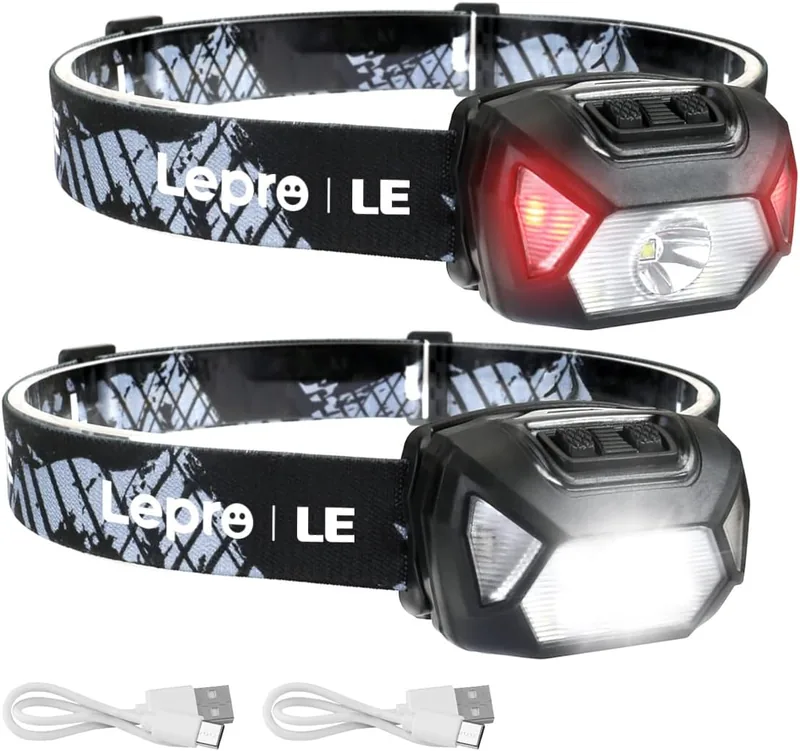
The red mode preserves your night vision, so you can adjust your phone without dazzling the rest of the group.
- 2,000 lux in white, stated range of 150 metres
- USB-C charging, IPX4 water resistance
- Only 4 h at full power, best kept on low mode
Prime delivery
From 22.55 € for the pack of 2
Price checked on 02/09/2026
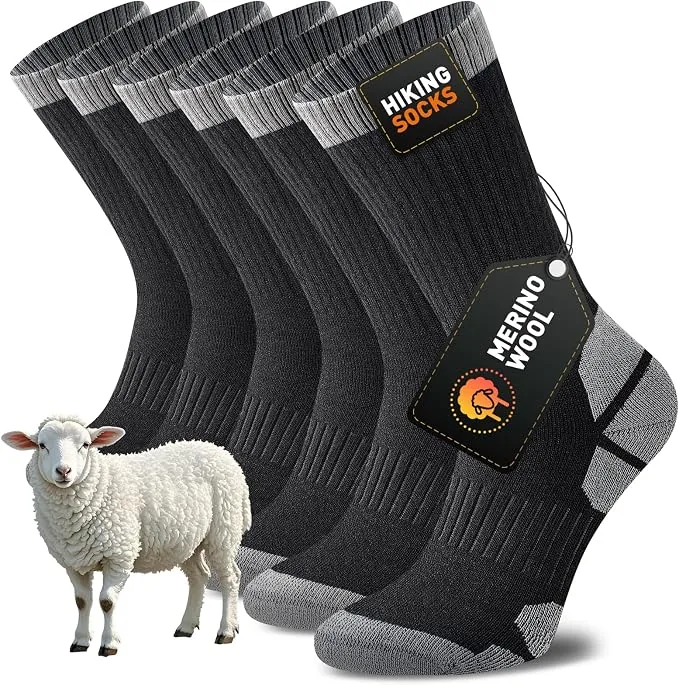
Three hours standing still in the snow, and it's your feet that give out first, but merino stays warm even when damp.
- 50% merino wool, seamless
- Padded at the heel and toe, machine washable
- Only half wool: less warm than pure merino
Prime delivery
From 19.99 € for the 3 pairs
Price checked on 02/09/2026
Which car to rent to see the northern lights
You don’t need a fancy car, a 4×4 or a tank to see the northern lights. That said, there are a few recommendations I think are worth following, especially since you’ll be spending quite a bit of time on the road:
- no electric car, because you’re going to drive a lot to see the lights. You’ll be driving all the way to Finland, Sweden, heading to fairly remote places if the weather demands it. And for that, having a car that drains fast (because in winter it’s not great), in the dead of winter, without many charging points, isn’t ideal
- an automatic gearbox, because you’ll be driving a lot, in quite a few different conditions, and you might as well not bother yourself with a manual gearbox
- a car of a certain size. Generally speaking any car will do, but if you drive a lot to see the lights, you’ll probably run into tricky conditions from time to time. Like lots of snow. So if you plan to head out every evening even when it’s going to snow and be windy, then an SUV, ideally a 4×4, is useful. If you only plan to head out when conditions are good, then a city car does the job
- winter equipment. So yes, studded tires, you’ll have those no matter what. But don’t hesitate to have features like heated seats and steering wheel, a well-insulated car. Because it’s cold outside, and I thought all that was gimmicky at first. But in the end it’s really useful
- unlimited mileage, because you’ll be driving a lot. Otherwise, the extra kilometer costs a fortune
To rent a car, prices vary enormously. From 30 to 100€ per day, depending on whether you book early or at the last minute, for a short or long period.
And above all it varies a lot from one day to the next and from one company to another. So for that, you need to compare. And above all compare the comparison sites!
I mostly use Discover Cars and Booking.com. Both are very reliable and show the rental companies’ ratings, so it’s handy.
Head out with a guide at the start of your stay
A good aurora hunter learns from their peers.
So no, taking a guide isn’t mandatory. Getting all the information isn’t all that hard. That said, the first time isn’t the easiest. So my advice would be, for your first evening, to head out with a guide. Why?
- because you’ll build confidence, you’ll see that it’s actually not that complicated
- you’ll ask your guide loads of questions. That’s what they’re there for! It’s their job, they should explain how to find the spots and handle the weather
- you’ll also ask them how to photograph the northern lights
- and also, above all, to avoid putting pressure on yourself
Your goal is to see the lights. So make it happen right from the start, then set off on your own adventure with all the info and confidence you’ll have gathered


How to choose your guide
In the following article I show you how to find a good northern lights agency/guide, but here are the criteria you should pay attention to:
- the group size: the bigger the group, the less pleasant it’ll be. Try to avoid the big buses even if they’re cheaper
- the guide’s experience: you’re finding more and more fake guides, or taxis that pass themselves off as guides. Go with experienced people, it makes all the difference.
- the rating: look at the scores but above all the reviews, why the reviews are good or bad (like whether it’s a matter of weather or, on the contrary, of location)
- the price: very expensive doesn’t mean it’s better, but cheap means there’s a catch

📍 From Tromsø · Your Tromsø Guide (7 h)
Northern lights hunt in French with Mirko, a passionate guide-photographer, in a small group of 8 with homemade soup served around the campfire.
- 🇫🇷 100% French-language tour
- Small group (8 max), 94% top rating from French speakers
- Homemade soup + pro photos included
Free cancellation
From 208 € / person

📍 From Tromsø · Wandering Owl (8 h)
All-inclusive hunt with a hot homemade meal by the campfire, thermal suits provided and souvenir photos sent after the outing.
- Small group (15 max), English-speaking guide
- Homemade soup + tripods + thermal suit
- Souvenir photos sent by email
Free cancellation
From 190 € / person
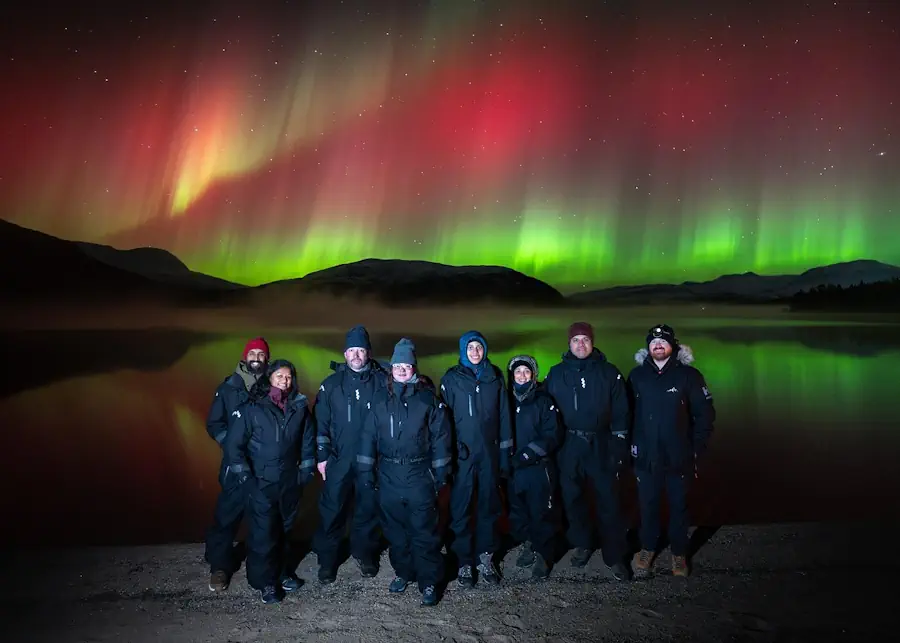
📍 From Tromsø · Northbound (6-10 h)
Small-group northern lights hunt with a heated Mercedes 4x4, campfire, grilled hot dogs and a portrait photo under the aurora included.
- Small group, 8 pax max in a Mercedes Vito 4x4
- Campfire + hot dogs + timelapse thrown in
- Portrait photo under the aurora included
Free cancellation
From 245 € / person

📍 From Tromsø · Arctic Breeze (6 h)
Outing aboard a premium Mercedes-Benz minibus with pro photos included, campfire and hot chocolate in the Arctic night.
- Premium Mercedes-Benz minibus
- Pro photos + thermal suit provided
- Campfire + hot chocolate
Free cancellation
From 152 € / person
Move around based on the clouds
A good aurora hunter knows the weather well.
Because no clear sky = no lights, it’s as simple as that.
So the MAIN condition for seeing the lights is to find yourself under a cloudless sky. And without wanting to spoil it for you, that’s rarely right overhead, rarely in town.
So you’re going to have to absolutely study the cloud cover. Sites and apps like Windy and Ventusky show you hour by hour where the clouds will be. It’s super important.
Because if you know the cloud cover, you know which direction to head. You’re staying in Tromso, which is under the clouds. Should you go to Sommaroy, to Skibotn, to the Lyngen Alps? All of this will depend on the weather.
So absolutely use these weather sites, which are very precise! Because yes, the weather changes from one fjord to the next, within a few kilometers, so you need to be precise.
Oh and now you understand why a car is necessary 🙂


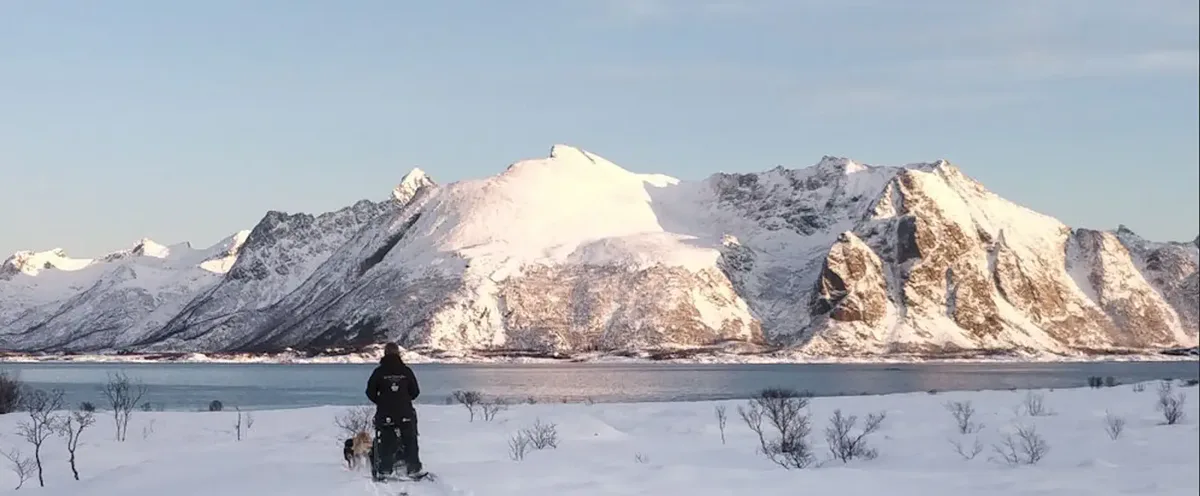

Learn to find the best spots to observe the northern lights
This is a really fun part of chasing the northern lights. Finding the good little spots, knowing where to go depending on the conditions, so you end up in a nice place, with a clear view and, above all, without too many people or too much light.
Find a clear view with no light
The northern lights are big, yes. Very big. But you still need the right spot.
If you find yourself facing a mountain, it’s silly but it won’t do you any good. So my really big tip is to find yourself the most unobstructed view possible. Later you can add some context, some framing. But first, a clear view.
A classic aurora comes from the north. An arc (east-west) that comes from the north and drops down toward us.
So you need a view facing north, with clear views to the east and/or west.
Watch out! If you’re in a solar storm period with a nicely negative BZ, then, in northern Scandinavia, you’ll need a view facing south! Ah yes, it’s not quite as simple as that.
Let me take three examples:
- if you’re on the road along the south coast of Kvaloya, you won’t see much in the case of auroras coming from the north because there’s a big mountain behind you. It only works in the case of really strong activity
- if you’re at Ersfjord, it’s a fjord facing due west. So in the case of classic auroras, you won’t see much because the aurora will be to the north, behind the mountain. Same to the south. So you need auroras that come right over your head.
- if you’re on the Kvaloyvagen road, there you have a great view to the north, east and west. But nothing to the south. So in the case of strong activity, I wouldn’t favor this spot
To find these clear views, we’ll talk about it further down, but drive during the day and use google maps to check out the coasts, the beaches, the accessible spots.

You also need to be away from lights, from streetlamps, from roads with tons of traffic. Because yes, the lights will keep you from seeing the northern lights properly, and that’s annoying.
You see them less well and also, seeing the northern lights means being lost out in the middle of nowhere, so far from everything. Having streetlamps around brings us back to the fact that we’re in civilization. On top of making the show far less enjoyable.
Anyway, you need to be super careful about this. Especially since in the Nordic countries we’re in the dark for a good part of the year, so they stick road lights just about everywhere, even when the roads are taken over by 3 moose at night.
Use google maps too, but in street view mode. There you can really see what the area looks like, the view, whether there are places to walk, whether there are lights. It’s genuinely an essential tool

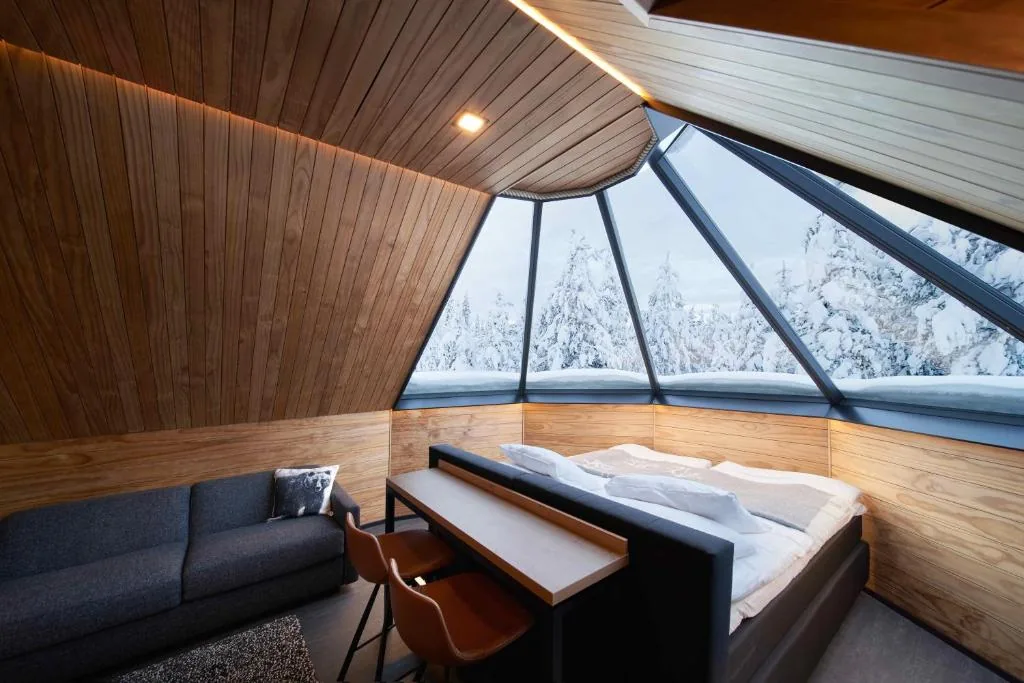
You have to drive during the day to come back at night
I won’t hide it from you: to find good little spots, I spend quite a bit of time on the road. And it’s a pleasure because the landscapes are gorgeous.
The best thing is therefore to explore the surroundings during the day, and note the spots that work for you. For that, check the orientation on google maps, on the compass. Is it due north? Clear view? Note it down!
You can find dozens of spots to see the northern lights online. That’s cool. I give plenty of them myself on this blog. But the best spot is the one you find and successfully test out in the evening. And then bam! You’re super proud!
So here it’s really the mix of google maps, exploratory driving, going off to hunt down the little back roads. For me it’s a big part of the pleasure of chasing the northern lights.

Be ready in time to wait for the northern lights!
Because the good aurora hunter anticipates!
There can be northern lights as soon as it’s dark. Okay, in the middle of winter that doesn’t mean there’ll be northern lights at 2pm. But when the Earth is in “night position”, meaning on the opposite side from the sun.
So my advice is to be on site by 7pm. They can show up earlier, it’s not super common but it happens. Still, being on site at that time lets you get ready, settle in nice and easy. And arrive before any groups of tourists, so you can mark your territory.
7pm might seem super early, but in the Nordic countries dinner starts from 4pm so you’ve got plenty of time 😀
They can also show up late. And not show up at all. It’s the surprise! But really, my advice, if you truly want to give yourself the best chance, is to be ready early. Okay, if it doesn’t get dark until 9pm like in mid-March, there’s no point being on site at 7pm, you get what I mean :p


Head out whenever you get the chance
Are you above the Arctic Circle? Are you in the north of Norwegian, Finnish or Swedish Lapland, or in Iceland? Work on the assumption that there are northern lights every evening.
Let me take the example of Tromso. Its latitude means the city is located at the “entry point” of the northern lights, roughly speaking. Which means we have them all the time or almost!
Don’t rely on the KP. Just a few days ago, I had a great evening at KP1. It’s bogus, it doesn’t mean anything at our latitudes.
On the other hand, rely on the BZ. If the BZ is negative and fluctuating, then absolutely head out. If the BZ has been positive for many hours, let’s say the evening is likely to be quiet. But you’re never safe from a drop in the BZ, and therefore a resurgence of activity.
That’s why my big tip would be to take advantage of the slightest evening with clear skies to head out. You’re here for a limited time, I’d say you really need to give yourself the best possible chance. Anyway there’s not much to do in the evening in Tromso, so you might as well head out to see the northern lights!
But yes, you’ll probably have evenings without beautiful auroras. It’s possible, that’s the game, but you’ll have tried. Because you could have had beautiful auroras. Generally speaking, we have far more evenings with beautiful auroras than with no/few auroras.

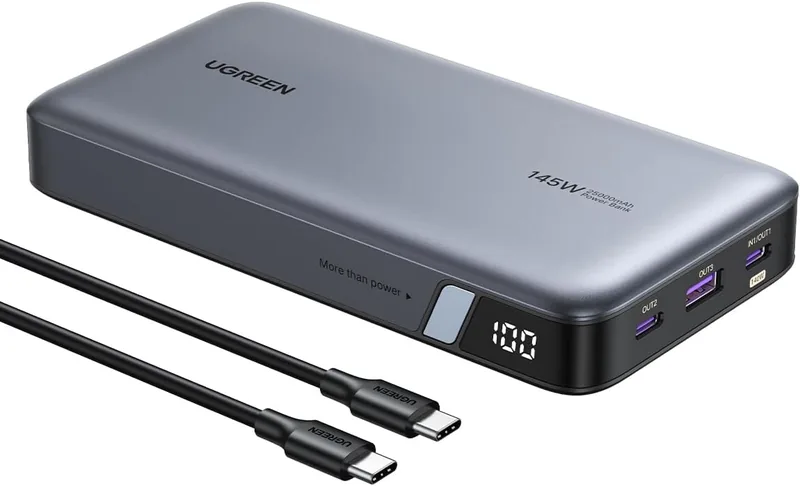
Bring something to pass the time because waiting for the northern lights can be long (and cold)
You can see the northern lights (in the Arctic) from early September to mid-April, but the vast majority of people come in winter. And winter here, it’s freezing. Really.
And when you wait for the northern lights, you wait in the cold, you don’t move, your feet are in contact with the ice and snow. Don’t underestimate that. Bring hand warmers, bring plenty of extra layers.
Also bring a thermos of hot water, bring tea, coffee, something to help you wait it out.
Charge the batteries, empty the memory cards, bring cables and external batteries because in winter the cold drains the batteries much faster.


And if you want to photograph the northern lights…
The good aurora hunter knows how to use their tools
Learn how to use your cameras! Plan for it ahead of time, for crying out loud! You wouldn’t believe how many people ask themselves “but how do I take a photo of the aurora” once they’re under the northern lights. Perfect for not enjoying it, on top of not getting a photo.
Sooooo, if you have a smartphone, there’s a night mode. On the latest phones it’s good enough and effective. A tripod is no luxury because you often need to take an exposure of several seconds. Otherwise you also have a “pro/manual” mode which means you have to do the settings yourself, namely ISO and exposure time.
If you have a camera, you have to learn to do everything in manual:
- focusing to infinity
- managing the aperture, the ISO, the exposure times
Practice beforehand, otherwise you won’t enjoy your evening, you’ll be figuring out how to do it at the worst possible moment.
- In the following article I give you more info on how to photograph the northern lights.


A few general facts about the northern lights
In the following article I tell you absolutely everything you need to know about the northern lights, but here’s a little summary of the most frequently asked questions:
- You can see the northern lights all year round, but from late August/early September to mid-April in the Arctic. You “just” need some darkness
- No, the northern lights aren’t as colorful to the naked eye as they are on camera. Our eyes aren’t made to see at night, to see what’s happening in the sky. The lights really are green (in particular), and cameras also amplify this phenomenon. That said, you can see the green, and sometimes you can see other colors
- Yes, you really do see the northern lights with the naked eye. Sometimes, when they’re really faint, you don’t see much. But yes, you do see them, yes you see them dance when that happens, and yes you can get a real eyeful
- No, 2025 isn’t the “now or never” year to see the northern lights. The solar maximum means there will be more solar storms, but in the Arctic that doesn’t change how often the lights appear. We get them all the time, it’s “just” the lights themselves that change. More colorful, but also stronger, so visible further south. But here, in Tromso for example, it changes nothing in terms of frequency
CAR RENTAL IN LAPLAND
Roam around the far north by renting with Discover Cars

- With free cancellation and comprehensive insurance (you never know!)
- Small model, SUV or electric for the adventure
- Car supplied with the toll badge if needed!
- Prices starting from 30€
A few extra resources and blog articles
Since I’ve written a lot, here are the essential articles to deepen your knowledge of the northern lights before heading out to see them:
- General facts about the northern lights
- Everything you need to know about the northern lights: when to see them, the best periods, the best spots, all the questions you might have
- How to plan your trip to see the northern lights: I walk you step by step through the questions you need to ask yourself, helping you find the right answer, to figure out where and when to go, and above all why
- What are the best places to see the northern lights: Finnish, Swedish or Norwegian Lapland, Iceland or elsewhere, I give you the pros and cons of each place!
- How to photograph the northern lights: I give you dozens of examples, with all the settings, and above all I explain the point of the different settings and the mistakes not to make (and to make too)
- Tromso and the northern lights
- Tromso, the capital of the northern lights : discover why Tromso is a great place if you want to see the northern lights, and much more
- What are all the activities to do in Tromso, all year round: here I list all the possible activities, summer and winter, all the agencies, in short everything you need!
- What to do in Tromso in winter: here we focus on winter activities, the snow, in short, chilly paradise!
- What are the best spots to see the northern lights in Tromso: I give you 10 really nice ones, but the best is to find them yourself by wandering around during the day
- Who are the best northern lights guides in Tromso: here I list the 10 best agencies, but also a huge comparison table with over 30 agencies, with prices, reviews, reputation
- Where to stay in Tromso: I tell you which are the good places to stay, hotels and accommodations, in town and nearby
- Iceland, Reykjavik and the northern lights
- The best agencies for the northern lights in Reykjavik: to avoid the traps, I tell you how to choose your guide well
- The map of Iceland: find here a great interactive map with all the most beautiful spots, activities, restaurants, accommodations…
- Discover Reykjavik, what to do in the Icelandic capital: the complete rundown of this great city, from museums to activities to the lovely places to discover
- The most beautiful places in Iceland: over 35 places you absolutely have to discover
- The best activities to do in Iceland: to go even further and discover even more about the country
- Discover Iceland via the ring road: I tell you everything for the most popular itinerary
- Seeing the northern lights in Iceland: info, tips and a few spots, but watch out for the weather!
- What to do on the south coast of Iceland: the most popular area, but also one of the most spectacular in the country!
- Senja and the northern lights
- The map of Senja: on a single interactive map, discover all the spots and all the essential info
- Discover Senja and everything there is to do: the complete guide to discovering this superb island!
- Where to stay in Senja: there aren’t a huge number of accommodation options in Senja, I tell you the good places, from hotels to houses to rent
- The best spots in Senja for the northern lights: I tell you the good spots, well oriented and photogenic, far from the lights
- The Lofoten Islands and the northern lights
- The complete guide to discovering the Lofoten Islands: all the essential information to discover this incredible archipelago
- The essential activities to do in the Lofoten Islands: everything you should do to make the most of your stay and not miss a thing
- The best accommodations to stay in in Lofoten: rorbu, hotel, budget options, I tell you everything!
- Seeing the northern lights in the Lofoten Islands: here are the best spots and the tips to see them

In conclusion
There you go, I think I’ve told you the essentials.
Logically, with all this, you’re ready! No northern lights are going to slip past you, well, I hope so anyway!
Don’t forget that the more you try to see them, the more chance you’ll have of seeing them. And that the most important thing is to have a clear sky. Otherwise, it’s tricky.
So go for it, give it a shot, because you’re not staying up there for months, so it would be a shame not to make the most of every opportunity you have 🙂