Last updated on
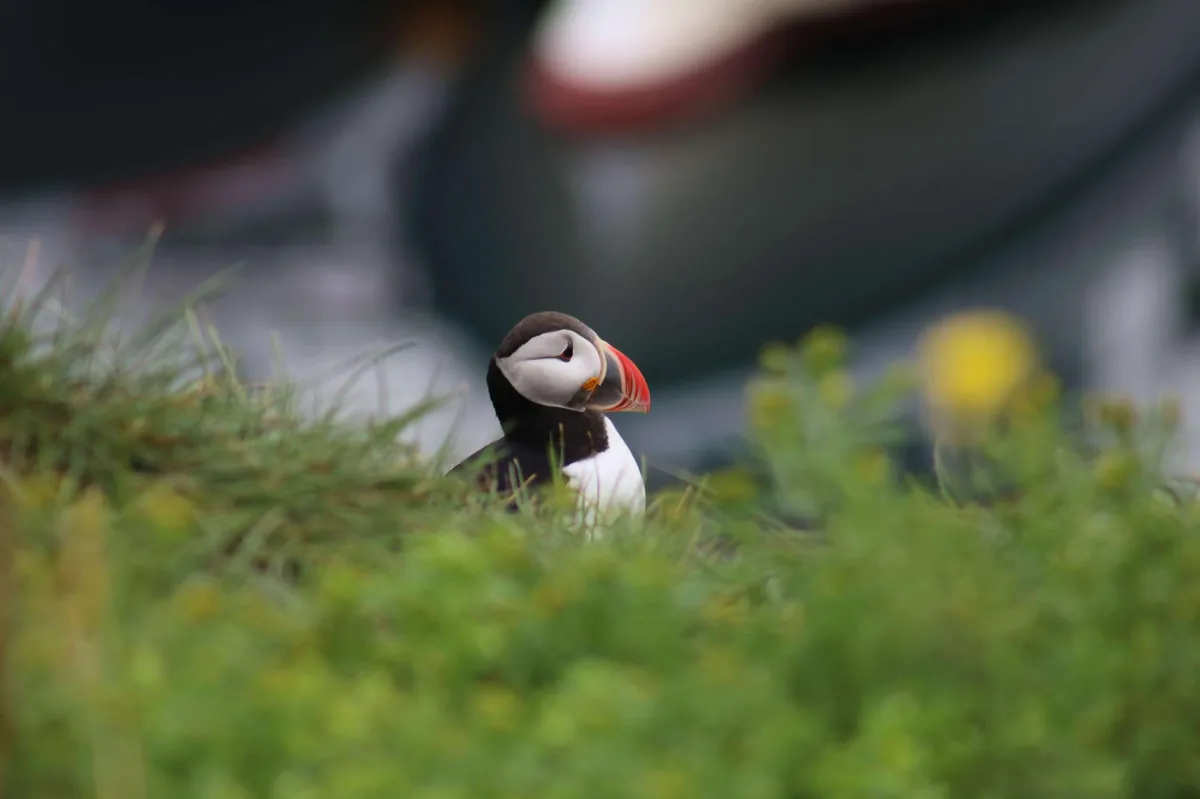
Seeing puffins is, I’d say, an essential thing to do in Iceland. The island is home to the world’s largest colonies of these ridiculously cute birds — a little clumsy, and not remotely shy. So if you’re in Iceland at the right time of year, you absolutely have to go and see them.
And even better, it’s far from difficult! There are colonies pretty much all around the island, reachable on your own or with a group — it’s really easy, you’ll see.
I’m going to walk you through the different places to see them on the island, the best times of year, and the traps to avoid (well, there aren’t many). This was one of my little quests on my first trip to Iceland in 2016; I wasn’t very good at it, but I managed, so you’re bound to succeed too!

What’s the best time of year to see puffins in Iceland
First, you need to know that puffins live at sea. They come to Iceland to breed — or rather, they breed where they were born.
Puffins are said to be visible from mid-May to mid-August. Well, that’s not entirely accurate. In recent years they’ve been arriving more like mid- to late April in Iceland (the south coast first). But at first they spend a fair amount of time building their nests and fishing. So early on they’re mainly out at sea during the day. In April and May you’ll need to be there first thing in the morning or late in the day to see them.
In May/June nesting begins, so then they tend to stay in their burrows incubating.
So within the good May–August window, there’s an even better time: June–July.
Careful: if the weather is good, the puffins head out to sea. If the weather is bad and rainy, they stay home. Just like us, really.

The best places to see puffins
In Iceland there are REALLY specific spots for puffins. It’s very rare to come across them anywhere else. They live in colonies and love cliffs, so that’s where you need to go looking for them. Luckily, since they come back to lay their eggs where they were born, there’s no surprise — we know where they’ll be.
Seeing puffins from Reykjavik
So no, you can’t see puffins in Reykjavik itself. Too many people and, above all, no cliffs. It’s just not the right environment. Nearby, however, there are some really interesting islands that let you see them easily by boat from Reykjavik.
On the boat trips that leave from the harbour, you’ll head out to the islands of Lundey, Akurey or Engey. These are the 3 main islands with big puffin colonies.
The trips last at least 1 hour, but can even run to 4 hours if you go for a whale- and puffin-watching cruise! That one, I’ll admit, is pretty great!
There are several operators and several types of boats — RIB inflatables, or larger ones that also let you see whales.
Prices range from around fifty euros to well over a hundred, but it depends on the type of trip you choose. The most important thing, in my opinion, is to check the reviews.
But of the 4 options below, if I had to pick just one, it would be the whales + puffins combo on a RIB inflatable. Because that kind of boat lets you move fast and get close to the animals without pestering them. And you’re in a small group! For me, I’ll admit, that matters. But it’s the priciest option — and also the best rated.
- note that if you’re travelling in Iceland without a car, this is the only way for you to see the puffins
📍 Old Harbour Reykjavik · Elding (1 h)
An express 1-hour cruise to Akurey, Engey or Lundey to watch puffins through binoculars, with a naturalist guide and a jacket provided.
- English-speaking naturalist guide on board
- Free rain jackets + binoculars on board
- Sighting guaranteed or a new trip free
Free cancellation
From 56 € / person
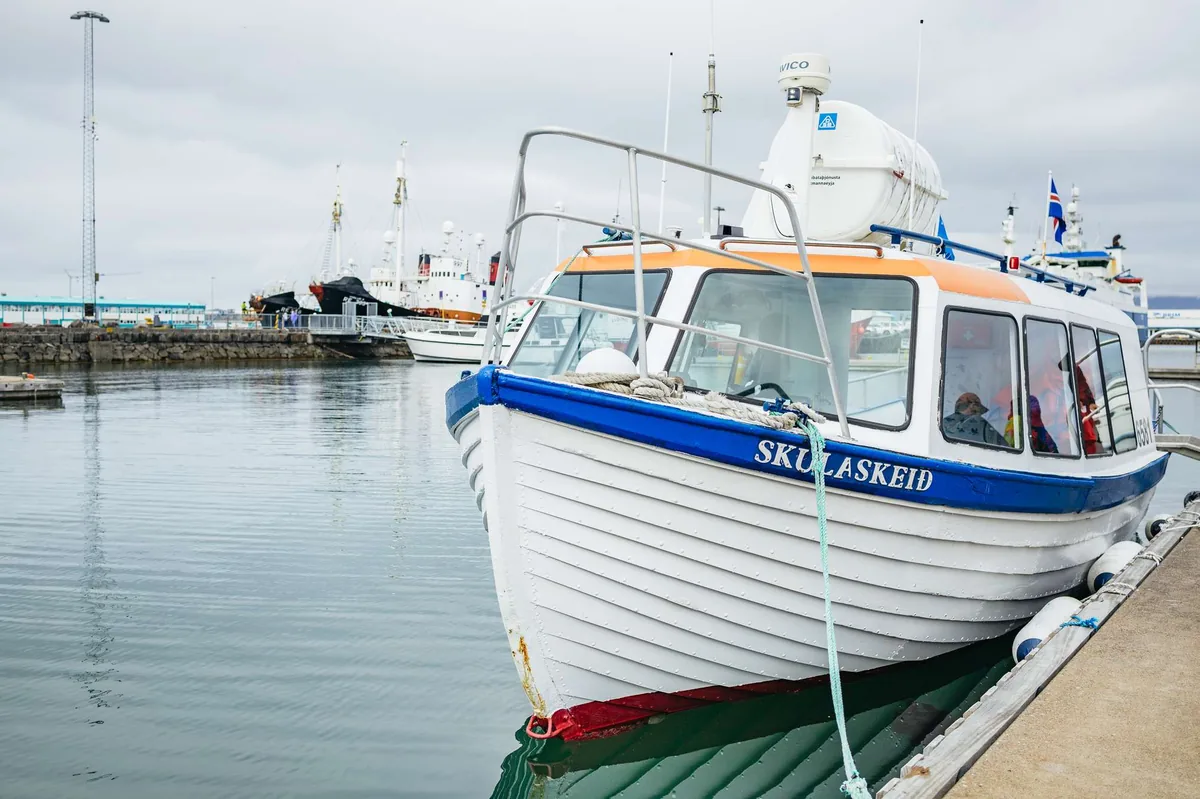
📍 Old Harbour Reykjavik · Special Tours (1 h)
A 1-hour tour aboard the old Skúlaskeið, a wooden boat for max 33 passengers, with 100% guaranteed puffin sightings.
- Old wooden boat Skúlaskeið (33 people max)
- 100% guaranteed puffin sightings
- Guide + binoculars on board + transfers included
Free cancellation
From 55 € / person
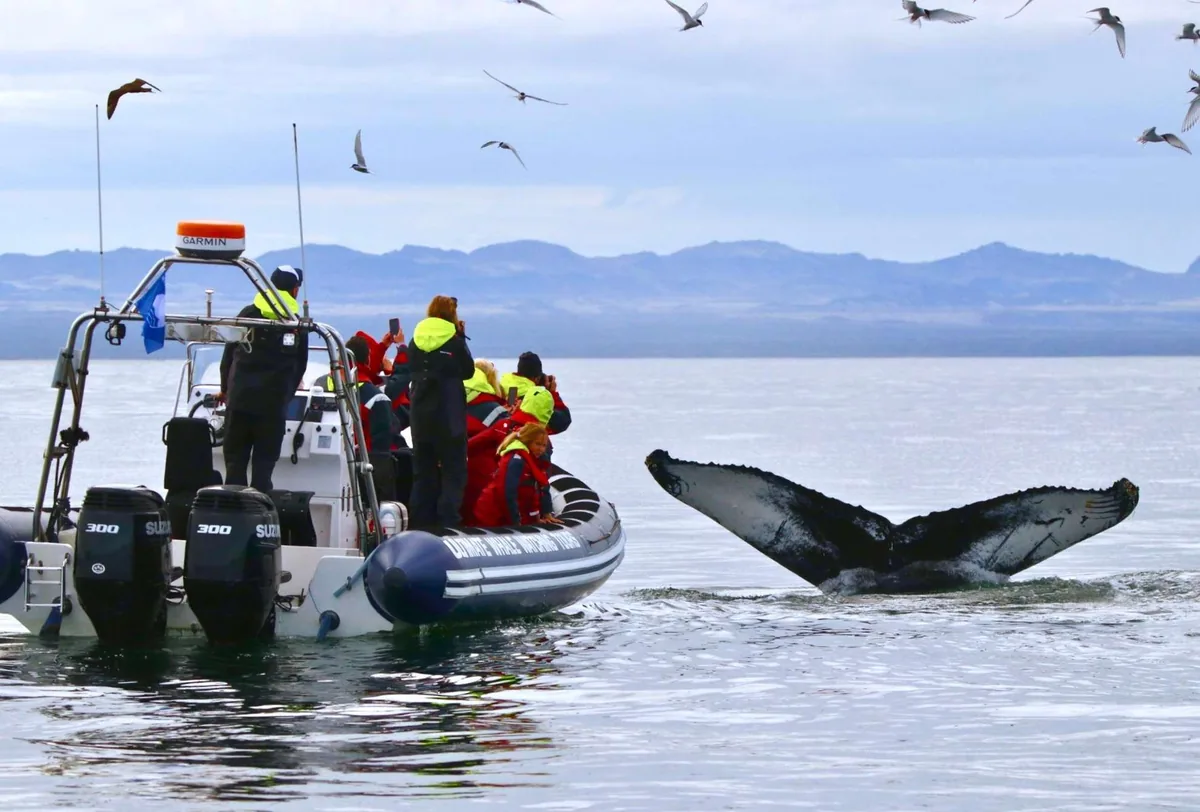
📍 Old Harbour Reykjavik · Elding (2 h)
A RIB adventure combining puffins and whales, with a marine biologist on board, a warm flotation suit and free pro photos.
- Small group of 12 max on a nimble RIB
- Marine biologist on board + free pro photos
- Flotation suit + gloves + protective goggles provided
Free cancellation
From 170 € / person
The Vestmann Islands
This is THE largest colony in the world. The Vestmann Islands are that little archipelago off the south of Iceland, reachable in a 30-minute boat ride. A really nice place to wander around and to climb the red volcanoes (Vestmannaeyjar island had a huge eruption in the early 70s), but it owes its reputation to the puffins.
So this was my first attempt to see them, in May 2016. Except… did I mention that when the weather’s nice, they’re out at sea? Well, the weather was gorgeous! So I didn’t see a single puffin. At the largest colony in the world. Great start, ha ha 😀
But it’s also my own fault — if I’d stayed later, I’d have seen them come back.
Even though you should be able to see them pretty much anywhere on the island as long as there are cliffs, the best spot seems to be Stórhöfði, right at the southern tip.
A tip if you have the time: stay the night. There are nice little hotels and cottages, in particular Camping & Glamping, which is great. That lets you see the puffins in the late evening and the next morning, without rushing for the last boat back to the island.
Getting to the Vestmann Islands: if you have a car and you’re travelling along Iceland’s south coast, it’s simple. You take the boat from Landeyjahöfn — quick and easy.
If you don’t have a car and want to come from Reykjavik, there’s an option to visit the Vestmann Islands and see the puffins in a single day. A packed day, but super convenient!

Baby-puffin season: the “puffling patrol”
Here’s the secret that few guides mention (and for good reason — I only discovered it very recently, and I’m not even capable of spotting puffins at peak season in the world’s largest colony): the season doesn’t end in mid-August! In Heimaey, in the Vestmann Islands, something unique in the world happens between late July and late September (peaking late August–early September): baby-puffin season, when the chicks are called pysjur.
The idea is as adorable as it is incredible. At nightfall, the chicks leave their burrows for the very first time and head for the sea, following the moon’s reflection. Except that the village lights throw them completely off: instead of reaching the ocean, they land right in the middle of the streets, a bit lost. So every evening the locals — and especially the children — head out on “puffling patrol”: torch in one hand, cardboard box in the other, they collect the stray chicks. The next morning it’s off to the cliff or the beach to release them, gently tossing them out to sea. Magical. And the name is just too cute.
And the good news is that you can join in! Nothing is closed off or reserved for professionals: just wander through the village in the evening and you’ll come across chicks to rescue. If you’d rather have some guidance, there are also guided outings. A perfect experience for families, and clearly one of those moments you never forget.
Two little rules, though. If you find an injured or oiled chick, don’t release it yourself: take it to the SEA LIFE Trust (the Beluga Sanctuary in Heimaey), which cares for them — they take in hundreds every season. And since the activity has become very popular, handle the birds as little as possible and follow local guidance: we’re here to help them, not for the photo. Well, a little for the photo — but the puffin comes first.

The Dyrhólaey cliffs
This is where I managed to catch a glimpse of them for the first time! But… (well, of course, otherwise it wouldn’t be any fun). Dyrhólaey is a great place to see them. Very easily accessible cliffs, insane views over the black-sand beaches, often rotten weather (so the puffins stay put) and loads of walking paths.
The puffins make their nests right there, in the grass around the walking paths. And because it’s so accessible, most of the access points at Dyrhólaey are closed during nesting season, i.e. in May. And bam! exactly when I was there the first time 😀 So I only managed to spot a few from a distance.
But if you do better than I did, you can see them more easily. Otherwise, apparently you can also see them from Reynisfjara beach, where they take off above the basalt columns.


📍 Hverfisgata · 101 centre · location 9.7/10
Reykjavik's unbeatable value for money: design hubs with customisable lighting, a hot tub, a fully equipped shared kitchen and self check-in — perfect for travelling solo in safety.
- Hallgrímskirkja 600 m away, Laugavegur under 1 km
- On-site hot tub + customisable room lighting
- Fully equipped shared kitchen, 24/7 self check-in
Free cancellation
From 100 € / night

📍 Tryggvagata · facing the old harbour · location 9.6/10
Industrial design facing the old harbour with a sauna, an in-room Nespresso machine and — an unbeatable bonus — the Deig bakery and Le Kock restaurant built into the hotel.
- Facing the old harbour + Harpa 500 m + old town 2 min
- Sauna + steam bath + gym
- Deig bakery (cult bagels/donuts) & Le Kock burgers in the lobby
Free cancellation
From 180 € / night

📍 Grandi district · arty harbour · location 9.0/10
The modern hotel in the arty Grandi district (a former harbour undergoing a full revival) with a spa to unwind after hiking, a restaurant, an in-house bakery and spacious family rooms.
- Grandi district (galleries, restaurants, creative scene)
- On-site spa (worth trying after the fjords)
- Family rooms + restaurant + in-house bakery
Free cancellation
From 200 € / night

📍 Eiríksgata · 60 m Hallgrímskirkja · location 9.7/10
The homely family guesthouse just 60 m from the cathedral, with free on-street parking (rare!), an airport shuttle and a shared kitchen to cook your own meals.
- 60 m from Hallgrímskirkja (the iconic landmark)
- Free on-street parking (a rarity in Reykjavik)
- Airport shuttle + shared kitchen + garden terrace
Free cancellation
From 210 € / night
Cape Ingólfshöfði
Wow, not easy to spell! This little-known spot is nonetheless one of the very best places to see puffins. For the colony — but also for the experience!
Because this cape is a private reserve; you can only reach it in a group, on outings organised by the owner. And the funniest part is that you get there… by tractor.
You cross a long black-sand beach at low tide, with the visitors riding in the tractor’s trailer. It’s a fantastic experience! On the way back we got caught in a storm while we were still en route, so black sand everywhere in our hair, an apocalyptic vibe. A must-do!
Once there — because that’s what we came for — there are lots of puffins, very few tourists, and plenty of other birds too, including the great skua, the puffin’s predator. Well, not just the puffin’s, because they’ll probably try to attack you too 😀
Truly a great experience!
The tour starts at a meeting point past Skaftafell. The outing lasts about 2h30 and costs $89. There are one or two departures a day, in the morning or the evening — so at low tide and when the puffins aren’t out at sea.


Borgarfjörður Eystri in the east fjords
I’ll admit right away that I didn’t make it there, because my trip through the east fjords fell at the wrong time of year. But it’s one of the prime spots for seeing puffins!
Because once you’re there it’s very easy to reach, few people go that far, and there are lots of puffins. The catch is that getting to Borgarfjörður Eystri takes a bit of driving. First all the way to Egilsstaðir, then a rough gravel road for 75 km. So you have to earn it!
Once there, you find yourself really 2 or 3 metres from the little clowns, thanks to a platform you can walk along easily without disturbing them.

CAR RENTAL IN ICELAND
Roam around Iceland by renting from Discover Cars

- Rent a car from Keflavik airport or in town
- Small model, SUV or 4×4 for adventure
- With free cancellation!
- Prices from €30
The Tjörnes peninsula
Located waaay up north, it’s a really handy place to see puffins if you’re around Húsavík. The peninsula is big, but you’ll mainly see them over on the Öxarfjörður side and especially at Hringsbjarg, where several trails set off from the lighthouse.
Why is it an interesting spot? Because Húsavík is a paradise for marine animals! So you could also spot whales and dolphins from the shore while you’re looking for puffins. That would be pretty great!
And Tjörnes is less visited by tourists than the main sites on the south coast. So plenty of reasons to come and watch them here 🙂
You can also take a boat to Puffin Island (also called Lundey), a small island where several tens of thousands of puffins come to nest in summer.

The tiny island of Grímsey
Grímsey is the northernmost point of Iceland, a small island 30 km off the main island, with no roads, no cars, a few houses, an inn, and that’s it. For birdwatching enthusiasts, it’s paradise! You, the birds, and that’s all!
The puffins are literally everywhere on the island; you don’t need to walk far, just step out of the mini village.
The catch is that it’s not easy to get there. A boat that takes 3 hours, on an Icelandic sea (don’t forget the seasickness pills!), is no walk in the park 😀 And it doesn’t run every day. So if you have the time and want to devote yourself to photographing puffins, spend a night there!
The Látrabjarg cliffs in the Westfjords
Now this is a fantastic spot, worth it as much for the birds as for the journey. Because you’re at the very end of the western fjords, the most hostile and wild part of the country. So you’ll see unique landscapes, fjords tens of kilometres long.
But don’t do what I did. During my trip through the western fjords, I was over the moon — “yiiipee! one of the biggest puffin colonies all to myself!” — because there was no one on the road. The road to Látrabjarg being a lovely gravel track, full of potholes.
Arriving on site (the drive is a touch long, mind)… nothing. Not a sound, not a squawk. Well of course, genius! It’s off-season, the birds cleared off weeks ago!
But it’s beautiful. The place is beautiful. I must be the only one to say it was wonderfully quiet, but these are superb cliffs at the end of the world 😀
Anyway, next time I’ll pay a bit more attention before slogging the 100 km round trip 😀

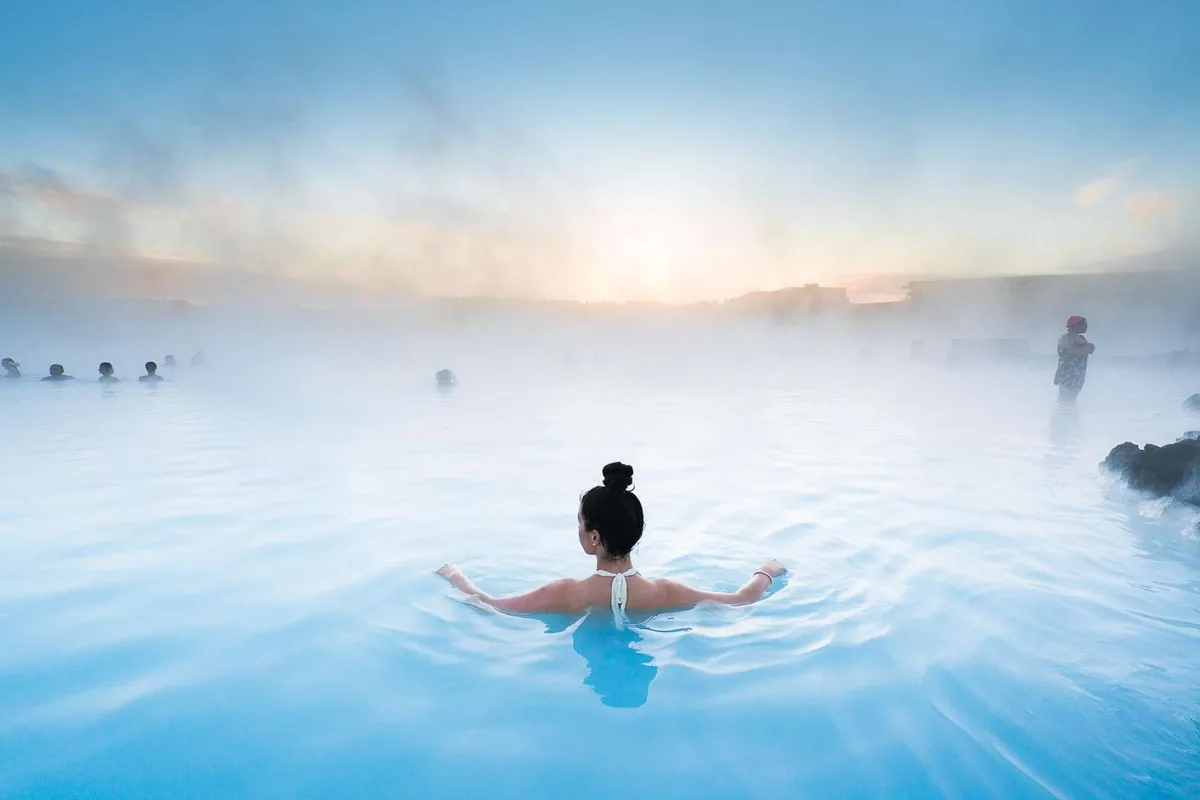
📍 Grindavík · Blue Lagoon Iceland (1 day)
A dip in the milky-blue waters of Iceland's most iconic geothermal lagoon, with a silica mask, towel and drink included.
- Entry + towel + drink + silica mask included
- Unlimited access to sauna, steam room, cold lagoon, quiet area
- Wheelchair accessible
Free cancellation
From 126 € / person
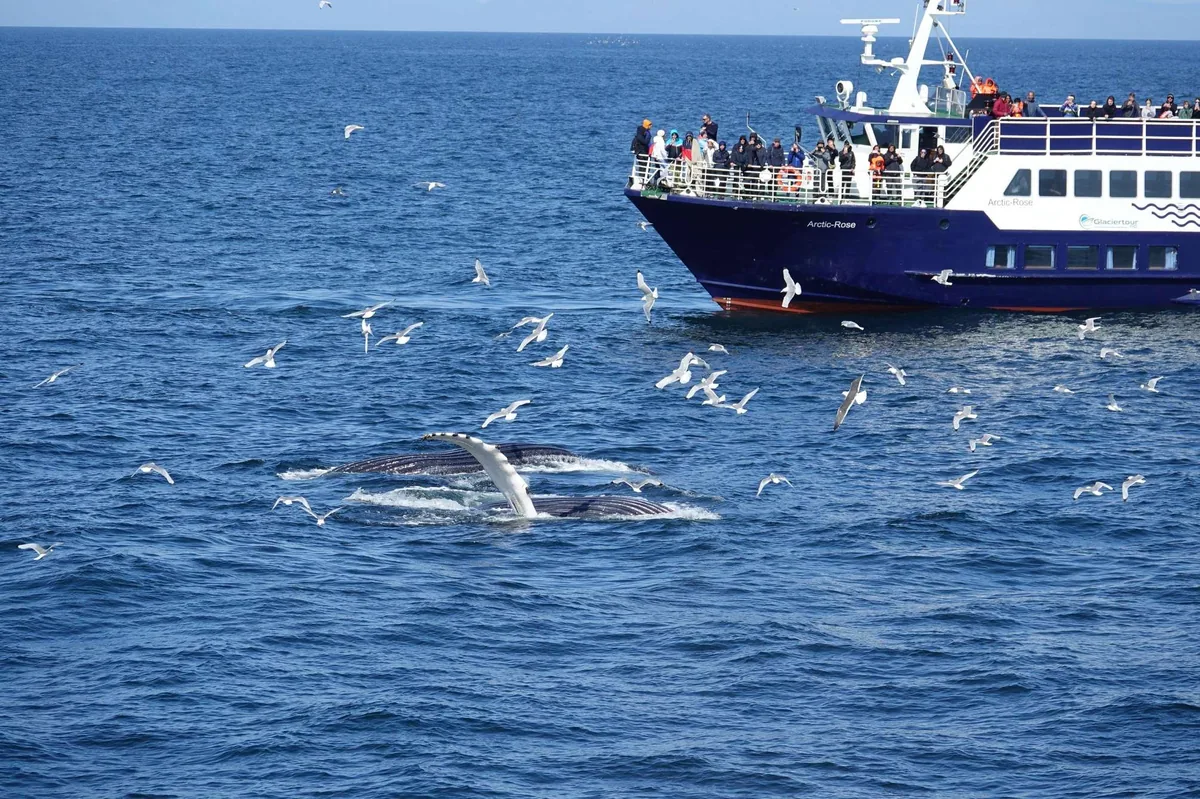
📍 Old Harbour Reykjavik · Sea Trips (3 h)
A cruise across Faxaflói bay in search of humpback whales, dolphins and porpoises, with English-speaking naturalist guides on board.
- English-speaking whale specialist guide
- Heated cabins + toilets + free wifi on board
- A free new trip if no sighting
Free cancellation
89 €From 85 € / person

📍 South coast of Iceland · Glaciers & Waterfalls (11 h)
A day on the south coast with a hike on the Sólheimajökull glacier, the Seljalandsfoss / Skógafoss waterfalls and the black beach of Reynisfjara.
- Reykjavik hotel pickup + English-speaking guide
- Glacier gear provided (crampons, harness, helmet, ice axe)
- Sólheimajökull + Seljalandsfoss + Skógafoss + Reynisfjara
Free cancellation
176 €From 165 € / person
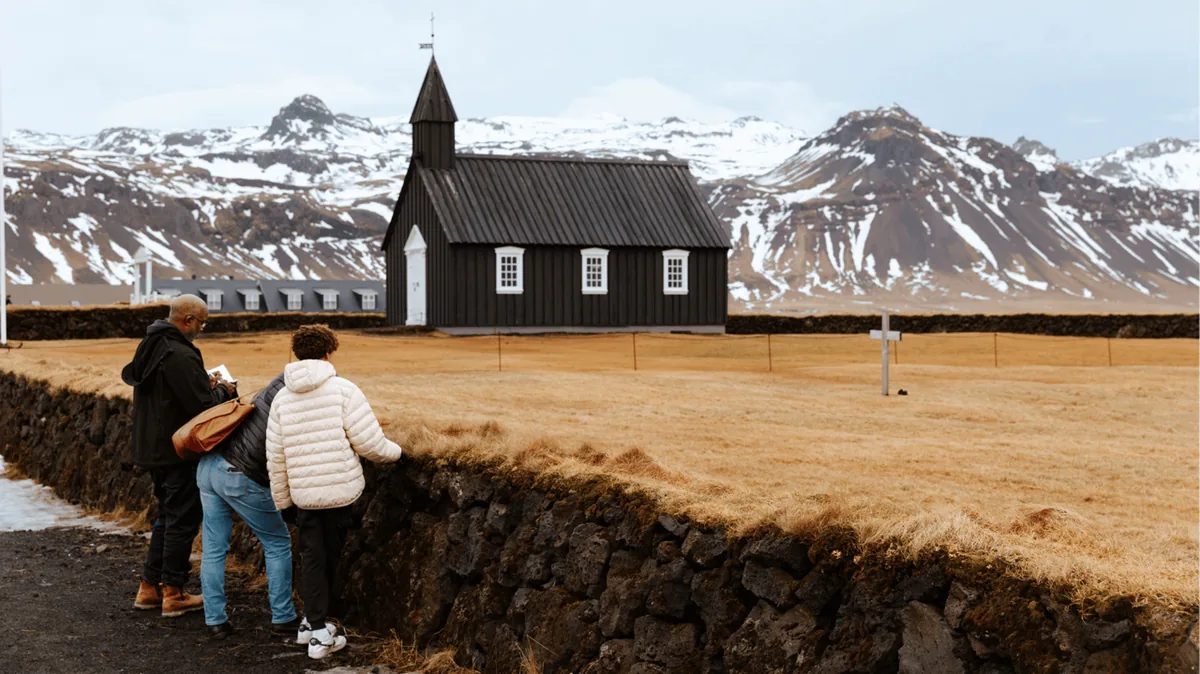
📍 Snæfellsnes · Nordur Travel (11 h)
An excursion through “Iceland in miniature”: Kirkjufell, the Djúpalónssandur black beach, the Lóndrangar cliffs and the black church of Búðir.
- Small group + Reykjavik hotel pickup
- English-speaking guide (or Spanish on some days)
- Kirkjufell + Snæfellsjökull + cliffs + Búðir church
Free cancellation
135 €From 128 € / person
Seeing puffins on Snæfellsnes
The Snæfellsnes peninsula is a prime area for watching puffins, but not the most obvious one. There are plenty of these birds in the very many cliffs and little islands scattered across Breiðafjörður bay. However, you’ll have to take a tour to see them, and there aren’t many of those.
They generally leave from Stykkishólmur, a pretty little fishing village — small boats that take you out to the islands. You can find out more with this operator! edit: after checking, there are no longer any puffin tours on Snæfellsnes.
To make life and trip-planning easier, I’ve created an interactive map of Iceland. It includes:
- the must-see places
- the waterfalls, hikes, thermal baths…
- the activities
- the accommodation
- in short, everything you need!
A few little rules to follow while you’re there
- you mostly see puffins in the morning and late in the day
- the nicer the weather, the more they’re out at sea. If the weather isn’t great, they stay home. Like Parisians and their café terraces, really. So try to favour days with so-so weather (from my experience at the world’s largest colony, peak May, gorgeous weather, I saw absolutely no birds at all)
- be super careful where you walk during nesting season. Especially at Dyrhólaey — if the paths are closed, there’s a reason. So don’t go on the grass, and don’t leave the trail or the platforms
- you can get fairly close to them, but you must never feed them; leave them in peace and try to be as discreet as possible. I know it’s a slightly obvious tip, but every now and then I see behaviour that isn’t great
FAQ: your questions about puffins in Iceland
When can you see puffins in Iceland?
Puffins are in Iceland from April to September, but the best time to watch them runs from June to July, when the colonies are at their liveliest. They arrive as early as mid- to late April on the south coast and head back out to sea during August. Bonus: in Heimaey, the season stretches to late September with the baby puffins (see below).
Where can you most easily see puffins in Iceland?
The most accessible spots are the Dyrhólaey cliffs on the south coast, the Vestmann Islands (the world’s largest colony), and the little islands off Reykjavik by boat. For a wilder, crowd-free experience, head to Borgarfjörður Eystri in the east or the Látrabjarg cliffs in the western fjords.
Can you see puffins from Reykjavik?
Not in the city itself, but very easily by boat: trips leave the harbour all season for the islands of Lundey, Akurey and Engey, where big colonies nest. Budget from 50 to over 100 € depending on the option, and go for the whales + puffins combo on a RIB inflatable — the most fun and the best rated.
What time of day is best to see puffins?
Early in the morning and late in the day. During the day, puffins often head out to sea to fish, especially in fine weather. That’s the classic trap: in bright sunshine they’re far offshore, whereas slightly gloomy weather keeps them near their nests, easier to watch.
Do you need to book a tour or a boat to see puffins?
Not always. At many sites (Dyrhólaey, Látrabjarg, Borgarfjörður Eystri, Grímsey…) you can watch them freely, on foot and for free. Some places, however, are only reachable on an excursion: Cape Ingólfshöfði (by tractor!), Snæfellsnes, or the islands off Reykjavik and Húsavík, which require a boat.
What is the baby-puffin season (the puffling patrol)?
In Heimaey (Vestmann Islands), from late July to late September, the baby puffins leave their nests at night and get lost in the village lights. Every evening, locals and visitors head out to collect them in cardboard boxes and release them at sea the next day: this is the famous “puffling patrol”, and you can take part. A unique experience, perfect for families.
Can you approach or touch puffins?
You can often get fairly close because they aren’t very shy, but you must never touch or feed them. Stay on the trails and platforms, especially during nesting season (their burrows are fragile), and keep your distance: we’re there to watch them, not to disturb them.
Are puffins under threat in Iceland?
Yes. The Atlantic puffin is now classified as “vulnerable” on the IUCN Red List, and the Icelandic colonies — including the one on the Vestmann Islands — have been struggling to breed in recent years. All the more reason to watch them responsibly, without disturbing them or straying from marked trails.
Other resources on Iceland
I’ve written a few extra articles on Iceland that should interest you:
- How to plan your trip to Iceland – here I give all the main info so you can prepare your stay
- What’s the best season to visit Iceland – month by month I give you all the pros and cons, plus the activities to do
- Itinerary along the Ring Road – discover how to make the most of Iceland while sticking to the main road
- What to see in Reykjavik – in a few days, discover the lovely Icelandic capital
- Free travel guide to Iceland – I’ve gathered all the information into a free PDF guide on Iceland, ready to download
- Where to stay in Reykjavik – which are the nicest, cheapest or best-view spots to sleep in the capital
- Visiting the Icelandic Golden Circle – here’s how to enjoy an excellent introduction to Iceland’s landscapes
- How to rent a car in Iceland – tips, which car to choose, insurance
- The most beautiful spots around Vik i Myrdal – a must-stop on the south coast, enjoy all the wonders around the village
- What to do in Myvatn – in the north of the country, a magnificent region well worth a visit!
- Where to stay on Iceland’s south coast – find the handiest and nicest places to sleep as you travel through the south of the country