Last updated on
I’m not going to keep you in suspense: the Périgord is one of the most beautiful regions in France, and probably the most interesting. Why’s that? Because it has some of the most beautiful villages in France, because we’re going to visit Sarlat, which is a real pearl, and hilltop castles that mattered in French history. And because the Périgord is the cradle of prehistory in our beautiful country, quite simply. Caves with cave paintings, Cro-Magnon shelters, we’re taking a 25,000-year leap into the past!
And also because all of this sits along rivers like the Dordogne and the Vézère, so you can go kayaking past the castles. All of it in rolling landscapes that remind you of Tuscany. Pretty incredible, yes! Need even more arguments? Then I suggest you read this article. Especially the photos of the food because, oh boy, do you eat well there!
Right then, off we go, let’s take a look at it all!

5 reasons to go to the Dordogne – Périgord
- the cave paintings, exceptional! 25,000 years of history
- caves with stunning rock formations
- You eat and drink really well there
- the most beautiful villages in France are in the Périgord!
- And for Sarlat, obviously!
Périgord – Dordogne, what’s the difference
Honestly? None. Périgord is the old administrative name of the county that became the Dordogne in 1790, when the French départements were created. The Dordogne and the Périgord have almost the same geographical boundaries, and paradoxically, people mostly say Périgord when it comes to tourism.
We’re going to divide the Périgord, arbitrarily, into 4 areas:
- the Périgord Noir, which covers the area around Sarlat, gets its name (black) from the dark, dense forests of holm oaks and chestnut trees that cover its hills. From a distance, these forests give the landscape a dark, almost black tint, especially around Sarlat-la-Canéda
- The Périgord Blanc, for its part, is centred on Périgueux. It gets its name (white) from the very pale limestone soils that dominate this part of the area. Around Périgueux, the local capital, the landscapes are marked by these white cliffs and plateaus that you can see from far away
- The Périgord Pourpre (purple) comes from Bergerac. And of course, it has to do with wine. It comes from the colour of the vines in autumn
- The Périgord Vert, right up north towards Brantôme and Nontron, gets its name (green) from its very dense, very green vegetation, thanks to its wetter climate.
What will you see in the Périgord?
But that’s what’s crazy here! There are so many places to discover, and above all, places that are all different.
Obviously we’re going to see the most beautiful villages in France, like La Roque Gageac, Castelnaud la Chapelle, and the bastides of Domme and Monpazier in particular. You’ll really get lost in the lanes of these villages.
Along with the villages, what gives the Périgord its real value is the plunge into prehistory. Yes, there are lots of caves with rock formations and fantastic stalactites, but above all we’re going to visit the caves with paintings made by prehistoric people. One cave full of mammoths, another with bison, a third with aurochs. What’s amazing is that every cave is different and shows you something new, even though they’re only a few kilometres apart. That’s especially true at Les Eyzies, which is a truly exceptional heritage site.
But that’s not all! There are loads of castles, including medieval ones with some great stories, kids and grown-ups will love them!
Anyway, this is just an introduction, I’ll go into more detail just below and tell you what I like about this region, my favourite places, even though in the following article I’ve already shown you the most beautiful villages in the Périgord.
Sarlat, the pearl of the Périgord
Sarlat is just brilliant, quite simply. I absolutely fell for it, one of the most beautiful places in the Périgord, no doubt about it. A superb medieval town with loads of charm. You find yourself right in the middle of an incredibly well-preserved medieval setting, where every lane seems to come from another time.
Get lost in the lanes of the old town, you can spend hours there exploring every passage, every staircase, every detail carved into the stone. At times, you’d almost expect a knight to turn up!
In the heart of Sarlat, make sure you go to the market! There’s one on Wednesday morning and one on Saturday. Go for the Wednesday one, it’s more authentic and, above all, entirely about food. And honestly, with all the local producers, it’s paradise! The Saturday one is more touristy, busier and bigger.
On top of that, Sarlat is a great base for visiting the region, the town is close to the most beautiful places in the Périgord. So honestly, don’t hesitate to stay here, as we’ll see a bit further down in the accommodation section!
When should you visit Sarlat? Well, most people come in July and August, two really busy months (especially from mid-July to mid-August). I went once at the end of June and once in April, there weren’t many people around and the weather was great. So I strongly recommend those periods, you get all the advantages: the tourist sites are open, you have the town to yourself, good weather and few people.
- You can also take a guided tour of Sarlat, or even better, a food tour that includes the market!


Magnificent caves with rock formations
I don’t know about you, but I loooove caves. You feel like you’re on another planet or in a film like Alien.
And that’s handy, because in the Périgord you’ll find lots of caves with absolutely magnificent rock formations. Stalactites, stalagmites, draperies, columns… The shapes created by water and limestone are incredible. Sometimes you feel like you’re in an underground cathedral carved out by time.
What’s pretty crazy is that every cave is unique, totally different from the others. OK, it’s always more or less the same principle, meaning stalagmites and stalactites in a long passage and big chambers. Each cave has its own features. But they’re all tens of millions of years old!
Off the top of my head, I’d absolutely recommend:
- the Grotte de Maxange, a newcomer, still being explored, with loads of spaghetti-like stalactites: the eccentrics
- the Grotte du Roc Blanc, at the UNESCO-listed site of Les Eyzies. Big, deep, impressive formations, it’s a feast for the eyes!
- the Gouffre de Proumeyssac, as the name suggests, it’s a chasm, so a huge chamber that you can be lowered into in a basket, which I recommend because it’s the best way to take in the whole chamber
- the Grotte de Villars, unique because it’s the only cave that combines superb rock formations and cave paintings. In this cave you’ll notably find a bison standing in front of a man (bearing in mind that depictions of humans are rare). So for both the natural spectacle and the paintings, this cave is essential!


The most beautiful villages in France are in the Dordogne
And I’m not trying to sell you a dream! You really will find a huge number of magnificent villages in the Périgord. Many of them have been voted “most beautiful village in France”, but it’s no hype, they really are superb, each with its own identity, character and strengths.
For example, along the Dordogne you’ll find a troglodyte village (La Roque Gageac), hillside villages topped by a castle, like Castelnaud or Beynac et Cazenac, but also superb bastides, meaning medieval hilltop villages with magnificent views over the surrounding area. Here I’m obviously thinking of Domme or Monpazier
If I had to recommend 5 villages:
- Castelnaud la Chapelle, I visited it last and it’s magnificent. All steep slopes (watch your calves), it’s the ultimate postcard medieval village, with the castle towering over it.
- La Roque Gageac, a great classic, but don’t do what most tourists do! They just stay along the Dordogne. That’s fine, but it’s a troglodyte village, so get some height: take the little stone stairs and climb up along the cliff
- the bastide of Domme, a hilltop village, super cute, neat and full of flowers. It’s really lovely at the end of the day in particular, the perfect time for a drink with a view over the Dordogne
- Saint Jean de Côle, different, not in the Périgord Noir (that’s why I’m suggesting it), ultra cute with its old, flower-filled lanes, its half-timbered houses and above all… its terraces by the river
- the bastide of Monpazier, because it’s tiny, still has its medieval atmosphere (it’s regularly used for swashbuckling films) and also lets you visit the other pretty villages nearby, like Belvès or Saint Pompon


Caves with incredible prehistoric paintings
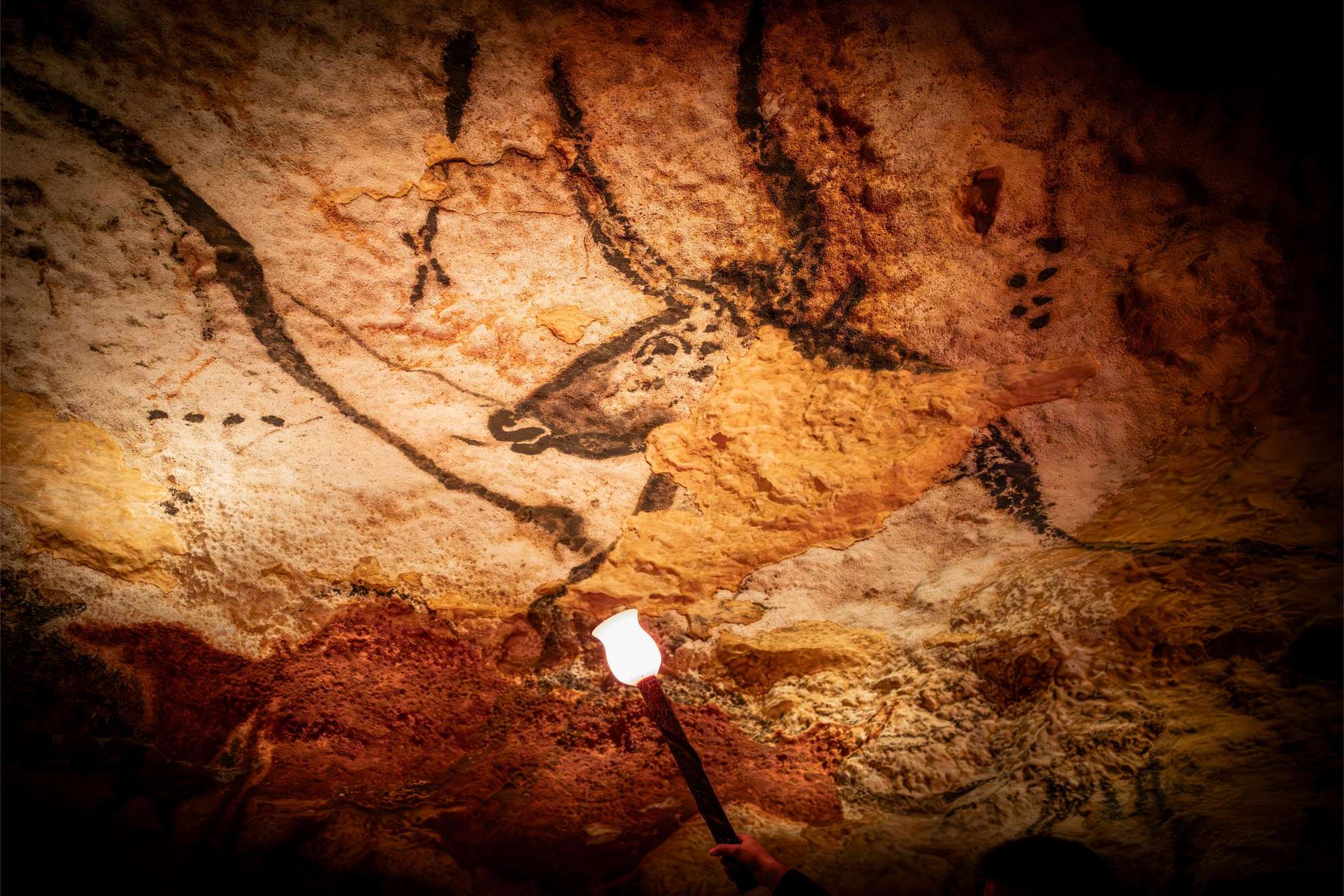
As you can see, there’s loads to see in the Périgord. But for me, what’s truly unique are all these caves containing prehistoric paintings, cave paintings that can be up to 30,000 years old. And what I find crazy is that every cave is different, every cave has its own “theme”. Bison here, mammoths there, aurochs somewhere else.
What’s also crazy, in fact, is that you realise just how many animals lived in the region. And there are some surprises! You discover that cave lions lived alongside reindeer and woolly rhinos.
Off the top of my head, I’d absolutely recommend the following caves:
- Font de Gaume, very limited access to visit a unique cave full of bison.
- Grotte de Rouffignac, which you visit on a little train to see over a hundred mammoths
- The Grotte des Combarelles with its engravings by the thousand
But there are so many that I’ll write a dedicated article. I also think a visit to Lascaux is important. OK, it’s a reproduction. But the original cave is closed! And Lascaux IV (or II too) is the only way to see one of the most beautiful caves in history. The reproduction of the cave is very well done, so I really do recommend it, even if, yes, it’s missing that “little something” of discovering a cave Indiana Jones-style.


Superb castles
As a kid, I was a big fan of castles (normal, you’ll say) and I still remember being 8 or 9 when my parents rented a house with a direct view of the Château de Bonaguil (yes OK, technically it’s in the Lot, but it’s on the border with the Dordogne :p).
And in the Périgord, there are loads of beautiful castles and it’s so great! Beautiful ones, ruins, more recent ones, medieval ones, haunted ones, super photogenic ones in yellow stone. There’s something for everyone, and they have one thing in common: they tower over the surrounding area, perched on their hills.
Very often these castles go hand in hand with magnificent villages. I’m thinking of Castelnaud la Chapelle or the Château de Beynac (in the village of Beynac et Cazenac), which are really interesting too.
But there are other castles, I particularly liked Fénélon, Biron and Puymartin which are built in the yellow stone typical of the Périgord Noir. In fact, they say the Château de Puymartin is haunted by the White Lady!
For slightly more recent history, you can visit the Château des Milandes which was Josephine Baker’s home, with a nice birds of prey display!


Prehistoric sites and shelters
In the heart of the Périgord lies the site of Les Eyzies (“les zézies”, as I’ve been saying since I was a kid, but I think that’s not far off the right pronunciation), which you could call the world capital of prehistory. And this is where Cro-Magnon man was discovered. In 1868, during work on a path, a rock shelter was uncovered, now called the Cro-Magnon shelter.
Inside, they found several human skeletons nearly 28,000 years old, along with tools, shell ornaments and funerary objects. These remains are among the first Homo sapiens fossils discovered in Europe, which was a key moment for prehistory.
The term “Cro-Magnon” quite simply comes from the name of the shelter: cro means hollow or shelter in the local dialect, and Magnon was the name of the landowner.
In Les Eyzies and its immediate surroundings (roughly within 5 kilometres, an hour’s walk in Cro-Magnon terms), there isn’t just one shelter, there are loads! The Cro-Magnon shelter is one of them, and it’s become a small museum, but there’s also the iconic Roche Saint Christophe, high up, or the Roc de Cazelle caves with loads of scenes showing Cro-Magnon in his natural environment.
Make sure you stop by the museum of prehistory and (if you have kids) the prehistory interpretation centre right next door.


Other sites to see in the Dordogne
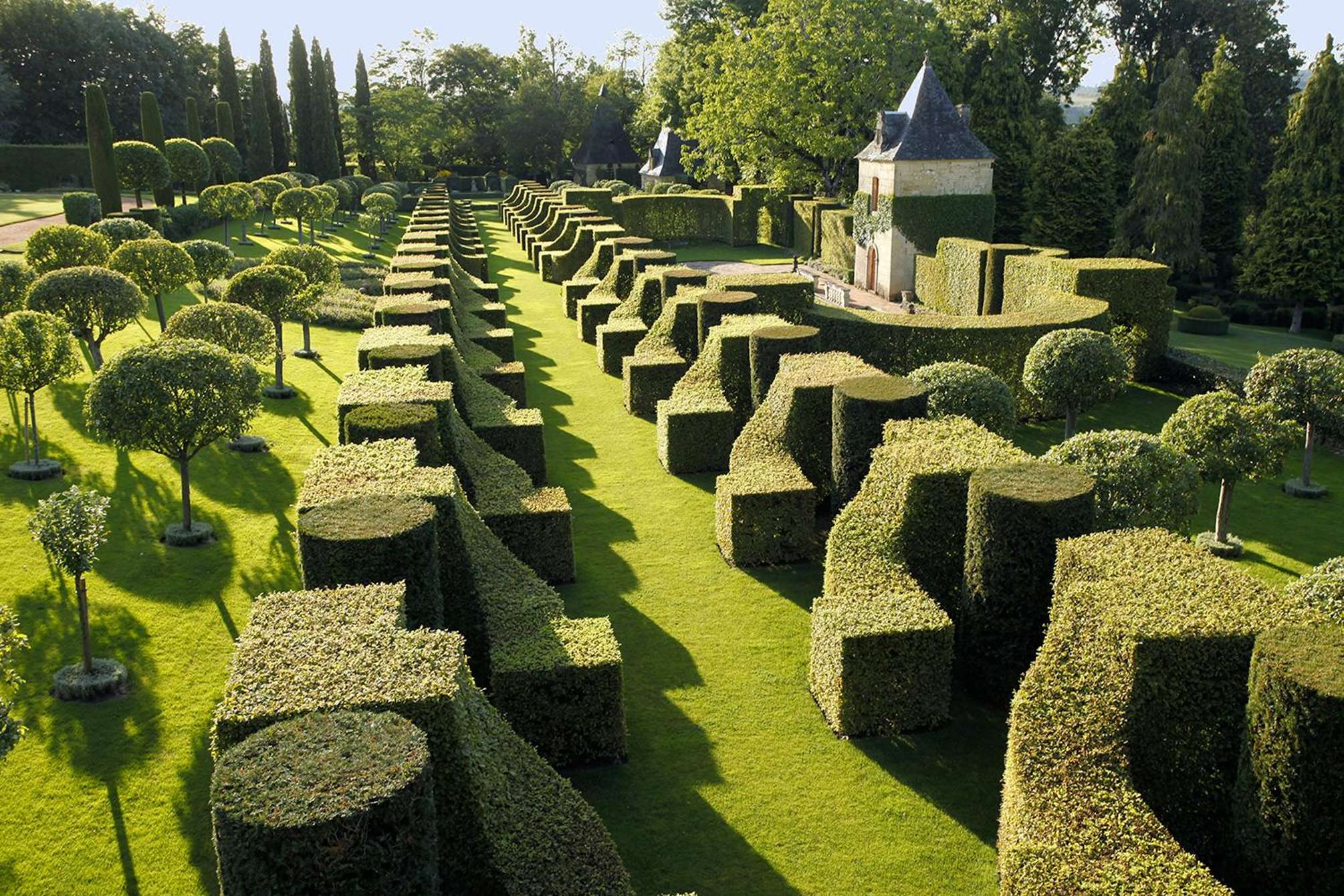
That’s not all! There are other really nice places to visit. I’m thinking of the gardens. Around Sarlat there are two big gardens that are really pleasant:
- the Eyrignac gardens, the best known, the biggest, the most varied. really lovely!
- the Marqueyssac gardens, the landscaped part is smaller, but it’s up high and you can go for a nice walk on the hill. You get great views over the surroundings, like the Château de Castelnaud and La Roque Gageac
There are interesting sites like the troglodyte village of La Madeleine where people lived in the cliff from the 14th century onwards, with a Gothic chapel in particular.
But there’s also the village of the Cabanes du Breuil, a village made up of typical huts called bories. It’s nice, but it’s a shame, I felt it lacked information.


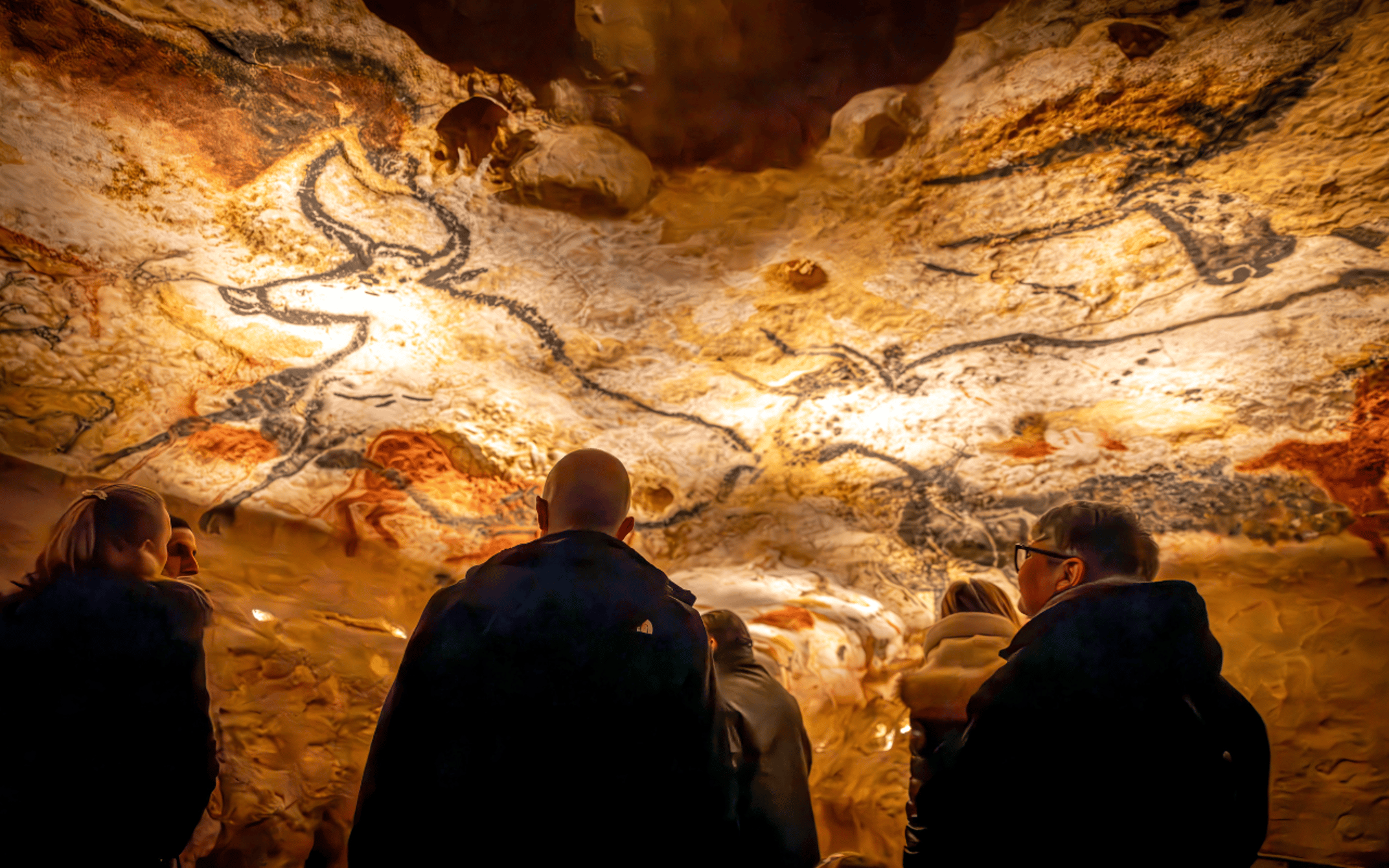
📍 Montignac · Sémitour Périgord
The full replica of the cave, extended by six interactive exhibition spaces spread over eight thousand square metres.
- Guided tours in French, English or Spanish
- Optional audio guide in several languages, including Chinese
- ⚠️ No duration stated · entry ticket only, no transport from Sarlat
Free cancellation
From 25 € / person
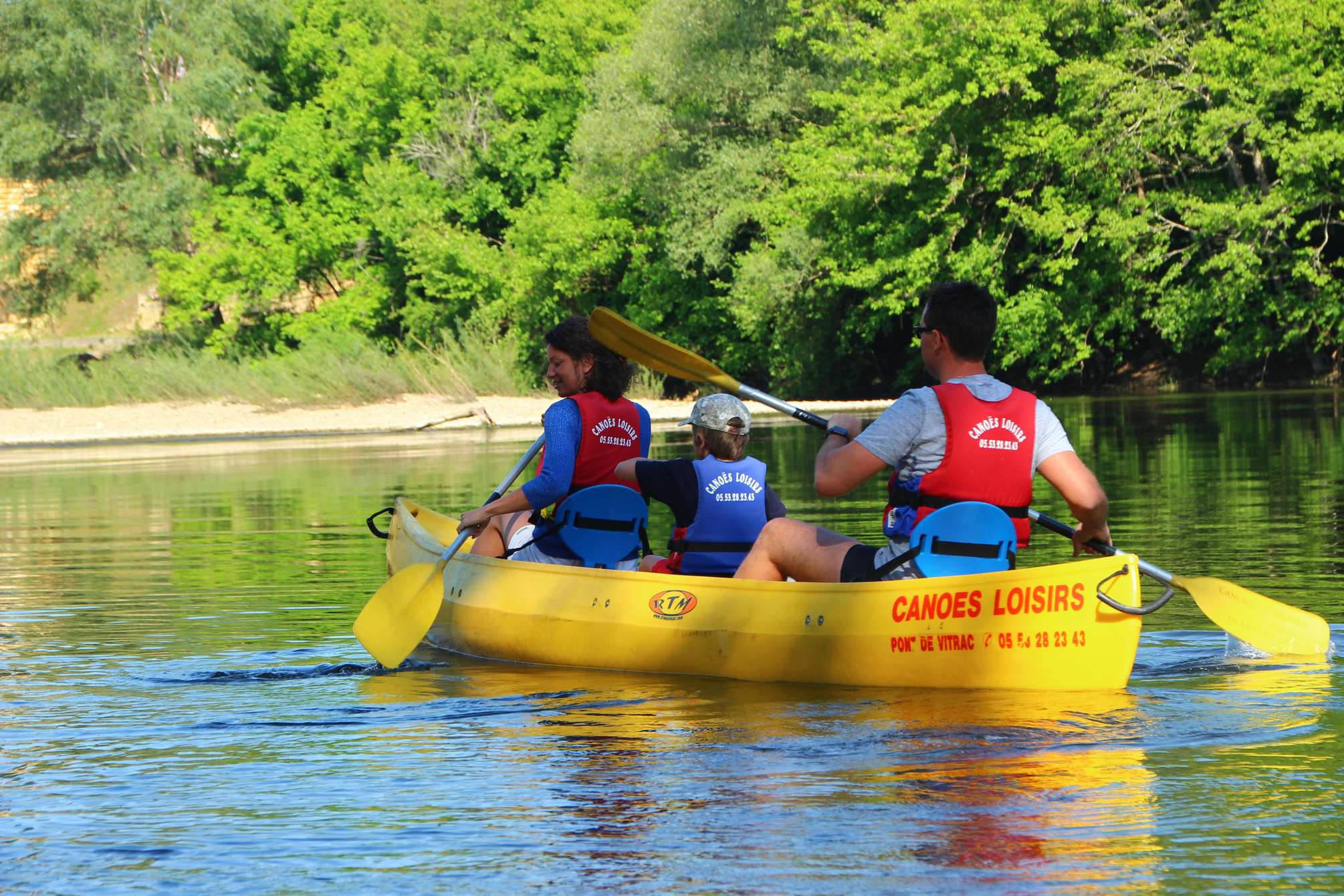
📍 Vitrac, 8 km from Sarlat · CANOE LOISIRS (3 hrs)
Three hours paddling past the villages and castles of La Roque-Gageac, Castelnaud and Beynac, with a swim and a picnic along the way.
- Canoe or kayak and paddle provided, completely self-guided descent
- Starts from Vitrac, not Sarlat, despite the listing's old title
- ⚠️ No guide or supervision on the water: not one for very young children
Free cancellation
From 29 € / person
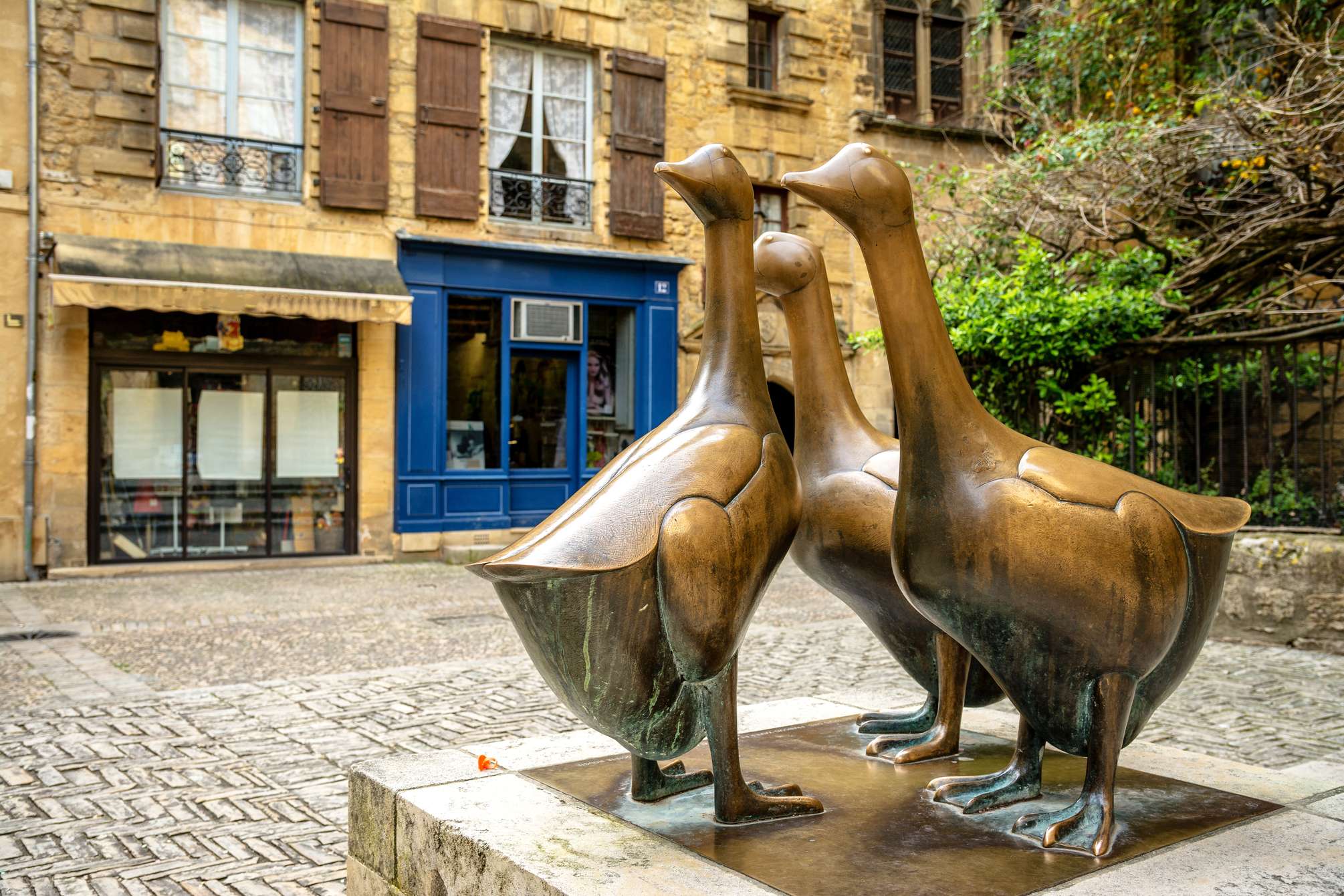
📍 Sarlat-la-Canéda · Ophorus (2 hrs)
Two hours in the medieval lanes on a market day, punctuated by tastings of Périgord specialities.
- Small group of eight participants maximum, guide for the whole tour
- Tastings of local produce and the history of the town in the old centre
- ⚠️ Guided in English only
Free cancellation
From 85 € / person
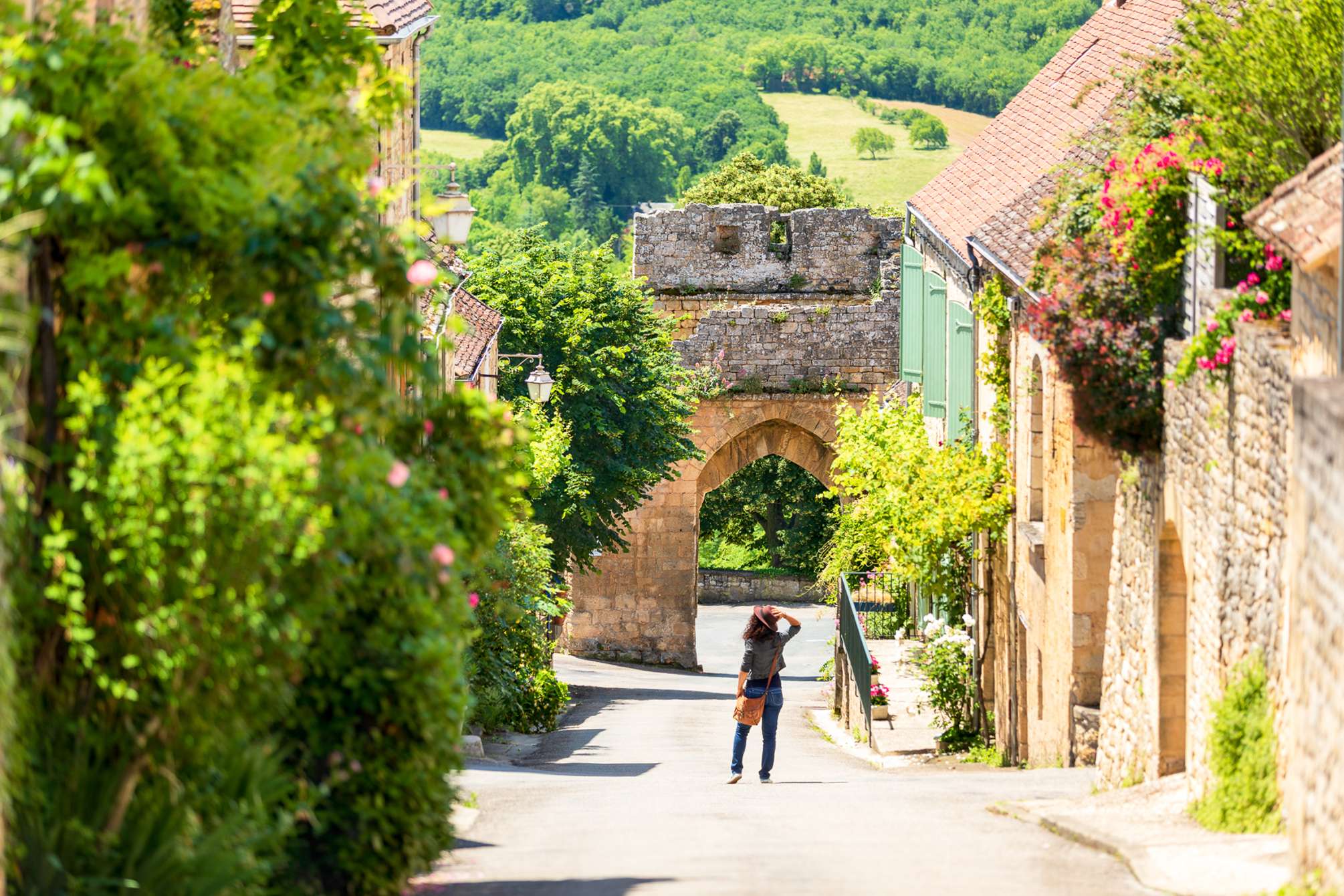
📍 Departs from Sarlat · Ophorus (4 hrs)
Four hours to take in Beynac and Domme on foot, then a ride on a traditional gabarre below La Roque-Gageac.
- Driver-guide and transport included, small group of eight participants
- Both villages explored on foot, the Dordogne by traditional gabarre
- ⚠️ Guided in English only · second Ophorus product in this widget
Free cancellation
From 110 € / person
Local producers
You eat ultra well in the Périgord. It’s very light, of course: foie gras, duck, fried food, rillettes, sarladaise potatoes… but that’s what makes it so good!
And there are loads of quality local producers. You can find them at the Sarlat market, but also at their farms. And then, watch out, it’s paradise!
Off the top of my head, I’d suggest the following producers:
- the Plassard Pompougnac farm, right next to the Grotte de Rouffignac. For me, they’re the best, it’s a marvel, especially their duck rillettes! You can eat on site, which I strongly recommend (plus they’re really nice)
- Domaine Favard, a bit above Sarlat, absolutely to die for, especially their foie gras. Really nice people too!
- Nicole Roche, a great classic but really good! The shop is in La Roque Gageac, otherwise at the markets
- La Fabrique Lagrèze, which you’ll find in Sarlat or 10 minutes away
But there are also these producers (tried and tested!): Albié, Teyssier, Ferme du Vignal… I never came across a producer with bad products, and I tried quite a few! But just check where the ducks/geese come from, that they really are local. I’d steer clear of some big brands like Valette and Vidal. There are much smaller, local producers, make the most of them!


Take a detour into the Lot
Honestly, sticking to the Périgord would be a shame, even though there’s loads to see, as you’ve read further up in this article.
The Lot is full of wonders too. For pretty villages to see, I’d obviously recommend Saint Cirq Lapopie and Rocamadour, the great classics. As for caves, the benchmarks there are the famous Gouffre de Padirac for its formations and the Grotte de Pech Merle for its unique paintings, while I also loved the Grotte de Cougnac!
As you can see in the following article, you really need to discover the Lot too.


Where to stay to visit the Périgord
I’ll admit I chose Sarlat the last two times, for several reasons:
- a really nice little town, so you can stay there and wander around
- it’s close to the most beautiful sites in the Périgord, many of them are in the Périgord Noir, and Périgueux or Bergerac aren’t very far
- the Lot is close by, and it would be a shame not to make the most of it!
Staying in Sarlat is ideal for exploring the area without driving too many kilometres. That said, I’m also going to suggest some nice places to stay close by, like in Domme or in the little villages, we’ll look at all that.
Otherwise, if you’d like to be a touch further north, then Montignac-Lascaux is pretty good too, I found, very close to everything, a pretty and very pleasant village.
In Sarlat, here’s what I recommend.
If you’re looking to stay in charming hotels and gîtes in the town centre
- Naturally, the Maison du Notaire Royal, a superb historic mansion, the place really has loads of charm! 8.8/10 on Booking, and €100 a night
- Ideally located, there’s the Hôtel de la Couleuvrine, a magnificent building with very good facilities. 8.3/10 on Booking, at €110 a night
- A benchmark is the Plaza Madeleine & Spa, right in the town centre. You’ll be very, very comfortable! 9.0/10 on Booking and prices from €190
Renting an apartment is also pretty easy, there are some really lovely ones:
- “La Salamandre”, right in the historic heart, an 80m² apartment for 4 people, ideal for discovering Sarlat and the region! From €150
- The “le Cardinal” apartment, 45m² for 2 people in a typical Sarlat building in the centre. From €120
- Another great apartment, “le Traversin” (I do wonder where they all get their apartment names from), 64m² with 2 bedrooms, in the centre, ideal for a family! Around €105 a night
Finally, if you’re looking for real comfort in a sublime setting, then I recommend the Domaine de Rochebois & Spa, you’ll be pampered!
4 recommended places to stay in the Périgord

📍 Salignac-Eyvigues · hamlet of Barbeyroux
Gîtes and guest rooms in a hamlet of Salignac-Eyvigues, between Sarlat and Rocamadour. Eighty-five euros a night, the lowest rate in the Périgord selection.
- Cleanliness 9.5 and value for money 9.0
- Eighty-five euros a night in the Périgord Noir
- Only 22 reviews: a very thin sample
From 85 € / night

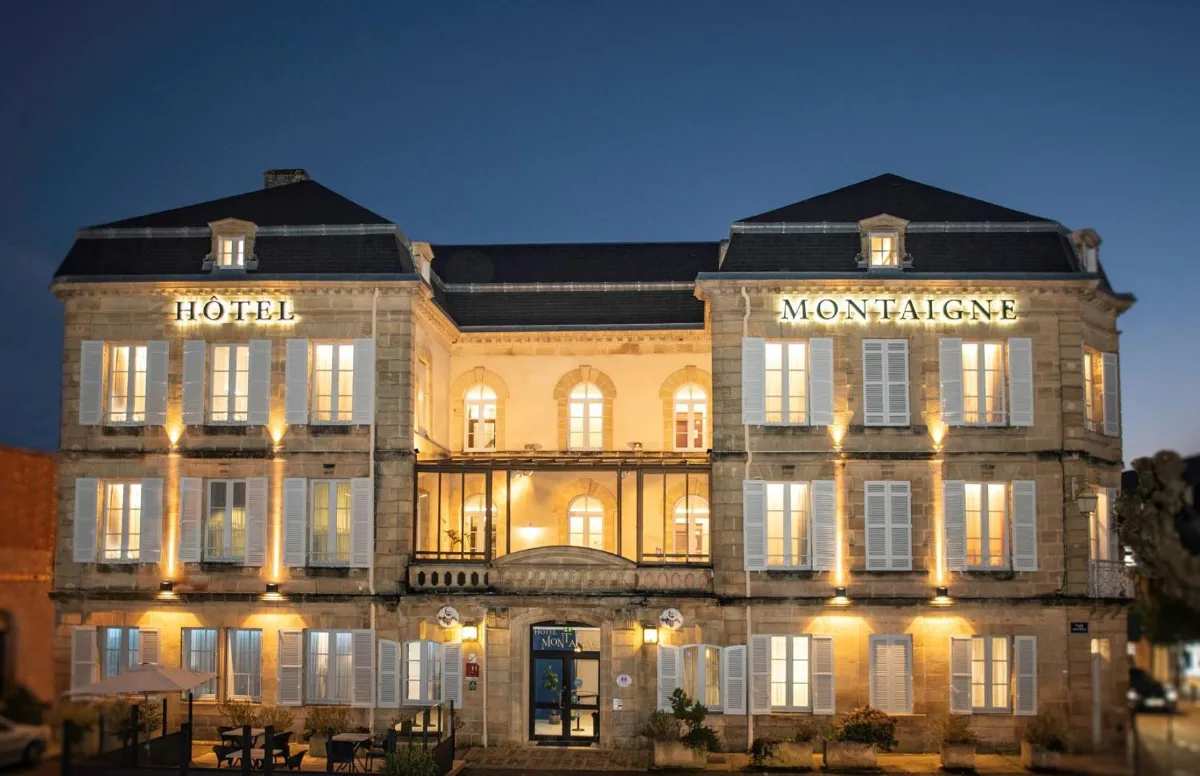
📍 Les Eyzies-de-Tayac · avenue du Cingle
Hotel-restaurant in Les Eyzies, the capital of prehistory, a few minutes from Lascaux and the troglodyte shelters. A renowned restaurant and comfortable rooms in a village on the banks of the Vézère.
- Staff and comfort at 9.5, cleanliness 9.4
- Location 9.5, in the heart of Les Eyzies-de-Tayac
- Value for money 8.4, the lowest of the four
From 145 € / night
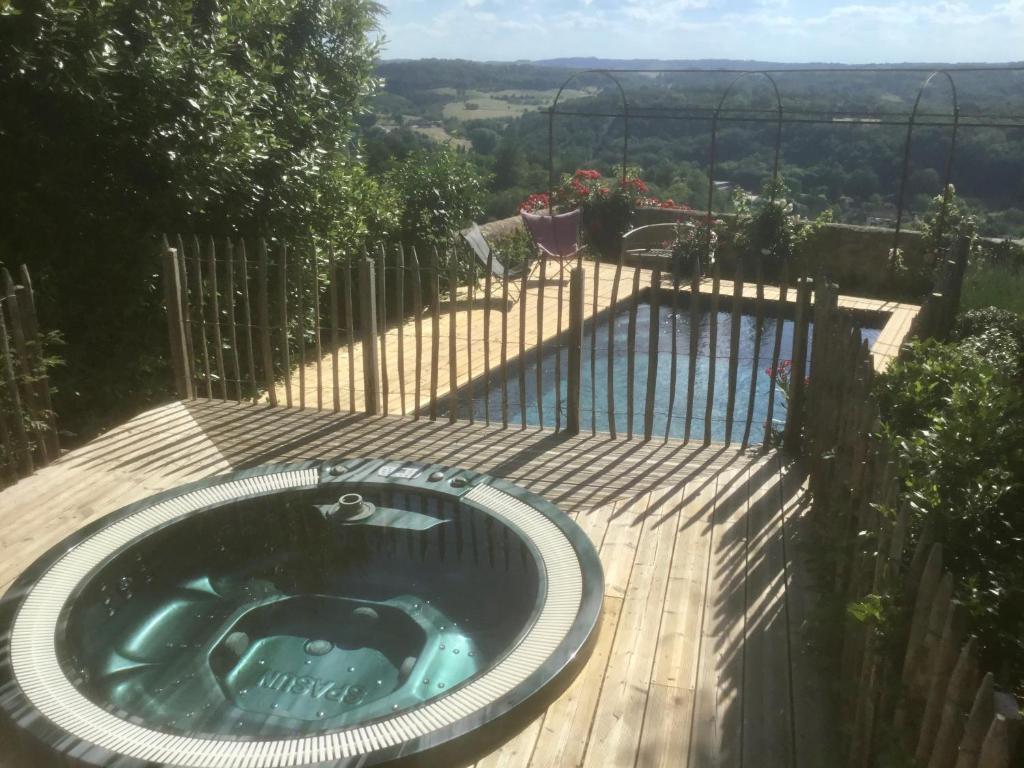
📍 Domme · place Porte Delbos, inside the bastide
Guest rooms inside the bastide of Domme, with an outdoor pool, hot tub and views over the valley. The best rating in the selection, from a hundred and twenty-five reviews.
- Nine point seven from 125 reviews, the best documented
- Pool, hot tub and views over the Dordogne
- Right in the heart of the listed bastide of Domme
From 190 € / night

📍 Beynac-et-Cazenac · chemin de la Balmette
Guest house at the foot of the Château de Beynac, one of the most beautiful villages in France. Nine point seven as well, but from half as many reviews as the Domme listing.
- Nine point seven, level with the Domme listing
- At the foot of the Château de Beynac, on the banks of the Dordogne
- Only 48 reviews: the rating is still fragile
From 190 € / night
Don’t forget that on the Périgord Map, there’s a great accommodation section covering the whoooole region! So if you’d like a nice place around Saint Léon sur Vézère, check the map, I’ve put everything on it 🙂
You can switch off layers so you only see the accommodation.
Anyway, here’s the direct link to the Périgord map!
Practical information about the Dordogne
What’s the best season to visit the Dordogne
There’s a VERY high tourist season, from the start of July to the end of August. It’s really concentrated in that period. The last time I was there was the week of 14 July, it was starting to fill up nicely, and the Sarlat market was packed.
That said, it’s an ideal summer destination because there’s loads to see, and you have the Dordogne for water activities and for cooling off. You need to stay more than a week to really make the most of it. It’s also a very family-friendly destination, with loads of really interesting activities for kids! That’s why people mainly come in summer.
But for me the best times are:
- April: the tourist sites open at the start of April, very few people, a bit of drizzle, it can be chilly in the evening, but it can also be lovely and sunny
- May: a few people around the bank holiday weekends, but nothing compared to summer, it’s sunny and pleasant, not too hot
- June: not many people, but great weather, the best time?
- September: same, there aren’t many people left and the weather is good
- October: it’s getting cooler, but it’s still fine, the sites are open
From November to March, many tourist sites are closed, the weather is much cooler and wetter, and the vast majority of restaurants and hotels are closed too.

Can you get around easily without a car
It depends where you’re staying. If you’re in Sarlat, it’s fairly easy to visit the main tourist sites by bus. If you’re in Saint Cybranet, it’s a lot more complicated straight away (then again, I do wonder how you got to St Cybranet without a car).
First off, here’s the map with ALL the lines of the Dordogne bus network.
You can see that it’s easy to get from Sarlat or Périgueux to Les Eyzies, for example, or to Lascaux. The cute little villages are also reachable, like La Roque Gageac, Castelnaud and Beynac.
For some sites, the region has set up special summer buses. For example, from Sarlat station there’s a bus that goes to the Château des Milandes (line 14) in July and August.
So off the top of my head, yes! It’ll take longer than by car and it’ll need a bit of planning, but the main tourist sites are reachable, and honestly it’s great!
You can also take guided tours from Sarlat, and that’s not bad at all:
Getting to Sarlat or Périgueux by train
It’s absolutely possible, and the Périgord is well served!
Getting to Sarlat by train
- From Paris, the simplest and quickest way is Paris – Bordeaux then Bordeaux – Sarlat. But it’s also the most expensive. On TER regional trains, you can also go via Bergerac or Brive. It takes at least 5 hours.
- From Bordeaux, it’s super simple, it’s direct and takes 2h20
- From Lyon, it doesn’t really make sense because you have to go back through Paris. Because no, there’s no line from Clermont heading west.
Getting to Périgueux by train
- There are two good, equivalent options from Paris:
- Paris – Limoges – Périgueux by TER
- Paris – Bordeaux – Périgueux
- Both take a little under 5 hours, so it’s a bit quicker than Sarlat
- From Bordeaux, it’s direct, 1h30, super simple!
Renting a car in Sarlat or Périgueux
If you’re coming by train, you should know that you can easily rent a car in Sarlat or Périgueux.
In Sarlat there’s Europcar, and in Périgueux even more choice (Europcar, Avis…).
From what I’ve seen, prices start at around €40 per day, and they go down the longer you rent.

How long do you need to discover the Périgord
It depends where you’re coming from, but the Périgord isn’t the easiest region to get to. So coming for less than a week would be a shame, because there’s loads to see.
As a kid, I used to come for a month with my parents, but we did a lot of cycling and kayaking. With the family, it’s a great destination.
That said, I really recommend between 1 and 2 weeks. 1 week lets you discover it, 2 weeks let you enjoy it and take your time, but also pop over to the neighbouring Lot (at least one day for Pech Merle and Saint Cirq Lapopie, and another for Rocamadour and Padirac).
What’s the average budget for this trip
I won’t hide the fact that every time, the biggest part of the budget goes on food, on jars and tins that make the journey back to Paris with us. Every time, we set off with the boot half empty (and let’s just say there still isn’t enough space).
But roughly, for a week in the Périgord for 2, really treating ourselves, I count on:
- €800 for accommodation
- €200 for transport (fuel, tolls)
- 1 restaurant for two every evening: €50 a night, so €350
- 5 visits (castles, caves…) at €12 a ticket: €120
So not far off €1500 coming from Paris by car, for 2 people who eat well.
But in practice, our food budget is big because we love the local food, though you can easily cut it down if you don’t eat out every night. Same goes for accommodation if you book early and don’t stay in central Sarlat.
Is it suitable for kids
Totally! I spent lots of summer holidays in the Périgord as a kid and it was really great, because there are loads of activities suitable for young people:
- you can do loads of cycling
- the castles and the stories of medieval wars
- the plunge into prehistory with the museums and the prehistoric caves
- all the super impressive caves!
- you can go kayaking on the Dordogne
So you see, kids love all that. It’s fun and playful, and there’s no reason yours won’t love it too! Oh, and on top of that, you eat well.
To sum up
And there you have it! No, I haven’t told you everything in this article, because I didn’t want to write a huge wall of text. I wanted to give you the essentials, and above all make you want to come, so you know what you’ll find and what’s waiting for you in this fantastic region.
If I’ve done my job well, this should have convinced you, at least I hope so 😀
But above all, this article is a preamble. I’ve already written several about the Périgord, and I’m going to write plenty more, because it’s a pretty huge source of inspiration 🙂
For example, there are the following articles:
-
- The 15 most beautiful places to visit in the Périgord – it’s hard to choose between all the castles, caves and villages. But I’ve tried to pick out 15!
- The most beautiful villages in the Périgord – same here, I had to make a selection but honestly, 14 is already pretty good, especially as they’re all magnificent!
- The map for visiting the Périgord – an interactive map with the most beautiful places, the essentials, practical information and activities
- The most beautiful places to see in the Lot – right next door is the superb Lot département, go and take a look!