Last updated on
I’ll admit it: Gran Canaria wasn’t the destination I originally had in mind. But a lack of organisation and a broken foot steered the holiday towards a less hiking-focused destination, with the goal of blending landscapes and peace and quiet.
I had my preconceptions about Gran Canaria. I love the Canary Islands, with a huge soft spot for Lanzarote and volcanic La Palma with its incredible caldera. Gran Canaria seemed like the complete opposite. It has to be said that it’s the second most visited island after Tenerife and has a reputation for being heavily built up. So as someone who loves wide-open spaces, I wasn’t quite sure what I’d find, especially since I’d left it all to the last minute.
But anyway! In the end it was a very pleasant surprise. Yes, it’s built up, but you can very easily find yourself completely alone and enjoy the magnificent landscapes of the interior. And really, on Gran Canaria there’s something for everyone, for every mood. So if you’re in two minds, I hope this article can point you in the right direction, help you decide, and yes, help you find your own little slice of happiness on this island!
Right then, let’s go!

What to expect when discovering Gran Canaria
Careful, Gran Canaria is quite special. It’s not the unspoilt island that Lanzarote is, nor the ultra-volcanic island of La Palma or El Hierro. Gran Canaria is probably the most touristy of the Canary Islands.
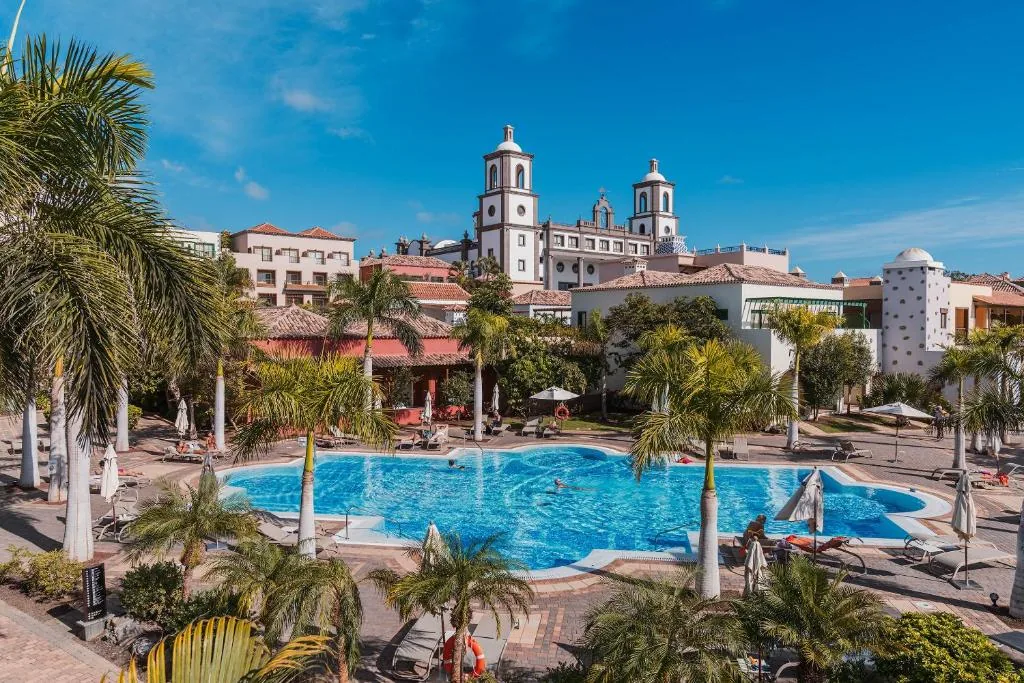
And that’s especially true on the south coast. The south coast has the main beaches, a very (very) dry climate, and is one seaside resort and holiday club after another. It can be surprising. And I admit it surprised me, given that my last memory of the Canaries was the island of Lanzarote 😀
So it’s on this south coast that you’re most likely to base yourself if you’re after sun and relaxation. Between the clubs with pools and full board, or the apartments. Yes, it’s touristy indeed. But it’s where the main activities are.
The east coast is also very built up, as it’s home to the airport, the shopping centres, a few towns and above all the suburbs of Las Palmas. While there are things to do on the south coast despite the development, on the east coast not really.
The north coast is different. Yes, there’s Las Palmas and the other large town of Arucas, but it turns green. Because the climate is more subtropical, more humid, rainier. In particular you’ll find the lovely villages up in the heights (like Teror), a much more rugged coastline and natural pools. The contrast is surprising!
The west coast is very wild. There’s a road as far as Agaete, and then poof, nothing. Well, there is the Agaete Valley, wild, and above all great cliffs, ridiculous roads, little mountain roads that make the slightest spot hard to reach. But it’s the wildest, least built-up area, and honestly really lovely! You need time to take the little roads.
The interior is a real treat. From the south, it’s canyons, dried-up reservoirs, roads clinging to the mountainside and incredible viewpoints. And the closer you get to the centre, the higher the mountains, which reminded me a little of Corsica around the Pico de las Nieves, north of San Bartolomé de Tirajana. It’s genuinely magnificent! And you come across plenty of lovely little villages (and lovely people too!). It makes a huge contrast with the built-up coast, and does you a world of good to reconnect with nature.


Why go on holiday to Gran Canaria
Very good question! OK, I have to admit I asked myself it before choosing this island. Why Gran Canaria? Here the choice was actually pretty simple. Coming off a broken foot, I couldn’t be 100% hiking and activities, so islands like La Palma, El Hierro and Tenerife were out.
Gran Canaria has the great advantage of offering plenty of scope for rest and lazing by the beach, but also exceptional landscapes in the interior, easily reached by car. That’s why the choice fell on this island.
In fact, you can do almost anything on Gran Canaria: several types of accommodation (maybe a touch too many in the south, to be honest, but if it suits people, fine), you can mix up the activities, you can be all alone in the world or on a packed beach. And there are also plenty of options like going to see the dolphins, diving, buggies… in short, it’s impossible to get bored!
As for the weather, Gran Canaria is fairly bipolar, as I explained earlier. The south is very arid, dry, with little vegetation and little rain. The north is greener but rainier. On Gran Canaria you’ll have sunshine almost all the time. And that’s the beauty of the Canary Islands: it’s never too hot, never cold (well, in late May the evenings were a touch chilly). That’s why you can come all year round!

What sets Gran Canaria apart from the other Canary Islands
You never tire of the Canary Islands. And for good reason: they’re all different! Well, they have in common that they’re volcanic islands, but they all have different strengths and weaknesses, and that’s what makes their charm! Depending on what you want to see, what you want to do, what you expect from a holiday, you’ll choose one island over another.
Lanzarote is a very well-preserved island in terms of development. Some areas are more touristy than others but it remains very reasonable. A good part of the island is covered in lava fields with numerous craters. A lovely island for peace and quiet, walks and landscapes, but not so much for beaches (except at Papagayo).
La Palma, the hiking island par excellence, very popular for its superb caldera, its volcano-flank hikes and its lack of light pollution, which make it a perfect spot for photography. Not very touristy.
La Gomera and El Hierro are two small islands without mass tourism or big property developments, ideal for hiking, with beautiful nature. El Hierro is more rugged than La Gomera, hillier. But it’s above all for this nature that you come.
Tenerife, the most popular island, the most visited by far. But that’s because you find some serious draws there, like the Teide volcano at 3,700 m altitude, great hikes around the national park, and superb beaches.
Fuerteventura, also a volcanic island, very arid, with great sand dunes. A little touch of the Sahara! There are great beaches, but less variety in the landscapes.
Gran Canaria, finally, the island of striking contrasts. Between the heavily built-up coast, its beaches, and the very mountainous interior with its fantastic landscapes, there’s something for every taste.


13 places you absolutely must see in Gran Canaria
I don’t claim to know everything about Gran Canaria. OK, I really didn’t have the time either, but in a week I was able to criss-cross the island’s roads quite thoroughly. I’ve tried not to let myself be swayed by other blogs and guidebooks, because this island is so varied that everyone will find something to love.
In the same way, given Gran Canaria’s potential for lazing around, I’m not going to suggest an itinerary, because if you’re here, it’s because you fancy a bit of relaxation and rest.
So I’m going to tell you about the corners I loved on this island, the surprising spots, the places you have to see, my favourites. Let’s go!
See the Agaete valley and discover the only European coffee!
This valley was a real favourite when visiting Gran Canaria. OK, it’s at the very end of the main road, so not exactly next door. I’d even say it’s one of the most beautiful roads on the island, because you’re in a fairly unique place.
The landscapes are incredible, all along the road (which isn’t very long) starting from the pretty village of Agaete up to the El Sao viewpoint. A little zigzagging road along the mountainside, one viewpoint after another, and surprising nature where cactuses mingle with high-mountain trees.
What’s amazing here is that everything grows in this valley. Even coffee! There are a few coffee producers; it’s very under-the-radar. You can visit 3 farms, take a guided tour, taste the coffee and even buy some. Now, I should point out it costs an arm and a leg because of the very small production. But it’s very good indeed!
Here are the producers you can visit:
- Bodega Los Berrazales
- Cafe Platinium
- Finca los Castaños


On your way back, stop by Puerto de las Nieves, a nice little harbour with an incredible view of the cliffs.
And if you have time, keep going on the little GC-200 road to catch the sunset at the Mirador del Balcón. Sadly I didn’t have time to go, but the view looks stunning!


Discover the pretty village of Teror and its famous chorizo!
Teror is a little gem of Gran Canaria’s interior, perched at 600 m altitude. A village full of charm, very typical, with a laid-back atmosphere, and above all highly symbolic for the island’s inhabitants. Teror is a village of colonial architecture with carved wooden balconies (it reminded me of Chachapoyas in Peru, funnily enough) and colourful façades. OK, Teror really can be the genuine picture-postcard village.
The heart of the village is tiny, spread over 2 or 3 streets, and is pedestrianised, calm and full of flowers. Perfect for strolling in the shade of the palm trees and enjoying the terraces.
Teror is known for its basilica of Our Lady of the Pine (Virgen del Pino), patron saint of the island. Worth a visit; it’s interesting without being jaw-dropping. But the exterior on the village square is really very photogenic!
On Sunday mornings it’s market day: fresh produce, goat’s cheese, local pastries, crafts… I couldn’t visit it, but on the other hand there’s a real speciality in Teror: its chorizo! It isn’t a big sausage to slice, but rather a spreadable paste. It’s really good, famous across the whole island, and the butcher who makes it is right there in Teror, so you have to go because it costs next to nothing!
So in the end, Teror is a lovely, authentic visit, without too many tourists, in a green setting. The road there is really pleasant as it winds through lush green mountains.


Immerse yourself in the superb Poema del Mar aquarium
It’s true I could have put this aquarium in the list of activities to do. That would have been the case if it were a normal aquarium. And it isn’t. Before going (at the insistence of my wife who, once again, was right) I knew the aquarium was nice but nothing more.
Well, for one thing it’s really interesting and big, and for another they have fantastic tanks that let you fully immerse yourself in the underwater world. You know those huge curved cinema screens? Well, you end up in that kind of room too, seriously impressive. With the divers feeding the sharks (yes, I asked; no, the sharks don’t eat the divers, normally).
Then a room where you pass under and “inside” the tank, truly surrounded by fish, sharks and rays; it’s magnificent.
Honestly, it’s big! We’d planned 1h30 to visit, which was far from enough; we had to rush the second part, which is the most interesting. So really, try to have 2 hours ahead of you and not waste too much time at the start. Even though the axolotls are super cute (and weird).
That said, it’s not cheap. €29 per adult, €19 per child. But very honestly, it’s worth it, because it’s a place I find magical thanks to its truly huge tanks 🙂


Check out my map of Gran Canaria, and you can click the little star to save it as a favourite on your phone and use it every day!
Visit the historic districts of Las Palmas: Vegueta and Triana
OK, let’s not kid ourselves: Las Palmas, the capital of Gran Canaria, isn’t the prettiest of cities. Let’s just say it was thrown together a bit haphazardly, without any logic, without any consistency in the buildings, styles or colours… in short, it’s not amazing 😀
However, there are two historic districts that are really lovely and that you must visit: Vegueta (nothing to do with Dragon Ball) and Triana.
Vegueta is the oldest district in the city, founded at the end of the 15th century. This is where Las Palmas was born, just after the Castilian conquest of the island. Lovely atmosphere, cobbled streets, houses with wooden balconies, shady little squares… You’d think you were on a historical film set.
What you absolutely must see:
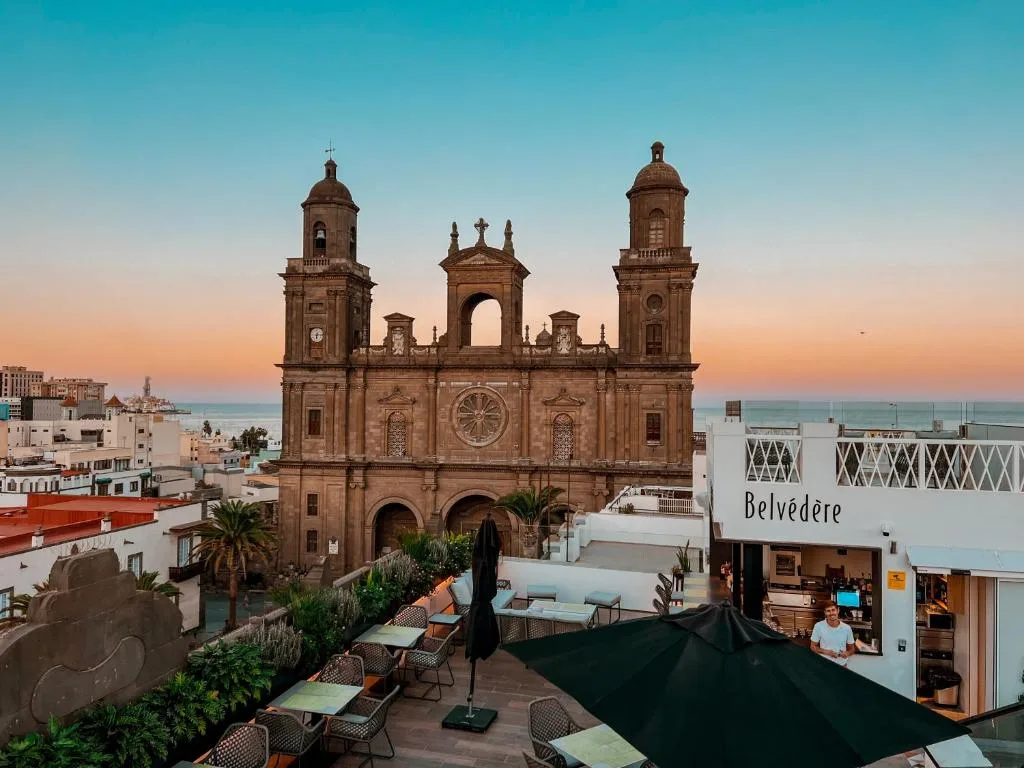
- Santa Ana Cathedral, impressive and very photogenic.
- The Casa de Colón (Christopher Columbus’s house), which tells the story of the navigator’s voyages and the history of the Canaries.
- The Vegueta market, lively and colourful, perfect for tasting tropical fruit or local cheese.
- In the evening: tapas bars, a relaxed vibe. Perfect for a quiet drink on a terrace.
Vegueta is “old-world charm”, a real step back in time. And it’s fairly peaceful, even in the middle of the city. Very concretely, the pleasure of visiting this district lies in getting lost in the alleyways, rather than telling yourself to go to this or that spot.
Right next to Vegueta, Triana is a bit more recent, more bourgeois. It’s the historic shopping district of Las Palmas, with very refined 19th-century architecture.
The main street, Calle Mayor de Triana, is pedestrianised and lined with Art Nouveau and neoclassical buildings. Ideal for shopping or strolling, having a drink, or simply enjoying the architecture.
You’ll also find:
- Bookshops, cinemas and nice little cafés.
- The Pérez Galdós theatre, a very fine cultural building.
- Local boutiques and a few big-name brands, but in a pleasant, un-concreted setting.
Triana is the lively, elegant and practical district. Perfect for the afternoon, between window-shopping, an iced coffee and a cool urban vibe.
If you fancy going to the beach in Las Palmas, then you should head to Playa de las Canteras, the biggest beach on the island, lovely!


📍 Las Palmas · Vegueta (old town, opposite the cathedral)
The 4-star gem set in a historic building opposite the cathedral: a rooftop bar with panoramic views and a 9.8/10 score for its location in the heart of the Vegueta district.
- Landmark hotel in a period building
- Rooftop bar with views over the old town
- Steps from the Vegueta market and the Columbus Museum
Free cancellation
From €80 / night
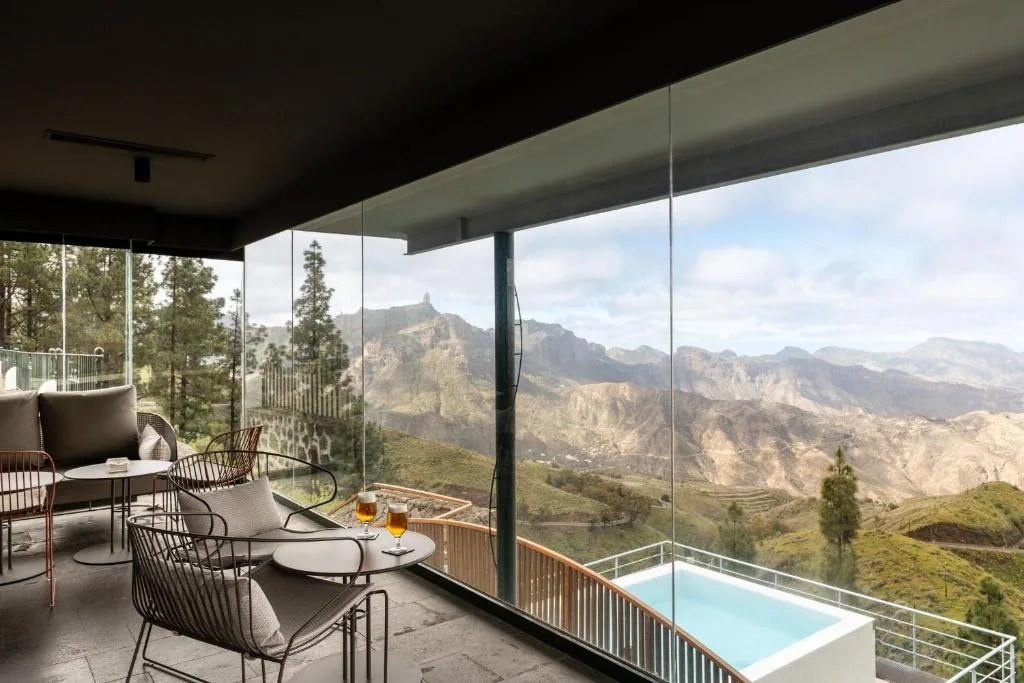
📍 Tejeda · In the heart of Gran Canaria (1,500 m altitude)
One of the finest hotel views in the world: a 180° panorama over the Roque Nublo valley and the Teide of Tenerife in the distance, from the island's central highlands.
- Balcony with breathtaking mountain views
- Large spa (extra charge) and an “incredible” breakfast
- Ideal starting point for hiking to the Roque Nublo
Free cancellation
From €120 / night
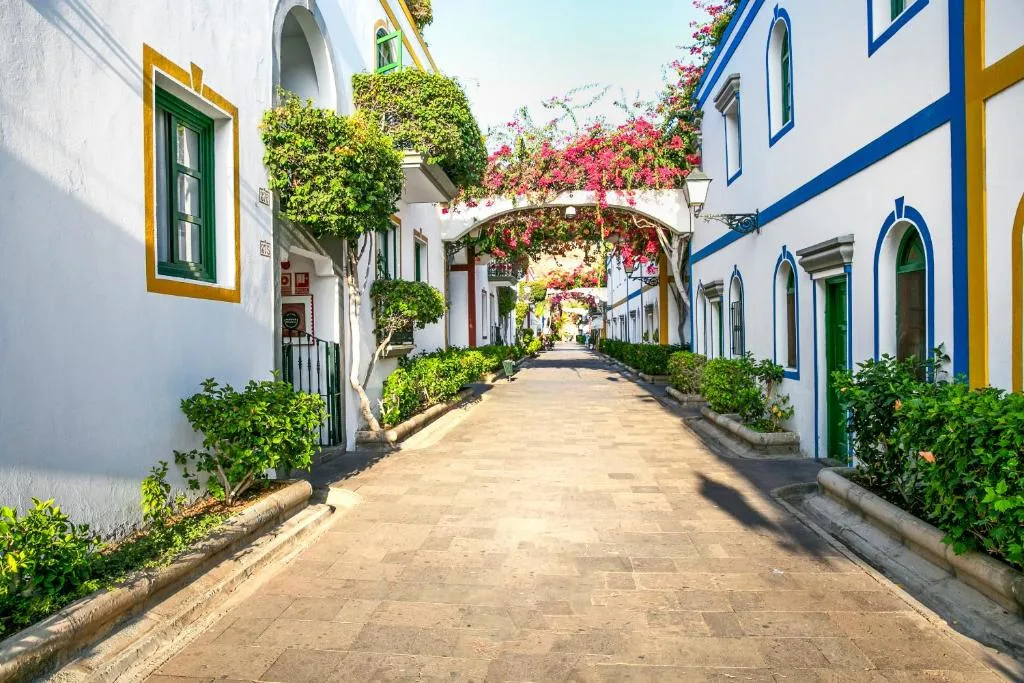
📍 Puerto de Mogán · The “Little Venice of the Canaries”
The apartment option with a kitchen in the prettiest village on Gran Canaria: flower-lined streets, a picturesque marina, a beach 40 m away and a shared pool in the courtyard.
- 45 m² apartments with a fitted kitchen and air conditioning
- Outdoor pool open all year round
- Mogán beach 40 m away, harbour a 2-minute walk
Free cancellation
From €95 / night
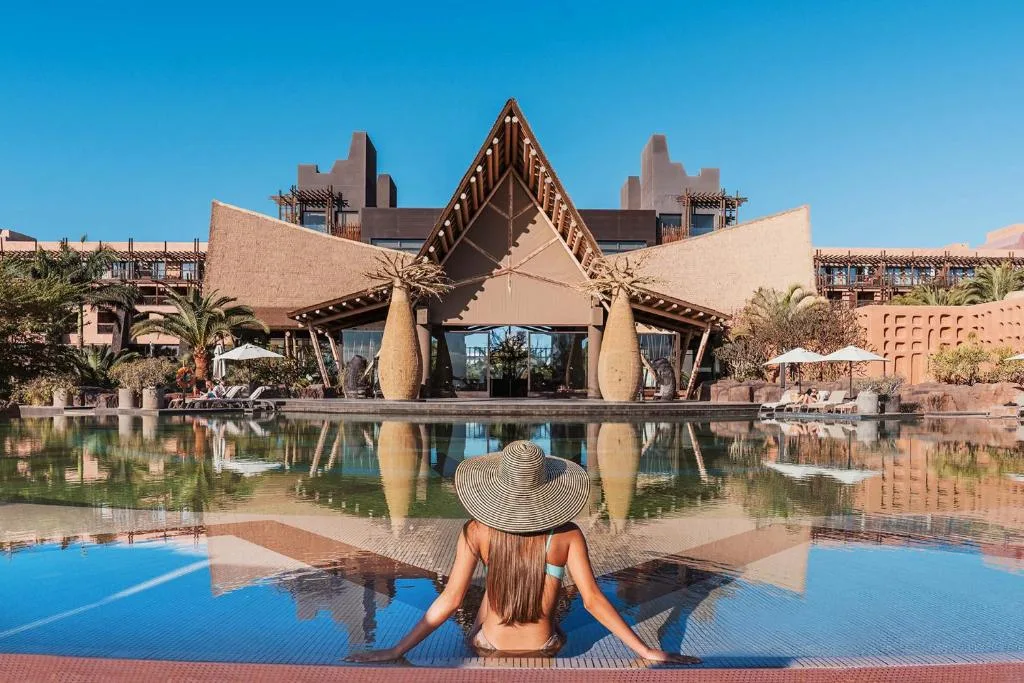
📍 Meloneras · 800 m from the Maspalomas dunes
The African-themed “fairytale” resort for an all-inclusive stay worthy of a safari lounge: 9 heated pools, 4 restaurants, a kids' club and tropical gardens.
- 9 heated pools including a quiet adults-only area
- 4 restaurants (African, grill, buffet, international)
- Kids' club + Maspalomas lighthouse a 10-minute walk away
Free cancellation
From €250 / night
Alternative: Arucas and its historic district
If you’ve already visited Las Palmas or want to discover another town, then there’s Arucas, which is really nice, about fifteen kilometres from Las Palmas. Arucas is known for being livelier, and it’s true that when we were there, there were quite a few people out and about, the locals, and the centre is really pleasant. There’s also a black cathedral, truly surprising, that stands out among all these white houses!


Watch a sunset at the Degollada de las Yeguas viewpoint
Probably the finest view on the island. This viewpoint made me let out a proper “whoa” when we arrived. And if you know me, I don’t say “whoa” easily; my bar is very high, so it means it’s genuinely impressive.
And for good reason: this viewpoint faces a huge canyon with mountains as a backdrop. You feel like you’re in one of the great American parks! Honestly, you can spend a good while there.
I’d say the best time of day to go is either the morning, because the light is behind you so it lights up the canyon nicely, or late in the day when the light is softer and you’re getting closer to sunset.
Speaking of which, I tried the sunset there and never managed it 😀 generally because of clouds that stopped the colour from being nice. But very honestly, if conditions are good, having an orange/pink sky there must be pretty exceptional!
But even if you pass through during the day, it’s absolutely worth it. When I say the view is incredible, I’m not joking!


Discover the incredible GC-65 road
Very honestly, I got an enormous amount of pleasure driving on this road, which runs from Maspalomas to the centre of the island. As soon as you take it, the landscape changes; you see the canyons starting to take shape and the mountains forming. It’s a ridiculous zigzagging road along the mountainside (my wife wasn’t a fan) that gives you loads of superb viewpoints like El Guriete.
Just after, you see the rock formations of La Fortaleza, a natural fortress in which the last local warriors hid while fighting the Spanish colonists. A fine archaeological formation, interesting and in a magnificent setting, between ravines and palm groves.
You can stop at Santa Lucía de Tirajana in particular to see its viewpoint, and then at San Bartolomé de Tirajana.
After that, you’ll cross a high pass and move into even more beautiful landscapes! Truly gorgeous mountains!


Head to the finest viewpoints of the interior like Roque Nublo and Pico de las Nieves
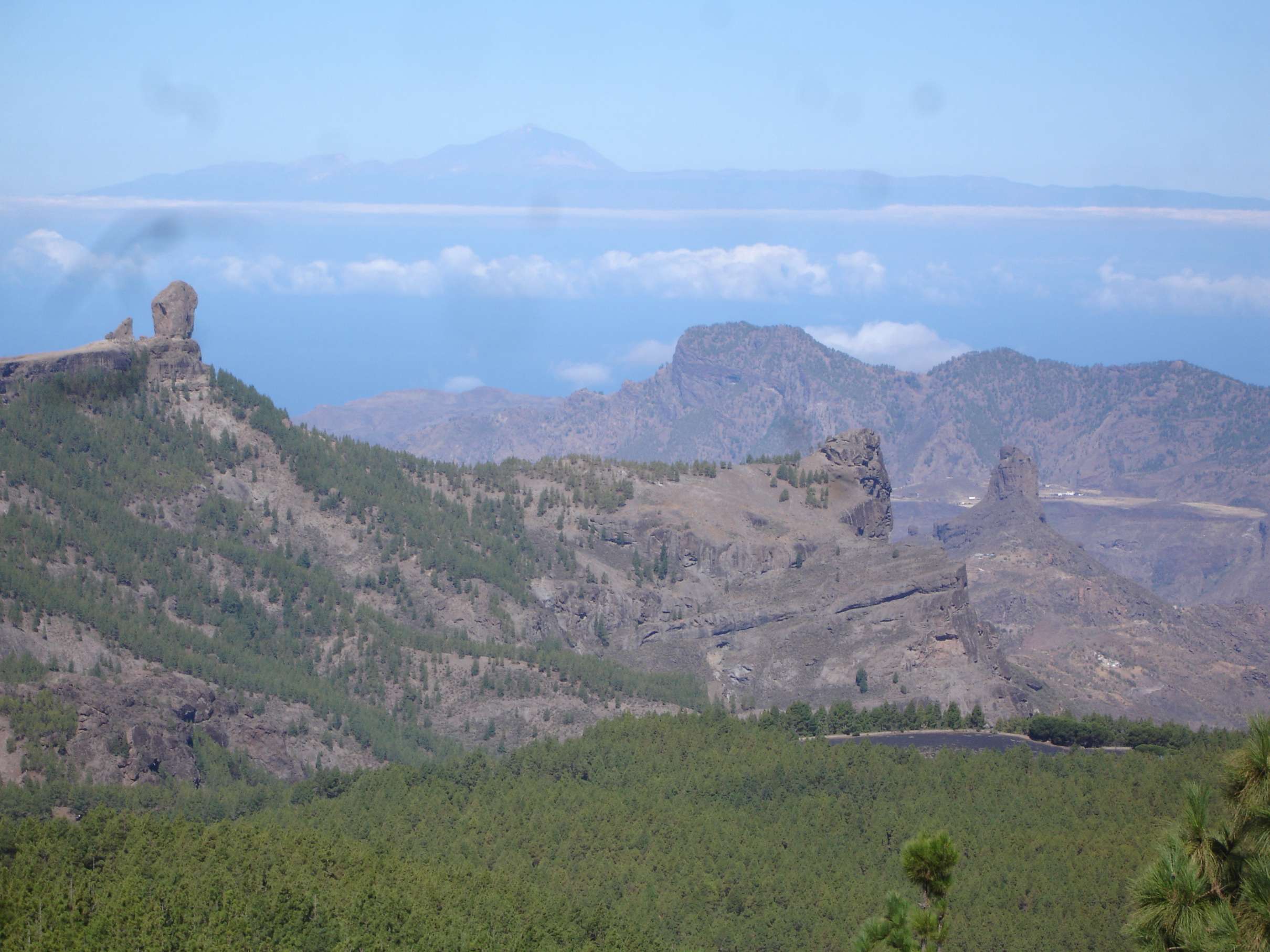
And indeed, after San Bartolomé de Tirajana, you reach the heart of Gran Canaria, the most impressive area, which is what reminds me of Corsica in some ways, among the most beautiful mountains on the island.
You’ll get access to the mountains of the Pico de las Nieves (which I couldn’t discover because of the clouds and rain), to the famous Roque Nublo, quirky rock formations reachable via a short 20/30-minute hike, but you also have a nice viewpoint reachable in about an hour’s round-trip walk: Ventana del Nublo, which gives an incredible view of the Roque Nublo. You’re above the sea of clouds!
All these viewpoints and spots are fairly close to one another; they generally require a bit of walking (great with a broken foot, so I have to come back, oh shucks). That’s why it takes time. First the time to get to the centre (from the north or south, they’re little roads), then to walk. But very honestly, being here in this setting does you a world of good compared with the bustle of the island’s south coast 😀
And by the way, do stop in the little villages to freshen up or grab a bite; it’s good and cheap.
Oh! Did I not tell you the interior is a UNESCO World Heritage site?


Enjoy the quiet, charming little villages
As soon as you move away from the coast, you find the “real” Gran Canaria. Namely the authenticity of the villages, the super-friendly locals, the little traditional restaurants. And honestly these villages are worth visiting.
I’ve already told you about Teror, which falls into this category even though it’s fairly touristy. But I also recommend passing through Agüimes, its colourful houses and surprising architecture. Get lost in its alleyways! And do go and eat tapas at the little restaurant on the main square. It costs next to nothing. You can also see Agüimes from the road towards Ingenio, very pretty!
On the road to the interior, you obviously have the viewpoint villages of Tejeda, San Bartolomé de Tirajana and Fataga. White villages with really pretty alleyways, but what makes the charm of these villages above all is the exceptional landscapes that surround them. On your journey through the interior, these spots are ideal for coffee breaks in a magnificent setting, with the various balconies. A bit further north you also have Artenara in the same style: a lovely white village surrounded by stunning landscapes.


Enjoy the southern beaches
OK, I’ll admit I’m not a big fan of beaches, especially the large resort beaches. And that’s rather the case here. On the south coast, these aren’t little secluded coves, but rather large beaches surrounded by holiday clubs and hotels.
That said, the beaches are beautiful, especially the most famous one, Playa de Amadores, at Puerto Rico. Lovely sand and above all mag-ni-fi-cent water. Plenty of little restaurants and kiosks to eat at; if I had to choose just one, this would be it. Meanwhile, a bit further along there’s Playa Anfi del Mar, smaller but pretty.
At Maspalomas there’s the best-known beach: Playa del Inglés, huge, with plenty of room, but also lined with buildings. Yet there’s really space for everyone. It’s a less sheltered beach than Playa de Amadores, with more waves. At its far end are the famous Maspalomas dunes, a nature reserve made up of… dunes, immense sand dunes. It’s quite nice to see, surprising! There’s even a birdwatching area to spot birds. Now, I’ll admit I didn’t go there.


The beach alternative: natural pools
If you’re ever not keen on these beaches, then there’s a nice alternative further north: the natural pools. Since we’re on a volcanic island, there are some serious rock formations, some of which act as pools. For example at Agaete, you have the natural pools of Las Salinas, considered the finest on the island.
At Las Palmas, it’s less natural because man-made, but super handy and popular with the locals: Las Piscinas de La Laja. There’s a huge one at Arucas, also more or less natural, but always nicely laid out and with seawater.
Spend a day at Puerto de Mogán and then the Mirador de Veneguera
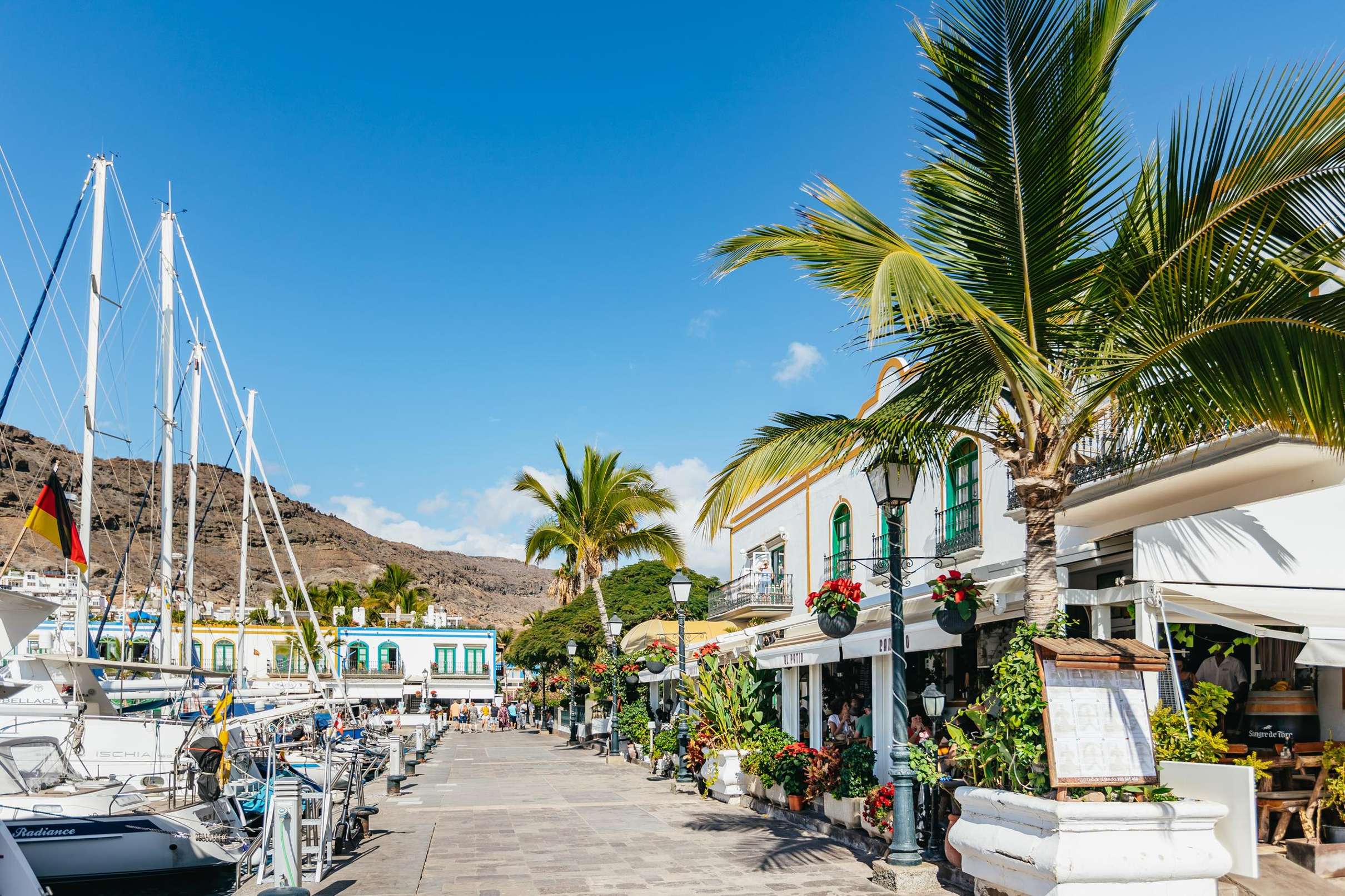
Puerto de Mogán is a really nice little village at the end of the main road on the west of the island. It’s nicknamed “the little Venice of Gran Canaria” because there are 2 or 3 canals and little bridges, but very honestly that’s just marketing. And it’s a shame, because the village is worth far more than these gimmicky nicknames.
The village is made up of little white and colourful houses; the streets are full of flowers, especially bougainvillea, which gives the whole place a lot of charm and makes it a real pleasure to stroll around. It’s genuinely a very pleasant little harbour!
It’s a living village, with numerous seafront restaurants. The octopus is very good! So it’s well worth going in the late morning, visiting, going to the viewpoint, then having lunch there, and once you’ve done the rounds, I’d recommend heading to the Mirador de Veneguera a bit further north for your fix of landscapes.
As for a nice activity in Puerto de Mogán, you have the chance to go on a submarine to explore the surrounding seabed! It’s fun; there’s a little submersible you can board, and the experience looks great (of course we left the booking too late). Now, on the other hand it’s fairly pricey, €38 a head, but the reviews are excellent!
Otherwise, still in Puerto de Mogán, you can do a kayak trip or a boat trip with snorkelling.


Can you visit the finest spots on the island without a car
Absolutely! Although, for comfort’s sake, I’d recommend renting a car on Gran Canaria, you can discover the main spots without too much trouble. It just takes a touch more organisation.
There’s a bus network that works well from the main seaside resorts and towns on the island. I’ll tell you about it in detail below, but it’s entirely possible to get to the main tourist spots. In the meantime, here’s the Gran Canaria bus network: GuaguasGlobal
But what you can also do is go with agencies to discover the island! If you don’t have a car (which is perfectly reasonable if you’re not out exploring every day), there’s this option. Here’s what’s on offer:
- Volcano tour: notably visiting the Bandama caldera, Roque Nublo and Pico de las Nieves. They pick you up almost anywhere on the island!
- Guided tour of the viewpoints and canyons: the superb road! You head to the El Guriete viewpoint, then visit La Fortaleza where the locals hid to fight the colonists, before going to the Barranco de las Vacas and finally taking a dip at the beach.
- Discover the main villages of Gran Canaria: Teror, Tejeda, Arucas, from the southern seaside resorts.
- Guided tour of the island’s main spots: Roque Nublo and the Cruz de Tejeda viewpoint, the towns of Arucas, Telde and Firgas.
- Jeep discovery of the main sites in the south of the island, the main viewpoints, some slightly hidden lookouts; it’s an interesting outing!

📍 South of the island · Discovery Jeep Safari (5 h)
An off-road jeep day between Salobre, the thousand-palm valley of Fataga and the viewpoints over the Roque Nublo.
- English-speaking guide available
- Hotel pickup (south & north)
- Lunch and coffee break in Tirajana included
Free cancellation
From €69 / person
📍 From Las Palmas · Trip Gran Canaria (7h30)
A loop from Las Palmas via the Guayadeque ravine, the cave dwellings, the Maspalomas dunes and Puerto de Mogán.
- Pickup in Las Palmas
- English / Spanish guide (no French)
- Optional boat trip in Puerto Rico (+€7.50)
Free cancellation
From €48 / person

📍 Heart of the island · Climbo (7-10 h)
A hike to the Roque Nublo, a fusion tasting at Cruz de Tejeda and sunset at the summit of Pico de las Nieves.
- Small group (20 people max)
- 3.5 km hike to the Roque Nublo
- Local tasting + honey rum at the summit
Free cancellation
From €112.50 / person

📍 North of the island · Climbo (7-10 h)
An easy hike in the laurel forest of Doramas, a tasting at an eco farm and a swim in the natural pools of El Puertillo.
- Small group (20 people max)
- Easy to moderate hike (~3 km)
- Volcanic natural pools of El Puertillo
Free cancellation
From €103.50 / person
The different activities to do in Gran Canaria
Beyond visiting the superb landscapes, lazing on the beach and discovering the villages, there are several interesting activities on Gran Canaria. Well, you’ve got water sports, sporting activities but also quite a few parks for the children. There’s genuinely something for every taste!
- At Puerto de Mogán, take a submarine trip to discover the seabed. A little submersible for a unique experience.
- Still in Puerto de Mogán you can also take a boat trip to discover the coast and go kayaking
- Go and see the superb Poema del Mar aquarium, one of the finest in Europe, with magnificent tanks in which you can see sharks, rays and large fish by the hundred. You won’t regret it!
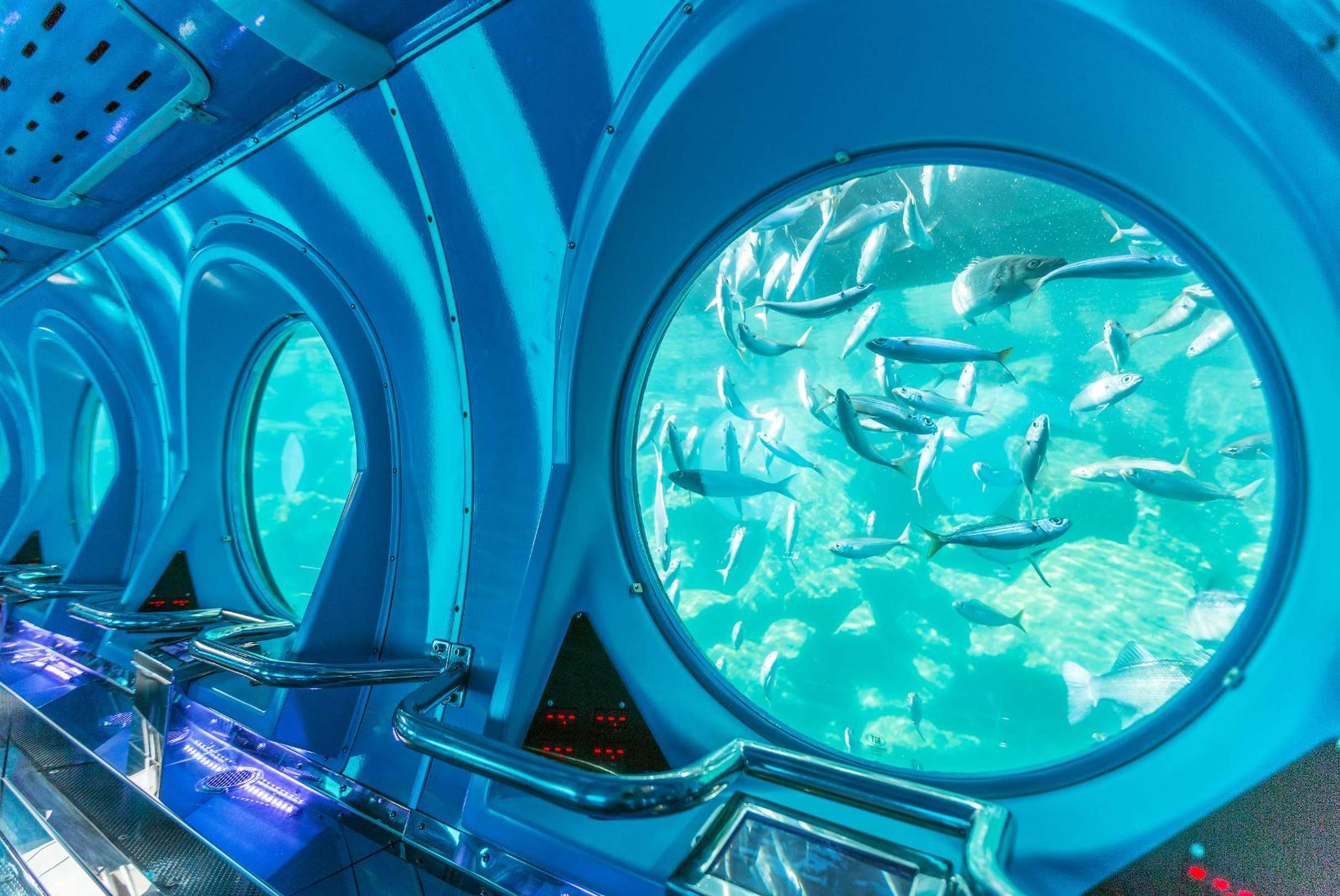
📍 Puerto de Mogán · 40 min · Atlántida Submarine · submarine
40 minutes aboard the Golden Shark submarine to explore the seabed of Puerto de Mogán down to 25 m deep. Shipwrecks, marine life and an audio guide included.
- Golden Shark submarine · 40 min · down to 25 m
- Shipwrecks + marine life through large windows
- Audio guide available in 9 languages
Free cancellation
From €38 / person
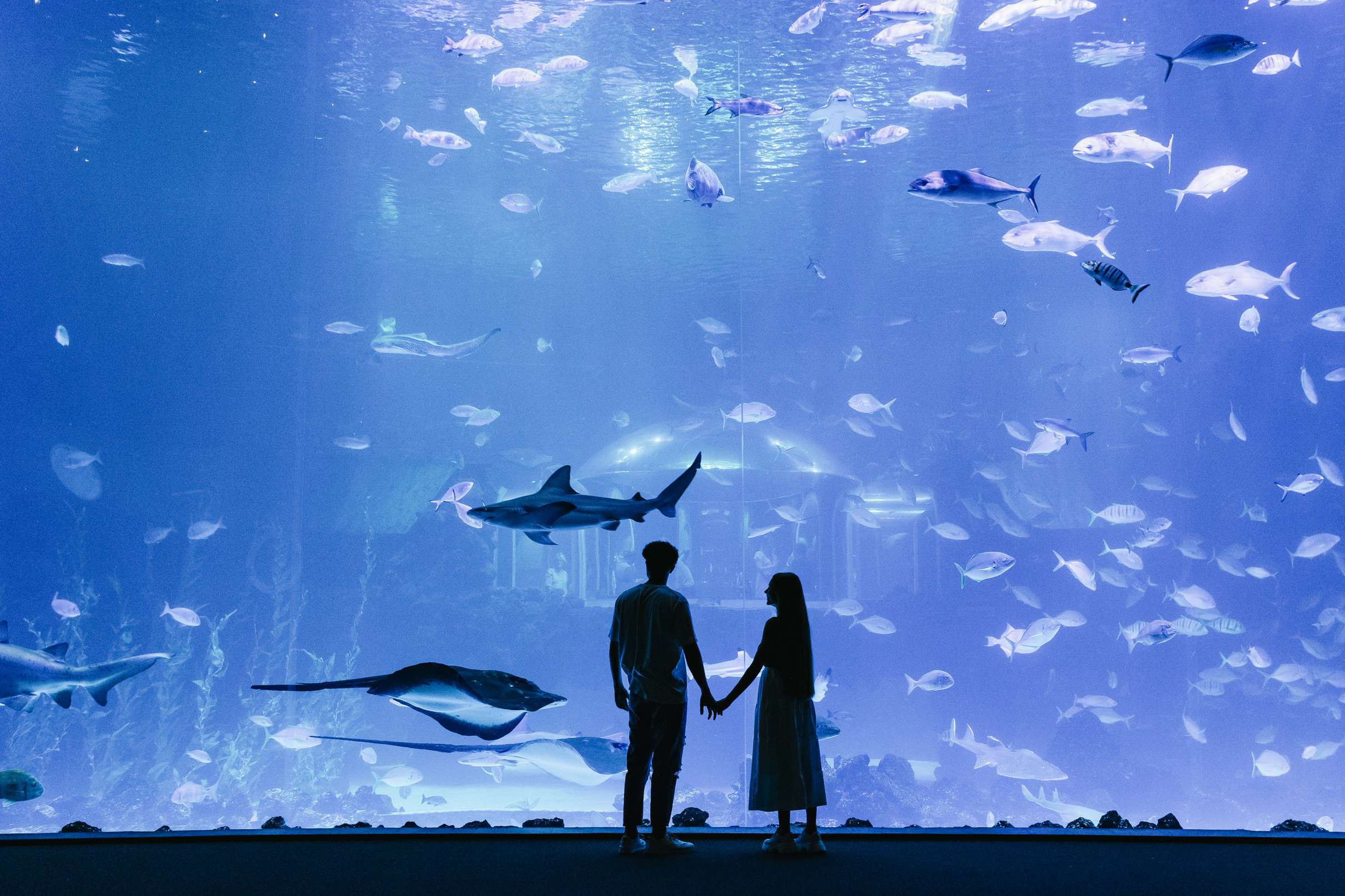
📍 Las Palmas · 1 day · Poema del Mar · skip-the-line
Skip-the-line ticket for Poema del Mar in Las Palmas: 35 ecosystems, 3,000 specimens from 40 species, the largest curved window in the world and the fascinating Deep Sea tunnel. Wheelchair accessible.
- 35 ecosystems · 3,000 specimens from 40 species
- Largest curved window in the world + Deep Sea
- Skip-the-line · wheelchair accessible · Las Palmas
Free cancellation
From €29 / person
Among the water activities, you also have several from Puerto Rico:
- you can take a lovely full-day catamaran excursion
- you can also go dolphin watching in a small boat!
- There’s also a lovely chance to try an introduction to scuba diving
- You also have the chance to get your fix of thrills on a jet ski!
- Finally, if you’d like to discover the island, you can take a big trip on a small boat, with swimming and drinks
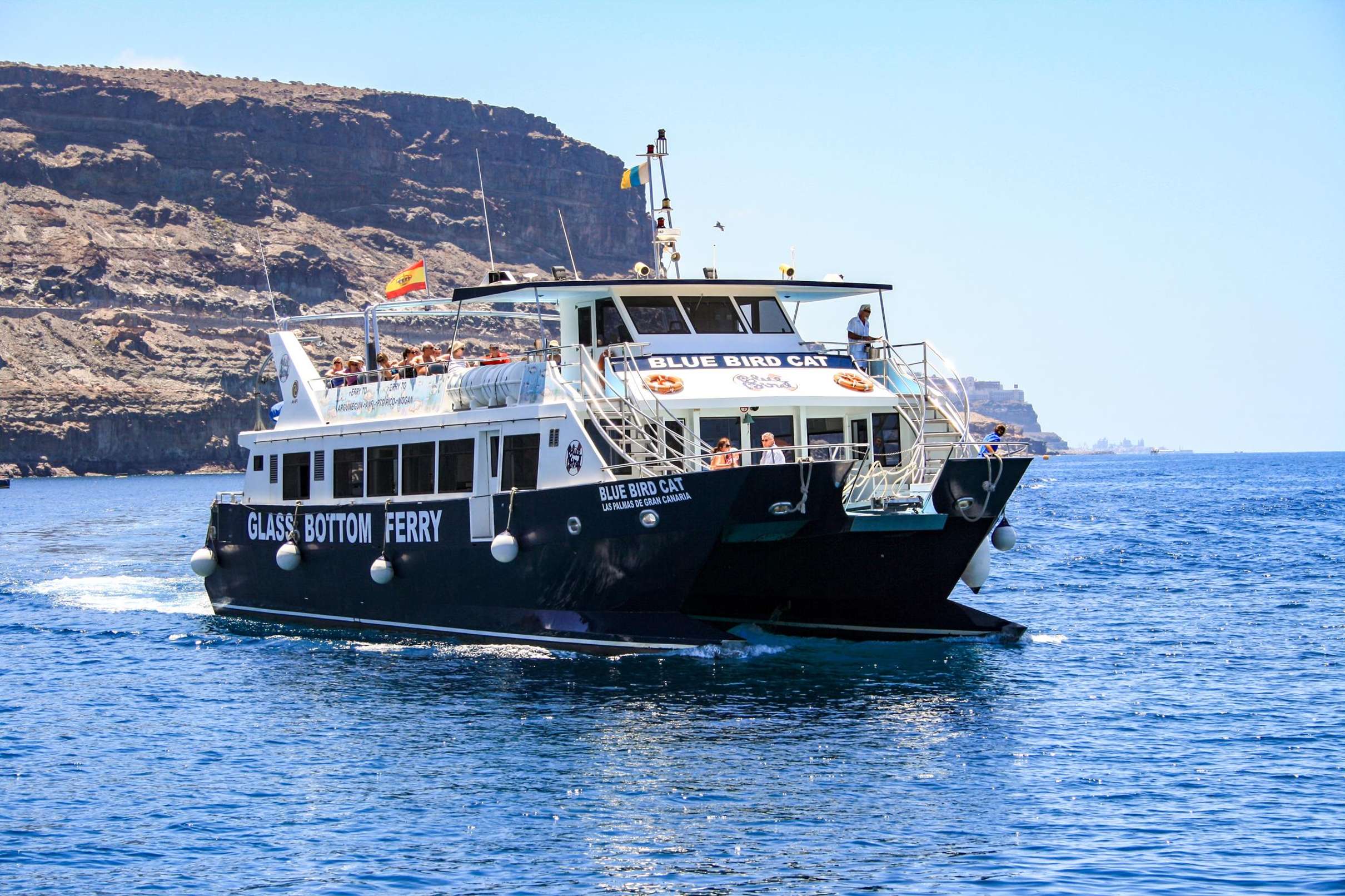
📍 Puerto Rico · 3h30 · LINEAS BLUE BIRD · catamaran
3h30 by catamaran from Puerto Rico to watch dolphins, pilot whales and minke whales, with a snorkelling stop in a crystal-clear bay and a slide on board.
- Watch dolphins, pilot whales & minke whales
- Snorkelling stop + slide on board
- Free soft drinks · pickup available
Free cancellation
From €38 / person
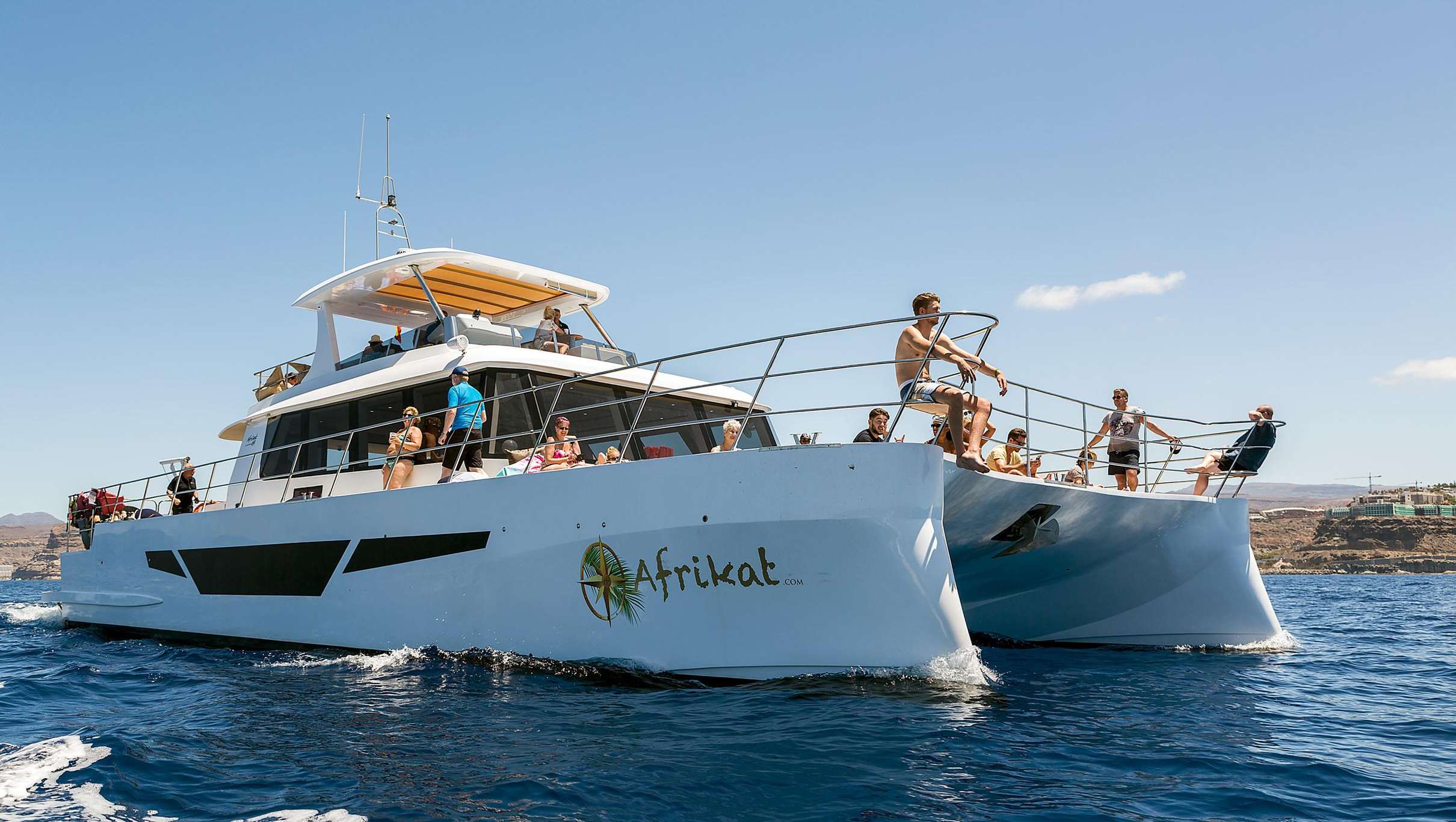
📍 Puerto Rico · 4h30 · Afrikat Gran Canaria · catamaran
4h30 on a luxury catamaran from Puerto Rico with snorkelling, a speedboat ride, a meal prepared on board (wrap + pasta salad) and unlimited drinks (beer, sangria, soft drinks). Pickup included.
- Luxury catamaran · south-west coast of Gran Canaria
- Meal prepared on board + unlimited drinks
- Snorkelling & speedboat ride included · pickup
Free cancellation
From €77 / person
If you ever want to go out and have fun, with or without the children, there’s a good number of theme parks of varying interest (but for every taste):
- Angry Birds Activity Park: an Angry Birds theme park entirely for children
- Sioux City Park: the original Wild West theme park! For young and old alike
- Palmitos Park: an aquatic, zoological and botanical park with plenty of species to discover
- Cocodrilo Park: near Agüimes, home to the largest number of crocodiles in Europe
Where to stay in Gran Canaria
Blimey, not an easy question! I’m going to write a dedicated article because there are lots and lots of options in every little town and also in the mountains.
But everyone comes to Gran Canaria with their own intentions. There are great all-inclusive clubs, seafront residences, lovely houses to rent in the mountains, and apartments in the historic district of Las Palmas. So really, there’s something for every taste; here’s a little selection.
If you’d like to be all-inclusive, there are plenty of fine options. There are also a few traps, so I recommend these 3, bearing in mind that full board really doesn’t seem expensive on Gran Canaria; I’m finding cases at €160 a day for two, which is fine!
- Sunprime Atlantic View Suite & Spa, a superb setting at Playa del Inglés, from €160 per night all-inclusive
- Occidental Roca Negra, in Agaete, so ideally placed for getting lost in the wild nature!
- Hotel Riu Gran Canaria, in Maspalomas, a genuinely top hotel with all the facilities that go with it
- If you’d like a lovely hotel in the Maspalomas dunes, then I recommend the Seaside Palm Beach. Not cheap but top!
The trouble with all-inclusive is that you don’t tend to go out much. So if you’d like a lovely hotel with breakfast so you can be flexible during the day and head off on an adventure, I recommend these:
- In Puerto de Mogán, I of course recommend the Radisson Blu, top facilities and ideally located
- By Playa del Cura, you have a good, inexpensive residence, the Riviera Vista from €85 a night
- If you’d like to be beside the prettiest beach on the island, Playa de Amadores, there you have the Gloria Palace Royal Hotel & Spa, a safe bet.
To be in the little mountain villages so you can make the most of the grandiose landscapes of the interior, here are a few lovely suggestions:
- El Rincón del Nublo, in Tejeda, a pretty house in nature but above all an incredible view of the mountains!
- Casa Azul Mountain Retreat, in Vega de San Mateo, a lovely apartment far from everything, in the mountains and cheap!
- Parador de Cruz de Tejeda, in the nature of Tejeda, a hotel tucked away far from everything with an incredible view
Finally, if you’d like to stay in the capital, Las Palmas (which has the advantage of being close to everything and having its own beach), there are a few good options, but favour the historic districts, otherwise it’s not especially pretty:
- Boutique Hotel Cordial Malteses, a magnificent hotel located in Vegueta. It has the great advantage of being in a historic building and not being especially expensive!
- Hotel Cordial Plaza Mayor de Santa Ana, another superb hotel right in the centre, this one facing straight onto the cathedral. For the terrace alone, it’s top
- Bull Reina Isabel & SPA, this is a really lovely hotel for being right by Las Canteras beach, so needless to say you’re doing pretty well!
After that, if you still haven’t found your inspiration, in the following article I give you far more guidance on knowing which town to stay in in Gran Canaria. With comparisons, photos, and all the prices!
Practical information about Gran Canaria
How to get to Gran Canaria
This is simple. Several airlines operate the route to Gran Canaria.
From mainland Europe:
- Transavia runs daily flights from Paris to Gran Canaria. Fast, efficient; I quite like Transavia! On the other hand, it’s not cheap. Well, you can find return flights from €115 (excluding deals) and above all without luggage. With a small bag you should reckon on more like €190
- Vueling also operates numerous flights. Price-wise, you’re looking at around €150 return without luggage, and around €280 with checked baggage.
From other cities: many low-cost carriers (easyJet, Ryanair, Jet2, Norwegian, TUI…) serve Gran Canaria with direct flights from across Europe, including the UK, Germany and the Nordic countries. Depending on where you’re flying from, you may have a direct flight or a connection.
But above all, compare! The price-forecasting tool from Booking is super handy for finding cheap flights.

How long to stay in Gran Canaria
It’s not easy to say. Very honestly, coming for a week, I thought we’d quickly do the rounds and that I’d find the time dragging. Well, no!
A week is very good! because:
- you have time to laze in the sun
- there are grandiose landscapes in the interior
- you see plenty of lovely villages worth visiting
- and the accommodation isn’t especially expensive
More than a week can be a touch long, and I think you’d need to switch islands to vary things a bit. Even though a day or two extra wouldn’t have gone amiss for finishing my visits.
4 days seems the minimum; that lets you spend 2 days visiting the interior and the mountains, and 2 days going to Agaete and seeing the districts of Las Palmas.

Is it a touristy destination
Oh yes! It’s the 2nd most visited of the Canary Islands, after Tenerife, a little ahead of Lanzarote and Fuerteventura. So yes indeed, there are crowds.
But you’ll find crowds mainly on the coast, in the south in the seaside resorts. Lots of Germans and Nordic visitors. It’s written in German almost everywhere, and there’s even a new town with a German name, “Sonnenland”, meaning “land of the sun”, no less.
Let’s just say, spending part of the year in Norway, and every winter, I understand that Nordic folk fancy coming to Gran Canaria to stock up on vitamin C 😀
In the interior, in the mountains, there are far, far fewer people. Not many at the main viewpoints (although I suspect that for the sunset at Degollada de las Yeguas, in peak season, it must be packed), a few hikers (Germans, of course), but very honestly most people stay by the sea the majority of the time.
So if you want to be alone, head to the interior, and better still, onto the tiny roads of the west!

To make it easier to organise your trip (and mine too!), I’ve created a map of Gran Canaria with all the necessary info (landscapes, viewpoints, accommodation…). Below, you can explore it, and you can open the menu on the left to display all the different layers
When to come, what’s the best season (crowds, climate…)
This one’s fairly easy: thanks to its climate, you can come to Gran Canaria absolutely all year round! The weather is good all the time, it’s relatively warm in winter (chilly at night).
First you should know that the high tourist season runs from October to April, that is, when the weather starts to turn miserable in continental Europe. Gran Canaria is a refuge, you might say 😀
In winter:
- a touch rainy but nothing nasty
- the temperatures are good
- not much cloud in the south
- quite a few tourists
In summer:
- it’s the cheapest period, surprisingly! Hotels drop their prices nicely, and so do the cars
- it’s hot; on the south coast you top 30°, and it never rains
- the north is a touch more humid
The low season:
- May, June and September are the least touristy months, the least busy, whereas they’re the best in terms of weather, hot but not too hot, with little rain.
- these are the months without school holidays, which may explain something; I was there in late May and honestly it was great in terms of crowds

Renting a car in Gran Canaria
- here I give you the essential info; in the following article you’ll find more information about renting a car in Gran Canaria
Is renting a car essential on Gran Canaria? Well, no, but it’s very strongly recommended. Let me explain.
Basically, the whole island is very well connected by the bus network, so you can get wherever you want without too much trouble. If you don’t have a car and want to sightsee, it’s doable, and there are the agencies that can also take you sightseeing, as we saw earlier.
However, unless you only plan to grill on the beach or at the hotel and don’t intend to go out, I recommend renting a car for 2 reasons, no, actually 3:
- it’s REALLY cheap
- driving here is super easy
- and it’s much more practical than the buses (and it’s cooler inside the car) for getting wherever you want
But really, a car rental starts at €4 a day! If you take an automatic, a nice little car, it’ll be €8 a day. For a week, I paid less than €100 with full insurance 😀 But careful, in high season it goes up. Sometimes to more than €10 a day. Phew!
On top of that, petrol isn’t expensive, around €1 a litre.
So if you have a licence and want to get about a bit, I think it’s a very good option.
So you’ll ask me “but who to rent from?” and I’ll answer: compare!
There are all the classic agencies, Hertz, Avis, Europcar… but there are also some very good local agencies in the Canary Islands. I’ll admit I rent from these when I go:
- Topcar
- Autoreisen
- CICar
But always by comparing, because prices differ depending on the cars, the dates but also the comparison sites!
So I compare using two comparison sites: Discover Cars and Booking. Here’s a picture showing an example of the prices, while having all the right info (agency, rating, type of car…)
Should you take out insurance? My opinion is yes. Why:
- it doesn’t cost much
- the roads are in very good condition but there’s gravel on the road, and it’s these impacts that the agency will mainly charge for
- so you may as well be covered, given the price, to avoid any nasty surprises
If you’re travelling across several islands, you can rent a car in Lanzarote, travel to Gran Canaria and come back to return it at the original point. If you return it somewhere different, you’ll pay a fortune

How to reach the other Canary Islands with a car
It’s super simple and well organised. There are plenty of ferries making the crossings every day. There are several companies like Fred Olsen, Naviera Armas…
Gran Canaria – Fuerteventura
- it takes 2h
- it costs €35 with a car
- there are several crossings a day
- you need to book in advance
Gran Canaria – Tenerife
- it takes 1h20
- it also costs around thirty euros with the car
- plenty of daily crossings
- the departure is from Agaete
Since there are loads of ferries a day, my big tip would be to go through Direct Ferries, which will list all the ferries for you, for every island, with the different prices and options. Easier for comparing.
How to reach the other Canary Islands without a car
Once again, very simple. You can take the ferry without having a car. You’ll pay between €12 and €15 for the trip to Fuerteventura or Tenerife.
If you’d like to fly, several airlines make the island hops, but the local, omnibus-style airline is Binter.
For non-residents, prices start at around €60 for a Gran Canaria – Lanzarote, for example (for Fuerteventura it’s roughly the same), while for Tenerife there are flights starting at €34.
Watch out for the difference between resident and non-resident prices: locals pay far less, but that fare doesn’t apply to you!
You also have inter-island flights with Canaryfly and Air Europa, in the same price range.
And there really are quite a few connections a day, so you can compare the flights with Booking Flights; it’s reliable and there’s the price-forecasting tool, super handy.

Payments and cash withdrawals
There’s a good surprise and a bad one.
The good news is that everything is paid for very easily by card, even small amounts. It’s improved dramatically in recent years.
The bad surprise is that ATM withdrawals come with a fee. Yes, we’re in the eurozone, we’re in the European Union, but yes, you have to pay to withdraw cash. In my case I was charged €2.90 on each withdrawal. So so-so.
What languages to speak in Gran Canaria
It’s remarkable. Yes, OK, we’re in Spain so people speak Spanish. Buuut a lot of people speak English in the tourist areas, and honestly many also speak French, German and even the odd word of Norwegian; I was surprised.
Obviously, the vast majority also speak English, no trouble at all. And with the number of Germans who come, German is also quite widely spoken over there.
So really, you’ll have no trouble making yourself understood 🙂
In conclusion
There we go, I think you now know almost everything about Gran Canaria! I say “almost” because other articles with even more detail are on the way, on accommodation, transport, car rental…
But I hope I’ve given you the urge to visit Gran Canaria, and above all not to stay only on the beach. Well, resting on the sun lounger isn’t bad either, I’ll grant you, it does you good. But it really would be a shame not to enjoy more of the island, especially the interior, which is stunning.
We’re talking grandiose landscapes, canyons, cliffs, rugged mountains and lovely hikes you absolutely have to know about.
And take the chance too to discover the really charming little villages like Teror, Agüimes or Tejeda in the interior; you won’t be disappointed!
I’m currently developing the part of the blog on the Canary Islands, which I’m starting to know well. Here are the essential articles; I hope they help you!
In Gran Canaria
- Is renting a car in Gran Canaria compulsory – I give you the pros and cons of renting a car on this island
- What are the best places to stay in Gran Canaria – the southern beaches, the city in the north, the mountains in the centre… discover all the possibilities!
- The best map of Gran Canaria – on an interactive map, all the essential spots and the most practical info
In Lanzarote
- See the best of Lanzarote – discover all the information you need to prepare your stay on this superb island
- What’s the best time to visit Lanzarote – discover the pros and cons of each season!
- The best map of Lanzarote – find on a single map all the essential information such as the finest spots, the beaches, the activities and the villages
- Where to stay in Lanzarote – a selection of the best accommodation and great deals!
- Visit the volcanoes of Timanfaya – all the information so you can visit this superb natural park
- A day on the island of La Graciosa – Lanzarote’s little sister awaits you! She deserves at least a lovely day out by boat
- Should you rent a car in Lanzarote – between the buses and the agencies, is a car necessary? I’ll tell you everything!