Last updated on
The ferry between Wellington (North Island) and Picton (South Island) is THE unmissable crossing of any New Zealand road trip. There’s no bridge and no tunnel between the two islands: if you’re travelling by car, van or campervan, this boat is your only option. Full stop.
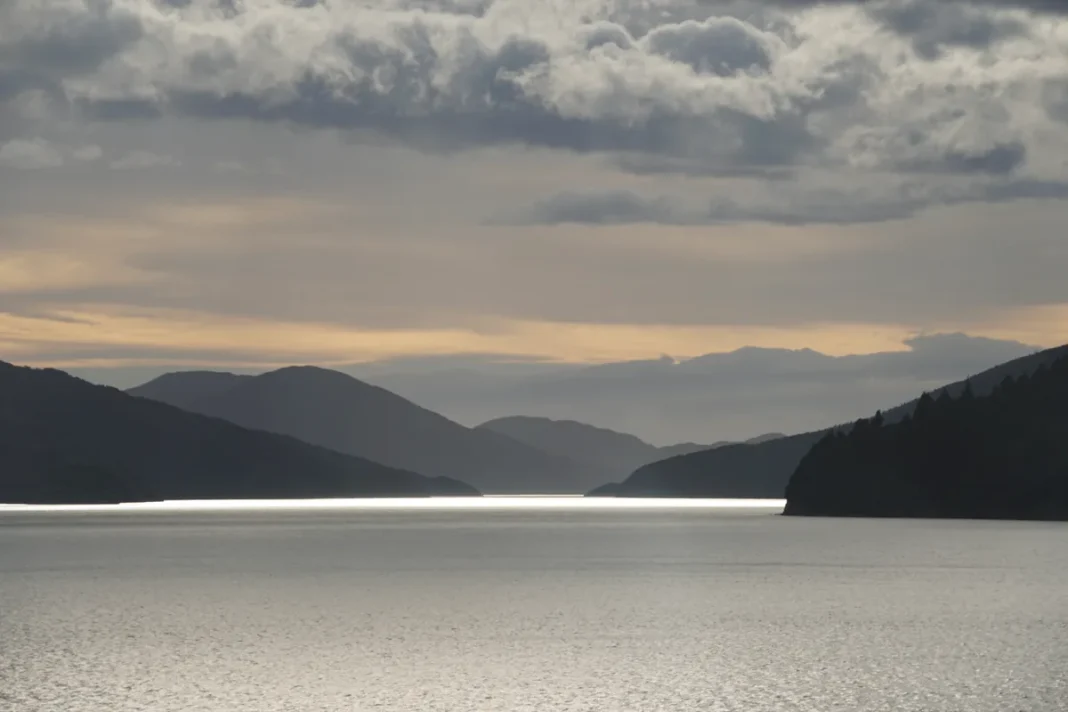
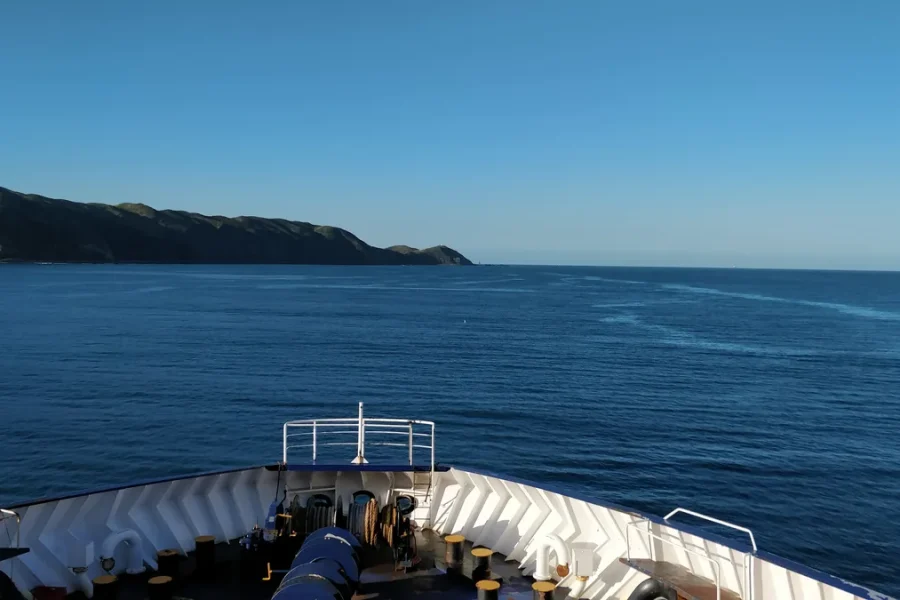
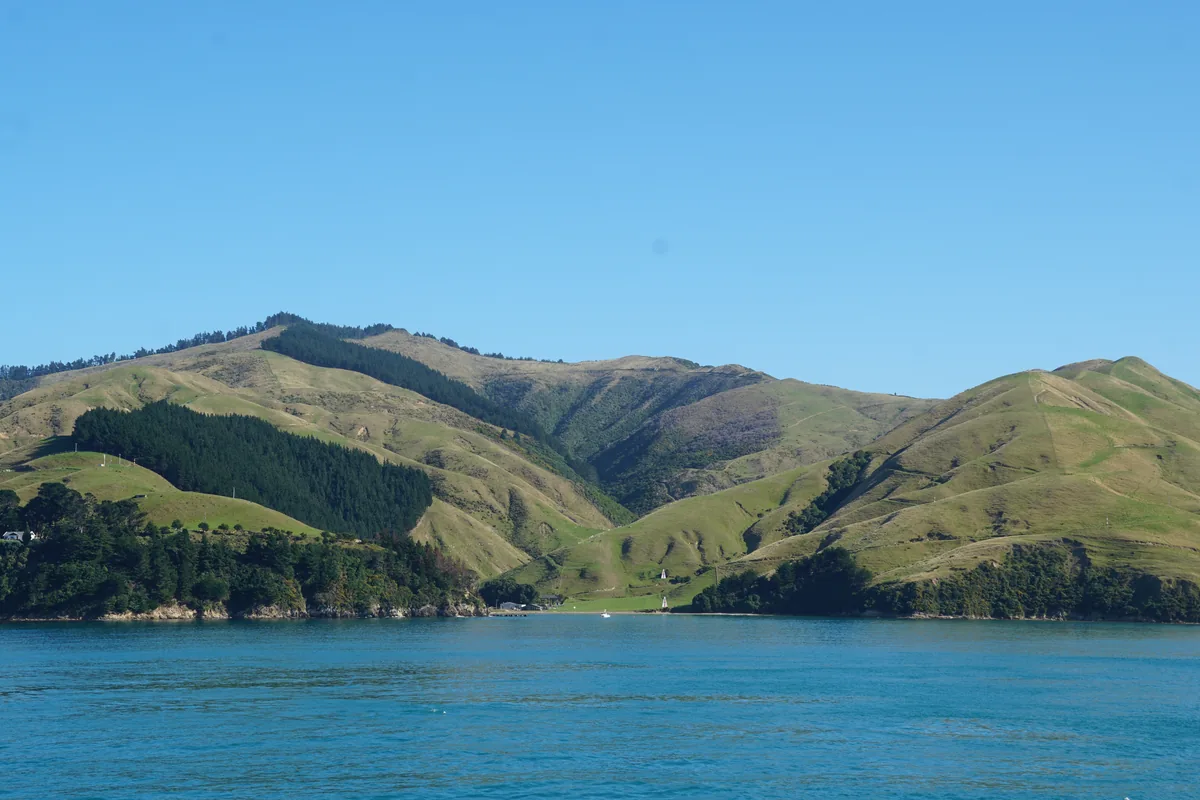
I took it twice during my road trip, once in each direction, and honestly it’s anything but a chore. Three and a half hours of crossing, the last of which is spent winding through the Marlborough Sounds, between green hills that tumble down into turquoise water. Plenty of people reckon it’s one of the most beautiful ferry crossings in the world, and I can see why. It really is stunning.
Anyway, here’s everything you need to know before booking: the two companies (Interislander and Bluebridge) and how they differ, the timetables (with a live widget just below), the 2026 fares, the rental-car trap, and the alternatives if you’re travelling without a vehicle. And how to book.
⛴️ The Wellington–Picton ferry at a glance
- Duration: around 3h30 of crossing (allow 5 hours door to door with check-in)
- Distance: 92 to 96 km depending on the official source, with the final stretch in the Marlborough Sounds
- Two companies: Interislander (KiwiRail) and Bluebridge (StraitNZ)
- Frequency: up to 7 departures a day in each direction open to travellers, combining both companies, all year round
- Price (checked in August 2026, one way, two adults): €83 to €108 on foot, €176 to €323 with a car
- Essential? Yes with a vehicle (no other link), no on foot (flights exist)
- Booking: essential in summer (December–February) and during the New Zealand school holidays
- Rental car: check that your rental company allows the ferry before booking anything — several forbid it
⚠️ Check this before booking your rental car
If you’re renting a car, ask the question before you pay: “am I allowed to take this vehicle on the Wellington–Picton ferry?”
Avis and Europcar forbid it: you’ll have to do a vehicle swap, with two separate rentals, minimum durations and extra fees. Hertz and Thrifty also require two contracts as soon as the rental ends on the other island. GO Rentals, Omega, Jucy, Apex, Ezi, Enterprise and Budget allow it, and you keep the same car on a single contract.
Getting it wrong is costly: taking an Avis car on the ferry means a 450 NZD penalty, and dropping a Hertz car off on the other island without having arranged the swap means relocation fees of up to 1,000 NZD + tax. I go into all of this further down the article.
Next Wellington–Picton ferry departures, live
Here are the next departures in both directions, with the company operating the crossing (colour dot) and the name of the boat. You can also choose a date to see all the departures for that day and slot the ferry into your itinerary.
Note that the times are given in New Zealand time (that’s 12 hours ahead of France during the European winter, 10 hours during the European summer, and 11 hours for the few weeks when the two countries don’t change their clocks at the same time… yes, it really is the other side of the world ).
Next departures between Wellington and Picton
New Zealand timeTwo things to bear in mind when reading this widget. First, every southern-hemisphere winter, Interislander switches to a reduced timetable while its ships are maintained: in 2026, from 22 June to late September, only one ship at a time ran the route while the other was in dry dock, giving 2 departures per direction per day. The full timetable returns in late September. Bluebridge, for its part, runs all year round.
Second, Interislander’s overnight departures (3.30am from Wellington, 2.30am from Picton) do appear on its timetable, but they’re for commercial vehicles only: no foot passengers and no private cars. If you want to cross overnight, it’s Bluebridge (2.00am from Wellington, 2.30am from Picton).
Is the ferry essential to get from one island to the other?
With a vehicle: yes, 100%. There’s no bridge, no tunnel, no other ferry between the North Island and the South Island. The Cook Strait is 22 km at its narrowest, but it’s one of the roughest stretches of water on the planet, wedged between two oceans. No bridge project has ever stood up to scrutiny. So if you’re driving, you’re getting on board: Wellington–Picton, or nothing.
A word of caution all the same: check that your vehicle is actually allowed on board.
On foot: no, you have a choice. Several options exist:
- Sounds Air flies Wellington–Picton in a small plane in ~30 minutes, and also serves Blenheim and Nelson
- Air New Zealand connects Wellington to Nelson, Christchurch, Queenstown… in 45 min to 1h30
- InterCity coaches sell combined bus + ferry tickets
But honestly, if you have the time, take the boat. A 30-minute flight will never let you see the Marlborough Sounds from the deck of a boat, coffee in one hand, camera in the other. It’s a genuine piece of the journey, not just a transfer.
The two companies: Interislander and Bluebridge
That’s the quirk of this route: two companies share the strait, with different boats, terminals and philosophies. Good news for you: it means lots of departures, and competition on price.
Interislander — the long-standing one, the most “ocean liner”
This is the KiwiRail company, which has been operating the strait since 1962. Its boats are bigger, with more services on board: cafés, a bar, a cinema, a kids’ area, a premium lounge, cabins, big outdoor decks. The Kaitaki (the largest ship on the strait, up to 1,000 passengers) and the Kaiārahi currently run the route.
- Boats: Kaitaki and Kaiārahi (the Aratere, the last rail ferry, was withdrawn in August 2025)
- Departures: 4 a day in each direction, of which 3 are open to travellers — 8.30am, 3.30pm and 8.30pm from Wellington, 9.30am, 2.00pm and 9.30pm from Picton (the 3.30am and 2.30am are freight only). Just 2 per direction in the southern-hemisphere winter
- Duration: 3h30
- Wellington terminal: Kaiwharawhara, 3 km from the centre — free shuttle from the station
- Fares: from 50 NZD per adult on foot (2026 winter promotion); no public price list for vehicles, see my price check below
Bluebridge — the most convenient, often the cheapest
Bluebridge belongs to the StraitNZ group. Its boats are a bit more basic (less “ocean liner”, more freight), but two things really stand out: the terminal is right in the centre of Wellington, right across from the station, and in my price checks it’s clearly cheaper as soon as you have a vehicle. The fleet has been renewed with the Livia, which replaced the old Strait Feronia, alongside the Connemara.
- Boats: Connemara and Livia
- Departures: up to 4 a day in each direction, all year round — 2.00am, 8.15am, 1.30pm and 8.30pm from Wellington, 2.30am, 7.45am, 2.00pm and 7.15pm from Picton. Some sailings skip weekends, and the timetable changes twice a year (1 May and 1 November)
- Duration: 3h30
- Wellington terminal: Waterloo Quay, opposite the station — unbeatable on foot
- Fares: no public price list, prices only show up when you book — see my price check below
- The little extra: private cabins from 65 NZD, including “dog friendly” cabins
Interislander or Bluebridge: which to choose?
Honestly, the view is exactly the same and the duration nearly identical. The real deciding factor is the departure time that fits your itinerary, and secondarily the terminal. Here’s the comparison:
| Interislander | Bluebridge | |
|---|---|---|
| Boats | Kaitaki, Kaiārahi | Connemara, Livia |
| Duration | 3h30 | 3h30 |
| Departures / day / direction | 3 open to travellers + 1 freight (2 in the southern winter) | 3 to 4 depending on the day, all year round |
| Wellington terminal | Kaiwharawhara, 3 km away (free shuttle) | Opposite the station |
| Foot-passenger price | €42 to €53 per adult (my price check) | €42 to €54 per adult (my price check) |
| Car + 2 adults | €225 to €323 (my price check) | €176 to €241 (my price check) |
| On board | Cafés, bar, cinema, kids’ area, premium lounge | Café, bar, films, Pōhutukawa lounge, cabins |
| Cabins | Yes on the Kaitaki, 80 NZD (4 berths) | Yes, from 65 NZD (and dog versions) |
| Dogs | In the vehicle or in a kennel | Vehicle, kennel (15 NZD) or cabin |
My verdict: I did both my crossings with Bluebridge, in a campervan, and I’ve no reason to switch. On a vehicle, it’s regularly €75 to €136 cheaper than the competitor for exactly the same trip, and the Wellington terminal is in town. The trade-off you have to accept: the boats are less “ocean liner” than Interislander’s Kaitaki, with fewer services on board — if you’re travelling with children to keep entertained, that matters. Otherwise, just take the departure that suits you.
I took Bluebridge quite simply because the timing was perfect, 9am, so I got absolutely incredible light in the early morning.
If you’re on foot without a car, Bluebridge has a real edge with its city-centre terminal. If you’re travelling as a family and want the big boat with a cinema and a kids’ area, take Interislander’s Kaitaki. And if you want to sleep during the overnight crossing, the 65 NZD Bluebridge cabin is an excellent plan.
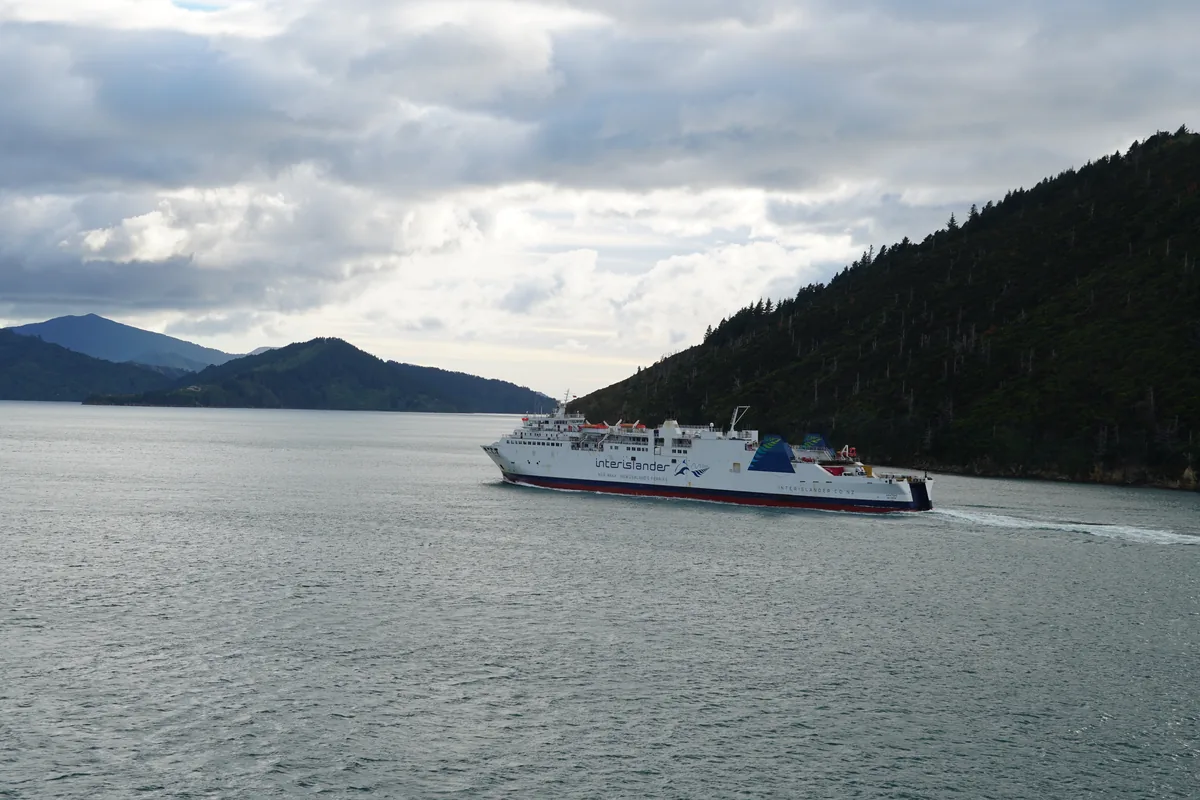
Timetables and frequency
The Wellington–Picton ferry runs all year round, 7 days a week, including overnight. Combining both companies, you generally have 6 to 7 departures a day in each direction open to travellers, which gives you plenty of leeway to organise your day.
A few useful reference points:
- The overnight departures are with Bluebridge (2.00am from Wellington, 2.30am from Picton): handy for eating up the miles… but mainly used by lorries. Interislander’s (3.30am and 2.30am) are freight only. With a Bluebridge cabin, the night crossing is far more comfortable.
- The morning departure (8.15am Bluebridge / 8.30am Interislander) is the most pleasant: you arrive in Picton around midday and still have the whole day to drive on to Nelson, Kaikoura or Blenheim.
- The afternoon departure (1.30pm / 3.30pm) is my favourite in summer: you cross the Sounds in full golden light.
- Between late June and late September, Interislander scales back for annual maintenance: down to 2 departures per direction per day. Bluebridge then becomes the more flexible company.
The simplest thing is still to check the widget at the top of this article: it gives you the next departures and those for the date you choose, in both directions.
How much does the Wellington–Picton ferry cost?
Right, let’s say it straight away: it’s expensive. It’s actually the most painful line in the transport budget of a New Zealand road trip, and there’s no miracle deal.
Two things to understand before looking at the prices.
First, you don’t pay for “the car and its passengers” the way you do on European ferries. You pay for the vehicle, and each person on board. Two adults in a car makes three lines on the bill.
Second, the two companies use yield management, exactly like the airlines. There’s no public fare table. The same departure can double between a Tuesday in September and a Saturday in January.
So here’s what I recorded, with the date of the check.
My real price check (August 2026, for two adults)
I did the check on three typical dates, in the Wellington → Picton direction, for two adults. Prices shown in euros, one way, all inclusive.
| Departure | Tue 15 Sept (low season) | Sat 10 Oct (shoulder) | Tue 12 Jan (peak summer) |
|---|---|---|---|
| 02.00 Bluebridge | €83 | not running | €87 |
| 08.15 Bluebridge | €94 | €94 | €108 |
| 08.30 Interislander | not running | €98 | €106 |
| 13.30 Bluebridge | €87 | not running | €94 |
| 15.30 Interislander | €84 | €92 | €106 |
| 20.30 | sold out | sold out | sold out |
Three takeaways, and they’re useful.
1. On foot, it’s €42 to €54 per person. The gap between a Tuesday in September and a Tuesday in January exists, but it stays moderate: about +20%. If you’re crossing on foot, don’t stress too much about the date.
2. The 2am departure is consistently the cheapest. In January it’s €87 when the 8.15am one is €108 — a 20% gap for the same boat, the same duration, and one fewer night at the hotel. The downside: you have to get up at 1am, and the Sounds are crossed in the dark. You’ll see nothing of the scenery. It’s up to you to decide what you’d rather sacrifice.
3. The 8.30pm was sold out on foot-passenger fares on all three of my dates. All three. Curiously, the same departure was still bookable with a vehicle (€201 to €225, see the next table): it’s the foot-passenger quota that goes first on this very freight-focused sailing. If the 8.30pm suits you and you’re on foot, book it well in advance or move on.
And with a car? That’s where it hurts
Same exercise, one car + two adults:
| Departure | Wed 16 Sept (low season) | Tue 12 Jan (peak summer) |
|---|---|---|
| 02.00 Bluebridge | €176 | €187 |
| 08.15 Bluebridge | €201 | €241 |
| 08.30 Interislander | not running | €323 |
| 13.30 Bluebridge | €187 | €201 |
| 15.30 Interislander | €275 | €225 |
| 20.30 Bluebridge / Interislander | €201 | €225 |
Here, two things jump out.
The car adds €90 to €215 to the bill. Two foot passengers in January: €87. The same two with a car: €187 to €323. Remember that gap, it explains why some rental companies make you cross on foot — I come back to this below, and it’s not as advantageous as people think.
Bluebridge is clearly cheaper as soon as there’s a vehicle. In low season, €176 to €201 against €275 with Interislander — that’s a €75 to €100 gap for exactly the same trip. In January, the gap climbs to €136 on the morning departure. On foot, the two companies’ prices are very close; with a car, Bluebridge works out cheaper almost every time.
And in a campervan or van?
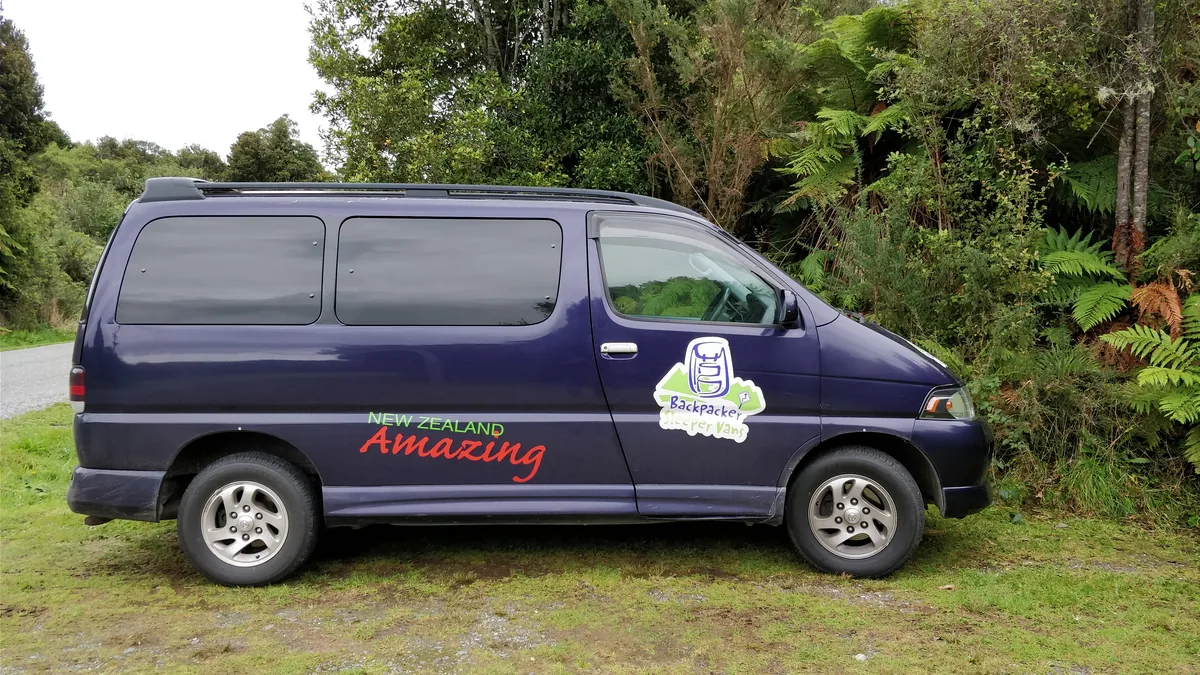
That’s how I crossed, twice. And it’s the simplest scenario: the van drives on, you switch off the engine, you head up to the deck. No vehicle swap, no bags to unload.
On the other hand, it’s impossible to give you an advertised price: both companies charge campervans by length, and the comparison sites refuse to quote without the exact dimensions of the vehicle. I tried, nothing comes out.
What to remember:
- The fare starts from the overall length — and “overall” really means everything: bike rack, rear box, roof rack that sticks out. Measure it, or take the official length given by the rental company.
- The threshold that tips you into a different category is 5.5 m. Below that, you’re in the “van” or “car” band; above it, you move up a category and the bill climbs.
- As a ballpark, reckon on 250 to 500 NZD (€125 to €250) for the vehicle alone, plus the passengers.
- The van and campervan rental companies (Jucy, Britz, Maui, Wilderness…) allow the ferry, unlike some of the car rental companies. Several even sell ferry tickets when you book the rental (Jucy, Maui, Wilderness): handy, but don’t expect a discount.
- Height isn’t an issue: the vehicle decks are amply sized. What counts is the length, and the length alone.
Watch the category you declare, because it isn’t intuitive. With Bluebridge, “campervan” and “motorhome” are two different boxes: a campervan is a normal-sized van with a sleeping area, often above the cab, and possibly a basic toilet or kitchenette. A motorhome is the step up — a double or queen bed, a living space behind the front seats, a proper kitchen and proper toilet. There are also separate boxes for utes, buses, fifth wheels and even horse floats. Getting the box wrong means a surcharge at the counter, and a refused boarding if the boat is full.
And if you’re towing something, two rules to know: only the A-frame drawbar hitch is accepted — no rope or chain — and the length to declare is that of the whole coupled unit, drawbar included. Trailers under 2 m are charged as 2 m. Above 3.5 tonnes, you no longer go through the standard booking but through the freight service.
The rest of the fares in detail
- Foot passenger: neither company publishes a price list; in my price check, €42 to €54 per adult. With Bluebridge, the child fare applies from 2 to 15, and under 2s travel free.
- Interislander 2026 winter promotion: from 50 NZD per adult and 25 NZD per child
- Motorbike and bicycle: fares only shown when you book, well below a car
- Bluebridge cabin: 65 NZD (2 berths), 75 NZD (double bed or 3 berths, on the Livia), 85 NZD (4 berths), 89 to 109 NZD in the “dog friendly” version · Interislander cabin (Kaitaki): 80 NZD, 4 berths
- Bluebridge Pōhutukawa lounge (16+, drinks and food included, on the Connemara, and on the Livia from 1 December 2026): 80 NZD booked in advance, 85 NZD on board
- Kennel on the vehicle deck: 15 NZD
In short, for a car + 2 adults, count on €176 to €323 one way depending on the company, the time and the season. That’s the price of the only link between the two islands. No point kidding ourselves.
The three fare types, and which to take
The two companies work on the same three-tier model, with different names:
- The cheapest — Saver (Interislander) or Saver Sail (Bluebridge): changeable, but with fees (Interislander: 20 NZD per person, 30 NZD per vehicle, 15 NZD per motorbike; Bluebridge: 20 NZD per person or per vehicle). Non-refundable.
- The middle one — Flexible (Interislander) or Super Sail (Bluebridge): changes without fees, you only pay the difference if the new sailing costs more. Still non-refundable.
- The most expensive — Refundable (Interislander) or Flexi Sail (Bluebridge): cancellation and refund up to 1 hour before departure (minus card fees with Interislander).
My take, and it’s a firm one: Saver if your dates are locked in (hotel booked on both sides, itinerary fixed), the middle fare (Flexible or Super Sail) as soon as you have a non-cancellable flight or excursion afterwards. The extra cost is trivial compared with a missed flight because the strait was closed due to wind.
One small detail so you’re not caught out: Interislander no longer accepts cash, neither at the terminals nor on board, and every card payment adds a 1.75% fee, online as well as on the spot. Account2Account bank transfer is free.
Tip: book as early as possible, especially with a vehicle. Prices rise noticeably as the date approaches, and the high-season “vehicle” slots go weeks in advance. The most efficient thing is to compare the two companies on Direct Ferries: you see the times and prices of both at a glance, without doing the search twice.
Euro conversions for guidance only (1 NZD ≈ €0.50): check the day’s rate when you book.
Do you need to book in advance?
On foot, you can book the day before or the same morning off season without any problem. In December–January, it’s better to plan a few days ahead.
By car, van or campervan, it’s another story. The number of vehicle spaces is limited, and the large vehicles (lorries, campervans) take priority. In high season — December to February, plus the New Zealand school holidays and the long bank-holiday weekends — crossings fill up several weeks in advance. If your itinerary hinges on a specific date, book as soon as you have your flights.
Another argument: price. The lowest fares are the “early bird” fares, and they disappear first. Booking 2–3 months ahead often means 30 to 40% saving on the same boat.
Rental car: the trap to know about
This is the most important piece of information in this article if you’re renting a vehicle, and a lot of travellers find out too late — sometimes at the counter, the day before the crossing.
In New Zealand, rental companies fall into two families, and your budget is very different depending on which one you pick.
Family 1: those that allow the car on the ferry
GO Rentals, Jucy, Omega, Apex, Ezi, Enterprise, Budget… let you take your vehicle on board. You keep the same car from start to finish, on a single rental contract, with no break in the insurance. You pay the ferry’s vehicle ticket (my fares recorded above: €176 to €323 with two adults), and that’s it. Two special cases: with Apex, the vehicle’s ferry ticket is even included in the daily rate; with Budget, it’s recent (the Island Hopper scheme), you book the ferry yourself, and one-way fees and a minimum hire period may apply — they’re shown at the time of booking. Ace allows it too, provided you return the car on the island where you picked it up.
It’s by far the simplest. And on a long rental, it’s often the cheapest overall — I explain why just below.
Family 2: those that forbid it and impose a vehicle swap
Avis and Europcar won’t let their car go on the boat. You have no choice: it’s the vehicle swap. Hertz and Thrifty also require two contracts as soon as the rental starts on one island and ends on the other (Hertz says you can keep the same car if you bring it back to the island where you started, paying for both crossings: get it confirmed in writing).
- You return your car at the terminal branch in Wellington
- You cross as a foot passenger, with your luggage
- You pick up another car from the same rental company in Picton
On paper, it looks like a good deal: two foot-passenger tickets (€87 in January) instead of the vehicle + passengers ticket (€187 to €323). Except that the saving on the ferry is largely eaten up elsewhere.
Why the swap costs more than it looks
Three reasons, in order of importance.
1. They’re two separate rentals, so you lose the tapering discount. A car rental gets cheaper per day the longer it goes: two two-week rentals cost considerably more than a single one-month rental. With Hertz, bookings covering both islands aren’t even possible on a single file any more. On a one-month road trip, this extra cost far exceeds the €90 to €215 saved on the ferry ticket.
2. There are fees, and minimums. Avis imposes 3 consecutive rental days minimum on each island (so 6 in total), 72 hours’ notice if the swap wasn’t planned at booking, a maximum of 5 hours between drop-off and pick-up, and 50 NZD + GST if you collect the car at the terminal after 6pm. Europcar splits the hire into two bookings, wants to be told at least 5 days before the crossing, and only hands over cars between 8am and 5pm: land later and it’s the next morning.
3. If you get it wrong, the bill is steep. Putting an Avis car on the ferry means an automatic 450 NZD penalty. Returning a Hertz car on the other island without having arranged the swap means relocation fees of up to 1,000 NZD + tax. That’s no longer about optimisation, that’s a budget accident.
My advice, and it’s a firm one: don’t choose your rental company first and then your method. Do the opposite. If your road trip is long and covers both islands, go straight for a rental company that allows the ferry (GO Rentals, Omega, Jucy, Apex, Ezi, Budget…) and keep a single continuous rental. If you’re already with Hertz, Avis or Europcar, the swap isn’t a trick, it’s an obligation — and you have to declare it when booking, not at the counter.
To compare prices in a single search, DiscoverCars shows offers from several New Zealand rental companies. Before you confirm, just check in the terms that the one you pick allows the ferry.
The downside of the swap, even well organised: you have to completely empty the car and carry your things on board. With two big suitcases and a tired child, it’s a good deal less fun than on paper.
And in a van or campervan?
Here the question doesn’t arise: the swap doesn’t exist. Nobody’s going to make you move an entire van from one boat to another. So the van and campervan rental companies (Jucy, Wilderness, Britz, Maui…) all allow the ferry, and several sell ferry tickets when you book the rental — handy, but with no particular discount.
You pay the vehicle ticket by length, full whack. That’s the price of the comfort of sleeping in your van on both sides of the strait.
On board: what you’ll find on the ships
Three and a half hours goes quickly if you know what to do with it. First thing to know: there are no assigned seats. You settle wherever you like and move freely around the ship — which is why it pays to board among the first if you’re after the best window-side benches.
On both companies, you’ll find:
- Cafés and bars: sandwiches, hot meals, coffee (decent — we’re in New Zealand), beer and Marlborough wine
- You can bring your own food — however, alcohol bought elsewhere isn’t allowed on board. On a crossing for four, a picnic really brings the bill down.
- Free Wi-Fi on board and in the terminals — but it crawls in the middle of the strait, so don’t count on it
- Outdoor decks: this is where you want to be, especially coming into the Sounds. They close during docking manoeuvres, so make the most of them before arrival.
- Premium lounges: Bluebridge’s Pōhutukawa lounge (16+, food and drinks included, 80 NZD) and Interislander’s premium lounge
- Kids’ areas, films, two cinemas and 4-berth cabins (80 NZD) on the Kaitaki
- Bluebridge private cabins with an en-suite, from 65 NZD — the absolute luxury on the 2am crossing. The “dog friendly” cabins, though, aren’t offered on every departure: check when choosing your time.
- Accessibility: the ships are adapted for people with reduced mobility and staff are trained. One exception to know about: on the 2.30am departure from Picton, Bluebridge states that it can’t provide assistance. Flag your needs when booking.
- Card payment only: Interislander no longer accepts cash, neither at the terminals nor on board
What to have in your bag, and it’s not obvious at all: a fleece or windbreaker and a hat — up on deck, the strait wind is freezing even in the height of summer — and sun cream. We’re in New Zealand, under one of the most aggressive suns in the world: you catch sunburn on deck at 15°C under a hazy sky. I’ll let you guess how I know.
Taking in the scenery during the crossing
The crossing plays out in two very different acts, and that’s what makes it interesting.
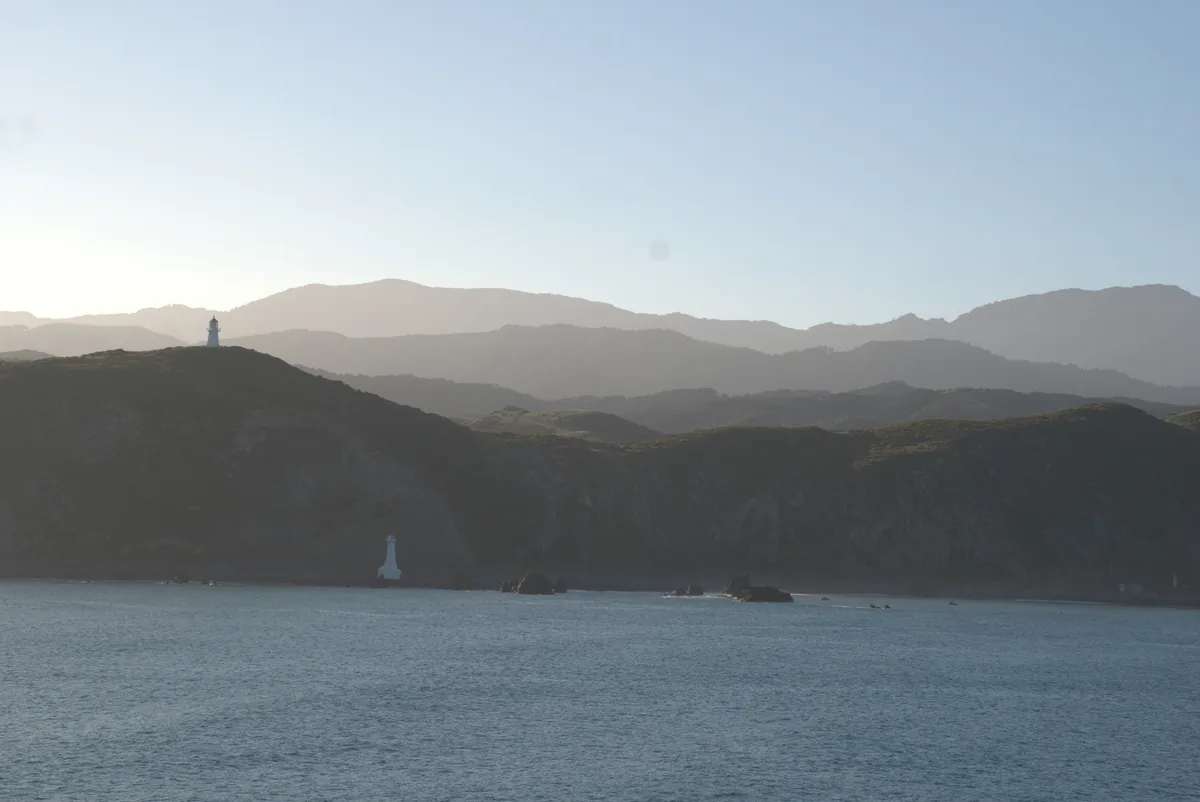
Act 1 — Cook Strait (about 2h30). You leave Wellington harbour, follow the southern coast of the North Island, and take on the strait. This is the exposed stretch: two bodies of water meeting, wind, often a swell. In good weather, you can make out the snow-capped peaks of the Kaikoura on the horizon. In rough weather… let’s just say the bar does less business. If you leave in the morning, you’ll get fantastic light!
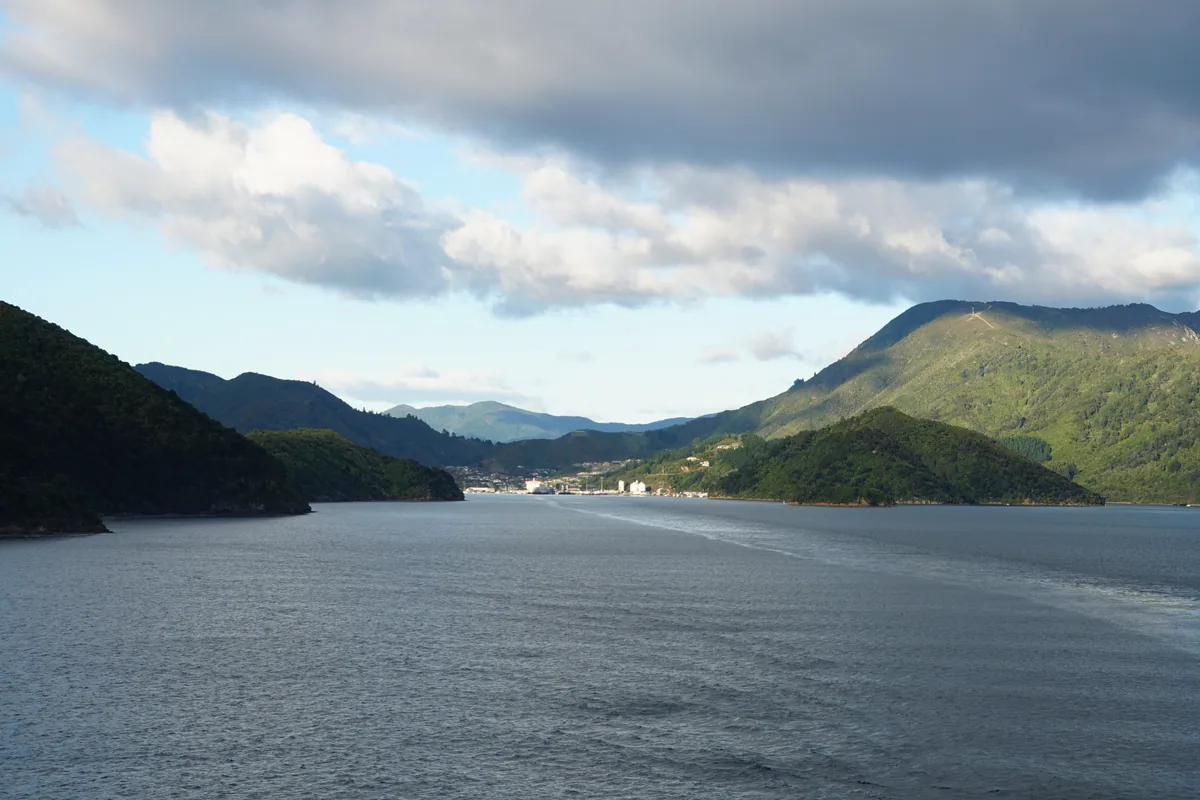
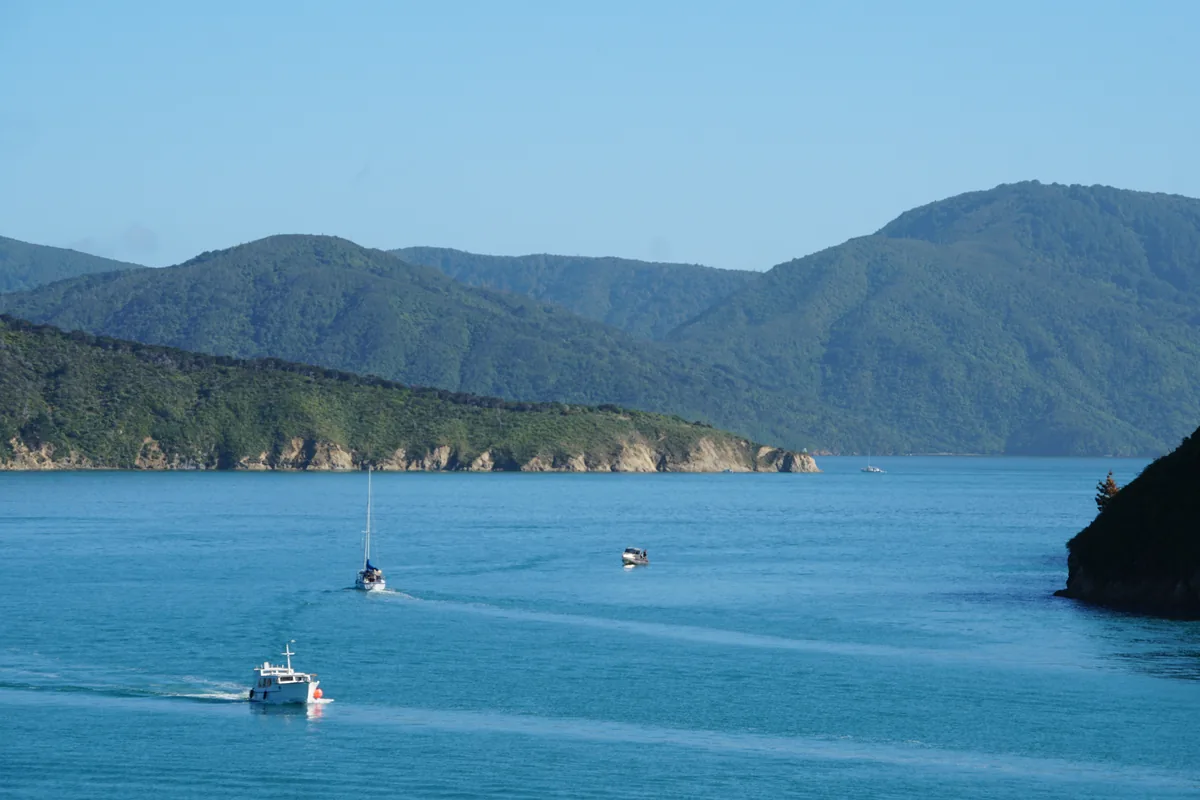
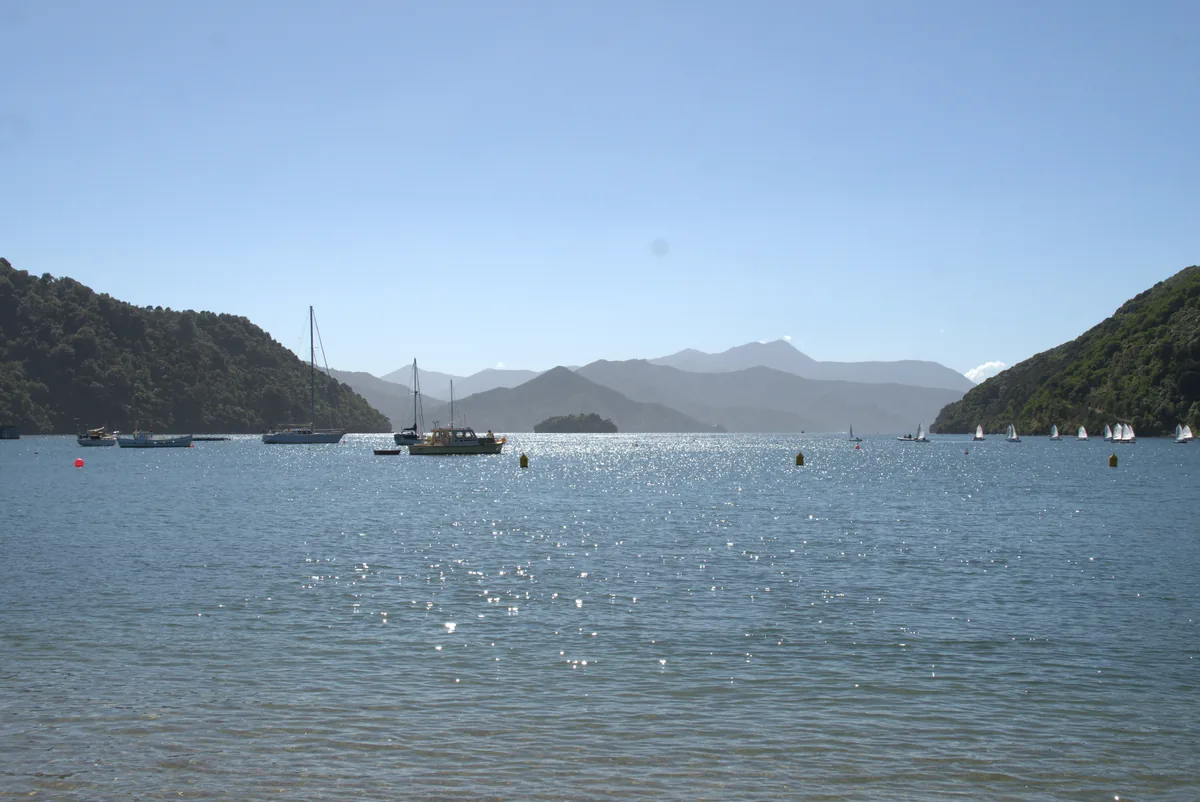
Act 2 — the Marlborough Sounds (about 1h). This is the highlight. The ship enters the Tory Channel, a corridor so narrow you feel you could touch the hills, then the Queen Charlotte Sound all the way to Picton. Smooth water, deserted bays, a few houses reachable only by boat, and regularly dolphins or fur seals. The good window for dolphins is about 45 minutes before arrival: head out on deck at that point, camera ready. Big, lush green hills, loads of little inlets, like mini fjords — it really is magnificent.
In the Picton → Wellington direction, it’s the reverse: the Sounds at the start, the strait next, then the entrance into Wellington bay with the city rising like an amphitheatre. Both directions are worth it.
Seasickness: Cook Strait has a bit of a reputation, and it’s deserved. If you’re sensitive, take a tablet before boarding, settle in the middle of the ship and on a low deck, and keep the horizon in view. And check the weather the day before: when wind and swell exceed the ships’ limits, crossings are delayed or cancelled (neither company publishes a figure).
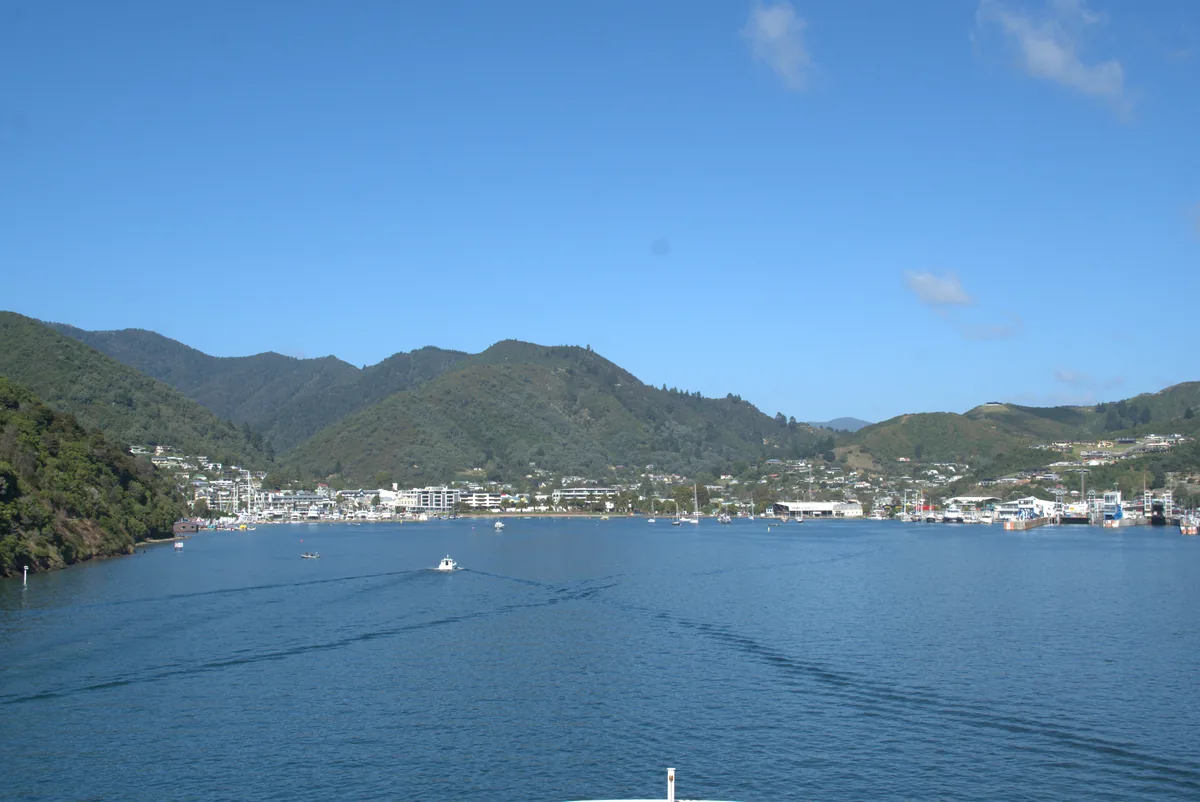
Terminals, check-in and boarding
In Wellington
Bluebridge is the most convenient: its terminal is on Waterloo Quay, right across from Wellington station, a 15-minute walk from the centre. You arrive by train or bus, cross the road, and board.
Interislander is at Kaiwharawhara, about 3 km north of the centre. No public parking at the terminal. A free shuttle leaves from platform 10 at Wellington station, 70 minutes before each departure (between roughly 7.30am and 7.20pm), and takes 5 minutes. Otherwise, taxi or Uber.
In Picton
The two terminals are side by side, a 5-minute walk from the village centre, the bus station and the Coastal Pacific station (the scenic train to Christchurch, which doesn’t run from late April to late August). On the Interislander side, expect around 400 m of walking with stairs to reach the ship: flag it when booking if you need assistance.
Check-in times
- Interislander: 60 minutes before departure, vehicles and foot passengers alike
- Bluebridge: check-in closes 1h before departure, for vehicles and foot passengers alike: arrive a bit earlier
- Photo ID required for those over 18
- Luggage: one small bag plus a handbag or laptop bag with you, the rest in the hold (2 bags of 23 kg max with Interislander)
And a bit of common-sense advice: never plan a flight the same day just after the crossing. Weather cancellations do happen, and rebookings go onto the next departure, not necessarily within the hour.
Sleeping near the Picton and Wellington terminals
You need to arrive quite a bit in advance to board. So if, like me, you’re taking an early-morning ferry, or if you arrive late, I’d advise sleeping literally a few steps from the boarding terminal rather than driving (on the left) at night.
WELLINGTON
- If you have to take the Interislander ferry, then the accommodation you want has the perfect name (and a stunning view): The Perfect Stopover, just above
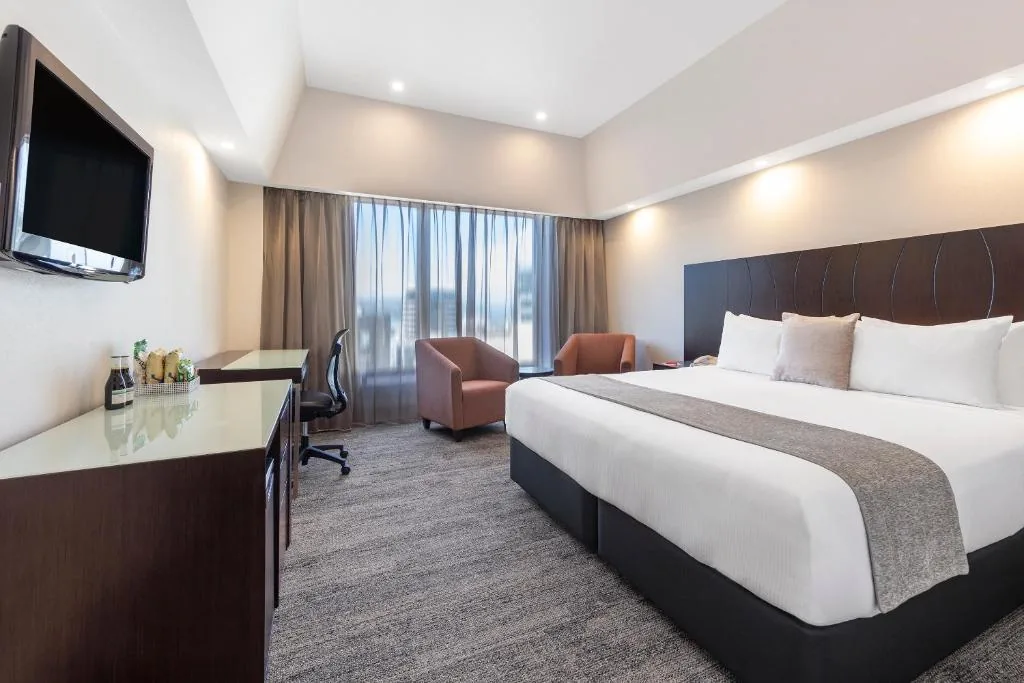
- If you’re travelling with Bluebridge, then there’s a bit more choice. If you’re in backpacker mode, then the Hotel Waterloo fits the bill. But if you want a bit more comfort then the James Cook Hotel Grand Chancellor which, despite its posh-sounding name, has really affordable prices and a car park.
PICTON
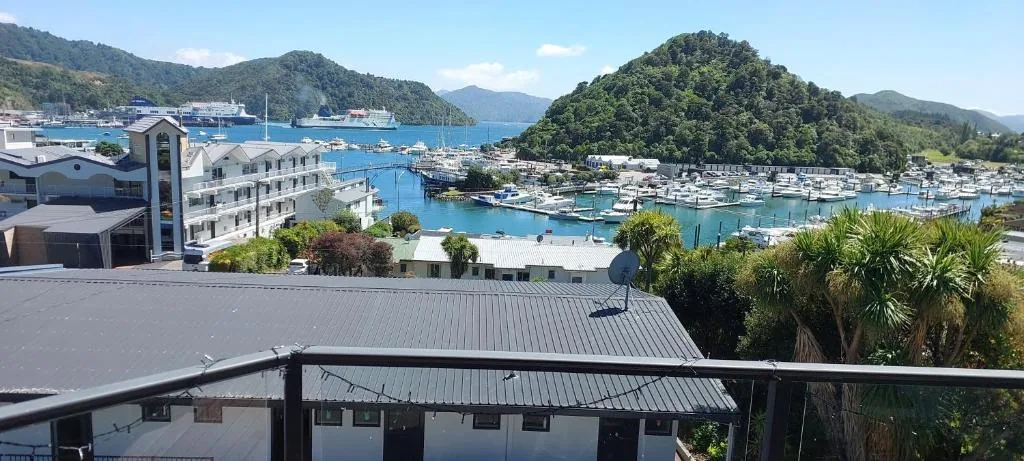
There are plenty of lovely options in Picton, a charming little spot. The Harbour View Motel is a great pick because it’s cheap, has a view over the bay, and a car park.
What to do when you arrive in Picton?
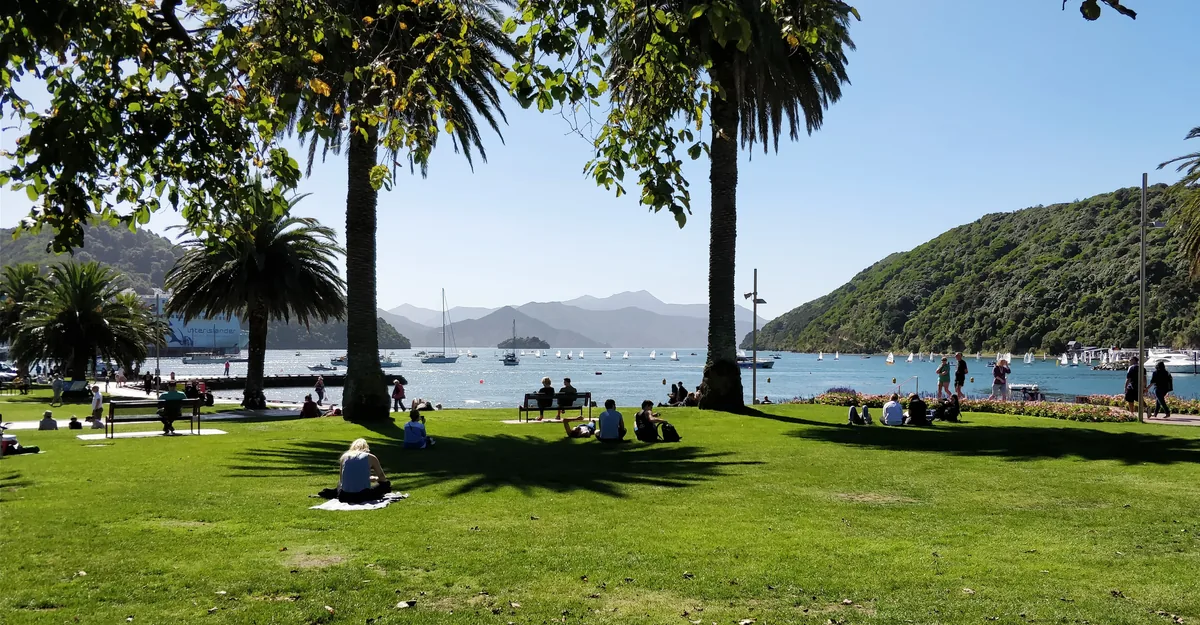
Picton is a tiny port and it’s really pretty. Well, the town itself is nice but it’s above all its two bays in the sounds that are magnificent! Many travellers pass through without stopping, heading for Nelson or Kaikoura. That’s a mistake, because the finest thing to do in the Marlborough Sounds sets off from its wharf.
Me, on getting off, I went straight into the mail boat cruise before spending a night there (waking up on the beachfront, a small taste of paradise). And it’s a wonderful memory!
The idea: you board only official mail service by boat in Queen Charlotte Sound, which for more than 150 years has served the Sounds homes reachable only by sea. This isn’t a tourist excursion in disguise, it’s the real round.
The skipper delivers the mail bags, the groceries and the freight, stops at each jetty, and the route changes every day depending on the area to be served. Between stops, he tells the story of the Sounds and spots dolphins and seals for you.
The detail that had me smiling for four hours: on the jetties, it’s the dogs that wait for the boat before their owners. The skipper has treats for each one, and he knows them all by name.
The drawback to know about: the commentary is in English only. If you’re not comfortable, you’ll enjoy the scenery but you’ll miss half of what makes the trip special. And allow plenty of time: it’s 4 hours, with check-in 30 minutes before departure at the Beachcomber Cruises office. In winter (May to September), the run only goes on Mondays, Wednesdays and Fridays.
Well, honestly, English or not, the scenery is so beautiful that you absolutely have to do this trip.
After that, you can head off to Abel Tasman park, one of the most beautiful places in New Zealand!

Practical info in brief
- Booking: compare Interislander and Bluebridge on Direct Ferries — as early as possible with a vehicle
- ⏱️ Check-in: 60 min before departure (Interislander), closes 1h before (Bluebridge)
- Duration: around 3h30, allow 5h door to door
- Payment: card only with Interislander (1.75% fee, online and on site)
- Hire car: pick a rental company that allows the ferry (GO Rentals, Omega, Jucy, Apex, Ezi, Budget…) to keep a single rental. With Hertz, Avis, Europcar or Thrifty, a vehicle swap is mandatory, on two separate contracts — compare rental companies on DiscoverCars
- Campervans: priced by length, measure everything (bike racks included)
- Foot passengers: no constraints, and it’s the cheapest option
- Pets: accepted (vehicle, kennel or dog-friendly cabin with Bluebridge)
- Weather: keep some margin in your planning, cancellations do happen
📔 My experience
I took it twice, once in each direction, in a campervan, and both times with Bluebridge. So no swapping vehicles, no lugging suitcases around: the van drives onto the boat, you switch off the engine, head up onto the deck, and come back down three and a half hours later on the other side of the strait. It's by far the easiest way to cross.
It comes at a price, and there's no getting around it: the van is the most expensive fare on the boat, charged by length. You grumble a bit when you pay. You grumble again when you have to get up for check-in. And then the boat slips into Tory Channel, everyone spills out onto the deck, and you forget all about the bill.
Don't think of this crossing as a transfer between two islands. It's a mini-cruise through the Marlborough Sounds, built into your road trip. My two real tips: book early if you're in a van, because the vehicle spaces go before the foot-passenger ones, and keep some slack in your schedule in case the weather decides to get involved.
FAQ — Wellington–Picton Ferry
How long does the Wellington–Picton crossing take?
Around 3h30, depending on the weather. With check-in and disembarking, allow around 5 hours door to door.
Do you need to book the ferry in advance?
On foot, a few days is enough out of season. With a vehicle, book several weeks ahead in summer (December–February): car spaces go fast and prices rise.
Interislander or Bluebridge: which company to choose?
The view and the duration are identical. Bluebridge is often cheaper and its terminal is in central Wellington; Interislander has bigger ships with more services. Choose above all according to the time that fits your itinerary.
Can you take a hire car on the ferry?
It depends on the rental company, and it’s worth checking before booking. GO Rentals, Omega, Jucy, Apex, Ezi, Enterprise and Budget allow it: you keep the same car, on a single contract. Avis and Europcar forbid it: you have to do a vehicle swap, on two separate rentals. Hertz and Thrifty also require two contracts for a one-way trip from one island to the other. Beware, the swap isn’t necessarily a saving: you lose the tapering rate of a long rental, and there are fees and minimum durations (3 days per island with Avis).
Does the ferry run all year round?
Yes, 7 days a week and 24 hours a day. The only nuance: Interislander reduces its service to 2 departures each way between late June and late September, for the annual maintenance of its ships.
Is the crossing rough?
Cook Strait is known for being rough, especially in strong wind. The first two hours can be bumpy; the last hour, in the Marlborough Sounds, is always calm. Bring a tablet if you’re sensitive.
Is there an alternative to the ferry between the two islands?
With a vehicle, no: it’s the only link. On foot, you can fly with Sounds Air (Wellington–Picton in around 30 minutes) or Air New Zealand to Nelson, Christchurch or Queenstown.
Can you sleep on board?
Yes, Bluebridge offers private cabins with an en-suite from 65 NZD — ideal on the overnight 2am departures. Interislander has some too on the Kaitaki (4 berths, 80 NZD), but not on overnight sailings open to passengers.
What happens if my crossing is cancelled?
In the event of a weather cancellation, you’re rebooked onto a later departure subject to availability. That’s why you should never line up a flight or a non-refundable booking right behind it.
And tomorrow? The Kupe and Cook ferries in 2029
The topic is a hot one in New Zealand. The Interislander fleet is ageing: the Aratere, the only ship able to carry trains, was withdrawn from service in August 2025, and the breakdowns of recent years have made headlines.
The government has finally made its call: two new ferries, named Kupe and Cook, have been ordered. On the programme: around 200 metres long, 11 decks, up to 1,530 passengers, and above all a rail deck once again allowing trains to be carried directly. Built in China by Guangzhou Shipyard International from 2027, delivery expected in 2029, operated by KiwiRail. Total cost of the programme, ports included: just under 2 billion New Zealand dollars (1.86 billion announced).
In the meantime, port works have begun at Picton and Wellington: there may be temporary changes to vehicle and pedestrian movement at the terminals. Nothing show-stopping, but follow the on-site signs.
Travelling with your dog
Good news: both companies accept pets, and since it’s a domestic trip, no passport or certificate is needed (New Zealand is rabies-free). Interislander just asks you to tick an animal declaration when booking.
- In the vehicle: this is the simplest option, your dog stays in the car during the crossing (with Bluebridge the vehicle deck is locked during the crossing; with Interislander, the crew may take you down to check on your pet if conditions allow)
- In a kennel on the vehicle deck: 15 NZD with Bluebridge; with Interislander it’s compulsory if you travel on foot with your dog, and must be booked in advance
- In a “dog-friendly” cabin with Bluebridge, on both its ships, up to 2 dogs per cabin, from ~89 NZD — clearly the most comfortable option
- Certified assistance dogs: admitted in the passenger areas with the appropriate documents
In every case, pets aren’t allowed in the lounges, restaurants and standard passenger areas.
In summary
The Wellington–Picton ferry is the rare case where the compulsory journey is also one of the most beautiful moments of the trip. Three and a half hours, two companies, departures all day long, and an arrival in the Marlborough Sounds that alone is worth the price of the ticket.
What I take away from my two crossings: book early (especially with a vehicle), check your rental company’s policy before paying for a car ticket for nothing, and stay outside on deck in the last hour. The rest is a bonus.
To go further, my other articles on New Zealand:
- Planning your trip to New Zealand — the complete guide to organising your road trip from A to Z
- The most beautiful roads in New Zealand — enough to build your itinerary between the two islands
- 12 exceptional places in New Zealand — my favourites across both islands
- The 13 most beautiful landscapes in New Zealand — in photos, to whet your appetite
- Visiting Milford Sound — the must-see fjord of the South Island
- Lake Tekapo — the country’s most beautiful turquoise lake
- The Tongariro hike — the finest day’s walking on the North Island
- Sunrise at Lake Matheson — the reflection of Mount Cook, a must once you’ve crossed to the South Island
- My most beautiful photos of New Zealand — enough to finish convincing you