Dernière modification le
Right, let me say it straight away: one day in Stockholm is short. The city sits on 14 islands, there are three museums that each deserve half a day, and an archipelago of 30,000 islands that starts ten minutes by boat from the centre. You won’t do everything. And as every time I come through here it’s for one big day, I make a point of doing a different itinerary each time.
It’s a beautiful (truly beautiful) and fairly big city, but it’s very manageable. As long as you decide early, and don’t try to cram everything in. You have to make the most of it.
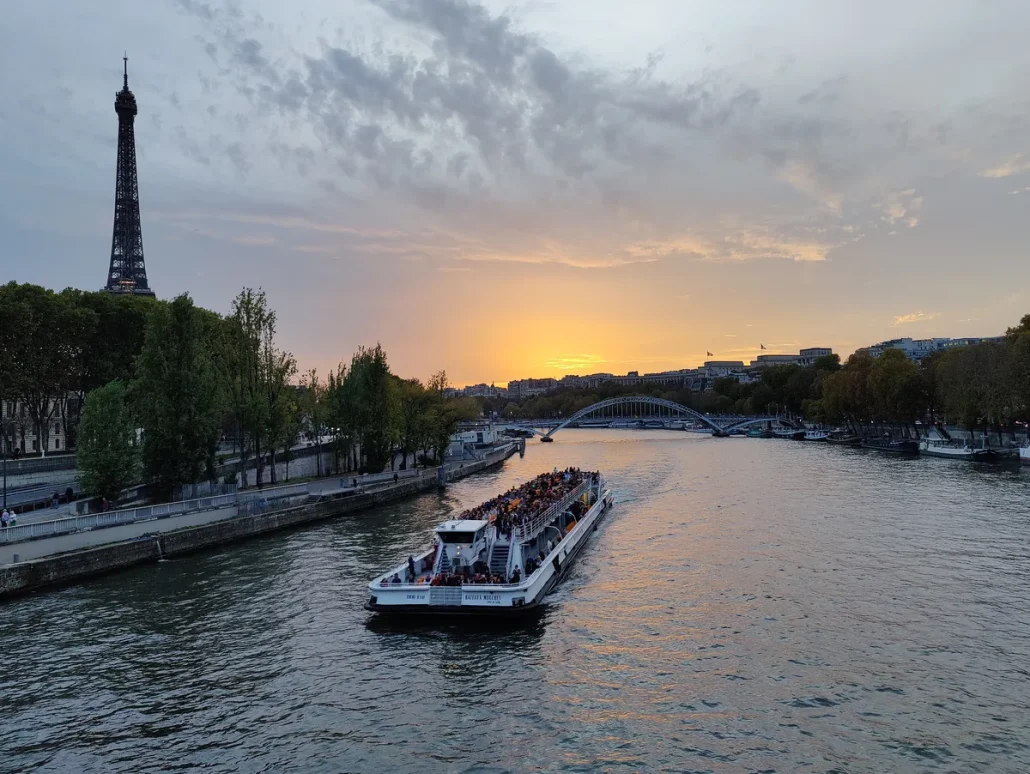
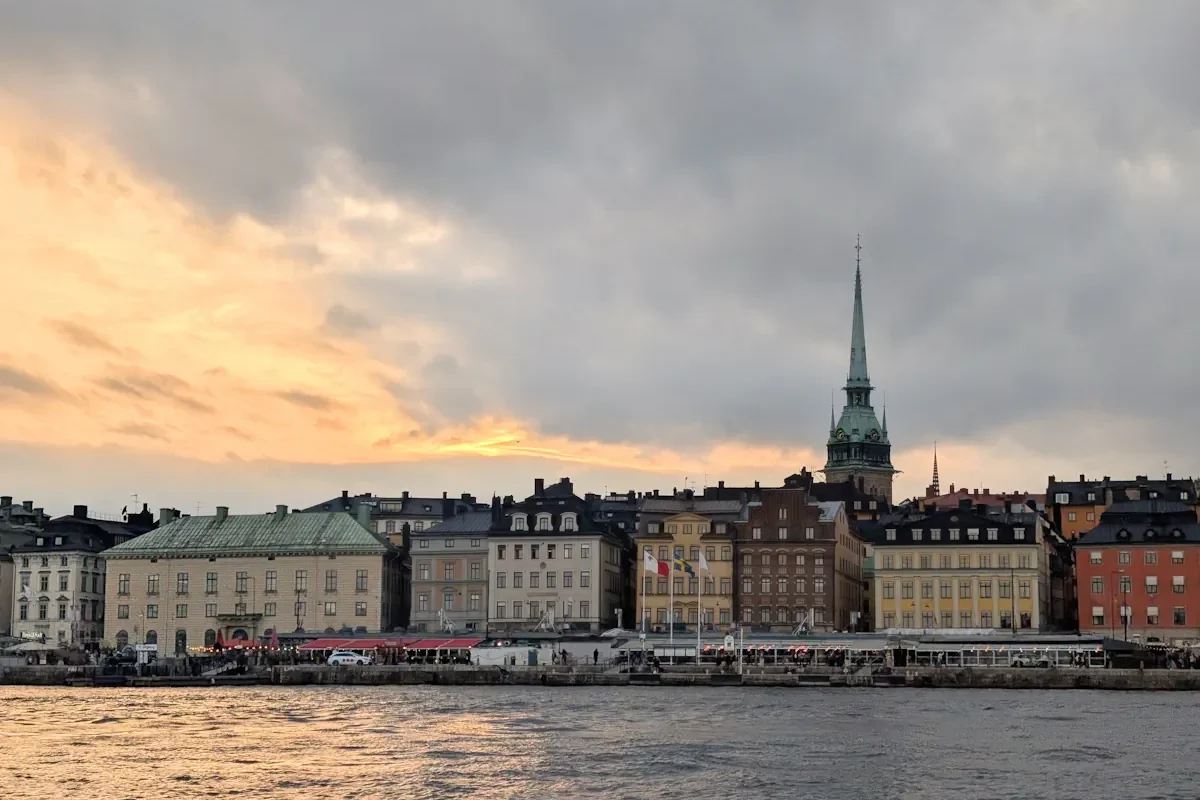
Last time, on the way up from Paris to Tromsø, we stopped in Stockholm with a full day ahead of us. The weather was glorious, so we made a simple choice: everything outdoors. Old town in the morning (and the evening before), boat in the afternoon, Gamla Stan and the nightlife district in the evening. We also had a plan in case the weather turned fickle, with two museums (ABBA, Vasa…)
So I’ll give you both days: the one we did because the weather was good, and the one we’d have done if it had rained. With 2026 prices, opening times, and the places where you waste time for nothing.

One day in Stockholm: the itinerary in one line
Here’s the exact run-through, good-weather version. The times aren’t just for show: the changing of the guard is at 12:15pm and the archipelago boats leave in the afternoon, so everything is built around those two fixed points.
| Time | The plan | Budget |
|---|---|---|
| 9am – 12pm | Gamla Stan on foot, no set plan | Free |
| 12:15pm | Changing of the guard at the Royal Palace | Free |
| 12:45pm – 2pm | Lunch, then up to Södermalm | €15 – 20 |
| 2pm – 3pm | Monteliusvägen and Fjällgatan | Free |
| 3pm – 5pm | Archipelago cruise | From €25 |
| 5pm – 7pm | Walk back via Skeppsbron and Strandvägen | Free |
| 7pm – 10pm | Dinner in Gamla Stan, then a drink over in Östermalm | €40 – 70 |
And the rainy-day version, which shifts everything onto the island of Djurgården:
| Time | The plan | Budget |
|---|---|---|
| 8:30am – 10:30am | Vasa Museum, right at opening | €18 – 22 |
| 11am – 1pm | ABBA Museum, slot booked the day before | €22 – 30 |
| 1pm – 2pm | Lunch on Djurgården | €15 – 20 |
| 2:30pm – 4pm | Nobel Museum in Gamla Stan | From €14 |
| 4:30pm – 7pm | Fotografiska, open until 11pm | From €20 |
| 7pm – 10pm | Dinner and a drink in Gamla Stan | €40 – 70 |
The morning: Gamla Stan (the old town) before it fills up
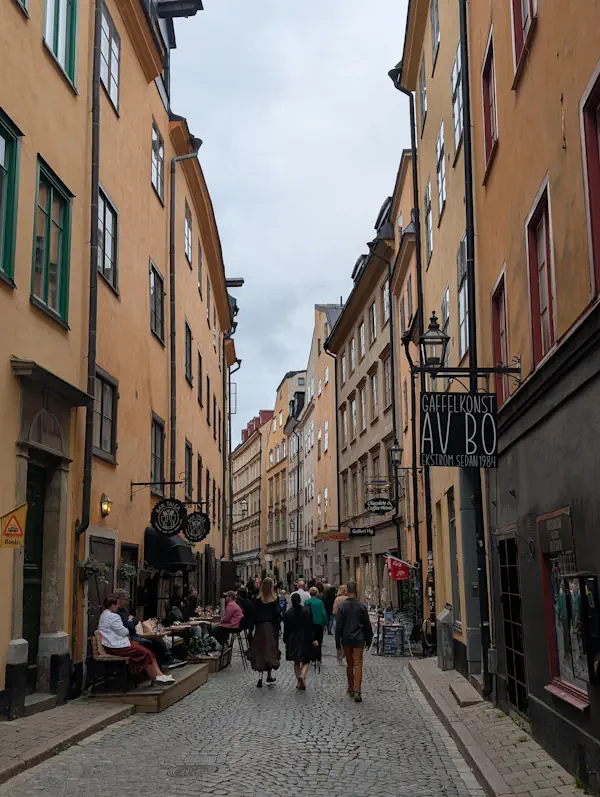
So, good news: Gamla Stan fits in the palm of your hand. The old town is roughly a square kilometre, alleyways included, so you need neither a map nor an itinerary. You get off the metro at Gamla Stan station and you walk. That’s it. And on top of that it’s on an island, so you have pretty much no chance of getting lost. Handy, isn’t it?
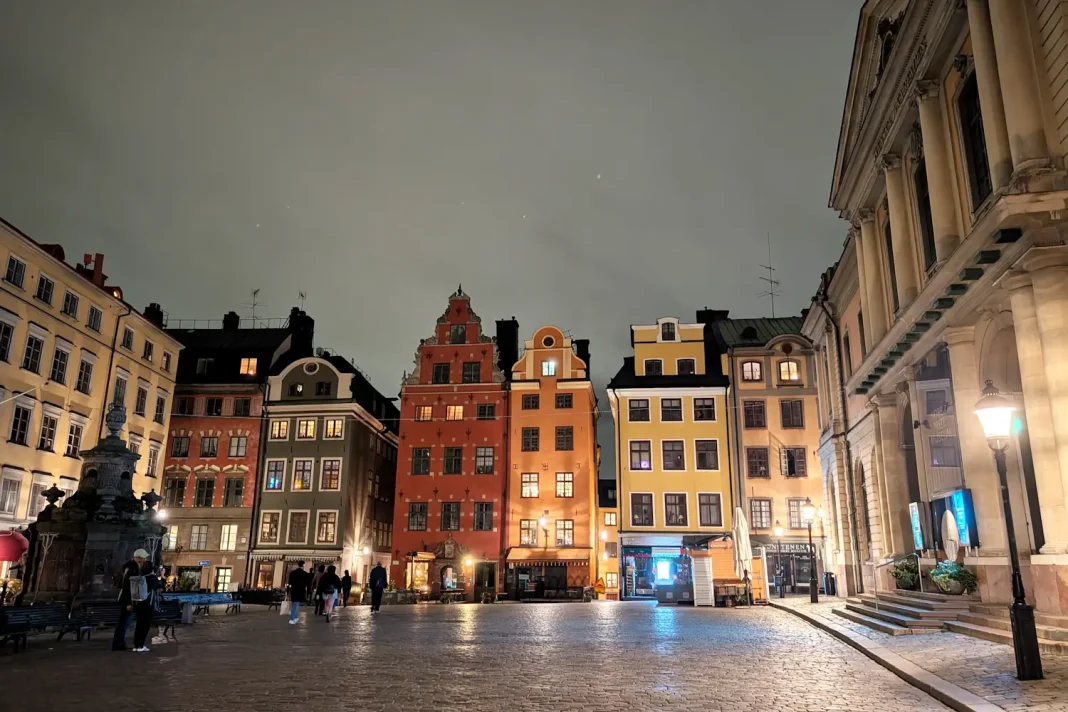
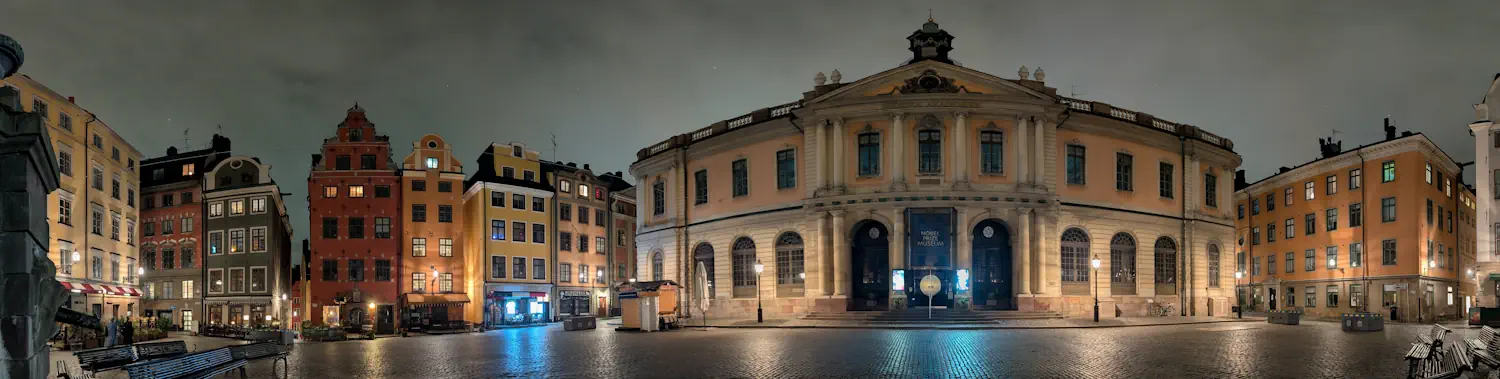
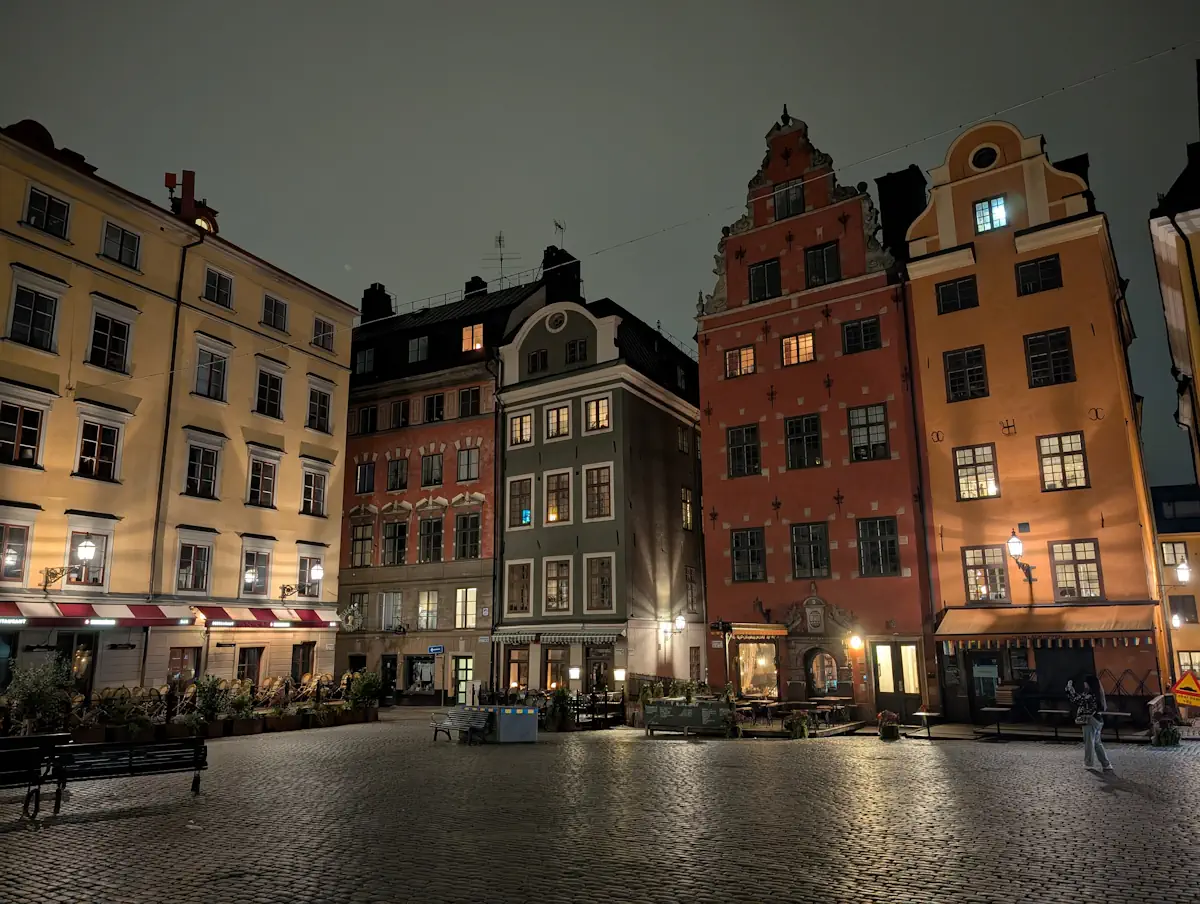
What you mustn’t miss: Stortorget square (also worth doing at night, really pretty) with its colourful façades, Storkyrkan cathedral, the city’s oldest church, the Mårten Trotzigs Gränd alley that’s 90 centimetres wide at its narrowest, and the island of Riddarholmen right next door, much quieter, with the best view of the city hall.
Watch out for Västerlånggatan. It’s the main street, lined with souvenir shops and craft goods. Pretty but packed. The alternative is Prästgatan, running parallel two metres higher up. Same district, fewer people.
And come early. At 9am you have the alleys to yourself; by midday it’s a different place. If you can, stop by the Katarinahissen walkway for a lovely view over the city.

The changing of the guard, at 12:15pm sharp
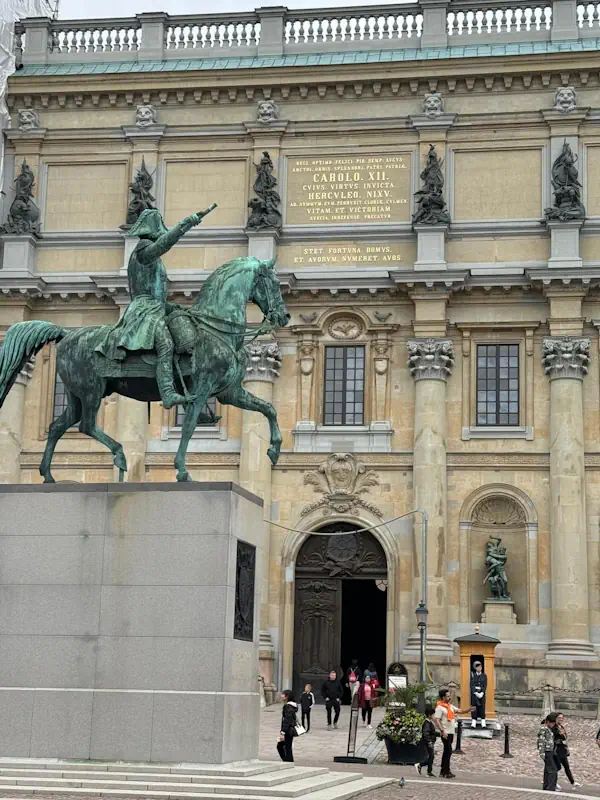
It’s free, it’s outdoors, it takes place in the outer courtyard of the Royal Palace, and it lasts about 40 minutes (and we’d completely forgotten). The ceremony takes place every day of the year, at 12:15pm on weekdays and Saturdays, and 1:15pm on Sundays and public holidays.
What changes with the season is the parade that comes before it. From late April to late August, there’s a parade with military music every day, usually setting off from the Army Museum about 30 minutes earlier, so around 11:45am. From April to October, outside high season, the parades are mainly on Wednesdays, Saturdays and Sundays. From November to March, a shortened route sets off from Mynttorget, in Gamla Stan.
The bonus is the mounted guard. It comes out about 40 times a year between April and August, leaving the cavalry barracks at 11:30am with around fifty riders, and heads up Strandvägen around 11:50am. If you’re in the area at that moment, it’s far more impressive than the changing of the guard itself.
The downside, because there is one: it’s crowded, very crowded. Arrive 20 minutes early if you want to see anything. And in 2026 roadworks in the centre may change the route at the last minute, so don’t build your whole day around it.
Is it worth going inside the Royal Palace?
The adult ticket is 250 SEK, about €23, 125 SEK for 7-17s, free below that. It covers the Royal Apartments, the Treasury and the Tre Kronor Museum. In summer, Gustav III’s Museum of Antiquities is added.
If you only have one day, it may not be the top priority (well, I’d put it ahead of ABBA in the rain, but I wouldn’t take that risk with my wife). Reckon on 1h30 inside, plus the queue: that’s your afternoon cruise gone. The palace is interesting, but it’s not what makes Stockholm different from any other European capital.
One small detail so you’re not caught out: the Royal Apartments can close without notice when there’s an official reception. It happens.
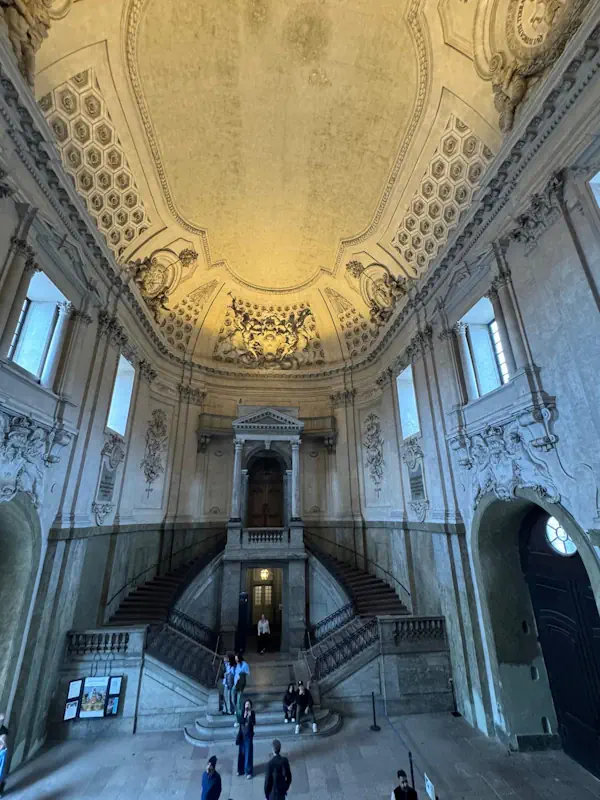
We just visited the few free open parts of the castle, at the end of the day. That’s to say two little rooms and that’s it. Nothing amazing.

And the city hall, the Stadshuset?
Here there’s a catch: you can’t visit the city hall freely. The guided tour is the only way in. It lasts 45 minutes, costs 150 SEK (about €13.50) full price, 60 SEK for 7-18s, and is run in Swedish or English.
The bell tower is climbed separately: 100 SEK, or €9, for 106 metres high and around 365 steps. Only 27 tickets per time slot, so they go fast. It’s open in the warmer months, roughly May to late September — check the official site before making the trip, the sources disagree on the closing date.
My call, on a single day: I’m keeping it for a second visit. With the journey, the guided tour and the wait, it easily eats up 1h30. That’ll be for my next stay (in a few short weeks, all being well!) because we’ll be better organised then.
Late morning, midday: up to Södermalm for the view
This is the bit that one-day itineraries forget, and honestly it’s a shame, because it’s free and it takes an hour. Södermalm is the island just south of Gamla Stan, it sits up high, and two ridge paths give the best views in the city. Without paying a penny.
Monteliusvägen, the postcard
A pedestrian ridge path, open at all times, free, with a plunging view over Riddarfjärden, Riddarholmen, Gamla Stan and the city hall. It’s Stockholm’s sunset spot. Access via Mariatorget metro, red line, then 5 to 8 minutes on foot.
The downside is simple: the path is narrow. Two abreast is fine, three isn’t, and in summer at sunset it’s a procession. Come in late morning instead, you’ll be almost alone.
Fjällgatan, the other side
Same idea, but on the eastern shore of Södermalm, about ten minutes’ walk from Slussen metro. The view is completely different: the Saltsjön, the harbour, Skeppsholmen and Djurgården. It’s the archipelago side of the city.
Honestly, if you only do one, take Monteliusvägen: it’s the view you’ve got in mind. But Fjällgatan is better in the morning, because you have the sun behind you rather than in your face.
And if you’ve still got 20 minutes, Skinnarviksberget is the highest natural point in central Stockholm. It’s bare rock, the locals come to picnic there, there’s no development at all. That’s exactly why it’s good.
If you’d rather have the district talked through for you than wander at random, there’s a guided walking tour of Södermalm in French that takes in SoFo and the viewpoints, 2h30 for €19. It’s rated 4.9/5, but on only 43 reviews — it’s a recent tour, bear that in mind.

The afternoon: the archipelago cruise
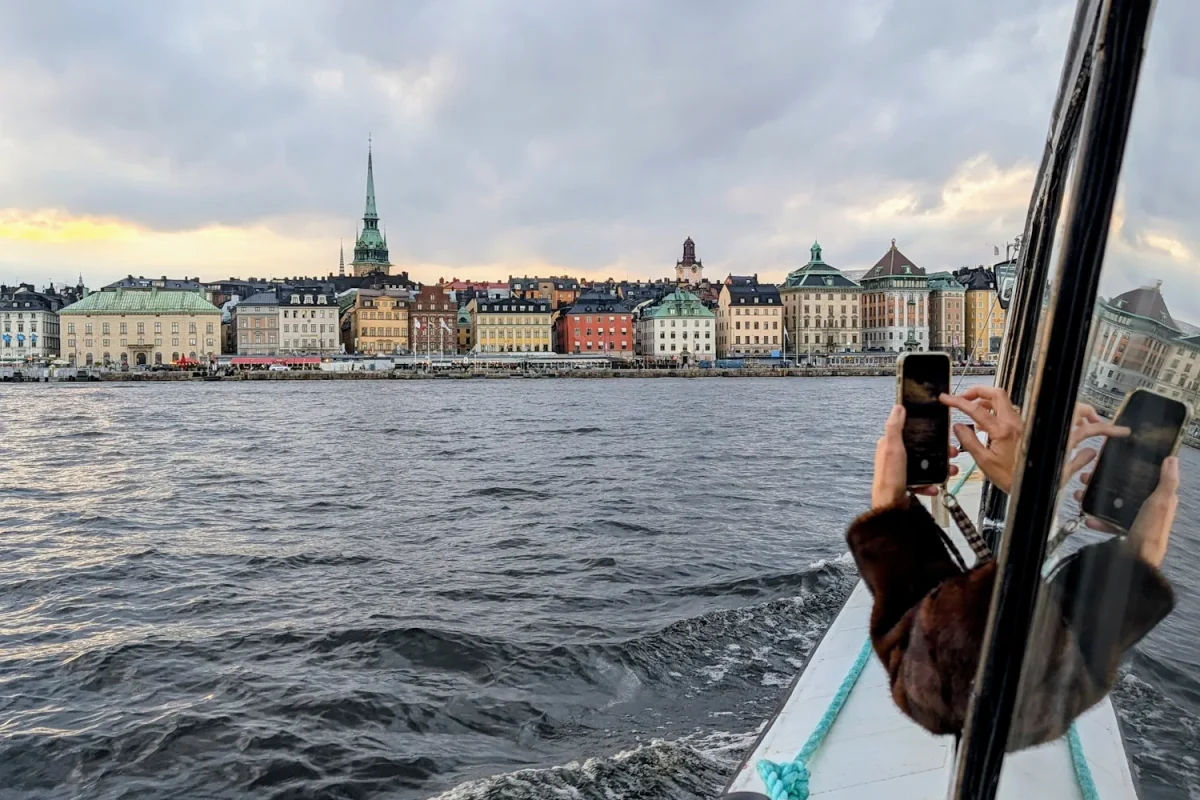
This is the moment of the day that makes the difference between “we visited a pretty capital” and “we understood what Stockholm is”. The archipelago has around 30,000 islands and islets, stretching from the city out to the Baltic over nearly 80 kilometres.
Just one thing to watch out for: there are two families of tours. Those that stay in the Djurgården canal and the inner harbour, short (50 minutes to 1h45), cheaper, but which circle the city’s islands. And those that genuinely head out into the archipelago, from 2 hours upwards.
Both are good, it depends on how much time you have.
We did the classic 2-hour cruise, boarding in the centre, returning to the same spot. It was good, just enough to get a taste of the archipelago without spending the whole day on it.
Prices start around €25 and go up to €146 for a fast RIB. Most operators cancel free of charge up to 24 hours before, so you can book the evening before depending on the weather. And turn up 15 to 20 minutes early for boarding.
Three small downsides. First, the vast majority of the commentary on board is in English only: there are French-language departures and audio-guide tours, but they’re rare, check before you click. Next, it’s always cooler on the water than on land, so pack an extra layer beyond what you’d wear in town.
And the third is the most important: none of these cruises stops on an island. If you want to set foot on Vaxholm or Sandhamn, you need a dedicated excursion or a Waxholmsbolaget ferry. And then it no longer fits into a day.
A cruise in overcast weather loses much of its appeal. It’s even the most frequent criticism in the reviews. If you have some flexibility, slot it into the clearest window of your stay.
I’ve detailed the eleven possible cruises, with prices and durations, in this article dedicated to Stockholm cruises.


The evening: the old town emptied out, then Östermalm
Gamla Stan at 8pm has nothing to do with Gamla Stan at 2pm
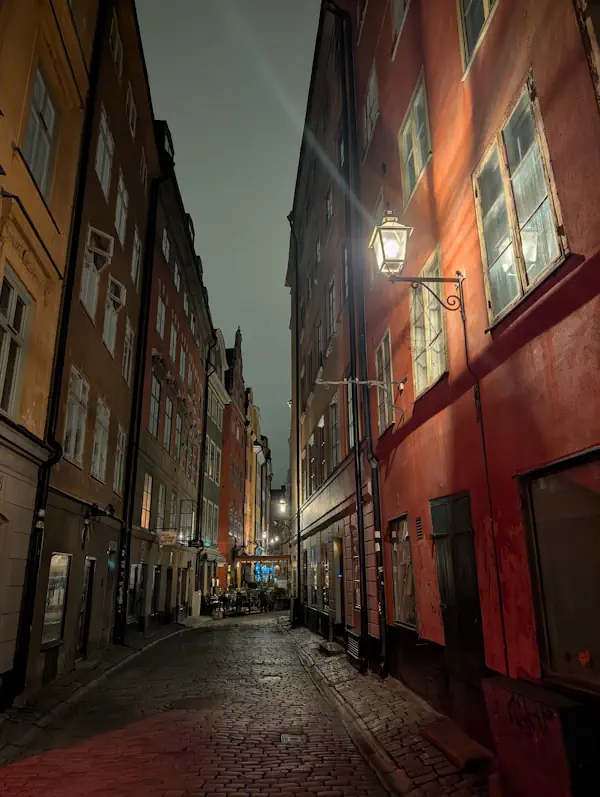
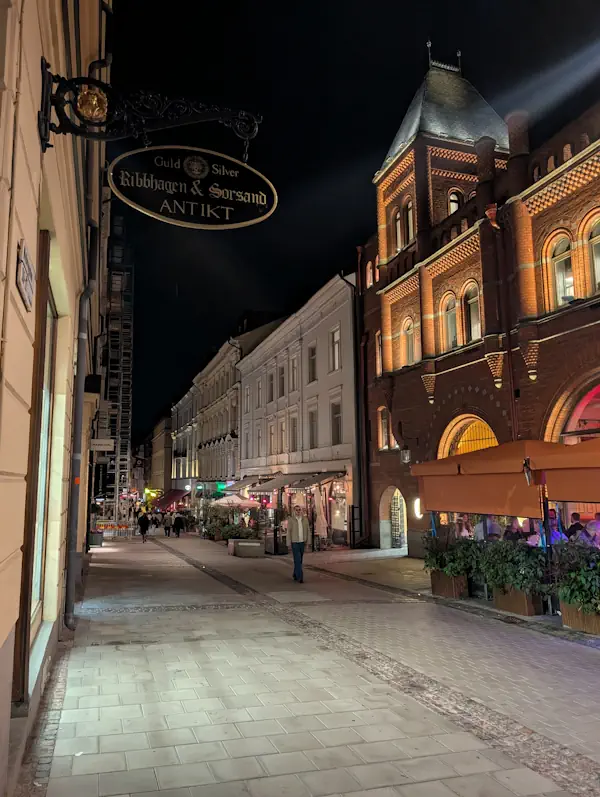
This is my best tip on Stockholm, and it costs nothing. We mostly visited Gamla Stan in the evening and at night, when there was absolutely no one left in the alleyways, except in the little bars and restaurants. The district is touristy in the daytime, only in the daytime.
After 7pm, the coaches have left, the shops close, and what remains is cobblestones, 17th-century façades and streetlamps. It’s a different place.
So if you have to sacrifice something in the morning, sacrifice Gamla Stan and save it for the evening. It works better that way round.
Heading up to Östermalm along Strandvägen
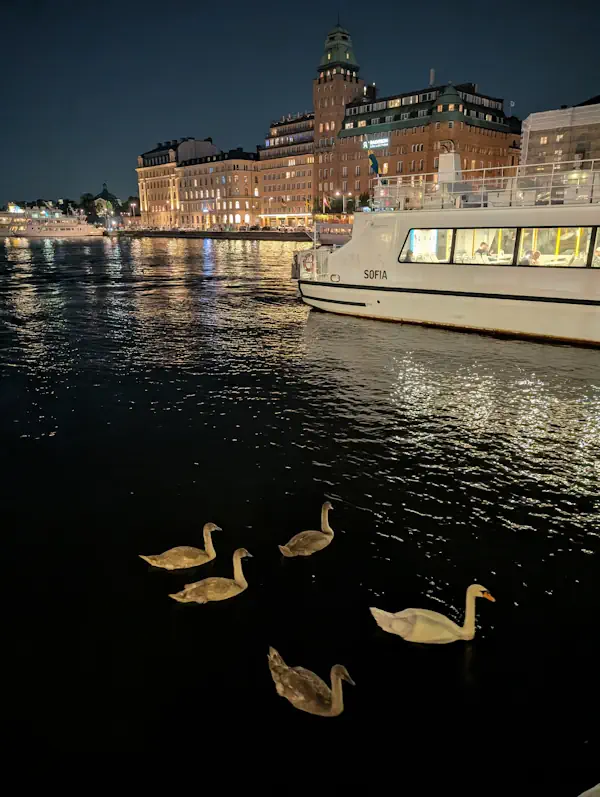
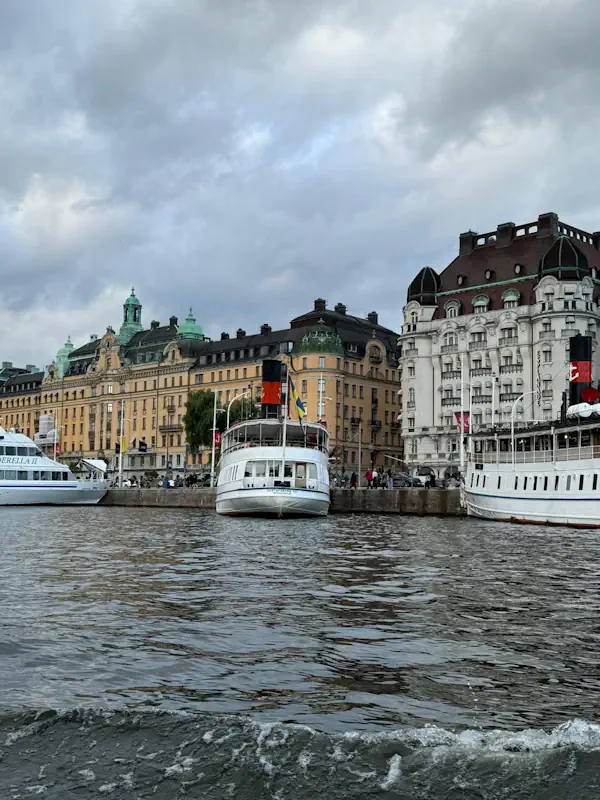
Coming out of Gamla Stan on the north side, you follow the water and come out onto Strandvägen. It’s a seafront boulevard about a kilometre long, 79 metres wide, lined with wooden sailing boats moored along the quay.
The whole thing was built quickly: most of the 24 buildings date from the 1890s, finished just in time for the Stockholm World’s Fair in 1897. It shows — the consistency is pretty staggering. The historic tram on line 7 still runs along it, if you fancy taking it easy.
At the end, you reach Östermalm and Stureplan. It’s the square recognisable by its mushroom-shaped concrete shelter, the Svampen, which serves as a meeting point for the whole city. Around it, within a two-block radius: Birger Jarlsgatan, Sturegatan, Grev Turegatan. Cocktail bars, clubs, restaurants. Riche has been open since 1893, Café Opera is in the Royal Opera building.
The downside, and it’s a real one: the dress code isn’t decorative. Shirt, dark trousers or well-cut jeans, proper shoes. Trainers and a t-shirt will be turned away at the club doors. And entry ranges from free to 350 SEK, about thirty euros, depending on the night.
How much a night out in Stockholm costs
Let me warn you: the price gap between districts is huge. It’s not a detail, it’s a factor of two to three on the same beer.
| Drink | Södermalm / local bar | Stureplan / Östermalm |
|---|---|---|
| Beer 40-50cl | 40 – 90 SEK (€3.60 – 8) | 100 – 160 SEK (€9 – 14.50) |
| Cocktail | ~120 SEK (€10.80) | 170 – 250 SEK (€15 – 22.50) |
| Glass of wine | 50 – 60 SEK (€4.50 – 5.40) | 120 – 180 SEK (€10.80 – 16.20) |
| Main course | From 150 – 200 SEK (€13.50 – 18) | Considerably more |
So the combination that works: dinner in Södermalm or Gamla Stan, head up for a drink in Östermalm. You get the atmosphere of both without dropping €100 a head.
The rainy-day version: the Vasa Museum and the ABBA Museum
Right, this was our plan B, and we didn’t use it. But it was ready, and it fits perfectly into a day, because both museums are on the same island, ten minutes’ walk from each other. Handy.
Djurgården is Stockholm’s green island, east of the centre. You get there by tram 7, bus 67, or much better: ferry 82 from Slussen, about a 10-minute crossing, included in any transport ticket. Even in the rain, it’s still a free boat ride.
The Vasa Museum, the best museum in the city
The story fits in three lines and it’s incredible. The Vasa was the most lavishly decorated warship of its time. Grand launch, national pride, all of that.
On 10 August 1628, it was time for its first outing beyond the harbour, to show what it could do. When suddenly, after barely… a kilometre or so, it sank with around thirty dead on board. Bearing in mind it was still in the harbour! As failed inaugurations go, it’s hard to do more ridiculous. But at least it didn’t get worn out 😀
It was raised in 1961, after 333 years at the bottom of the water. More than 98% of the ship is original.
It’s the only 17th-century ship in the world preserved almost intact, and it stands three storeys high in a dark hall. It’s worth the trip even if museums bore you.
Practical side: 240 SEK (about €22) from 1 May to 30 September, 195 SEK (about €18) the rest of the year, free up to 18. Card payment only, no cash. Open 8:30am-6pm in June, July and August, 10am-5pm the rest of the year, with late opening on Wednesdays until 8pm. The museum suggests 90 minutes for a visit.
And now the catch, because most blogs tell you the opposite. The museum spells it out: tickets bought in advance give no priority in the queue. Buying online saves you time at the till, not at the entrance. It’s the most visited museum in Scandinavia, so aim for opening or late afternoon, and avoid the 11am-2pm slot.
The combined Vasa + Vrak ticket, the museum of shipwrecks right next door, starts at €28 and includes an audio guide in French for both. That’s the one I’d get.

The ABBA Museum, and why it’s not a tourist trap
I put this moment off as long as possible; I’ve always found something better to do because, unlike my wife, I’m not an ABBA fan. Except that now we’re going back in September, and I know I’ve run out of options, we’re going to have to do it. And I’ll admit I thought I’d go in with a (big) prejudice. A museum dedicated to a pop group, at €25 a ticket, smells of merchandising. Except that the content is, apparently, very well done.
Concretely: the original stage costumes, including those from the 1974 Eurovision, a replica of the Polar studio where you handle the isolated vocal and instrumental tracks from real recordings, a holographic stage where you sing next to avatars of the four members, and Benny Andersson’s piano linked live to his own, at his home, which can start playing by itself when he plays.
Right, I’ll tell you more in a few weeks after the compulsory visit.
Price: 249 to 329 SEK depending on the season, or €22 to 30, 100 to 120 SEK for 7-15s, free under 7. The lowest price is obtained by booking online in advance. Open 9am-8pm from June to mid-August, 10am-6pm from September to December. Reckon on 1h30 to 2h.
Two things to know. The first: booking is done in 30-minute slots. If you take 10am, you enter between 10am and 10:30am — but once inside, no time limit, you can stay until closing. The second is the real downside: the audio guide isn’t included in the ticket, it’s bought on site. And in summer, the slots go several weeks in advance, you really must book.

The two other options, and the one to avoid
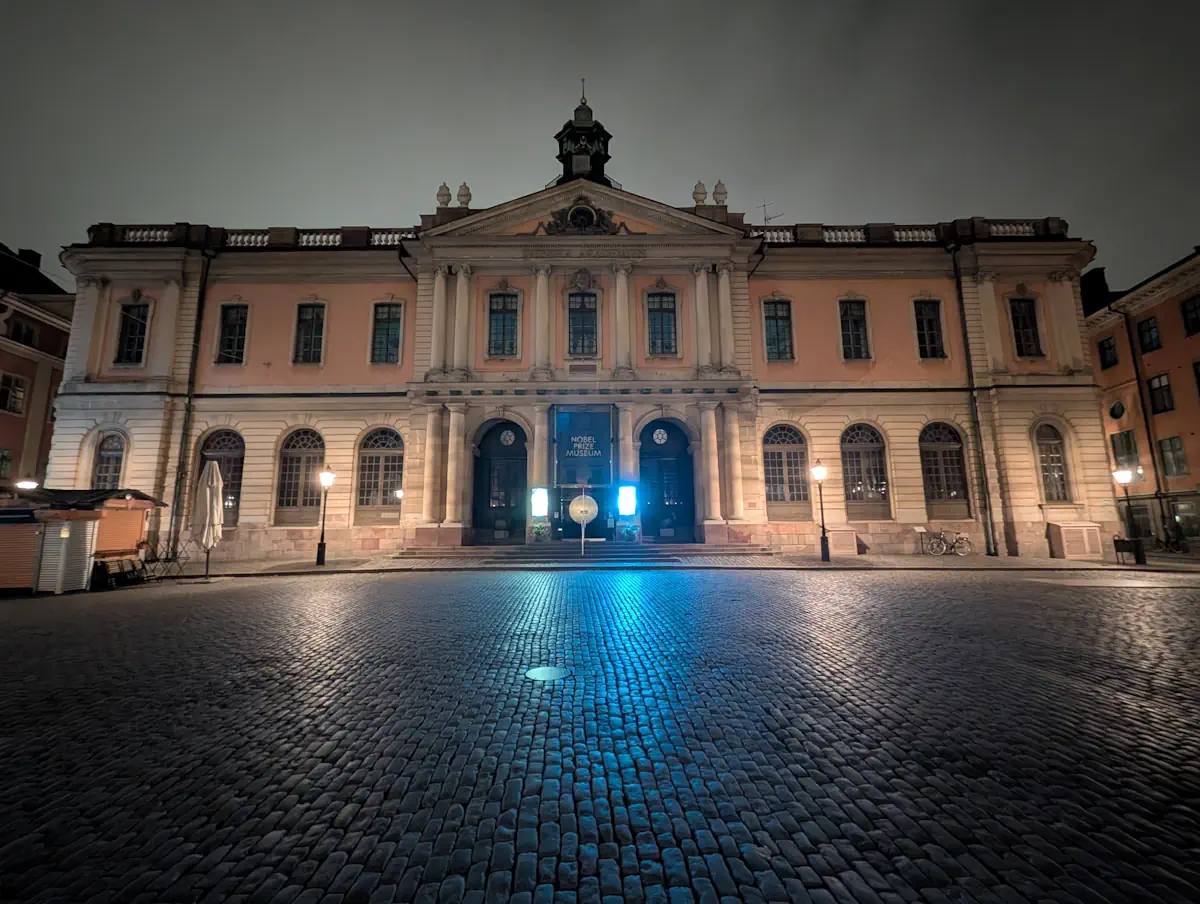
The Nobel Museum, in Gamla Stan, is housed in Stockholm’s former Stock Exchange, on Stortorget square. Entry from €14, with daily guided tours in English included. It’s small: allow an hour, no more. It’s perfect as the third museum of the day.
Fotografiska, on the Stadsgårdshamnen quay in Södermalm, is 2,500 m² of contemporary photography and, above all, an unbeatable timetable: open every day from 10am to 11pm. Entry from €18, current exhibitions included. It’s the only place on this list where you can still get in at 9pm.
And there’s a fourth, really interesting option right under your feet: the metro. More than 90 stations on the Stockholm network are decorated, painted or carved into the bare rock, which makes it the longest art gallery in the world. There are guided metro tours in English, two hours for €33, with one thing to bear in mind: the travel ticket isn’t included, you have to buy it separately.
And the one I’d save for when we have more time on site: Skansen. It does look great, though, it really does. It’s the oldest open-air museum in the world, 150 historic buildings and a Nordic zoo, but the site covers 300,000 m² and needs 3 to 4 hours to be worthwhile. On a single day, it’s too much. Good news all the same if you go on another day: it’s free for ages 0-15, though you still need to book a free ticket online.

Getting around Stockholm in a day
Central Stockholm is very easy to do on foot. Gamla Stan, Norrmalm and the north of Södermalm are all less than 25 minutes’ walk from one another. A travel ticket becomes useful for Djurgården and for heading back in the evening.
Really handy tip: no need to buy tickets in advance (unless you want the day passes), there are machines at every stop, you pay contactless with your card or phone, and there you go! It beeps and you’re done. Nothing more.
The SL fares, which cover the metro, buses, trams, commuter trains and ferries:
| Ticket | Price | In euros |
|---|---|---|
| Single ticket (75 min, unlimited transfers) | 43 SEK | ~€3.9 |
| 24 hours | 180 SEK | ~€16 |
| 72 hours | 360 SEK | ~€32.5 |
| 7 days | 470 SEK | ~€42.5 |
Under-7s travel free with an adult holding a valid ticket. Reduced fare for those aged 65 and over, students and young people up to 20: 26 SEK for a single ticket, 110 SEK for 24 hours.
The detail I find lovely: the SL ticket covers ferry 82, which links Slussen to Skeppsholmen and Djurgården all year round, a crossing of about 10 minutes. So you get a little boat trip included in your metro ticket.
The maths is simple: the 24-hour pass pays off from 4 or 5 journeys. Below that, buy single tickets, you’ll be walking anyway. One last honest point: these are the current fares, but check on sl.se before you go, several online guides still quote pre-2025 prices.
Arriving from Arlanda airport
Arlanda is about forty kilometres from the centre, and when you’ve only got a day on site, travel time counts double. The three options that hold up:
The Arlanda Express is 18 minutes to the central station, a departure every 12 to 15 minutes, from 4am to 1am. At the ticket office it’s 340 SEK, or €31. By booking online in advance, you come in around €21. It’s the fastest, and by far.
The Flygbussarna bus is 129 SEK (about €12) for 40 minutes to Cityterminalen. First departure from the airport at 4.10am, last at 1.38am.
The FlixBus is the cheapest: from €6.50, for a 50-minute journey, every 30 to 60 minutes between 4.45am and 11.25pm.
My call for a single day: Arlanda Express. Yes, it’s three times the price of the Flixbus. But over a return trip you get back more than an hour on site, and an hour out of 24 changes the programme.
I’ve compared the eight solutions, taxis and ride-hailing included, with exact prices and stops, in the article on the journey between Arlanda airport and central Stockholm.

Where to stay if you’re only staying one night
When you’re only staying one night, the neighbourhood matters more than the hotel. Three approaches, and only one is right depending on your programme.
Norrmalm if you arrive late or leave early: you’re next to the central station, so to the Arlanda Express and Cityterminalen. The area is modern and functional, it lacks charm, but it’s unbeatable on logistics.
Gamla Stan if you want to enjoy the old town in the evening: you step out of the hotel and you’re there. In return the rooms are smaller and more expensive for the same standard, old buildings oblige.
Södermalm if you’re planning to go out: that’s where the bars are cheapest, and you’re a 20-minute walk from Gamla Stan. The downside is that you’re further from the station on the morning of departure.
Here are the four I’d book, one per approach.
I’ve detailed Stockholm’s nine neighbourhoods and around forty places to stay, from hostels at €17 a bed to hotels at €485, in the complete guide on where to stay in Stockholm.

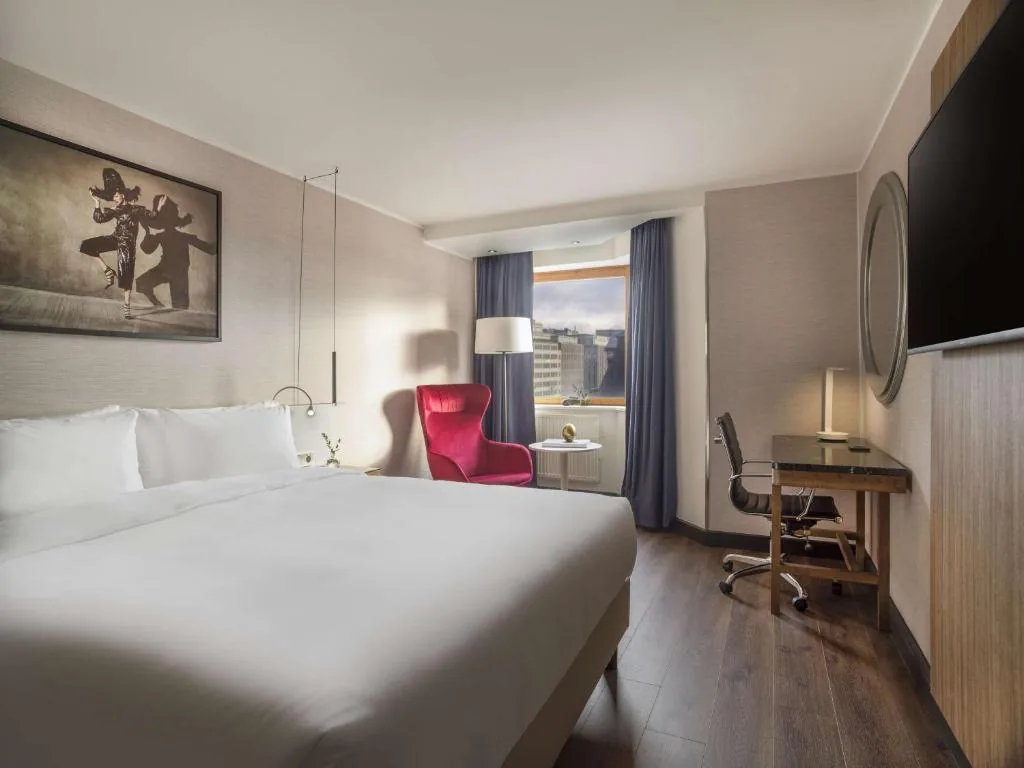
Norrmalm – city centre, 5 min from Gamla Stan
- Rooftop spa and pool with views over the rooftops
- A 10-min walk from the central station and the boat departures
- The lobby's « outdoor » vibe is very pronounced – you'll love it or not
From 120€/nightFree cancellation
Check availability
Gamla Stan – Lilla Nygatan, in the old town
- In a 17th-century house, 3 min from Stortorget
- Gamla Stan metro 200 metres away
- Rooms are small and sometimes dark – that's the trade-off of an old building
From 105€/nightFree cancellation
Check availability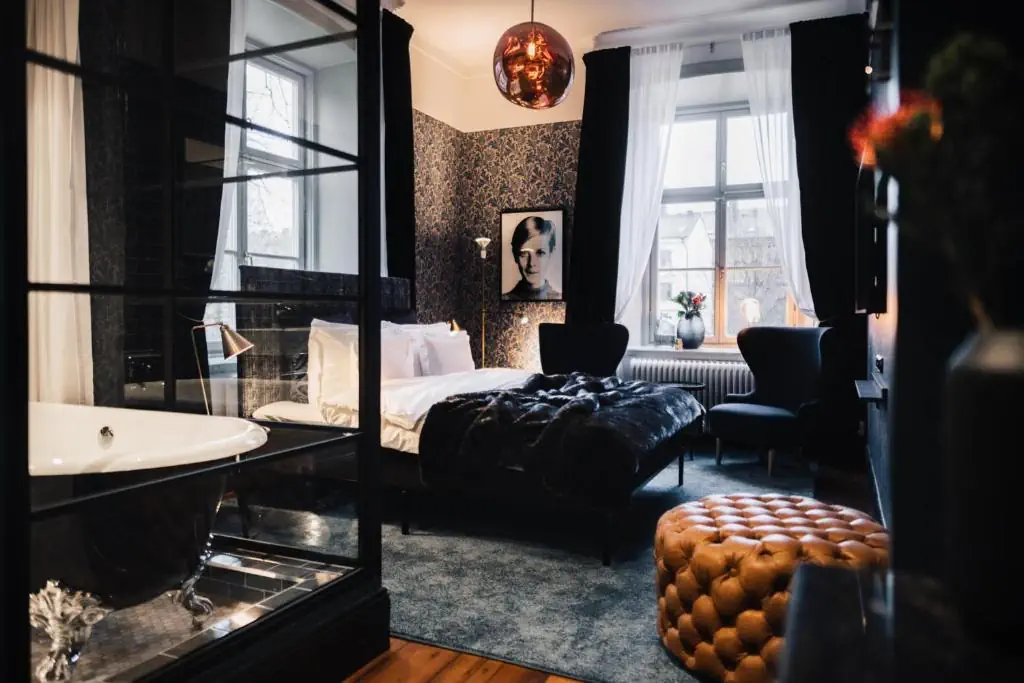
Södermalm – SoFo district, bar side
- In the middle of the city's cheapest bars and restaurants
- Quiet inner courtyard for breakfast
- A 20-min walk from Gamla Stan, or metro from Medborgarplatsen
From 130€/nightFree cancellation
Check availability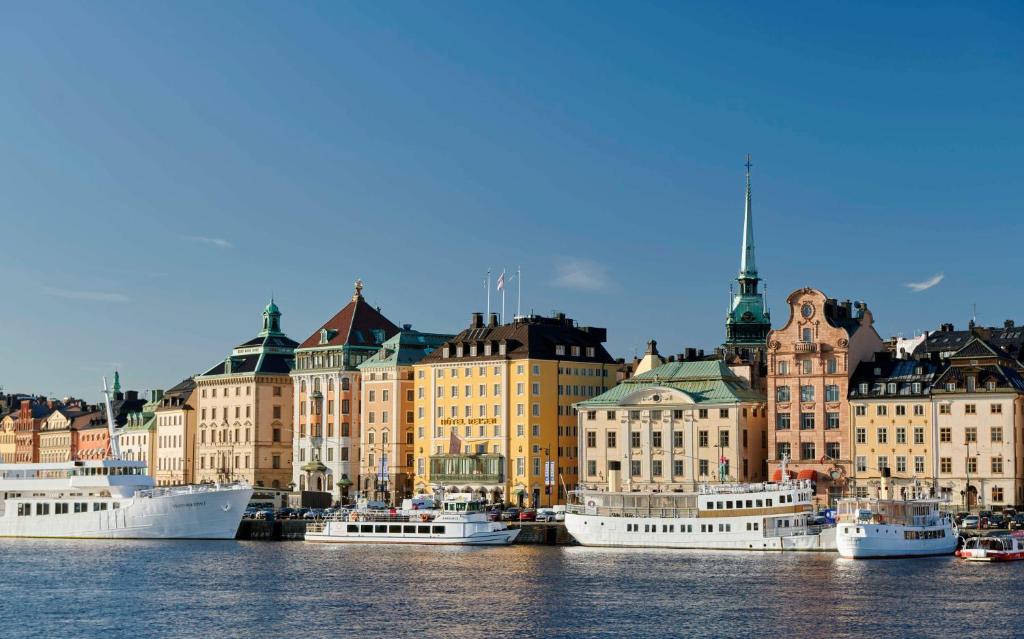
Gamla Stan – Skeppsbron, facing the water
- On the quay where some of the archipelago boats depart
- Spa and sauna in the 17th-century vaulted cellars
- The quay is busy – ask for a courtyard-side room if you're a light sleeper
From 170€/nightFree cancellation
Check availabilityWhen to come, and how much daylight you’ll have
This is the factor that changes everything when you’ve only got one day. At Stockholm’s latitude, the difference between June and December isn’t the weather, it’s the number of daylight hours.
| Date | Day length | What it changes |
|---|---|---|
| 21 June | 18h37 | Museums until 6pm then a walk at sunset around 10pm |
| 1 September | 14h18 | Still very comfortable, full programme |
| 30 September | 11h46 | You have to start squeezing things in |
| 21 December | 6h09 | Sun from 8.45am to 2.50pm, half a useful day |
In June and July, it never really gets pitch dark. On 21 July, the sun rises at 4.09am and sets at 9.37pm. That’s the real argument for coming in summer: you can string together museums, boat and dinner without ever rushing.
On rain, we need to bust a myth. Stockholm gets 539 mm a year, less than Paris. And the wettest months are July (72 mm) and August (66 mm), in the form of short showers. The driest month is March, with 26 mm.
So it’s not the rain that ruins a day in Stockholm. It’s the light. In November, it rains 10 days out of 30 and it’s only light for 7 hours, with an hour and a half of sunshine a day. In July, it rains more in volume but you have 18 hours of daylight to wait out the shower.
If I had to pick a month for a single day: early September. Still 14 hours of daylight, the archipelago in its colours, and far fewer people than in July.
How much a day in Stockholm costs
Figures per person, excluding accommodation, with both versions.
| Item | Good-weather version | Rain version |
|---|---|---|
| Airport return trip (Flixbus / Arlanda Express) | €13 – 42 | €13 – 42 |
| 24h transport in the city | €16 | €16 |
| Main activity | Cruise, from €25 | Vasa + Vrak, from €28 |
| Second activity | — | ABBA, €22 – 30 |
| Lunch | €15 – 20 | €15 – 20 |
| Dinner and a drink | €40 – 70 | €40 – 70 |
| Total | €109 – 173 | €134 – 206 |
In short, reckon on around €120 per person for a decent day, and double that if you dine in Östermalm and head back by taxi. The three items that really move the bill: the airport journey, the number of museums, and the neighbourhood where you dine.
The item I wouldn’t cut back on: the cruise. It’s €25 and it’s what stays with you.

Frequently asked questions about a day in Stockholm
Is a day in Stockholm enough?
Well, having already visited Stockholm X times for a single day, I’d say… no. Every time I tell myself it’s not enough. But I do it again, go figure.
To get a real sense of the city, I’d genuinely recommend a minimum of 2 days, because it’s a truly pretty city, a real pleasure to wander around, with nice museums. 3 or 4 days, you take your time, you make the most of the nature.
Do you need to book the cruise in advance?
In July and August, yes. The rest of the year, the evening before is more than enough, and since most operators cancel free of charge up to 24 hours ahead, you can book based on the next day’s weather.
The Vasa Museum or the ABBA Museum, if I can only do one?
I’d say the Vasa. A ship from 1628 preserved at 98% and raised intact from the bottom of the harbour, that exists nowhere else. My wife would say ABBA, but it’s a museum you can find elsewhere in another form. And the Vasa is cheaper.
Can you visit Stockholm without using public transport?
Yes for Gamla Stan, Norrmalm, Riddarholmen and the north of Södermalm: everything is less than 25 minutes’ walk away. The city centre is large, but superb, so wandering around it and crossing it is really pleasant.
No for Djurgården and therefore for the Vasa and ABBA museums: there you need ferry 82, tram 7 or bus 67. Reckon on about thirty minutes on foot from the centre if you really insist.
Is Stockholm an expensive city?
Yes, but less than Oslo. The museums are around €20 and free for children at the Vasa as at Skansen, transport is reasonable, and many of the finest things (Gamla Stan, Monteliusvägen, Riddarholmen, the changing of the guard) cost nothing. What hurts is the alcohol and the restaurants in Östermalm.
What’s the best time of day for Gamla Stan?
Before 10am or after 7pm. In between, Västerlånggatan street is packed in summer. The evening remains my favourite time, with completely empty alleyways. And above all the lighting on the island is magnificent, old-style.
Can you do a day in Stockholm in winter?
Yes, but increase the share of museums. In late December, you have 6 hours of daylight, sun from 8.45am to 2.50pm. Do the cruise fairly early if the weather’s good. If it’s grim, then it’s exactly the kind of day where the Vasa + ABBA plan becomes the smart move.
In conclusion
A day in Stockholm is great, but you have to make your choices early. Old town in the morning, views from Södermalm in the late morning, boat in the afternoon, Gamla Stan and a drink in the evening: that’s what we did, the weather was gorgeous, and I’d do exactly that again
If it rains, don’t dig your heels in over the boat. Switch to Djurgården, do the Vasa when it opens and ABBA on a time slot, and finish at Fotografiska, which stays open until 11pm. You’ll have a completely different day, and honestly, a very good one too.
The only real trap is wanting to do everything. The Royal Palace, the city hall, Skansen, the Vasa and a cruise in the same day is mathematically impossible, and you’ll end up running around without seeing anything.
Honestly, if you’re still hesitating about stopping for a day on your way up north, do it. And if you have a question about the programme or the order of the stages, don’t hesitate to get in touch!
A few extra resources to prepare your time in Stockholm and the north
I’ve written quite a bit about Stockholm and the route heading up towards Scandinavia, so here are the main articles that will help you sort out the rest of your trip.
- Where to stay in Stockholm: the best neighbourhoods and hotels – all 9 neighbourhoods reviewed, with 4 addresses each and their real flaw
- Choosing your Stockholm archipelago cruise – the 11 boats compared by duration, price and language, with a summary table
- Getting from Arlanda airport to central Stockholm – train, bus, ride-hailing and private driver, from €6.50 to €120
- Taking the Öresund Bridge between Denmark and Sweden – prices, toll and tips if you arrive by car from the south
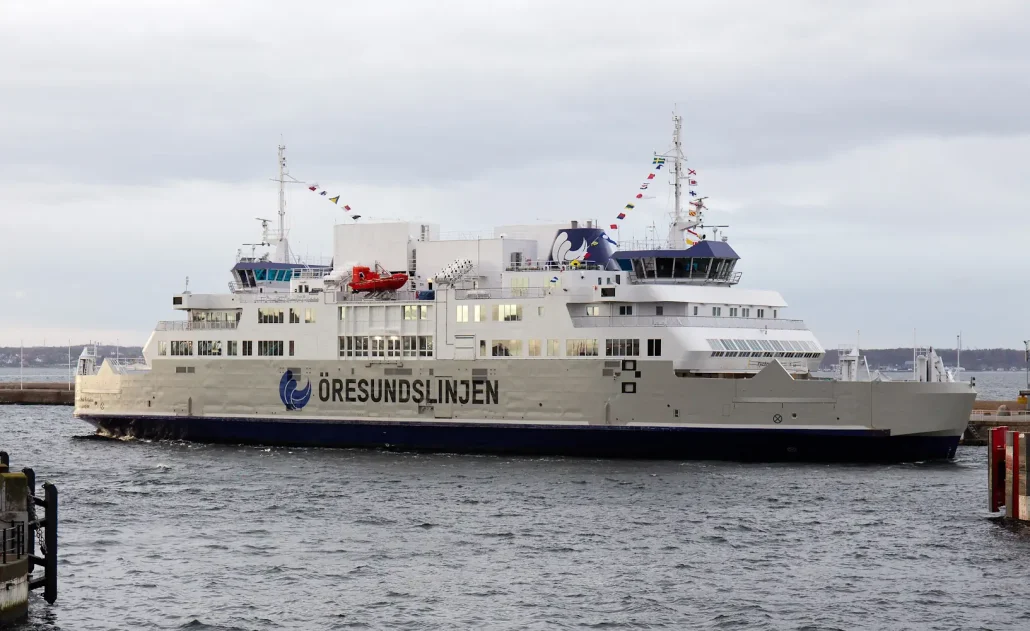
- The ferry between Helsingør and Helsingborg – the other way to cross from Denmark to Sweden, prices and times
- What to do in Tromsø and its region – the complete guide to the end of the road, if you carry on further north
- Spending a weekend in Oslo – the other Scandinavian capital, to compare with Stockholm
- When to go to Norway – to time the next leg of your trip for the right season
- Understanding all about the Northern Lights – because it’s often the real reason for going that far north
- Find all the blog’s articles here – all the destinations, sorted by country