Last updated on
You know what’s great about road trips? Stumbling across stunning places you’d never planned to see. And that’s exactly what happened to us with Maulbronn Monastery.
We were taking it easy on the way back from our week in the Bavarian Alps, pretty worn out after a string of castles, lakes and mountains. On the way out, we’d already made a great stop at Rothenburg ob der Tauber, that gorgeous medieval town with its half-timbered houses and ramparts. So naturally, on the way back we thought “it’d be cool to find another nice little stop to break up the drive”.
The plan was to drive at an easy pace to somewhere around Strasbourg, spend the night there and set off again the next day. Except that, while looking at the map for a nice place to visit with the keyword “Unesco” (you never know!), we spotted that we were right next to Maulbronn Monastery. Naturally, that piqued my curiosity a bit. A quick look at the photos and bam! It’s only THE best-preserved medieval monastery north of the Alps. No big deal.
So, change of plan. Let me explain why you really should visit if you’re in the area.
Why you absolutely have to visit Maulbronn Monastery
First thing to know: Maulbronn Monastery isn’t just any monastery. Founded in 1147 by Cistercian monks (you know, the ones dressed in white who took a vow of poverty but put up seriously impressive buildings), it’s literally the most complete and best-preserved medieval monastic complex in Europe. UNESCO got it right, listing it as early as 1993.
What makes this place unique is that it’s an intact record of 400 years of architecture. Every style is there: from Romanesque to late Gothic, with that transition between the two that went on to influence Gothic architecture right across Central and Northern Europe. It’s truly exceptional!
But beyond all that, here’s why you really should go:
It’s steeped in history and surprisingly well preserved. We’re not talking about a ruin or a rebuilt site: everything here is original, or near enough. The refectories, the cloister, the dormitories, the church… it’s all there, intact, since the 12th century. It’s rare to be able to wander around a place like this.
It’s peaceful, far from the tourist hordes. Unlike Neuschwanstein, where we couldn’t get in because it had been sold out for months, here it’s absolute calm. Even in the middle of August, we had peace and quiet. You can take your time, sit down for a bit, enjoy it.
The architecture is simply stunning. It’s a real art history lesson, live. You can see the evolution from Romanesque to Gothic (I still struggle a bit to tell it all apart, but who cares, it’s beautiful!), and you understand how the monks influenced architecture across Europe. And it’s beautiful, really beautiful.
It’s not expensive at all. €10 for an adult ticket to a UNESCO site of this quality: honestly, that’s a steal.
The surrounding landscape is worth it too. The monastery vineyards, the Cistercian ponds, the medieval water system that still works… It’s not just a building, it’s a whole cultural landscape that has survived.
We thought we’d do a quick visit on the way. Wrong. We spent a good 3 hours there and could have stayed longer.
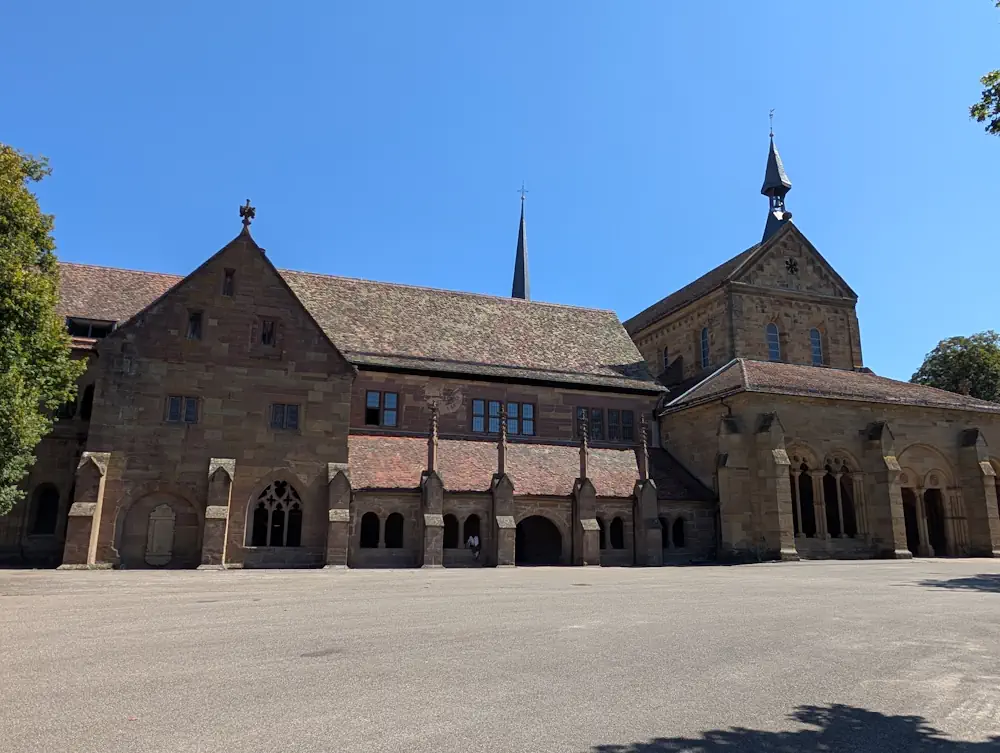
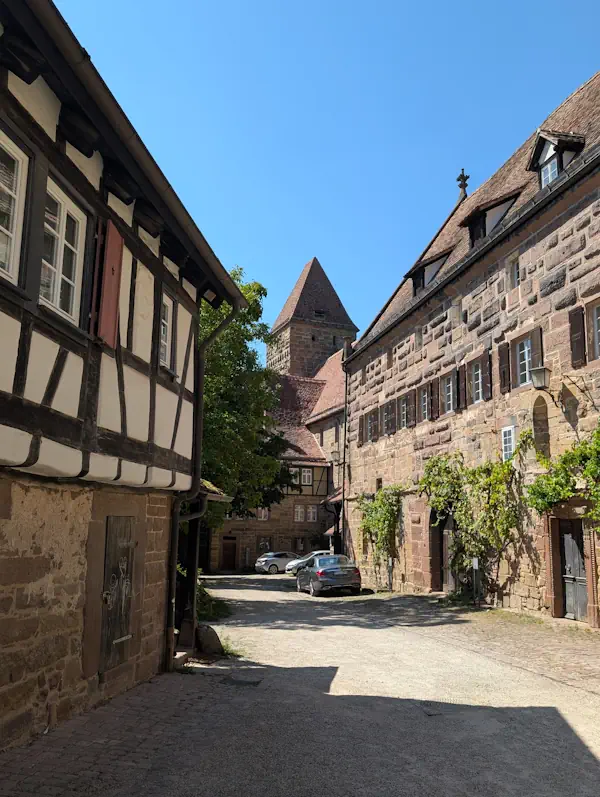
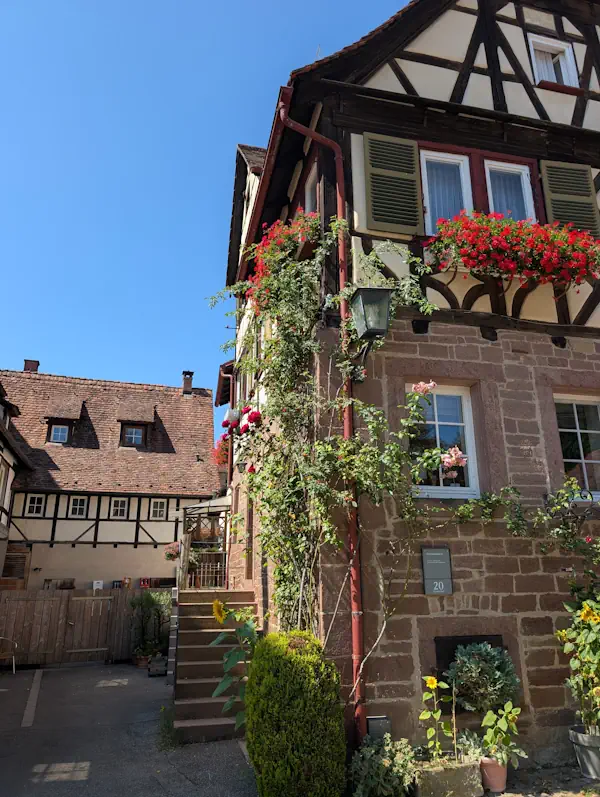
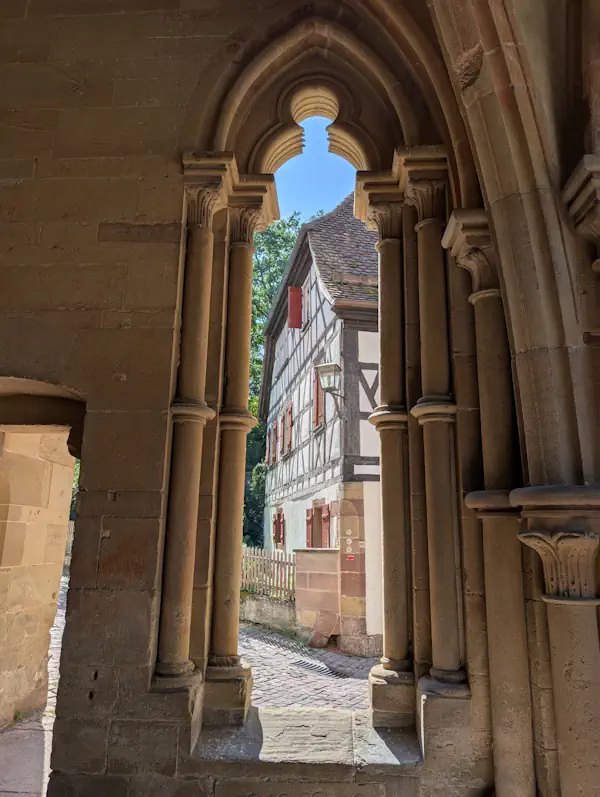
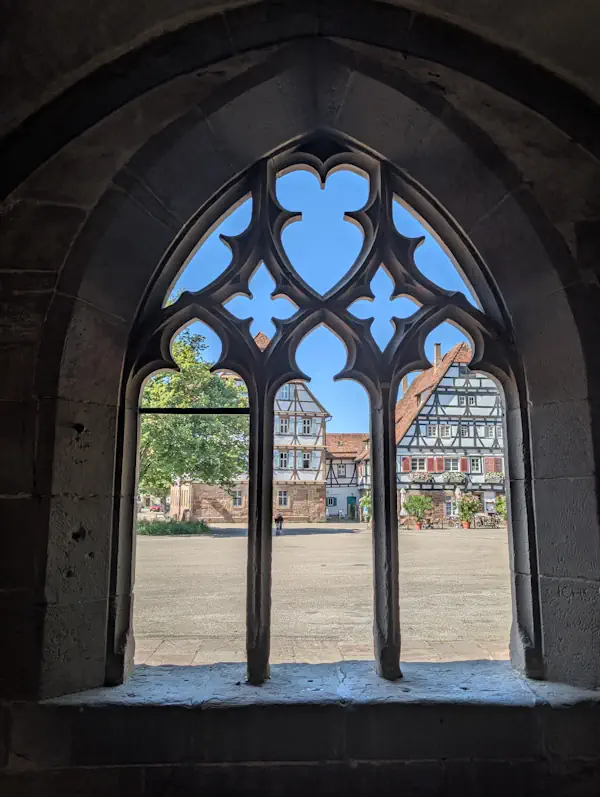
The arrival alone is quite something. The monastery is surrounded by a fortified wall with medieval towers and half-timbered houses dating from the Middle Ages right up to the 19th century. It’s like walking into a little monastery town, with a really unique atmosphere. Nothing like the cold feel of some tourist sites. Here, it feels genuinely authentic.
And what’s incredible is that there was hardly anyone there! In the middle of August. You can just turn up, buy your ticket on the spot and enjoy the place without being trampled. It’s pretty crazy that such an exceptional UNESCO site gets so few visitors.
The Paradise and the fountain house
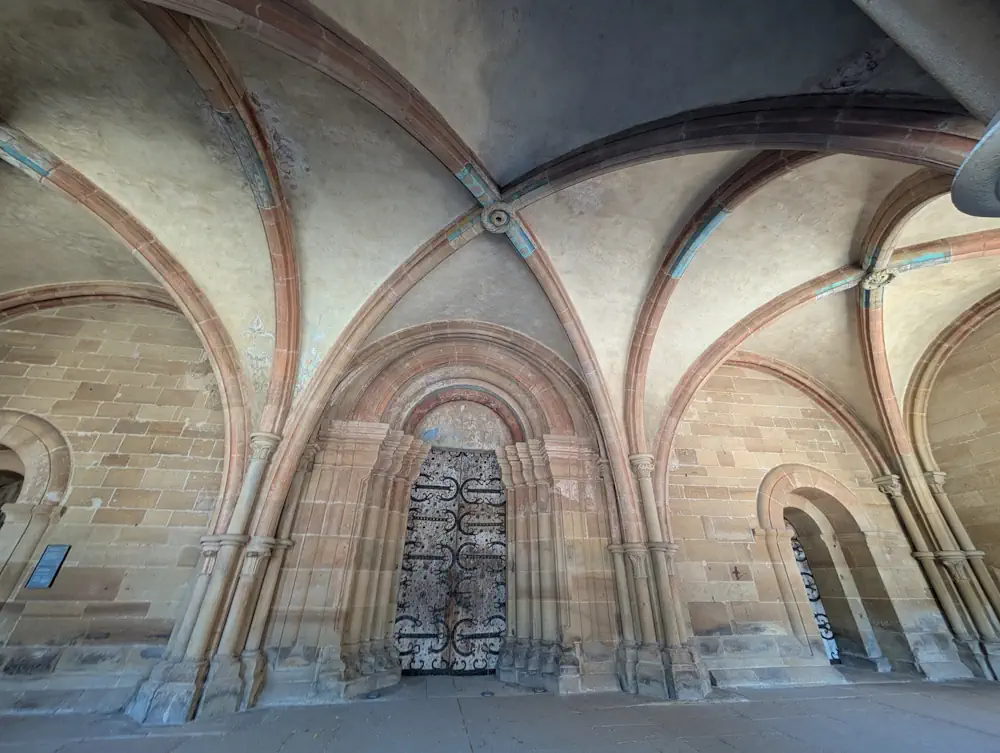
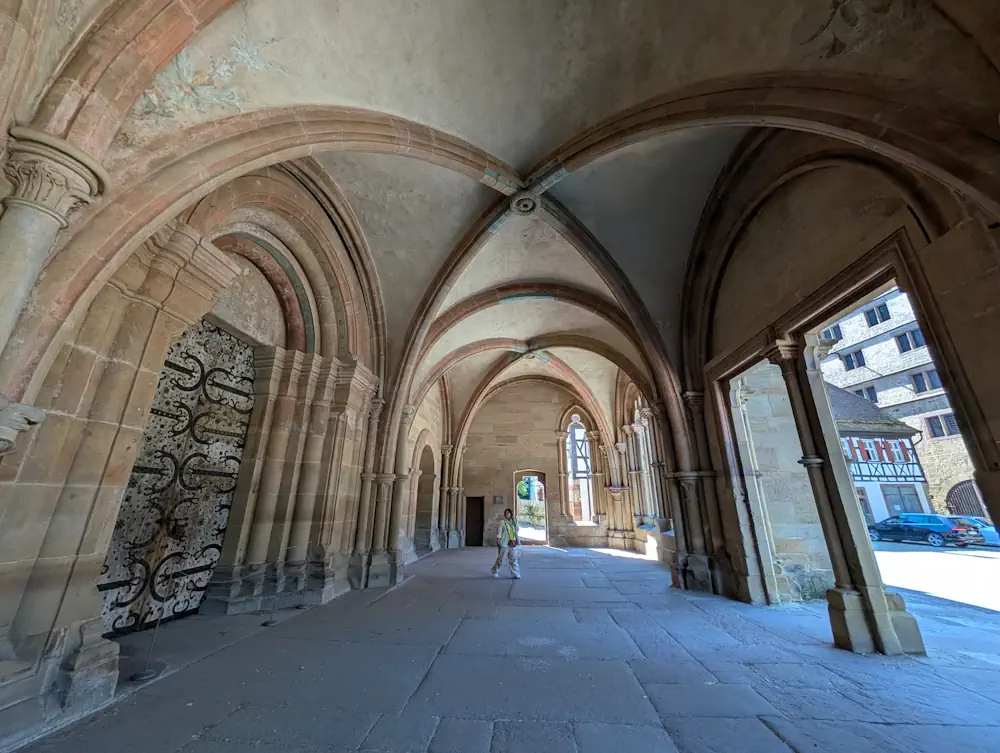
The first thing that blows you away as you walk into the monastery is the Paradise. No, not the one with angels and clouds: it’s the name given to the church entrance (the porch, basically). An absolutely stunning Gothic portico dating from the early 13th century.
The vaults, the columns, the light coming through… it’s the masterpiece of an unknown architect, but honestly, the guy was talented. They call him the “Master of the Paradise” and you can see why. It’s understated but so elegant.
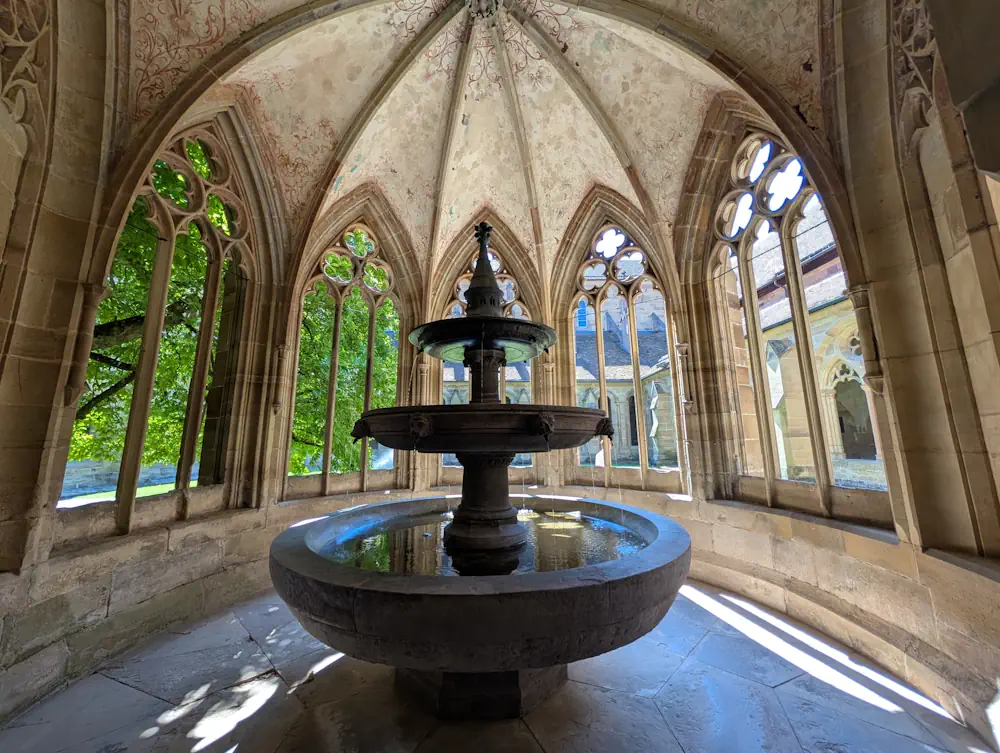
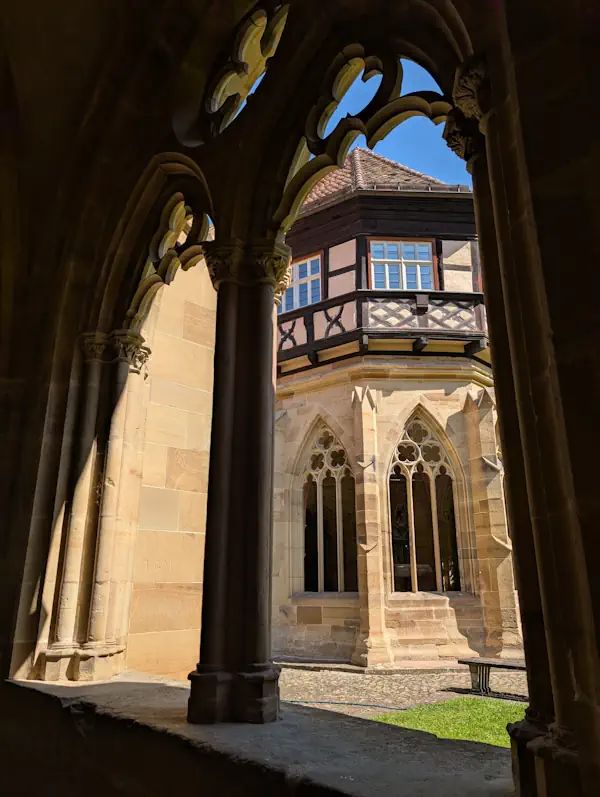
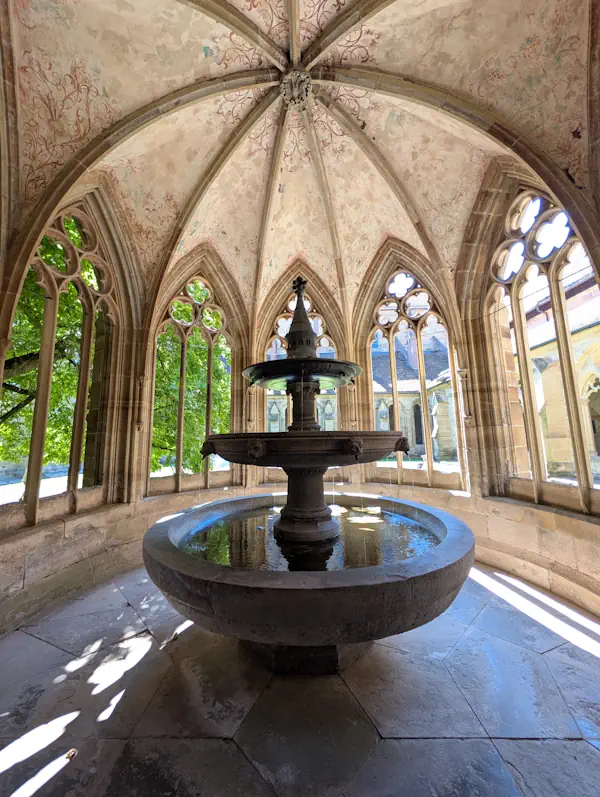
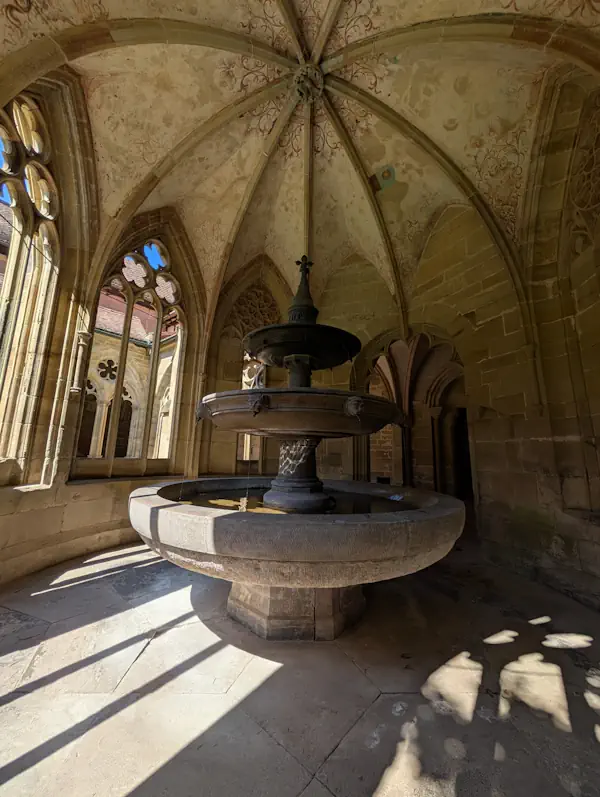
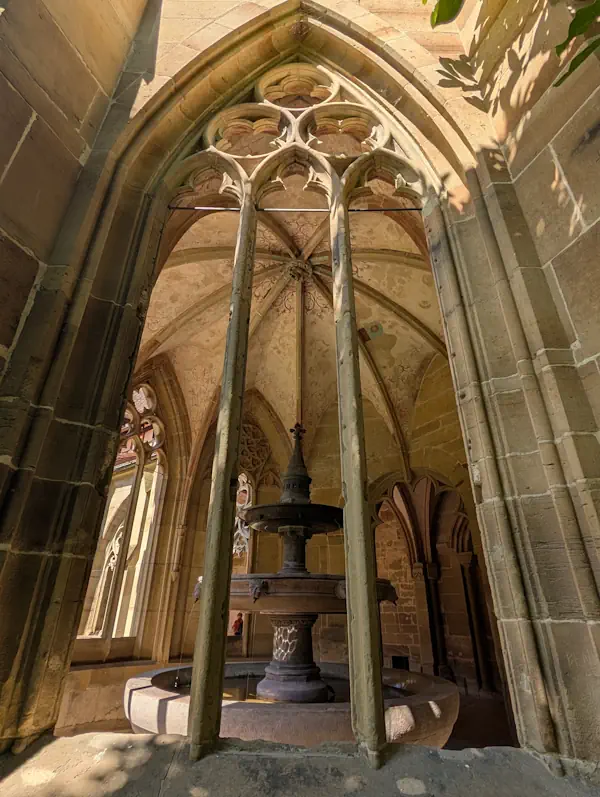
Right next to it is the fountain house (Brunnenhaus). It’s probably one of the most photogenic spots in the monastery. A two-storey structure with a fountain where the water still flows, where the monks came to wash their hands before meals. The half-timbered upper floor was added in the 16th century, but it blends in perfectly.
The water trickling with a steady gurgle, the soothing atmosphere… you could stay for hours just sitting there.
The cloister and the church
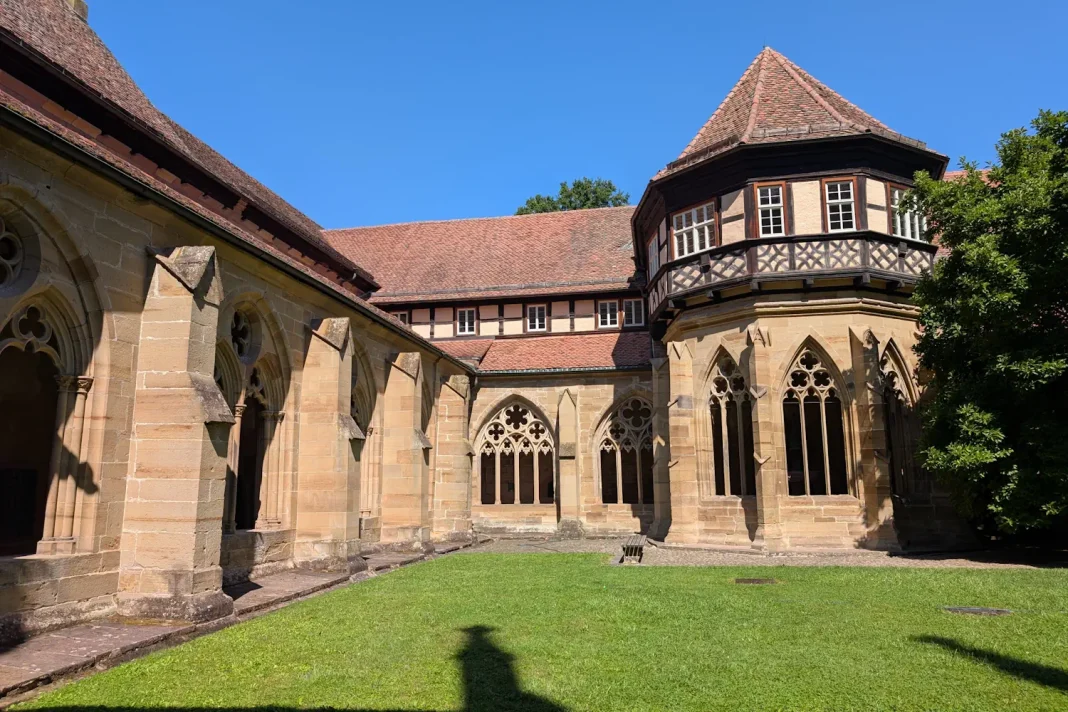
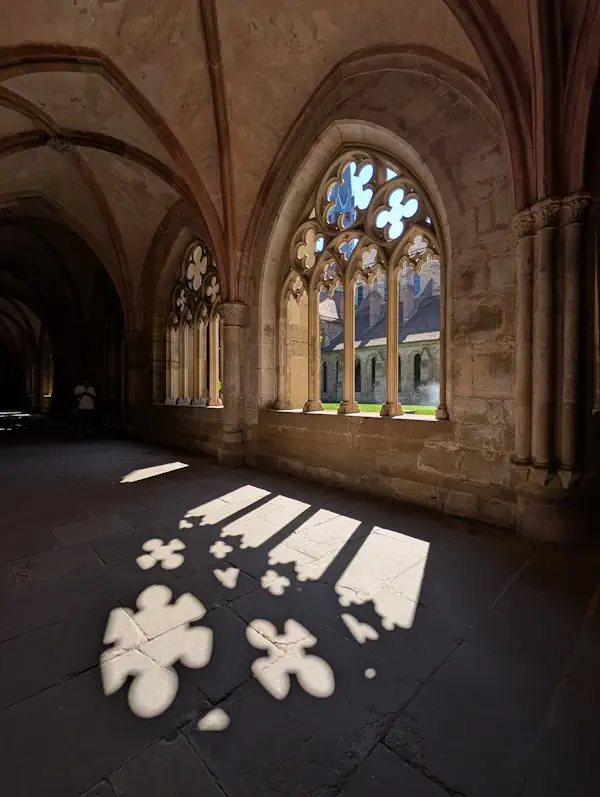
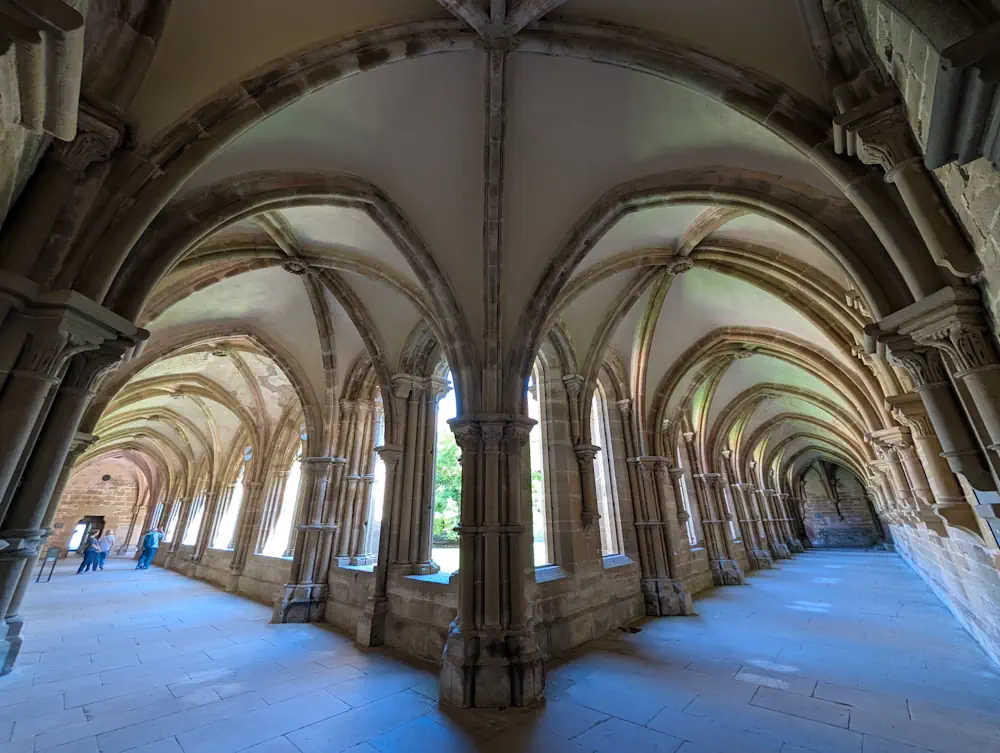
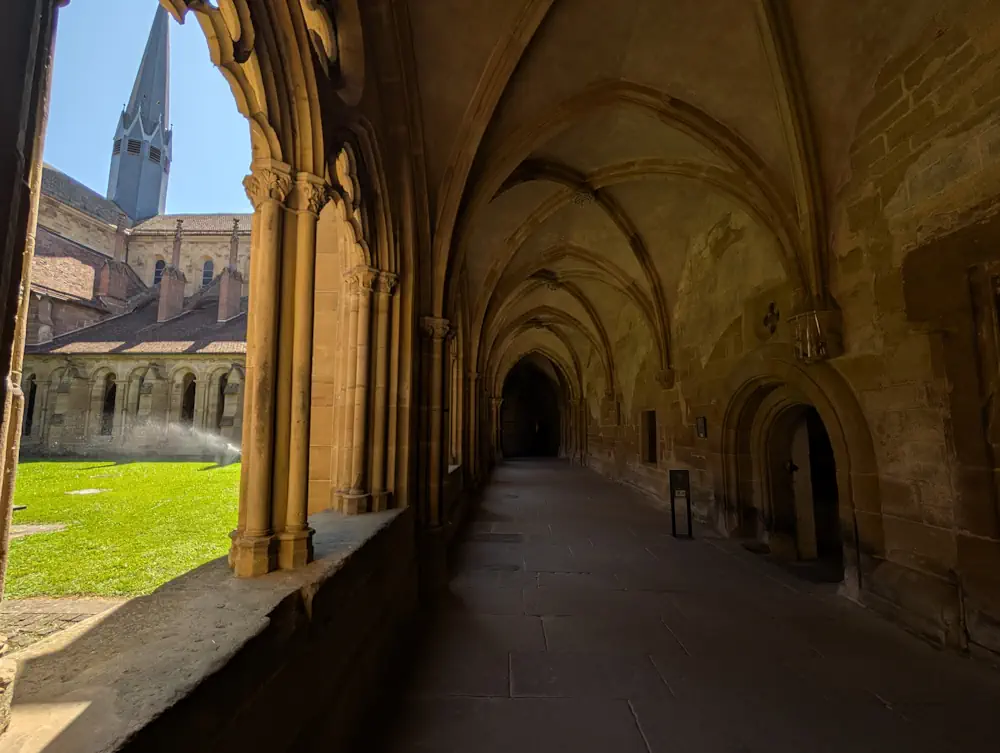
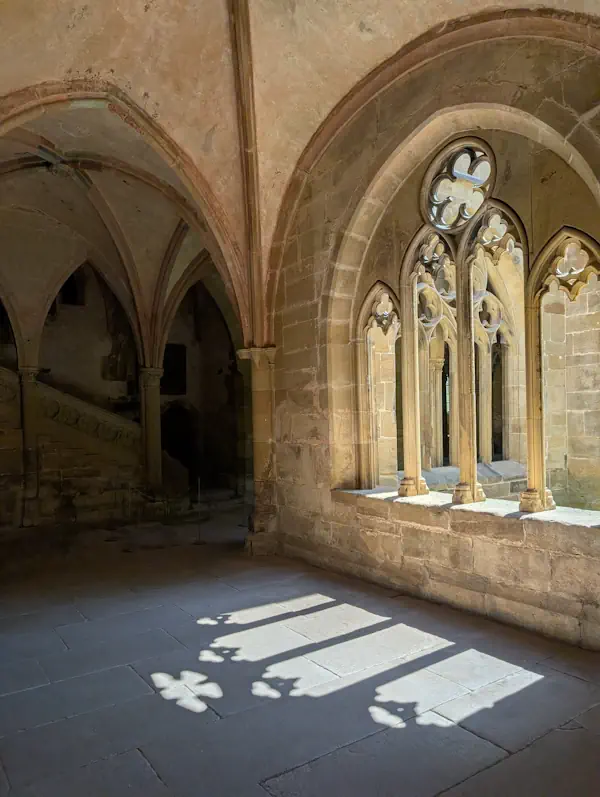
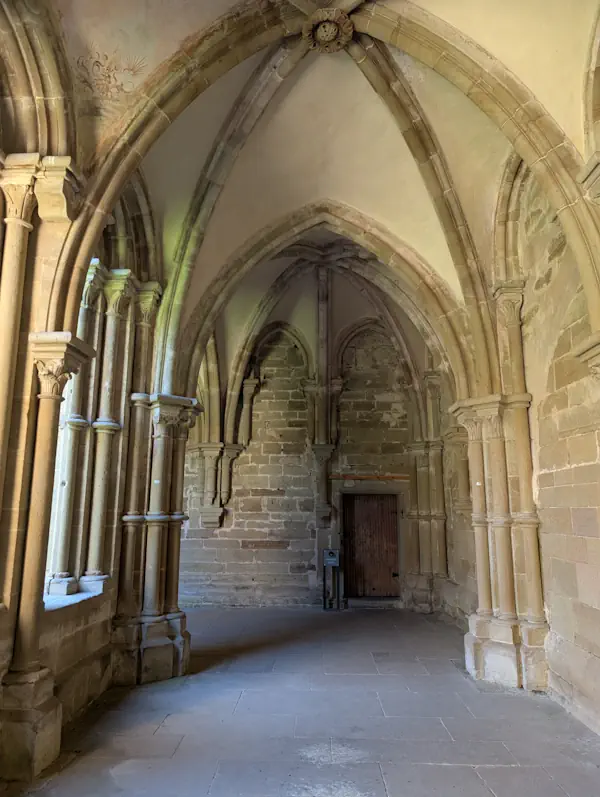
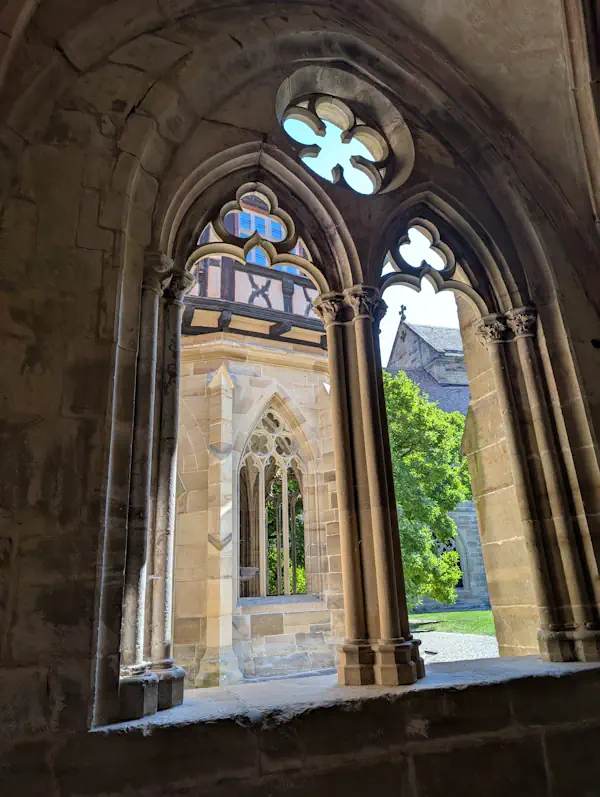
I love cloisters. And here the Gothic cloister is simply stunning. With its vaulted walkways, it was the beating heart of monastic life. The monks would walk here between services, meditating. Today you can do the same, and honestly, you feel something special. The acoustics are impressive: every footstep echoes.
Around the cloister, all the buildings essential to monastic life are still standing: the monks’ refectory (early Gothic) and the lay brothers’ refectory (Romanesque), and it’s really rare for both to have survived. There’s also the chapter house, the dormitory and the warming room (the only heated room in the monastery, the monks weren’t messing about when it came to comfort!).
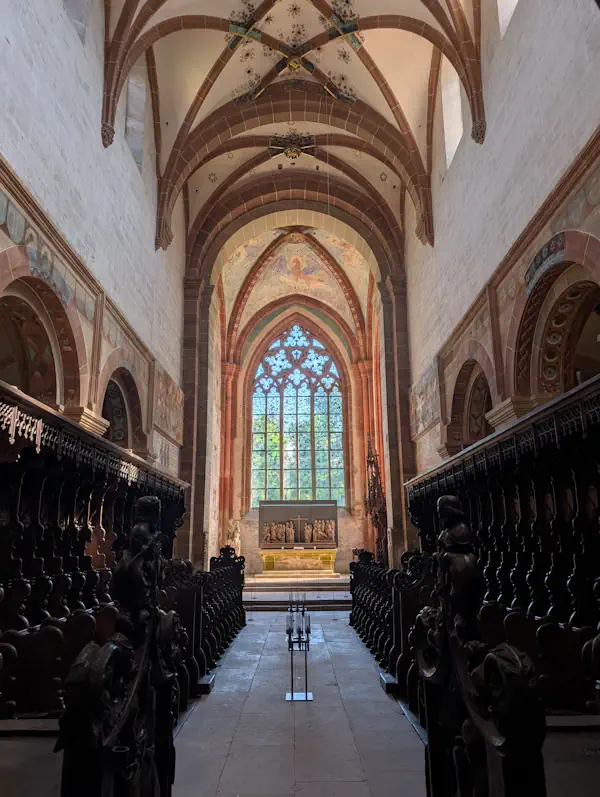
The abbey church, for its part, is an impressive mix of architectural styles. The nave is Romanesque, on two levels, while the choir is Gothic. There’s a stone rood screen that separated the choir monks from the lay brothers. And get this: on the summer solstice, 21 June, a ray of sunlight comes through a stained-glass window and lights up Christ’s crown of thorns, creating what look like red roses where the wounds are. Clever!
Another impressive thing is the 15th-century choir stalls. 92 seats that show how big the monastery was back then. Just imagine, 130 monks and lay brothers lived here in 1440! OK, by 1530 there were only 24 left, but still.
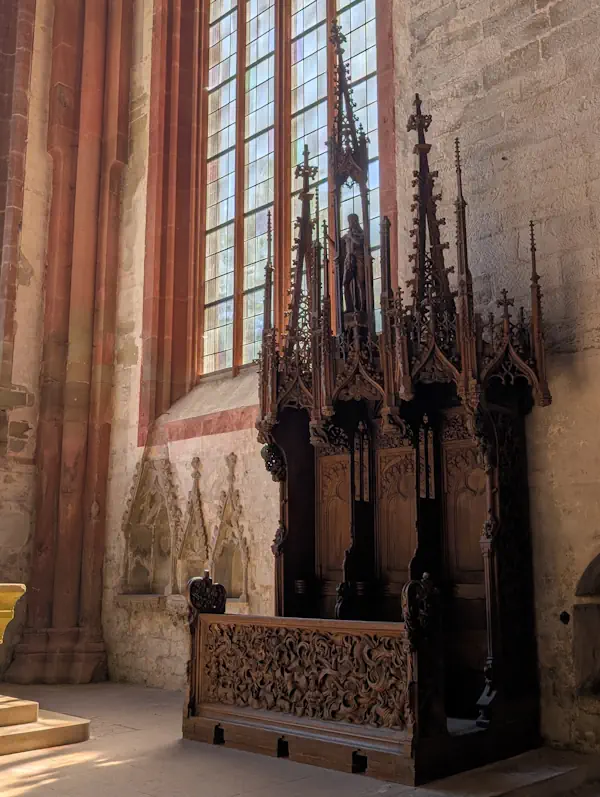
The Cistercian landscape around the monastery
What’s great about Maulbronn is that it doesn’t stop at the monastery itself. The Cistercians, with their philosophy of self-sufficiency, shaped the entire landscape around it.
There’s the water management system which is truly exceptional. The monks built a whole network of irrigation channels, drains and reservoirs in the valley and the surrounding hills. It supplied the community with water, but it was also used for fish farming and for irrigating the farmland. And the system is still there, largely in working order! It’s one of the best-preserved Cistercian water systems in the world.
Around the monastery you’ll also find the monastery vineyards (yes, the monks made wine, you’ve got to treat yourself a little), the fish ponds that you can still see, the fields… All in a gorgeous rolling landscape in the Stromberg area.
But it’s not just vineyards! They also brew beer! A blonde and a dunkel (a Bavarian-style dark beer), honestly pretty good. You can buy some at the little outdoor restaurant in the garden or at the souvenir shop next door, and at the nearby supermarket too.
And here’s a nice little story: Maulbronn is where they invented Maultaschen, the Swabian ravioli typical of the region. Legend has it that a lay brother called Jakob mixed meat with herbs and wrapped the lot in pasta dough to “hide” the meat from God during Lent. Not daft. Today it’s a regional speciality you’ll find everywhere.
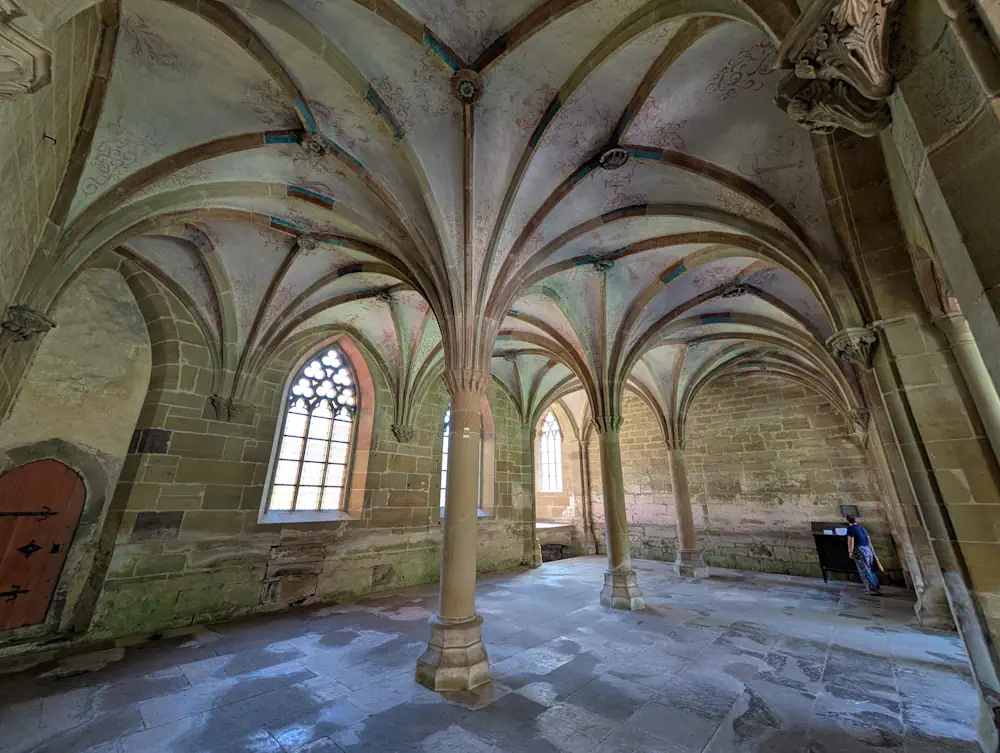
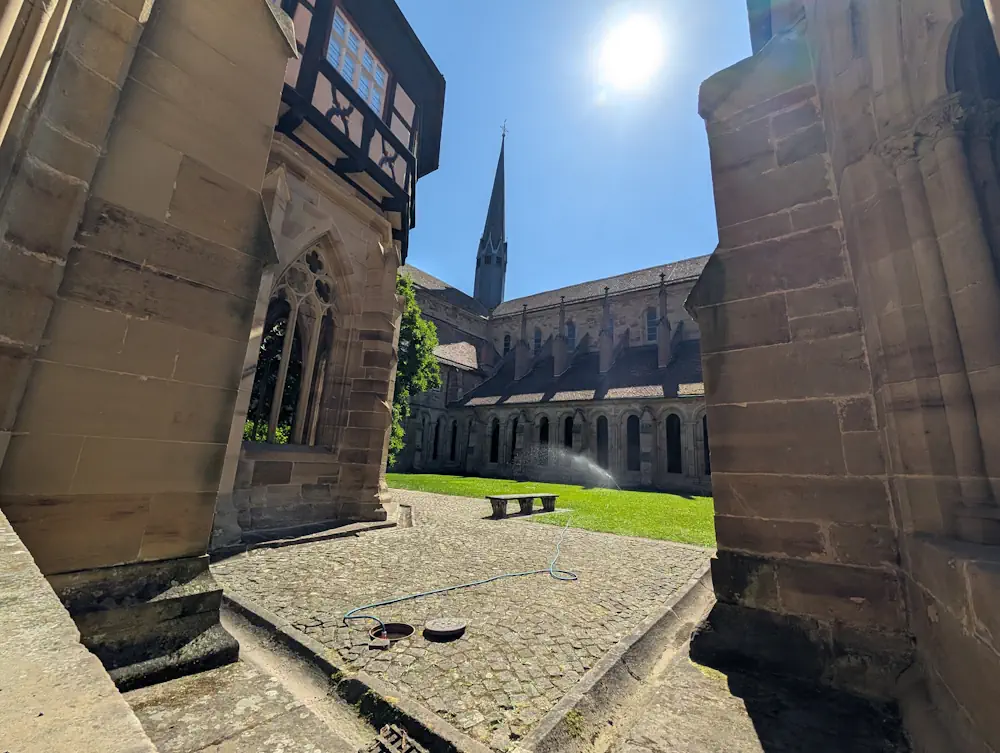
A bit of fascinating history
The monastery has a truly captivating history. For a start, the legend of its founding is a nice one: the monks, who came from Neubourg in Alsace, supposedly decided to build their monastery wherever their mule stopped to drink. The mule stopped at a spring (which is still there in the garden!), and hey presto, monastery founded. Hence the name “Maulbronn” (Maul = an animal’s mouth in German, Bronn = spring). Ever since, the town’s coat of arms has shown a mule drinking.
After that, things get more turbulent. In 1535, with the Protestant Reformation, Duke Ulrich of Württemberg forced the monastery to change its way of life. The monks fled to Pairis, in Alsace. They came back in 1550 when the Protestant princes lost. But in 1556, Duke Christoph of Württemberg turned the monastery into a Protestant school.
And that school still exists! It became a prestigious Protestant seminary. Its former pupils include Johannes Kepler (the astronomer), Friedrich Hölderlin (the poet) and Hermann Hesse (the writer, who even wrote “Beneath the Wheel”, a novel set in the monastery).
And there’s Faust’s Tower at the far end of the garden, where the alchemist Faust is said to have lived for two years. You know, the one from the legend who made a pact with the devil. OK, it may just be a legend, but it adds even more to the charm of the place.
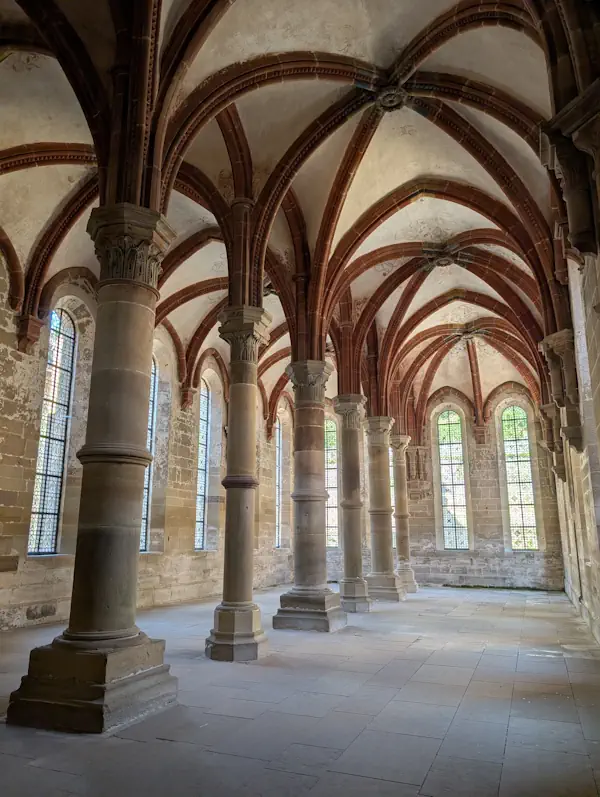
4 recommended places to stay near Maulbronn

📍 Oberderdingen · heart of the old village, Kraichgau
Guesthouse in old Oberderdingen, a quarter of an hour from the monastery, in a little town where nothing happens once it gets dark. The cheapest of the bunch.
- Individually decorated rooms, the detail guests mention most
- Buffet breakfast with pastries and fresh fruit
- Steep stairs and no lift, as several guests point out
From 90 € / night
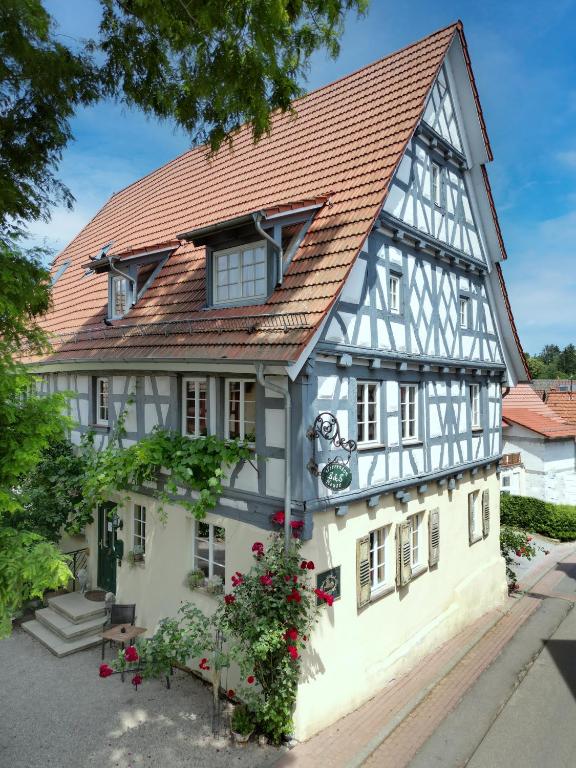
📍 Oberderdingen · lanes of the old village, Kraichgau
Bed and breakfast in a three-hundred-year-old house, two streets from the Amthof. The owners have kept its original character, and that's exactly what travellers come here for.
- The owners' welcome, praised in almost every review
- Fresh bread and pastries served at breakfast
- Shared bathroom depending on the room type
From 99 € / night

📍 Lienzingen · village in Mühlacker, monastery 5 km away
Hotel-restaurant in an old German house in Lienzingen, the historic village that's now part of Mühlacker. It's the food that made its name, far more than the rooms, and the reviews back that up.
- The restaurant's cooking, including vegetarian and vegan dishes
- Clean, comfortable rooms, guests all agree
- Several rooms very hot in summer, no air conditioning
From 132 € / night

📍 Bretten · market square, historic centre
The only one of the four that's properly in town, on Bretten's market square, a quarter of an hour's drive from the monastery. Well-kept rooms and a real town centre on foot.
- Varied breakfast, the hotel's most praised feature
- Sauna and relaxation area included in the price, on request
- No restaurant on site and no kettle in the rooms
From 162 € / night
Practical information for visiting Maulbronn
Opening hours and prices
- March to October – 9:00 to 17:30, every day
- November to February – 9:30 to 17:00, every day (sometimes closed on Mondays in low season, check before you go)
- Prices :
- Adults: €10
- Reduced rate: €5
- Family: €25
Honestly, that’s a bargain for what you’re going to see.
There are guided tours (in several languages), but as we’d arrived too late, we used the audio guide and it was plenty.
How to get to Maulbronn
The monastery is in Baden-Württemberg, between Stuttgart and Heidelberg. There are several ways to get there:
By car (the most convenient):
- From Strasbourg: 1h30, a really easy drive
- From Stuttgart: about 45 minutes
- From Heidelberg: about 50 minutes
- From Karlsruhe: about 40 minutes
- There’s a paid car park on site (about €3)
By train :
- Nearest station: Mühlacker (then a bus to the monastery)
- Or Maulbronn West station
If you’re doing what we did and heading back from the Bavarian Alps or Munich, it’s about a 3-hour drive. A great stop on the way back to France!
How much time to allow
Allow at least 2 to 3 hours to make the most of it. If you also want to wander through the surrounding countryside and do one of the walks, you can easily count on half a day.

Around Maulbronn Monastery
If you have time, the Black Forest is right next door. You can do a “monastery route” linking Maulbronn, Hirsau and Alpirsbach, three of the most beautiful medieval monasteries in the northern Black Forest.
Otherwise, Heidelberg is less than an hour away and really worth the detour, with its romantic castle perched on the hillside and its gorgeous old town.
In conclusion
Maulbronn Monastery was genuinely one of the best surprises of our second (or third, I’ve lost count) road trip in Germany. A remarkable UNESCO site, very well preserved, not overrun by tourists, and fairly priced.
What’s lovely is that you can really feel the life that filled this place for centuries. It’s not just a museum frozen in time, there’s a soul in these stones (and the beers just outside!). Between the stunning architecture, the calm of the cloister, the monks’ ingenious water system, the vineyards and the ponds all around…
If you’re in the area between Stuttgart and Heidelberg, or even heading back from Bavaria like us, don’t make the mistake of passing it by. It’s a detour that’s really worth it.
Generally speaking, Germany isn’t very touristy, and yet there are great sites and loads of little villages pretty much everywhere! Proof: every time we stop somewhere more or less at random, we find a lovely spot. So we’re going to keep exploring it. And not just to stock up on weissbier!