Last Updated on by vincent
Rome is more than just a favourite. I hadn’t been back for many years, but it’s a city that has absolutely everything I love. It’s an imperial city, with a huge history, a very (very) beautiful city, the food is great and there’s plenty to do. So when the chance to go back to Italy came up, we really didn’t hesitate to land in Rome. Again. And it’s not over, because even after several trips, more than 2 weeks on the ground, there are still loads of monuments, places and little neighbourhoods I haven’t discovered yet.
Anyway, I’m going to try to cram everything I know and everything I loved about this city into this long article. Here we go!

Why visit Rome
Because it’s beautiful, obviously! Well, not only that, thankfully. Let’s say Rome ticks just about every box a city should tick:
- superb architecture. Several kinds of architecture, even. Because between the historic centre, Trastevere, the Coppedè, the different eras, it’s very varied
- an overflowing history of more than 2,700 years. Rome wasn’t built in a day (yes, fine, I had to get that one in), so we’re going to go through the founding by Romulus and Remus, Ancient Rome, the Empire, then the shift to Catholicism with the various basilicas.
- exceptional monuments that bring that history to life. And they’re remarkably well preserved! The Colosseum, the Roman Forum, the Sistine Chapel, the various basilicas, the Baths of Caracalla… all of it is simply fantastic!
- the food is so good! Honestly, Italian cooking is already great, so imagine how well you’re going to eat in Rome. Pasta and pizza, of course, but not only. The cured meats are magnificent, the cheese excellent, little delis absolutely everywhere. And for dessert, the best ice cream in the world, obviously.
Honestly, do you really need me to try to convince you any further?


The most beautiful things to see in Rome
That’s the hardest thing about coming to Rome. What are we going to do? And to be honest, there’s too much to see. Sorry, but you’re going to have to make choices! Rome is an open-air museum (you’d think the expression was invented for this city), the remains of the famous Roman civilisation, but also religious buildings, museums, it’s genuinely astonishing. A city where you’ll say “oh, look at that!” on every street corner.
Anyway, here’s what you can see 🙂


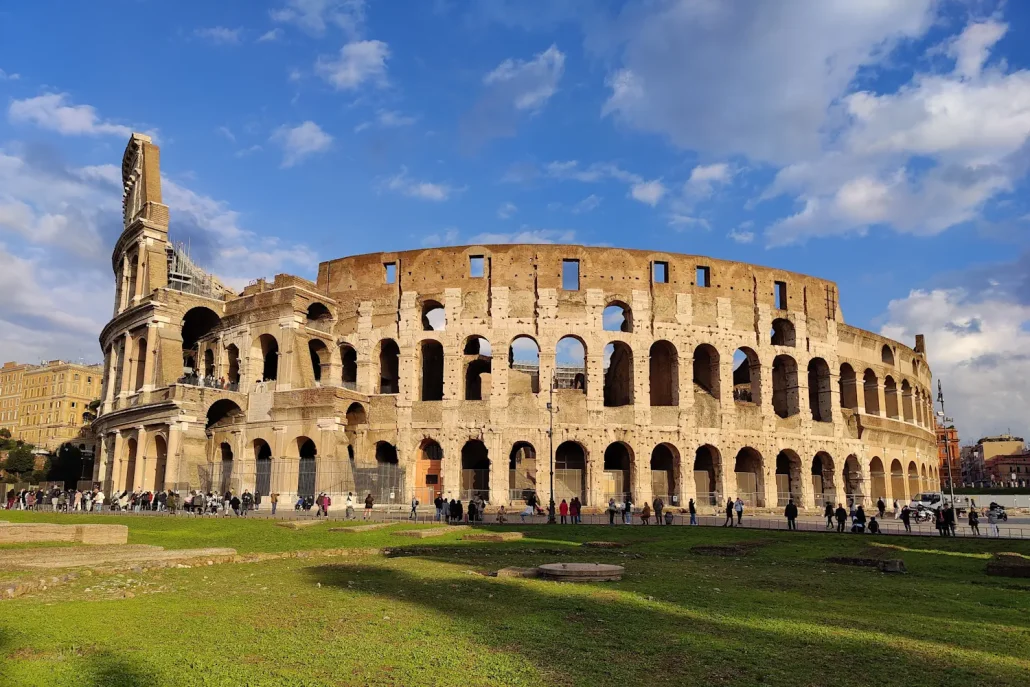
The Colosseum
How could I start with anything but the Colosseum? And to help you choose the right ticket and avoid the traps, I’ve written a dedicated guide to Colosseum tickets. It’s considered one of the 7 new wonders of the world. It’s a place loaded with history, and so much more. Picture it: one of the biggest amphitheatres in the world, holding 50,000 people, 2,000 years old, where they staged gladiator fights, animal games and executions. They knew how to have fun back then.
Anyway, all that to say that a visit to the Colosseum really is a leap into History and it’s well worth it. That said, you need to book ahead because places are limited and go fast (at least 1 day before, easily). And should you visit the inside or just stick to the outside? Honestly, the inside is worth it. Especially as they’ve done renovations to offer activities and more playful tours.


📍 Piazza del Colosseo · self-guided (valid 24 hrs)
Official self-guided ticket for the three sites of ancient Rome with access included to the arena AND the underground, French audio app provided.
- Colosseum arena + underground + French audio (app)
- Fixed Colosseum time slot + Forum / Palatine free over 24 hrs
- Book 3 days ahead (named ticket)
Non-refundable
From €26 per person

📍 Sperone Valadier · self-guided (1 day)
Extended official ticket with access to the arena, the Imperial Forums, the Palatine's S.U.P.E.R. sites and temporary exhibitions included, French audio app.
- Arena + Palatine + Imperial Forums + S.U.P.E.R. sites
- Temporary exhibitions included + French audio app
- Sperone Valadier entrance (arrive 15 min early)
Non-refundable
From €31 per person

📍 Ancient Rome · small group of 12 max (2 hrs 30)
A 2 hrs 30 guided tour in French in a small group (12 max) of the three landmark sites: the Colosseum with the gladiators' gate, the Palatine Hill and the Roman Forum.
- Small group of 12 max + certified French-speaking guide
- Colosseum + gladiators' gate + Palatine + Forum
- Skip-the-line ticket office + arena option at extra cost
Free cancellation
€89From €81 per person
The Roman Forum
The Roman Forum is the place to go for anyone looking to get into the history and culture of Rome, to soak up the atmosphere of Ancient Rome. Once the centre of the city, it’s now a fascinating testament to the ingenuity and the vision of the Romans in building their city.
Walking among these ruins, you get majestic columns, imposing triumphal arches and temples in ruins. It’s a genuinely immersive experience, a real leap into the past. So whether you’re a history buff or just curious, you’re really going to enjoy it. It’s one of the many essential stops for discovering Rome.


The Vatican – St Peter’s Basilica in Rome
Brace yourself, this one hits hard. Very honestly, believer or not, you can’t stay indifferent in front of St Peter’s Basilica. It’s a marvel, truly. It breathes History, and it’s very (very) beautiful. Simple as that.
In Rome, there are 4 basilicas known as “major” ones. We’ll see the others a bit further down (because you have to see those too!), but there’s something special here. For a start, you’re in another country! The Vatican is tiny but it’s an independent country, taking in the Basilica, the museum and 2 or 3 other buildings, and that’s it. Then the arrival on the esplanade gives you a superb view with its semi-circular colonnades. And finally, the inside is impressive. Super high, very gilded, intricate. And above all, don’t hesitate to go right to the top for a stunning view!
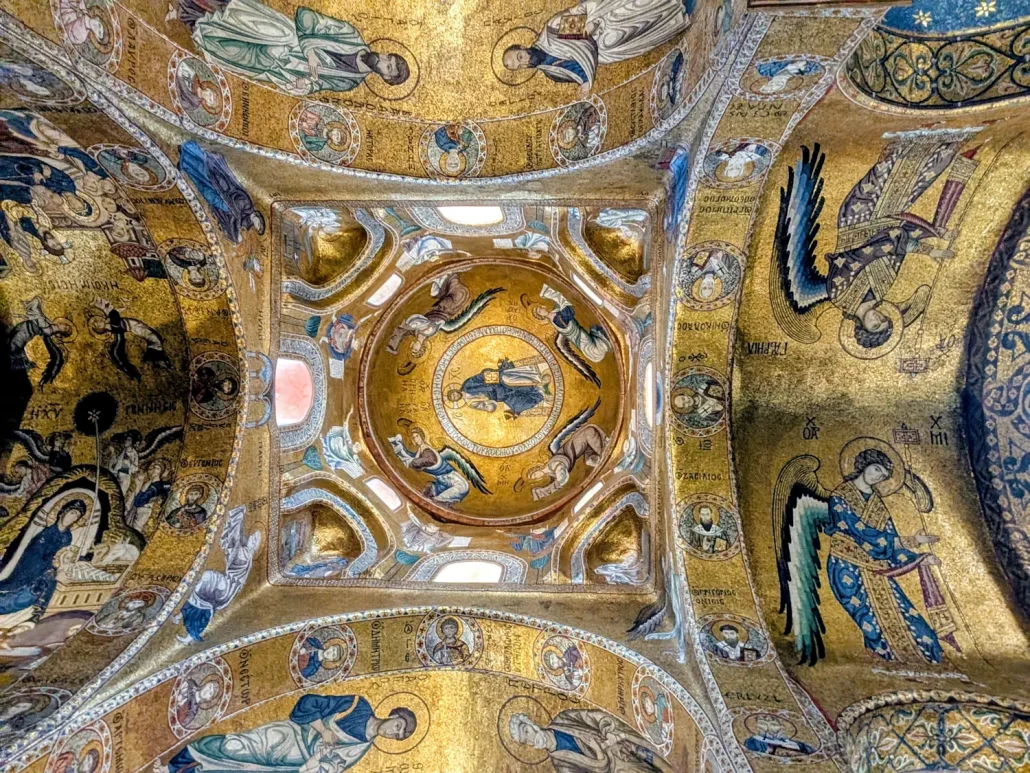
You also mustn’t miss the ceilings, which are magnificent, keep your nose in the air the whole time, really (there’s an example in the photo), and finally the famous Pietà sculpture by Michelangelo.
And entry is free. Except for the dome, which must cost €8.
- To find out everything before you go, have a look at my complete guide to visiting the Vatican


The Vatican Museums and the Sistine Chapel
This one is wild. You’ll need a fair bit of time to get through this fantastic museum. First you wander through dozens of rooms discovering collections like Egypt, with mummies, sarcophagi and thousands of superb antiquities. But obviously a huge amount on the history of Ancient Rome, sculptures like the Pieta by Michelangelo (my mistake, that one’s in St Peter’s Basilica) or the Laocoon. Paintings by Leonardo da Vinci, Raphael, Caravaggio… And really interesting collections like the Etruscans.
One place I loved: the Gallery of Maps (which also has loads of old globes).
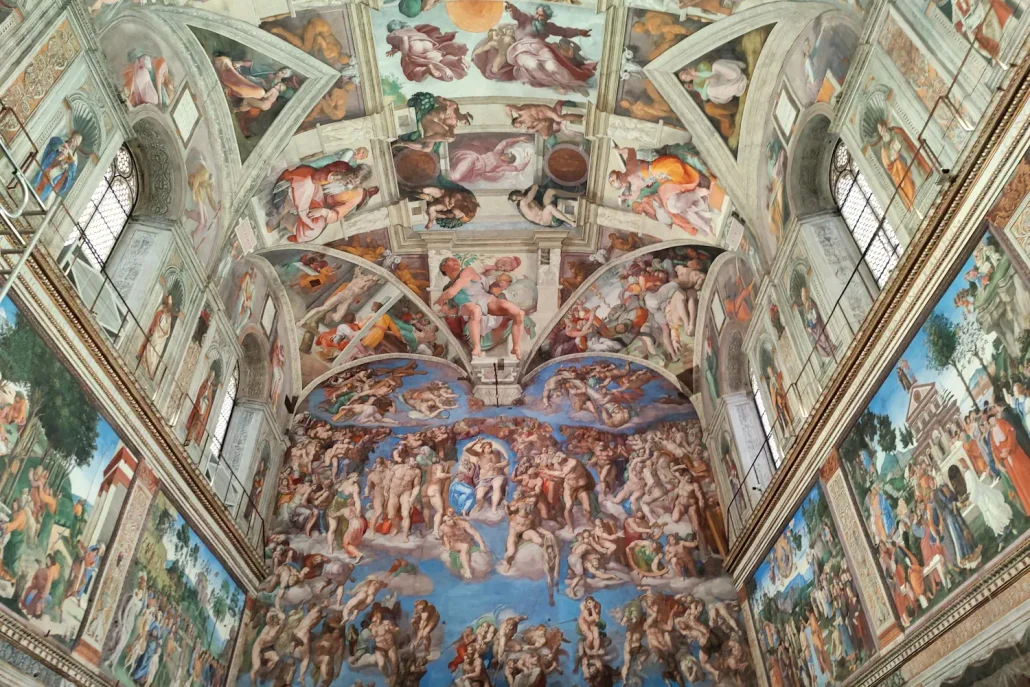
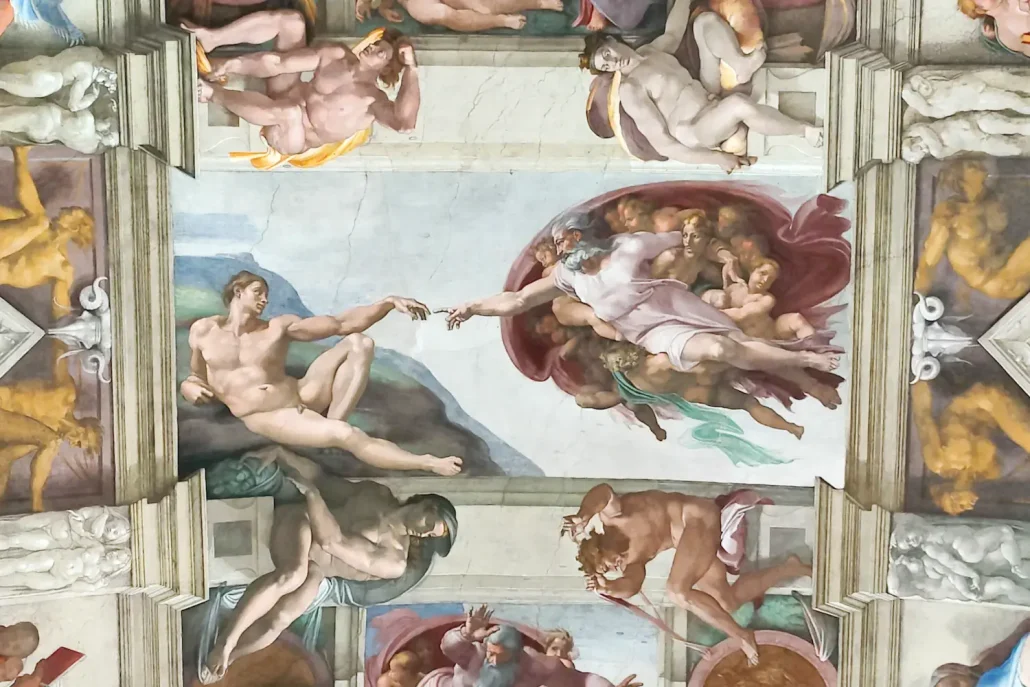
But the masterpiece of the museum is obviously the Sistine Chapel. So yes, it’s busy, yes you’re packed in a bit. But since everything (or almost everything) is on the ceiling, it doesn’t really matter.
And it’s masterful, truly. You can spend a very long time taking in the details of the frescoes covering this chapel. The different scenes on the ceiling are genuinely superb.
The visit to the Sistine Chapel ends the Vatican Museums visit, it’s the same ticket, the same visit.


The Trevi Fountain
One of the best-known fountains in the world, and it has to be said, it’s seriously beautiful. But touristy! So my first tip would be to come early in the morning to enjoy it with nobody around. Or late in the evening, when it’s nicely lit.
The Trevi Fountain has real class, I think. Rococo style, it shows the god Neptune in a shell, pulled by winged sea horses, with tritons leading the way. Right, put like that it sounds ridiculous, but it really isn’t!
It’s the largest in Italy, hugely detailed, and on top of that it sits in a gorgeous setting, right in front of the very handsome Palazzo Poli. The custom is to throw in one or more coins and of course make a wish. Apparently, to marry an Italian you have to throw 3 coins. So if you’re coming as a couple, watch how many coins you throw!
Anyway, don’t miss it!

The Pantheon
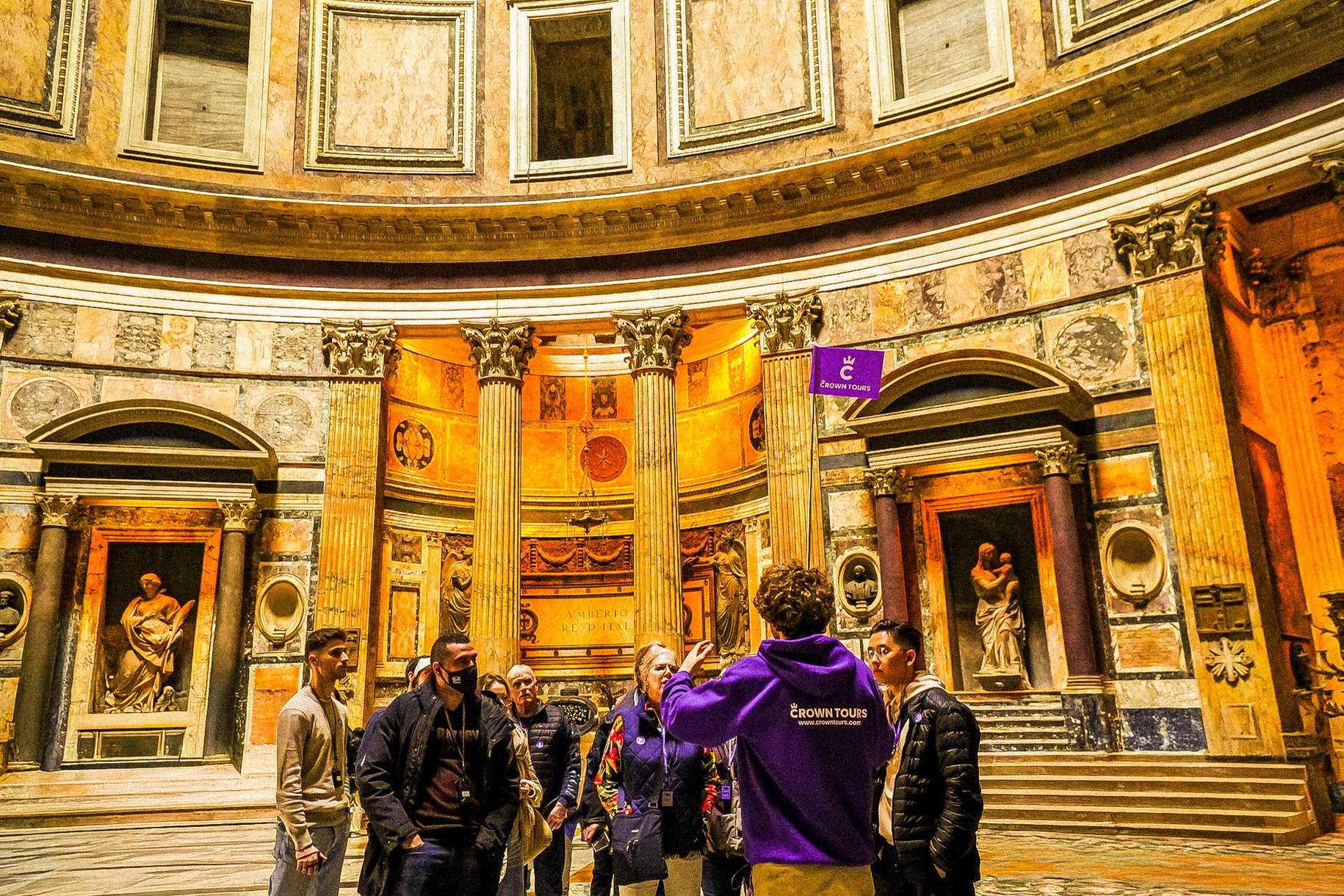
A fine slice of Roman history sits here. Several slices, in fact. The Pantheon is the best-preserved monument of Ancient Rome. First a temple dedicated to the gods, it was gradually turned into a church, then a basilica. It now holds the tombs of several Italian figures, including the painter Raphael and King Victor Emmanuel II.
The surroundings are gorgeous too, in the middle of Rome’s historic district (well, one of the historic districts!), so really do take the time to wander around as well.
Entry is free for now, but there are plans to start charging. As it’s a church, you can’t visit during services.
The visit used to be free. It recently went up to €5 and you have to book in advance. Honestly that’s not unreasonable, since it’ll help preserve the place.


Castel Sant’Angelo
Right, this one is a (double) miss, because in 2 trips to Rome I never managed to visit it. And yet it’s beautiful! And the approach over the Ponte Sant’ Angelo is majestic, lined with statues.
Originally the mausoleum of Emperor Hadrian (a touch megalomaniac, by the looks of it), so also dating from the 2nd century, like the Pantheon, the building was then turned into a fortress against barbarian invasions, then a prison, a papal residence and finally a museum.
It sits a stone’s throw from the Vatican, hence its status as a papal residence (and prison). So you can fit it in at the same time as your visit to the city-state


The monument to Victor Emmanuel II
I’ll admit that the first time I saw this building, also known as the Vittoriano, I thought “ooh that’s ugly”. But actually it’s rather lovely! A big neoclassical temple, dressed head to toe in white marble, built in honour of King Victor Emmanuel II, the first king of a unified Italy.
It is surprising though, because it’s nothing like the Rome we know, especially as it backs onto a medieval district and the Roman Forum.
Inside you’ll find the museum of Italian unification. I’ll admit I didn’t visit it, I only saw it from the outside.


The Basilica of Santa Maria Maggiore
Seriously impressive, outside as much as inside. It’s one of the 4 major basilicas, along with St Peter’s Basilica. Close to Termini station, it’s easy to spot with its tower, the tallest in Rome, its very large esplanade that gives you a superb overall view, and its handsome baroque façade.
Inside, I loved the coffered ceiling. But above all you’ll find plenty of mosaics, some dating from the 5th century (no less), richly decorated domes… Did you know that Napoleon Bonaparte’s sister had her own chapel and her tomb here?
Honestly, it’s one of the big ones you really shouldn’t skip in Rome. Another one, I know!
Entry is free (except for the museum, €3)


But also…
These are the monuments or places I haven’t visited yet but that should be part of your stay:
- Domus Aurea, Nero’s palace, a stone’s throw from the Colosseum. You can really smell the history! One catch: after a long run of problems, you can only go on guided tours, only at the weekend, and in limited numbers. When I tried to visit for the first time, it was under restoration after yet another collapse.
- Villa Borghese, a big park with a fine museum in particular, the Borghese Gallery, which holds a very broad collection of sculptures (Roman but also Greek), paintings by Raphael, Rubens, Botticelli, Caravaggio… There’s also the Etruscan museum and a zoo.
- Palazzo della Civiltà Italiana, the emblematic building of the fascist period. It’s nicknamed the Square Colosseum, and honestly, the name suits it very well!
- the Catacombs, there are loads of them in Rome! Several sites are open to visit. The best known is the one of St Callixtus
- Baths of Caracalla, the largest bath complex of antiquity. Very well preserved, the baths were one of the great landmarks of the Empire


The most beautiful churches and basilicas in Rome
Right, this one really is VERY impressive. On every street corner you’ll come across a little church or a huge one, each more beautiful than the last, some superbly decorated, others dripping with gold. Seriously, you need to see several of them (all of them would take a bit too much time), and some are essential. I’ll write you a dedicated article, but among others there’s:
- St Peter’s Basilica, in the Vatican, but we’ve already talked about that above
- the basilica of Santa Maria Maggiore
- the basilica of St John Lateran
- the basilica (another one!) of St John Outside the Walls
- the church of San Luigi dei Francesi in Rome
- Santa Maria in Trastevere
- San Clemente al Laterano
- Sant’Ignazio di Loyola
- Basilica of Santa Maria in Aracoeli


The districts and squares of Rome you absolutely have to see
- the bohemian district of Trastevere: a district I discovered on my first trip more than 10 years ago. Back then it was already great fun but more working-class, not especially bohemian. Now it’s even better, lovely architecture, plenty of little streets and now bars too, and plenty of great restaurants!
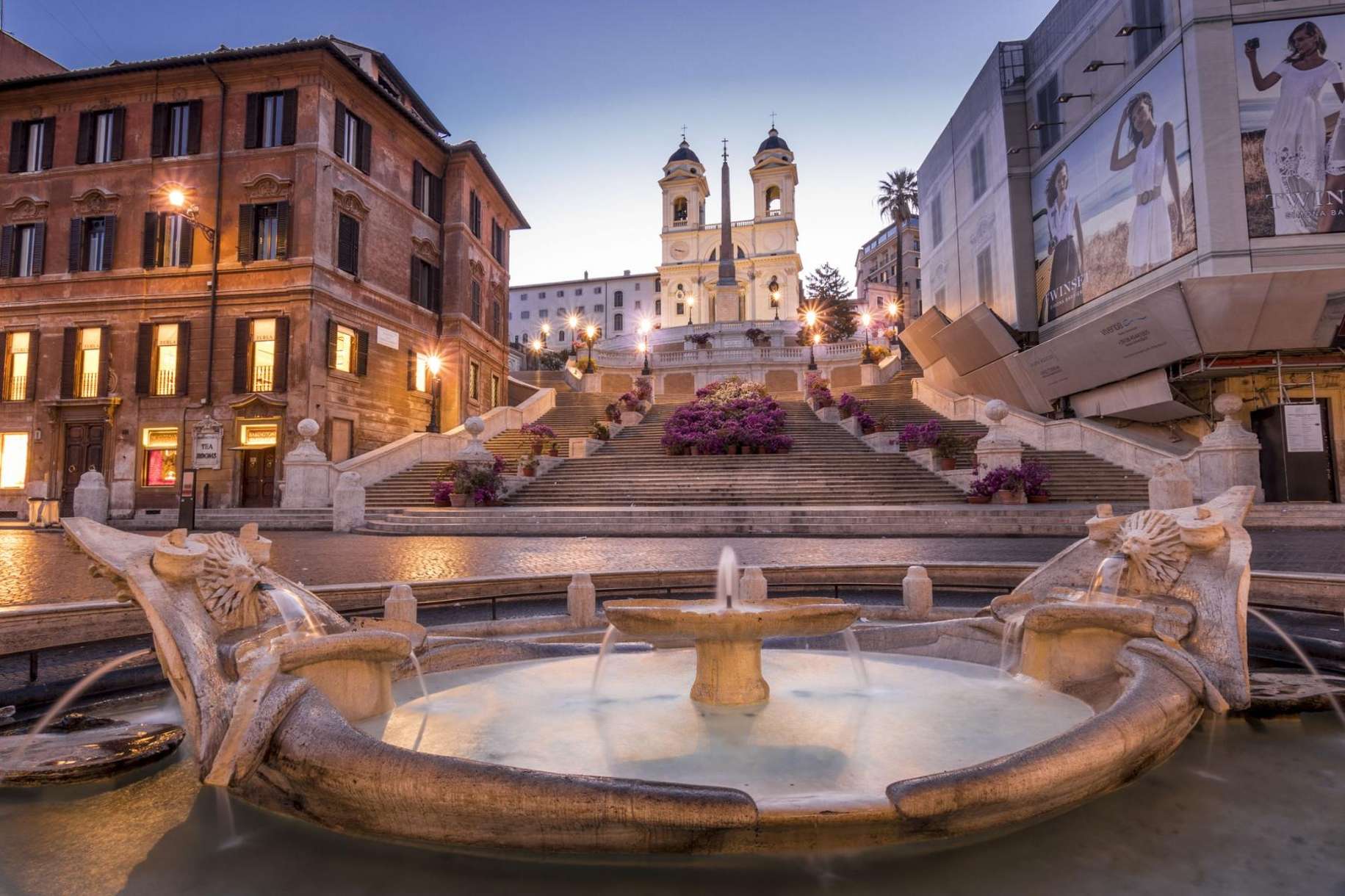
- Piazza di Spagna: one of the most important squares in the city and the most famous steps, the Spanish Steps. And seriously photogenic! Right next to it you’ll find the magnificent Piazza del Popolo
- Piazza Navona: a very pretty square, long and narrow, and above all with a magnificent Fontana dei Quattro Fiumi by the famous sculptor Bernini, sitting in front of the lovely church of Sant’Agnese in Agone
- the Capitoline Hill: a small district just behind the “typewriter”, the monument to Victor Emmanuel II. A medieval district, with a very beautiful square designed by Michelangelo, and the basilica of Santa Maria in Aracoeli
- Campo de Fiori: another really nice square! There’s the market in the morning and plenty of bars and restaurants to have a few drinks and then eat.
- the Coppedè district: now this is surprising! A completely different district, with Art Nouveau architecture made up of 18 palaces


Guided tours of Rome
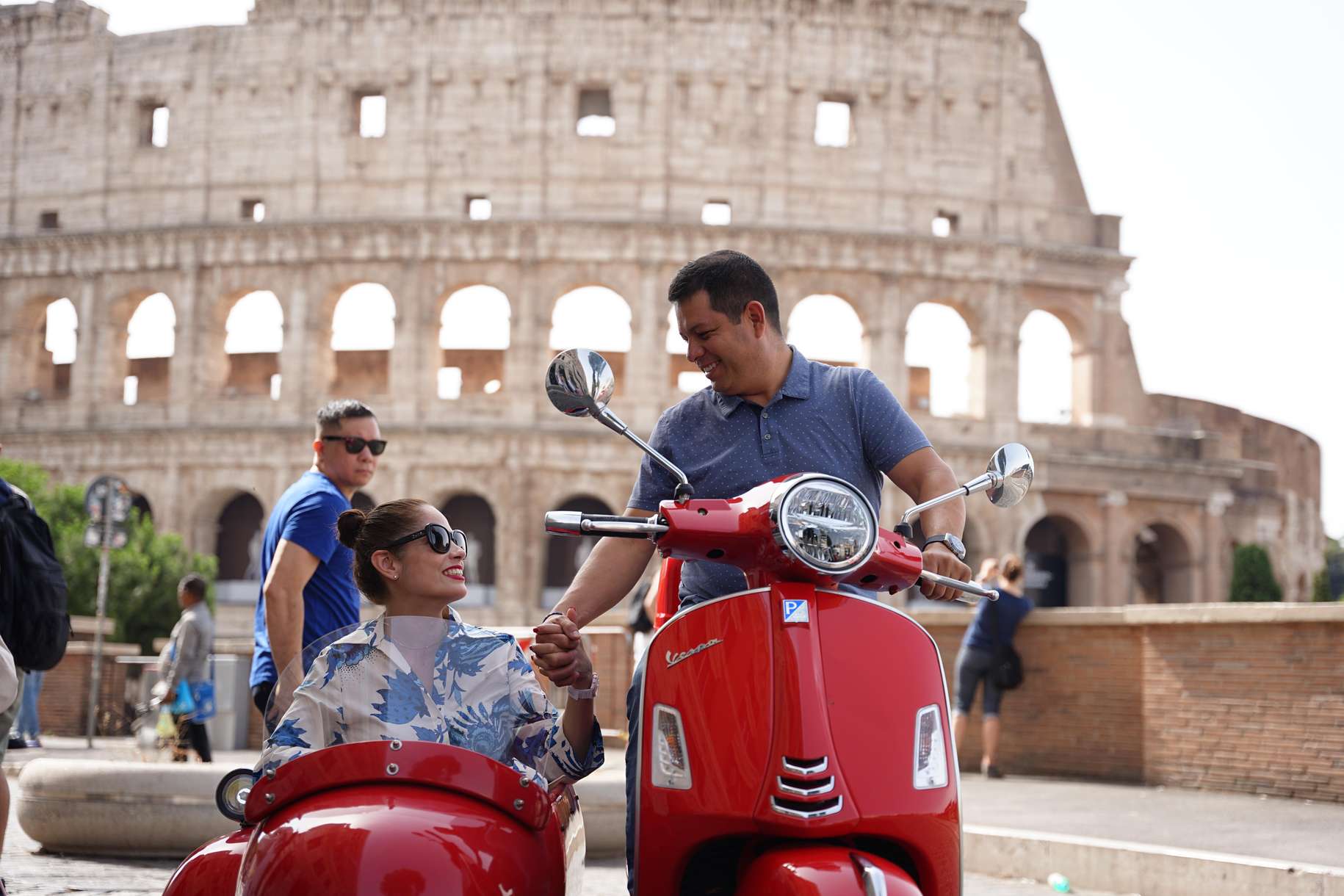
Rome is a city with such a history, so many different periods, a city so interesting that it would be a mistake not to look into it properly with a guide. First off, note that in every monument you can take a tour with a guide.
Then, my regret is not having done a guided tour of the city, precisely to get the context, the history, and simply more information. Wandering around Rome is a wonderful thing, but I think having a few hours with a guide really can be a plus.
Let’s look at what you can do, for example:
- A free tour of Ancient Rome: Jacopo runs a free tour where you’ll see, among other things, the Piazza di Spagna, the Pantheon and the Trevi Fountain.
- Free tours are free but they run on tips
- Information and booking here
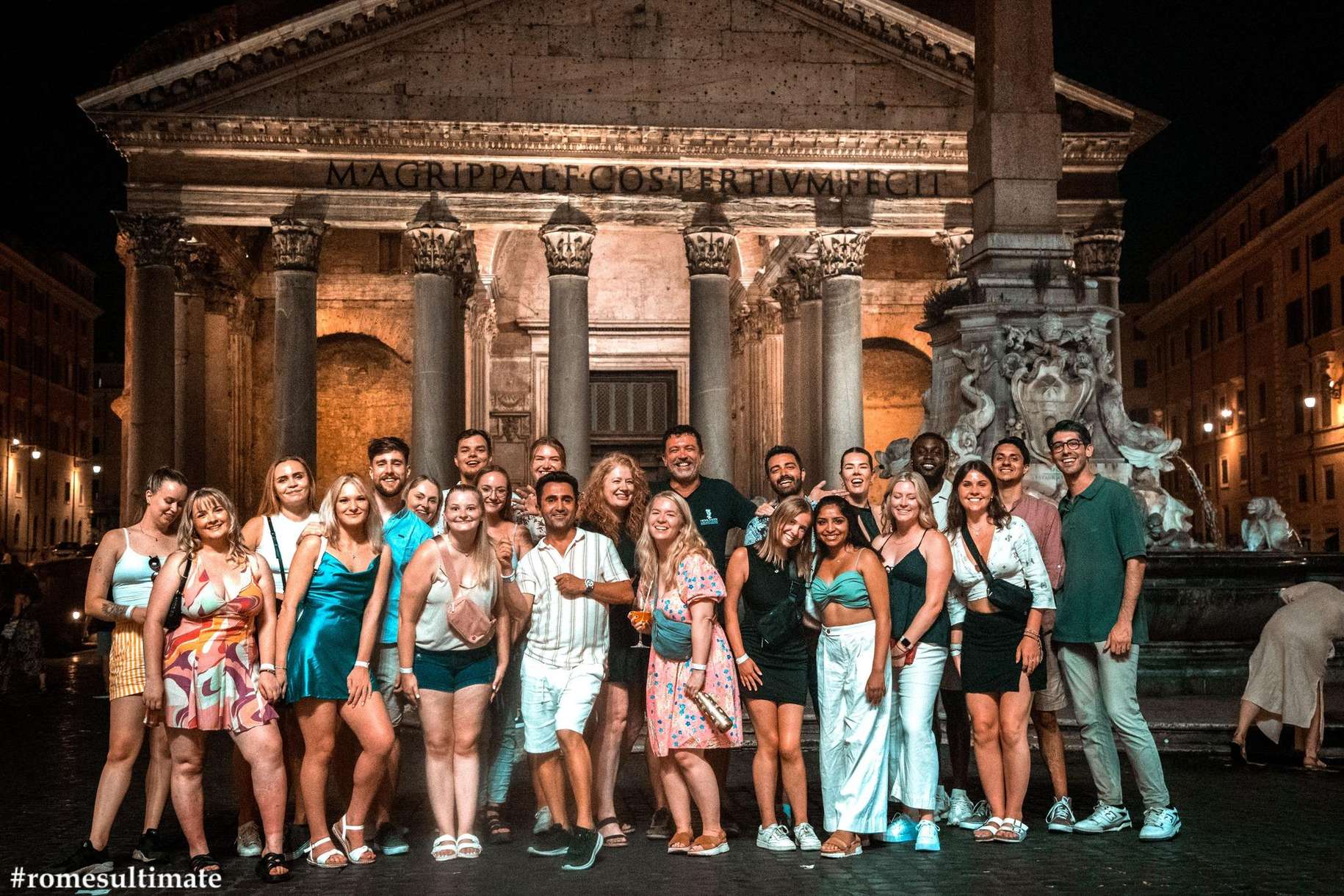
- A night tour of Rome. I love visiting cities at night, the lighting is usually great and really shows off the monuments. The tour is half on foot, half by minibus. You’ll go from the Capitoline Hill to the Vatican, from Trastevere to Piazza Navona. Basically you get the essentials of the city in 3 hours.
- A guided food tour. In Trastevere or the Jewish quarter, discover traditional, artisanal dishes with several tastings
- A walking tour of the centre of Rome: the Pantheon, the Trevi Fountain and the main squares
- A guided tour of the Vatican, St Peter’s Basilica and the Vatican Museums, available in French!


The best activities to do in Rome
On top of the tours, the monuments and wandering the streets, here are a few other really enjoyable things to do!
- A Vivaldi concert in a Roman church: I did that (ok, Mozart, not Vivaldi) in Salzburg and it was really good! I do it once a year in Paris too. So I’d recommend it 🙂
- A cruise on the Tiber to discover Rome and get around. A 24-hour pass to travel by boat through the Eternal City
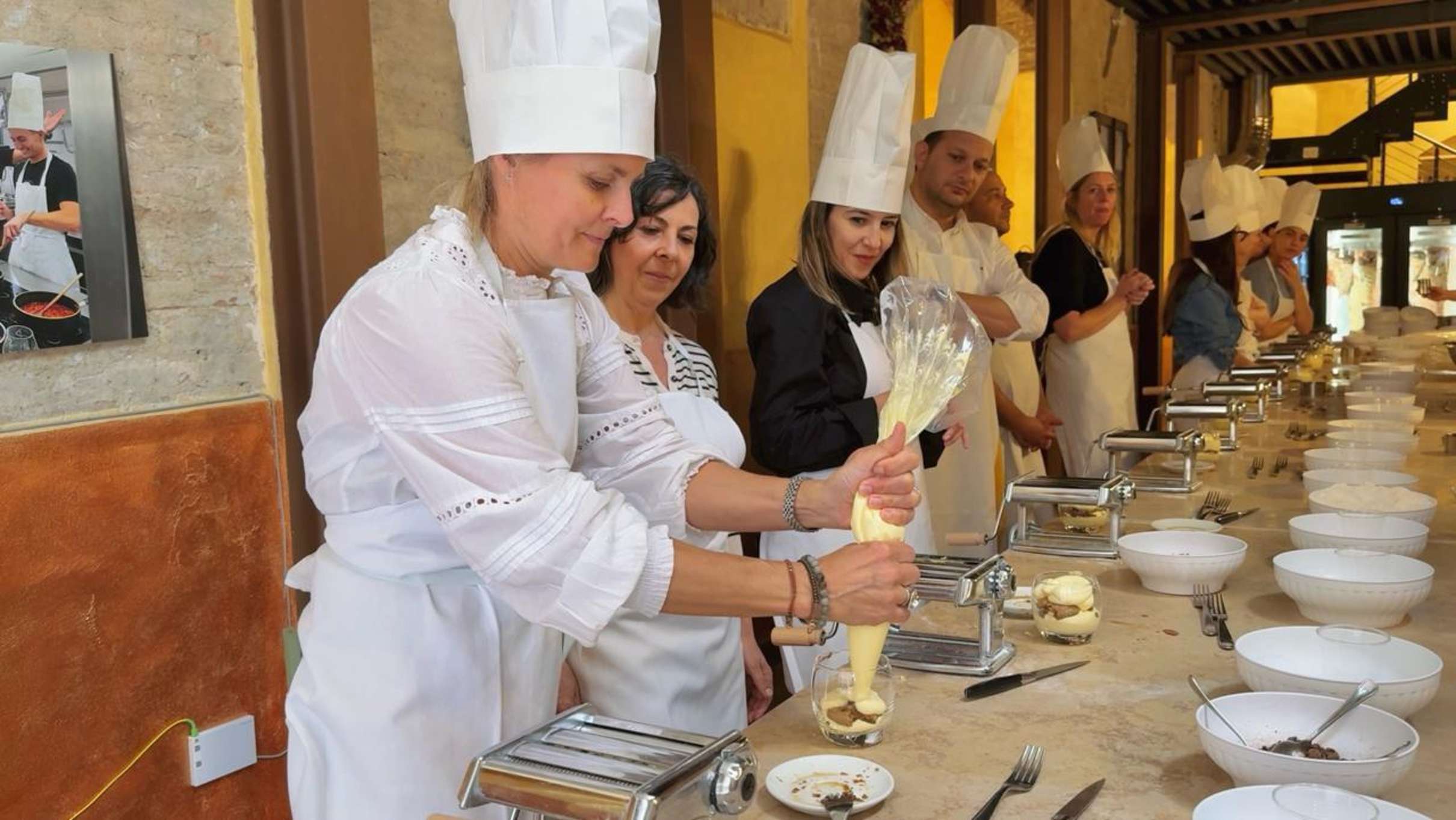
- An Italian cooking class! Rome really is THE place to learn everything about pasta, pizza or tiramisu!
How to buy tickets and tourist passes
First off, you should know that Rome is a VERY touristy city. And that places are limited. So, to avoid doing what I did, you need to book your tickets in advance. At least a day ahead in the low season (yes really) and several days, even weeks ahead in high season. We had to change our schedule because I thought booking in the morning would be enough, and no, not at all. Some of the next day’s slots were already taken, and that was in January. And it’s all the more true given that the monuments close early (4.30pm for the Colosseum, for example)
So, how do you book tickets for the monuments and tours?
For my part I book in advance (I’ve learned my lesson) on Getyourguide. You can go through the official sites but I find them more complicated, not always translated (ok, Italian is easy enough to follow, but still) and I’m not always sure I’m landing on the right ones. So Getyourguide, or Tiqets sometimes, the prices are the same and the buying experience is simpler I find (you can obviously choose your visiting times).
Here are the direct links for the main monuments:
- Tickets for the Vatican Museums and the Sistine Chapel
- Tickets for the Colosseum and the Roman Forum
- Tickets for the Villa Borghese
- Tickets for Castel Sant’Angelo
- Tickets for the Domus Aurea
- Tickets for the Baths of Caracalla
If you’re planning to see everything, then you might be interested in the Rome Tourist Card below.
The Rome Tourist Card
It’s a combined ticket giving you entry to the city’s most important monuments:
- Colosseum, Roman Forum, Palatine Hill, Mamertine Prison
- The Vatican Museums and the Sistine Chapel (a reminder that entry to St Peter’s Basilica is open and free)
- The dome of St Peter’s Basilica
And two audio guide apps:
- for the Pantheon
- and Rome’s historic centre
It’s valid for several days, so no time pressure. When you buy the pack, you just have to choose your visiting days. It costs €116
There’s also the Omnia Card which looks more complete but is impossible to understand. The monuments included aren’t clear, but it does include the tourist bus, which is interesting. On top of that, you have to go and collect the tickets from a kiosk. Not practical, but I reckon once you’ve worked it out, it can be pretty good


What to see near Rome
Rome already takes up plenty of time. Buuut there’s also loads to see outside the city! An hour away, on the coast, or even day trips much further south, there really are a huge number of options! Now, since I concentrated on the city of Rome, I haven’t had time to discover these places yet (except Pompeii, fantastic). So I’ll tell you a lot more once I’ve been, because I’ve a feeling that’ll happen soon 🙂
- Tivoli, a beautiful little town dating from before the Roman empire, and which on top of that has 3 major sites, no less! About an hour from Rome.
- The Villa of Hadrian, a monumental 2nd-century archaeological site.
- The Villa d’Este, a huge and magnificent residence dating from the 16th century
- Easy to visit from Rome. 1 hr 15 by train. Otherwise tours run every day
- Ostia Antica, the most important port city of Ancient Rome, just 30km west of Rome! One of the country’s major sites, easy to reach quickly by train from Rome
- Pompeii, the Amalfi Coast and the village of Positano. You can see Pompeii and the area around Naples in a day from Rome! It’s packed, but everything is taken care of for you and the feedback is excellent

A 3-day itinerary idea for Rome
Phew, tough one! It depends a lot on your own pace. For example I’d set aside a full day for the Vatican, between the museums, the Sistine Chapel and St Peter’s Basilica. But you can also fit it into half a day.
So here’s roughly what a 3-day itinerary could look like:
- Day 1
- Colosseum
- Roman Forum
- Palatine Hill
- Basilica of St John Lateran
- Basilica of Santa Maria Maggiore
- Back to the Trevi Fountain in the evening (beautifully lit)
- Day 2
- Visit the Pantheon
- Piazza Navona
- Campo dei Fiori to see the market
- The Baths of Caracalla
- End of the day exploring Trastevere
- Day 3
- Piazza di Spagna
- (Castel Sant’Angelo)
- Vatican Museums + Sistine Chapel
- St Peter’s Basilica and the climb up the dome
And with all that, you’ll have seen a fair bit and you’ll sleep like a baby!


Where to stay in Rome
Right, Rome is a fairly expensive city, and accommodation is no exception.
I’d ESPECIALLY recommend focusing on the historic centre, between the bank of the Tiber, piazza del Popolo, the basilica of Santa Maria Maggiore, and south of the Colosseum. OK fine, that’s a decent-sized area with plenty of options. Plus Trastevere and around the Vatican, two very good options as well, even if they’re a touch less practical because they’re further from the centre.
Right, the big problem is that the very centre is very expensive. Finding places under €150 a night is a bit tricky, especially in peak season. But it can be done.
Two great hotels with excellent value for money are:
- The Nikis Collection Navona, two steps from Campo dei Fiori, from €150
- The Navona Theatre Hotel, next to Piazza Navona, from €115
A step up and barely more expensive, there’s the ELICAL Exclusive Private Suites, one of the hotels with the best reputation.
Right next to the Vatican, the best option is the Vatican Chic B&B, great spot from €100
Finally, to stay in the bohemian Trastevere district, a magnificent 17th-century house.
Anyway, as you can see, there are loads of options, some really sexy and well located, while a bit further out it’ll be cheaper all the same. But with public transport, that’s still a good option.

📍 Rome · Address to be confirmed
A budget option in Rome to sleep without breaking the bank, a stone's throw from the ancient sites, in a neighbourhood well connected to the rest of the city.
- [3 bullets à confirmer — connecteur n'a pas trouvé la fiche]
- Can you confirm the overall rating + neighbourhood?
- Or paste the Booking page
From €74 / night Free cancellation

📍 Rione Trevi · 2 min from the Trevi Fountain
A 3-star boutique hotel a stone's throw from the Trevi Fountain, very well rated (2,000+ reviews) for its prime location, helpful staff and buffet breakfast.
- A 2-minute walk from the Trevi Fountain
- Staff praised for their welcome and helpfulness
- Varied buffet breakfast travellers appreciate
From €105 / night Free cancellation

📍 Vaticano Prati · Next to the Vatican Museums
A 4-star hotel rated superbly (9.1/10) in the Prati district, a few streets from the Vatican Museums, with soundproofed rooms and quick check-in.
- Ideal location a stone's throw from the Vatican Museums
- Spotlessly clean, well soundproofed rooms
- Staff unanimously described as helpful and friendly
From €115 / night Free cancellation

📍 Pantheon district · Via delle Botteghe Oscure
A 5-star Radisson Collection right in the historic centre, between the Pantheon and Largo Argentina, with a sauna, gym and family rooms for a proper treat.
- Prime location between the Pantheon, Largo Argentina and Trastevere
- Spacious, spotless rooms praised in 1,600+ reviews
- 5-star staff, sauna, gym, concierge
From €275 / night Free cancellation
Where to eat and grab a drink
First off, I’d book ahead if you’ve already picked your restaurant. Because we got turned away several times, even arriving early.
One place I loved was the restaurant 100 tiramisu, next to the Pantheon. Which obviously serves 100 tiramisu recipes, but also great charcuterie/cheese boards. Really good!
Still near the Pantheon, if you want something to take away, the focaccia sandwiches at All’Antico Vinaio are wonderful.
Again right by the Pantheon, the hot chocolate and the ice creams at Mastro Cono, superb.
When it comes to pizza, you’re spoilt for choice (obviously!). We went to Pizza in Trevi, right opposite the fountain, and honestly it’s not bad at all.
For a drink, there’s obviously tons of choice, small terraces or the big squares (that’s where it costs more), all very pleasant. We had some great Italian beers in a bar/restaurant, Pizzicaroli. Really nice owners, cheap, and good produce.


Exploring Rome with kids
The city of gladiators where you eat ice cream and pizza? I reckon Rome is paradise for kids!
The essentials, to my mind:
- a visit to the Colosseum and the Roman Forum to soak up Roman life
- the catacombs, which we saw earlier. Some people find it creepy, I think on the contrary it can really surprise kids
- the gladiator school! you and your kids can learn to fight like back then, with the outfits and weapons of the day, but above all it’s a great way to learn more about life in Ancient Rome.
- a virtual tour of Ancient Rome, to dive into how the city evolved
- the Leonardo da Vinci museum! Great for little ones and grown-ups alike, a dive into the genius’s world with, among other things, plenty of reproductions of his inventions. Personally, I loved it!
- inside the Villa Borghese, you’ll find the Bioparco, Rome’s zoo. Loads of species, including rare ones like the Komodo dragon. The price is fairly steep (€17), but it makes for a different, enjoyable visit if you like zoos
And expect to suffer with ice cream sellers roughly every 20 metres. Plenty of chocolate shops too, seriously good sweet shops. The temptation is right there, for you as much as for your kids!
Notes:
- with all the cobbled streets, Rome is a tough city for pushchairs.
- the metro and the bus are free up to age 9


Practical information
When to visit Rome
I’m not taking much of a risk in saying that Rome is worth visiting all year round with no exception. I’ve been twice in January and the weather was mild. A few drops of rain once, but that’s it.
But the main reason I went at that time of year is that there are fewer people. It’s a VERY touristy city, and everyone piles into the historic centre. So if you have the choice, I’d advise avoiding the busiest months: July and August. On top of that, I reckon it gets seriously hot (right, that bothers me more than it necessarily bothers you 🙂 ).
But don’t tie yourself in knots over the weather: in winter it’ll be perfectly fine, in summer it’ll be hot and sunny. Spring and autumn, as so often, are two gorgeous times of year but touristy all the same.
So there’s no bad time, only good ones, but you do need to watch out for the crowds, which will be very heavy in summer and during the school holidays.
How long to stay
This city is terrible. Terrible because there’s so much to see, so many nice neighbourhoods, so many little churches, little corners, and loads to do around it!
On my last trip, I stayed 4 full days, and it wasn’t enough. Mind you, we weren’t rushing around, but I’d say you cover the essentials of the essentials.
So I’d say 3 days minimum. On my first trip I stayed a week, and even then I had something to do every day, because I was taking my time, discovering the neighbourhoods, there weren’t many people about.
A weekend from Friday to Sunday, it’s tricky but doable. You get almost 2 days on the ground, you can see the Vatican and the Colosseum for instance. But I’d say it’ll be a taster, because all roads lead to Rome! You’ll be back, I guarantee it 🙂


How to get there
Obviously, the easiest option is flying, especially if you don’t have much time.
A Paris – Rome, it’s 2 hrs and it doesn’t cost much. Without deals, you’ll be around €150/200 return with the traditional airlines like Air France and Alitalia, but there are deals all the time (the famous Air France sales every 6 months are great) and the low-cost carriers fly the route too (Ryanair, Easyjet, Vueling…).
I’ve just run a search for two months from now, a long weekend, and it ranges between €100 and €170.
From other cities:
- Lyon – Rome with easyjet (direct) costs about €100
- Marseille – Rome with Ryanair (direct) starts at… €40!
- Bordeaux – Rome with Ryanair (direct) too, around €60
- Nantes – Rome, with Volotea, Easyjet and Transavia, there are options for flights around €100
Watch out: flights vary enormously from one day to the next and one hour to the next. You need to book ahead and you absolutely must compare! I use Booking Flights, I find it very reliable.
Getting to Rome by train
Right, you can get to Rome by train buuuut it’s not the easiest. Or the most direct, rather. It has to be said, it’s not exactly next door.
- from Paris: you generally have to change in Milan. At best it takes 10 hrs, usually around fifteen. It costs €100 (one way) for the one that lasts 20 hrs, about 180 for the one that lasts 10. Not cheap!
- from Lyon: reckon on a good ten hours (often 15 hrs…) and you’re at €150 for the trip
Sadly there’s no night train.
How to get from the airport to the city centre
Rome Fiumicino airport is quite a way from the centre of Rome, about thirty kilometres, but it’s easy enough to manage. There are quite a few different options for linking the airport and the city centre, in particular Roma Termini train station, so let’s go through them:
- Taxi: it’ll cost you €50 (the price is fixed)
- Uber: it’s more expensive, Uber Black only, and it costs €60. To avoid nasty surprises with the taxis, you can order one through the Uber app. For the same price, handy!
- The Leonardo Express train: you reach Roma Termini in 30 minutes, handy! The ticket costs €18 (not cheap), but it’s fast and comfortable. Mind the timetable, trains run between 6.40am and 11.40pm.
- The bus: handy, cheap, a bit slow. For €6 you can get from the airport to Termini station. About an hour on the road, that’s still fine
- The shuttle: a minivan picks you up at the airport and drops you straight at your hotel, between €30 and €40 per person, a shorter and more convenient ride.
In the next article, I’ll go into far more detail on how to get from Rome Fiumicino airport to the city centre

Luggage storage to drop your bags
There’s a really reliable luggage storage service at Rome Termini station. They’re open 9am to 7pm every day, and the price is a flat €6, whatever the length of storage or the size of the bag.
They’re called Capital Luggage Deposit, and it’s worth booking ahead because it gets busy. You’ll find them at Via Giovanni Giolitti, 127.
How to get around the city
There are loads of options. The simplest one, in my view, is to walk, for two reasons:
- first of all it’s so beautiful! Just the pleasure of wandering these little streets, that architecture
- it’s the cheapest option. But you do need the time, obviously
The centre of Rome isn’t all that big. At worst, the distance between the two furthest-apart tourist spots (St John Lateran and the Vatican) is 1 hr 30. But generally you don’t do those two parts of the city on the same day.
Uber and taxis
An efficient and cheap option. Taxis have a meter, make sure they switch it on when you get in. And make sure it’s a real taxi (really important).
Otherwise, when I’m not too confident, I use Uber. Nice and efficient. And cheap (that counts).
The Rome metro
There are 3 metro lines in Rome. That said, I don’t find them all that useful for getting around as a tourist. The Colosseum is served, and so is the Vatican. OK fine, thinking about it, that’s already something. The historic centre isn’t served for now but works are under way. And you’ll be able to link the Colosseum to the Vatican via the centre! Which will be great for avoiding taxis.
A single ticket costs €1.5, while a day ticket is €7
Tourist transport
I talked earlier about the boat, which lets you travel along the Tiber like public transport, with the 24-hour ticket costing €19 (see here). A nice option for getting from Trastevere to the Vatican, for example.
Otherwise you also have the tourist buses. “Hop on, hop off” style, buses that run guided tours and you get off wherever you like for a day. Honestly, it depends on the person. It’s very handy for getting an overview of the city, and transport that actually goes to the tourist spots. But in some places it’s nothing special. In Rome, I think it can be pretty decent.
Money and payments
Plenty of things can be paid for by card, but this is still Italy, so cash is preferred in smaller places. That said, in Rome you don’t need to withdraw much money.
Withdrawals are free with your European bank card (European Union). But if you do need to take out cash, be careful that it’s a real cash machine. Ideally, use one inside a bank branch.
Watch out for scams!
Right, it’s not just a legend, in Rome you do need to be a bit careful. Partly because it’s a very touristy city so it attracts its share of scams and petty theft, but also because it’s Italy. So the essentials are:
- be really careful with taxis, make sure they’re genuine. Don’t take an illegal taxi
- check the amount shown on the card machine when you pay by card
- don’t let anyone walk off with your card when you want to pay
- when you use a cash machine, check it’s a real one. Ideally use one inside a branch
- always check the bill before paying (restaurants, bars) to see nothing’s been added
- and finally check the change you’re given
- and the taxi always has a fixed price, even if he tries to charge you for one or two extra things
Also: be VERY careful with pickpockets.
Rome in brief
- Accommodation I recommend: last time I treated myself a little at the H10 Palazzo Galla, but at more ordinary prices, I’d suggest the Coronari Palace in the centre.
- The finest spot to see: the exceptional historic architecture of the old centre, the bohemian side of Trastevere. And seeing Ancient Rome at night, nothing like it.
- The best activity: visiting the Vatican Museums and above all the Sistine Chapel. Incredible.
- The best guided tours in the city: the Pantheon tour and the guided tour of the Sistine Chapel
- The best season: April/May and September/October to avoid the big heat and the crowds of tourists
- How long to stay: 3/4 days is really a minimum in my opinion. But you’ll be back 🙂
- Getting there by plane: from €50, you should compare flights on Booking Flights
- Airport: in the next article, I explain how to get from Rome Fiumicino airport to the city centre : there’s the famous Leonardo Express if you want the fastest option.
- Guide book: Rome and around by Lonely Planet
Conclusion
There you go, I think you now know quite a lot about Rome. It’s a city you don’t visit just once. First because there’s an enormous amount to see, and then because it’s such a pleasant place. Picture a city steeped in history where you eat really well, drink well, the architecture is gorgeous, it isn’t too expensive and it isn’t far away.
You just need to plan your visits a bit to get the tickets, because the main monuments have to be booked at least a day in advance, but otherwise honestly there’s no difficulty at all, it really is a very pleasant city. Just watch out if you go in summer, it can get a touch crowded 🙂
But if it’s your first visit, then the essentials will be:
- the Vatican, its museums and the Sistine Chapel
- the Colosseum, the Roman Forum and the Palatine Hill
- exploring Trastevere
- the Pantheon
And that’s a good start! Don’t forget that even though the city is touristy, there’s nobody outside early in the morning, that’s when you’ll have the most beautiful spots all to yourself.
You can find other articles about Rome (more are on the way):
- Which neighbourhood to stay in in Rome – it’s a big city! I give you the pros and cons of each area
- How to travel between Fiumicino airport and the centre of Rome – the bus, the fast train, the suburban train, I tell you everything! and you’ll avoid the traps
- What to see at the Vatican – spend a dream day between the Vatican Museums and their superb collections, the fabulous Sistine Chapel and St Peter’s Basilica, essential!