Last updated on
Palermo, the joyful chaos.
If you like orderly cities, red lights that are actually respected, people who don’t talk too loudly, café terraces that stick to their boundaries, then you may be in for a bit of a surprise in Palermo. Because that’s me, and you know it: I adore the Nordic countries where everything is neat and tidy. So Palermo, well, it’s a bit of an almighty free-for-all. But a rather lovely one!
First because the people are lovely. Also because the moment the end of the day draws near, everyone floods the biggest streets to party, to put on shows, to blast music, to roll out the illegal bars, to improvise street performances. Or a big old knees-up on some well-known square until all hours of the night.
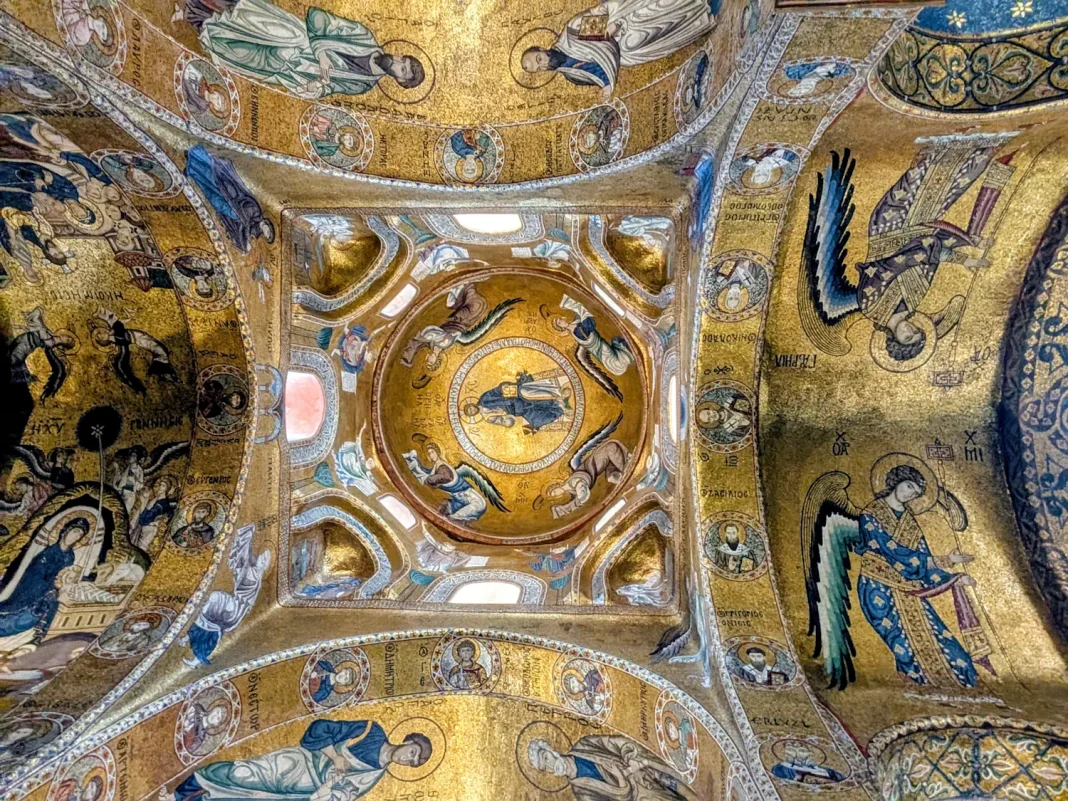
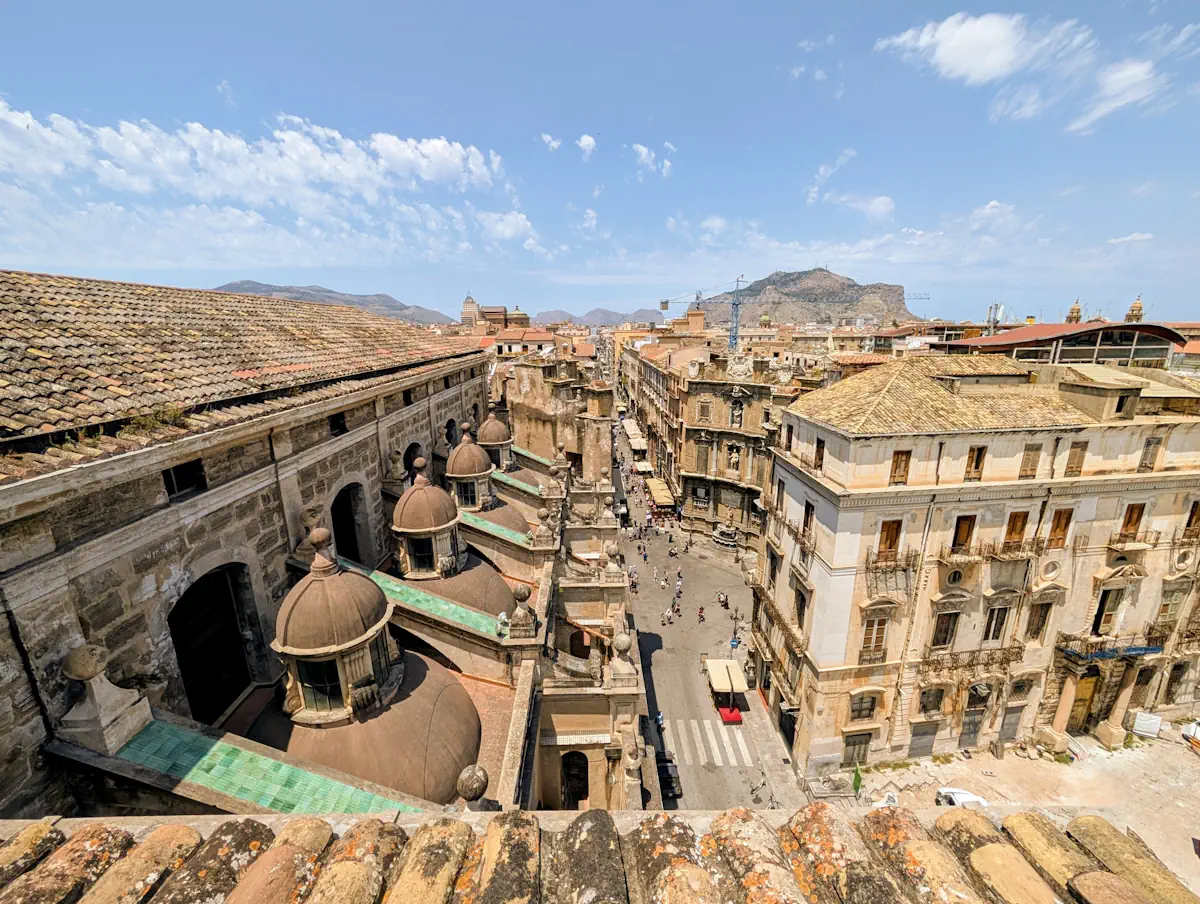
Because Palermo is not a pretty Italian city. It’s not Florence, it’s not Verona, it’s not even Rome. It’s decrepit, it’s noisy, it’s dirty in places, magnificent buildings left completely abandoned for decades, façades held up out of sheer habit. And behind one of those façades, there’s a Byzantine chapel entirely covered in gold that hits you with a jolt you’ll remember for a long time.
But I might as well say it straight away: the real challenge in Palermo isn’t distance. The whole historic centre fits inside a square of 1.5 km, you do absolutely everything on foot. The real challenge is the opening hours. Churches open three hours a day. Oratories shut on Tuesdays. Royal apartments that close when the Sicilian Parliament is in session. A midday break that sometimes lasts two and a half hours.
So I’ve put together the guide I wish I’d had before setting off and doing my week between Palermo and Cefalù (struggling a fair bit): every site with its opening hours, its 2026 price, its duration, and its flaw. Plus everything you can do outside the city, and the activities that are genuinely worth it (spoiler: the anti-mafia tour, yes; the tuk-tuk at €70 an hour, no).
Right then, off we go.
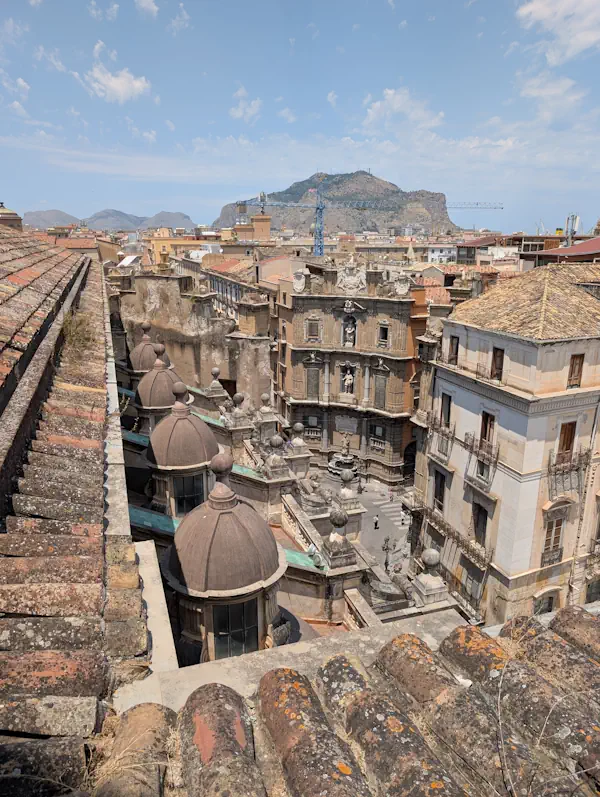
Before we start: in Palermo, you build your day around the opening hours
If you take away only one thing from this article, let it be this one. In Palermo, you don’t decide “this morning we’ll head to the cathedral”. You first look at what’s open, and work out your itinerary from there. It’s the opposite of every other trip.
In practice, the sources contradict each other constantly. The official PDF from Palermo’s tourist office (last updated: November 2025) already gives outdated hours. The city council’s website shows something different from the monument’s own site. And on the spot, you’ll be told yet another thing. A joyful mess, like I said.
- La Martorana opens 3 hours a day. Monday to Saturday 10am-1pm, and nothing on Sunday. It’s THE number one trap in the city, and it’s one of the most beautiful things to see.
- The Serpotta oratories are closed on Tuesdays. The two main ones, Santa Cita and the Rosario di San Domenico, same day.
- The churches have ridiculous opening hours. They’re open for Mass on certain days, but not for tourism, and of course it depends on the church. Otherwise it wouldn’t be any fun.
- The midday break. It lasts 30 minutes at San Cataldo, 2 hours at the Santissimo Salvatore, 2.5 hours at the Catacombe dei Cappuccini, 4 hours at San Domenico (1pm-5pm).
- On Sunday afternoons, half the city shuts. The Palazzo dei Normanni closes its entrances at 12.30pm. San Giovanni degli Eremiti at 1.30pm. The Salinas museum at 1pm. The Palazzo Abatellis at 1.30pm.
- On Mondays, the regional museums are closed. Abatellis, the Zisa, Salinas, Palazzo Mirto. Monday is the worst day for museums in Palermo.
- On 15 August, the city is largely at a standstill. The Cuffaro bus to Agrigento doesn’t run, the oratory of San Lorenzo closes, the Corleone museum closes.
A little tip from experience all the same: check the opening hours the evening before, and build your day around the most restrictive site. It’s a pain, but it’s what saves you from going back three times to the same place only to find the door shut. It happened to us with the oratories, which we never managed to see, and with San Giuseppe dei Teatini, which we finally got into after several attempts.
The “Circuito del Sacro”: keep all your church tickets
Careful, it isn’t a pass. It’s a system of cross-discounts managed by the archdiocese: when you buy a ticket at one of the circuit’s monuments, you’re entitled to a discount (usually €1) at all the others, simply by showing the ticket.
In the circuit: the Cattedrale, the Museo Diocesano, Santa Caterina d’Alessandria, the church of the Gesù, La Martorana, San Cataldo, the Santissimo Salvatore, Santa Maria della Catena, the oratories of Santa Cita, of the Rosario di San Domenico, of San Lorenzo and of San Mercurio, and a few others.
So: don’t throw anything away. It’s around €1 per church, so a few euros over a three-day stay. It’s not a revolution, but it’s free.
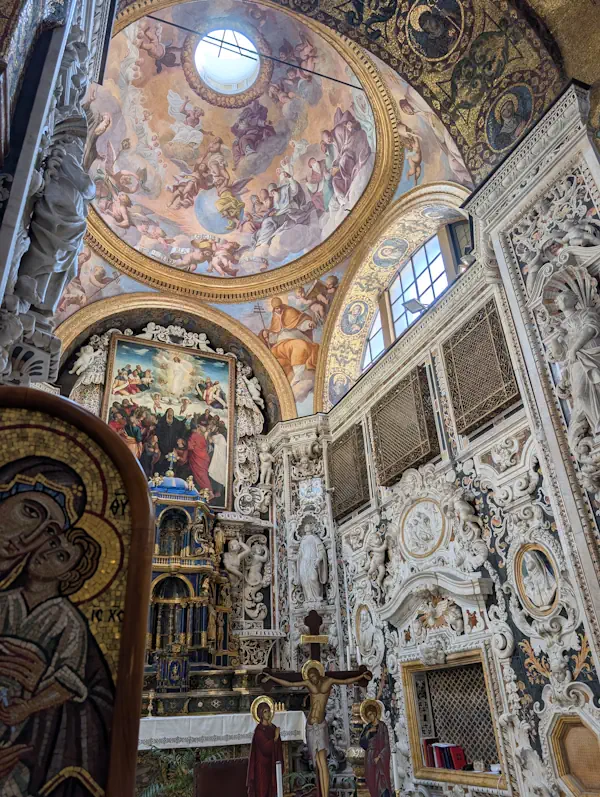
The most beautiful churches in Palermo: the ones I did, ranked
Right, I need to explain how this article is organised. The churches of Palermo, I haven’t lumped them all together: I’ve sorted them by family, because that’s how you visit them. Byzantine on one side, Baroque on the other, oratories apart. It makes sense on the ground, much less so when you’re just looking for “where do I start”.
So here’s the ranking. And let me be clear straight away: I only rank what I’ve seen with my own eyes. Palermo has dozens of churches, we didn’t do a quarter of them, and I’m not going to rate places I’ve never set foot in.
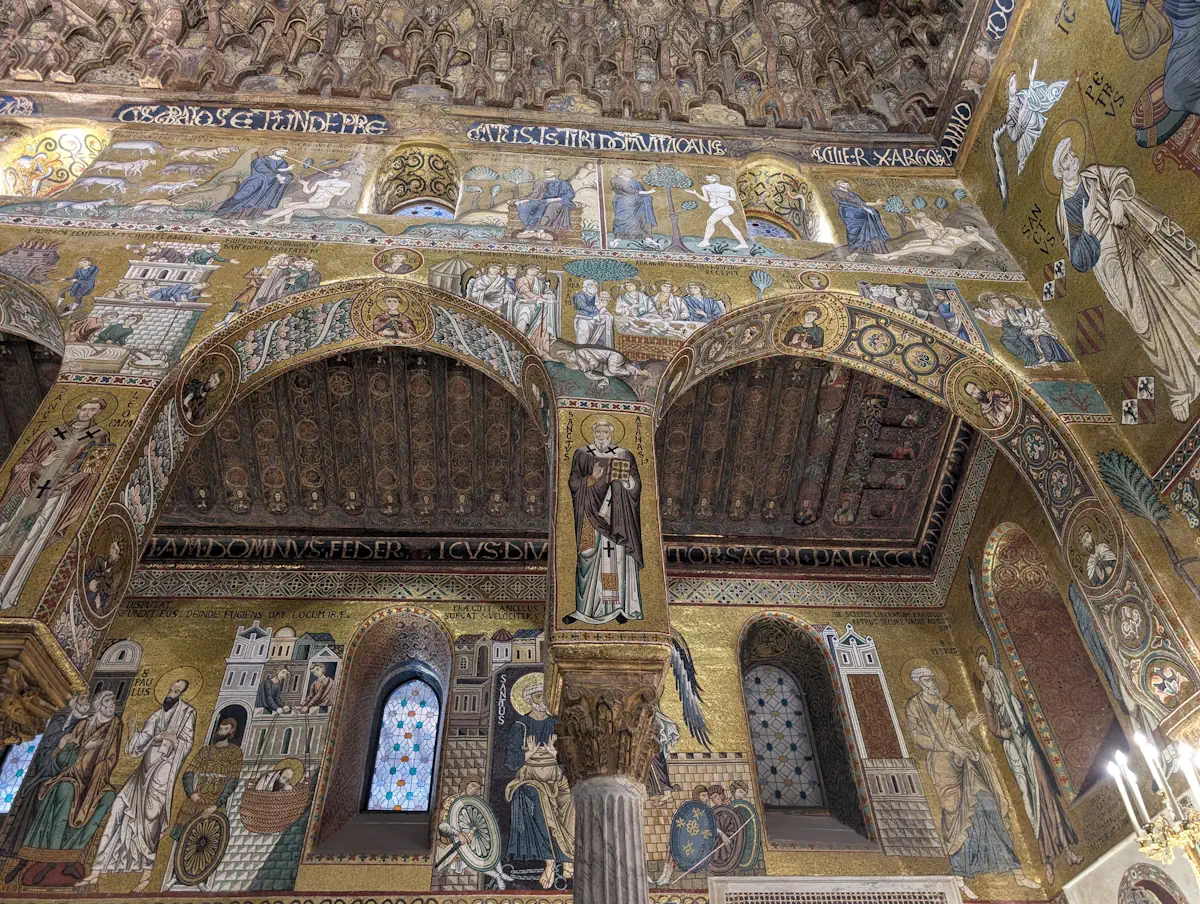
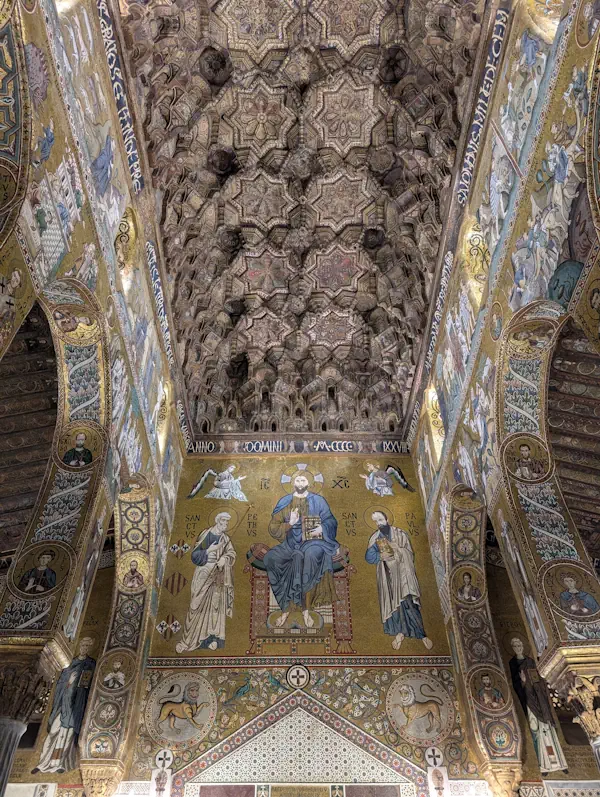
- The Cappella Palatina — the most beautiful place in all of Sicily, for us. Byzantine gold mosaics beneath a carved Fatimid wooden ceiling. We came out not knowing what to say. €19 with the Palazzo dei Normanni, and it’s worth it ten times over.
- The cathedral of Monreale — technically it’s 10 km away, but there’s no way not to put it here. 6,000 m² of mosaics, a gigantic Christ Pantocrator, and a cloister with 228 columns.
- La Martorana — a jolt. The most moving Byzantine mosaics in the city, for €2. And three hours of opening a day, which makes it the number one trap in Palermo.
- San Giuseppe dei Teatini — our Baroque favourite, and the one we had the hardest time seeing: we had to keep coming back before we finally hit an open door. It was worth the persistence. €3 for the church, the crypt, the hypogeum church and the terraces.
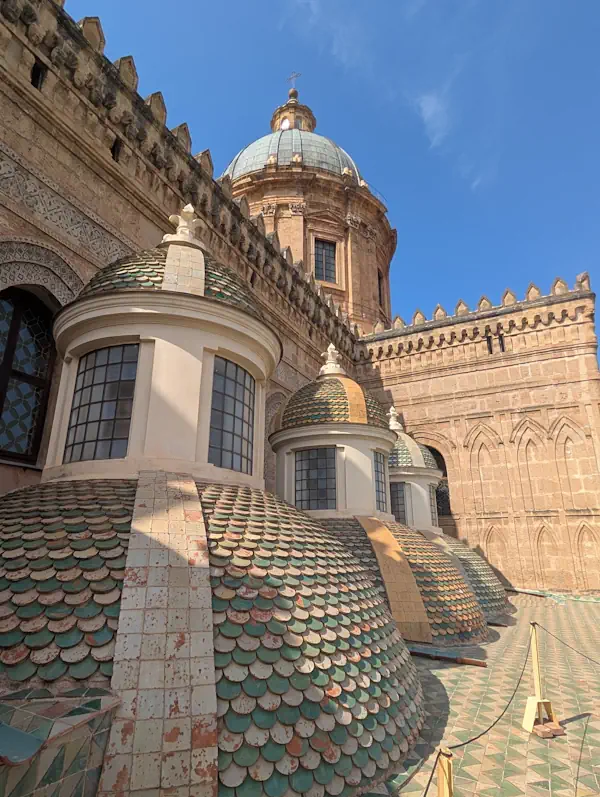
- The Cattedrale of Palermo — a wild architectural patchwork. The nave is free, the roofs cost €7 and it’s the only extra that’s worth it.
- Santa Caterina d’Alessandria — Baroque to the point of dizziness, plus a cloister, 360° terraces and the nuns’ pastry shop on the ground floor. We love the cloister and the terrace, and we couldn’t resist the cannolo.
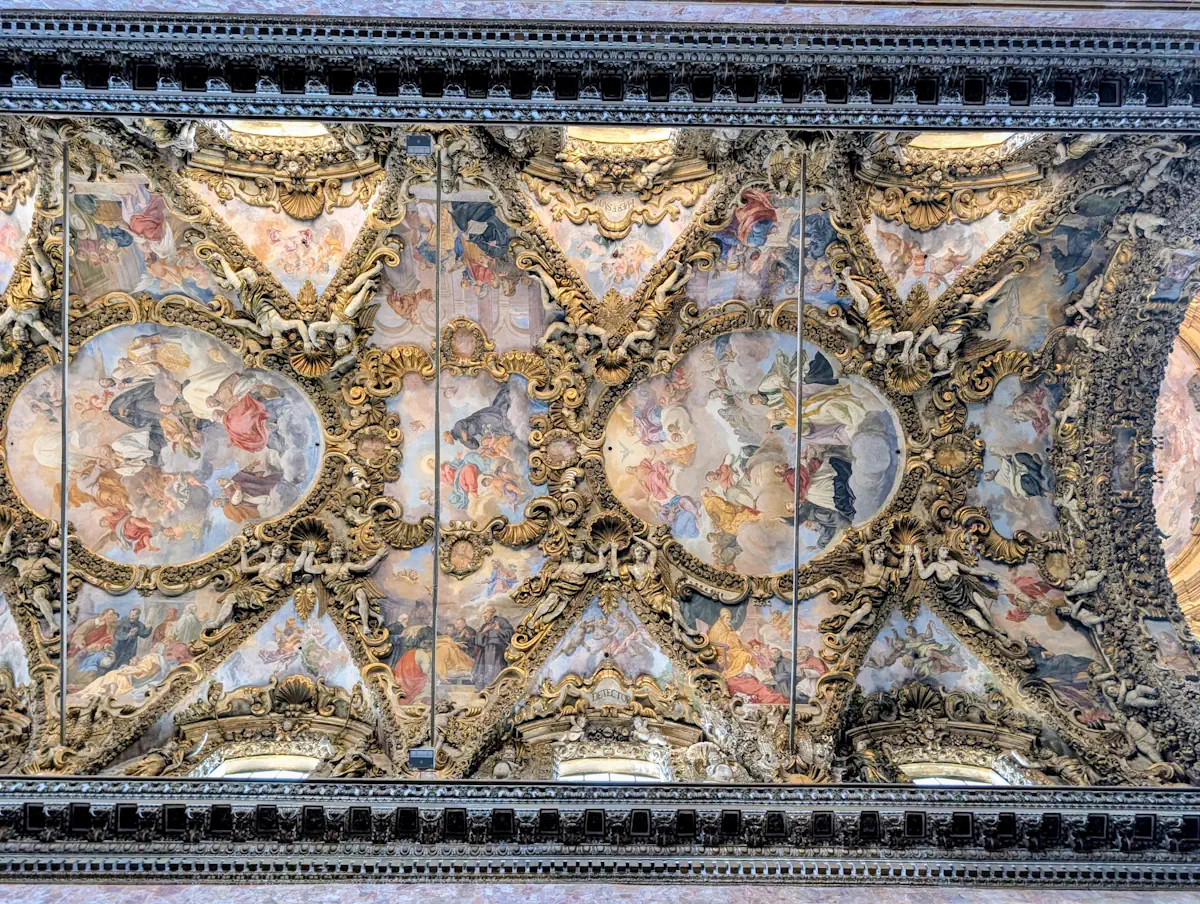
- The church of the Gesù (Casa Professa) — the most decorated in the city, staggering with its polychrome marbles. We did the adjoining museum, it’s worth it. €6 with the guided tour included.
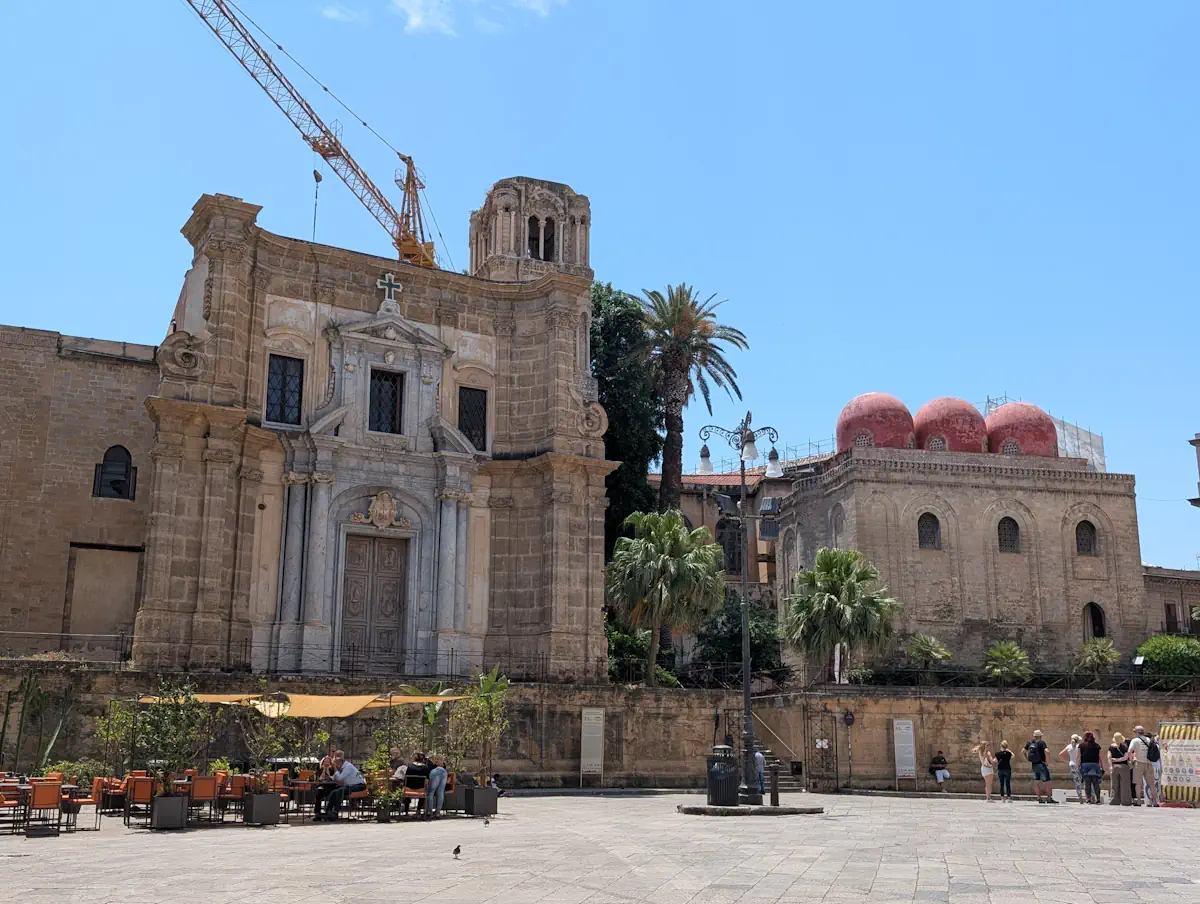
- San Cataldo — right next to La Martorana. The three red domes are magnificent from the outside; inside, it’s bare. Photogenic outside, austere inside, up to you whether it’s worth €2.50.
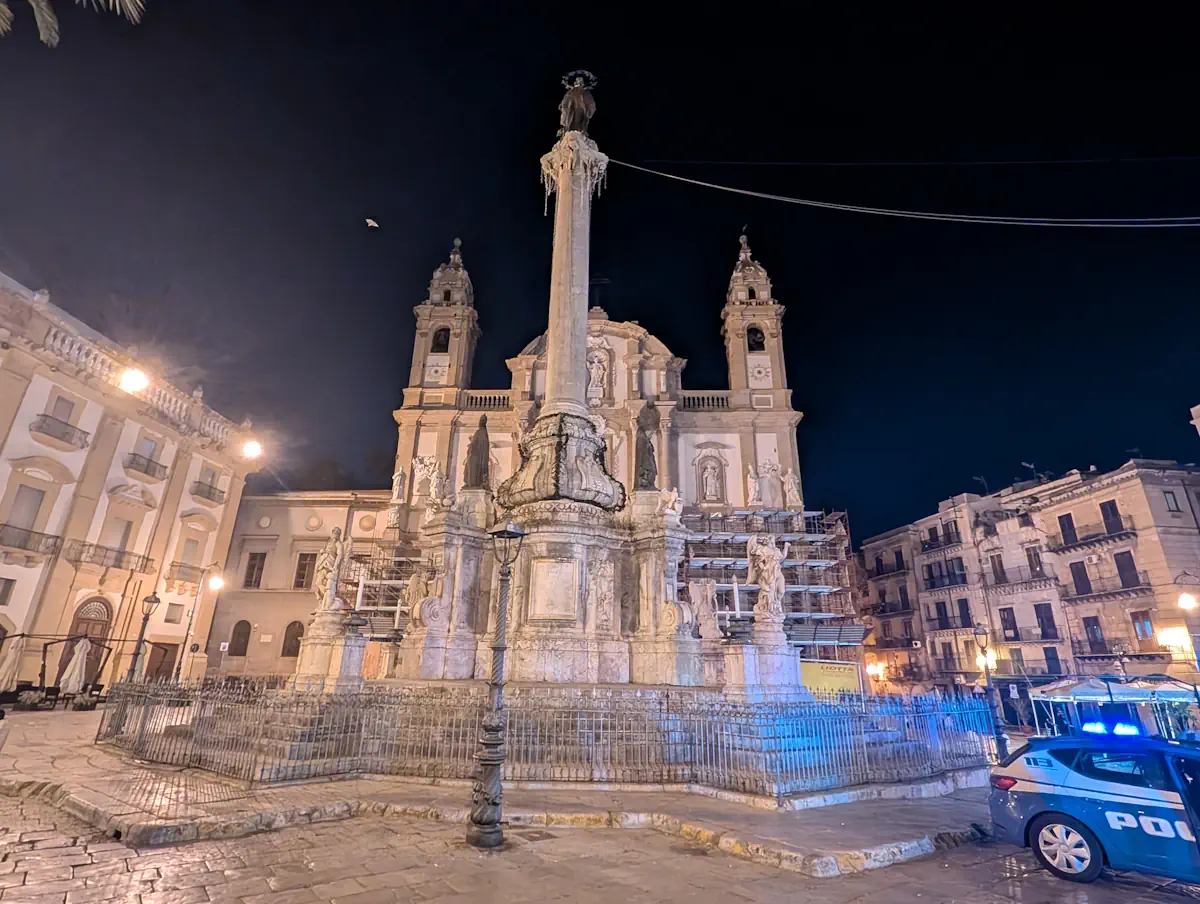
- San Domenico — the Pantheon of the Sicilians, steeped in history. The façade was under renovation when we passed through and the interior struck us as noticeably less dazzling than the rest. If your stay is short, save that energy for La Martorana.
The ones we didn’t do, and that I recommend anyway
I might as well be clear: these aren’t recommendations from experience, they’re places we missed and that I regret. I’m giving you the information, not an opinion.
- The three Serpotta oratories — Santa Cita, the Rosario di San Domenico and San Lorenzo. We tried, we came up against their opening hours, we never managed to fit them in. It’s my biggest regret in Palermo along with the catacombs, and it’s the biggest blind spot in every guide. Organise your day around them.
- San Giovanni degli Eremiti — we gave it a miss, we’d been told the interior was less spectacular than the façade. The red domes are perfectly visible from the street, for free; the real bonus is the cloister and its garden.
- The Santissimo Salvatore — the third of the Cassaro’s Baroque trio, with its oval nave and its panoramic dome. We only had a peek, on a wedding day, without being able to go up to the dome. So I can’t tell you what the view is worth. It’s right on the way between the Cattedrale and the Palazzo dei Normanni, no reason to miss it.
If you only have half a day for the churches: Piazza Bellini before 1pm (La Martorana + San Cataldo + Santa Caterina, all three are on the same square), then the Cattedrale and the Cappella Palatina in the afternoon. It’s the most rewarding half-day in Palermo, by far.
One last thing, valid everywhere: shoulders and knees covered. Some churches lend a shawl for a coin, others turn you away. In summer, in a vest top, you’ll be sent back out.
Arab-Norman Palermo: the gold mosaics listed by UNESCO
Right, this is the heritage that justifies the trip on its own and it’s why we spent so much time in Palermo (instead of scarpering off to the beach like my wife wanted).
In the 12th century, the Norman kings of Sicily had Byzantine craftsmen, Arab masons and Latin architects work together. The result: buildings that exist nowhere else in the world. Carved Fatimid-inspired wooden ceilings above Byzantine mosaics, in a Norman structure.
Nine monuments in Palermo, Monreale and Cefalù make up the “Arab-Norman Palermo” itinerary, listed by UNESCO since 2015. Here are the ones inside the city.
The Cappella Palatina and the Palazzo dei Normanni
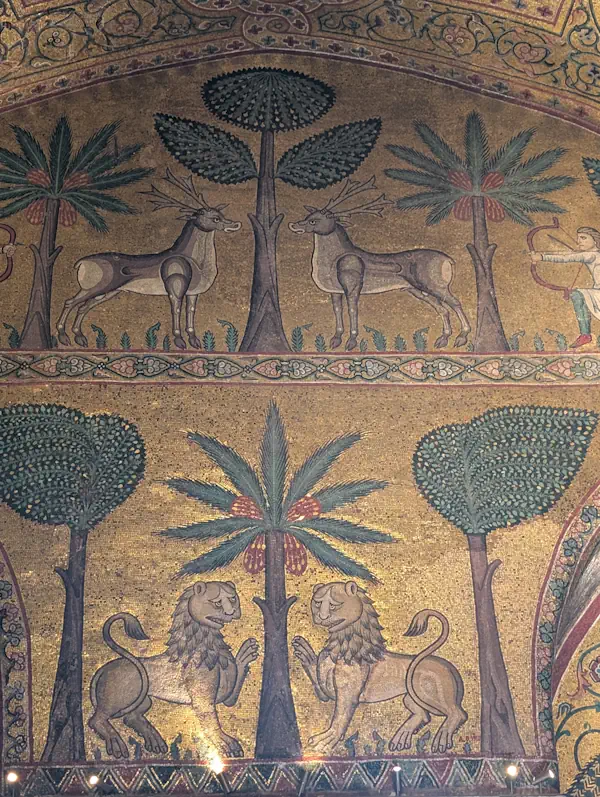
It is, for us, the most beautiful place in all of Sicily. A ceiling of carved wooden muqarnas, walls entirely covered in gold-ground mosaics, an inlaid marble floor. Three cultures talking to each other in a single room 30 metres long. You come out not knowing what to say.
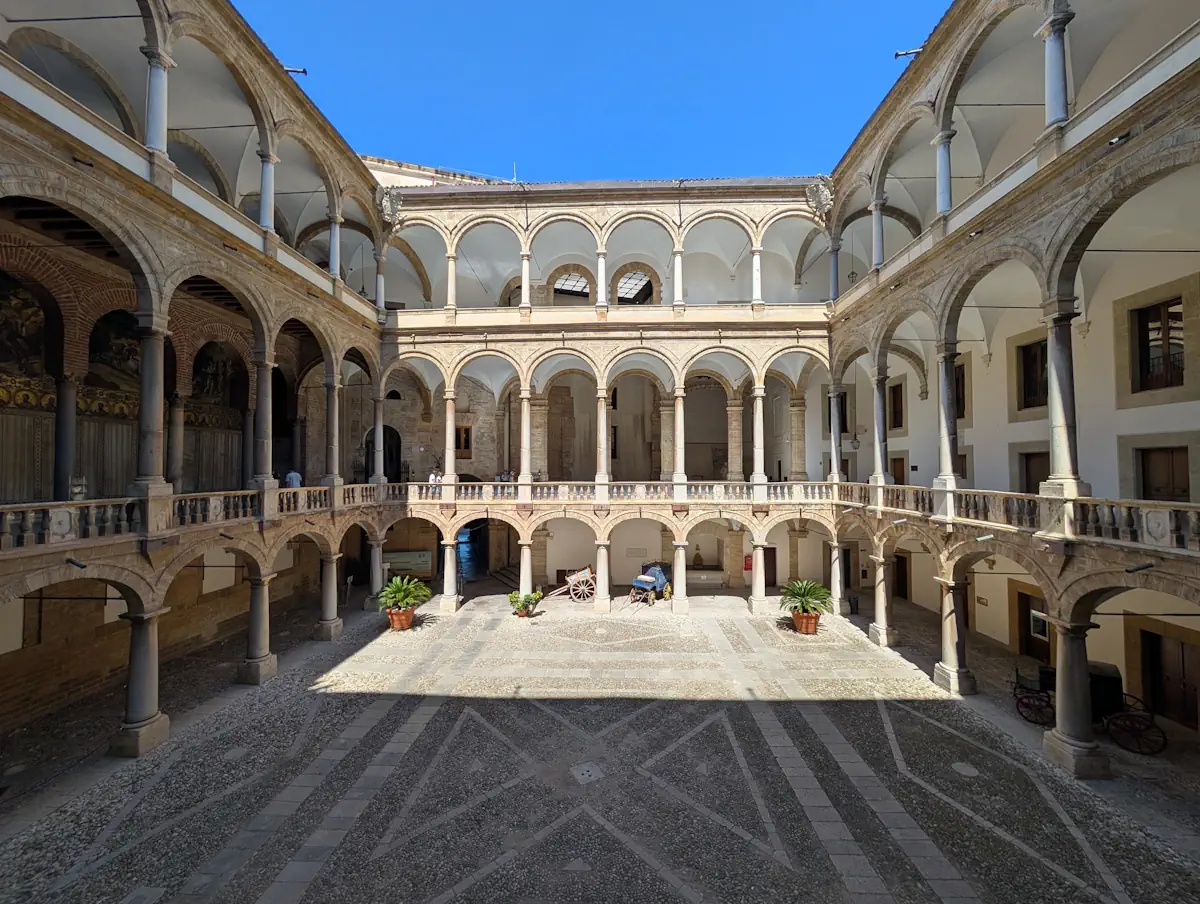
The palace itself is the seat of the Sicilian Regional Assembly, which explains the capricious opening hours. There’s also almost always a temporary exhibition included in the ticket.
- Opening hours: every day except 25 December and 1 January. Monday to Saturday 8.30am-4.30pm (last entry), Sunday and public holidays 8.30am-12.30pm (last entry). The chapel itself is closed to visitors on Sunday from 9.45am to 11.15am for Mass.
- 2026 price: €19 full price (chapel + royal apartments + gardens + exhibitions + archaeological area). €17 for EU 18-25s, €15.50 for over-65s, €11 for 14-17s. Free for accompanied under-14s. Audio guide +€5.
- Duration: 1.5 to 2 hours.
- Booking: yes, online, it saves the queue at the ticket office.
The flaws, and there are several. First, the mosaics have been under restoration since January 2025: the left nave and the presbytery are finished, but the right nave is still a building site. So you don’t see everything, there’s scaffolding. It’s already seriously beautiful, but you’ve been warned.
Then, the real bad news. The palace officially warns that it may be subject to “total or partial closures or changes to opening hours without notice” for institutional reasons. In other words: when the Sicilian Parliament is in session, it closes.
And then there’s the matter of the royal apartments. Historically, they weren’t open to visitors on Tuesdays and Wednesdays. At the moment they’re open every day, but the official notice only runs until 8 September 2026. After that, the Tuesday/Wednesday regime may return.
So, check the “Orari e ingressi” page the evening before. Seriously.

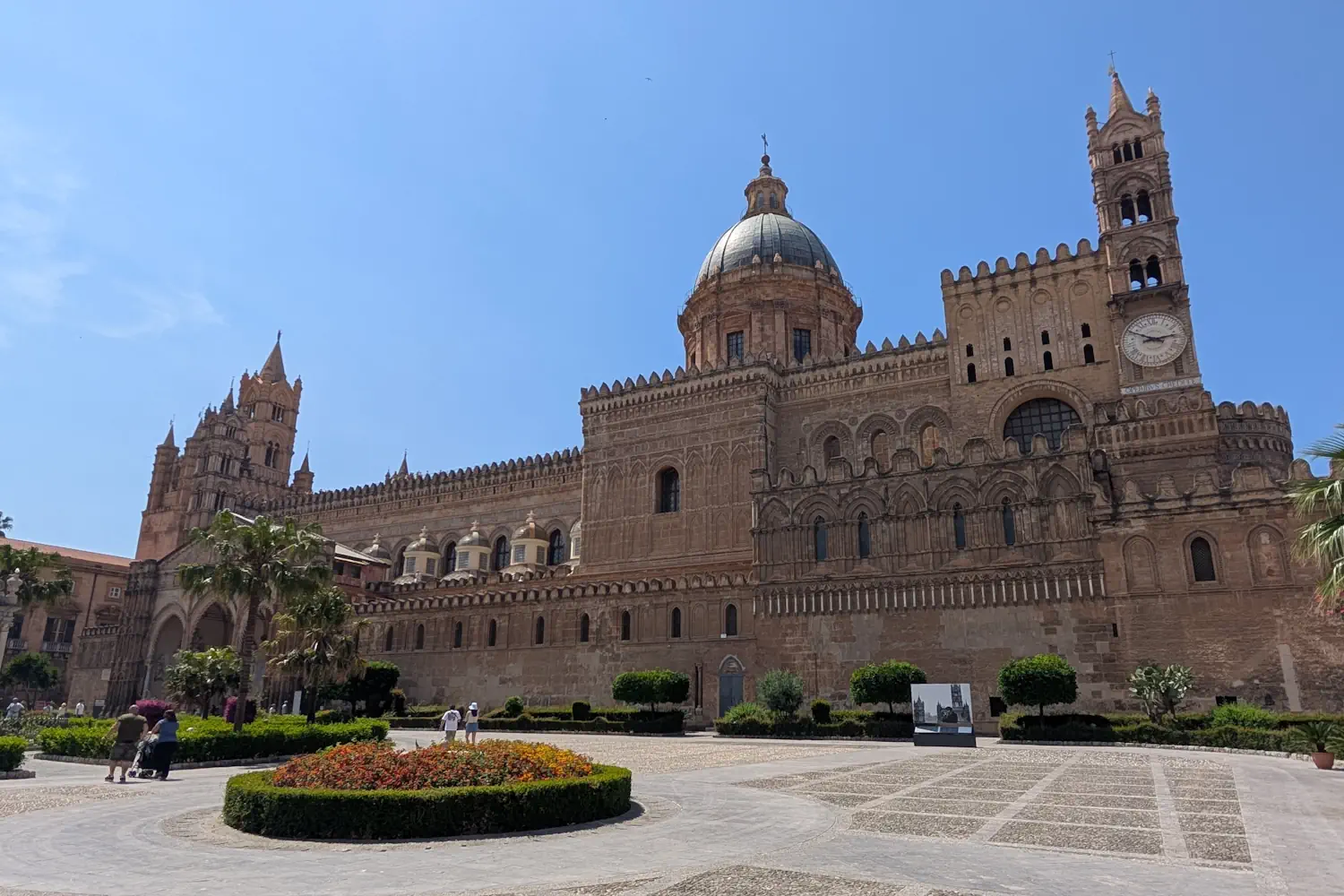
The Cattedrale of Palermo: go up on the roofs, forget the rest
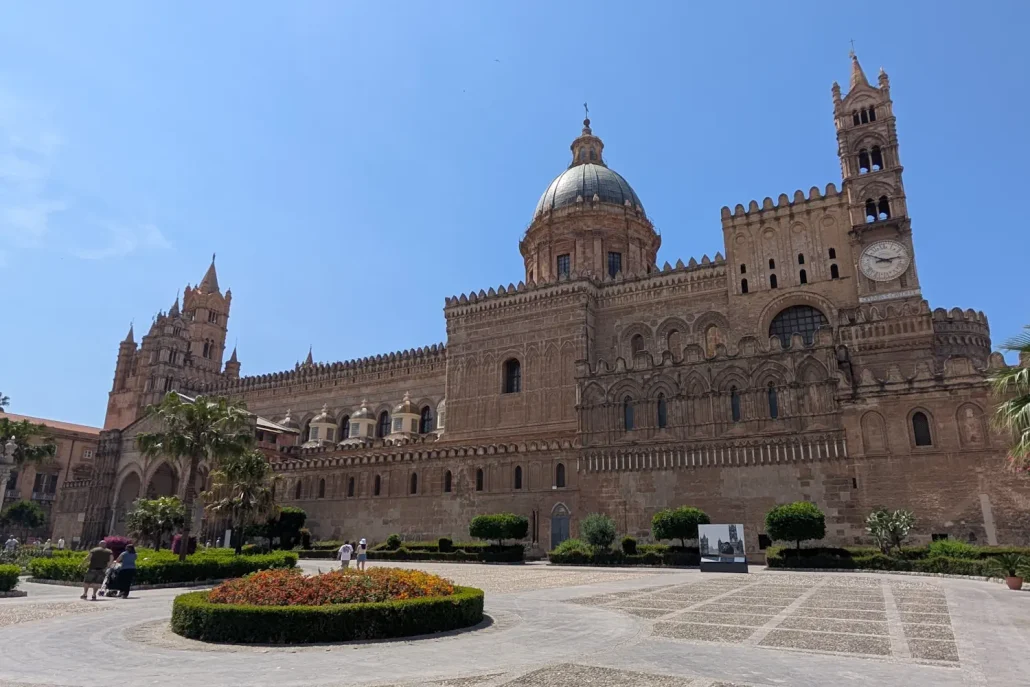
A completely wild architectural patchwork. 12th-century Norman base, Catalan Gothic additions, 15th-century portico, an 18th-century Neoclassical dome that has no business being there. It shouldn’t work and yet it does.
The nave is free. Everything else is paid, and that’s where you have to make choices, because the pricing grid is a labyrinth.
- Nave hours (free): Monday to Saturday 7am-7pm, Sunday 8am-7pm.
- Monumental area hours (paid): Monday to Saturday 9.30am-6pm, Sunday 10am-6pm according to the official site. Last entry 35 minutes before. But the city council’s PDF gives noticeably shorter hours (closing at 2.30pm on weekdays, 1pm on Sundays): arrive early, especially on Sundays.
- 2026 prices: roofs only €7 (€4 for 11-17s, €6 for over-65s) · crypt + treasury + apses + Pozzo della Maddalena €7 · the full combined ticket €13 · with the Museo Diocesano, from €8 to €18 depending on the option (€13 without the roofs, €15 with).
- Duration: 30 min for the nave, 1h15 with the roofs.
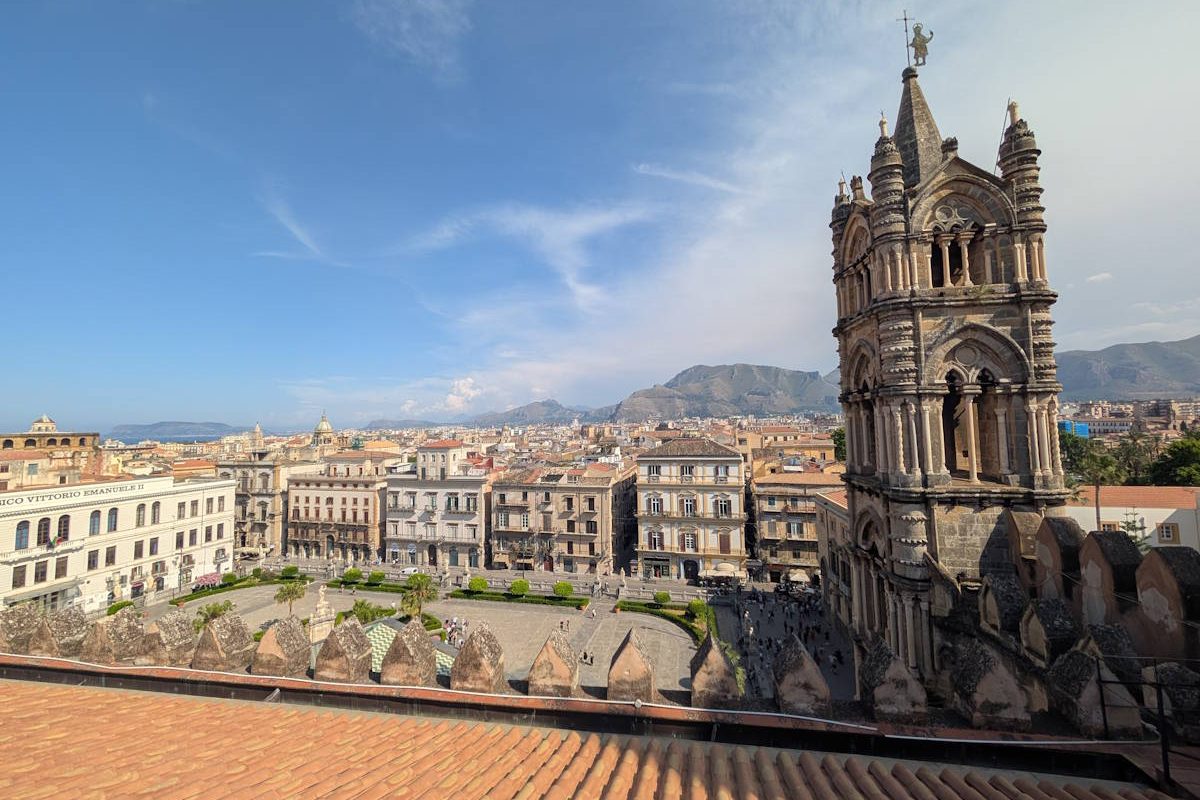
If I have to be honest: take the roofs (€7) and nothing else. The view over the city, the mountains and the dome is well worth the steps. The other extras — treasury, crypt, royal tombs — aren’t essential, unless you’re a real enthusiast. The €13 combined ticket, you can do without.
The flaw: the climb to the roofs is not advised if you have a heart condition, are claustrophobic or prone to vertigo, you need closed shoes, and 11-17s must be accompanied by an adult. The official site also flags sections temporarily closed for restoration — worth rechecking on the day.
And a genuine tip: only buy your tickets on the cathedral’s official website. It warns, itself, against resellers who inflate prices. Honestly, when a monument takes the trouble to write that on its home page, there’s a reason.
La Martorana and San Cataldo, on Piazza Bellini
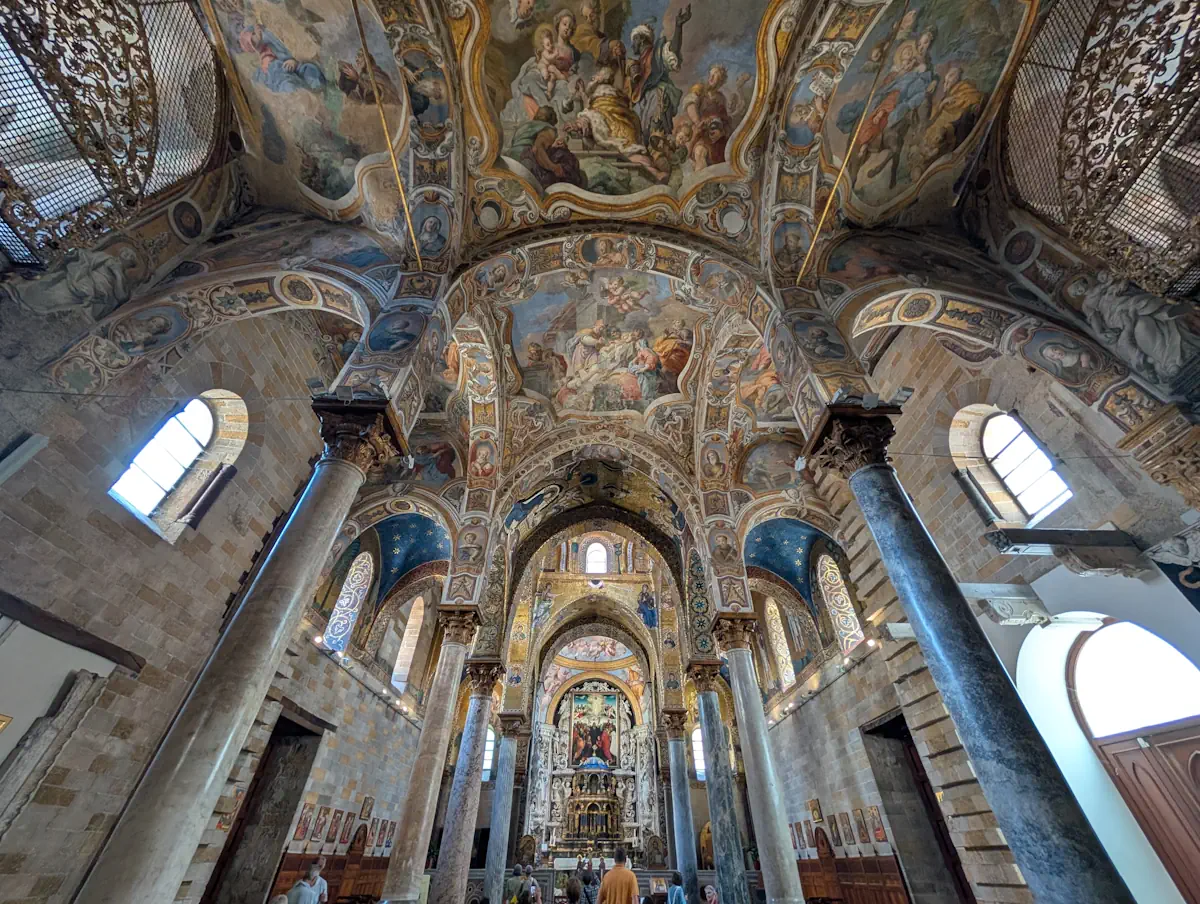
La Martorana, Palermo’s jolt
Santa Maria dell’Ammiraglio, by its real name. Piazza Bellini. This square was our favourite spot in the historic centre, and La Martorana is the main reason.
Inside, 12th-century gold-ground Byzantine mosaics, made by craftsmen who came from Constantinople. A jolt. It’s small, you visit it in 20 minutes, and you come out telling yourself you’ve never seen anything like it.
- Opening hours: Monday to Saturday 10am-1pm only. Closed to visitors on Sunday (only the Divine Liturgy at 11am). In the afternoons, the church opens only for worship.
- Price: €2 (€1 concession or with a Circuito del Sacro ticket).
- Duration: 20 to 30 minutes.
The flaw is the slot. Three hours, six days out of seven. If you miss the window, you miss La Martorana. The clever move: block out a morning for Piazza Bellini and do La Martorana, San Cataldo and Santa Caterina back to back, all three of which are on the same square. It’s the most rewarding morning in Palermo.
Also note: it’s a church of the Greek-Byzantine rite still in use, visits are suspended during services.
San Cataldo, the little sister next door
Right next to La Martorana, on the same square. Three little red Arab-Norman domes, super photogenic from the outside.
- Opening hours (March-October): every day 10am-1.30pm and 2pm-6pm. In winter 9am-1.30pm and 2pm-5pm.
- Price: €2.50, or €1.50 if you have the La Martorana ticket — same square, different ticket office, do them one after the other.
- Duration: 15 minutes.
The flaw: the interior is bare. Completely bare. Some stones, a timber frame, three domes, that’s it. Some find it sublime in its austerity, others find that €2.50 for fifteen minutes is steep. Up to you — but the exterior, that’s free and it’s already one of the most beautiful images of Palermo.

San Giovanni degli Eremiti and the Zisa: the two off-centre UNESCO sites
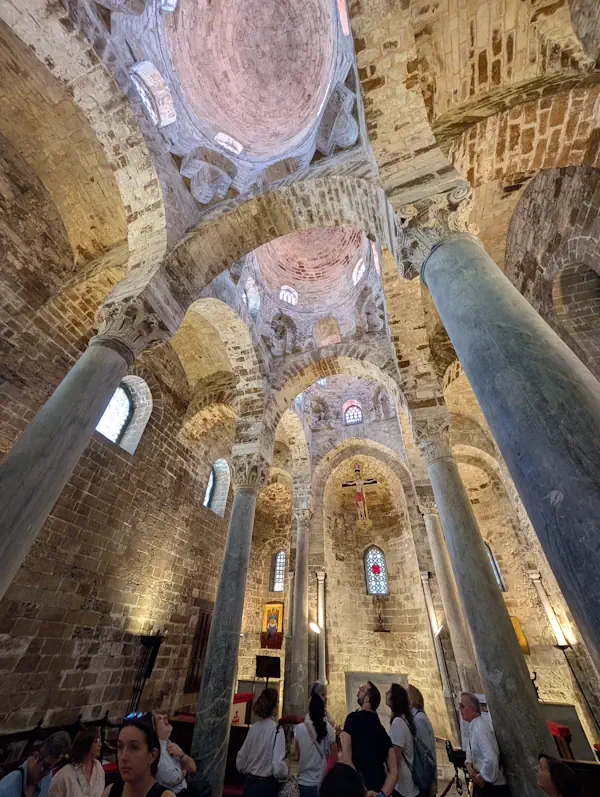
San Giovanni degli Eremiti: come for the cloister
The famous red domes 200 metres from the Palazzo dei Normanni. We didn’t do it — we’d been told the interior was less spectacular than the façade, and we had other things to fit in. Looking back, I’d still put it in a programme of 3 days or more, for the garden and the cloister.
- Opening hours: Monday to Saturday 9am-7pm (last entry 6.30pm), Sunday and public holidays 9am-1.30pm.
- Price: €8. Free on the 1st Sunday of the month.
- Duration: 30 to 45 minutes.
The flaw: at €8, it’s the most questionable ticket in Palermo, because the red domes — the very thing everyone comes for — are perfectly visible from the street, for free. The real bonus is the cloister and its garden. If you go on a 1st Sunday of the month, the question doesn’t arise.
The Zisa castle and its museum of Islamic art
A Norman pleasure palace from 1165, built by Muslim craftsmen for a Christian king. The name comes from the Arabic “al-Aziz”, the splendid. Today it houses a museum of Islamic art.
- Opening hours: Tuesday to Saturday 9am-6.30pm, Sunday and public holidays 9am-1pm. Closed on Mondays.
- Price: €8 full, €4 for EU 18-25s, free for under-18s. Free on the 1st Sunday of the month, but booking is compulsory.
- Duration: 45 min to 1h.
The flaw: it’s off-centre, 2.5 km from the centre, and restoration work under way makes certain parts inaccessible. The site also had unexpected closures this summer. Check before crossing the city. Good point: the Cantieri Culturali alla Zisa, a former industrial complex turned cultural venue, are right next door.

Baroque Palermo: squares, marbles and walls that move
Now yes, there’s Baroque all over Italy. But Palermitan Baroque has something of its own: it’s not just frescoes and paintings, it’s reliefs, sculptures in inlaid marble, stuccoes coming out of the wall. The idea was to give life to the walls and the ceilings. And honestly, it works. It took an insane amount of work to do all this!
The Quattro Canti and the Fontana Pretoria, Palermo’s drawing room
The Quattro Canti, the crossroads that turns into a nightclub
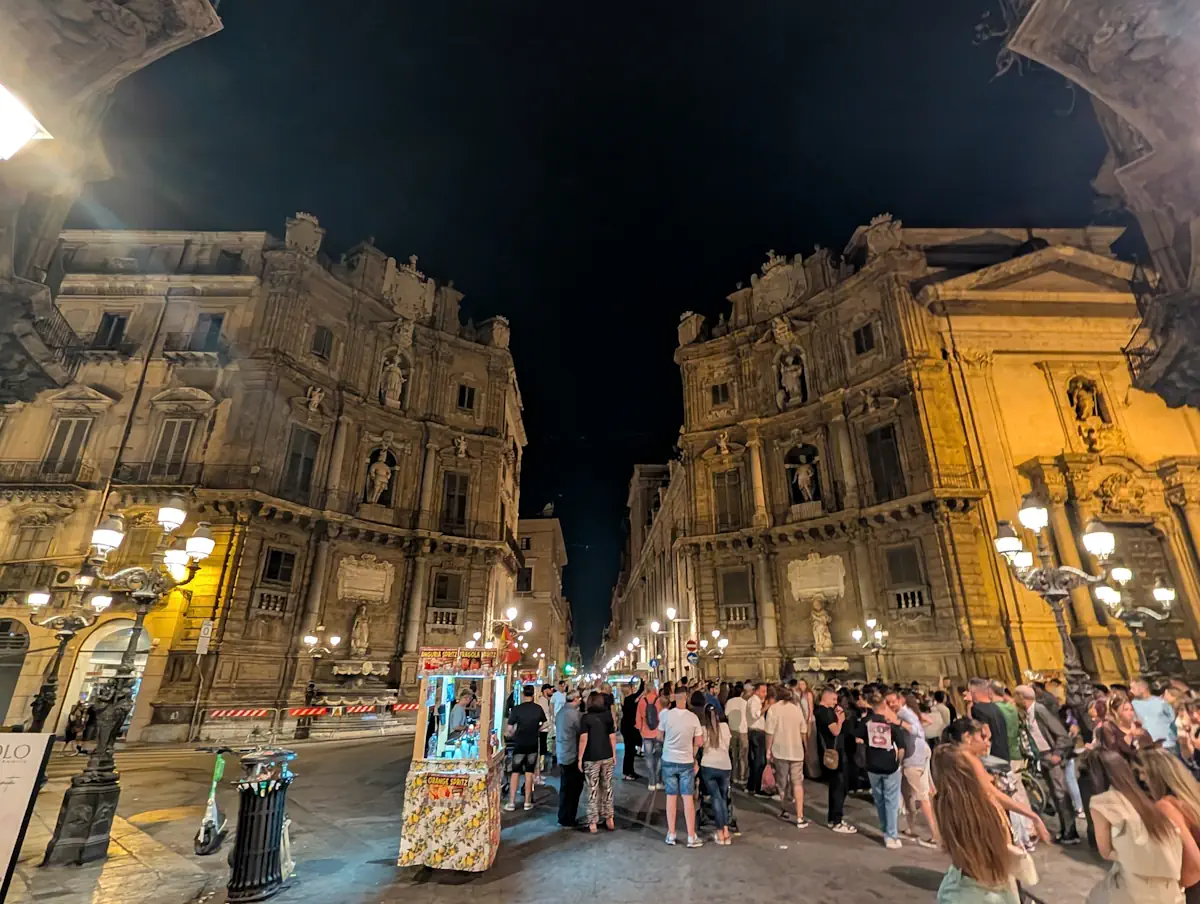
The intersection between the Cassaro (Via Vittorio Emanuele) and Via Maqueda. Four curved façades, four seasons, four kings of Spain, four patron saints. It’s also called the “theatre of the sun” because each façade is lit at a different moment of the day.
Above all it’s the very principle of Palermo condensed into one crossroads. During the day, there are street artists, singers — including an opera singer —, dancers, fruit-juice sellers. And the moment night falls, the fruit-juice sellers get the sound system out, the fruit juice becomes a cocktail, and the square turns into a giant open-air nightclub. The very principle of the almighty free-for-all.
- Opening hours: 24/7. Price: free. Duration: 10 minutes by day, two hours in the evening.
The flaw: it’s not pedestrianised. Cars and scooters go through the middle, and you need some nerve to cross. Don’t go looking for a quiet café terrace here.
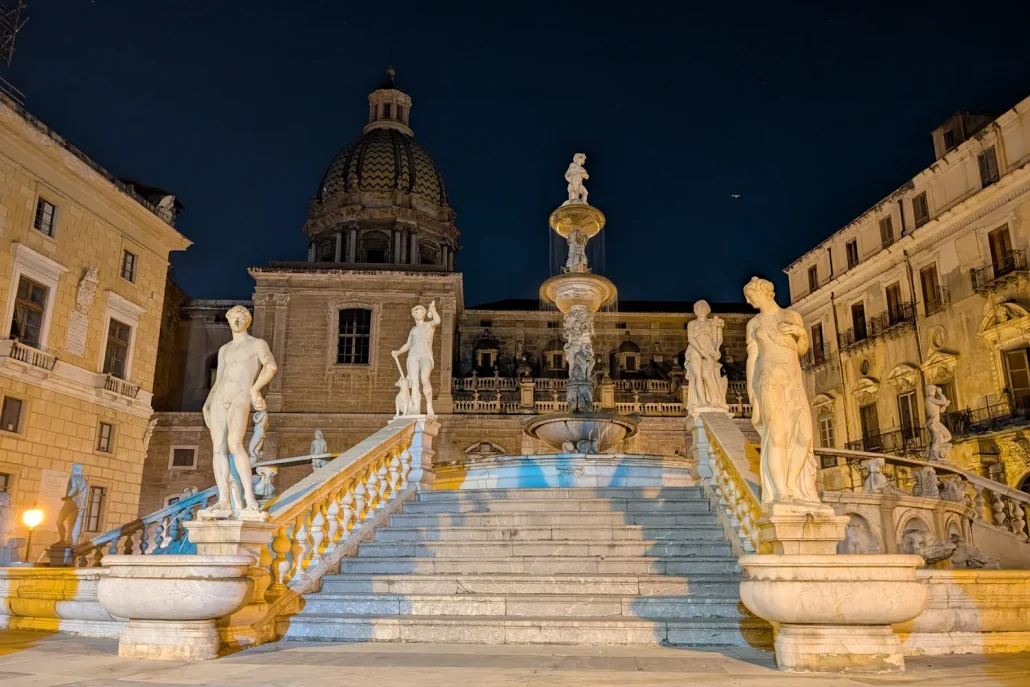
The Fontana Pretoria, known as the “fountain of shame”
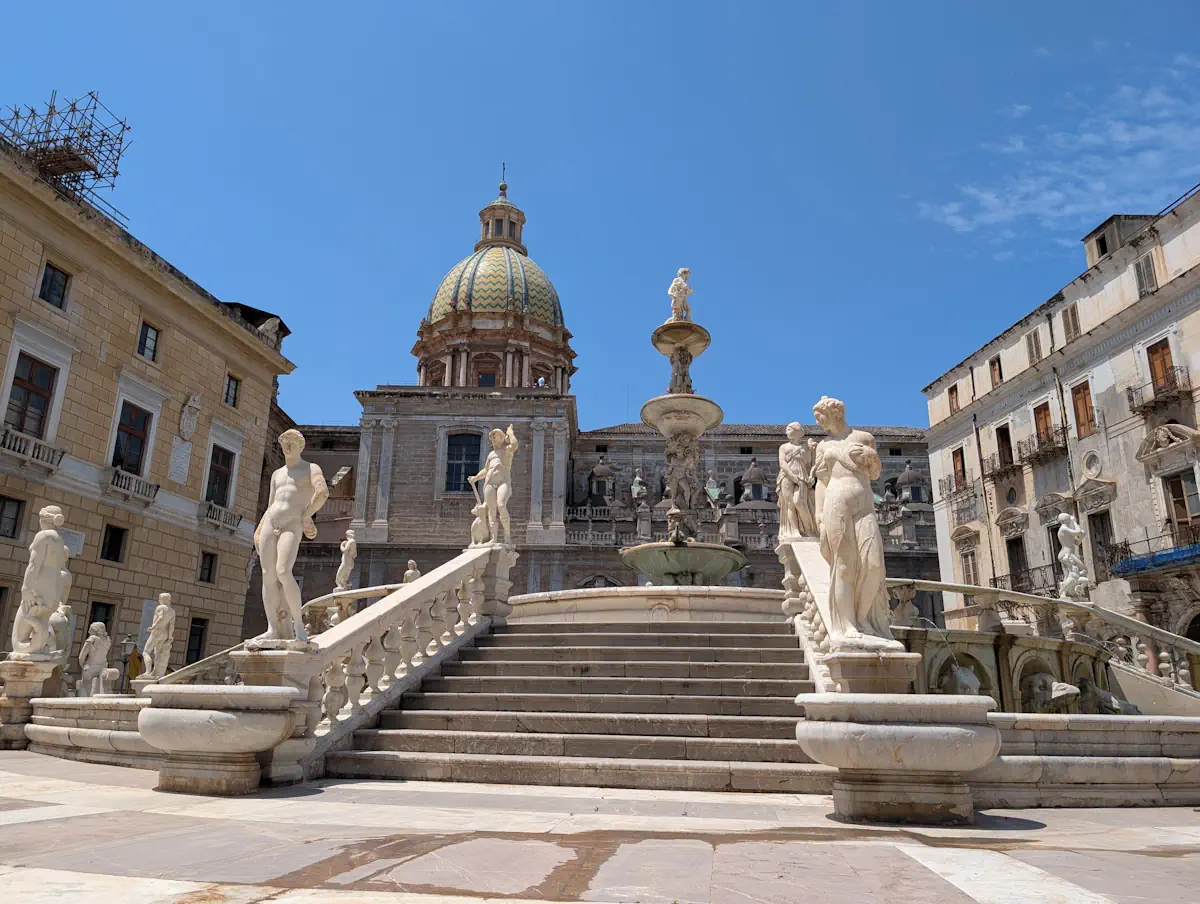
Thirty metres from the Quattro Canti. Dozens of nude marble statues, which earned it its nickname of Fontana della Vergogna in the 16th century, when the nuns of the convent opposite discovered what had just been installed beneath their windows.
- Opening hours: pedestrianised square, open at all times. Price: free.
There are two flaws. First, the fountain is surrounded by railings: you walk around it, you don’t go in.
Then, the works. Restoration sites come back regularly and the City has announced the restauro of the historic fountains as a priority, but I couldn’t find any reliable source on the state of things in 2026. So I’m not promising anything. In Palermo, works are a somewhat separate notion anyway.
Right, the real clever move: go up on the terraces of Santa Caterina, right next door. It’s from up there that you finally see the overall composition, and it’s the only view that does the fountain justice.
Santa Caterina d’Alessandria: the cloister, the terrace and the nuns’ pastry shop
Baroque to the point of dizziness. It’s one of the rare places in Palermo where you can spend an hour and a half without being bored for a second: the church, the monastery, the panoramic terraces and the convent’s pastry shop.
Good news for 2026: the church reopened on 25 December 2025 after a year of closure to redo the inlaid marble flooring. And Van Dyck’s Madonna del Rosario has returned to its original place after more than a century spent at the Palazzo Abatellis. Every source announcing the church closed is outdated.
- Opening hours (March-October): every day 10am-6pm, last entry 5.15pm for the full route. In winter 9am-5pm.
- 2026 prices: church only €3 · monastery + church €8 · church + monastery + terraces €10 · terraces only €5.
- Duration: 1h to 1h30 with the terraces.
Note: the ticket office is not on Piazza Bellini. It’s on the first floor, access via Via Discesa dei Giudici 33. The entrance to the pastry shop too. Lots of visitors go round in circles on the square before finding it.
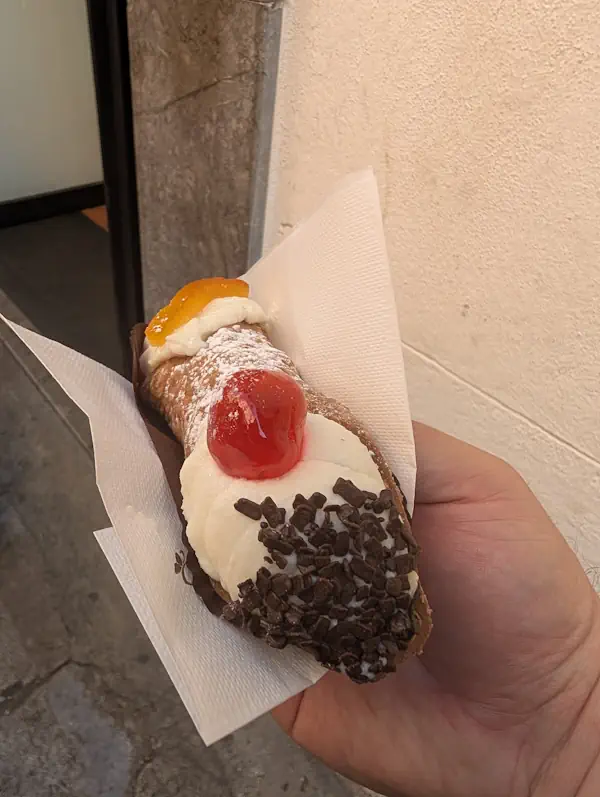
And the pastry shop, “I Segreti del Chiostro”, has no entry fee: you go in, you buy. Cassate, cannoli, fedde del cancelliere, and the famous minne di vergine. Impossible to resist. It’s one of the best sweet addresses in the city, and you don’t even need to pay for the monument to go there.
The church of the Gesù (Casa Professa), the most decorated in Palermo
Staggering with its polychrome marbles. Every square centimetre is worked. There’s an adjoining museum that we visited and that’s worth it — the guided tour is included in the ticket.
- Opening hours: museum Monday to Saturday 9am-6.30pm (last entry 6pm), closed on Sunday. Church Monday to Saturday 9am-5.30pm, Masses only on Sunday.
- Price: €6 for museum + church + sacristy + crypt + six rooms over three levels, guided tour included. €2 for the chapels and aisles only. €5 with a Circuito del Sacro ticket.
- Duration: 45 min to 1h.
The flaw: there are an awful lot of weddings at the weekend. The museum stays open during them, but any sense of quiet contemplation, forget it. Good point: it’s right in the middle of Ballarò, so carry on to the market straight afterwards.
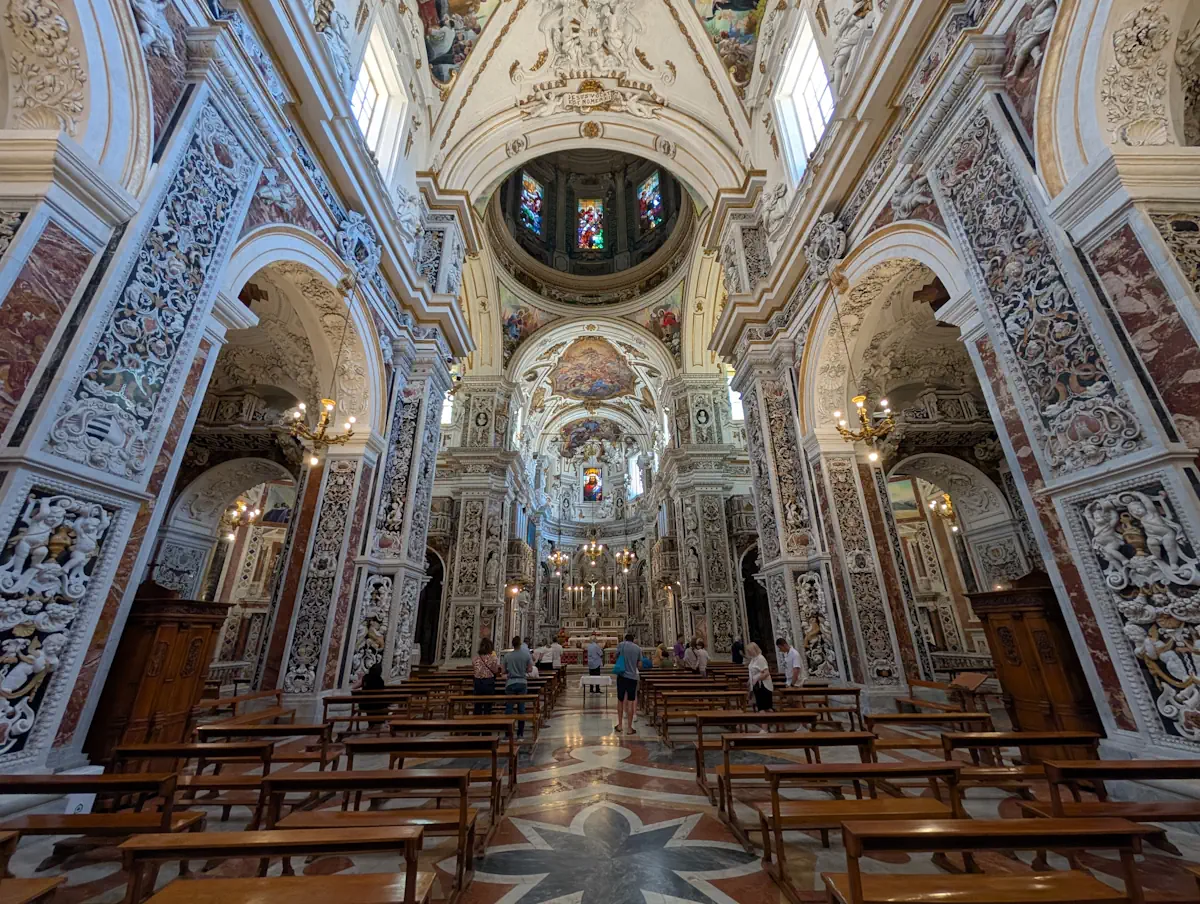
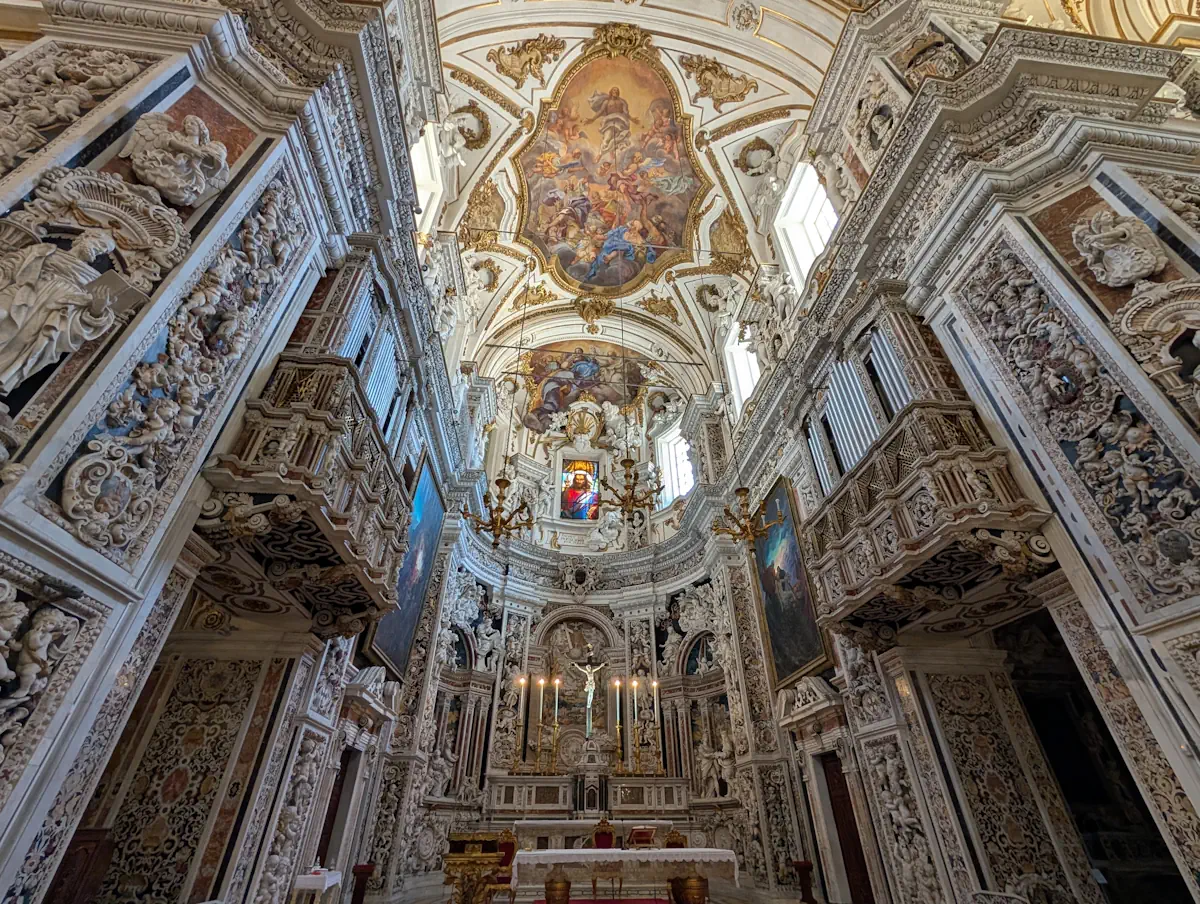
San Giuseppe dei Teatini, the Santissimo Salvatore and San Domenico
San Giuseppe dei Teatini, on the Cassaro
Exuberant Baroque, at the Quattro Canti. The ticket gives access to the church, the crypt, the hypogeum church and the terraces.
It’s our Baroque favourite in Palermo, and incidentally the place that gave us the most grief: we came back several times before finally hitting an open door. First time, bam! Wedding, no way in. Second time? Bam, Mass, no entry. Third time? Wham! Closed. In short, it’s exactly the kind of place that justifies everything I go on about above regarding opening hours. But it was worth the persistence.
- Opening hours: Monday to Thursday 9am-1pm, Friday and Saturday 9am-5pm. From April to October, Wednesday and Thursday also go to 9am-5pm. Visits suspended on Sunday and public holidays.
- Price: €3.
- Duration: 30 to 45 minutes.
The flaw: a church closed to visitors on Sunday is counterintuitive and it catches everyone out. And the official information amounts to a phone number, there’s no website — hence our comings and goings. The nave remains freely accessible during worship hours, but the crypt and terraces only with a ticket.
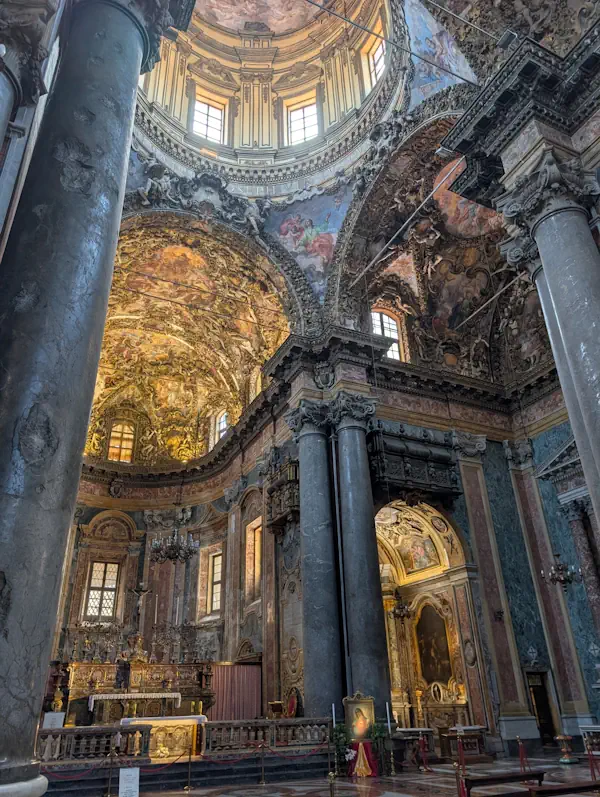
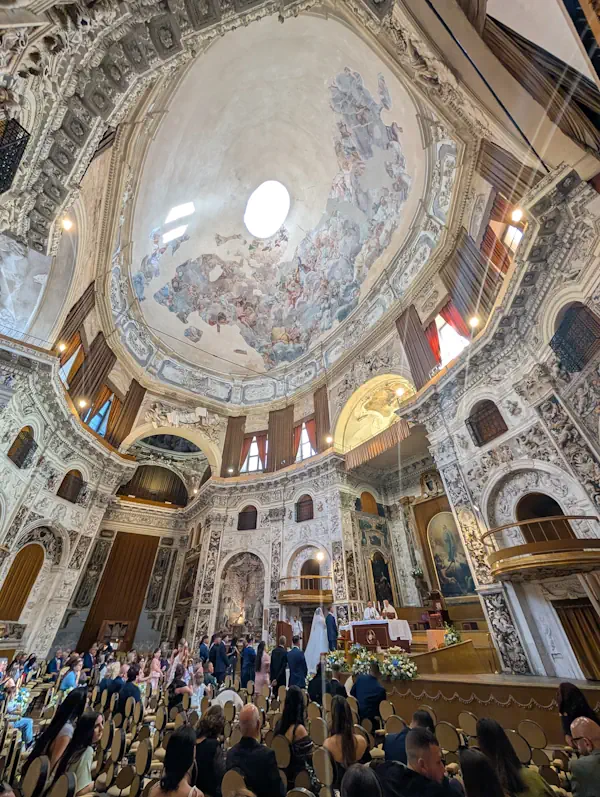
The Santissimo Salvatore and its oval nave
A spectacular oval nave — technically an elongated dodecagon inscribed in an ellipse. You can go up to the dome, which serves as a panoramic terrace over the Cassaro. We only managed one peek. During a wedding. It must have been the season.
- Opening hours (March-October): 10.30am-1pm and 3pm-5.30pm. In winter, 10.30am-1pm then 2pm-4.30pm for the church and 2.30pm-4.30pm for the dome.
- Prices: church €2.50 · dome only €3 · church + dome €4.
- Duration: 30 to 40 minutes with the climb.
The flaw: two hours of midday break in summer, the longest in the historic centre. And the church also serves as a concert hall: on performance evenings, visits are suspended without it necessarily being announced anywhere.
San Domenico, the Pantheon of the Sicilians
This is where Giovanni Falcone’s funeral was held, and this is where the great Sicilian figures rest. The façade was under renovation when we passed through, and the interior struck us as noticeably less dazzling than La Martorana or the Palatina.
- Opening hours: church Tuesday to Sunday 8am or 9am (the sources differ) until 1pm, then 5pm-7pm; Monday 5pm-7pm only. Don’t count on getting in before 9.30am. Cloister Tuesday to Saturday 9.30am-4.30pm.
- Price: church free, cloister €2 minimum contribution.
- Duration: 30 minutes.
The flaw: the four-hour break in the afternoon (1pm-5pm), the most brutal in the city. And the cloister closes earlier than the church and not at all on Sunday. My honest advice: if you’re short on time, save your energy for La Martorana and the Palatina. San Domenico is nice, it’s not essential.
The Serpotta oratories: the thing almost everyone misses (me first)
Right, I need to tell you about this, because it’s my biggest regret in Palermo along with the catacombs.
Giacomo Serpotta is the greatest European stucco artist, active in Palermo between 1680 and 1730. He turned little confraternity halls into theatres of white plaster where dozens of life-size figures — allegories, putti, drapery — literally come out of the walls. We’re a long way from columned Baroque. It’s closer to contemporary sculpture than to a church.
Not many people talk about it, but I fancied doing them because I’d spotted them on Google Maps, curious.
Us, we came up against their opening hours, we asked three times, we got three different answers, and we never managed to fit them in. Don’t do like us: organise your day around them, not the other way around. And try several times, sometimes it’s posted, sometimes not, sometimes it’s open (well, so they say).
The three oratories: Santa Cita, the Rosario di San Domenico and San Lorenzo
Santa Cita and the Rosario di San Domenico
The two are visited together, they’re ten minutes’ walk from each other in the Vucciria district. Santa Cita is famous for its huge stucco “theatre” depicting the Battle of Lepanto.
- Opening hours (March-October): every day 10am-1.30pm and 2pm-6pm. CLOSED ON TUESDAYS, both of them. In winter 9am-1.30pm and 2pm-5pm.
- Price: combined ticket €6 for both (€5 concession, €1 for under-17s). Santa Cita alone €4. €1 less with a Circuito del Sacro ticket.
- Duration: 30-40 min each, allow 1h30 for both with the walk.
The flaw: besides the Tuesday closure, the entrance to the oratory of the Rosario di San Domenico is in a discreet alley, Via dei Bambinai — not on the San Domenico square. You walk past without seeing it.
The oratorio di San Lorenzo and the Caravaggio stolen by the mafia
Serpotta’s absolute masterpiece. And one of the finest stories in Palermo.
This oratory housed Caravaggio’s Nativity. It was stolen on the night of 17 October 1969, cut out with a knife, and never recovered. Mafia informers have given a dozen contradictory versions of it — burnt, eaten by rats, hidden on a farm. What you see today is a high-tech reproduction made by Factum Arte in 2015. Honestly, it doesn’t spoil anything.
- Opening hours: every day 10am-6pm. It’s the most accessible of the three. Closed on 25 December and 15 August.
- Price: €3 (€2 concession or with the Circuito del Sacro).
- Duration: 30 minutes.
The flaw: it’s not included in the €6 combined ticket, the operator is different. And the church of San Francesco d’Assisi right next door is announced closed for restoration by the city council, but open for very short slots by the metropolitan portal. The sources flatly contradict each other: don’t count on it. The oratory, though, is open.
How to fit them into a day
The “should work” sequence: morning, San Lorenzo at opening (10am) in the Kalsa, then back up towards the Vucciria for Santa Cita and the Rosario di San Domenico before 1.30pm. You have lunch, and the afternoon you’re free.
And above all: not on a Tuesday.
Palermo’s markets: which one to do, and above all at what time
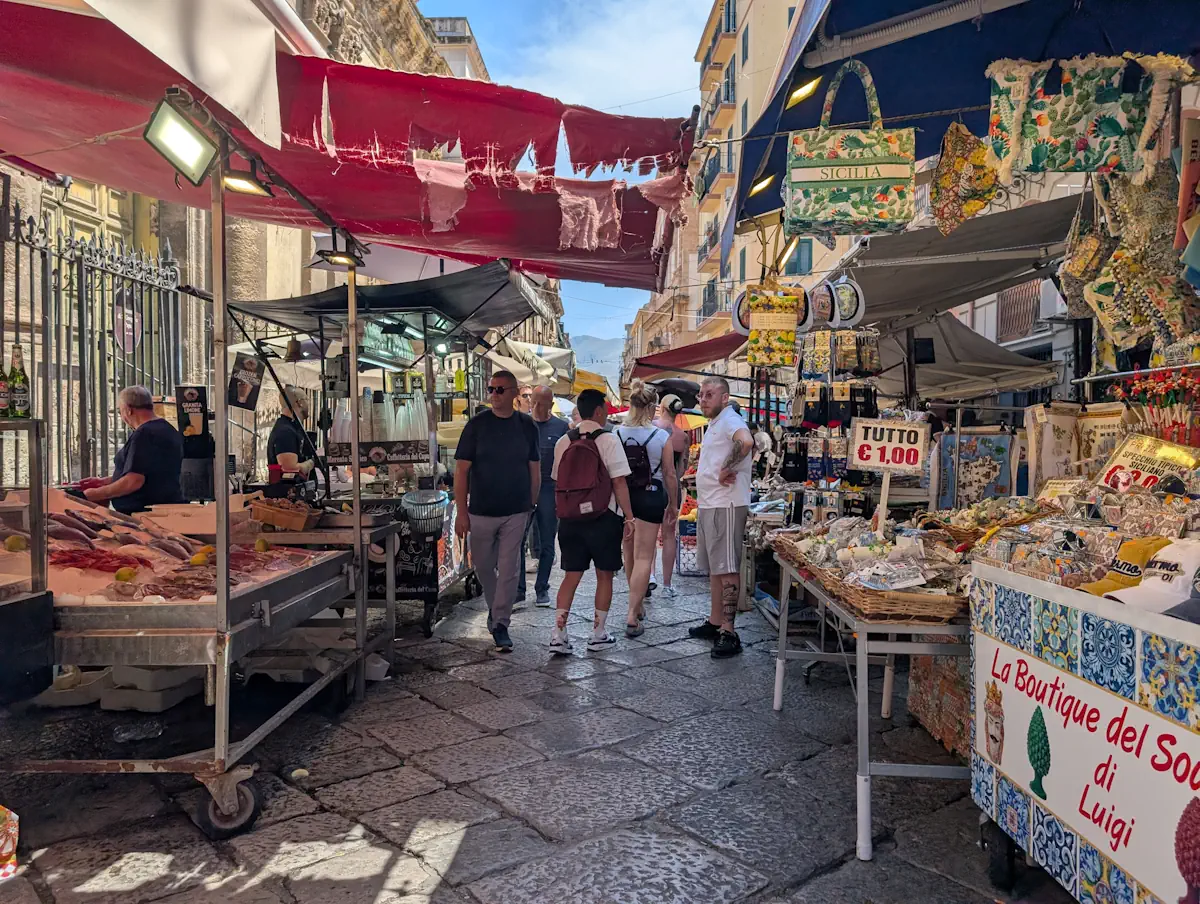
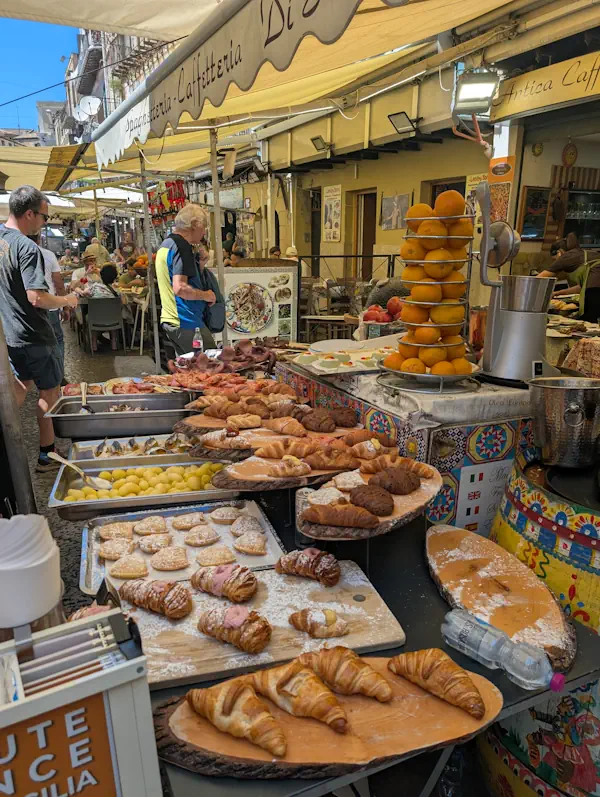
Honestly, the markets are great fun. They’re the direct heirs of the Arab souks, and it shows in the structure: alleyways covered with tarpaulins, shouting, smells. It’s the popular soul of the city, and it’s free.
Three big markets, plus two small ones. And one absolute rule: the morning. The real life plays out between 7.30am and 2pm. In the afternoon, half the stalls have packed up. On Sunday, it’s almost dead everywhere.
Il Capo and Ballarò: which to choose if you only do one
Il Capo, my favourite
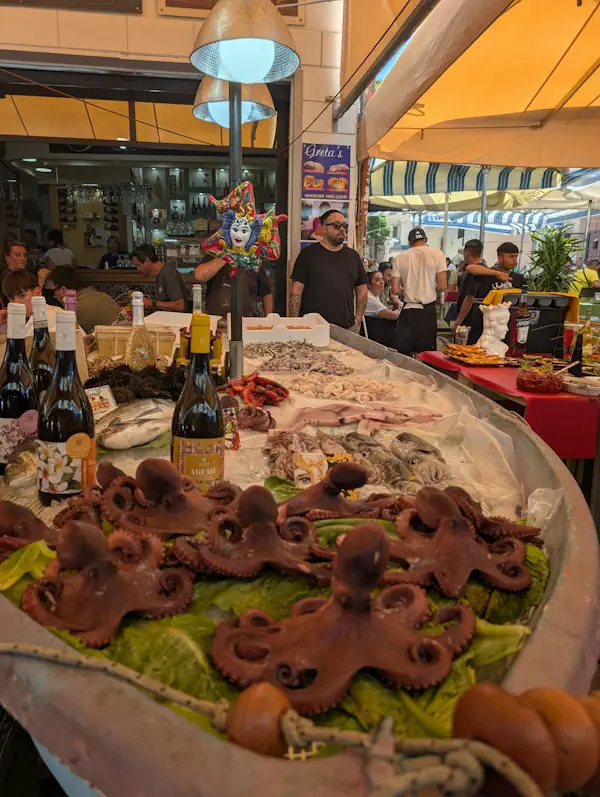
More authentic, less touristy, more “food-focused” too. You weave between the fish stalls, the cheeses and the fruit under the colourful tarpaulins. It’s the most photogenic of the three, and it’s the one where we had the strongest feeling of not being in an attraction.
- Opening hours: every day, morning and afternoon. Real activity in the morning. Wednesday afternoon is traditionally the slow day for Palermitan shops.
- Where: Via Sant’Agostino, Via Porta Carini, Via Beati Paoli. Free.
The flaw: there’s noticeably less street food than at Ballarò. If you’re coming to eat, go to Ballarò instead; if you’re coming to look, Capo is the better bet.
Ballarò, the biggest and the liveliest
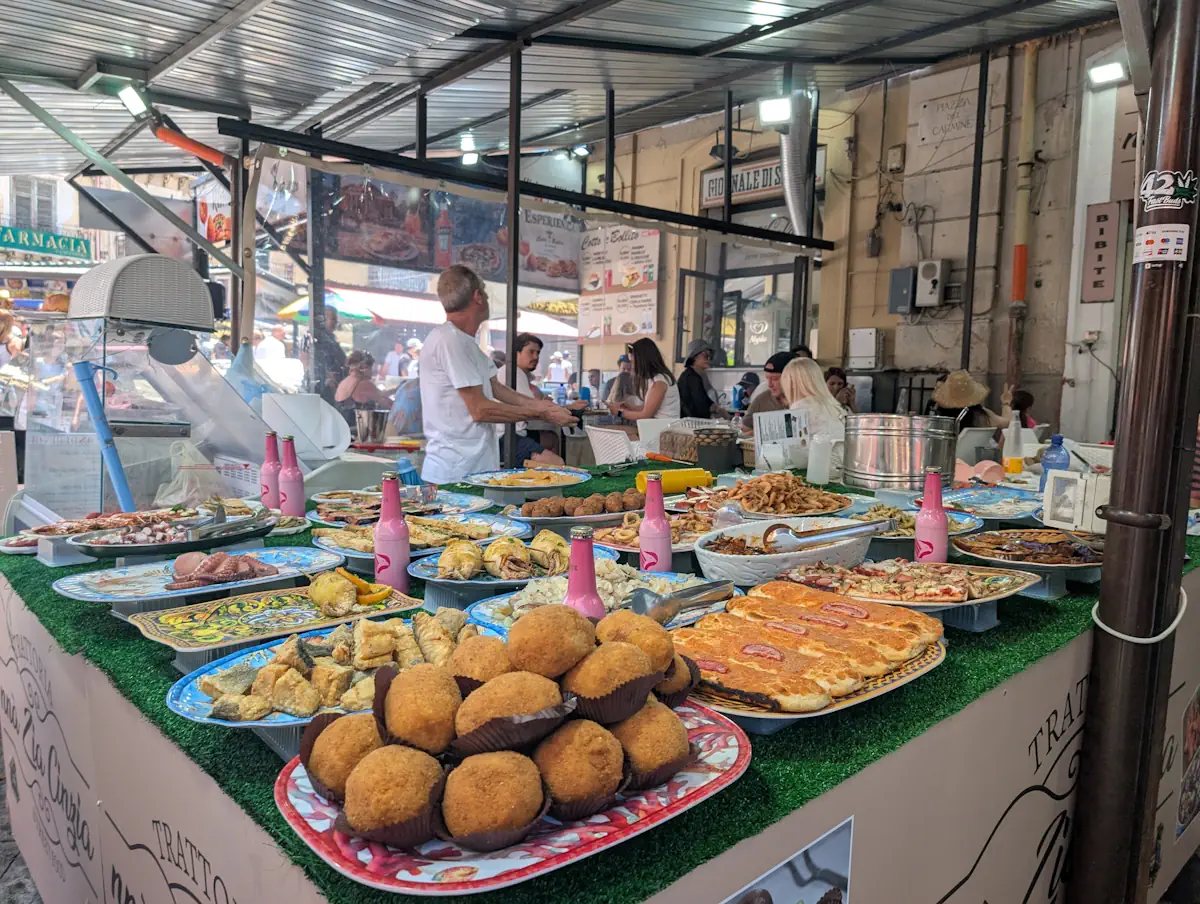
Palermo’s oldest market, and the best for street food. There’s absolutely everything. I ordered octopus and they brought me the octopus, whole, for something like €8-10. That’s Ballarò.
- Opening hours: Monday to Saturday 7.30am-8pm officially, but the real activity is 7.30am-2pm. Sunday: almost dead.
- Where: from Piazza Casa Professa to the bastions of Corso Tukory. Free.
The flaw: it’s also the market where you need to keep the closest eye on your bag, and where the prices displayed at tourist stalls tend to drift. Ask the price beforehand, every single time. And for the braver among you, this is where you’ll find the pani ca’ meusa, the veal-spleen sandwich. Just so you’re warned.
La Vucciria: disappointing by day, mayhem by night
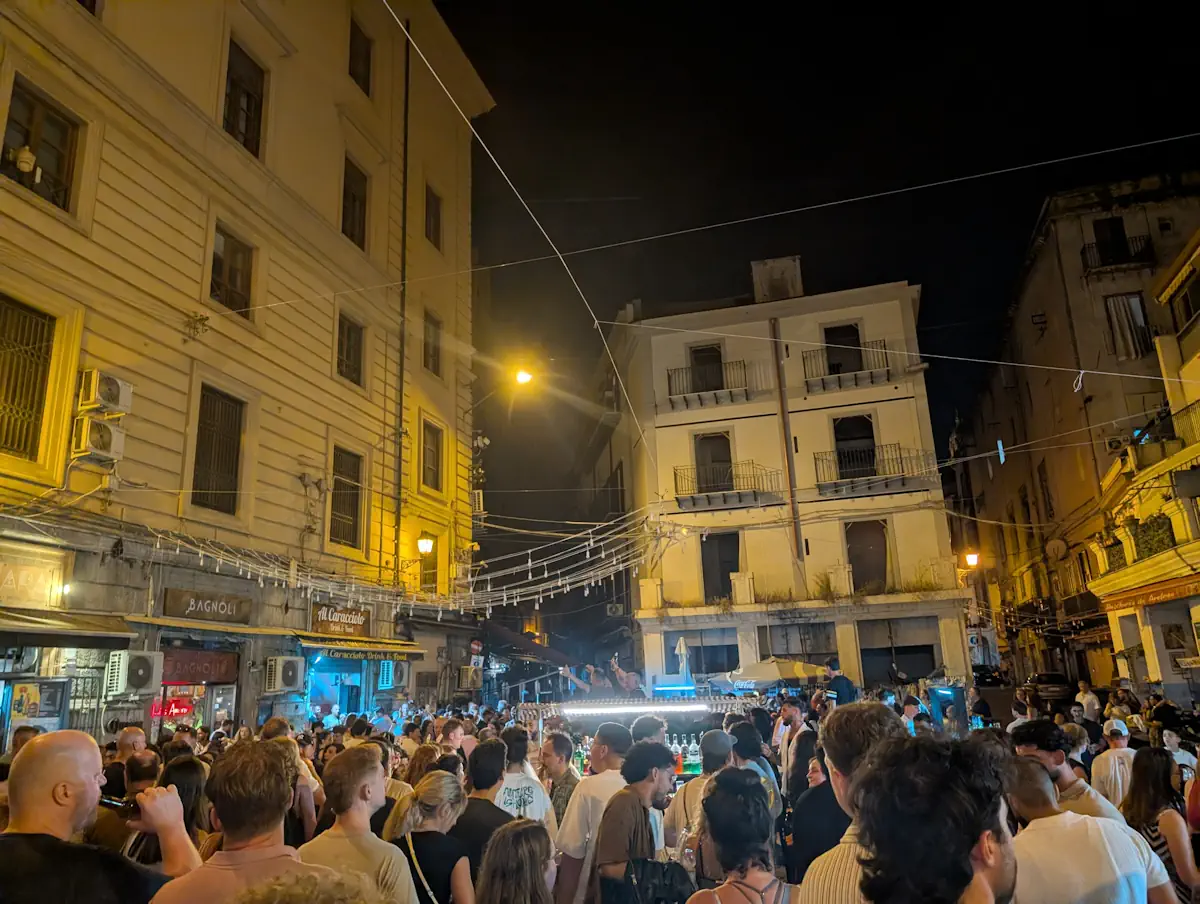
I’ll say it plainly: the Vucciria food market has almost vanished. By day, all that’s left is a handful of stalls and a lot of lowered shutters. It’s lost its splendour and no longer has much to offer.
But in the evening, it’s another story. From 8pm-9pm, Piazza Caracciolo becomes a huge open-air drinking spot. Once again: the fruit-juice sellers turn into barmen, the sound system comes out, and Palermo’s youth drink standing in the street until the small hours. It’s a peculiar atmosphere, and it’s a genuine thing to do.
- When to go: in the evening, from 8pm. Not the morning. Free.
The flaw: it’s noisy, very boozy and not clean. Atmosphere, not danger — but if you’re after a quiet aperitivo, it’s not the place.
Borgo Vecchio and the Mercato delle Pulci, two markets not at all touristy
Borgo Vecchio, near the port and the Politeama, is the most working-class and least touristy market in Palermo. The morning for food, and in the evening street grills where you buy your meat at the stall and grill it on the spot. The only place in the city where you won’t cross paths with a single tourist.
The Mercato delle Pulci, the flea market, is on Piazza Domenico Peranni near the Cattedrale. A cluster of antique dealers’ and second-hand dealers’ units. Note: it has no official published hours — the observed practice is opening on weekday mornings, with many units closed in the afternoon and on Sunday. Don’t make a special detour, but if you pass by, have a look.
What to eat at the markets
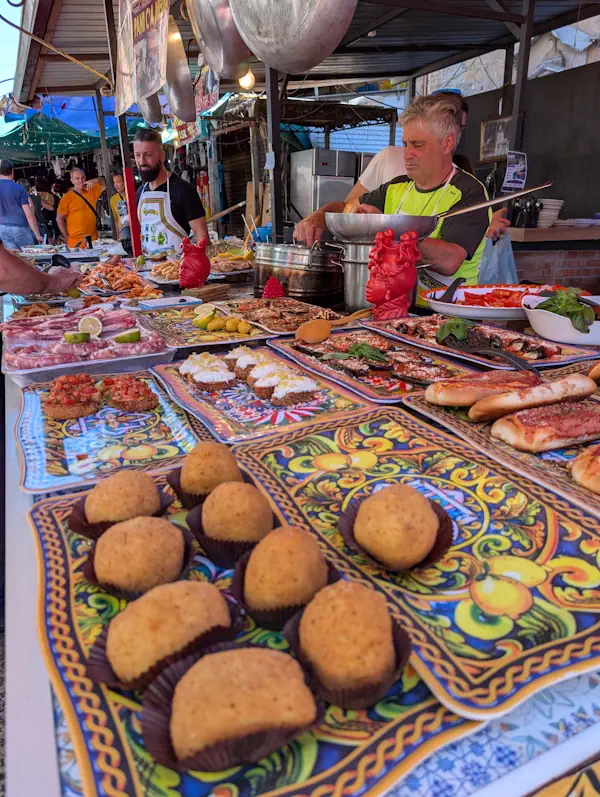
Palermitan street food is delicious and really cheap. The eight things to try:
- Arancine — feminine in Palermo, don’t get it wrong, it’s a serious matter here. Fried rice balls, with ragù or with butter.
- Pane e panelle — chickpea-flour fritters in a sesame roll. The national sandwich.
- Crocchè — potato croquettes, to order with the panelle.
- Sfincione — the Palermitan pizza, thick and soft, with onion and anchovy.
- Stigghiola — lamb intestines grilled over embers, sold in the street in the evening.
- Pani ca’ meusa — the spleen sandwich. The ultimate test.
- The cannolo — the one from the Santa Caterina pastry shop is excellent.
- Granita con brioche — for breakfast, almond or lemon. It’s a life-changer in summer.

Dark Palermo: catacombs, the Inquisition and the mafia
Right, Palermo has a violent history, and it doesn’t hide it. It’s even one of the things that make the city so distinctive: the places of memory are out in the open, right in the street, and nobody pretends otherwise.
The Catacombe dei Cappuccini
This is our biggest regret of the whole trip. By far. We missed them because we weren’t up early enough.
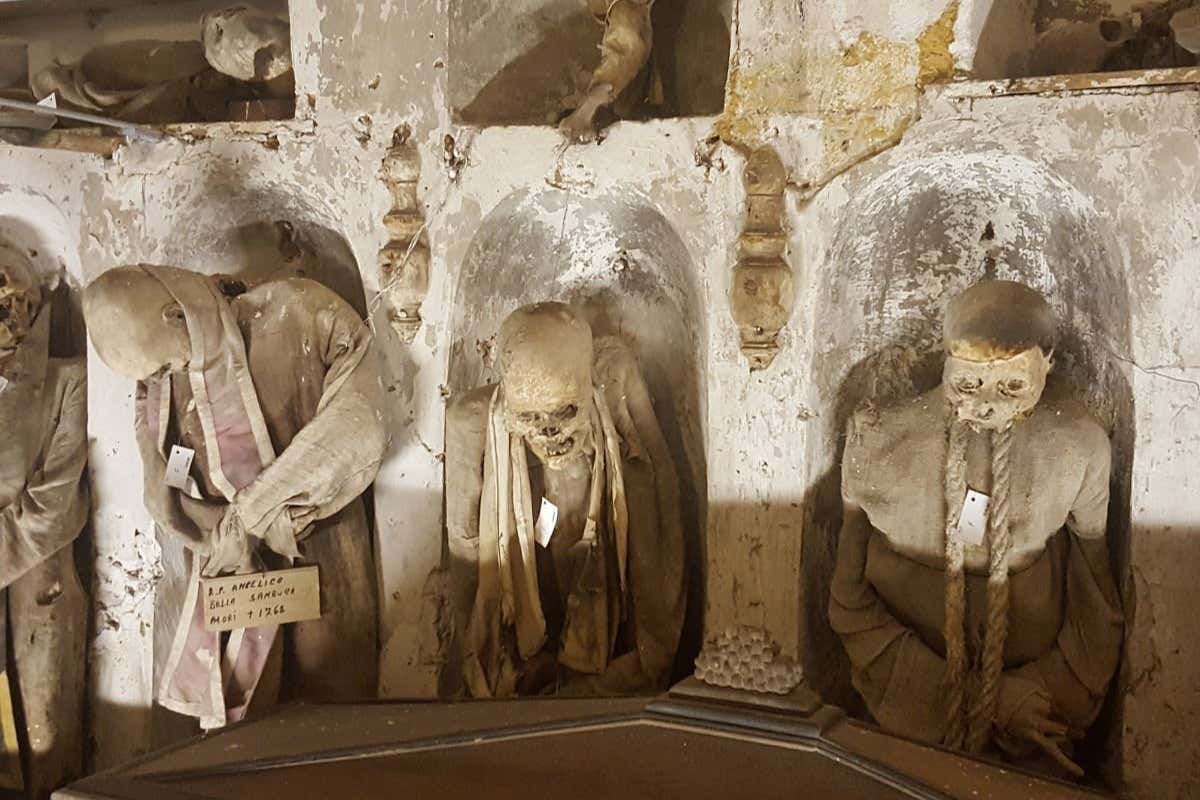
Beneath a Capuchin monastery, eight thousand mummified bodies, dressed in their Sunday best, lined up standing or lying down along several hundred metres of galleries. Sorted into categories: the priests, the professionals, the women, the children.
And right at the far end, in a glass case, Rosalia Lombardo, who died in 1920 aged two, embalmed by a chemical process that left her intact. She looks as though she’s sleeping. Chilling, fascinating, one of a kind.
- Opening hours: every day, public holidays included. 9am-12.30pm (last entry 12.10pm) and 3pm-5.30pm (last entry 5.10pm).
- Price: €5 full, €3 reduced. Bring cash, the ticket desk is rudimentary.
- Worth knowing: the official website also lists, somewhat contradictorily, a closure on Sunday afternoons from late October to late March. If you’re visiting in winter, don’t build your Sunday around it.
- Duration: 45 min to 1 hr.
- Where: Piazza Cappuccini, about 2 km from the centre, in the same direction as Monreale.
The downsides. First, the 2.5-hour midday break, which is exactly what caught us out. Next, photos are forbidden inside, and this is enforced firmly. Finally, it’s clearly not for everyone: not recommended for sensitive children, and if the idea of coming face to face with clothed corpses makes you uncomfortable, give it a miss, there’s no shame in that.
Insider tip: the catacombs are on the road to Monreale. Fit them in early in the morning and carry on to Monreale afterwards, it’s perfectly doable. It’s exactly what I should have done.
The Inquisition and the mafia: the Steri, the No Mafia Memorial and the Falcone tree
The Palazzo Chiaramonte-Steri and the prisoners’ graffiti
Here’s a place not to miss.
This 14th-century palace served as the seat of the tribunal of the Holy Office from 1601 to 1782. In the former cells, the walls are covered with drawings, prayers, calendars and poems carved by the prisoners with whatever they had to hand — soot, fruit juice, their fingernails. Some counted the days for years. It’s overwhelming, and very rarely visited.
- Price: included in the Palermo Culture Pass (€25.60, 7 days, with the Salinas museum, the Orto Botanico and the Riso museum), or combined ticket with the Orto Botanico at €12.
- Duration: 1 hr.
The downside: the Steri’s opening hours change often and the cells can sometimes only be visited on a timed guided tour. Ask when you arrive in the city rather than turning up on the off chance.
The No Mafia Memorial, the Falcone tree and the Piazza della Memoria
The mafia subject is unavoidable in Palermo. And it’s better approached through remembrance than through folklore.
The No Mafia Memorial, at the Palazzo Gulì on the Corso Vittorio Emanuele, retraces a century of mafia history and, above all, of civil resistance. Photographic archive on the ground floor, multimedia exhibition on the second floor. Open every day 11am-5pm, closed Tuesdays.
The entry price isn’t published on the official site: email them at info@nomafiamemorial.org if you want the answer before making the trip.
The Falcone tree, Via Notarbartolo 23, is the magnolia planted in front of the building where Giovanni Falcone lived. It’s covered with messages, photos and children’s drawings, constantly renewed since 1992. It’s free, open around the clock, five minutes from the Notarbartolo station, and probably the most moving place in Palermo.
The Piazza della Memoria, near the courthouse, lines up the stelae to the mafia’s victims. Also free.
The downside: these three places are scattered and none is visually spectacular. If you really want to understand, do the Addiopizzo guided tour instead (I talk about it further down) — that’s what gives meaning to everything else.

Palaces, museums and theatres: the Palermo getting back on its feet
Palermo was Italian Capital of Culture in 2018, and honestly, it kicked off some real momentum. Palaces are reopening, private collections are moving in, abandoned places are coming back to life. It’s probably the part of the city that has changed the most over the last ten years.
The Teatro Massimo, the largest opera house in Italy
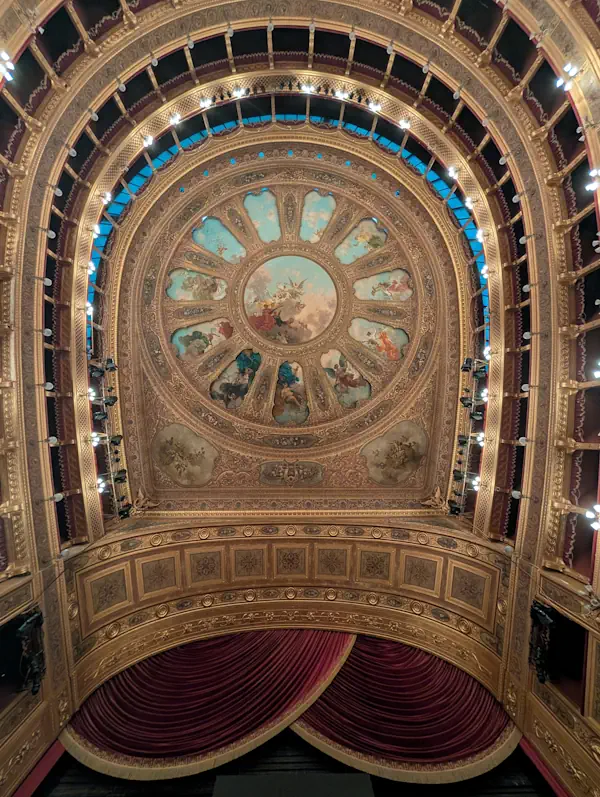
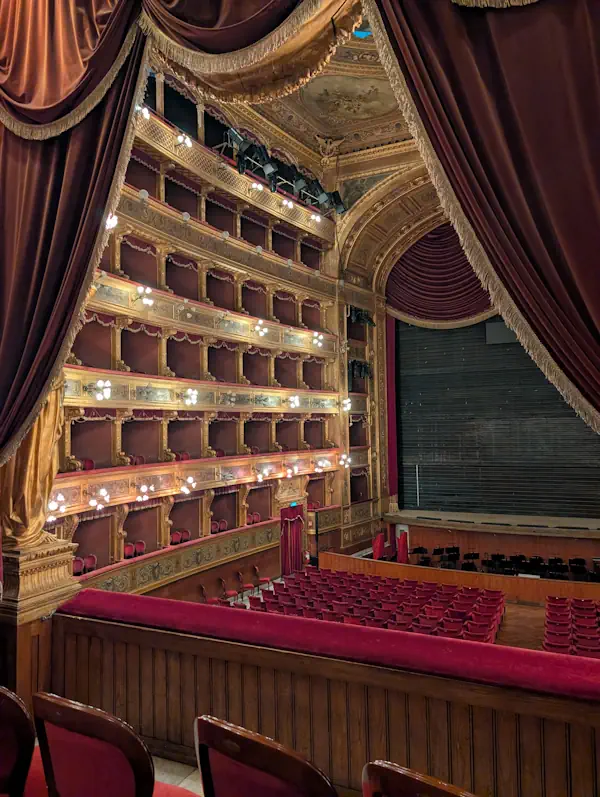
Yes, ahead of La Scala in Milan. And third largest in Europe. The guided tour lasts around forty minutes and takes you round the theatre, auditorium included. The acoustics are superb. One useful note: the tour of the stage and the wings is an optional extra (+€5), it’s not part of the standard ticket.
And for the fans: this is where the final scene of The Godfather Part III was filmed. The great outdoor staircase, Al Pacino’s one, is freely accessible and free of charge.
- Tour hours: every day 9.30am-7pm, last tour at 6.20pm.
- 2026 prices: €14 full · €7 for under-26s · €10 for groups (20+) · €6 disabled person and carer · family package €36 (2 adults + 2 under-26s) · free for under-6s. Tour of the wings and stage: +€5.
- Duration: 40 minutes.
- Booking: yes, warmly recommended.
- Tours in English: it’s entirely possible! We did it and it’s interesting
The downsides. It’s not essential. It’s nice, it’s pretty, it’s not the Cappella Palatina. And above all, tours can be cancelled or shortened depending on rehearsals and stage set-ups, without any warning. That wasn’t our case.

The Palazzo Abatellis and the Palazzo Butera, the two palaces to do if you have the time
The Palazzo Abatellis and the Triumph of Death
The regional gallery of Sicily, in a Gothic-Catalan palace in the Kalsa, with a museum design by Carlo Scarpa that is itself a masterclass. You come for three things: the anonymous fresco of the Triumph of Death (15th century, a macabre cavalcade that inspired Picasso), Antonello da Messina’s Annunciation, and the bust of Eleonora of Aragon.
- Opening hours: Tuesday-Saturday 9am-7pm, Sunday and public holidays 9am-1.30pm. Closed Mondays.
- Price: €10 full, €5 reduced. Free on the 1st Sunday of the month. Combined 3-day ticket Abatellis + Palazzo Mirto + Oratorio dei Bianchi: €10 — which is to say the combined ticket costs the price of Abatellis on its own.
- Duration: 1 hr 15 to 1 hr 30.
The downside: be warned, Van Dyck’s Madonna del Rosario is no longer here. It went back to Santa Caterina in late 2025. Many articles still place it at Abatellis, that’s out of date.
The Palazzo Butera
On the ramparts facing the sea, in the Kalsa. An 18th-century palace bought and restored by a couple of collectors, Francesca and Massimo Valsecchi, who have installed their collection there: old and contemporary art mixed together, in a restoration project deliberately left on show. Apparently it’s really rather good!
- Opening hours: Tuesday-Sunday 10am-8pm, last entry 7pm. Closed Mondays.
- Price: €10 full, €7.50 reduced, free for under-18s. About €11.50 online with the fees.
- Duration: 1 hr to 1 hr 30 — 30 rooms across two grand floors.
The downside: if you’re after a classic palace-museum with period furniture, this isn’t it and you’ll be disappointed. Go to the Palazzo Mirto instead. Plus point: terraces with a sea view, and a café on site.
Salinas, GAM, Palazzo Mirto and Politeama: what else you need to know
I didn’t have time to visit all of these.
The Museo Salinas, Piazza Olivella, houses the metopes from the temples of Selinunte. It’s the highlight of the visit, by far. Tuesday-Saturday 9am-6.30pm, Sunday 9am-1pm, closed Mondays. €8 full, €4 for EU 18-25s, free for all under-18s and on the 1st Sunday of the month — and on that day opening is extended until 6.30pm, it’s not a 1pm Sunday. Allow 1 hr 30.
The Galleria d’Arte Moderna (GAM), a few metres from the Piazza Pretoria — same access as the Santa Caterina ticket desk, Via Discesa dei Giudici. 19th- and 20th-century Sicilian painting in a former convent. It’s one of the few museums in Palermo open seven days a week: 9.30am-6.30pm, ticket desk until 5.30pm. €10 full, €8 reduced, €1.50 for 6-18s, free on the 1st Sunday of the month.
Palazzo Mirto and Teatro Politeama: two warnings
Two places you’ll find in every guidebook and which are problematic in 2026.
The Palazzo Mirto — the aristocratic residence with its original furnishings, its Chinese drawing room and its carriages — is listed as “temporarily closed for maintenance work” by the city council’s official portal, with no reopening date.
When it is open: Tuesday-Saturday 9am-7pm, Sunday 9am-1pm, closed Mondays, €8 (but some sources say €6, who knows). In short, check before you go.
The Teatro Politeama Garibaldi: guided tours are currently suspended, it’s stated in black and white on the operator’s site, with no restart date. The only sure way in is to attend a concert by the Sicilian Symphony Orchestra. The exterior, with its neoclassical triumphal arch and its quadriga, can be seen freely from the square — and it’s from there that bus 806 leaves for Mondello.
Unusual Palermo, if you’re staying more than three days
Four places that almost never appear in the guidebooks. I compared around fifteen articles on Palermo before writing this one: the first appeared in none of them. None. This is where Palermo becomes personal.
Lo Spasimo, the Catena, the Gancia and the street art of Danisinni
Santa Maria dello Spasimo, the roofless church
In the Kalsa. A 16th-century Gothic church never completed: no roof, trees growing in the nave, the sky above the vaults. It’s probably the most photogenic spot in the city, and today it serves as a concert venue, especially for jazz. Raphael’s Spasimo di Sicilia was painted for this church. It’s been at the Prado since the 17th century.
Entry is free. The downside is a big one: the opening hours change constantly. The city council’s portal lists Saturday and Sunday 8am-2pm, older announcements gave Tuesday-Sunday 9.30am-6.30pm. Impossible to say honestly. Call 091 6161486 on the day itself, or take your chance by dropping by — it’s a stone’s throw from the Orto Botanico.
Santa Maria della Catena, near the old harbour
Gothic-Catalan with Renaissance touches, next to the Cala. The name comes from the chain that used to close off the entrance to the old harbour, and its anchor point is still visible on the outer wall.
- Opening hours: Monday-Saturday 10am-6pm. Sunday 10am-6pm from June to October, but 2pm-6pm only from November to May.
- Price: €2.50 (€1.50 with the Circuito del Sacro). Duration: 20 minutes.
The downside: monumental staircase, no step-free access. And closed on Sunday mornings in winter.
The Gancia and its “Buca della Salvezza”
Santa Maria degli Angeli, known as the Gancia, right next to the Palazzo Abatellis. Coffered ceiling, 16th-century organ, Serpotta stucco work. But the detail to see is the “hole of salvation”: the hole through which two rebels escaped during the 1860 revolt against the Bourbons, after hiding for several days among the bodies in the crypt.
Open every day 9.30am-1pm and 3.30pm-7.30pm, tours suspended during services. The price isn’t published officially. The downside: a 2.5-hour midday break, the longest in the Kalsa.
The street art of Ballarò, Borgo Vecchio and Danisinni
Three neighbourhoods, three logics. Ballarò, activist murals around the market. Borgo Vecchio, a neighbourhood project near the port. And Danisinni, the once-isolated district behind the Palazzo dei Normanni, transformed by a community project: social circus, urban farm, monumental murals.
It’s free and can be done on your own, several routes are published online. But — and it’s a real “but” — Danisinni isn’t crossed like an open-air museum. A local guide adds real value there, and the project lives partly off these visits. If you go alone, go during the day and stay discreet.
Getting some air: the sea, the gardens and the panoramas
Mondello, the Palermitans’ beach
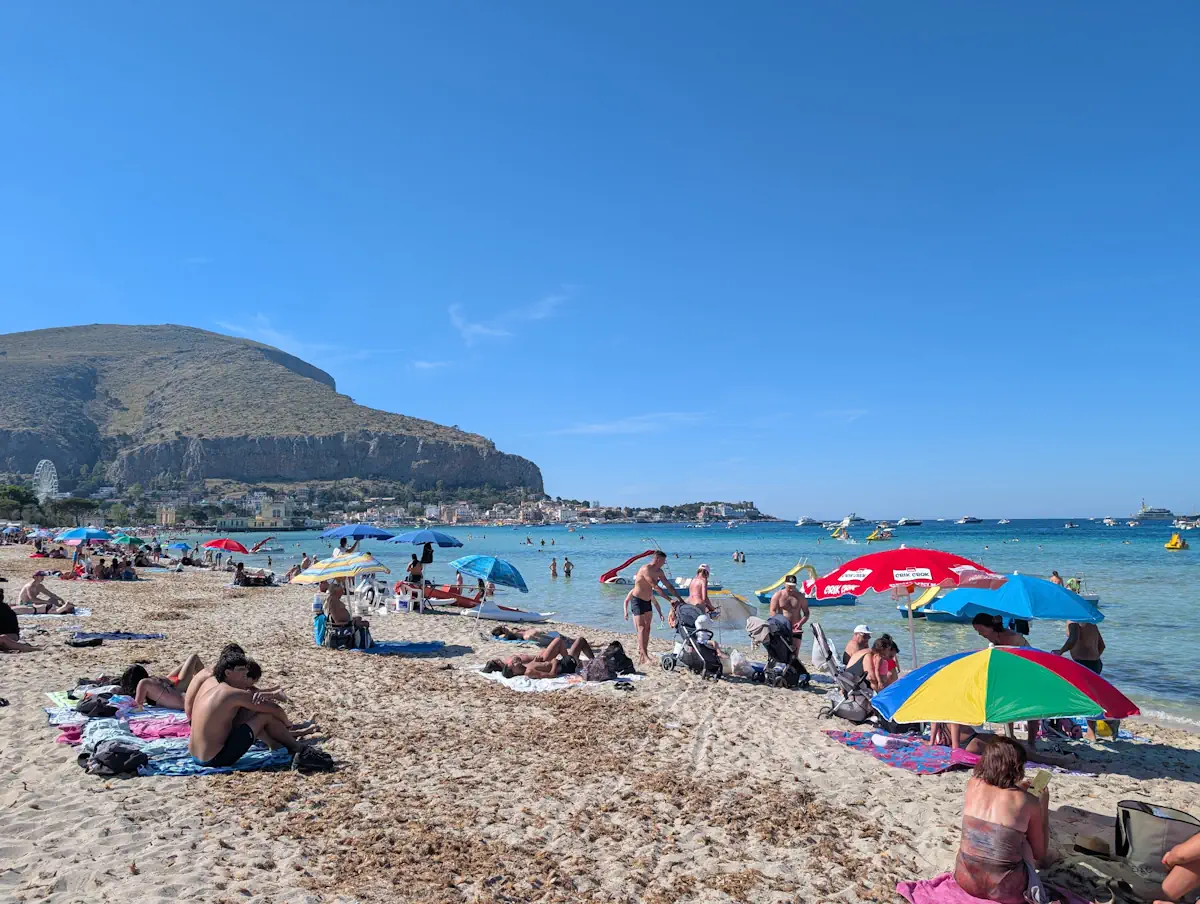
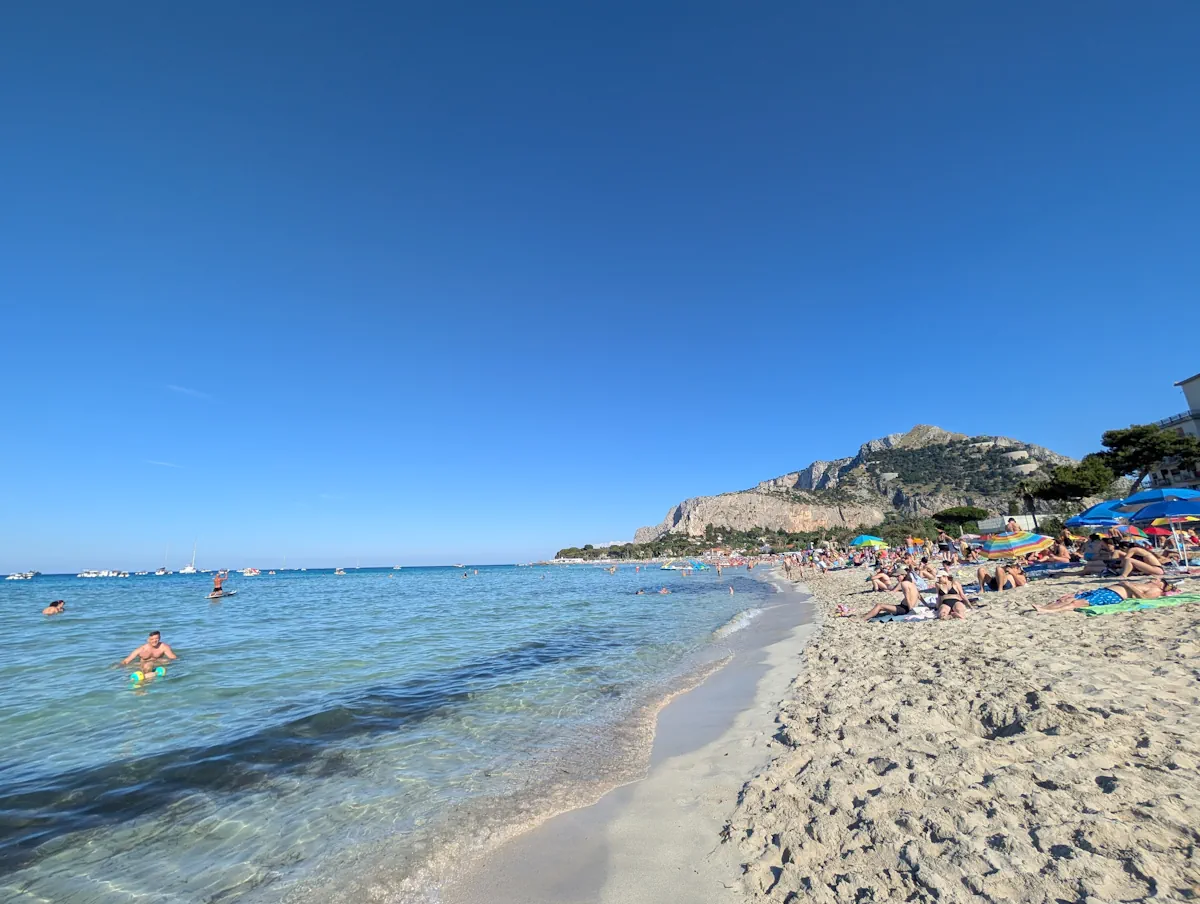
About twenty minutes from the centre. White sand, turquoise water, Liberty-style villas and its emblematic bathing establishment on stilts from 1913. We put down the towel, took a dip and finished with a granita facing the sea. After the buzz of the markets, it’s exactly the break you need.
- Getting there: AMAT bus 806, terminus Piazza Don Sturzo, a two-minute walk from the Politeama. Ticket €1.40 (90 min) or €3.50 for the day, which is the smarter option as soon as you take a third bus. Careful, it’s a seasonal line: historically weekends and public holidays from April, then every day from 1 May. Off-season, check on Moovit before setting off — otherwise it’ll be a taxi.
- Beach: new for 2026, a dual model. A “low cost” zone at €6 for the day with lifeguards, cleaning, toilets and showers. And the traditional equipped lidos, around €33/day in July-August for two sunloungers and a parasol, €28 in low season. Online booking possible and strongly advised at weekends.
The downside, and I paid the price for it. We took the easy option on the way there: a taxi for €20, that was acceptable. On the way back, impossible to find anything on the spot. Not a taxi, not an Uber (except the wildly overpriced black ones), barely a bus because it was a Sunday. Result: a €40 taxi. And after haggling. Which tells you just how hopeless we are at haggling.
So: take the 806 both ways, and check the time of the last bus before settling in. Another downside: there’s barely any truly free beach left at Mondello, the concession holder keeps the monopoly on the sand. The system is due to change with the 2027 tenders.

Monte Pellegrino and the sanctuary of Saint Rosalia
We didn’t have time to visit this one either (hey, I told you we were badly organised!). The 606-metre mountain that closes off the bay, which Goethe described as “the most beautiful promontory in the world”. Right at the top, a sanctuary built inside a cave, where the body of Saint Rosalia, the city’s patron, was found in 1624.
- Opening hours: every day 8am-7pm in summer (6pm in winter). The little museum is open Tuesday-Sunday 10am-4pm, donation-based.
- Price: free.
- Getting there: AMAT bus 812, terminus “Santuario S. Rosalia”. From the central station, take the 101 then the 812 at Via Scinà, near the Politeama. About 45 min. On foot, the “Scala Vecchia” from Largo Sellerio takes an hour of steep climbing.
- Duration: half a day including the journey.
The downsides. The 812 stops early: check the time of the last bus down before settling in for sunset, otherwise it’s a taxi or 8.5 km of hairpin bends on foot in the dark. And if you drive up, be wary of the GPS: some navigators still route you via the Via Ercta, closed since 2011. Follow Google Maps.
Two dates to know: the Festino di Santa Rosalia (10-15 July) transforms the whole city, it’s the biggest festival in Palermo. And the Acchianata around 4 September, the night-time pilgrimage on foot up to the sanctuary. Considerable crowds in both cases — to avoid or to experience, depending on your mood.

The Orto Botanico, the Villa Giulia, the Foro Italico and the Cala
The Orto Botanico and the Villa Giulia
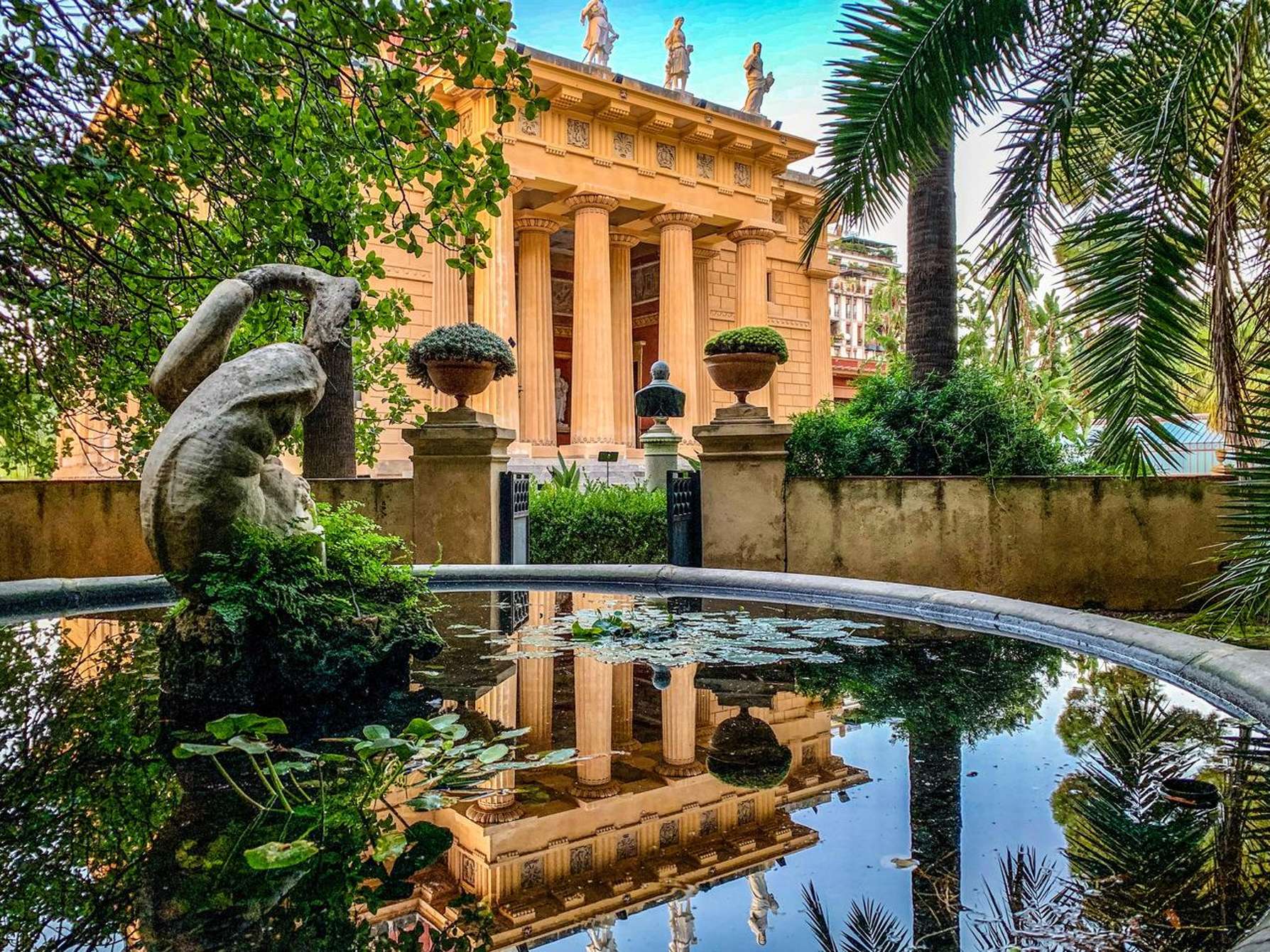
So, if you’re saturated with the baroque: ten hectares of university botanical garden, with a gigantic Ficus macrophylla voted Italian tree of the year in 2022. It’s the best place in Palermo to catch your breath.
- Opening hours (May-August): Monday-Saturday 9am-8pm, Sunday 10am-8pm. Last entry an hour before. Closing at 7pm in April, 6pm in March and October, 5pm from November to February.
- Price: €8 full, €5 reduced, Family Pass €18 (family with up to 3 children under 14). Combined with the Salinas museum and the Doderlein museum: €13.
- Duration: 1 hr 30 to 2 hr.
The downside: little shade on some of the paths. In high summer, go early in the morning or late in the afternoon.
Right next door, adjoining it, the Villa Giulia: the first public garden in Italy (1778), free, with its neo-Pompeian pavilions and its Atlas fountain topped by a dodecahedral sundial. The city council lists an opening of 7am-4.30pm, which is surprisingly early for a Mediterranean garden — don’t count on going at sunset without having checked.
The Foro Italico and the Cala
The Foro Italico is the great seafront esplanade where the Palermitans come to run, walk the dog and sit in the sun. Free, open around the clock, and it’s the best place to understand how the city lives on a Sunday.
The Cala, the old harbour with its boats, follows on naturally as you head back up towards Santa Maria della Catena. Allow an hour for the loop Foro Italico → Porta Felice → Cala.
What to see outside the city: the best day trips from Palermo
Right, one thing to grasp before planning: Palermo is an excellent base for western Sicily, and a poor base for the east. Monreale, Cefalù, Segesta, Erice, Trapani, Agrigento, the Zingaro: all of that works very well. Etna, Taormina, Syracuse and Noto: no, forget it, save them for a road trip.
Good news: most of these excursions can be done without a car. The car is even a handicap in Palermo intra-muros — heavy traffic, complicated parking, a ZTL of fluctuating status. If you rent one, take it only on excursion days.
Monreale: 6,000 m² of gold mosaics, 10 km away
If you do just one excursion, it’s this one. Ten kilometres from the centre. Full stop.
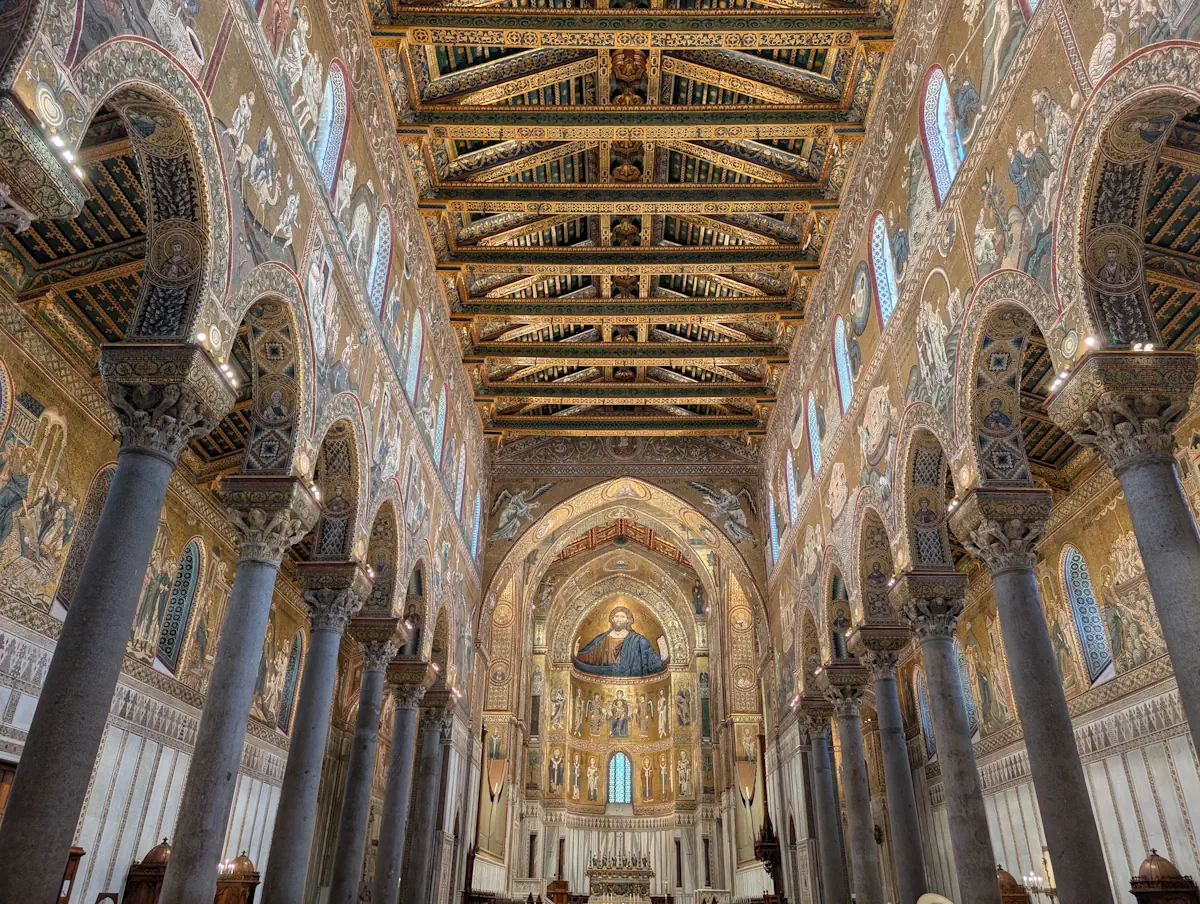
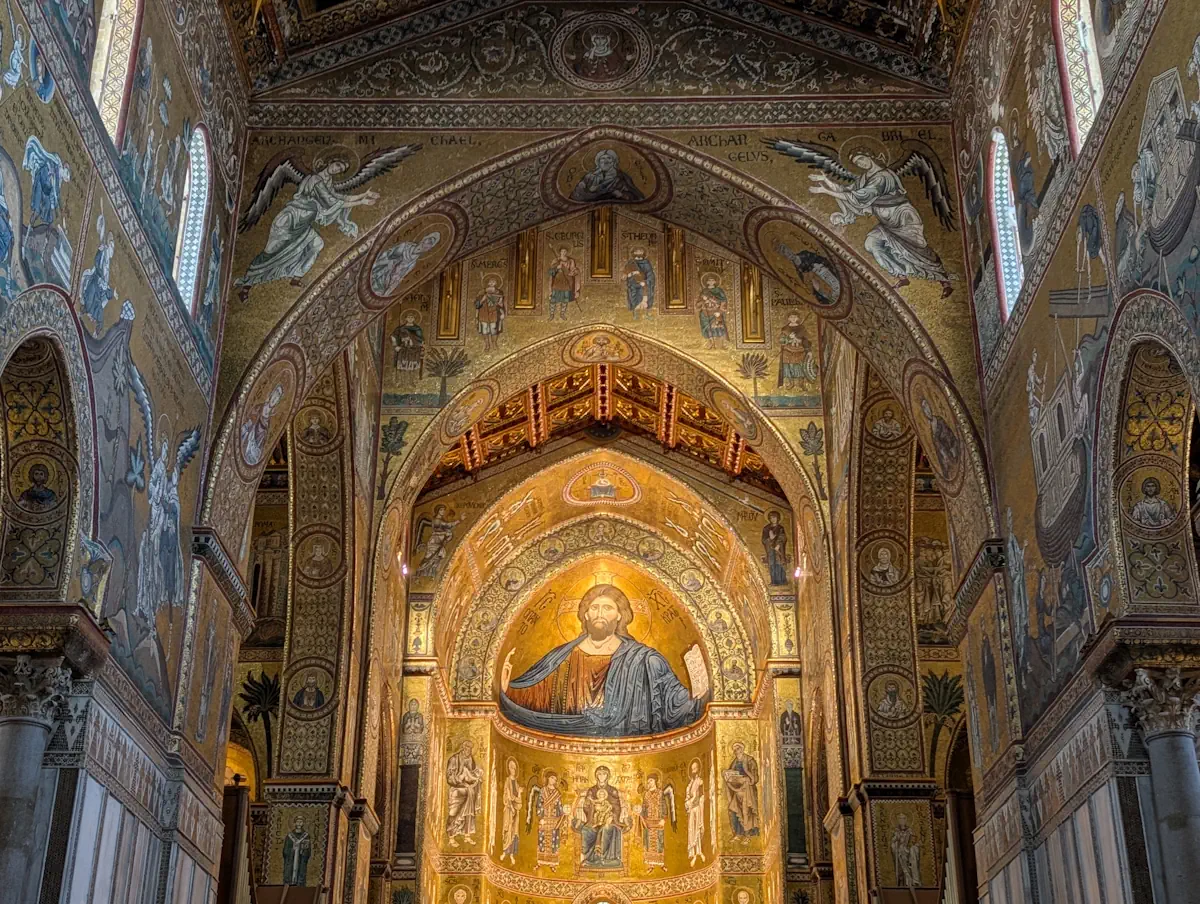
If the Cappella Palatina moved you, brace yourself: here it’s more than six thousand square metres of gold mosaics lining the nave, dominated by a gigantic Christ Pantocrator. We also climbed up onto the roofs, and strolled through the Benedictine cloister, one of the most beautiful in Italy with its 228 columns, every capital different. It’s genuinely essential. And it’s rare that I say that.
- Getting there: AMAT bus 389, terminus Piazza Indipendenza in Palermo, Fontana del Drago stop in Monreale. About 34 minutes, service every day from 6am to 8.25pm. Normal urban fare: €1.40 (or €3.50 the day pass). To reach Piazza Indipendenza: bus 109 or 118 from the station, or 20 minutes on foot from the Cattedrale.
- Duomo hours: Monday-Saturday 9am-1pm (last entry 12.45pm) and 2pm-5pm (last entry 4.45pm). Sunday: 2pm-5pm only.
- Cloister hours: Monday-Saturday 9am-7pm, Sunday and public holidays 9am-1.30pm.
- Prices: entry to the site free, cloister €7 (€3.50 reduced). The Duomo ticket (mosaics + terraces + Cappella Roano + diocesan museum) is listed at around €6 by several Italian sources
- Duration: 2 hr to 2 hr 30 for everything, plus the town.
The downsides, and they’re serious. First, on Sunday mornings the Duomo is closed to tourists. Lots of people arrive at 10am on a Sunday and leave empty-handed. Worse: on that day, the cloister closes at 1.30pm and the Duomo doesn’t open until 2pm. So you can’t do both. In short, avoid Monreale on a Sunday.
Next, the 1pm-2pm break. Arriving at 12.30pm means fifteen minutes of visiting.
Next, the ticketing. There isn’t one single ticket: the cathedral (parish) and the cloister (regional, CoopCulture) are two completely separate desks, and the cloister only accepts electronic payment online. Honestly, it’s the most confusing thing of the whole trip.
Finally, the mosaics can’t be visited during services, weddings and funerals included. And that’s unpredictable.
Insider tip: the Catacombe dei Cappuccini early in the morning (they’re on the way), then Monreale, then back to Palermo for the afternoon. It fits comfortably into a single day.

Cefalù, the best excursion without a car
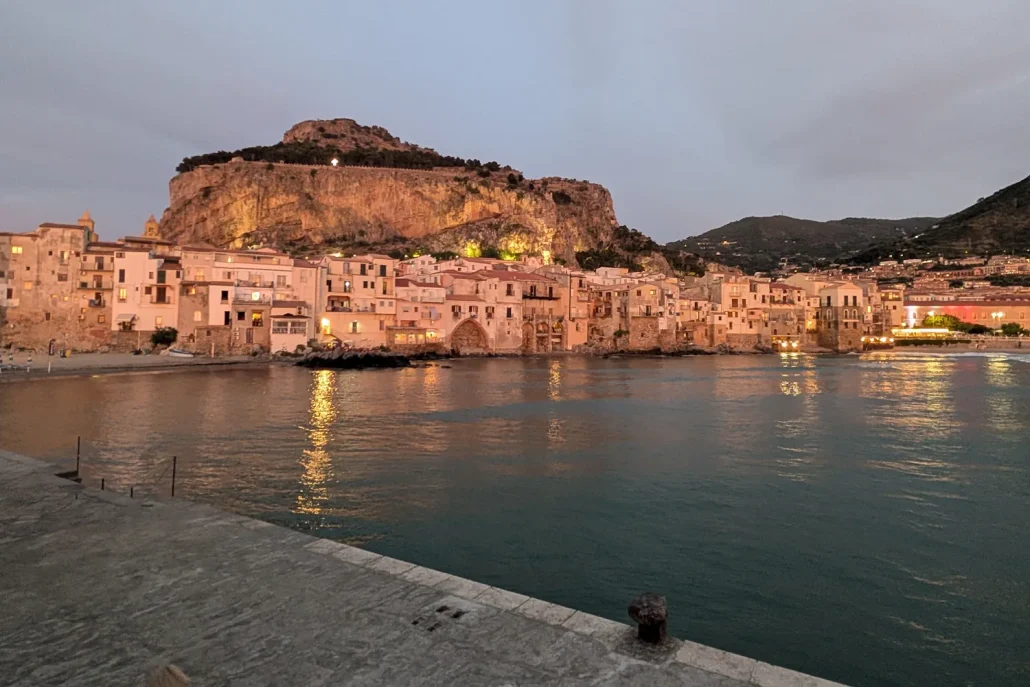
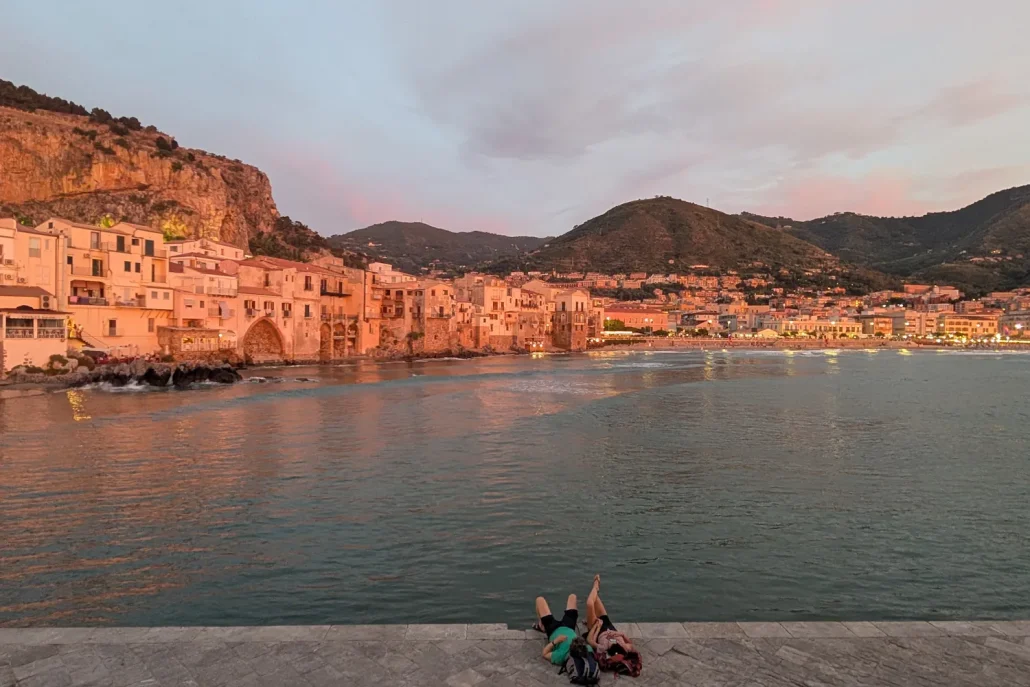
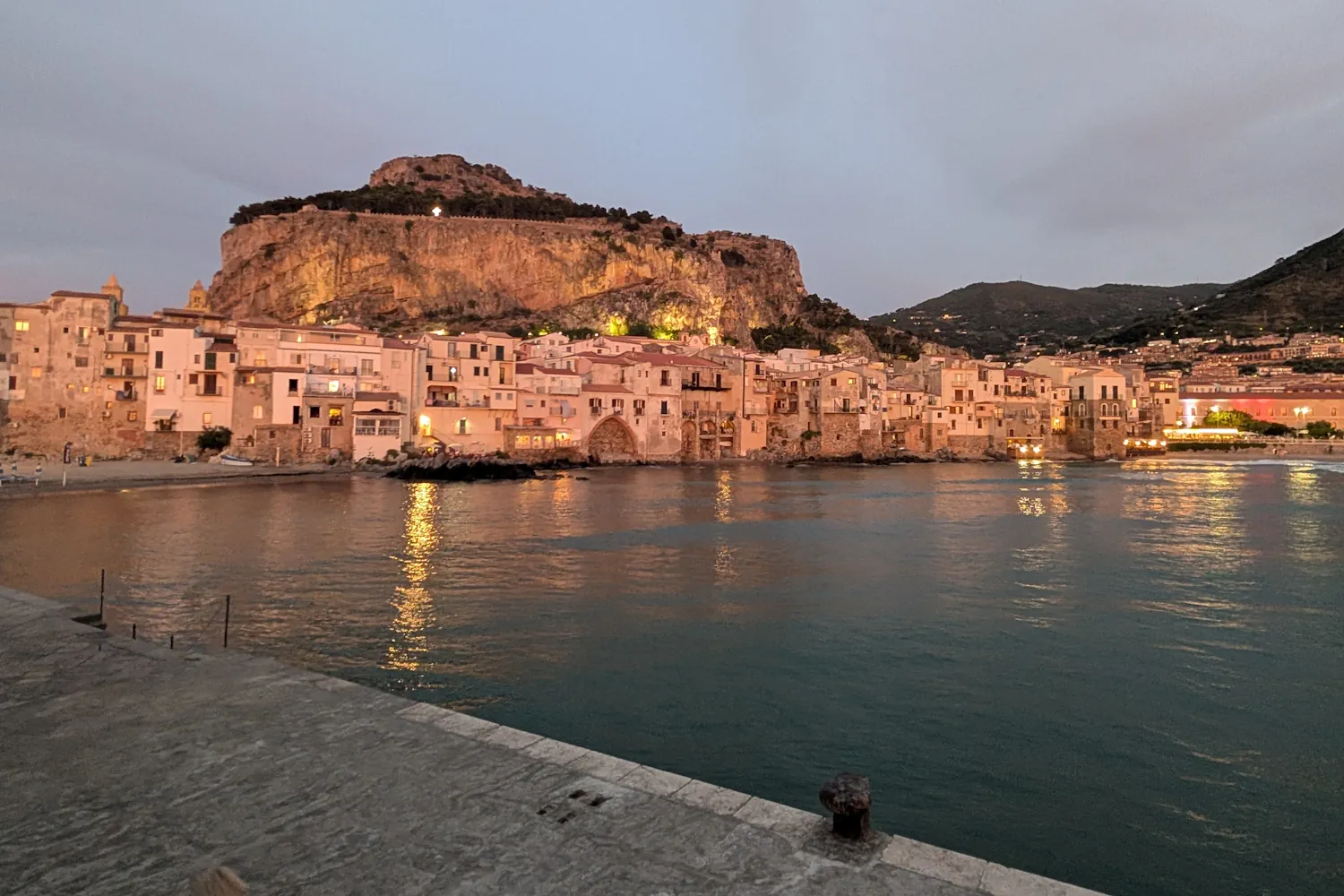
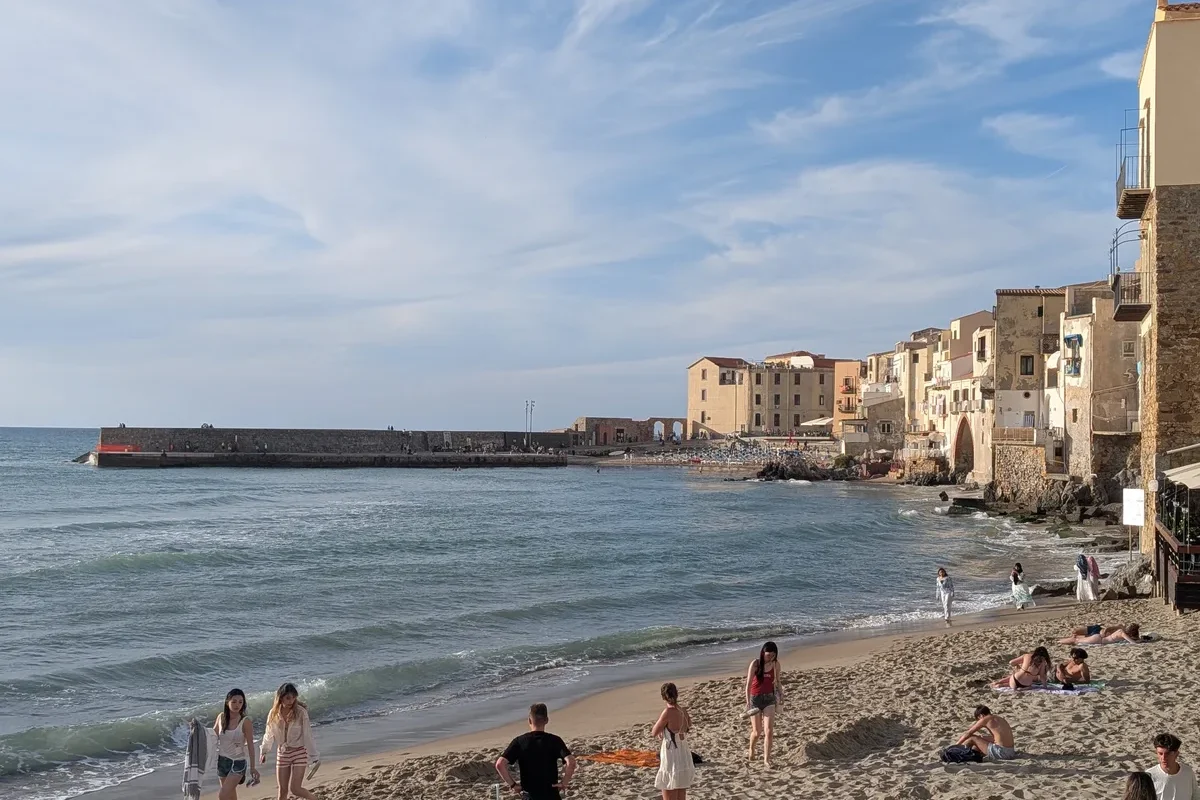
A medieval town nestled between a turquoise sea and a huge rock. It’s very beautiful. After the bustle of Palermo, the calm of Cefalù does you a world of good — even if it’s noticeably more touristy.
- Getting there: regional train from Palermo Centrale, 45 min to 1 hr, about 23 trains a day, first around 5am, last around 9.30pm. Reckon €6 to €8 one way. No booking needed. I go into all the detail in my article on the journey between Palermo and Cefalù.
- The Cattedrale: the nave is free, every day 8.30am-1pm and 3pm-7pm. The paid routes (towers, roofs, mosaics seen up close, cloister, treasury) range from €10 to €13, but be warned, they only open at 10am (10am-1pm and 3pm-7pm): if you arrive on the first train, you’ll have an hour to kill.
- The Rocca: €5 full, €2.50 reduced. Summer 8am-8pm, last entry 6pm; winter 8am-5pm, last entry 3pm. Closed shoes compulsory. Allow 1 hr 30 to 2 hr there and back.
My advice on tickets: don’t take the full tour of the cathedral. The roofs and the mosaics are plenty. And free entry to the nave is already very good if you’re just passing through.
The downsides: the climb up the Rocca in high summer in the afternoon is a heatstroke trap — zero shade. Do it early or give up on it. And the beach in August is packed. All the detail in my article what to do in Cefalù.
Agrigento and the Valley of the Temples
Two hours’ drive to the south. Further than the other excursions, but it works very well as a day trip and it’s, in our eyes, not to be missed.
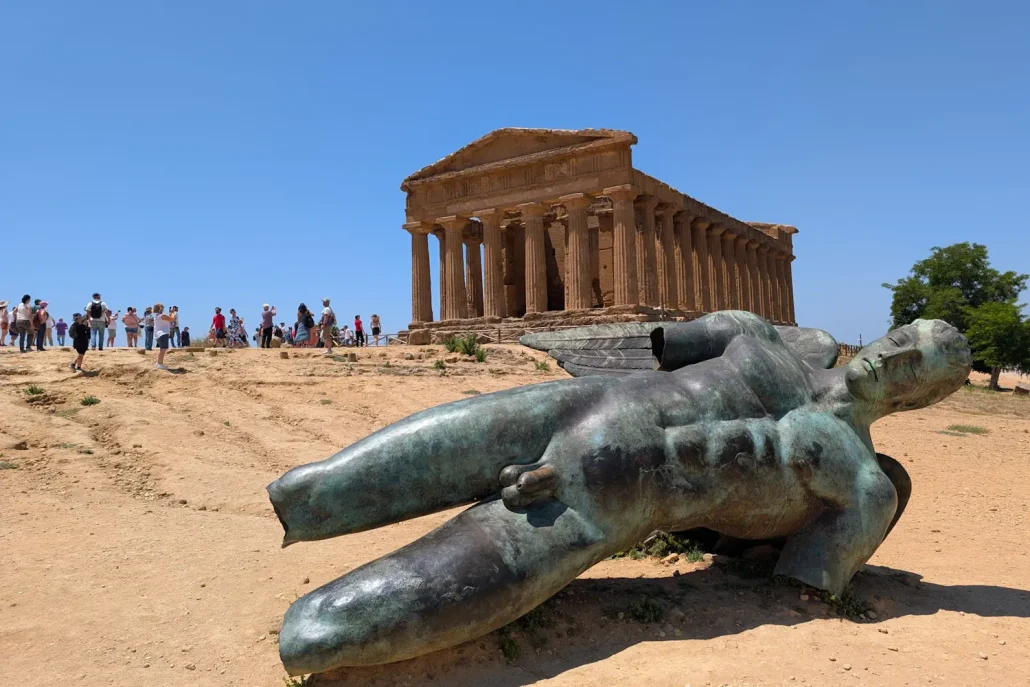
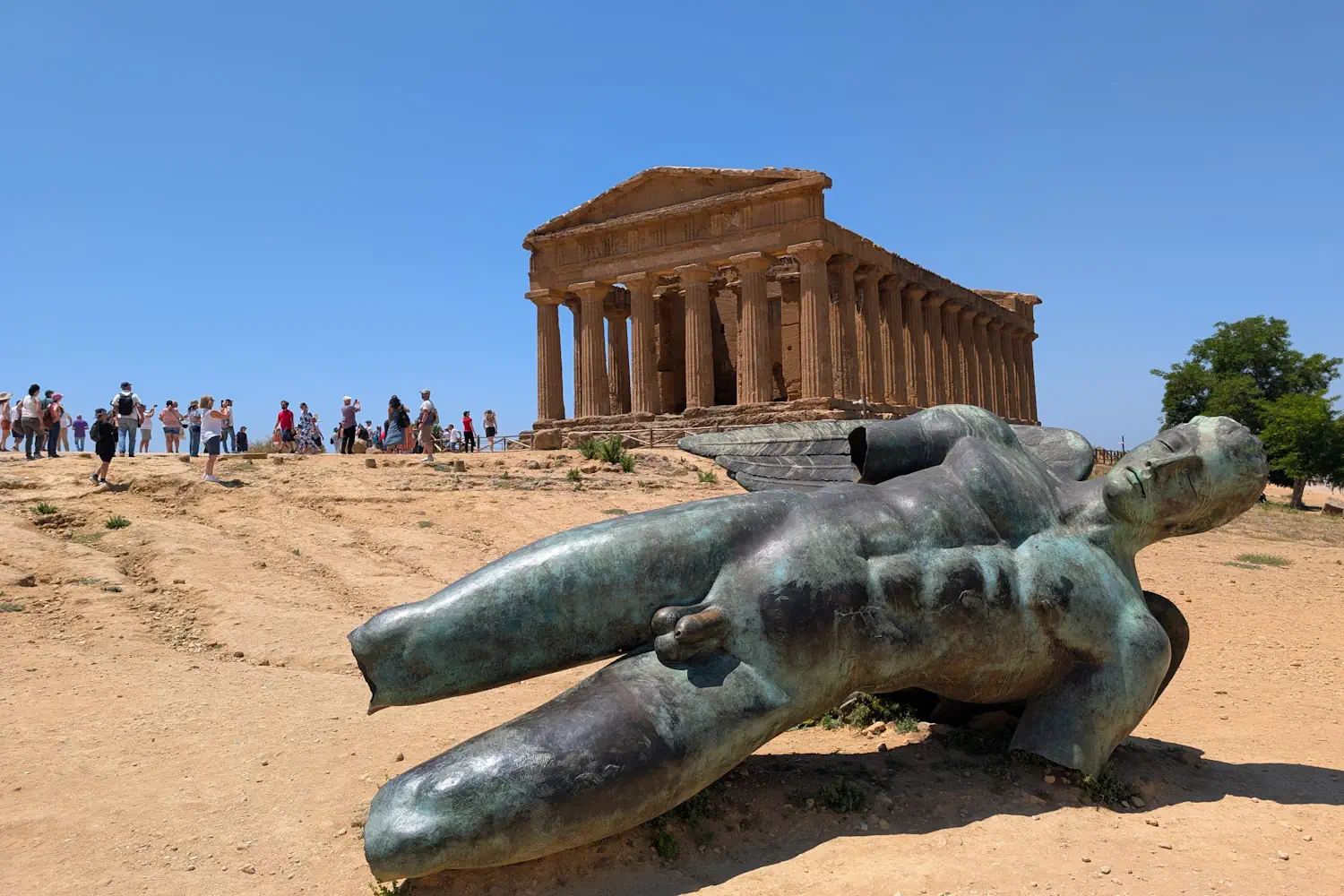
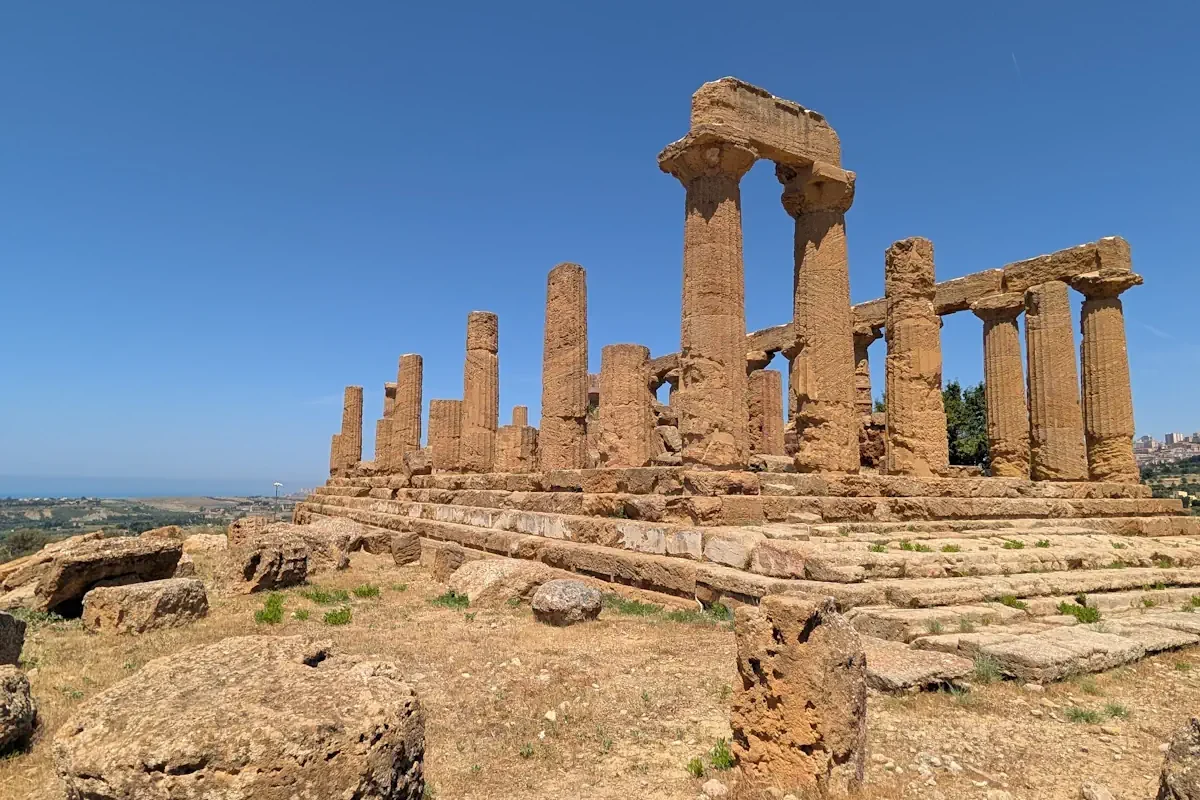
The site is huge — three kilometres between the two entrances — and lines up some of the best-preserved Doric temples in the Greek world, starting with the sublime Temple of Concordia. You walk along the ancient via Sacra, between olive and almond trees, with the sea as a backdrop. And there’s the famous statue of Icarus who burned his wings, much more recent, which actually looks rather good.
- Getting there: Cuffaro bus from the Piazzetta Cairoli, next to the central station. About 2 hr journey. €8.80 one way, €13.50 return (valid 30 days), tickets can be bought on board. Twelve departures a day on weekdays, but only five on Sundays and public holidays. Service suspended on 1 January, at Easter, on 1 May, 15 August and 25 December. The train is to be avoided (4 hr with connections).
- 2026 prices: €14 for the Valley alone (€7 for 18-25s, free for minors) · €20 with the Kolymbetra garden · €19.20 with the archaeological museum. €3 supplement for the Botero exhibition until 31 October 2026. Free for all on the 1st Sunday of the month.
- Summer hours (from 20 June): Monday-Friday 8.30am-10pm; Saturday, Sunday and eves of holidays 8.30am-11pm. The night-time visit is possible, and it’s tip number one. Careful: on the 1st Sunday of the month, the free entry only runs from 8.30am to 7pm, it doesn’t cover the night visit.
- Duration: 3 hr minimum.
The downsides. No shade anywhere on the site — between 11am and 5pm in July-August it’s gruelling, bring a hat and water. The two entrances are 3 km apart: you go in by one, come out by the other, so it’s either the paid internal shuttle or retracing your steps. And on Sundays, with five buses a day, it’s tight.
We went via an agency that mainly handles the transport. Because I understand nothing about Sicilian transport or its prices, and I had the feeling I had “sucker” written across my forehead.
It was well organised, with a guide on site for a supplement. I recommend it, even if generally I prefer to organise things myself. And if you go independently, book your tickets in advance: the queue can be really long in high season. All the details in my article on Agrigento from Palermo.

Segesta, Erice and Trapani: the day in the west
Segesta and its solitary temple
An hour’s drive away. An unfinished Doric temple set alone in the middle of the hills, and a Greek theatre clinging above it. It’s one of the most photogenic sites in Sicily, and far less busy than Agrigento.
- 2026 prices: €14 full, €7 reduced (EU 18-25s). €16.50 with the internal shuttle. After 5.30pm, when the theatre closes, entry drops to €5 for the temple zone alone.
- Opening hours (29 March – 30 September): every day 9am-7.30pm, ticket desk closed at 6pm.
- Duration: 2 hr to 2 hr 30.
- Getting there: Autolinee Tarantola from Palermo. Times and fare to be confirmed directly with the company, their site is regularly unreachable and I don’t want to give you a time I haven’t been able to check. By car, A29dir Segesta exit.
The downside: the theatre is 1.5 km and 200 metres of elevation above the car park, on a steep climb with no shade. The €2.50 supplement for the shuttle isn’t a luxury, it’s essential in summer and with children. Careful, it stops well before the park closes.
Bonus: the Segesta Teatro Festival in July-August puts on ancient plays in the Greek theatre at sunset. If it falls during your stay, go for it.
Erice and Trapani
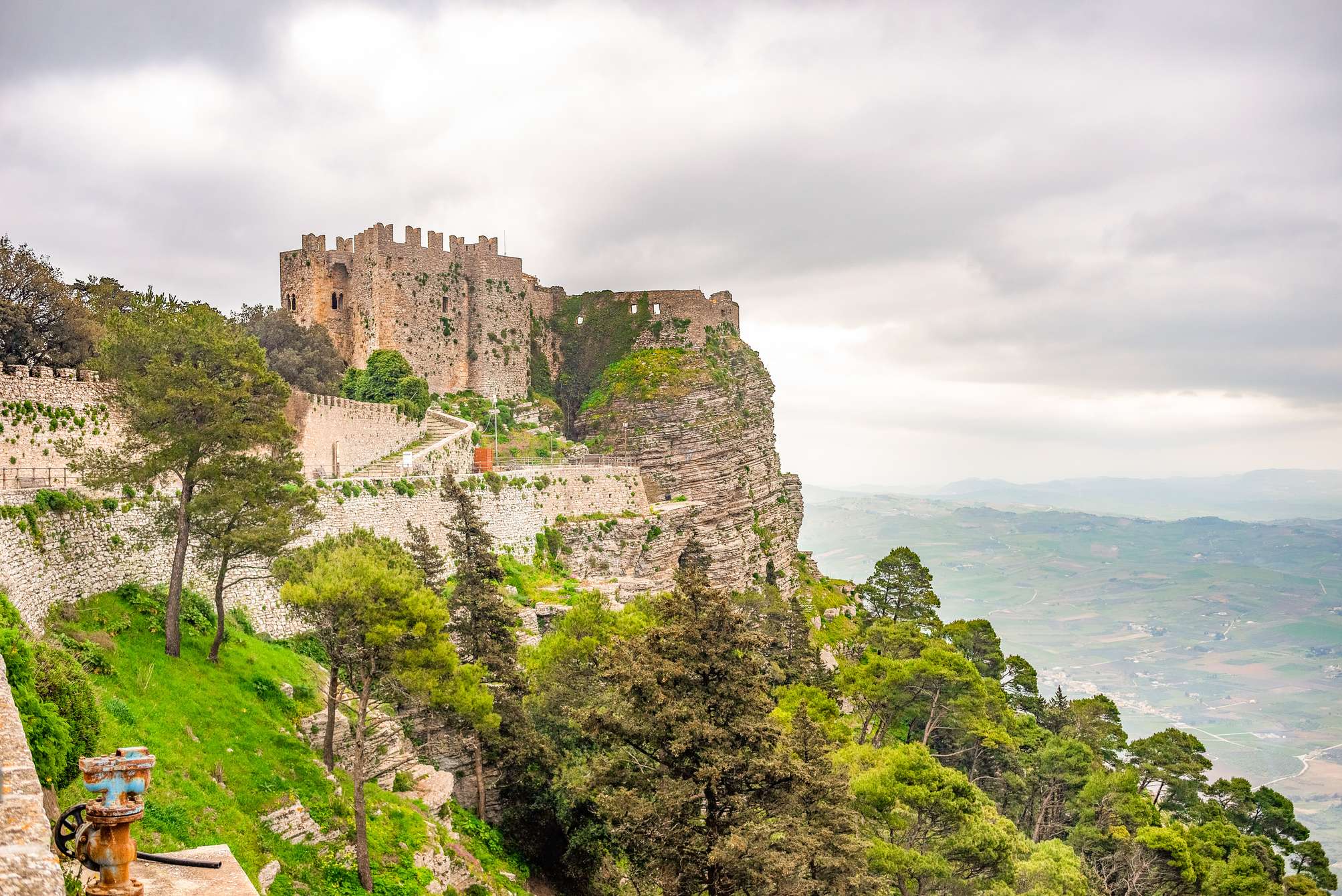
Erice is a medieval village perched 750 metres above Trapani, reached by a ten-minute cable car. The town is 700 metres long, three hours is plenty. And you really mustn’t miss the pastries of Maria Grammatico — the dolci di mandorla and the genovesi.
- Cable car 2026: single €9, return €15. €4 for 3-16s on a return.
- Opening hours (13 July – 30 August): Monday 2pm-midnight, Tuesday-Thursday 8.30am-midnight, Friday 8.30am-1am, Saturday-Sunday 9am-1am.
The downsides, there are three of them.
One: on Mondays, the cable car only opens at 2pm for weekly maintenance. A family going up on a Monday morning finds the door shut. And if Monday is a public holiday, the maintenance is pushed back to the first working day after, still with a 2pm opening.
Two: Erice is very often in the clouds. The local fog, which they call “u zu Cola”, drops in ten minutes and the view disappears. Check the webcam before going up.
Three: €15 × 4 people comes to €60 just for the cable car. So, as a family, driving up to the summit with parking at around ten euros is far more sensible.
Trapani is reached by bus from Palermo in 2 hr 15 for €8 to €11, with about 24 buses a day. The train is best avoided (3 hr 40 with a change).
The main draw is the salt pans: those of Marsala and the Stagnone, with their photogenic windmills. Windmill visit €8, guided tour in the salt pans with boots €16, boat trip €25. And good news, fairly rare in Sicily: all the visits are available in English.
The downside: the salt pans stretch across two different areas, north (Trapani/Paceco) and south (Marsala/Stagnone). Without a car, doing both is very complicated. And from Palermo, Trapani + salt pans + Erice in one day is too much. Pick two out of three.
Bagheria and Solunto, the half-day by train
Fifteen kilometres away, twelve to fifteen minutes by train from Palermo Centrale. It’s the easiest excursion of all and nobody talks about it.
The Villa Palagonia, known as “the villa of the monsters”, is covered with grotesque statues commissioned in the 18th century by an eccentric prince. Open every day, public holidays included, 9am-1pm and 4pm-7pm. €6 full, €3 for 5-10s. Allow 1 hr to 1 hr 30.
The downside: you come for the statues, and they’re in the boundary wall and the garden. The interior, with its hall of mirrors, is small. Don’t expect a château. And Bagheria itself is a charmless suburb, don’t plan a picturesque lunch. A 1pm-4pm break, the longest in the area.
Solunto, five kilometres away, is reached by the same train (Santa Flavia-Solunto-Porticello stop) then 25 minutes of climbing on foot. A Greco-Roman city on the slopes of Monte Catalfano, with cobbled streets, mosaics and, above all, a splendid view over the gulf. Summer Monday-Saturday 9am-6.30pm, around €6.
Two reservations all the same. It’s closed on Sundays according to the published hours — to be reconfirmed, the archaeological park’s official source is unreachable. And the climb from the station is steep and pavement-free: take a taxi.
The Zingaro reserve and San Vito Lo Capo
An hour and a half from Palermo to the southern entrance, on the Scopello side. Seven kilometres of coastal path, about two hours without the swimming stops, with five coves of translucent water: Capreria, Disa, Berretta, Marinella, Tonnarella dell’Uzzo.
- Price: €5 full, €3 reduced. Free for under-8s.
- Opening hours: every day 7am-7pm in season. From November to March, closing at 4pm.
The downsides, and the first is a deal-breaker.
Cash is refused since a decree of July 2025: electronic payment only. Turning up without a card means not getting in. There, it’s said.
Next, closed shoes are compulsory. Flip-flops, sliders and wedges are refused at the entrance, and the wardens really do turn people away.
Next, a fire in July 2025 ravaged around 1,600 hectares. The reserve only reopened partially in March 2026: only the route marked in red on the map is passable, and camping is suspended.
Finally, there is no water point in the reserve. Two litres per person minimum, and the car parks are full by 9am in summer.
Without a car, it’s complicated: Autoservizi Russo serves Palermo-Castellammare-Scopello-San Vito Lo Capo, but the timetables change from one season to the next. Check the day before, and above all the time of the last return.

The islands: Ustica, the Egadi and the Aeolians
Ustica, the only island doable as a day trip
The first protected marine area in Italy, created in 1986. A black volcanic rock with caves and exceptional water for snorkelling and diving.
- Getting there: Liberty Lines hydrofoil from the port of Palermo, 1 hr 15 to 1 hr 30. About 22 crossings a week, typical departures 7.30am, 11am, 3.30pm and 6pm — but these times aren’t confirmed by the company, check on libertylines.it or on 0923 022022 before building your day around them. From €26-28 one way. The Siremar ferry takes 2 hr 30 to 3 hr.
The downside, and it’s important: with a 7.30am outbound and a 6pm return, it works. But the sea and the wind regularly cancel the hydrofoils. Never schedule Ustica the day before a flight. And in August, non-residents can’t land with their vehicle.
The Egadi and the Aeolians: the honest answer
Favignana and the Egadi islands are reached from Trapani, not from Palermo: 30 to 40 minutes by hydrofoil, more than 20 crossings a day, from €12 one way. But from Palermo, that’s 2 hr 15 of bus + 40 min of boat, so three hours each way. Only doable by leaving at 6am, and frankly a slog. Better to spend a night in Trapani or Marsala.
The Aeolian islands: there’s a direct seasonal Liberty Lines line from Palermo, about 4 hr crossing, running roughly from 1 June to 30 September.
But the honest answer is no. Four hours out, four hours back, with timetables that don’t fit together. The classic route remains Milazzo (3 hr drive from Palermo) then an hour by hydrofoil. Allow two nights minimum.
Etna and Taormina from Palermo: a lot of bus
It’s offered commercially, so I might as well talk about it.
The typical excursion lasts 11 hours departing from Piazza Verdi, in front of the Teatro Massimo. The actual breakdown: 1 hr 30 of bus, coffee stop, 1 hr 30 of bus, two hours on Etna up to 2,500 m, one hour of bus, two hours in Taormina, back. That’s around six hours of bus for four hours on site. Reckon €115 to €125 per person, and no English version advertised.
I don’t necessarily recommend it, unless it really is the only window in your stay. And in that case, choose Etna alone rather than Etna + Taormina. The honest alternative is two nights in Catania or Taormina. Ultimately, it can’t be a bad idea in itself, just that it’s not optimal, especially if you’re heading that way later on.

Corleone and Piana degli Albanesi, two excursions apart
Corleone and the mafia museum
An hour’s drive away. The CIDMA, the International Documentation Centre on the Mafia and the Anti-Mafia Movement, notably displays facsimiles of the records of the Palermo maxi-trial in a whole room full of files.
- Opening hours (summer 2026): Monday to Friday 10am-6pm, Saturday and Sunday 10am-1pm only. Closed on 15 August.
- Prices: €10 / €8 / €4 depending on the category — the website doesn’t specify what each tier corresponds to.
- Duration: 1.5 hours for the museum, 3 hours with the outdoor route through Corleone.
The downsides. The visit is guided only and by prior booking: you can’t just turn up at the ticket desk. And at the weekend it closes at 1pm, so a Sunday excursion has to leave Palermo before 9am.
And above all, let’s be clear: Corleone is not a Godfather set. The film was shot in Savoca and Forza d’Agrò, near Taormina. It’s a genuine farming town, and the CIDMA is a place of remembrance, not a folkloric attraction.
Piana degli Albanesi, the Albanian village
25 km to the south, at 720 metres above sea level, an Albanian community settled in the 15th century that still speaks Arbëresh, celebrates the Greek-Byzantine rite and displays bilingual street signs. Byzantine Easter, with the women in gold-embroidered costume, is the highlight of the year.
And the cannolo. Piana degli Albanesi is famous for its oversized cannoli, and there’s even a cannolo festival — 2026 dates to be confirmed.
The downside: outside Easter and outside the festival, the village is very quiet and the churches often closed during the week. Go on a Sunday morning for the Byzantine liturgy, or during a festival. Otherwise you’ll find the time drags.

Things to do in Palermo: themed tours, cooking and opera
Right, Palermo isn’t just a list of monuments to tick off. It’s actually the city where themed activities make the most sense, because they hand you keys you wouldn’t have on your own.
The anti-mafia guided tour with Addiopizzo
Addiopizzo is the movement of shopkeepers who refuse to pay the pizzo, the protection racket. You’ll see their orange stickers on shopfronts all over the city: “pago chi non paga“, I pay those who don’t pay.
Their travel agency offers a three-hour walking tour that tells the story of the mafia from the angle of civil resistance: the shopkeepers who said no, the murdered prosecutors, the movements under way. The route notably passes the Teatro Massimo and the Piazza della Memoria.
- Duration: 3 hours on foot, in a small group.
- Price: from €34-36, with a contribution paid to the association.
- Languages: Italian, English, Spanish and French. It’s one of the very few French-language tours in Palermo.
- There’s also a cycling version (3h) and a “Kalsa & Vucciria” route.
The downside: three hours on your feet in full sun in summer can be brutal — take a morning slot. And if you’re after something sensational, TV-series style, you’ll be disappointed: it’s a civic message, not folklore. Which is precisely why it’s worth it.
Cooking classes and street food tours
A Sicilian cooking class
Right, there are two very different models, and the prices have nothing in common.
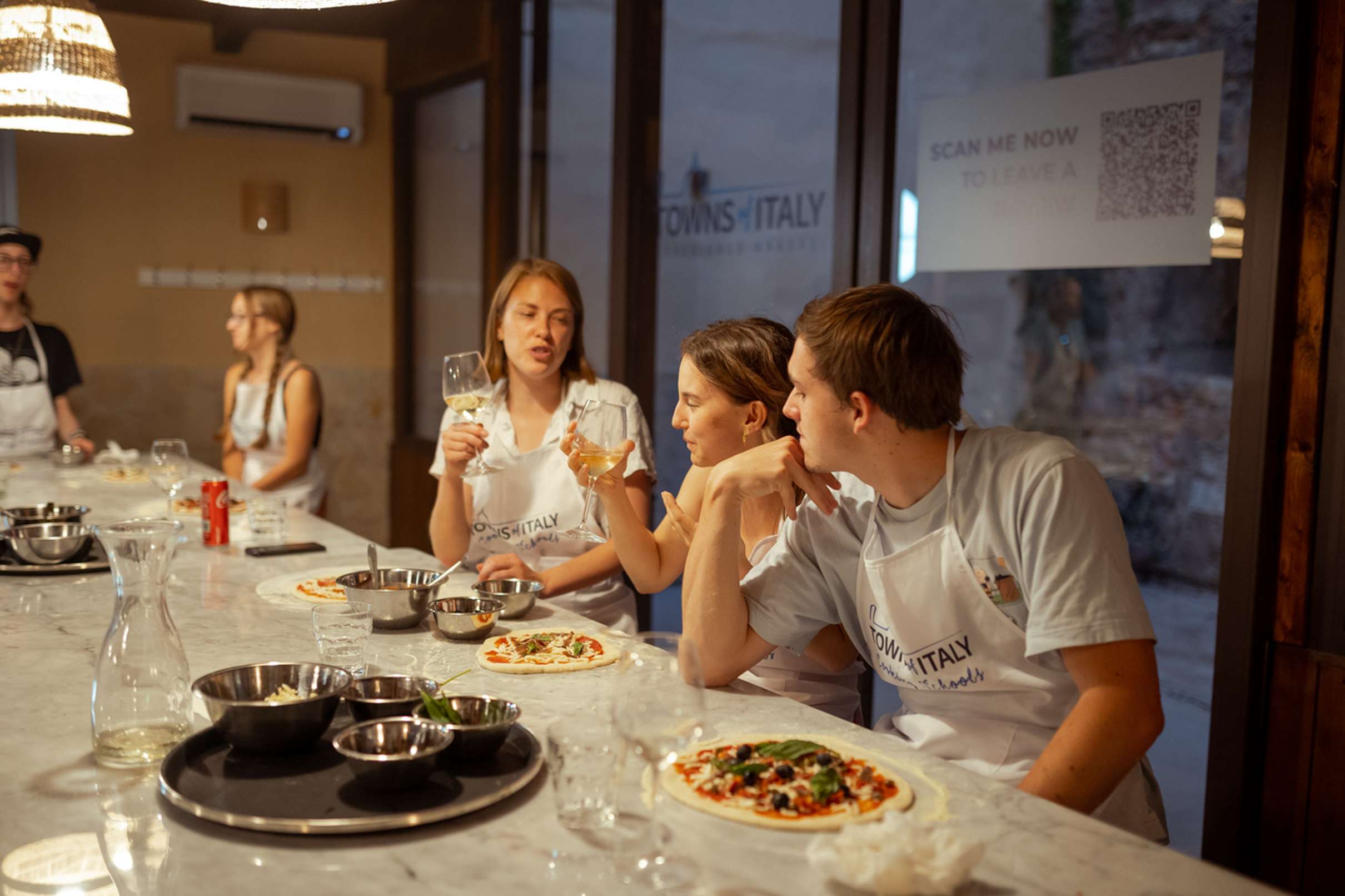
In a local’s home, via the Cesarine network: you go to the market with the cook, then cook and have lunch at her place. Reckon on €92 for an arancine class, €119 for the “panelle, anelletti and cannoli” class (the most Palermitan), €108 for fresh pasta and tiramisu, up to €140 for pizzas and focaccias.
In a group workshop, with operators like Streaty or Palermo Street Food, often with a “market then cooking” format. Reckon more on €60 to €90.
The downside: the French-language versions aren’t confirmed with these operators, most classes are in English only. Check before booking if that’s a dealbreaker for you.
A street food tour through the markets
Three hours through the Capo, Ballarò or the Vucciria, with a guide who knows where to stop. You’ll eat pane e panelle, crocchè, sfincione, arancine, stigghiola, possibly pani ca’ meusa, and finish on a cannolo or an ice cream. The operators themselves warn that it replaces a full meal.
Reckon on €65 to €70 minimum per person for a 3-hour tour in a small group, and more like €70 to €90 in practice.
The downsides. Don’t go expecting fish or pasta: the disappointed ones are always those who were expecting a seafood meal. Avoid Sunday, Ballarò is closed. And if the tour passes through the Vucciria in the morning, you won’t see much there — I explained why earlier.
Honestly? You can perfectly well do the markets on your own and eat for €10. The value of the tour is the guide and the addresses, not the food.

Opera and puppets: the two shows to see
Attending an opera at the Teatro Massimo
Seeing an opera in the largest opera house in Italy is quite something compared to visiting it empty. And frankly, it’s not as expensive as you’d think.
- Grand repertoire (La Bohème, Aida, Rigoletto): from €160 in the top category to €30 in the loggione (sector 8) for an ordinary performance.
- Ballets: from €110 to €22.
- Concerts: from €35 to €20. Under 35 card: €10 to €15.
The downside, and it has to be said: the listed prices include neither the 10% advance-booking fee nor the 6 to 8% online sales commission. A ticket advertised at €30 works out at around €35. It’s not huge, but you may as well know. The box office is open Tuesday to Sunday from 9.30am to 3.30pm.
A Sicilian puppet show (the Opera dei Pupi)
Inscribed on UNESCO’s Intangible Cultural Heritage list since 2001. Metre-high rod puppets that re-enact the Storia dei paladini di Francia — Charlemagne, Roland, Renaud, Angelica. It’s theatrical, it’s loud, there are sword fights, and it’s a still-living tradition carried on by a few families.
At the Museo Pasqualino, in the Kalsa: museum Tuesday-Saturday 10am-6pm, Monday/Sunday/public holidays 10am-2pm. Shows on Monday at 11am and Tuesday to Saturday at 5pm. Museum only €5, museum + show €10, show only €10 (€8 reduced). Combined ticket with the “Stanze al Genio” majolica museum: €12. Booking recommended on 091 328060.
At Figli d’Arte Cuticchio, Via Bara all’Olivella: the historic company, founded in 1973, the most highly regarded artistically. Shows from €5 to €10. But the programming is irregular and above all concentrated at the weekend — check the calendar and book.
The downsides. No show on Sunday at the Pasqualino museum, and on Monday it’s the morning at 11am. And above all: it’s in Sicilian and Italian, without surtitles. A visitor who arrives without any context switches off after ten minutes. Do the museum first, it gives you the keys — that’s exactly what the €10 combined ticket is for.
Boat trip, free walking tour, tuk-tuk and bike
A boat trip from Palermo
The Gulf of Mondello, the Capo Gallo nature reserve, the caves, the Addaura coast, with several swimming and snorkelling stops. It’s the best way to see Palermo from the sea.
Reckon on €45 to €70 for a 2-3 hour group tour, €85 to €100 for a half-day with a snack and snorkelling gear, and €400 to €700 to hire privately for the day. Some operators offer French on request.
The downside: watch out for the departure point. It’s generally not at Mondello but at Arenella or Sferracavallo depending on the operator — and getting there is a completely different trip. Check the meeting point before booking.
Free walking tours, tuk-tuk and bike
Free walking tours do exist in Palermo, on the pay-what-you-want model. Reckon on €10 to €15 per person for 2-2.5 hours, online booking required. But the vast majority are in English, Spanish and Italian: I couldn’t find confirmation of regular French-language slots.
The tuk-tuk (Ape Car) is offered at around €65-70 an hour, with pick-up at your hotel. It’s expensive for what you see, and it’s in English and Italian only. It’s justified if you have difficulty walking or in case of very high heat. Otherwise, no.
Cycling: there are tours, including Addiopizzo’s Anti-mafia Bike Tour. But cycling in Palermo takes a certain nerve in the traffic. You’ve been warned.

How many days in Palermo, and what programme
Five days in Palermo can seem like a lot on paper. Frankly, no. We did them, and we never felt like we were going round in circles — on the contrary, we missed things. The city is dense, and the excursions around it are excellent.
Palermo in 1 day
Right, it’s tight. But it’s worth a go, particularly on a cruise stopover. The sequence: morning Piazza Bellini (Martorana + San Cataldo, before 1pm without fail), then Quattro Canti and the Fontana Pretoria. Midday: street food in Ballarò. Afternoon: the Cattedrale and its rooftops, then the Palazzo dei Normanni and the Cappella Palatina.
It’s tight and you’ll only see the centre. But you’ll have seen the two most beautiful things in the city. A warning if your day falls on a Sunday: the Martorana doesn’t take visitors and the Palazzo dei Normanni closes its entrances at 12.30pm. On a Sunday, you have to reverse it — Palatina from 8.30am, the rest afterwards.
Palermo in 2 days
Day 1: the historic heart. Quattro Canti, Fontana Pretoria, Piazza Bellini in the morning (Martorana, San Cataldo), Santa Caterina with the terraces and the pastries, then the Cassaro at nightfall when the Palermitans come out.
Day 2: Arab-Norman Palermo. The Cattedrale and its rooftops at opening, then San Giuseppe dei Teatini and the Santissimo Salvatore before 1pm (both close at midday). Lunch, then the Palazzo dei Normanni and the Cappella Palatina, and the church of the Gesù in the late afternoon — it’s the only one of the three that stays open until 6.30pm.
It’s the minimum. It’s frustrating, but it hangs together.
Palermo in 3 days, the good minimum format
The two days above, plus a Monreale day: Catacombe dei Cappuccini at opening (9am), Monreale afterwards, back to Palermo in the late afternoon. Or, if the mummies don’t appeal, Monreale in the morning and Mondello in the afternoon.
Palermo in 4 or 5 days, what I really recommend
Day 1: historic heart and Piazza Bellini.
Day 2: Cattedrale, baroque churches, Palazzo dei Normanni.
Day 3: excursion to Agrigento and the Valley of the Temples (full day).
Day 4: markets in the morning (the Capo then Ballarò), Teatro Massimo in the afternoon, the Serpotta oratories if you’re more organised than we were, Vucciria in the evening.
Day 5: catacombs early, Monreale, then Mondello or off to Cefalù.
With five days you’ve got the heritage, the markets, two excursions and time to breathe. It’s the format I tried and it’s the one I’d do again.
A week? Add Cefalù (two days, by train, it’s the perfect counterpoint), or Segesta and Erice, or Ustica. I’ve gone through all that in my one-week itinerary between Palermo and Cefalù.
And beyond that, it’s no longer called “visiting Palermo”, it’s called a tour of Sicily — and for that, you need a car.
Practical information for visiting Palermo
How much does a flight to Palermo cost
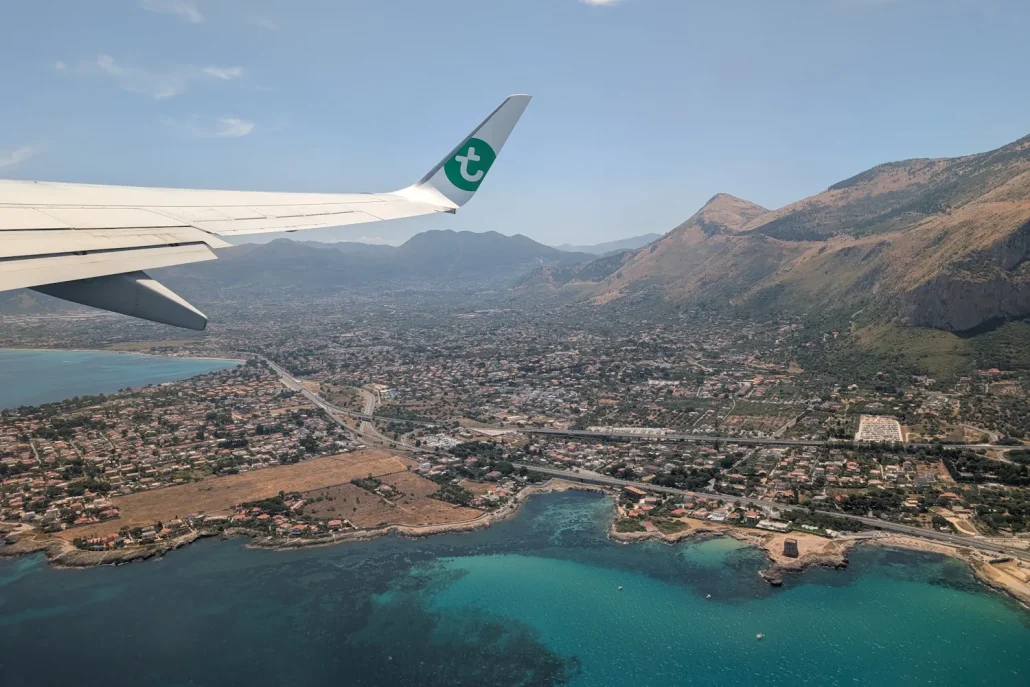
Frankly, it shouldn’t break the bank; you can find return flights from Paris from €100 by booking early, and fairly easily around €150 by booking later. Less with the low-cost carriers, but be careful because the low-cost airlines will make you pay for cabin baggage and every little extra, at really high prices. What looks like a good deal at first won’t be one any more, especially if you leave it to the last minute.
In any case, you absolutely must compare.
Getting around Palermo, and should you rent a car
The most important thing first: Palermo’s historic centre is done on foot. Full stop. Quattro Canti, Ballarò, the Vucciria, the Kalsa, the Cattedrale, the Teatro Massimo, all of that fits within a square of a kilometre and a half. You’ll only need transport for Mondello, Monte Pellegrino, Monreale and the catacombs.
AMAT 2026 fares (buses and trams alike):
- Ordinary 90-minute ticket: €1.40
- Ticket bought on board from the driver: €1.80 (+€0.40 surcharge, exact change required)
- Day ticket: €3.50
- MultiDay 2 days: €6 · 3 days: €8 · 7 days: €16.50
Buy at tabacchi, kiosks, AMAT points or via the app. Validation compulsory as soon as you board. For a 3-4 day stay, the 3-day MultiDay at €8 pays off from three journeys a day and saves you hunting for a tabacchi.
The tram? Four lines, and none serves the historic centre. They link outlying districts to the stations. For a tourist, it’s almost useless. Worth knowing.
The reliability of the buses, frankly: it’s erratic. The theoretical frequencies are rarely kept to, delays are frequent. Use Moovit or Google Maps in real time — AMAT itself points you to Moovit from its own website, which sums up the situation pretty well.
Taxis: pick-up at €3.06 on weekdays in the daytime, €4.96 on public holidays, €5.35 at night. Insist on the meter, or agree the fare in advance. For the airport, there are predetermined fixed fares: €39, €44 or €50 depending on the zone, valid both ways.
- Hire a car from Palermo airport or in the city
- With free cancellation to book without pressure
- Comprehensive insurance to drive with peace of mind
- Prices from €15 / day
Getting to the centre from Falcone-Borsellino airport
The airport is 35 km away, at Punta Raisi. Three options.
- The Prestia e Comandè shuttle, the simplest: €6 one way, €10 return (€6.50 / €11 if you buy on board). €4 one way and €8 return for ages 3-12, free under 3. Departures every 30 minutes, 50-minute journey. Stops at the central station, Via Roma, Politeama, Via Libertà.
- The Trinacria Express train: around 50 minutes, about €7. The airport has its own station on the line.
- The taxi: €39 to €50 at a predetermined fixed fare.
New for 2026: a direct Mondello ↔ airport shuttle, from 15 June to 31 October. Handy if you’re staying on the beach side. I’ve laid it all out in my article on Palermo airport and the city centre.
Should you rent a car?
No, not for Palermo. The car is actually a handicap: heavy traffic, tricky parking, and a ZTL (limited traffic zone) whose status has been suspended then reactivated several times, with no up-to-date information on the official website. The fines arrive six months later at the hire company, with a surcharge.
Another thing to know: the parcheggiatori abusivi, those informal “car park attendants” who demand a few euros on the public road. It’s illegal, but refusing can be uncomfortable. Keep some coins on you or park in a guarded car park.
If you want to do the Zingaro, the Madonie, Piana degli Albanesi or Corleone, then yes, hire — but only on excursion days, and compare prices.
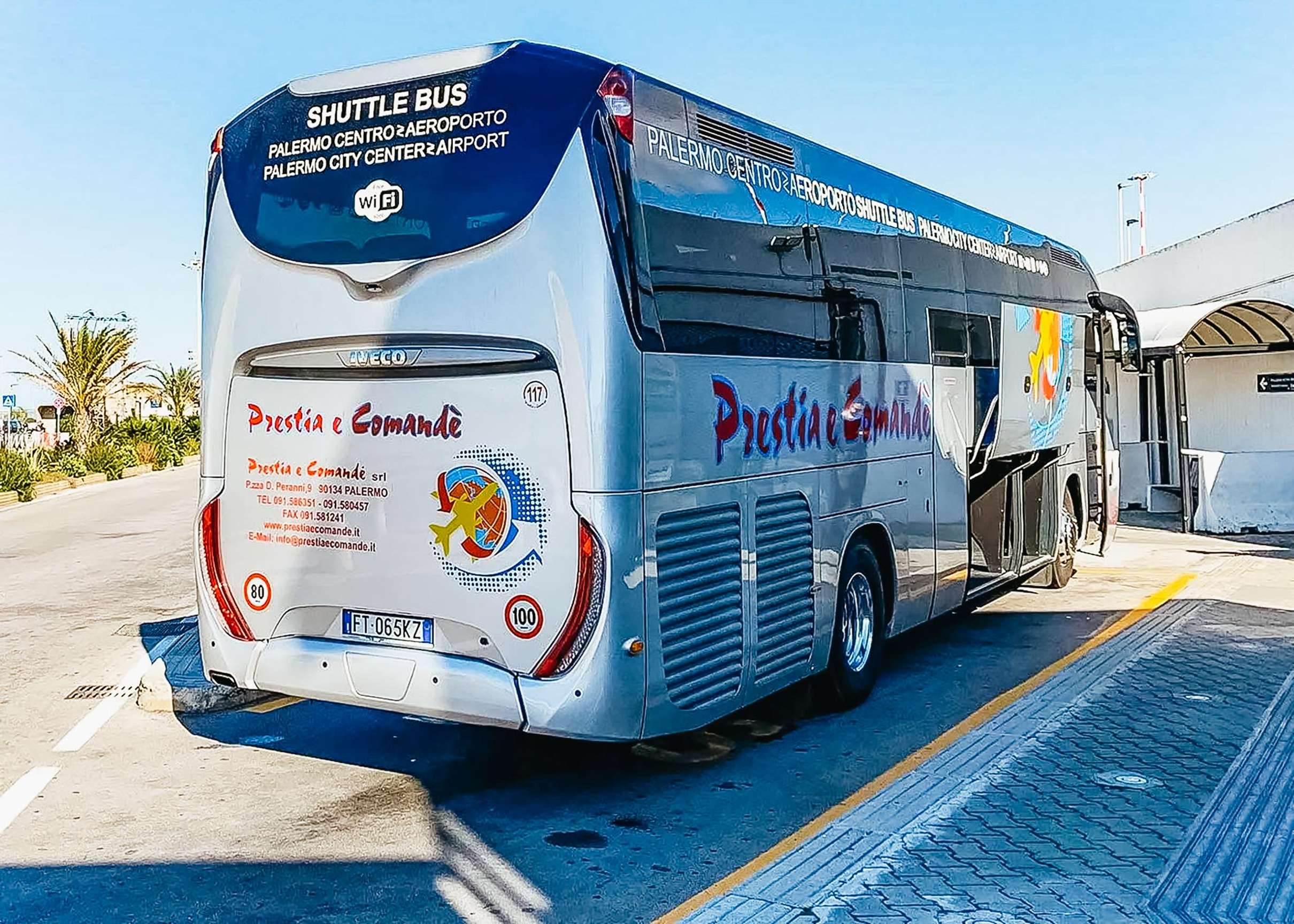
When to come to Palermo
I did Sicily in November and in May-June. There isn’t really a bad season: at worst it’s mild and it might rain a little.
- May (18 °C on average, 40 mm of rain) and late September (22 °C): the ideal window. Perfect temperatures, the sea still at 24-25 °C in September, sites doable all day long, lower prices and far fewer people. April works very well too for the city, but it’s cooler than you’d think: 14 °C on average, 18 °C in the afternoon. In short, the weather’s fine, it’s mild, there’s sun and not too many tourists.
- July-August (25 °C on average, up to 29 °C maximum, sea at 27 °C): perfect for swimming, but Agrigento, Segesta, the Rocca at Cefalù and the Zingaro become an ordeal between 11am and 5pm. And it’s very touristy.
- October is the wettest month (86 mm), it’s counter-intuitive but there it is.
- From November to March, Palermo stays mild (15 °C in the daytime) and very pleasant for the city alone. But the sites’ opening hours are reduced, it’s the winter timetable everywhere. The hours are complicated enough already, so if you add the winter timetable on top, oh dear!
In short, if you have the choice, come in April-May or in October. But don’t get too hung up on it either: come when you can. Either way, you’ll have good weather!
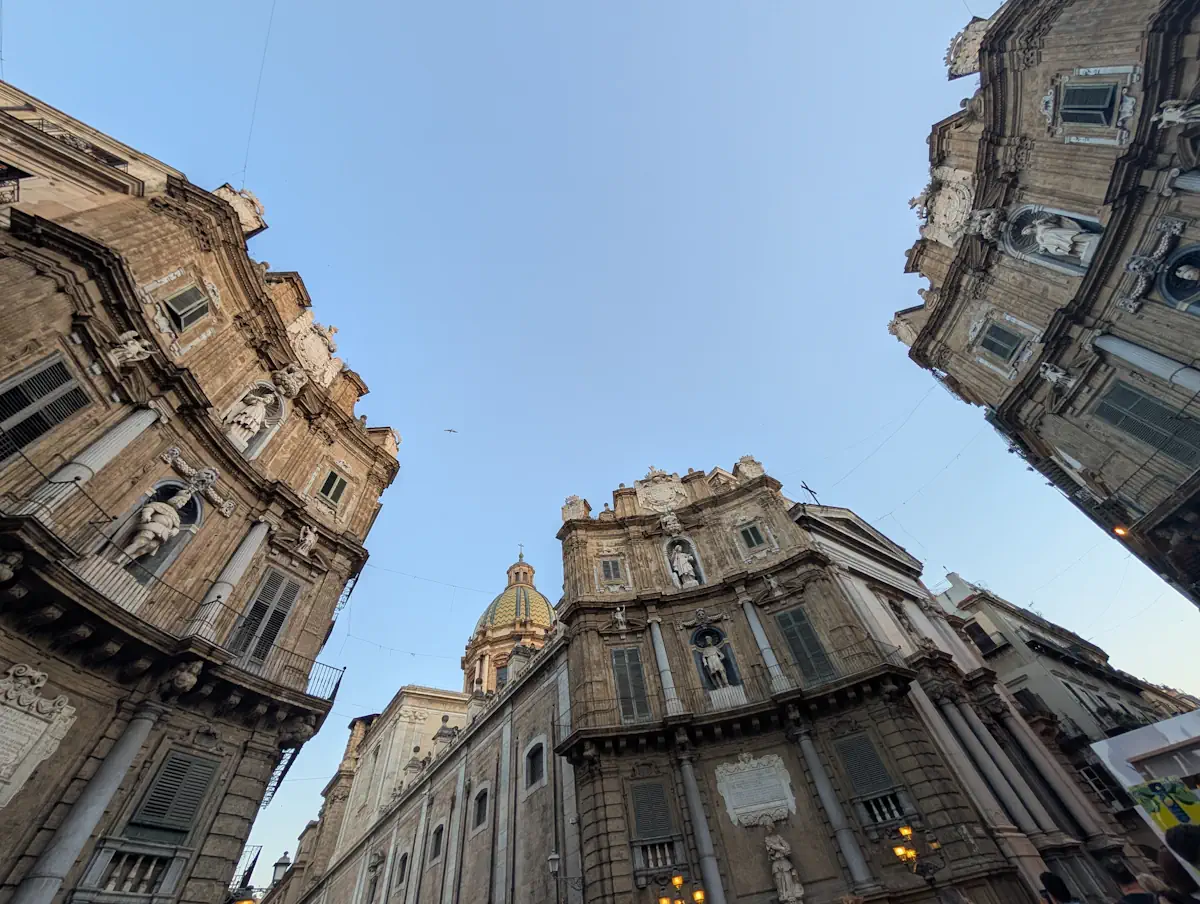
Is Palermo dangerous? And the scams to know about
Palermo’s “mafia” reputation has nothing to do with your safety as a tourist. Organised crime doesn’t target visitors, ever. The French Foreign Office in fact classifies the whole of Italian territory as “normal vigilance”, with no specific recommendation for Sicily or for Palermo. The only Italian cities named specifically for heightened vigilance are Rome and Florence.
The real issue is pickpocketing, as in Barcelona, Naples or Rome. Bag closed and worn in front in the crowded markets, no phone in your hand in the crowd, nothing visible in a hire car.
On the districts: Ballarò, the Vucciria, Borgo Vecchio, the Capo and Danisinni are working-class and run-down districts, not dangerous in the daytime. They’re actually the very heart of what makes Palermo interesting. In the evening, the Vucciria becomes a loud, heavily boozy party spot: atmosphere, not danger.
So if you have nothing on show, everything tucked away and (above all) you don’t stray outside the “allowed” districts, you’ll be fine. We never felt unsafe. Except…
The traffic. The scooters, the theoretical rights of way, the ignored pedestrian crossings. Crossing a street in Palermo takes confidence. That much is true. The traffic lights are there for decoration, not to be obeyed.
The traps and scams to know about
- Fish sold “by the kilo”: a portion announced as “about 2 kg” sends the bill through the roof. Get the weight and total price spelled out beforehand.
- The “coperto” (cover charge) is legal in Italy but must be shown on the menu. Insist on the menu with the prices.
- Resold “skip-the-line” tickets for sites where there is no queue. The Cattedrale itself warns against resellers.
- Floating prices at the tourist market stalls. Ask beforehand.
- Taxis without a meter. Insist on the meter. Or, simpler, don’t take the taxi.
Sicily has a reputation, and it doesn’t come from nowhere. Nothing dramatic, but stay alert.
Passes, free entry and budget: what’s really worth it
The most widespread misconception first: there is NO single “Palermo Pass” covering the major monuments. Neither the Palazzo dei Normanni, nor the Cattedrale, nor the catacombs are in an all-in pass. Be careful: some people arrive thinking they’ve paid for everything.
The Palermo Culture Pass (€25.60, 7 days) includes the Salinas museum, the Orto Botanico, the Palazzo Chiaramonte-Steri and the Riso museum. Combined full price: €32, so about €6.40 of savings. Only worth it if you do at least three of the four. And no classic is in it.
The PMO Tourist Card (private): €11 for 24h, €16 for 48h, €22 for 72h, unlimited AMAT transport and partner discounts. The downside: 72h of AMAT transport on a MultiDay costs €8. At €22, the card is only worth it if you really make use of the discounts.
The combined tickets that are worth it, though:
- Abatellis + Palazzo Mirto + Oratorio dei Bianchi: €10, valid 3 days — it’s the price of Abatellis alone. But first check that Mirto has reopened, it’s announced as closed for works.
- The two Serpotta oratories (Santa Cita + Rosario di San Domenico): €6.
- Teatro Massimo + Palazzo Butera: €19, valid 72h.
- Puppet museum + show: €10.
- Salinas + Orto Botanico + Doderlein: €13.
And the reflex that costs nothing: keep all your church tickets, they unlock discounts on the Circuito del Sacro.
What’s free in Palermo
Far more than you’d think: the nave of the Cattedrale, San Domenico, the sanctuary of Saint Rosalia on Monte Pellegrino, Santa Maria dello Spasimo, the three markets, the Quattro Canti, the Fontana Pretoria, the Villa Giulia, the Foro Italico, the Falcone tree, the Piazza della Memoria, the street art and the Teatro Massimo steps.
And above all: on the 1st Sunday of the month, the regional museums are free. Abatellis, the Zisa (by booking), Salinas, the GAM, San Giovanni degli Eremiti, and even the Valley of the Temples at Agrigento. If your dates allow it, line it up.
The budget
Excluding flights, reckon on €70 to €110 per day per person for a comfortable stay without excess: mid-range accommodation, meals, entries and transport. The street food is delicious and really cheap, you can have lunch for €8.
The item that climbs is the entries. Palazzo dei Normanni €19, Teatro Massimo €14, Abatellis €10, Cattedrale €7, catacombs €5. Just those five: €55. Add the Martorana, San Cataldo, Santa Caterina and the oratories, and you’re at €70 per person. It needs planning.
Where to stay in Palermo
We wanted a quiet hotel, so not on the main thoroughfares, but close enough to the centre not to have to use transport. We took a large room at the Quattro Stagioni: great team, great breakfast, very quiet, a top-notch restaurant right downstairs, and ten minutes’ walk from the centre.
For the rest, the districts that work: Via Maqueda / Quattro Canti (the lively heart, everything on foot), around the Cattedrale (UNESCO monuments), the Kalsa (bohemian and seaside), Politeama / Libertà (elegant and serene), Ballarò (working-class and cheap, for the adventurous) and Mondello if you want the beach.
I’ve devoted a whole article to the subject, with the hotels district by district: where to stay in Palermo.
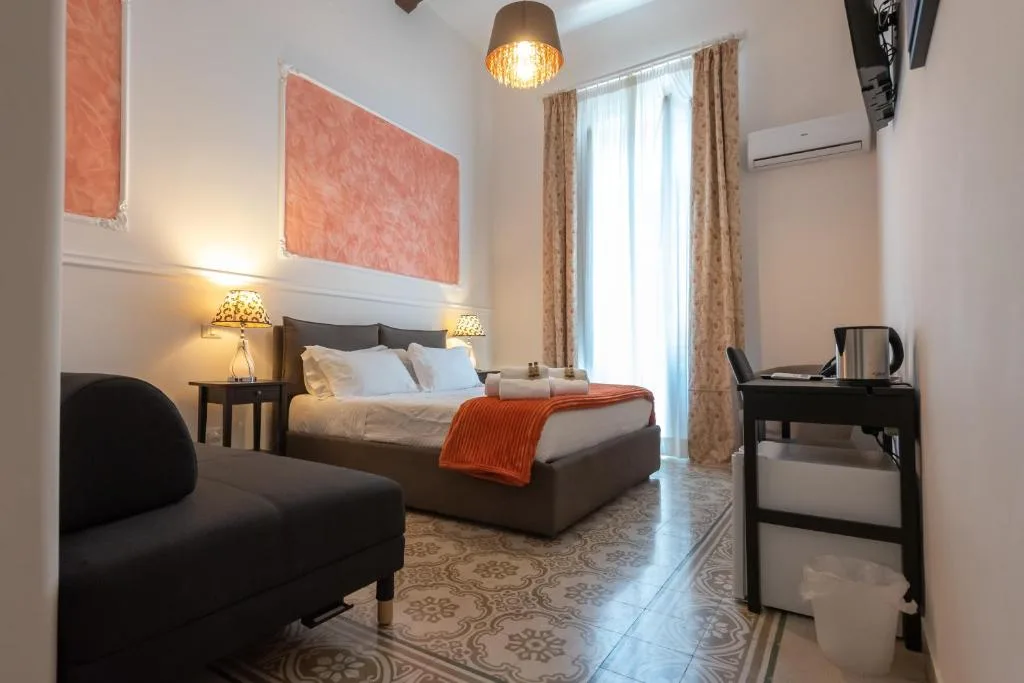
📍 La Kalsa · via Milano · Central Station 1.1 km
Small 4★ on the 4th floor of a Liberty-style building in La Kalsa, halfway between the central station and the port — the most affordable option in the selection, with spacious rooms and dedicated staff.
- Spacious, bright rooms rated highly for cleanliness
- Responsive staff recommend the best Sicilian cafés nearby
- Ballarò market and Quattro Canti within walking distance
Free cancellation
From 72 € per night
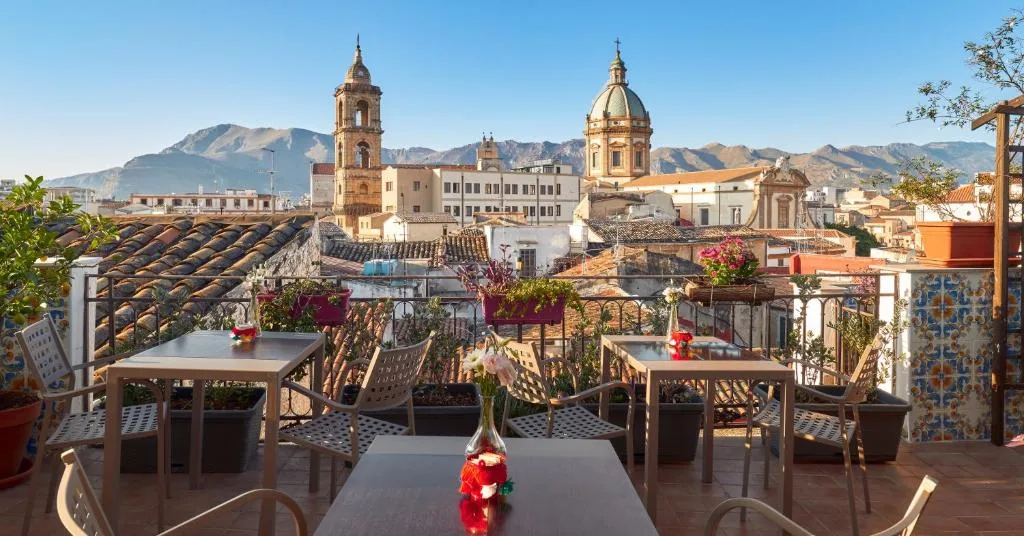
📍 Albergaria · via dell'Università · Cathedral 800 m
Adults-only boutique 4★ right in the pedestrianised historic centre; the trump card is the rooftop terrace where breakfast is served facing Palermo's rooftops and domes.
- Rooftop breakfast with views over the historic rooftops
- Adults-only = quiet and intimate atmosphere
- Spacious soundproofed rooms on a lively pedestrian street
Free cancellation
From 106 € per night
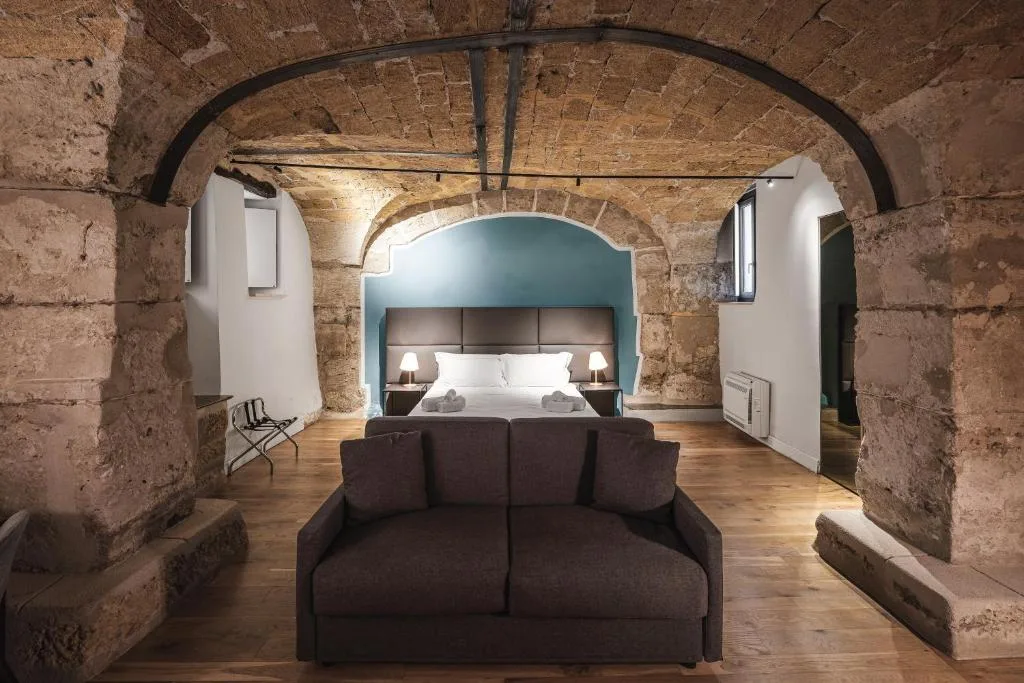
📍 Historic centre · via del Celso · Quattro Canti 5 min away
Palermitan palazzo with a peaceful inner courtyard and a one-of-a-kind touch: a Second World War bunker turned into a spa with a jacuzzi and heated pool beneath the historic vaults.
- WW2 bunker converted into a spa + jacuzzi + heated pool
- Breakfast served on the roof with views over Palermo's rooftops
- Quiet inner courtyard + fully equipped gym + massages
Free cancellation
From 134 € per night
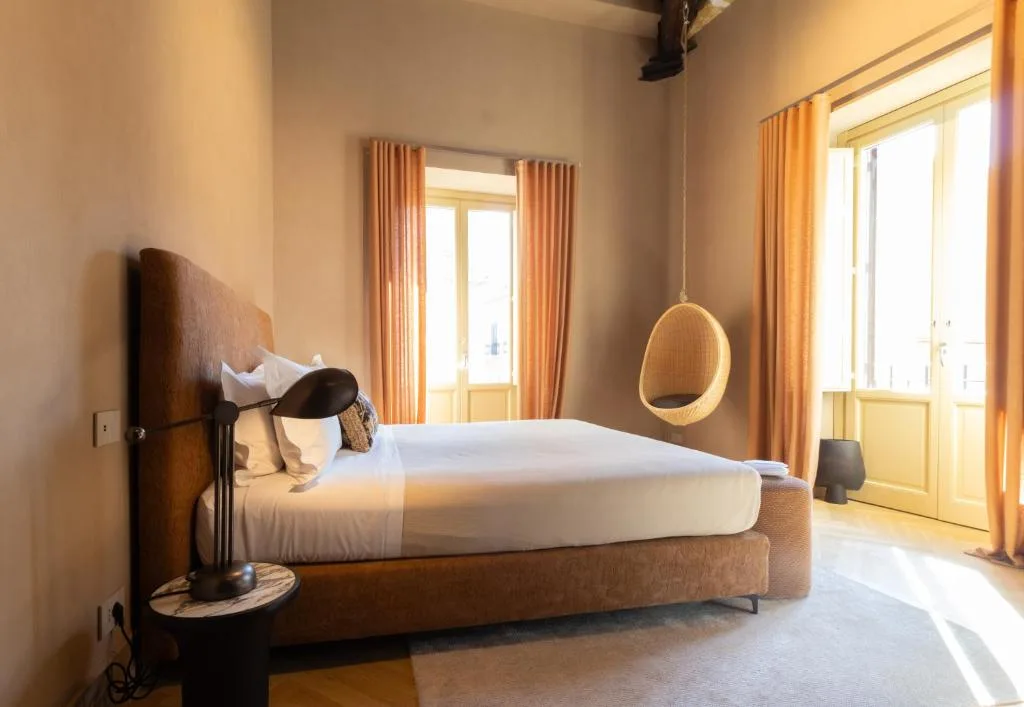
📍 La Kalsa · via Divisi · Cathedral and Teatro Massimo on foot
Official boutique 4★ with chic design in La Kalsa, an exceptional 9.6/10 rating, on-site spa + jacuzzi + sauna and private balconies opening onto the Palermitan rooftops.
- Design rooms + private balconies overlooking Palermo
- Full spa: jacuzzi + sauna + on-site massages
- Fresh local-produce breakfast praised in reviews
Free cancellation
From 223 € per night
Frequently asked questions about Palermo
How many days do you need to visit Palermo?
Three days minimum for the city and Monreale, four to five days for the good format with one or two excursions. Two days is doable but frustrating: you’ll only see the historic centre. Five days is not too much, we did them and still missed things.
Is Palermo dangerous?
No. The mafia doesn’t target tourists, and the French Foreign Office places no particular recommendation on Sicily. The real risk is pickpocketing in the markets and around the station in the evening — as in any large Mediterranean city. Bag in front, no phone in your hand in the crowd, and you’ll be fine.
What’s the best time to visit Palermo?
April-May and late September-early October. Temperatures between 18 and 22 °C, few people, sites doable all day long. July-August for the sea, but the archaeological sites become difficult between 11am and 5pm. November to March works very well for the city alone, with reduced opening hours.
Should you book tickets in advance?
For the Palazzo dei Normanni and the Cappella Palatina, yes, especially from April to October. For the Teatro Massimo, yes too. For everything else — churches, oratories, catacombs, museums — no, booking often isn’t even provided for.
What’s the real trap in Palermo?
The opening hours. The Martorana opens three hours a day and never on Sunday. The Serpotta oratories close on Tuesday. San Domenico shuts for four hours in the afternoon. The catacombs shut for 2.5 hours at midday. Check the evening before, every time, and build your day around the most restrictive site.
Can you visit Palermo without a car?
Yes, and it’s actually recommended. The centre is done entirely on foot. Monreale is reached by bus 389, Mondello by bus 806, Monte Pellegrino by bus 812, Cefalù and Bagheria by train, Agrigento by Cuffaro bus. A car is only useful for the Zingaro, Scopello, the Madonie, Gibilmanna, Piana degli Albanesi, Corleone and the salt pans.
What to do in Palermo when it rains?
The Palazzo dei Normanni and the Cappella Palatina (2h), the Salinas museum (1.5h), the Palazzo Abatellis (1.5h), the Palazzo Butera (1.5h), the GAM (1h15, open 7 days a week), the Gesù museum, the Teatro Massimo tour, a puppet show. You’ve plenty to keep you going for two days without setting foot outside.
Does Palermo work with children?
Yes, as long as you alternate. The markets, the puppets, Mondello beach, the Cattedrale rooftops, the Orto Botanico with its €18 Family Pass and the Teatro Massimo with its €36 family package. On the other hand, think twice before taking a sensitive child to the Catacombe dei Cappuccini — eight thousand mummified bodies is not a trivial thing.
What to see in Palermo on a cruise stopover?
The port is fifteen minutes’ walk from the centre. The most efficient sequence: Piazza Bellini (Martorana + San Cataldo if you’re there before 1pm), Quattro Canti, Fontana Pretoria, Cattedrale, and if you still have time, the Cappella Palatina. The Capo or Ballarò market slots in very nicely between the two.
Can you come to Palermo by ferry?
Absolutely! There are numerous connections from other cities in Italy such as Genoa, Livorno, Naples, Cagliari. But also from Tunis. Find all the ferry connections!
What budget for Palermo?
Reckon on €70 to €110 per day per person excluding flights. The entry tickets are the item that climbs fastest: €60 to €70 per person over three days if you do the major sites.
Palermo or Catania, which to choose?
Palermo if you’re coming for the heritage, the markets and western Sicily. Catania if you’re coming for Etna, Taormina, Syracuse and the east. The two cities have nothing in common, and you shouldn’t try to do the east from Palermo.
How to get from Palermo to Cefalù?
The regional Trenitalia train from Palermo Centrale: 45 minutes to 1 hour, about €6 to €8, around twenty trains a day. No need to book. I go through it all in my article on the Palermo-Cefalù journey.
Are there French-language guided tours in Palermo?
Few, but there are some. Addiopizzo’s anti-mafia tour does exist in French, it’s the best option. The Marsala salt pan tours too. Some boat trips offer French on request. For the rest — cooking classes, street food tours, free walking tours, tuk-tuk — it’s mostly English and Italian.
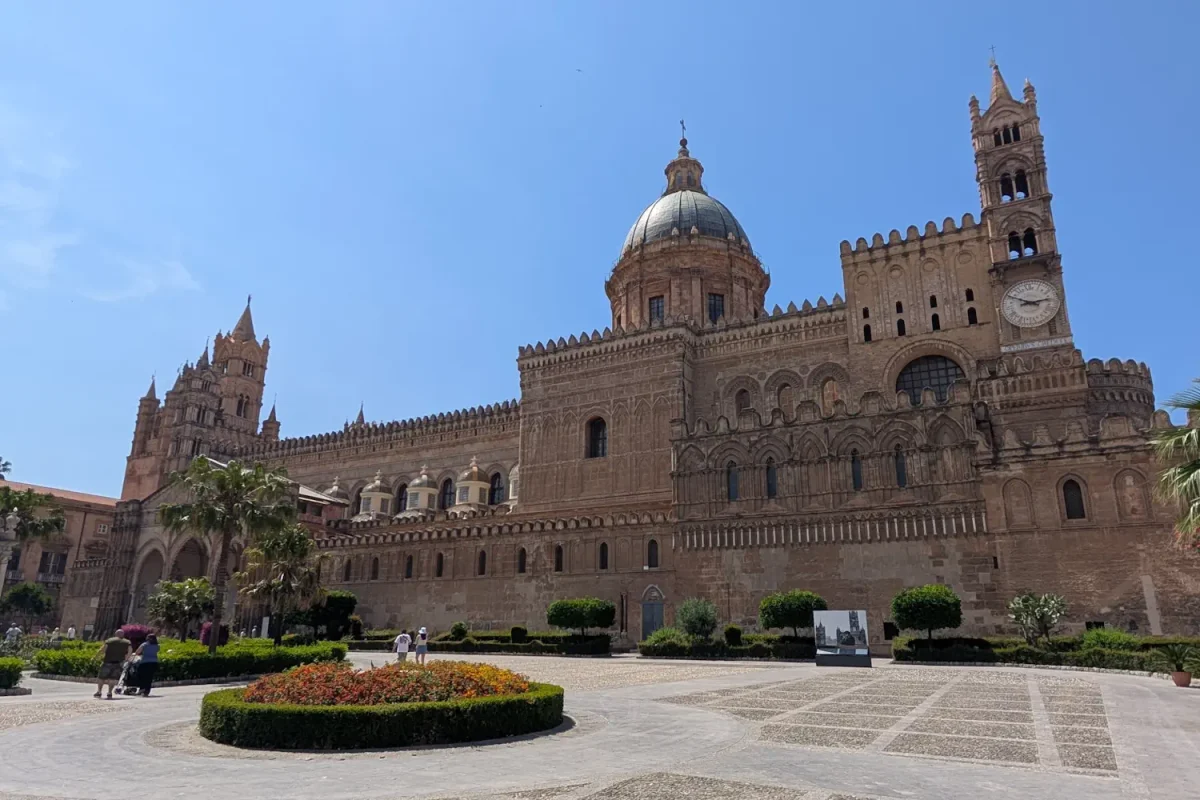
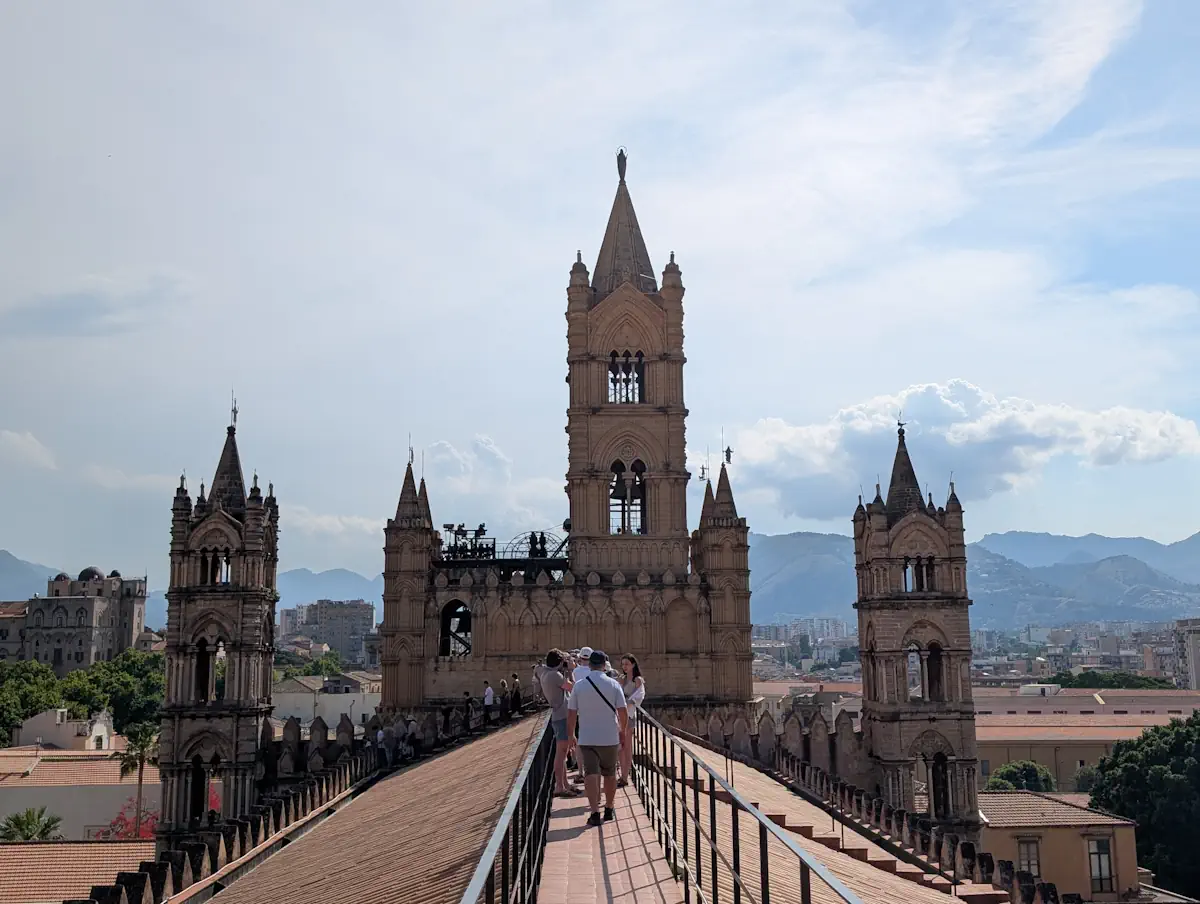
In conclusion
Palermo isn’t visited, it’s lived. It sounds a bit cheesy as a slogan, but it’s true. It’s a city that jostles you, that smells of bitter orange and frying, of spritz and octopus. A city where a gleaming Byzantine chapel hides behind a crumbling façade, and where an Arab market unfolds a stone’s throw from a Norman cathedral.
If you remember only three things: the Cappella Palatina is the most beautiful place in Sicily, the Martorana only opens three hours a day and you really mustn’t miss it, and the opening hours are the only real headache of this destination.
My two regrets, to be honest right to the end: the Catacombe dei Cappuccini and the Serpotta oratories, which we didn’t manage to fit in. Don’t do as we did. Organise your day around them, not the other way round.
And for the rest: let yourself be carried along. That’s what we ended up doing, in the image of the city, and it’s probably the best thing we did.
Frankly, if you’re still hesitating, go for it. And if you have a question, don’t hesitate to get in touch!
Going further with Palermo and Sicily
I’ve written several articles to help you prepare for this trip. They complement each other, and they’ll save you the mistakes we made:
- One-week itinerary between Palermo and Cefalù — the day-by-day programme, the one we should have done, better thought out and better prepared.
- Where to stay in Palermo — the best districts and a selection of hotels and apartments, to avoid the traps and the bad locations.
- How to get from Palermo airport to the city centre — between train, bus, shuttle and taxi, I compare everything, with the fares.
- Visiting Agrigento and the Valley of the Temples from Palermo — how to get there, the tickets, the opening hours and the tips for avoiding the heat.
- Things to do in Cefalù — the pearl of Sicily, the cathedral, La Rocca and the beaches.
- How to get from Palermo to Cefalù — by train, by bus or by car, with the timetables and prices.
- Where to stay in Cefalù — on the beachfront or in the old town, my best addresses.