Last updated on
What to see at the Vatican, the most beautiful spots you can’t miss
Heads up, you’re in for a serious wow moment. Love history? You’re going to be well served!
Honestly, the Vatican is something else. I spent a whole day there, and it wasn’t too much (proof: every time I go, I discover new things to see). In every room, every corridor, at every corner of the museum, there’s something that stops you in your tracks. A mosaic, a sculpture, a ceiling. You look up, you look down, you turn around. Your eyes are constantly feasting.
It’s THE must-see monument during your visit to Rome. And just like the Colosseum, you really need to prepare for it. Because a badly organized Vatican visit means 3 hours of queuing, overcrowded rooms and a Sistine Chapel glimpsed from a corner wedged between two tour groups. Let’s just say it deserves better than that.
That said, the Vatican is both tiny (the smallest country in the world, I think) and ultra dense. So before we get into the thick of it, here’s how the Vatican is laid out:
- the Vatican Museums (which are insanely rich) with tons of rooms holding the classics on Egypt, the mosaics, the map room, a huge number of sculptures, the Etruscans…
- the Sistine Chapel, the highlight of the show (truly), which you visit along with the Vatican Museums (there’s a passage to go straight there)
- the Pinacoteca, a collection of paintings by Caravaggio, Raphael, Leonardo da Vinci…
- the Vatican Gardens, which can only be visited with a licensed guide
- St Peter’s Basilica, the famous, monumental one
So there’s all of that, which is a lot for a single day (that’s why two days would be interesting too, to really enjoy it without rushing).
But I’ll also walk you through how I organized my day, what blew me away, and a few lesser-known tips.
Anyway, let’s dive into the heart of the Vatican! Oh, and you really don’t need to be religious to have your eyes wide open.
The Vatican in brief: tickets, prices and 2026 opening hours
Okay, let’s start with the practical stuff. This is where most people trip up.
The Vatican isn’t one ticket. It’s two places with two completely unrelated logics: the Vatican Museums (paid, booking required, fixed time slot) and St Peter’s Basilica (free, no booking, but a real queue). Every year, thousands of visitors pay to enter the basilica. When it’s free.
| What you visit | 2026 price | Booking | Duration | The thing to know |
|---|---|---|---|---|
| Museums + Sistine Chapel | €20 + €5 booking fee = €25 | Required, online, Getyourguide or the official ticket office, months ahead in high season | 3 hrs minimum | Fixed time slot. No refunds, ever. |
| St Peter’s Basilica | Free | None | 1 hr | 30 to 60 min of security queuing during the day. |
| Cupola (the dome) | €8 on foot / €10 by lift | On site only | 45 min | 551 steps. Bring cash. |
| Vatican Grottoes | Free | None | 20 min | Access is from inside the basilica. |
| Necropolis (Scavi) | €13 | By email, months ahead | 1 hr 30 | 250 visitors a day, 12 per group. It goes fast. |
Prices verified in August 2026.
Which ticket to get depending on your case
Honestly, there are only three scenarios that really hold up.
- You’re coming just once and you just want to get in → the official Museums + Sistine Chapel ticket at €25. Best value for money, full stop. The downside: in April-October, the morning slots sell out 3 to 4 weeks in advance. If you book the day before, you’ll take whatever’s left.
- You want to understand what you’re looking at → a guided tour. Raphael’s Rooms without any explanation are just pretty walls. The downside: you follow the group’s pace, and in the Sistine Chapel you won’t have time to sit down quietly.
- You’re in Rome on a last Sunday of the month → entry is free, from 9 am to 2 pm. The downside is huge: it’s the busiest day of the year, no booking possible, and easily 2 hrs of queuing outside. I only recommend it for really tight budgets.
- Getyourguide entries: these are genuine skip-the-line tickets. At the museum, there’s a dedicated Getyourguide entrance to go faster. On the official ticket office, tickets sell out very fast; there are more with resellers, including GYG, which is the recognized one.
The Vatican Museums: far more than the Sistine Chapel
This is what really surprised me. I had “Sistine Chapel + a few rooms” in mind. In reality, the Vatican Museums are one of the largest museum complexes in the world. You’d need several visits to see everything properly.
The Egyptian Museum: when the Pharaohs drop by the Vatican
It often gets rushed through in a few minutes, or even skipped to head straight to the Sistine Chapel. And that’s a mistake!
You don’t necessarily expect to find mummies and hieroglyphs in the heart of the papal palace, and yet this collection is one of the richest in Europe. Founded in 1839, it bears witness to the absolute fascination the Romans had for ancient Egypt (remember they brought back most of the obelisks you see today on Rome’s squares!).
It’s a radical journey that breaks the rhythm of the classical statue galleries. The rooms are darker, charged with mystery, and you discover how the Egyptian cults blended with Roman culture. It’s a mystical interlude I love, especially for the contrast with the Renaissance that follows.
There are some super interesting pieces to see:
The statue of Antinous-Osiris: This is probably the most famous piece. It depicts Emperor Hadrian’s young favorite as an Egyptian god. The work on the white marble is incredibly fine; it’s a magnificent bridge between Roman art and pharaonic aesthetics.
The statue of Queen Tuya (mother of Ramesses II): A monumental black granite work that commands respect the moment you enter the room. The precision of the details, despite the hardness of the stone, is stunning.
The painted sarcophagi: Take the time to observe the colors. They’ve stayed surprisingly vivid after millennia. You can see the scenes of the passage to the afterlife, a real open-air history book.
The mummies: Let’s be honest, this is the section that fascinates young and old the most. Seeing these direct witnesses of history, perfectly preserved, always gives you a little indefinable shiver.
My tip: The Egyptian Museum is right at the very start of the visit route. My trick? Arrive at opening time and head straight there. You’ll have these mystical rooms all to yourself before the bulk of the crowd pours into the following galleries. It’s the perfect moment to take photos with no one in the background.


The gallery of Statues: the Laocoön, the Apollo Belvedere and the wild faces
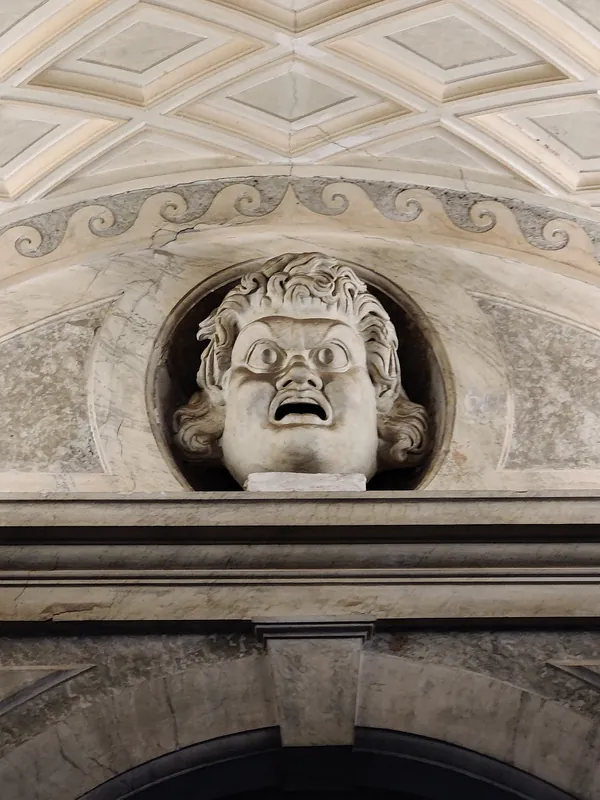
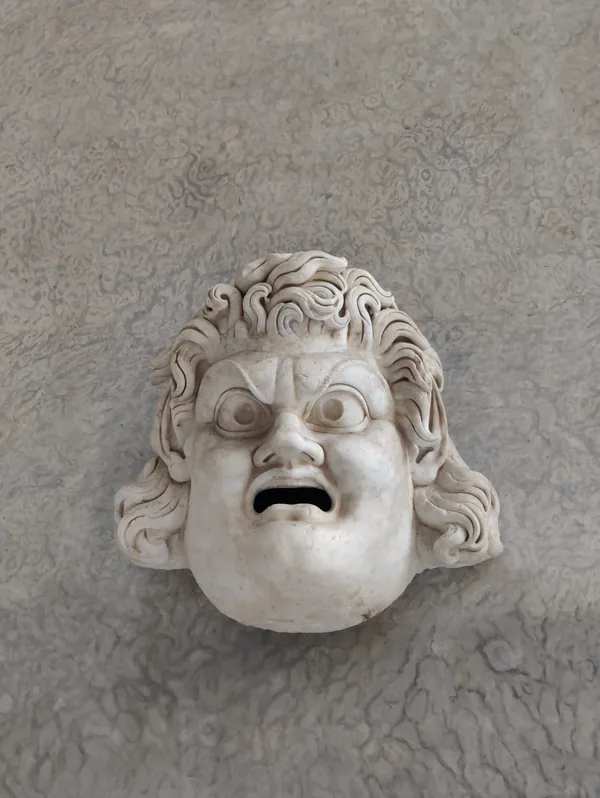
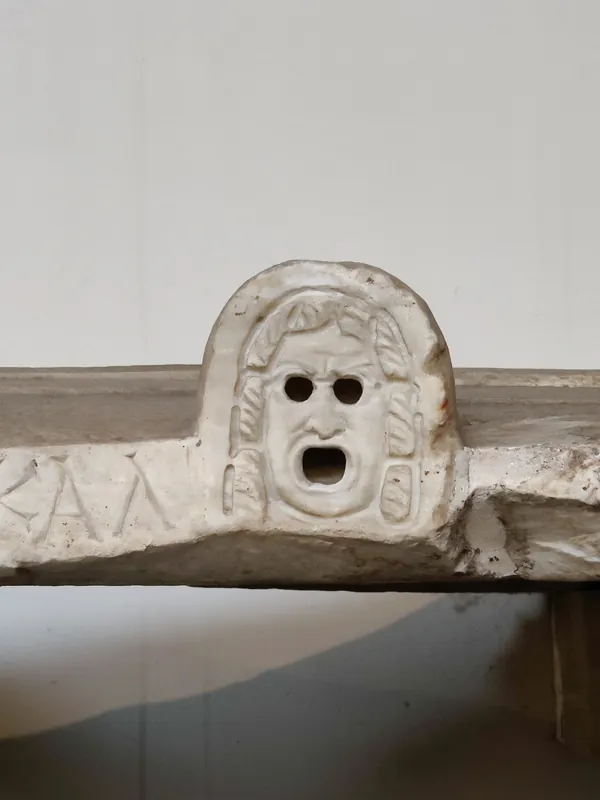
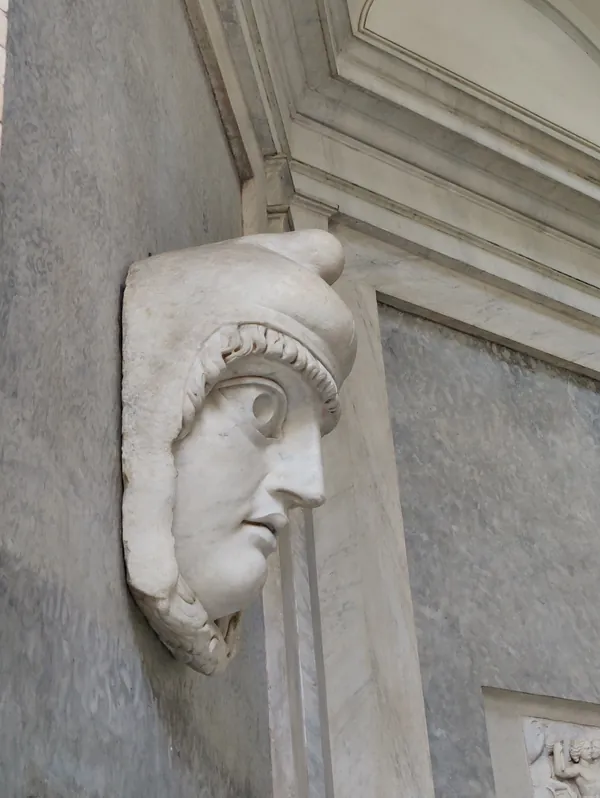
I mentioned it in the itinerary, but really: the grotesque masks hidden on the columns and arches are something special. The Romans sculpted screaming heads, faces with wide-open mouths, theatrical expressions. And they put them everywhere. Fascinating and a little absurd at the same time.
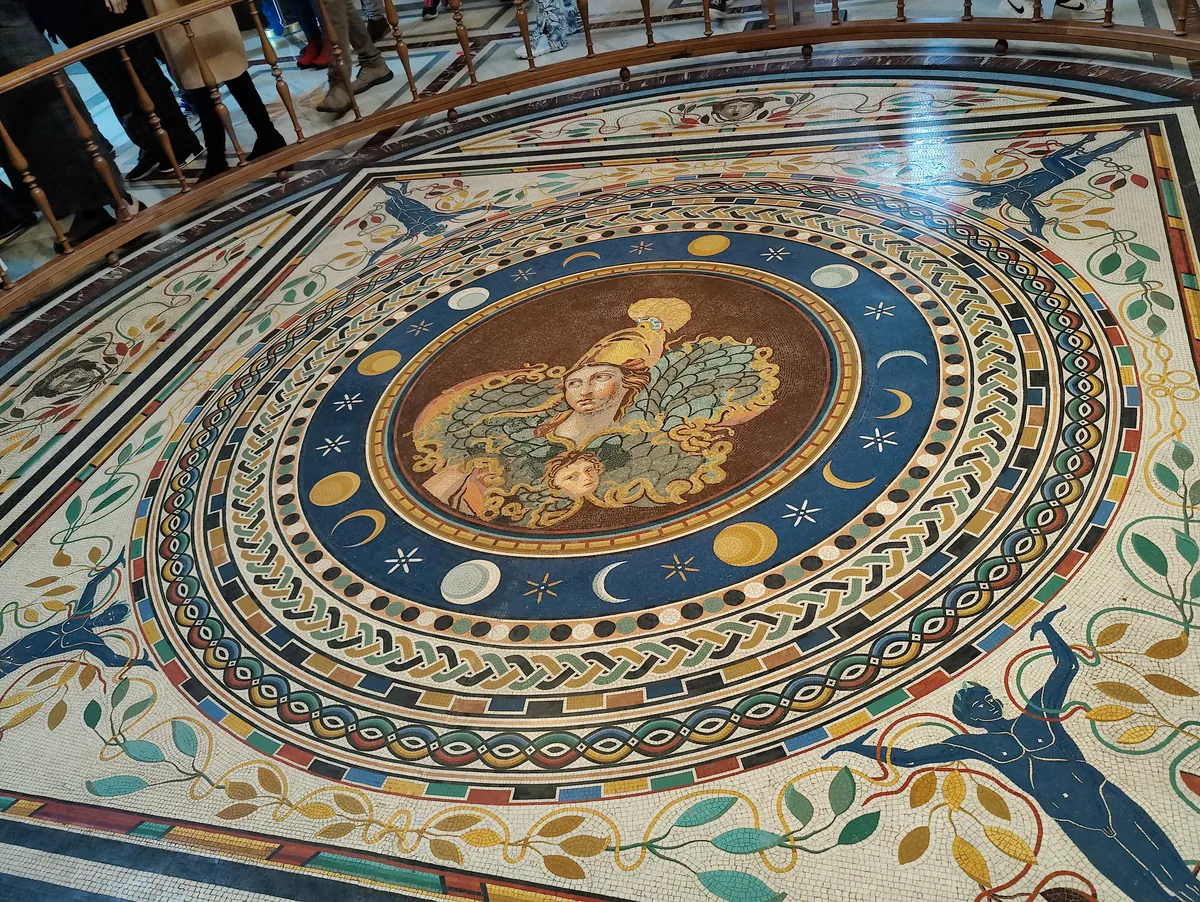
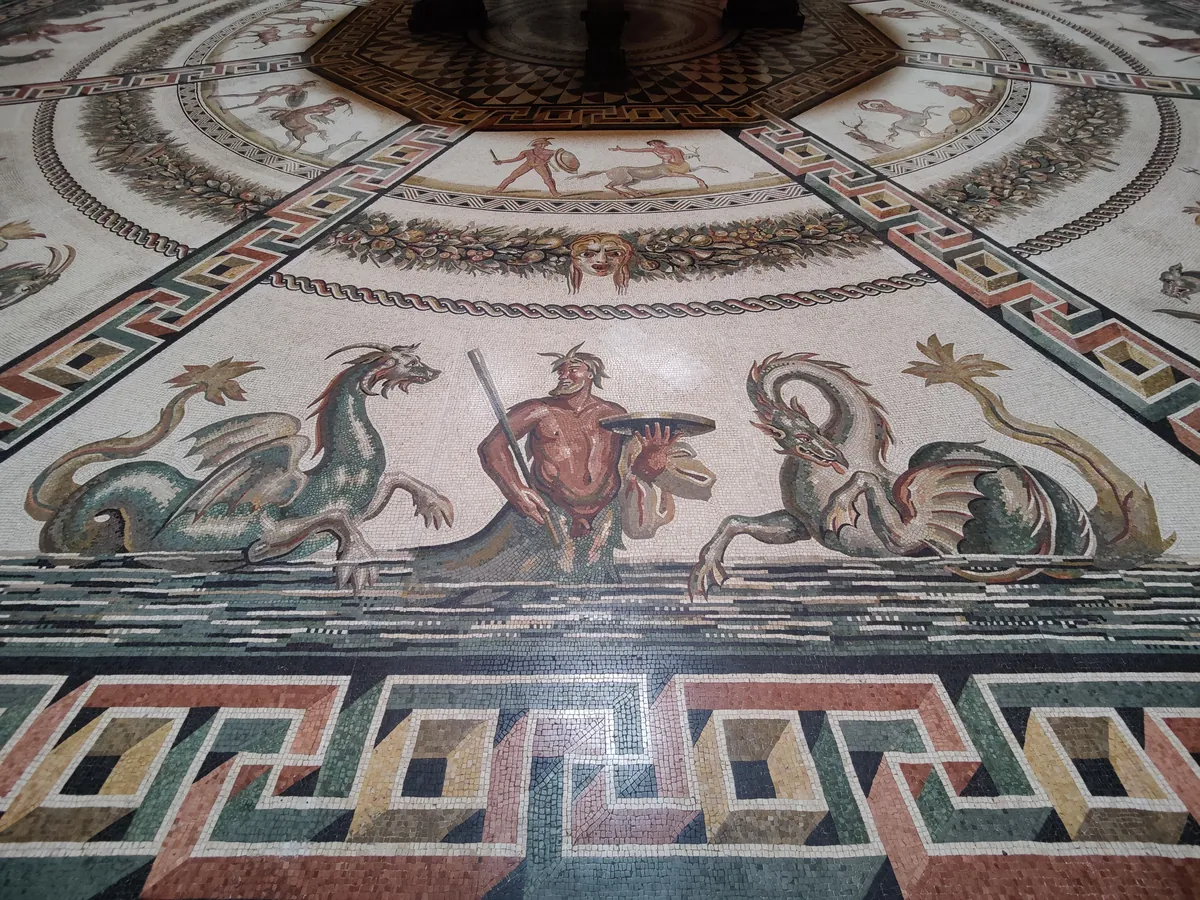
Don’t forget to look at the floor either. In the Round Room, the floor is covered with an ancient Roman mosaic featuring hunting scenes and mythological figures. People walk over it absent-mindedly, when it’s a masterpiece.

Raphael’s Rooms
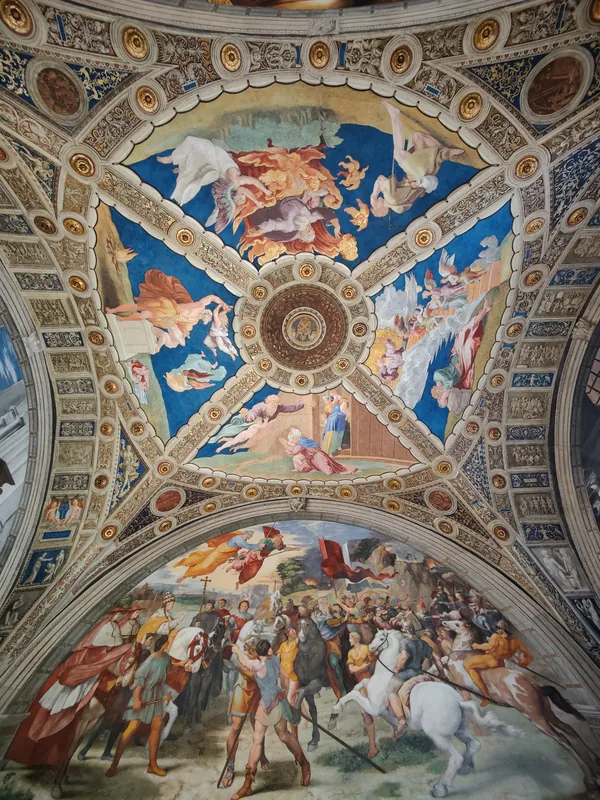
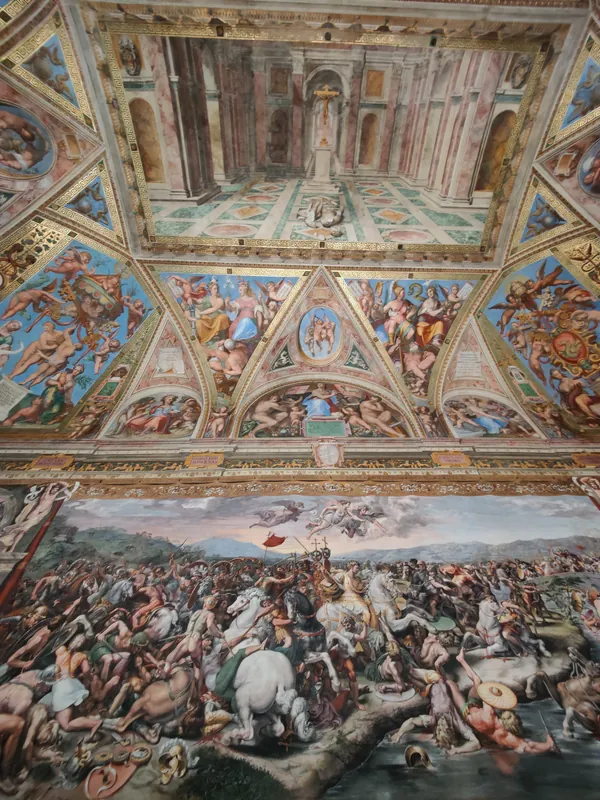
Just before the Sistine Chapel. Don’t skim through them! The School of Athens is here: the fresco where Raphael depicted all the great philosophers of Antiquity. Plato has the features of Leonardo da Vinci. A little nod Raphael slipped in for his contemporary. Really nice detail.
The Gallery of Maps
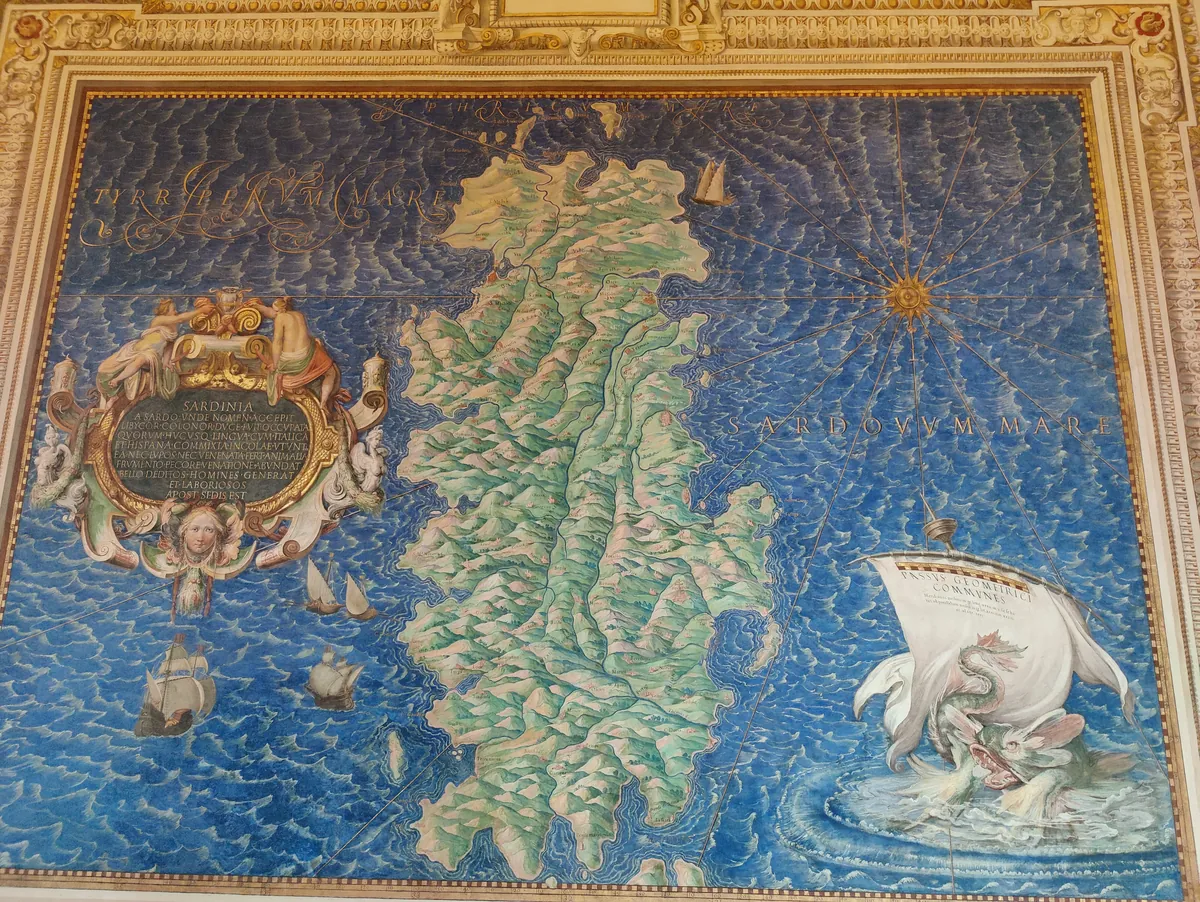
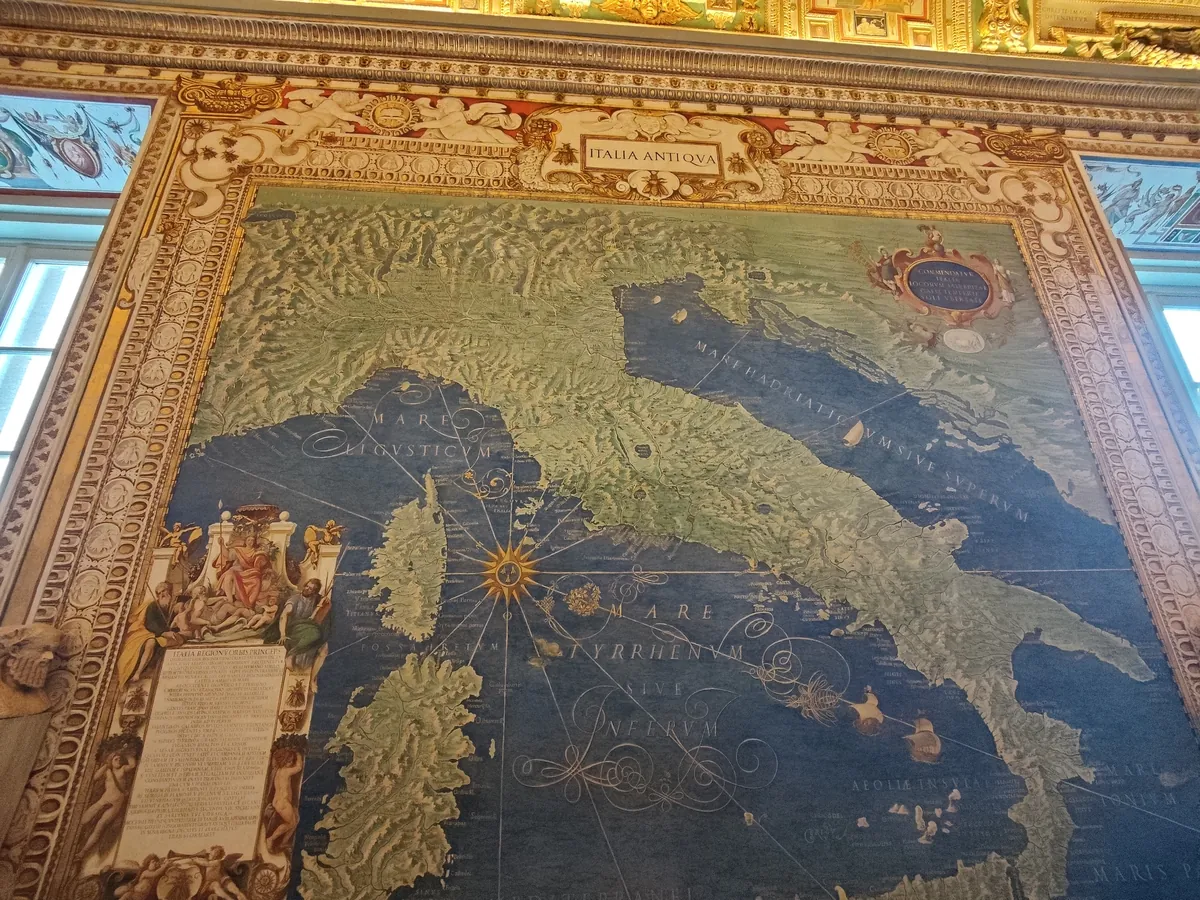
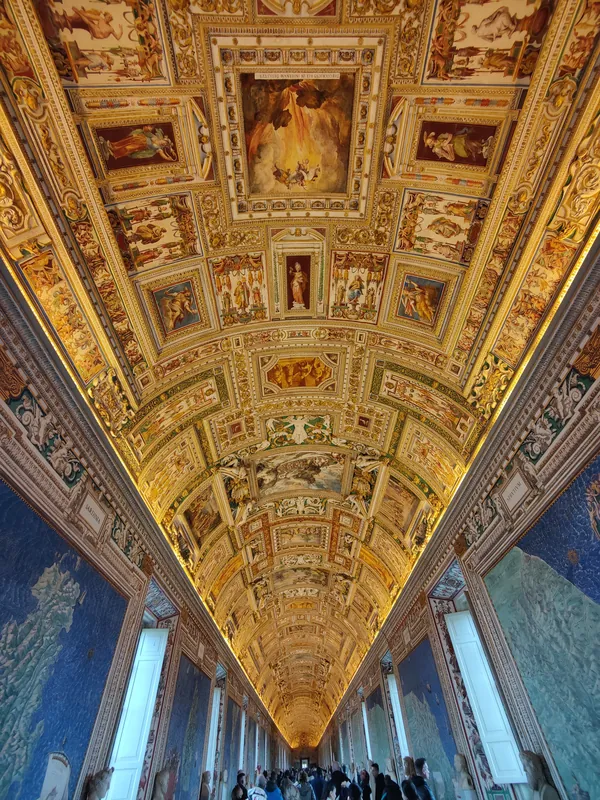
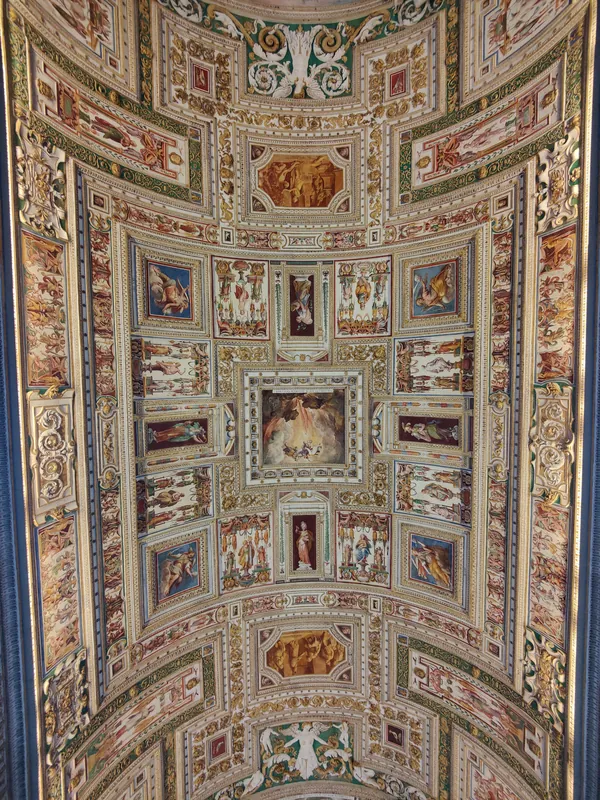
I’m crazy about old maps. So naturally, if there were only one room to remember, it would be this one. Picture a 120-meter-long corridor where the walls are covered with 40 giant maps painted at the end of the 16th century. You discover the whole of Italy as it was imagined in 1580, with astonishing precision.
But the real show happens above your head: the vault is an explosion of gold and paintings that seem to come alive under the light from the windows. It’s a journey through time as much as through space.
My tip: Have fun looking for the cities you know (Rome, Florence, Venice…). They’re almost all there, depicted with their monuments of the era. You come out with stars in your eyes and a bit of a stiff neck, but it’s brilliant!
The Etruscan collection
It’s probably the least known section of the museum, and yet it’s one of the most fascinating.
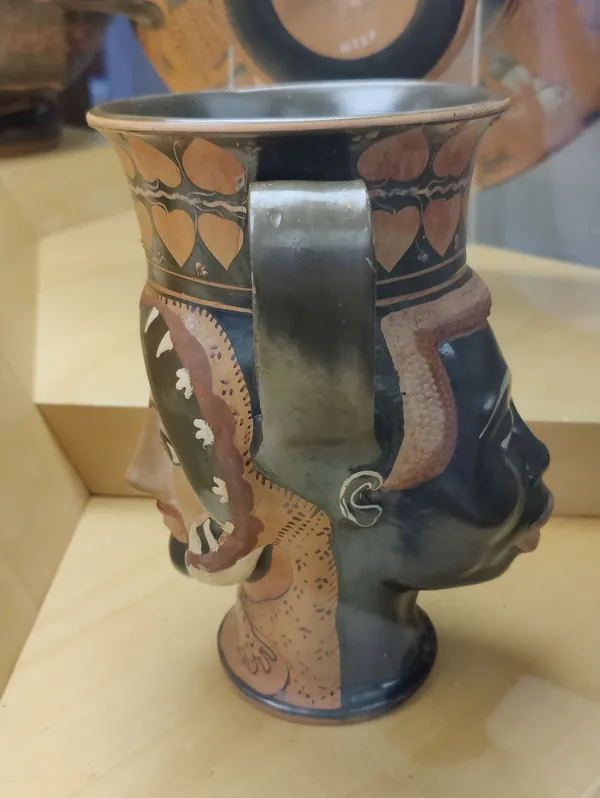
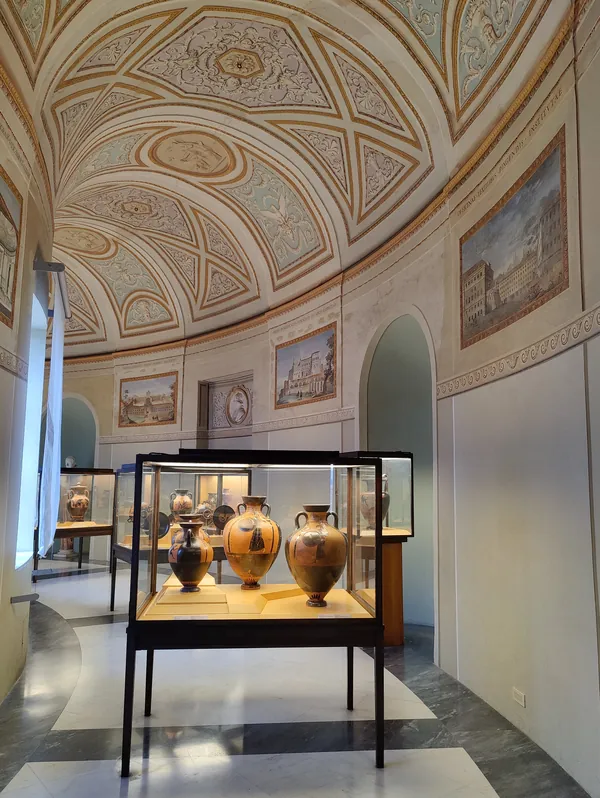
Before Rome dominated the world, the Etruscans ruled over central Italy. A sophisticated civilization, with its own language, its own gods, its own artistic codes. And the Vatican Museums have recovered a considerable collection of it: gold jewelry of incredible finesse, bronzes, painted vases, sarcophagi.
The highlight is the bronze room, in particular the famous Mars of Todi, a life-sized statue that has survived 25 centuries. It’s quiet, often empty, and that’s exactly where you realize that the history of Italy begins long before Julius Caesar.
The Sala Rotonda
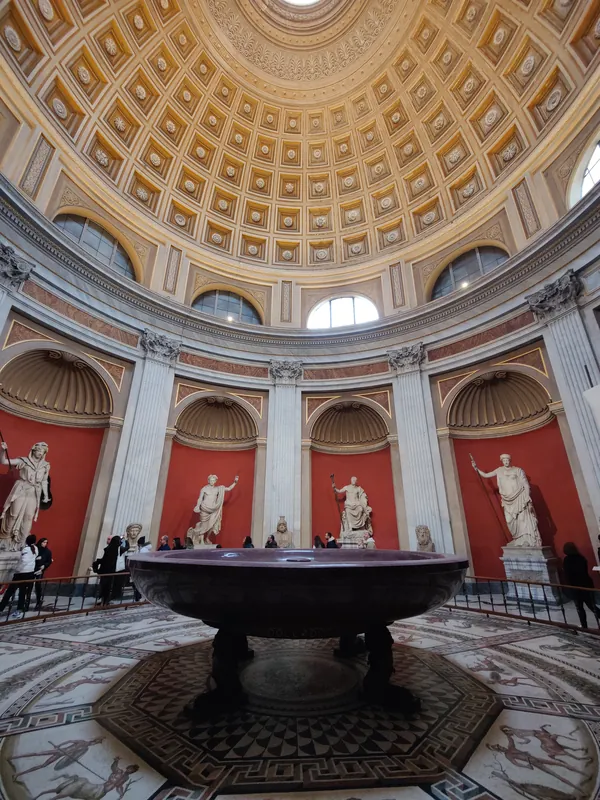
You walk into this circular room and you feel like you’re in a mini-Pantheon. Makes sense: it was directly inspired by it, dome and oculus included.
But what stops you first is the floor. An ancient Roman mosaic from the 2nd century, with scenes of combat between Greeks and Centaurs, medusas, mythological figures. You literally walk over it.
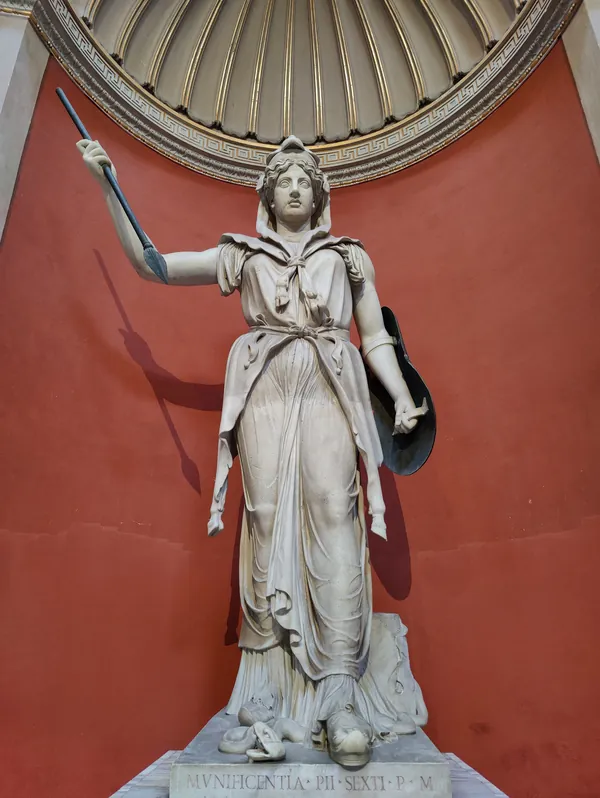
And around it, colossal statues in their niches, including a gilded bronze Hercules that easily reaches 3 meters. It’s a room that makes an impression; you really need to take your time to spot all the details.


The Octagonal Courtyard
It’s a small open-air courtyard, wedged between galleries, and yet it’s home to two of the most important sculptures in the history of art.
On one side, the Apollo Belvedere, the canon of male beauty according to the entire Renaissance. On the other, the Laocoön, a Trojan priest and his sons devoured by serpents, sculpted with a violence and precision that nail you to the spot.
Michelangelo saw it when it was rediscovered in 1506 and came away shaken. Seeing it “in the flesh,” you understand why.
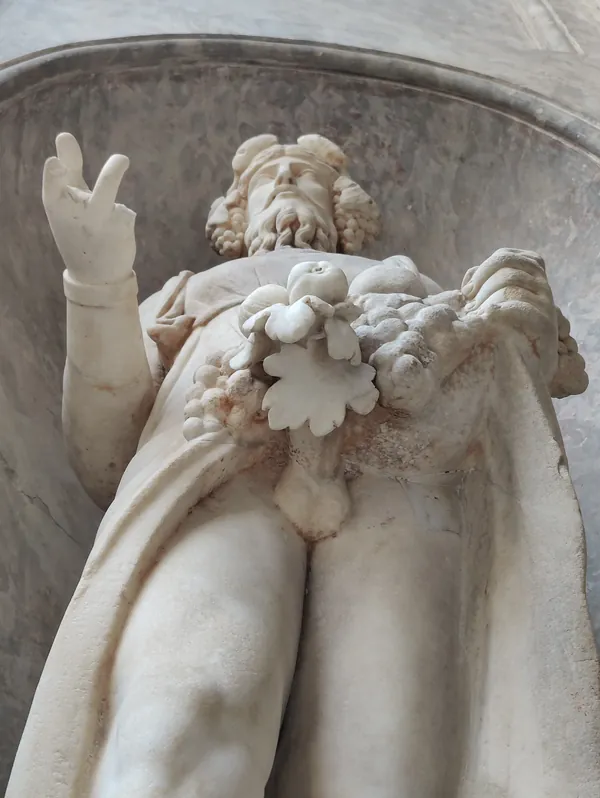
Look at all the little heads sculpted all over the place, they all have really funny mugs! And some that hide… not much, let’s say.


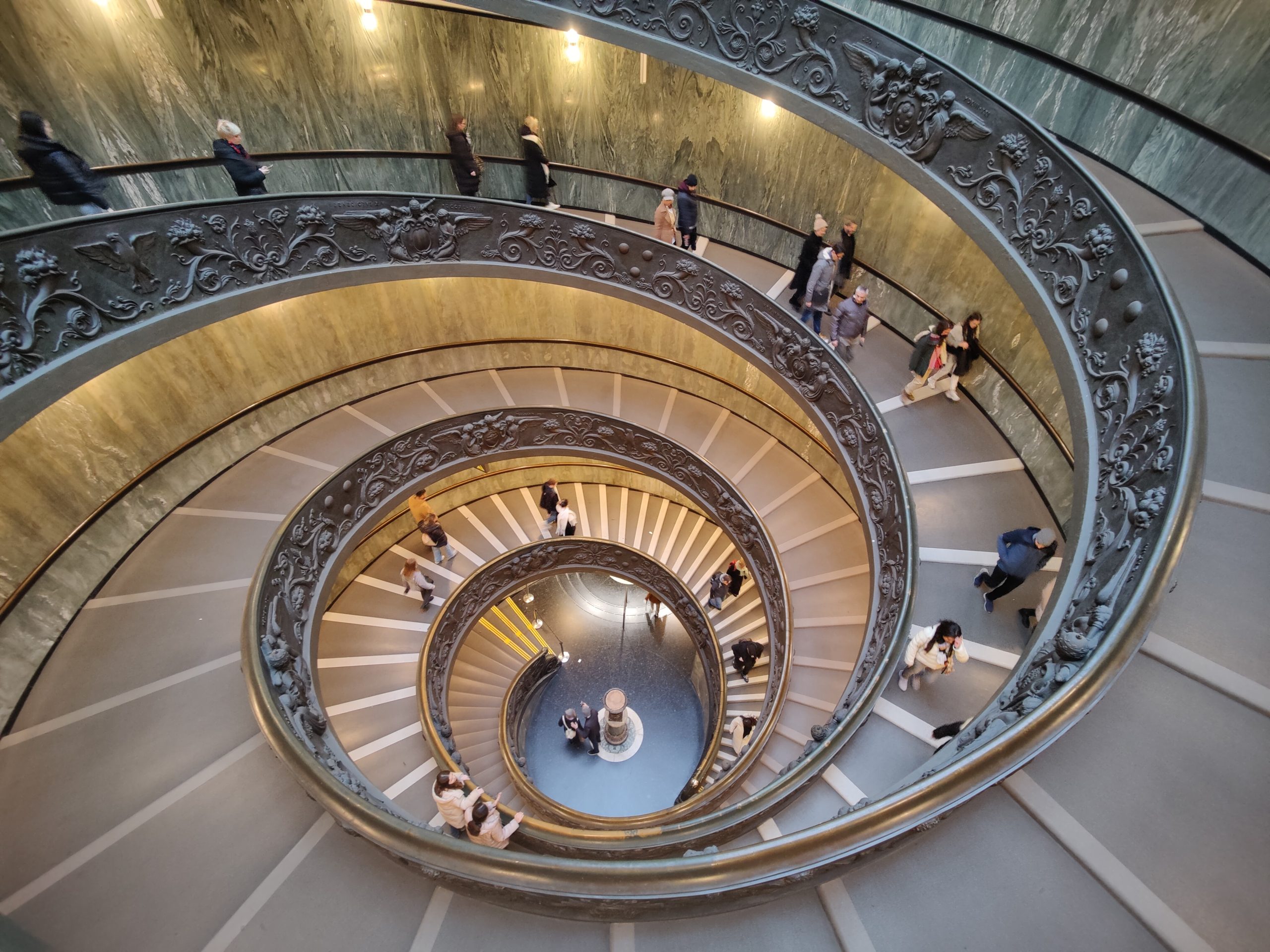
Momo’s staircase, which everyone calls the Bramante staircase
A little clarification first: the spiral staircase everyone photographs, and that half the internet calls the “Bramante staircase,” isn’t by Bramante. It was designed by Giuseppe Momo in 1932, inspired by the real Bramante staircase, which is much older and closed to the public. There, it’s been said.
Just before you go through the exit door of the Vatican Museums, you’ll come across one of the most recent (1932) but also most photographed masterpieces of the place: the Momo Staircase (often confused with the old Bramante staircase).
What makes this staircase fascinating is its double helix structure: two intertwined spirals that let those going up never cross paths with those coming down. The visual result is hypnotic. My tip? Before starting your descent, lean out well over the center of the railing to admire the perfect spiral seen from above. With the light falling from the glass dome, it’s the final “money shot” of your visit. It’s the kind of architectural detail that proves that even for exiting a building, the Vatican does things in style.
Vatican Museums: prices, booking and 2026 opening hours
Okay, let’s get down to the practical stuff.
The full-price ticket costs €20, plus €5 in online booking fees. That’s €25 total. The reduced rate is €10 + €5, and it’s free for under-7s.
Only one official website: tickets.museivaticani.va. Everything else is either an agency or a scam.
As for hours: open Monday to Saturday, roughly 9 am – 6 pm, last entry at 4 pm. Closed on Sundays, except the last one of the month. Also closed on major religious holidays, and there it’s really closed, not “open with reduced hours.”
Check the day before on the official website. Hours shift with the season, and it’s the kind of detail that can ruin a whole day.
The slot I recommend
The first entry in the morning, on a Tuesday, Wednesday or Thursday. Monday is busy because a lot of Roman museums are closed that day, and Saturday is unmanageable.
The downside is real: you have to be up early, and you rack up 3 hours of walking right after breakfast. If you’re not a morning person, aim for the last afternoon slot rather than midday.
The last Sunday of the month, honestly?
Entry is free, from 9 am to 2 pm. On paper, it’s great.
In reality, it’s the busiest day of the year: no booking possible, a queue that wraps around the perimeter wall, and easily 2 hrs of waiting outside. You save €25 and lose a morning.
What gets you turned away at the entrance
- Bare shoulders and knees. Tank top, shorts, mini-skirt: turned away. It’s non-negotiable and it applies to men too.
- Large bags and backpacks, which have to go to the cloakroom. A handbag is fine.
- Tripods, selfie sticks and large umbrellas.
A light scarf in your bag solves the dress code problem in three seconds. It’s the thing not to forget in summer.
How much time to plan for visiting the Vatican Museums?
Three hours minimum. Four if you want to catch your breath. Five with a guide.
And if someone tells you you can do the museums in an hour and a half, they’re talking about a corridor, not a museum.
Here’s why. The route is one-way: you can’t go back or cut through. Chaining together the kilometers of galleries all the way to the Sistine Chapel, you pass through the Egyptian Museum, the Pinecone Courtyard, the sculpture galleries, the Gallery of the Candelabra, the Tapestry Gallery, the Gallery of Maps, Raphael’s Rooms, then the Sistine Chapel.
The Sistine Chapel is right at the very end. That’s the point everyone understands too late: if you go in at 3 pm thinking “I’ll just take a quick look at the Sistine Chapel,” you won’t have time.
The breakdown that works
- 2 hrs 30 – 3 hrs for a first self-guided visit, without lingering: you see everything, you don’t read the labels.
- 4 hrs if you really want to look at Raphael’s Rooms and the Gallery of Maps, the two spots where people speed up when they should slow down.
- 5 hrs and more with a full guided tour including the basilica.
Bring water and decent shoes. There’s almost nowhere to sit along the whole route, and that’s the real downside of the visit: after two hours on your feet, you’re looking at the masterpieces while thinking about your calves.
📍 Rome · Colisée
📍 Rome · Colosseum
📍 Roma · Coliseo
Les trois sites antiques majeurs de Rome en une seule visite guidée. Colisée, Forum romain et mont Palatin avec un guide agréé — l'option arène ou petit groupe en plus pour les passionnés.
The three major ancient sites of Rome in a single guided tour. Colosseum, Roman Forum and Palatine Hill with a licensed guide — arena access or small-group option for enthusiasts.
Los tres sitios antiguos imprescindibles de Roma en una sola visita guiada. Coliseo, Foro Romano y Monte Palatino con guía acreditado — opción arena o grupo reducido para los entusiastas.
- 3 sites antiques incontournables d'un coup
- Guide agréé & accès prioritaire
- Options arène & petit groupe dispo
- 3 must-see ancient sites in one go
- Licensed guide & priority access
- Arena & small-group options available
- 3 sitios antiguos imprescindibles de una vez
- Guía acreditado y acceso prioritario
- Opciones arena y grupo reducido disponibles
Annulation gratuiteFree cancellationCancelación gratuita
À partir de 49 € / pers.From €49 / personDesde 49 € / pers.

📍 Cité du Vatican
📍 Vatican City
📍 Ciudad del Vaticano
Le combo ultime en demi-journée avec accès accéléré. Musées du Vatican, Chapelle Sixtine ET Basilique Saint-Pierre dans la foulée, sans la queue interminable.
The ultimate half-day combo with fast-track access. Vatican Museums, Sistine Chapel AND St. Peter's Basilica in one go — no endless queues.
El combo definitivo de medio día con acceso rápido. Museos Vaticanos, Capilla Sixtina Y Basílica de San Pedro, todo seguido y sin colas interminables.
- Musées + Sixtine + Saint-Pierre en une visite
- Accès accéléré (file prioritaire)
- Visite guidée complète 3-4 h
- Museums + Sistine + St. Peter's in one tour
- Fast-track priority access
- Full guided tour 3–4 hrs
- Museos + Sixtina + San Pedro en una visita
- Acceso rápido (fila prioritaria)
- Visita guiada completa 3-4 h
Annulation gratuiteFree cancellationCancelación gratuita
À partir de 61 € / pers.From €61 / personDesde 61 € / pers.
📍 Cité du Vatican
📍 Vatican City
📍 Ciudad del Vaticano
Les musées du Vatican et la Chapelle Sixtine à votre rythme, sans la queue interminable. L'option idéale pour les voyageurs indépendants qui préfèrent explorer tranquillement.
Vatican Museums and Sistine Chapel at your own pace, without the endless queue. The ideal option for independent travelers who prefer to explore calmly.
Los Museos Vaticanos y la Capilla Sixtina a tu ritmo, sin la cola interminable. La opción ideal para viajeros independientes que prefieren explorar con calma.
- Entrée coupe-file aux musées du Vatican
- Chapelle Sixtine incluse
- Visite à votre rythme (sans guide)
- Skip-the-line entry to Vatican Museums
- Sistine Chapel included
- Self-paced visit (no guide)
- Entrada sin colas a los Museos Vaticanos
- Capilla Sixtina incluida
- Visita a tu ritmo (sin guía)
Annulation gratuiteFree cancellationCancelación gratuita
À partir de 33 € / pers.From €33 / personDesde 33 € / pers.
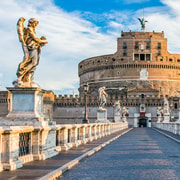
📍 Rome · Borgo
📍 Rome · Borgo
📍 Roma · Borgo
Le mausolée d'Hadrien et sa vue imprenable sur Rome, avec un audioguide numérique pour tout comprendre. Une pause historique insoupçonnée à deux pas du Vatican.
Hadrian's Mausoleum and its breathtaking view of Rome, with a digital audio guide to get the full story. An unexpected historical break, just steps from the Vatican.
El Mausoleo de Adriano y sus vistas impresionantes sobre Roma, con audioguía digital para entenderlo todo. Una pausa histórica inesperada a dos pasos del Vaticano.
- Billet d'entrée + audioguide numérique
- Vue panoramique sur Rome depuis le toit
- Mausolée d'Hadrien · 2000 ans d'histoire
- Entry ticket + digital audio guide
- Panoramic rooftop view over Rome
- Hadrian's Mausoleum · 2,000 years of history
- Entrada + audioguía digital
- Vista panorámica de Roma desde el techo
- Mausoleo de Adriano · 2.000 años de historia
Annulation gratuiteFree cancellationCancelación gratuita
À partir de 16 € / pers.From €16 / personDesde 16 € / pers.
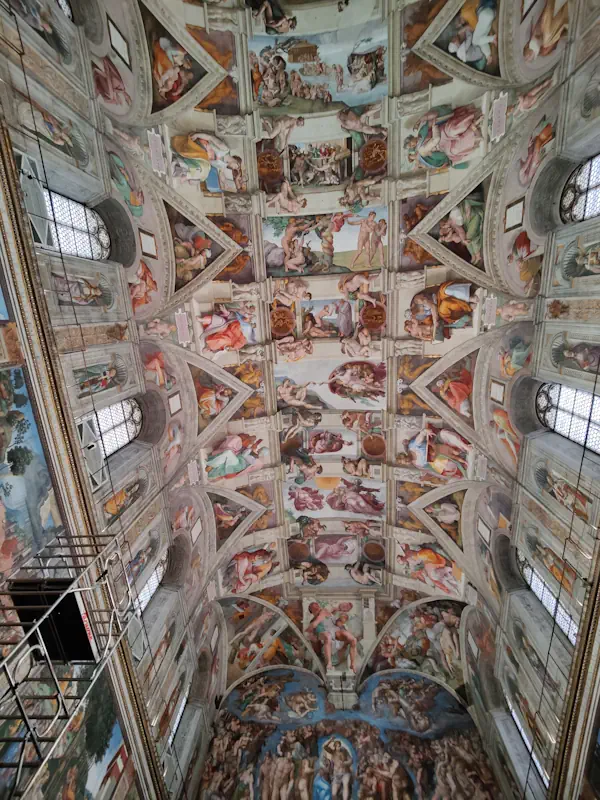
The Sistine Chapel: the must-see, the jaw-drop and the (relative) silence
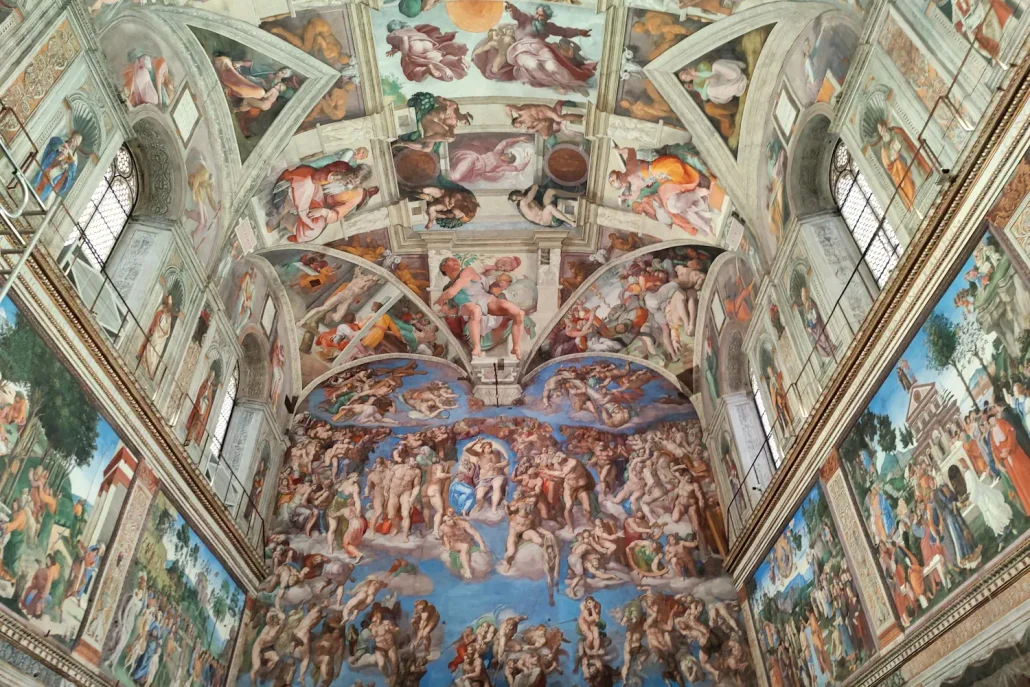
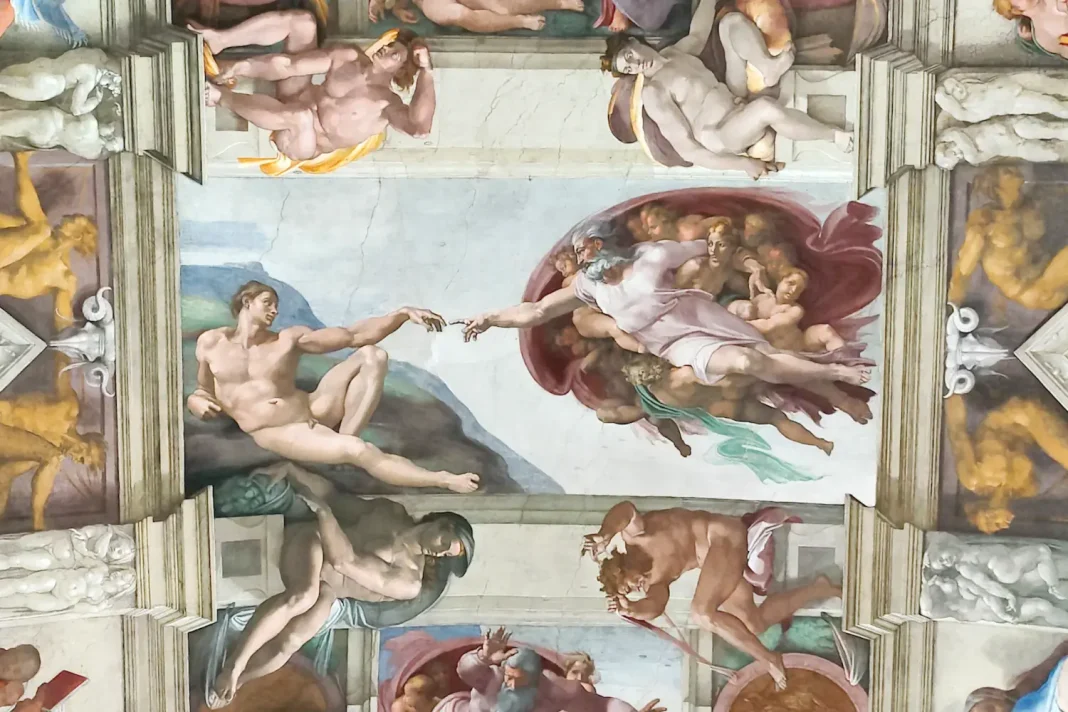
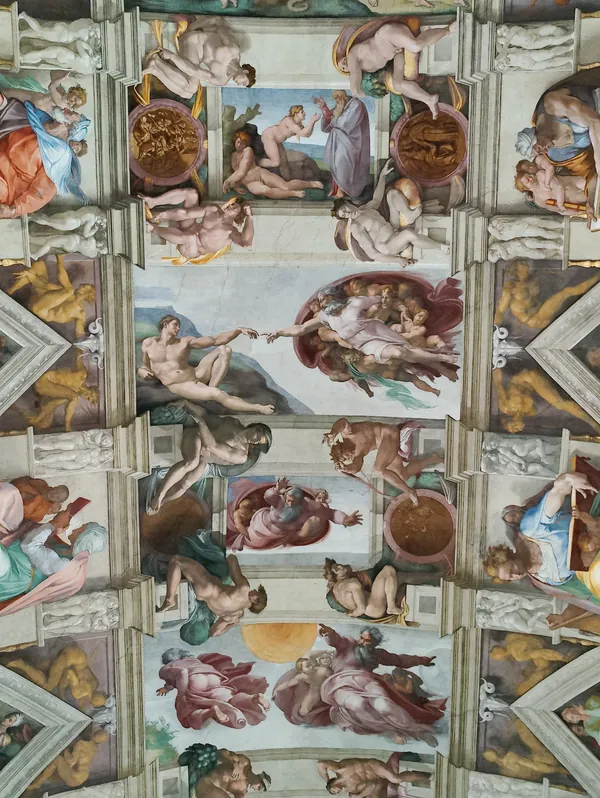
This is the moment everyone’s been waiting for. After walking miles of galleries, you finally reach this rectangle 40 metres long. And there, you go quiet. Well, you try to, because the guards will call you to order with a regular “Silenzio !”.
So yes, you’re going to focus on the two main works we talk about below, but the whole Sistine Chapel is incredible! There are details absolutely everywhere, you really have to take the time to take it all in. Is it crowded? Yes, but your nose is up in the air, people aren’t moving, so it’s no big deal.
Just enjoy it, plain and simple.
Michelangelo’s ceiling: a superhuman feat
We all have the image of The Creation of Adam in our heads (those two fingers almost touching). But seeing it for real, 20 metres above your head, is something else. You realise that Michelangelo spent four years of his life, contorted on scaffolding, painting these 1,000 m² of frescoes.
The Last Judgment: a work of maturity
Take a good look at the far wall, behind the altar. Michelangelo came back here 25 years after finishing the ceiling to paint this monumental scene. It’s much darker, more tormented. You can see bodies rising to heaven and others descending into hell. It’s fascinating to see the artist’s evolution between the “luminous” vault and this “dramatic” wall.
My tips for really making the most of it:
-
Look up, but not too fast: Neck ache comes quickly! My trick: try to find a spot on the wooden benches that run along the walls. You can sit there and admire the work in peace (well, if you manage to grab a seat). But those seats are hard-won. So worst case, it’s no big deal 🙂
-
No photos: It’s one of the rare rooms where it’s strictly forbidden. The guards have eyes everywhere and you risk getting told off in front of everyone. There’s a “no photo” every 2 minutes. So yes, you’re going to see photos of the Chapel here. I was discreet, I watched out for the guards, I blended into the crowd to stay low-key, and snap. Obviously, it’s forbidden, so I don’t advise you to do it.
-
The secret passage: If you’re doing a guided tour, know that there’s a small door at the back on the right that lets you go straight from the Sistine Chapel to St Peter’s Basilica without leaving the museum. It’s a crazy time-saver (about 30 minutes of walking and queuing avoided).


Sistine Chapel: ticket, opening hours and visit duration
The most important point first, because it’s the question people ask most often.
There is no ticket for the Sistine Chapel alone. It doesn’t exist. You can’t go in directly, there’s no reserved door, no separate price. The only way in is through the Vatican Museums, of which it’s the last room on the route. So your €25 ticket is already your ticket for the Sistine Chapel.
If a website sells you a “Sistine Chapel entry”, what it’s actually selling you is a Museums ticket, often with a comfortable markup. So the opening hours are the museums’ hours: Monday to Saturday, last entry at 4 pm, and the chapel is cleared before closing.
How long to spend there
Count on 20 to 30 minutes in the chapel itself. Less than that and you’ve seen nothing. More, and the staff will eventually make you move along, especially at the end of the day.
The room welcomes between 10,000 and 20,000 people per day in high season. That means crowds everywhere, a constant hum despite the calls for silence, and attendants tossing out “silenzio !” every couple of minutes.
The direct exit to the basilica
There’s a door, on the right as you leave, that opens straight onto St Peter’s Basilica and saves you from going all the way around the outside. It’s reserved for groups accompanied by an official guide.
Very concretely, that’s the best argument in favour of a guided tour: you spare yourself 20 minutes of walking and 30 to 60 minutes of the security queue at the basilica entrance. Over a day at the Vatican, that’s huge.
The downside of the guided tour stays the same: you follow the group’s pace, and in the Sistine Chapel you won’t have the luxury of sitting down to look up in peace.
St Peter’s Basilica
No matter how many times you’ve seen St Peter’s Basilica in photos, nothing prepares you for the monumental jaw-drop of that first step inside. Whether you’re religious or not, the place instantly puts you in your place: you feel tiny. And it’s staggeringly beautiful!
And rest assured, even when you’ve seen it “for real” many times, every time it stays a wow moment. Impossible to get tired of it!
Inside, what strikes you, beyond the gold shining on every square centimetre of the ceiling (really, it’s maybe a touch too much :D), is the scale of everything around you. The statues that look “normal” from far away are actually several metres tall.
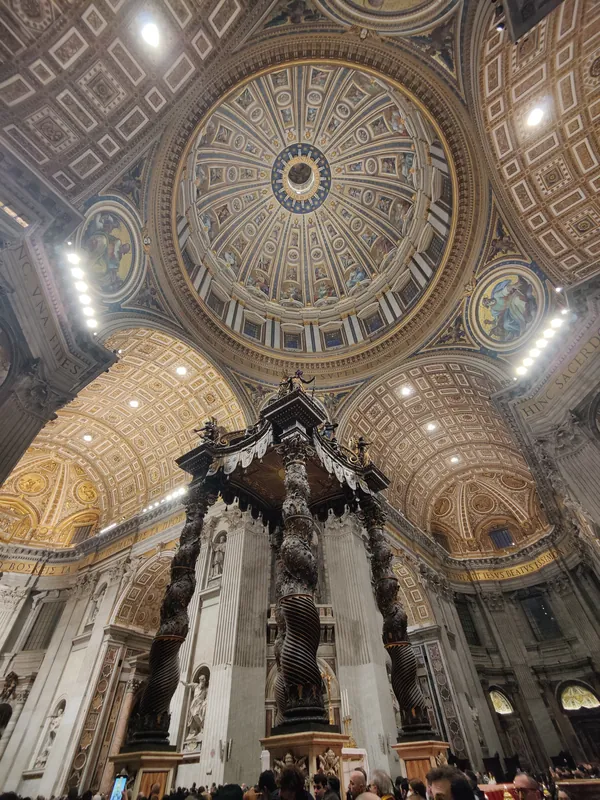
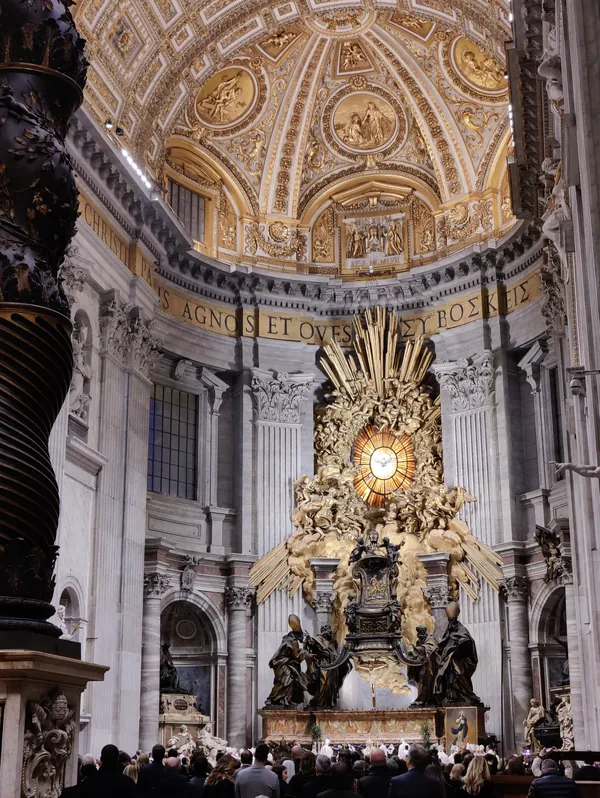
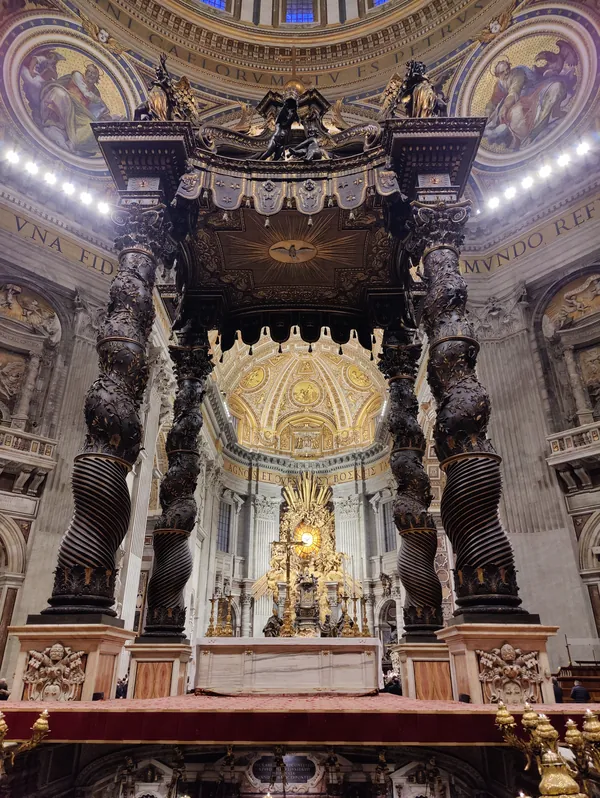
My tip? Take five minutes to settle down near Bernini’s Baldachin, that “big wooden thing” which is actually not wood at all, it’s bronze. And look up, it’s dizzying.
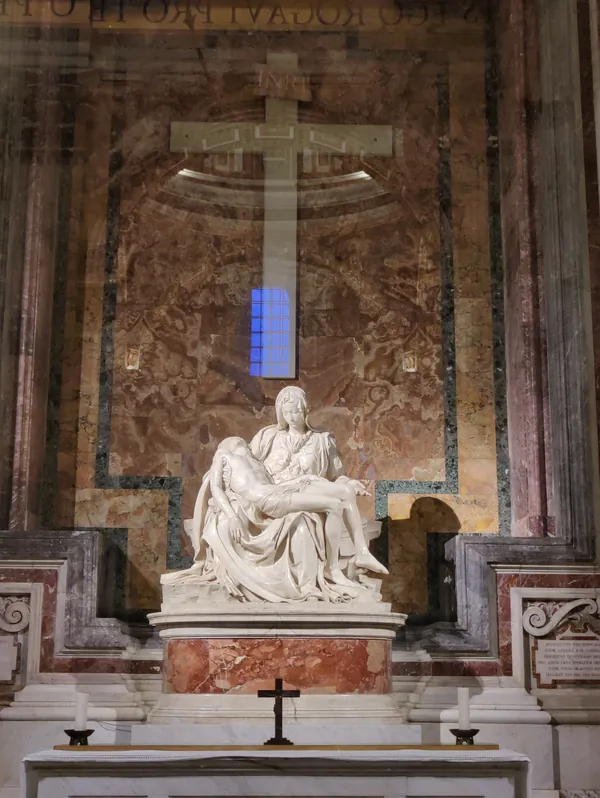
Sure, entry is free (a small miracle in Rome!), but the real treasure is Michelangelo’s Pietà. You’ll find it right at the entrance on the right, protected behind its glass. Even with the crowd pressing around it, there’s an emotion that comes off it, a delicacy in the marble that no image could ever capture. It’s the kind of place you enter for the architecture and come out of a little transformed, without quite knowing why
St Peter’s Basilica: free entry, opening hours and queues
Entry to the basilica is free. Completely. There’s no ticket, no reservation, no ticket desk.
I’ll say it again because it’s the most expensive misunderstanding at the Vatican: thousands of people each year buy a “basilica entry” for €20 or €30 from resellers, when the door is open to everyone. The Vatican Grottoes, where the popes rest, are free too.
What you do pay for, on the other hand: the dome, the Treasury of St Peter’s and the necropolis (€13, by email reservation, months in advance).
Opening hours
- 1 April – 30 September: 7 am – 7 pm
- 1 October – 31 March: 7 am – 6:30 pm
The real currency: the security queue
Entry is free, but you pay for it in time. Everyone goes through a security checkpoint on St Peter’s Square, and depending on the hour it ranges from 10 minutes to over an hour.
The slot to aim for is 7 am – 8 am. You get in almost without waiting, and the morning light in the nave is something else. The downside, you’ve got to own it: it’s very early, it’s cold from November to March, and you’ll come across masses in progress in the side chapels, which limits movement in certain areas.
The worst slot is 10 am – 2 pm, when the groups pour out of the museums.
Wednesday morning, don’t go
It’s the day of the papal audience. The square is closed off with barriers from dawn, access to the basilica is very restricted until mid-morning, and the crowd is considerable.
Unless, of course, your goal is precisely to see the pope. In that case, it’s the only possible day and you need to be there around 7:30 am.


The dress code, no, really, they’re not messing around
Shoulders and knees covered. Mandatory. No “come on, just this once”. I’ve seen people turned away at the entrance. Keep a scarf or a sarong in your bag, it avoids nasty surprises.
The Pietà
On the right as you enter. Michelangelo sculpted it at 24 (and you, what were you doing at 24? :D). What throws you off: the Virgin looks younger than her dead son on her lap. That was intentional. There’s something unsettling in that detail.
These days, the Pietà is behind bulletproof glass (triple thickness!) because of a major act of vandalism that happened on 21 May 1972.
A Hungarian geologist, Laszlo Toth, suddenly jumped over the chapel’s balustrade shouting: “I am Jesus Christ, risen from the dead!” (history doesn’t say whether he was sober or not). He struck the statue 15 times with a hammer. The damage was terrible:
- The Virgin’s arm was broken at the elbow.
- Her nose was almost pulverised.
- One of her eyelids was damaged.
The restoration was a technical feat. The Vatican’s experts recovered the tiniest chips of marble (some had even been picked up by tourists as “souvenirs”!) and used a special glue mixed with Carrara marble powder to rebuild the missing parts.
Today, it’s almost invisible to the naked eye, but since that day, the Vatican has decided not to take any more risks.

Bernini’s Baldachin
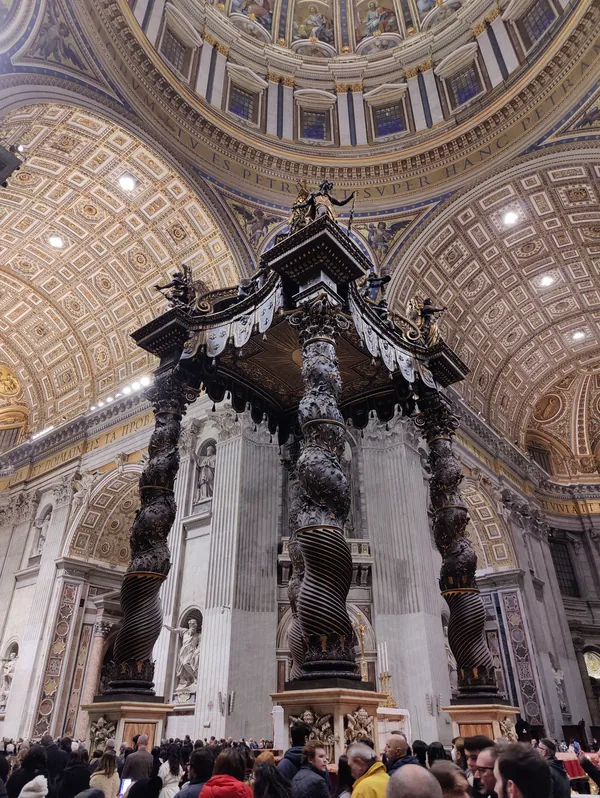
In the centre of the basilica, under the dome. This immense bronze structure (29 metres tall!) was made with bronze salvaged from the Pantheon. Grandiose and a bit over the top. Rome, basically.
I dug around a bit for the “why” of this construction, beyond the “we want to make something huge”. Well, it mostly serves to show that man is very small.
When you stand facing the Baldachin, try to spot the little bees carved on the columns. It’s the signature of the Barberini family, who commissioned the work. But the most impressive thing is realising that this bronze “monster” acts as a compass. As well as being exactly beneath the centre of Michelangelo’s dome, it also marks precisely the spot where St Peter rests, right under your feet.
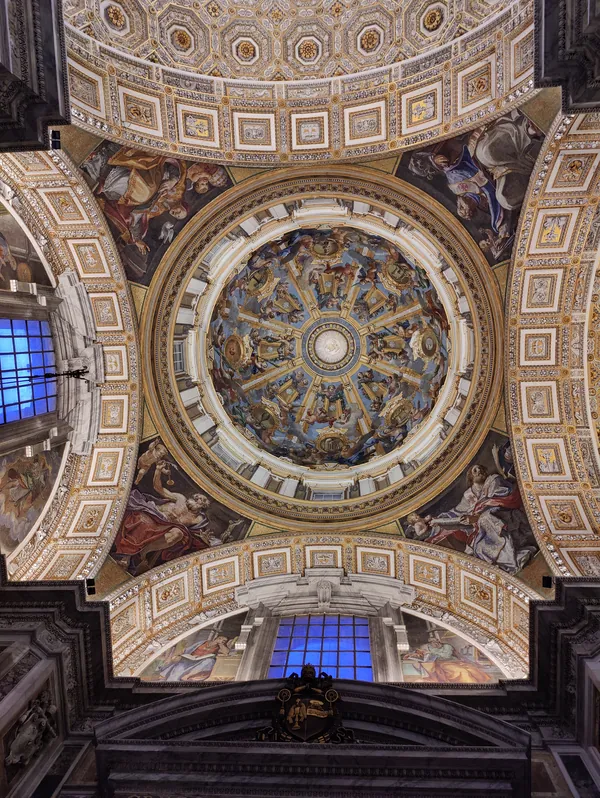
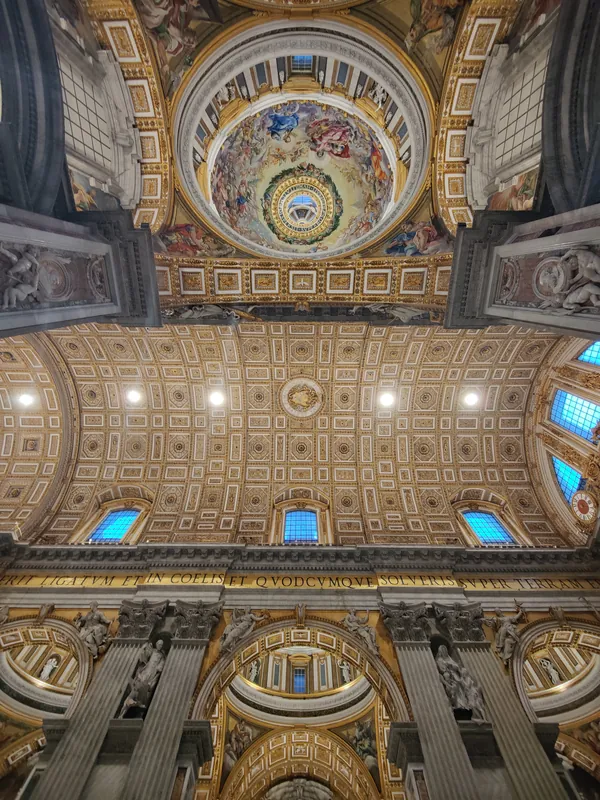
Michelangelo’s dome seen from below
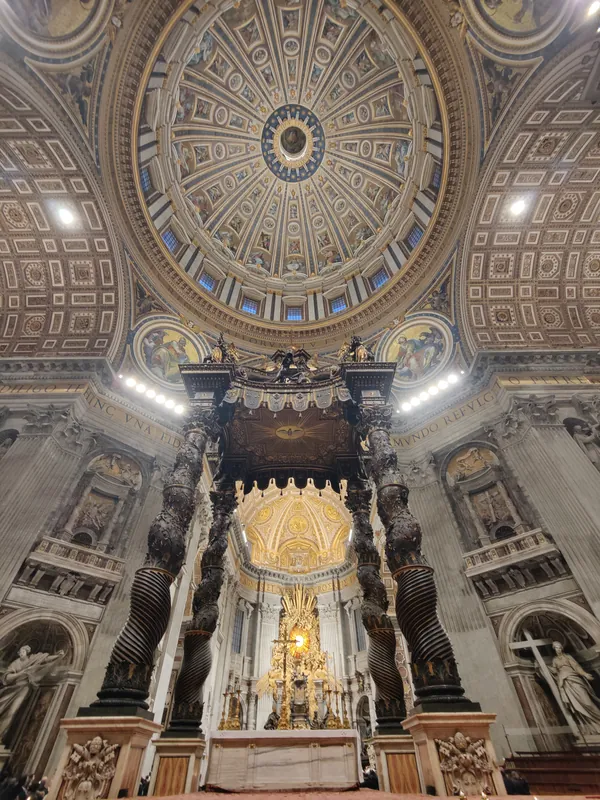
Before you even think about the climb, I’d advise you to position yourself exactly in the centre of the basilica, right in front of Bernini’s Baldachin, and look up. It’s a moment of pure vertigo.
What you see up there, 136 metres above your head, is one of Michelangelo’s absolute masterpieces. To give you an idea of the scale (because our eyes often deceive us in such a vast place), know that the blue letters on a gold background running around the base are nearly 2 metres tall each! In Latin, you can read the famous phrase: “You are Peter, and on this rock I will build my Church”.
Take the time to observe the details too: what you’re seeing aren’t paintings, but huge mosaics. The light falling from the windows sometimes creates almost divine rays that strike the bronze of the Baldachin. It’s the moment you understand why this dome became the model for all the others across the world. But watch out, it’s only a taste: seeing it from below is one thing, but finding yourself literally inside it during the climb is another…
The climb up the Dome
If the Basilica is impressive from below, wait until you see it from above. Designed by Michelangelo (who sadly wouldn’t see it finished in his lifetime), this dome is a masterpiece of engineering that inspired all the great capitals of the world, from the Capitol in Washington to the Panthéon in Paris.
You’ve got two options: do it all on foot (551 steps) or take the lift to spare yourself the first 231. My tip? Take the lift up. Really. The real challenge begins after that, where the lift no longer goes.
The last part of the climb is up a narrow staircase (careful, claustrophobes, and I’m not joking), tucked between the two walls of the dome. Since the walls are curved, you end up walking “sideways”, literally leaning to one side to follow the curve of the building. It’s a bit tight, but it’s an experience you won’t have anywhere else!
Before reaching the top, you’ll stop off on the inner gallery, just above the altar. That’s where you’ll realise the true scale of the place: the people down below look like ants, and you’re close enough to the mosaics to see each little coloured square. It’s dizzying and fascinating at the same time.
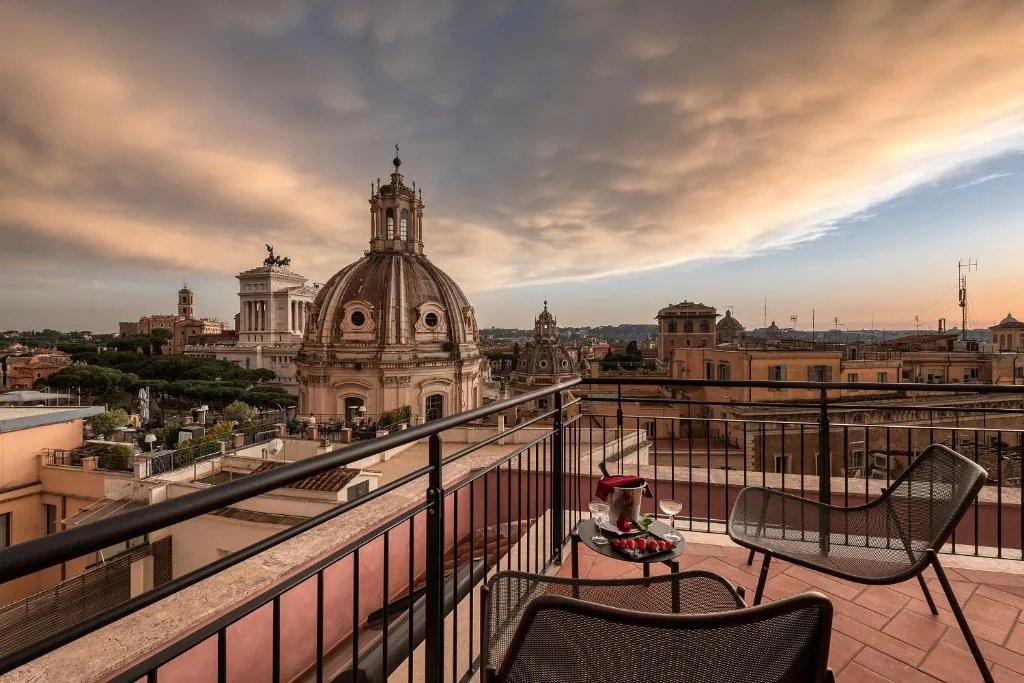
Once you reach the lantern, outside, your breath will fail you… and not just because of the steps. You have Rome at your feet. You can see St Peter’s Square and its colonnades perfectly (they form a giant keyhole), the Vatican Gardens and, in the distance, the hills of Umbria.
It’s, without a doubt, the most beautiful panorama of the Eternal City. Plan to do it at the end of the day to enjoy the low, raking light on the city’s ochre rooftops.
Climbing St Peter’s dome: price, hours and conditions
€8 on foot, €10 with the lift. Ticket to buy on the spot, to the right of the basilica’s porch. No online booking for the basic ticket, and card payment isn’t always accepted.
Bring cash.
The lift doesn’t spare you much
The climb happens in two stages: 231 steps up to the terrace and the inner gallery, then 320 steps up to the top. That’s 551 steps in total.
The €10 lift only covers the first part. The last 320 steps, you do on foot no matter what. There’s no way to reach the top without climbing them.
So pay the extra €2 to save your legs before the real climb, not to avoid it.
Hours and duration
- April – September: 8 am – 6 pm
- October – March: 8 am – 5 pm
- Duration: 45 minutes to 1 hour, climb, photos and descent included
The dome opens after the basilica and closes before it. Don’t slot this in last in your day: you come out of the museums at 4:30 pm in October, you cross over, and it’s closed.
If you’re claustrophobic or prone to vertigo, stop at the inner gallery. The plunging view over the nave and the mosaics seen up close already easily justify the €8, and it’s risk-free.

Planning your day at the Vatican: the ideal itinerary
The Vatican is a marathon. Not a sprint. And the biggest mistake visitors make is charging headlong towards the Sistine Chapel right from the entrance. The result: they arrive exhausted, they’ve missed 3/4 of the museum, and they end up at the Sistine Chapel at peak crowd time.
Here’s roughly what I recommend (ok fine, you’ll always have crowds at the Sistine Chapel).
08:30 – The early start at the Museums
Time to pull out your skip-the-line ticket (absolutely must be booked online, around €25 with fees in 2026).
-
The must-see: The Egyptian Museum right at the entrance. It’s calm, mystical, and you dodge the bottleneck that forms later.
- Definitely swing by the Etruscans, but watch out, you can lose a lot of time there! Otherwise I really recommend the Sala Rotonda and all the little mosaics in the Octagon.
- What I love: the ceilings. In every room, the ceilings are insane.
-
The tip: Don’t rush to the Sistine Chapel yet. Enjoy the sculpture galleries and look for the “grotesque” faces on the walls, it’s my favourite little game.
11:00 – Crossing through the masterpieces
Things ramp up in the upper galleries.
-
The must-see: The Gallery of Maps. Take 10 minutes to find your favourite city on these golden walls, the details are impressive for the era.
-
Right after, the Raphael Rooms. Don’t just breeze through, this is where “The School of Athens” is.

12:30 – The Sistine Chapel (the midday “lull”)
This is the strategic moment. Some of the groups head off to lunch, the air becomes (a little) more breathable. But as I told you earlier, you still have a very good chance of hitting a big crowd.
-
The must-see: Look up, of course, but also check out the Last Judgment on the back wall.
-
The expert tip: Silence is mandatory here! The guards don’t mess around with the “Silenzio”.
13:30 – A tasty break in Prati
Step outside the Vatican walls and flee the “tourist menus” in front of the square.
-
Quick option: Pizzarium Bonci. The legend of pizza by weight (they finally added a few seats in 2025!).
-
Restaurant option: Il Sorpasso. A chic, local trattoria vibe, perfect for debriefing the museums.
15:30 – St. Peter’s Basilica and the Dome
In the afternoon, the light inside the Basilica is magical.
-
The must-see: Michelangelo’s Pietà (just on the right as you enter) and the Baldachin.
-
The highlight: Climbing the Dome (the Cupola). Take the lift (€10) to spare yourself the first stretch, but brace yourself for the slanted stairs at the end. The view over St. Peter’s Square at that hour is the finest memory you’ll bring back from Rome.

Practical info
- Tickets: book on the official Vatican website or on GetYourGuide, at least 3 weeks ahead in high season. The official site is often sold out.
- Museum price: €20 + €5 online booking fee, so €25 total (2026 rate).
- Duration: 3 hours minimum if you go fast. A full day to really enjoy it. I genuinely recommend the whole day.
- Opening hours: museums Monday to Saturday, roughly 9am-6pm (last entry 4pm). Basilica every day, free entry.
- Basilica dress code: shoulders and knees covered, no exceptions.
- When to go: January-February for the smallest crowds. Avoid July-August if you don’t like the heat and the crush.
Where to stay: the Prati neighbourhood around the Vatican
If you’re visiting the Vatican, this is the ideal neighbourhood. Quiet in the evening, genuinely Roman (not overrun by tourists like Borgo), and a 5-10 minute walk from the museum entrance.
And the nice thing is that there are plenty of options, good quality, and it’s cheaper than in Rome’s historic centre. Of course, you can find out more in my “where to stay in Rome” article, with a selection by neighbourhood.
But here’s a mini selection to give you a little taste:
1. Budget — Hotel Silla ★★
Booking rating: 8.4/10 · 0.8 km from the Vatican · Prati neighbourhood, from €130/night.
An unpretentious little family-run hotel, super well kept, perfectly located next to Ottaviano station. The rooms are simple but clean, the welcome is warm, and you save your money to treat yourself elsewhere during the day.
2. For families — Trianon Borgo Pio Aparthotel ★★★★
Booking rating: 9.1/10 (290 reviews) · 500 m from the Vatican · Borgo neighbourhood, from €360/night. An aparthotel with a kitchen format = the real family sweet spot. More space, ideal for a relaxed breakfast with the kids before the museum day, a 5-minute walk from the Basilica. Near-perfect rating.
3. Best value — Rome’s Gloria Hotel ★★★★
Booking rating: 9.3/10 · 0.9 km from the Vatican · Prati neighbourhood, from €170/night. You get the comfort of a modern 4-star, spotless rooms, and you stay in a reasonable price range. If I had to recommend just one, this is it.
4. Treat yourself — Residenza Paolo VI ★★★★
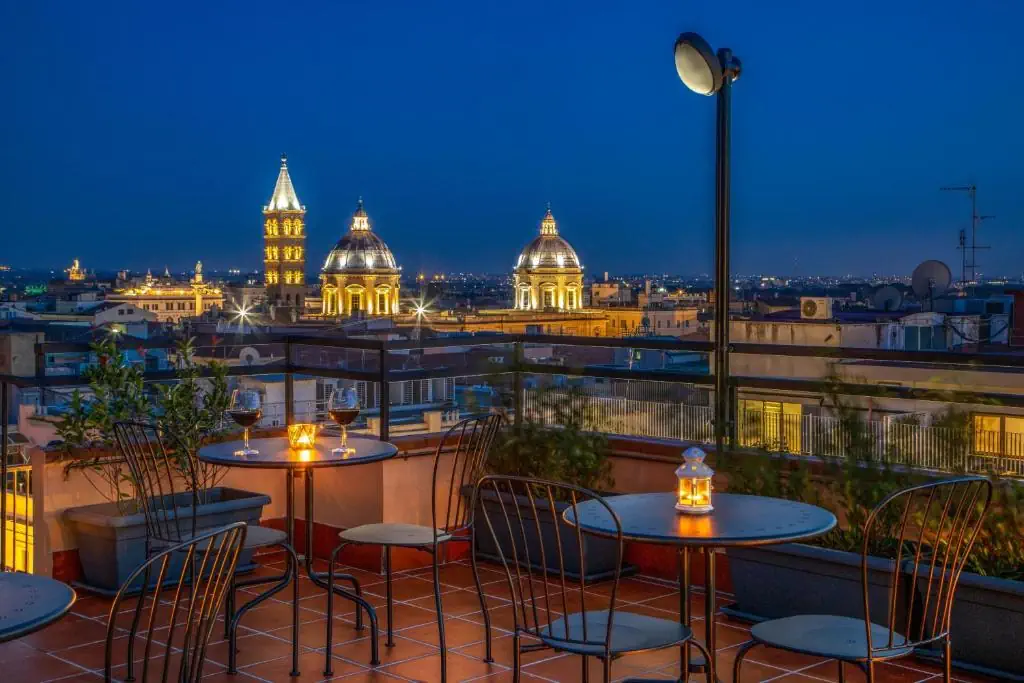
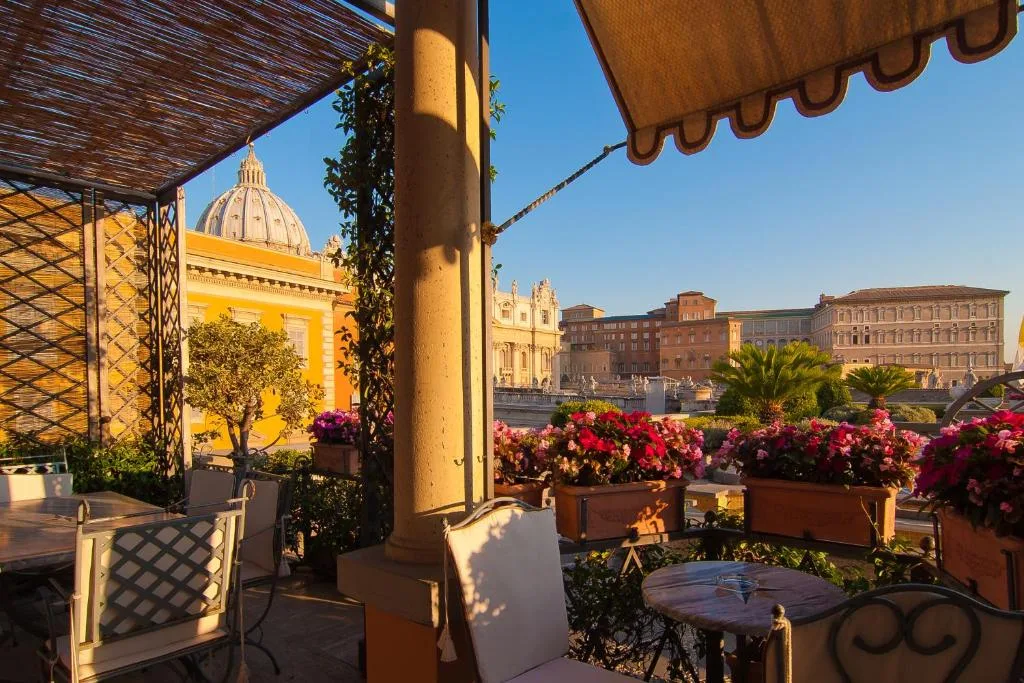
Booking rating: 8.9/10 · 100 m from the Vatican · on St. Peter’s Square, from €340/night. A former Augustinian monastery converted into a hotel, literally leaning against Bernini’s colonnade. Some rooms and the terrace have a direct view of the basilica. Having a drink in the evening on the rooftop with the illuminated dome a few metres away is the “I can’t do any better at the Vatican” experience.
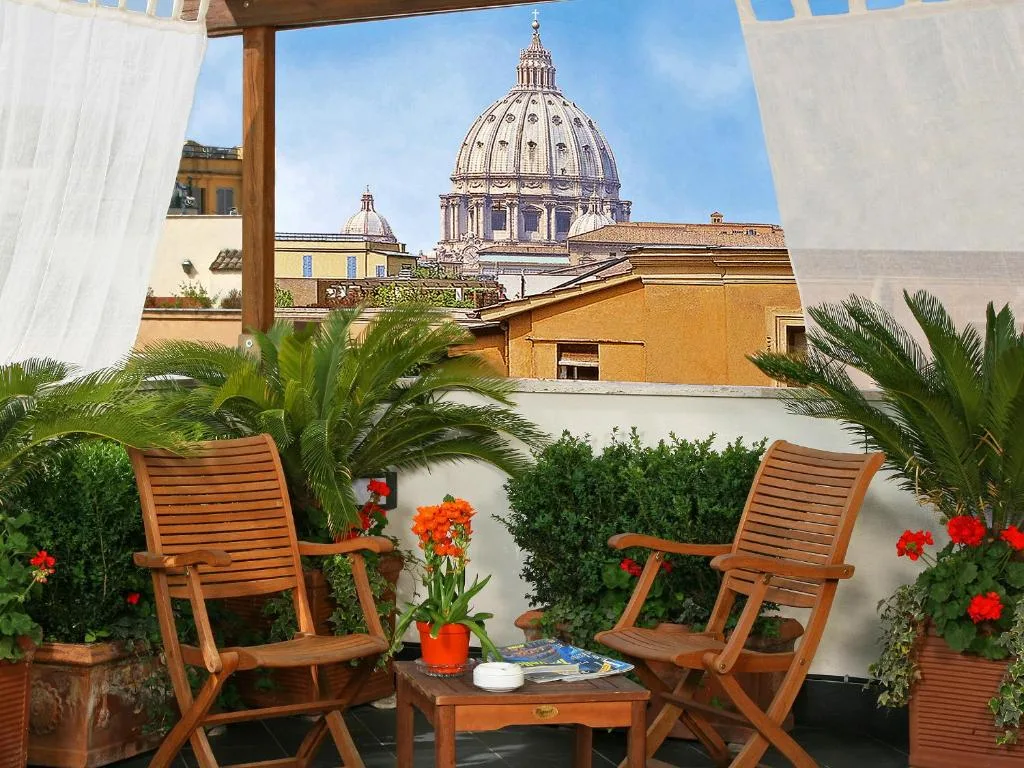
📍 Prati · Castel Sant'Angelo
📍 Prati · Castel Sant'Angelo
📍 Prati · Castel Sant'Angelo
Charmant hôtel Art Nouveau rénové avec rooftop garden et vue sur la Basilique Saint-Pierre. L'option budget idéale dans le quartier romain de Prati, à deux pas du Vatican.
Charming Art Nouveau hotel, fully renovated, with a rooftop garden overlooking St. Peter's Basilica. The ideal budget pick in Rome's Prati district, just steps from the Vatican.
Encantador hotel Art Nouveau renovado con rooftop garden y vistas a la Basílica de San Pedro. La opción económica ideal en el barrio romano de Prati, a dos pasos del Vaticano.
- Rooftop garden panoramique sur Saint-Pierre
- À 10 min à pied du Vatican et Piazza Navona
- Parking privé disponible · quartier calme
- Panoramic rooftop garden over St. Peter's
- 10 min walk to the Vatican and Piazza Navona
- Private parking available · quiet neighborhood
- Rooftop panorámico sobre San Pedro
- A 10 min a pie del Vaticano y Piazza Navona
- Parking privado disponible · barrio tranquilo
Annulation gratuiteFree cancellationCancelación gratuita
À partir de 100 € / nuitFrom €100 / nightDesde 100 € / noche
📍 Borgo · adossé à la colonnade du Bernin
📍 Borgo · against Bernini's colonnade
📍 Borgo · junto a la columnata de Bernini
Ancienne résidence monastique transformée en hôtel 4 étoiles, littéralement adossée à la colonnade du Bernin. Une situation unique pour se réveiller face à la Place Saint-Pierre.
A former monastic residence transformed into a 4-star hotel, literally backing onto Bernini's colonnade. A unique location to wake up facing St. Peter's Square.
Antigua residencia monástica transformada en hotel de 4 estrellas, literalmente adosada a la columnata de Bernini. Una ubicación única para despertarse frente a la Plaza de San Pedro.
- Emplacement unique face au Vatican
- Terrasse panoramique sur Saint-Pierre
- Ancien monastère rénové avec cachet
- One-of-a-kind location facing the Vatican
- Panoramic terrace over St. Peter's
- Renovated former monastery full of character
- Ubicación única frente al Vaticano
- Terraza panorámica sobre San Pedro
- Antiguo monasterio renovado con mucho encanto
Annulation gratuiteFree cancellationCancelación gratuita
À partir de 340 € / nuitFrom €340 / nightDesde 340 € / noche
📍 Prati · cœur du quartier romain
📍 Prati · heart of the Roman district
📍 Prati · corazón del barrio romano
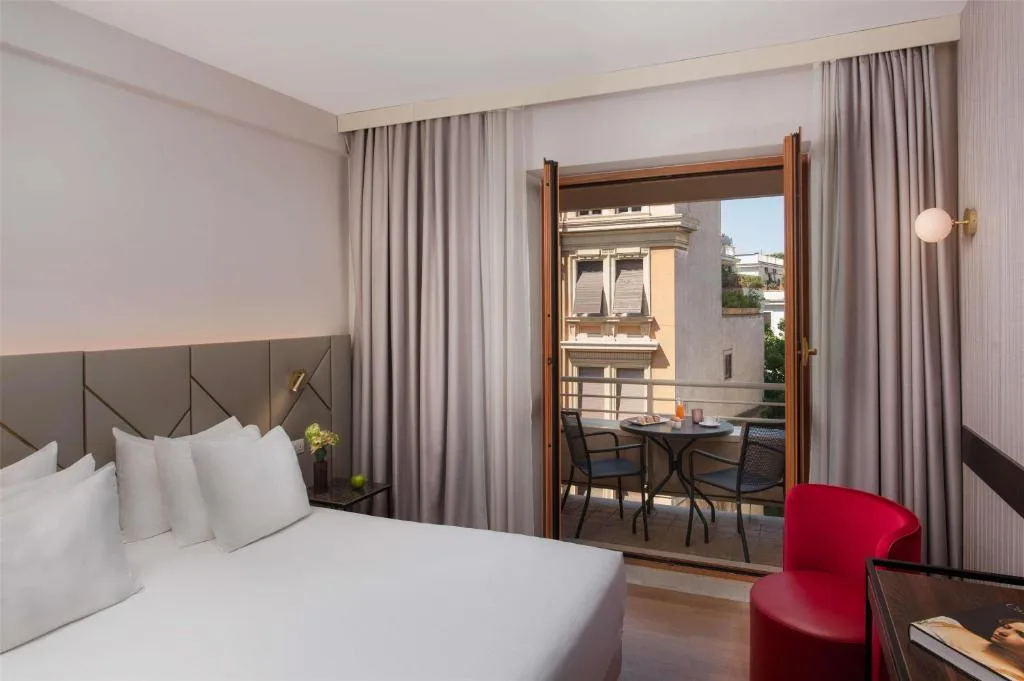
Hôtel 4★ design au cœur de Prati avec chambres spacieuses et modernes. Restaurant réputé et service impeccable, à 10 min à pied du Vatican — le bon compromis confort/prix.
Design 4★ hotel in the heart of Prati with spacious, modern rooms. Renowned restaurant and impeccable service, 10 min walk from the Vatican — the right balance between comfort and price.
Hotel de diseño 4★ en el corazón de Prati con habitaciones amplias y modernas. Restaurante renombrado y servicio impecable, a 10 min a pie del Vaticano — el equilibrio perfecto entre confort y precio.
- Chambres spacieuses et design moderne
- Restaurant de cuisine italienne
- À 10 min à pied de Saint-Pierre
- Spacious modern-design rooms
- Italian cuisine restaurant
- 10 min walk to St. Peter's
- Habitaciones amplias de diseño moderno
- Restaurante de cocina italiana
- A 10 min a pie de San Pedro
Annulation gratuiteFree cancellationCancelación gratuita
À partir de 170 € / nuitFrom €170 / nightDesde 170 € / noche
📍 Prati · proche du Tibre
📍 Prati · close to the Tiber
📍 Prati · cerca del Tíber
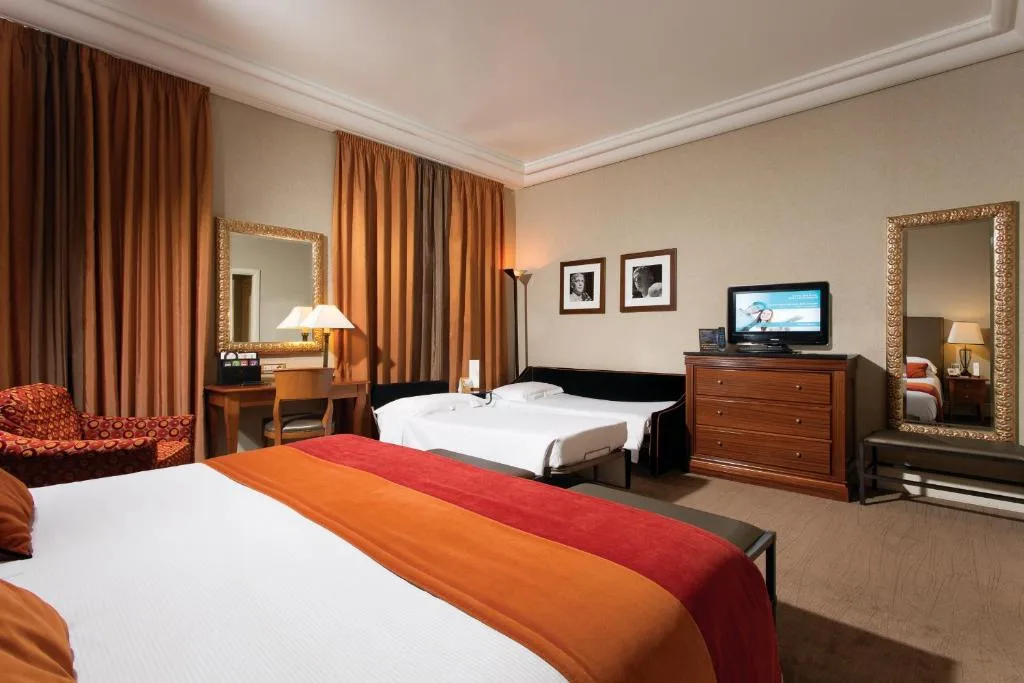
Élégant 4★ installé dans un palais du 19ème siècle, au raffinement d'un boutique-hôtel. Chambres cosy, bar chic et rooftop panoramique pour un séjour romain plein de caractère.
Elegant 4★ set in a 19th-century palace, with the refinement of a boutique hotel. Cosy rooms, stylish bar and panoramic rooftop for a Roman stay full of character.
Elegante 4★ ubicado en un palacio del siglo XIX, con el refinamiento de un hotel boutique. Habitaciones acogedoras, bar con estilo y rooftop panorámico para una estancia romana llena de carácter.
- Palais du 19ème siècle entièrement rénové
- Bar élégant et rooftop panoramique
- Service impeccable & ambiance boutique
- Fully renovated 19th-century palace
- Elegant bar and panoramic rooftop
- Impeccable service & boutique atmosphere
- Palacio del siglo XIX totalmente renovado
- Bar elegante y rooftop panorámico
- Servicio impecable & ambiente boutique
Annulation gratuiteFree cancellationCancelación gratuita
À partir de 180 € / nuitFrom €180 / nightDesde 180 € / noche
FAQ and essential information for visiting the Vatican
DO YOU REALLY NEED TO BOOK YOUR TICKETS IN ADVANCE?
Yes, a thousand times yes! Since 2024, the Vatican has tightened its flow rules. Trying to buy your ticket on-site means exposing yourself to hours of waiting (sometimes 3 hours in the sun) or, worse, being turned away because the quota is full. Book at least 3 to 4 weeks ahead to be safe, in high season. When I go in low season, you need to book a few days ahead. But basically, really, as soon as you know you’re going, get your tickets. Don’t take any unnecessary risk.
IS ENTRY TO ST. PETER’S BASILICA REALLY FREE?
Absolutely. Access to the Basilica is open and free for everyone. That said, expect to wait to get through the security checks on the square. Only climbing the dome (the Cupola) and the guided tour of the necropolis cost money.
WHAT DRESS CODE IS REQUIRED?
The Vatican is a sacred place and the guards are strict: your shoulders and knees must be covered. No tank tops, no mini-skirts, no short shorts. My tip: always keep a big scarf or sarong in your backpack, it’s the perfect trick for covering up just before going in.
CAN YOU TAKE PHOTOS INSIDE?
Yes, photos (without flash) are allowed in almost the entire museum complex and in the Basilica. There’s just one major exception: the Sistine Chapel. There, photos and videos are strictly forbidden to preserve the frescoes and the silence of the place.
HOW MUCH TIME SHOULD YOU ALLOW FOR THE FULL VISIT OF THE VATICAN?
If you want to see the museums, the Sistine Chapel and the Basilica without rushing, count a good half-day (4 to 5 hours). If you’re a real enthusiast or you like to take your time, and you want to climb the dome, plan for the whole day with a lunch break in the Prati neighbourhood. I took the full day and honestly I don’t regret it!
CAN YOU ENTER WITH A BACKPACK OR A SUITCASE?
Small backpacks are allowed, but big bags, suitcases and large umbrellas must be left at the (free) cloakroom at the museum entrance. Watch out: if you leave your bag at the museum cloakroom, you’ll have to come back for it before leaving, which can mean a long detour if you finish at the Basilica.
IS THE VATICAN ACCESSIBLE TO PEOPLE WITH REDUCED MOBILITY?
Yes, the Vatican Museums are almost entirely wheelchair accessible thanks to dedicated lifts and ramps. The staff are also very helpful in directing visitors towards the adapted routes.
WHAT’S THE BEST TIME TO VISIT THE VATICAN WITHOUT THE CROWDS?
The “least bad” time is January and February. That’s when Rome belongs to the Romans. It’s the only period when you can hope to walk through the corridors without being carried along by the crowd. My last Vatican visit was late January, plenty of people in the museums, but especially in the main rooms (we were alone in the Etruscan section, for example) and everyone heads to the Sistine Chapel. Not especially busy at the Basilica.
WHICH DAY TO VISIT THE VATICAN?
Now pay attention. Monday is the closing day for several museums, so people fall back on the Vatican. Wednesday is the papal public audience. And Saturday is the most popular day. So the best days are Tuesday, Thursday and Friday.

What budget should you plan for a day at the Vatican?
The Vatican can quickly become a money pit if you’re not careful. Here’s a realistic estimate per person for a full day in 2026. Be super careful with the restaurant bill, the notorious added surcharges, that kind of thing.
The essentials (fixed prices)
- Museums + Sistine Chapel ticket: around €25 to €30 (online booking included).
- Climbing the Dome: €8 on foot or €10 with the lift.
- St. Peter’s Basilica: Free.
Transport and logistics
- Metro / Bus: €3 (round trip).
- Audio guide (optional): around €7.
Food (Prati neighbourhood)
- Full lunch (trattoria): around €20 to €25.
- On-the-go option (pizza by weight): around €10 to €12.
- Gelato (ice cream): €3.50.
Estimated total per person:
- “Budget” version: around €45.
- “Comfort” version: around €75.

How to get to the Vatican: all the options
The Vatican may be an independent state, but it’s very easy to reach from the centre of Rome. Here’s how to get there depending on your budget and your motivation.
By Metro (the simplest option) It’s the fastest way if you’re staying near a Line A (Orange) station.
- The stations: Get off at Ottaviano (the closest to the Museums entrance) or at Cipro (a bit less busy). Count about a 10-minute walk after leaving the metro.
- The price: A single ticket is €1.50. No need for a paper ticket, contactless payment by bank card works on all the gates.
On foot (the most beautiful route) If you’re staying in the historic centre (Navona, Pantheon), don’t take public transport! Cross the Ponte Sant’Angelo (the Bridge of Angels) in front of Castel Sant’Angelo, then walk up Via della Conciliazione. You’ll see St. Peter’s Basilica grow in front of you: it’s one of the most beautiful perspectives in Rome. I take my time getting there, especially in the morning when there’s no one around, it’s so nice to have Rome to yourself!
-
Duration: About 20 to 25 minutes on foot.
By taxi or Uber
- Official taxi (white cars): From the centre, count between €10 and €15. Use the FreeNow or itTaxi apps to book.
- Uber: In Rome, Uber only offers luxury sedans (Uber Black). It’s much more expensive than a taxi (often €25 to €40).
- Duration: 15 minutes, but watch out for the traffic jams in the morning!
By train (FS) If you’re coming from the Trastevere neighbourhood, take the regional train to Roma San Pietro station. You’ll be a 10-minute walk from the square.

Conclusion and other resources on Rome
And there you have it, I think you know everything about the Vatican! It’s obviously a must, even if you’ve already been (but if you know it, then you know you have to go back) because you honestly can’t get tired of the museum, the grandeur of the Basilica, and above all the Sistine Chapel.
You can go all year round, but some months are very busy and require booking your tickets well in advance and getting organised (for example from June to August and during the other school holidays). Still, this planning is really worth it because you’re going to get a feast for the eyes.
So don’t hesitate to take a full day to explore the Vatican, especially with the suggested itinerary, because it would be a shame to miss some of the pieces!
Planning a stay in Rome? Check out my complete guide to Rome and my tips on where to stay in Rome.