Last updated on
A day of sightseeing and a night on a boat instead of a day on the road. That’s why I took this ferry.
Driving up from Paris to Tromsø by car, and after a stop in Lübeck, the Hanseatic city, I had to get across to Sweden. Two options: drive to Denmark and cross the bridges, or board in the evening at Travemünde, Lübeck’s port (and a popular little seaside resort), sleep, and wake up in Trelleborg. I went for the second one, with TT-Line, on the Sunday 9.30pm sailing.
I really wanted to visit Lübeck, but I didn’t want to lose too much time. So it was the ideal way to avoid wasting hours on the road.
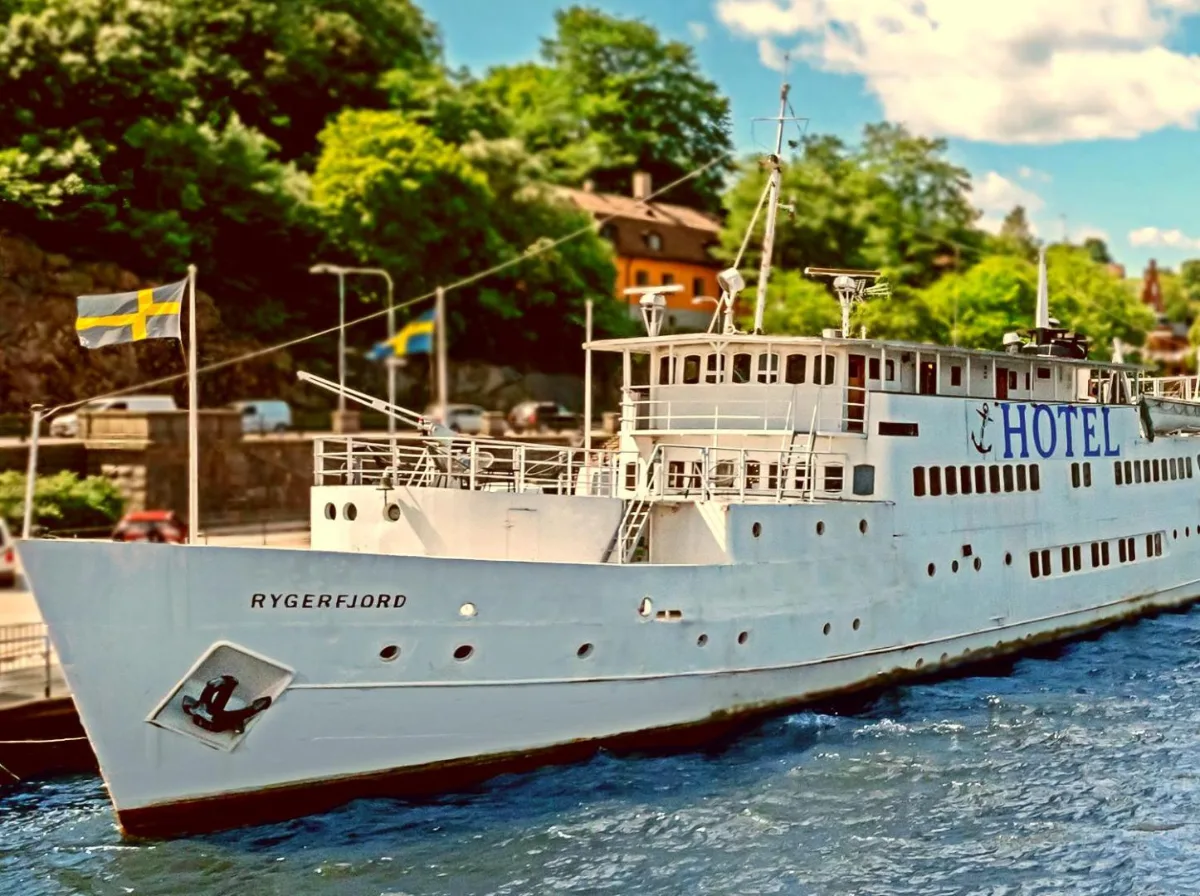
And honestly, it was fine. Not a floating hotel like in the photos (or maybe it’s just not the same boat!), but clean, well organised, and I woke up in Sweden without losing a day’s driving. With stinging eyes, mind you, because we docked at 6.15am.
Let’s go through it all: the price, check-in at Travemünde (with my little moment of utter confusion in the queues), the cabin, dinner on board and getting off.
Right, let’s go!
The Travemünde (Lübeck) – Trelleborg ferry, a great way to get from Germany to Sweden by boat
From northern Germany, there are two main ways to reach Sweden with your car. I’ve covered every option in my article on ferries to Norway, but for this particular route, it boils down to this:
- By land (well, almost) – the Puttgarden – Rødby ferry (45 minutes), a drive across Denmark, then the Øresund Bridge to Malmö. More driving, a toll, and a hotel night to fit in somewhere.
- By sea:
- the overnight ferry Travemünde – Trelleborg. Between 8 hours 45 minutes and 11 hours at sea depending on the sailing, and the night is included in the ticket.
- the day or night ferry between Travemünde and Malmö
- and the ferry between Rostock and Trelleborg. Rostock is also considered a very pretty Baltic city, so it can make a good starting point too
So why the overnight ferry? Not to save money, that’s for sure. The ticket and cabin alone cost more than the road, the bridges and a hotel night. It doesn’t pay off. It’s just much more practical, less tiring and far more comfortable!
What you gain is time. For me, that meant exploring Lübeck by day, at a relaxed pace, instead of rushing through it before getting back in the car. You board in the evening, sleep during the crossing, and wake up in Sweden the next morning without having to drive as much. That’s what I was after: having time to visit without wasting time. Honestly, after nearly 1,000 kilometres from Paris, that counts!
The one drawback: you arrive at 6.15am. If, like me, you’re not a morning person, it’s a bit of a rough wake-up.
From Lübeck, ferry to Trelleborg or to Malmö: which one to choose?
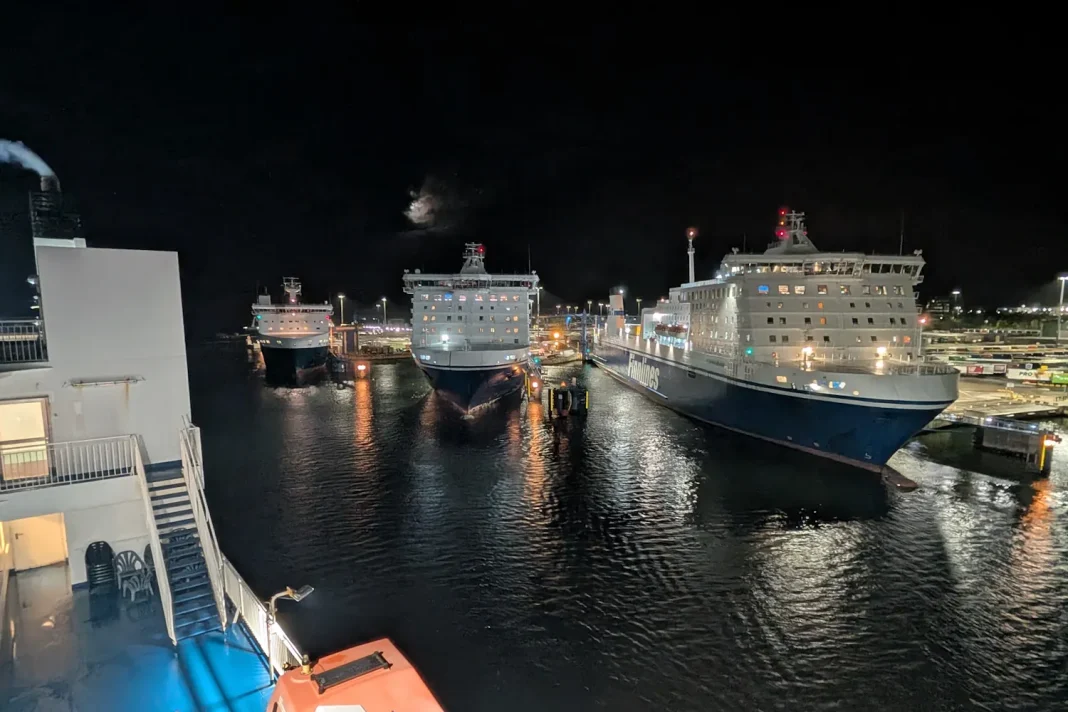
At the Skandinavienkai (Travemünde’s port), two routes head for southern Sweden, and on paper they look very similar: TT-Line to Trelleborg, and Finnlines to Malmö. Same terminal, same sea, a night on board either way. The two ports are only half an hour’s drive from each other!
But they don’t work the same way.
- Departure time – TT-Line sails in the evening, between 9.30pm and 3am depending on the day. Finnlines has the same kind of varied schedule: the company lists departures at 9.45pm, 10pm, 2.45am or 3am depending on the day, and on the dates I looked at in October 2026, the weekend sailing left at 1am, arriving in Malmö at 10.30am.
- Duration – a little longer with Finnlines, around 9 to 9½ hours, compared with 8 hours 45 minutes for my Sunday-evening TT-Line sailing.
- Number of sailings – TT-Line runs one to three sailings a day to Trelleborg. Finnlines runs fewer, and on some days I couldn’t find a single departure to Malmö.
- Price – for my night of Sunday 20 September, I paid €300.99 with TT-Line for the car and a cabin, while Finnlines was showing €354. Obviously it depends on the dates, but Finnlines was more expensive that day.
- Arrival – Malmö puts you straight into the city, with the motorway north right next door. Trelleborg is a smaller port, about thirty kilometres south of Malmö.
My advice: it depends (otherwise it wouldn’t be any fun). I chose Trelleborg for two reasons. Well, three. First, I didn’t know what to do with myself until the midnight departure. I was in Travemünde, and there aren’t a million things to do there. Second, arriving at 6.15am meant I could drive further while avoiding the traffic jams. And finally, it was cheaper. About €80 less, booking at the last minute.
That said, the one to Malmö has two big advantages:
- it arrives later, so you get more sleep (seriously, 5am hurts)
- you arrive further north, so you save some driving time. But only 30 minutes.
So there’s not much between them: it depends on what you’ve planned for the day before and the day after, and whether you’re a morning person or not. But it really depends on the day, because the timetables change!
Finnlines to Malmö also makes sense in two cases: you reach Travemünde late and miss the evening TT-Line sailings, or you want to spend the day in Malmö when you arrive. On the other hand, if you’re trying to save time on the road north, a 10.30am arrival costs you the morning.
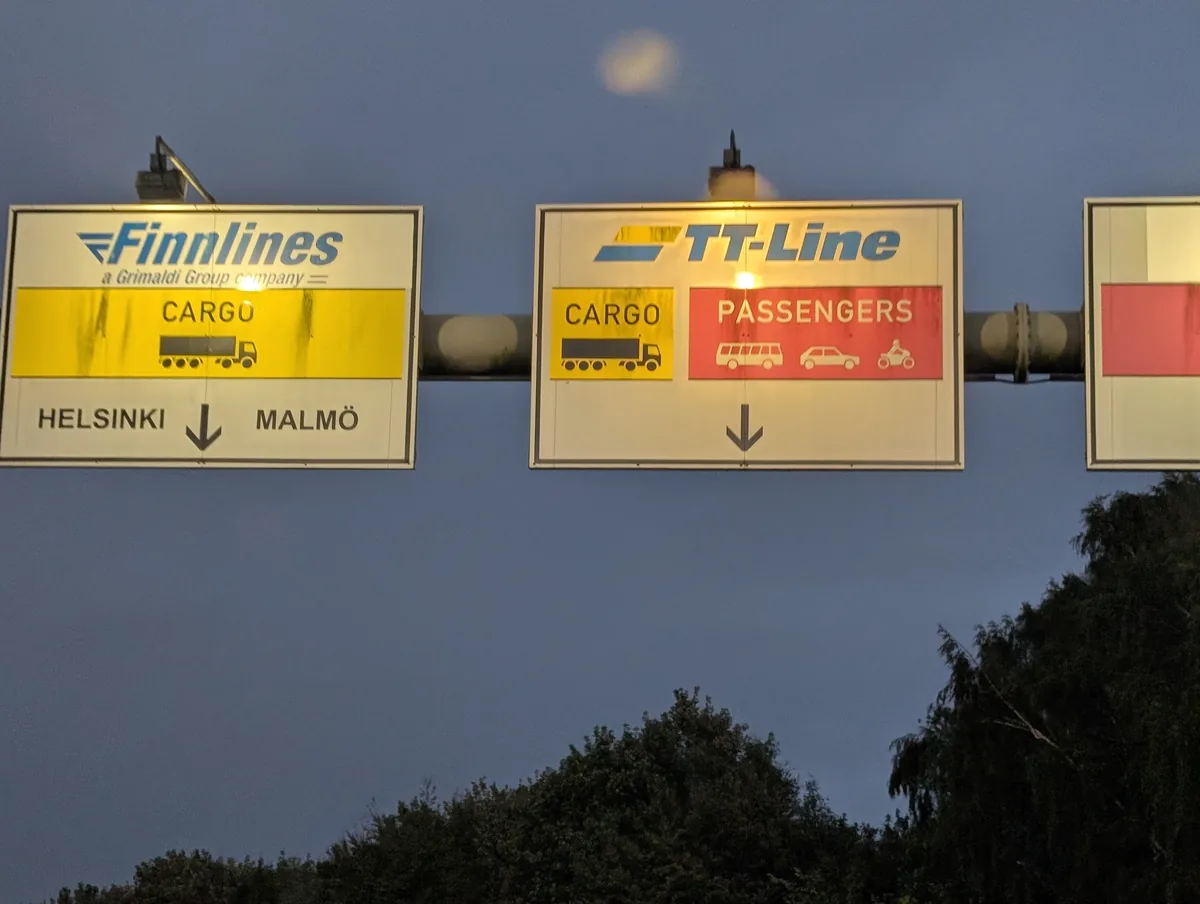
Careful: both companies leave from the same terminal, but each has its own lanes. Follow the sign for the one on your ticket! It’s really badly signposted, but it is signposted.
TT-Line ferry timetable from Lübeck-Travemünde to Trelleborg
TT-Line runs one to 4 sailings a day from Travemünde to Trelleborg, depending on the day of the week:
- sometimes one around 3am
- one in the morning around 9.30am
- sometimes one in the afternoon
- and above all in the evening, between 9.30pm and 10.30pm
- check the timetables here
The crossing takes from 7 hours 30 minutes to just over 11 hours depending on the sailing and the ship (the day’s times are in the widget at the top of the article).
Same story for the Lübeck (Travemünde) – Malmö: departures between midnight and 10pm, 1 to 4 a day. Search the timetables here, but it’s a bit of a mess.
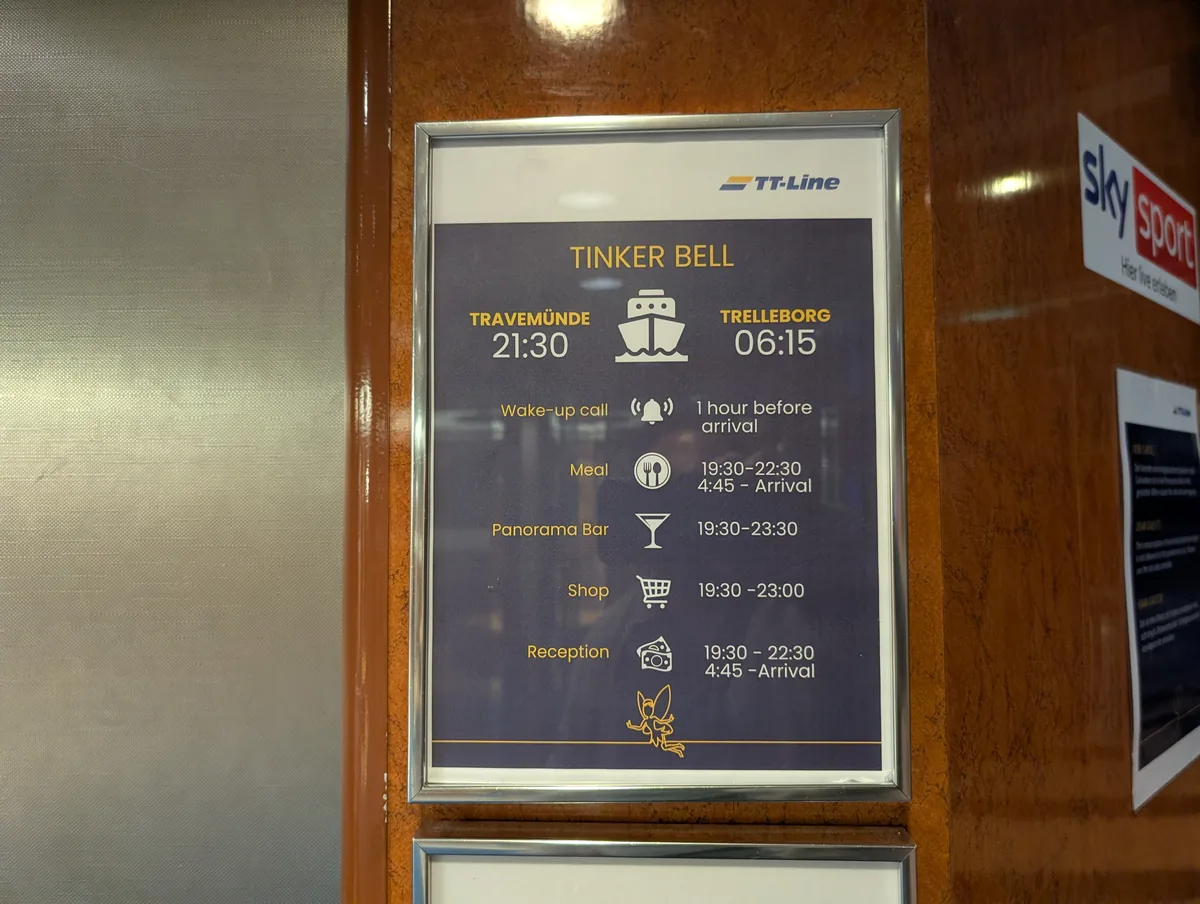
The sailing I took, the Sunday 9.30pm one, gets into Trelleborg at 6.15am: 8 hours 45 minutes at sea. Just in time for breakfast (or nearly)! Which is exactly what I did when I reached a small town: a blueberry bun (blåbärsbulle, an absolute must-try in Scandinavia) and a coffee, and off I went again!
It’s the kind of slot I’d recommend if you’re driving: you make the most of your last day in Germany (in Lübeck, on the beach at Travemünde, or in Rostock if you’re leaving from there), have dinner on board, and the night goes by while the boat sails on. Daytime sailings cost you a whole day at sea, with nothing to see in the middle of the Baltic.
Timetables change with the day and the season: always check yours when you book!
How much the Travemünde – Trelleborg ferry costs with a car
I paid €300.99 on Direct Ferries for the overnight crossing on Sunday 20 September 2026. That price covers the car, me, and an inside 4-berth cabin. Note that it was a non-refundable fare: check the conditions before paying if your dates might still change.
One thing to know before booking: the base price includes a reclining seat, not a bed. The cabin costs extra. For a small 2- or 4-berth cabin, allow about €70 more than the seat. Sea-view cabins cost more than inside cabins, which have no porthole.
My advice: take the inside cabin. You’re travelling at night, it’s dark outside, and a porthole is no use between 10pm and 6am. Keep the €20 or €30 difference for dinner!
For comparison, Finnlines, which leaves from the same terminal for Sweden, was showing me 354 € for the same night. That’s quite a difference (gulp).
Prices vary a lot depending on the season, the day of the week, the sailing time (the 3am one is much cheaper than the 10pm one) and the size of your vehicle. The fares above date from September 2026, so check them when you book. And booking ahead can get you some pretty decent deals.
I booked mine on Direct Ferries, which sells TT-Line tickets: see prices for the Travemünde – Trelleborg ferry.
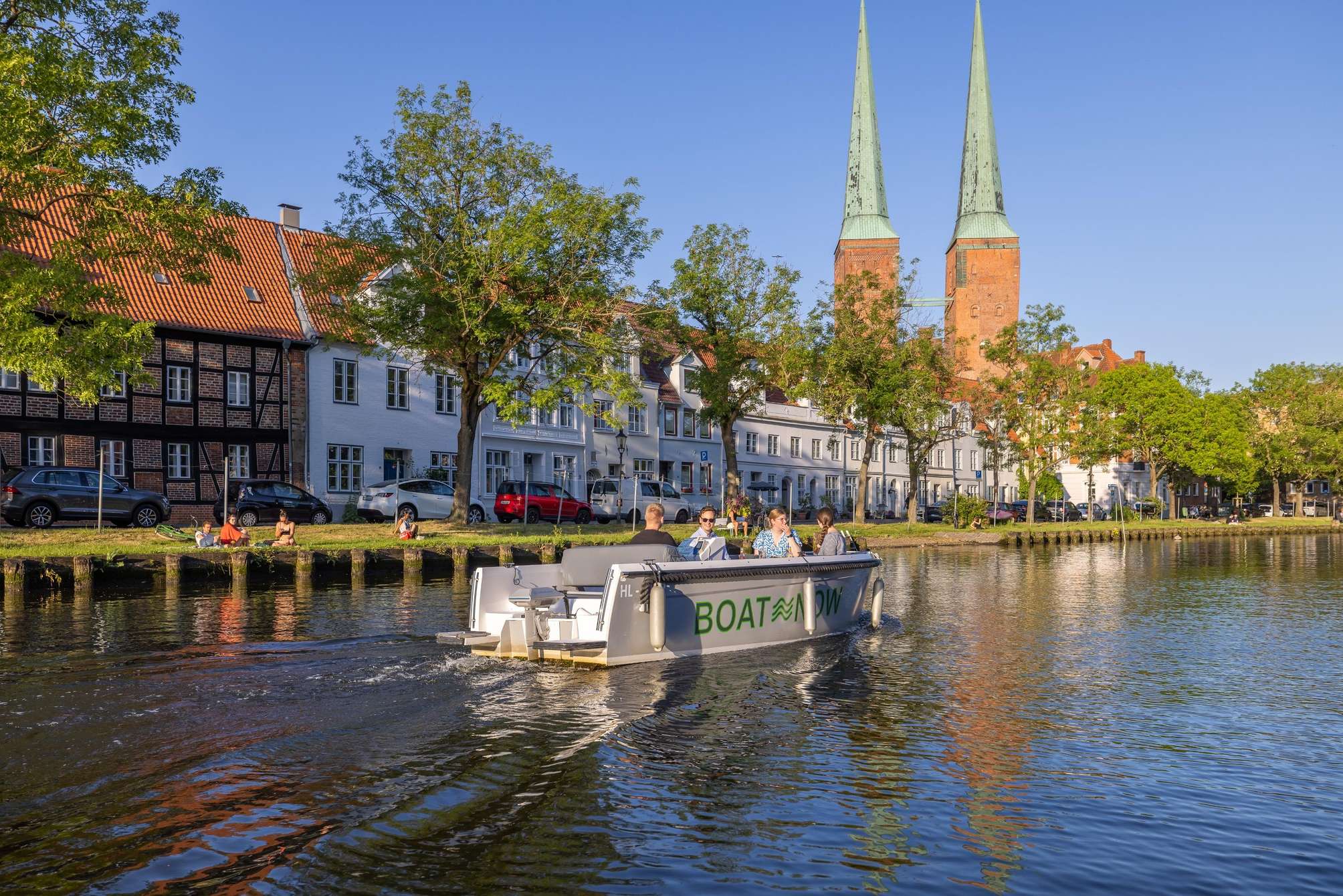
TT-Line check-in at Travemünde: address, times and queues
This is the most stressful part when you don’t know the port. Well, in reality it’s simple, as long as you have the right info and don’t just follow whoever’s in front of you.
Which address to put in the satnav for the TT-Line ferry in Lübeck-Travemünde
Heads up, there are two addresses, and the Direct Ferries ticket only gives the one for the foot-passenger terminal (Zum Hafenplatz 1):
- By car: Skandinavienkai 1, 23570 Lübeck-Travemünde. This is the vehicle entrance to the terminal.
- On foot – Zum Hafenplatz 1, the passenger terminal building.
A quick note for anyone searching for “the Lübeck ferry”: Travemünde is part of Lübeck, on the Baltic coast, about twenty kilometres from the old town. That’s why you’ll find this route listed as both Lübeck – Trelleborg and Travemünde – Trelleborg: it’s the same boat!
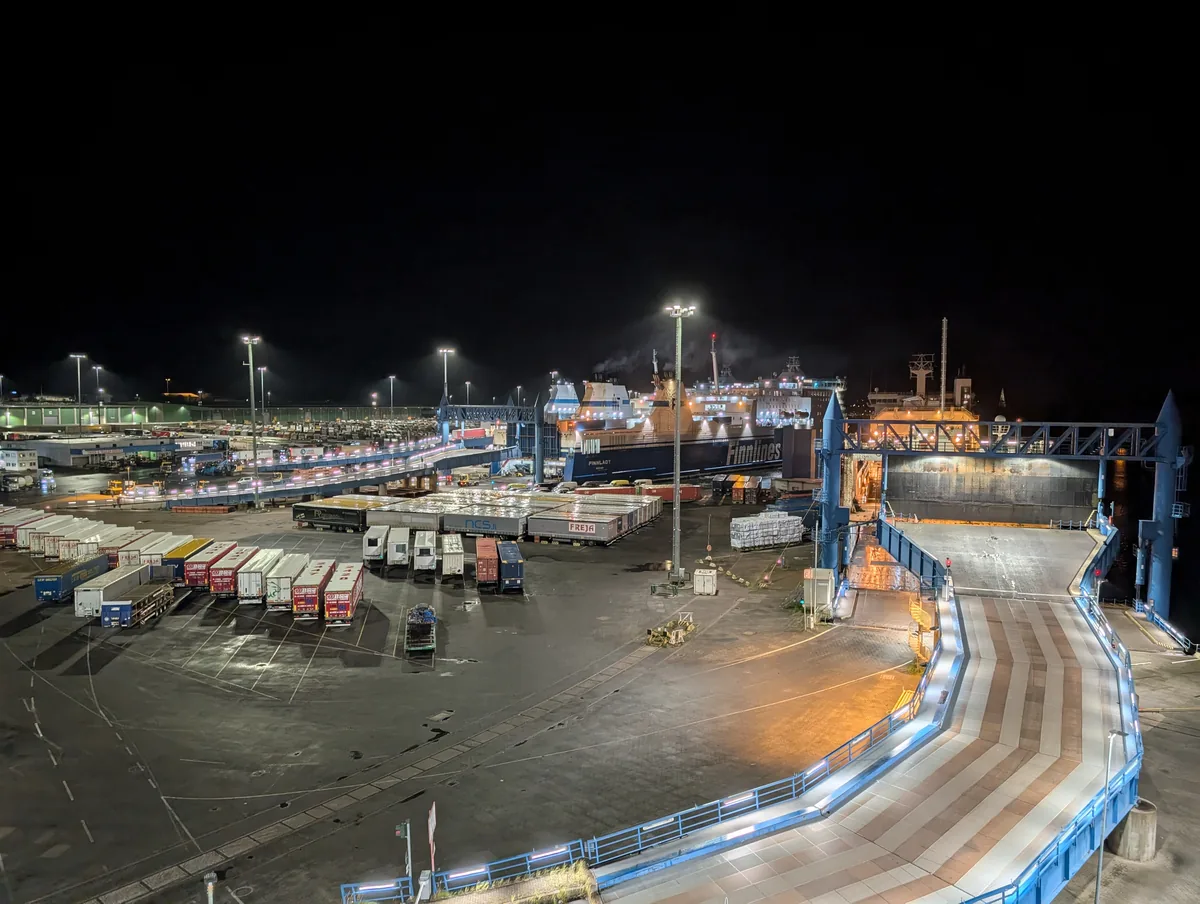
The Skandinavienkai is south of the seaside resort of Travemünde, a few kilometres from the beach and the old lighthouse. It’s a big shared terminal: Finnlines and Stena Line leave from the same site. Once inside, follow the TT-Line signs: each company has its own lanes, and getting into the wrong one wastes time!
What time to arrive at Travemünde port before departure
TT-Line opens check-in about 2 hours before departure. As for when it closes, the information varies: TT-Line’s page says 30 minutes before departure, but my Direct Ferries ticket said 60 minutes before at the latest. The ticket is what counts, so allow 60 minutes!
For the 9.30pm sailing, that gives you a window from 7.30pm to 8.30pm. Aim for the middle: no endless wait in the car, and no race against the clock.
Boarding card at the barrier, then the boarding lanes
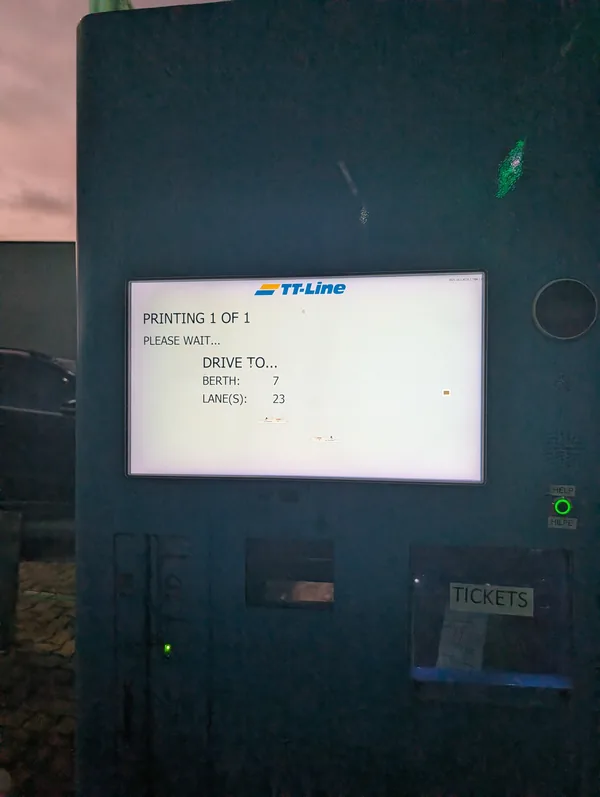
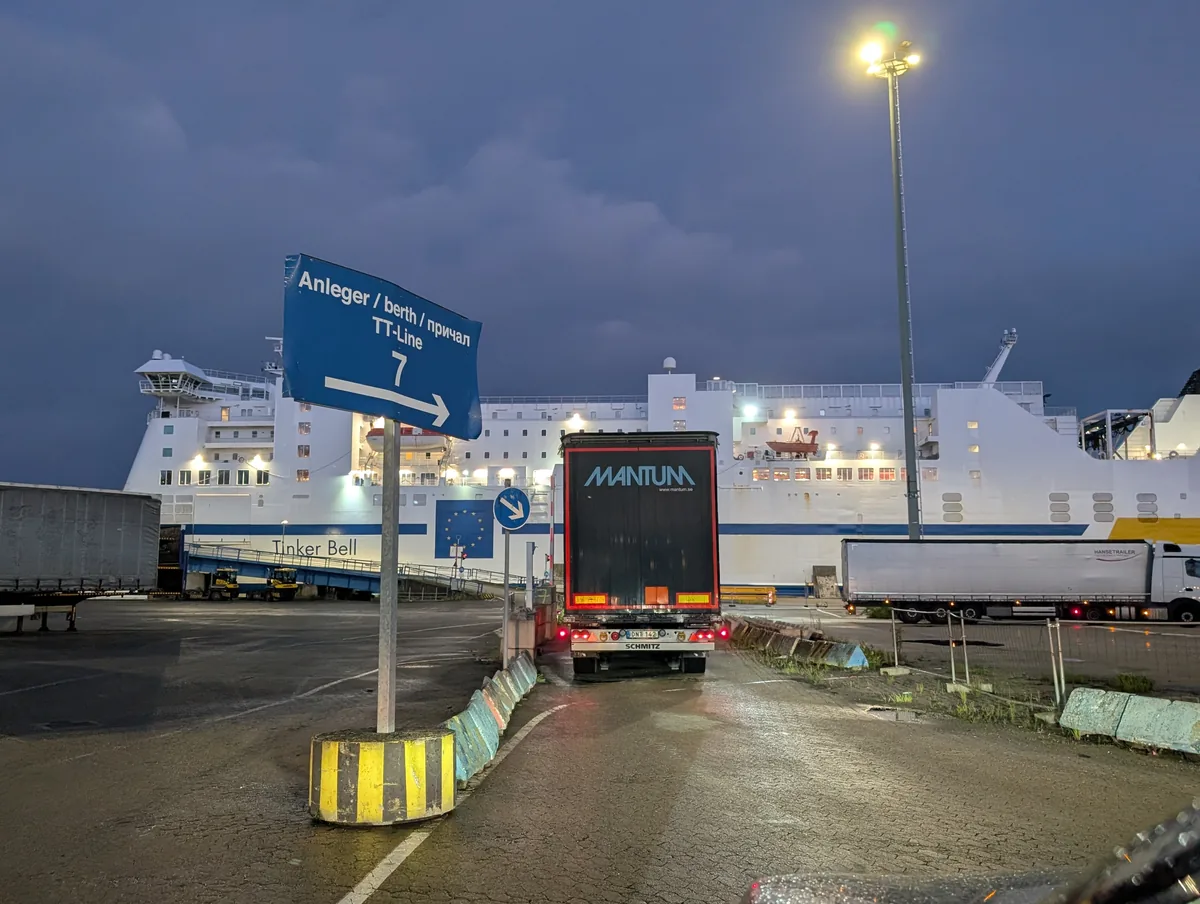
No desk to hunt for and no building to park at: you’re handed your boarding card right at the entrance barrier. It shows your berth (the Anleger).
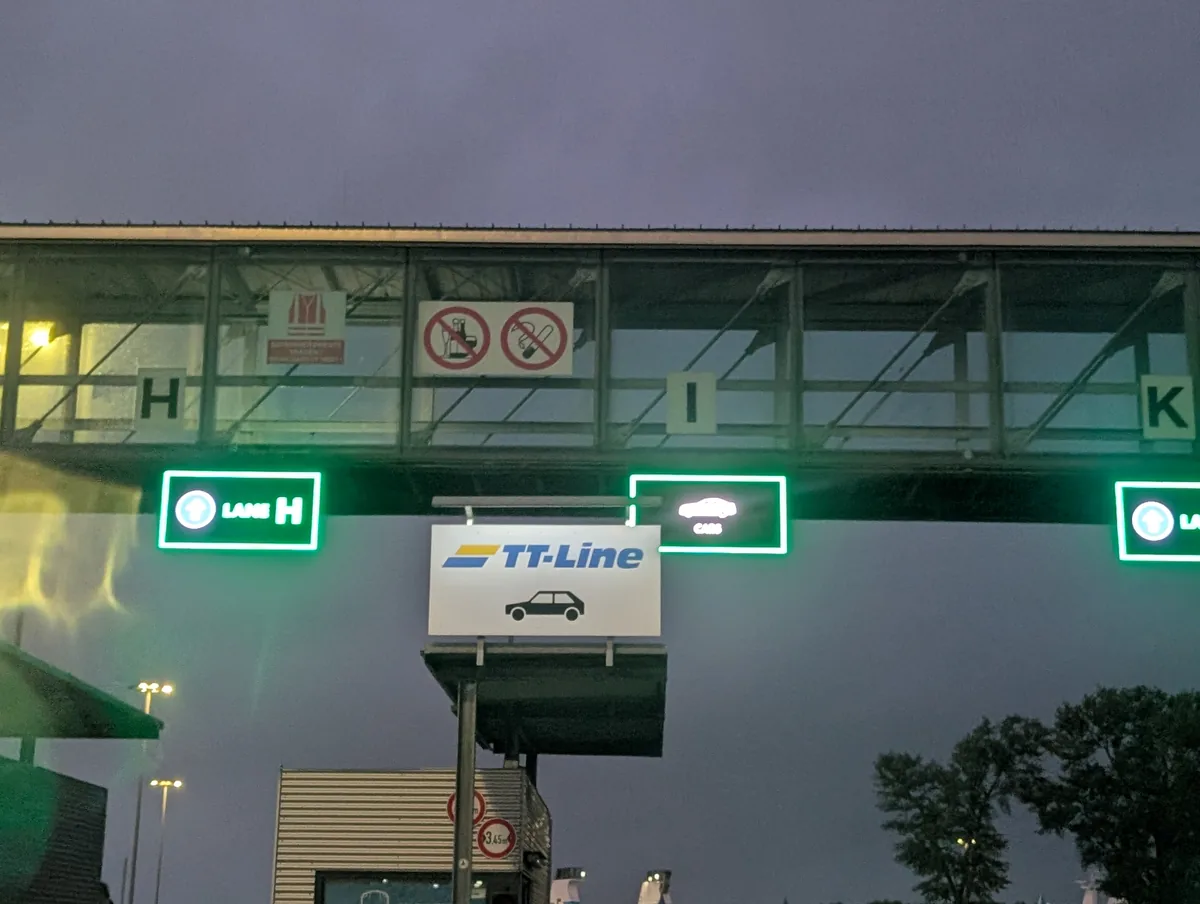
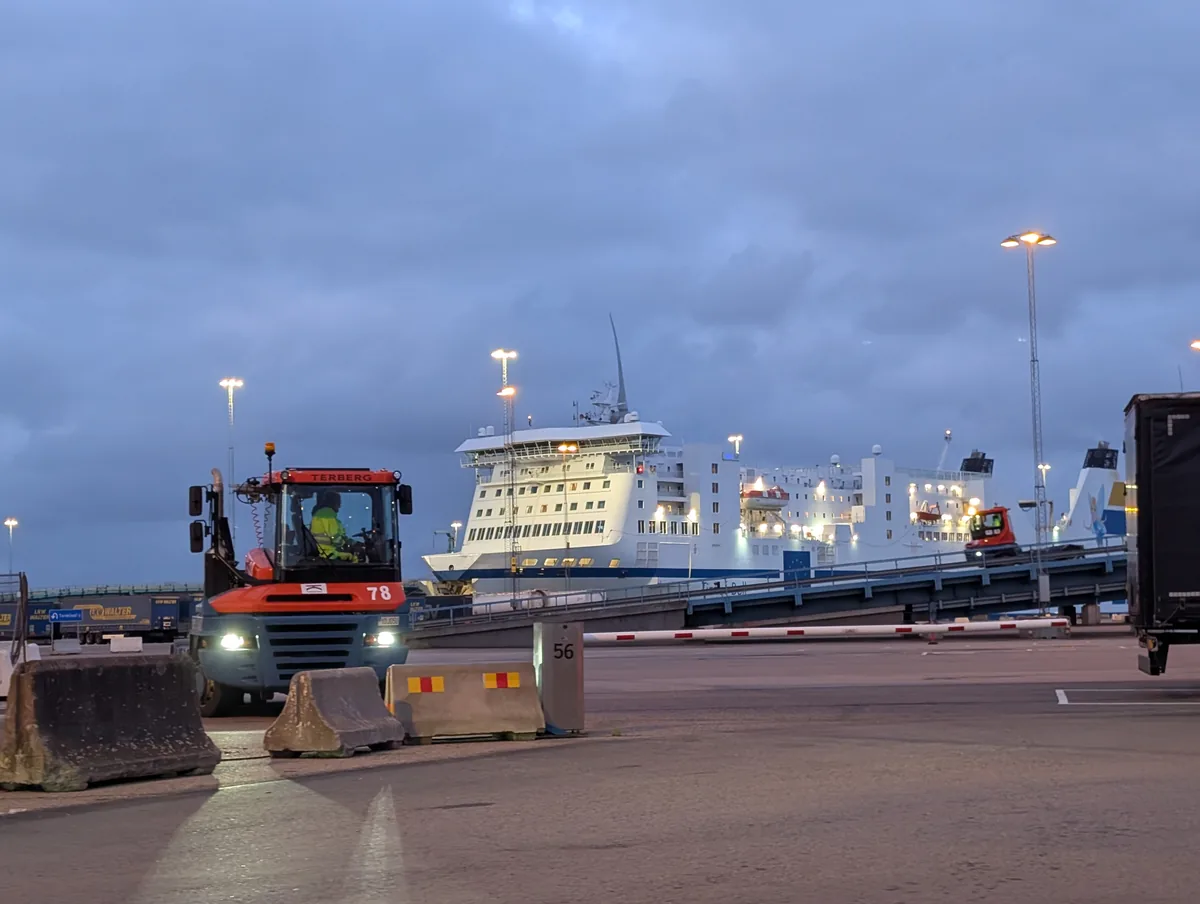
Then you head to your lane, and that’s where I had my little moment of glory. My card said Anleger 7. I was in front of 6, I could see 8… but no 7! So I had to make a huge U-turn and slalom between the lorries to find my lane, the one reserved for cars (2 lanes for cars, the other 15 for lorries).
The thing is, the numbers don’t necessarily follow in order on the ground. Don’t do what I did and go hunting for the sign: follow the lane number printed on your card, and if in doubt, wind down the window and show your card to the first member of staff in a hi-vis vest. And in the end, I found my lane, no stress. Well, almost.
Basically, it’s like a McDonald’s drive-through, only much, much longer.
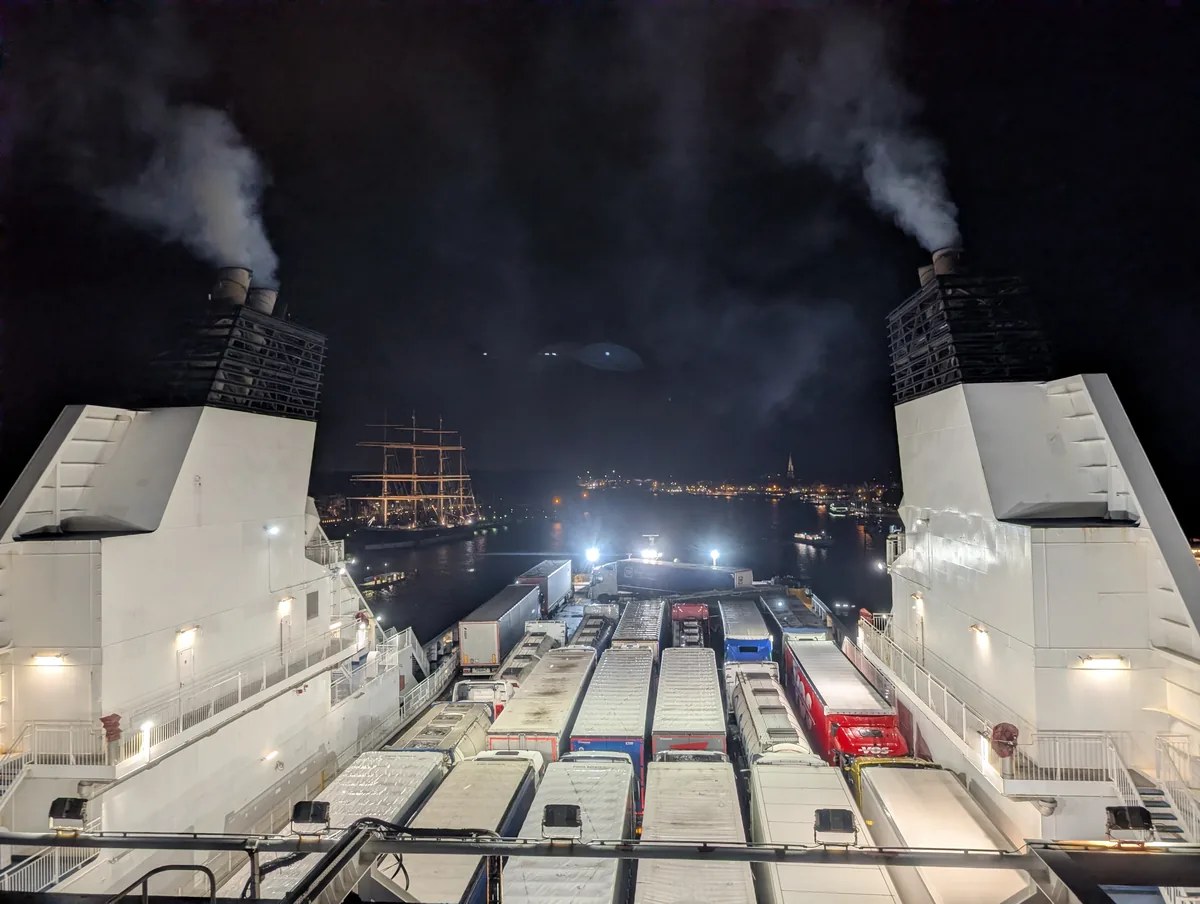
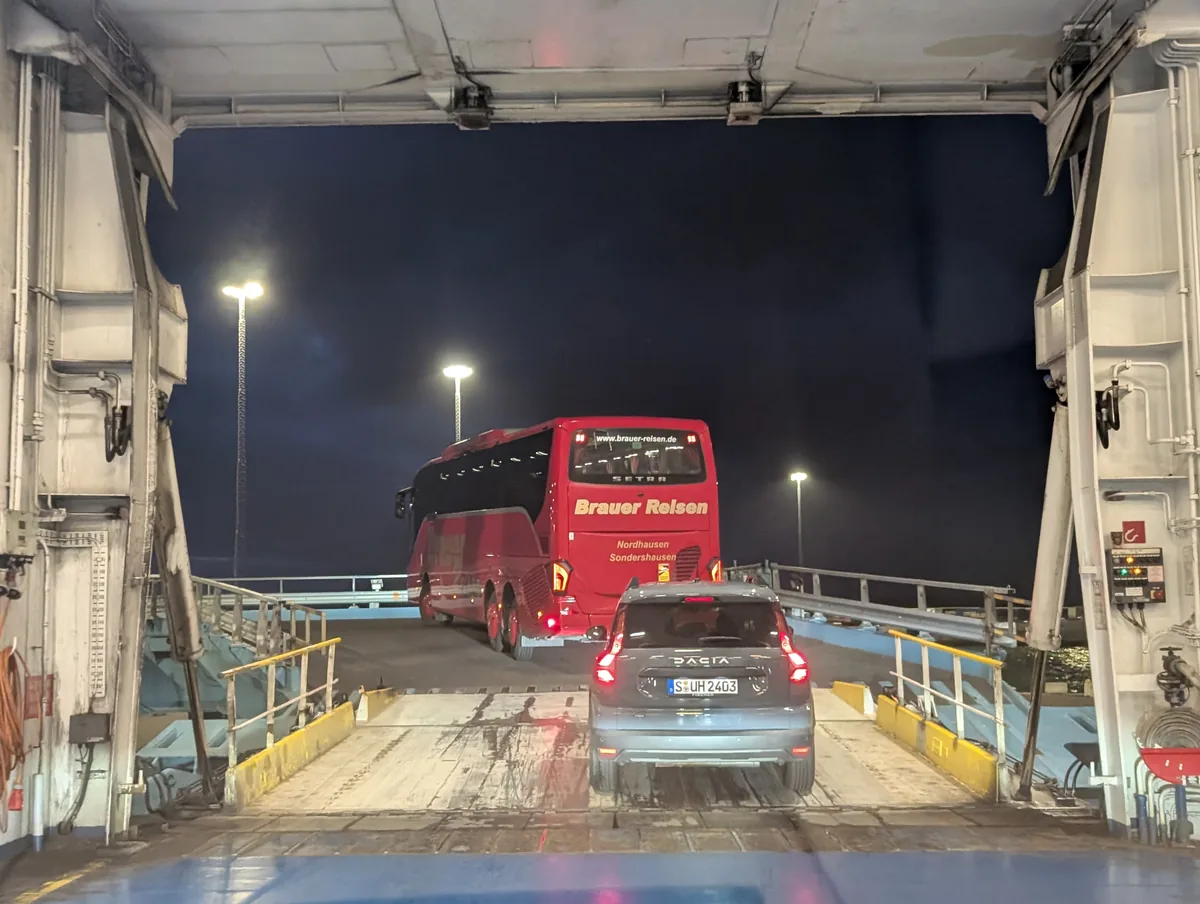
After that it’s really easy: they load the cars first via a huge ramp, and it’s impressive because on this type of ship there are 3 “floors” for vehicles (95% of them lorries). You just follow the car in front and the little guys in yellow.
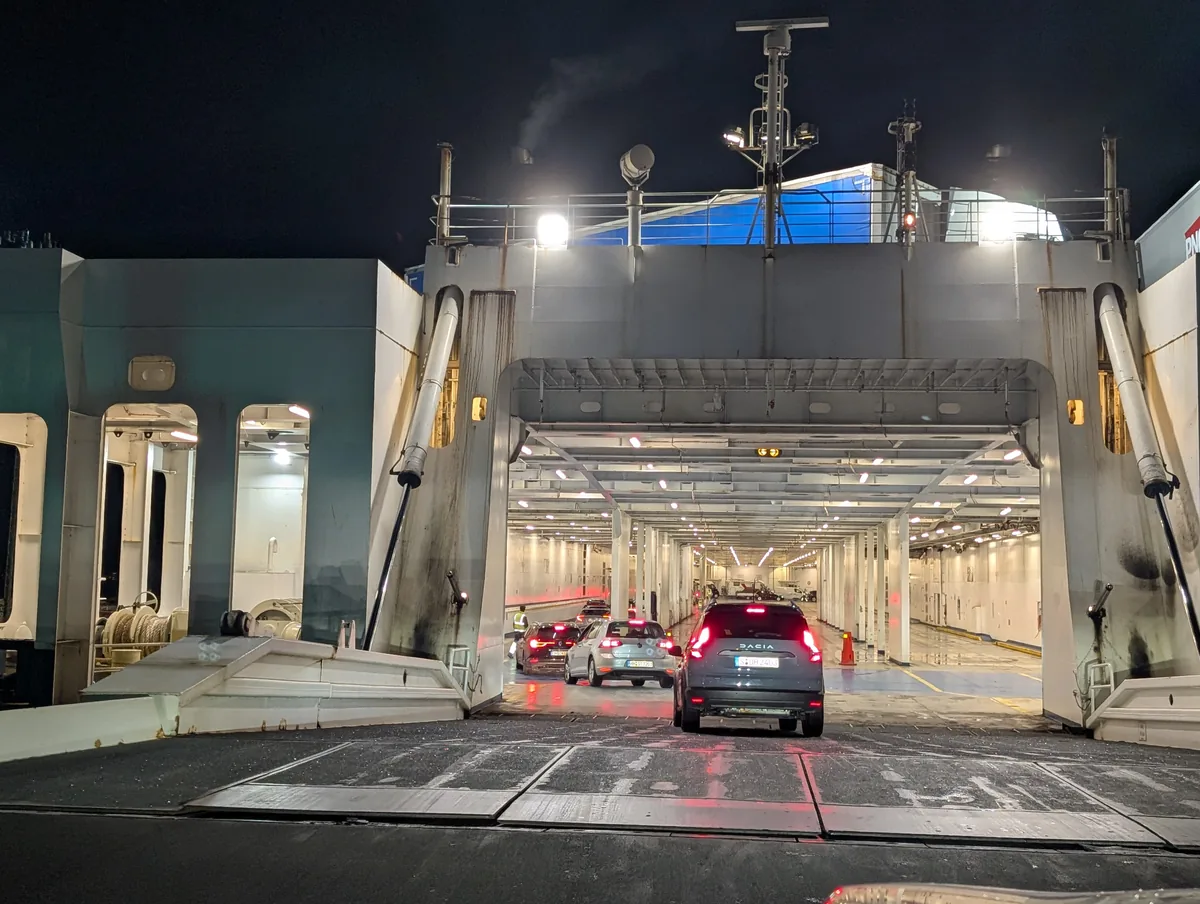
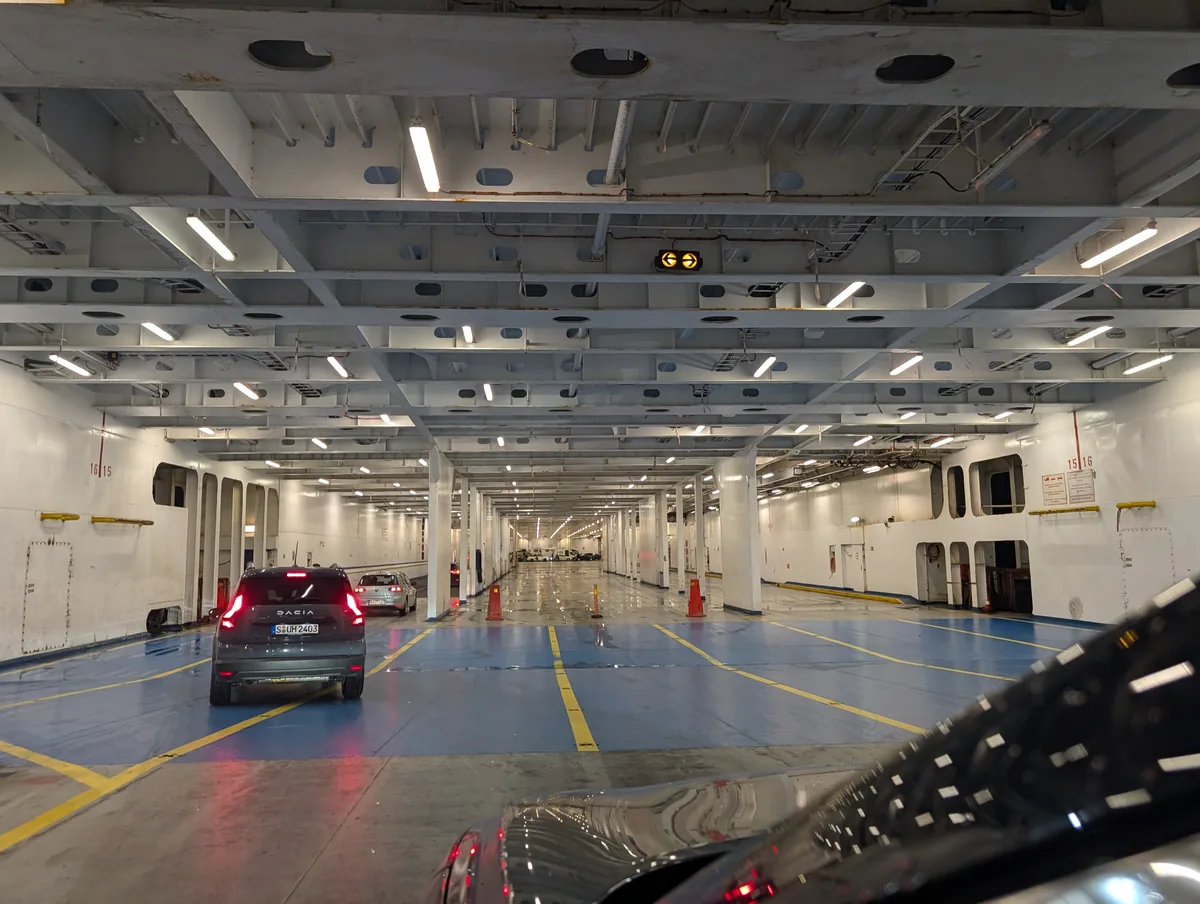
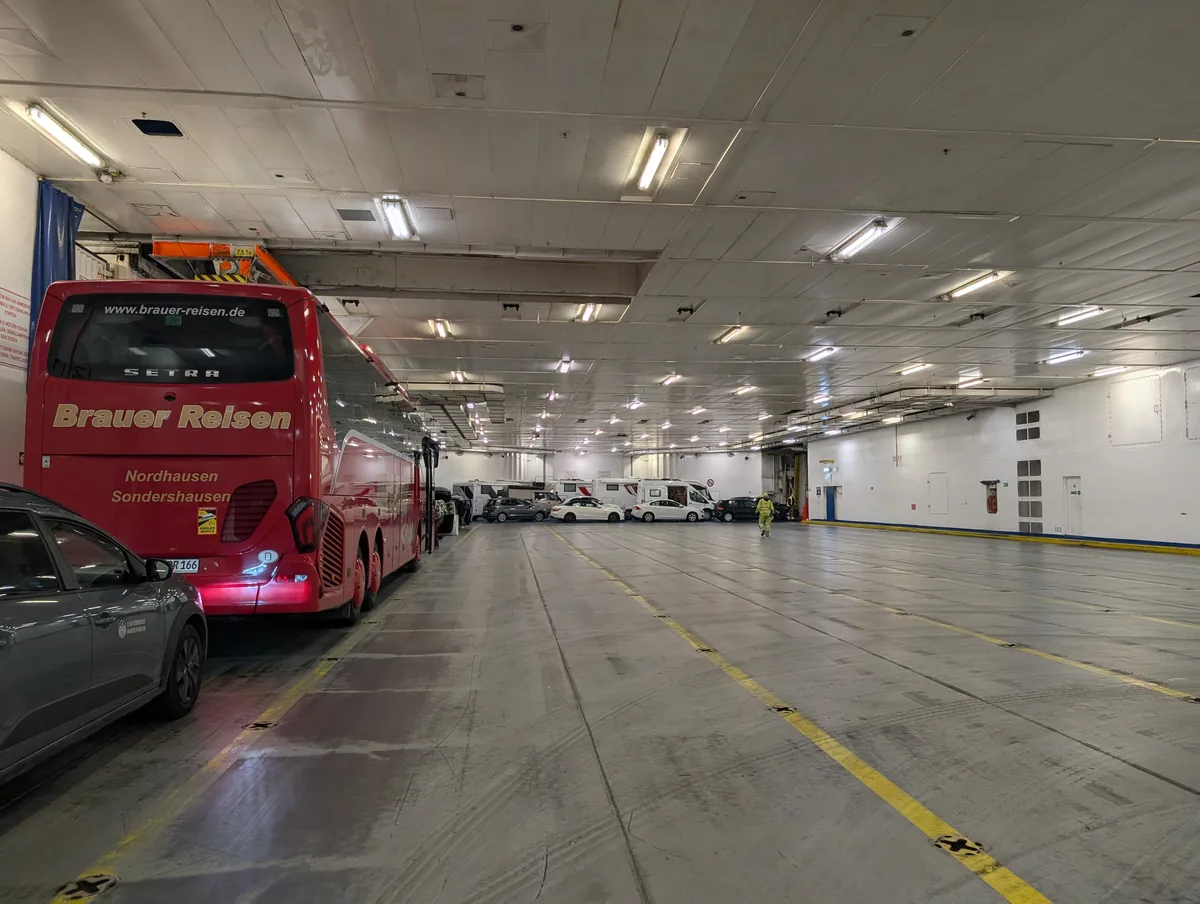
On board the TT-Line ferry: my night between Travemünde and Trelleborg
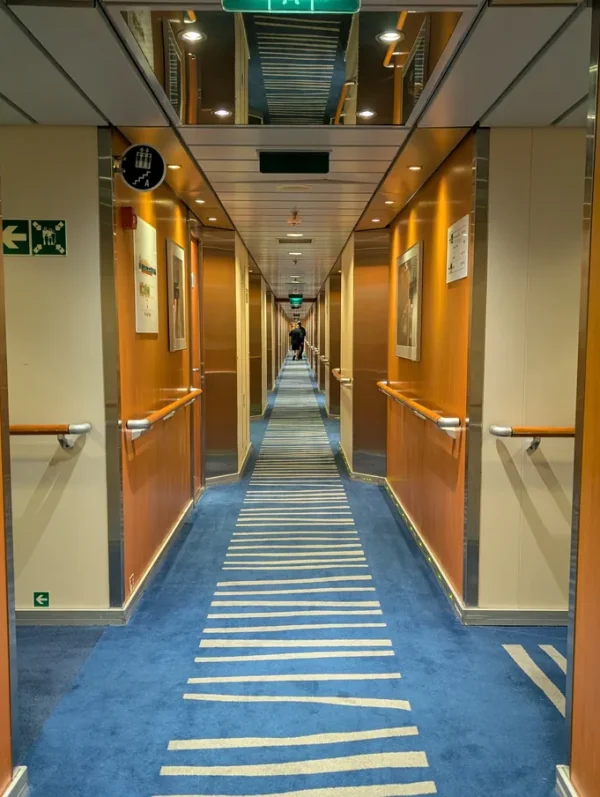
The TT-Line cabin: small, no porthole, but clean
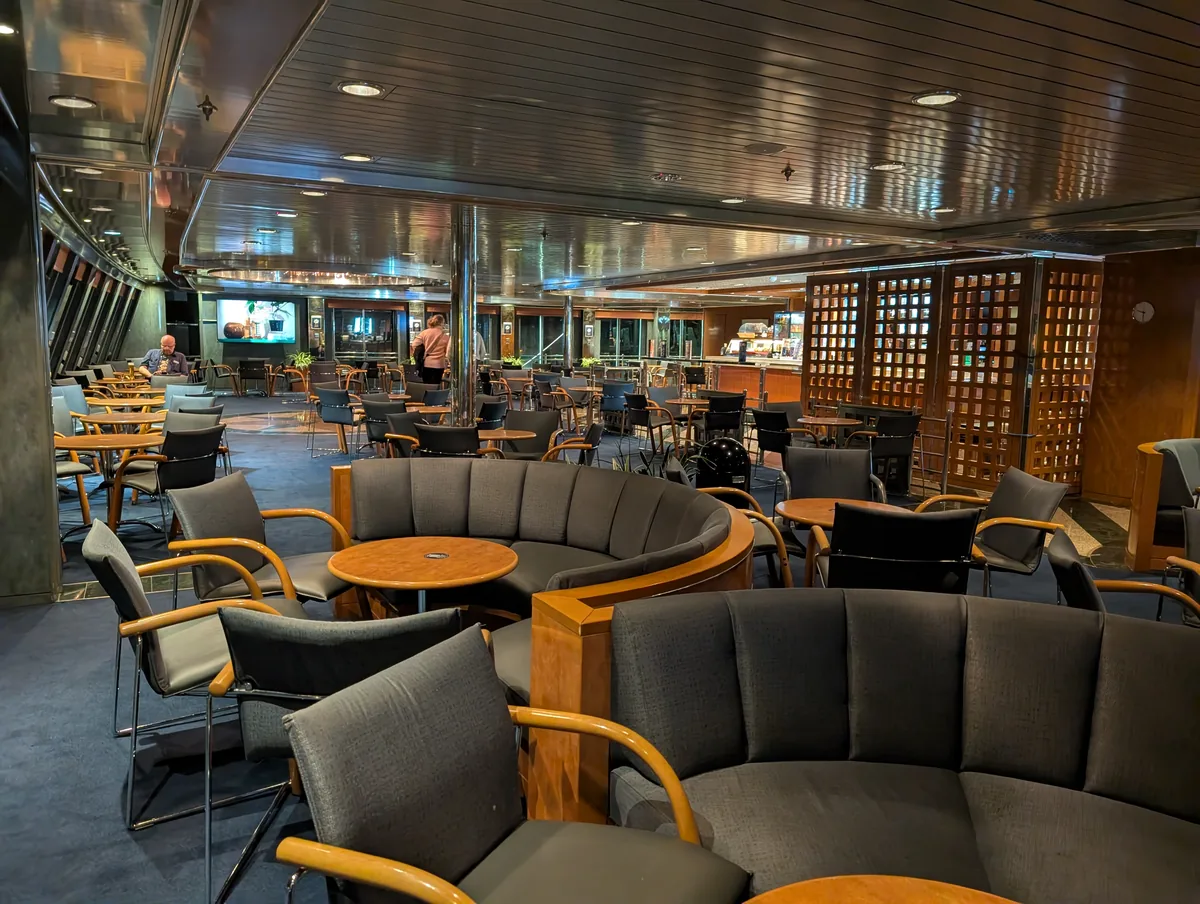
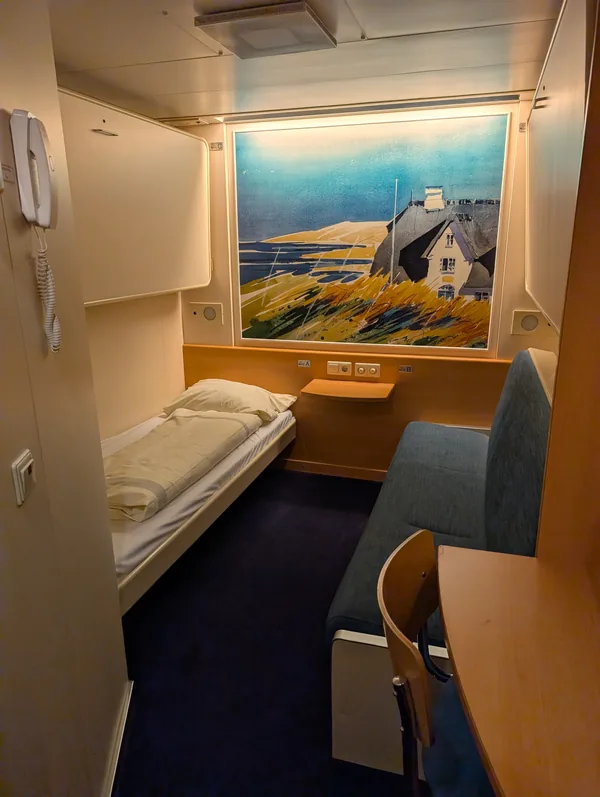
Right then: it doesn’t look like the photos. The cabins look older than on the website, and they’re tiny. The beds are small too. Maybe the photos come from another ship, but it all looks better on their website.
That said, it’s clean and it does the job. There’s an en-suite bathroom with a shower and toilet, which is really nice to have in the morning. For one night, you don’t need more!
Two nice surprises:
- Engine noise – it’s fine. The cabin decks are high up, far from the engines.
- The ship’s movement – you barely feel it. It doesn’t get in the way of sleeping at all.
If you’re looking for a cruise cabin with a big bed and a sea view, you’ll be disappointed. If you’re looking for a clean place to sleep for 6 hours between two days of driving, this is exactly it.
Eating on board the TT-Line ferry: the self-service restaurant
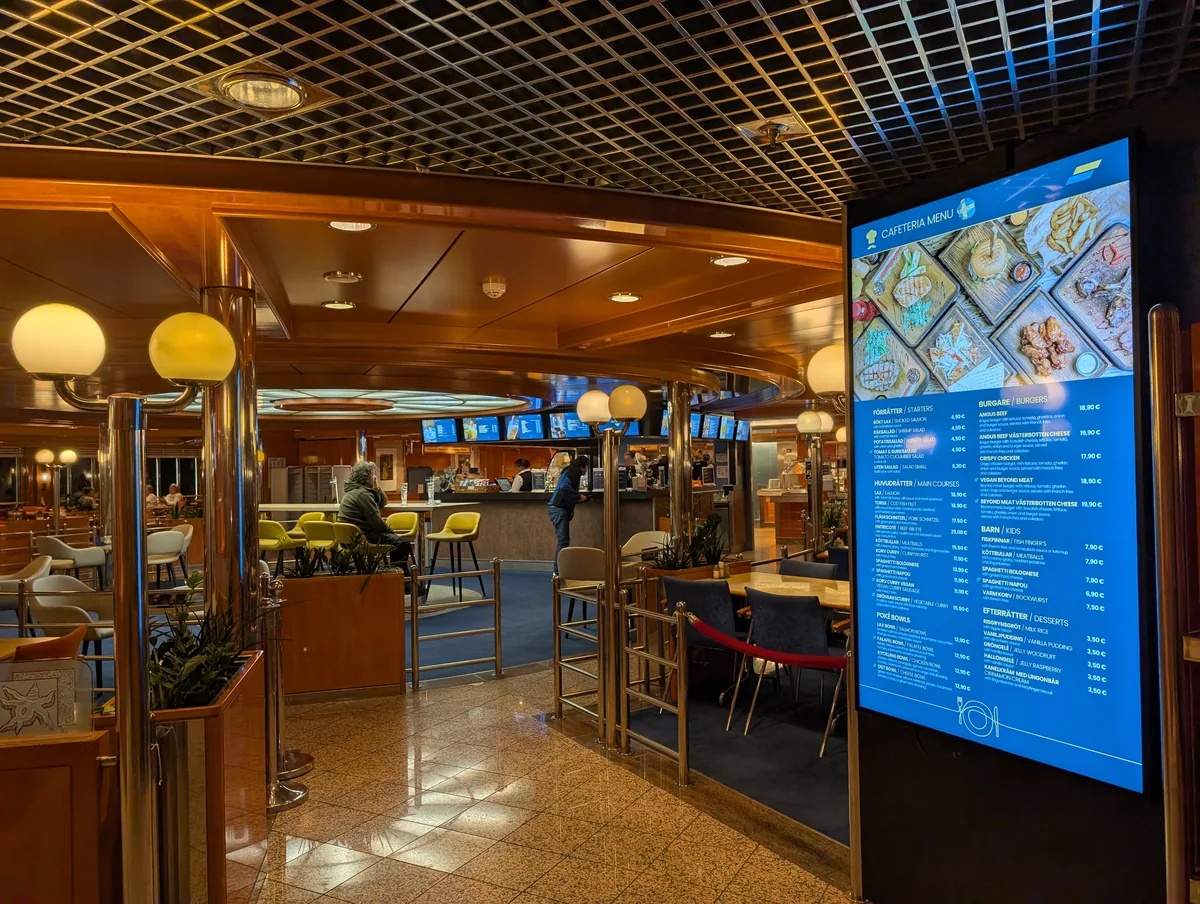
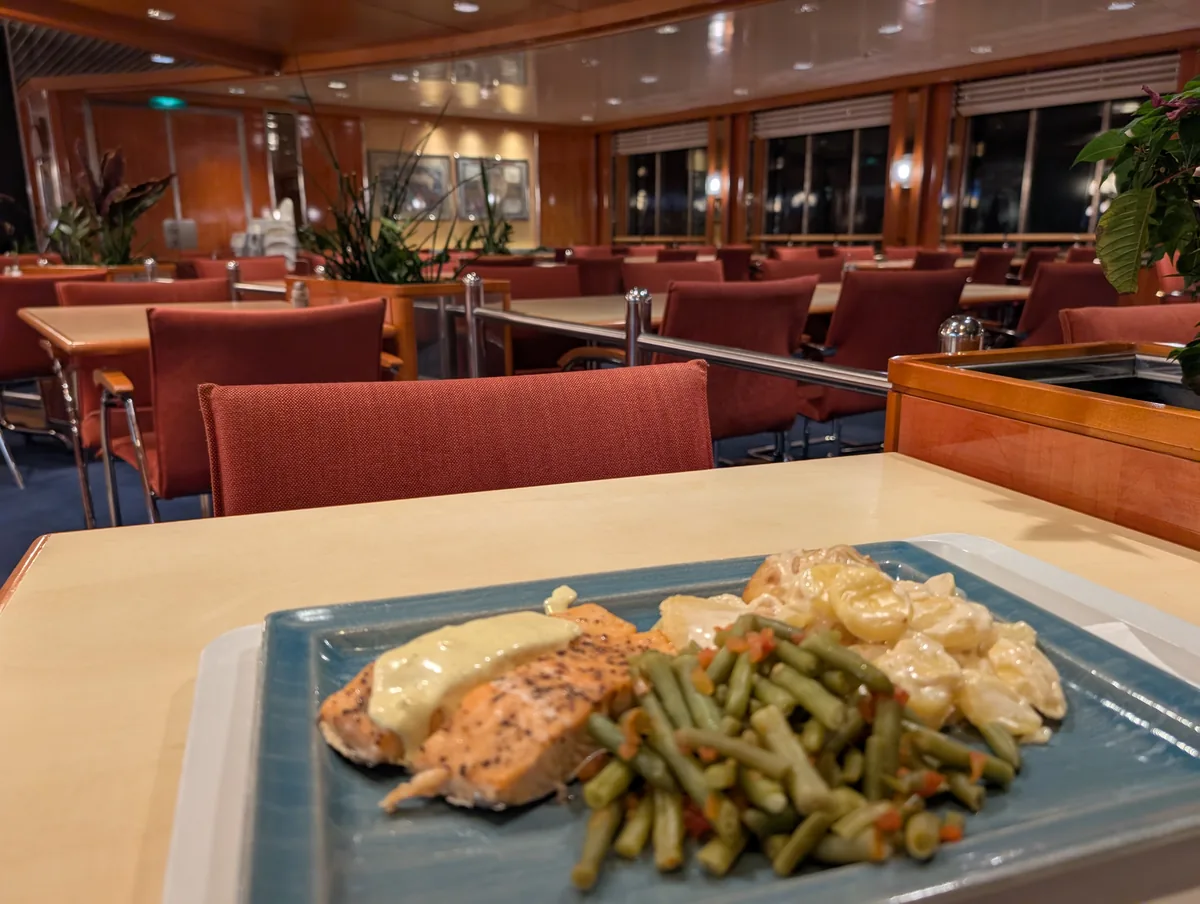
The restaurant works in a slightly hybrid way: it’s à la carte, but laid out like a buffet. Basically, you go in, help yourself, and pay per dish.
Allow about €15 per dish. I had the salmon, and it was very decent for the price! Not fine dining, obviously, but plenty for a good dinner before bed.
And it’s still nicer than eating a sandwich in the car in the port car park.
Going out on deck as you leave Travemünde
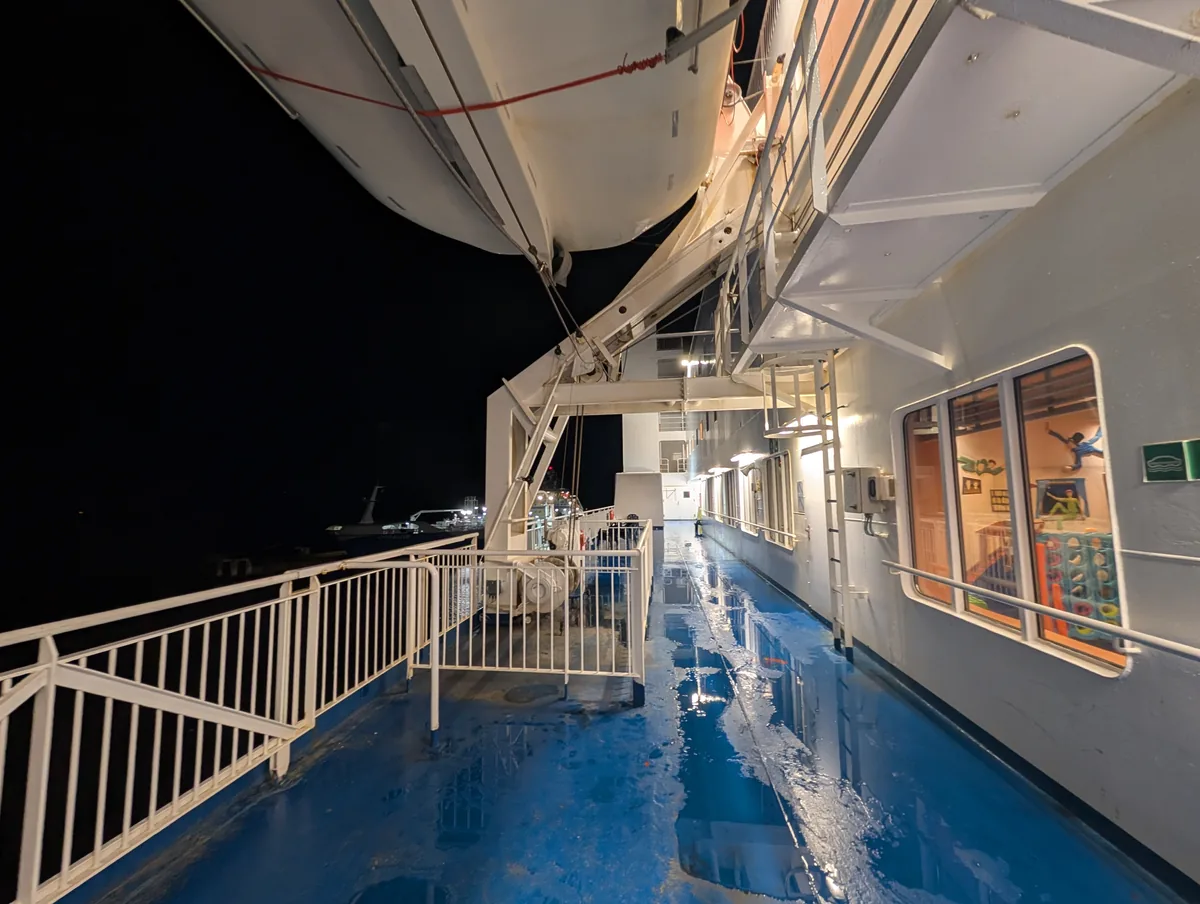
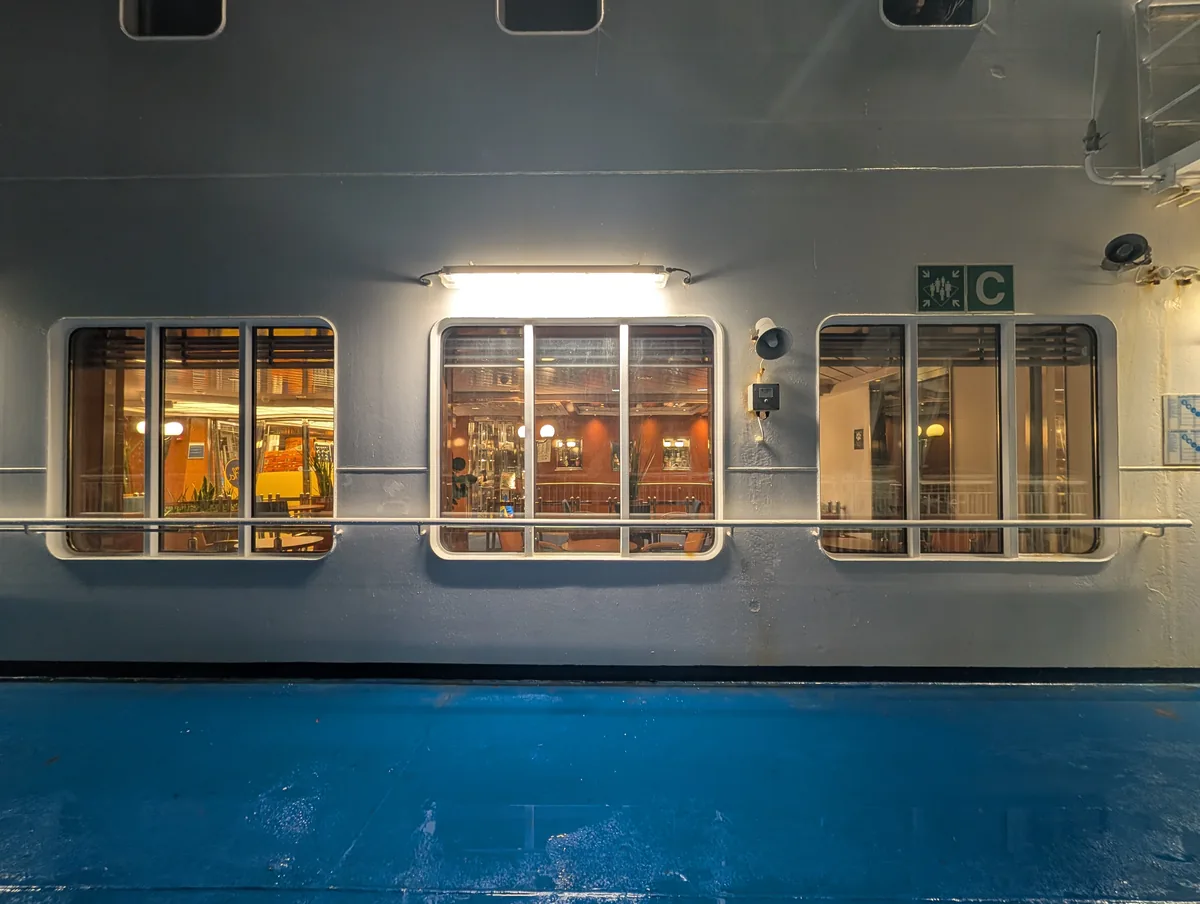
The outer decks are open, the top deck too, even at night.
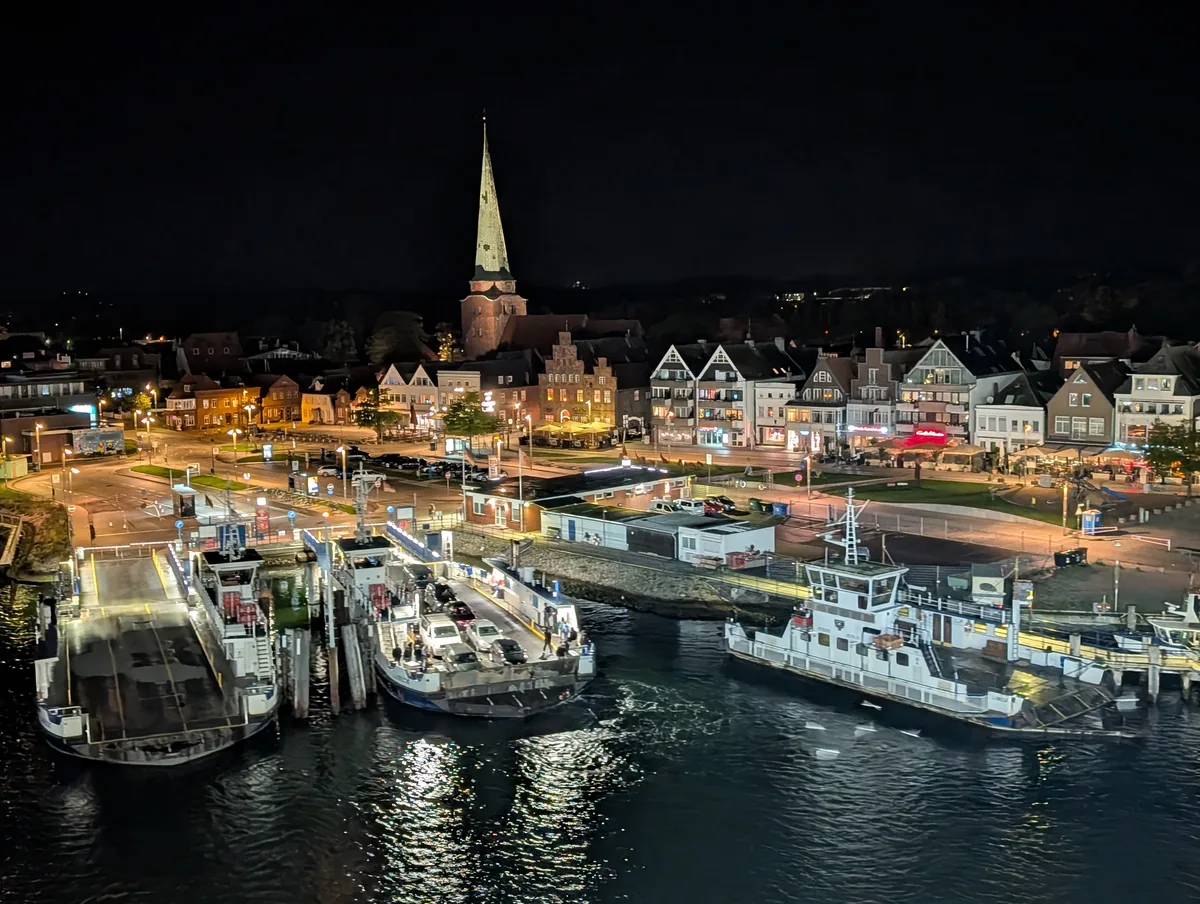
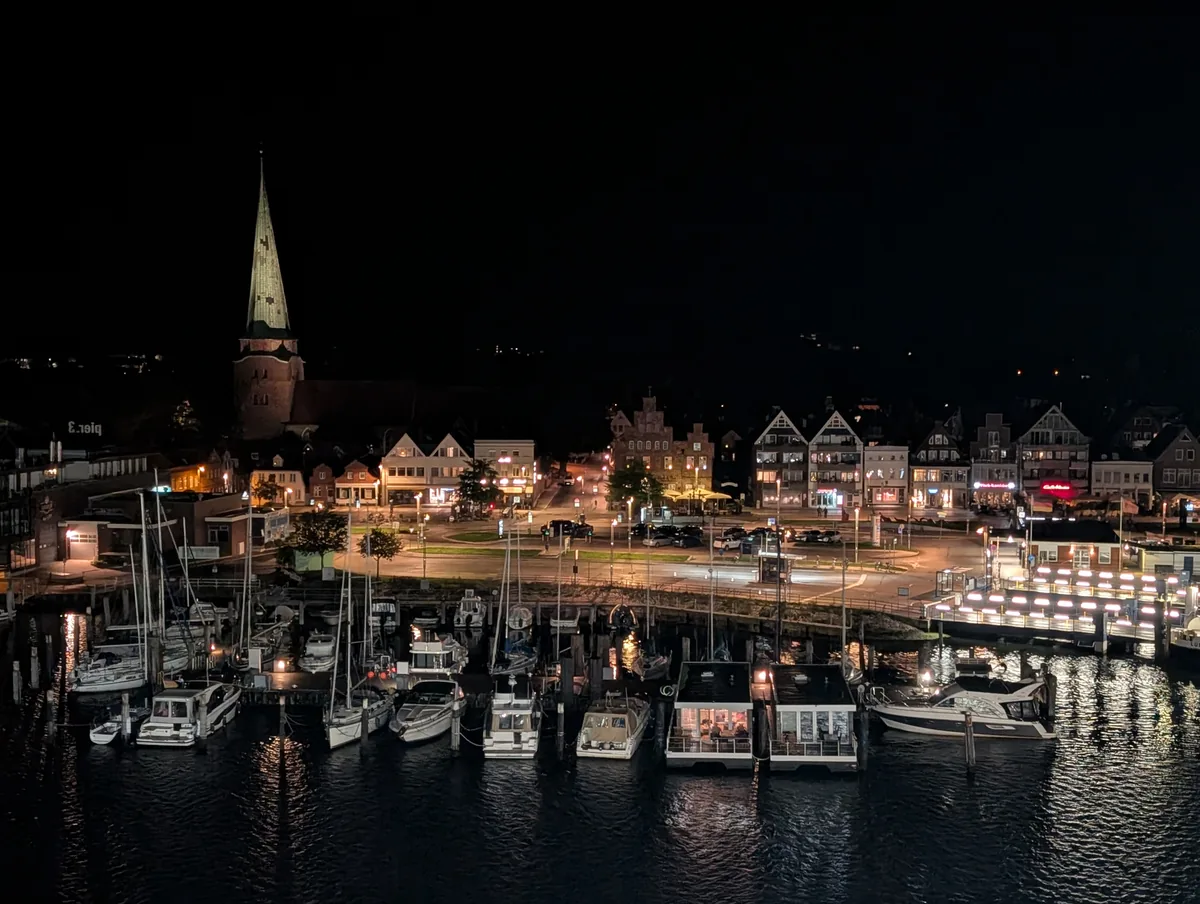
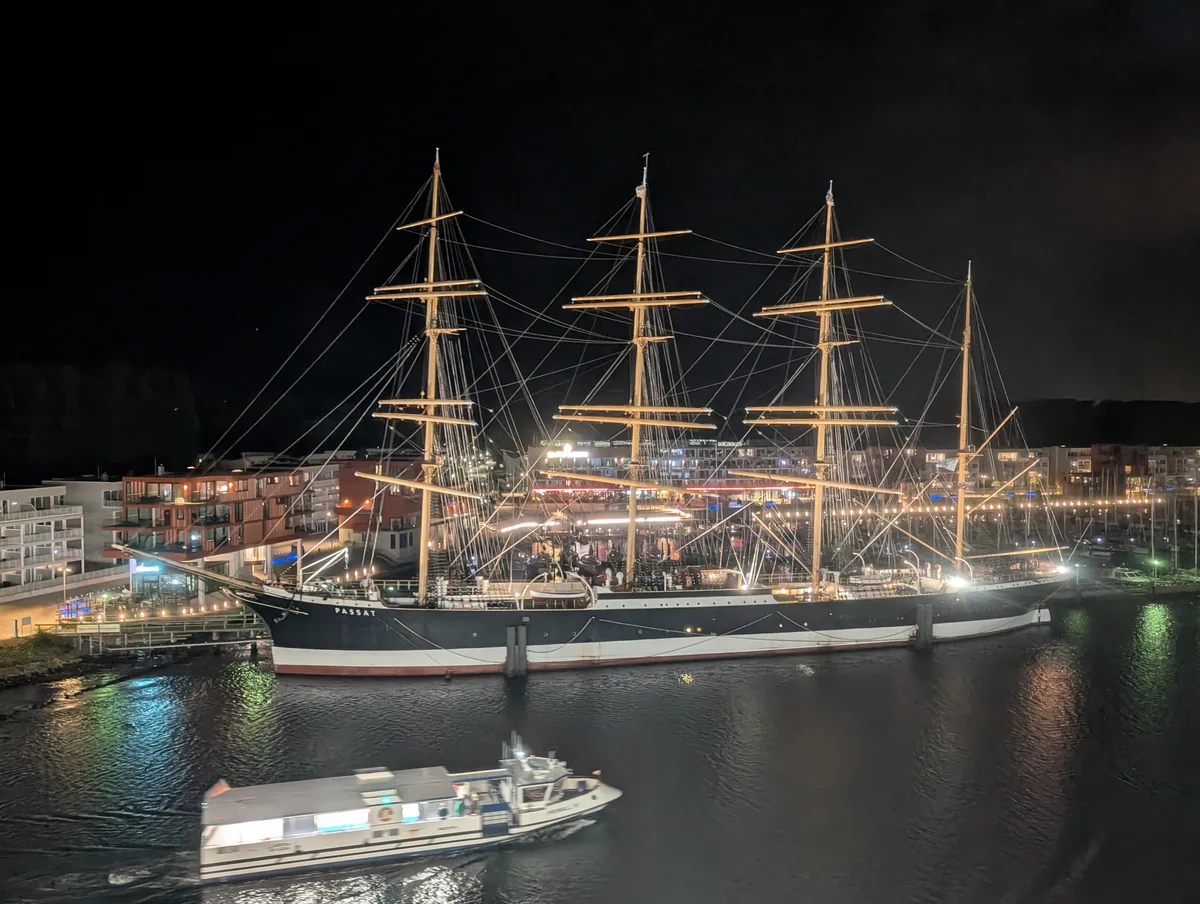
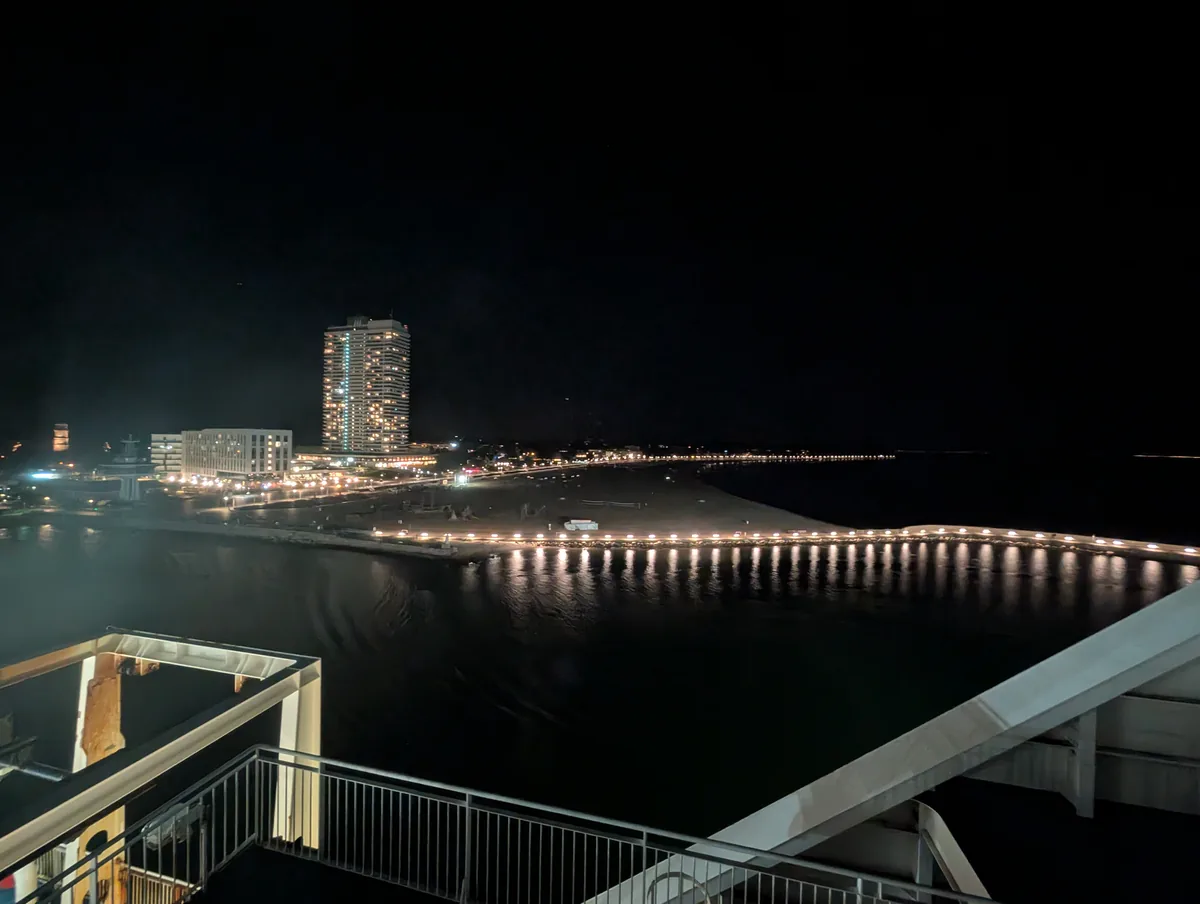
And I’d recommend heading up for the departure. Leaving the port is lovely: the boat follows the channel and passes Travemünde, its lights and its seafront. It’s the only moment of the crossing when there’s something to see.
After that, nothing. The boat heads out into the open Baltic, and there’s only the sky left (starry if the weather’s good, which isn’t bad at all). So go up for the departure, take a few photos, and off to bed!
Wi-Fi on board the TT-Line ferry
The Wi-Fi works in the public areas and on deck. However, there’s no signal in the cabins.
If you have things to send, photos to back up or a route to download for the next day, do it in the restaurant or the bar before going to bed!
Waking up and disembarking in Trelleborg
For a 6.15am arrival, wake up around 5am. An hour gives you time for a shower and a coffee without rushing. And if you haven’t set an alarm, don’t worry: the crew wakes everyone up with music.
You then need to go back down to your car a few minutes before arrival. Cars drive off lane by lane, and getting off the ship is very well organised!
Getting out of the port, on the other hand, takes longer. There are lots and lots of people, and above all an awful lot of lorries. A few cars, but it’s a freight ship first and foremost. The ship has three vehicle decks, each the size of a football pitch (well, maybe a bit smaller). So bring a little patience for the stretch between leaving the ship and hitting the road.
As for documents: Sweden has extended its internal border controls until 11 November 2026, and the Swedish police choose where and how they carry out checks. Keep your ID card or passport within reach: my ticket actually stated that you must be able to show a passport, or a valid ID card for EU citizens.
That said, I wasn’t checked this time, whereas when I crossed by road last year, I was checked at every border.
After Trelleborg: fill up in Sweden before Norway
A quick tip for those carrying on north: fill up in Sweden, right to the brim.
In September 2026, I paid 17 kronor a litre for unleaded 95, or about €1.51. Sweden temporarily cut its taxes on petrol and diesel in 2026, and you can feel it at the pump. For comparison, over the same period:
- in Finland, about €2.32 a litre on average;
- in Tromsø, about €2.50 a litre (Norway reinstated its taxes on 1 September 2026).
That’s nearly a euro’s difference per litre. On a full tank, that’s more than a restaurant meal! Bear in mind the Swedish cut is temporary: check it’s still in force when you pass through.
After that, it all depends on your route. Along the west coast, you’ll go through Oslo. Via the east, you can stop off in Stockholm, then head up to Lapland and enter Norway via Kilpisjärvi, on the Finnish side. And once you’re in Norway, remember to pay tolls and ferries with AutoPASS.
Practical information on the Travemünde (Lübeck) – Trelleborg ferry
| Operator | TT-Line (Finnlines also serves Sweden from the same terminal) |
| Duration | 7 hrs 30 to 11 hrs depending on the sailing (8 hrs 45 for the Sunday 9.30pm → 6.15am) |
| Departure port | Travemünde, Lübeck’s port on the Baltic (Skandinavienkai terminal) |
| Address by car | Skandinavienkai 1, 23570 Lübeck-Travemünde |
| Check-in | Opens ~2 hrs before, closes 60 min before departure at the latest (per ticket) |
| Boarding card | Handed out at the terminal entrance barrier |
| Price paid | €300.99 for car + 1 adult + inside 4-berth cabin, non-refundable (Direct Ferries, September 2026) |
| Cabin | Extra on top of the seat, about €70 for an inside 2- or 4-berth cabin |
| Meals | Self-service, pay per dish, about €15 a dish |
| Wi-Fi | Public areas and deck, not in the cabins |
| Wake-up call | Around 5am, with music, for a 6.15am arrival |
| Documents | Passport, or valid ID card for EU citizens |
The questions I’m asked most often about this ferry
Does the ferry to Sweden leave from Lübeck or Travemünde?
From Travemünde, which is part of Lübeck: it’s the city’s port, about twenty kilometres from the old town. The official addresses even say “Lübeck-Travemünde”.
How long does the Lübeck-Travemünde – Trelleborg crossing take?
Between 7 hours 30 minutes and just over 11 hours depending on the sailing. On the Sunday 9.30pm departure, arrival is scheduled for 6.15am, so 8 hours 45 minutes at sea.
Do you have to book a cabin?
No: the basic ticket includes a reclining seat. But for an overnight crossing, the cabin is worth the money (about €70 in September 2026), especially if you’re getting back behind the wheel the next morning.
What time should you arrive at Travemünde port?
Between 2 hours and 60 minutes before departure. My ticket said check-in closed 60 minutes before at the latest, even though TT-Line says 30 minutes on its website: go by your ticket.
Is there Wi-Fi in the cabins?
No. The Wi-Fi works in the restaurant, the public areas and on deck, but not in the cabins.
Will I get seasick?
On my crossing, I barely felt the boat move. Obviously, it depends on the weather on the Baltic that day.
Is the tap water drinkable on board?
I didn’t see anything saying it wasn’t. But I had my water bottle with me, so I didn’t try it.
Do you need a passport to arrive in Sweden?
Yes, or a valid ID card for EU citizens: it says so on the ticket. Sweden is part of the Schengen Area, but it has extended its internal border controls until 11 November 2026.
Conclusion
So, if you’re heading up to Scandinavia by car from northern Germany, the ferry between Travemünde and Trelleborg is a very comfortable option, and so is Travemünde – Malmö. You board in the evening, have dinner, sleep, and wake up in Sweden, with one less day on the road.
Don’t expect luxury: the cabin is small and older than in the photos. But everything is clean, dinner is decent, and the whole operation, from check-in to disembarking, runs like clockwork. The only mistake not to repeat: hunting for your Anleger instead of following your lane!
Honestly, I’d do it all again (but from Rostock next time, so I can visit that pretty city too). And if you have any questions about this crossing, feel free to ask me!
A few more resources to plan your drive to Norway
I’ve written quite a lot about the road north and about Norway, so here are the main articles that will help you plan the rest of your trip.
- Everything you need to know about travelling in Norway – the big overview guide, with the regions, seasons and budget.
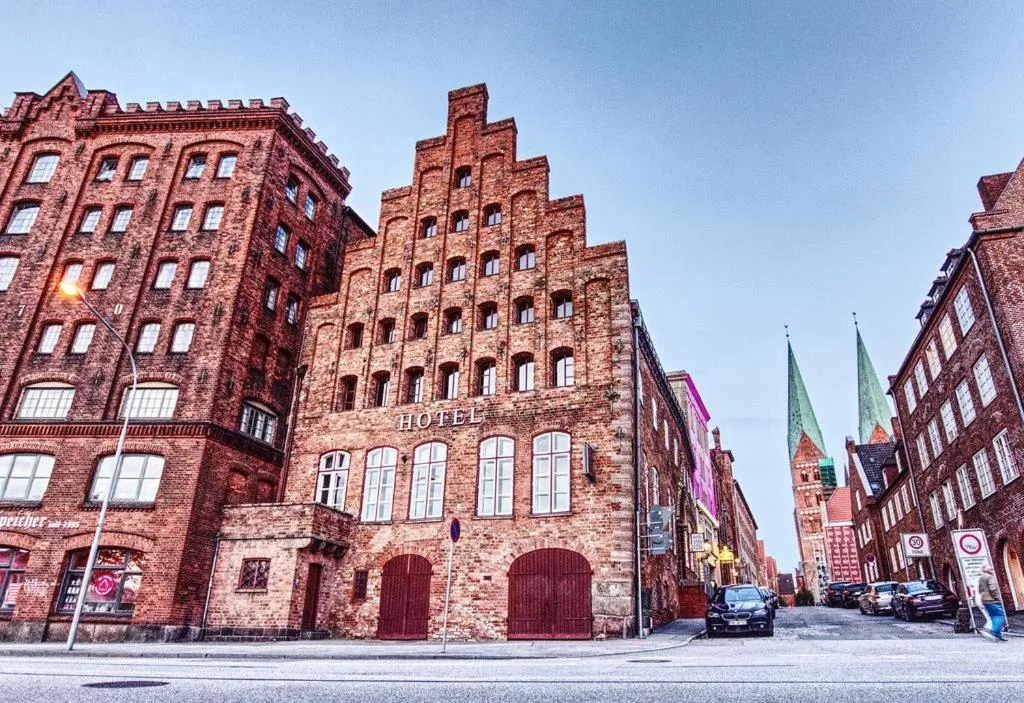
- Things to do in Lübeck before boarding – the ideal stop the day before the ferry, 20 minutes from the terminal.
- All the ferry options to Norway – to compare crossings from Germany and Denmark.
- Taking the Rødby – Puttgarden ferry – the short alternative, if you’d rather drive than sleep on board.
- Crossing the Øresund Bridge – prices, toll tag and tips for getting from Denmark to Sweden.
- The Helsingør – Helsingborg ferry – the other way to cross from Denmark to Sweden, in 20 minutes.
- A day in Stockholm – if you’re heading north through eastern Sweden.
- Things to do in Oslo – the natural stop if you’re heading up the west coast.
- Paying tolls in Norway with AutoPASS – to sort out before you cross the border.
- Driving in Norway in winter – my tips if you’re heading up in the colder months.
- Things to do in Tromsø – my town, at the end of the road.