Last updated on
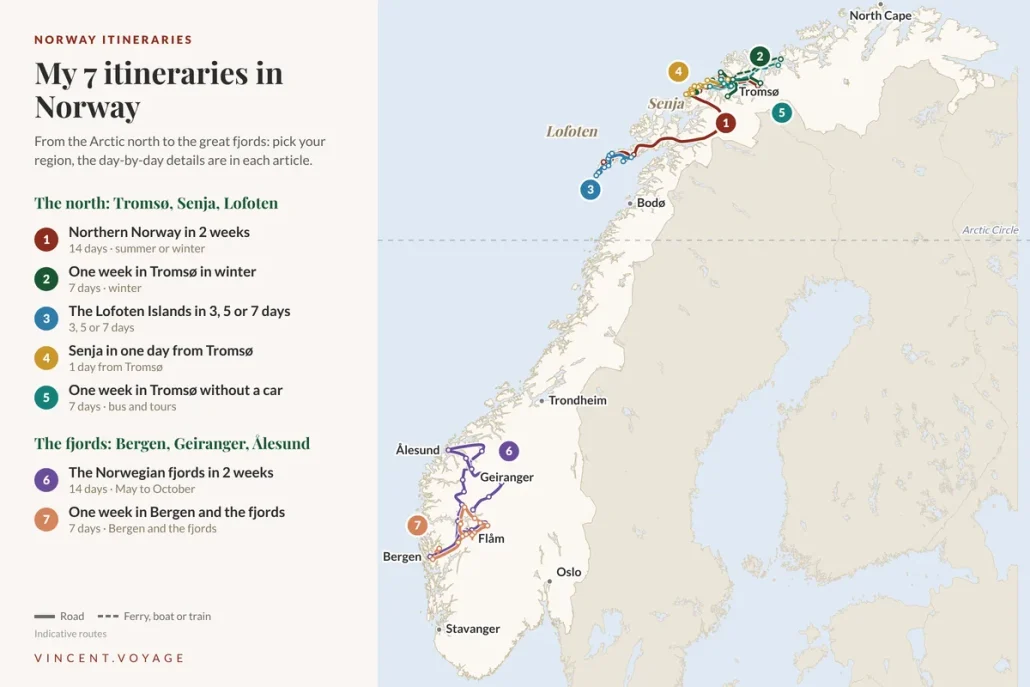
The Norwegian coast stretches from the western fjords, where waterfalls run down steep mountain walls, to the Arctic towns of the far north. Travellers who want to see several of these areas often look for a way to avoid repeated packing and long overland transfers. A cruise covers these distances while keeping the same cabin and the same dining standards throughout the trip.
This guide compares the main ways to cover several regions in one trip, from full-coast itineraries to the coastal route, and sets out the practical points for choosing a ship.
Essential insights:
- A cruise lets travellers discover several parts of Norway in 1 holiday without changing hotels, from the western fjords to the Arctic coast.
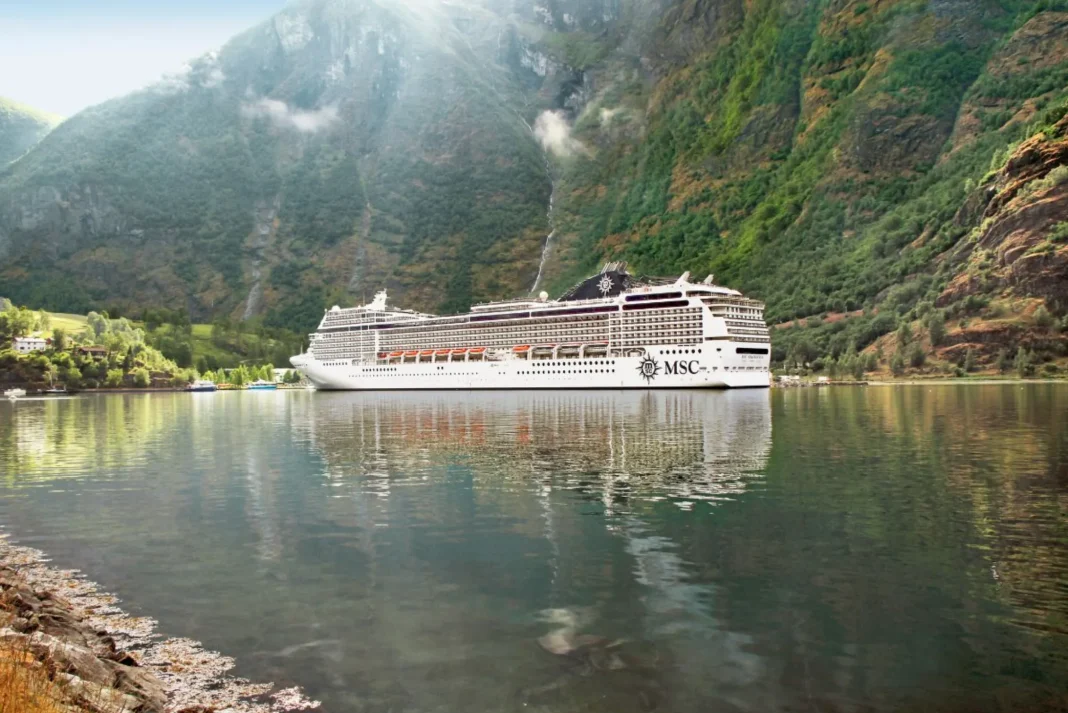
- MSC Cruises sails Norway itineraries of 7 nights to 2 weeks, with calls such as Flåm, at the inner end of the Aurlandsfjord, and Oslo.
- Hurtigruten and Havila Voyages sail the coastal route between Bergen and Kirkenes all year, with 34 ports, while P&O Cruises sails to the fjords from Southampton between spring and autumn.
Which cruise lines offer the best way to discover several parts of Norway in 1 holiday?
Cruise lines whose ships act as a mobile base offer the simplest way to see several parts of Norway in 1 holiday, since passengers wake up in a new port each morning instead of travelling overland between regions. MSC Cruises’ Norway itineraries combine cities such as Bergen and Oslo with fjord villages. The line’s guide to planning a Norwegian fjords cruise holiday describes each port of call and the shore excursions available there. P&O Cruises, Hurtigruten and Havila Voyages also sail these waters.
Day cruises suit travellers who prefer to stay on land and take shorter boat trips. To see how the regions connect before choosing a route, a free map of the Norwegian fjords marks viewpoints, waterfalls, hikes and fjord cruises from Stavanger to Ålesund.
Key takeaway: Travellers who want the fjords, the coastal cities and the Arctic north in one trip should book a multi-port cruise, and keep fjord day trips for a stay based in a single region.
What are the main route variations for Norwegian coastal journeys?
Norwegian coastal journeys come in 2 main forms: round-trip cruises built around leisure, and the coastal route, which links coastal communities every day. Round-trip cruises offer organised shore excursions at stops such as Geiranger in the western fjords or Honningsvåg in the far north. MSC Cruises sells its excursions on its website alongside the cruise, so guests can plan the sailing and the visits ashore in one place. At Flåm, one of these excursions pairs a boat trip on the Nærøyfjord with a coach ride through the Nærøydalen valley.
On the coastal route, passengers can book a single section between 2 ports rather than the full voyage. They can also stop over in a port and continue on a later ship.
Key takeaway: Travellers who want guided excursions at the major sights should choose a round-trip cruise, while those who want to stop in small communities should look at the coastal route.
How do recent environmental regulations affect navigation in Norwegian fjords?
Since 1 January 2026, passenger ships of less than 10,000 gross tonnage must use energy sources with no direct carbon dioxide or methane emissions in Norway’s 5 World Heritage fjords, including the Geirangerfjord and the Nærøyfjord. The Norwegian Maritime Authority adopted this requirement in April 2025 under the Environmental Safety Regulations. Ships must also connect to shore power where it is available.
Passenger ships of 10,000 gross tonnage and upwards, the category of most ocean cruise ships, must meet the same requirement from 1 January 2032. MSC Cruises became the first major line to receive the Green Marine Europe label, in 2023. The line submits its environmental performance to this programme for external verification every year.
Key takeaway: Travellers planning a World Heritage fjord cruise should check their ship’s gross tonnage, since it determines whether the 2026 or the 2032 zero-emission deadline applies.
Why might continuous daylight disrupt sleep schedules during summer navigation?
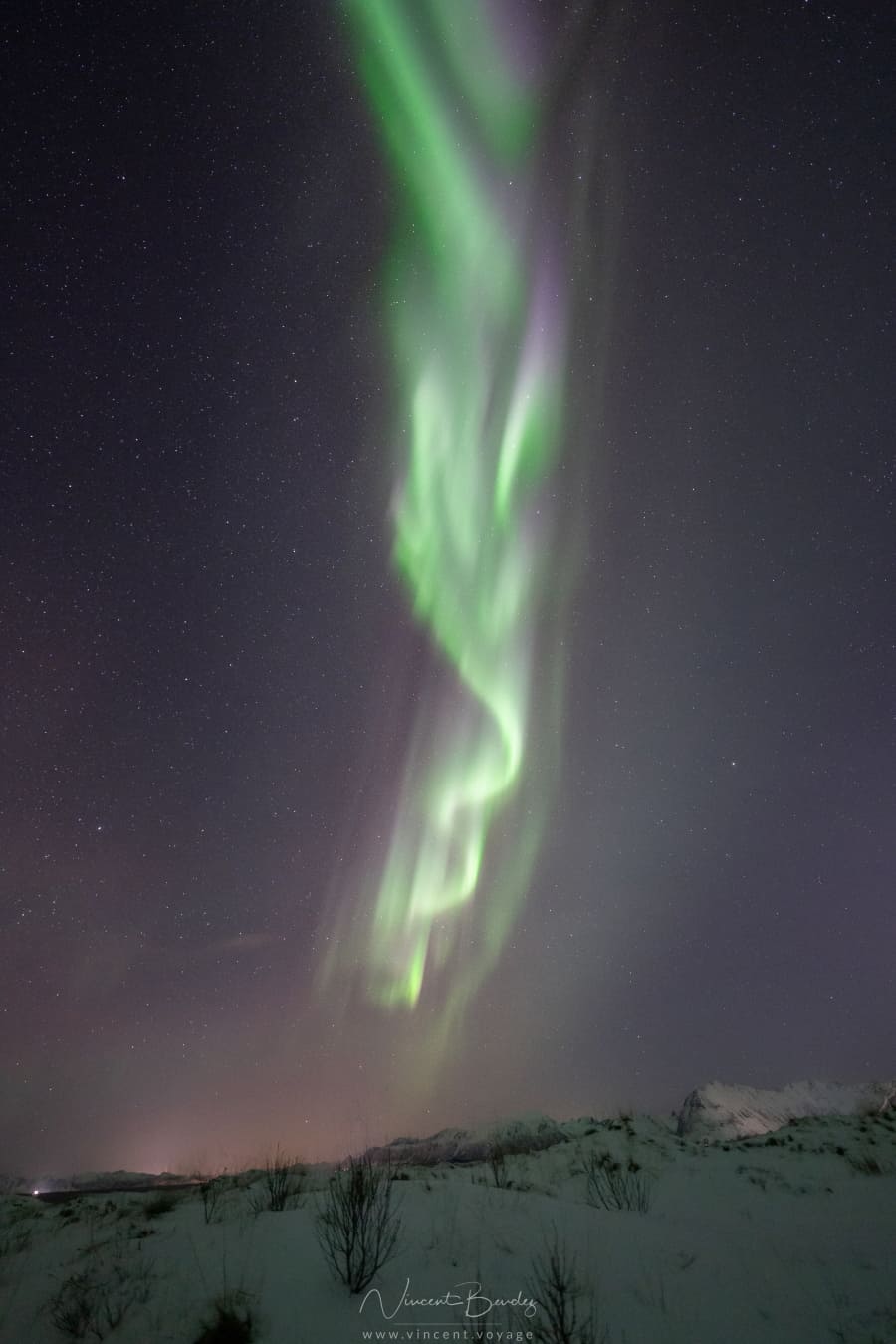
Above the Arctic Circle, the midnight sun keeps the sky light all night in summer. Around Tromsø, the sun stays above the horizon from late May to late July, and ships sailing on to Longyearbyen, in Svalbard, also stay in continuous daylight.
Continuous daylight gives more hours for sightseeing and photography, but it can disturb sleep and confuse the body’s internal clock.
Key takeaway: Passengers booking a summer cruise north of the Arctic Circle should check that their cabin has blackout curtains, so they stay rested for daily shore excursions.
Which fleet features align with different passenger expectations?
The right format depends on the onboard experience, the type of route and the departure port. The table below compares 3 ways to travel the Norwegian coast on what they offer, their UK departure port and their season.
| Travel format | What it offers | UK departure port | Season |
|---|---|---|---|
| Round-trip cruise with MSC Cruises | resort-style ship with evening shows and onboard activities, combining fjords, cities and Arctic ports in one itinerary | Southampton | May to October |
| Coastal route ship | daily sailings calling at 34 ports between Bergen and Kirkenes | none (voyages start in Bergen or Kirkenes) | year-round |
| Fjord day cruise | a few hours on one fjord from a land base such as Bergen or Flåm | none | year-round on some routes, with more sailings in summer |
Key takeaway: Travellers who want a resort-style ship from Southampton can look at MSC Cruises, while those who want to sail in any season can look at the coastal route.
Verified review (published on Trustpilot on 21 June 2026):
« Just been on Iceland and Norway cruise. The experience was amazing I would definitely recommend going on MSC. The service was amazing across all bars and restaurants. There were no setbacks. Made us feel like home and relaxed at all times. Our 12th cruise with MSC and I can’t wait to book another one soon! »
Comparing round trips with the coastal route helps travellers find the option that fits their schedule. Departure port, season and onboard comfort then settle the final choice.
Frequently Asked Questions
When is the most favourable time to sail along the Norwegian coast?
The optimal window stretches from late spring to early autumn, specifically between May and October, due to milder temperatures and accessible inland waterways. During this period, companies deploy their fleets to navigate deep into the fjords when ice and severe weather are minimal, ensuring uninterrupted views directly from the ship.
Do passengers need to book shore excursions in advance?
Securing organised activities prior to departure is highly recommended, especially for popular destinations like Flåm or the North Cape. Advance bookings guarantee availability and often streamline the disembarkation process at busy ports in high season.
Is seasickness common when navigating the inner fjords?
The inner coastal waterways remain generally very calm because the surrounding mountain ranges protect the water from strong ocean winds. Passengers typically only experience noticeable wave movement during the brief periods when ships cross open sea stretches between sheltered areas.
Sources
- Circular RSR 04-2025, Adoption of zero-emission requirements for cruise ships, tourist boats and ferries in the World Heritage fjords (Norwegian Maritime Authority, April 2025)
- Zero-Emission Requirements for Passenger Ships in World Heritage Fjords (Ministry of Climate and Environment, April 2025)
- Green cruising: Norway’s World Heritage fjords becoming emission-free (Business Norway)
- MSC Cruises becomes first major line to be awarded Green Marine Europe label certification (MSC Cruises press release, October 2023)
- The voyage between Bergen and Kirkenes takes in 34 ports (Havila Voyages)
- 4 P&O Cruises’ Norwegian Fjords Voyages to Book Now (Cruise Critic)